© 2013 FinityConsultingPty Limited
Risk Equalisation:
Can We Do Better?
Health Insurance Summit – July 2013
Jamie Reid – Finity Actuaries and Consultants
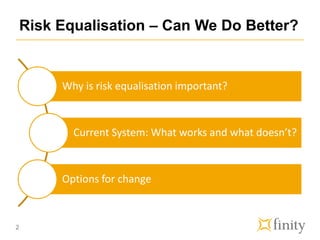
Risk Equalisation – Can We Do Better?
Why is risk equalisation important?
Current System: What works and what doesn’t?
Options for change
2
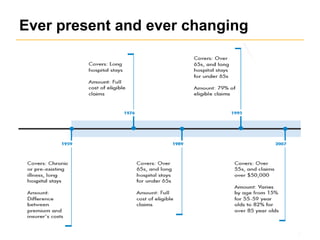
Ever present and ever changing
3
0
200
400
600
800
1,000
1,200
1,400
$millions
Age
Premiums Claims (Before Risk Eq)
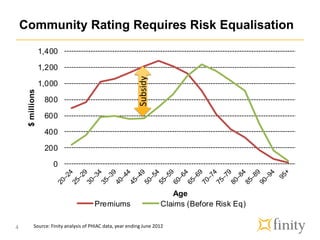
Community Rating Requires Risk Equalisation
4
Subsidy
Source: Finity analysis of PHIAC data, year ending June 2012
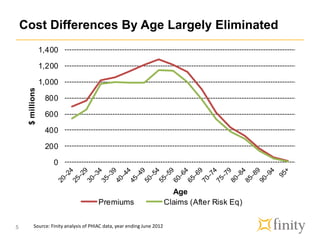
Cost Differences By Age Largely Eliminated
5 Source: Finity analysis of PHIAC data, year ending June 2012
0
200
400
600
800
1,000
1,200
1,400
$millions
Age
Premiums Claims (After Risk Eq)
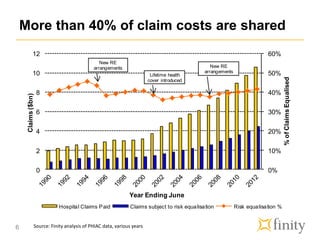
More than 40% of claim costs are shared
6
0%
10%
20%
30%
40%
50%
60%
0
2
4
6
8
10
12
%ofClaimsEqualised
Claims($bn)
Year Ending June
Hospital Claims Paid Claims subject to risk equalisation Risk equalisation %
New RE
arrangements
Lifetime health
cover introduced
New RE
arrangements
Source: Finity analysis of PHIAC data, various years
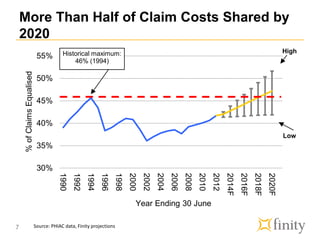
More Than Half of Claim Costs Shared by
2020
7
30%
35%
40%
45%
50%
55% 1990
1992
1994
1996
1998
2000
2002
2004
2006
2008
2010
2012
2014F
2016F
2018F
2020F
%ofClaimsEqualised
Year Ending 30 June
Historical maximum:
46% (1994)
High
Low
Source: PHIAC data, Finity projections
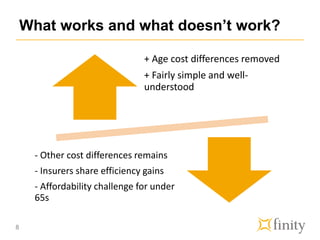
What works and what doesn’t work?
8
+ Age cost differences removed
+ Fairly simple and well-
understood
- Other cost differences remains
- Insurers share efficiency gains
- Affordability challenge for under
65s
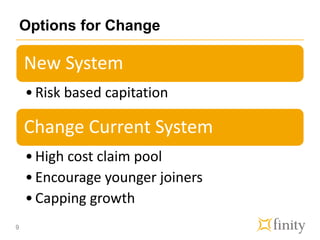
Options for Change
New System
•Risk based capitation
Change Current System
•High cost claim pool
•Encourage younger joiners
•Capping growth
9
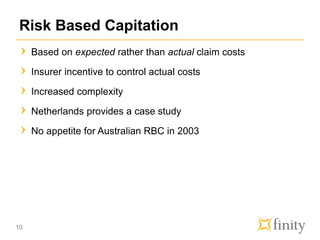
Risk Based Capitation
Based on expected rather than actual claim costs
Insurer incentive to control actual costs
Increased complexity
Netherlands provides a case study
No appetite for Australian RBC in 2003
10
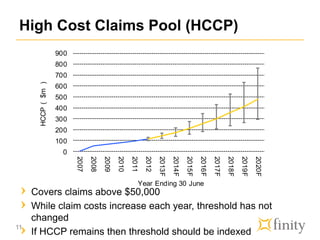
High Cost Claims Pool (HCCP)
Covers claims above $50,000
While claim costs increase each year, threshold has not
changed
If HCCP remains then threshold should be indexed
11
0
100
200
300
400
500
600
700
800
900
2007
2008
2009
2010
2011
2012
2013F
2014F
2015F
2016F
2017F
2018F
2019F
2020F
HCCP($m)
Year Ending 30 June
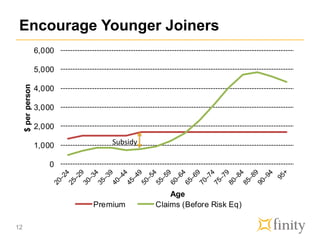
Encourage Younger Joiners
12
0
1,000
2,000
3,000
4,000
5,000
6,000
$perperson
Age
Premium Claims (Before Risk Eq)
Subsidy
Conclusion
Risk equalisation systems don’t last forever - change is
inevitable
Life of the current system can be increased
HCCP changes look like an easy win
RBC should remain under active consideration in Australia
Making changes sooner rather than later allows any adverse
impacts to be addressed
13
Contact
Jamie Reid
Tel: +61 2 8252 3309
Mobile: +61 4 3756 2290
Jamie.Reid@finity.com.au

Jamie reid

  • 1.
    © 2013 FinityConsultingPtyLimited Risk Equalisation: Can We Do Better? Health Insurance Summit – July 2013 Jamie Reid – Finity Actuaries and Consultants
  • 2.
    Risk Equalisation –Can We Do Better? Why is risk equalisation important? Current System: What works and what doesn’t? Options for change 2
  • 3.
    Ever present andever changing 3
  • 4.
    0 200 400 600 800 1,000 1,200 1,400 $millions Age Premiums Claims (BeforeRisk Eq) Community Rating Requires Risk Equalisation 4 Subsidy Source: Finity analysis of PHIAC data, year ending June 2012
  • 5.
    Cost Differences ByAge Largely Eliminated 5 Source: Finity analysis of PHIAC data, year ending June 2012 0 200 400 600 800 1,000 1,200 1,400 $millions Age Premiums Claims (After Risk Eq)
  • 6.
    More than 40%of claim costs are shared 6 0% 10% 20% 30% 40% 50% 60% 0 2 4 6 8 10 12 %ofClaimsEqualised Claims($bn) Year Ending June Hospital Claims Paid Claims subject to risk equalisation Risk equalisation % New RE arrangements Lifetime health cover introduced New RE arrangements Source: Finity analysis of PHIAC data, various years
  • 7.
    More Than Halfof Claim Costs Shared by 2020 7 30% 35% 40% 45% 50% 55% 1990 1992 1994 1996 1998 2000 2002 2004 2006 2008 2010 2012 2014F 2016F 2018F 2020F %ofClaimsEqualised Year Ending 30 June Historical maximum: 46% (1994) High Low Source: PHIAC data, Finity projections
  • 8.
    What works andwhat doesn’t work? 8 + Age cost differences removed + Fairly simple and well- understood - Other cost differences remains - Insurers share efficiency gains - Affordability challenge for under 65s
  • 9.
    Options for Change NewSystem •Risk based capitation Change Current System •High cost claim pool •Encourage younger joiners •Capping growth 9
  • 10.
    Risk Based Capitation Basedon expected rather than actual claim costs Insurer incentive to control actual costs Increased complexity Netherlands provides a case study No appetite for Australian RBC in 2003 10
  • 11.
    High Cost ClaimsPool (HCCP) Covers claims above $50,000 While claim costs increase each year, threshold has not changed If HCCP remains then threshold should be indexed 11 0 100 200 300 400 500 600 700 800 900 2007 2008 2009 2010 2011 2012 2013F 2014F 2015F 2016F 2017F 2018F 2019F 2020F HCCP($m) Year Ending 30 June
  • 12.
  • 13.
    Conclusion Risk equalisation systemsdon’t last forever - change is inevitable Life of the current system can be increased HCCP changes look like an easy win RBC should remain under active consideration in Australia Making changes sooner rather than later allows any adverse impacts to be addressed 13
  • 14.
    Contact Jamie Reid Tel: +612 8252 3309 Mobile: +61 4 3756 2290 Jamie.Reid@finity.com.au