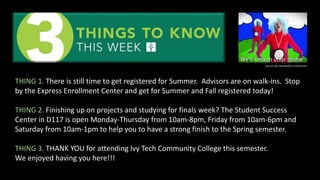
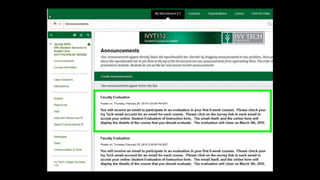
THING 1. There is still time to get registered for Summer. Advisors are on walk-ins. Stop
by the Express Enrollment Center and get for Summer and Fall registered today!
THING 2. Finishing up on projects and studying for finals week? The Student Success
Center in D117 is open Monday-Thursday from 10am-8pm, Friday from 10am-6pm and
Saturday from 10am-1pm to help you to have a strong finish to the Spring semester.
THING 3. THANK YOU for attending Ivy Tech Community College this semester.
We enjoyed having you here!!!
Source: Epic Rap Battles in History #12
LOG IN.
online.ivytech.edu
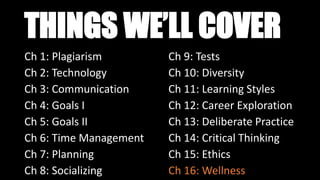
THINGS WE’LL COVER
Ch 1: Plagiarism Ch 9: Tests
Ch 2: Technology Ch 10: Diversity
Ch 3: Communication Ch 11: Learning Styles
Ch 4: Goals I Ch 12: Career Exploration
Ch 5: Goals II Ch 13: Deliberate Practice
Ch 6: Time Management Ch 14: Critical Thinking
Ch 7: Planning Ch 15: Ethics
Ch 8: Socializing Ch 16: Wellness
WEEK 8: Ch 16
Stanford Study
Ch 16:
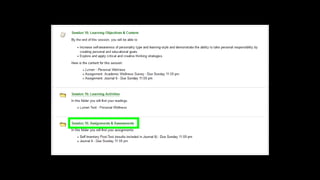
-Journal 6
Stanford Study
Grayson 878-407-3781
Eli 873-785-3781
Stanford Study
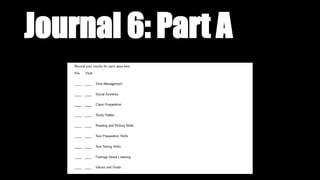
Journal 6: Part A
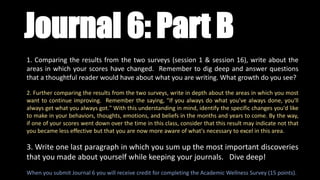
1. Comparing the results from the two surveys (session 1 & session 16), write about the
areas in which your scores have changed. Remember to dig deep and answer questions
that a thoughtful reader would have about what you are writing. What growth do you see?
2. Further comparing the results from the two surveys, write in depth about the areas in which you most
want to continue improving. Remember the saying, "If you always do what you've always done, you'll
always get what you always got." With this understanding in mind, identify the specific changes you'd like
to make in your behaviors, thoughts, emotions, and beliefs in the months and years to come. By the way,
if one of your scores went down over the time in this class, consider that this result may indicate not that
you became less effective but that you are now more aware of what's necessary to excel in this area.
3. Write one last paragraph in which you sum up the most important discoveries
that you made about yourself while keeping your journals. Dive deep!
When you submit Journal 6 you will receive credit for completing the Academic Wellness Survey (15 points).
Journal 6: Part B
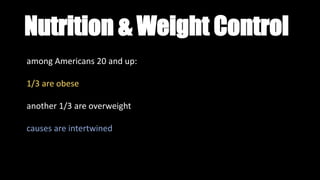
Nutrition & Weight Control
among Americans 20 and up:
1/3 are obese
another 1/3 are overweight
causes are intertwined
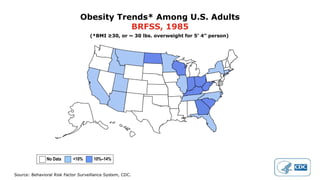
Source: Behavioral Risk Factor Surveillance System, CDC.
Obesity Trends* Among U.S. Adults
BRFSS, 1985
(*BMI ≥30, or ~ 30 lbs. overweight for 5’ 4” person)
No Data <10% 10%–14%
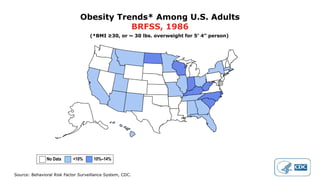
Source: Behavioral Risk Factor Surveillance System, CDC.
Obesity Trends* Among U.S. Adults
BRFSS, 1986
(*BMI ≥30, or ~ 30 lbs. overweight for 5’ 4” person)
No Data <10% 10%–14%
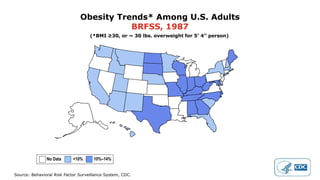
Source: Behavioral Risk Factor Surveillance System, CDC.
Obesity Trends* Among U.S. Adults
BRFSS, 1987
(*BMI ≥30, or ~ 30 lbs. overweight for 5’ 4” person)
No Data <10% 10%–14%
Source: Behavioral Risk Factor Surveillance System, CDC.
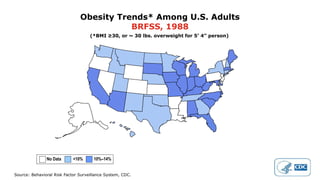
Obesity Trends* Among U.S. Adults
BRFSS, 1988
(*BMI ≥30, or ~ 30 lbs. overweight for 5’ 4” person)
No Data <10% 10%–14%
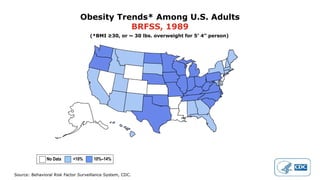
Source: Behavioral Risk Factor Surveillance System, CDC.
Obesity Trends* Among U.S. Adults
BRFSS, 1989
(*BMI ≥30, or ~ 30 lbs. overweight for 5’ 4” person)
No Data <10% 10%–14%
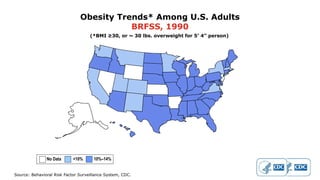
Source: Behavioral Risk Factor Surveillance System, CDC.
Obesity Trends* Among U.S. Adults
BRFSS, 1990
(*BMI ≥30, or ~ 30 lbs. overweight for 5’ 4” person)
No Data <10% 10%–14%
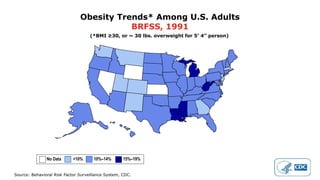
Source: Behavioral Risk Factor Surveillance System, CDC.
Obesity Trends* Among U.S. Adults
BRFSS, 1991
(*BMI ≥30, or ~ 30 lbs. overweight for 5’ 4” person)
No Data <10% 10%–14% 15%–19%
Source: Behavioral Risk Factor Surveillance System, CDC.
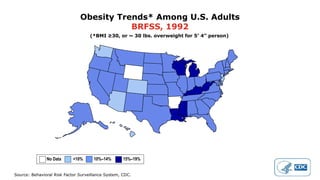
Obesity Trends* Among U.S. Adults
BRFSS, 1992
(*BMI ≥30, or ~ 30 lbs. overweight for 5’ 4” person)
No Data <10% 10%–14% 15%–19%
Source: Behavioral Risk Factor Surveillance System, CDC.
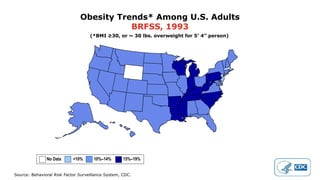
Obesity Trends* Among U.S. Adults
BRFSS, 1993
(*BMI ≥30, or ~ 30 lbs. overweight for 5’ 4” person)
No Data <10% 10%–14% 15%–19%
Source: Behavioral Risk Factor Surveillance System, CDC.
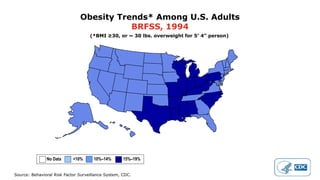
Obesity Trends* Among U.S. Adults
BRFSS, 1994
(*BMI ≥30, or ~ 30 lbs. overweight for 5’ 4” person)
No Data <10% 10%–14% 15%–19%
Source: Behavioral Risk Factor Surveillance System, CDC.
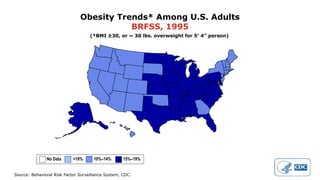
Obesity Trends* Among U.S. Adults
BRFSS, 1995
(*BMI ≥30, or ~ 30 lbs. overweight for 5’ 4” person)
No Data <10% 10%–14% 15%–19%
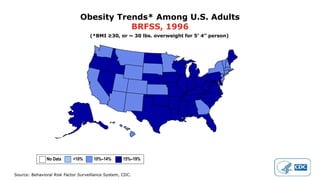
Source: Behavioral Risk Factor Surveillance System, CDC.
Obesity Trends* Among U.S. Adults
BRFSS, 1996
(*BMI ≥30, or ~ 30 lbs. overweight for 5’ 4” person)
No Data <10% 10%–14% 15%–19%
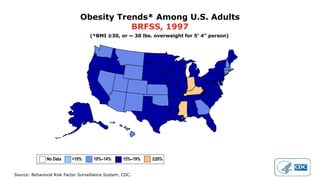
Source: Behavioral Risk Factor Surveillance System, CDC.
Obesity Trends* Among U.S. Adults
BRFSS, 1997
(*BMI ≥30, or ~ 30 lbs. overweight for 5’ 4” person)
No Data <10% 10%–14% 15%–19% ≥20%
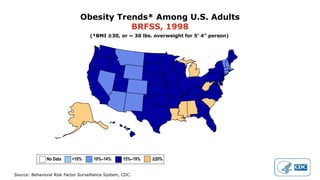
Source: Behavioral Risk Factor Surveillance System, CDC.
Obesity Trends* Among U.S. Adults
BRFSS, 1998
(*BMI ≥30, or ~ 30 lbs. overweight for 5’ 4” person)
No Data <10% 10%–14% 15%–19% ≥20%
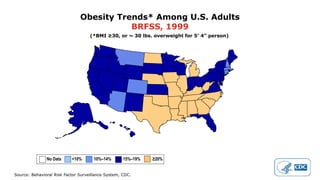
Source: Behavioral Risk Factor Surveillance System, CDC.
Obesity Trends* Among U.S. Adults
BRFSS, 1999
(*BMI ≥30, or ~ 30 lbs. overweight for 5’ 4” person)
No Data <10% 10%–14% 15%–19% ≥20%
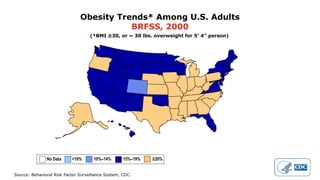
Source: Behavioral Risk Factor Surveillance System, CDC.
Obesity Trends* Among U.S. Adults
BRFSS, 2000
(*BMI ≥30, or ~ 30 lbs. overweight for 5’ 4” person)
No Data <10% 10%–14% 15%–19% ≥20%
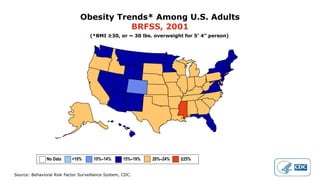
Source: Behavioral Risk Factor Surveillance System, CDC.
Obesity Trends* Among U.S. Adults
BRFSS, 2001
(*BMI ≥30, or ~ 30 lbs. overweight for 5’ 4” person)
No Data <10% 10%–14% 15%–19% 20%–24% ≥25%
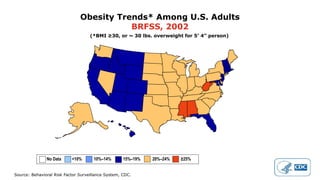
Source: Behavioral Risk Factor Surveillance System, CDC.
(*BMI ≥30, or ~ 30 lbs. overweight for 5’ 4” person)
Obesity Trends* Among U.S. Adults
BRFSS, 2002
No Data <10% 10%–14% 15%–19% 20%–24% ≥25%
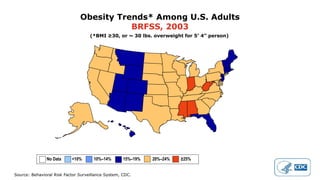
Source: Behavioral Risk Factor Surveillance System, CDC.
Obesity Trends* Among U.S. Adults
BRFSS, 2003
(*BMI ≥30, or ~ 30 lbs. overweight for 5’ 4” person)
No Data <10% 10%–14% 15%–19% 20%–24% ≥25%
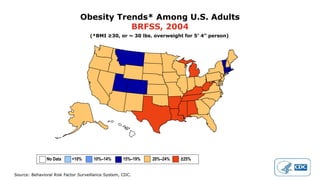
Source: Behavioral Risk Factor Surveillance System, CDC.
Obesity Trends* Among U.S. Adults
BRFSS, 2004
(*BMI ≥30, or ~ 30 lbs. overweight for 5’ 4” person)
No Data <10% 10%–14% 15%–19% 20%–24% ≥25%
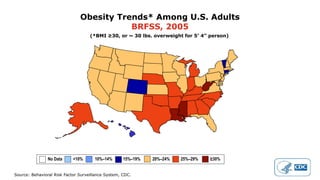
Source: Behavioral Risk Factor Surveillance System, CDC.
Obesity Trends* Among U.S. Adults
BRFSS, 2005
(*BMI ≥30, or ~ 30 lbs. overweight for 5’ 4” person)
No Data <10% 10%–14% 15%–19% 20%–24% 25%–29% ≥30%
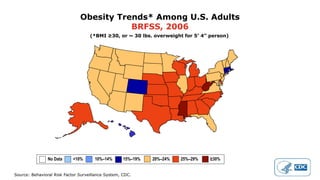
Source: Behavioral Risk Factor Surveillance System, CDC.
Obesity Trends* Among U.S. Adults
BRFSS, 2006
(*BMI ≥30, or ~ 30 lbs. overweight for 5’ 4” person)
No Data <10% 10%–14% 15%–19% 20%–24% 25%–29% ≥30%
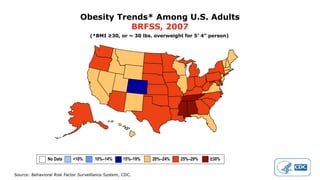
Source: Behavioral Risk Factor Surveillance System, CDC.
Obesity Trends* Among U.S. Adults
BRFSS, 2007
(*BMI ≥30, or ~ 30 lbs. overweight for 5’ 4” person)
No Data <10% 10%–14% 15%–19% 20%–24% 25%–29% ≥30%
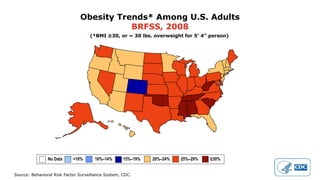
Source: Behavioral Risk Factor Surveillance System, CDC.
Obesity Trends* Among U.S. Adults
BRFSS, 2008
(*BMI ≥30, or ~ 30 lbs. overweight for 5’ 4” person)
No Data <10% 10%–14% 15%–19% 20%–24% 25%–29% ≥30%
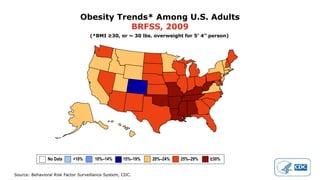
Source: Behavioral Risk Factor Surveillance System, CDC.
Obesity Trends* Among U.S. Adults
BRFSS, 2009
(*BMI ≥30, or ~ 30 lbs. overweight for 5’ 4” person)
No Data <10% 10%–14% 15%–19% 20%–24% 25%–29% ≥30%
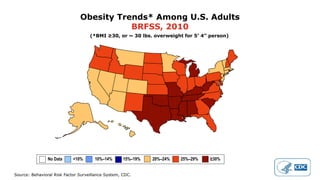
Source: Behavioral Risk Factor Surveillance System, CDC.
Obesity Trends* Among U.S. Adults
BRFSS, 2010
(*BMI ≥30, or ~ 30 lbs. overweight for 5’ 4” person)
No Data <10% 10%–14% 15%–19% 20%–24% 25%–29% ≥30%
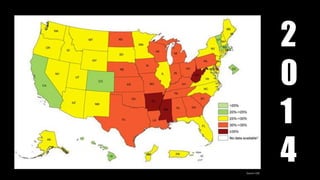
2
0
1
4Source: CDC
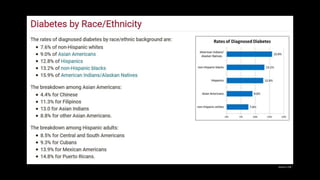
The Consequences
obesity is associated with many medical conditions:
diabetes, cardiovascular disease, and some cancers
some health problems may not appear until later in life
diabetes is increasing rapidly in children and teenagers
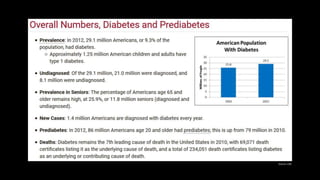
Source: CDC
Source: CDC
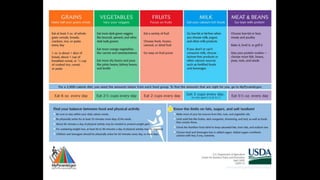
Nutrition & Weight Control
habits can be hard to break
it’s not just about body weight/composition
nutrition affects mental and physical function and well-being
Whatcha Say?
“Why Do Students Find It So Tough to Eat Healthily?”
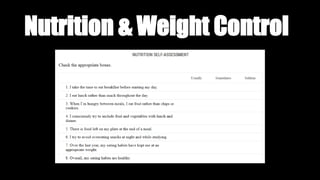
Nutrition & Weight Control
MIGHT WE SUGGEST:
check your BMI to see the normal weight range for your height
determine your ideal caloric intake for gradual weight loss
set your goals and make a plan you can live with
start by avoiding snacks and fast foods
stay active and try to exercise frequently
keep a daily food journal and write down what you eat
no one plan works for everyone
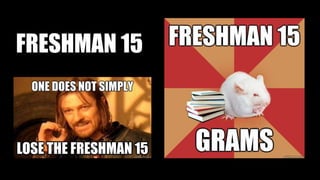
FRESHMAN 15
Everybody in the club gettin’ TIPS:
eat a variety of foods every day
take a multivitamin every day
carry an apple or banana at all times
avoid fried/sugary foods (cereal/soda)
eat when hungry, not when bored or just because others are eating
try eating a salad, sweetie
watch portion sizes
Any Decent Resources?
MyFitnessPal app
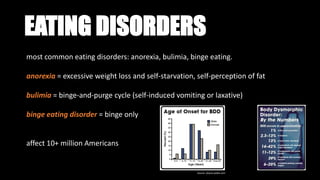
EATING DISORDERS
most common eating disorders: anorexia, bulimia, binge eating.
anorexia = excessive weight loss and self-starvation, self-perception of fat
bulimia = binge-and-purge cycle (self-induced vomiting or laxative)
binge eating disorder = binge only
affect 10+ million Americans
Source: physio-pedia.com
Source: wikipedia
NARCISSUS (DAFFODIL)
Source: Flickr
LIRIOPE
Source: Flickr
ZONES
Source: Texas A&M University
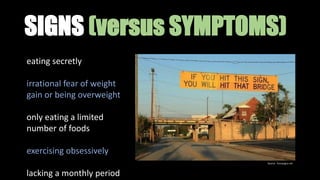
SIGNS (versus SYMPTOMS)
eating secretly
irrational fear of weight
gain or being overweight
only eating a limited
number of foods
exercising obsessively
lacking a monthly period
Source: funnysigns.net
Activity & Exerciseimproved fitness for the whole body, not just the muscles
greater cardiovascular fitness and reduced disease risk
increased physical endurance
stronger immune system, providing more resistance to disease
lower cholesterol levels, reducing the risks of cardiovascular disease
lowered risk of developing diabetes
weight maintenance or loss
Activity & Exercise
reduce stress
improve your mood (less anxiety & depression)
improve your mental focus
sleep better
feel better about yourself
Activity & Exercise
What physical activities do you enjoy?
How often each week do you engage in a physical activity?
If you feel you’re not getting much exercise, what stands in your way?
Overall, do you think you get enough exercise to be healthy?
Do you feel a lot of stress in your life?
Do you frequently have trouble getting to sleep?
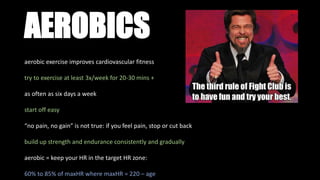
AEROBICS
aerobic exercise improves cardiovascular fitness
try to exercise at least 3x/week for 20-30 mins +
as often as six days a week
start off easy
“no pain, no gain” is not true: if you feel pain, stop or cut back
build up strength and endurance consistently and gradually
aerobic = keep your HR in the target HR zone:
60% to 85% of maxHR where maxHR = 220 – age
Activity & Exercisefind a type of exercise or activity that you enjoy—or else you won’t stick with it
many people listen to music and some even read when using workout equipment
you also gain by taking the stairs instead of elevators
walking farther across campus instead of parking as close to your destination as you can get
exercise with a friend is more enjoyable
interactive games can get your heart rate up
Fitbit/garmin can track your progress and export to spreadsheet
is the biggest obstacle to getting enough exercise a lack of time? or poor time management?
exercise actually saves you time because you’re sleeping better and operating more efficiently
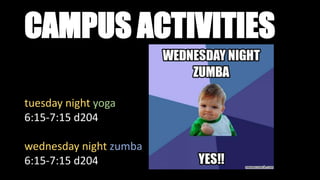
CAMPUS ACTIVITIES
tuesday night yoga
6:15-7:15 d204
wednesday night zumba
6:15-7:15 d204
NINJA WARRIOR
SLEEPING WELL
improves your mood during the day
improves your memory and learning abilities
gives you more energy
strengthens your immune system
promotes wellness of body, mind, spirit
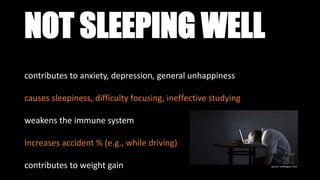
NOT SLEEPING WELL
contributes to anxiety, depression, general unhappiness
causes sleepiness, difficulty focusing, ineffective studying
weakens the immune system
Increases accident % (e.g., while driving)
contributes to weight gain Source: Huffington Post
SLEEP NEEDS
most people need 7-9 hours of sleep a night
many who claim to need less sleep exhibit mild symptoms of sleep deprivation
some genuinely need only about 6
new research indicates there may be a “sleep gene”
quality of sleep is just as important as quantity
Only 10-15% of college students consistently get enough sleep
SLEEP MYTHS
having a drink or two helps me get to sleep better
exercise before bedtime is good for sleeping
it helps to fall asleep after watching TV or Facebook in bed
WHAT NOT TO DO
avoid nicotine
avoid caffeine for 6-8 hours before bed, YMMV
don’t eat in the two to three hours before bed
avoid alcohol before bedtime
don’t nap during the day
napping is the least productive form of rest and often makes you less alert
it may also prevent you from getting a good night’s sleep
WHAT TO DO
exercise earlier in the day (at least several hours before bedtime)
try to get to bed and wake about the same time every day
the room should induce sleep: dark, quiet, comfortable, and cool
use your bed only for sleeping, not for studying, watching television, or
other activities. Going to bed will become associated with going to sleep.
establish a winding-down routine, such as taking a hot shower, listening to
soothing music, summer reading, or another relaxation technique
TRY THIS AT HOME
if you can’t fall asleep after 10-15 minutes, get up and do something soporific
read or listen to a recorded book; go back to bed when you’re sleepy
if you frequently cannot get to sleep or are often awake for a long time
during the night, you may be suffering from insomnia, a medical condition
resist the temptation to try over-the-counter sleep aids
if you still cannot sleep, talk with your health-care provider or visit DSS
Video: Nursing School
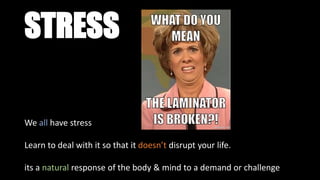
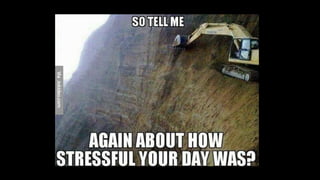
STRESS
We all have stress
Learn to deal with it so that it doesn’t disrupt your life.
its a natural response of the body & mind to a demand or challenge
Stress
negative stressors are usually more malignant:
serious illness or injury
serious illness, injury, or death of a family member or loved one
losing a job or sudden financial catastrophe
unwanted pregnancy
divorce or ending a long-term relationship (including parents’ divorce)
being arrested or convicted of a crime
being put on academic probation or suspended
Stress
may begin suddenly and disrupt one’s life in many ways
may last a long time
may require professional help to cope
these stressors do not occur every day and eventually end
StressEveryday stressors are more common but can add up and produce as much stress as a major life event:
Anxiety about not having enough time for classes, job, studies, and social life
Worries about grades, an upcoming test, or an assignment
Money concerns
Conflict with a roommate, someone at work, or family member
Anxiety or doubts about one’s future or difficulty choosing a major or career
Frequent colds, allergy attacks, other continuing health issues
Concerns about one’s appearance, weight, eating habits, and so on
Relationship tensions, poor social life, loneliness
Time-consuming hassles such as a broken-down car or the need to find a new apartment
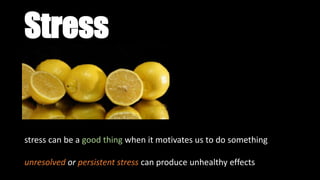
Stress
stress can be a good thing when it motivates us to do something
unresolved or persistent stress can produce unhealthy effects
CHRONIC STRESS
chronic (long-term) stress is associated with:
weakened immune system
digestive system problems
elevated blood pressure
increased risk of diabetes
muscle and back pain
headaches, fatigue, and insomnia
greater risk of heart attack
other cardiovascular problems
CHRONIC STRESS
chronic or acute (intense short-term) stress is not good
difficulty thinking clearly, concentrating, memorizing, recalling
relationship problems
irritability, anger, or avoidance
more frequent negative emotions
anxiety, depression, frustration, powerlessness, resentment, nervousness, cynicism
Stress
are your stressors external or internal?
you may be able to eliminate many external stressors
internal stressors take work and time to mitigate
SO YOU THINK YOU CAN DESTRESS
get some exercise
exercise increases the production of certain hormones
exercise helps you feel more energetic and focused
regular exercise also helps you sleep better
get more sleep
manage your money/time
what makes you happy?
Source: findwallpapershd.com
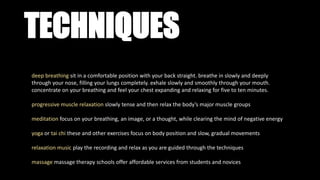
TECHNIQUES
deep breathing sit in a comfortable position with your back straight. breathe in slowly and deeply
through your nose, filling your lungs completely. exhale slowly and smoothly through your mouth.
concentrate on your breathing and feel your chest expanding and relaxing for five to ten minutes.
progressive muscle relaxation slowly tense and then relax the body’s major muscle groups
meditation focus on your breathing, an image, or a thought, while clearing the mind of negative energy
yoga or tai chi these and other exercises focus on body position and slow, gradual movements
relaxation music play the recording and relax as you are guided through the techniques
massage massage therapy schools offer affordable services from students and novices
DUE SUNDAY
fin

IVYT112 Week 8

  • 2.
    THING 1. Thereis still time to get registered for Summer. Advisors are on walk-ins. Stop by the Express Enrollment Center and get for Summer and Fall registered today! THING 2. Finishing up on projects and studying for finals week? The Student Success Center in D117 is open Monday-Thursday from 10am-8pm, Friday from 10am-6pm and Saturday from 10am-1pm to help you to have a strong finish to the Spring semester. THING 3. THANK YOU for attending Ivy Tech Community College this semester. We enjoyed having you here!!! Source: Epic Rap Battles in History #12
  • 3.
  • 4.
    THINGS WE’LL COVER Ch1: Plagiarism Ch 9: Tests Ch 2: Technology Ch 10: Diversity Ch 3: Communication Ch 11: Learning Styles Ch 4: Goals I Ch 12: Career Exploration Ch 5: Goals II Ch 13: Deliberate Practice Ch 6: Time Management Ch 14: Critical Thinking Ch 7: Planning Ch 15: Ethics Ch 8: Socializing Ch 16: Wellness
  • 5.
    WEEK 8: Ch16 Stanford Study Ch 16: -Journal 6
  • 6.
  • 7.
  • 14.
  • 15.
    1. Comparing theresults from the two surveys (session 1 & session 16), write about the areas in which your scores have changed. Remember to dig deep and answer questions that a thoughtful reader would have about what you are writing. What growth do you see? 2. Further comparing the results from the two surveys, write in depth about the areas in which you most want to continue improving. Remember the saying, "If you always do what you've always done, you'll always get what you always got." With this understanding in mind, identify the specific changes you'd like to make in your behaviors, thoughts, emotions, and beliefs in the months and years to come. By the way, if one of your scores went down over the time in this class, consider that this result may indicate not that you became less effective but that you are now more aware of what's necessary to excel in this area. 3. Write one last paragraph in which you sum up the most important discoveries that you made about yourself while keeping your journals. Dive deep! When you submit Journal 6 you will receive credit for completing the Academic Wellness Survey (15 points). Journal 6: Part B
  • 16.
    Nutrition & WeightControl among Americans 20 and up: 1/3 are obese another 1/3 are overweight causes are intertwined
  • 17.
    Source: Behavioral RiskFactor Surveillance System, CDC. Obesity Trends* Among U.S. Adults BRFSS, 1985 (*BMI ≥30, or ~ 30 lbs. overweight for 5’ 4” person) No Data <10% 10%–14%
  • 18.
    Source: Behavioral RiskFactor Surveillance System, CDC. Obesity Trends* Among U.S. Adults BRFSS, 1986 (*BMI ≥30, or ~ 30 lbs. overweight for 5’ 4” person) No Data <10% 10%–14%
  • 19.
    Source: Behavioral RiskFactor Surveillance System, CDC. Obesity Trends* Among U.S. Adults BRFSS, 1987 (*BMI ≥30, or ~ 30 lbs. overweight for 5’ 4” person) No Data <10% 10%–14%
  • 20.
    Source: Behavioral RiskFactor Surveillance System, CDC. Obesity Trends* Among U.S. Adults BRFSS, 1988 (*BMI ≥30, or ~ 30 lbs. overweight for 5’ 4” person) No Data <10% 10%–14%
  • 21.
    Source: Behavioral RiskFactor Surveillance System, CDC. Obesity Trends* Among U.S. Adults BRFSS, 1989 (*BMI ≥30, or ~ 30 lbs. overweight for 5’ 4” person) No Data <10% 10%–14%
  • 22.
    Source: Behavioral RiskFactor Surveillance System, CDC. Obesity Trends* Among U.S. Adults BRFSS, 1990 (*BMI ≥30, or ~ 30 lbs. overweight for 5’ 4” person) No Data <10% 10%–14%
  • 23.
    Source: Behavioral RiskFactor Surveillance System, CDC. Obesity Trends* Among U.S. Adults BRFSS, 1991 (*BMI ≥30, or ~ 30 lbs. overweight for 5’ 4” person) No Data <10% 10%–14% 15%–19%
  • 24.
    Source: Behavioral RiskFactor Surveillance System, CDC. Obesity Trends* Among U.S. Adults BRFSS, 1992 (*BMI ≥30, or ~ 30 lbs. overweight for 5’ 4” person) No Data <10% 10%–14% 15%–19%
  • 25.
    Source: Behavioral RiskFactor Surveillance System, CDC. Obesity Trends* Among U.S. Adults BRFSS, 1993 (*BMI ≥30, or ~ 30 lbs. overweight for 5’ 4” person) No Data <10% 10%–14% 15%–19%
  • 26.
    Source: Behavioral RiskFactor Surveillance System, CDC. Obesity Trends* Among U.S. Adults BRFSS, 1994 (*BMI ≥30, or ~ 30 lbs. overweight for 5’ 4” person) No Data <10% 10%–14% 15%–19%
  • 27.
    Source: Behavioral RiskFactor Surveillance System, CDC. Obesity Trends* Among U.S. Adults BRFSS, 1995 (*BMI ≥30, or ~ 30 lbs. overweight for 5’ 4” person) No Data <10% 10%–14% 15%–19%
  • 28.
    Source: Behavioral RiskFactor Surveillance System, CDC. Obesity Trends* Among U.S. Adults BRFSS, 1996 (*BMI ≥30, or ~ 30 lbs. overweight for 5’ 4” person) No Data <10% 10%–14% 15%–19%
  • 29.
    Source: Behavioral RiskFactor Surveillance System, CDC. Obesity Trends* Among U.S. Adults BRFSS, 1997 (*BMI ≥30, or ~ 30 lbs. overweight for 5’ 4” person) No Data <10% 10%–14% 15%–19% ≥20%
  • 30.
    Source: Behavioral RiskFactor Surveillance System, CDC. Obesity Trends* Among U.S. Adults BRFSS, 1998 (*BMI ≥30, or ~ 30 lbs. overweight for 5’ 4” person) No Data <10% 10%–14% 15%–19% ≥20%
  • 31.
    Source: Behavioral RiskFactor Surveillance System, CDC. Obesity Trends* Among U.S. Adults BRFSS, 1999 (*BMI ≥30, or ~ 30 lbs. overweight for 5’ 4” person) No Data <10% 10%–14% 15%–19% ≥20%
  • 32.
    Source: Behavioral RiskFactor Surveillance System, CDC. Obesity Trends* Among U.S. Adults BRFSS, 2000 (*BMI ≥30, or ~ 30 lbs. overweight for 5’ 4” person) No Data <10% 10%–14% 15%–19% ≥20%
  • 33.
    Source: Behavioral RiskFactor Surveillance System, CDC. Obesity Trends* Among U.S. Adults BRFSS, 2001 (*BMI ≥30, or ~ 30 lbs. overweight for 5’ 4” person) No Data <10% 10%–14% 15%–19% 20%–24% ≥25%
  • 34.
    Source: Behavioral RiskFactor Surveillance System, CDC. (*BMI ≥30, or ~ 30 lbs. overweight for 5’ 4” person) Obesity Trends* Among U.S. Adults BRFSS, 2002 No Data <10% 10%–14% 15%–19% 20%–24% ≥25%
  • 35.
    Source: Behavioral RiskFactor Surveillance System, CDC. Obesity Trends* Among U.S. Adults BRFSS, 2003 (*BMI ≥30, or ~ 30 lbs. overweight for 5’ 4” person) No Data <10% 10%–14% 15%–19% 20%–24% ≥25%
  • 36.
    Source: Behavioral RiskFactor Surveillance System, CDC. Obesity Trends* Among U.S. Adults BRFSS, 2004 (*BMI ≥30, or ~ 30 lbs. overweight for 5’ 4” person) No Data <10% 10%–14% 15%–19% 20%–24% ≥25%
  • 37.
    Source: Behavioral RiskFactor Surveillance System, CDC. Obesity Trends* Among U.S. Adults BRFSS, 2005 (*BMI ≥30, or ~ 30 lbs. overweight for 5’ 4” person) No Data <10% 10%–14% 15%–19% 20%–24% 25%–29% ≥30%
  • 38.
    Source: Behavioral RiskFactor Surveillance System, CDC. Obesity Trends* Among U.S. Adults BRFSS, 2006 (*BMI ≥30, or ~ 30 lbs. overweight for 5’ 4” person) No Data <10% 10%–14% 15%–19% 20%–24% 25%–29% ≥30%
  • 39.
    Source: Behavioral RiskFactor Surveillance System, CDC. Obesity Trends* Among U.S. Adults BRFSS, 2007 (*BMI ≥30, or ~ 30 lbs. overweight for 5’ 4” person) No Data <10% 10%–14% 15%–19% 20%–24% 25%–29% ≥30%
  • 40.
    Source: Behavioral RiskFactor Surveillance System, CDC. Obesity Trends* Among U.S. Adults BRFSS, 2008 (*BMI ≥30, or ~ 30 lbs. overweight for 5’ 4” person) No Data <10% 10%–14% 15%–19% 20%–24% 25%–29% ≥30%
  • 41.
    Source: Behavioral RiskFactor Surveillance System, CDC. Obesity Trends* Among U.S. Adults BRFSS, 2009 (*BMI ≥30, or ~ 30 lbs. overweight for 5’ 4” person) No Data <10% 10%–14% 15%–19% 20%–24% 25%–29% ≥30%
  • 42.
    Source: Behavioral RiskFactor Surveillance System, CDC. Obesity Trends* Among U.S. Adults BRFSS, 2010 (*BMI ≥30, or ~ 30 lbs. overweight for 5’ 4” person) No Data <10% 10%–14% 15%–19% 20%–24% 25%–29% ≥30%
  • 43.
  • 44.
    The Consequences obesity isassociated with many medical conditions: diabetes, cardiovascular disease, and some cancers some health problems may not appear until later in life diabetes is increasing rapidly in children and teenagers
  • 45.
  • 46.
  • 47.
    Nutrition & WeightControl habits can be hard to break it’s not just about body weight/composition nutrition affects mental and physical function and well-being
  • 48.
    Whatcha Say? “Why DoStudents Find It So Tough to Eat Healthily?”
  • 49.
  • 51.
    MIGHT WE SUGGEST: checkyour BMI to see the normal weight range for your height determine your ideal caloric intake for gradual weight loss set your goals and make a plan you can live with start by avoiding snacks and fast foods stay active and try to exercise frequently keep a daily food journal and write down what you eat no one plan works for everyone
  • 52.
  • 53.
    Everybody in theclub gettin’ TIPS: eat a variety of foods every day take a multivitamin every day carry an apple or banana at all times avoid fried/sugary foods (cereal/soda) eat when hungry, not when bored or just because others are eating try eating a salad, sweetie watch portion sizes
  • 54.
  • 55.
    EATING DISORDERS most commoneating disorders: anorexia, bulimia, binge eating. anorexia = excessive weight loss and self-starvation, self-perception of fat bulimia = binge-and-purge cycle (self-induced vomiting or laxative) binge eating disorder = binge only affect 10+ million Americans Source: physio-pedia.com
  • 56.
  • 57.
  • 58.
  • 59.
  • 60.
    SIGNS (versus SYMPTOMS) eatingsecretly irrational fear of weight gain or being overweight only eating a limited number of foods exercising obsessively lacking a monthly period Source: funnysigns.net
  • 62.
    Activity & Exerciseimprovedfitness for the whole body, not just the muscles greater cardiovascular fitness and reduced disease risk increased physical endurance stronger immune system, providing more resistance to disease lower cholesterol levels, reducing the risks of cardiovascular disease lowered risk of developing diabetes weight maintenance or loss
  • 63.
    Activity & Exercise reducestress improve your mood (less anxiety & depression) improve your mental focus sleep better feel better about yourself
  • 64.
    Activity & Exercise Whatphysical activities do you enjoy? How often each week do you engage in a physical activity? If you feel you’re not getting much exercise, what stands in your way? Overall, do you think you get enough exercise to be healthy? Do you feel a lot of stress in your life? Do you frequently have trouble getting to sleep?
  • 65.
    AEROBICS aerobic exercise improvescardiovascular fitness try to exercise at least 3x/week for 20-30 mins + as often as six days a week start off easy “no pain, no gain” is not true: if you feel pain, stop or cut back build up strength and endurance consistently and gradually aerobic = keep your HR in the target HR zone: 60% to 85% of maxHR where maxHR = 220 – age
  • 66.
    Activity & Exercisefinda type of exercise or activity that you enjoy—or else you won’t stick with it many people listen to music and some even read when using workout equipment you also gain by taking the stairs instead of elevators walking farther across campus instead of parking as close to your destination as you can get exercise with a friend is more enjoyable interactive games can get your heart rate up Fitbit/garmin can track your progress and export to spreadsheet is the biggest obstacle to getting enough exercise a lack of time? or poor time management? exercise actually saves you time because you’re sleeping better and operating more efficiently
  • 67.
    CAMPUS ACTIVITIES tuesday nightyoga 6:15-7:15 d204 wednesday night zumba 6:15-7:15 d204
  • 68.
  • 69.
    SLEEPING WELL improves yourmood during the day improves your memory and learning abilities gives you more energy strengthens your immune system promotes wellness of body, mind, spirit
  • 70.
    NOT SLEEPING WELL contributesto anxiety, depression, general unhappiness causes sleepiness, difficulty focusing, ineffective studying weakens the immune system Increases accident % (e.g., while driving) contributes to weight gain Source: Huffington Post
  • 71.
    SLEEP NEEDS most peopleneed 7-9 hours of sleep a night many who claim to need less sleep exhibit mild symptoms of sleep deprivation some genuinely need only about 6 new research indicates there may be a “sleep gene” quality of sleep is just as important as quantity Only 10-15% of college students consistently get enough sleep
  • 72.
    SLEEP MYTHS having adrink or two helps me get to sleep better exercise before bedtime is good for sleeping it helps to fall asleep after watching TV or Facebook in bed
  • 73.
    WHAT NOT TODO avoid nicotine avoid caffeine for 6-8 hours before bed, YMMV don’t eat in the two to three hours before bed avoid alcohol before bedtime don’t nap during the day napping is the least productive form of rest and often makes you less alert it may also prevent you from getting a good night’s sleep
  • 74.
    WHAT TO DO exerciseearlier in the day (at least several hours before bedtime) try to get to bed and wake about the same time every day the room should induce sleep: dark, quiet, comfortable, and cool use your bed only for sleeping, not for studying, watching television, or other activities. Going to bed will become associated with going to sleep. establish a winding-down routine, such as taking a hot shower, listening to soothing music, summer reading, or another relaxation technique
  • 75.
    TRY THIS ATHOME if you can’t fall asleep after 10-15 minutes, get up and do something soporific read or listen to a recorded book; go back to bed when you’re sleepy if you frequently cannot get to sleep or are often awake for a long time during the night, you may be suffering from insomnia, a medical condition resist the temptation to try over-the-counter sleep aids if you still cannot sleep, talk with your health-care provider or visit DSS
  • 76.
  • 78.
    STRESS We all havestress Learn to deal with it so that it doesn’t disrupt your life. its a natural response of the body & mind to a demand or challenge
  • 79.
    Stress negative stressors areusually more malignant: serious illness or injury serious illness, injury, or death of a family member or loved one losing a job or sudden financial catastrophe unwanted pregnancy divorce or ending a long-term relationship (including parents’ divorce) being arrested or convicted of a crime being put on academic probation or suspended
  • 80.
    Stress may begin suddenlyand disrupt one’s life in many ways may last a long time may require professional help to cope these stressors do not occur every day and eventually end
  • 81.
    StressEveryday stressors aremore common but can add up and produce as much stress as a major life event: Anxiety about not having enough time for classes, job, studies, and social life Worries about grades, an upcoming test, or an assignment Money concerns Conflict with a roommate, someone at work, or family member Anxiety or doubts about one’s future or difficulty choosing a major or career Frequent colds, allergy attacks, other continuing health issues Concerns about one’s appearance, weight, eating habits, and so on Relationship tensions, poor social life, loneliness Time-consuming hassles such as a broken-down car or the need to find a new apartment
  • 82.
    Stress stress can bea good thing when it motivates us to do something unresolved or persistent stress can produce unhealthy effects
  • 83.
    CHRONIC STRESS chronic (long-term)stress is associated with: weakened immune system digestive system problems elevated blood pressure increased risk of diabetes muscle and back pain headaches, fatigue, and insomnia greater risk of heart attack other cardiovascular problems
  • 84.
    CHRONIC STRESS chronic oracute (intense short-term) stress is not good difficulty thinking clearly, concentrating, memorizing, recalling relationship problems irritability, anger, or avoidance more frequent negative emotions anxiety, depression, frustration, powerlessness, resentment, nervousness, cynicism
  • 87.
    Stress are your stressorsexternal or internal? you may be able to eliminate many external stressors internal stressors take work and time to mitigate
  • 88.
    SO YOU THINKYOU CAN DESTRESS get some exercise exercise increases the production of certain hormones exercise helps you feel more energetic and focused regular exercise also helps you sleep better get more sleep manage your money/time
  • 89.
    what makes youhappy? Source: findwallpapershd.com
  • 90.
    TECHNIQUES deep breathing sitin a comfortable position with your back straight. breathe in slowly and deeply through your nose, filling your lungs completely. exhale slowly and smoothly through your mouth. concentrate on your breathing and feel your chest expanding and relaxing for five to ten minutes. progressive muscle relaxation slowly tense and then relax the body’s major muscle groups meditation focus on your breathing, an image, or a thought, while clearing the mind of negative energy yoga or tai chi these and other exercises focus on body position and slow, gradual movements relaxation music play the recording and relax as you are guided through the techniques massage massage therapy schools offer affordable services from students and novices
  • 92.
  • 93.