08/28/2024 1
A Research Proposal Presentation on
Health-Risk Behaviors and Attitudes towards
Physical Activity: A Comprehensive Study
In partial fulfilment of Ph.D., Admission 2023
Department of Physical Education and Spots
Presented By
Ayona Eldos
Reg. No: PUS23001590
08/28/2024 2
Agenda
• Introduction
• Literature Review
• Objectives
• Methodology
• Proposed Outcome
• References
08/28/2024 3
Introduction
• Health risk behavior is a multifaceted construct that encompasses a
range of actions and choices that individuals engage in, potentially
compromising their physical, mental, or social well-being.
• These behaviors, often rooted in lifestyle choices, can have far-
reaching implications on an individual's health trajectory, affecting not
only their quality of life but also straining healthcare systems and
public resources.
08/28/2024 4
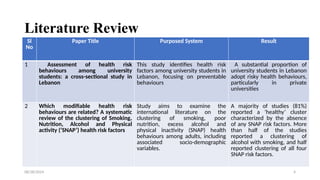
Literature Review
Sl
No
Paper Title Purposed System Result
1 Assessment of health risk
behaviours among university
students: a cross-sectional study in
Lebanon
This study identifies health risk
factors among university students in
Lebanon, focusing on preventable
behaviours
A substantial proportion of
university students in Lebanon
adopt risky health behaviours,
particularly in private
universities
2 Which modifiable health risk
behaviours are related? A systematic
review of the clustering of Smoking,
Nutrition, Alcohol and Physical
activity (‘SNAP’) health risk factors
Study aims to examine the
international literature on the
clustering of smoking, poor
nutrition, excess alcohol and
physical inactivity (SNAP) health
behaviours among adults, including
associated socio-demographic
variables.
A majority of studies (81%)
reported a ‘healthy’ cluster
characterized by the absence
of any SNAP risk factors. More
than half of the studies
reported a clustering of
alcohol with smoking, and half
reported clustering of all four
SNAP risk factors.
08/28/2024 5
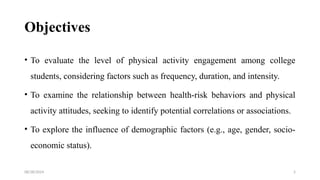
Objectives
• To evaluate the level of physical activity engagement among college
students, considering factors such as frequency, duration, and intensity.
• To examine the relationship between health-risk behaviors and physical
activity attitudes, seeking to identify potential correlations or associations.
• To explore the influence of demographic factors (e.g., age, gender, socio-
economic status).
08/28/2024 6
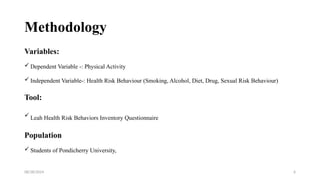
Methodology
Variables:
 Dependent Variable -: Physical Activity
 Independent Variable-: Health Risk Behaviour (Smoking, Alcohol, Diet, Drug, Sexual Risk Behaviour)
Tool:
 Leah Health Risk Behaviors Inventory Questionnaire
Population
 Students of Pondicherry University,
08/28/2024 7
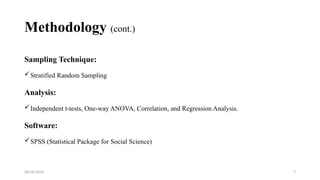
Methodology (cont.)
Sampling Technique:
Stratified Random Sampling
Analysis:
Independent t-tests, One-way ANOVA, Correlation, and Regression Analysis.
Software:
SPSS (Statistical Package for Social Science)
08/28/2024 8
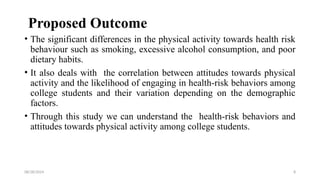
Proposed Outcome
• The significant differences in the physical activity towards health risk
behaviour such as smoking, excessive alcohol consumption, and poor
dietary habits.
• It also deals with the correlation between attitudes towards physical
activity and the likelihood of engaging in health-risk behaviors among
college students and their variation depending on the demographic
factors.
• Through this study we can understand the health-risk behaviors and
attitudes towards physical activity among college students.
08/28/2024 9
References
• Black, D. R., Tobler, N. S., & Sciacca, J. P. (1998). Peer helping/involvement: an efficacious way
to meet the challenge of reducing alcohol, tobacco, and other drug use among youth. Journal of
School Health, 68(3), 87-93
• Pengpid, S., Peltzer, K., & Mirrakhimov, E. M. (2014). Prevalence of health risk behaviors and
their associated factors among university students in Kyrgyzstan. International journal of
adolescent medicine and health, 26(2), 175-185.
• Poscia, A., Parente, P., Frisicale, E. M., Teleman, A. A., Waure, C. D., & Pietro, M. L. D. (2015).
Risky behaviours among university students in Italy. Annali dell'Istituto superiore di sanita,
08/28/2024 10
Thank You

Its the ppt used for the interview purpose.

  • 1.
    08/28/2024 1 A ResearchProposal Presentation on Health-Risk Behaviors and Attitudes towards Physical Activity: A Comprehensive Study In partial fulfilment of Ph.D., Admission 2023 Department of Physical Education and Spots Presented By Ayona Eldos Reg. No: PUS23001590
  • 2.
    08/28/2024 2 Agenda • Introduction •Literature Review • Objectives • Methodology • Proposed Outcome • References
  • 3.
    08/28/2024 3 Introduction • Healthrisk behavior is a multifaceted construct that encompasses a range of actions and choices that individuals engage in, potentially compromising their physical, mental, or social well-being. • These behaviors, often rooted in lifestyle choices, can have far- reaching implications on an individual's health trajectory, affecting not only their quality of life but also straining healthcare systems and public resources.
  • 4.
    08/28/2024 4 Literature Review Sl No PaperTitle Purposed System Result 1 Assessment of health risk behaviours among university students: a cross-sectional study in Lebanon This study identifies health risk factors among university students in Lebanon, focusing on preventable behaviours A substantial proportion of university students in Lebanon adopt risky health behaviours, particularly in private universities 2 Which modifiable health risk behaviours are related? A systematic review of the clustering of Smoking, Nutrition, Alcohol and Physical activity (‘SNAP’) health risk factors Study aims to examine the international literature on the clustering of smoking, poor nutrition, excess alcohol and physical inactivity (SNAP) health behaviours among adults, including associated socio-demographic variables. A majority of studies (81%) reported a ‘healthy’ cluster characterized by the absence of any SNAP risk factors. More than half of the studies reported a clustering of alcohol with smoking, and half reported clustering of all four SNAP risk factors.
  • 5.
    08/28/2024 5 Objectives • Toevaluate the level of physical activity engagement among college students, considering factors such as frequency, duration, and intensity. • To examine the relationship between health-risk behaviors and physical activity attitudes, seeking to identify potential correlations or associations. • To explore the influence of demographic factors (e.g., age, gender, socio- economic status).
  • 6.
    08/28/2024 6 Methodology Variables:  DependentVariable -: Physical Activity  Independent Variable-: Health Risk Behaviour (Smoking, Alcohol, Diet, Drug, Sexual Risk Behaviour) Tool:  Leah Health Risk Behaviors Inventory Questionnaire Population  Students of Pondicherry University,
  • 7.
    08/28/2024 7 Methodology (cont.) SamplingTechnique: Stratified Random Sampling Analysis: Independent t-tests, One-way ANOVA, Correlation, and Regression Analysis. Software: SPSS (Statistical Package for Social Science)
  • 8.
    08/28/2024 8 Proposed Outcome •The significant differences in the physical activity towards health risk behaviour such as smoking, excessive alcohol consumption, and poor dietary habits. • It also deals with the correlation between attitudes towards physical activity and the likelihood of engaging in health-risk behaviors among college students and their variation depending on the demographic factors. • Through this study we can understand the health-risk behaviors and attitudes towards physical activity among college students.
  • 9.
    08/28/2024 9 References • Black,D. R., Tobler, N. S., & Sciacca, J. P. (1998). Peer helping/involvement: an efficacious way to meet the challenge of reducing alcohol, tobacco, and other drug use among youth. Journal of School Health, 68(3), 87-93 • Pengpid, S., Peltzer, K., & Mirrakhimov, E. M. (2014). Prevalence of health risk behaviors and their associated factors among university students in Kyrgyzstan. International journal of adolescent medicine and health, 26(2), 175-185. • Poscia, A., Parente, P., Frisicale, E. M., Teleman, A. A., Waure, C. D., & Pietro, M. L. D. (2015). Risky behaviours among university students in Italy. Annali dell'Istituto superiore di sanita,
  • 10.