Download to read offline
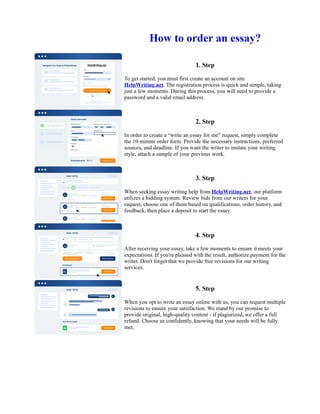
![Web Service And Web Services
ABSTRACT
Web Services are modular, self–describing, self–contained and loosely coupled applications that can
be published, located, and invoked across the web. With the increasing number of web services
available on the web, the need for web services composition is becoming more and more important.
Nowadays, for answering complex needs of users, the construction of new web services based on
existing ones is required.
This problem is known as web services composition. However, it is one of big challenge problems
of recent years in a distributed and dynamic environment. The various approaches in field of web
service compositions proposed by the researchers. In this paper we present a review of existing
approaches for web service composition and compare them among each other with respect to some
key requirements. We hope this paper helps researchers to focus on their efforts and to deliver
lasting solutions in this field.
KEYWORDS
Semantic Web Service, Semantic Similarity, Web Services Composition, Composition Techniques.
1. INTRODUCTION
Service Oriented Architectures (SOA) and Web Services are presented in the mainstream scientific
and industrial for many years. SOA is an architectural paradigm and interactions or patterns between
them for components of a system. In this architecture, service is a contractually defined behavior
that can be implemented and provided by a component for by using another component [1].
Web service is a [2]. software component that takes the input
... Get more on HelpWriting.net ...](https://image.slidesharecdn.com/itec610assingement1essay-231118194910-338c2a93/85/ITEC-610-Assingement-1-Essay-3-320.jpg)




























![Analysis Of Frederic Bartlett 's Theory
Frederic Bartlett (1932) is argued to have laid the foundation for a schema theory with the "key
assumption of previous knowledge affecting the processing of new stimuli" (Carbon & Albrecht,
2012, p. 2258). Bartlett's interest was in the role played by prior knowledge in the interpretation of
stories. This may explain why the concept "knowledge" appeared as a key term in Rumelhart's
(1980) famous definition of the notion of schemas, or as he prefers to call it, "schemata":
[S]chemata can represent knowledge at all levels from ideologies and cultural truths to knowledge
about the meaning of a particular word, to knowledge about what patterns of excitations are
associated with what letters of the alphabet. We have schemata to represent all levels of our
experience, at all levels of abstraction. Finally, our schemata are our knowledge. All of our generic
knowledge is embedded in schemata. (p. 41)
However, as Gregory (2002) argues, it should be noted that such knowledge, be it implicit or
explicit, is shared by the members of a social group "by way of their discourses"; and therefore "the
pattern of their knowledge is observable and so describable, and this caters too for what is pertinent
about an individual's knowledge" (Gregory, 2002, p. 16). Another important aspect of schema–based
knowledge is discussed by van Dijk and Kintsch (1983, p. 47), that is, such knowledge represents
"descriptions, not definitions"; and they (ibid., pp. 47–48) set the illustrative example of
... Get more on HelpWriting.net ...](https://image.slidesharecdn.com/itec610assingement1essay-231118194910-338c2a93/85/ITEC-610-Assingement-1-Essay-72-320.jpg)





Here are the key advantages and disadvantages of service-oriented architecture (SOA): Advantages: - Loose coupling: Services can easily be modified or replaced without affecting other services. This improves flexibility and maintainability. - Reusability: Services can be reused in different applications, reducing development time and costs. - Scalability: It's easier to increase or decrease capacity by adding/removing services as needs change. - Interoperability: Services use standards-based interfaces, making it easier for different systems to communicate. Disadvantages: - Complexity: SOA introduces additional layers of abstraction and complexity in architecture, development, and management. - Performance overhead: Additional processing is required for service abstraction


![mobile computing XML_and_Mobile_Applications[1].pptx](https://cdn.slidesharecdn.com/ss_thumbnails/xmlandmobileapplications1-250618173110-3c4869ed-thumbnail.jpg?width=640&height=640&fit=bounds)


