IT Final Presentation
    Chris Thompson
    April 18th, 2013
       CNIT 227
Table of Contents

Introduction

     Materials

           Methods

               Results and Conclusion
INTRODUCTION
Biotechnology
Biotechnology - Any technological application that uses
biological systems, living organisms or derivatives
thereof, to make or modify products or processes for
specific use.

Biotechnology is important because without
biotechnology, many of the advancements in the latter
half of the 20th century would not have been possible,
like the Green Revolution
IT
IT is the biotechnology course at Purdue, focused on
researching and characterizing the properties of
mycobacteriophages.

This semester our overall goal was to develop a system
for schools without a DNA sequencer to determine the
cluster assignments of phages.
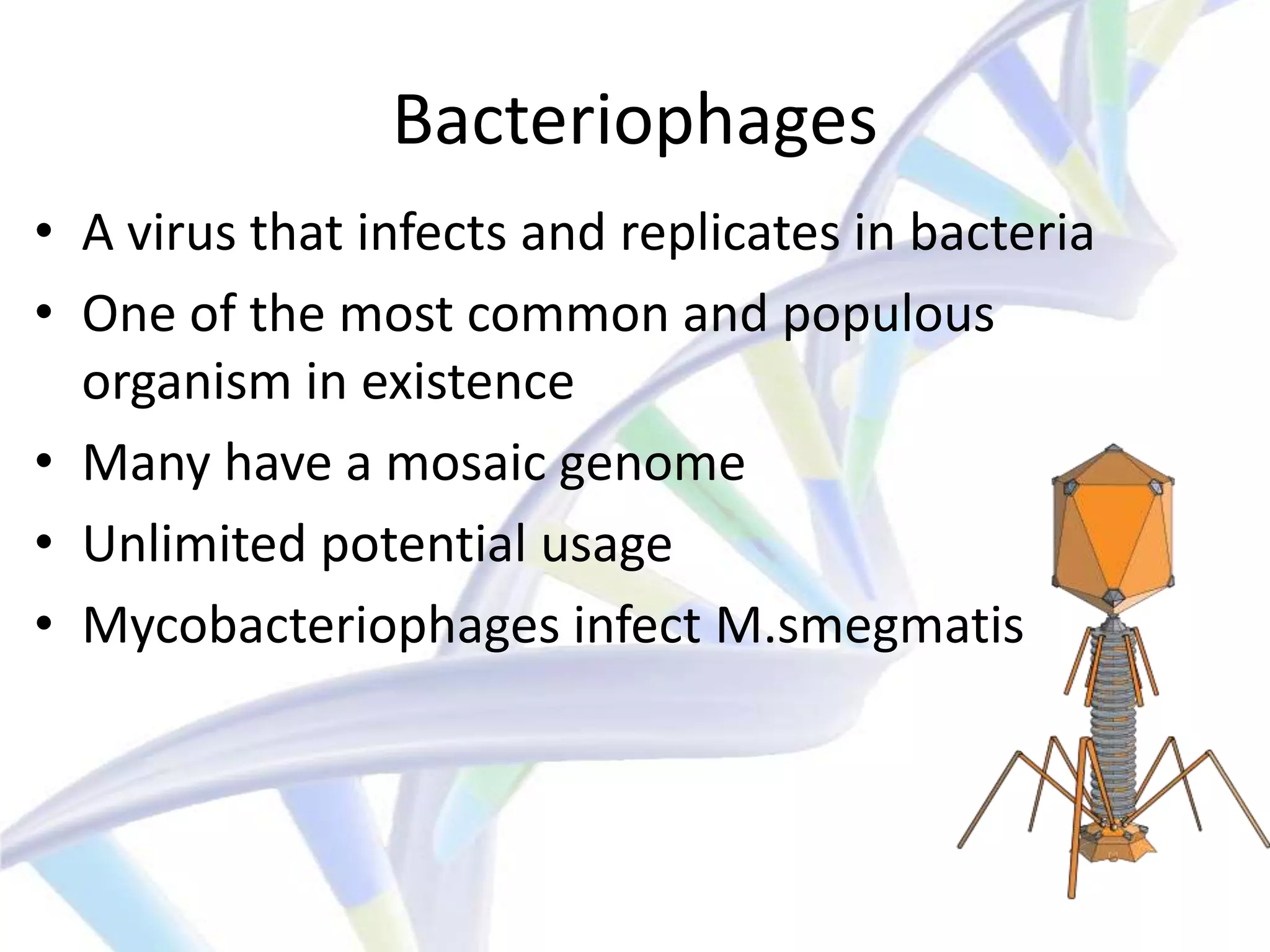
Bacteriophages
• A virus that infects and replicates in bacteria
• One of the most common and populous
  organism in existence
• Many have a mosaic genome
• Unlimited potential usage
• Mycobacteriophages infect M.smegmatis
Clusters
• System to organize bacteriophages
• Phages sorted by factors such as genome
  length, presence of certain genes,
  organization of genome, GC content, and
  plaque size and characteristics
• A, B, C, D, E, F, G, H, I, J, K, L, M, N, O, P, Q, R, S,
  Singleton, and T
MATERIALS
Materials
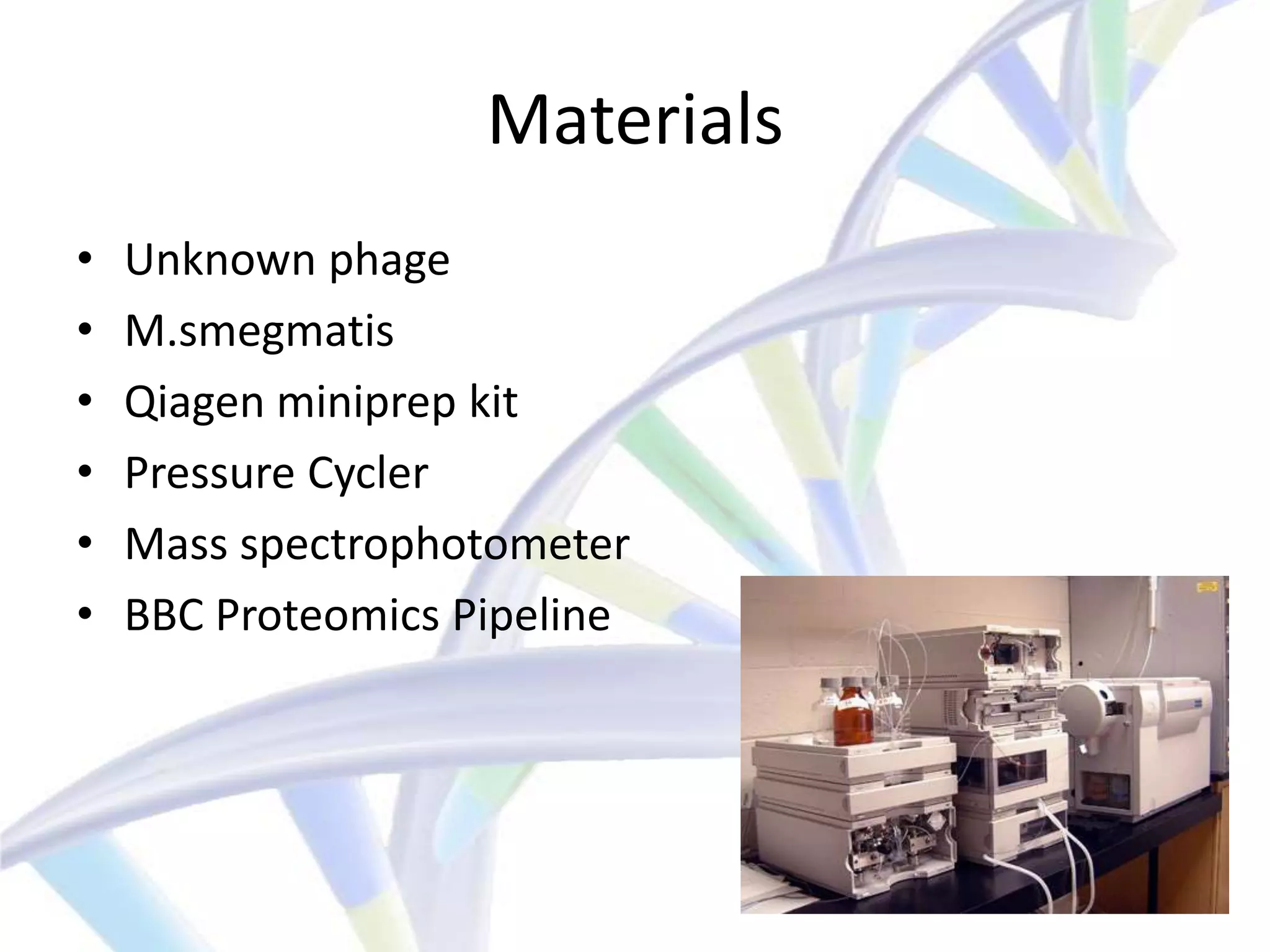
•   Unknown phage
•   M.smegmatis
•   Qiagen miniprep kit
•   Pressure Cycler
•   Mass spectrophotometer
•   BBC Proteomics Pipeline
METHODS
Organization
• HHMI gave us 15 unknown phages to work with
• Each student performed assays on their own phage
  to determine its cluster assignment
• HHMI knows the cluster assignment, and will tell us if
  we’re correct
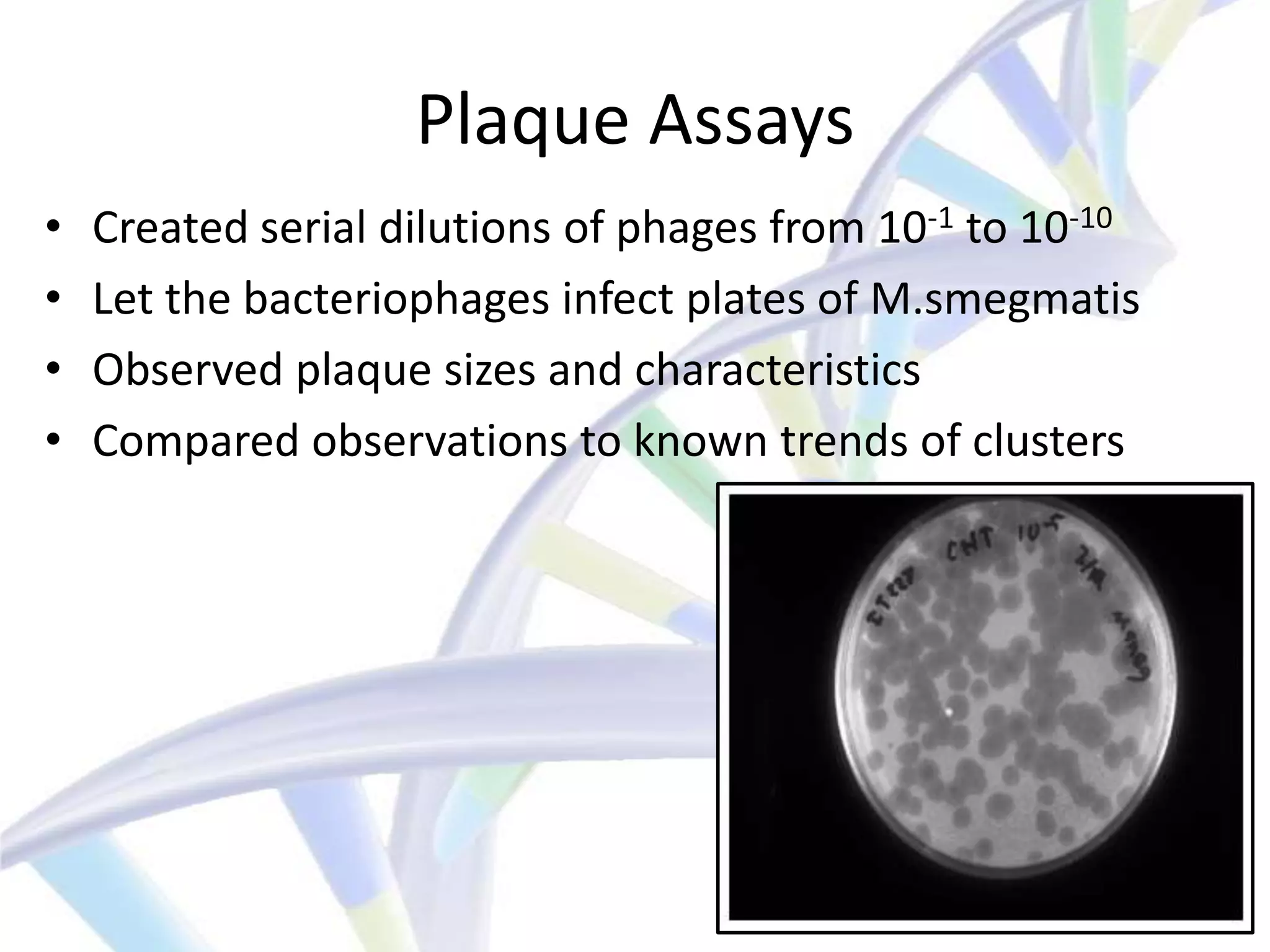
Plaque Assays
•   Created serial dilutions of phages from 10-1 to 10-10
•   Let the bacteriophages infect plates of M.smegmatis
•   Observed plaque sizes and characteristics
•   Compared observations to known trends of clusters
DNA Extraction
• Used a pressure cycling machine to destroy cell
  membrane and organelles
• Did a standard DNA extraction of the phage genome
  using buffers and centrifuges
• Used a NanoDrop machine to analyze the
  concentration of nucleotides in the sample
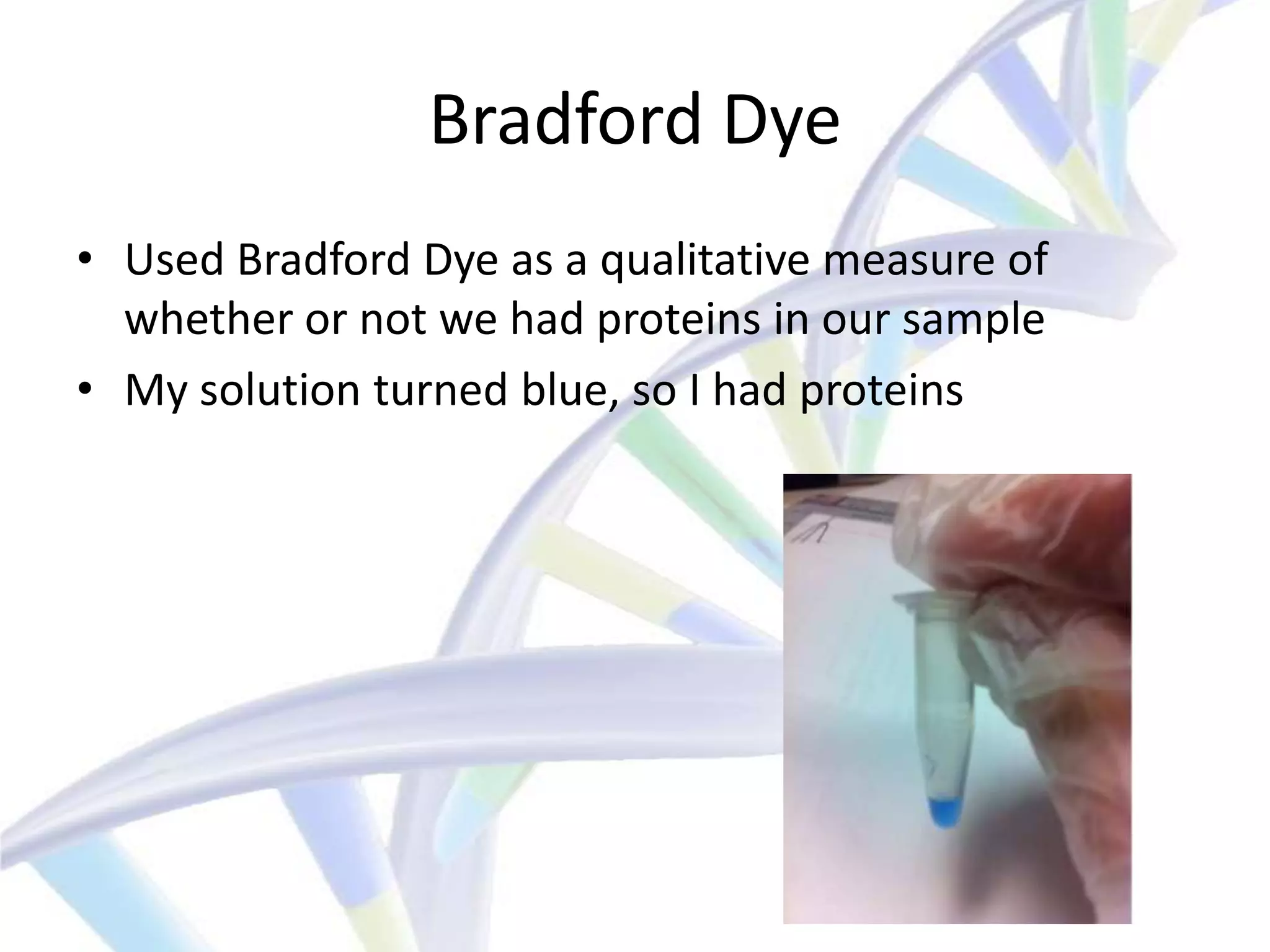
Bradford Dye
• Used Bradford Dye as a qualitative measure of
  whether or not we had proteins in our sample
• My solution turned blue, so I had proteins
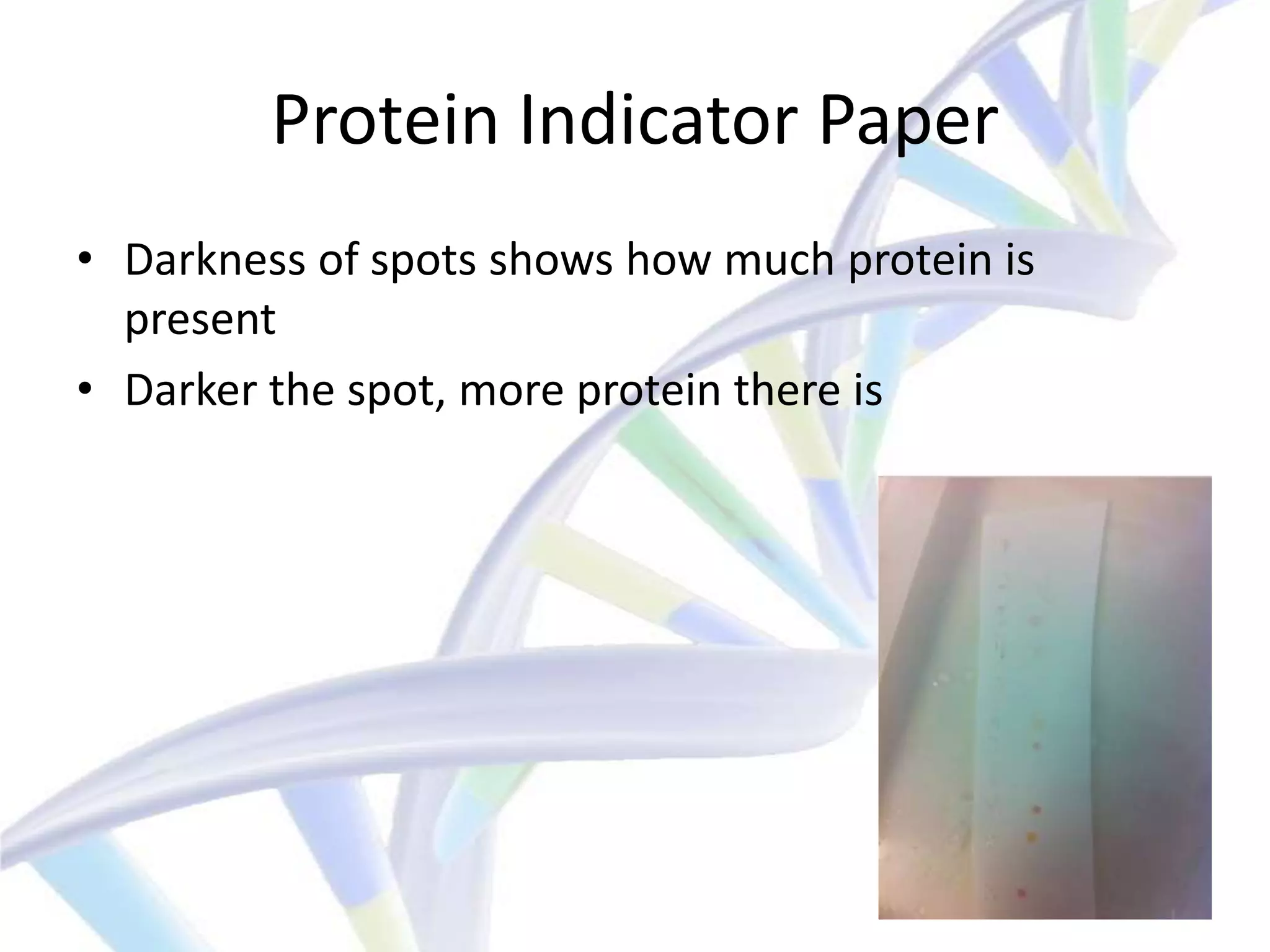
Protein Indicator Paper
• Darkness of spots shows how much protein is
  present
• Darker the spot, more protein there is
Mass Spectrometry
• Used mass spectrometry to analyze protein products
• Went through the BBC Proteomics Discovery Pipeline
• Compared results with negative control and positive
  control
• Phages that showed up the most:
   –   Bxz2 (13)
   –   EpicPhail (3)
   –   Rockstar (4)
   –   Dori (15)
RESULTS AND
CONCLUSION
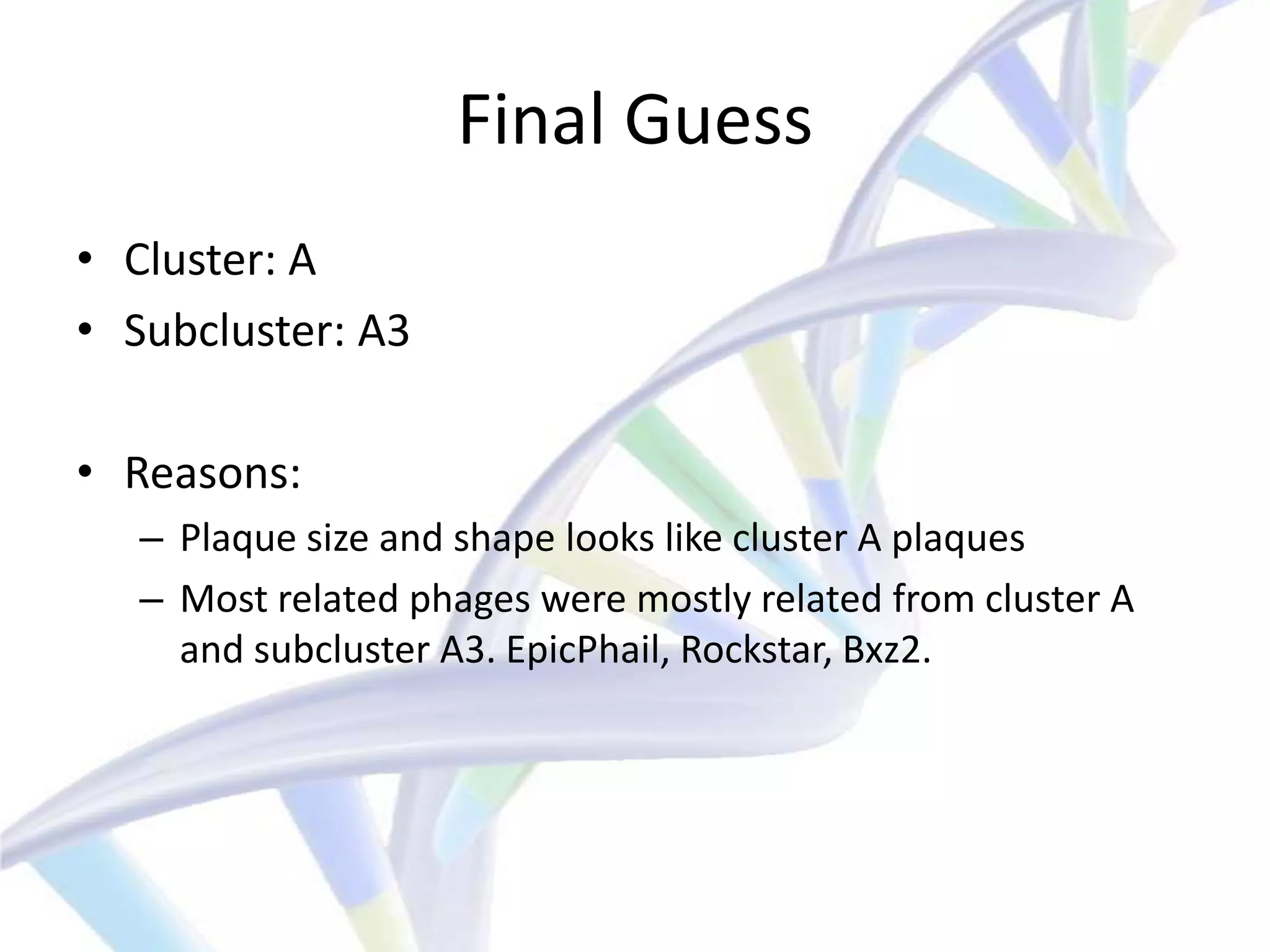
Final Guess
• Cluster: A
• Subcluster: A3

• Reasons:
   – Plaque size and shape looks like cluster A plaques
   – Most related phages were mostly related from cluster A
     and subcluster A3. EpicPhail, Rockstar, Bxz2.
Accomplishments
• Used complex lab procedures to analyze phage
  properties
• Used mass spectrometry to discover protein
  products of phage
• Were able to compare cluster properties of certain
  phages to our unknown and make a prediction
Significance
• Cluster assignment method can be used by schools
  that don’t have the funds to do full genome
  sequencing
• Proves validity of undergraduate research
• Learned about biotechnology, bacteriophages,
  genomes, plaques, and clusters
Future Work and Questions
• Was the phage novel or a common phage?
• How close was my guess?
• Is there a better method to assign clusters without
  sequencing the genome?
The End

It final presentation

  • 1.
    IT Final Presentation Chris Thompson April 18th, 2013 CNIT 227
  • 2.
    Table of Contents Introduction Materials Methods Results and Conclusion
  • 3.
  • 4.
    Biotechnology Biotechnology - Anytechnological application that uses biological systems, living organisms or derivatives thereof, to make or modify products or processes for specific use. Biotechnology is important because without biotechnology, many of the advancements in the latter half of the 20th century would not have been possible, like the Green Revolution
  • 5.
    IT IT is thebiotechnology course at Purdue, focused on researching and characterizing the properties of mycobacteriophages. This semester our overall goal was to develop a system for schools without a DNA sequencer to determine the cluster assignments of phages.
  • 6.
    Bacteriophages • A virusthat infects and replicates in bacteria • One of the most common and populous organism in existence • Many have a mosaic genome • Unlimited potential usage • Mycobacteriophages infect M.smegmatis
  • 7.
    Clusters • System toorganize bacteriophages • Phages sorted by factors such as genome length, presence of certain genes, organization of genome, GC content, and plaque size and characteristics • A, B, C, D, E, F, G, H, I, J, K, L, M, N, O, P, Q, R, S, Singleton, and T
  • 8.
  • 9.
    Materials • Unknown phage • M.smegmatis • Qiagen miniprep kit • Pressure Cycler • Mass spectrophotometer • BBC Proteomics Pipeline
  • 10.
  • 11.
    Organization • HHMI gaveus 15 unknown phages to work with • Each student performed assays on their own phage to determine its cluster assignment • HHMI knows the cluster assignment, and will tell us if we’re correct
  • 12.
    Plaque Assays • Created serial dilutions of phages from 10-1 to 10-10 • Let the bacteriophages infect plates of M.smegmatis • Observed plaque sizes and characteristics • Compared observations to known trends of clusters
  • 13.
    DNA Extraction • Useda pressure cycling machine to destroy cell membrane and organelles • Did a standard DNA extraction of the phage genome using buffers and centrifuges • Used a NanoDrop machine to analyze the concentration of nucleotides in the sample
  • 14.
    Bradford Dye • UsedBradford Dye as a qualitative measure of whether or not we had proteins in our sample • My solution turned blue, so I had proteins
  • 15.
    Protein Indicator Paper •Darkness of spots shows how much protein is present • Darker the spot, more protein there is
  • 16.
    Mass Spectrometry • Usedmass spectrometry to analyze protein products • Went through the BBC Proteomics Discovery Pipeline • Compared results with negative control and positive control • Phages that showed up the most: – Bxz2 (13) – EpicPhail (3) – Rockstar (4) – Dori (15)
  • 17.
  • 18.
    Final Guess • Cluster:A • Subcluster: A3 • Reasons: – Plaque size and shape looks like cluster A plaques – Most related phages were mostly related from cluster A and subcluster A3. EpicPhail, Rockstar, Bxz2.
  • 19.
    Accomplishments • Used complexlab procedures to analyze phage properties • Used mass spectrometry to discover protein products of phage • Were able to compare cluster properties of certain phages to our unknown and make a prediction
  • 20.
    Significance • Cluster assignmentmethod can be used by schools that don’t have the funds to do full genome sequencing • Proves validity of undergraduate research • Learned about biotechnology, bacteriophages, genomes, plaques, and clusters
  • 21.
    Future Work andQuestions • Was the phage novel or a common phage? • How close was my guess? • Is there a better method to assign clusters without sequencing the genome?
  • 22.