IT ETHICAL PRACTICESAND COMPLIANCE
Introduction to IT ethics information technology (IT) ethics refer to the moral principles and guidelines that govern
the use, management, and security of information technology resources. Ethical IT practices ensure responsible and
fair use of technology while respecting privacy, security, and intellectual property rights.
2.
IT ETHICAL PRACTICES
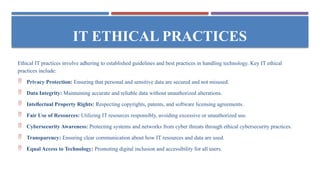
EthicalIT practices involve adhering to established guidelines and best practices in handling technology. Key IT ethical
practices include:
Privacy Protection: Ensuring that personal and sensitive data are secured and not misused.
Data Integrity: Maintaining accurate and reliable data without unauthorized alterations.
Intellectual Property Rights: Respecting copyrights, patents, and software licensing agreements.
Fair Use of Resources: Utilizing IT resources responsibly, avoiding excessive or unauthorized use.
Cybersecurity Awareness: Protecting systems and networks from cyber threats through ethical cybersecurity practices.
Transparency: Ensuring clear communication about how IT resources and data are used.
Equal Access to Technology: Promoting digital inclusion and accessibility for all users.
3.
UNETHICAL IT PRACTICES
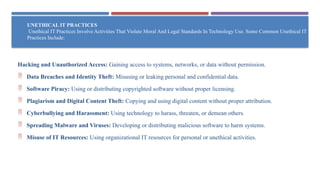
UnethicalIT Practices Involve Activities That Violate Moral And Legal Standards In Technology Use. Some Common Unethical IT
Practices Include:
Hacking and Unauthorized Access: Gaining access to systems, networks, or data without permission.
Data Breaches and Identity Theft: Misusing or leaking personal and confidential data.
Software Piracy: Using or distributing copyrighted software without proper licensing.
Plagiarism and Digital Content Theft: Copying and using digital content without proper attribution.
Cyberbullying and Harassment: Using technology to harass, threaten, or demean others.
Spreading Malware and Viruses: Developing or distributing malicious software to harm systems.
Misuse of IT Resources: Using organizational IT resources for personal or unethical activities.
4.
PRINCIPLES AND PROCEDURESFOR ETHICAL COMPLIANCE
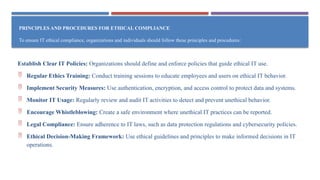
To ensure IT ethical compliance, organizations and individuals should follow these principles and procedures:
Establish Clear IT Policies: Organizations should define and enforce policies that guide ethical IT use.
Regular Ethics Training: Conduct training sessions to educate employees and users on ethical IT behavior.
Implement Security Measures: Use authentication, encryption, and access control to protect data and systems.
Monitor IT Usage: Regularly review and audit IT activities to detect and prevent unethical behavior.
Encourage Whistleblowing: Create a safe environment where unethical IT practices can be reported.
Legal Compliance: Ensure adherence to IT laws, such as data protection regulations and cybersecurity policies.
Ethical Decision-Making Framework: Use ethical guidelines and principles to make informed decisions in IT
operations.
5.
CONSEQUENCES OF UNETHICALIT PRACTICES IN BUSINESS OPERATIONS
Unethical IT Practices Can Have Serious Consequences For Businesses, Including:
Legal Consequences: Fines, lawsuits, and legal penalties due to non-compliance with IT laws.
Reputation Damage: Loss of trust from customers, partners, and stakeholders due to unethical IT behavior.
Financial Losses: Costs associated with legal cases, data breaches, and system recovery.
Security Risks: Increased vulnerability to cyber-attacks, hacking, and data theft.
Loss of Customer Trust: Customers may stop using services if they feel their data is not secure.
Operational Disruptions: IT misconduct can lead to downtime, inefficiencies, and business disruptions.
Job Loss and Employee Termination: Employees involved in unethical IT activities may face disciplinary
actions or termination.