IRON DEFICIENCY
ANEMIA
S U B M I T T E D BY :
D H A R M I K M E N D A PA R A
DEFINITION
• IRON DEFICIENCY ANEMIA IS ANEMIA DUE TO VERY LOW LEVELS OF IRON IN THE
BLOOD.
• THIS IS THE MOST COMMON TYPE OF ANEMIA WORLWIDE.
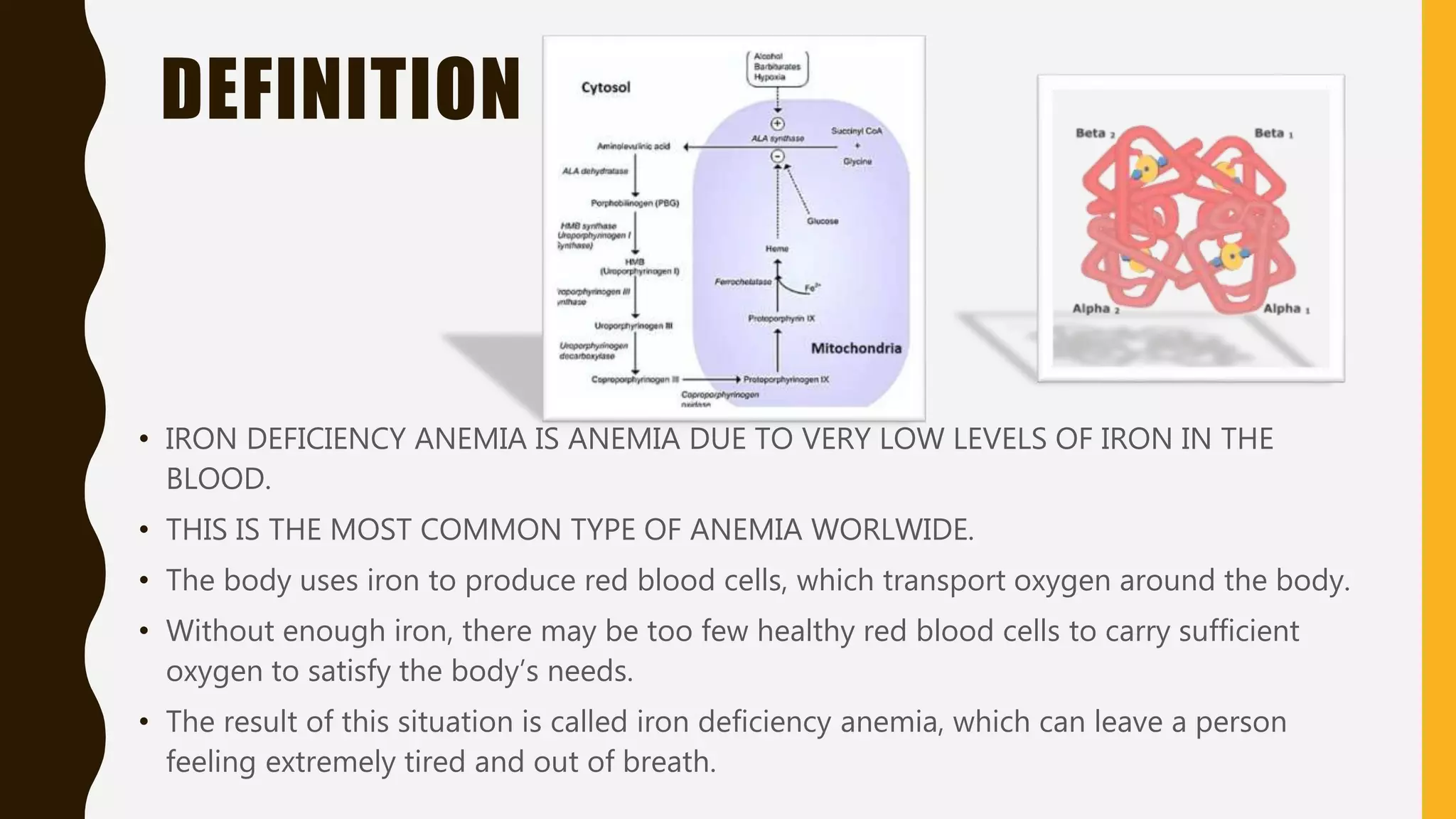
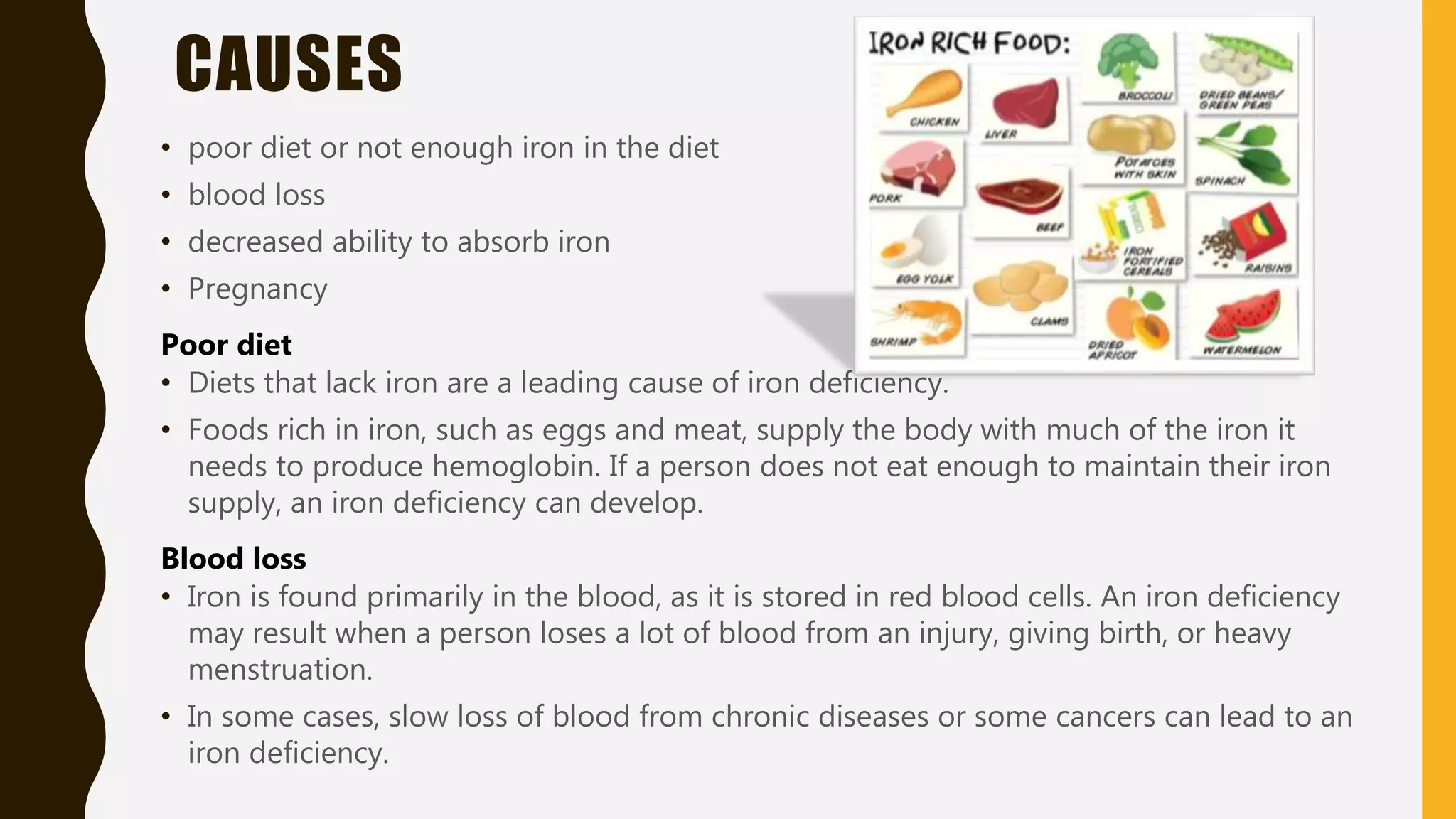
• The body uses iron to produce red blood cells, which transport oxygen around the body.
• Without enough iron, there may be too few healthy red blood cells to carry sufficient
oxygen to satisfy the body’s needs.
• The result of this situation is called iron deficiency anemia, which can leave a person
feeling extremely tired and out of breath.
POPULATIONS AT RISK
• MENSTRUATING TEENAGERS AND WOMEN
• COMMON IN YOUNG CHILDREN AND PREGNANT WOMEN
• INFANTS BORN PREMATURELY
• POVERTY HIT SECTIONS OF THE SOCIETY
PATHOPHYSIOLOGY
Iron deficiency develops in stages. In the first
stage, iron requirement exceeds intake, causing progressive
depletion of bone marrow iron stores. As stores decrease,
absorption of dietary iron increases in compensation. During
later stages, deficiency impairs RBC synthesis, ultimately
causing anemia.
CAUSES
• poor diet or not enough iron in the diet
• blood loss
• decreased ability to absorb iron
• Pregnancy
Poor diet
• Diets that lack iron are a leading cause of iron deficiency.
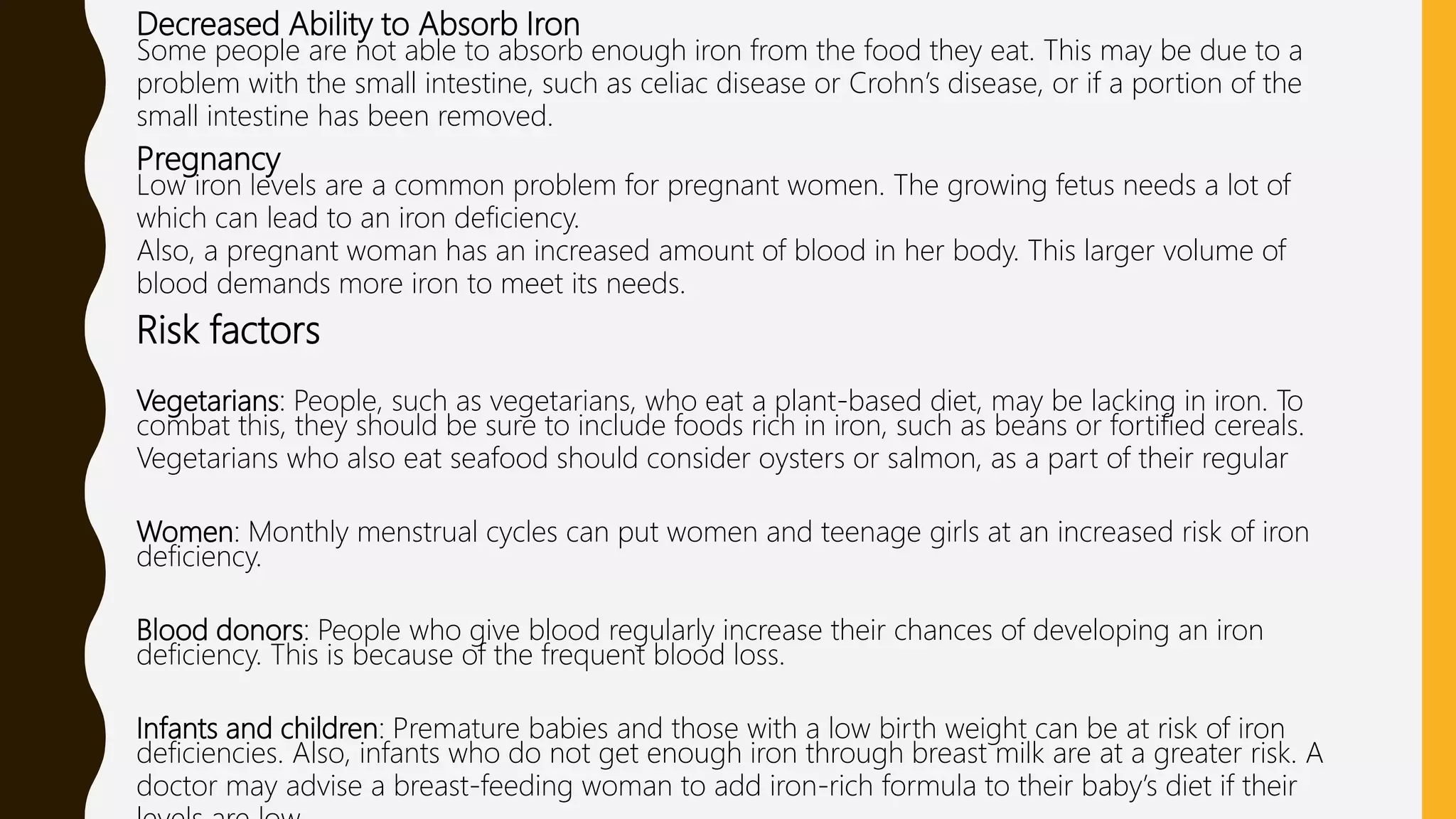
• Foods rich in iron, such as eggs and meat, supply the body with much of the iron it
needs to produce hemoglobin. If a person does not eat enough to maintain their iron
supply, an iron deficiency can develop.
Blood loss
• Iron is found primarily in the blood, as it is stored in red blood cells. An iron deficiency
may result when a person loses a lot of blood from an injury, giving birth, or heavy
menstruation.
• In some cases, slow loss of blood from chronic diseases or some cancers can lead to an
iron deficiency.
Decreased Ability to Absorb Iron
Some people are not able to absorb enough iron from the food they eat. This may be due to a
problem with the small intestine, such as celiac disease or Crohn’s disease, or if a portion of the
small intestine has been removed.
Pregnancy
Low iron levels are a common problem for pregnant women. The growing fetus needs a lot of
which can lead to an iron deficiency.
Also, a pregnant woman has an increased amount of blood in her body. This larger volume of
blood demands more iron to meet its needs.
Risk factors
Vegetarians: People, such as vegetarians, who eat a plant-based diet, may be lacking in iron. To
combat this, they should be sure to include foods rich in iron, such as beans or fortified cereals.
Vegetarians who also eat seafood should consider oysters or salmon, as a part of their regular
Women: Monthly menstrual cycles can put women and teenage girls at an increased risk of iron
deficiency.
Blood donors: People who give blood regularly increase their chances of developing an iron
deficiency. This is because of the frequent blood loss.
Infants and children: Premature babies and those with a low birth weight can be at risk of iron
deficiencies. Also, infants who do not get enough iron through breast milk are at a greater risk. A
doctor may advise a breast-feeding woman to add iron-rich formula to their baby’s diet if their
SIGNS AND SYMPTOMS
• general weakness
• dizziness or lightheadedness
• extreme fatigue
• fast heartbeat
• easily broken and brittle nails
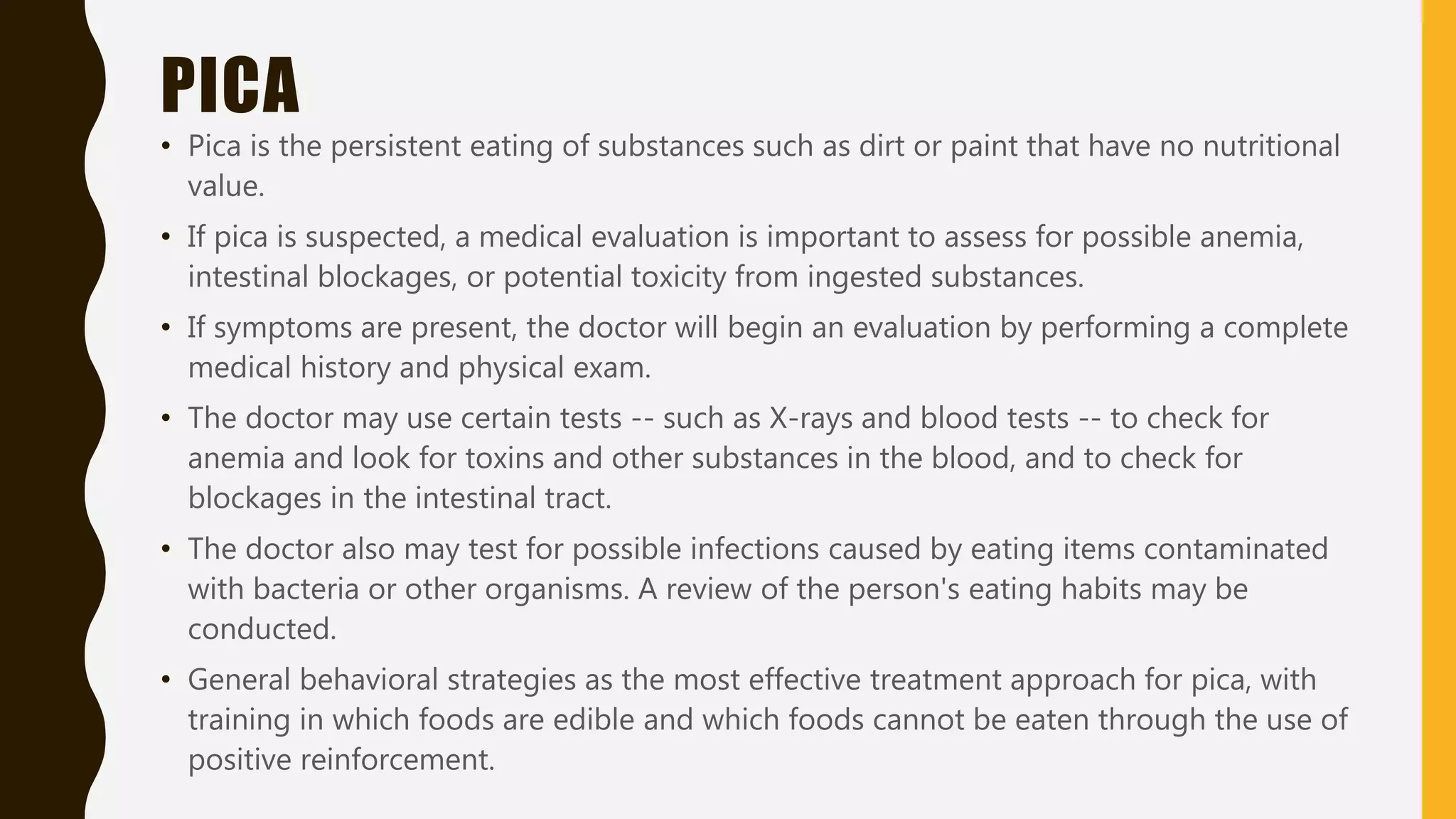
• paler than normal skin
• chest pain
• shortness of breath
• headaches
• cold hands and feet
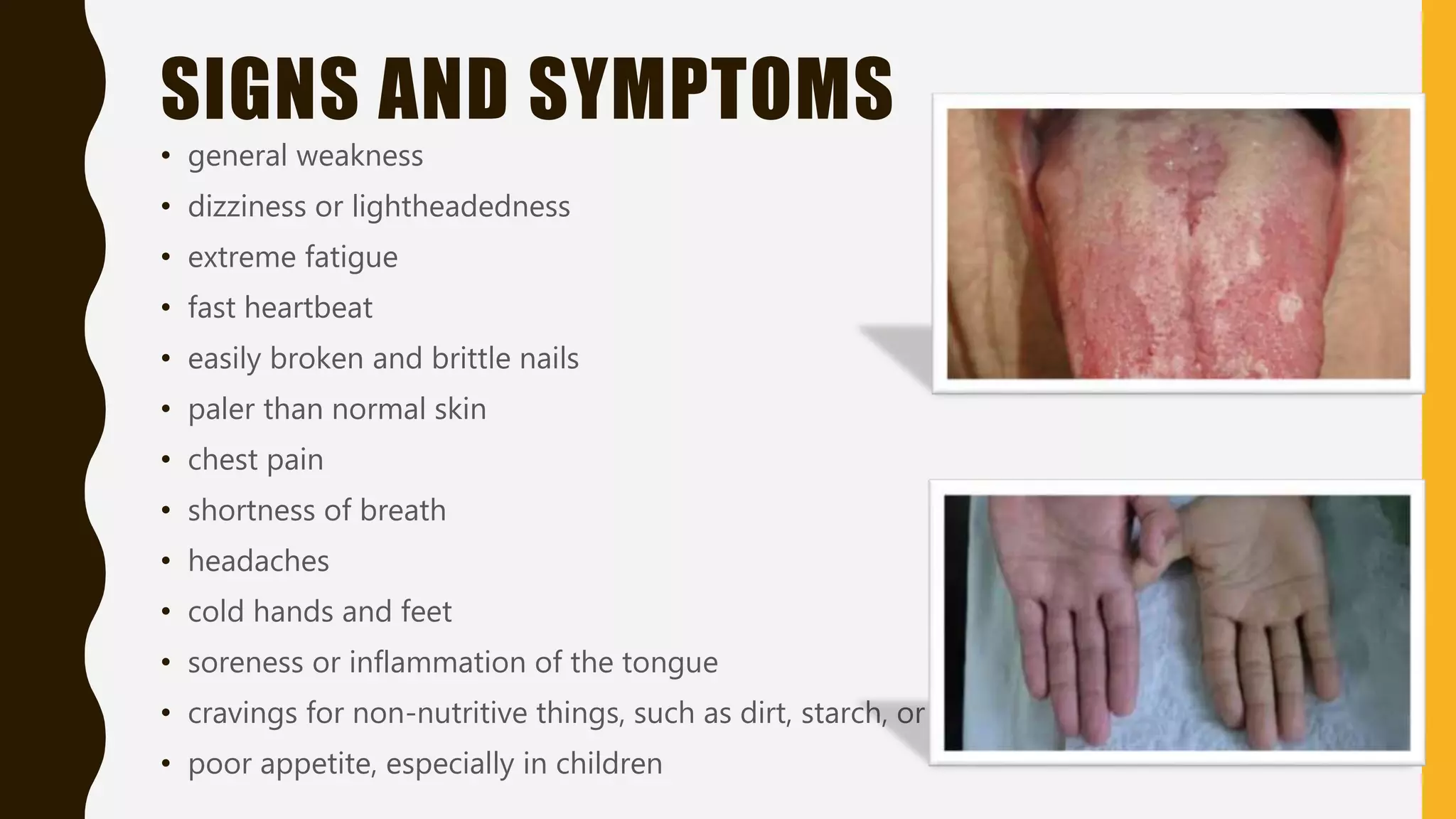
• soreness or inflammation of the tongue
• cravings for non-nutritive things, such as dirt, starch, or ice
• poor appetite, especially in children
SIDEROPENIC SYMPTOMS
 PICA
 KOILONYCHIA
 ANGULAR CHELEITIS
 GLOSSITIS
 HAIR LOSS
 GREENISH PALLOR, BLUE SCLERA
 ESOPHAGEAL WEB OF MUCOSA
 IMMUNE SYSTEM ACTIVITY REDUCTION
 PREMATURE AND LOW WEIGHT BIRTH BABIES
 SHORTNESS OF BREATH
 CHEST PAIN
 IRRITABILITY
PICA
• Pica is the persistent eating of substances such as dirt or paint that have no nutritional
value.
• If pica is suspected, a medical evaluation is important to assess for possible anemia,
intestinal blockages, or potential toxicity from ingested substances.
• If symptoms are present, the doctor will begin an evaluation by performing a complete
medical history and physical exam.
• The doctor may use certain tests -- such as X-rays and blood tests -- to check for
anemia and look for toxins and other substances in the blood, and to check for
blockages in the intestinal tract.
• The doctor also may test for possible infections caused by eating items contaminated
with bacteria or other organisms. A review of the person's eating habits may be
conducted.
• General behavioral strategies as the most effective treatment approach for pica, with
training in which foods are edible and which foods cannot be eaten through the use of
positive reinforcement.
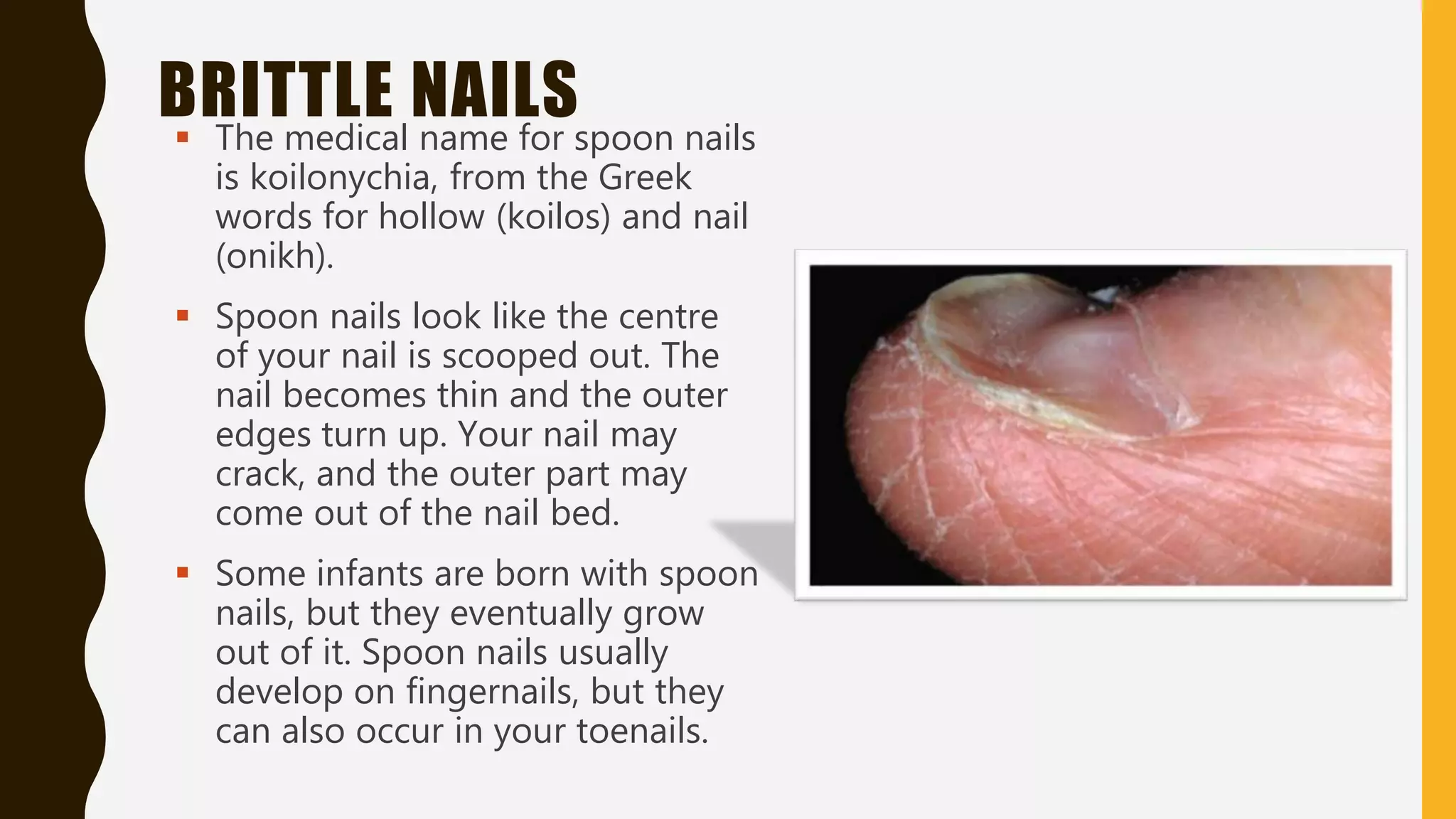
BRITTLE NAILS The medical name for spoon nails
is koilonychia, from the Greek
words for hollow (koilos) and nail
(onikh).
 Spoon nails look like the centre
of your nail is scooped out. The
nail becomes thin and the outer
edges turn up. Your nail may
crack, and the outer part may
come out of the nail bed.
 Some infants are born with spoon
nails, but they eventually grow
out of it. Spoon nails usually
develop on fingernails, but they
can also occur in your toenails.
ORAL MANIFESTATION
• The most common or iron deficiency is seen as atrophy of the lingual
Papillae.
• These may present as soreness or burning of the tongue, either spontaneously or
stimulated by food or drink, and by varying degrees of redness.
• Oral signs of iron deficiency anemia include a myriad of conditions such as mucosal pallor,
general mucosal atrophy, stomatitis, atrophic glossitis, cheilosis, lingual varicosities, angular
cheilitis, oral lichen planus, various forms of candidiasis, and aphthous ulcers.
• In more severe cases, the tongue may be tender. Long et al. (1998) also reported cheilosis
(dry scaling of the lips and corners of the mouth) as a common finding in patients of iron
deficiency anemia.
• Atrophic glossitis is a term used for “flattening of the tongue papillae” leading to as mooth
and reddish tongue that may mimic geographic tongue or migratory glossitis.
• Other miscellaneous oral manifestations found in patients of iron deficiency anemia in
various studies include hyperpigmentation, recurrent oral ulcers, lingual varicosities, and
oral lichen planus.
OTHER EPITHELIAL SYMPTOMS
Cracked Heels
Pale
conjunctiva
Hair Loss
Pallor
Blue Sclera
GASTROINTESTINAL MANIFESTATION
As gastric damage progresses, patients lose the ability to
secrete acid, pepsin and intrinsic factor.
These lesions are nonspecific and often asymptomatic
and maybe indistinguishable.
Achlorhydria occurs when there’s an absence of hydrochloric (HCl) acids
in the stomach. It’s a more severe form of a hypochlorhydria, a
deficiency of stomach acids which been reported to occur in infants and
children as well as in adults.
Antibodies to gastric parietal cells have been described in approximately
one third of patients with iron deficiency.
IMMUNOLOGICAL MANIFESTATION
Iron deficiency is associated with impairment of innate (natural) immunity and cell
mediated immunity, thereby contributing to increased risk of infections.
 The iron acquisition by the microbes and their virulence is determined by various host
and microbial mechanisms. Altering these mechanisms might provide modes of future
therapy for infectious diseases.
Children, particularly infants living in developing countries are highly vulnerable to
infectious diseases.
Iron deficiency depresses certain aspects of cell-mediated immunity and innate
immunity but the significance of hypoferremia (as opposed to normal transferrin
saturation) on growth of microorganisms remains uncertain.
LABORATORY FINDINGS Iron deficiency depresses certain aspects of cell-mediated
immunity and innate immunity but the significance of
hypoferremia (as opposed to normal transferrin saturation) on
growth of microorganisms remains uncertain).
 If the anemia is due to iron deficiency, one of the first abnormal
values to be noted on a CBC, as the body's iron stores begin to
be depleted, will be a high red blood cell distribution
width (RDW), reflecting an increased variability in the size of red
blood cells (RBCs).
 A low mean corpuscular volume (MCV) also appears during the
course of body iron depletion. It indicates a high number of
abnormally small red blood cells.
 A low MCV, a low mean corpuscular hemoglobin or MCHC
mean corpuscular hemoglobin concentration, and the
corresponding appearance of RBCs on visual examination of
a peripheral blood smear narrows the problem to a microcytic
anemia.
 With more severe iron-deficiency anemia, the peripheral blood
smear may show hypochromic, pencil-shaped cells and,
occasionally, small numbers of nucleated red blood cells.
 Thrombocytosis commonly accompanies iron deficiency. The
platelet count often increases to approximately twice the normal
level, and values return to normal after iron therapy.
FINAL BIOCHEMICAL TESTS
Iron-deficiency anemia is confirmed by biochemical
tests that include:
• 1. Serum ferritin (decreased)
• 2. Serum iron level (decreased),
• 3. Saturation of transferrin (reduced)
• 4. Total iron binding capacity (TIBC) (increased).
 A hemoglobin electrophoresis provides useful
evidence for distinguishing these two conditions,
along with iron studies.
MANAGEMENT OF IRON DEFICIENCY
• As iron-deficiency anemia becomes more severe, or if the anemia does not respond to
oral treatments, other measures may become necessary. Iron can be administered
orally or intravenously. The oral route is the safest and least expensive.
• Intravenous iron or blood transfusions, parenteral iron is commonly used. Individuals
on dialysis who are taking forms of erythropoietin or some "erythropoiesis-stimulating
agent" are given parenteral iron, which helps the body respond to
the erythropoietin agents and produce red blood cells.
• Iron supplementation by mouth commonly causes negative gastrointestinal effects,
including constipation.
• Intravenous iron can induce an allergic response that can be as serious as anaphylaxis,
although different formulations have decreased the likelihood of this adverse effect.
• Iron tablets can help restore iron levels in your body. If possible, you should take iron
tablets on an empty stomach, which helps the body absorb them better. If they upset
your stomach, you can take them with meals.
THANK YOU

Iron deficiency anemia

  • 1.
    IRON DEFICIENCY ANEMIA S UB M I T T E D BY : D H A R M I K M E N D A PA R A
  • 2.
    DEFINITION • IRON DEFICIENCYANEMIA IS ANEMIA DUE TO VERY LOW LEVELS OF IRON IN THE BLOOD. • THIS IS THE MOST COMMON TYPE OF ANEMIA WORLWIDE. • The body uses iron to produce red blood cells, which transport oxygen around the body. • Without enough iron, there may be too few healthy red blood cells to carry sufficient oxygen to satisfy the body’s needs. • The result of this situation is called iron deficiency anemia, which can leave a person feeling extremely tired and out of breath.
  • 3.
    POPULATIONS AT RISK •MENSTRUATING TEENAGERS AND WOMEN • COMMON IN YOUNG CHILDREN AND PREGNANT WOMEN • INFANTS BORN PREMATURELY • POVERTY HIT SECTIONS OF THE SOCIETY PATHOPHYSIOLOGY Iron deficiency develops in stages. In the first stage, iron requirement exceeds intake, causing progressive depletion of bone marrow iron stores. As stores decrease, absorption of dietary iron increases in compensation. During later stages, deficiency impairs RBC synthesis, ultimately causing anemia.
  • 4.
    CAUSES • poor dietor not enough iron in the diet • blood loss • decreased ability to absorb iron • Pregnancy Poor diet • Diets that lack iron are a leading cause of iron deficiency. • Foods rich in iron, such as eggs and meat, supply the body with much of the iron it needs to produce hemoglobin. If a person does not eat enough to maintain their iron supply, an iron deficiency can develop. Blood loss • Iron is found primarily in the blood, as it is stored in red blood cells. An iron deficiency may result when a person loses a lot of blood from an injury, giving birth, or heavy menstruation. • In some cases, slow loss of blood from chronic diseases or some cancers can lead to an iron deficiency.
  • 5.
    Decreased Ability toAbsorb Iron Some people are not able to absorb enough iron from the food they eat. This may be due to a problem with the small intestine, such as celiac disease or Crohn’s disease, or if a portion of the small intestine has been removed. Pregnancy Low iron levels are a common problem for pregnant women. The growing fetus needs a lot of which can lead to an iron deficiency. Also, a pregnant woman has an increased amount of blood in her body. This larger volume of blood demands more iron to meet its needs. Risk factors Vegetarians: People, such as vegetarians, who eat a plant-based diet, may be lacking in iron. To combat this, they should be sure to include foods rich in iron, such as beans or fortified cereals. Vegetarians who also eat seafood should consider oysters or salmon, as a part of their regular Women: Monthly menstrual cycles can put women and teenage girls at an increased risk of iron deficiency. Blood donors: People who give blood regularly increase their chances of developing an iron deficiency. This is because of the frequent blood loss. Infants and children: Premature babies and those with a low birth weight can be at risk of iron deficiencies. Also, infants who do not get enough iron through breast milk are at a greater risk. A doctor may advise a breast-feeding woman to add iron-rich formula to their baby’s diet if their
  • 6.
    SIGNS AND SYMPTOMS •general weakness • dizziness or lightheadedness • extreme fatigue • fast heartbeat • easily broken and brittle nails • paler than normal skin • chest pain • shortness of breath • headaches • cold hands and feet • soreness or inflammation of the tongue • cravings for non-nutritive things, such as dirt, starch, or ice • poor appetite, especially in children
  • 7.
    SIDEROPENIC SYMPTOMS  PICA KOILONYCHIA  ANGULAR CHELEITIS  GLOSSITIS  HAIR LOSS  GREENISH PALLOR, BLUE SCLERA  ESOPHAGEAL WEB OF MUCOSA  IMMUNE SYSTEM ACTIVITY REDUCTION  PREMATURE AND LOW WEIGHT BIRTH BABIES  SHORTNESS OF BREATH  CHEST PAIN  IRRITABILITY
  • 8.
    PICA • Pica isthe persistent eating of substances such as dirt or paint that have no nutritional value. • If pica is suspected, a medical evaluation is important to assess for possible anemia, intestinal blockages, or potential toxicity from ingested substances. • If symptoms are present, the doctor will begin an evaluation by performing a complete medical history and physical exam. • The doctor may use certain tests -- such as X-rays and blood tests -- to check for anemia and look for toxins and other substances in the blood, and to check for blockages in the intestinal tract. • The doctor also may test for possible infections caused by eating items contaminated with bacteria or other organisms. A review of the person's eating habits may be conducted. • General behavioral strategies as the most effective treatment approach for pica, with training in which foods are edible and which foods cannot be eaten through the use of positive reinforcement.
  • 9.
    BRITTLE NAILS Themedical name for spoon nails is koilonychia, from the Greek words for hollow (koilos) and nail (onikh).  Spoon nails look like the centre of your nail is scooped out. The nail becomes thin and the outer edges turn up. Your nail may crack, and the outer part may come out of the nail bed.  Some infants are born with spoon nails, but they eventually grow out of it. Spoon nails usually develop on fingernails, but they can also occur in your toenails.
  • 10.
    ORAL MANIFESTATION • Themost common or iron deficiency is seen as atrophy of the lingual Papillae. • These may present as soreness or burning of the tongue, either spontaneously or stimulated by food or drink, and by varying degrees of redness. • Oral signs of iron deficiency anemia include a myriad of conditions such as mucosal pallor, general mucosal atrophy, stomatitis, atrophic glossitis, cheilosis, lingual varicosities, angular cheilitis, oral lichen planus, various forms of candidiasis, and aphthous ulcers. • In more severe cases, the tongue may be tender. Long et al. (1998) also reported cheilosis (dry scaling of the lips and corners of the mouth) as a common finding in patients of iron deficiency anemia. • Atrophic glossitis is a term used for “flattening of the tongue papillae” leading to as mooth and reddish tongue that may mimic geographic tongue or migratory glossitis. • Other miscellaneous oral manifestations found in patients of iron deficiency anemia in various studies include hyperpigmentation, recurrent oral ulcers, lingual varicosities, and oral lichen planus.
  • 11.
    OTHER EPITHELIAL SYMPTOMS CrackedHeels Pale conjunctiva Hair Loss Pallor Blue Sclera
  • 12.
    GASTROINTESTINAL MANIFESTATION As gastricdamage progresses, patients lose the ability to secrete acid, pepsin and intrinsic factor. These lesions are nonspecific and often asymptomatic and maybe indistinguishable. Achlorhydria occurs when there’s an absence of hydrochloric (HCl) acids in the stomach. It’s a more severe form of a hypochlorhydria, a deficiency of stomach acids which been reported to occur in infants and children as well as in adults. Antibodies to gastric parietal cells have been described in approximately one third of patients with iron deficiency.
  • 13.
    IMMUNOLOGICAL MANIFESTATION Iron deficiencyis associated with impairment of innate (natural) immunity and cell mediated immunity, thereby contributing to increased risk of infections.  The iron acquisition by the microbes and their virulence is determined by various host and microbial mechanisms. Altering these mechanisms might provide modes of future therapy for infectious diseases. Children, particularly infants living in developing countries are highly vulnerable to infectious diseases. Iron deficiency depresses certain aspects of cell-mediated immunity and innate immunity but the significance of hypoferremia (as opposed to normal transferrin saturation) on growth of microorganisms remains uncertain.
  • 14.
    LABORATORY FINDINGS Irondeficiency depresses certain aspects of cell-mediated immunity and innate immunity but the significance of hypoferremia (as opposed to normal transferrin saturation) on growth of microorganisms remains uncertain).  If the anemia is due to iron deficiency, one of the first abnormal values to be noted on a CBC, as the body's iron stores begin to be depleted, will be a high red blood cell distribution width (RDW), reflecting an increased variability in the size of red blood cells (RBCs).  A low mean corpuscular volume (MCV) also appears during the course of body iron depletion. It indicates a high number of abnormally small red blood cells.  A low MCV, a low mean corpuscular hemoglobin or MCHC mean corpuscular hemoglobin concentration, and the corresponding appearance of RBCs on visual examination of a peripheral blood smear narrows the problem to a microcytic anemia.  With more severe iron-deficiency anemia, the peripheral blood smear may show hypochromic, pencil-shaped cells and, occasionally, small numbers of nucleated red blood cells.  Thrombocytosis commonly accompanies iron deficiency. The platelet count often increases to approximately twice the normal level, and values return to normal after iron therapy.
  • 15.
    FINAL BIOCHEMICAL TESTS Iron-deficiencyanemia is confirmed by biochemical tests that include: • 1. Serum ferritin (decreased) • 2. Serum iron level (decreased), • 3. Saturation of transferrin (reduced) • 4. Total iron binding capacity (TIBC) (increased).  A hemoglobin electrophoresis provides useful evidence for distinguishing these two conditions, along with iron studies.
  • 16.
    MANAGEMENT OF IRONDEFICIENCY • As iron-deficiency anemia becomes more severe, or if the anemia does not respond to oral treatments, other measures may become necessary. Iron can be administered orally or intravenously. The oral route is the safest and least expensive. • Intravenous iron or blood transfusions, parenteral iron is commonly used. Individuals on dialysis who are taking forms of erythropoietin or some "erythropoiesis-stimulating agent" are given parenteral iron, which helps the body respond to the erythropoietin agents and produce red blood cells. • Iron supplementation by mouth commonly causes negative gastrointestinal effects, including constipation. • Intravenous iron can induce an allergic response that can be as serious as anaphylaxis, although different formulations have decreased the likelihood of this adverse effect. • Iron tablets can help restore iron levels in your body. If possible, you should take iron tablets on an empty stomach, which helps the body absorb them better. If they upset your stomach, you can take them with meals.
  • 17.