Estefanía Velásquez López – Plutarco Andrés Uzcategui Medicine Student´s – Third semester Medellín - Colombia Molecular Biology 2011 IRF8 MUTATIONS AND HUMAN DENDRITIC-CELL IMMUNODEFICIENCY Sophie Hambleton, M.D., Ph.D., Sandra Salem, B.Sc., Jacinta Bustamante, M.D., Ph.D., Venetia Bigley, M.D., Ph.D., Stéphanie Boisson-Dupuis, Ph.D., Joana Azevedo, M.D., Anny Fortin, Ph.D., Muzlifah Haniffa, M.D., Ph.D., Lourdes Ceron-Gutierrez, B.Sc., Chris M. Bacon, M.D., Ph.D., Geetha Menon, M.D., Céline Trouillet, B.Sc., David McDonald, Ph.D., Peter Carey, M.D., Florent Ginhoux, Ph.D., Laia Alsina, M.D., Ph.D., Timothy J. Zumwalt, B.Sc., Xiao-Fei Kong, M.D., Ph.D., Dinakantha Kumararatne, M.D., Ph.D., Karina Butler, M.B., B.Ch., Marjorie Hubeau, M.Sc., Jacqueline Feinberg, Ph.D., Saleh Al-Muhsen, M.D., Andrew Cant, M.D., Laurent Abel, M.D., Ph.D., Damien Chaussabel, Ph.D., Rainer Doffinger, Ph.D., Eduardo Talesnik, M.D., Anete Grumach, M.D., Ph.D., Alberto Duarte, M.D., Katia Abarca, M.D., Dewton Moraes-Vasconcelos, M.D., Ph.D., David Burk, Ph.D., Albert Berghuis, Ph.D., Frédéric Geissmann, M.D., Ph.D., Matthew Collin, M.D., Ph.D., Jean-Laurent Casanova, M.D., Ph.D., and Philippe Gros, Ph.D.
INTRODUCTION BACKGROUND The genetic analysis of human primary immunodeficiencies has defined the contribution  of specific cell populations and molecular pathways in the host defense  against infection. Disseminated infection caused by bacille Calmette–Guérin (BCG)  vaccines is an early manifestation of primary immunodeficiencies, such as severe  combined immunodeficiency. In many affected persons, the cause of disseminated  BCG disease is unexplained.
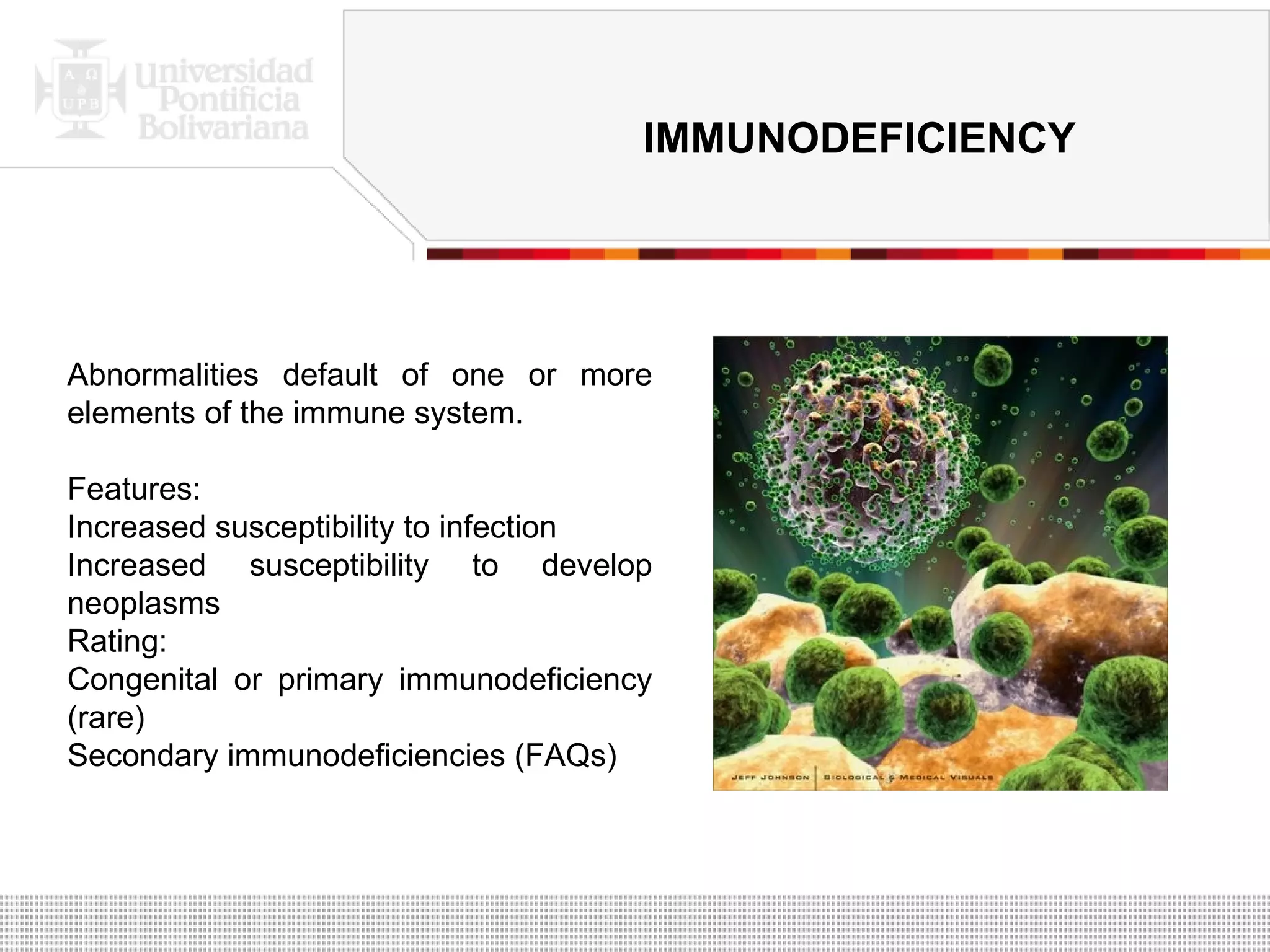
Abnormalities default of one or more elements of the immune system. Features: Increased susceptibility to infection Increased susceptibility to develop neoplasms Rating: Congenital or primary immunodeficiency (rare) Secondary immunodeficiencies (FAQs) IMMUNODEFICIENCY
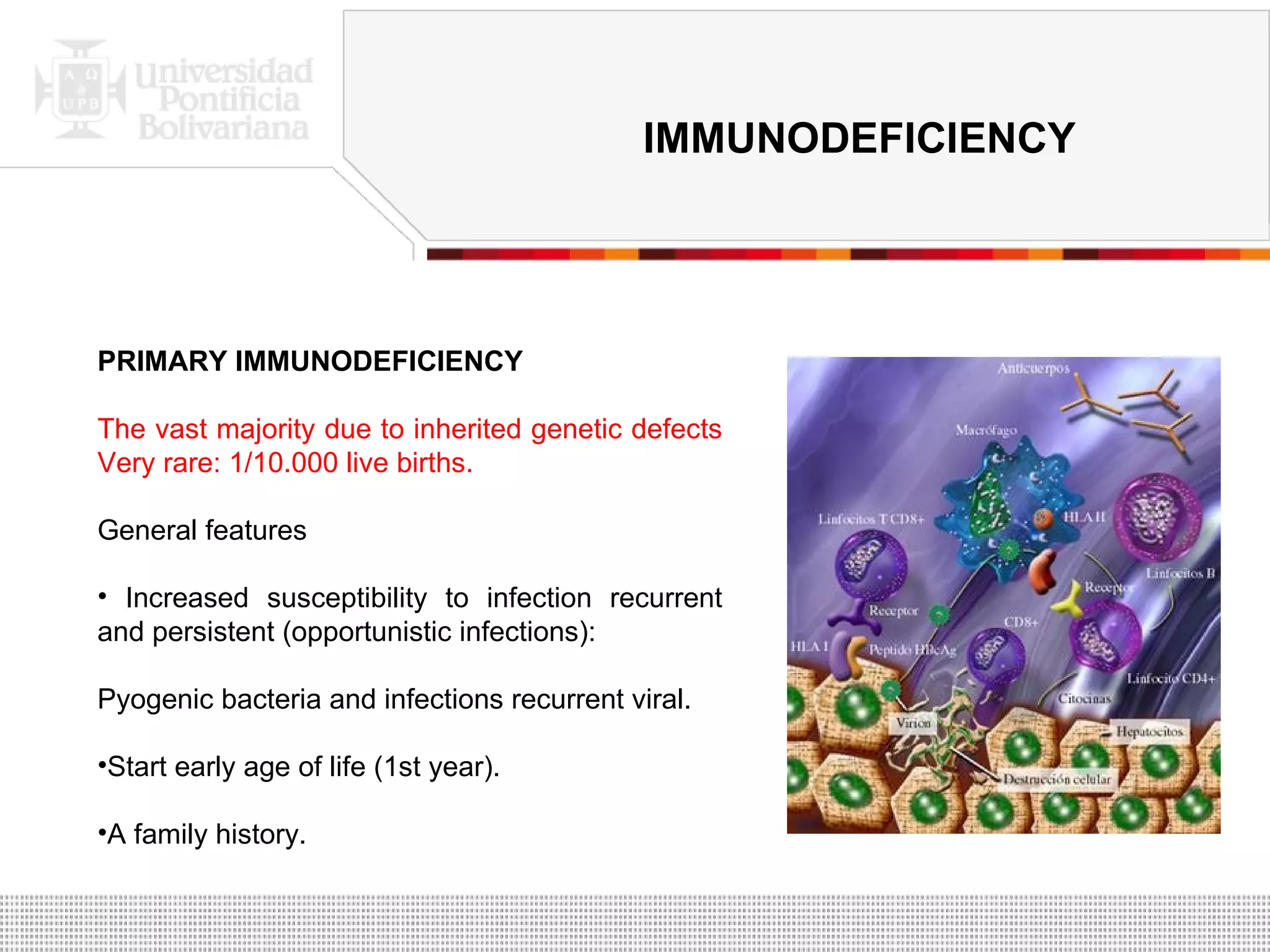
PRIMARY IMMUNODEFICIENCY The vast majority due to inherited genetic defects Very rare: 1/10.000 live births. General features Increased susceptibility to infection recurrent and persistent (opportunistic infections): Pyogenic bacteria and infections recurrent viral.  Start early age of life (1st year). A family history. IMMUNODEFICIENCY
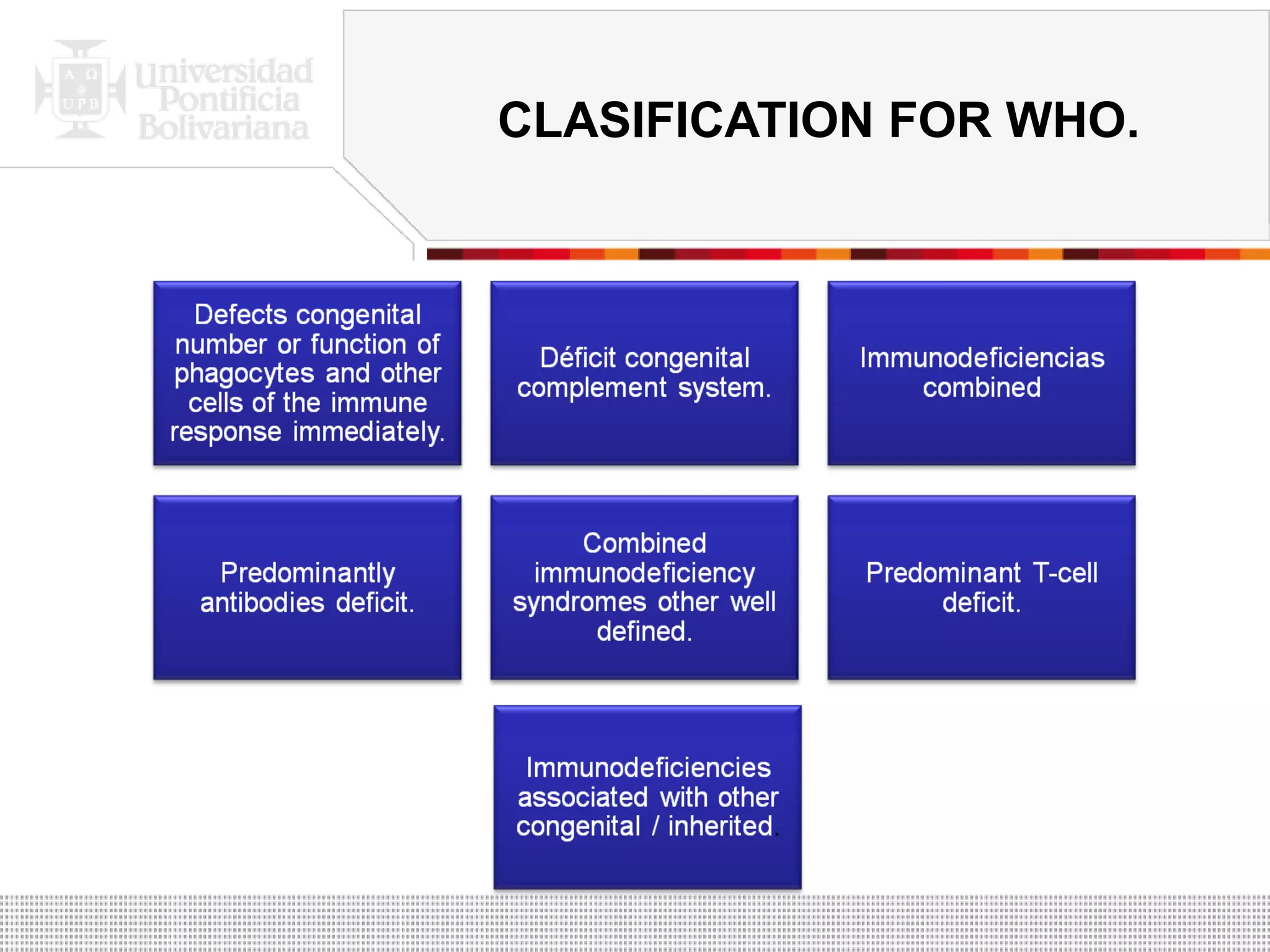
CLASIFICATION FOR WHO.
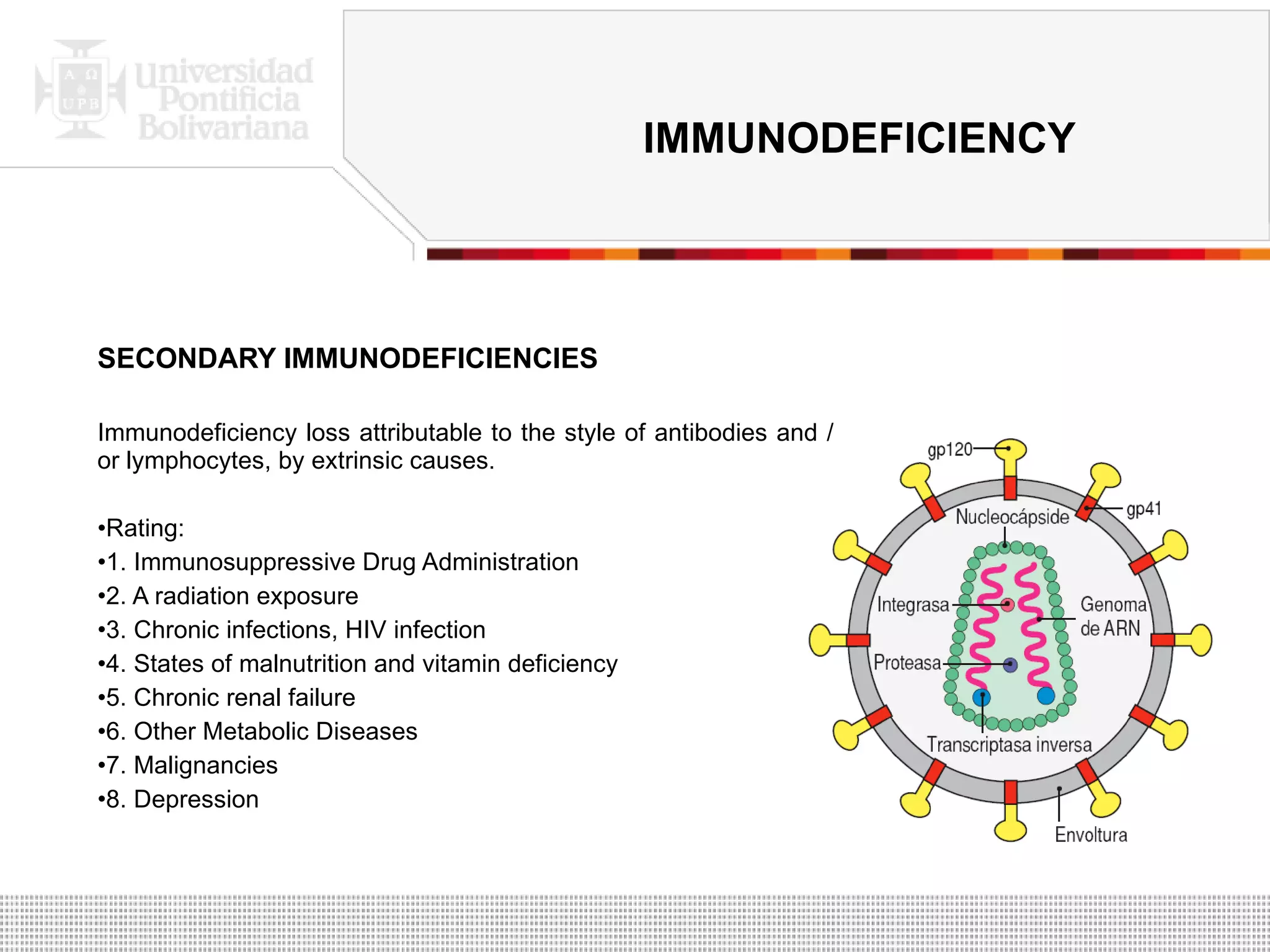
SECONDARY IMMUNODEFICIENCIES Immunodeficiency loss attributable to the style of antibodies and / or lymphocytes, by extrinsic causes. Rating: 1. Immunosuppressive Drug Administration 2. A radiation exposure 3. Chronic infections, HIV infection 4. States of malnutrition and vitamin deficiency 5. Chronic renal failure 6. Other Metabolic Diseases 7. Malignancies 8. Depression IMMUNODEFICIENCY
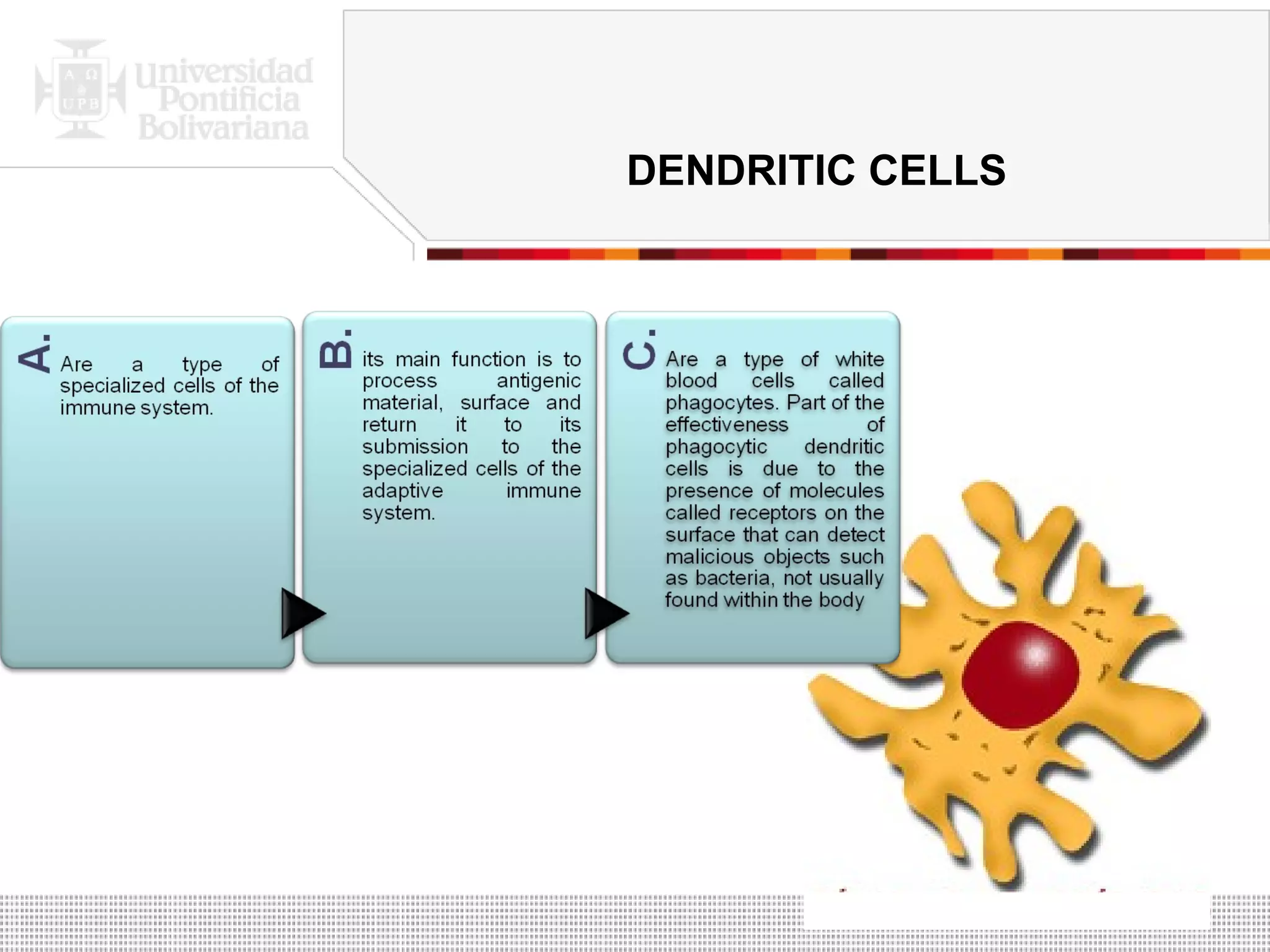
DENDRITIC CELLS .
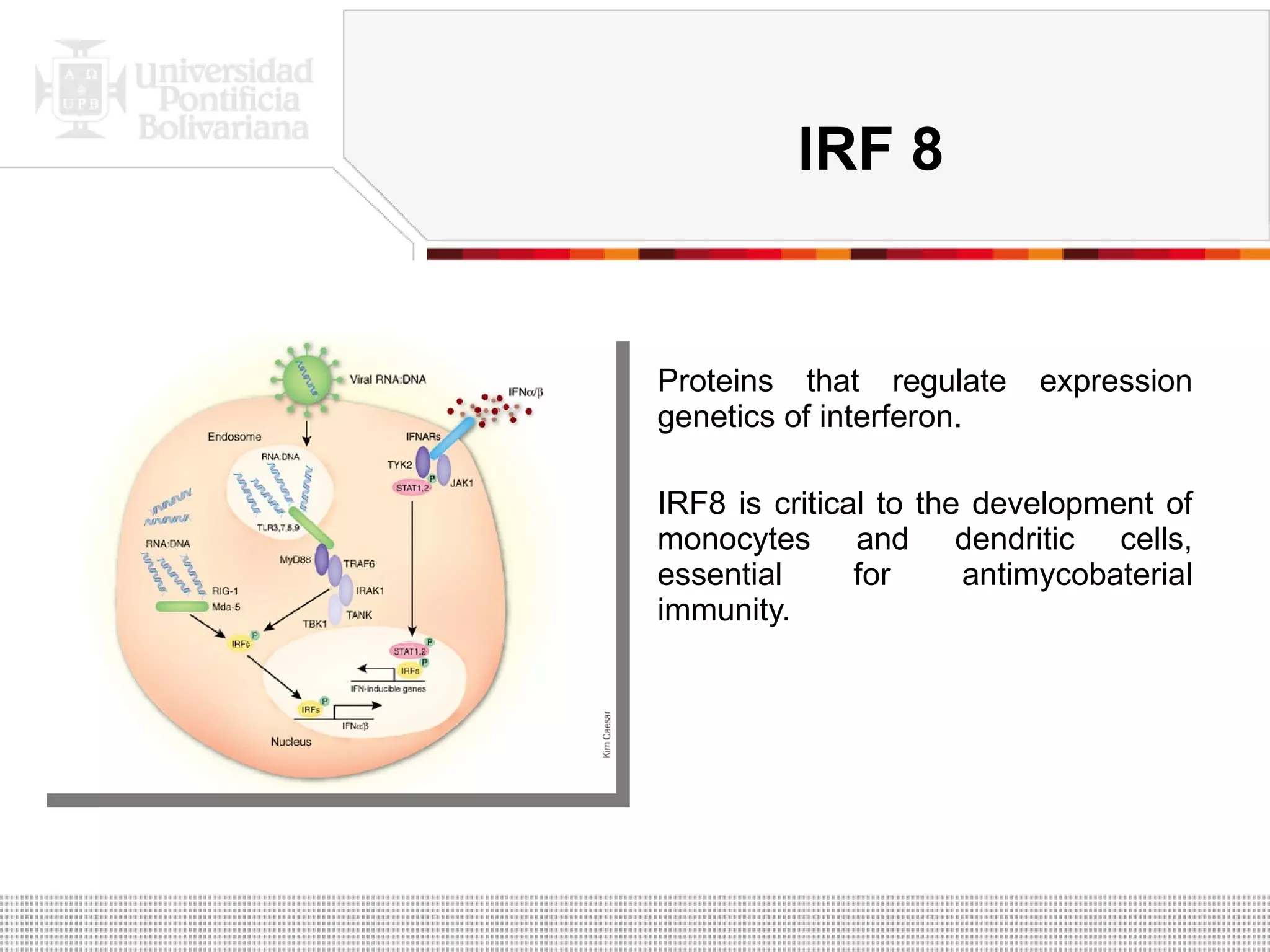
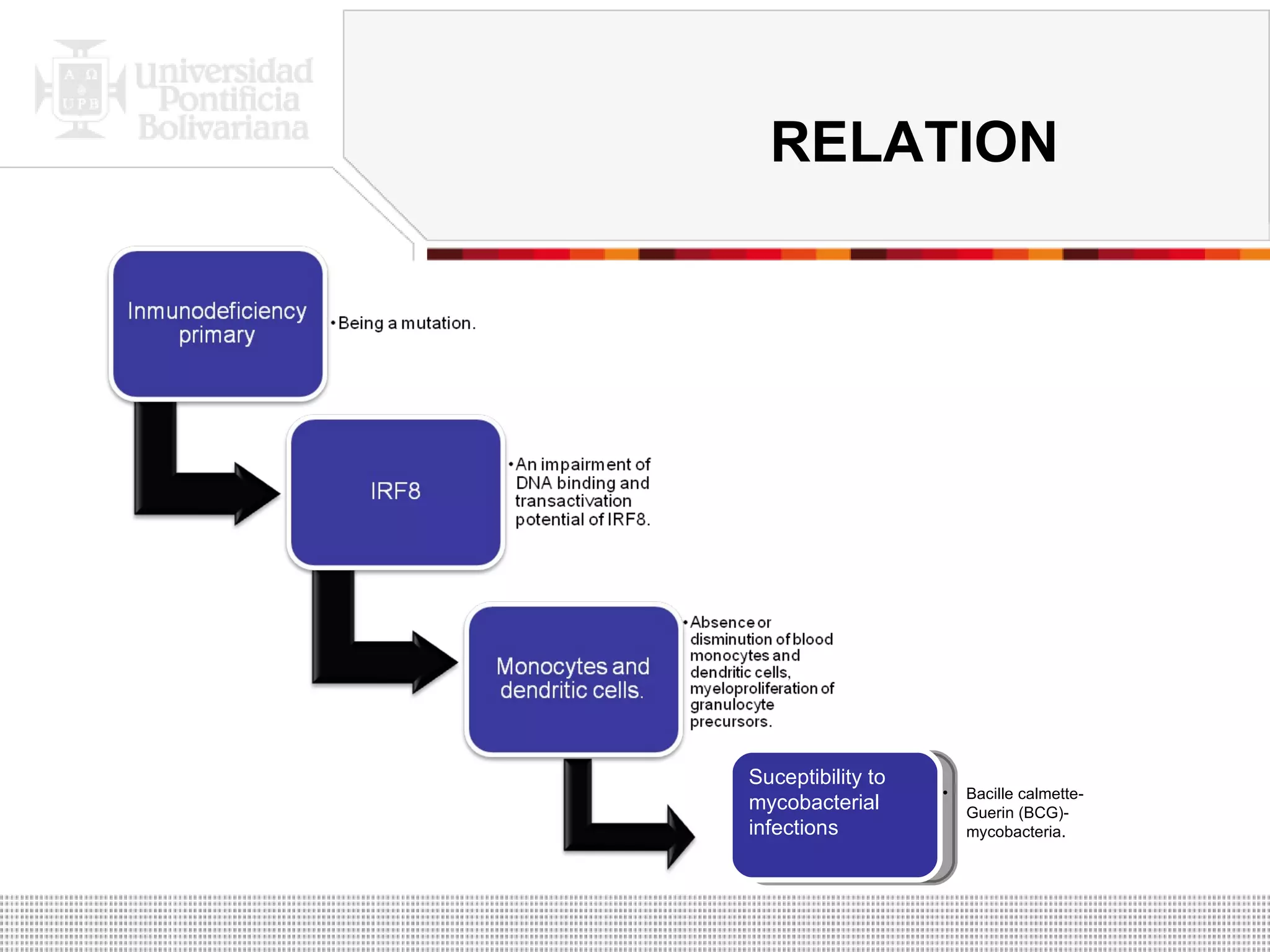
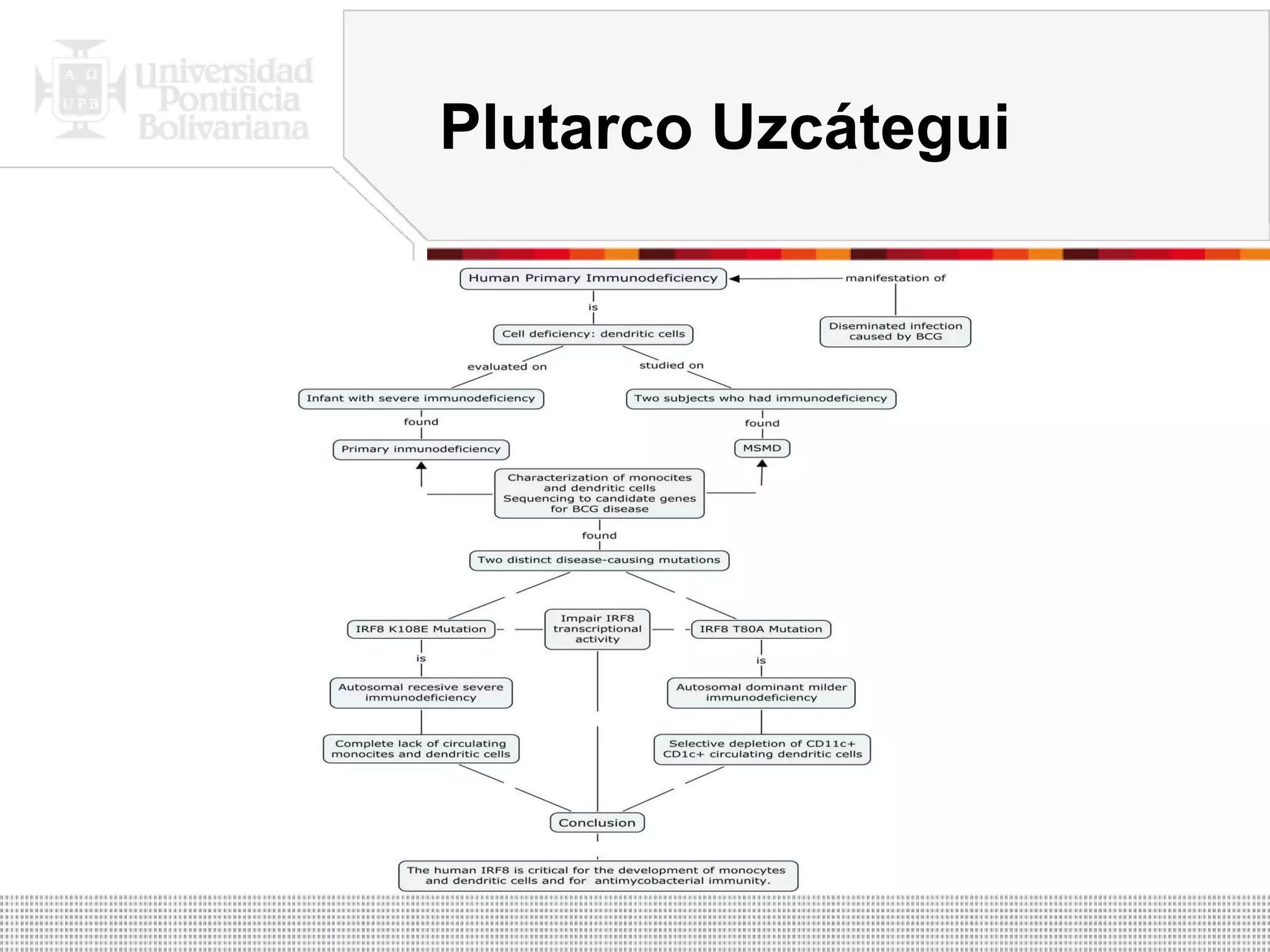
IRF 8 Proteins that regulate expression genetics of interferon. IRF8 is critical to the development of monocytes and dendritic cells, essential for antimycobaterial immunity.
RELATION Suceptibility to mycobacterial infections  Bacille calmette- Guerin (BCG)- mycobacteria.
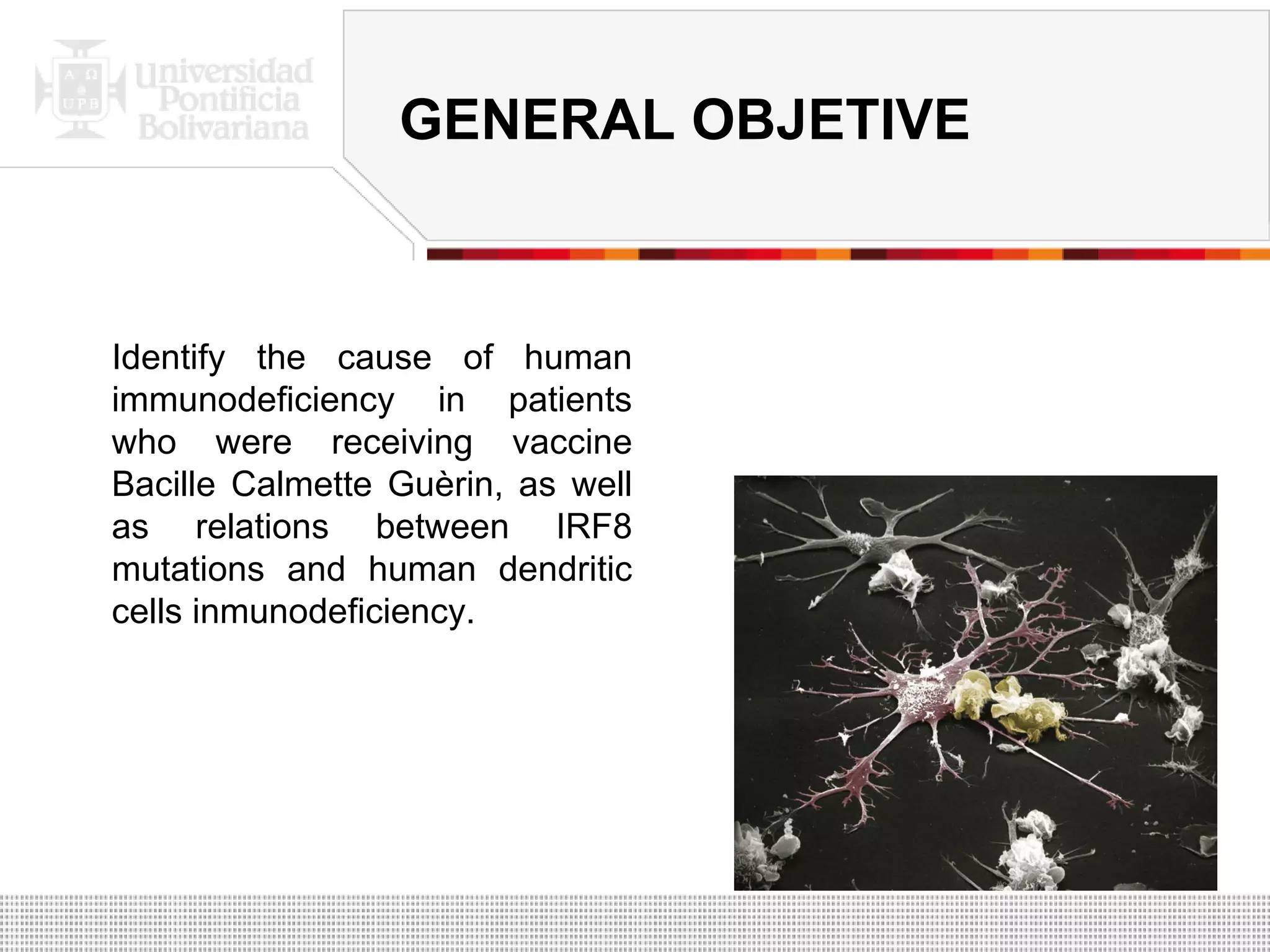
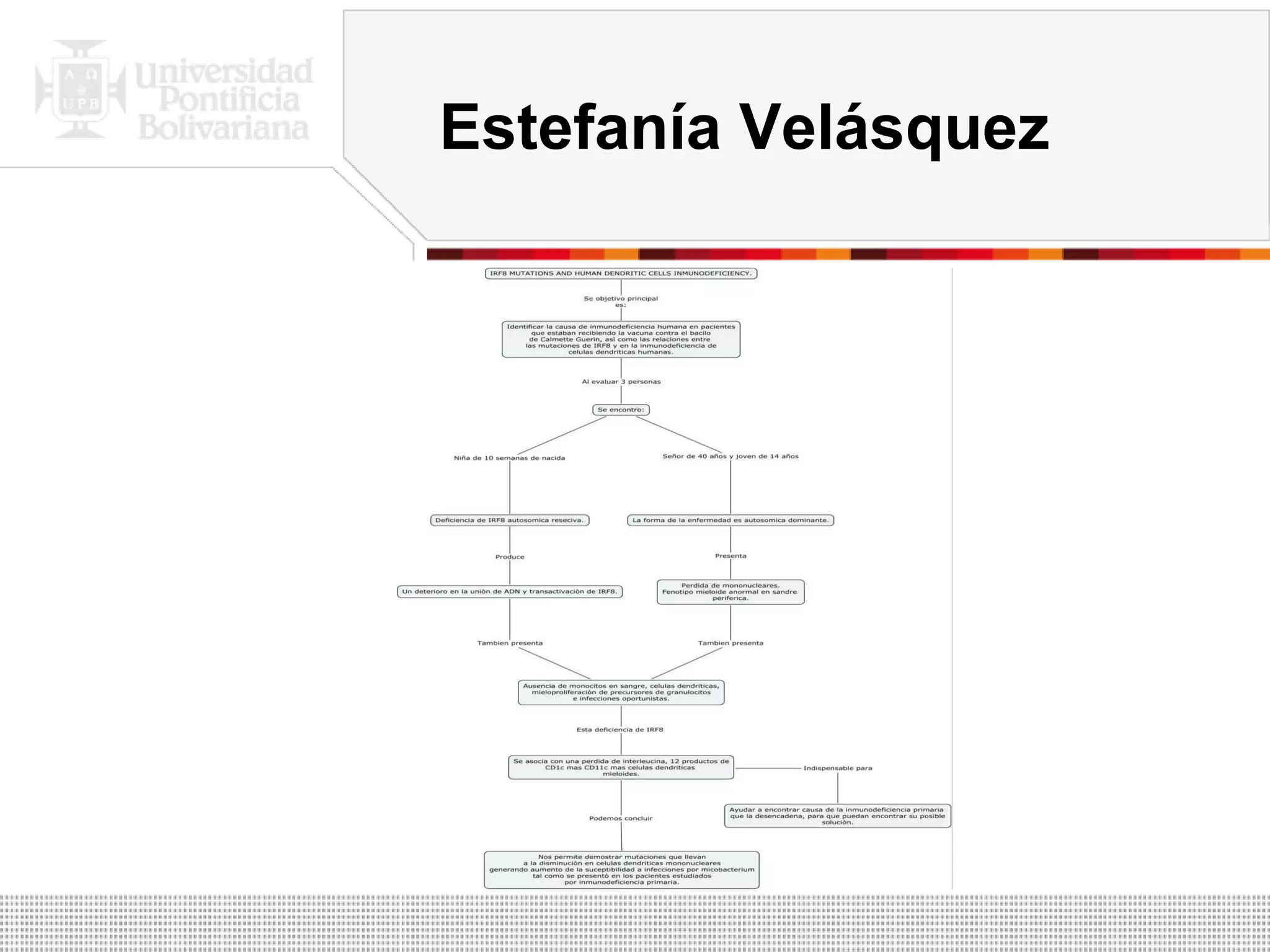
GENERAL OBJETIVE Identify the cause of human immunodeficiency in patients who were receiving vaccine Bacille Calmette Guèrin, as well as relations between IRF8 mutations and human dendritic cells inmunodeficiency.
MATERIALES Y MÈTODOS.
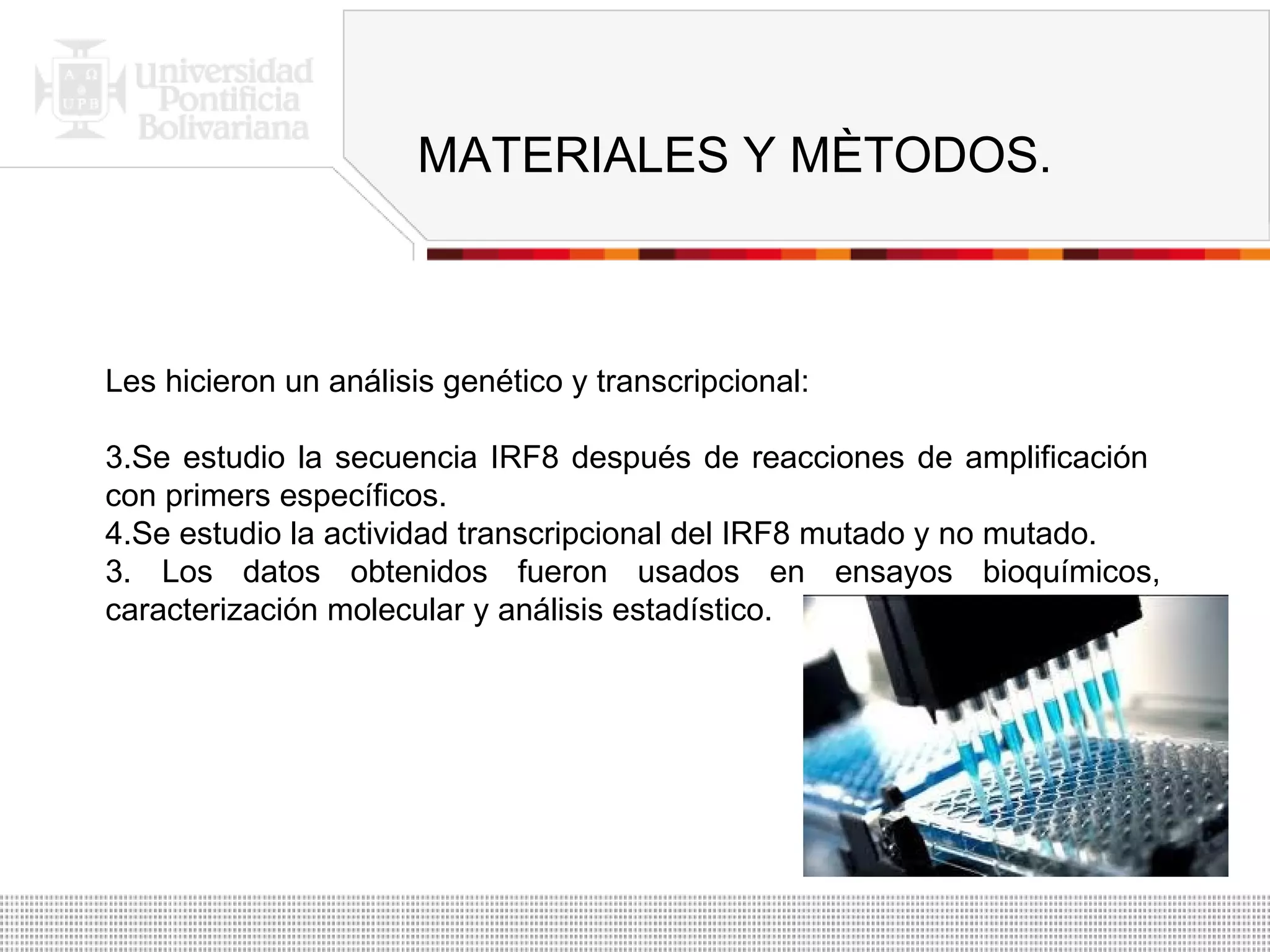
MATERIALES Y MÈTODOS. Les hicieron un análisis genético y transcripcional: Se estudio la secuencia IRF8 después de reacciones de amplificación  con primers específicos. Se estudio la actividad transcripcional del IRF8 mutado y no mutado. 3. Los datos obtenidos fueron usados en ensayos bioquímicos, caracterización molecular y análisis estadístico.
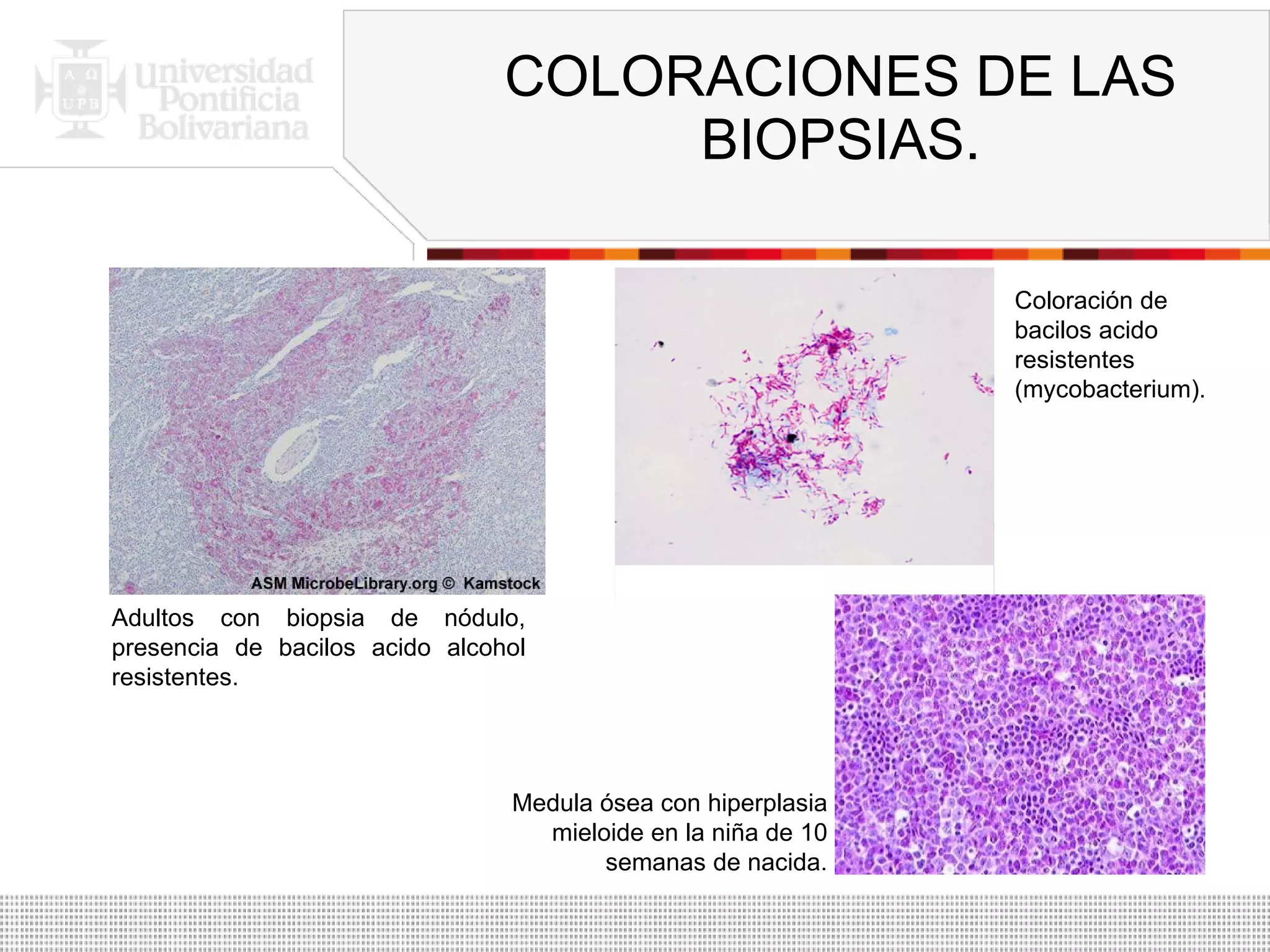
COLORACIONES DE LAS BIOPSIAS. Adultos con biopsia de nódulo, presencia de bacilos acido alcohol resistentes. Medula ósea con hiperplasia mieloide en la niña de 10 semanas de nacida. Coloración de bacilos acido resistentes (mycobacterium).
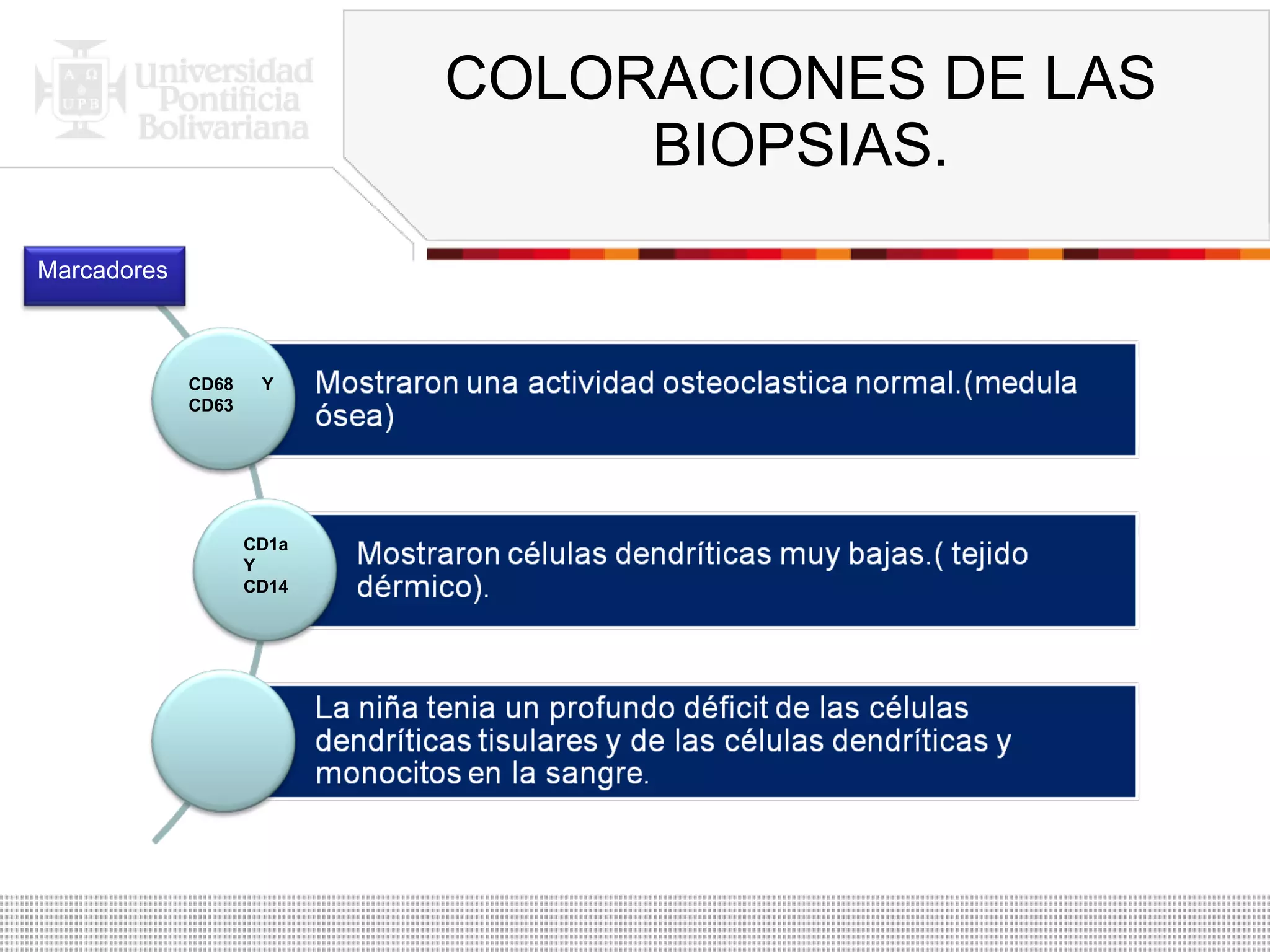
COLORACIONES DE LAS BIOPSIAS. CD68 Y CD63 CD1a Y CD14 Marcadores
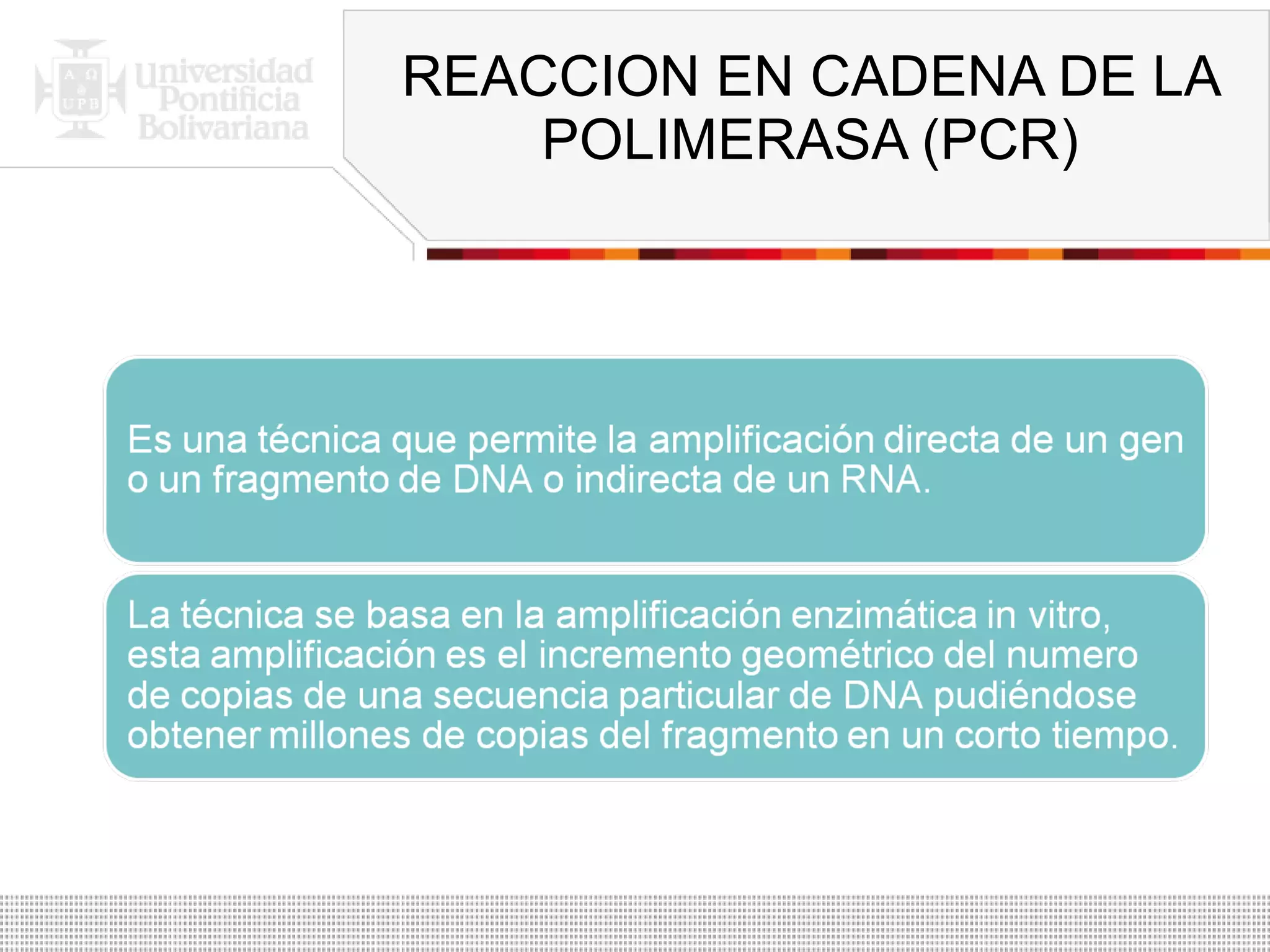
REACCION EN CADENA DE LA POLIMERASA (PCR)
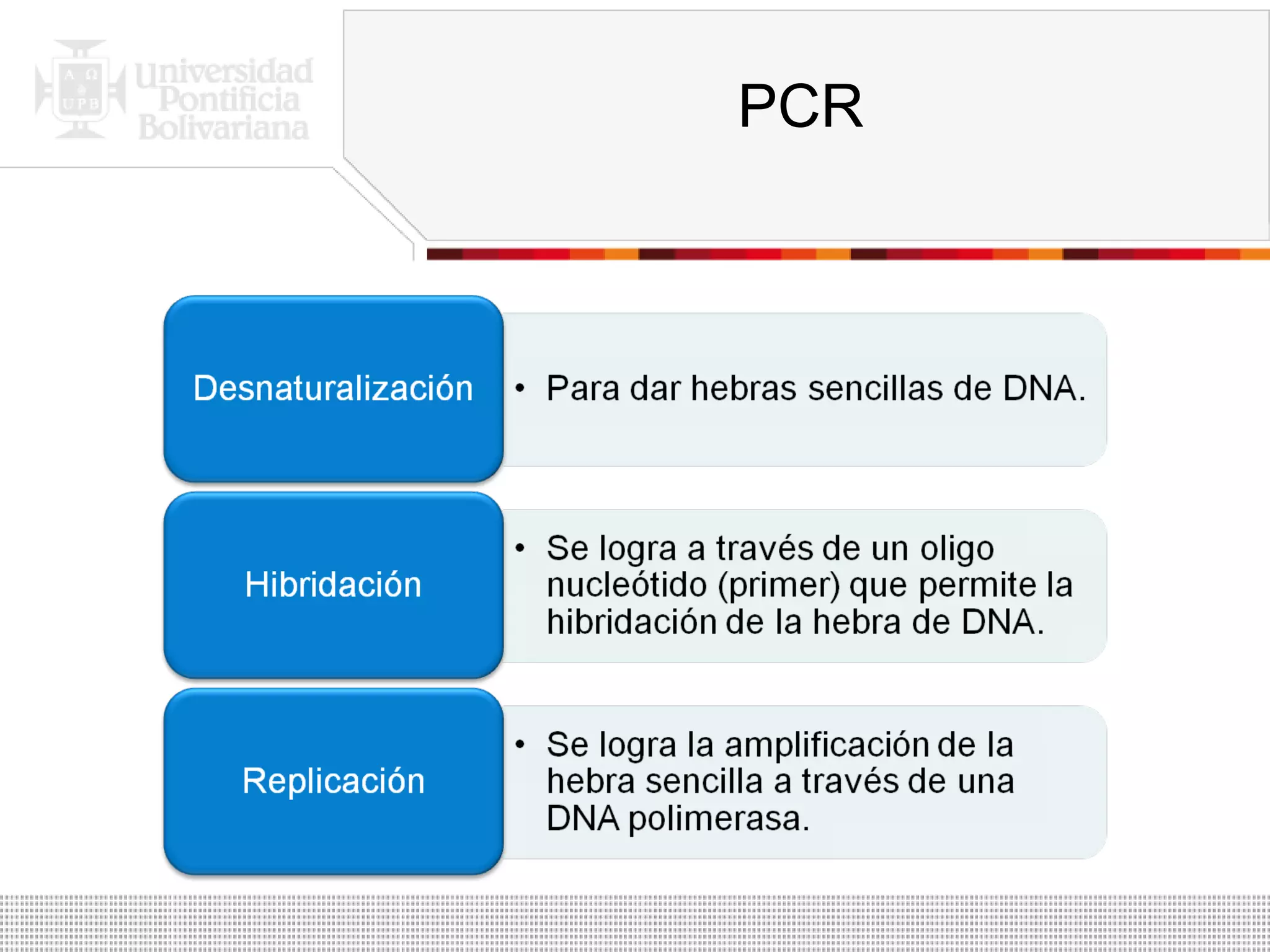
PCR
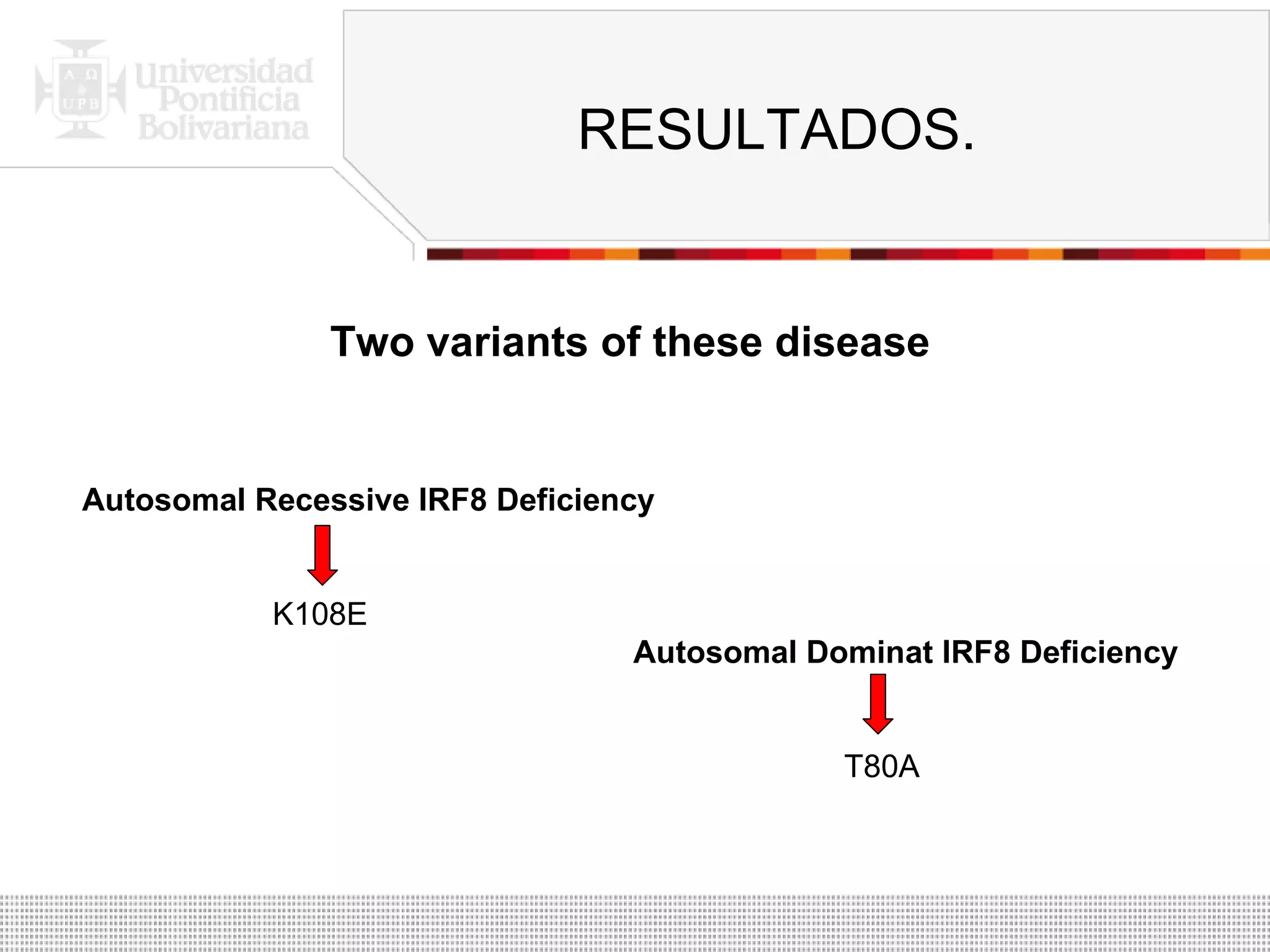
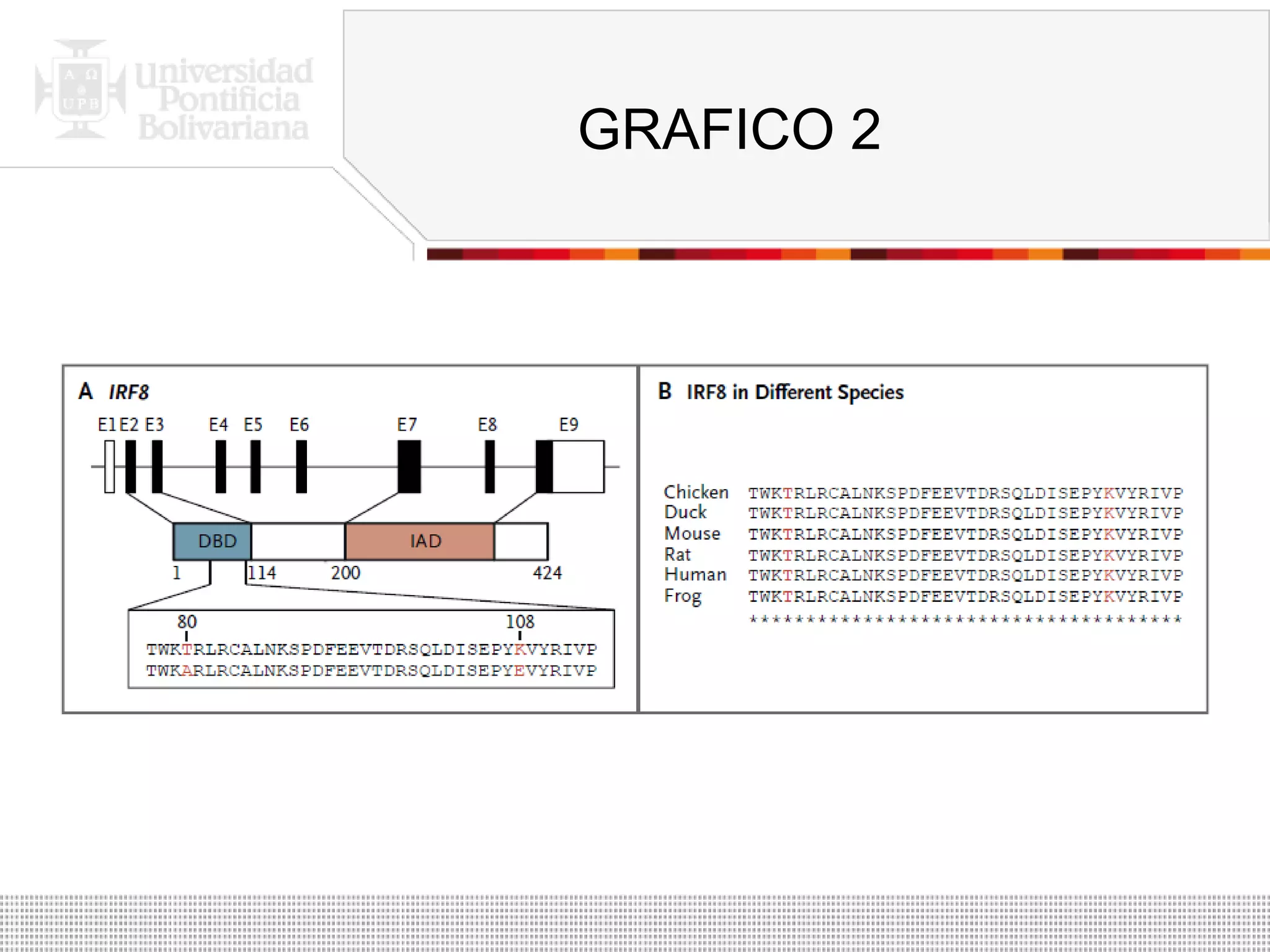
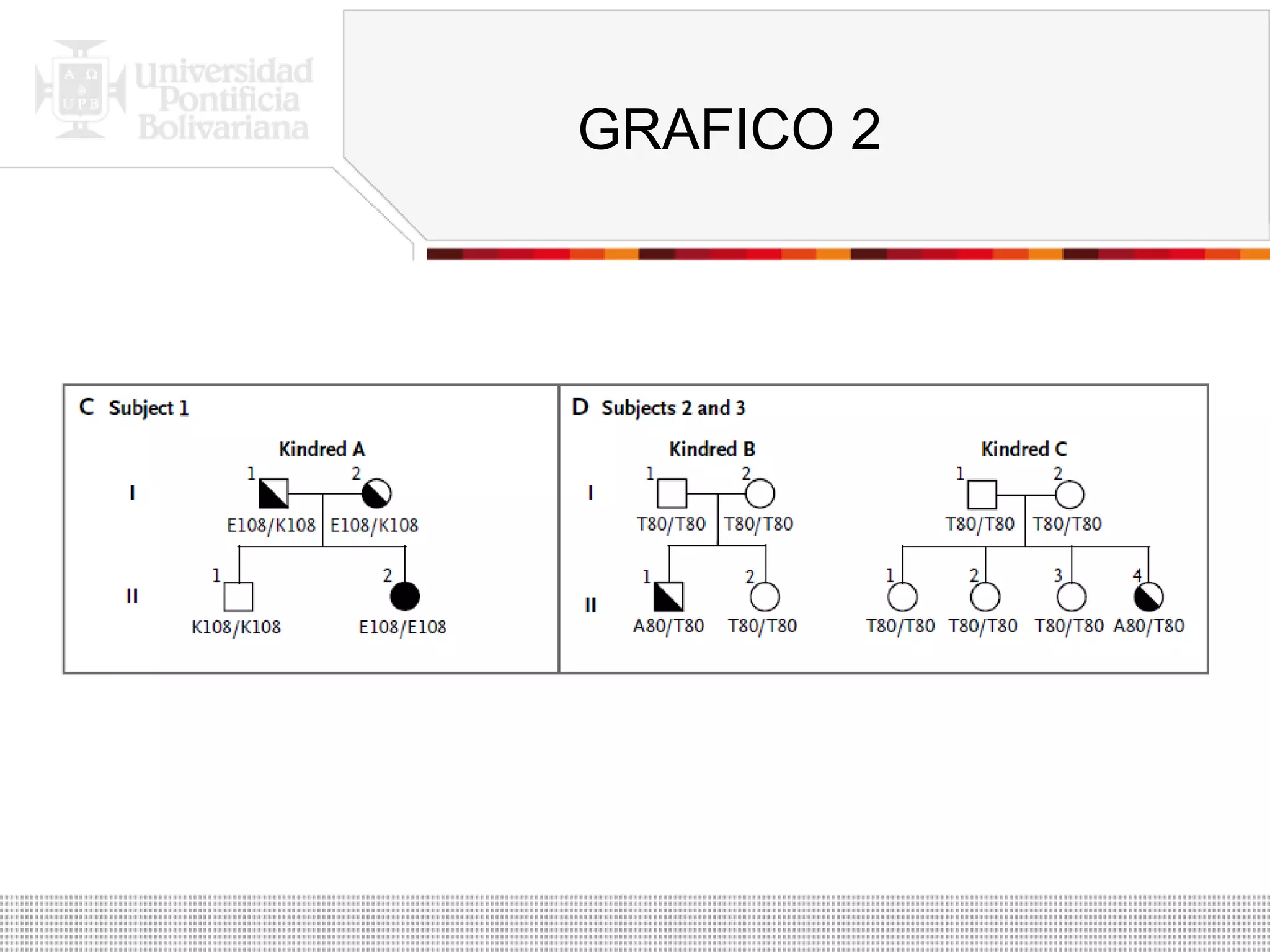
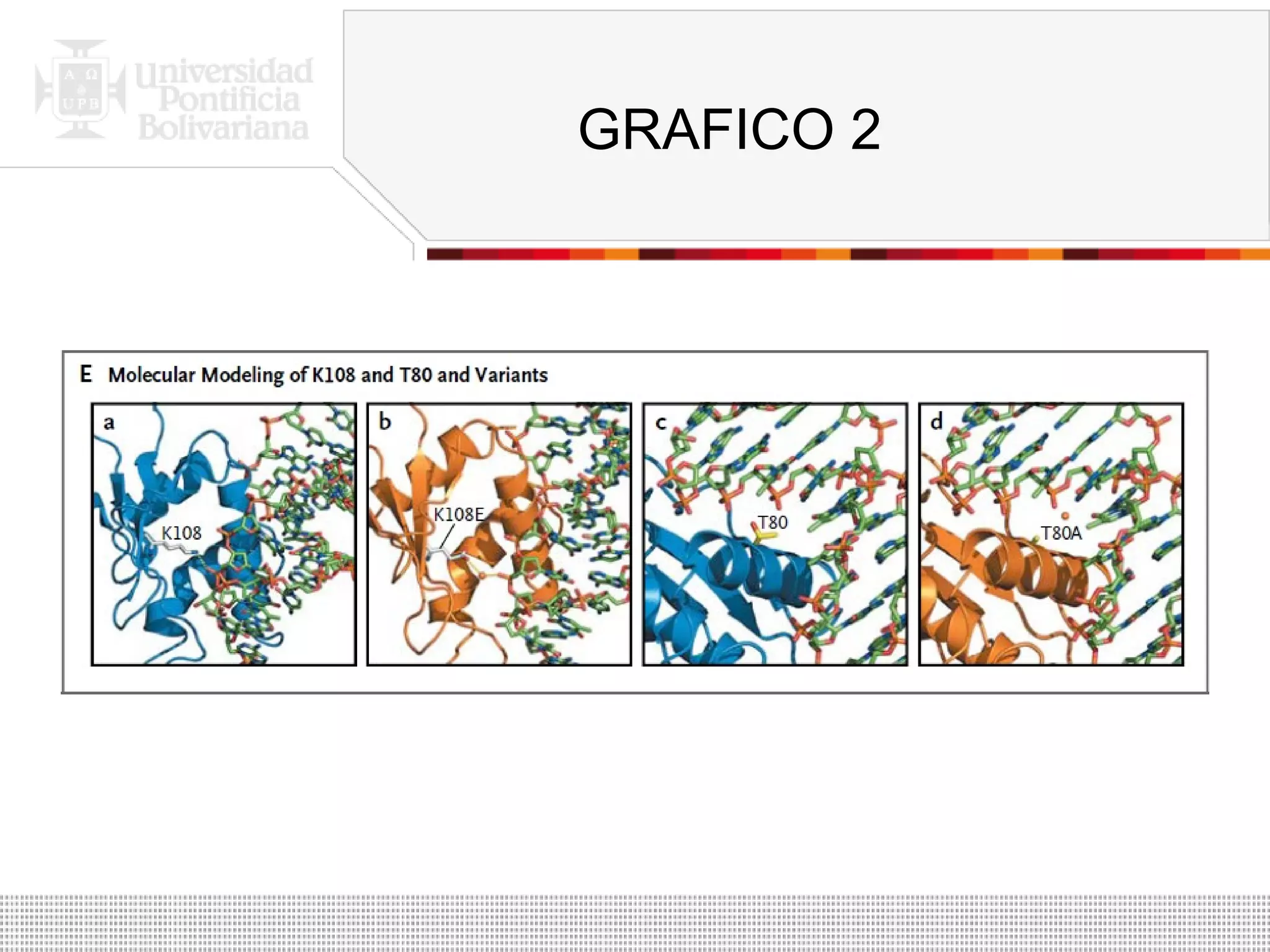
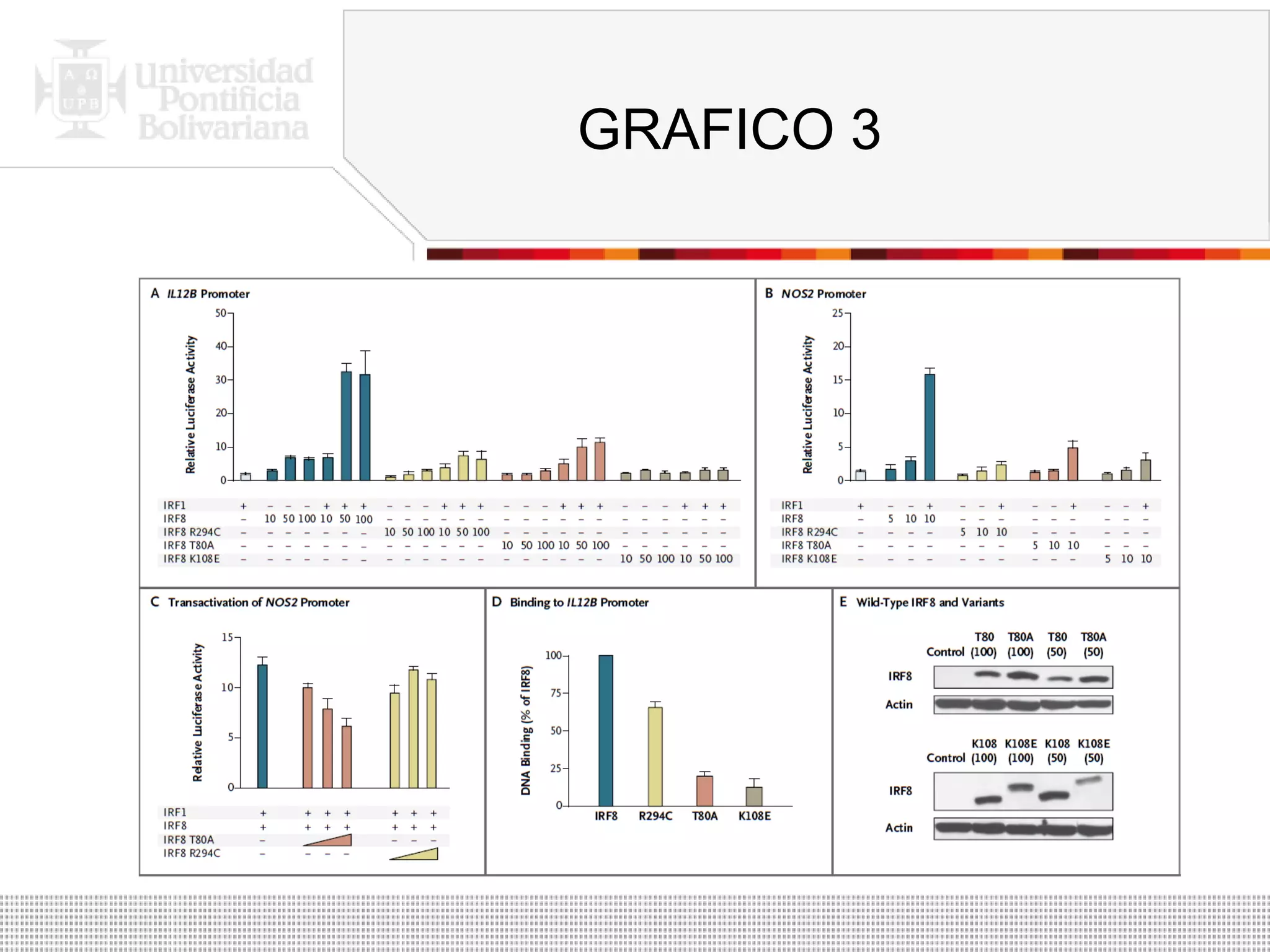
RESULTADOS. Two variants of these disease Autosomal Recessive IRF8 Deficiency K108E Autosomal Dominat IRF8 Deficiency T80A
GRAFICO 2
GRAFICO 2
GRAFICO 2
GRAFICO 3
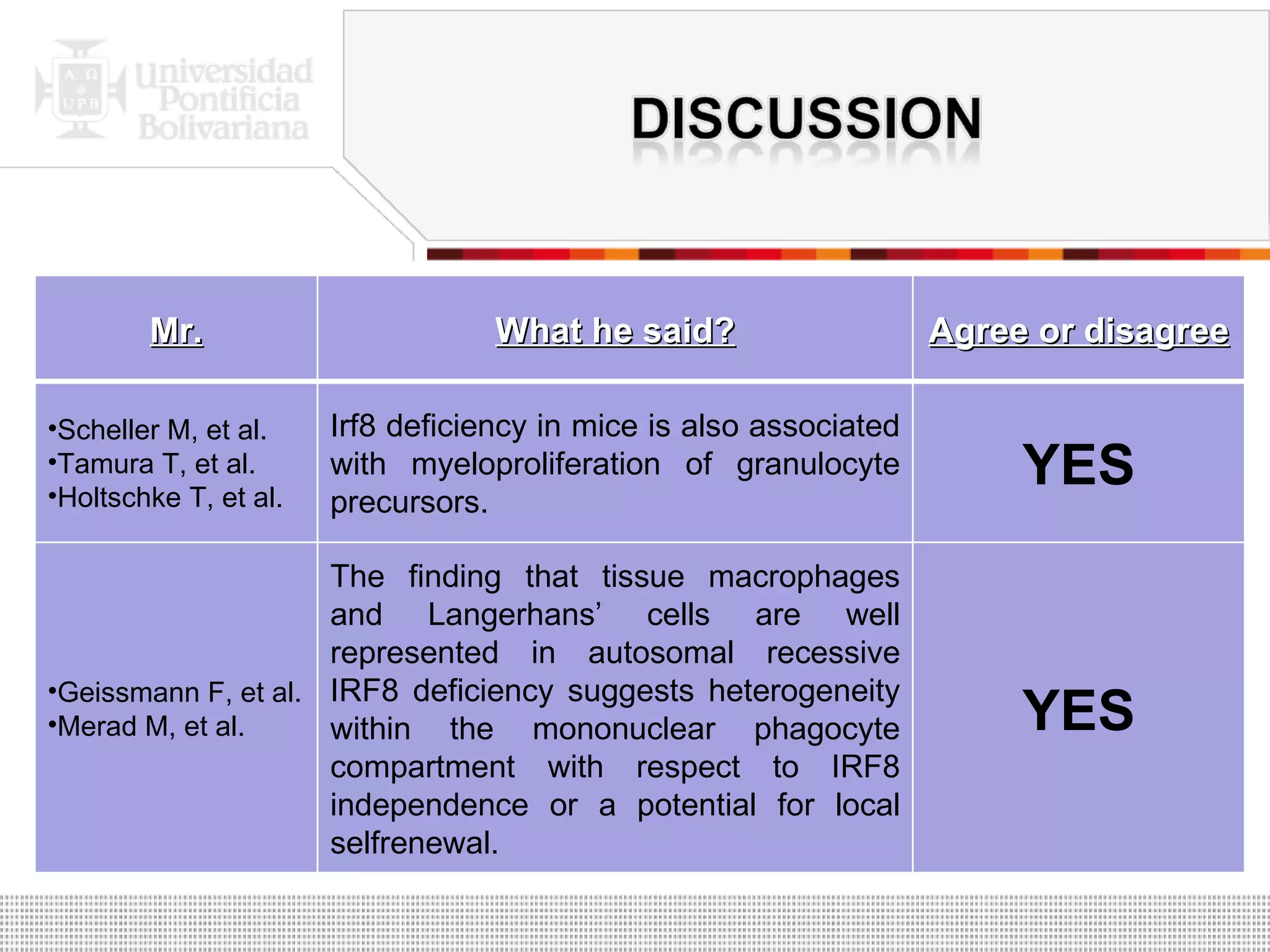
Mr. What he said? Agree or disagree Scheller M, et al. Tamura T, et al. Holtschke T, et al. Irf8 deficiency in mice  is also associated with myeloproliferation of  granulocyte precursors. YES Geissmann F, et al. Merad M, et al. The finding that tissue  macrophages and Langerhans’ cells are well  represented in autosomal recessive IRF8 deficiency  suggests heterogeneity within the mononuclear phagocyte compartment with respect to IRF8 independence or a potential for local selfrenewal. YES
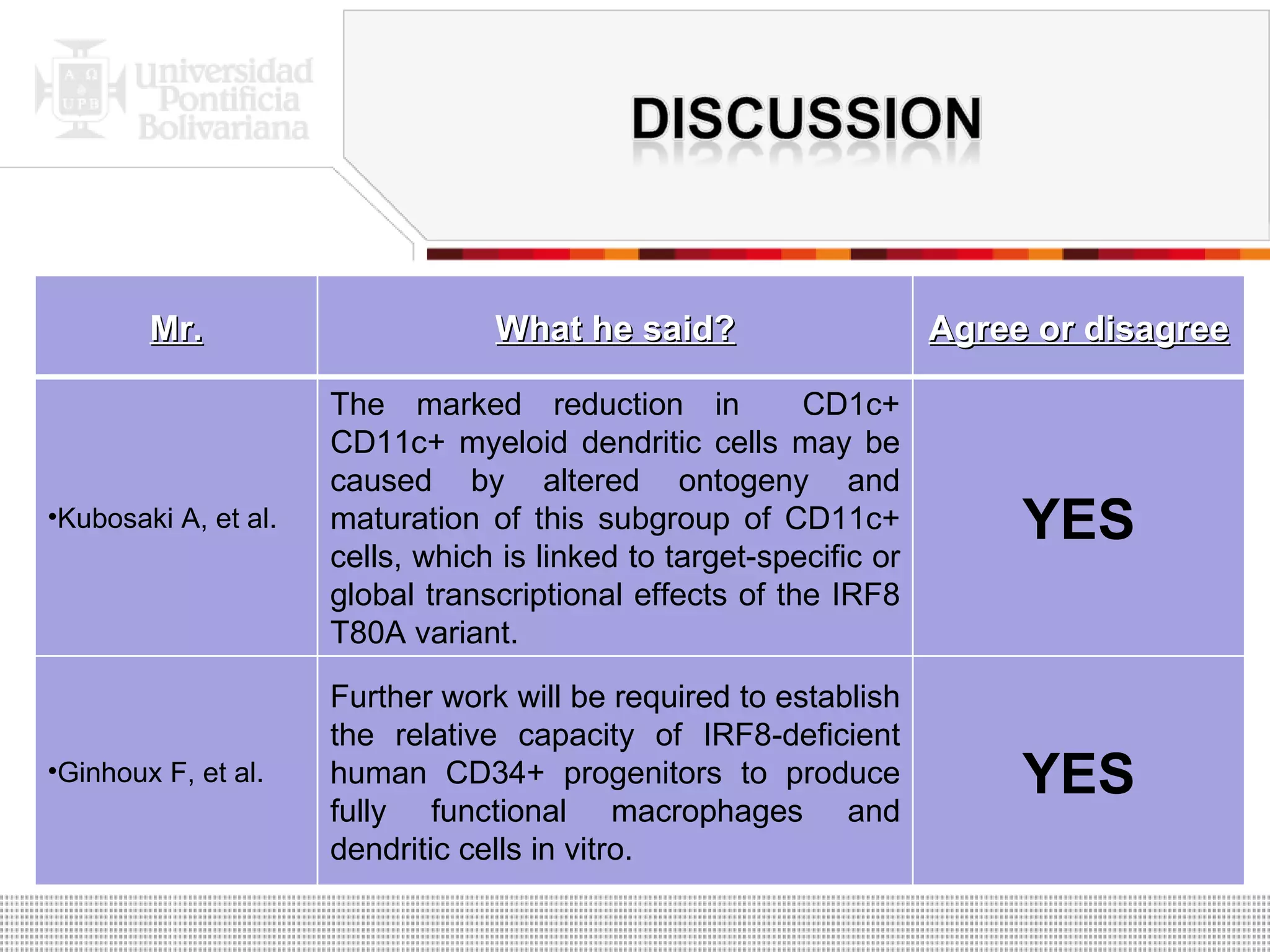
Mr. What he said? Agree or disagree Kubosaki A, et al. The marked reduction in  CD1c+ CD11c+ myeloid dendritic cells may be caused by altered ontogeny and maturation of this subgroup of CD11c+ cells, which is linked to target-specific or global transcriptional effects of the IRF8 T80A  variant. YES Ginhoux F, et al. Further work will be required to establish the relative capacity of IRF8-deficient human CD34+ progenitors to produce fully functional macrophages and dendritic cells in vitro. YES
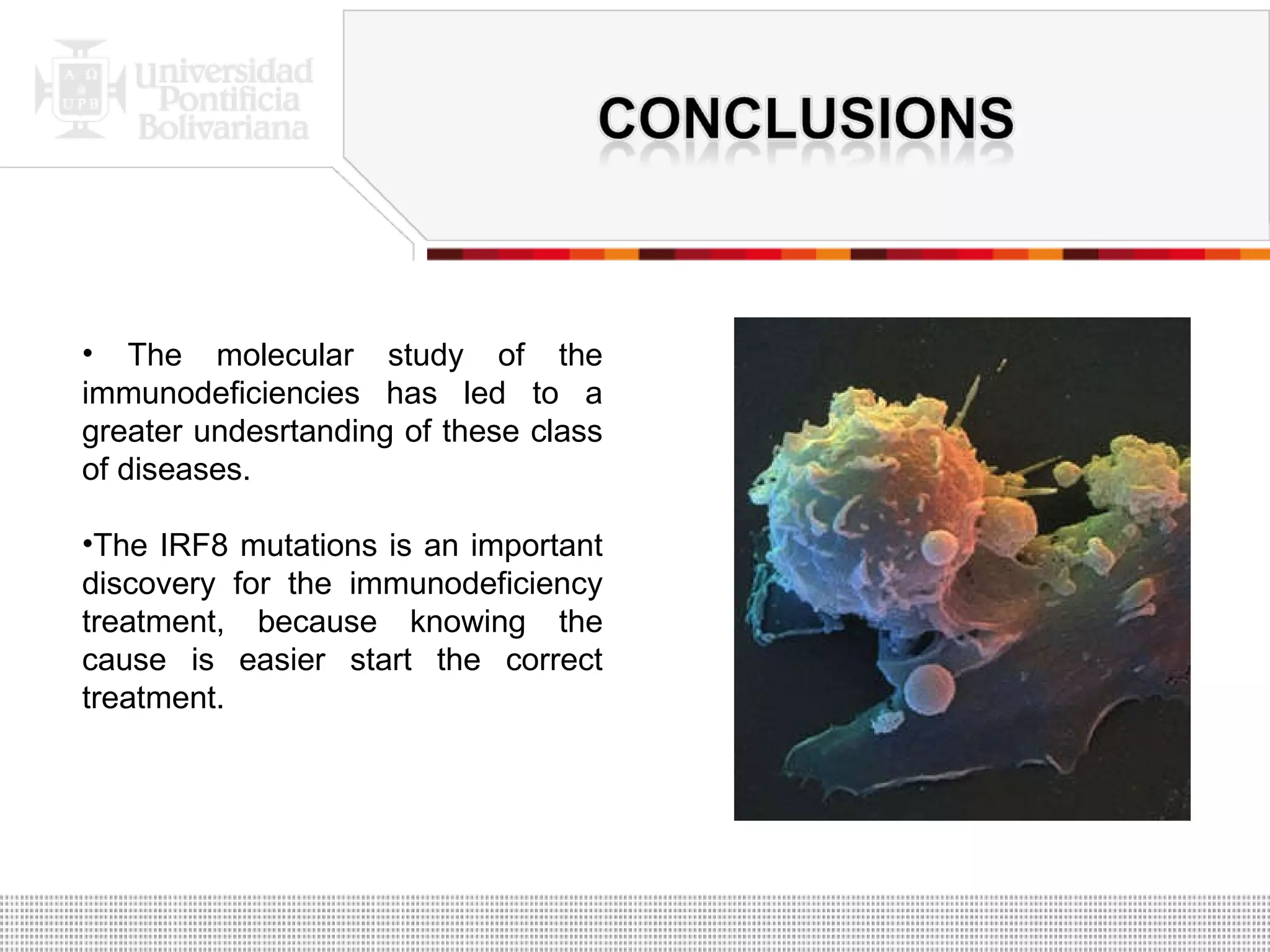
The molecular study of the immunodeficiencies has led to a greater undesrtanding of these class of diseases. The IRF8 mutations is an important discovery for the immunodeficiency treatment, because knowing the cause is easier start the correct treatment.
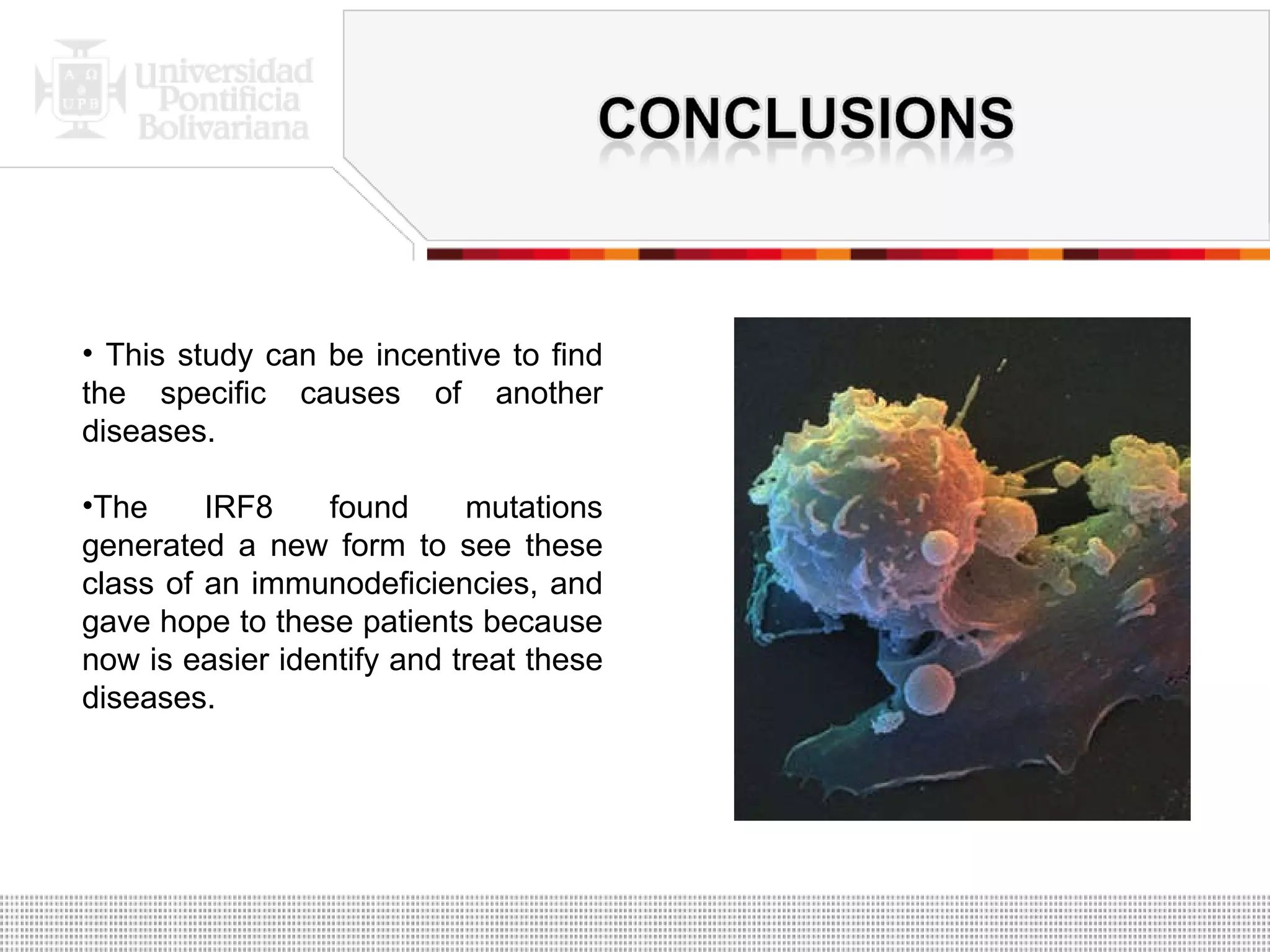
This study can be incentive to find the specific causes of another diseases. The IRF8 found mutations generated a new form to see these class of an immunodeficiencies, and gave hope to these patients  because now is easier identify and treat these diseases.
Estefanía Velásquez
Plutarco Uzcátegui
Martinez S LM. Biologia Molecular. Ed 6. Medellin. 2011. pg 113, 131- 133 Curso de Inmunología General. Celulas del sistema inmune. [August 30 2011]. [Internet]; Available on: http://www.ugr.es/~eianez/inmuno/cap_02.htm#_Toc440028784 Inmunodeficiencias Primarias y Secundarias. [August 30 2011]. [Internet]; Available on: http://campus.usal.es/~dermed/Inmunodeficiencias.pdf
Thank you

IRF8 Mutations and Human Dendritic-Cell Immunodefiency

  • 1.
    Estefanía Velásquez López– Plutarco Andrés Uzcategui Medicine Student´s – Third semester Medellín - Colombia Molecular Biology 2011 IRF8 MUTATIONS AND HUMAN DENDRITIC-CELL IMMUNODEFICIENCY Sophie Hambleton, M.D., Ph.D., Sandra Salem, B.Sc., Jacinta Bustamante, M.D., Ph.D., Venetia Bigley, M.D., Ph.D., Stéphanie Boisson-Dupuis, Ph.D., Joana Azevedo, M.D., Anny Fortin, Ph.D., Muzlifah Haniffa, M.D., Ph.D., Lourdes Ceron-Gutierrez, B.Sc., Chris M. Bacon, M.D., Ph.D., Geetha Menon, M.D., Céline Trouillet, B.Sc., David McDonald, Ph.D., Peter Carey, M.D., Florent Ginhoux, Ph.D., Laia Alsina, M.D., Ph.D., Timothy J. Zumwalt, B.Sc., Xiao-Fei Kong, M.D., Ph.D., Dinakantha Kumararatne, M.D., Ph.D., Karina Butler, M.B., B.Ch., Marjorie Hubeau, M.Sc., Jacqueline Feinberg, Ph.D., Saleh Al-Muhsen, M.D., Andrew Cant, M.D., Laurent Abel, M.D., Ph.D., Damien Chaussabel, Ph.D., Rainer Doffinger, Ph.D., Eduardo Talesnik, M.D., Anete Grumach, M.D., Ph.D., Alberto Duarte, M.D., Katia Abarca, M.D., Dewton Moraes-Vasconcelos, M.D., Ph.D., David Burk, Ph.D., Albert Berghuis, Ph.D., Frédéric Geissmann, M.D., Ph.D., Matthew Collin, M.D., Ph.D., Jean-Laurent Casanova, M.D., Ph.D., and Philippe Gros, Ph.D.
  • 2.
    INTRODUCTION BACKGROUND Thegenetic analysis of human primary immunodeficiencies has defined the contribution of specific cell populations and molecular pathways in the host defense against infection. Disseminated infection caused by bacille Calmette–Guérin (BCG) vaccines is an early manifestation of primary immunodeficiencies, such as severe combined immunodeficiency. In many affected persons, the cause of disseminated BCG disease is unexplained.
  • 3.
    Abnormalities default ofone or more elements of the immune system. Features: Increased susceptibility to infection Increased susceptibility to develop neoplasms Rating: Congenital or primary immunodeficiency (rare) Secondary immunodeficiencies (FAQs) IMMUNODEFICIENCY
  • 4.
    PRIMARY IMMUNODEFICIENCY Thevast majority due to inherited genetic defects Very rare: 1/10.000 live births. General features Increased susceptibility to infection recurrent and persistent (opportunistic infections): Pyogenic bacteria and infections recurrent viral. Start early age of life (1st year). A family history. IMMUNODEFICIENCY
  • 5.
  • 6.
    SECONDARY IMMUNODEFICIENCIES Immunodeficiencyloss attributable to the style of antibodies and / or lymphocytes, by extrinsic causes. Rating: 1. Immunosuppressive Drug Administration 2. A radiation exposure 3. Chronic infections, HIV infection 4. States of malnutrition and vitamin deficiency 5. Chronic renal failure 6. Other Metabolic Diseases 7. Malignancies 8. Depression IMMUNODEFICIENCY
  • 7.
  • 8.
    IRF 8 Proteinsthat regulate expression genetics of interferon. IRF8 is critical to the development of monocytes and dendritic cells, essential for antimycobaterial immunity.
  • 9.
    RELATION Suceptibility tomycobacterial infections Bacille calmette- Guerin (BCG)- mycobacteria.
  • 10.
    GENERAL OBJETIVE Identifythe cause of human immunodeficiency in patients who were receiving vaccine Bacille Calmette Guèrin, as well as relations between IRF8 mutations and human dendritic cells inmunodeficiency.
  • 11.
  • 12.
    MATERIALES Y MÈTODOS.Les hicieron un análisis genético y transcripcional: Se estudio la secuencia IRF8 después de reacciones de amplificación con primers específicos. Se estudio la actividad transcripcional del IRF8 mutado y no mutado. 3. Los datos obtenidos fueron usados en ensayos bioquímicos, caracterización molecular y análisis estadístico.
  • 13.
    COLORACIONES DE LASBIOPSIAS. Adultos con biopsia de nódulo, presencia de bacilos acido alcohol resistentes. Medula ósea con hiperplasia mieloide en la niña de 10 semanas de nacida. Coloración de bacilos acido resistentes (mycobacterium).
  • 14.
    COLORACIONES DE LASBIOPSIAS. CD68 Y CD63 CD1a Y CD14 Marcadores
  • 15.
    REACCION EN CADENADE LA POLIMERASA (PCR)
  • 16.
  • 17.
    RESULTADOS. Two variantsof these disease Autosomal Recessive IRF8 Deficiency K108E Autosomal Dominat IRF8 Deficiency T80A
  • 18.
  • 19.
  • 20.
  • 21.
  • 22.
    Mr. What hesaid? Agree or disagree Scheller M, et al. Tamura T, et al. Holtschke T, et al. Irf8 deficiency in mice is also associated with myeloproliferation of granulocyte precursors. YES Geissmann F, et al. Merad M, et al. The finding that tissue macrophages and Langerhans’ cells are well represented in autosomal recessive IRF8 deficiency suggests heterogeneity within the mononuclear phagocyte compartment with respect to IRF8 independence or a potential for local selfrenewal. YES
  • 23.
    Mr. What hesaid? Agree or disagree Kubosaki A, et al. The marked reduction in CD1c+ CD11c+ myeloid dendritic cells may be caused by altered ontogeny and maturation of this subgroup of CD11c+ cells, which is linked to target-specific or global transcriptional effects of the IRF8 T80A variant. YES Ginhoux F, et al. Further work will be required to establish the relative capacity of IRF8-deficient human CD34+ progenitors to produce fully functional macrophages and dendritic cells in vitro. YES
  • 24.
    The molecular studyof the immunodeficiencies has led to a greater undesrtanding of these class of diseases. The IRF8 mutations is an important discovery for the immunodeficiency treatment, because knowing the cause is easier start the correct treatment.
  • 25.
    This study canbe incentive to find the specific causes of another diseases. The IRF8 found mutations generated a new form to see these class of an immunodeficiencies, and gave hope to these patients because now is easier identify and treat these diseases.
  • 26.
  • 27.
  • 28.
    Martinez S LM.Biologia Molecular. Ed 6. Medellin. 2011. pg 113, 131- 133 Curso de Inmunología General. Celulas del sistema inmune. [August 30 2011]. [Internet]; Available on: http://www.ugr.es/~eianez/inmuno/cap_02.htm#_Toc440028784 Inmunodeficiencias Primarias y Secundarias. [August 30 2011]. [Internet]; Available on: http://campus.usal.es/~dermed/Inmunodeficiencias.pdf
  • 29.