RENEWABLE
POWER
GENERATION
COSTS IN 2022
2
RENEWABLE POWER GENERATION COSTS IN 2022
© IRENA 2023
Unless otherwise stated, material in this publication may be freely used, shared, copied, reproduced, printed and/or stored, provided
that appropriate acknowledgement is given of IRENA as the source and copyright holder. Material in this publication that is attributed to
third parties may be subject to separate terms of use and restrictions, and appropriate permissions from these third parties may need to
be secured before any use of such material.
Citation: 
IRENA (2022), Renewable power generation costs in 2022, International Renewable Energy Agency, Abu Dhabi.
ISBN 978-92-9260-544-5
Acknowledgements
This report was developed under the guidance of Roland Roesch (Director, IRENA Innovation and Technology Center) and
Michael Taylor (IRENA).
The report was authored by Michael Taylor, Sonia Al-Zoghoul and Pablo Ralon (IRENA), with assistance from Olga Sorokina
(European Energy Link Group).
The authors are grateful for the valuable contributions from Erick Ruiz Araya, Francis De Jaeger, Juan Pablo Jimenez Navarro,
Binu Parthan and Ludovico Del Vecchio (IRENA) in the preparation of this study.
This report benefited from the reviews and comments of numerous experts, including Ana Andrade (Direção Geral de Energia
e Geologia [DGEG]), Alex Campbell and Rebecca Ellis (IHA), Manuel Quero (Sunntics), Alexander Hogeveen Rutter (ISA),
Christoph Walter (DEA), Yuetao Xi (CREEI) and Feng Zhao (GWEC). All opinions and errors remain those of the authors.
Publications, editorial and communications support were provided by Francis Field, Stephanie Clarke, Nicole Bockstaller and
Daria Gazzola..
The report was copy-edited by Jonathan Gorvett and Stefanie Durbin, and a technical review was provided by Paul Komor.
The graphic design was provided by Ignacio de la Concepción Sanz.
For further information or to provide feedback: publications@irena.org
This report is available for download: www.irena.org/publications
Disclaimer
This publication and the material herein are provided “as is”. All reasonable precautions have been taken by IRENA to verify the reliability of the material
in this publication. However, neither IRENA nor any of its officials, agents, data or other third-party content providers provides a warranty of any kind,
either expressed or implied, and they accept no responsibility or liability for any consequence of use of the publication or material herein. The information
contained herein does not necessarily represent the views of all Members of IRENA. The mention of specific companies or certain projects or products does
not imply that they are endorsed or recommended by IRENA in preference to others of a similar nature that are not mentioned. The designations employed
and the presentation of material herein do not imply the expression of any opinion on the part of IRENA concerning the legal status of any region, country,
territory, city or area or of its authorities, or concerning the delimitation of frontiers or boundaries.
About IRENA
TThe International Renewable Energy Agency (IRENA) is an intergovernmental organisation
that supports countries in their transition to a sustainable energy future and serves as the
principal platform for international co-operation, a centre of excellence, and a repository of
policy, technology, resource and financial knowledge on renewable energy. IRENA promotes the
widespread adoption and sustainable use of all forms of renewable energy, including bioenergy,
geothermal, hydropower, ocean, solar and wind energy, in the pursuit of sustainable development,
energy access, energy security and low-carbon economic growth and prosperity. www.irena.org
The growing competitiveness
of renewable power continues to
provide the most compelling pathway
to the decarbonisation of the global
energy system
© Jason Winter/Shutterstock.com
4
RENEWABLE POWER GENERATION COSTS IN 2022
As the nations of the world prepare to convene in the United Arab Emirates
for COP28, the International Renewable Energy Agency (IRENA) continues
to warn that the world is not on track to meet its shared commitments under
the Paris Agreement to avoid dangerous climate change. The pathway to a
1.5°C future requires increased global ambition in renewables deployment,
enabled by physical infrastructure, policy and regulations, and strengthened
institutional and workforce capabilities.
Since shortly after its inception, IRENA has tracked trends in the costs and
competitiveness of renewable power generation technologies, charting the
fallingcostsoftheenergytransitionbeyondmostcommentatorsexpectations.
This has opened up new avenues for decarbonisation via electrification to
deliver a climate-safe future, as other options have failed to scale.
The competitiveness of renewable power today has positioned electrification
as a central pillar of the energy transition. This offers an opportunity to
place renewable energy at the centre of the solution while simultaneously
enhancing energy security, reducing energy costs and enabling forward-
looking industrial development.
With the lingering impact of COVID-19 supply chain disruptions, rapid
growth in solar photovoltaic (PV) deployment and rising commodity prices,
2022 was a mixed year for solar and wind power costs, as many countries
saw increasing costs in real terms. Despite this, the global average cost of
electricity from solar PV fell by 2% and that of onshore wind by 5% in 2022,
as China once again dominated new capacity additions. The global average
cost of electricity from utility-scale solar PV fell to USD 0.049 per kilowatt-
hour (kWh) and that of onshore wind to USD 0.033/kWh. This meant that in
2022, at least 86% of new utility-scale solar PV capacity additions and 87% of
onshore wind capacity additions had lower costs than new fossil fuel options.
FOREWORD
Francesco La Camera
Director-General
International Renewable
Energy Agency
5
FOREWORD
Yet this is only a partial view of 2022; the fossil fuel price crisis in Europe
had ramifications around the world for energy prices. As a result,
the competitiveness of renewable power generation technologies in
20 countries where IRENA has detailed fossil fuel and renewable cost data
improved significantly in 2022 in all cases for solar PV and onshore wind.
The year 2022 also highlighted the very real - but often overlooked
over the last decade - energy security benefits of renewable power. In
Europe, the existing renewable capacity installed since 2010 reduced
electricity generation costs by USD 176 billion from what they might have
otherwise been.
As the consequences of climate change become ever more evident, the
falling costs and improved competitiveness of renewable power generation
over the last decade represent a beacon for the world to steer toward. We
have the tools to accelerate the energy transition, and doing so is dramatically
cheaper than the business-as-usual approach, but we must act now.
6
RENEWABLE POWER GENERATION COSTS IN 2022
Figures, tables and boxes .  .  .  .  .  .  .  .  .  .  .  .  .  .  .  .  .  .  .  .  .  .  .  .  .  .  .  .  .  .  .  .  .  .  .  .  . 8
Abbreviations .  .  .  .  .  .  .  .  .  .  .  .  .  .  .  .  .  .  .  .  .  .  .  .  .  .  .  .  .  .  .  .  .  .  .  .  .  .  .  .  .  .  .  .  . 14
Highlights
. .  .  .  .  .  .  .  .  .  .  .  .  .  .  .  .  .  .  .  .  .  .  .  .  .  .  .  .  .  .  .  .  .  .  .  .  .  .  .  .  .  .  .  .  .  .  .  . 15
EXECUTIVE SUMMARY. .  .  .  .  .  .  .  .  .  .  .  .  .  .  .  .  .  .  .  .  .  .  .  .  .  .  .  .  .  .  .  .  .  .  .  .  .  .  . 16
LATEST COST TRENDS .  .  .  .  .  .  .  .  .  .  .  .  .  .  .  .  .  .  .  .  .  .  .  .  .  .  .  .  .  .  .  .  .  .  .  .  .  .  .  . 24
Introduction. . . . . . . . . . . . . . . . . . . . . . . . . . . . . . . . . . . . . . . . . . . . . . . . . . . . . . . . . . . . . . . . . . . . . . . . . 25
ONSHORE WIND.  .  .  .  .  .  .  .  .  .  .  .  .  .  .  .  .  .  .  .  .  .  .  .  .  .  .  .  .  .  .  .  .  .  .  .  .  .  .  .  .  .  .  . 68
Highlights. . . . . . . . . . . . . . . . . . . . . . . . . . . . . . . . . . . . . . . . . . . . . . . . . . . . . . . . . . . . . . . . . . . . . . . . . . . 69
Introduction. . . . . . . . . . . . . . . . . . . . . . . . . . . . . . . . . . . . . . . . . . . . . . . . . . . . . . . . . . . . . . . . . . . . . . . . . 70
Wind turbine characteristics and costs . . . . . . . . . . . . . . . . . . . . . . . . . . . . . . . . . . . . . . . . . . . . . . . . . 70
Total installed costs. . . . . . . . . . . . . . . . . . . . . . . . . . . . . . . . . . . . . . . . . . . . . . . . . . . . . . . . . . . . . . . . . . 73
Capacity factors. . . . . . . . . . . . . . . . . . . . . . . . . . . . . . . . . . . . . . . . . . . . . . . . . . . . . . . . . . . . . . . . . . . . . 77
Operation and maintenance costs. . . . . . . . . . . . . . . . . . . . . . . . . . . . . . . . . . . . . . . . . . . . . . . . . . . . . . 82
Levelised cost of electricity. . . . . . . . . . . . . . . . . . . . . . . . . . . . . . . . . . . . . . . . . . . . . . . . . . . . . . . . . . . . 83
SOLAR PHOTOVOLTAICS.  .  .  .  .  .  .  .  .  .  .  .  .  .  .  .  .  .  .  .  .  .  .  .  .  .  .  .  .  .  .  .  .  .  .  .  .  . 88
Highlights. . . . . . . . . . . . . . . . . . . . . . . . . . . . . . . . . . . . . . . . . . . . . . . . . . . . . . . . . . . . . . . . . . . . . . . . . . . 89
Recent market trends. . . . . . . . . . . . . . . . . . . . . . . . . . . . . . . . . . . . . . . . . . . . . . . . . . . . . . . . . . . . . . . . . 90
Total installed costs. . . . . . . . . . . . . . . . . . . . . . . . . . . . . . . . . . . . . . . . . . . . . . . . . . . . . . . . . . . . . . . . . . 90
Capacity factors. . . . . . . . . . . . . . . . . . . . . . . . . . . . . . . . . . . . . . . . . . . . . . . . . . . . . . . . . . . . . . . . . . .  104
Operation and maintenance costs. . . . . . . . . . . . . . . . . . . . . . . . . . . . . . . . . . . . . . . . . . . . . . . . . . . .  105
Levelised cost of electricity. . . . . . . . . . . . . . . . . . . . . . . . . . . . . . . . . . . . . . . . . . . . . . . . . . . . . . . . . .  108
OFFSHORE WIND
. .  .  .  .  .  .  .  .  .  .  .  .  .  .  .  .  .  .  .  .  .  .  .  .  .  .  .  .  .  .  .  .  .  .  .  .  .  .  .  .  .  . 114
Highlights. . . . . . . . . . . . . . . . . . . . . . . . . . . . . . . . . . . . . . . . . . . . . . . . . . . . . . . . . . . . . . . . . . . . . . . . .  115
Introduction. . . . . . . . . . . . . . . . . . . . . . . . . . . . . . . . . . . . . . . . . . . . . . . . . . . . . . . . . . . . . . . . . . . . . . .  116
Total installed costs. . . . . . . . . . . . . . . . . . . . . . . . . . . . . . . . . . . . . . . . . . . . . . . . . . . . . . . . . . . . . . . .  121
Capacity factors. . . . . . . . . . . . . . . . . . . . . . . . . . . . . . . . . . . . . . . . . . . . . . . . . . . . . . . . . . . . . . . . . . .  127
Operation and maintenance costs. . . . . . . . . . . . . . . . . . . . . . . . . . . . . . . . . . . . . . . . . . . . . . . . . . . .  131
Levelised cost of electricity. . . . . . . . . . . . . . . . . . . . . . . . . . . . . . . . . . . . . . . . . . . . . . . . . . . . . . . . . .  132
01
02
03
04
CONTENTS
7
EXECUTIVE SUMMARY
CONCENTRATING SOLAR POWER.  .  .  .  .  .  .  .  .  .  .  .  .  .  .  .  .  .  .  .  .  .  .  .  .  .  .  .  .  . 134
Highlights. . . . . . . . . . . . . . . . . . . . . . . . . . . . . . . . . . . . . . . . . . . . . . . . . . . . . . . . . . . . . . . . . . . . . . . . .  135
Introduction. . . . . . . . . . . . . . . . . . . . . . . . . . . . . . . . . . . . . . . . . . . . . . . . . . . . . . . . . . . . . . . . . . . . . . .  136
Total installed costs. . . . . . . . . . . . . . . . . . . . . . . . . . . . . . . . . . . . . . . . . . . . . . . . . . . . . . . . . . . . . . . .  138
Capacity factors. . . . . . . . . . . . . . . . . . . . . . . . . . . . . . . . . . . . . . . . . . . . . . . . . . . . . . . . . . . . . . . . . . .  142
Operation and maintenance costs. . . . . . . . . . . . . . . . . . . . . . . . . . . . . . . . . . . . . . . . . . . . . . . . . . . .  145
Levelised cost of electricity. . . . . . . . . . . . . . . . . . . . . . . . . . . . . . . . . . . . . . . . . . . . . . . . . . . . . . . . . . . 147
HYDROPOWER .  .  .  .  .  .  .  .  .  .  .  .  .  .  .  .  .  .  .  .  .  .  .  .  .  .  .  .  .  .  .  .  .  .  .  .  .  .  .  .  .  .  .  . 150
Highlights. . . . . . . . . . . . . . . . . . . . . . . . . . . . . . . . . . . . . . . . . . . . . . . . . . . . . . . . . . . . . . . . . . . . . . . . .  151
Total installed costs. . . . . . . . . . . . . . . . . . . . . . . . . . . . . . . . . . . . . . . . . . . . . . . . . . . . . . . . . . . . . . . .  152
Capacity factors. . . . . . . . . . . . . . . . . . . . . . . . . . . . . . . . . . . . . . . . . . . . . . . . . . . . . . . . . . . . . . . . . . .  160
Operation and maintenance costs. . . . . . . . . . . . . . . . . . . . . . . . . . . . . . . . . . . . . . . . . . . . . . . . . . . .  162
Levelised cost of electricity. . . . . . . . . . . . . . . . . . . . . . . . . . . . . . . . . . . . . . . . . . . . . . . . . . . . . . . . . .  163
GEOTHERMAL.  .  .  .  .  .  .  .  .  .  .  .  .  .  .  .  .  .  .  .  .  .  .  .  .  .  .  .  .  .  .  .  .  .  .  .  .  .  .  .  .  .  .  .  . 166
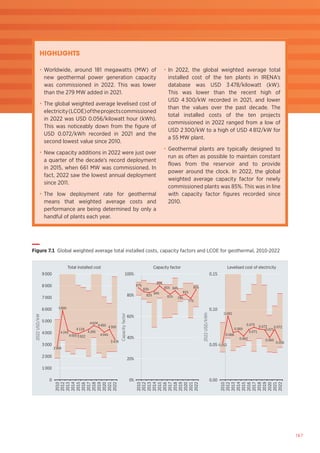
Highlights. . . . . . . . . . . . . . . . . . . . . . . . . . . . . . . . . . . . . . . . . . . . . . . . . . . . . . . . . . . . . . . . . . . . . . . . .  167
Introduction. . . . . . . . . . . . . . . . . . . . . . . . . . . . . . . . . . . . . . . . . . . . . . . . . . . . . . . . . . . . . . . . . . . . . . .  168
Total installed costs. . . . . . . . . . . . . . . . . . . . . . . . . . . . . . . . . . . . . . . . . . . . . . . . . . . . . . . . . . . . . . . .  170
Capacity factors. . . . . . . . . . . . . . . . . . . . . . . . . . . . . . . . . . . . . . . . . . . . . . . . . . . . . . . . . . . . . . . . . . . . . .  172
Levelised cost of electricity. . . . . . . . . . . . . . . . . . . . . . . . . . . . . . . . . . . . . . . . . . . . . . . . . . . . . . . . . .  173
BIOENERGY. . . . . . . . . . . . . . . . . . . . . . . . . . . . . . . . . . . . . . . . . . . . . . . 176
Highlights. . . . . . . . . . . . . . . . . . . . . . . . . . . . . . . . . . . . . . . . . . . . . . . . . . . . . . . . . . . . . . . . . . . . . . . . .  177
Bioenergy for power . . . . . . . . . . . . . . . . . . . . . . . . . . . . . . . . . . . . . . . . . . . . . . . . . . . . . . . . . . . . . . .  178
Biomass feedstocks. . . . . . . . . . . . . . . . . . . . . . . . . . . . . . . . . . . . . . . . . . . . . . . . . . . . . . . . . . . . . . . .  178
Total installed costs. . . . . . . . . . . . . . . . . . . . . . . . . . . . . . . . . . . . . . . . . . . . . . . . . . . . . . . . . . . . . . . .  179
Capacity factors and efficiency. . . . . . . . . . . . . . . . . . . . . . . . . . . . . . . . . . . . . . . . . . . . . . . . . . . . . .  182
Operation and maintenance costs. . . . . . . . . . . . . . . . . . . . . . . . . . . . . . . . . . . . . . . . . . . . . . . . . . . .  183
Levelised cost of electricity. . . . . . . . . . . . . . . . . . . . . . . . . . . . . . . . . . . . . . . . . . . . . . . . . . . . . . . . . .  184
REFERENCES.  .  .  .  .  .  .  .  .  .  .  .  .  .  .  .  .  .  .  .  .  .  .  .  .  .  .  .  .  .  .  .  .  .  .  .  .  .  .  .  .  .  .  .  .  . 188
ANNEX I COST METRIC METHODOLOGY.  .  .  .  .  .  .  .  .  .  .  .  .  .  .  .  .  .  .  .  .  .  .  . 191
Changing financing conditions for renewables and the weighted average cost of capital. . . .  195
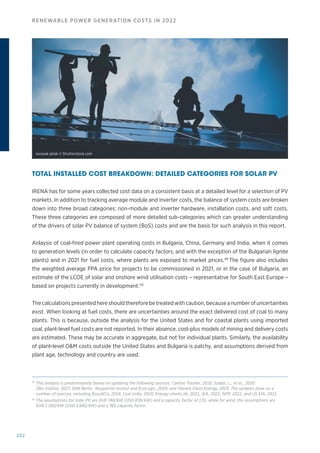
Total installed cost breakdown: Detailed categories for solar PV. . . . . . . . . . . . . . . . . . . . . . . . .  202
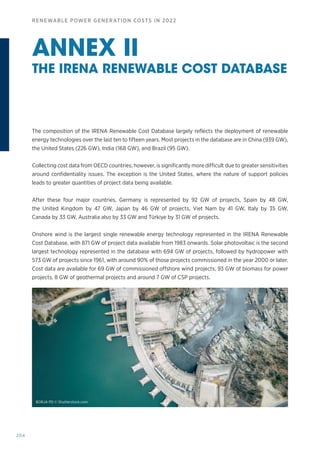
ANNEX II THE IRENA RENEWABLE COST DATABASE
. .  .  .  .  .  .  .  .  .  .  .  .  .  .  .  . 204
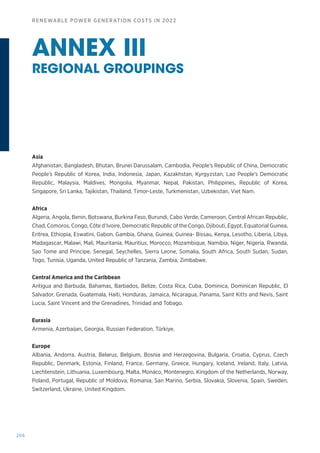
ANNEX III REGIONAL GROUPINGS .  .  .  .  .  .  .  .  .  .  .  .  .  .  .  .  .  .  .  .  .  .  .  .  .  .  .  . 206
06
07
08
05
8
RENEWABLE POWER GENERATION COSTS IN 2022
FIGURES
Figure S.1 Change in competitiveness of solar
and wind by country based on global
weighted average LCOE, 2010-2022. . . 17
Figure S.2 Global fossil fuel cost savings in the
electricity sector in 2022 from
renewable power added since 2000. . . 18
Figure S.3 Global LCOE from newly commissioned,
utility-scale renewable power
technologies, 2021-2022. . . . . . . . . . . . . 19
Figure S.4 Global LCOE from newly commissioned
utility-scale renewable power
technologies, 2010 and 2022 . . . . . . . 22
Figure 1.1 Global LCOE from newly commissioned
utility-scale renewable power
technologies, 2021-2022 . . . . . . . . . . . 32
Figure 1.2 Global weighted average LCOE
from newly commissioned, utility-
scale renewable power generation
technologies, 2010-2022. . . . . . . . . . . . . 36
Figure B1.2a Fossil fuel-fired LCOE by
fuel/technology and year for
20 countries, 2010-2022 . . . . . . . . . . . . . 38
Figure B1.2bFossil fuel-fired LCOE by
fuel/technology and cost component
for 12 countries, 2010 . . . . . . . . . . . . . . . 39
Figure 1.3 Global weighted average total installed
costs, capacity factors and LCOE from
newly commissioned solar PV, onshore
wind power and offshore wind power,
2010-2022. . . . . . . . . . . . . . . . . . . . . . . . . . 42
Figure 1.4 Fossil gas and coal price marker
or import cost by country,
2004 to 2022. . . . . . . . . . . . . . . . . . . . . . . 44
Figure 1.5 Annual new utility-scale renewable
power generation capacity added
at a lower cost than the cheapest
fossil fuel-fired option, 2010-2022. . . . . 45
Figure 1.6 Renewable generation and net savings
in non-OECD countries from new
competitive renewable generation
capacity added by year, 2010-2022 . . . 47
Figure 1.7 Competitiveness trends for utility-scale
solar PV by country and yea r,
2010-2022. . . . . . . . . . . . . . . . . . . . . . . . . . 50
Figure 1.8 Annual change in competitiveness of
new utility-scale solar PV capacity
added by country and year,
2010-2022. . . . . . . . . . . . . . . . . . . . . . . . . . 52
Figure 1.9 Competitiveness trends for onshore
wind by country and year,
2010-2022. . . . . . . . . . . . . . . . . . . . . . . . . . 54
Figure 1.10 Annual change in competitiveness of
new onshore wind capacity added by
country and year,2010-2022. . . . . . . . . . 55
Figure 1.11 The global weighted average total
installed cost learning curve trends
for solar PV, CSP, and onshore and
offshore wind, 2010-2022. . . . . . . . . . . . 57
Figure 1.12 The global weighted average LCOE
learning curve trends for solar PV, CSP,
and onshore and offshore wind,
2010-2022. . . . . . . . . . . . . . . . . . . . . . . . . . 58
Figure 1.13 Largest two-year fossil fuel price
increases during the first and second
oil shock compared to 2020 to 2022. . . 61
9
FIGURES, TABLES AND BOXES
Figure 1.14 Global and European annual fuel savings
in the electricity sector from renewable
power generation deployment since
2000 in 2022. . . . . . . . . . . . . . . . . . . . . . . . 62
Figure 1.15 Increases in European wholesale
electricity prices, and prices to large
consumers and households,
2019-2022. . . . . . . . . . . . . . . . . . . . . . . . . . 64
Figure 1.16 Changes in annual new solar PV
capacity additions per capita
compared to LCOE trends by country,
2010-2022. . . . . . . . . . . . . . . . . . . . . . . . . . 66
Figure 2.1 Global weighted average total installed
costs, capacity factors and LCOE for
onshore wind, 2010-2022. . . . . . . . . . . . 69
Figure 2.2 Weighted average onshore wind rotor
diameter and nameplate capacity
evolution, 2010-2022. . . . . . . . . . . . . . . . 71
Figure 2.3 Wind turbine price indices and price
trends, 1997-2023. . . . . . . . . . . . . . . . . . . 72
Figure 2.4 Total installed costs of onshore wind
projects and global weighted average,
1984-2022. . . . . . . . . . . . . . . . . . . . . . . . . . 73
Figure 2.5 Total installed costs of onshore wind
projects in 15 countries, 1984-2022. . . 74
Figure 2.6 Onshore wind weighted average total
installed costs in smaller markets by
country, 2010-2022. . . . . . . . . . . . . . . . . . 76
Figure 2.7 Onshore wind weighted average
capacity factors for new capacity in
15 countries, 1984-2022. . . . . . . . . . . . . 78
Figure 2.8 Onshore wind weighted average
capacity factors for new projects in
smaller markets by country and year,
2010-2022. . . . . . . . . . . . . . . . . . . . . . . . . . 80
Figure 2.9 Change in the weighted average
capacity factor and wind speed for
new projects by country between
2010 and 2020. . . . . . . . . . . . . . . . . . . . . . 81
Figure 2.10 Full-service (initial and renewal) OM
pricing indexes and weighted average
OM costs in Brazil, Denmark, Germany,
Ireland, Japan, Norway, Sweden and
the United States, 2008-2022. . . . . . . . . 82
Figure 2.11 LCOE of onshore wind projects and
global weighted average, 1984-2022. . . 84
Figure 2.12 Weighted average LCOE of
commissioned onshore wind projects
in 15 countries, 1984-2022. . . . . . . . . . . 85
Figure 2.13 Onshore wind weighted average LCOE
in smaller markets by country and year,
2010-2022. . . . . . . . . . . . . . . . . . . . . . . . . . 87
Figure 3.1 Global weighted average total
installed costs, capacity factors and
LCOE for PV, 2010-2022. . . . . . . . . . . . . . 89
Figure 3.2 Average monthly solar PV module
prices by technology and
manufacturing country sold
in Europe, 2010 to 2022. . . . . . . . . . . . . . 91
Figure B3.1a Average yearly solar PV module prices
by technology sold in Europe, 2010 to
2021 and 2022 Q1; average (left) and
percentage increase (right). . . . . . . . . . . 92
Figure B3.1bPolysilicon pricing per kilogramme,
percent change per year and three-year
moving average of polysilicon
excess manufacturing capacity,
2003-H1 2023 . . . . . . . . . . . . . . . . . . . . . . 93
Figure 3.3 Total installed PV system cost by project
and weighted average for utility-scale
systems, 2010-2022. . . . . . . . . . . . . . . . . 96
10
RENEWABLE POWER GENERATION COSTS IN 2022
Figure B3.2a Global weighted average total installed
costs of utility-scale solar PV systems
and cost reductions by source,
2010-2022. . . . . . . . . . . . . . . . . . . . . . . . . . 97
Figure B3.2bGlobal weighted average total installed
costs of utility-scale solar PV systems
and cost reductions by source,
2010-2016 and 2016-2022. . . . . . . . . . . . 97
Figure 3.4 Utility-scale solar PV total installed
cost trends in selected countries,
2010-2022. . . . . . . . . . . . . . . . . . . . . . . . . . 98
Figure 3.5 Utility-scale solar PV total installed
cost trends in top 20 utility-scale
markets, 2021-2022 . . . . . . . . . . . . . . . . 100
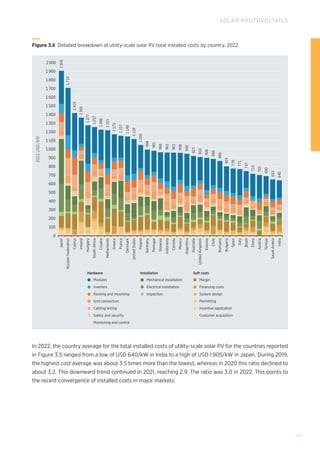
Figure 3.6 Detailed breakdown of utility-scale
solar PV total installed costs
by country, 2022. . . . . . . . . . . . . . . . . . . 101
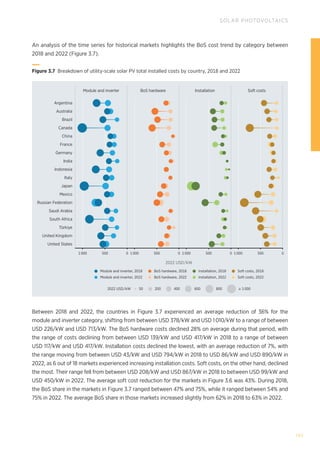
Figure 3.7 Breakdown of utility-scale solar PV
total installed costs by country,
2018 and 2022. . . . . . . . . . . . . . . . . . . . . 103
Figure 3.8 Survey results for the median all-in OM
costs for utility-scale solar PV by cost
category and country, 2020-2022. . . . 106
Figure 3.9 Survey results for the median all-in OM
costs for utility-scale solar PV by cost
category and region, 2020-2022. . . . . 107
Figure 3.10 Global utility-scale solar PV project
LCOE and range, 2010-2022. . . . . . . . . 108
Figure B3.3a Drivers of the decline of the global
weighted average LCOE of utility-scale
solar PV, 2010-2022. . . . . . . . . . . . . . . . 109
Figure B3.3bSource of the decline in the global
weighted average LCOE of
utility-scale solar PV in two periods,
2010-2016 and 2016-2022. . . . . . . . . . . 110
Figure 3.11 Utility-scale solar PV weighted average
cost of electricity in selected countries,
2010-2022. . . . . . . . . . . . . . . . . . . . . . . . . 111
Figure 3.12 Utility-scale solar PV weighted average
LCOE trends in top 20 utility-scale
markets, 2021-2022 . . . . . . . . . . . . . . . . 112
Figure 4.1 Global weighted average and range
of total installed costs, capacity factors
and LCOE for offshore wind,
2010-2022. . . . . . . . . . . . . . . . . . . . . . . . . 115
Figure 4.2 Average distance from shore and
water depth for offshore wind in
Europe, China and the rest
of the world, 2000-2022 . . . . . . . . . . . . 118
Figure 4.3 Distance from shore and water depth
for offshore wind projects by country,
1999-2025. . . . . . . . . . . . . . . . . . . . . . . . . 119
Figure 4.4 Project turbine size, global weighted
average turbine size and wind farm
capacity for offshore wind,
2000-2022 . . . . . . . . . . . . . . . . . . . . . . . . 121
Figure 4.5 Project and global weighted average
total installed costs for offshore wind,
2000-2022. . . . . . . . . . . . . . . . . . . . . . . . . 122
Figure 4.6 Representative offshore wind farm
total installed cost breakdowns by
country/region, 2013, 2016, 2017
and 2019. . . . . . . . . . . . . . . . . . . . . . . . . . 125
Figure 4.7 Installation time and MW installed
per year by offshore wind project in
Europe, 2010-2020. . . . . . . . . . . . . . . . . 126
Figure 4.8 Project and global weighted average
capacity factors for offshore wind,
2000-2022. . . . . . . . . . . . . . . . . . . . . . . . . 128
11
FIGURES, TABLES AND BOXES
Figure 4.9 Global weighted average offshore wind
turbine rotor diameter and hub height,
2010-2022. . . . . . . . . . . . . . . . . . . . . . . . . 128
Figure 4.10 Capacity factor and wind speed trends
by project in Europe, 2010-2025. . . . . 129
Figure 4.11 Offshore wind capacity factors
and specific power by project and
country. . . . . . . . . . . . . . . . . . . . . . . . . . . 130
Figure 4.12 Offshore wind project and global
weighted average LCOE, 2000-2022. . . 133
Figure 5.1 Global weighted average total
installed costs, capacity factors
and LCOE for CSP, 2010-2022 . . . . . . . 135
Figure 5.2 Total installed cost breakdown of
CSP plants by technology
(2010-2011 and 2019-2020). . . . . . . . . 138
Figure 5.3 CSP total installed costs by project size,
collector type and amount of storage,
2010-2022. . . . . . . . . . . . . . . . . . . . . . . . . 140
Figure 5.4 Capacity factor trends for CSP plants
by direct normal irradiance and storage
duration, 2010-2022. . . . . . . . . . . . . . . . 143
Figure 5.5 Average project size and average
storage hours of CSP projects,
2010-2022. . . . . . . . . . . . . . . . . . . . . . . . . 144
Figure 5.6 Capacity factors, storage hours
and the solar resource, 2010-2022 . . . 145
Figure 5.7 LCOE for CSP projects by technology
and storage duration, 2010-2022. . . . . 147
Figure 5.8 Reduction in LCOE for CSP projects,
2010-2020, by source. . . . . . . . . . . . . . . 148
Figure 6.1 Global weighted average total installed
costs, capacity factors and LCOE for
hydropower, 2010-2022. . . . . . . . . . . . . 151
Figure 6.2 Total installed costs by project
and global weighted average for
hydropower, 2010-2022. . . . . . . . . . . . . 155
Figure 6.3 Total installed costs for small and large
hydropower projects and the global
weighted average, 2010-2022 . . . . . . . 156
Figure 6.4 Distribution of total installed costs
of large and small hydropower
projects by capacity, 2010-2015
and 2016-2022. . . . . . . . . . . . . . . . . . . . . 157
Figure 6.5 Total installed cost by project and
capacity-weighted averages for
large hydropower projects
by country/region, 2010-2022. . . . . . . 159
Figure 6.6 Total installed costs by project and
capacity-weighted averages for
small hydropower projects
by country/region, 2010-2022. . . . . . . 159
Figure 6.7 Large hydropower project LCOE
and capacity-weighted averages
by country/region, 2010-2022. . . . . . . 165
Figure 6.8 Small hydropower project LCOE
and capacity-weighted averages
by country/region, 2010-2022. . . . . . . 165
Figure 7.1 Global weighted average total installed
costs, capacity factors and LCOE
for geothermal, 2010-2022. . . . . . . . . . 167
Figure 7.2 Geothermal power total installed costs
by project, technology and capacity,
2007-2022. . . . . . . . . . . . . . . . . . . . . . . . . 171
Figure 7.3 Capacity factors of geothermal power
plants by technology and project size,
2007-2022. . . . . . . . . . . . . . . . . . . . . . . . . 172
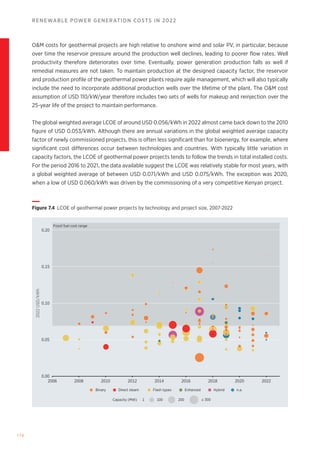
Figure 7.4 LCOE of geothermal power projects
by technology and project size,
2007-2022. . . . . . . . . . . . . . . . . . . . . . . . . 174
12
RENEWABLE POWER GENERATION COSTS IN 2022
TABLES
Table H.1 Total installed cost, capacity factor
and LCOE trends by technology,
2010 and 2022. . . . . . . . . . . . . . . . . . . . . . 15
Table 2.1 Total installed cost ranges and weighted
averages for onshore wind projects by
country/region, 2010 and 2022. . . . . . . 75
Table 2.2 Country-specific average capacity
factors for new onshore wind, 2010,
2021 and 2022. . . . . . . . . . . . . . . . . . . . . . 79
Table 2.3 Regional weighted average LCOE
and ranges for onshore wind in
2010 and 2022. . . . . . . . . . . . . . . . . . . . . . 86
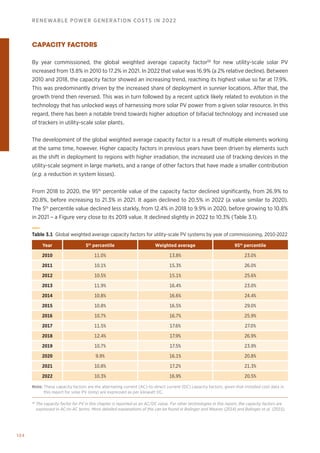
Table 3.1 Global weighted average capacity
factors for utility-scale PV systems
by year of commissioning,
2010-2022. . . . . . . . . . . . . . . . . . . . . . . . . 104
Table 4.1 Project characteristics in China and
Europe in 2010, 2015 and 2021. . . . . . 120
Table 4.2 Regional and country weighted average
total installed costs and ranges for
offshore wind, 2010 and 2022. . . . . . . 125
Table 4.3 Weighted average capacity factors
for offshore wind projects in seven
countries, 2010 and 2022 . . . . . . . . . . . 129
Table 4.4 Regional and country weighted
average LCOE of offshore wind,
2010 and 2022. . . . . . . . . . . . . . . . . . . . . 133
Table 5.1 All-in (insurance included) OM cost
estimates for CSP plants in selected
markets, 2019-2020. . . . . . . . . . . . . . . . 146
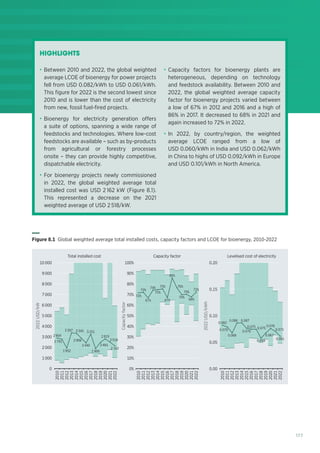
Figure 8.1 Global weighted average total installed
costs, capacity factors and LCOE for
bioenergy, 2010-2022. . . . . . . . . . . . . . 177
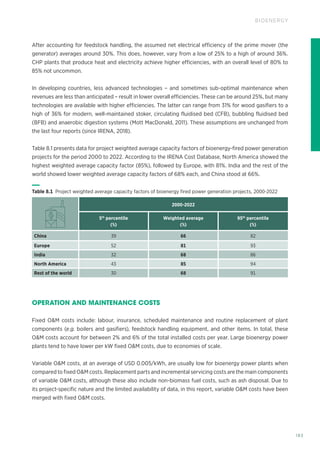
Figure 8.2 Total installed costs of bioenergy
power generation projects by selected
feedstocks and country/region,
2000-2022. . . . . . . . . . . . . . . . . . . . . . . . . 181
Figure 8.3 Total installed costs of bioenergy
power generation projects for different
capacity ranges by country/region,
2000-2022. . . . . . . . . . . . . . . . . . . . . . . . . 181
Figure 8.4 Project capacity factors and weighted
averages of selected feedstocks
for bioenergy power generation
projects by country and region,
2000-2022. . . . . . . . . . . . . . . . . . . . . . . . . 182
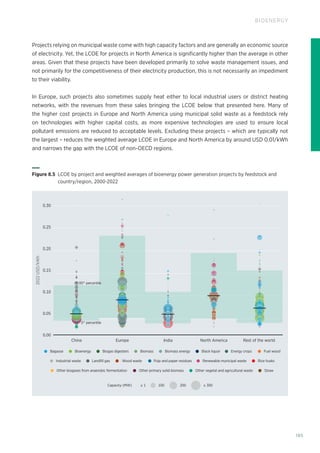
Figure 8.5 LCOE by project and weighted averages
of bioenergy power generation projects
by feedstock and country/region,
2000-2022. . . . . . . . . . . . . . . . . . . . . . . . . 185
Figure 8.6 LCOE and capacity factor by project
of selected feedstocks for bioenergy
power generation projects,
2000-2022. . . . . . . . . . . . . . . . . . . . . . . . . 186
Figure A1.1 Country and technology-specific
real after-tax WACC assumptions for
2021 and 2022. . . . . . . . . . . . . . . . . . . . . 198
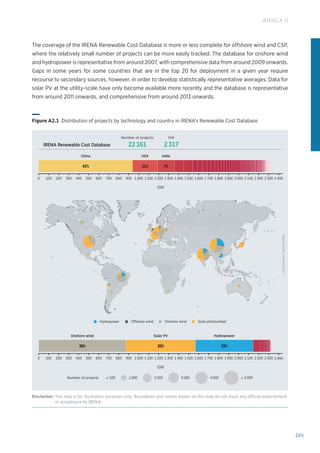
Figure A2.1 Distribution of projects by technology
and country in IRENA's Renewable
Cost Database. . . . . . . . . . . . . . . . . . . . . 205
13
FIGURES, TABLES AND BOXES
Table 6.1 Total installed cost breakdown by
component and capacity-weighted
averages for 25 hydropower projects
in China, India and Sri Lanka,
2010-2016, and Europe, 2021. . . . . . . . 154
Table 6.2 Total installed costs for hydropower
by weighted average and capacity
range, 2000-2022. . . . . . . . . . . . . . . . . . 157
Table 6.3 Hydropower project weighted
average capacity factors and ranges
for large hydropower projects by
country/region, 2010-2022. . . . . . . . . . 161
Table 6.4 Hydropower project weighted
average capacity factors and ranges
for small hydropower projects by
country/region, 2010-2022. . . . . . . . . . 161
Table 6.5 Hydropower project OM costs
by category from a sample of
25 projects. . . . . . . . . . . . . . . . . . . . . . . . 163
Table 8.1 Project weighted average capacity
factors of bioenergy fired power
generation projects, 2000-2022. . . . . . 183
Table A1.1 Standardised assumptions for
LCOE calculations. . . . . . . . . . . . . . . . . . 194
Table A1.2 OM cost assumptions for
the LCOE calculation of onshore wind
projects. . . . . . . . . . . . . . . . . . . . . . . . . . . 200
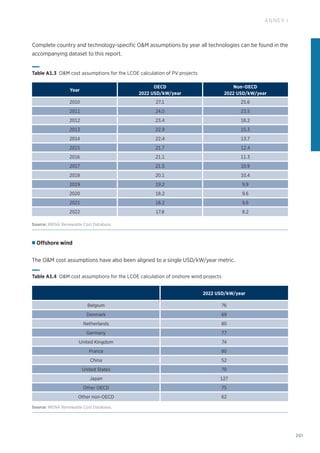
Table A1.3 OM cost assumptions for the
LCOE calculation of PV projects. . . . . . 201
Table A1.4 OM cost assumptions for the
LCOE calculation of onshore wind
projects. . . . . . . . . . . . . . . . . . . . . . . . . . . 201
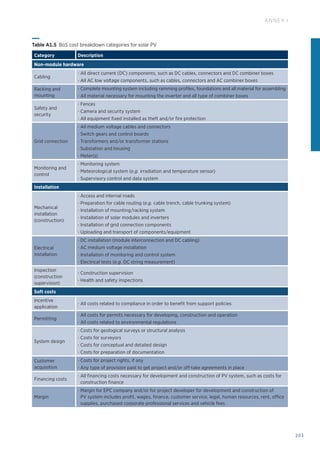
Table A1.5 BoS cost breakdown categories
for solar PV . . . . . . . . . . . . . . . . . . . . . . . 203
BOXES
Box 1.1 The importance of understanding
real and nominal prices in a period
of high inflation. . . . . . . . . . . . . . . . . . . . . 31
Box 1.2 Fossil fuel power generation costs . . . . 37
Box 3.1 Recent uptick in solar PV module
costs. . . . . . . . . . . . . . . . . . . . . . . . . . . . . . . 92
Box 3.2 Drivers of the decline in utility-scale
solar PV total installed costs. . . . . . . . . . 97
Box 3.3 Unpacking the decline in utility-scale
solar PV's LCOE from
2010 to 2022 . . . . . . . . . . . . . . . . . . . . . . 109
14
RENEWABLE POWER GENERATION COSTS IN 2022
ABBREVIATIONS
AC alternating current
BoS balance of system
CCGT combined-cycle gas turbine
CCS carbon capture and storage
CHP combined heat and power
CO2 carbon dioxide
COD commercial operation date
CSP concentrating solar power
DC direct current
DCF discounted cash flow
DNI direct normal irradiation
DWS diamond wire sawing
EEA European Economic Area
EIA The U.S. Energy Information
Administration
EPC engineering, procurement
and construction
ETS Emissions Trading Scheme
EU European Union
FF fossil fuel
GW gigawatts
HJT heterojunction
HTF heat transfer fluid
IBC interdigitated back contact
IEA The International Energy Agency
IFC The International Finance Corporation
ILR inverter loading ratio
IMF International Monetary Fund
IPCC The Intergovernmental Panel on Climate
Change
IPP independent power producer
kg kilogramme
kWh kilowatt hour
LCOE levelised cost of electricity
LNG liquefied natural gas
mg milligrammes
mm millimetres
MW megawatts
MWh megawatt hour
OM operations and maintenance
OECD the Organisation of Economic Co-operation
and Development
OEM original equipment manufacturer
OPEX operational expenses
PERC passivated emitter and rear cell
PPA Power Purchase Agreement
PTC parabolic trough collector
PV photovoltaic
STs Solar towers
TTF Title Transfer Facility
TWh terawatt hours
USD US dollars
VRE variable renewable energy
WACC weighted average cost of capital
WACC watt
μm micrometre
15
HIGHLIGHTS
HIGHLIGHTS
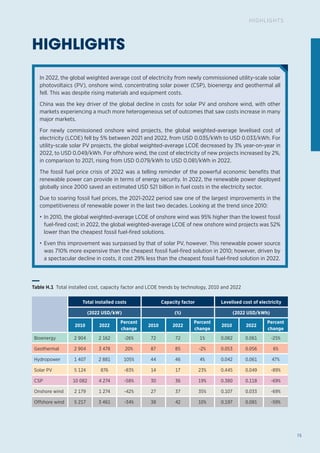
In 2022, the global weighted average cost of electricity from newly commissioned utility-scale solar
photovoltaics (PV), onshore wind, concentrating solar power (CSP), bioenergy and geothermal all
fell. This was despite rising materials and equipment costs.
China was the key driver of the global decline in costs for solar PV and onshore wind, with other
markets experiencing a much more heterogeneous set of outcomes that saw costs increase in many
major markets.
For newly commissioned onshore wind projects, the global weighted‑average levelised cost of
electricity (LCOE) fell by 5% between 2021 and 2022, from USD 0.035/kWh to USD 0.033/kWh. For
utility‑scale solar PV projects, the global weighted‑average LCOE decreased by 3% year-on-year in
2022, to USD 0.049/kWh. For offshore wind, the cost of electricity of new projects increased by 2%,
in comparison to 2021, rising from USD 0.079/kWh to USD 0.081/kWh in 2022.
The fossil fuel price crisis of 2022 was a telling reminder of the powerful economic benefits that
renewable power can provide in terms of energy security. In 2022, the renewable power deployed
globally since 2000 saved an estimated USD 521 billion in fuel costs in the electricity sector.
Due to soaring fossil fuel prices, the 2021-2022 period saw one of the largest improvements in the
competitiveness of renewable power in the last two decades. Looking at the trend since 2010:
• In 2010, the global weighted‑average LCOE of onshore wind was 95% higher than the lowest fossil
fuel-fired cost; in 2022, the global weighted‑average LCOE of new onshore wind projects was 52%
lower than the cheapest fossil fuel-fired solutions.
• Even this improvement was surpassed by that of solar PV, however. This renewable power source
was 710% more expensive than the cheapest fossil fuel-fired solution in 2010; however, driven by
a spectacular decline in costs, it cost 29% less than the cheapest fossil fuel-fired solution in 2022.
Table H.1 Total installed cost, capacity factor and LCOE trends by technology, 2010 and 2022
Total installed costs Capacity factor Levelised cost of electricity
(2022 USD/kW) (%) (2022 USD/kWh)
2010 2022
Percent
change
2010 2022
Percent
change
2010 2022
Percent
change
Bioenergy 2 904 2 162 -26% 72 72 1% 0.082 0.061 -25%
Geothermal 2 904 3 478 20% 87 85 -2% 0.053 0.056 6%
Hydropower 1 407 2 881 105% 44 46 4% 0.042 0.061 47%
Solar PV 5 124 876 -83% 14 17 23% 0.445 0.049 -89%
CSP 10 082 4 274 -58% 30 36 19% 0.380 0.118 -69%
Onshore wind 2 179 1 274 -42% 27 37 35% 0.107 0.033 -69%
Offshore wind 5 217 3 461 -34% 38 42 10% 0.197 0.081 -59%
16
RENEWABLE POWER GENERATION COSTS IN 2022
EXECUTIVE
SUMMARY
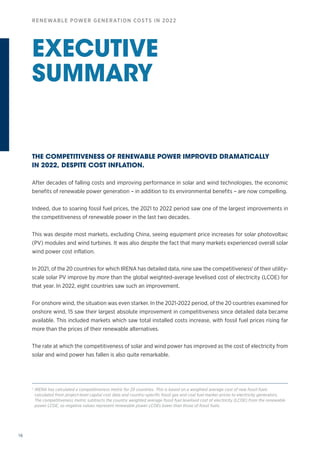
THE COMPETITIVENESS OF RENEWABLE POWER IMPROVED DRAMATICALLY
IN 2022, DESPITE COST INFLATION.
After decades of falling costs and improving performance in solar and wind technologies, the economic
benefits of renewable power generation – in addition to its environmental benefits – are now compelling.
Indeed, due to soaring fossil fuel prices, the 2021 to 2022 period saw one of the largest improvements in
the competitiveness of renewable power in the last two decades.
This was despite most markets, excluding China, seeing equipment price increases for solar photovoltaic
(PV) modules and wind turbines. It was also despite the fact that many markets experienced overall solar
wind power cost inflation.
In 2021, of the 20 countries for which IRENA has detailed data, nine saw the competitiveness1
of their utility-
scale solar PV improve by more than the global weighted‑average levelised cost of electricity (LCOE) for
that year. In 2022, eight countries saw such an improvement.
For onshore wind, the situation was even starker. In the 2021‑2022 period, of the 20 countries examined for
onshore wind, 15 saw their largest absolute improvement in competitiveness since detailed data became
available. This included markets which saw total installed costs increase, with fossil fuel prices rising far
more than the prices of their renewable alternatives.
The rate at which the competitiveness of solar and wind power has improved as the cost of electricity from
solar and wind power has fallen is also quite remarkable.
1
IRENA has calculated a competitiveness metric for 20 countries. This is based on a weighted average cost of new fossil fuels
calculated from project-level capital cost data and country-specific fossil gas and coal fuel marker prices to electricity generators.
The competitiveness metric subtracts the country weighted average fossil fuel levelised cost of electricity (LCOE) from the renewable
power LCOE, so negative values represent renewable power LCOEs lower than those of fossil fuels.
17
EXECUTIVE SUMMARY
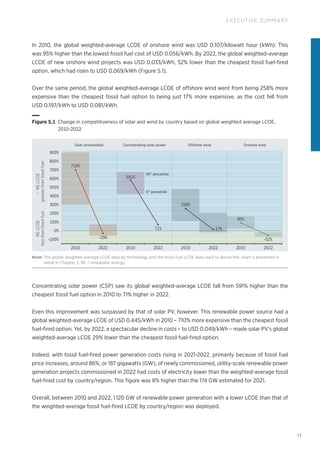
In 2010, the global weighted‑average LCOE of onshore wind was USD 0.107/kilowatt hour (kWh). This
was 95% higher than the lowest fossil fuel cost of USD 0.056/kWh. By 2022, the global weighted‑average
LCOE of new onshore wind projects was USD 0.033/kWh, 52% lower than the cheapest fossil fuel-fired
option, which had risen to USD 0.069/kWh (Figure S.1).
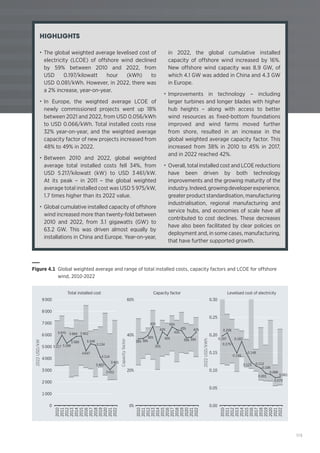
Over the same period, the global weighted‑average LCOE of offshore wind went from being 258% more
expensive than the cheapest fossil fuel option to being just 17% more expensive, as the cost fell from
USD 0.197/kWh to USD 0.081/kWh.
Concentrating solar power (CSP) saw its global weighted‑average LCOE fall from 591% higher than the
cheapest fossil fuel option in 2010 to 71% higher in 2022.
Even this improvement was surpassed by that of solar PV, however. This renewable power source had a
global weighted‑average LCOE of USD 0.445/kWh in 2010 – 710% more expensive than the cheapest fossil
fuel-fired option. Yet, by 2022, a spectacular decline in costs – to USD 0.049/kWh – made solar PV’s global
weighted‑average LCOE 29% lower than the cheapest fossil fuel-fired option.
Indeed, with fossil fuel-fired power generation costs rising in 2021-2022, primarily because of fossil fuel
price increases, around 86%, or 187 gigawatts (GW), of newly commissioned, utility-scale renewable power
generation projects commissioned in 2022 had costs of electricity lower than the weighted‑average fossil
fuel-fired cost by country/region. This figure was 8% higher than the 174 GW estimated for 2021.
Overall, between 2010 and 2022, 1 120 GW of renewable power generation with a lower LCOE than that of
the weighted‑average fossil fuel-fired LCOE by country/region was deployed.
RE
LCOE
less
than
fossil
fuel
RE
LCOE
greater
than
fossil
fuel
-100%
0%
100%
200%
300%
400%
500%
600%
700%
800%
900%
2010 2022
710%
71%
591%
258%
95%
17%
-29% -52%
2010 2022 2010 2022 2010 2022
Solar photovoltaic Concentrating solar power Offshore wind Onshore wind
95th
percentile
5th
percentile
Figure S.1 
Change in competitiveness of solar and wind by country based on global weighted average LCOE,
2010-2022
Note: 
The global weighted average LCOE data by technology and the fossil fuel LCOE data used to derive this chart is presented in
detail in Chapter 1; RE = renewable energy.
18
RENEWABLE POWER GENERATION COSTS IN 2022
RENEWABLE POWER PROVIDES MAJOR ENERGY SECURITY BENEFITS.
The fossil fuel price crisis of 2022 was a telling reminder of the powerful economic benefits that renewable
power can provide, in terms of energy security. Indeed, 2022 was the year that the energy security benefits
of renewables were widely ‘rediscovered’.
Unlike energy security policies that focus on the physical supply of fossil fuels, renewable power reduces
the economic costs of exposure to inherently volatile fossil fuel prices by reducing the need for fossil
fuels and their import. In short, substitutes to fossil fuels that have stable costs over their lifetime, such as
renewable power and energy efficiency, and can be deployed rapidly, provide by far the largest energy
security benefits. This may seem obvious, but in the scramble to secure additional fossil fuel supplies in
2022, this was often a secondary priority among policy makers.2
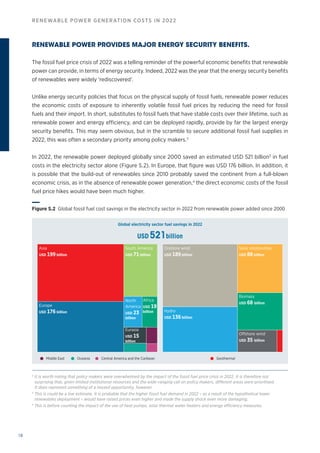
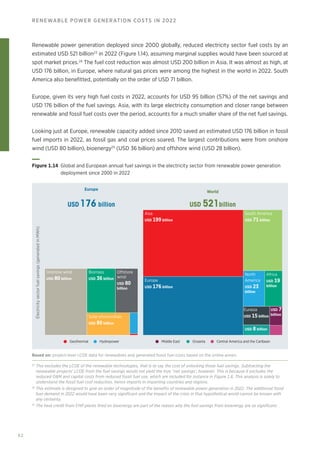
In 2022, the renewable power deployed globally since 2000 saved an estimated USD 521 billion3
in fuel
costs in the electricity sector alone (Figure S.2). In Europe, that figure was USD 176 billion. In addition, it
is possible that the build-out of renewables since 2010 probably saved the continent from a full-blown
economic crisis, as in the absence of renewable power generation,4
the direct economic costs of the fossil
fuel price hikes would have been much higher.
Global electricity sector fuel savings in 2022
USD 521billion
Onshore wind
USD 189 billion
Solar photovoltaic
USD 88 billion
Offshore wind
USD 35 billion
Biomass
USD 68 billion
Hydro
USD 136 billion
Asia
USD 199 billion
Europe
USD 176 billion
South America
USD 71 billion
North
America
USD 23
billion
Eurasia
USD 15
billion
Africa
USD 19
billion
Geothermal
Middle East Oceania Central America and the Caribean
Figure S.2 Global fossil fuel cost savings in the electricity sector in 2022 from renewable power added since 2000
2
It is worth noting that policy makers were overwhelmed by the impact of the fossil fuel price crisis in 2022. It is therefore not
surprising that, given limited institutional resources and the wide-ranging call on policy makers, different areas were prioritised.
It does represent something of a missed opportunity, however.
3
This is could be a low estimate. It is probable that the higher fossil fuel demand in 2022 – as a result of the hypothetical lower
renewables deployment – would have raised prices even higher and made the supply shock even more damaging.
4
This is before counting the impact of the use of heat pumps, solar thermal water heaters and energy efficiency measures.
19
EXECUTIVE SUMMARY
IN 2022, THE GLOBAL WEIGHTED AVERAGE COST OF ELECTRICITY FROM
SOLAR PV, ONSHORE WIND, CSP, BIOENERGY AND GEOTHERMAL ALL FELL.
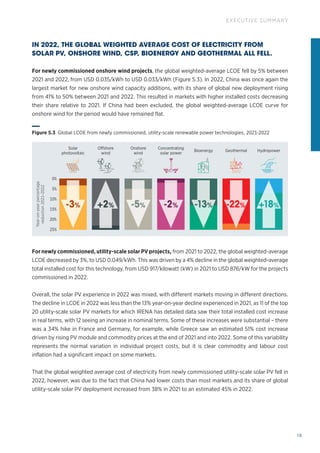
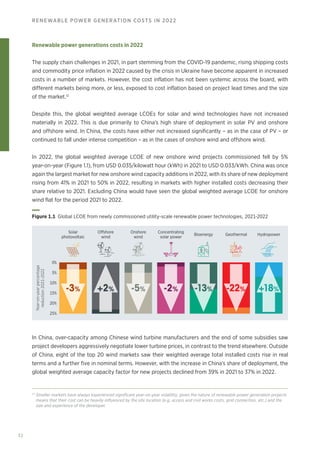
For newly commissioned onshore wind projects, the global weighted‑average LCOE fell by 5% between
2021 and 2022, from USD 0.035/kWh to USD 0.033/kWh (Figure S.3). In 2022, China was once again the
largest market for new onshore wind capacity additions, with its share of global new deployment rising
from 41% to 50% between 2021 and 2022. This resulted in markets with higher installed costs decreasing
their share relative to 2021. If China had been excluded, the global weighted‑average LCOE curve for
onshore wind for the period would have remained flat.
For newly commissioned, utility‑scale solar PV projects, from 2021 to 2022, the global weighted‑average
LCOE decreased by 3%, to USD 0.049/kWh. This was driven by a 4% decline in the global weighted‑average
total installed cost for this technology, from USD 917/kilowatt (kW) in 2021 to USD 876/kW for the projects
commissioned in 2022.
Overall, the solar PV experience in 2022 was mixed, with different markets moving in different directions.
The decline in LCOE in 2022 was less than the 13% year-on-year decline experienced in 2021, as 11 of the top
20 utility-scale solar PV markets for which IRENA has detailed data saw their total installed cost increase
in real terms, with 12 seeing an increase in nominal terms. Some of these increases were substantial – there
was a 34% hike in France and Germany, for example, while Greece saw an estimated 51% cost increase
driven by rising PV module and commodity prices at the end of 2021 and into 2022. Some of this variability
represents the normal variation in individual project costs, but it is clear commodity and labour cost
inflation had a significant impact on some markets.
That the global weighted average cost of electricity from newly commissioned utility-scale solar PV fell in
2022, however, was due to the fact that China had lower costs than most markets and its share of global
utility-scale solar PV deployment increased from 38% in 2021 to an estimated 45% in 2022.
Year-on-year
percentage
reduction
2021-2022
25%
20%
10%
15%
5%
0%
Solar
photovoltaic
Concentrating
solar power
Onshore
wind
Offshore
wind
-3% +2% -5% -2% -13% -22% +18%
Bioenergy Hydropower
Geothermal
Figure S.3 Global LCOE from newly commissioned, utility-scale renewable power technologies, 2021-2022
20
RENEWABLE POWER GENERATION COSTS IN 2022
The offshore wind market added 8.9 GW of new capacity in 2022. This would have been a new record, if
not for the unprecedented expansion seen in 2021, when 21 GW was added globally, driven by a surge in
China. Indeed, in 2022, the fall in China’s share in new capacity additions and the commissioning of projects
in new markets saw the global weighted‑average cost of electricity of new projects increase by 2%, in
comparison to 2021, from USD 0.079/kWh to USD 0.081/kWh. The increase in global weighted‑average
total installed costs (from USD 3 052/kW in 2021 to USD 3 461/kW in 2022) was partially offset by the
increase in capacity factors for newly commissioned projects from 39% in 2021 to 42% in 2022.
For newly commissioned bioenergy for power projects, the global weighted‑average LCOE fell by 13%
between 2021 and 2022, from USD 0.071/kWh to USD 0.061/kWh. This occurred as the share of new,
low-cost, projects commissioned in China and Brazil increased in 2022.
For geothermal power projects, between 2021 and 2022 the global weighted‑average LCOE of the ten
projects commissioned fell by 22%, to USD 0.056/kWh.
Newly commissioned hydropower projects, in contrast, saw their global weighted‑average LCOE increase
by 18% between 2021 and 2022, from USD 0.052/kWh to USD 0.061/kWh. In 2022, a number of projects
that experienced significant delays and large cost overruns were commissioned partially, or in full. As
a result, the global weighted average total installed cost of new hydropower projects increased from
USD 2 299/kW in 2021 to USD 2 881/kW in 2022, a rise of 25%.
BETWEEN 2010 AND 2022, SOLAR AND WIND POWER EXPERIENCED REMARKABLE
COST DEFLATION.
The experience of the last two years has changed stakeholders’ understanding of price expectations in
fossil fuel markets, while also demonstrating the vulnerability of countries dependent on fossil fuels for
power generation.
Even prior to the fossil fuel price crisis in 2022, however, renewables were out-competing fossil fuels.
Indeed, when new electricity generation capacity was required in 2021, renewables significantly undercut
new fossil fuel additions, while in many locations renewables even undercut existing plants, once the
impact of financial support was factored out. The competitiveness of renewable power saw a significant
leap in 2022 as fossil fuel prices spiked.
Since 2010, solar PV has experienced the most rapid cost reductions. The global weighted‑average
LCOE of newly commissioned utility‑scale solar PV projects declined from USD 0.445/kWh to
USD 0.049/kWh between 2010 and 2022 – a decrease of 89% (Figure S.4). This reduction in LCOE has
been primarily driven by declines in module prices. These fell by around 90% between December 2009
and December 2022, despite an increase in 2022. Important reductions have also occurred in balance of
plant costs, operations and maintenance (OM) costs and the cost of capital.
21
EXECUTIVE SUMMARY
For onshore wind projects, between 2010 and 2022, the global weighted‑average cost of electricity fell
by 69%, from USD 0.107/kWh to USD 0.033/kWh.
Cost reductions for onshore wind were driven by two key factors: wind turbine cost declines and capacity
factor increases from turbine technology improvements. Wind turbine prices outside of China fell by
39-55% between 2010 and 2022, depending on the wind turbine price index, while the decline in China was
almost two-thirds, at 64%. The global weighted‑average capacity factor of newly commissioned projects
increased from 27% in 2010 to 39% for those commissioned in 2021. This global weighted average then
fell back to 37% in 2022, as the share of new deployment taken by China increased, owing to the country's
generally poorer wind resource locations.
For newly commissioned offshore wind projects, between 2010 and 2022 the global weighted‑average
LCOE declined from USD 0.197/kWh to USD 0.081/kWh, a reduction of 59%.
In 2010, China and Europe saw newly commissioned offshore projects with weighted average LCOEs of
USD 0.189/kWh and USD 0.198/kWh, respectively. In 2021, newly commissioned European projects had
a weighted‑average cost of USD 0.056/kWh, which was lower than the USD 0.083/kWh cost in China
that year. In 2022, the weighted‑average LCOE in Europe increased to USD 0.074/kWh as a range of
more expensive projects were completed, including in new markets. Europe’s LCOE, however, was still
around 4% lower than Chinese projects completed in 2022, with these seeing a weighted average of
USD 0.077/kWh.
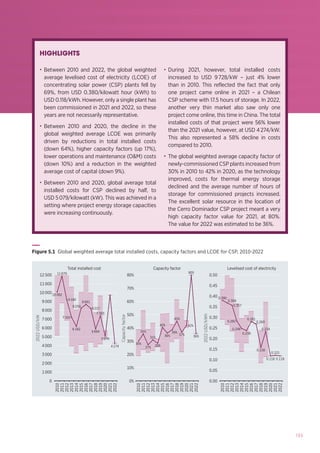
CSP deployment remains disappointing, with less than 0.1 GW added in 2022 and global cumulative
capacity standing at 6.5 GW at the end of 2022.
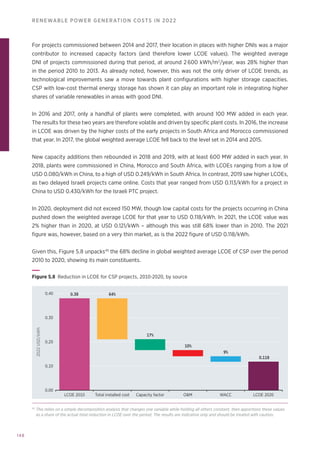
For the period 2010 to 2022, the global weighted‑average cost of newly commissioned CSP projects
fell from USD 0.38/kWh to USD 0.118/kWh – a decline of 69%. The LCOE of CSP fell rapidly between
2010 and 2020, despite annual volatility. Since 2020, however, the commissioning of projects that were
either delayed or included novel designs has seen the global weighted‑average cost of electricity from
this technology stagnate. CSP would benefit from additional policy support, given the impressive cost
reductions it has managed with just 6.5 GW of cumulative deployment.
Bioenergy for power projects saw its global weighted‑average LCOE experience a certain degree of
volatility during the 2010‑2020 period, without a notable trend upwards or downwards. In 2022, however,
bioenergy’s global weighted‑average LCOE of USD 0.061/kWh was 13% lower than the 2021 value and
one-quarter lower than the value in 2010, which had been USD 0.082/kWh.
For geothermal projects, the global weighted‑average LCOE fell 22% between 2021 and 2022, to
USD 0.056/kWh. This was 6% higher than in 2010, but well within the USD 0.053/kWh to USD 0.091/kWh
range seen between 2013 and 2021.
22
RENEWABLE POWER GENERATION COSTS IN 2022
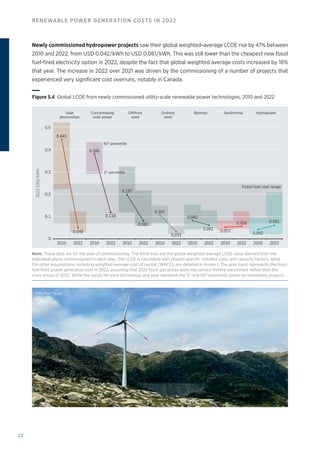
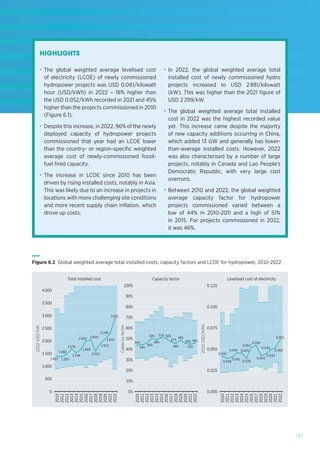
Newly commissioned hydropower projects saw their global weighted‑average LCOE rise by 47% between
2010 and 2022, from USD 0.042/kWh to USD 0.061/kWh. This was still lower than the cheapest new fossil
fuel-fired electricity option in 2022, despite the fact that global weighted average costs increased by 18%
that year. The increase in 2022 over 2021 was driven by the commissioning of a number of projects that
experienced very significant cost overruns, notably in Canada.
2022
USD/kWh
Fossil fuel cost range
0
0.1
0.5
0.4
0.2
0.3
2010 2022
0.082
0.061 0.053
0.056
0.042
0.061
0.049
0.445
0.107
0.033
0.197
0.081
0.380
0.118
2010 2022 2010 2022 2010 2022 2010 2022 2010 2022 2010 2022
Biomass Geothermal Hydropower
Solar
photovoltaic
Concentrating
solar power
Offshore
wind
Onshore
wind
95th
percentile
5th
percentile
Figure S.4 Global LCOE from newly commissioned utility-scale renewable power technologies, 2010 and 2022
Note: These data are for the year of commissioning. The thick lines are the global weighted average LCOE value derived from the
individual plants commissioned in each year. The LCOE is calculated with project-specific installed costs and capacity factors, while
the other assumptions, including weighted average cost of capital (WACC), are detailed in Annex I. The grey band represents the fossil
fuel-fired power generation cost in 2022, assuming that 2021 fossil gas prices were the correct lifetime benchmark rather than the
crisis prices of 2022. While the bands for each technology and year represent the 5th
and 95th
percentile bands for renewable projects.
©Michael Taylor
Zacarias da Mata © Shutterstock.com
01
LATEST COST
TRENDS
P. Steeger © Gettyimages.com
25
INTRODUCTION
The year 2022 was arguably one of the most dramatic in decades for the energy sector. As global supply
chain challenges still lingered from the COVID-19 global pandemic mixed with reduced Russian gas
flows to Europe as a result of the crisis in Ukraine, the situation deteriorated from a serious concern to a
full-fledged, fossil fuel price crisis, the impact of which was felt around the world.
The combination of soaring fossil fuel energy costs and continued increases in the price of commodities
and manufactured goods (only in part driven by higher fuel costs) saw 2022 also become the year when a
cost of living squeeze put significant strain on households and businesses.
Policy makers reacted to the emerging energy security and fossil fuel inflation crisis more or less rapidly, as
the depth and severity of the challenge became increasingly apparent. Actions by policy makers generally
took three forms:
• Identifying and securing additional supplies of fossil gas in Europe from existing pipelines or imports
in 2022 and beyond. This went along with communicating demand reduction targets and enacting
minimum gas storage levels to navigate the winter heating season demand peak.
• Passing measures to insulate households and businesses from the effects of unsustainably high
increases in energy costs on their budgets to avoid hardship and business failures.
• Implementing policies for the longer term to mitigate the impact of the fossil fuel price crisis
by accelerating the energy transition and addressing the weaknesses in energy markets exposed by
the crisis.
• Policy makers in non-OECD countries were also active, using cash transfers, tax measures, fuel duty
reductions, fuel subsidies, price caps and limits on price increases (OECD, 2023).
26
RENEWABLE POWER GENERATION COSTS IN 2022
Policy makers moved to shore up supplies of fossil gas in Europe via existing pipelines and through
increased liquefied natural gas (LNG) imports. Plans to expand LNG import capacity, notably in Germany
via floating offloading and re-gasification vessels, were put into action, while higher throughput at existing
LNG import terminals also occurred. This caused LNG cargo prices around the world to increase, as Europe
outbid competitors diverting cargoes of LNG from (predominantly) developing markets to Europe, with
the associated challenges for those markets. Europe also acted to secure more supplies in the longer
term through contractual arrangements. Thirteen European countries, plus the European Union (EU), have
announced contractual arrangements for additional fossil gas volumes (either by pipeline or LNG imports)
with start dates ranging from 2022 to 2027 (Sgarvatti, Tagliapietra and Trasi, 2022).
European governments have also been active in implementing policies to shield households and businesses
from the unsustainable price increases in fossil gas, thermal coal and electricity that occurred in 2022.
All 27 EU members, as well as Norway and the United Kingdom, have implemented relief measures in some
form, with total commitments worth EUR 657 billion (euros) or 692 billion in United States dollars (USD)
in the EU, EUR 103 billion (USD 108 billion) in the United Kingdom and EUR 8.1 billion (USD 8.5 billion)
in Norway (Sgaravatti et al., 2023). In Germany, Europe’s largest economy, the value of this support is
estimated at 7.4% of gross domestic product (GDP), while in all but six of the 29 countries for which there
are data, the value exceeds 2% of national GDP. After a decade of relative complacency, countries are again
learning that the energy security implications of continued reliance on fossil fuels is not just a notional cost.
Actions have not been restricted to Europe, either. Overall, non-European advanced economies have
committed USD 163 billion to measures to insulate consumers from the worst impacts of rising fossil fuel
prices, while the figure for emerging markets and developing economies was USD 114 billion (IEA, 2023).
Policy makers in Argentina, Chile, China, Colombia, Costa Rica, Indonesia, India, Türkiye and South Africa
were active in reducing the burden on households and businesses. Actions included fuel and electricity
subsidies, reductions in fuel taxes and excise duties, direct cash transfers, fuel price freezes and caps,
value added tax reductions and support for public transport (OECD, 2023).
A major response to the fossil fuel price crisis has been a new impetus to accelerate the energy transition
to unlock greater energy security and economic and environmental benefits sooner. In response to the
crisis, in May 2022 the European Commission proposed raising the 2030 target for renewables from the
40% decided in 2021 to 45% as part of its REPowerEU plan. The final agreement (adopted in March, 2023)
resulted in a binding target of 42.5%, with the ambition to reach 45%. If the 45% target was hit, this would
increase renewable capacity from the previous 1 067 gigawatts (GW) to 1 236 GW for 2030 (European
Commission, 2022 and 2023). The proposal also included goals to double heat pump deployments and
strengthen supply chains for renewables and heat pumps, as well as further integrating geothermal and
solar thermal energy systems. Accelerating permitting is also considered vital to accelerate deployments
especially for wind power, where offshore wind is seen as a significant opportunity to competitively reduce
gas consumption in the power sector. Actions are also planned to accelerate stationary energy storage. The
plan also included targets for 2030 of 35 billion cubic metres (bcm) production per annum of biomethane,
along with domestic renewable hydrogen production of 10 million tonnes per annum, with an equivalent
amount of imports.
27
LATEST COST TRENDS
In the United States, the Inflation Reduction Act includes significant incentives to both develop domestic
supply chains and accelerate the deployment of renewable power generation, storage and other
technologies for the energy transition (The White House, 2022).
Despite continuing high commodity prices – even if many have eased since their peaks in 2022 – and
supply chain challenges, 2022 represented another record for new renewable capacity additions,
with 295 GW5
added (IRENA, 2023a). This was 30 GW (12%) higher than the 264 GW added in 2021
and 2.6 times the additions in 2010, when 113 GW was added. Solar PV capacity additions surged in 2022,
with the 191 GW added representing an increase of 36% over the 141 GW added in 2021, 6.5 times higher
than the 29.4 GW added over a decade ago in 2012.
After a record 105 GW of onshore wind capacity was added in 2020, driven by a remarkable surge in
new additions in China, new capacity additions fell for the second year straight. In 2022, 65.7 GW of
new onshore wind capacity was added, which represents a 10% decline on the 72.6 GW added in 2021.
The main driver in the decline in 2022 relative to the additions in 2021 was the United States market, where
new capacity additions almost halved compared to 2021, dropping from 14.3 GW added in 2021 to 7.8 GW
in 2022. China’s capacity additions in 2022 increased by 3 GW over 2021 to 32 GW.
Offshore wind capacity additions in 2022 were 8.9 GW, 55% lower than the record 19.9 GW added in 2021.
However, if 2021 had not been a record year, 2022 would have represented a new record, with 34% more
capacity added than the previous record of 6.1 GW added in 2020. The overwhelming driver of the slowing
in new capacity additions was China, where new capacity additions declined from a record 17.4 GW added
in 2021 to 4.1 GW in 2022.
In 2022, 7.6 GW of bioenergy for power capacity was added, down on the 8.1 GW added in 2021. China
dominated the new capacity additions in 2022, with 6.2 GW of the total added. Hydropower capacity additions
were 20.4 GW in 2022, down slightly on the 22.1 GW added in 2021. Geothermal for power capacity additions
in 2022 were around 200 megawatts (MW), while those for concentrating solar power (CSP) were 126 MW.
Between 2000 and 2022, renewable power generation capacity worldwide increased just over 4.5 times,
from 752 GW to 3 372 GW (IRENA, 2023a).
Overall, with modest capacity additions of nuclear and fossil fuels in 2022, renewables again dominated
the new capacity additions. Renewables accounted for 83% of new power generation capacity added in
2022 and have averaged around 80% for the last three years.
The outlook is for new renewable capacity addition records to be broken in the years ahead given the
competitiveness of renewable power in the global market and policy responses to the fossil fuel price
crisis, net-zero emissions ambitions, and the urgency required to keep the Paris Agreement goals in play.
The fact is, renewable power generation has become, almost everywhere, the default source of least-cost
new power generation.
5
All data in this report, unless expressly indicated, refers to the year a project was commissioned. This is sometimes referred to as the
commercial operation date (COD). This is the date at which a project begins supplying electricity to the grid on a commercial basis. It therefore
comes after any period of plant testing or injection of small quantities of electricity into the grid as part of the commissioning process.
28
RENEWABLE POWER GENERATION COSTS IN 2022
IRENA’s cost analysis programme
IRENA’s cost analysis programme has been collecting and reporting the cost and performance data of
renewable power generation technologies since 2012. The goal is to provide transparent, up‑to‑date cost
and performance data from a reliable source, given that these data are vital in ensuring the potential of
renewable energy is properly taken into account by policy makers, energy and climate modellers, and
other stakeholders. IRENA’s Member States also rely on this data collection and reporting. Without it, key
decision makers in government and the energy sector will struggle to correctly identify the magnitude of
the role renewable energy can play in meeting our shared economic, environmental and social goals for
the energy transition.
With high learning rates6
and rapid growth in installed capacity of renewable energy technologies, access
to comprehensive and up-to-date data – by market and technology – is essential. The body of data
represented by the IRENA Renewable Cost Database also allows time series analysis of key trends in costs
and performance, helping to support decisions around the next stage in the energy transition. IRENA’s
cost reports also provide an opportunity to examine recent trends in commodity costs and equipment
pricing and their impact on total installed costs in this period of cost inflation.
IRENA maintains two core databases, supplemented by more granular data for a range of metrics. These
have been created to ensure IRENA can respond to its Member States’ needs while also ensuring that
industry and civil society have easy access to the latest renewable power generation cost and performance
data. The two core databases are:
• The IRENA Renewable Cost Database: This includes project‑level cost and performance data for
around 2 200 GW of capacity from around 21 500 projects7
commissioned up to and including 2022.
• The IRENA Auction and Power Purchase Agreement (PPA) Database: This database contains data
on around 13 500 projects, or programme results, where pricing data are not disclosed for individual
winners.
In summarising the latest cost and performance data for projects commissioned in 2022, as well as the
costs and trends for important equipment benchmarks (e.g. solar photovoltaic [PV] modules, wind turbine
prices, etc.) and technology characteristics (e.g. onshore wind turbine capacity sizes), this report presents
a consistent set of core metrics with which to measure the cost and performance of renewable power
generation technologies and how they have evolved over time.
The breadth and depth of the data in the IRENA Renewable Cost Database allows for a meaningful
understanding of variations between countries and technologies, as well as through time. These variations
are reported across each technology and and cost metric for an analysis of how different cost metrics have
changed through time between particular technologies (e.g. solar PV and onshore wind) and in different
markets for those technologies.
6
Learning rates are defined as the percentage reduction in cost or price for every cumulative doubling in production or installation.
7
This excludes projects with an installed capacity of less than 1 MW.
29
LATEST COST TRENDS
In recent years, IRENA has also invested more resources in collecting benchmark equipment costs and total
installed cost breakdowns, particularly for solar PV, to understand underlying cost reduction drivers and
the differences between markets. IRENA has also expanded the range of cost and performance metrics it
tracks. The agency now reports regularly on an increasing range of cost and performance metrics across
a wider range of countries. This has been driven by the need to better understand cost trends and supply
chain dynamics to support decision makers as the urgency of scaling up renewable power deployment to
meet country commitments under the Paris Agreement has become more acute.
The primary goal of this report remains, however, the reporting of the constituent drivers of renewable power
generation projects that enable an assessment of the levelised cost of electricity (LCOE)8
and its underlying
influences. The LCOE of a given technology is the ratio of lifetime costs to lifetime electricity generation, both
of which are discounted back to a common year using a discount rate that reflects the average cost of capital.
The cost and performance metrics common to all technology chapters therefore include:
• total installed costs (including cost breakdowns, when available) that represent the total cost of
completing a project (e.g. including project development costs, grid connection, equipment, installation,
civil engineering, contingency, etc.);
• capacity factors, calculated as the ratio of annual generation relative to the theoretical continuous
maximum output of the plant, expressed as a percentage;
• operations and maintenance (OM) costs; and
• the LCOE.
Annex I discusses in more detail the metrics used, the boundary conditions for cost calculations and the
key assumptions taken in relation to the weighted average cost of capital (WACC), project economic life
and OM costs.
Where appropriate, the chapters also include additional cost and performance metrics that allow for a
more detailed understanding of component costs and how these are driving trends in the LCOE. These
contextual data and varied cost metrics allow IRENA not only to follow the evolution of the costs of
renewable power generation technologies, but also to analyse what the underlying drivers are, at a global
level and in individual countries. These layers of data and the granularity available provide deeper insights
for policy makers and other stakeholders. Where possible this report discusses the impact of the recent
commodity price increases and equipment costs on total installed project costs and LCOE.
8
Note that ‘ LCOE’ and ‘ cost of electricity’ are sed interchangeably in this report, as well as the terms ‘weighted average LCOE’ and
‘weighted average cost of electricity’, where the weighting is by installed MWs.
30
RENEWABLE POWER GENERATION COSTS IN 2022
Yet, although LCOE is a useful metric for a first-order comparison of the competitiveness of projects, it is
a static indicator that does not take into account interactions between generators in the market. Neither
does the LCOE take into account that a technology’s generation profile means that its value may be higher
or lower than the average market price. As an example, CSP with thermal energy storage has the flexibility
to target output during high cost periods in the electricity market, irrespective of whether the sun is
shining, while solar PV’s value in the middle of the day often declines at high penetration rates (albeit, not
uniformly over the year).
The LCOE also fails to take into account other potential sources of revenue or costs. For example, in some
markets, hydropower and CSP with storage could earn significant revenue from providing ancillary grid
services. This is not typically the case for stand-alone variable renewable technologies, however ongoing
technology innovations for solar and wind technologies are making these more grid friendly. Hybrid power
plants, with storage or other renewable power generation technologies, along with the creation of virtual
power plants that mix generating technologies, and/or other energy system resources, can all transform
the nature of variable renewable technologies.
Thus,althoughLCOEisausefulmetricasastartingpointfordeepercomparison,itisnotasubstituteforelectricity
system simulations - and increasingly, whole energy system simulations - that can determine the long-run mix
of new capacity that is optimal in minimising overall system costs, while meeting overall demand, minute-by-
minute, over the year. This should be taken into account when interpreting the data presented in this report.
Other key points regarding the data presented in this report that should be borne in mind are:
• All project data are for the year of commissioning, sometimes referred to as the commercial operation
date (COD).9
In some cases this means a project connected to the grid may not qualify for inclusion if no
meaningful generation occurs.10
Lead times are important, with planning, development and construction
sometimes taking one to three years, or more if legal challenges occur, for solar PV and onshore wind
projects; it can take up to five years or more for CSP, fossil fuels, hydropower and offshore wind projects.
• The cost metrics exclude the impact of energy financial support to renewables.
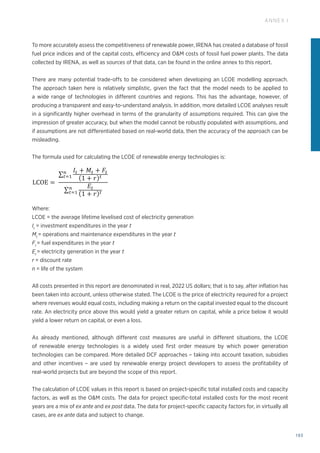
• LCOE results are calculated using project-level total installed costs and capacity factors. For the WACC,
technology and country-specific WACC benchmark values are used for 100 countries from IRENA’s
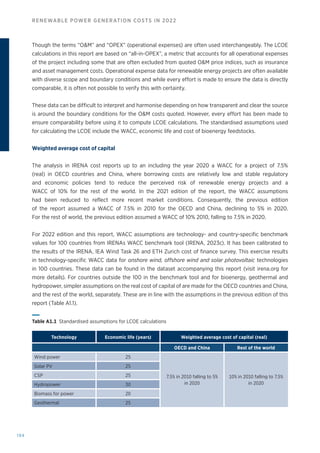
WACC benchmark tool. This has been calibrated with the results of the IRENA, International Energy
Agency (IEA) Wind Task 26 and ETH Zurich cost of finance survey. For countries not covered by
the WACC benchmark tool, simpler assumptions about the real cost of capital have been made for the
Organisation of Economic Co-operation and Development (OECD) countries and China on the one
hand, and the rest of the world on the other. See Annex I for more details.
9
Bottom-up benchmark analyses undertaken by other organisations and institutions (e.g. BNEF, IEA, Lazrad, etc.) may refer to costs
at the time a financial investment decision is made. There is therefore potentially a significant time difference between IRENA
estimates and others. For instance, the cost of an onshore wind project for Q1 of a year based on a financial investment decision
might appear as a commissioned project cost point 6-18 months later, or even longer in some cases. It is of course more complicated
than this, as actual costs depend on when equipment and engineering, procurement and construction (EPC) contracts are signed.
10
This is occasionally an issue where contract requirements or support policies use grid connection dates as the basis for meeting
contract terms or qualifying for support.
31
LATEST COST TRENDS
• Capacity factor data are project developers’ estimates of the average lifetime yield of projects, or where these
data are not available, estimates by IRENA based on the technology and project location. All capacity factors
in this report are for the newly commissioned projects in a given year, not the stock of installed capacity.11
• All cost and capacity factor data are for the alternating current (AC) capacity, except for solar PV.
For PV, total installed costs are in direct current (DC) terms, and the capacity factor is therefore the
so-called AC-DC capacity factor to ensure that the LCOE is then directly comparable with all the other
technologies in this report (that is to say, in AC terms).
• All total installed cost data and LCOE calculations exclude the impact of any financial support available
to them.
• OM cost data are a mix of country-specific data from a variety of sources and regional assumptions.
The OM costs are “all-in”; that is to say, they include costs like insurance and head office cost shares
that are not included in third-party OM contracts. See Annex I for more details.
• All data contained within this report are for utility-scale projects of at least 1 MW, with the exception of
residential and some commercial solar PV.
• All renewable capacity data are from IRENA’s capacity statistics (IRENA, 2023a) unless otherwise noted.
• Data for costs and performance for 2022 are preliminary and sometimes subject to revision.
• LCOE is a static measure of costs that provides useful information but has its limits.
11
The data are therefore not a measure of the specific annual capacity factor of each year for each project, which depends on the
relative wind resource in a given year. Project-specific actual generation data by year are available in some countries but are not
universally available and therefore not reported by IRENA.
Globally, with some exceptions, the last 30 years has been a period of relatively low inflation compared to the 1970s
and 1980s which were affected by the first and second oil shocks. Since 1994 inflation in the OECD has typically
been in the range 0.3% to 4%, compared to 1971 to 1985, where inflation did not drop below 6% per year and peaked
at 16% in 1974, this has been a period of stability.
It meant that the difference between ‘nominal’ and ‘real’ prices for the span of a few years has not been large and a
reasonable approximation of the actual value could be made. This breaks down when inflation is high and nominal
values from even five years ago, if not ‘deflated’ into real values can be misleading. For instance, using the United
States GDP deflator, if a can of drink cost USD 1 in 2001, in real terms that would have been USD 1.02 in 2002 money
due to inflation reducing the value of money as time passes. Taking today’s situation, if the can of drink cost USD 1
in 2021, it is worth USD 1.07 in 2022 money.
That difference may seem small, but it is important to realise that if the country-level weighted average total
installed cost in real terms (e.g. in USD 2022 money) for a project commissioned in 2022 is the same as in 2021, that
represents a 7% increase in nominal terms occurred between 2021 and 2022, a positive percentage increase in real
terms can therefore be a very significant increase in nominal terms (e.g. the sticker price seen by the purchaser).
When interpreting the results in the following sections, it is worth remembering this point when trying to identify
if the results make sense compared to the nominal values that may have been quoted in the media or are available
to the reader through other sources.
Box 1.1 The importance of understanding real and nominal prices in a period of high inflation
32
RENEWABLE POWER GENERATION COSTS IN 2022
Renewable power generations costs in 2022
The supply chain challenges in 2021, in part stemming from the COVID-19 pandemic, rising shipping costs
and commodity price inflation in 2022 caused by the crisis in Ukraine have become apparent in increased
costs in a number of markets. However, the cost inflation has not been systemic across the board, with
different markets being more, or less, exposed to cost inflation based on project lead times and the size
of the market.12
Despite this, the global weighted average LCOEs for solar and wind technologies have not increased
materially in 2022. This is due primarily to China’s high share of deployment in solar PV and onshore
and offshore wind. In China, the costs have either not increased significantly – as in the case of PV – or
continued to fall under intense competition – as in the cases of onshore wind and offshore wind.
In 2022, the global weighted average LCOE of new onshore wind projects commissioned fell by 5%
year‑on‑year (Figure 1.1), from USD 0.035/kilowatt hour (kWh) in 2021 to USD 0.033/kWh. China was once
again the largest market for new onshore wind capacity additions in 2022, with its share of new deployment
rising from 41% in 2021 to 50% in 2022, resulting in markets with higher installed costs decreasing their
share relative to 2021. Excluding China would have seen the global weighted average LCOE for onshore
wind flat for the period 2021 to 2022.
In China, over-capacity among Chinese wind turbine manufacturers and the end of some subsidies saw
project developers aggressively negotiate lower turbine prices, in contrast to the trend elsewhere. Outside
of China, eight of the top 20 wind markets saw their weighted average total installed costs rise in real
terms and a further five in nominal terms. However, with the increase in China’s share of deployment, the
global weighted average capacity factor for new projects declined from 39% in 2021 to 37% in 2022.
Year-on-year
percentage
reduction
2021-2022
25%
20%
10%
15%
5%
0%
Solar
photovoltaic
Concentrating
solar power
Onshore
wind
Offshore
wind
-3% +2% -5% -2% -13% -22% +18%
Bioenergy Hydropower
Geothermal
Figure 1.1 Global LCOE from newly commissioned utility-scale renewable power technologies, 2021-2022
12
Smaller markets have always experienced significant year-on-year volatility, given the nature of renewable power generation projects
means that their cost can be heavily influenced by the site location (e.g, access and civil works costs, grid connection, etc.) and the
size and experience of the developer.
33
LATEST COST TRENDS
For utility‑scale solar PV, in 2022, the global weighted average LCOE of newly commissioned projects
decreased by 3% year‑on‑year to USD 0.049/kWh. This was driven by a decline in the global weighted
average total installed cost for this technology of 4%, from USD 917/kilowatt (kW) in 2021 to USD 876/kW
for the projects commissioned in 2022. This was less than the 13% decline experienced in 2021, as rising
PV module and commodity prices at the end of 2021 and into 2022 have had an impact on total costs for
a significant number of projects.
In 2022, eleven of the top twenty markets for solar PV saw their total installed cost increase year-on-year
in real terms (12 in nominal terms). Some of these increases, notably in Europe, were substantial (e.g. 34%
in France and Germany and an estimated 51% in Greece).
There were some notable exceptions, however, perhaps due to longer project development timelines in,
for example, Türkiye saw a 20% fall. Overall, the experience in 2022 was mixed, with different markets
moving in different directions. Similar to the situation for onshore wind, China was the largest market
for new capacity added in utility‑scale solar PV, with its share growing from 38% in 2021 to an estimated
45% of the global total in 2022, which helped push down the global weighted average total installed cost,
despite a 6% increase in total installed costs in China in 2022 year-on-year.
The offshore wind market added 8.9 GW in 2022, which would have been a new record if not for the
unprecedented expansion in 2021 of 21 GW globally, driven by a surge in China. The fall in the share of China
and the commissioning of projects in new markets saw the global weighted average cost of electricity of new
projects increase by 2% year‑on‑year, from USD 0.079/kWh to USD 0.081/kWh, despite a fall in the weighted
average LCOE in China of 7% in 2022 This was driven by the increase in global weighted average total installed
costs from USD 3052/kW in 2021 to USD 3461/kW in 2022. During the same period, the global weighted
average capacity factor increased from 39% to 42%, as the share of China in total new deployments declined,
given that Chinese projects tend to be sited in poorer wind resource locations compared to those in Europe.
Looking at the situation in Europe, where just 2.5 GW of new capacity came online, the weighted average
LCOE of newly commissioned projects increased from USD 0.059/kWh in 2021 to USD 0.074/kWh, a 32%
increase. This was driven by a 32% increase in total installed costs year-on-year to USD 3 907/kW in 2022.
Costs were higher in 2022, in part because of inflation pressures, but also due to France’s first large-scale
project coming online, higher cost projects in the UK and Germany and one floating wind project, the
60 MW Hywind Tampen project. The year-on-year volatility hasn’t changed the benefits of economies of
scale in large projects, as well as supply chain and OM optimisation over the last eight years. However,
with long lead times, projects are more exposed to commodity price fluctuations.13
CSP capacity expanded by 125 MW in 2022, continuing a trend of modest new capacity additions. Only
one CSP plant was commissioned in 2021 and two the year before. With limited deployment, year-to-year
cost changes remain volatile. Noting this caveat, the average cost of electricity from the 125 MW added in
2022 was around USD 0.118/kWh, or 2% lower than in 2021.
13
See Chapter 4 for a more detailed discussion that p resents how the cost and performance metrics for offshore wind have evolved in
individual markets in Europe, China and elsewhere.
34
RENEWABLE POWER GENERATION COSTS IN 2022
The global weighted average LCOE of newly commissioned bioenergy for power projects fell by 13%
between 2021 and 2022, from USD 0.071/kWh to USD 0.061/kWh. This was driven by the increase in the
share of new projects commissioned in China and Brazil in 2022. With ten projects commissioned in 2022,
the global weighted average LCOE of geothermal power projects fell by 22% in 2022 to USD 0.056/kWh.
In contrast, the global weighted average LCOE of newly commissioned hydropower projects increased by
18%, from USD 0.052/kWh to USD 0.061/kWh. A number of projects that experienced significant delays
and large cost overruns were commissioned partially, or in full, in 2022. As a result, the global weighted
average total installed cost of new hydropower projects increased by 26%, from USD 2 229/kW in 2021 to
USD 2 887/kW in 2022.
COST TRENDS, 2010‑2022
Despite the increase costs of equipment and key commodities such as steel and polysilicon in 2022, the
period 2010 to 2022 represents a seismic shift in the balance of competitiveness between renewables and
incumbent fossil fuel and nuclear options.
Indeed, the challenge today in most parts of the world is identifying how to integrate the maximum amount
of solar and wind power possible into current electricity systems. Meanwhile, efforts are being made to
evolve regulatory regimes, market structures and rules, as well as the physical infrastructure of the grid
to ensure that grid constraints do not slow the rate of deployment.
This has become not only an environmental imperative, but also an economic one. Although fossil fuel
prices have eased since 2022, fossil fuel prices are still high and the crisis continues. In this respect, policy
makers have a triumvirate of immediate solutions in solar power, wind power and energy efficiency.
These three options, with their relativity short project lead times, especially for solar and wind power, are
vital solutions in countries’ efforts to reduce their exposure to fossil fuels and limit the economic and social
damage these fuels are causing. This is not to mention renewables’ additional environmental benefits in
terms of reduced local pollutants and carbon dioxide (CO2
) emissions and their previously overlooked, but
now readily apparent, energy security benefits.
The rate at which the cost of electricity from solar and wind power has fallen is quite remarkable. In 2010,
the global weighted average LCOE of onshore wind was USD 0.107/kWh, 85% higher than the lowest
fossil fuel cost range of USD 0.058/kWh. By 2022, the global weighted average LCOE of new projects was
USD 0.033/kWh, 52% lower than the cheapest fossil fuel-fired option in 2022. The fall in costs has been
more significant for offshore wind. The global weighted average LCOE of offshore wind fell from being
258% more expensive than the cheapest fossil fuel option in 2010 to being just 17% more expensive in
2022, as the cost fell from USD 0.197/kWh to USD 0.081/kWh.
CSP saw its global weighted average LCOE fall from 557% higher than the cheapest fossil fuel option in
2010 to 71% higher in 2022. However, even this improvement is surpassed by that of solar PV, whose global
weighted average LCOE in 2010 was USD 0.445/kWh, or 670% more expensive than the cheapest fossil
fuel-fired option. The spectacular decline in costs to USD 0.05/kWh in 2022 was then 28% lower than
cheapest fossil fuel-fired option.
35
LATEST COST TRENDS
This analysis excludes any financial support for renewable technologies, so the economic case for the
owner or project developer is often more compelling.
The experience of the last two years has changed stakeholders’ understanding of price expectations in
fossil fuel markets and demonstrated the vulnerability of countries dependent on imports of fossil fuels to
supply and demand imbalances that can send prices soaring. However, even in 2021, prior to the fossil fuel
price crisis in 2022, the reality was one of renewables not just competing with fossil fuels, but significantly
undercutting them when new electricity generation capacity is required in many parts of the world. Indeed,
in an increasing number of markets, new renewable capacity can cost less than even the marginal (fuel and
OM costs) of existing fossil fuel plants.
Since 2010, solar PV has experienced the most rapid cost reductions, with the global weighted average
LCOE of newly commissioned utility‑scale solar PV projects declining by 89% between 2010 and 2022
from USD 0.445/kWh to USD 0.049/kWh (Figure 1.2). This cost reduction occurred as global cumulative
installed capacity of all solar PV (utility scale and rooftop) increased from 40 GW in 2010 to surpass one
Terrawatt (TW), reaching 1 047 GW by the end of 2022. This very rapid fall in costs, from well outside the
fossil fuel cost range in 2010, saw the global weighted average LCOE from utility-scale solar PV fall below
the cheapest fossil fuel cost in 2022 by USD 0.019/kWh.
This reduction in LCOE has been primarily driven by declines in module prices which have – despite
the increase in 2022 – fallen by around 90% between December 2009 and December 2022. Important
reductions have also occurred in balance of plant costs, OM and the cost of capital. The module price
reductions experienced between 2010 and 2022 were driven by module efficiency improvements,
increased manufacturing economies of scale and vertical integration in the supply chain, manufacturing
optimisation, and reductions in materials intensity.
The total installed costs of utility-scale solar PV fell by 82% between 2010 and 2022, driven by module and
balance of system costs and streamlined and increasingly automated installation. All of this was helped
by module efficiency improvements and a host of other factors, as documented in Chapter 3. The global
weighted average total installed cost of utility-scale solar PV declined from USD 4 873/kW in 2010 to just
USD 876/kW in 2022.
Utility-scale solar PV capacity factors have also risen over time. Initially, this was driven predominantly by
growth in new markets that saw a shift in the share of deployment to regions with better solar resources.
Technology improvements that have reduced system losses have also played a small but important role
in this. In recent years, however, it has been the increased use of trackers and bifacial modules – which
increase yields for a given resource – that has played a more significant role.14
14
Unfortunately, project-level data on the use of trackers and module types are not readily available, and what data are available are
often not comprehensive. It is therefore difficult to estimate the overall impact trackers have played in increasing capacity factors
globally.
36
RENEWABLE POWER GENERATION COSTS IN 2022
Between 2010 and 2021, the global weighted average cost of electricity for onshore wind projects fell by
69%, from USD 0.107/kWh to USD 0.033/kWh. This decline occurred as cumulative installed capacity grew
from 178 GW to 837 GW. Cost reductions for onshore wind were driven by two key factors: wind turbine
cost reductions and capacity factor increases from turbine technology improvements. Wind turbine prices
outside China fell by 49% to 55% between 2010 and 2022, depending on the wind turbine price index.
However, in China, this reduction was almost two-thirds (64%).
In addition to this, declines in balance of plant costs as the industry scaled up, as well as increasing average
project sizes (notably outside Europe), highly competitive supply chains and the falling cost of capital
(including the technology premium for onshore wind) also contributed to the falling LCOE.
Reductions in OM costs have also occurred as a result of increased competition among OM service
providers, greater wind farm operational experience, and improved preventative maintenance programmes.
Improvements in technology have also resulted in more reliable turbines, with increased availability. At the
same time, higher capacity factors mean that the fixed OM costs per unit of output have fallen even faster
than the fixed OM costs measured as USD/kW/year.
2022
USD/kWh
Fossil fuel cost range
0
0.1
0.5
0.4
0.2
0.3
2010 2022
0.082
0.061
0.053 0.056
0.042
0.061
0.049
0.445
0.107
0.033
0.197
0.081
0.380
0.118
2010 2022 2010 2022 2010 2022 2010 2022 2010 2022 2010 2022
Bioenergy Geothermal Hydropower Solar
photovoltaic
Concentrating
solar power
Offshore
wind
Onshore
wind
95th
percentile
5th
percentile
Capacity (MW) 100
≤ 1 200 ≥ 300
Figure 1.2 
Global weighted average LCOE from newly commissioned, utility-scale renewable power generation
technologies, 2010-2022
Note: 
These data are for the year of commissioning. The thick lines are the global weighted average LCOE value derived from the
individual plants commissioned in each year. The LCOE is calculated with project-specific installed costs and capacity factors,
while the other assumptions, including WACC, are detailed in Annex I. The grey band represents the fossil fuel-fired power
generation cost range (USD 0.069 to USD 0.244/kWh), while the bands for each technology and year represent the
5th
and 95th
percentile bands for renewable projects.
Nuttawut Uttamaharad © Shutterstock.com
37
LATEST COST TRENDS
The continued improvements in wind turbine technology, wind farm siting and reliability have led to an
increase in average capacity factors, with the global weighted average of newly commissioned projects
increasing from 27% in 2010 to 39% for those commissioned in 2021. The global weighted average fell
back to 37% in 2022 as the share of the United States, which continues to deploy projects with 40% and
higher capacity factors, declined as deployment almost halved from 14.3 GW in 2021 to 7.8 GW in 2022.
Technology improvements, such as higher hub heights and larger turbines and swept blade areas, mean
today’s wind turbines can achieve higher capacity factors from the same wind site than their smaller
predecessors. The technology improvement since 2010 is greater than that implied by the increase in the
global weighted average capacity factor too, because, on average, major markets in 2020 – and, likely,
since – were deploying in areas of poorer wind resources than in 2010 (see Chapter 2 for more details).
Previously, IRENA has calculated fossil fuel power generation costs for each G20 country using a range of data
sources, but, with the exception of the United States, based on secondary data sources. The resulting range
for cheapest and most expensive fossil fuel LCOE in the G20 was then presented in IRENA’s Renewable power
generation cost reports. For this report, IRENA has collected primary data on the cost of individual coal, gas and oil-
fired electricity generation projects commissioned between 2000 and 2023. Project cost data were found for 496
gas/oil plants accounting for 200 GW of capacity from 42 countries. Data for 695 coal-fired plants in 23 countries,
totalling 685 GW, were also compiled (see the online annex for more detail). Constructing a time series for a country
depends on continuous deployment, and in some cases IRENA had to interpolate total installed cost data between
years, either because no plants of a particular technology were deployed or because no cost data could be found.
This dataset allows for a more accurate development of an LCOE estimate for each technology type, based on
country-level project data. To calculate the LCOE, IRENA has also compiled country-specific coal and gas fuel costs
from various sources for the period 2010 to 2022 to match the period of renewable power cost presentation in this
report. Input assumptions for operating plant efficiency, OM costs and CO2
pricing, where applicable, have been
compiled from various primary and secondary sources. Where no country-specific data were available for these
input assumptions, IRENA used generic values from the literature (see the online annex). A weighted average cost
of capital of 7.5% was used for the OECD and China and 10% used elsewhere. Capacity factors are assumed to be in
the range 40-75% for new combined cycle gas turbine (CCGT) and coal-fired projects (with some exceptions) and
10% for oil and open-cycle gas turbine (OCGT) projects.
Figure B1.2a presents the results for countries where IRENA was able to collect robust time series data. Fossil fuel
prices are those that were realised in the year of commissioning. This is not necessarily what project developers
have assessed to be the average cost over a plant’s 30- to 40-year life, but it provides an indication of the trends in
costs. The online annex accompanying this report includes a comparison with the assumption that only 50% of the
2022 price increase over 2021 is factored in and a comparison with 2021. Realistically, however, it is still probably not
clear to what extent long-term fossil fuel price expectations have changed, and how this differs between importers
and exporters of fossil fuels.
The higher sensitivity of a natural gas-fired plant’s LCOE to fossil fuel prices is clear in the period 2010 to 2016 and
then again in 2021 and 2022. Although coal prices also increased dramatically in 2022, the impact was generally
less significant than for gas-fired plants.
Box 1.2 Fossil fuel power generation costs
38
RENEWABLE POWER GENERATION COSTS IN 2022
Part of the lower sensitivity of the LCOE from coal-fired power plants to coal prices stems from the higher capital
costs for coal-fired power plants in many markets compared to gas plants. Figure B1.2b presents the LCOE and
its breakdown into the basic components of LCOE in 2010 for a selection of 12 countries. In every country, the
contribution of total installed costs to the LCOE is larger for coal-fired plants than for gas-fired CCGT plants.
Conversely, the fuel cost share of LCOE is higher for all countries, given the often lower total installed costs, but
especially due to the higher fuel cost even after allowing for the higher efficiency of CCGTs compared to coal plants.
0.00
2010 2015 2020 2010 2015 2020 2010
Brazil Canada China
Australia
Argentina France Germany India
Indonesia Philippines Republic of Korea
Malaysia
Italy Japan Mexico
South Africa United Kingdom Viet Nam
Türkiye United States
2015 2020 2010 2015 2020
0.05
0.10
0.15
0.20
0.25
0.30
0.0
0.1
0.2
0.3
0.4
0.5
2022
USD/kWh
2022
USD/kWh
CCGT Coal OCGT Oil-fired
Figure B1.2a 
Fossil fuel-fired LCOE by fuel/technology and year for 20 countries, 2010-2022
Source: IRENA Fossil Fuel Power Plant Database (see the online annex).
THINK A © Shutterstock.com
39
LATEST COST TRENDS
Part of the lower sensitivity of the LCOE from coal-fired power plants to coal prices stems from the higher capital
costs for coal-fired power plants in many markets compared to gas plants. Figure B1.2b presents the LCOE and
its breakdown into the basic components of LCOE in 2010 for a selection of 12 countries. In every country, the
contribution of total installed costs to the LCOE is larger for coal-fired plants than for gas-fired ws. Conversely, the
fuel cost share of LCOE is higher for all countries, given the often lower total installed costs, but especially due to
the higher fuel cost even after allowing for the higher efficiency of CCGTs compared to coal plants.
OM Total installed cost
Fuel
CO2
Germany
Australia
USD
0.084
/KWh
USD
0.189
/KWh
USD
0.098
/KWh
USD
0.096
/KWh
USD
0.108
/KWh
USD
0.128
/KWh
CCGT Coal CCGT Coal CCGT Coal
Brazil
Malaysia
India
USD
0.085
/KWh
USD
0.065
/KWh
USD
0.119
/KWh
USD
0.055
/KWh
USD
0.103
/KWh
USD
0.097
/KWh
CCGT Coal CCGT Coal CCGT Coal
Indonesia
South Africa
Philippines
USD
0.125
/KWh
USD
0.104
/KWh
USD
0.112
/KWh
USD
0.081
/KWh
USD
0.106
/KWh
USD
0.095
/KWh
CCGT Coal CCGT Coal CCGT Coal
Republic of Korea
Viet Nam
Türkiye
USD
0.063
/KWh
USD
0.079
/KWh
USD
0.072
/KWh
USD
0.076
/KWh
USD
0.110
/KWh
USD
0.069
/KWh
CCGT Coal CCGT Coal CCGT Coal
United States
Figure B1.2b 
Fossil fuel-fired LCOE by fuel/technology and cost component for 12 countries, 2010
40
RENEWABLE POWER GENERATION COSTS IN 2022
After the unprecedented 20 GW of new capacity additions for offshore wind deployment in 2021, with
17.4 GW in China, new capacity additions in 2022 totalled 9 GW. However, the 2022 capacity additions are
large, almost 50% more than was added in 2020, which held the record before 2021. Between 2010 and
2022, the global weighted average LCOE of newly commissioned offshore wind projects declined from
USD 0.197/kWh to USD 0.081/kWh, a reduction of 59%.
In 2010, China and Europe saw newly commissioned projects with a weighted average LCOE of
USD 0.189/kWh and USD 0.198/kWh, respectively. The weighted average LCOEs of these two groups
thereafter diverged, notably in 2021, when newly commissioned European projects had a weighted average
cost of USD 0.056/kWh, lower than the USD 0.083/kWh in China that year. In 2022, the weighted average
LCOE in Europe increased to 0.074/kWh as a range of more expensive projects were completed, including
in new markets. Europe’s LCOE, was, however still around 4% lower than Chinese projects completed in
2022, which saw a weighted average of USD 0.077/kWh.
Between 2010 and 2022, the global weighted average total installed costs of newly commissioned
offshore wind farms fell 41%, from USD 5 217/kW in 2010 to USD 3 052/kW in 2021, before increasing to
USD 3 461/kW in 2022. The increase in 2022 was driven by the decline in the share of Chinese projects
and the increase in weighted average total installed costs in Europe in 2022. With relatively “lumpy”
investments and small numbers of projects being commissioned in each year in Europe, cost trends tend
to be volatile. The higher project costs in 2022 are a case in point: projects with higher capital investments
were commissioned in France, Germany and the United Kingdom. The result for France is unsurprising,
given the Saint Nazaire project was the first of its kind in French waters.
This growth in new markets – both within Europe, where offshore wind markets first developed, and
globally – has added more “noise” to the global weighted average data. Yet, in the last three years, with
China accounting for 50% of new capacity additions in 2020, 82% in 2021 and 48% in 2022, the global-
weighted average cost and performance metrics have increasingly represented Chinese circumstances.
This is particularly true for the evolution of the global weighted average capacity factor of newly
commissioned offshore wind farms in 2022. The fall in China’s share in new deployment saw the global
weighted average capacity factor increase from 38.8% in 2021 to 41.6% in 2021. In general, the poorer
coastal wind resources and smaller turbines used by China in its near-shore and inter-tidal developments
along the country’s coastal zones mean capacity factors are lower than in Europe.
CSP deployment remains disappointing, with less than 0.1 GW added in 2022 and global cumulative
capacity standing at 6.5 GW at the end of 2022. For the period 2010 to 2022, the global weighted average
cost of newly commissioned projects fell from USD 0.38/kWh to USD 0.118/kWh – a decline of 69%.
Despite the low rate of deployment, cost reductions had been clearly visible between 2010 and 2020,
despite the volatility. However, since 2020, the commissioning of projects that were either delayed or
included novel designs has seen the global weighted average cost of electricity stagnate.
41
LATEST COST TRENDS
Nevertheless, the above decline in the cost of electricity from CSP, which has placed it in the mid- to
lower-cost range of new capacity from fossil fuels in 2022 depending on the country, remains a remarkable
achievement. However, the cumulative global capacity of CSP is 161 times smaller than the capacity of solar
PV installed at the end of 2022. The decline in the global weighted average LCOE of newly commissioned
CSP projects has been driven by reductions in total installed costs, technology improvements, more
competitive supply chains and reduced OM costs. Improvements in technology that have seen the
economic level of storage increase significantly have also played a role in increasing capacity factors.
With only a handful of projects commissioned each year in recent years, trends in the global weighted average
total installed cost of CSP projects have been volatile. In 2021, the Chilean CSP plant, Cerro Dominador, was
long overdue and had total installed costs of USD 9728/kW, which placed it more in line with projects
developed between 2010 and 2015. The availability of cost data for 2022 is relatively poor, but overall, the
global weighted average total installed cost in 2022 was estimated to be on the order of USD 5836/kW,
with a higher degree of uncertainty than normal. The global weighted average capacity factor of newly
commissioned projects declined from 80% in 2021, driven by the Cerro Dominador project’s 17.5 hours of
storage, to 51% in 2022, in line with a poorer resource and around 9 hours of storage on average.
For bioenergy, geothermal and hydropower, installed costs and capacity factors are highly project- and
site-specific. As a result, and due to different cost structures in different markets, there can be significant
year-to-year variability in global weighted average values, particularly when deployment is relatively thin
and the share of different countries/regions in new deployment varies significantly year to year.
Between 2010 and 2022 inclusive, 89 GW of new bioenergy for power capacity was added, including the
7.6 GW added in 2022. The global weighted average LCOE of bioenergy for power projects experienced a
certain degree of volatility during this period, but without a notable trend upwards or downwards for most
of the period. In 2022, however, bioenergy’s global weighted average LCOE of USD 0.061/kWh was 13%
lower than the 2021 value and one-quarter lower than the value in 2010 of USD 0.082/kWh. The global
weighted average total installed costs in 2022 were USD 2 162/kW, or 13% lower than in 2021 given almost
all new capacity was added in non-OECD countries with lower cost structures. The global weighted average
capacity factor of newly added capacity in 2022 was 72%, up on the figure of 68% in 2021.
The global weighted average LCOE of geothermal fell 22% year-on-year to USD 0.056/kWh in 2022. This
is 6% higher than in 2010, but well within the range seen between 2013 and 2021 of USD 0.053/kWh to
USD 0.091/kWh. Annual new capacity additions remain modest, allowing one project with an atypically
low capacity factor – 42% – to drag down the global weighted average capacity factor of projects
commissioned in 2021 to 77%. New projects added in 2022 totalled 181 MW, with a more competitive cost
structure than 2021.
For 2010 to 2022 inclusive, hydropower added 347 GW of new capacity, with 20 GW commissioned in
2022. Over the same period, the global weighted average LCOE rose by 47%, from USD 0.042/kWh to
USD 0.061/kWh. This was still lower than the cheapest new fossil fuel-fired electricity option in 2022,
despite the fact that costs increased by 18% in 2022, year-on-year. This was driven by the commissioning
of a number of projects that experienced very significant costs overruns, notably in Canada.
42
RENEWABLE POWER GENERATION COSTS IN 2022
With the global weighted average capacity factor largely unchanged at 44% to 46% between 2010 and
2022, this LCOE increase has been predominantly driven by the 109% increase in total installed costs per
kW over that period (26% year-on-year in 2022). Total installed costs are likely to have fallen in 2022, as
fewer large projects that have experienced significant cost overruns are expected to achieve commercial
operation in 2023. However, this cannot be guaranteed, given commodity price inflation over the last
two years.
Figure 1.3 presents the results for the global weighted average of total installed costs, capacity factors and
LCOEs for solar PV, onshore wind power and offshore wind power. Global weighted average total installed
costs for each technology have fallen over the period 2010 to 2022, by 83% for utility-scale solar PV, 42%
for onshore wind and 34% for offshore wind. Globally, utility-scale solar PV total installed costs fell below
those of onshore wind in 2016. But as the data for capacity factors show, the technology improvements
made by wind turbine manufacturers have seen the capacity factors for new onshore wind power projects
rise over time. As a result, at a global level, the LCOE of utility-scale solar PV, although falling by 89% over
the period 2010 to 2022, remains around USD 0.027/kWh higher than that of onshore wind, despite falling
below the cost of electricity from offshore wind in 2014.
2010
2011
2013
2014
2015
2016
2017
2018
2021
2022
2020
2019
2012
2010
2011
2013
2014
2015
2016
2017
2018
2021
2022
2020
2019
2012
2010
2011
2013
2014
2015
2016
2017
2018
2021
2022
2020
2019
2012
Total installed cost Capacity factor Levelised cost of electricity
6 000
5 500
5 000
4 000
3 000
2 000
1 000
4 500
3 500
2 500
1 500
500
0%
25%
50%
45%
40%
15%
35%
20%
10%
15%
30%
Capacity
factor
0.00
0
0.05
0.15
0.45
0.25
0.35
0.10
0.20
0.30
0.40
2022
USD/kWh
2022
USD/kW
3 461
1 274
5 217
5 124
876
2 186
14%
27%
38%
17%
37%
42%
0.107
0.197
0.445
0.033
0.081
0.049
Fossil fuel cost range
Offshore wind Onshore wind Solar photovoltaic
Figure 1.3 
Global weighted average total installed costs, capacity factors and LCOE from newly commissioned
solar PV, onshore wind power and offshore wind power, 2010-2022
43
LATEST COST TRENDS
THE FOSSIL FUEL PRICE CRISIS HAS ACCELERATED THE COMPETITIVENESS OF RENEWABLE POWER
The fossil fuel price crisis in 2022 was driven by a growing imbalance in supply and demand as the global
economy recovered from the COVID-19 pandemic and economic activity accelerated. The slow reduction
in Russian gas flows, which accelerated dramatically with the crisis in Ukraine, was a shock the global
energy system was not prepared for, and fossil fuel prices skyrocketed.
In 2022, the European fossil gas marker price – the
Dutch Title Transfer Facility (TTF) pricing
node – increased by 175% over 2021, which itself
had already increased by 320% over 2020. In 2022,
the Dutch TTF price was therefore around 11.7 times
higher than in 2020, or 8.2 times higher than the
pre-COVID price in 2019. Japanese imports of
natural gas are characterised by contracts that
are designed to provide greater price certainty.
Historically, this certainty has come at a cost, with
Japanese prices typically higher than in other markets. However, in 2022 they ensured the Japanese
market was insulated from the full impact of spot prices, and the import price increased by “only” 25% in
2021 and 59% in 2022. At the other extreme from European pricing, growing fossil gas production in the
United States from shale gas plays means the United States market is well supplied with lower-cost fossil
gas. However, the growth in LNG exports from the United States is increasing the linkages to international
supply and demand for fossil gas, as can be seen by the 11% increase in prices in 2021 and 23% increase in
2022, albeit from very low levels.
Coal, a dirtier fuel in all aspects than natural gas, trades at lower costs on an energy content basis. The
economic growth in 2022 and the fuel switching from very expensive gas to coal saw prices rise rapidly in
most markets with significant imports or exports. In Europe, the Amsterdam-Rotterdam-Antwerp (ARA)
coal price marker increased from its decadal low in 2020 by 129% in 2021 and another 126% in 2022. As a
result, thermal coal prices for power generation in 2022 in northwest Europe were around 2.6 times higher
than in 2021, 5.2 times higher than in 2020, or 4.2 times higher than the 2019 pre-COVID price. The United
States, with declining coal-fired power generation and large domestic coal reserves and production,15
is
again an exception, with coal prices for coal delivered to power stations rising by just 12% in 2021. This
reflects the large inland production of coal in the western states and the fact most of the power plants have
contracts for supply that provide price and volume certainty to buyer and seller (EIA, 2023). Indeed, in the
United States, in real terms, prices in 2010 were higher than in 2022. In India, thermal coal import costs
rose sharply in 2021, by 107%, but power generators either scaled back generation or sourced cheaper coal
sources, moderating the price increase in 2022 to 20%.
15
The Powder River Coal basin (located in northeast Wyoming and southeast Montana) and other western coal mines provided 62% of
the total coal volume supplied to power plants in 2022, but is not a large exporter due to its inland location.
European fossil gas
prices in 2022 were 175%
higher than in 2021
and 320% higher
than in 2020.
44
RENEWABLE POWER GENERATION COSTS IN 2022
As a result of the increase in fossil fuel-fired power generation costs, driven primarily by fossil fuel price
increases in 2022 (Figure B1.2a and Figure 1.4), the competitiveness of renewable power generation
improved considerably in 2022, despite the increase in solar PV and onshore wind costs in many markets.
In 2022, around 86% (187 GW) of newly commissioned, utility-scale16
renewable power generation projects
had costs of electricity lower than the weighted average fossil fuel-fired cost by country/region (Figure 1.5).
This is 8% higher than the 174 GW estimated to have had a cost lower than that of the fossil fuel-fired
weighted average for that year and country/region in 2021.
This analysis differs from that presented last year. This year’s analysis includes the weighted average
(by new fossil fuel capacity additions) fossil fuel-fired LCOE for the 20 countries highlighted in Box 1.1,
with regional averages for the remaining countries. The fossil fuel-fired LCOE therefore varies by year,
depending on changes in capital costs and fuel costs for the fossil fuel plant. This gives a more accurate
assessment of the competitiveness of renewables during this period. Given the uncertainty about how far
2022 fossil fuel prices have changed expectations for the next 15 to 30 years, the comparison for fossil
fuel prices is made by setting 2022 values to a value equal to what occurred in 2021, given that the 2022
value is assumed to be an outlier and not reflective of the benchmark fossil fuel LCOE for new investment
decisions. Higher or lower fossil fuel price out-turns for the next 30 years would shift the numbers in this
section up or down.
16
This includes all projects with a capacity of 1 MW or more and includes IRENA’s assessment of 112 GW of new utility-scale solar PV
deployment in 2022.
0
2004 2006 2008 2010 2012 2014 2016 2018 2020 2022 2004 2006 2008 2010 2012 2014 2016 2018 2020 2022
25
50
75
100
125
2022
USD/MWh
Natural gas prices
Dutch TTF price
ARA prices
Japanese import price
Indian import price
U.S. (avg. cost to power)
Coal prices
Figure 1.4 
Fossil gas and coal price marker or import cost by country, 2004 to 2022
Source: See the online annex.
Notes: TTF = Title Transfer Facility; ARA = Amsterdam-Rotterdam-Antwerp.
45
LATEST COST TRENDS
The most notable change is in the emergence of modest amounts of competitively priced onshore wind
in the period 2011 to 2014 inclusive, and larger values for 2015 and 2016. However, the shifts are not all in
favour of renewables. In last year’s assessment, virtually all of the onshore wind deployment in 2021 was
competitive, while the more robust analysis in Figure 1.5 estimates that 8.5 GW was in markets that had
higher costs than the average fossil fuel-fired LCOE.
Biomass Concentrating solar power Solar photovoltaic
Hydropower Offshore wind Onshore wind
Geothermal
100
200
150
50
0
50
100
GW
Competitive
Needs
support
34 GW
187 GW
2010 2011 2012 2013 2014 2015 2016 2017 2021 2022
2020
2019
2018
Figure 1.5 
Annual new utility-scale renewable power generation capacity added at a lower cost than the cheapest
fossil fuel-fired option, 2010-2022
Note: 
This analysis uses country-level weighted average fossil fuel-fired LCOEs for each year for 20 countries (see Figure B1.1) and
at a regional level for the remainder. These values are compared to the project-level LCOE of renewable projects deployed in
each year. 2022 fossil fuel LCOEs have been calculated conservatively using the 2021 fossil fuel price data.
46
RENEWABLE POWER GENERATION COSTS IN 2022
In 2017, an estimated 71 GW of new utility-scale PV was deployed, of which just 9% had lower costs than
the weighted average fossil fuel LCOE for its country or region. In 2022 – just five years later – total
new utility-scale PV capacity added had leaped to 112 GW, and the share of capacity from projects
that had lower LCOEs had risen to 86%. The continued improvement in the costs of solar PV in many
markets, as well as the higher fossil fuel-fired LCOEs, meant that in 2022 a record 96 GW of new utility-
scale PV deployment had lower costs than the weighted average fossil fuel-fired LCOE, up from 74 GW
(78% of utility-scale PV) in 2021 and 46 GW (62% of utility-scale PV) in 2020. The increased deployment of
solar PV has also meant that in 2021 and 2022, more utility-scale PV capacity additions were competitive
than onshore wind for the first time.
In 2022, 59 GW (87%) of the onshore wind projects commissioned had electricity costs that were lower
than the weighted average fossil fuel-fired LCOE by country/region. This was an amount lower than the
figure of 89 GW recorded in 2020, due to the lower new capacity additions in China in 2022.
The year 2018 was seminal for onshore wind: it was the first year when over half of new capacity additions
registered below the cost of the weighted average fossil fuel-fired LCOE. Utility-scale solar PV had to wait
a year, until 2019, to reach this milestone.
For offshore wind, around 1 GW of new capacity additions had LCOEs lower than the country/region
weighted average fossil fuel LCOE in 2018 and 2019, rising to 2 GW in 2020. In 2021, this leapt to around
12 GW on the back of much higher deployment in 2021, with 17.4 GW added in China alone in that year. In
2022, around 6 GW had lower LCOEs than the weighted average fossil fuel-fired value, which represented
around 70% of the total new capacity additions tracked in the IRENA Renewable Cost Database.
For hydropower, in 2020, 20 GW (92%) of the projects commissioned had costs that were less than the
weighted average fossil fuel-fired LCOE. Bioenergy for power saw 6.7 GW (97%) of new capacity additions
with a lower LCOE than the weighted average fossil fuel-fired LCOE.
Overall, between 2010 and 2022, 1 120 GW of renewable power generation with a lower LCOE than that
of the weighted average fossil fuel-fired LCOE by country/region was deployed. The rapidly improved
economics of onshore wind in recent years mean that for cumulative additions since 2010, onshore wind
surpassed hydropower in 2021 as the largest source over the period of lower-cost electricity, reaching a
cumulative total of 396 GW in 2022. With solar PV capacity additions increasing faster than onshore wind,
and their competitiveness also accelerating, utility-scale PV added an estimated 316 GW of projects with
an LCOE lower than the weighted average fossil fuel-fired LCOE.
In non-OECD economies where electricity demand is growing and new capacity is needed, the renewable
power generation projects with LCOEs lower than the weighted average fossil fuel-fired LCOE for their
country/region will significantly reduce electricity system costs over the life of their operation.
47
LATEST COST TRENDS
In 2022, in non-OECD countries, the 143 GW of projects with costs lower than the weighted average
fossil fuel-fired LCOE will reduce costs in the electricity sector by at least USD 22.9 billion annually.
This assumes fossil fuel prices at 2021 levels, with an allowance of USD 5/megawatt hour (MWh) for system
costs (Table 1.1) relative to the long-term cost of adding the same amount of fossil fuel-fired generation.
The majority of these savings – a total of USD 9.8 billion – will come from onshore wind. Hydropower, with
its higher capacity factors, contributes around USD 4.2 billion to these savings. With the increase in fossil
fuel-fired generation costs, utility-scale solar PV accounts for USD 6.4 billion.
Over their economic lives, the cumulative undiscounted savings of the new projects deployed in 2022
could, depending on fossil fuel prices, reach USD 580 billion. In addition to these direct cost savings, there
would be substantial economic benefits from reducing CO2
emissions and local air pollutants. These would
also need to be factored in when considering the total benefits.
100
350
150
200
300
250
50
0
1 000
1 500
2 000
3 000
2 500
500
0
0
10
20
0
Cumulative total
20
40
60
80
100
5
15
TWh
(new
capacity
added)
2022
USD
billion
2010 2011 2012 2013 2014 2015 2016 2017 2022
2021
2020
2019
2018
Biomass Solar photovoltaic
Hydropower Offshore wind Onshore wind
Geothermal
Figure 1.6 
Renewable generation and net savings in non-OECD countries from new competitive renewable
generation capacity added by year, 2010-2022
Note: TWh = terawatt hour.
48
RENEWABLE POWER GENERATION COSTS IN 2022
Overall, between 2010 and 2022 inclusive, globally, around 928 GW of renewable power generation capacity
has been added in non-OECD countries that had costs lower than the weighted average fossil fuel-fired
LCOE in the year of commissioning. Of this total, 333 GW was hydropower (36%), 289 GW onshore wind
(31%) and 239 GW (26%) utility-scale solar PV.
In 2023, this 928 GW could reduce electricity system costs by USD 104 billion, or up to as much as
USD 180 billion – if fossil fuel prices average what they were in 2021 rather than those applicable in the
year the project was commissioned – compared to what would have been the case if the generation were
to come from fossil fuels. For the estimate of USD 104 billion in savings, it is hydropower that dominates
the savings, contributing USD 52.5 billion, or 50% of the total. With USD 31.9 billion in savings annually,
onshore wind is the second largest contributor (30%), followed by solar PV, with USD 12.2 billion annually
(12% of the total).
The competitiveness of solar PV and wind power accelerated in 2021 and 2022
The fossil fuel price crisis in 2022, driven by recovering economic activity after the COVID-19 pandemic and
the reduced gas flows to Europe from Russia, has changed not only today’s energy landscape, but also the
outlook for the future.
For the last 13 to 15 years, renewable power generation costs from solar and wind power have been falling.
Initially this was from high levels that led some to question whether solar and wind could challenge the
status quo in the electricity system. However, from around 2013 costs for onshore wind fell significantly into
the fossil fuel-fired cost range, and PV was rapidly approaching this level. This coincided with a period of
lower fossil fuel prices (Figure 1.4). The impact was one of dampening the competitiveness improvements
of renewable power generation and potentially concealing the inevitability of what was to come. This
dynamic of declining real fossil fuel prices continued through into 2020, but solar and wind power costs
were undoubtedly now competitive.
metamorworks © Shutterstock.com
49
LATEST COST TRENDS
Thefossilfuelpricecrisishasreversedthisdynamic.Therisingfossilfuelpricetrend–andfutureexpectations
of high prices relative to the last decade17
– is now amplifying the improvement in the competitiveness of
solar and wind power generation.
Thismeansthatinmanymarkets,both2021and2022resultedinanimportantincreaseinthecompetitiveness
of solar and onshore wind power. However, the scale of the improvement in competitiveness differs for
these two technologies.
For the analysis presented in Figures 1.7, 1.8, 1.9 and 1.10, the weighted average LCOE of fossil fuels in
a given year – weighted by deployment using the average realised fuel cost in that year from Figure
1.4 and with country-specific cost and capacity factor assumptions as detailed in Box 1.1 and the online
annex – is subtracted from the weighted average LCOE of solar PV, onshore wind and offshore wind.
This is a metric in the trend in competitiveness of renewable power. This ia relatively simple metric to
understand, but conveys important information about how the competitiveness of renewable power is
influenced not just by trends in its own LCOE, but by the fluctuations in fossil fuel prices as well. However,
caution should be taken in interpreting the absolute levels and comparisons between countries using this
competitiveness metric for the reasons already discussed about the appropriateness of the LCOE metric
in different circumstances and, especially, given the uncertainty around what are realistic 30-year price
projections for fossil fuels.
The trends in the competitiveness of utility-scale solar PV in Figure 1.7 highlight the rapid improvements in
the period 2010 to 2013 as PV module prices fell precipitously and natural gas prices were high. As module
price reductions lowed from their breakneck pace over 2010 to 2013 and natural gas prices eased, the
improvements in competitiveness slowed in a number of markets.
Somewhat surprisingly, Brazil was the first country to see the weighted average LCOE of new utility-scale
solar PV fall below the weighted average cost of fossil fuel capacity added, in 2014. It was followed by
Australia in 2016, where its excellent solar resources and high costs for new fossil fuel-fired power generation
combined to make PV competitive. Italy saw a similar trend in 2017. In 2018, solar PV total installed costs
had started to converge across markets to reach competitive benchmarks. That year, Argentina, China,
France, Germany, India, the Republic of Korea and the Philippines all reached the crossover point. In 2019,
South Africa and Viet Nam also achieved this milestone. In 2021, Canada, Indonesia, Japan, Mexico, the
United Kingdom and the United States all achieved the crossover as well. With the exception of Japan
and the United Kingdom, these are countries that have historically had very low fossil fuel prices. Finally,
for the 20 countries examined, Malaysia and Türkiye saw the weighted average of their new utility-scale
solar PV capacity additions in 2022 fall below the estimate of the weighted average fossil LCOE of newly
added capacity.
17
Futures prices for European fossil gas remain elevated and governments have adjusted their expectations about future prices to take
into account an increasing reliance on more expensive LNG.
50
RENEWABLE POWER GENERATION COSTS IN 2022
PV more expensive than fossil fuels PV less expensive than fossil fuels
2022
USD/kWh
0.4
0.3
0.2
0.1
0.0
-0.1
-0.2
2018
2018
2016 2021
2018 2018 2018
2018
2021 2021
2020
2021
2021
2022
2022 2021 2019
Argentina Australia Brazil Canada
0.4
0.3
0.2
0.1
0.0
-0.1
-0.2
China France Germany India
0.4
0.3
0.2
0.1
0.0
-0.1
-0.2
Indonesia Italy Japan Republic of Korea
0.4
0.3
0.2
0.1
0.0
-0.1
-0.2
Malaysia Mexico Philippines South Africa
0.4
0.3
0.2
0.1
0.0
-0.1
-0.2
2010
2012
2014
2016
2018
2020
2022
2010
2012
2014
2016
2018
2020
2022
2010
2012
2014
2016
2018
2020
2022
2010
2012
2014
2016
2018
2020
2022
Türkiye United Kingdom United States Viet Nam
2017
2019
Figure 1.7 Competitiveness trends for utility-scale solar PV by country and year, 2010-2022
Source: IRENA Renewable Cost Database and the online annex.
Note: 
The competitiveness metric is the weighted average LCOE of renewable power minus the weighted average LCOE of fossil fuels
in that year.
chinasong © Shutterstock.com
51
LATEST COST TRENDS
The interaction between the falling weighted average utility-scale solar PV LCOE and changes in the
weighted average annual new capacity additions of fossil fuel capacity by country and year mean trends in
the competitiveness metric can differ significantly by country. Figure 1.8 shows another way of looking at
these data. It shows the absolute annual change in the competitiveness metric (the difference between the
solar PV and fossil fuel LCOE). For instance, Australia saw the largest absolute improvement in utility-scale
competitiveness in 2012, where the improvement in the competitiveness metric year-on-year between the
LCOE of solar PV and fossil fuels was a USD 0.12/kWh shift, while in 2017 and 2019 very slight deteriorations
occurred.
The year with the largest absolute improvement in the difference between the weighted average LCOE
of utility-scale solar PV and fossil fuels tended to be in the period 2010 to 2013, given the dramatic fall in
solar PV module prices between 2010 and 2013. The exceptions were Argentina, the Philippines, Türkiye
and Viet Nam, which commenced large-scale deployment only after this period had passed.
Looking at the change in competitiveness in 2021, where fossil fuel prices are likely to be closer to long-
term expectations, 9 of the 20 countries with data in Figure 1.8 saw an improvement in competitiveness in
USD/kWh year-on-year that exceeded the weighted average LCOE of solar PV in 2021. This occurred in a
wide variety of jurisdictions, including Australia, Brazil, China, France, Germany, India, the United Kingdom
and Viet Nam.
52
RENEWABLE POWER GENERATION COSTS IN 2022
Annual
change
in
competitiveness
metric
(2022
USD/kWh)
0.1
0.0
-0.2
-0.1
-0.3
Argentina Australia Brazil Canada
0.1
0.0
-0.1
-0.3
-0.2
China France Germany India
0.1
0.0
-0.1
-0.3
-0.2
Indonesia Italy Japan Republic of Korea
0.1
0.0
-0.1
-0.3
-0.2
Malaysia Mexico Philippines South Africa
0.1
0.0
-0.1
-0.3
-0.2
2010
2012
2014
2016
2018
2020
2022
2010
2012
2014
2016
2018
2020
2022
2010
2012
2014
2016
2018
2020
2022
2010
2012
2014
2016
2018
2020
2022
Türkiye United Kingdom United States Viet Nam
Figure 1.8 
Annual change in competitiveness of new utility-scale solar PV capacity added by country and year,
2010-2022
Source: IRENA Renewable Cost Database and the online annex.
Note: This metric is the annual change in the competitiveness metric in Figure 1.7.
53
LATEST COST TRENDS
Figure 1.9 presents the same competitiveness metric for onshore wind as in Figure 1.7, with the exception
the weighted average new fossil fuel-fired LCOE by country is subtracted from that of onshore wind.
Given that the global weighted average LCOE of onshore wind in 2010 was USD 0.107/kWh, compared to
USD 0.445/kWh for utility-scale solar PV, the difference between the two LCOEs is much closer. However,
the improvement in the competitiveness is still evident for many countries in the sample. With costs rapidly
falling into a range competitive with fossil fuel-fired power generation in many countries, the annual
changes in competitiveness have sometimes seen countries pass above and then below the zero line at
different times. This tends not to be the case for countries that sustained significant levels of deployment
throughout the period, such as Australia, Brazil, China, Germany, India, Italy, Mexico, Türkiye, the United
States and the United Kingdom.
Another impact of these lower starting costs and declines over time for onshore wind compared to utility-
scale solar PV is that, aside from India, Indonesia, Mexico, the Philippines, South Africa and Türkiye, all
countries experienced periods – often sustained – of competitiveness in the first half of the period.
The higher fossil fuel prices in 2021 and 2022 therefore saw large improvements in the competitiveness of
onshore wind using this metric in countries, notably in Europe, where fossil fuel prices surged in 2022. This
can be clearly seen in Figure 1.10, where the year of greatest improvement in competitiveness for onshore
wind occurred in every country tracked in the figure, except for Canada and Japan.18
Looking only at countries that had the largest competitiveness improvement in 2022 (Australia,
Germany, Republic of Korea, South Africa, Türkiye, the United States and Viet Nam), the improvement
in competitiveness in 2021 – a year potentially more in line with long-term fossil fuel price expectations
now – was also significant, if not a new record. Mexico, South Africa and Türkiye were exceptions to this
rule. Even so, for 12 of the 19 countries with data in Figure 1.10, the improvement in competitiveness in
USD/kWh in that one year exceeded the weighted average LCOE of onshore wind in 2021. This occurred
even in the United States, which was insulated from the worst of the fossil fuel price increases due to its
domestic production of gas and coal.
18
In Indonesia and the Philippines, deployment has been modest and sporadic. Therefore, a continuous time series does not exist,
making the year of greatest improvement dependent on a small subset of years.
Jenson © Shutterstock.com
54
RENEWABLE POWER GENERATION COSTS IN 2022
Onshore wind LCOE higher than fossil fuels Onshore wind LCOE lower than fossil fuels
2022
USD/kWh
0.1
0.0
-0.1
-0.2
2022
Argentina Australia Brazil Canada
0.1
0.0
-0.1
-0.2
China France Germany India
0.1
0.0
-0.1
-0.2
Indonesia Italy Japan Republic of Korea
0.1
0.0
-0.1
-0.2
Malaysia Mexico Philippines South Africa
0.1
0.0
-0.1
-0.2
2010
2012
2014
2016
2018
2020
2022
2010
2012
2014
2016
2018
2020
2022
2010
2012
2014
2016
2018
2020
2022
2010
2012
2014
2016
2018
2020
2022
Türkiye United Kingdom United States Viet Nam
Figure 1.9 Competitiveness trends for onshore wind by country and year, 2010-2022
Source: IRENA Renewable Cost Database and the online annex.
Note: 
The competitiveness metric is the weighted average LCOE of renewable power minus the weighted average LCOE of fossil fuels
in that year.
55
LATEST COST TRENDS
Annual
change
in
competitiveness
metric
(2022
USD/kWh)
0.05
0.00
-0.05
-0.10
-0.15
0.05
0.00
-0.05
-0.10
-0.15
0.05
0.00
-0.05
-0.10
-0.15
0.05
0.00
-0.05
-0.10
-0.15
0.05
0.00
-0.05
-0.10
-0.15
Argentina Australia Brazil Canada
France
China Germany India
Indonesia Italy Japan Republic of Korea
Malaysia Mexico Philippines South Africa
2010
2012
2014
2016
2018
2020
2022
2010
2012
2014
2016
2018
2020
2022
2010
2012
2014
2016
2018
2020
2022
2010
2012
2014
2016
2018
2020
2022
Türkiye United Kingdom United States Viet Nam
Figure 1.10 
Annual change in competitiveness of new onshore wind capacity added by country and year,
2010-2022
Source: IRENA Renewable Cost Database and the online annex.
Note: This metric is the annual change in the competitiveness metric in Figure 1.9.
56
RENEWABLE POWER GENERATION COSTS IN 2022
LEARNING CURVES FOR SOLAR AND WIND POWER TECHNOLOGIES
The cost declines experienced by wind and solar power from 2010 to 2022 represent a remarkable rate of
cost deflation that is unusual outside of consumer products based on digital technologies (e.g. computers,
digital cameras, etc.). The implications of this experience with small19
modular technologies, with relatively
lower barriers to entry in manufacturing, for the energy transition are many. It suggests a template exists
for addressing the sectors and technologies needed to accelerate the energy transition beyond the power
sector. They provide insights into the characteristics of technologies that are amenable to rapid scale up
and cost reduction to ensure decarbonisation of end‑use sectors, from electrolysers to electric vehicles,
heat pumps and stationary battery storage.
The cost declines have, of course, significant implications for the competitiveness of renewable power
generation technologies over the medium term. What is now clear is that these cost declines have made
solar and wind power technologies the economic backbone of the energy transition.
Figure 1.11 shows the global weighted‑average total installed cost trends for utility‑scale solar PV, CSP,
and onshore and offshore wind from 2010 to 2020, plotted against deployment. This chart puts both
these variables on a logarithmic scale (log‑log). The slope of a straight line on a log-log chart therefore
represents the learning rate for these technologies. The “learning rate” or “learning curve” is the average
cost reduction (in percentage terms) experienced for every doubling of cumulative installed capacity.
Utility‑scale solar PV has the highest estimated learning rate for the global weighted‑average total installed
cost for the period 2010 to 2022, at 33.1%. This is a value that exceeds virtually all previous learning rate
analyses based on data for the earlier period of deployment (Grubb et al., 2021), when learning rates might
have been expected to be higher than in later periods. The period 2010 to 2022 is short, but it saw the
deployment of 98% of global cumulative installed solar PV capacity and virtually all of the utility‑scale
deployment in capacity terms.
Over the period 2010 to 2022, the learning rate for the total installed costs of CSP was 18.1%, with 88% of
total cumulative installed CSP capacity added during this period. The total installed cost learning rate for
offshore wind for the period 2010 to 2022 is estimated to have been 12.4%, with new capacity additions
over this period estimated to be 97% of the cumulative installed offshore wind capacity.
For onshore wind, the total installed cost learning rate for the period 2010 to 2022 is estimated to be
20.6%. The decline in wind turbine prices and balance of plant costs have been driven by greater regional
supply chain maturity, innovation in manufacturing and the competitive procurement of projects. IRENA’s
data for onshore wind run from 1984, the learning rate for the period 1984 to 2022 is estimated to be 8.6%,
but an apparent structural break in the data poses interesting questions about the relative contribution
made by early market research and development (RD) learning – compared to ongoing innovation and
industrial scale up – in driving down costs.
19
Small in this context refers to the ability to manufacture large quantities. This is clearly true for solar PV panels, but also true for
large, multi-MW wind turbines when compared to fossil fuel plants and today's nuclear.
57
LATEST COST TRENDS
The learning rate for the LCOE is a function of how all of the components in the LCOE calculation change over
time, not just the trend in total installed costs. All technologies have benefitted from significant technology
improvements through time, as well as lower OM costs and, in many countries, WACC. However, the
impact of technology improvements acts somewhat differently for solar PV. For solar PV, the increase in
the module efficiency has been a key technology metric that drives lower installed costs, because higher
efficiencies reduce the surface area for the same power capacity. This reduces the materials cost per watt
for modules, but also reduces the balance of plant costs, as the system area for the same power output is
smaller. This dynamic is unique to solar PV; CSP, onshore wind and offshore wind all have seen technology
improvements also contribute to improved performance, and hence higher capacity factors.
As a result, the LCOE learning rate for solar PV is estimated to have been 38.2% between 2010 and 2022.
This is around five percentage points higher than the learning rate for total installed costs. In contrast,
the LCOE learning rate for offshore wind over the same period was 21.2%. At almost a full ten percentage
points higher, this was almost twice the learning rate for the total installed costs alone. For CSP, the
LCOE learning rate was estimated to be 36.7%, twice the learning rate for total installed costs given the
technology improvements that saw thermal energy storage costs fall and result in 9-15 hours now being
the economic optimum, depending on resource quality and market circumstances, that has raised capacity
factors (see Chapter 5).
Concentrating solar power Offshore wind Onshore wind Solar photovoltaic
1 000 2 000 5 000 20 000
10 000 50 000 100 000 200 000 500 000 1 000 000
2010
2010
2010
2011
2011
2011
2010
2012
2012
2013
2016
2012
2012
2013
2016
2015
2017
2016
2017
2017
2015
2018
2019
2020
2018
2018
2019
2019
2021
2019
2020
2021
2022
2020
2021
2022
2022
2021
2020
2022
2018
2014
2013
2014
2014
2015
15 000
10 000
7 000
5 000
4 000
3 000
2 000
1 500
1 000
700
500
2022
USD/kW
Cumulative deployment (MW)
Figure 1.11 
The global weighted average total installed cost learning curve trends for solar PV, CSP, and onshore
and offshore wind, 2010-2022
58
RENEWABLE POWER GENERATION COSTS IN 2022
However, the recent LCOE reductions for onshore wind and relative slowing of cumulative capacity growth
(in percentage terms) have seen the LCOE learning rate for the period 2010 to 2022 leapfrog that of solar
PV (previously reported for the period 2010 to 2020 [IRENA, 2021]) to a remarkable 43.4% for the period
2010 to 2022. This is in part driven by the better characterisation of the WACC for technologies by market,
as well as the remarkable cost reductions in China and the continued improvement in turbine technology.
For the period 1984 to 2022, the learning rate was 14%, but again, there appears to be a structural break,
with two periods of very different learning rates.
The implications of these high learning rates for solar and wind power between 2010 and 2020 should
not be underestimated. In the power generation sector itself, they suggest that accelerated deployment
will reduce the cost of the transition. But they have a wider implication as well. They suggest, where the
same characteristics are at work that supported the learning rates for solar and wind (e.g. small modular
technologies, with ability to rapidly scale manufacturing and likely to have a breadth of competitive
suppliers) that the emerging solutions for the energy transition can be assessed against these criteria (and
others). Where similar possibilities for the scale-up exist, policy makers can have greater confidence that
costs will fall rapidly and can be more ambitious in their policy making.
Concentrating solar power Offshore wind Onshore wind Solar photovoltaic
200 500 1 000 2 000 5 000 20 000
10 000 50 000 100 000 200 000 500 000 1 000 000
2010
2010
2010
2010
2011
2011
2011
2011
2012
2012
2012
2012
2013 2016
2017
2016
2016
2017
2015
2018
2019
2018
2019
2018
2019 2020
2020
2020
2021
2021
2022
2021
2022
2020
2021
2022
2022
2013
2014
2014
0.010
0.015
0.020
0.030
0.040
0.050
0.070
0.100
0.150
0.200
0.300
0.400
0.500
2022
USD/kWh
Cumulative deployment (MW)
Fossil fuel cost range
Figure 1.12 
The global weighted average LCOE learning curve trends for solar PV, CSP, and onshore and offshore
wind, 2010-2022
59
LATEST COST TRENDS
Lessons learnt from the fossil fuel price crisis of 2022
Fossil fuel prices have always been volatile, as supply and demand imbalances and the concentration of
resources in the hands of a relatively few major exporters mean market volatility is a given. The central role
of energy in the economy for comfort, leisure and – above all – economic activity has meant the global
economy has been vulnerable to fossil fuel price shocks since the first oil embargo.
The 2022 crisis was different. This is because it was arguably the first major supply disruption since the
growth of LNG import markets around the world created a strong price path, through which imbalances in
regional natural gas markets could be translated into global price increases.
2022 was possibly the most severe fossil fuel price shock of the last 80 years
As a result of the interconnected nature of today’s regional fossil gas markets due to the growth in LNG,
the severity of the fossil fuel price increases in 2020 to 2022 may be the largest global fossil fuel price
shock experienced so far, surpassing even the 1970’s oil shocks.
Figure 1.13 presents the percentage price increases for fossil fuels over two years for the first/second oil
shocks and for the 2020 to 2022 period. The data on the left side of Figure 1.13 for the first and second oil
shocks are for the United States.20
In the United States, the period 1973 to 1975 saw the largest two-year
price increase, of 34% for fossil gas and 89% for coal as fuel switching occurred, notably in the power
sector and industry, pushing up prices. However, for crude oil, it was the second oil shock that saw the
largest two-year increase in the price of crude oil purchases over 1979 to 198121
in the United States, when
prices increased by 111%. Weighting by the global total primary energy supply (TPES) of each fuel in 1981
results in a composite index of the increase of fossil fuel prices in the oil shocks in the worst two-year
periods of 88%.
Taking the coal and fossil gas price indices presented in Figure 1.4 and looking at the increase for
2020-2022, based on a simple average22
of the indices in Figure 1.4, yields the results in the middle part of
Figure 1.13. Here, three salient points are abundantly clear:
• The overall price increases over the period 2020 to 2022 for coal (245%) and fossil gas (350%) were
likely much more severe than the global economy experienced in the first and second oil shocks.
For crude oil prices it was also higher, at 128%.
20
Reliable data for this period across fuels and countries are not readily available, and care should be taken in interpreting these data.
Experiences in other parts of the world would have been different, at least to some extent, because the United States was and is a
major producer of all three fossil fuels.
21
Given the nature of the oil shocks in the 1970s, the two worst periods for price increases for coal and fossil gas were combined
with the worst period for crude oil to ensure that the severity of this period’s price shocks was not underestimated.
22
In theory, a more robust number can be calculated by weighting the price indices by TPES of each fuel index for each country.
However, this would require additional data to improve the coverage of fossil fuel price indices by country and fuel, and ideally,
to end-user prices, rather than wholesale prices. That level of analysis is beyond the scope of this report. It should therefore be
noted that country-level experience will differ from what is presented here, and these average values are an indicative, not precise,
view of the global experience.
60
RENEWABLE POWER GENERATION COSTS IN 2022
• The order of magnitude of fossil fuel price increases by fuel was reversed in 2020-2022, with fossil gas
having the largest increase and crude oil the smallest, although in both cases the increase was well
above that of the first and second oil shocks. Coal remained in between the two.
• The overall increase in the composite index, of 350% between 2020 and 2022, is around four times
higher than for the first and second oil shocks. Fossil gas’ share of total fossil fuels in TPES in 2021 was
7 percentage points higher than in 1981, while its price increase was more than ten times higher than
during the first and second oil shocks, contributing to this.
However, this simple analysis does not consider the fact that since the oil shocks, the global economy
has become more fuel efficient, reducing its sensitivity to fossil fuel price shocks. Indeed, between 1981
and 2021, the energy intensity of the global economy declined by around 34%. To correct for this factor,
the right side of Figure 1.13 shows the price increases after being adjusted for the change in the energy
intensity of the global economy (that is to say, TPES divided by real global GDP) between 1981 and 2021.
This is an imperfect measure of the reduction in the sensitivity of the global economy to fossil fuel price
shocks, but it at least allows for a theoretically better comparison.
With this change implemented, it appears that the fossil fuel price shock of 2022 is still significantly larger
than that experienced in the period of the oil shocks, at least when looking at a period of two years.
Is it possible to be certain, however, that this fossil fuel price shock was larger than the oil shocks? Probably
not, because many uncertainties remain about whether this represents a fair impact on consumers of the
price shocks of 2021 and 2022 to date on end-users relative to the first and second oil shocks, given that
in Europe, governments stepped in to shield households and industrial consumers from full price impacts
(Sgaravatti et al., 2021), while many industrial consumers may have had fixed-price contracts or financial
hedges to manage price risks. At the same time, it is not clear in many cases how hedged suppliers
were and for what duration. Import price data are a reliable measure for importing nations, but these are
reported with a lag and are also often open to interpretation. What has become clear with the crisis is that
many energy markets are not transparent, and the incidence of where costs and benefits fall is opaque, to
say the least.
Given these caveats, and the fact that we have not yet seen all of the costs from the fossil fuel crisis pass
though into the real economy, the overall macroeconomic impact of the current price shock remains to be
seen. The oil shocks of the 1970s and early 1980s were a prolonged period of elevated prices and, as noted,
constituted two separate shocks one after the other.
If fossil fuel prices return, and stay at, lower levels over the next few years, the world may well avoid
scenarios that have similar harmful economic effects to the oil shocks. However, with the increasing
challenges that accelerating climate change is creating for infrastructure, agriculture and supply chains,
the potential remains for this to be part of a series of more or less severe macroeconomic challenges
stemming from the interaction of climate change and the real economy.
61
LATEST COST TRENDS
Renewables represent energy security
The focus of policy makers in early 2022, as the fossil fuel price crisis burst onto the world stage, was in
securing ever increasingly expensive supplies of fossil fuels. However, as the world has become painfully aware,
energy security meets its limits when it focuses predominantly on diversifying sources of fossil fuels and not in
reducing the world’s economies exposure to fossil fuels. In the short- to medium-term (one to five years) only
energy efficiency and renewable energy provide a guaranteed hedge against fossil fuel price shocks.
Renewable power generation and energy efficiency are two options that are guaranteed to protect
consumers from fossil fuel price shocks. Diversified fossil fuel supply sources and indigenous production
do not protect consumers from the impact of price shocks per se, but they can reduce the risks of physical
shortage and provide super-profits to fossil fuel companies. Geothermal, hydropower, and solar and wind
power have no fuel costs and reduce fossil fuel imports in importing countries, improving the balance
of payments situation and shielding the economy from fossil fuel price shocks. They also support local
jobs and value creation, even if major components (e.g. PV modules) are imported. This is in addition
to their normal economic contribution to electricity supply and the benefits of lower health and climate
change costs.
The year 2022 saw nations dependent on fossil fuel imports rediscover the importance of energy security
after a decade or more of complacency. What has not been fully appreciated is that without the progress
in renewable energy deployment and energy efficiency over the last decade and more, Europe would have
faced an even more severe crisis. Such a crisis would probably have left governments without the financial
resources to soften the blow for their citizens to the same extent that occurred in 2022.
Gas Coal Oil Composite
index
Gas Coal Oil Composite
index
Gas Coal Oil Composite
index
0%
300%
250%
200%
150%
100%
50%
350%
First/second oil shocks
Simple average increase in fuel prices Corrected for energy intensity
2020-2022 2020-2022
Two
year
price
increase
Figure 1.13 
Largest two-year fossil fuel price increases during the first and second oil shock compared to 2020 to 2022
Source: U.S. Energy Information Administration (2012, n.d.); and the online annex.
Note: 
Data for the first and second oil shock period are for the United States only, while the data for 2020-2022 are a simple average
of the two-year price increases for all the price indices presented in Figure 1.4. Circle size is the global TPES of that fuel for
1981 and 2021, respectively, for the two periods. The composite index is the percentage price increase for a fuel weighted by
its TPES in that year. All prices were in real, accounting for inflation, terms.
62
RENEWABLE POWER GENERATION COSTS IN 2022
Renewable power generation deployed since 2000 globally, reduced electricity sector fuel costs by an
estimated USD 521 billion23
in 2022 (Figure 1.14), assuming marginal supplies would have been sourced at
spot market prices.24
The fuel cost reduction was almost USD 200 billion in Asia. It was almost as high, at
USD 176 billion, in Europe, where natural gas prices were among the highest in the world in 2022. South
America also benefitted, potentially on the order of USD 71 billion.
Europe, given its very high fuel costs in 2022, accounts for USD 95 billion (57%) of the net savings and
USD 176 billion of the fuel savings. Asia, with its large electricity consumption and closer range between
renewable and fossil fuel costs over the period, accounts for a much smaller share of the net fuel savings.
Looking just at Europe, renewable capacity added since 2010 saved an estimated USD 176 billion in fossil
fuel imports in 2022, as fossil gas and coal prices soared. The largest contributions were from onshore
wind (USD 80 billion), bioenergy25
(USD 36 billion) and offshore wind (USD 28 billion).
Europe
USD 521billion
USD 176 billion
World
Electricity
sector
fuel
savings
(generated
in
MWh)
Onshore wind
USD 80 billion
Solar photovoltaic
USD 80 billion
Offshore
wind
USD 80
billion
Biomass
USD 36 billion
Aisa
USD 199 billion
Europe
USD 176 billion
South America
USD 71 billion
North
America
USD 23
billion
Eurasia
USD 15 billion
USD 8 billion
USD 7
billion
Africa
USD 19
billion
Hydropower
Geothermal Middle East Oceania Central America and the Caribean
Figure 1.14 
Global and European annual fuel savings in the electricity sector from renewable power generation
deployment since 2000 in 2022
Based on: project-level LCOE data for renewables and generated fossil fuel costs based on the online annex.
23
This excludes the LCOE of the renewable technologies, that is to say the cost of unlocking those fuel savings. Subtracting the
renewable projects’ LCOE from the fuel savings would not yield the true “net savings’, however. This is because it excludes the
reduced OM and capital costs from reduced fossil fuel use, which are included for instance in Figure 1.6. This analysis is solely to
understand the fossil fuel cost reduction, hence imports in importing countries and regions.
24
This estimate is designed to give an order of magnitude of the benefits of renewable power generation in 2022. The additional fossil
fuel demand in 2022 would have been very significant and the impact of the crisis in that hypothetical world cannot be known with
any certainty.
25
The heat credit from CHP plants fired on bioenergy are part of the reason why the fuel savings from bioenergy are so significant.
63
LATEST COST TRENDS
Yet the benefits of these savings are not readily apparent to consumers, in particular. This in part stems
from the slow progress that is being made in reforming electricity markets at both the wholesale and retail
level. IRENA has discussed the importance of ensuring that policy reforms for electricity market structures
and organisation move in lock-step, not lagging the energy transition in the electricity sector for a number
of years (IRENA, 2017, 2022).
Currently in many markets, during a period of spiking fossil fuel prices, the marginal costs of fossil
generators increase and they then bid these higher costs into the wholesale market. With marginal cost
pricing, the clearing price then becomes highly elevated, and those generators without fixed contracts
and lower marginal costs will see windfall profits (Garcia-Casals and Bianco, 2022). Those utilities and
electricity retailers who are not either financially hedged or have a natural hedge (in terms of low-cost
generators in their fleet) will have to raise prices for consumers.
At this point, electricity pricing for consumers can become highly disconnected from actual system
generation costs. The reason for this is that with the rise of renewable power production and existing
nuclear generation, the overall cash costs to the system of fossil fuel price increases are much lower than
the costs based on marginal cost pricing. In Europe in 2022, fossil gas accounted for around 26% of total
generation and coal accounted for a further 16%; 55% came from renewables and nuclear.
This is illustrated in Figure 1.15, which shows that in Europe, the average increase in wholesale electricity
prices between 2019 (pre-pandemic levels) and 2022 was USD 0.176/kWh. However, averaging the
increase in generated fossil fuel costs across the entire production of electricity in 2022 (Ember, 2023),
the increase in cash costs to the system was in the order of USD 0.05/kWh. This calculation is based on
the marker prices for fossil fuels previously presented, but the actual cost increase may have been lower.
Taking into account the increase in European import costs (Eurostat, n.d.) suggests that some hedging
was still benefitting purchasers of fossil gas in 2022. Taking the overall increase in natural gas prices to
buyers implied by the increase in import costs, rather than marker prices, reduces the overall increase in
cash costs to around USD 0.04/kWh.
Overall, it would appear that consumers, with data available only up to the second half of 2022, are seeing
an increase somewhere between these two values. Data from Eurostat suggest that prices for large
consumers increased by between USD 0.121/kWh and USD 0.137/kWh between the second half of 2019
and the second half of 2022.26
For households, the increase has been very heterogeneous, depending
on the regulatory system and electricity sector structure, as well as government interventions to shield
consumers from price increases. The increases have ranged from a slight fall (in real terms) to an increase
of USD 0.26/kWh in Denmark, with the European Union average increase being USD 0.115/kWh. With
government interventions winding down in 2023, it is possible that some markets have not seen the final
increase in prices from last year’s prices shocks. However, to understand to what extent this may be true,
data for the first half of 2023 need to be available.
26
This probably overestimates the overall increase, as many larger users may still have had hedging strategies in place that insulated
them from the full cost increase over 2021 tracked-in tariffs.
64
RENEWABLE POWER GENERATION COSTS IN 2022
What seems to be clear is that given the structure of most European electricity markets and the regulations
governing pricing to end-users, consumers have seen price increases far beyond the average cost increase
in generation across Europe in the period 2019 to 2022.
The fact that reform of electricity markets, both at the wholesale and retail level, has lagged behind
the change in the electricity mix as renewables’ share increased was not an obvious issue in the period
2013-2020, given the low fossil fuel prices. However, as IRENA has previously noted, delaying this reform
has not been without risk. The fossil fuel price crisis of 2022 has highlighted the inadequacy of current
arrangements, and the costs this has had for end-users have been significant. The economic costs have
been partly borne by governments so far, but consumers have also paid a significant cost. Their share of
the burden is likely to be larger in 2023 as price relief measures lapse or become less generous.
Wholesale prices Large consumer prices Household prices
0.00
Wholesale
prices
Hosuehold
Cash
costs
(price
markers)
Cash
costs
(import
pricing)
Band
IA:
20
MWh
Band
IB:
20-500
MWh
Band
IC:
500-2
000
MWh
Band
ID:
2
000-20
000
MWh
Band
IE:
20
000-70
000
MWh
Band
IF:
70
000-150
000
MWh
Band
IG:
150
000
MWh
H1 2022
+359%
+102%
+82%
+94%
+125% +154% +173% +198%
+233% +265%
H1 2022
2022
0.05
0.10
0.15
0.20
0.25
Change
2019-2022
(2022
USD/MWh)
Figure 1.15 
Increases in European wholesale electricity prices, and prices to large consumers and households,
2019-2022
Source: Ember (2023); Eurostat (2023a, 2023b, n.d.).
65
LATEST COST TRENDS
Compounding this impact on consumers has been something of a ‘lost decade’ in Europe when, just as
solar and wind power costs were falling, new capacity additions in the major European economies slowed
or saw only brief spurts in growth. This is illustrated in Figure 1.16, which shows the trend in per capita
additions of solar PV (left side) and onshore wind (right side) plotted against the utility-scale weighted
average country LCOE, with the path the trend between 2010 and 2022.
What is apparent, apart from the significant variation in per capita additions between countries, is that
in France, Germany, Italy and Spain, solar PV deployment dropped or stagnated between around 2012
and 2019, with significant reductions from peak additions. The United Kingdom followed a very different
pattern, with a peak in 2015 but little deployment on either side of that year. Deployment of solar PV has
responded to higher fossil fuel prices, with deployment growing in the major European economies, but
only Spain has approached the per capita additions of Germany (and even Germany remains below the
record it set of over 10 MW added per 100 000 population in 2012).
The situation for onshore wind deployment is more heterogeneous, with no clear trend in taking advantage
of the fall in electricity costs from onshore wind, with the recent exception of Spain. The onshore wind
sector in Europe faces significant challenges to scaling up deployment, notably due to stumbling blocks
around permitting and environmental approvals (GWEC, 2023). Having said this, the sector did manage to
increase deployment in 2022 to 16.7 GW of new capacity added, around 2.6 GW more than in 2021.
With some notable exceptions, most of the larger European countries appear to have largely not capitalised
on the learning investments they helped contribute to that drove down the cost of electricity from utility-
scale solar PV by around 89%, globally, between 2010 and 2022. The slowing deployment of solar PV as
costs fell, in particular, resulted in European economies being more vulnerable to the costs of 2022’s fossil
fuel price shock. This also highlights the missed opportunities for the climate and European economies
that resulted from lacklustre solar PV deployment after costs had fallen rapidly. For onshore wind, the
modest new capacity additions across the continent in recent years was also costly for consumers and
industry in 2021 and 2022.
A number of European countries failed to fully
capitalise on the falling costs of renewables
in the last decade, costing consumers in 2022
66
RENEWABLE POWER GENERATION COSTS IN 2022
A key point that has not, probably, had enough weight in the discussion of the role of renewable power
in providing energy security is that it offers a fundamentally different hedge to rising fuel costs. Hedging
fossil fuel prices comes at a cost, because fossil fuel prices are inherently volatile and someone must
be compensated for taking on the risk. Hedging an electricity system based on fossil fuels is therefore
inherently costly, albeit likely to be desirable from a customer’s perspective (depending on the cost).
With renewable power, the exact opposite is true. Because renewable power is not exposed to fuel price
risk, but revenue risk, the cheapest renewable electricity comes when the project’s lifetime volume of
generation is contracted for. This reduces project risk and ensures the lowest cost of capital, and hence cost
of electricity to customers. The cost of hedging the electricity supply system with renewables therefore
comes at a discount, not a cost addition.
Australia
5
10
15
0
0.4 0.3 0.2 0.1 0.0 0.4 0.3 0.2 0.1 0.0 0.3 0.2 0.1 0.0
0.4
0.6 0.2 0.0
5
10
20
15
0
2
4
6
0
2
4
6
0
MW/100
000
people
2022 USD/kWh
Increasing
deployment
per
capita
Lower LCOE and
higher deployment
Falling LCOE
How to read this chart
Greece
Germany Japan
United Kingdom
United States India
China
Italy
2
4
6
8
2
4
6
8
10
0
0.4 0.3 0.2 0.1 0.0 0.4 0.3 0.2 0.1 0.0 0.3 0.2 0.1 0.0
0.1
0.2 0.0
0
2
4
6
0
0.2
0.4
1.0
0.8
0.6
0.0
5
10
20
30
40
10
0
0.4 0.3 0.2 0.1 0.0 0.10 0.05 0.00 0.3
0.4 0.2 0.1 0.0
0.2
0.4
0.6 0.0
0
2
4
1
3
0
20
40
60
0
The Netherlands Brazil
2010
2010
2010
2011
2011
2010
2011
2012
2014 2016
2018
2019
2017
2015
2021
2016
2010
2010
2010
2010
2010
2022
2022
2022 2022
2022
2022 2022
2022
2022
2022
2022
2022
Figure 1.16 
Changes in annual new solar PV capacity additions per capita compared to LCOE trends by country,
2010-2022
Source: IRENA Renewable Cost Database; World Bank (2023).
Daniel Balakov © Gettyimages.com
huang yi fei © Shutterstock.com
02
ONSHORE WIND
69
HIGHLIGHTS
• Between 2010 and 2022, onshore wind’s global
weighted average levelised cost of electricity
(LCOE) fell 69%, from USD 0.107/kilowatt hour
(kWh) to USD 0.033/kWh. In 2022, the LCOE
fell 5%, year-on-year.
• In 2022, around 59 gigawatts (GW) of the new
onshore wind projects commissioned had an
LCOE lower than the weighted average cost
of new fossil fuel-fired power by country/
region. This was 87% of the new onshore wind
capacity additions in 2022.
• The global cumulative capacity of onshore
wind increased almost fivefold during the
2010 to 2022 period, from 178 GW to 837 GW.
• The global weighted average total installed
cost of onshore wind fell 42% between 2010
and 2022, from USD 2 179/kilowatt (kW) to
USD 1 274/kW. In 2022, it was down 10% on
its 2021 value, driven by the continued cost
declines in China.
• However, many markets saw cost increases
in 2022, as higher turbine prices (outside of
China) impacted project costs, including those
in Canada, France, Germany, India, Japan,
Türkiye and a host of smaller markets.
• In 2022, the country weighted average for the
15 markets IRENA has long-term data for saw
the total installed cost for onshore wind range
from around USD 1 052/kW to USD 1 918/kW,
with Japan an outlier at USD 3 521/kW. Brazil,
China, India, Sweden and the United States
all have installed costs lower than the global
average.
• In 2022, average onshore wind turbine
prices (excluding China) ranged between
USD 870/kWand USD 1 066/kW, materially
higher than in 2021. Despite this increase, by
2022, prices in most regions (excluding China)
had fallen by between 49% and 64% from
their peaks in 2008/2009. In China, by 2022,
wind turbine prices had fallen 89% since their
1998 peak of USD 2 800/kW to average just
USD 320/kW.
• Technology improvements have resulted in a
more than one-third improvement in the global
weighted average capacity factor of onshore
wind, from 27% in 2010 to 37% in 2022.
2010
2011
2013
2014
2015
2016
2017
2018
2021
2022
2020
2019
2012
2010
2011
2013
2014
2015
2016
2017
2018
2021
2022
2020
2019
2012
2010
2011
2013
2014
2015
2016
2017
2018
2021
2022
2020
2019
2012
Total installed cost Capacity factor Levelised cost of electricity
3 500
3 000
2 000
1 000
2 500
1 500
500
0%
20%
60%
50%
40%
10%
30%
Capacity
factor
0.00
0
0.05
0.15
0.10
2022
USD/kWh
2022
USD/kW
2 179
2 143
2 039
2 099
2 030
1 843
1 848 1 849
1 755
1 662
1 496
1 418
1 274
27%
28%
28% 28%
29%
29%
31%
33%
35%
36%
36%
39%
37%
0.107
0.102
0.093
0.094
0.084
0.073
0.067
0.063
0.054
0.047 0.041
0.035
0.033
Figure 2.1 Global weighted average total installed costs, capacity factors and LCOE for onshore wind, 2010-2022
70
RENEWABLE POWER GENERATION COSTS IN 2022
INTRODUCTION
Onshore wind turbine technology has advanced significantly over the past decade. Larger and more reliable
turbines, along with higher hub heights and larger rotor diameters, have combined to increase capacity factors.
In addition to these technology improvements, total installed costs, operation and maintenance (OM)
costs, and LCOEs have been falling as a result of economies of scale, increased competitiveness and the
growing maturity of the sector. In 2022, the extent of onshore wind deployment was second only to that
of solar photovoltaic (PV), while China was still the largest market, albeit with a lower share than in 2020.
The largest share of the total installed cost of an onshore wind project is related to the wind turbines, which
today make up between 64% and 84% of the total cost (IRENA, 2018). Virtually all onshore wind turbines
today are horizontal axis, predominantly using three blades and with the blades upwind.27
Contracts for
these projects typically include the towers, installation and, except in China, delivery. The other major cost
categories include installation, grid connection and development costs. The latter includes environmental
impact assessment and other planning requirement costs, project costs, and land costs, with these
representing the smallest share of total installed cost.
WIND TURBINE CHARACTERISTICS AND COSTS
Wind turbine original equipment manufacturers (OEMs) offer a wide range of designs, catering for different
site characteristics,28
grid accessibility and policy requirements in distinct locations. These variations
may also include different land-use and transportation requirements, and the particular technical and
commercial requirements of the developer.
This use by the OEMs of a series of platforms that offer different configurations suited to individual
sites has also been an important driver of cost reductions. The platforms do this by amortising product
development costs over a larger number of turbines, while also optimising turbine selection for a particular
site, further reducing the LCOE.
Turbines with larger rotor diameters increase energy capture29
at sites with the same wind speed. This is
especially useful in exploiting marginal locations. In addition, the higher hub heights that have become
common enable higher wind speeds to be accessed at the same location, while also increasing the range of
suitable locations for wind turbines. For example, a taller hub height means an increased distance between
the blade tips and the ground, enabling installation in certain forested areas. These developments can
yield materially higher capacity factors, given that power output increases as a cubic function of wind
speed. The higher turbine capacity also enables larger projects to be deployed and reduces the total
installed cost per unit for some cost components, expressed in megawatts (MW).30
27
Meaning that the rotor blades are facing the wind.
28
Such as different wind speeds, areas for adequate spacing to reduce wake turbulence and turbulence inducing terrain features.
29
Energy output increases, as a function of the swept area of the blades as a squared function of the surface area, which is a key
variable in the power output of a wind turbine.
30
Increasing turbine size does not lead to a proportional increase in the cost of other turbine components, e.g. towers, bearings nacelle,
etc. Thus, the increase in cost on a per unit basis is not as significant as might be expected.
71
ONSHORE WIND
Figure 2.2 illustrates the evolution in average turbine rating and rotor diameter between 2010 and 2022
in some major onshore wind markets. Brazil, Canada, China, Germany, India and Sweden stand out, with
increases of greater than 60% in average rotor diameter of their commissioned projects over the period.
In percentage terms, the largest increase in turbine capacity was observed in China (190%), followed by
Brazil (129%), Sweden (118%), Germany (116%) and Canada (118%). The largest increase in rotor diameter also
occurred in China (118%), Brazil (72%), India (69%) and Canada. Of the countries covered in Figure 2.2, in
2022, Türkiye surpassed Canada to have the largest turbine rating, while for the data available China had the
largest turbine rotor diameters, at 161 metres (m) on average. In 2022, India had the lowest turbine rating at
2.6 watts (W), while Japan had the lowest average rotor diameter at an average of 105 m. Overall, in 2022,
the country-level average turbine capacity ranged from 2.6 MW to 4.8 MW, substantially higher at both ends
compared to the 2.0 MW to 4.3 MW in 2021. In 2022, the country weighted average rotor diameter ranged
from 105 m to 163 m; again, this was materially greater than the 99 m to 147 m recorded in 2021.
Wind turbine prices reached their previous low between 2000 and 2002, with this followed by a sharp
increase in prices. This was attributed to increases in commodity prices (particularly cement, copper, iron
and steel), supply chain bottlenecks and improvements in turbine design, with larger and more efficient
models introduced to the market. Due to increased government renewable energy policy support for wind
deployment, however, this period also coincided with a significant mismatch between high demand and
tight supply, which enabled significantly higher margins for OEMs during this time.
Yet, as the supply chain became deeper and more competitive and manufacturing capacity grew, these supply
constraints eased and wind turbine prices peaked. Most markets experienced that peak between 2007 and
2010, with annual average prices falling by between 49% and 64% between 2009 and 2022. In 2022, quarterly
prices were in the range of USD 840/kW to USD 1175/kW in most major markets after rising from lows in 2020,
excludingChina(Figure2.3).InChina,wherewindturbinepriceshavefallendramaticallyfromtheirpeakofaround
USD 2800/kW in 1998, the decline has been in an irregular, step-wise fashion. China’s turbine market continues to
move at its own rhythm, defying the cost pressures felt in the rest of the world over the last two years.
Japan
France Germany
Brazil Canada China India
Sweden Türkiye United Kingdom United States Viet Nam
1 2 3 4 5
160
150
140
130
120
110
100
90
80
70
2022
2010
2021
Rotor
diameter
(m)
Nameplate capacity (MW)
Figure 2.2 Weighted average onshore wind rotor diameter and nameplate capacity evolution, 2010-2022
Note: Data for Viet Nam are only available for 2021 and 2022.
72
RENEWABLE POWER GENERATION COSTS IN 2022
In 2022, contrary to the experience elsewhere, average Chinese wind turbine prices fell to around
USD 310/kW, as continued pressures from developers saw prices fall again, despite an upturn in Q3.
Globally, with greater competition among manufacturers, margins have come under increasing pressure.
Manufacturers’ turbine sales margins have fallen over time and, with increased commodity costs in 2021 and
2022, probably need to rise to return to sustainable levels (Blackburne, 2022). Increased competition is being
reinforced by the increased use of competitive procurement processes for renewable energy in a growing
number of countries. Increased competition has also led to acquisitions in the turbine and balance-of-plant
sectors and a trend of production moving to countries with lower manufacturing costs (Wood MacKenzie,
2020). This increased competition does not make the sector immune from the impact of supply and demand
imbalances, however. Significant growth in the market in 2020 and supply chain constraints due to COVID-19
saw wind turbine pricing in late 2020 and early 2021 tick up, with elevated prices continuing into 2022.
Quarterly turbine pricing ranged from USD 840/kW to USD 1089/kW for orders (excluding China) received in
2021 (BNEF, 2023; Vestas, 2023). This range widened somewhat in 2022, from USD 840/kW to USD 1175/kW,
but this corresponded with Vestas’s selling price dropping in Q1 2023 as the mix of orders by geographic
location changed (Vestas, 2023). It is too early to tell if prices will continue to ease in 2023.
The decline in turbine prices globally over the last decade occurred despite the increase in rotor diameters,
hub heights and nameplate capacities. In addition, price differences between turbines with differing rotor
diameters narrowed significantly in 2019. However, in late 2020, the gap between Class I and both Class II
and Class III31
wind turbines started to widen and has persisted into 2022 (BNEF, 2023).
31
This refers to the International Electrical Commission’s wind turbine classification. Broadly speaking, Class I wind turbines are designed
for the best wind speed sites and typically have shorter rotors, and Class III turbines are designed for poorer wind conditions where
larger rotor diameters and lower specific power (W/swept square metre [m2
]) are used to harvest the maximum energy.
Chinese turbine prices
Vestas average selling price
United States 5-100 MW
United States 5 MW
United States 100 MW
BNEF WTPI 100m Ø BNEF Class II
BNEF WTPI =100m Ø BNEF Class III
BNEF WTPI BNEF Class I
2022
USD/kW
0
2 500
2 000
1 500
1 000
500
1997
1998
1999
2000
2001
2002
2003
2004
2005
2006
2007
2008
2009
2010
2011
2012
2013
2014
2015
2016
2017
2018
2019
2023
2022
2021
2020
Figure 2.3 Wind turbine price indices and price trends, 1997-2023
Source: BNEF (2023); Vestas Wind Systems A/S (2023); Wiser et al. (2022); and IRENA Renewable Cost Database.
73
ONSHORE WIND
TOTAL INSTALLED COSTS
Between 1984 and 2022, the global weighted average total installed cost of onshore wind projects fell by
74%, from USD 5 496/kW to USD 1 274/kW, according to data from the IRENA Renewable Cost Database
(Figure 2.4). Over this period, global average total installed costs fell by around 9% for every doubling in
cumulative onshore wind capacity deployed globally. This decline was driven by wind turbine price and
balance-of-plant cost reductions. Between 2010 and 2022, the global weighted average total installed
cost of onshore wind fell by 42%, from USD 2 179/kW to USD 1 274/kW, with a 10% decline year-on-year
in 2022.
Figure 2.5 shows the trend in country-specific weighted average total installed costs for 15 countries that
are major wind markets and have significant time series data. Individual countries saw a range of cost
reductions – from 78% in the United States to just 14% in Türkiye – but these comparisons need to be treated
with caution, given the differing start dates for the first available data. Japan, for example, saw a 34%
increase over the period shown, with the first cost data point in 2000. The more competitive, established
markets show larger reductions in total installed costs over longer time periods than newer markets. The
United States (a 78% reduction), followed by Brazil, India and Sweden (all with a 72% reduction) had the
highest decrease in total installed costs over their respective time frames. Spain saw a reduction of 70%
and China saw a reduction of 64%.
In addition, there is a wide range of individual project installed costs within a country and region. This is
due to the different country- and site-specific requirements, e.g. logistics limitations for transportation,
local content policies, land-use limitations, labour costs and other factors.
2010
1983 1986 1989 1992 1995 1998 2001 2004 2007 2013 2019
2016 2022
0
1 000
2 000
3 000
4 000
5 000
6 000
2022
USD/kW
Capacity (MW) ≤ 10 100 200 300 400 ≥ 500
Figure 2.4 Total installed costs of onshore wind projects and global weighted average, 1984-2022
74
RENEWABLE POWER GENERATION COSTS IN 2022
Denmark
Brazil
Japan
Germany
China
Sweden
India
United States
Italy
Türkiye United Kingdom
Spain
Mexico
5 000
4 000
3 000
2 000
1 000
5 000
4 000
3 000
2 000
1 000
5 000
4 000
3 000
2 000
1 000
5 000
Canada
France
Japan
4 000
3 000
2 000
1 000
5 000
4 000
3 000
2 000
1 000
0
0
0
0
0
2022
USD/kW
1985
1990
1995
2000
2005
2010
2015
2020
1985
1990
1995
2000
2005
2010
2015
2020
1985
1990
1995
2000
2005
2010
2015
2020
Figure 2.5 Total installed costs of onshore wind projects in 15 countries, 1984-2022
75
ONSHORE WIND
Data at a regional level (Table 2.1) show that the regions with the highest weighted average total installed
costs in 2022 were (in descending order): “Other Asia” (excluding China and India), Central America and
the Caribbean, Africa, Eurasia, Europe, Oceania, and Other South America (excluding Brazil). There has
been significant convergence in weighted average installed costs by region into two distinct groups, with
one around USD 1 625/kW to USD 1 715/kW and the other between USD 1 285/kW and USD 1 315/kW.
Brazil, China and India have more mature markets and typically lower cost structures than their neighbours.
This can be seen in their lower average installed costs for onshore wind in 2022. For the first time, Brazil
had the most competitive weighted average total installed costs that year, at USD 1 052/kW, despite
seeing a 6% real increase in installed costs year-on-year. Overall, Brazil’s weighted average total installed
cost of new capacity additions has fallen by 72% since 2010. Brazil, China and India all had relatively similar
weighted average total installed costs in 2022: USD 1 052/kW and USD 1 122/kW. Meanwhile, Sweden
(USD 1 237/kW), the United States (USD 1 219/kW) and Spain all had very competitive weighted average
new capacity additions in 2022.
Table 2.1 
Total installed cost ranges and weighted averages for onshore wind projects by country/region,
2010 and 2022
2010 2022
5th
percentile
Weighted
average
95th
percentile
5th
percentile
Weighted
average
95th
percentile
(2022 USD/kW)
Africa 1 530 1 728 2 260 1 525 1 685 2 110
Central America
and the Caribbean*
2 801 2 970 3 127 1 694 1 694 1 694
Eurasia 2 711 2 711 2 711 1 343 1 650 2 398
Europe 1 960 2 693 3 929 990 1 626 1 998
North America 2 099 2 743 3 562 987 1 285 1 907
Oceania 3 339 3 903 4 291 1 069 1 361 1 893
Other Asia 2 055 2 789 3 061 1 216 1 715 3 389
Other South America 2 513 2 739 2 863 892 1 305 1 504
Brazil 2 633 2 926 3 219 677 1 052 1 960
China 1 403 1 663 1 946 902 1 103 1 534
India 996 1 537 1 790 950 1 122 1 246
Note: 
“Other Asia” is Asia excluding China and India; “Other South America” is South America excluding Brazil.
* Data for 2021.
76
RENEWABLE POWER GENERATION COSTS IN 2022
Finland
Peru Philippines Poland Portugal
Republic
of Korea
Costa Rica Croatia Cyprus
Dominican
Republic
Egypt Ethiopia
Chile
Argentina Australia Austria
Russian
Federation
South
Africa
Ukraine Uruguay Viet Nam
1 000
2 000
3 000
4 000
1 000
2 000
3 000
4 000
1 000
2 000
3 000
4 000
2022
USD/kW
2010
2022
2010
2022
2010
2022
2010
2022
2010
2022
2010
2022
2010
2022
2010
2022
2010
2022
2010
2022
Greece Indonesia Ireland Morocco Netherlands New Zeland Norway Pakistan Panama
Figure 2.6 Onshore wind weighted average total installed costs in smaller markets by country, 2010-2022
nitpicker © Shutterstock.com
77
ONSHORE WIND
CAPACITY FACTORS
The capacity factor represents the annual energy output from a wind farm, expressed as a percentage
of the farm’s maximum output. It is predominantly determined by two factors: the quality of the wind
resource where the wind farm is sited and the turbine and balance-of-plant technology used.
The trend towards more advanced and more efficient turbine technologies with larger rotor diameters and
hub heights has seen energy outputs and capacity factors rise in most markets over the last ten years.
Indeed, the global weighted average capacity factor for onshore wind increased by 93% between 1984 and
2022, from around 19% in the former year to 37% in the latter. This upward trend was also observed during
the 2010 to 2022 period. During this period, the global weighted average capacity factor of onshore wind
increased by 35% from 27% to 37%. The global weighted average capacity factor for newly commissioned
capacity of onshore wind was lower in 2022 than 2021, as a range of markets saw slightly lower
capacity factors.
This was not unexpected after 2021, a year that benefitted from increased deployment in countries
and regions with excellent wind resources, notably the United States and Latin America. Alongside this
was a significant decline in China’s share of global deployment that year. With China’s share of new
capacity added increasing in 2022, and projects more evenly distributed across excellent and average
wind resource locations, the global weighted average capacity factor declined from its high in 2021.
As Figure 2.2 highlights, the impact of continued technology improvements, larger turbines, higher hub
heights and larger swept areas continues. The balance of deployment across the globe and its resource
quality, however, is always going to have a significant impact on the global weighted average capacity
factor, even though technology improvements have raised output across the board over time.
Wide variation therefore remains in the capacity factor across markets. While this is predominantly due to
differing wind resource qualities, it is also, to a lesser extent, due to the different technologies used and
different site configurations. Not all capacity factor improvements are the result of turbine technology
improvements, either. This is because advances in remote sensing and computing have facilitated
improvements in wind resource characterisation and the siting of turbines to minimise wake losses.
These advances have enabled the selection of better wind sites and better wind farm layouts for optimal
energy output.
78
RENEWABLE POWER GENERATION COSTS IN 2022
Denmark
Brazil
Germany
China
Sweden
India
United States
Italy
Türkiye United Kingdom
Spain
Mexico
Japan
50%
40%
30%
20%
10%
50%
40%
30%
20%
10%
50%
40%
30%
20%
10%
50%
Canada
France
40%
30%
20%
10%
50%
40%
30%
20%
10%
0%
0%
0%
0%
0%
Capacity
factor
1984
1990
1996
2002
2008
2014
2020
1984
1990
1996
2002
2008
2014
2020
1984
1990
1996
2002
2008
2014
2020
Figure 2.7 Onshore wind weighted average capacity factors for new capacity in 15 countries, 1984-2022
79
ONSHORE WIND
Figure 2.7 depicts the historical evolution of onshore wind capacity factors for newly commissioned
projects32
in each year across the 15 markets where IRENA has the longest time series data. The figure
shows that average capacity factors increased by just over half for the 15 countries examined. Granted,
there are varying start dates for commercially deployed projects, but nonetheless, this shows the scale
of capacity factor improvements. In the United States, for example, between 1984 – when the earliest
project was commissioned – and 2022, capacity factors increased 131%. Elsewhere, in Canada, China,
Denmark and the United Kingdom, capacity factors increased by more than 70% between their earliest
deployment dates and 2022. Brazil, like the United States, has excellent onshore wind resources. In 2021
and 2022, newly commissioned projects in Brazil had the highest weighted average capacity factor among
the 15 countries examined, at 52% and 50%, respectively.
Table 2.2 shows more recent changes in capacity factors for projects commissioned in the same 15 countries
for the 2010 to 2022 period. With the exception of Mexico, all the countries experienced improvements in
their weighted average capacity factors. Canada and Türkiye experienced the largest increases in capacity
factors for newly installed projects, increasing by 47% and 46%, respectively, over the period 2010 to 2022.
In total, 7 of the 15 countries shown saw an improvement of at least 32% and 10 of the 15 showed a 21% or
more improvement.
Table 2.2 
Country-specific average capacity factors for new onshore wind, 2010, 2021 and 2022
2010 2021 2022
%
Brazil 36 52 50
Canada 32 45 47
China 25 36 35
Denmark 27 39* 39*
France 26 34 32
Germany 24 28 28
India 25 35 33
Italy 25 33 33
Japan 24 24 25
Mexico 40 37 33
Spain 27 43 32
Sweden 29 37 35
Türkiye 26 39 38
United Kingdom 30 41 38
United States 33 45 44
* Countries with data only available for projects commissioned in 2020.
32
The capacity factors for newly commissioned projects are the ex-ante reported lifetime capacity factors expected by the project
developer. Actual output will vary each year given the relative wind conditions, and the overall lifetime capacity factor may differ
from the anticipated value.
80
RENEWABLE POWER GENERATION COSTS IN 2022
Figure 2.8 shows the increase in the weighted average capacity factor of newly commissioned onshore
wind farms in smaller markets, where deployment is thinner. Almost all countries in Figure 2.8 that have
reasonable time series data showed an increasing trend in capacity factors, although there are exceptions
to this (e.g. Australia, Ethiopia, Greece and Morocco).
However, the overall contribution to capacity factor increases of technology improvements is likely to
be underestimated in many countries. The trends in capacity factors in Figures 2.7 and 2.8 mask the
fact that many markets saw new projects sited at locations with lower, poorer wind resources over time.
Figure 2.9 highlights these trends, where sufficient data could be reliably collected, by showing the change
in the weighted average capacity factor and estimated wind resource for individual projects in 2010 and
2020. The figure shows that the countries examined experienced an increase in their weighted average
capacity factors for new projects commissioned in 2020 compared to those in 2010, despite a decline in
the weighted average wind speed of the projects for which IRENA has data.33
The latter decline in wind
speed for new projects could be due to less access to better wind resources in some countries. In some
markets, the decline might also be the result of the improved economics of onshore wind allowing for
projects in areas with lower wind speeds that were previously considered uneconomic. The overall trend
across these markets confirms that technology improvements, including larger turbines and longer blades
with higher hub heights, contributed greatly to an increase in the global weighted average capacity factor.
Finland
Peru Philippines Poland Portugal
Republic
of Korea
Costa Rica Croatia Cyprus
Dominican
Republic
Egypt Ethiopia
Chile
Argentina Australia Austria
Russian
Federation
South
Africa
Ukraine Uruguay Viet Nam
20%
30%
50%
40%
20%
30%
50%
40%
20%
30%
50%
40%
Capacity
factor
2010
2022
2010
2022
2010
2022
2010
2022
2010
2022
2010
2022
2010
2022
2010
2022
2010
2022
2010
2022
Greece Indonesia Ireland Morocco Netherlands New Zeland Norway Pakistan Panama
Figure 2.8 
Onshore wind weighted average capacity factors for new projects in smaller markets by country
and year, 2010-2022
33
The analysis is based on the mean wind speed of the project site, taking into account hub heights, for newly commissioned projects in
the specified year. It is not an analysis of how wind speeds at a given project site have changed over time.
81
ONSHORE WIND
Among the nine countries examined below, the highest weighted average capacity factor increase was in
the Netherlands, at 73%, followed by Türkiye and Japan, which saw increases of 45% and 44%, respectively.
France and the United Kingdom both showed an increase of 22% in their weighted average capacity
factors, while Canada had the lowest weighted average capacity factor increase, at only 18%. The results,
despite being for a subset of new projects, suggest that the increase in capacity factor between 2010 and
2020 underestimates the contribution of technology innovation and improvements in increasing wind
farm yields (IRENA, 2022b).
80%
Germany Sweden
United Kingdom
Canada
France Netherlands
Brazil
Japan Türkiye
0%
80%
0%
80%
40%
40%
40%
0%
2010 2020 2010 2020 2010 2020
2010 2020 2010 2020 2010 2020
2010 2020 2010 2020 2010 2020
+36%
-1%
+42%
+32%
-14%
+18%
-7%
-11%
-18%
+44% +45%
-20%
+22%
+73%
+7%
-15%
+22%
-21%
Capacity factor Wind speed
Figure 2.9 
Change in the weighted average capacity factor and wind speed for new projects by country between
2010 and 2020
Note: 
The number of projects for which IRENA has sufficient data to perform the analysis contained in this figure is a subset of the
total project data. The results are therefore indicative, and the percentage changes in capacity factor in this figure are not the
same as the annual weighted average capacity factor as reported in Figure 2.8.
82
RENEWABLE POWER GENERATION COSTS IN 2022
OPERATION AND MAINTENANCE COSTS
OM costs for onshore wind often make up as much as 30% of the LCOE for this technology
(IRENA, 2018). Technology improvements, greater competition among service providers, and increased
operator and service provider experience are, however, driving down OM costs. This trend is being
supported by increased efforts by turbine OEMs to secure service contracts, as such agreements can
provide higher profit margins than those from turbine supply alone (BNEF, 2020c; Wood MacKenzie, 2019).
Nonetheless, the share of the OM market covered by turbine OEMs continues to shrink, with asset owners
increasingly internalising major numbers of OM services or using independent service providers to reduce costs.
Figure 2.10 shows OM costs in selected countries, along with Bloomberg New Energy Finance (BNEF) OM
price indexes. The latter are represented as either initial full-service contracts or full-service contracts for
already established wind farms. The latter are more expensive because they factor in the ageing of turbines.
The data show an observable downward trend in OM costs that reflects the maturity and competitiveness
of the market. Initial full-service contracts fell 75% between 2010 and 2022, while full-service renewal
contracts declined by 38% between 2011 and 2022. At the country level, in 2021, OM costs for onshore wind
ranged from USD 30/kW per year in Denmark to USD 81/kW per year in Japan, with Germany – a country
known for having higher than average onshore wind OM costs in Europe – at around USD 41/kW per year.
The difference between the contract prices and observed country OM costs is explained by the additional,
predominantly operational, expenses not covered by service contracts (e.g. insurance, land lease payments,
local taxes and other factors).
Full-service renewal contracts Initial full-service contracts
Ireland
Denmark
Bazil Sweden
Germany Norway
Japan United States
2008 2010 2012 2014 2016 2018 2022
2020
0
20
40
60
80
120
100
2022
USD/kW/year
Figure 2.10 
Full-service (initial and renewal) OM pricing indexes and weighted average OM costs in Brazil,
Denmark, Germany, Ireland, Japan, Norway, Sweden and the United States, 2008-2022
Source: BNEF, 2020 and IEA Wind, 2023.
83
ONSHORE WIND
LEVELISED COST OF ELECTRICITY
The LCOE of an onshore wind farm is determined by the total installed costs, lifetime capacity factor, OM
costs, the economic lifetime of the project and the cost of capital. While all of these factors are important
in determining the LCOE of a project, some components have a larger impact than others. For instance,
the cost of the turbine (including the towers) makes up the most significant component of total installed
costs in an onshore wind power project. With no fuel costs, the capacity factor and cost of capital also
have a significant impact on LCOE.
In 2022, the OM costs, comprising fixed and variable components, typically made up between 10% and
30% of the LCOE for the majority of projects. Reductions in OM costs have been increasingly important in
driving down LCOEs, as turbine price reductions are contributing less in absolute terms to cost reductions,
given their current low levels.
Figure 2.11 presents the evolution of the LCOE (global weighted average and project level) of onshore
wind between 1984 and 2022. Over that period, the global weighted average LCOE declined by 90%, from
USD 0.339/kWh to USD 0.033/kWh. In 2010, the LCOE was USD 0.107/kWh, meaning there was a 69%
decline over the decade to 2022. Consequently, onshore wind now increasingly competes with utility-scale
solar PV as the most competitive renewable technology without financial support, dethroning the more
mature renewable sources of bioenergy, geothermal and hydropower.
Factors behind the decline in the global weighted average LCOE include:
• Turbine technology improvements: With the increase in turbine sizes and swept areas, the process of
optimising the rotor diameter and turbine ratings, i.e. the specific power, has led to increased energy
yield and thus project viability for the asset owner, depending on site characteristics. In addition, the
practice of optimising the site configuration to better exploit wind resources and reduce output losses
due to turbulence has become more common with improved wind resource characterisation and
project design software. Consequently, this has increased energy yields, reduced OM costs per unit of
capacity and driven down LCOEs (Lantz et al., 2020).
• Economies of scale: Economies of scale have been acting in two dimensions in onshore wind. The
first has been to enable larger production volumes and regional manufacturing hubs, reducing costs.
They have also been working at the turbine and project scale. Larger projects help to amortise project
development costs and OM costs while creating greater purchasing power for all aspects of the
project. Meanwhile, larger turbines help reduce installation, given the reduction in the number of
turbines required for a project due to higher turbine ratings.
• OM costs: Digital technologies have allowed for improved data analytics and autonomous inspections.
This has been joined by improvements in the reliability and durability of new turbines, while larger
turbines have reduced the number of turbines for a given capacity. Improved OM practices have also
contributed to lower OM costs. In addition, more players have been entering the OM servicing sector
for onshore wind, which is increasing competition and driving down costs (BNEF, 2019, 2020a).
84
RENEWABLE POWER GENERATION COSTS IN 2022
• Competitive procurement: The shift from feed-in-tariff support schemes to competitive auctions is
leading to further cost reductions. This is because this shift drives competitiveness across the supply
chain, from development to OM and on both a local and global scale. For turbine manufacturers, the
supply chain has also moved to support regional hubs and countries, minimising labour and delivery
costs and further improving competitiveness.
The growing maturity of the onshore wind market (cumulative deployment grew by 759 GW between
2000 and 2022) should also not be overlooked. Increased operational experience and favourable
government regulations and policies have reduced project development and operational risks for onshore
wind, especially in established markets. These risks are now better understood, with adequate mitigation
measures in place.
However, in many markets, new challenges have emerged that have slowed deployment and raised costs
above what they otherwise would have been. In Europe, in particular, permitting and environmental
approvals processes act as a break on the acceleration of deployment of onshore wind. Welcome efforts
to address these issues have been signalled in a number of markets and by the European Commission, but
little has so far been achieved.
2007
1986
1983 1989 1992 1995 1998 2001 2004 2013
2010 2016 2019 2022
0.00
0.05
0.10
0.15
0.20
0.25
0.30
0.35
2022
USD/kW
h
Capacity (MW) ≤ 10 100 200 300 400 ≥ 500
Figure 2.11 LCOE of onshore wind projects and global weighted average, 1984-2022
85
ONSHORE WIND
Figure 2.12 presents the historical evolution of the LCOE of onshore wind in 15 countries where IRENA
has the longest time series data. These data should be interpreted with care, however, as cross-country
comparisons are problematic given the variation in base years for each country and fluctuations in
exchange rates. Having noted this, among the 15 countries analysed, the biggest LCOE reduction (92%)
was in the United States, which also had the largest reduction (78%) in average total installed costs, while
it also saw a 131% improvement in its average capacity factor. Sweden had the next largest reduction at
86%, followed by India (85%), Canada and the United Kingdom (84%), and Denmark (83%). In 2022, with
the exception of Japan, all the 15 countries analysed in Figure 2.12 had weighted average LCOEs below
USD 0.055/kWh – well below the lower range for fossil fuel-fired power generation at USD 0.069/kWh.
0.0
0.1
0.2
0.3
Brazil China
Canada
0.0
0.1
0.2
0.3
Denmark Germany
France
0.0
0.1
0.2
0.3
India Japan
Italy
0.0
0.1
0.2
0.3
Mexico Sweden
Spain
0.0
0.1
0.2
0.3
Türkiye United States
United Kingdom
2022
USD/kWh
1985
1991
1997
2003
2009
2015
2021
1985
1991
1997
2003
2009
2015
2021
1985
1991
1997
2003
2009
2015
2021
Figure 2.12 Weighted average LCOE of commissioned onshore wind projects in 15 countries, 1984-2022
86
RENEWABLE POWER GENERATION COSTS IN 2022
Table 2.3 shows the country/region weighted average LCOE and 5th
and 95th
percentile ranges by region
in 2010 and 2022. All countries and regions in Table 2.3 saw an increase in their country/region weighted
average LCOE of newly commissioned projects except Africa, Brazil, China, North America and Oceania.
In 2022, the highest weighted average LCOE for commissioned projects by region was USD 0.055/kWh in
the Other Asia category (e.g. excluding China and India), while projects commissioned in Brazil and China
saw the lowest weighted average LCOEs, at USD 0.024/kWh and USD 0.027/kWh, respectively. The highest
LCOE reductions between 2010 and 2022 were in Brazil, which saw them fall by 79% (USD 0.116/kWh
to USD 0.024/kWh). Oceania had the second-highest LCOE reduction for the same period, at 76%; North
America had a 73% reduction; and Europe had a reduction of 67%.
Wind power projects are increasingly achieving LCOEs of less than USD 0.040/kWh, and in some cases,
as low as USD 0.024/kWh. The most competitive weighted average LCOEs below USD 0.050/kWh were
observed across different regions: in Asia (China and India), Europe (Spain and Sweden), Africa (Egypt),
North America (the United States) and South America (Argentina and Brazil). Considering LCOE ranges
regionally, in 2022, the 5th
and 95th
percentile range for the global weighted average LCOE was between
USD 0.017/kWh in Brazil and USD 0.145/kWh in Other Asia, which saw an almost doubling in its 95th
percentile value between 2021 and 2022.
Table 2.3 Regional weighted average LCOE and ranges for onshore wind in 2010 and 2022
2010 2022
5th
percentile
Weighted
average
95th
percentile
5th
percentile
Weighted
average
95th
percentile
(2022 USD/kW)
Africa 0.070 0.073 0.096 0.044 0.046 0.051
Central America
and the Caribbean
0.096 0.096 0.096
Eurasia 0.135 0.135 0.135 0.042 0.052 0.071
Europe 0.090 0.137 0.206 0.029 0.045 0.059
North America 0.070 0.109 0.148 0.025 0.029 0.047
Oceania 0.121 0.136 0.148 0.027 0.033 0.042
Other Asia 0.113 0.155 0.169 0.038 0.055 0.145
Other South America 0.096 0.112 0.145 0.034 0.053 0.063
Brazil 0.116 0.116 0.116 0.017 0.024 0.030
China 0.071 0.087 0.110 0.024 0.027 0.035
India 0.060 0.096 0.119 0.032 0.037 0.042
87
ONSHORE WIND
Costa Rica Croatia Cyprus
Dominican
Republic
Egypt Ethiopia
Chile
Argentina Australia Austria
Peru Philippines Poland Portugal
Republic
of Korea
Russian
Federation
South
Africa
Ukraine Uruguay Viet Nam
0.00
0.05
0.15
0.10
0.20
0.00
0.05
0.15
0.10
0.20
2022
USD/kWh
2010
2022
2010
2022
2010
2022
2010
2022
2010
2022
2010
2022
2010
2021
2010
2022
2010
2022
2010
2022
Finland Greece Indonesia Ireland Morocco Netherlands New Zeland Norway Pakistan Panama
0.00
0.05
0.15
0.10
0.20
Figure 2.13 Onshore wind weighted average LCOE in smaller markets by country and year, 2010-2022
thelamephotographer © Shutterstock.com
YAN YIN FUNG © Shutterstock.com
03
SOLAR
PHOTOVOLTAICS
89
HIGHLIGHTS
• The global weighted average levelised cost of
electricity (LCOE) of utility-scale photovoltaic
(PV) plants declined by 89% between 2010
and 2022, from USD 0.445/kilowatt hour
(kWh) to USD 0.049/kWh. In 2022, the year-
on-year reduction was 3%.
• At an individual country level, the weighted
average LCOE of utility-scale solar PV declined
by between 76% and 89% between 2010 and
2022.
• The cost of crystalline solar PV modules sold
in Europe declined by 91% between December
2009 and December 2022.
• The global capacity weighted average total
installed cost of projects commissioned in
2022 was USD 876/kilowatt (kW), 83% lower
than in 2010 and 4% lower than in 2021.
• Solar PV capacity grew 26-fold between 2010
and 2022, with over 1 047 gigawatts (GW)
installed by the end of 2022.
• On average, in 2022, balance of system (BoS)
costs (excluding inverters) made up about
62% of total installed costs.
• The global weighted average capacity factor
for new, utility-scale solar PV increased from
13.8% in 2010 to 16.9% in 2022. This change
results from the combined effect of evolving
inverter load ratios, a shift in average market
irradiance and the expanded use of trackers –
driven largely by increased adoption of bifacial
technologies – that unlock solar PV’s use in
more latitudes.
2010
2011
2013
2014
2015
2016
2017
2018
2021
2022
2020
2019
2012
2010
2011
2013
2014
2015
2016
2017
2018
2021
2022
2020
2019
2012
2010
2011
2013
2014
2015
2016
2017
2018
2021
2022
2020
2019
2012
Total installed cost Capacity factor Levelised cost of electricity
5 500
5 000
4 000
3 000
2 000
1 000
4 500
3 500
2 500
1 500
500
0%
20%
40%
10%
30%
Capacity
factor
0.00
0
0.05
0.15
0.50
0.25
0.35
0.45
0.10
0.20
0.30
0.40
2022
USD/kWh
2022
USD/kW
4 329
3 343
2 935
2 652
1 586
1 833
5 124
983
1 355
876
917
2 016
1 120
13.8%
15.1%
15.3%
16.4% 16.5%
16.6% 16.7%
17.6%
17.9%
17.5%
16.1%
16.9%
16.2%
0.129
0.332
0.248
0.191
0.445
0.172
0.089
0.075
0.066
0.059
0.051
0.049
0.113
Figure 3.1 Global weighted average total installed costs, capacity factors and LCOE for PV, 2010-2022
90
RENEWABLE POWER GENERATION COSTS IN 2022
RECENT MARKET TRENDS
By the end of 2022, over 1 047 GW of solar PV systems had been installed globally. This represented
almost 26-fold growth for the technology since 2010. Newly installed systems totalling about 191 GW
were commissioned during 2022 alone. This value is 36% more than in 2021 and represents the greatest
year-on-year increase in yearly commissioned capacity since the technology grew 50% between 2015 and
2016. These new capacity additions were the highest among all renewable energy technologies that year.
This has been the case for solar PV since 2016.
Asia has been the leader in installing new solar PV since 2013. Following that trend, growth in 2022 was
driven by continued new capacity additions in the region, when Asia contributed about 59% of all new
installations. The share of new installations in Asia was 53% during 2021 and 60% in 2020. In 2022, China
drove growth in the region, accounting for around 77% of all new Asian (and about a 45% of all global)
installations. Total expansion in Asia was 112 GW in 2022 (compared to 75 GW in 2021), and major capacity
increases occurred in China (86 GW) and India (13.5 GW). Japan also added 4.6 GW, slightly more than
in 2021. Historical markets outside Asia also continued to gain scale. The United States added 17.6 GW of
solar capacity in 2022, Brazil added 9.9 GW and the Netherlands and Germany added 7.7 GW and 7.2 GW,
respectively (IRENA, 2023a).
TOTAL INSTALLED COSTS
Solar PV module cost trends
The downward trend in solar PV module costs has been an important driver of improved competitiveness
historically – and this technology has shown the highest learning rates of all renewable energy technologies.
Between December 2009 and December 2022, crystalline silicon module prices declined between 88% and
94% for modules sold in Europe, depending on the type. The weighted average cost reduction was on the
order of 91% during that period. During December 2022, mainstream modules sold for USD 0.33/watt (W).
A wide range of costs exists, however, depending on the module technology considered. Costs varied from
as low as USD 0.22/W for the lower-cost modules to as high as between USD 0.43/W and USD 0.44/W
for high-efficiency modules. The lower bound of that cost range is 2% higher than it was during December
2021, while the upper bound is 8% lower than what it was in December 2021 (Figure 3.2).
Accounting for about 5% of the market in 2022, thin film offerings sold for USD 0.23/W during December
2022, after a cost decline of 11% between December 2021 and December 2022. The cost of crystalline
bifacial modules increased 5% during the same period. Sales of bifacial crystalline modules were 39% higher
than mainstream monofacial modules during December 2020. This cost premium remained unchanged
during December 2021 but fell to 23% during December 2022. This points to bifacial module costs being
driven more by the cost of the cell architecture types used to build them rather than by the bifacial design
itself. Driven by this narrowing cost gap and its potential for increased yield per watt when compared to
monofacial technologies, bifacial modules continue to grow their market share. During 2019, the market
share for these was about 8%. This share grew to around 27% during 2020, to 28% during 2021 and to 30%
during 2022 (ITRPV, 2022, 2023).
91
SOLAR PHOTOVOLTAICS
Between December 2009 and December 2022,
crystalline silicon module prices declined
by between 88% and 94%
After several years of a downward price trend, crystalline modules’ yearly average price between 2020 and
2021 increased between 4% and 6%. However, between 2021 and 2022, the increasing trend in the yearly
average module price started to reverse, with prices for all black and low-cost modules declining between
3% and 4% during that period. Bifacial module prices fell by a tenth between 2021 and 2022 (after having
increased 4% the previous year). High-efficiency modules experienced a 1% increase between 2021 and
2022 (after having increased about 6% between 2020 and 2021). The mainstream category increased 6%
between 2021 and 2022. This was similar to the increase experienced between 2020 and 2021, indicating
that this category was seemingly still affected by supply chain disruptions that started during 2021 and
the effects of higher material costs or lower availability that had pushed up prices. However, preliminary
data for the first quarter of 2023 show declines in all module categories that range between 7% and 9%,
indicating a return to a sustained downward trend for module prices across categories (Box 3.1).
Thin film a-Si/u-Si or Global Index (from Q4 2013) Thin film Cds/CdTe
Thin film a-Si
Bifacial
Low cost
Mainstream
High efficiency
All black
Crystalline Europe (Germany) Crystalline China
Crystalline Japan
0.0
Jan
10
Jan
11
Jan
12
Jan
13
Jan
14
Jan
15
Jan
16
Jan
17
Jan
18
Jan
19
Jan
23
Jan
22
Jan
21
Jan
20
0.5
1.0
1.5
2.0
2.5
3.0
4.0
3.5
2022
USD/W
Figure 3.2 
Average monthly solar PV module prices by technology and manufacturing country sold in Europe,
2010 to 2022
Source: GlobalData (2023); pvXchange (2023); Photon Consulting (2017); IRENA Renewable Cost Database.
92
RENEWABLE POWER GENERATION COSTS IN 2022
After a decade of continuous decline, in 2021, solar PV module prices climbed as supply chain disruptions led to
higher material costs or lower availability. Taking modules sold in Europe as a reference, these developments meant
that the price of crystalline solar PV modules increased between 4% and 7% in 2021 compared to 2020, from a
range of between USD 0.20/W and 0.44/W to between USD 0.22/W and USD 0.46/W. During 2022 this trend
started to reverse. However, prices for mainstream modules accounting for about 55% of the market that year,
climbed at par with their increase in the previous year to reach USD 0.34/W during 2022. Preliminary data for the
first quarter of 2023 show it reaching USD 0.31, a value resembling the pre-supply chain disruptions era of 2022.
The reasons for the price uptick that started in 2021 are varied, but a systemic contributor to this increase was the
rising price of polysilicon. Challenges related to available polysilicon capacity in China pushed polysilicon prices
from around USD 12/kilogram (kg) at the beginning of 2021 to over USD 33/kg towards the end of that year, as cell
manufacturers raced to secure supplies, bidding up prices.
Box 3.1 Recent uptick in solar PV module costs
Bifacial
Low cost
Mainstream
High efficiency
All black
0.0
2017 2018 2019 2020 2021 2022 2023
(Q1)
2017-
2018
2018-
2019
2019-
2020
2020-
2021
2021-
2022
2022-
2023 (Q1)
0.1
0.2
0.3
0.4
0.5
0.6
0.7
2022
USD/W
-20%
0%
-20%
0%
-20%
0%
-20%
0%
-20%
0%
2022
USD/W
0.690
0.578
0.485
0.442 0.460
0.435
0.407
5.9%
6.3%
1.2%
6.1% 6.4%
5.5%
4.0%
-4.4%
-2.8%
-6.4%
-22.7%
-14.2%
-5.5% -6.6%
-8.9%
-7.5%
-10.4% -7.3%
-23.6%
-18.8%
-9.4%
-25.4%
-19.9%
-5.2%
-8.9%
-22.9%
-14.4%
0.382
0.412
0.430
0.405
0.428
0.411
0.561
0.550
0.370
0.317
0.329
0.298
0.316
0.336
0.307
0.193
0.209
0.218
0.207
0.244
Average Percentage increase
Figure B3.1a 
Average yearly solar PV module prices by technology sold in Europe, 2010 to 2021 and 2022 Q1;
average (left) and percentage increase (right)
Source: 
GlobalData (2023); pvXchange (2023); Photon Consulting (2017); Wood Mackenzie 2023, IRENA Renewable Cost
Database.
93
SOLAR PHOTOVOLTAICS
Polysilicon prices started stabilising, however, as 2022 progressed. This happened due to industry-wide efforts
to scale-up production through manufacturing capacity expansions. Further technology improvements in
manufacturing have also started to pay off. Preliminary data for the first half of 2023 show polysilicon prices trading
at USD 23/kg (a decline of 35% compared to the average price of polysilicon in 2022). This seems indicative of a
return to a lasting downward trend in pricing that has usually matched an increasing trend in excess manufacturing
capacity (Figure B3.1b).
2022
USD/kg
%
Difference
in
2022
USD/kg
Moving
average
of
excess
capacity
0%
-100%
2003
2004
2005
2006
2007
2008
2009
2010
2011
2012
2013
2014
2015
2016
2017
2018
2019
2020
2021
2022
2023
H1
-50%
50%
485
10
35 23
159%
32%
-35%
100%
150%
200%
0%
-50%
50%
100%
100
200
300
400
500
0
2022 USD/kg % Difference in 2022 USD/kg from previous year 3 year moving avergare of excess capacity
Figure B3.1b 
Polysilicon pricing per kilogramme, percent change per year and three-year moving average of
polysilicon excess manufacturing capacity, 2003-H1 2023
Based on: Bernreuter (2022); PV InfoLink (2022); EnergyTrend (2022).
Various factors are expected to continue to contribute to increasing solar PV technology’s competitiveness
in the longer-term, the continued improvement of efficiency, manufacturing optimisation and design
innovation are expected to more than offset the recent temporary cost increase. An example of this is
the further adoption of bifacial technologies built from increasingly efficient cells, which is expected to
continue. The average module efficiency of crystalline modules increased from 14.7% in 2010 to 20.9% in
2021. During 2022 average module efficiency of that technology has been reported at 21.1% (ITRPV, 2023).
That rise was driven by a market shift from multi-crystalline to more efficient monocrystalline products,
while passivated emitter and rear cell (PERC) architectures became state-of-the-art module technology.
94
RENEWABLE POWER GENERATION COSTS IN 2022
The efficiency of PERC modules, however, is expected to grow towards 22% in the next few years,
approaching its limits. In terms of cell architecture beyond PERC, likely candidates to drive efficiencies
higher take two main approaches: first, a focus on reducing losses at contacts (e.g. heterojunction [HJT]
and tunnel oxide passivated contact [TOPCon] technology); or second, by focusing on moving metallisation
to the rear of the cell to reduce front-side shading (e.g. interdigitated back contact [IBC] or cells).
Yet, at the module design level – independent from the cell – recent developments in technology have
contributed to increasing module power outputs. Half-cut cells, multi- busbars and high-density cell
packing pathways, such as shingling and others, are clear examples of this. These technologies are also
expected to be increasingly utilised in the future.
Until recently, the prevalent module design has been based on square, or pseudo-square, crystalline silicon
cells. These have an approximate side length from 156 millimetres (mm) to 159 mm and are based on wafer
formats known as M2 and G1. Cells are typically connected in series using metallic ribbon, soldered to the
front busbars of one cell and the rear busbars/soldering pads of the adjacent cells. As cells have evolved,
busbars have increased in number from 2 per cell to 4-8 per cell in mainstream production. With the
aim of maximising power output, this typical module design is changing rapidly. Alternative designs with
variants such as half-cell modules, shingled cell modules and multi-busbar cells/modules (with as many
as 12 thinner busbars) continue to mature. Newer modules are increasingly based on larger wafer formats,
and current wafer sizes are likely to rapidly give way to larger formats of 182 mm (M10) to 210 mm (G12)
in side length.
These technological changes have meant that the power output of modules has seen important growth in
recent years. For example, in 2017, typical module power output for top modules was 350 W, while currently,
500 W is the new norm, though modules with output beyond 600 W are also already commercial. Given
the diversification of module designs, however, a pure comparison of module power rating as labelled
may be misleading, with the efficiency of the modules remaining the most important performance metric
(TaiyangNews 2020, 2021; ITRPV 2022; Lin, 2019).
The sustainability of the materials used in solar PV modules is gaining in importance as the market continues
to grow globally. Technological developments related to this are becoming the focus of many industry
efforts, particularly in lieu of the 2021 supply chain constraints and the related supply/demand imbalances
affecting manufacturing and shipping of solar PV modules and other system components.
Polysilicon consumption reduction remains as relevant as ever in this context, and industry efforts continue
in this regard. For example, improved wafer sawing technologies, notably diamond wire sawing (DWS),
have taken over from earlier slurry-based wafer sawing, contributing to reduced polysilicon use in the
wafering step. The amount of polysilicon lost during cutting the wafers (kerf loss) has also declined. During
2021, kerf loss values of 60 micrometers (μm) were already typical (a decline of more than 62% from 2010).
During 2022 they have been reported below that at 57 μm (a decline of about 64% since 2010).
95
SOLAR PHOTOVOLTAICS
Besides the wafer itself, metallisation pastes that contain silver have been an important cost component in
the wafer-to-cell process. Given the relatively high cost of silver recently, the industry has placed significant
focus on different ways to reduce metal consumption in cells.
For mono-facial p-type cells, total silver remaining in the cells declined from 400 milligrammes (mg) per
cell in 2009 to 90 mg/cell in 2020 – a decline of 80%. In 2020, bifacial p-type cells had slightly higher
consumption, at 98 mg/cell. In n-type cells (HJT and TOPCon), silver is used for front and full rear side
metallisation, leading to significantly higher silver consumption than in their p-type counterparts. In multi-
busbar designs, cells go from having 3-5 busbars to having typically 12 much thinner busbars. In addition,
the flat ribbon traditionally used for cell interconnection is replaced by round wire with a narrower diameter.
This allows reduced finger width, potentially reducing silver usage. During 2021, total silver remaining in
the cells in absolute mg/cell terms stayed flat compared to 2020 values. Such consumption translates to
about 13.2 mg of silver/W at the cell level, assuming standard PERC architecture. Industry expectations are
for this value to reach 7.5 mg/W within the next decade, which corresponds to about 60 mg/cell. Some
progress was made during 2022. The median 2022 value was reported at 10 mg/W (ITRPV, 2023).
Copper is still envisioned as a metallisation substitute for silver, but technical challenges remain. These
are related to adhesion, with rapid adoption not expected. Despite this, new copper-based concepts keep
developing (Zhan et al., 2021).
In addition, increased adoption of bifacial technology is an important driver for solar PV competitiveness,
given its potential to provide higher yield per watt than monofacial technologies. Bifacial cells allow light
to enter from the rear of the cell, as well as the front. The rear-side of bifacial cells features metallisation
in a grid, similar to the traditional front-side cell metallisation. Bifacial cells are typically employed in a
bifacial module,34
in which the opaque rear back sheet is usually replaced by glass, to allow light to enter
the module from the rear. Light entering the rear of a bifacial module can contribute to power generation
in much the same way as light entering the front, although the bifaciality factor for most modules (the
ratio of rear-side efficiency to front-side efficiency) has been reported in the range of 65% to 95%
(TaiyangNews, 2018).
Bifaciality is a characteristic that depends on the structure of cells and modules. The ‘bifacial gain’, or
output gain from a bifacial module compared to a monofacial module, however, does not depend only
on the bifaciality factor. It also depends on the additional, external conditions of the system installation
type and its location, with these factors affecting the angular distribution of light reaching the rear side.
Among the most important factors are: module orientation and tilt angle; ground albedo (the ratio of
light reflected); module elevation relative to the ground (also known as ‘level above ground’); module
height; the diffuse irradiance fraction and self-shading. Bifacial modules are being increasingly applied in
utility- scale plants that use single-axis tracking. Their energy yield advantage is broadening the latitude
range of competitive tracking PV plants. The market share of bifacial modules was 30% during 2022
(ITRPV, 2022, 2023).
34
However, it is also possible to use bifacial cells in conventional opaque-backsheeted monofacial panels.
96
RENEWABLE POWER GENERATION COSTS IN 2022
Total installed costs
The global capacity weighted average total installed cost of utility-scale projects commissioned in 2022
was USD 876/kW (4% lower than in 2021 and 83% lower than in 2010). During 2022, the 5th
and 95th
percentile range for all projects fell within a range of USD 569/kW to USD 1 878/kW. The 95th
percentile
value was 10% lower than in 2021, while the 5th
percentile value declined by 8% between 2021 and 2022.
The long-term reduction trend in this cost range points towards continued cost structure improvements in
an increasing number of markets. Compared to 2010, the 5th
and 95th
percentile values were 85% and 77%
lower, respectively (Figure 3.3).
Capacity (MW) ≤ 1 100 200 ≥ 300
2022
USD/kW
2 000
1 000
0
5 124
4 392
3 343
2 935
2 652
2 016
1 833
1 586
1 355
1 120
983 917 876
2010 2011 2012 2013 2014 2015 2016 2017 2018 2022
2021
2020
2019
3 000
6 000
5 000
7 000
8 000
4 000
95th
percentile
5th
percentile
weighted average
Figure 3.3 Total installed PV system cost by project and weighted average for utility-scale systems, 2010-2022
narai chal © Shutterstock.com
97
SOLAR PHOTOVOLTAICS
Solar PV total installed cost reductions are related to various factors. Globally, module costs accounted for 51% of
the total installed costs reduction between 2010 and 2022, while inverters contributed another 10% (Figure B3.2a).
As project developers gain more experience and supply chain structures continue to develop in more and more
markets, declining BoS35
costs have followed. This has led to an increased number of markets where PV systems are
achieving competitive cost structures, with falling global weighted average total installed costs. This is more evident
when looking at the changing drivers of cost reduction for the periods of 2010-2016 and 2016-2022 separately
(Figure B3.2b).
Box 3.2 Drivers of the decline in utility-scale solar PV total installed costs
2022
USD/kW
Share
of
cost
decline
2 000
100%
75%
50%
0%
25%
0
5 124 -2 159
-659
16%
51%
14%
10%
7% 3%
-578
-416 -313 -124 876
2010 Module Other soft
cost
Installation/
EPC/
development
Inverter Racking
and
mounting
Other
BoS
hardware
2022
6 000
4 000
Figure B3.2a 
Global weighted average total installed costs of utility-scale solar PV systems and cost reductions
by source, 2010-2022
2022
USD/kW
2 000
0
5 124 -1 854
1 833
-486
-454
-371
15%
56% 32%
14%
11%
7% -3%
18%
13%
5% 9%
24%
-230 +104 -305 -173 -124 -45 -83 -228 876
2010
Module
Other
soft
cost
Installation/
EPC/developme
nt
Inverter
Racking
and
mounting
Ohter
BoS
hardware
2016
Module
Other
soft
cost
Installation/
EPC/developme
nt
Inverter
Racking
and
mounting
Other
BoS
hardware
2022
6 000
4 000
Share
of
cost
decline
100%
75%
50%
25%
0%
Figure B3.2b 
Global weighted average total installed costs of utility-scale solar PV systems and cost reductions
by source, 2010-2016 and 2016-2022
Note: Percentage figures may not total 100 due to rounding.
Note: Percentage figures may not total 100 due to rounding up.
35
See Annex I for a description of all the BoS categories that are tracked by IRENA.
98
RENEWABLE POWER GENERATION COSTS IN 2022
Over the period 2010-2022, cost reductions in the countries in Figure 3.4 for which data start in 2010,
ranged between 76% (in Germany) to as high as 89% (in India).
10 000
7 500
5 000
2 500
0
10 000
7 500
5 000
2 500
0
10 000
7 500
5 000
2 500
0
10 000
7 500
5 000
2 500
0
10 000
7 500
5 000
2 500
0
Türkiye United Kingdom United States
Spain
Italy Japan
France Germany India
Australia Chile China
2010 2022 2010 2022 2010 2022
2022
USD/kW
-88%
-81%
-83%
-62%
-89%
-76%
-87%
Mexico
-81%
-69%
Netherlands
-5% -85%
Republic of Korea
-87%
-61% -78%
-86%
Figure 3.4 Utility-scale solar PV total installed cost trends in selected countries, 2010-2022
While modules and inverters together were behind 67% of the total installed costs reduction between 2010 and
2016, their contribution was less pronounced between 2016-2022, with 37% of the cost reduction being attributable
to these categories. In the first period, the ‘other BoS hardware’ category increased slightly (3%) as this was a
time where markets started to expand to new geographies beyond the historical markets and supply chains for
this were still developing. In the second period of analysis, however, it contributed about a quarter of the total
installed costs reduction. The rest of the categories contributed 36% to the reduction between 2016-2022 together,
jumping to 40% in the 2016-2022 period. This highlights the increasing relevance of balance of system costs in the
competitiveness of solar PV utility-scale projects.
99
SOLAR PHOTOVOLTAICS
Between 2021 and 2022, a 41% solar PV market growth in Chile came with the by the biggest decline
(22%) out of the 15 markets displayed, as the Chilean market surpassed the 1 GW new capacity additions
for a second year in a row. Something very similar occurred in Türkiye, with 40% growth in new solar
PV capacity year-on-year concurring a total installed costs by a fifth between 2021 and 2022, after the
country also surpassed the 1 GW of net additions for the second consecutive year.
Mexico, Japan and China saw their total installed cost increase between 3% and 6% year-on-year in 2022,
while Netherlands saw an increase of 12% as the solar PV market doubled in 2022 compared to the previous
year. France Germany and Republic of Korea all experienced total installed costs hike of about a third
between 2021 and 2022.
Projects with very competitive costs in India led to weighted average total installed costs of USD 640/kW
in 2022, a value 12% lower than in China. This differential was 7% during 2021, 9% during 2020 and 28%
during 2019. This results from Chinese costs having declined 19% between 2019 and 2020 and another 7%
in 2021, compared to 5% in India in both 2020 and 2021. Chinese total installed costs increased 6% during
2022 compared to a slower cost upswing of 2% in India. Japanese costs remain the highest amidst an
environment of 5% market growth.
The market’s supply chain disruptions during 2021, however, meant that the yearly cost reduction rhythm
slowed down, compared to previous years. Despite this, total installed cost reductions of between 4% and
11% still occurred in 2021 across all the major historical markets, such as China, India, Japan, Korea, the
United States and Germany. This compares to a broader 2020 year-on-year total installed cost decline of
between 5% and 25% among these historical markets. However, during 2022 the impact of these disruption
was more noticeable in some markets. This led to increased total installed costs in the range of 2% to 34%
in 8 out of the 15 markets shown in Figure 3.4. Despite this, 6 of these markets saw their costs decline in a
range of between 4% and 22%, while costs in the UK remained flat year-on-year.
AlyoshinE © Shutterstock.com
100
RENEWABLE POWER GENERATION COSTS IN 2022
Figure 3.5 expands the analysis of the evolution of the total installed cost to cover the largest 20 global
markets measure by their newly installed utility-scale capacity during 2022.
It focuses on the change between 2021 and 2022. Because it groups those markets by their region, it
makes it more visible that apart from Spain, all major European markets have experienced total installed
costs surges ranging from between 12% in the Netherlands to as high as 51% in Greece. At the same time
major Asian markets saw their total installed cost increase by between 2% and 6%, except for Republic
of Korea where the cost increase was more at par with the European markets. In total 11 out of the 20 top
utility-scale markets in 2022 saw their total installed costs rise. Major PV markets in the Middle East saw the
greatest cost reductions. In the United Arab Emirates, a 62% reduction year-on-year on the back of very
competitive projects coming online, led to weighted average total installed costs of USD 578/kW in 2022,
a value 10% lower than in India.
Costs in other major global markets across the other regions declined as well.
While solar PV has become a mature technology, regional cost variations do persist (Figure 3.6). These
differences remain not only for the module and inverter cost components, but also for the BoS.36
The reasons
for BoS cost reductions relate to competitive pressures and increased installer experience, which has led
to improved installation processes and soft development costs. BoS costs that decline proportionally with
the area of the plant have also declined as module efficiencies have increased.
36
BoS costs in this chapter do not include inverter costs, which are treated separately.
2022
USD/kW
0%
-100%
6% 2% 5%
33%
-20%
36%
12% 27%
-11%
3%
-35%
-62%
-17% -4% -16% -22%
-15%
51%
34% 34%
2022
2021
2022
2021
2022
2021
2022
2021
2022
2021
2022
2021
2022
2021
2022
2021
2022
2021
2022
2021
2022
2021
2022
2021
2022
2021
2022
2021
2022
2021
2022
2021
2022
2021
2022
2021
2022
2021
2022
2021
100%
1 000
500
2 000
1 500
0
Asia
China
India
Japan
Republic
of
Korea
Türkiye
Germany
Denmark
Spain
France
Greece
Netherlands
Poland
United
Arab
Emirates
Saudi
Arabia
Canada
Mexico
United
States
Australia
Brazil
Chile
Eurasia Europe
Middle
East
North
America
Oceania
South
America
Figure 3.5 Utility-scale solar PV total installed cost trends in top 20 utility-scale markets, 2021-2022
101
SOLAR PHOTOVOLTAICS
In 2022, the country average for the total installed costs of utility-scale solar PV for the countries reported
in Figure 3.5 ranged from a low of USD 640/kW in India to a high of USD 1 905/kW in Japan. During 2019,
the highest cost average was about 3.5 times more than the lowest, whereas in 2020 this ratio declined to
about 3.2. This downward trend continued in 2021, reaching 2.9. The ratio was 3.0 in 2022. This points to
the recent convergence of installed costs in major markets.
Modules
Hardware Installation Soft costs
Inverters
Racking and mounting
Grid connection
Cabling/wiring
Safety and security
Monitoring and control
Margin
Financing costs
System design
Permitting
Incentive application
Customer acquisition
Mechanical installation
Electrical installation
Inspection
900
1 100
1 300
1 500
1 700
1 800
1 900
0
100
300
500
700
1 000
1 200
1 400
1 600
200
400
600
800
2 000
Russian
Federation
Japan
Indonesia
South
Africa
Cyprus
Croatia
Canada
Poland
Slovenia
Argentina
Portugal
Hungary
Netherlands
Ireland
Chile
Estonia
Brazil
United
Kingdom
Mexico
Australia
United
States
Saudi
Arabia
France
Türkiye
Germany
Austria
Romania
Greece
Bulgaria
Spain
Italy
Denmark
China
India
2022
USD/kW
1
905
1
710
1
419
1
365
1
277
1
257
1
266
1
221
1
173
1
157
1
148
1
119
1
050
996
981
966
962
961
958
949
923
910
900
888
865
803
778
771
747
715
703
690
653
640
Figure 3.6 
Detailed breakdown of utility-scale solar PV total installed costs by country, 2022
102
RENEWABLE POWER GENERATION COSTS IN 2022
During 2016, BoS costs (excluding inverters) made up about half of the total system cost. This value has
tended to increase in recent years, highlighting the increasing importance of BoS costs as module and
inverter costs continued to fall. Between 2018 and 2020, the BoS share hovered between 62% and 64%,
on average, in the markets assessed in Figure 3.5. Also on average, in 2021, BoS costs (excluding inverters)
made up about 57% of total system costs in the countries in Figure 3.5 in last year’s edition of this report.
This lower value was driven by increasing solar module costs. In 2021, total BoS costs ranged from a low
of 42% in Austria to a high of 76% in the Russian Federation. Overall, soft cost categories for the countries
evaluated made up 30% of total BoS costs and, on average, 17% of the total installed costs during 2021. In
2022, the BoS share of total installed costs ranged between 53% in Estonia to 75% in Ireland. On average,
the countries depicted in Figure 3.6 had a BoS share of 63%.37
Conversely, in Figure 3.6, modules and inverters together (non-BoS costs) ranged from USD 226/kW to
USD 713/kW, with their share ranging from 25% and 47%. The average share for that category was 37%.
BoS hardware components made up between 11% and 32% of total installed costs during 2022, with an
average share of 23% (equivalent to USD 236/kW). The range of installation costs is the broadest among
all cost categories, constituting between 8% and 47% of costs and 19% on average (USD 205/kW).
A better understanding of cost component differences among individual markets is crucial to understanding
how to unlock further cost reduction potential. Obtaining comparable cost breakdown data, however, is
often challenging. The difficulties relate to differences in the scale, activity and data availability of markets.
Despite this, IRENA has expanded its coverage of this type of data, collecting primary cost breakdown
information for additional utility-scale markets.
Adopting policies that can bring down BoS, and soft costs in particular, provides an opportunity to
improve cost structures towards best practice levels. Reducing the administrative hurdles associated
with the permit or connection application process is a good example of a policy that can unlock cost
reduction opportunities. As markets continue to mature, it is expected that some of the cost differences
among them will tend to decline. To track these markets’ development – and to be able to devise targeted
policy changes that address outstanding issues properly – a detailed understanding of individual cost
components remains essential, however.
37
IRENA estimates a global capacity weighted average BoS share of 62% for the utility-scale solar PV market during 2022.
Between 2018 and 2022 countries saw an average
reduction of 43% in soft costs, a 36% reduction in
module and inverter costs, a 28% reduction in BoS
hardware costs and a 7% fall in installation costs.
103
SOLAR PHOTOVOLTAICS
Russian Federation
Indonesia
South Africa
Canada
Argentina
Brazil
United Kingdom
Mexico
Japan
Australia
United States
Saudi Arabia
France
Türkiye
Germany
Italy
China
India
Module and inverter BoS hardware Installation Soft costs
1 000 500 0 1 000 500 0 1 000 500 0 1 000 500 0
2022 USD/kW
2022 USD/kW 50 200 400 600 800 ≥ 1 000
Module and inverter, 2018
Module and inverter, 2022
BoS hardware, 2018
BoS hardware, 2022
Installation, 2018
Installation, 2022
Soft costs, 2018
Soft costs, 2022
Figure 3.7 
Breakdown of utility-scale solar PV total installed costs by country, 2018 and 2022
An analysis of the time series for historical markets highlights the BoS cost trend by category between
2018 and 2022 (Figure 3.7).
Between 2018 and 2022, the countries in Figure 3.7 experienced an average reduction of 36% for the
module and inverter category, shifting from between USD 378/kW and USD 1010/kW to a range of between
USD 226/kW and USD 713/kW. The BoS hardware costs declined 28% on average during that period, with
the range of costs declining from between USD 139/kW and USD 417/kW in 2018 to a range of between
USD 117/kW and USD 417/kW. Installation costs declined the lowest, with an average reduction of 7%, with
the range moving from between USD 43/kW and USD 794/kW in 2018 to USD 86/kW and USD 890/kW in
2022, as 6 out of 18 markets experienced increasing installation costs. Soft costs, on the other hand, declined
the most. Their range fell from between USD 208/kW and USD 867/kW in 2018 to between USD 99/kW and
USD 450/kW in 2022. The average soft cost reduction for the markets in Figure 3.6 was 43%. During 2018,
the BoS share in the markets in Figure 3.7 ranged between 47% and 75%, while it ranged between 54% and
75% in 2022. The average BoS share in those markets increased slightly from 62% in 2018 to 63% in 2022.
104
RENEWABLE POWER GENERATION COSTS IN 2022
CAPACITY FACTORS
By year commissioned, the global weighted average capacity factor38
for new utility-scale solar PV
increased from 13.8% in 2010 to 17.2% in 2021. In 2022 that value was 16.9% (a 2% relative decline). Between
2010 and 2018, the capacity factor showed an increasing trend, reaching its highest value so far at 17.9%.
This was predominantly driven by the increased share of deployment in sunnier locations. After that, the
growth trend then reversed. This was in turn followed by a recent uptick likely related to evolution in the
technology that has unlocked ways of harnessing more solar PV power from a given solar resource. In this
regard, there has been a notable trend towards higher adoption of bifacial technology and increased use
of trackers in utility-scale solar plants.
The development of the global weighted average capacity factor is a result of multiple elements working
at the same time, however. Higher capacity factors in previous years have been driven by elements such
as the shift in deployment to regions with higher irradiation, the increased use of tracking devices in the
utility-scale segment in large markets, and a range of other factors that have made a smaller contribution
(e.g. a reduction in system losses).
From 2018 to 2020, the 95th
percentile value of the capacity factor declined significantly, from 26.9% to
20.8%, before increasing to 21.3% in 2021. It again declined to 20.5% in 2022 (a value similar to 2020).
The 5th
percentile value declined less starkly, from 12.4% in 2018 to 9.9% in 2020, before growing to 10.8%
in 2021 – a Figure very close to its 2019 value. It declined slightly in 2022 to 10.3% (Table 3.1).
38
The capacity factor for PV in this chapter is reported as an AC/DC value. For other technologies in this report, the capacity factors are
expressed in AC-to-AC terms. More detailed explanations of this can be found in Bolinger and Weaver (2014) and Bolinger et al. (2015).
Table 3.1 Global weighted average capacity factors for utility-scale PV systems by year of commissioning, 2010-2022
Year 5th
percentile Weighted average 95th
percentile
2010 11.0% 13.8% 23.0%
2011 10.1% 15.3% 26.0%
2012 10.5% 15.1% 25.6%
2013 11.9% 16.4% 23.0%
2014 10.8% 16.6% 24.4%
2015 10.8% 16.5% 29.0%
2016 10.7% 16.7% 25.9%
2017 11.5% 17.6% 27.0%
2018 12.4% 17.9% 26.9%
2019 10.7% 17.5% 23.9%
2020 9.9% 16.1% 20.8%
2021 10.8% 17.2% 21.3%
2022 10.3% 16.9% 20.5%
Note: 
These capacity factors are the alternating current (AC)-to-direct current (DC) capacity factors, given that installed cost data in
this report for solar PV (only) are expressed as per kilowatt DC.
105
SOLAR PHOTOVOLTAICS
39
See Annex I for more detail on OM cost assumptions.
The global weighted average capacity factor trend is a result of various concurring and often competing
drivers. These include the increased use of tracking, project location, the solar resource and the increased
market presence of bifacial modules, as well as the evolution of the inverter loading ratio (ILR). These
concurring factors, however, often develop differently by market and can therefore have a varying impact
on the weighted average capacity factor (IRENA, 2022).
OPERATION AND MAINTENANCE COSTS
The operation and maintenance (OM) costs of utility-scale solar PV plants have declined in the last
decade, driven by module efficiency improvements that have reduced the surface area required for every
MW of capacity.
At the same time, competitive pressures and improvements in the reliability of the technology have
resulted in system designs that are optimised to reduce OM costs. In addition, improved strategies that
take advantage of a range of innovations have also driven down OM costs and reduced downtime. Such
innovations stretch from robotic cleaning to big data analysis of performance to identify issues and initiate
preventative interventions ahead of failures.
In the United States, the cumulative OM costs of a fleet of 90 projects totalling 3 964 MWac
declined
58% between 2011 and 2021, from USD 31/kW/year to USD 13/kW/year (Bolinger et al., 2022). For the
period 2018 to 2020, OM cost estimates for utility-scale plants in the United States have been reported
at between USD 11/kW/year and USD 20/kW/year (Bolinger et al., 2022).
Recent costs in the United States are dominated by preventive maintenance and module cleaning, with
these making up 75% to 90% of the total, depending on the system type and configuration. The rest of
the OM costs can be attributed to unscheduled maintenance, land lease costs and other component
replacement costs.
Recently, average utility-scale OM costs in Europe have been reported at USD 10/kW per year
(Steffen et al., 2020; Vartiainen et al., 2019), with historical data for Germany suggesting OM costs came
down 85% between 2005 and 2017 to USD 9/kW per year. This result suggests there has been a reduction
of between 15.7% and 18.2% with every doubling of the solar PV cumulative installed capacity.
For 2021, projects in the IRENA Renewable Cost Database had a capacity weighted average utility-scale
OM cost of USD 14.1/kW per year (a decline of 48% from 2010). During 2022, the capacity weighted
average utility-scale OM cost declined 6% year-on-year to reach USD 13.2/kW per year (a decline of 51%
from 2010).39
These are the estimated total all-in OM costs, including items such as insurance and asset
management that are sometimes not reported in all OM surveys.
106
RENEWABLE POWER GENERATION COSTS IN 2022
Given the escalating importance of OM costs, increasing the country granularity of these metrics in the
calculation of the LCOE40
can be beneficial for more a timely and precise informing of markets. Challenges
in obtaining total all-in OM costs data (and its breakdown by main cost categories) remain prevalent.
However, IRENA has moved a step in this direction by surveying a sample of 110 utility-scale projects
commissioned between 2020 and 2022 totalling about 7.5 GW of capacity. A preliminary analysis of these
is included here for information; however, the results did not arrive in time to be integrated into the OM
database. The data does, however, provide interesting insights by highlighting the differences by country
in the sample (Figures 3.8).
3.5
3.0
4.5
4.0
5.5
5.0
2.5
2.0
1.5
1.0
0.5
Median
2022
USD/kW/year
0
14
12
10
8
6
4
2
0
Technical
operation
Insurance
Preventive
maintenance
Commercial
operation
Corrective
maintenance
Greenkeeping
Security
Panel
cleaning
Other
Total
OM cost
3.0
1.9
1.5
0.9
0.1 0.1
7.7
Figure 3.8 
Survey results for the median all-in OM costs for utility-scale solar PV by cost category and country,
2020-2022
The preliminary results show an inner fence range of between USD 6.3/kW per year and USD 9.2/kW
per year. The median for the sample aggregating all countries is USD 7.7/kW. As is the case for the total
installed costs metric, OM costs show a wide span across markets. In the sample this range spans from
USD 3.4/kW per year in China to USD 13.4/kW per year in Japan.
40
In this report, IRENA has assumed USD 18.2/kW per year (for OECD countries) and USD 9.2/kW per year (for non-OECD) as an input
for the LCOE calculation of projects commissioned in 2022.
107
SOLAR PHOTOVOLTAICS
Looking at the individual cost categories, technical operation, insurances and preventive maintenance
make up about 83% of the total OM costs.
A regional perspective reveals that the lowest OM costs can be found in Asia, with a survey median value
of USD 3.6/kW per year in the region (Figure 3.9).
North America shows the highest OM costs in the survey, at USD 9.1/kW per year. The survey median
values for Europe were USD 8.4/kW per year. Costs in Eurasia were USD 6.6/kW per year (a value 27%
lower). Survey results for South America and Oceania are very close to the median regional value of
USD 7.4/kW per year.
Future editions of this report will aim to include more granularity into the LCOE calculation of utility-scale
solar PV projects as data availability permits.
3.0
3.5
2.5
2.0
1.5
1.0
0.5
Median
2022
USD/kW/year
0
Technical
operation
Insurance
Preventive
maintenance
Commercial
operation
Corrective
maintenance
Greenkeeping
Security
Panel
cleaning
Other
Total
OM cost
10
8
6
4
2
0
Eurasia Europe
Asia North America Oceania South America
3.1
1.9
1.3
0.9
0.1 0.1
7.4
Figure 3.9 
Survey results for the median all-in OM costs for utility-scale solar PV by cost category and region,
2020-2022
108
RENEWABLE POWER GENERATION COSTS IN 2022
LEVELISED COST OF ELECTRICITY
The global weighted average LCOE of utility-scale PV plants declined by 89% between 2010 and 2022
from USD 0.445/kWh to USD 0.049/kWh. This 2022 estimate also represents a 3% year-on-year decline
from 2021 (the decline between 2020 and 2021 was 13%).
Globally, too, the range of LCOE costs continues to narrow. In 2021, the 5th
and 95th
percentile of
projects ranged from USD 0.031/kWh to USD 0.127/kWh. In 2022, the range for this metric was between
USD 0.030/kWh to USD 0.120/kWh, representing 87% and 78% declines on the 5th
and 95th
percentile
values, respectively, in 2010. The LCOE range in 2022 (the gap between the 5th
and the 95th
percentile
values) reached its lowest value in since 2010, after declining 6% since 2021. After remaining flat during
2018 and 2019, the 5th
percentile value declined 17% between 2019 and 2020 to reach USD 0.040/kWh.
Between 2020 and 2021, the decline was much starker, at 24%. It declined 3% during 2022. In 2020, the
95th
percentile value remained flat in relation to its value in 2019 but declined 26% between 2020 and 2021.
The 95th
percentile value declined 6% between 2020 and 2021 (Figure 3.10).
The rapid decline in total installed costs, increasing capacity factors and falling OM cost have contributed to
a remarkable reduction in the cost of electricity from solar PV and its improving economic competitiveness
(see Box 3.3).
Capacity (MW) 1 100 200 ≥ 300
weighted average
2022
USD/kWh
0.0
0.1
0.2
0.3
0.4
0.5
0.445
0.332
0.248
0.191
0.172
0.129
0.113
0.089
0.075
0.066 0.059 0.051 0.049
2010 2011 2012 2013 2014 2015 2016 2017 2018 2022
2021
2020
2019
95th
percentile
5th
percentile
Figure 3.10 Global utility-scale solar PV project LCOE and range, 2010-2022
109
SOLAR PHOTOVOLTAICS
The remarkable, sustained and dramatic decline in the cost of electricity from utility-scale solar PV is one of the
more compelling stories in the power generation sector’s evolution over the past decade. Since 2010, the solar
PV industry has seen a variety of technological developments that have contributed to improvements in the
competitiveness of the technology. These have occurred along the whole solar PV value chain. From the increased
deployment of larger polysilicon factories and improved ingot growth methods to the increased ascendancy of
diamond wafering methods and the emergence and dominance of newer cell architectures and larger wafer sizes,
the PV industry is constantly seeing innovations that unlock LCOE reductions.
The rapid decline in solar PV module costs has led to the emergence of new PV markets around the globe. Between
2010 and 2022, the cost declines due to the modules alone contributed 45% to the LCOE reduction of utility-scale
PV, while inverters contributed another 9% (Figure B3.3a). The costs of other hardware components have also
declined during the period. Indeed, taken together, racking and mounting and other BoS hardware contributed
another 10% to the LCOE reduction during the 2010 to 2022 period.
As solar PV technology has matured, the relevance of BoS costs has also increased. This is because module and
inverter costs have historically decreased at a higher rate than non-module costs, increasing the share of total
installed costs taken by BoS (IRENA, 2018). Engineering, procurement and construction (EPC), installation, and
development costs, when combined with other soft costs, were responsible for 26% of the LCOE decline over the
2010 to 2022 period.
The rest of the reduction can be attributed to improved financing conditions as markets have matured, reduced
OM costs, and an increased global weighted average capacity factor, driven by a shift to sunnier markets, between
2010 and 2013.
The rest of the reduction can be attributed to improved financing conditions as markets have matured, reduced
OM costs and an increased global weighted average capacity factor, driven by a shift to sunnier markets, between
2010 and 2013.
Looking at two periods separately illustrates the dynamic nature of the drivers for the LCOE of utility-scale solar
PV. The global weighted average LCOE of utility-scale PV plants declined by 75% between 2010 and 2016, from
USD 0.445/kWh to USD 0.113/kWh.
Box 3.3 Unpacking the decline in utility-scale solar PV's LCOE from 2010 to 2022
2022
USD/kWh
0.30
0.20
0.10
0
0.445 -0.178
-0.054
-0.048
-0.034
-0.026 -0.010 -0.010
-0.018 -0.018 0.049
12%
45%
14%
9%
7%
3% 5% 3% 4%
2010 Module Other
soft cost
Installation/
EPC/
development
Inverter Racking
and
mounting
Other
BoS
hardware
WACC All-in OM Capacity
factor
2022
0.50
0.40
Share
of
cost
decline
100%
75%
50%
25%
0%
Figure B3.3a 
Drivers of the decline of the global weighted average LCOE of utility-scale solar PV, 2010-2022
Note: Percentage figures may not total 100 due to rounding up. WACC = weighted average cost of capital.
110
RENEWABLE POWER GENERATION COSTS IN 2022
This fall was driven heavily by module and inverter costs, which together were responsible for 55% of the decline
(Figure B3.3b). Between 2010 and 2013, BoS costs (excluding the inverter) accounted for 26% of the reduction.
The rest of the reduction for that period came from better financing conditions as the technology risk perception
started to decline in major markets, OM costs became more competitive and global weighted-capacity factors
increased as projects were increasingly being built in markets with improving solar resources.
Between 2016 and 2022, the changing dynamics in the global markets caused a very different picture to emerge
when analysing the same drivers. Module costs continued to decline during this period and remained the single
highest contributor to the LCOE decline. However, module and inverter costs together accounted for 31% of the total
LCOE decline between 2016-2022 (compared to 55% between 2010 and 2016). The second major single contribution
in the second period came from other BoS hardware, which accounted for a fifth of the LCOE fall. This category had
increased slightly (3%) in the first period of analysis. The rest of the BoS categories accounted for another third of
the LCOE reduction between 2016 and 2022. In total for that period, BoS costs (excluding the inverter) accounted
for 53% of the LCOE decline (about twice as much as between 2010 and 2016).
Between 2016 and 2022, the capacity factor’s role declined to 1% (in spite of some technological shifts) because the
available solar resources to projects did not change as drastically as between 2010 and 2016.
However, the increasing role of the weighted average cost of capital as a driver of LCOE reductions is very visible in
this second period. Between 2016 and 2022, improved financing conditions were responsible for about 13% of the
LCOE decline during that period (a doubling of that contribution from the first period of analysis).
The cost of capital (CoC) for renewable power generation technologies is a major determinant of the cost of
electricity from renewable power generation technologies. Both reliable data and a deep understanding of the
composition of the CoC and its drivers are therefore critical information. For instance, for a representative solar
PV project or onshore wind project, the total cost of electricity increases by 80% if the CoC is 10% rather than 2%.
IRENA has recognised the need for improved CoC data for some time, given falling borrowing costs and the growing
maturity of solar and wind power technologies. IRENA’s recent report, The cost of financing for renewable power,
presents new CoC data obtained from an expert survey and interviews covering all major regions for onshore wind,
offshore wind and solar PV. The coverage of this survey is rich in geographical and technological breadth; as such, the
results may represent the most wide-ranging database on renewable energy financing available today (IRENA, 2023b).
0.445 -0.153
-0.040
-0.037
-0.031
-0.010
-0.007
-0.003
-0.005
-0.013
-0.008
-0.001-0.001
-0.049
46%
12%
11%
9%
6% 6%
-3%
3% 9%
27%
15%
11%
4% 7%
20%
13%
2% 1%
2010
Module
Other
soft
cost
Installation/
EPC/developme
nt
Inverter
Racking
and
mounting
Other
BoS
hardware
All-in
OM
Capacity
factor
All-in
OM
WACC
WACC
Capacity
factor
2016
Module
Other
soft
cost
Installation/
EPC/developme
nt
Inverter
Racking
and
mounting
Other
BoS
hardware
2022
2022
USD/kWh
0.30
0.20
0.10
0
0.50
0.40
-0.019
+0.009
-0.021
-0.009
-0.030
0.113 -0.017
Share
of
cost
decline
100%
75%
50%
25%
0%
Figure B3.3b 
Source of the decline in the global weighted average LCOE of utility-scale solar PV in two periods,
2010-2016 and 2016-2022
Note: Percentage figures may not total 100 due to rounding up.
111
SOLAR PHOTOVOLTAICS
The downward trend in the LCOE of utility-scale solar PV by country is presented in Figure 3.11. In it, analysis
of markets where historical data are available from 2010 shows that between 2010 and 2022, the weighted
average LCOE of utility-scale solar PV declined by between 75% and 91%, depending on the country.
Among the historical markets shown in Figure 3.11, the lowest weighted average LCOE in the utility-scale
sector in 2022 could be observed in China and India. Between 2010 and 2022, costs in China declined by
89%, while in India they declined by 90% to reach USD 0.037/kWh in both markets – a value one-quarter
lower than the global weighted average for that year, as reported in Figure 3.10.
-47% -87% -75%
Netherlands
-29%
Republic of Korea
-85%
-87%
-86% -80%
Mexico
-78%
-85% -80% -90%
-91% -79% -89%
0.0
0.2
0.4
0.6
0.0
0.2
0.4
0.6
0.0
0.2
0.4
0.6
0.0
0.2
0.4
0.6
0.0
0.2
0.4
0.6
Türkiye United Kingdom United States
United States
Italy Japan
France Germany India
Australia Chile China
2010 2022 2010 2022 2010 2022
2022
USD/kWh
Figure 3.11 Utility-scale solar PV weighted average cost of electricity in selected countries, 2010-2022
112
RENEWABLE POWER GENERATION COSTS IN 2022
Figure 3.11 also shows that costs in Australia were the third most competitive among historical markets,
at USD 0.041/kWh (9% above China), after a 9% year-on-year decline. The LCOE of projects in Chile
also declined 9% year-on-year, with projects reaching USD 0.042/kWh in 2022. Spain reached a similarly
competitive level, at USD 0.046/kWh, after an 8% increase in the LCOE estimate between 2021 and 2022.
This sets the Spanish market back to the reduction rhythm it had between 2019 and 2020 (after having
experienced a 4% hike in LCOE between 2020 and 2021).
The LCOE of utility-scale PV in the United States declined 1% year-on-year to reach USD 0.058/kWh
during 2022 (17% above the global weighted average). During 2021, the LCOE value in Japan declined
17% compared to 2020 to reach USD 0.092/kWh. However, the LCOE value increased 5% between 2021
and 2022, and the LCOE of utility-scale solar PV in Japan was around 2.6 times that of China (a ratio that
remained almost unchanged from 2019).
Figure 3.12 examines the weighted average LCOE trend for the top 20 utility-scale markets between 2021
and 2022. It shows that in 8 of these 20 markets, costs declined. Major LCOE reductions occurred in the
top markets in the Middle East, where the impact of lower total installed costs is amplified by the excellent
solar resources. This has led the region to have the most competitive solar PV costs globally, with 2022
LCOE values in the United Arab Emirates and Saudi Arabia that are 63% and 30%, respectively, lower than
in 2021. During 2022, the LCOE of projects in the United Arab Emirates declined 63% year-on-year to reach
USD 0.026/kWh. In Saudi Arabia, it fell 30% from its value in 2021 to reach USD 0.036/kWh in 2022. These
values are 31% and 3% lower, respectively, than the LCOE 2022 value in China. Meanwhile, six of the eight
top European markets saw utility-scale solar PV electricity costs rise between 9% (Netherlands) and 45%
(Denmark).
2022
USD/kWh
0%
-100%
3% 2% 5%
26%
5%
27%
-15% -1% -9% -9%
-2%
2022
2021
2022
2021
2022
2021
2022
2021
2022
2021
2022
2021
2022
2021
2022
2021
2022
2021
2022
2021
2022
2021
2022
2021
2022
2021
2022
2021
2022
2021
2022
2021
2022
2021
2022
2021
2022
2021
2022
2021
100%
0.10
0.05
0.15
0.00
Asia
China
India
Japan
Republic
of
Korea
Türkiye
Canada
Mexico
United
States
Australia
Brazil
Chile
Eurasia Europe
Middle
East
North
America
Oceania
South
America
45%
Denmark
20%
France
9%
Netherlands
27%
Germany
-8%
Spain
42%
Greece
19%
Poland
-63%
United
Arab
Emirates
-30%
Saudi
Arabia
Figure 3.12 Utility-scale solar PV weighted average LCOE trends in top 20 utility-scale markets, 2021-2022
Capix Denan © Shutterstock.com
kimson © Shutterstock.com
04
OFFSHORE WIND
115
HIGHLIGHTS
• The global weighted average levelised cost of
electricity (LCOE) of offshore wind declined
by 59% between 2010 and 2022, from
USD 0.197/kilowatt hour (kWh) to
USD 0.081/kWh. However, in 2022, there was
a 2% increase, year-on-year.
• In Europe, the weighted average LCOE of
newly commissioned projects went up 18%
between 2021 and 2022, from USD 0.056/kWh
to USD 0.066/kWh. Total installed costs rose
32% year-on-year, and the weighted average
capacity factor of new projects increased from
48% to 49% in 2022.
• Between 2010 and 2022, global weighted
average total installed costs fell 34%, from
USD 5 217/kilowatt (kW) to USD 3 461/kW.
At its peak – in 2011 – the global weighted
average total installed cost was USD 5 975/kW,
1.7 times higher than its 2022 value.
• Global cumulative installed capacity of offshore
wind increased more than twenty-fold between
2010 and 2022, from 3.1 gigawatts (GW) to
63.2 GW. This was driven almost equally by
installations in China and Europe. Year-on-year,
in 2022, the global cumulative installed
capacity of offshore wind increased by 16%.
New offshore wind capacity was 8.9 GW, of
which 4.1 GW was added in China and 4.3 GW
in Europe.
• Improvements in technology – including
larger turbines and longer blades with higher
hub heights – along with access to better
wind resources as fixed-bottom foundations
improved and wind farms moved further
from shore, resulted in an increase in the
global weighted average capacity factor. This
increased from 38% in 2010 to 45% in 2017,
and in 2022 reached 42%.
• Overall, total installed cost and LCOE reductions
have been driven by both technology
improvements and the growing maturity of the
industry.Indeed,growingdeveloperexperience,
greater product standardisation, manufacturing
industrialisation, regional manufacturing and
service hubs, and economies of scale have all
contributed to cost declines. These decreases
have also been facilitated by clear policies on
deployment and, in some cases, manufacturing,
that have further supported growth.
2010
2011
2013
2014
2015
2016
2017
2018
2021
2022
2020
2019
2012
2010
2011
2013
2014
2015
2016
2017
2018
2021
2022
2020
2019
2012
2010
2011
2013
2014
2015
2016
2017
2018
2021
2022
2020
2019
2012
Total installed cost Capacity factor Levelised cost of electricity
9 000
8 000
5 000
6 000
7 000
4 000
3 000
2 000
1 000
0%
20%
60%
40%
Capacity
factor
0.00
0
0.05
0.15
0.30
0.25
0.10
0.20
2022
USD/kWh
2022
USD/kW
4 647
4 114
3 483
3 052
3 461
5 217
5 975
5 589
5 884 5 902
5 288
38% 38%
40%
45%
42%
35%
40%
45%
43%
43%
39% 39%
42% 0.206
0.149
0.182
0.148
0.123 0.112
0.106
0.197
0.175
0.091
0.088
0.081
0.079
5 249
5 134
Figure 4.1 
Global weighted average and range of total installed costs, capacity factors and LCOE for offshore
wind, 2010-2022
116
RENEWABLE POWER GENERATION COSTS IN 2022
INTRODUCTION
Offshore wind technology has matured rapidly since 2010. Indeed, there was a twenty-fold increase in
cumulative deployed capacity between 2010 and 2022, from 3.1 GW to 63.2 GW (IRENA, 2023a). Floating
offshore wind has entered the early commercial stage, with the first plants already demonstrating the
potential to exploit the vast wind potential in deeper waters.
Currently, however, offshore wind still only makes up under 7% of the total cumulative onshore and offshore
global wind capacity. Yet, plans and targets for future deployment have been expanding, as costs have
decreased and the technology matured. For instance, Belgium, Denmark, Germany and the Netherlands
announced in May 2022 a target of adding enough new capacity to reach a combined total of 150 GW of
offshore wind by 2050.41
Global annual capacity additions averaged over 4.5 GW between 2017 and 2020,
while in 2021, the added offshore wind capacity was 19.9 GW, dropping to 8.9 GW in 2022.
Unlike onshore wind projects, offshore wind farms must contend with installation, and operation and
maintenance(OM),inharshmarineenvironments,making these projectscostlier and giving themsignificantly
longer lead times. The planning and project development required for offshore wind farms is therefore more
complex than that for onshore wind projects. Construction is even more complex again, increasing total
installed costs still further. Given their offshore location, these projects also have higher grid connection costs.
As projects became sited farther from shore, in deeper waters, and used more advanced technology,
offshore wind installed costs peaked around the period 2011-2015.
With the recent increase in deployment, technology improvements, economies of scale, and increases in
developer and turbine manufacturer experience, however, cost reductions have been unlocked, particularly
for fixed-bottom installations.
The increasing maturity of the industry has also been reflected in cost-saving programmes, such as the
standardisation of turbine and foundation designs, the industrialisation of manufacturing for offshore wind
components in regional hubs, and the increasing sophistication and speed of installation practices. Indeed,
installation times and costs per unit of capacity have been falling with developer experience, the use of
specialised ships designed for offshore wind work and increases in turbine size that amortise installation
efforts for one turbine over ever-larger capacities.
The introduction of specialised ships for maintenance has also helped lower OM costs, as have the
scale and optimisation benefits of servicing offshore wind farm zones, rather than individual wind farms.
Increased wind turbine availability, as manufacturers are constantly learning from recent experience and
incorporating improvements into newer products, has also helped lower costs.
An important area of improvement is also linked to the ongoing digitisation of the energy sector. The
increasingly sophisticated use of the mass of information being generated from turbine performance data
allows predictive maintenance programmes that are designed to intervene before costly failures occur,
thereby contributing to lower OM costs and improved availability.
41
See www.dr.dk/nyheder/viden/klima/danmark-spiller-afgoerende-rolle-i-storstilet-klimaplan-halvdelen-af-eus-havvind
accessed 18 May 2022.
117
OFFSHORE WIND
Figure 4.2 presents the trend that occurred between 2000 and 2022 in Europe, compared with China and
the rest of the world, in which offshore wind farms moved to deeper waters and farther from shore.
The handful of offshore wind farms commissioned in Europe in 2000 averaged 25 megawatts (MW) in
size and were located in a water depth of 7 metres (m), roughly 5 kilometres (km) from shore. These
figures have significantly increased since then. In 2022, the average offshore windfarm size in Europe was
468 MW, with a weighted average water depth of 32 m and a distance to shore of 35 km. In China, the
average offshore windfarm size was 436 MW, with a weighted average water depth of 35 m and a distance
to shore of 27 km, according to project data in the IRENA Renewable Cost Database.
Table 4.1 below shows the characteristics of an average offshore wind farm in China and Europe between
2010 and 2021. The trend to site projects in deeper waters and further from shore is most pronounced
in Europe, the most mature market for offshore wind. Most recent projects in Europe have been in
waters between 18 m and 58 m deep, with an increasing proportion located between 50 km and 120 km
out – although a significant number of European projects, especially recent floating offshore wind
demonstrators, remain closer to shore.
The majority of the more distant projects can be found in Germany and the United Kingdom. The latter
is Europe’s largest offshore wind proponent, with 13.8 GW of installed capacity at the end of 2022.
Belgium, China, Denmark and the Netherlands are still largely exploiting zones closer to shore, although
the Netherlands also has a significant share of its total wind farms 50 km or more from the coast. All of
these countries are, however, currently still able to exploit areas in shallow water, from 20 m to 40 m deep
(Figure 4.3).
With relatively few commissioned offshore wind farms outside the major markets of Europe and China,
however, there is no real global trend in water depth and distance from shore. Most countries continue to
prioritise zones close to shore (less than 15 km from the coast), albeit with a very wide spread of water
depths (26 m to 50 m for utility-scale projects).
Along with the water depth, the distance from a shore or port that is able to support installation has an
impact on total installed costs, as the latter impacts the travel time between the port and wind farm for
foundations and turbines during installation, while the former impacts the size of the foundations. The
distance to port also has an impact on OM costs and decommissioning costs.
In European waters, the trend to site wind farms farther from shore has also been correlated with harsher
weather conditions, which make installation more difficult. This has added time and cost to the already
high logistical costs when projects are farther from ports (EEA, 2009). This impact has stabilised, however,
even for the large wind farms that are now the norm in European waters. Installation costs have also
been coming down with larger turbines, while the IRENA Renewable Cost Database shows installation
times – from first foundation to commissioning – declining since 2015 to between 1.4 and 2.4 years for wind
farms for which data are available.
118
RENEWABLE POWER GENERATION COSTS IN 2022
Project capacity (MW) 200 400 600 ≥ 800
≤ 20
Europe China and the rest of the world
2000 2022
0 40 60
20 100 120
80 140 160 0 40 60
20 100 120
80 140 160
Water
depth
(m)
Distance from shore (km) Distance from shore (km)
30
20
10
0
40
50
60
30
20
10
0
40
50
60
Water
depth
(m)
Figure 4.2 
Average distance from shore and water depth for offshore wind in Europe, China and the rest of
the world, 2000-2022
David_Maddock © Shutterstock.com
119
OFFSHORE WIND
Project capacity (MW) 200 400 600 800
≤ 20
Belgium China
Denmark Germany
Netherlands United Kingdom
1999 2025
0 40 60
20 100 120
80 140 160 0 40 60
20 100 120
80 140 160
Distance from shore (km) Distance from shore (km)
20
40
Water
depth
(m)
0
60
20
40
Water
depth
(m)
0
60
0 40 60
20 100 120
80 140 160 0 40 60
20 100 120
80 140 160
Distance from shore (km) Distance from shore (km)
20
40
Water
depth
(m)
0
60
20
40
Water
depth
(m)
0
60
0 40 60
20 100 120
80 140 160 0 40 60
20 100 120
80 140 160
Distance from shore (km) Distance from shore (km)
20
40
Water
depth
(m)
0
60
20
40
Water
depth
(m)
0
60
Figure 4.3 Distance from shore and water depth for offshore wind projects by country, 1999-2025
120
RENEWABLE POWER GENERATION COSTS IN 2022
In addition to offshore wind farms increasingly being located farther from ports and anchored in deeper
waters, there has also been a trend towards higher capacity turbines, with higher hub heights and longer,
more efficient and durable blades. These turbines, now specially designed for the offshore sector, increase
energy capture. This is crucial in reducing the LCOE of offshore projects. The larger turbines also provide
economies of scale, with a reduction in installation costs and an amortisation of project development and
OM costs (Figure 4.4).
Rotor diameters are also growing. China, Germany and Belgium tend to use larger rotor diameters.
The weighted average rotor diameter increased by 55% between 2010 and 2022. In 2022, Germany had
a weighted average rotor diameter of 167 m, while in China it was 181 m. The weighted average rotor
diameter for Europe was 117 m in 2010, rising 39% to 162 m in 2022.
Table 4.1 Project characteristics in China and Europe in 2010, 2015 and 2021
The average offshore
wind farm in China vs Europe
2010 2015 2020 2021
Project size (MW)
China 67 109 350 245
Europe 155 270 347 591
Distance from shore (km)
China 12 10 21 12
Europe 18 49 41 23
Water depth (m)
China 9 12 29 31
Europe 21 29 39 39
Hub height (m)
China - 90 103 102
Europe 83 87 97 108
Rotor diameter (m)
China - 130 162 163
Europe 112 119 162 159
Turbine size (MW)
China 2.8 4.0 5.9 6.7
Europe 3.1 4.2 7.9 8.5
A trend towards higher capacity turbines with higher
hub-heights and longer blades designed for
the offshore sector has increased energy capture
and reduced the LCOE of projects
121
OFFSHORE WIND
Other
China Europe
Capacity (MW)
≤ 10
≥ 1 000
200
400
600
800
Turbine
capacity
(MW)
Average wind farm
capacity (MW)
7 25 160 83 23 90 90 85 120 92 136 83 289 261 201 231 149 237 223 235 304 266 339
2000 2004
2002 2006 2010
2008 2012 2014 2016 2018 2020 2022
0
2
4
6
8
10
Figure 4.4 
Project turbine size, global weighted average turbine size and wind farm capacity for offshore wind,
2000-2022
TOTAL INSTALLED COSTS
Compared to onshore wind, offshore wind farms have higher total installed costs. Installing and operating
wind turbines in the harsh marine environment offshore increases costs. Planning and project development
costs are higher and lead times longer as a result. Data must be collected on seabed characteristics and
the site locations for the offshore wind resource, while obtaining permits and environmental consents
is often more complex and time consuming. Logistical costs are higher the farther the project is from a
suitable port, while greater water depths require more expensive foundations.
Offshore wind, however, has the advantage of economies of scale, meaning that some of these costs are
not disproportionately higher than those for onshore wind.
At the same time, higher capacity factors are available offshore, with the more stable wind output
(due to higher average wind speeds and reduced wind shear and turbulence). In many regions, offshore
wind can be located close to coastal demand centres at scale (e.g. in China and South Korea), while in
Europe generation is higher in winter, coinciding with winter demand peaks. These factors, and others,
ensure offshore wind can provide significant output and, in many cases, a higher value to the electricity
system than onshore wind.
122
RENEWABLE POWER GENERATION COSTS IN 2022
The promise of offshore wind has therefore always been evident and, in the last few years, it has started
to realise its potential through scaling. Between 2010 and 2022, the average offshore wind project size
increased by 149%, from 136 MW to 339 MW. Since 2020, there have been projects that have capacities
exceeding 1 GW.
The global weighted average total installed cost of offshore wind farms increased from around
USD 2 873/kWin 2000 to USD 6 112/kW in 2008. It then bounced around the USD 5 500/kW mark for
the period 2008 to 2015, as projects moved farther from shore and into deeper waters (Figure 4.5). The
global weighted average total installed cost then began to decline after 2015, falling relatively rapidly to
USD 3 052/kW in 2021 and slightly rising again to USD 3 461/kW in 2022.
Other
China Europe
2022
USD/kW
2000 2002 2004 2006 2008 2010 2012 2014 2016 2018 2022
2020
1 000
0
2 000
3 000
4 000
5 000
6 000
7 000
8 000
≤ 10
Capacity (MW) 200 400 600 800 ≥ 1 000
Figure 4.5 Project and global weighted average total installed costs for offshore wind, 2000-2022
balipadma © Shutterstock.com
123
OFFSHORE WIND
A number of factors explain the increase in total installed costs that occurred after 2006, including:
• The shift to projects in deeper waters and farther from shore/ports increased logistical costs, installation
costs and foundation costs.
• The increasing scale and complexity of projects required a proportional increase in project development
costs (surveys, licensing, etc.).
• The industry was in its infancy, and the specialised installation vessels of today were not available,
resulting in less efficient installation processes. Additionally, supply chains were not yet optimised,
operating at scale and with widespread competition.
• Rising commodity prices in this period also had a direct impact on the cost of transportation and on
the offshore wind materials used in turbines and their foundations, transmission cabling, and other
components (IRENA, 2019).
Some of the contributing factors to cost increases, such as supply chain bottlenecks for turbines and cables
and logistics issues, were transient (Green, 2011; Anzinger, 2015). Consequently, the weighted average total
installed costs have since followed a downward cost-reduction trend, falling 42% from their peak in 2011 to
a global weighted average of USD 3 461/kW for projects commissioned in 2022.
Major support for this trend came from lower commodity prices, lower risks from stable government
policies and support schemes, improved turbine designs, standardisation of design and industrialised
manufacturing, improvements in logistics (especially with specialised installation vessels and larger
turbines for offshore wind), and economies of scale from clustered projects in Europe. Yet, due to the
relatively thin market compared to onshore wind and solar PV, the annual global weighted average total
installed cost remains volatile.
That yearly volatility is also due to the site-specific nature of offshore wind projects, the differences in
market maturity, and the scale of the local or regional supply chain. Deployment in each year is distributed
slightly differently across markets, too, adding to the drive annual volatility. In 2022, for example, China
dominated total deployment. The global weighted average total installed costs were therefore heavily
influenced by China’s lower costs – due to lower commodity prices and labour costs – as well as the
near-shore and inter-tidal nature of most Chinese wind farms.
The most notable other driver of total installed costs is the party responsible for the wind farm-to-shore
transmission assets. This choice varies by country. In some cases, the transmission assets are owned by
the national or regional transmission network owner, and in other cases they are owned by the wind farm
developer.42
42
Other arrangements are also possible. In the United Kingdom, for example, the project developer is responsible for developing the
transmission asset, which can then be owned by a third party.
124
RENEWABLE POWER GENERATION COSTS IN 2022
It is therefore important to look at total installed cost trends on a country-by-country basis to understand
how cost structures are evolving.
Between 2010 and 2020, Belgium had the highest percentage decrease (44%) in weighted average total
installed cost – from USD 6 777/kW to USD 3 793/kW. Over a similar period, in 2010-2022, China, which has
the largest cumulative offshore wind deployment globally (roughly 30.5 GW), experienced a 43% decline
in weighted average total installed cost, from USD 4 962/kW to USD 2 811/kW43
(Table 4.2).
In China, grid connection assets are developed by project owners, or the transmission network owner. In
Denmark, grid connections are developed and owned by the network operator and as a result, its project-
specific weighted average total installed costs in 2021 were USD 2 449/kW.
In the United Kingdom, which had the second largest offshore wind added capacity in 2022 (2.6 GW), the
project-specific weighted average total installed cost was USD 3 891/kW. That year, all the regions and
countries listed in Table 4.2 with the exception of Japan experienced a decrease in weighted average total
installed costs.
Offshore and onshore wind farms have differing cost breakdowns. This is to be expected, given offshore
wind farms’ higher average costs for installation and foundations. Data availability for project-level
total installed cost breakdowns is, however, very difficult to obtain due to confidentiality issues. Yet,
numerous studies do provide estimates for specific markets, often based on discussions with project
developers – although it is sometimes unclear exactly how comparable these data are.
Offshore, turbines (including towers) generally account for between 33% and 43% of the total installed cost
(Figure 4.6). Other costs, however – including installation, foundations and electrical interconnection – are
significant, and take up a sizeable share of the total installed costs. Installation costs, for the estimates
available, range from 8% to 19% of total installed costs, while contingency/other costs range between
10% and 14%, electrical interconnection between 8% and 24%, and foundation costs between 14% and
22%. Development costs, which include planning, project management and other administrative costs,
comprise 2% to 7% of total installed costs.
Offshore wind site characteristics and country policies can also account for differences in cost breakdowns.
For example, whether developers are responsible or not for electrical interconnection costs (besides the
cost of electrical arrays for connecting the turbines) has a material impact on total installed costs.
Between 2010 and 2022, global weighted average
total installed costs of offshore wind fell 34%,
from USD 5 217 to USD 3 461/kW
43
This may, however, be an overestimate. As feedback from developers in China suggests that the actual costs in 2022 may have been
as low as USD 1 700 to USD 2 000/kW (personal communication with Yuetao Xi, 30 June, 2023).
125
OFFSHORE WIND
Table 4.2 
Regional and country weighted average total installed costs and ranges for offshore wind, 2010 and 2022
2010 2022
5th
percentile
Weighted
average
95th
percentile
5th
percentile
Weighted
average
95th
percentile
(2022 USD/kW)
Asia 3 189 5 008 5 607 2 128 3 156 5 561
China 3 116 4 962 5 513 2 273 2 811 3 271
Japan 5 471 5 471 5 471 6 637 6 637 6 637
Republic of Korea* n.a. n.a. n.a. 5 605 6 717 7 830
Europe 3 941 5 225 7 211 2 693 3 907 13 136
Belgium* 6 777 6 777 6 777 3 607 3 793 4 147
Denmark** 3 662 3 662 3 662 2 449 2 449 2 449
Germany 7 211 7 211 7 211 2 867 4 220 4 187
Netherlands*** 4 600 4 600 4 600 2 604 2 604 2 604
United Kingdom 4 521 5 086 5 427 3 814 3 891 3 990
Notes:
*		Countries where data were only available for projects commissioned in 2020, not 2022.
**		 Countries where data were only available for projects commissioned in 2021, not 2022.
*** The Netherlands had no projects commissioned in 2010, so data for projects commissioned in 2015 are shown.
Contingency  other Turbine
Electrical interconnection
Development Foundations Installation
Europe
(2015)
JRC
(2017)
IEA wind,
generic
(2016)
IEA wind,
generic
(2017)
United
Kingdom
(2019)
United
States
(2013)
United
States
(2017)
Generic OECD
average
(2019)
100%
50%
60%
70%
80%
90%
40%
30%
20%
10%
0%
Share
of
total
installed
cost
Figure 4.6 
Representative offshore wind farm total installed cost breakdowns by country/region, 2013, 2016, 2017
and 2019
Note: OECD = Organisation for Economic Co-operation and Development
126
RENEWABLE POWER GENERATION COSTS IN 2022
As detailed in Figure 4.6, installation costs for turbines are a major contributor to the total cost. This
reflects the expense of transporting, operating and installing foundations and turbines offshore, with
distance to port representing another major contributing cost factor. For floating turbines, installation
costs are proportionately lower, while foundation costs are higher given the additional mass.
As larger, dedicated installation vessels have become available, however, experience has been gathered
and larger turbines have been employed. As a result, installation times for projects have fallen. From an
average of two or more years per wind farm between 2010 and 2015, by 2020, the installation time had
fallen to less than 18 months.
To capture the dynamics mentioned above – and given varying project sizes – a better metric than
installation time is MW installed per year by project. In the latter terms, a much stronger trend can be seen
in the data available for Europe since 2018. In these data, the figures increase from 100 MW to 200 MW
from 2010 to 2015 to between 200 MW and 300 MW per year per project from 2015 to 2020. From 2016,
projects also routinely exceeded 300 MW per year (Figure 4.7).
Capacity (MW) 200 400 600 800 ≥ 1 000
30
Germany
Denmark
Belgium United Kingdom
2010 2012 2014 2016 2018 2020 2010 2012 2014 2016 2018 2020
Construction
duration
(years)
3
2
1
0
4
MW
installed
per
year
300
200
100
0
400
Figure 4.7 Installation time and MW installed per year by offshore wind project in Europe, 2010-2020
Note: Duration data represents the time from first foundation to last turbine.
127
OFFSHORE WIND
CAPACITY FACTORS
The range of capacity factors for offshore wind farms is very wide due to differences in the meteorology
between wind farm sites, the technology used and the wind farm’s configuration, i.e. the optimal turbine
spacing to minimise wake losses and increase energy yields. Optimisation of the OM strategy over the life
of the project is also an important determinant of the realised lifetime capacity factor.
Between 2010 and 2022, the global weighted average capacity factor of newly commissioned offshore
wind farms grew from 38% to 42%. This was driven by wind turbines with higher hub heights and larger
swept areas that enable turbines to harvest more electricity from the same resource. In 2022, the capacity
factor range (5th
and 95th
percentile) for newly installed projects was between 28% and 50% (Figure 4.8).
The decline in the global weighted average capacity factor since 2017 and until 2021 has predominantly,
but not entirely, been driven by the increased share of China in global deployment (around 54% of new
capacity added in 2022). As discussed, China’s wind resource is generally not as good as in the North
Sea, even well offshore, while projects, historically, tended to be near-shore or inter-tidal – locations that
generally have poorer wind resources than those available further offshore. China’s projects also did not
use the very large, turbines deployed in Europe and elsewhere. However, turbine size jumped in 2022, as
developers had to adjust to new 'grid parity' regime with the end of the FiT programme.
The weighted average capacity factor for projects commissioned in Europe increased by 26% (or
ten percentage points) from 39% in 2010 to 49% in 2022. In Europe, the 5th
and 95th
percentile capacity
factorsforprojectscommissionedin2022were45%and52%,respectively.Incontrast,theweightedaverage
capacity factor for projects commissioned in China in 2022 was 37%, while the 5th
and 95th
percentiles were
30% and 43%, respectively.
Figure 4.9 shows that both offshore wind rotor diameter and hub height followed a similar, increasing
trend over the period 2010 to 2022. The turbine rotor diameter experienced a 56% increase over that
period, growing from a weighted average value of 112 m to 175 m. Over the same period, turbine hub height
grew by 35%, from a weighted average of 83 m to 112 m.
With rotor diameters increasing faster than both hub heights and turbine sizes, the specific power of wind
turbines (measured in watts per square metre [W/m2
]) has fallen over time, particularly in Europe. This has
important implications for capacity factor trends, as, all else being equal, in many situations, lower specific
power levels will result in higher capacity factors.
There has also been a trend towards reduced downtime as manufacturers have integrated experience
from operating wind farm models into new, more reliable designs. It is also worth noting the experience in
optimising OM practices to reduce unscheduled maintenance that has been unlocked by improvements in
data collection and analytics, allowing for predictive maintenance and production output optimisation. In
addition, improvements in the development stage, due to greater experience, have led to better methods
for wind resource characterisation when it comes to identifying the best sites, and improved wind farm
designs that optimise operational output.
128
RENEWABLE POWER GENERATION COSTS IN 2022
For the period 2010 to 2022, an examination of weighted average capacity factor improvements in countries
with offshore wind installations shows that the greatest improvement was in the United Kingdom, where
there was a 36% increase over the period (Table 4.3). Germany was the exception to generally increasing
capacity factors over the period. This can be attributed to the already relatively high capacity factor
achieved in 2010, significantly above the country’s peers, and the growing weight of projects that have
been commissioned in the Baltic Sea, where lower average wind speeds than in the North Sea are the norm
(Wehrmann, 2020). Similar trends can be also seen in the Netherlands.
Other
China Europe
≤ 10
≥ 1 000
Capacity (MW)
200
400
600
800
Capacity
factor
2000 2004
2002 2006 2008 2012
2010 2016
2014 2018 2020 2022
0%
10%
20%
30%
40%
50%
60%
Figure 4.8 
Project and global weighted average capacity factors for offshore wind, 2000-2022
Hub height
Rotor diameter
Rotor
diameter/hub
height
(m)
2010 2012 2014 2016 2018 2020 2022
60
80
100
120
140
180
160
Figure 4.9 Global weighted average offshore wind turbine rotor diameter and hub height, 2010-2022
129
OFFSHORE WIND
Wind speed
Capacity factor
Index
(2010=100)
2010 2012 2014 2016 2018 2020 2026
2024
2022
90
95
100
105
115
130
125
110
120
Figure 4.10 Capacity factor and wind speed trends by project in Europe, 2010-2025
The trends in global weighted average offshore hub heights and rotor diameters for newly commissioned
projects are shown in Figure 4.9. The weighted average hub height increased from 83 m in 2010 to 112 m
in 2022, while that of rotor diameters increased from 112 m in 2010 to 174 m in 2022. The data for Europe
show the clear contribution technology improvements have made in boosting the capacity factors of
offshore wind farms over the last decade, with this likely to continue for the next few years.
Between 2010 and 2020, the weighted average capacity factor of newly commissioned projects increased
by around 8%, while the weighted average wind resource for those projects increased by only 2%. The
year 2020 was something of an outlier for wind projects in Europe, however. Looking at 2019 and 2021, the
numbers were +22% and +4%, and +13% and +3%, respectively, relative to projects in 2010 (Figure 4.10).
Table 4.3 
Weighted average capacity factors for offshore wind projects in seven countries, 2010 and 2022
2010 2022 Percentage change 2010-2022
%
Belgium* 38 41* 8%
China 30 37 23%
Denmark** 44 50** 14%
Germany 50 46 8%
Japan 28 30 7%
Netherlands*** 48*** 49 2%
United Kingdom 36 49 36%
Notes:
*		Countries where data were only available for projects commissioned in 2020, not 2022.
**		 Countries where data were only available for projects commissioned in 2021, not 2022.
*** The Netherlands had no projects commissioned in 2010, so data for projects commissioned in 2015 are shown.
130
RENEWABLE POWER GENERATION COSTS IN 2022
Figure 4.11 shows the relationship between specific power (mapped inversely) and capacity factors for
offshore wind projects for which IRENA has data. All else being equal, larger rotor blades will harness
more energy from the wind, turning the rotor blades at higher rates than shorter blades. This means
turbine generators operate at higher output levels and at maximum-rated capacities for longer periods.
The combined impact of this will be a higher capacity factor.
The data available suggest that, over time, this increase has happened in Europe. There is a statistically
significant relationship – albeit one that does not explain a lot of the variation seen in the chart (e.g. a low
coefficient of determination, or R2
) – suggesting other factors are also in play. The impact of hub heights
and wind resource qualities across the countries represented in the chart are likely having a significant
impact, although a full statistical analysis would be required to identify the main drivers.
Turbine capacity (MW) 2 4 6 8 10
United Kingdom
Germany
Denmark
Belgium Netherlands
Capacity
factor
Specific power (watts/m2)
500 450 400 350 300 250 200
0%
10%
20%
30%
40%
50%
Figure 4.11 Offshore wind capacity factors and specific power by project and country
Larger rotor blades harness more energy from
the wind, allowing turbine generators to operate
at higher output levels and at maximum-rated
capacities for longer periods
131
OFFSHORE WIND
OPERATION AND MAINTENANCE COSTS
OM costs for offshore wind farms per kW are higher than those for onshore wind. This is mainly due to
the higher cost of accessing the wind site to perform maintenance on turbines and cabling. The latter is
heavily influenced by weather conditions and the availability of skilled personnel and specialised vessels.
Given the higher capacity factors offshore, however, OM costs are also amortised over a larger output,
meaning offshore wind OM costs typically constitute 16% to 25% of the LCOE for offshore wind farms
deployed in the Group of 20 (G20) countries.
As with onshore wind, however, limited data are available for offshore wind OM costs. There is
also general uncertainty around lifetime OM costs for offshore wind, owing to limited operational
experience – especially in sites farther offshore. As mentioned in the capacity factor discussion, OM
practices are being continuously refined to reduce costs and improve availability, however. As a result of
improved capacity factors, and due to increased competition in OM provision, OM costs per kWh have
therefore been falling.
For 2018, representative ranges for current projects fell between USD 70/kW per year to USD 129/kW
per year (Noonan et al., 2018 and Ørsted, 2018). The lower range was observed for projects in established
European markets and in China, usually with sites closer to shore. The range is broad because the OM
costs vary depending on local OM optimisation and synergies from offshore wind farm zone clustering,
as well as on the approach taken by the offshore wind farm owners after the initial turbine original
equipment manufacturer (OEM) warranty period. As the sector has grown, increased competition in OM
provision has emerged and has resulted in a variety of strategies to minimise OM costs (e.g. the use of
independent service providers, turbine OEMs’ own service arms, in-house OM, marine contractors or a
combination thereof).
Besides the impact of experience and competition on OM cost reduction, higher turbine ratings have
reduced the unit OM costs.
An example of the OM cost reduction impact from these factors comes from Ørsted, a major offshore
wind developer with a portfolio of up to 9.9 GW of offshore wind farms in operation or under construction
globally. Ørsted was able to reduce OM costs by over 43% between 2015 and 2018, from USD 118/kW/year
to USD 67/kW/year (Ørsted, 2018).
Based on projects commissioned over the last five years, IRENA analysis shows that OM costs account
for between USD 0.017/kWh and USD 0.030/kWh,44
with the lower cost range observed in established
markets in Europe and China and the higher cost ranges in less-established markets where OM supply
chains have not been fully set up, e.g. Republic of Korea (which also has lower weighted average
capacity factors).
44
This excludes Japan, where deployment has not yet reached commercial scale and the OM costs are not representative of
commercial projects.
132
RENEWABLE POWER GENERATION COSTS IN 2022
LEVELISED COST OF ELECTRICITY
In recent years, increasing experience and competition, advances in wind turbine technology, the
establishment of optimised local and regional supply chains – and strong policy and regulatory
support – have resulted in a steady pipeline of increasingly competitive projects.
Between 2010 and 2022, the global weighted average LCOE of offshore wind fell 59%, from USD 0.197/kWh
to USD 0.081/kWh (Figure 4.12). The 2022 figure was 8% down on its 2020 value of USD 0.088/kWh. From
its peak in 2007, the global weighted average LCOE of offshore wind had fallen 65% by 2021.
Denmark had the lowest weighted average LCOE for projects commissioned in 2021 (the latest year
with available data), at USD 0.043/kWh (Table 4.4). In 2022, the Netherlands had the lowest weighted
average LCOE, at USD 0.058/kWh. However, the United Kingdom had the highest percentage reduction
in country weighted average LCOE values between 2010 and 2022, at 71%. Belgium was second-
highest in this percentage reduction (63%) over roughly the same period (the latest available data for
Belgium are for 2020). Belgium also had the highest starting point for weighted average LCOE in 2010,
at USD 0.238/kWh.
Denmark was also the first country to pioneer offshore wind at a commercial scale, with the commissioning
of the Vindeby wind project in 1991. Denmark’s low LCOE is therefore partly driven by experience, as well
as by projects that are located close to shore and in shallower waters than many of its neighbours', and
the fact that wind farm-to-shore transmission assets are not the responsibility of the project developer.
KMPT © Shutterstock.com
133
OFFSHORE WIND
Other
China Europe
Capacity (MW) 200 400 600 800 ≥ 1 000
≤ 10
2022
USD/kWh
2000 2002 2004 2006 2008 2012
2010 2014 2016 2018 2022
2020
0.00
0.05
0.10
0.15
0.20
0.25
0.30
Figure 4.12 Offshore wind project and global weighted average LCOE, 2000-2022
Table 4.4 
Regional and country weighted average LCOE of offshore wind, 2010 and 2022
2010 2022
5th
percentile
Weighted
average
95th
percentile
5th
percentile
Weighted
average
95th
percentile
(2022 USD/kW)
Asia 0.129 0.190 0.210 0.062 0.085 0.152
China 0.126 0.189 0.208 0.061 0.077 0.092
Japan 0.200 0.200 0.200 0.221 0.221 0.221
Republic of Korea* n.a. n.a. n.a. 0.141* 0.191* 0.240*
Europe 0.135 0.200 0.235 0.058 0.074 0.113
Belgium* 0.238 0.238 0.238 0.087* 0.088* 0.090*
Denmark** 0.114 0.114 0.114 0.043** 0.043** 0.043**
Germany 0.187 0.189 0.196 0.059 0.078 0.078
Netherlands n.a. n.a. n.a. 0.058 0.058 0.058
United Kingdom 0.210 0.219 0.227 0.060 0.064 0.067
* Countries where data were only available for projects commissioned in 2020, not 2022.
** Countries where data were only available for projects commissioned in 2021, not 2022.
John Theodor © Shutterstock.com
05
CONCENTRATING
SOLAR POWER
135
HIGHLIGHTS
• Between 2010 and 2022, the global weighted
average levelised cost of electricity (LCOE) of
concentrating solar power (CSP) plants fell by
69%, from USD 0.380/kilowatt hour (kWh) to
USD 0.118/kWh. However, only a single plant has
been commissioned in 2021 and 2022, so these
years are not necessarily representative.
• Between 2010 and 2020, the decline in the
global weighted average LCOE was primarily
driven by reductions in total installed costs
(down 64%), higher capacity factors (up 17%),
lower operations and maintenance (OM) costs
(down 10%) and a reduction in the weighted
average cost of capital (down 9%).
• Between 2010 and 2020, global average total
installed costs for CSP declined by half, to
USD 5079/kilowatt (kW). This was achieved in a
setting where project energy storage capacities
were increasing continuously.
• During 2021, however, total installed costs
increased to USD 9728/kW – just 4% lower
than in 2010. This reflected the fact that only
one project came online in 2021 – a Chilean
CSP scheme with 17.5 hours of storage. In 2022,
another very thin market also saw only one
project come online, this time in China. The total
installed costs of that project were 56% lower
than the 2021 value, however, at USD 4274/kW.
This also represented a 58% decline in costs
compared to 2010.
• The global weighted average capacity factor of
newly-commissioned CSP plants increased from
30% in 2010 to 42% in 2020, as the technology
improved, costs for thermal energy storage
declined and the average number of hours of
storage for commissioned projects increased.
The excellent solar resource in the location of
the Cerro Dominador CSP project meant a very
high capacity factor value for 2021, at 80%.
The value for 2022 was estimated to be 36%.
2010
2011
2013
2014
2015
2016
2017
2018
2021
2022
2020
2019
2012
2010
2011
2013
2014
2015
2016
2017
2018
2021
2022
2020
2019
2012
2010
2011
2013
2014
2015
2016
2017
2018
2021
2022
2020
2019
2012
Total installed cost Capacity factor Levelised cost of electricity
12 500
5 000
6 000
7 000
8 000
9 000
10 000
11 000
4 000
3 000
2 000
1 000
0%
20%
80%
40%
50%
60%
70%
10%
30%
Capacity
factor
0.00
0
0.05
0.15
0.50
0.25
0.35
0.45
0.10
0.20
0.30
0.40
2022
USD/kWh
2022
USD/kW
9 180
7 202
8 259
6 182
8 681
8 217
7 383
5 894
10 082
11 879
5 079
4 274
30%
31%
36%
39%
37%
42%
36%
40%
45%
80%
35%
27% 29%
0.248
0.238
0.282
0.281
0.269
0.234
0.380
0.368
0.357
0.158
0.118 0.118
0.121
Figure 5.1 Global weighted average total installed costs, capacity factors and LCOE for CSP, 2010-2022
136
RENEWABLE POWER GENERATION COSTS IN 2022
INTRODUCTION
CSP systems work best and have better economics in areas with a high direct normal irradiance (DNI) – that
is, above 2 000 kWh/square metre (m2
)/year – but can still work at lower values. CSP systems use mirrors
to concentrate the sun’s rays and create heat, with most contemporary systems then transferring that heat
to a heat transfer medium – typically a thermal oil or molten salt. Electricity is then generated through a
thermodynamic cycle. This could be, for example, one using the heat transfer fluid to create steam and
then generate electricity, as in conventional Rankine-cycle thermal power plants. Most commonly, a two-
tank, molten salt storage system is used, but designs vary.
Today, CSP plants almost exclusively also include low-cost and long-duration thermal storage systems.
This gives CSP greater flexibility in dispatch and the ability to target output to periods of high cost in
the electricity market. Indeed, this is also usually the route to lowest-cost and highest-value electricity,
because thermal energy storage is now a cost-effective way to raise CSP capacity factors.
It is possible to classify CSP systems according to the mechanism by which solar collectors concentrate
solar irradiation. Such systems are either ‘line concentrating’ or ‘point concentrating’, with these terms
referring to the arrangement of the concentrating mirrors.
Today, most CSP projects use line concentrating systems called parabolic trough collectors (PTCs). Typically,
single PTCs consist of a holding structure with an individual line focusing curved mirrors, a heat receiver
tube and a foundation with pylons. The collectors concentrate the solar radiation along the heat receiver
tube (also known as an absorber), which is a thermally efficient component placed in the collector’s focal
line. Many PTCs are traditionally connected in ‘loops’ through which the heat transfer medium circulates
and which help to achieve scale.
Line concentrating systems rely on single-axis trackers to maintain energy absorption across the day,
increasing the yield by generating favourable incidence angles of the sun’s rays on the aperture area of
the collector.
Specific PTC configurations must account for the solar resources at the location and the technical
characteristics of the concentrators and heat transfer fluid. That fluid is passed through a heat exchange
system to produce superheated steam, which drives a conventional Rankine-cycle turbine to generate
electricity.
Another type of linear-focusing CSP plant – though much less common – uses Fresnel collectors. This type of
plant relies on an array of almost flat mirrors that concentrate the sun’s rays onto an elevated linear receiver
above the mirror array. Unlike parabolic trough systems, in Fresnel collector systems, the receivers are not
attached to the collectors, but situated in a fixed position several metres above the primary mirror field.
Solar towers (STs), sometimes known as ‘power towers’, are the most widely deployed point focus
CSP technology, although such systems represented only around a fifth of total CSP deployment at
the end of 2020 (SolarPACES, 2023). In ST systems, thousands of heliostats are arranged in a circular
or semi- circular pattern around a large central receiver tower to redirect the sun’s rays towards it.
137
CONCENTRATING SOLAR POWER
Each heliostat is individually controlled to track the sun, orientating constantly on two axes to optimise
the concentration of solar irradiation onto the receiver, which is located at the top of a tower. The central
receiver absorbs the heat through a heat transfer medium, which turns it into electricity – typically through
a water-steam thermodynamic cycle. Some ST designs do away with the heat transfer medium, however,
and steam is directly generated at the receiver.
STs can achieve very high solar concentration factors (above 1000 suns) and therefore operate at higher
temperatures than PTCs. This can give ST systems an advantage, as higher operating temperatures result in
greater efficiencies with the steam-cycle and power block. Higher receiver temperatures also unlock greater
storage densities within the molten salt tanks, driven by a larger temperature difference between the cold and
hot storage tanks. Both factors cut generation costs and allow for higher capacity factors. For this reason, and
the fact they represent the majority of new projects announced in China, their share may grow in coming years.
Globally, cumulative CSP installed capacity grew just over five-fold between 2010 and 2020, reaching
around 6.5 gigawatts (GW) by the end of that period. Breaking the last five years of this down, after modest
activity in 2016 and 2017 – with annual additions hovering around 100 megawatts (MW) per year – the
global market for CSP grew in 2018 and 2019. In those years, an increasing number of projects came online
in China, Morocco and South Africa. Yet, compared to other renewable power generation technologies,
new capacity additions overall remained relatively low, at 860 MW per year in 2018 and 550 MW in 2019. In
2020, only 150 MW was commissioned globally, with all of this coming online in China. Hopes for growth in
2021 did not materialise, though 110 MW (all from the Cerro Dominador project) was commissioned during
that year in Chile. At the same time, about 265 MW from the Solar Energy Generating Systems (SEGS)
plant in the United States – in operation since the late 1980s – was retired. After limited deployment in
2022, the cumulative global installed capacity of CSP at the end of 2022 at around 6.5 GW.
The sector remains dynamic, though. China’s plans to scale up the technology domestically could provide a
boost to the industry and take deployment to new levels. Yet, progress on China’s policy to build-out several
commercial-scale plants to scale up a variety of technological solutions, develop supply chains and gain
operating experience has proved more challenging than anticipated. Developers have struggled and some
projects have been lagging. Some have found new developers, while others appear unlikely to be completed.
The outlook for 2023 is somewhat brighter, with the Noor Energy 1/DEWA IV – 100 MW tower segment in the
United Arab Emirates already commercially operational since February 2023. The possibility remains high for
new capacity to come online in China as well. In 2022, Spain launched an auction that included 200 MW of
CSP capacity, but the auction was unsuccessful as bids where higher than the maximum allowed, in part due
to the lack of indexation to inflation (Kraemer, 2022). The CSP project pipeline includes a 100 MW solar tower
project with 12 hours of storage expected to come online by 2024 in South Africa. Botswana’s Ministry of Mineral
Resources, Green Technology and Energy Security has initiated a pre-qualification process for participation in a
200 MW CSP tender, while Namibia has announced plans to launch a CSP tender in 2022 for between 50 MW and
130 MW of CSP capacity. In addition to this, a 300 MW project is planned to come online in 2025 in Qinghai, China.
The National Energy and Climate Plans (NECPs) of some EU member states give an indication of the
potential development of the CSP project pipeline in the future. For example, Spain plans to add 5 GW and
Italy 880 MW of new CSP capacity by 2030.
138
RENEWABLE POWER GENERATION COSTS IN 2022
Contingencies Balance of plant Engineering Owners costs
HTF system
Power block
Solar field Thermal energy storage
Receiver Power block
Heliostat field BoP and engineering
Contingencies Tower
Owners costs
Thermal energy storage
5 000
0 0% 20% 40% 60% 80% 100%
10 000 20 000
15 000
2022 USD/kWh Percent of total
2010
2020
Parabolic trough
5 000
0 0% 20% 40% 60% 80% 100%
10 000 20 000
15 000
2022 USD/kWh Percent of total
2011
2019
Solar tower
10 265
18 909
6 354
4 761
44%
30%
15%
15%
12%
16%
16% 10%
16%
31%
28% 14% 14% 14%
19% 11%
9%
9%
9%
9% 8% 6%
8% 5%
8%
Figure 5.2 Total installed cost breakdown of CSP plants by technology (2010-2011 and 2019-2020)
Source: IRENA Renewable Cost Database; Hinkley, 2010; Fichtner, 2011.
Notes: 
HTF = heat transfer fluid; BoP = balance of plant. Percentage figures may not total 100 due to rounding up. Data is
representative of global technology values.
TOTAL INSTALLED COSTS
In the early years of CSP plant development, adding thermal energy storage was often uneconomic and
generally unwarranted, so its use was limited. Since 2015, however, hardly any projects have been built or
planned without thermal energy storage. Adding this is now a cost-effective way to raise capacity factors,
while it also contributes to a lower LCOE and greater flexibility in dispatch during the course of the day.
The average thermal storage capacity for solar thermal plants in the IRENA Renewable Cost Database
increased from 3.5 to 11 hours between 2010 and 2020. Commissioned in 2021, the Cerro Dominador
110 MW ST project, located in Chile’s Atacama Desert, features a storage capacity of 17.5 hours. During
2022 the capacity installed in China averaged 9 hours of storage. It is likely that all new CSP projects
developed worldwide will include thermal storage.
Total installed costs for both PTC and ST plants are dominated by the cost of the components that make
up the solar field. Although data on the total installed cost breakdown for 2010 rely on bottom-up,
techno-economic analyses (Fichtner, 2010; Hinkley, 2011), the data can be paired with IRENA’s project level
installed cost to get an understanding of the total installed cost breakdown in 2010-2011 and 2019-2020
(Figure 5.2).
139
CONCENTRATING SOLAR POWER
In 2010, the solar field of a PTC plant cost an estimated USD 4 503/kW (44% of the total installed cost), but
by 2020, this Figure had fallen 68% to USD 1 440/kW (30% of the total). With such a dramatic reduction
in costs for the solar field, other cost areas with smaller declines saw their share of total installed costs
increase. The power block’s share, for example, increased from 15% in 2010 to 19% in 2020, despite its cost
falling by 40% over the same period, from USD 1 499/kW to USD 892/kW. This was also the case for the
heat transfer fluid system, which increased its share from 9% to 11%, despite these costs per kW falling
47% over the 2010-2020 period, from USD 948/kW to USD 503/kW. This also occurred for thermal energy
storage. That component’s share of total installed costs increased from 9% in 2010 to 15% in 2020, despite
the cost itself falling from USD 873/kW to USD 706/kW. At the same time, during that period, the owner’s
costs share rose from 5% to 9%, with an absolute value change from USD 465/kW to USD 427/kW.
Over the 2010 to 2020 period, the costs of the balance of plant, engineering and contingencies for PTC
plants declined by 60%, 64% and 57% respectively. As a result, over the same period, the share of balance
of plant in total installed costs declined from USD 626/kW (6% of the total) to USD 252/kW (5%), while
engineering costs fell from USD 507/kW (5% of the total) to USD 180/kW (4%). A measure of how far the
weighted average total installed costs for PTC plants have fallen is the fact that the costs of the solar field
alone in 2010 were only 5% lower than the weighted average total installed cost in 2020.
For ST plants, this comparison is very similar, with 2010 heliostat field costs being only 7% lower than
the ST weighted average total installed cost value in 2019. Over that decade, the reduction in the cost of
the heliostat field was significant, with costs falling 70% between 2011 and 2019, from USD 5 916/kW to
USD 1 768/kW. This drove down the field’s share of total installed costs from 31% to 28%. The cost of the
receiver fell by 71% over the 2011 to 2019 period, from USD 3 069/kW to USD 876/kW, with the receiver’s
share of total costs falling from 16% to 14%. Balance of plant and engineering saw the largest reduction,
however, falling 93% over the same period, from USD 3 001/kW to USD 219/kW. This made this factor’s
share of total costs fall from 16% to just 3%.
Contingencies remain an important overall cost component for STs. This is despite their costs falling by
42% between 2011 and 2019, from USD 1 520/kW to USD 878/kW. In 2019, contingencies for STs made
up 14% of overall costs. For PTC plants, data for 2020 put that share at 8%. Contingencies for STs are
often higher per kilowatt, as experience with STs remains relatively limited (although it has increased
in recent years). However, there is still greater uncertainty over the replicability of development and
construction processes for STs than there is for PTC plants. The latter have a longer commercial track
record and a significantly larger number of installed projects. This may also be why owner’s costs for
STs fell by only 12% between 2011 and 2019, with their share of overall costs increasing to 14% in 2019
(up from 5% in 2010).
Between 2010 and 2020, the weighted average total installed cost value for CSP plants in the
IRENA Renewable Cost Database fell by around 50% to reach USD 5 079/kW. This Figure then fell to
USD 4 274/kWin 2022, which represented a 58% decline from 2010 (Figure 5.3).
140
RENEWABLE POWER GENERATION COSTS IN 2022
4 to 8 h
10+ h
8 to 10 h
no storage
Storage (hours)
0 to 4 h
Capacity (MW)
1
100
200
≥ 300
Solar tower
Linear Fresnel
Parabolic trough
2010 2011 2012 2013 2014 2015 2016 2017 2018 2022
2021
2020
2019
16 000
14 000
12 000
10 000
8 000
6 000
4 000
2 000
0
2022
USD/kW
Figure 5.3 CSP total installed costs by project size, collector type and amount of storage, 2010-2022
Note: 
Only projects in the database with information available for all the variables displayed are shown. Data can therefore diverge
from the global dataset.
Figure 5.3 also shows that total installed costs increased to USD 9 728/kW in 2021, before falling back to
USD 4 274/kW in 2022. This trend should be interpreted with care, however, as the 2021 value corresponds
to that of the first solar power plant developed in Latin America, which was inaugurated in June that
year. Taking that value into account, the total installed cost decline between 2010 and 2021 was 4%.
This was despite the fact that the LCOE decline for that period stayed at a similar level to that recorded
between 2010 and 2021, given the high capacity factor of the Chilean Cerro Dominador project, which
boasts 17.5 hours of storage. During 2022, deployment shifted to China, and with it's lower costs structure
saw the weighted average total installed cost value fall to USD 4 274/kW.
Data from the IRENA Renewable Cost Database show that total installed costs for CSP plants declined
during the last decade, even as the size of these projects’ thermal energy storage systems increased.
Total installed costs for CSP plants fell by 50%
between 2010 and 2020; this occurred even as
the size of these projects’ thermal energy storage
systems increased
141
CONCENTRATING SOLAR POWER
During 2018 and 2019, the installed costs of CSP plants with storage were at par or lower than the capital
costs of plants without storage commissioned in the 2010 to 2014 period – sometimes even dramatically
lower. The projects commissioned in 2018 and 2019 and listed in the IRENA Renewable Cost Database
had an average of 7.4 hours of storage. This is 2.8 times more than the average storage value for projects
commissioned between 2010 and 2014. Storage continued to grow after that, too. For instance, the
weighted average storage level for projects commissioned in 2020 and 2021 was 13.8 hours, which was
85% higher than the level in 2018 and 2019.
The capital costs for CSP projects commissioned in 2020 for which cost data are available in the IRENA
Renewable Cost Database ranged between USD 4 761/kW and USD 5 713/kW. That year, only two
projects were completed, however. Both were in China and totalled 150 MW. So the data reflect national
circumstances, much as the years 2010 to 2012 saw Spain dominate CSP deployment and therefore
CSP data.
The two projects completed in China were also part of a programme of 20 pilot projects. These were
designed to test a range of technology concepts and gain experience in integrating a wide range of
technologies and plant configurations into the electricity system. The programme, launched in 2016 and
aiming to develop 1.35 GW of capacity, initially targeted completion by 2018, but undoubtedly this timeline
was too ambitious. With weighted average total installed costs of USD 5 079/kW in 2020, costs were
31% lower than the weighted average of USD 7 382/kW for projects commissioned in 2019.
During 2018 and 2019, IRENA’s Renewable Cost Database shows a capital cost range of between
USD 3 571/kW and USD 9 699/kW for CSP projects with storage capacities of between four and eight
hours. In the same period, the cost range for projects with eight hours or more of thermal storage capacity
was narrower – between USD 4 574/kW and USD 7 774/kW.
Aerial Perspecytive Works © Gettyimages.com
142
RENEWABLE POWER GENERATION COSTS IN 2022
CAPACITY FACTORS
For CSP, the determinants of the achievable capacity factor for a given location and technology are the
quality of the solar resource and the technological configuration. CSP is distinctive in that the potential
to incorporate low-cost thermal energy storage can increase the capacity factor45
and reduce the LCOE.
This is, however, a complex design optimisation that is driven by the desire to minimise the LCOE
and/or meet the operational requirements of grid operators or shareholders in capturing the highest
wholesale price.
This optimisation of a CSP plant’s design also requires detailed simulations, which are often aided by
techno- economic optimisation software tools that rely increasingly on advanced algorithms. In recent
years, advanced optimisation tools can easily explore simulations that consider the site’s solar resource,
the project’s storage capacity and the necessary solar field size to minimise LCOE and ensure optimal
utilisation of the heat generated. This is a delicate balance, as smaller than optimal solar field sizes result
in under-utilisation of the thermal energy storage system and the selected power block. A larger than
optimal solar field size, however, would add additional capital costs, but increase the capacity factor –
albeit at the potential risk of heat generation being curtailed at times, due to lack of storage and/or power
generation capacity.
Over the last decade, falling costs for thermal energy storage and increased operating temperatures have
been important developments in improving the economics of CSP. The latter also lower the cost of storage,
as higher heat transfer fluid (HTF) temperatures reduce storage costs. For a given DNI level and plant
configuration conditions, higher HTF temperatures allow for a larger temperature differential between the
‘hot’ and ‘cold’ storage tanks. This means greater energy (and hence storage duration) can be extracted
for a given physical storage size, or alternatively, less storage medium volume is needed to achieve a given
number of storage hours. Combined, these factors have increased the optimal level of storage at a given
location since 2010, helping minimise LCOE.
These drivers have contributed to the global weighted average capacity factor of newly-commissioned
plants rising from 30% in 2010 to 42% in 2020 – an increase of 41% over the decade. The 5th
and 95th
percentiles of the capacity factor values for projects in the IRENA Renewable Cost Database commissioned
in 2019 were 22% and 54%, respectively. In 2020, the range for both projects was from 40% to 46%. The
excellent solar resource in Chile’s Atacama Desert, the location of the Cerro Dominador CSP project, meant
a very high capacity factor value for 2021, at 80%. In 2022, a project located in China with 9 hours of
storage drove the capacity factor to 36%, a value closer to the 2019 level.
The increasing capacity factors for CSP plants, driven by increased storage capacity, can clearly be seen in
Figure 5.4. Over time, CSP projects have been commissioned with longer storage durations.
45
Up to a certain level, given that there are diminishing marginal returns.
143
CONCENTRATING SOLAR POWER
Capacity
factor
DNI bin (kWh/m2
/year)
0%
1 500 2 000 2 500 3 000 1 500 2 000 2 500 3 000 1 500 2 000 2 500 3 000 1 500 2 000 2 500 3 000 1 500 2 000 2 500 3 000
10%
20%
30%
40%
50%
60%
80%
70%
no storage 0 to 4 h 4 to 8 h 8 to 10 h 10+ h
95th
percentile
5th
percentile
30%
22%
20%
42%
45%
37%
52%
48%
77%
32%
Year
2010 2022
Capacity (MW)
Solar tower
Linear Fresnel Parabolic trough 1 100 200 ≥ 300
Figure 5.4 
Capacity factor trends for CSP plants by direct normal irradiance and storage duration, 2010-2022
Source: IRENA Renewable Cost Database and CSP Guru, 2022, for DNI values.
For plants commissioned from 2016 to 2020, inclusive, around four-fifths had at least four hours of storage
and 39% had eight hours or more.
The impact of the economics of higher energy storage levels is evident in that in 2020, newly-commissioned
plants had a weighted average capacity factor of 42%, with an average DNI that was lower than for plants
commissioned during the 2010 to 2013 period. Indeed, during that period, the weighted average capacity
factor for newly-commissioned plants was between 27% and 35%.
BoththeearlyperiodofCSPdevelopmentinSpainandthemorerecentoneinChinahavebeencharacterised
by small, 50 MW projects. In China’s case, these have predominantly been technology demonstration
projects among 20 initial pilot schemes. However, in order to unlock economies of scale – and as competitive
procurement has encouraged greater developer choice in plant specifications – average project sizes have
risen over time. It is likely that future commercial projects will gravitate towards the 100 MW to 150 MW
range, which represents the economic optimum in most locations.
144
RENEWABLE POWER GENERATION COSTS IN 2022
CSP plants are also now routinely being designed to meet evening peaks and overnight demand. CSP with
low-cost thermal energy storage can integrate higher shares of variable solar and wind power, meaning
that while often underrated, CSP could play an increasingly important role in the future.
The recent increase in storage capacity has also been driven by declining costs of thermal energy storage
as the market has matured. This is the result of both declining capital costs and of higher operating
temperatures, which allow larger temperature differentials in the molten salt storage systems, increasing
the energy stored for the same volume. The result has been an increase in the weighted average number
of storage hours through time. This rose more than three-fold between 2010 and 2020, from 3.5 hours
to 11 hours. The Cerro Dominador project in Chile that came online in 2021 features the highest known
storage capacity in the word, at 17.5 hours. In 2022 this value was nine hours, a Figure closer to the 2019
level (Figure 5.5).
2010
2011
2012
2013
2014
2015
2016
2017
2022
2021
2020
2019
2018
2010
2011
2012
2013
2014
2015
2016
2017
2022
2021
2020
2019
2018
Average project size Average storage hours
20
40
60
80
100
120
140
160
180
200
220
240
260
0
MW
2
4
6
8
10
12
14
16
18
20
0
Storage
hours
54
45
50
75
166
87
76 75
121
70 75
50
110
3.5
2.0
2.7
5.2
0.0
5.2
3.4 3.7
9.1
4.7
11.0
17.5
9.0
Figure 5.5 
Average project size and average storage hours of CSP projects, 2010-2022
The global weighted average capacity factor
of newly-commissioned plants increased from
30% in 2010 to 42% in 2020 – an increase of 41%
over the decade
145
CONCENTRATING SOLAR POWER
Although, all else being equal, a higher DNI leads to a larger capacity factor, there is a much stronger
correlation between capacity factors and storage hours. This is, however, only one part of the economics
of plants at higher DNI locations. Higher DNIs also reduce the field size needed for a given project capacity
and hence the size of the investment (Figure 5.6).
Storage (hours)
10+ h
8 to 10 h
4 to 8 h
No storage 0 to 4 h
DNI
1 476 3 186
10%
20%
30%
40%
50%
60%
70%
80%
0
0 2 4 6 8 10 12 14 16 18 1 500 2 000 2 500 3 000 3 500 4 000
Capacity
factor
Hours of storage Direct normal irradiance (kWh/m2/year)
10%
20%
30%
40%
50%
60%
70%
80%
0
Capacity
factor
Figure 5.6 Capacity factors, storage hours and the solar resource, 2010-2022
Yet, technology improvements and cost reductions for thermal energy storage also mean that higher
capacity factors can be achieved even in areas without world class DNI. The 2020 data show the impact
of higher storage levels, with newly-commissioned plants recording a weighted average capacity
factor of 42% that year, even though the average DNI in 2020 was lower than for plants commissioned
between 2010 and 2013, inclusive. During that earlier period, the weighted average capacity factor was
between 27% and 35% for newly commissioned plants.
OPERATION AND MAINTENANCE COSTS
For CSP plants, all-in OM costs, which include insurance and other asset management costs, are
substantial compared to solar PV and onshore wind. They also vary from location to location, depending
on differences in irradiation, plant design, technology, labour costs and individual market component
pricing, which is linked to local cost differences.
146
RENEWABLE POWER GENERATION COSTS IN 2022
Historically, the largest individual OM cost for CSP plants has been expenditure on receiver and mirror
replacements. As the market has matured, however, experience – as well as new designs and improved
technology – have helped reduce failure rates for receivers and mirrors, driving down these costs.
In addition, personnel costs represent a significant component of OM, with the mechanical and electrical
complexity of CSP plants relative to solar PV, in particular, driving this. Insurance charges also continue to
be an important further contributor to OM costs. These typically range between 0.5% and 1% of the initial
capital outlay (a figure that is lower than the total installed cost).
With some exceptions, typical OM costs for early CSP plants still in operation today range from
USD 0.02/kWh to USD 0.04/kWh. This is likely a good approximation for the current levels of OM
in relevant markets for projects built in and around 2010, globally. This is so, even if it is based on an
analysis relying on a mix of bottom-up engineering estimates and best-available reported project data
(IRENA, 2018; Li et al., 2015; Turchi, 2017; Zhou, Xu and Wang, 2019).
Analysis by IRENA undertaken in collaboration with the Institute of Solar Research (Das Institut für
Solarforschung des Deutschen Zentrums für Luft- und Raumfahrt [DLR]) shows, however, that more
competitive OM costs are possible in a range of markets (Table 5.1). In these, projects achieved financial
closure in 2019 and 2020.
The OM costs per kWh in many of these markets are high in absolute terms, compared to solar PV and
many onshore wind farms. However, they are about 18% to 20% of the LCOE for comparable projects in G20
countries. Taking this into account, the LCOE calculations in the following section reflect OM costs in the
IRENA Renewable Cost Database that declined from a capacity weighted average of USD 0.037/kWh in 2010
to USD 0.022/kWh in 2022 (41% lower than in 2010). The weighted average value has stayed flat since 2020.
Table 5.1 All-in (insurance included) OM cost estimates for CSP plants in selected markets, 2019-2020
Country
Parabolic trough collectors Solar tower
(2022 USD/kWh) (2022USD/kWh)
Argentina 0.028 0.026
Australia 0.030 0.029
Brazil 0.022 0.022
China 0.024 0.020
France 0.035 0.030
India 0.017 0.017
Italy 0.028 0.026
Mexico 0.018 0.017
Morocco 0.014 0.013
Russian Federation 0.027 0.025
Saudi Arabia 0.013 0.012
South Africa 0.014 0.013
Spain 0.027 0.025
Türkiye 0.020 0.018
United Arab Emirates 0.020 0.022
United States of America 0.027 0.024
147
CONCENTRATING SOLAR POWER
LEVELISED COST OF ELECTRICITY
With total installed costs, OM costs and financing costs all falling as capacity factors rose, the LCOE for
CSP fell significantly between 2010 and 2022. Indeed, over that period, the global weighted average LCOE
of newly commissioned CSP plants fell by 69%, from USD 0.380/kWh to USD 0.118/kWh.
With deployment during the 2010 to 2012 period being dominated by Spain – and mostly comprised of
PTC plant – the global weighted average LCOE by project declined only slightly, albeit within a widening
range, as new projects came online. This changed in 2013, when a clear downward trend in the LCOE of
projects emerged as the market broadened, experience was gained and more competitive procurement
started to have an impact. Rather than technology-learning effects alone driving lower project LCOEs from
2013 onward, the shift in deployment to areas with higher DNIs during the period 2013 to 2015 also played
a role (Lilliestam et al., 2017).
In the period 2016 to 2019, costs continued to fall and the commissioning of projects in China became
evident, with projects commissioned there in 2018 and beyond achieving estimated LCOEs of between
USD 0.08/kWh and USD 0.14/kWh. In contrast, the costs for projects commissioned in 2018 and 2019 in
Morocco and South Africa tended to be higher.
4 to 8 h 10+ h
8 to 10 h
no storage
Storage (hours) 0 to 4 h
Capacity (MW) 1 100 200 ≥ 300
Linear Fresnel Parabolic trough Solar tower
2010 2011 2012 2013 2014 2015 2016 2017 2018 2021 2022
2020
2019
0.0
0.1
0.2
0.3
0.4
0.5
0.6
2022
USD/kWh
Figure 5.7 
LCOE for CSP projects by technology and storage duration, 2010-2022
148
RENEWABLE POWER GENERATION COSTS IN 2022
For projects commissioned between 2014 and 2017, their location in places with higher DNIs was a major
contributor to increased capacity factors (and therefore lower LCOE values). The weighted average
DNI of projects commissioned during that period, at around 2 600 kWh/m2
/year, was 28% higher than
in the period 2010 to 2013. As already noted, however, this was not the only driver of LCOE trends, as
technological improvements saw a move towards plant configurations with higher storage capacities.
CSP with low-cost thermal energy storage has shown it can play an important role in integrating higher
shares of variable renewables in areas with good DNI.
In 2016 and 2017, only a handful of plants were completed, with around 100 MW added in each year.
The results for these two years are therefore volatile and driven by specific plant costs. In 2016, the increase
in LCOE was driven by the higher costs of the early projects in South Africa and Morocco commissioned
that year. In 2017, the global weighted average LCOE fell back to the level set in 2014 and 2015.
New capacity additions then rebounded in 2018 and 2019, with at least 600 MW added in each year. In
2018, plants were commissioned in China, Morocco and South Africa, with LCOEs ranging from a low of
USD 0.080/kWh in China, to a high of USD 0.249/kWh in South Africa. In contrast, 2019 saw higher LCOEs,
as two delayed Israeli projects came online. Costs that year ranged from USD 0.113/kWh for a project in
China to USD 0.430/kWh for the Israeli PTC project.
In 2020, deployment did not exceed 150 MW, though low capital costs for the projects occurring in China
pushed down the weighted average LCOE for that year to USD 0.118/kWh. In 2021, the LCOE value was
2% higher than in 2020, at USD 0.121/kWh – although this was still 68% lower than in 2010. The 2021
figure was, however, based on a very thin market, as is the 2022 figure of USD 0.118/kWh.
Given this, Figure 5.8 unpacks45
the 68% decline in global weighted average LCOE of CSP over the period
2010 to 2020, showing its main constituents.
LCOE 2010 Total installed cost Capacity factor OM WACC LCOE 2020
2022
USD/kWh
0.00
0.10
0.20
0.30
0.40 0.38 64%
17%
10%
9%
0.118
Figure 5.8 
Reduction in LCOE for CSP projects, 2010-2020, by source
45
This relies on a simple decomposition analysis that changes one variable while holding all others constant, then apportions these values
as a share of the actual total reduction in LCOE over the period. The results are indicative only and should be treated with caution.
149
CONCENTRATING SOLAR POWER
At 64%, the largest share of the decline was taken by the fall in the total installed cost of CSP plants over
the period. Improvements in technology and cost reductions in thermal energy storage – which led to
projects with longer storage duration being commissioned in 2020 – led to an improvement in capacity
factors. This, in turn, accounted for 17% of the reduction in LCOE over the 2010 to 2020 period. Lower
OM costs accounted for 10% of the total decline in LCOE during that time, while the reduction in the
weighted average cost of capital accounted for the remaining 9%. The role of increasingly experienced
developers in reducing costs at every step of the development, construction and commissioning process
also needs to be acknowledged.
This same analysis yields quite different results for the period 2010 to 2021, given the high total installed
costs/high capacity factor structure of the 2021 project in Chile. Accounting for this results in the capacity
factor being the major contributor (77%) to cost reduction between 2010 and 2021. Lower OM costs
account for a tenth of the reduction, while reductions in the global weighted average total installed costs
of newly commissioned CSP plants accounted for 7%. Improvements in the weighted average cost of
capital account for 6% of the total decline in LCOE over the period.
In the absence of strong policy support for CSP, the market remains small and the pipeline for new projects
unambitious. This is disappointing, given the remarkable success in reducing costs since 2010, despite just
6.4 GW being deployed globally by the end of 2021. Given the growth in the competitiveness of variable
renewables since 2010, the value of CSP’s ability to provide dispatchable power 24/7 in areas with high
DNI at reasonable cost is only set to grow. Greater policy support would be instrumental in bringing
costs down even further – and in reducing overall electricity system costs – by providing firm, renewable
capacity and flexibility services to integrate very high shares of renewables.
chuyuss © Shutterstock.com
06
HYDROPOWER
Juanan Barros Moreno © Shutterstock.com
151
HIGHLIGHTS
• The global weighted average levelised cost
of electricity (LCOE) of newly commissioned
hydropower projects was USD 0.061/kilowatt
hour (USD/kWh) in 2022 – 18% higher than
the USD 0.052/kWh recorded in 2021 and 45%
higher than the projects commissioned in 2010
(Figure 6.1).
• Despite this increase, in 2022, 96% of the newly
deployed capacity of hydropower projects
commissioned that year had an LCOE lower
than the country- or region-specific weighted
average cost of newly-commissioned fossil-
fuel fired capacity.
• The increase in LCOE since 2010 has been
driven by rising installed costs, notably in Asia.
This was likely due to an increase in projects in
locations with more challenging site conditions
and more recent supply chain inflation, which
drove up costs.
• In 2022, the global weighted average total
installed cost of newly commissioned hydro
projects increased to USD 2 881/kilowatt
(kW). This was higher than the 2021 figure of
USD 2 299/kW.
• The global weighted average total installed
cost in 2022 was the highest recorded value
yet. This increase came despite the majority
of new capacity additions occurring in China,
which added 13 GW and generally has lower-
than-average installed costs. However, 2022
was also characterised by a number of large
projects, notably in Canada and Lao People’s
Democratic Republic, with very large cost
overruns.
• Between 2010 and 2022, the global weighted
average capacity factor for hydropower
projects commissioned varied between a
low of 44% in 2010-2011 and a high of 51%
in 2015. For projects commissioned in 2022,
it was 46%.
2010
2011
2013
2014
2015
2016
2017
2018
2021
2022
2020
2019
2012
2010
2011
2013
2014
2015
2016
2017
2018
2021
2022
2020
2019
2012
2010
2011
2013
2014
2015
2016
2017
2018
2021
2022
2020
2019
2012
Total installed cost Capacity factor Levelised cost of electricity
4 000
3 000
2 000
1 000
3 500
2 500
1 500
500
0%
20%
100%
40%
50%
60%
70%
80%
90%
10%
30%
Capacity
factor
0.000
0
0.025
0.125
0.075
0.100
0.050
2022
USD/kWh
2022
USD/kW
2 002 2 054
2 075
2 299
2 881
1 387
1 482
1 407
1 676
1 546
1 689
1 610
1 912
44%
44%
46%
50%
49%
47%
46%
45%
45%
46%
48%
51% 50%
0.042
0.039
0.045 0.045
0.039
0.052
0.054
0.043
0.044
0.052
0.049
0.061
0.041
Figure 6.1 Global weighted average total installed costs, capacity factors and LCOE for hydropower, 2010-2022
152
RENEWABLE POWER GENERATION COSTS IN 2022
Hydropower is a mature and reliable renewable generation technology. It was also the most widely
deployed worldwide in 2022, even though its share of global renewable energy capacity has been slowly
declining. Indeed, between 2010 and 2022, hydropower’s share fell from 72% to 41%. Although the total
global installed hydropower capacity (excluding pumped hydro) had risen from 881 GW to 1 256 GW at the
end of 2022, it is possible that it will be surpassed by solar PV by the end of 2023.
Hydropower provides a low-cost source of electricity while also (especially if the plant includes reservoir
storage) providing a source of flexibility. This enables the plant to provide services such as frequency
response, black start capability and spinning reserves. These, in turn, increase plant viability by increasing
asset owner revenue streams. They also enable better integration of variable renewable energy sources in
order to meet decarbonisation targets.
In addition to the grid flexibility services hydropower can provide, it can also store energy over weeks,
months, seasons or even years, depending on the size of the reservoir.
In addition, hydropower projects combine energy and water supply services. These can include irrigation
schemes, municipal water supply, drought management, flood control, and navigation and recreation – all of
which provide local socio-economic benefits. Indeed, in some cases the hydropower capability is developed
because of an existing need to manage river flows, with hydropower incorporated into the design.
These additional services increase the viability of hydropower projects. Yet the LCOE analysis carried
out in this report does not calculate the value of any services beyond electricity generation that are not
specific to the site and power market.
TOTAL INSTALLED COSTS
The construction work associated with a hydropower project varies depending on the size and scope of
the project, as well as other properties influenced by the project’s location. There are also key technical
characteristics which determine the type and size of turbine used.
Among other factors, these key parameters include: the ‘head’ (the water drop to the turbine determined
by the location and design); the reservoir size; the minimum downstream flow rate; and seasonal inflows.
In addition, hydropower plants fall into three categories:
• Reservoir - or storage - hydropower, which provides a decoupling of hydro inflows from the turbines.
Water storage serves as a buffer that dams can use to store or regulate hydro inflows, decoupling the
time of generation from the inflow.
• Run-of-river hydropower, in which hydro inflows mainly determine generation output, because there is
little or no storage to provide a buffer for the timing and size of inflows.
153
HYDROPOWER
• Pumped storage hydropower, in which there are upper and lower storage reservoirs. Electricity is used
to pump water from the lower to the upper reservoir in times of low demand (mostly during off-peak
periods) and is then released in times of high electricity demand. Pumped hydro is mostly used for peak
generation, grid stability and ancillary services. It can also be used to integrate more variable renewables
by storing abundant renewable generation that is not needed during periods of low electricity demand.
This chapter covers the costs of reservoir and run-of-river hydropower and excludes pumped storage
costs from all data, given it is a stroage technology, not a generating technology. Hydropower is a capital
intensive technology, with projects often requiring long lead times for development, permitting, site
development, construction and commissioning. Such projects are large, complex civil engineering works
requiring extensive site surveys, collection of inflow data (if not already available), and environmental
assessments. These often have to be completed before site access and preparation can be undertaken.
This all takes additional time, especially with large capacity projects.
Overall, there are two major costs components for hydropower projects:
• The civil works for the hydropower plant construction, which include any infrastructure development
required to access the site, grid connection, works associated with mitigating identified environmental
issues, and the project development costs.
• The procurement costs related to electro-mechanical equipment.
Civil construction work (which includes the dam, tunnels, canal and construction of the powerhouse) usually
makes up the largest share of total installed costs for large hydropower plants (Table 6.1). Following this,
costs for fitting out the powerhouse (including shafts and electro-mechanical equipment, in specific cases)
are the next largest capital outlay, accounting for around 30% of total costs.
The long lead times for these types of hydropower projects (7‑9 years or more) mean that owner costs
(including project development costs) can also be a significant portion of the overall costs, due to the need
for working capital and interest during construction.
Additional items that can add significantly to overall costs include the pre-feasibility and feasibility studies,
consultations with local stakeholders and policy makers, environmental and socio-economic mitigation
measures and land acquisition.
In certain circumstances, however, cost shares can vary widely. This is especially true if a project is adding
capacity to an existing hydropower dam or river scheme, or where hydropower is being added to an
existing dam that was developed without electricity generation in mind.
The total installed costs for the majority of hydropower projects commissioned between 2010 and
2022 range from a low of around USD 500/kW to a high of around USD 5 000/kW (Figure 6.2). It is not
unusual, however, to find projects outside this range. For instance, adding hydropower capacity to an
existing dam that was built for other purposes may have costs as low as USD 450/kW, while remote sites,
154
RENEWABLE POWER GENERATION COSTS IN 2022
Table 6.1 
Total installed cost breakdown by component and capacity-weighted averages for 25 hydropower
projects in China, India and Sri Lanka, 2010-2016, and Europe, 2021
China, India and Sri Lanka 2010-2016
Project component
Share of total installed costs (%)
Minimum Weighted average Maximum
Civil works 17 45 65
Mechanical equipment 18 33 66
Planning and other 6 16 29
Grid connection 1 6 17
Cost of land 1 3 8
Europe 2021
Type of Hydro
Share of total installed costs (%)
Civil Mechanical Electrical
Large-scale Reservoir Storage (high head) 70 10 20
Large-scale Run of river (low head) 50 30 20
Small-scale Run of river 50 30 20
Pumped storage 30-50 20-30 30-40
Source: IRENA Renewable Cost Database and International Hydropower Association (IHA).
with poor infrastructure and located far from existing transmission networks, can cost significantly more
than USD 5 000/kW, due to higher logistical, civil engineering and grid connection costs.
Between 2010 and 2022, the global weighted average total installed cost of new hydropower rose from
USD 1 407/kW in 2010 to USD 2 881/kW in 2022. After rising relatively steadily between 2010 and 2017, in
2018 the global-weighted average total installed cost dropped to USD 1 610/kW, only to see a consistent
rise thereafter. The year 2022 represented a new, higher cost level, with increases driven not just by the
share of deployment in different regions, but also an upward trend in project-specific costs.
Michelle Mealing © Shutterstock.com
155
HYDROPOWER
Capacity (MW) 1 200 400 600 ≥ 800
2022
USD/kW
2 000
1 000
0
1 689
1 546
1 676
1 482
1 387
1 407
1 610
1 912
2 881
2 299
2 054
2 002 2 075
2010 2011 2012 2013 2014 2015 2016 2017 2018 2020 2022
2021
2019
3 000
6 000
5 000
4 000
Figure 6.2 Total installed costs by project and global weighted average for hydropower, 2010-2022
The increase has been driven by rising installed costs for projects in Asia, Europe, and North and South
America. The data appear to suggest that behind this is the fact that many countries in these regions are
now developing hydropower projects at less ideal sites. Such projects may be located further from existing
infrastructure, or the transmission network, resulting in higher logistical costs, as well as boosting grid
connection costs. They may also be in locations with more challenging geological conditions, requiring
more extensive and expensive work for the construction of the dam itself. This results, overall, in higher
installation costs.
The global weighted average total installed cost trends for large hydro (greater than 10 MW in capacity)
and small hydro (10 MW or less) suggest that average installed costs for small hydro have increased at a
faster rate than for large hydro projects (Figure 6.3). This trend remains to be confirmed, however, given
that data in the IRENA Renewable Cost Database for small hydropower projects are noticeably thinner for
the years 2015 to 2018 inclusive, and while better in recent years, remains below what was available in the
period up to 2015.
The full dataset of hydropower projects in the IRENA Renewable Cost Database for the years 2000 to 2022
(Table 6.2) does not suggest that there are strong economies of scale in hydropower projects that are less
than around 450 MW in size. The number of projects is not evenly distributed, however, and could likely
support different hypotheses by region. There are clearly economies of scale for projects above 700 MW,
but these only represent about 6% of the data capacity for hydropower for the period of commissioning
between 2000 and 2022.
156
RENEWABLE POWER GENERATION COSTS IN 2022
2022
USD/kW
Small (10MW)
Large (10MW)
2 000
1 000
1 405
1 378
1 477
1 670
1 537
1 686
2 000 2 043 2 070 2 299
1 605
1 906
2 882
1 476
1 626
1 720
1 931
2 568
2 351
2 800
5 579
2 857
2 284
2 347
2 726
3 000
4 000
5 000 6 000
0
2 000
1 000
3 000
4 000
5 000
0
2010
2011
2012
2013
2014
2015
2016
2017
2018
2021
2020
2022
2019
2010
2011
2012
2013
2014
2015
2016
2017
2018
2022
2021
2020
2019
Figure 6.3 Total installed costs for small and large hydropower projects and the global weighted average, 2010-2022
Figure 6.3 presents the distribution of total installed costs by capacity for small and large hydropower
projects in the IRENA Renewable Cost Database. As the global weighted average has risen over the two
periods, it is possible to see the reason for this in the large hydropower data.
NicoElNino © Shutterstock.com
157
HYDROPOWER
Table 6.2 
Total installed costs for hydropower by weighted average and capacity range, 2000-2022
2000-2022
Capacity (MW)
5th
percentile
(2022 USD/kW)
weighted average
(2022 USD/kW)
95th
percentile
(2022 USD/kW)
0-50 895 1 753 3 822
51-100 921 1 978 4 052
101-150 990 1 874 3 750
151-200 896 1 849 3 354
201-250 970 2 057 3 761
251-300 896 2 232 4 140
301-350 998 2 113 4 788
351-400 737 1 717 3 358
401-450 1 281 2 135 3 278
451-500 1 077 1 769 3 067
501-550 1 193 2 464 4 697
551-600 1 450 1 958 2 774
601-650 1 146 1 553 3 587
651-700 852 2 127 2 850
701-750 1 036 1 640 2 234
751-800 1 146 1 684 2 377
801-850 1 267 3 952 11 999
851-900 1 038 1 724 1 989
901-950 704 1 178 1 432
951-1000 n.a. 2 386 2 386
Note: n.a. = data not available.
Percentage
of
capacity
Large (10 MW)
30%
2010-2015
2016-2022 2016-2022
Small (10 MW)
2010-2015
0%
2022 USD/kW (bins of USD 200/kW)
0 1 000 2 000 3 000 4 000 5 000 6 000
2022 USD/kW (bins of USD 200/kW)
0 1 000 2 000 3 000 4 000 5 000 6 000
0 1 000 2 000 3 000 4 000 5 000 6 000 0 1 000 2 000 3 000 4 000 5 000 6 000
5%
10%
15%
20%
25%
Percentage
of
capacity
0%
5%
10%
15%
20%
Percentage
of
capacity
0%
5%
10%
15%
20%
Percentage
of
capacity
30%
0%
5%
10%
15%
20%
25%
Figure 6.4 
Distribution of total installed costs of large and small hydropower projects by capacity, 2010-2015
and 2016-2022
158
RENEWABLE POWER GENERATION COSTS IN 2022
Compared to the period 2010 to 2015, the data for 2016 to 2022 show a reduction in the share of newly
commissioned projects in the USD 600/kW to USD 1200/kW range. They also show an increase in the
capacity of projects above that. The shift in the distribution of small hydropower projects is more pronounced,
but has also been accompanied by a reduction in the skew of the distribution of projects. There has, however,
also been growth in the tail of more expensive projects, compared to the 2010 to 2016 period.
For the 2016 to 2022 period, the total installed costs for large hydropower (more than 10 MW in capacity)
were highest in the North America and Africa regions. In these two areas, there were weighted average
installed costs of USD 5 825/kW and USD 2 604/kW, respectively. The next highest total installed cost was
in Europe, where the weighted average was USD 2 101/kW.
The lowest weighted average installed cost for large hydropower was in India – at USD 1 525/kW – and
Other Asia, where it was USD 1 877/kW (Figure 6.5). In Brazil, the weighted average installed cost was
USD 1 639/kW, while in China it was USD 1 860/kW. In the Middle East, this figure was USD 1 913/kW, while
in Eurasia it was USD 2 344/kW. In Other South America, Central America and the Caribbean and Oceania
regions, the weighted average installed costs were USD 2 537/kW, USD 3 826/kW and USD 4 417/kW,
respectively. Unsurprisingly, regions with higher costs tended to have lower deployment rates.
Due to the very site-specific development costs of hydropower projects, the range in installed costs for
hydropower tends to be wide.
Part of this is due to variations in the cost of development, civil engineering, logistics and grid connection.
Some variation may also be driven by the non-energy requirements integrated into different projects.
These can include, for example, obligations to provide other services, such as potable water, flood control,
irrigation and navigation. These services are included in the hydropower project costs, but are typically
not remunerated. It is therefore worth noting that these benefits are not included in the LCOE calculations
in this chapter.
A comparison between installed costs for large and small hydro plants shows that small hydro plants
generally have between 20% and 80% higher installed costs when compared to large hydro plants. The
exceptions are in the Central America and the Caribbean and Oceania regions. In these two areas, installed
costs are higher for large hydropower plants as a result of the relatively small number of large projects
being developed (Figure 6.6).
Between 2016 and 2022, the total installed cost for small hydropower projects in India was USD 1 995/kW,
which is somewhat higher than during the period 2010 to 2015. The total installed costs of small hydropower
in Brazil averaged USD 2 368/kW in the period 2016 to 2022, a figure 8% lower than in the period 2010
to 2015. The weighted average installed cost for small hydropower in China was USD 1 299/kW over the
period 2010 to 2015. During the period 2016 to 2022, this cost went up to USD 1 764/kW.
In the Central America and the Caribbean, Oceania and Other South America regions, data for small
hydropower projects commissioned in the period 2016 to 2022 are sparse. Results are therefore only
presented for total installed costs during the 2010 to 2015 period.
159
HYDROPOWER
Africa Brazil Central
America and
the Caribbean
China Eurasia Europe India Middle
East
North
America
Oceania Other
Asia
Other South
America
2022
USD/kW
2 000
1 000
6 000
4 000
7 000
5 000
3 000
2010-2015
2016-2022
2010-2015
2016-2022
2010-2015
2016-2022
2010-2015
2016-2022
2010-2015
2016-2022
2010-2015
2016-2022
2010-2015
2016-2022
2010-2015
2016-2022
2010-2015
2016-2022
2010-2015
2016-2022
2010-2015
2016-2022
2010-2015
2016-2022
Capacity (MW) ≤ 11 200 400 600 800 ≥ 1 000
Figure 6.5 
Total installed cost by project and capacity-weighted averages for large hydropower projects by
country/region, 2010-2022
≤ 1
Capacity (MW) 2 4 6 8 10
2010-2015
2016-2022
2016-2022
2010-2015
2010-2015
2010-2015
2016-2022
2010-2015
2016-2022
2010-2015
2016-2022
2010-2015
2016-2022
2010-2015
2010-2015
2016-2022
2010-2015
Africa Brazil Central
America and
the Caribbean
China Eurasia Europe India Oceania Other
Asia
Other South
America
2022
USD/kW
4 000
2 000
6 000
Figure 6.6 
Total installed costs by project and capacity-weighted averages for small hydropower projects by
country/region, 2010-2022
During that time, the weighted average installed cost for small hydropower in Oceania was USD 3 729/kW,
while in Central America and the Caribbean it was USD 3 244/kW and in Other South America,
USD 3 116/kW.
160
RENEWABLE POWER GENERATION COSTS IN 2022
CAPACITY FACTORS
Between 2010 and 2022, the global weighted average capacity factor of newly commissioned hydropower
projects of all sizes increased from 44% to 46%. The average increase over the period, however, was 47%,
with the 5th
and 95th
percentiles of projects within the 23% to 80% range. This wide spread is to be expected,
given that each hydropower project has very different site characteristics. In addition, low capacity factors
are sometimes a design choice, with turbines sized to help meet peak demand and provide other ancillary
grid services and non-energy services, like flood control, where water levels may be kept deliberately low
at certain times of the year.
The average capacity factor for projects commissioned between 2010 and 2022 was 47% for large hydro
projects and 53% for small, with most projects in the range of 25% to 80% (Tables 6.3 and 6.4). Europe and
North America were notable exceptions, having a range of projects with capacity factors lower than 20%, as
were Brazil and Other South America, which had a range of projects with capacity factors exceeding 80%.
Between 2010 and 2022, the annual, global weighted average capacity factors of the 5th
percentile of
large hydropower projects ranged from a low of 23% in 2017, to highs of 35% in 2019 and 2022. For the
95th
percentile, the figure ranged from a low of 66% in 2010 to a high of 80% in 2015. The figure for 2022
was 67%.
Between 2010 and 2021, the global weighted average capacity factor of newly-commissioned small
hydropower projects increased from 48% to 57%. Excluding the years 2017 and 2018, for which there
is a lack of data, between 2010 and 2022 the annual, global weighted average capacity factors of the
5th
percentile of small hydropower projects ranged from a low of 28% – in 2021 – to a high of 39% in 2016.
For the 95th
percentile, these capacity factors ranged from a low of 67% in 2011 to a high of 81% in 2016.
In the IRENA database, there is often a significant regional variation in the weighted average capacity
factor. Tables 6.3 and 6.4 represent hydropower project capacity factors and capacity weighted averages
for large and small hydropower projects by country and region.
Between 2010 and 2015, average capacity factors for newly-commissioned large hydropower projects
were highest in Brazil and Other South America, with 61% and 62%, respectively. Between 2015 and 2022,
Other South America maintained the highest average capacity factor, at 59%, followed by North America,
with 55%. Meanwhile, between 2010 and 2015, North America recorded the lowest average capacity factor
for newly-commissioned large hydropower projects, with 37%, while between 2016 and 2023, Europe had
the lowest recorded average, at 33%.
Small hydropower projects (less than 10 MW) showed a smaller range of country-level, weighted average
variation (Table 6.4). For these, there were country-level average lows of 46% and 40% in China, during
the periods 2010 to 2015 and 2016 to 2022, respectively. Similarly, weighted average capacity factors for
newly-commissioned small hydropower projects between 2010 and 2015 were highest in Other South
America and Brazil, with 65% and 63%, respectively.
161
HYDROPOWER
Table 6.3 
Hydropower project weighted average capacity factors and ranges for large hydropower projects by
country/region, 2010-2022
2010-2015 2016-2022
5th
percentile
(%)
Weighted
average
(%)
95th
percentile
(%)
5th
percentile
(%)
Weighted
average
(%)
95th
percentile
(%)
Africa 28 47 71 34 51 78
Brazil 51 61 80 39 46 62
Central America 27 48 63 33 51 55
China 31 46 57 37 46 54
Eurasia 28 43 61 29 42 66
Europe 14 41 70 16 33 59
India 29 47 63 21 42 59
North America 18 37 78 35 55 72
Oceania 25 38 47 n.a. n.a. n.a.
Other Asia 37 46 65 38 49 74
Other South America 46 62 85 46 59 79
Note: n.a. = data not available.
Table 6.4 
Hydropower project weighted average capacity factors and ranges for small hydropower projects by
country/region, 2010-2022
2010-2015 2016-2022
5th
percentile
(%)
Weighted
average
(%)
95th
percentile
(%)
5th
percentile
(%)
Weighted
average
(%)
95th
percentile
(%)
Africa 33 56 68 51 56 65
Brazil 42 63 88 49 54 59
Central America 45 59 75 n.a. n.a. n.a.
China 33 46 60 38 40 43
Eurasia 44 58 74 43 58 71
Europe 23 48 70 28 43 66
India 28 50 71 39 55 61
Other Asia 37 50 79 36 56 76
Other South America 43 65 82 n.a. 37 37
Note: n.a. = data not available.
Between 2015 and 2022, due to the limited number of newly commissioned small hydropower projects in
the database for Other South America, this region’s weighted average capacity factor was considered not
representative. Eurasia showed the highest weighted average capacity factor for this period, with 58%,
followed by Other Asia and Africa, with a factor of 56% each, while weighted average capacity factor in
Brazil dropped to 54%.
162
RENEWABLE POWER GENERATION COSTS IN 2022
OPERATION AND MAINTENANCE COSTS
Annual operation and maintenance (OM) costs are often quoted as a percentage of the investment cost
per kW per year, with typical values ranging from 1% to 4%.
IRENA previously collected OM data on 25 projects (IRENA, 2018) and found average OM costs varied
between 1% and 3% of total installed costs per year, with an average that was slightly less than 2%.
Larger projects have OM costs below the 2% average, while smaller projects approach the higher end of
the range, or have OM costs higher than the average.
Table 6.5 presents the cost distribution of individual OM items in the sample. As can be seen, operations
and salaries take the largest slices of the OM budget. Maintenance varies from 20% to 61% of total OM
costs, while salaries vary from 13% to 74%. Materials are estimated to account for around 4% (Table 6.5).
The International Energy Agency (IEA) assumes OM costs of 2.2% for large hydropower projects and 2.2%
to 3% for smaller projects, with a global average of around 2.5% (IEA, 2010). This would put large-scale
hydropower plants in a similar range of OM costs as those for wind, when expressed as a percentage
of total installed costs, although not as low as the OM costs for solar photovoltaic (PV). When a series
of plants are installed along a river, centralised control, remote management and an operations team
dedicated to managing the chain of stations can also reduce OM costs to much lower levels.
Other sources, however, quote lower or higher values. For a conventional, 500 MW hydropower plant
commissioned in 2020, the Energy Information Agency (EIA), for example, assumes 0.06% of total installed
costs as fixed annual OM costs, along with USD 0.003/kWh as variable OM costs (EIA, 2017).
Other studies (Greenpeace, 2015) indicate that fixed OM costs represent 4% of the total capital cost.
This figure may represent small-scale hydropower, with large hydropower plants having significantly
lower OM costs. An average value for OM costs of 2% to 2.5% is considered the norm for large-
scale projects (IPCC, 2011), which is equivalent to average costs of between USD 20/kW/year and
USD 60/kW/year for an average project, by region, in the IRENA Renewable Cost Database.
OM costs usually include an allowance for the periodic refurbishment of mechanical and electrical
equipment, such as turbine overhaul, generator rewinding and reinvestments in communication and
control systems. Yet, they usually exclude major refurbishments of the electro-mechanical equipment, or
the refurbishment of penstocks, tailraces and other durable items. Replacement of these is infrequent, with
design lives of 30 years or more for electro-mechanical equipment and 50 years or more for penstocks
and tailraces. This means that the original investment has been completely amortised by the time these
investments need to be made. Therefore, they are not included in the LCOE analysis presented here. They
may, however, represent an economic opportunity before the full amortisation of the hydropower project,
in order to boost generation output.
163
HYDROPOWER
LEVELISED COST OF ELECTRICITY
Hydropower has historically provided the backbone of low-cost electricity in a significant number of
countries around the world. These range from Norway to Canada, New Zealand to China, and Paraguay
to Brazil and Angola – to name just a few. Investment costs are highly dependent on location and site
conditions, however, which explains the wide range of plant installed costs and also much of the variation in
LCOE between projects. It is also important to note that hydropower projects can be designed to perform
very differently from each other, which complicates a simple LCOE assessment.
As an example, a plant with a low installed electrical capacity could run continuously to ensure high
average capacity factors, but at the expense of being able to ramp up production to meet peak demand
loads. Alternatively, a plant with a high installed electrical capacity and low capacity factor would be
designed to help meet peak demand and provide spinning reserve and other ancillary grid services. The
latter strategy would involve higher installed costs and lower capacity factors, but where the electricity
system needs these services, hydropower can often be the cheapest and most effective solution for
these needs.
The strategy pursued in each case will depend on the characteristics of the site inflows and the needs
of the local market. This is before taking into account the increasing value of hydropower systems with
significant reservoir storage, which can provide very low cost and long-term electricity storage to help
facilitate the growing share of variable renewable energy.
In 2022, the global weighted average cost of electricity from hydropower was USD 0.061/kWh, up 56% from
the USD 0.039/kWh recorded in 2011. The global weighted average cost of electricity from hydropower
projects commissioned in the years 2010 to 2015 averaged USD 0.042/kWh. This increased to an average
of USD 0.051/kWh for projects commissioned over the years 2016 to 2022.
Table 6.5 
Hydropower project OM costs by category from a sample of 25 projects
Project component
Share of total OM costs (%)
Minimum Weighted average Maximum
Operation costs 20 51 61
Salary 13 39 74
Other 5 16 28
Material 3 4 4
164
RENEWABLE POWER GENERATION COSTS IN 2022
Despite these increases through time, however, 96% of the hydropower projects commissioned in 2022
had an LCOE within or lower than the range of newly commissioned fossil fuel-fired capacity cost. This
was before considering that a significant proportion of those projects with costs above the lowest fossil
fuel cost may have been deployed in remote areas. In these locations, hydropower was still the cheapest
source of new electricity, given the extensive use of small hydropower, in particular. Such projects can
provide low-cost electricity in remote locations and increase overall electrification.
The weighted average country/regional LCOE of hydropower projects, large and small, in the IRENA
Renewable Cost Database reflects the variation in site-specific and country-specific project installed costs
and capacity factors. The figures for projects by country commissioned in 2022 range from a low of
USD 0.016/kWh in Norway for a 47 MW project to a high of USD 0.225/kWh for a 200 MW Canadian
project that ran over time and budget targets.
Figures 6.7 and 6.8 present the LCOEs of large and small hydropower projects and the capacity weighted
averages by country/region.
For large hydropower projects, a number of countries/regions saw an increase in the weighted average
LCOE between the periods 2010 to 2015 and 2016 to 2022.
The exceptions were Central America and the Caribbean, Europe, India and Other Asia, where the weighted
average LCOE decreased. Meanwhile, China saw a 23% increase in the weighted average LCOE between
the periods 2010 to 2015 and 2016 to 2022.
Small hydropower projects showed a decrease in the weighted average LCOE in Africa, Brazil, Eurasia,
Europe and India between the periods 2010 to 2015 and 2016 to 2022. There was, however, a different
trend in China and Other Asia, where the weighted average LCOE increased. For small hydro, the available
data were insufficient for Central America and the Caribbean, and non-representative for Other South
America, so the trend for weighted average LCOE for small hydro projects in those regions cannot be
calculated accurately.
leezsnow © Gettyimages.com
165
HYDROPOWER
2022
USD/kWh
2010-2015
2016-2022
2010-2015
2016-2022
2010-2015
2010-2015
2016-2022
2010-2015
2016-2022
2010-2015
2016-2022
2016-2022
2010-2015
2016-2022
2010-2015
2010-2015
0.00
0.05
0.10
0.25
0.15
0.20
Africa Brazil Central
America and
the Caribbean
China Eurasia Europe India Other
Asia
Other
South
America
Capacity (MW) 2
≤ 1 4 6 8 10
Figure 6.8 
Small hydropower project LCOE and capacity-weighted averages by country/region, 2010-2022
2022
USD/kWh
0.00
0.05
0.10
0.25
0.15
0.20
2010-2015
2016-2022
2016-2022
2010-2015
2016-2022
2010-2015
2016-2022
2010-2015
2016-2022
2010-2015
2016-2022
2010-2015
2016-2022
2010-2015
2016-2022
2010-2015
2016-2022
2010-2015
2016-2022
2010-2015
2010-2015
2016-2022
2010-2015
2016-2022
Africa Asia Brazil Central
America and
the Caribbean
China Eurasia Europe India Middle
East
North
America
Oceania Other
Asia
Other South
America
Capacity (MW) 10 200 400 600 800 ≥ 1 000
Figure 6.7 
Large hydropower project LCOE and capacity-weighted averages by country/region, 2010-2022
07
GEOTHERMAL
Vasily Gureev © Shutterstock.com
167
HIGHLIGHTS
• Worldwide, around 181 megawatts (MW) of
new geothermal power generation capacity
was commissioned in 2022. This was lower
than the 279 MW added in 2021.
• The global weighted average levelised cost of
electricity(LCOE)oftheprojectscommissioned
in 2022 was USD 0.056/kilowatt hour (kWh).
This was noticeably down from the figure of
USD 0.072/kWh recorded in 2021 and the
second lowest value since 2010.
• New capacity additions in 2022 were just over
a quarter of the decade’s record deployment
in 2015, when 661 MW was commissioned. In
fact, 2022 saw the lowest annual deployment
since 2011.
• The low deployment rate for geothermal
means that weighted average costs and
performance are being determined by only a
handful of plants each year.
• In 2022, the global weighted average total
installed cost of the ten plants in IRENA’s
database was USD 3 478/kilowatt (kW).
This was lower than the recent high of
USD 4 300/kW recorded in 2021, and lower
than the values over the past decade. The
total installed costs of the ten projects
commissioned in 2022 ranged from a low of
USD 2 300/kW to a high of USD 4 812/kW for
a 55 MW plant.
• Geothermal plants are typically designed to
run as often as possible to maintain constant
flows from the reservoir and to provide
power around the clock. In 2022, the global
weighted average capacity factor for newly
commissioned plants was 85%. This was in line
with capacity factor figures recorded since
2010.
2010
2013
2014
2015
2016
2017
2018
2021
2022
2020
2019
2012
2010
2013
2014
2015
2016
2017
2018
2021
2022
2020
2019
2012
2010
2013
2014
2015
2016
2017
2018
2021
2022
2020
2019
2012
Total installed cost Capacity factor Levelised cost of electricity
7 000
9 000
8 000
6 000
5 000
4 000
3 000
2 000
1 000
0%
20%
40%
100%
80%
60%
Capacity
factor
0.00
0
0.05
0.10
0.15
2022
USD/kWh
2022
USD/kW
5 895
4 243
4 119
4 295
4 300
2 904
4 045
4 005
4 450
3 922
4 624
3 478
83%
77%
82%
89%
84%
84%
85% 85%
81%
81%
79%
87%
0.091
0.069
0.068
0.071
0.071
0.072
0.072
0.053
0.062
0.075
0.056
0.060
Figure 7.1 Global weighted average total installed costs, capacity factors and LCOE for geothermal, 2010-2022
168
RENEWABLE POWER GENERATION COSTS IN 2022
INTRODUCTION
At the end of 2022, geothermal power generation stations accounted for 0.4% of total installed renewable
power generation capacity, worldwide, with a total installed capacity of around 14.9 gigawatts (GW).
Cumulative installed capacity at the end of 2022 was 45% higher than in 2010. This capacity is mostly
located in active geothermal areas. The countries with the largest installed capacities include Indonesia,
Italy, Kenya, Mexico, New Zealand, the Philippines, Türkiye and the United States.
The best geothermal resources are found in active geothermal areas on or near the surface of the Earth’s
crust. The key advantage of these resources is that they can be accessed at lower cost than the evenly
distributed heat available at greater depths everywhere else on the planet. In active geothermal areas,
shallow drilling into the Earth’s surface can cheaply tap into naturally occurring steam or hot water, which
can then be used to generate electricity in steam turbines and/or provide heat to homes or industry.
Geothermal resources consist of thermal energy, stored as heat in the rocks of the Earth’s crust and
interior. At shallow depths, fissures to deeper depths in areas saturated with water will produce hot water
and/or steam that can be tapped for electricity generation at relatively low cost. These areas, with high-
temperature water or steam at or near the surface, are commonly referred to as “active” geothermal
areas. Where this is not the case, geothermal energy can still be extracted by drilling to deeper depths and
injecting water into the hot area through wells – thus harnessing the heat found in otherwise dry rocks.
Geothermal is a mature, commercially proven technology. It can provide low-cost, always-on capacity
in geographies with very good to excellent high-temperature conventional geothermal resources close
to the Earth’s surface. The development of unconventional geothermal resources, however, using the
enhanced geothermal or hot dry rocks approach, is much less mature. In this instance, projects come with
costs that are typically significantly higher due to the deep drilling required, rendering the economics of
such initiatives currently much less attractive. Research and development into more innovative, low-cost
drilling techniques and advanced reservoir stimulation methodologies are needed. This would help lower
development costs and realise the full potential of enhanced geothermal resources by making them more
economically viable, but development would likely always be riskier than in areas with active resources.
Given the somewhat unique nature of geothermal resources, geothermal power generation is very different
in nature compared to other renewable power generation technologies.
Indeed, developing a geothermal project presents a unique set of challenges when it comes to assessing
the resource and how the reservoir will react once production starts. Subsurface resource assessments and
reservoir mapping are expensive to conduct. Once completed, they must be confirmed by test wells that
allow developers to build models of the reservoir’s extent and flow and how it will react to the extraction
of water and steam for power generation.
169
GEOTHERMAL
Much, however, will remain unknown about how the reservoir will perform and how best to manage it over
the operational life of the project until actual operational experience is gained.
In addition to increasing development costs, these issues give geothermal projects very different risk
profiles compared to other renewable power generation technologies, in terms of both project development
and operation.
One of the most important challenges faced when developing geothermal power generation projects
lies in the availability of comprehensive geothermal resource mapping. Where it is available, this reduces
the uncertainties that developers face during the field exploration period, which in turn also potentially
reduces the development cost. This is because poorer than expected results during the exploration
phase – such as lower than projected flow rates or reservoir permeability – might require additional drilling
or the deployment of wells over a much larger area to generate the expected electricity. There is potential
for governments to undertake some resource mapping and make this available to project developers to
reduce project development risks and costs to consumers.
Globally, around 78% of production wells drilled are successful, with the average success rate improving
in recent decades. This is most likely due to better surveying technology, which is able to more accurately
target the best prospects for siting productive wells, although greater experience in each region has also
played a part (IFC, 2013).
In addition, geothermal plants are distinct in terms of the quality of their resources and management
needs. As a result, experience with one project may not yield specific lessons that can be directly applied
to new developments. Such experience may, however, provide broader industry knowledge that helps
better inform other factors, from reservoir modelling to operation and maintenance (OM) practices.
Nonetheless, adherence to best international practices for survey and management – with thorough data
analysis from the project site – is the best risk mitigation tool available to developers (IFC, 2013), and its
importance cannot be underestimated.
Another point of difference for geothermal plants is that once commissioned, the management of the
plant and its reservoir evolves almost constantly over time in a way that is much more challenging than,
for example, wind or solar photovoltaic (PV). The process of extracting reservoir fluid and reinjecting it
over the life of the project creates a dynamic situation where reservoir fluid migration will likely change
over time, with implications for the productivity of individual production wells. With more information
becoming available from operational experience, operators’ understanding of how to best manage the
reservoir will also constantly evolve over time.
Another important consideration for geothermal power plants is that once productivity at existing wells
declines, there will often be a need for replacement wells to make up for this loss. As a result, lifetime
OM costs are, on average, higher in fixed terms than for other renewable technologies. Yet, with higher
capacity factors, they can be similar on a per kWh basis.
170
RENEWABLE POWER GENERATION COSTS IN 2022
TOTAL INSTALLED COSTS
Geothermal power generation projects have, on average, relatively high capital costs compared to
hydropower, solar PV and onshore wind, with installed costs more in line with offshore wind and
concentrated solar power (CSP).
Project development, field preparation, production and reinjection wells, the power plant, and associated
civil engineering entail significant upfront costs. Geothermal projects are also subject to variations in
drilling costs, the trends of which are often influenced by the business cycle in the oil and gas industry.
These fluctuations have a direct impact on drilling costs and thus the costs of engineering, procurement
and construction (EPC).
Geothermal power plant installed costs are highly site sensitive. In this respect, they have more in common
with hydropower projects than the more standardised solar PV and onshore wind facilities.
In particular, geothermal power project costs are heavily influenced by reservoir quality – that is to say,
temperature, flow rates and permeability – because this influences both the type of power plant and the
number of wells required for a given capacity. The nature and extent of the reservoir, its thermal properties,
and its fluids – and at what depths they lie – will all have an impact on project costs.
In addition, the quality of the geothermal resource and its geographical distribution will determine the
power plant type. This can be a flash, direct steam, binary, enhanced or hybrid approach to provide the
steam that will drive a turbine and create electricity. Typically, costs for binary plants designed to exploit
lower temperature resources tend to be higher than those for direct steam and flash plants, because
extracting the electricity from lower temperature resources is more capital intensive.
The total installed costs of geothermal power plants also include the cost of exploration and resource
assessment (including seismic surveys and test wells). This cost category also applies to solar and wind
resources, but resource assessment with weather stations costs much less than that for geothermal power
plants.
The other main additional cost driver for geothermal is the drilling cost of the production and injection
wells. If a large geothermal field needs to be exploited, the costs for field infrastructure, geothermal fluid
collection, disposal systems and other surface installations can also be significant.
In line with rising commodity prices and drilling costs, between 2000 and 2009, the total installed costs for
geothermal plants increased by between 60% and 70% (IPCC, 2011). Project development costs followed
general increases in civil engineering and EPC costs during that period, with cost increases in drilling
associated with surging oil and gas markets. Costs appear to have stabilised since, however, albeit with
significant volatility due to thin markets up to 2015.
171
GEOTHERMAL
Capacity (MW) 1 100 200 ≥ 300
Binary Direct steam Flash types Enhanced Hybrid n.a. Single flash/binary
2022
USD/kW
4 000
2 000
0
2006 2008 2010 2012 2014 2016 2018 2020 2022
6 000
10 000
8 000
Figure 7.2 Geothermal power total installed costs by project, technology and capacity, 2007-2022
In 2009, the total installed costs of conventional condensing flash geothermal power generation projects
were between USD 2 097/kW and USD 4 183/kW. Binary power plants were more expensive: installed costs
for typical projects were between USD 2 481 and USD 6 062/kW the same year (IPCC, 2011). Since 2010,
most flash power plants for which IRENA has data were in the range of USD 2 260/kW to USD 5 580/kW,
and binary plants were in the range of USD 2 890/kW to USD 5 210/kW.
Figure 7.2 presents the geothermal power total installed costs by project, technology and capacity from
2007 to 2022.
Based on the data available in the IRENA Renewable Cost Database, installed costs from 2010 onward
have generally fallen within the range of USD 2 000/kW to USD 6 000/kW, although there were a number
of project outliers, especially for small and/or remotely located projects. Since 2013, the weighted average
total installed cost has been relatively flat – with some inter-year variation – ranging from a high of
USD 4 624/kW in 2018 to a low of USD 3 478/kW in 2022, with an average of around USD 4 150/kW in that
period. The 2022 figure, although noticeably lower than USD 4 300/kW in 2021, was still higher than the
USD 2 904/kW reported in 2010. In the more exceptional case of projects where capacity is being added
to an existing geothermal power project, the IRENA Renewable Cost Database suggests the cost of a
geothermal power plant can be as low as USD 560/kW. This is however by no means the norm, and it is
now rare to see projects with costs below USD 2 000/kW.
172
RENEWABLE POWER GENERATION COSTS IN 2022
CAPACITY FACTORS
By accessing the steam or heated water near the Earth’s surface, geothermal plants have a continuous
source of energy and tend to operate for most hours of the year.
For the years 2007 to 2022, data from the IRENA Renewable Cost Database indicate that geothermal power
plants typically had capacity factors that ranged from 50% to more than 95%, with some exceptions. There
were, however, significant variations by project, and to a lesser extent between countries. These variations
were driven by the quality of the resource and reservoir dynamics, as well as by economic factors, to name
just three of the most important drivers.
Figure 7.3 presents the capacity factors of geothermal power plant projects in the IRENA Renewable Cost
Database by year, project size and technology.
The average capacity factor of geothermal plants using direct steam is around 85%, while the average for
flash technologies is 82%. Binary geothermal power plants that harness lower temperature resources are
expected to achieve an average capacity factor of 80%. In 2022, the global weighted average capacity
factor for newly commissioned geothermal projects was 85%, up from 77% in 2021 (the 2021 dip was
mainly driven by a single Turkish plant, with a reported lifetime capacity factor of 42%).
Capacity (MW) 1 100 200 ≥ 300
Binary Direct steam Flash types Enhanced Hybrid n.a.
Capacity
factor
40%
20%
0%
2006 2008 2010 2012 2014 2016 2018 2022
2020
60%
100%
80%
Figure 7.3 Capacity factors of geothermal power plants by technology and project size, 2007-2022
173
GEOTHERMAL
LEVELISED COST OF ELECTRICITY
The total installed costs, weighted average cost of capital, economic lifetime and OM costs of a geothermal
plant determine its LCOE. Geothermal power plants tend to have higher installed costs, OM costs and
capacity factors than hydropower, some bioenergy plants, solar PV and onshore wind projects. The higher
capacity factors help to offset the higher capital and operating costs, while also indicating that the plant
runs during most hours of the year.
Even more than with solar and wind technologies, geothermal power projects require continuous
optimisation throughout their lifetime, with sophisticated management of the reservoir and production
wells to ensure output meets expectations. This leads to higher OM costs. This LCOE analysis assumes
OM costs of USD 115/kW/year and an economic life of 25 years for the project. Capacity factors were
taken from project data where available, and national averages were used if none were available.
Figure 7.4 presents the LCOE of geothermal power projects by technology and size for the period 2007 to
2022. During this period, the LCOE varied from as low as USD 0.026/kWh for second stage development
of an existing field to as high as USD 0.174/kWh for small greenfield developments in remote areas.
Cardaf © Shutterstock.com
174
RENEWABLE POWER GENERATION COSTS IN 2022
OM costs for geothermal projects are high relative to onshore wind and solar PV, in particular, because
over time the reservoir pressure around the production well declines, leading to poorer flow rates. Well
productivity therefore deteriorates over time. Eventually, power generation production falls as well if
remedial measures are not taken. To maintain production at the designed capacity factor, the reservoir
and production profile of the geothermal power plants require agile management, which will also typically
include the need to incorporate additional production wells over the lifetime of the plant. The OM cost
assumption of USD 110/kW/year therefore includes two sets of wells for makeup and reinjection over the
25-year life of the project to maintain performance.
The global weighted average LCOE of around USD 0.056/kWh in 2022 almost came back down to the 2010
figure of USD 0.053/kWh. Although there are annual variations in the global weighted average capacity
factor of newly commissioned projects, this is often less significant than for bioenergy, for example, where
significant cost differences occur between technologies and countries. With typically little variation in
capacity factors, the LCOE of geothermal power projects tends to follow the trends in total installed costs.
For the period 2016 to 2021, the data available suggest the LCOE was relatively stable for most years, with
a global weighted average of between USD 0.071/kWh and USD 0.075/kWh. The exception was 2020,
when a low of USD 0.060/kWh was driven by the commissioning of a very competitive Kenyan project.
Capacity (MW) 1 100 200 ≥ 300
Binary Direct steam Flash types Enhanced Hybrid n.a.
2022
USD/kWh
0.05
0.00
0.10
0.20
0.15
Fossil fuel cost range
2006 2008 2010 2012 2014 2016 2018 2022
2020
Figure 7.4 LCOE of geothermal power projects by technology and project size, 2007-2022
175
Baehaki Hariri © Shutterstock.com
08
BIOENERGY
Jan Otto © Gettyimages.com
177
HIGHLIGHTS
• Between 2010 and 2022, the global weighted
average LCOE of bioenergy for power projects
fell from USD 0.082/kWh to USD 0.061/kWh.
This figure for 2022 is the second lowest since
2010 and is lower than the cost of electricity
from new, fossil fuel-fired projects.
• Bioenergy for electricity generation offers
a suite of options, spanning a wide range of
feedstocks and technologies. Where low-cost
feedstocks are available – such as by-products
from agricultural or forestry processes
onsite – they can provide highly competitive,
dispatchable electricity.
• For bioenergy projects newly commissioned
in 2022, the global weighted average total
installed cost was USD 2 162 kW (Figure 8.1).
This represented a decrease on the 2021
weighted average of USD 2 518/kW.
• Capacity factors for bioenergy plants are
heterogeneous, depending on technology
and feedstock availability. Between 2010 and
2022, the global weighted average capacity
factor for bioenergy projects varied between
a low of 67% in 2012 and 2016 and a high of
86% in 2017. It decreased to 68% in 2021 and
again increased to 72% in 2022.
• In 2022, by country/region, the weighted
average LCOE ranged from a low of
USD 0.060/kWh in India and USD 0.062/kWh
in China to highs of USD 0.092/kWh in Europe
and USD 0.101/kWh in North America.
2010
2011
2013
2014
2015
2016
2017
2018
2021
2022
2020
2019
2012
2010
2011
2013
2014
2015
2016
2017
2018
2021
2022
2020
2019
2012
2010
2011
2013
2014
2015
2016
2017
2018
2021
2022
2020
2019
2012
Total installed cost Capacity factor Levelised cost of electricity
7 000
10 000
8 000
9 000
6 000
5 000
4 000
3 000
2 000
1 000
0%
20%
40%
100%
80%
90%
60%
10%
30%
70%
50%
Capacity
factor
0.00
0
0.05
0.10
0.20
0.15
2022
USD/kWh
2022
USD/kW
3 397
1 952
2 908
2 440
3 251
2 904
2 791
2 481
2 819
2 518
2 162
3 345
1 900
72%
67%
74%
75%
75%
86%
67%
76%
70%
70%
68%
72%
72%
0.068
0.086 0.087
0.079 0.071
0.076
0.082
0.076
0.075 0.075
0.058
0.061
0.067
Figure 8.1 Global weighted average total installed costs, capacity factors and LCOE for bioenergy, 2010-2022
178
RENEWABLE POWER GENERATION COSTS IN 2022
BIOENERGY FOR POWER
Power generation from bioenergy can come from a wide range of feedstocks. It can also use a variety of
different combustion technologies, running from mature, commercially available varieties with long track
records and a wide range of suppliers to less mature but innovative systems. The latter category includes
atmospheric biomass gasification and pyrolysis, technologies that are still largely at the developmental
stage but are now being tried out on a commercial scale. Mature technologies include: direct combustion
in stoker boilers, low-percentage co-firing, anaerobic digestion, municipal solid waste incineration, landfill
gas and combined heat and power (CHP).
To analyse the use of biomass power generation, it is important to consider three main factors: feedstock
type and supply, the conversion process, and the power generation technology. Although the availability
of feedstock is one of the main elements for the economic success of biomass projects, this report’s
analysis focuses on the costs of power generation technologies and their economics, while only briefly
discussing delivered feedstock costs.
BIOMASS FEEDSTOCKS
The economics of biomass power generation are different from those of wind, solar or hydro. This is
because biomass is dependent on the availability of a feedstock supply that is predictable, sustainably
sourced, low cost and adequate over the long term.
An added complication is that there is a range of cases where electricity generation is not the primary
activity of site operations. Instead, a site is tied to forestry or agricultural processing activities that may
impact when and why electricity generation happens. For instance, with electricity generation at pulp
and paper mills, a significant proportion of the electricity generated will be used to run these facilities’
operations.
Biomass is the organic material of recently living plants, such as trees, grasses and agricultural crops.
Biomass feedstocks are thus very heterogeneous, with the chemical composition highly dependent on the
plant species.
The cost of feedstock per unit of energy is highly variable, too. This is because the feedstock can range
from onsite processing residues that would otherwise cost money to dispose of, to dedicated energy crops
that must pay for the land used, the harvesting and logistics of delivery, and storage on site at a dedicated
bioenergy power plant.
Examples of low-cost residues that are combusted for electricity and heat generation include: sugarcane
bagasse, rice husks, black liquor and other pulp and paper processing residues, sawmill offcuts and
sawdust, and renewable municipal waste streams.
179
BIOENERGY
In addition to cost, the physical properties of the feedstocks matter because they will differ in ash content,
density, particle size and moisture, with heterogeneity in quality. These factors also have an impact on the
transportation, pre-treatment and storage costs, as well as the appropriateness of different conversion
technologies. Some of these are relatively robust and can cope with varied feedstocks, while others require
more uniformity (e.g. some gasification processes).
A key cost consideration for bioenergy is that most forms have relatively low energy density. Collection
and transport costs often therefore dominate the costs of feedstocks derived from forest residues and
dedicated energy crops. A consequence of this is that logistical costs start to increase significantly as the
distance to the power plant from the feedstocks that need to be sourced increases. In practical terms, this
tends to limit the economic size of bioenergy power plants, as the lowest cost of electricity is achieved
once feedstock delivery reaches a certain radius around the plant.
For biomass technologies, the typical share of the feedstock cost in the total LCOE ranges between 20%
and 50%. Prices for biomass sourced and consumed locally, however, are difficult to obtain. This means
that whatever market indicators for feedstock costs are available must be used as proxies. Alternatively,
estimates of feedstock costs from techno-economic analyses that may not necessarily be representative
or up to date can be used (see IRENA [2015] for a more detailed discussion of feedstock costs).
TOTAL INSTALLED COSTS
Different regions have differing costs in biomass power generation, with both a technology component
and a local cost component in total cost.
Projects in emerging economies tend to have lower investment costs than projects in OECD countries. This
is because emerging economies often benefit from lower labour and commodity costs. This allows for the
deployment of lower cost technologies with reduced emission control investments, albeit with higher local
pollutant emissions, in some cases.
The main categories in the total investment costs of a biomass power plant are: planning, engineering and
construction costs; fuel handling and preparation machinery; and other equipment (e.g. the prime mover
and fuel conversion system). Additional costs are derived from grid connection and infrastructure (e.g. civil
works and roads).
Equipment costs tend to dominate, but specific projects can have high costs for infrastructure and logistics,
or for grid connection when located in remote areas. CHP biomass installations have higher capital costs.
Yet, their higher overall efficiency (around 80% to 85%) and their ability to produce heat and/or steam for
industrial processes – or for space and water heating through district heating networks – can significantly
improve their economics.
180
RENEWABLE POWER GENERATION COSTS IN 2022
Figure 8.2 presents the total installed cost of bioenergy-fired power generation projects for different
feedstocks for the years 2000 to 2022, where IRENA has sufficient data to provide meaningful cost ranges.
Although the pattern of deployment by feedstock varies by country and region, it is clear that total installed
costs across feedstocks tend to be higher in Europe and North America and lower in Asia and South
America. This reflects the fact that bioenergy projects in OECD countries are often based on wood, or are
combusting renewable municipal or industrial waste, where the main activity may be waste management.
In these instances, energy generation (potentially heat and electricity) is a by-product of the fact that CHP
has been found to be the cheapest way to manage waste.
For the 2000 to 2022 period, in China, the 5th
and 95th
percentile of projects across all feedstocks saw
total installed costs range from a low of USD 702/kW for rice husk projects to a high of USD 5 481/kW
for renewable municipal waste projects. In India, the range was from a low of USD 572/kW for bagasse
projects to a high of USD 4 871/kW for landfill gas projects.
The range is higher for projects in Europe and North America. Costs in these two geographies ranged
from USD 701/kW for landfill gas projects in North America to a high of USD 7 445/kW for renewable
municipal waste projects in Europe, during the period in question. This was because in these regions, the
technological options used to develop projects are more heterogeneous and, on average, more expensive.
The data available by feedstock for the rest of the world were more limited, but the 5th
and 95th
percentile
total installed cost range for wood waste projects was the widest. For these, the data stretched from
USD 615/kW to USD 6 539/kW.46
The weighted average total installed cost for projects in the rest of the
world typically ranged between the lower values seen in China and India and the higher values prevalent
in Europe and North America, for the time period covered.
Figure 8.3 presents the total installed cost by project, based on capacity ranges. It shows that in the power
sector, bioenergy projects are predominantly small scale, with the majority of projects under 25 MW in
capacity. There are, however, clear economies of scale evident for plants roughly above the 25 MW level,
at least in the data for China and India.
The relatively small size of bioenergy for electricity plants is the result of the low energy density of bioenergy
feedstocks and the increasing logistical costs involved in enlarging the collection area to provide a greater
volume of feedstock to support large-scale plants. The optimal size of a plant to minimise the LCOE of
a project, in this context, is a trade-off between the cost benefits of economies of scale and the higher
feedstock costs – which grow as the average distance to the plant of the sourced feedstocks expands.
46
Excluding the total installed costs for renewable municipal waste, which are not representative given that there are only two projects
in the database.
181
BIOENERGY
Capacity (MW) 1 10 20 30 40 ≥ 50
10 000
Bagasse Landfill gas
China
Europe
India
North
America
Rest
of
the
world
China
Europe
India
North
America
Rest
of
the
world
China
Europe
India
North
America
Rest
of
the
world
China
China
Europe
India
India
North
America
Rest
of
the
world
Rest
of
the
world
China
Europe
India
North
America
Rest
of
the
world
Other vegetal and
agricultural waste
Rice husks Wood waste Renewable
municipal waste
8 000
4 000
2022
USD/kW
95th
percentile
5th
percentile
6 000
2 000
0
Figure 8.2 
Total installed costs of bioenergy power generation projects by selected feedstocks and
country/region, 2000-2022
95th
percentile
5th
percentile
2022
USD/kW
MW (capacity bins)
2 000
0
4 000
6 000
8 000
China
0-5
5-10
10-15
15-20
20-25
25-30
30-35
35-40
40-45
45-50
50-55
0-5
5-10
10-15
15-20
20-25
25-30
30-35
35-40
40-45
45-50
50-55
55
0-5
5-10
10-15
15-20
20-25
25-30
30-35
35-40
40-45
45-50
50-55
0-5
5-10
10-15
15-20
20-25
25-30
30-35
35-40
40-45
45-50
50-55
0-5
5-10
10-15
15-20
20-25
25-30
30-35
35-40
45-50
40-45
India Europe North America Rest of the world
Figure 8.3 
Total installed costs of bioenergy power generation projects for different capacity ranges by
country/region, 2000-2022
182
RENEWABLE POWER GENERATION COSTS IN 2022
CAPACITY FACTORS AND EFFICIENCY
When feedstock availability is uniform over the entire year, bioenergy-fired electricity plants can have
very high capacity factors, ranging between 85% and 95%. When the availability of feedstock is based on
seasonal agricultural harvests, however, capacity factors are typically lower.
An emerging issue for bioenergy power plants is the impact climate change may have on feedstock
availability and how this might affect the total annual volume available, as well as its distribution throughout
the year. This is an area where the need for research will be ongoing, as the climate changes.
Figure 8.4 shows that biomass plants that rely on bagasse, landfill gas and other biogases tend to have
lower average capacity factors (typically around 50% to 60%) by region. Plants relying on wood, fuel
wood, rice husks, and other vegetal and agricultural, industrial and renewable municipal waste, however,
tend to have weighted average capacity factors by region in the range of 60% to 93%.
Capacity (MW) 1 10 20 30 40 ≥ 50
Bagasse Landfill gas
China
Europe
India
North
America
Rest
of
the
world
China
Europe
India
North
America
Rest
of
the
world
China
Europe
India
North
America
Rest
of
the
world
China
China
Europe
India
India
North
America
Rest
of
the
world
Rest
of
the
world
China
Europe
India
North
America
Rest
of
the
world
Other vegetal and
agricultural waste
Rice husks Wood waste Renewable
municipal waste
95th
percentile
5th
percentile
0%
20%
40%
60%
80%
100%
Capacity
factor
Figure 8.4 
Project capacity factors and weighted averages of selected feedstocks for bioenergy power generation
projects by country and region, 2000-2022
183
BIOENERGY
After accounting for feedstock handling, the assumed net electrical efficiency of the prime mover (the
generator) averages around 30%. This does, however, vary from a low of 25% to a high of around 36%.
CHP plants that produce heat and electricity achieve higher efficiencies, with an overall level of 80% to
85% not uncommon.
In developing countries, less advanced technologies – and sometimes sub-optimal maintenance when
revenues are less than anticipated – result in lower overall efficiencies. These can be around 25%, but many
technologies are available with higher efficiencies. The latter can range from 31% for wood gasifiers to a
high of 36% for modern, well-maintained stoker, circulating fluidised bed (CFB), bubbling fluidised bed
(BFB) and anaerobic digestion systems (Mott MacDonald, 2011). These assumptions are unchanged from
the last four reports (since IRENA, 2018).
Table 8.1 presents data for project weighted average capacity factors of bioenergy-fired power generation
projects for the period 2000 to 2022. According to the IRENA Cost Database, North America showed the
highest weighted average capacity factor (85%), followed by Europe, with 81%. India and the rest of the
world showed lower weighted average capacity factors of 68% each, and China stood at 66%.
Table 8.1 
Project weighted average capacity factors of bioenergy fired power generation projects, 2000-2022
2000-2022
5th
percentile
(%)
Weighted average
(%)
95th
percentile
(%)
China 39 66 82
Europe 52 81 93
India 32 68 86
North America 43 85 94
Rest of the world 30 68 91
OPERATION AND MAINTENANCE COSTS
Fixed OM costs include: labour, insurance, scheduled maintenance and routine replacement of plant
components (e.g. boilers and gasifiers), feedstock handling equipment, and other items. In total, these
OM costs account for between 2% and 6% of the total installed costs per year. Large bioenergy power
plants tend to have lower per kW fixed OM costs, due to economies of scale.
Variable OM costs, at an average of USD 0.005/kWh, are usually low for bioenergy power plants when
compared to fixed OM costs. Replacement parts and incremental servicing costs are the main components
of variable OM costs, although these also include non-biomass fuel costs, such as ash disposal. Due to
its project-specific nature and the limited availability of data, in this report, variable OM costs have been
merged with fixed OM costs.
184
RENEWABLE POWER GENERATION COSTS IN 2022
LEVELISED COST OF ELECTRICITY
The wide range of bioenergy-fired power generation technologies, installed costs, capacity factors and
feedstock costs results in a variety of observed LCOEs for bioenergy-fired electricity.
Figure 8.5 summarises the estimated LCOE range for biomass power generation technologies by feedstock
and country/region, where the IRENA Renewable Cost Database has sufficient data to provide meaningful
insights.
Assuming a cost of capital of between 7.5% and 10% and feedstock costs between USD 1/gigajoule (GJ)
and USD 9/GJ (the LCOE calculations in this report are based on an average of USD 1.50/GJ), the global
weighted average LCOE of biomass-fired electricity generation for projects commissioned in 2022 was
USD 0.061/kWh. This was a decrease from USD 0.071/kWh in 2021.
Looking at the full dataset for the period from 2000 to 2022, the lowest weighted average LCOE of
biomass-fired electricity generation was found in India, where it stood at USD 0.060/kWh. In addition,
India’s 5th
and 95th
percentile values were USD 0.040/kWh and USD 0.109/kWh (Figure 8.5). The highest
weighted average for this period was USD 0.101/kWh, recorded in North America, where the 5th
and 95th
percentiles of projects fell between USD 0.050/kWh and USD 0.195/kWh.
The weighted average LCOE of bioenergy projects in China was USD 0.062/kWh, with the 5th
and 95th
percentiles of projects falling between USD 0.046/kWh and USD 0.124/kWh. The weighted average in
Europe over this period was USD 0.092/kWh, while in the rest of the world it was USD 0.074/kWh.
Bioenergy can provide very competitive electricity where capital costs are relatively low and low-cost
feedstocks are available. Indeed, this technology can provide dispatchable electricity generation with an
LCOE as low as around USD 0.040/kWh.
The most competitive projects make use of agricultural or forestry residues already available at industrial
processing sites, where marginal feedstock costs are minimal or even zero. Where onsite industrial process
steam or heat loads are required, bioenergy CHP systems can also reduce the LCOE for electricity to as
little as USD 0.03/kWh, depending on the alternative costs for heat or steam available to the site. Even
higher cost projects in certain developing countries can be attractive, however, because they provide
security of supply in conditions where brownouts and blackouts can be particularly problematic for the
efficiency of industrial processes.
Projects using low-cost feedstocks – such as agricultural or forestry residues or the residues from
processing agricultural or forestry products – tend to have the lowest LCOEs. For projects in the IRENA
Renewable Cost Database, the weighted average project LCOE by feedstock is USD 0.06/kWh or less for
those using black liquor, primary solid bioenergy (typically wood or wood chips), renewable municipal
solid waste, and other vegetal and agricultural waste.
185
BIOENERGY
Projects relying on municipal waste come with high capacity factors and are generally an economic source
of electricity. Yet, the LCOE for projects in North America is significantly higher than the average in other
areas. Given that these projects have been developed primarily to solve waste management issues, and
not primarily for the competitiveness of their electricity production, this is not necessarily an impediment
to their viability.
In Europe, such projects also sometimes supply heat either to local industrial users or district heating
networks, with the revenues from these sales bringing the LCOE below that presented here. Many of
the higher cost projects in Europe and North America using municipal solid waste as a feedstock rely
on technologies with higher capital costs, as more expensive technologies are used to ensure local
pollutant emissions are reduced to acceptable levels. Excluding these projects – which are typically not
the largest – reduces the weighted average LCOE in Europe and North America by around USD 0.01/kWh
and narrows the gap with the LCOE of non‑OECD regions.
Capacity (MW) ≤ 1 100 200 ≥ 300
Bagasse Biomass energy Black liquor Energy crops Fuel wood
Bioenergy Biogas digesters Biomass
Other biogases from anaerobic fermentation Other primary solid biomass Other vegetal and agricultural waste Straw
Industrial waste Landfill gas Pulp and paper residues Renewable municipal waste Rice husks
Wood waste
China Europe India North America Rest of the world
95th
percentile
5th
percentile
0.00
0.30
0.05
0.10
0.15
0.20
0.25
2022
USD/kWh
Figure 8.5 
LCOE by project and weighted averages of bioenergy power generation projects by feedstock and
country/region, 2000-2022
186
RENEWABLE POWER GENERATION COSTS IN 2022
Figure 8.6 presents the LCOE and capacity factor by project and weighted averages for bagasse, landfill gas,
rice husks and other vegetal and agricultural waste used as feedstock for bioenergy-fired power generation
projects. The figure shows how the dynamic relationship between feedstock availability influences the
economic optimum for a project. The data for bagasse plants show this clearly. Where the capacity factor is
more than 30%, there is no strong relation between the capacity factor and the LCOE of the project.
This indicates that the availability of a continuous stream of feedstock allows for higher capacity factors.
However, it is not necessarily more economic if it means that low-cost seasonal agricultural residues need
to be supplemented by more expensive feedstocks. Importantly, the LCOE of these projects is comparable
to projects relying on more generic, woody biomass feedstocks, such as wood pellets and chips, which can
be more readily purchased year-round.
Thus, access to low-cost feedstock offsets the impact on LCOE of lower capacity factors. For projects
using other vegetal and agricultural wastes as the primary feedstock, the data tend to suggest that there
is a correlation between higher capacity factors and lower LCOEs in developing countries, given that the
higher cost projects with capacity factors above 80% are all located in OECD countries.
0% 20% 40% 60% 80% 100% 0% 20% 40% 60% 80% 100%
0% 20% 40% 60% 80% 100% 0% 20% 40% 60% 80% 100%
0.00
0.05
0.15
0.25
0.10
0.20
0.05
0.15
0.25
0.10
0.20
0.00
0.05
0.10
0.15
0.20
2022
USD/kWh
2022
USD/kWh
Bagasse Landfill gas
Other vegetal and agricultural waste Rice husks
0% 20% 40% 60% 80% 100% 0% 20% 40% 60% 80% 100%
0.00
Capacity factor
2022
USD/kWh
Renewable municipal waste Wood waste
Figure 8.6 
LCOE and capacity factor by project of selected feedstocks for bioenergy power generation projects,
2000-2022
Ralf Geithe © Shutterstock.com
188
RENEWABLE POWER GENERATION COSTS 2021
Anzinger, N., and Kostka, G. (2015), Offshore wind power expansion in Germany: Scale, patterns and causes
of time delays and cost overruns, Hertie School of Governance, Berlin, Germany, www.hertie-school.org/
fileadmin/2_Research/2_Research_directory/Research_projects/Large_infrastructure_projects_in_
Germany_Between_ambition_and_realities/4_WP_Offshore_Wind_Energy.pdf
Bernreuter (2022), Price trend: Current level, chart, forecast  history of the polysilicon price, Bernreuter
Research, www.bernreuter.com/polysilicon/price-trend/
BNEF (2020), 2H 2020 wind operations and maintenance price index, Bloomberg New Energy Finance.
BNEF (2023), 1H 2023 Wind Turbine Price Index: Down From the Peak, Bloomberg New Energy Finance.
Bolinger, M., et al. (2022), Utility-Scale Solar, 2022 Edition, LBNL, https://emp.lbl.gov/publications/utility-
scale-solar-2022-edition
EEA (2009), Europe’s onshore and offshore wind energy potential, European Environment Agency,
Copenhagen, Denmark, www.energy.eu/publications/a07.pdf
EIA (2017), Annual Energy Outlook 2017 with projections to 2050 (summer update), US Energy Information
Administration (EIA).
Ember (2023), European Electricity Review 2023, Ember, https://ember-climate.org/insights/research/
european-electricity-review-2023/
Energy Trend (2022), Solar price, Trend Force, www.energytrend.com/solar-price.html
Eurostat (2023a), “Electricity prices for household consumers - bi-annual data (from 2007 onwards)
[NRG_PC_204__custom_6511473]”, https://ec.europa.eu/eurostat/databrowser/view/NRG_PC_204/
default/table?lang=en
Eurostat (2023b), “Electricity prices for non-household consumers - bi-annual data (from 2007 onwards)
[NRG_PC_205__custom_6511374]”.
Eurostat (n.d.), “Comext: Eurostat statistics on international trade in goods”, https://ec.europa.eu/eurostat/
comext/newxtweb/ (accessed 5 May 2022).
Fichtner (2010), Technology Assessment of CSP Technologies for a Site Specific Project in South Africa: Final
Report, The World Bank  Energy Sector Management Assistance Program (ESMAP), Washington, D.C.
Garcia-Casals, X., and Bianco, E. (2022), Potential limitations of marginal pricing for a power system based on
renewables, Technical Paper 3/2022, International Renewable Energy Agency, Abu Dhabi, www.irena.org/
Technical-Papers/Potential-Limitations-of-Marginal-Pricing-for-a-Power-System-Based-on-Renewables
GlobalData (2023), “Solar Power Sector, Generation and Markets Database”, www.globaldata.com/data-
insights/listing/ search/?industry=4800016q[]=Solar%2520power%2520sector (accessed 5 May 2023).
Green, R., and Vasilakos, N. (2011), “The economics of offshore wind”, Energy Policy, vol. 39/2, pp. 496–502,
https://doi.org/10.1016/j.enpol.2010.10.011
Greenpeace (2015), Energy [R]Evolution. A Sustainable World Energy Outlook 2015, Greenpeace;
SolarPower Europe; GWEC, www.greenpeace.org/archive-international/Global/international/publications/
climate/2015/Energy-Revolution-2015-Full.pdf
REFERENCES
189
REFERENCES
GWEC (2023), Global Wind Report 2023, Global Wind Energy Council, https://gwec.net/globalwindreport2023/
Hinkley, J., et al. (2011), Concentrating solar power - drivers and opportunities for cost-competitive electricity,
CSIRO.
IEA (2010), Energy technology perspectives: Scenarios and strategies to 2050, International Energy Agency
(IEA), Paris, France, https://iea.blob.core.windows.net/assets/04776631-ea93-4fea-b56d-2db821bdad10/
etp2010.pdf
IEA Wind (2023), “Onshore Wind Data Viewer”, https://iea-wind.org/task26/data-viewer/ (accessed 7 January 2023).
IFC (2013), Success of geothermal wells: A global study, International Finance Corporation, Washington, D.C.,
www.ifc.org/wps/wcm/connect/22970ec7-d846-47c3-a9f5-e4a65873bd3b/ifcdrilling- success-report-
final.pdf?MOD=AJPERESCVID=jYlcyTW
IPCC (2011), Renewable energy sources and climate change mitigation, Intergovernmental Panel on Climate
Change, Geneva, Switzerland, www.ipcc.ch/report/renewable-energy-sources-and-climate-change-
mitigation/
IRENA (2017), Adapting market design to high shares of variable renewable energy, International Renewable
Energy Agency, Abu Dhabi, www.irena.org/publications/2017/May/Adapting-Market-Design-to-High-
Shares-of-Variable-Renewable-Energy
IRENA (2018), Renewable power generation costs in 2017, International Renewable Energy Agency,
Abu Dhabi, www.irena.org/publications/2018/Jan/Renewable-power-generation-costs-in-2017
IRENA (2022a), RE-organising power systems for the transition, International Renewable Energy Agency, Abu
Dhabi, www.irena.org/-/media/Files/IRENA/Agency/Publication/2022/Jun/IRENA_Organising_Power_
Systems_2022.pdf
IRENA (2022b), Renewable power generation costs in 2021, International Renewable Energy Agency, Abu
Dhabi, www.irena.org/Publications/2022/Jul/Renewable-Power-Generation-Costs-in-2021
IRENA (2023a), Renewable capacity statistics 2023, International Renewable Energy Agency, Abu Dhabi,
www.irena.org/Publications/2023/Mar/Renewable-capacity-statistics-2023
IRENA (2023b), The cost of financing for renewable power, International Renewable Energy Agency,
Abu Dhabi, www.irena.org/Publications/2023/May/The-cost-of-financing-for-renewable-power
ITRPV (2022), International Technology Roadmap for Photovoltaic (ITRPV) 2021 Results, International
Technology Roadmap for Photovoltaic, https://itrpv.vdma.org/web/itrpv/download
ITRPV (2023), International Technology Roadmap for Photovoltaic (ITRPV) 2022 Results, International
Technology Roadmap for Photovoltaic, www.vdma.org/international-technology-roadmap-photovoltaic
Kraemer, S. (2022), “Auction failure curtails CSP in Spain’s Ecological Transition”, SolarPACES, www.
solarpaces.org/auction-failure-curtails-csp-in-spains-ecological-transition/ (accessed 19 June 2023).
Li, X., et al. (2015), “Analysis of life-cycle levelized cost of electricity for tower solar thermal power”, Dianli
Xitong Zidonghua-Automation of Electric Power Systems, vol. 39/7, pp. 84–8, http://dx.doi.org/10.7500/
AEPS20140325007
Lilliestam, J., et al. (2017), “Empirically observed learning rates for concentrating solar power and their
responses to regime change”, Nature Energy, vol. 2/17094, www.nature.com/articles/nenergy201794#Bib1
Lin, C. (2019), “Bifacial module demand continues to grow”, PV Magazine, www.pv-magazine.com/magazine-
archive/bifacial-module-demand-continues-to-grow/
190
RENEWABLE POWER GENERATION COSTS 2021
Noonan, M., et al. (2018), IEA Wind TCP Task 26 – Offshore Wind International Comparative Analysis,
International Energy Agency Wind Technology Collaboration Programme, www.nrel.gov/docs/
fy19osti/71558.pdf
Ørsted (2018), “Capital Markets Day 2018 Presentation”, Ørsted, https://orsted.com/-/media/WWW/Docs/
Corp/COM/Investor/CMD2018/CMD-Presentation-2018.pdf
Photon Consulting (2017), Demand subscription, v 2017, Photon Consulting Ltd, Boston, MA.
pvXchange (2023), Price Index, pvXchange Trading GmbH, Mömbris, Bavaria, www.pvxchange.com/Price-Index
Sgaravatti, G., et al. (2021), “National policies to shield consumers from rising energy prices”,
www.bruegel.org/dataset/national-policies-shield-consumers-rising-energy-prices
SolarPaces (2023), “Concentrating Solar Power Projects”, National Renewable Energy Laboratory
(NREL), https://solarpaces.nrel.gov/?utm_medium=domain-switchutm_source=csputm_
campaign=solarpaces
Steffen, B., et al. (2019), “Experience Curves for Operations and Maintenance Costs of Renewable Energy
Technologies”, Joule, vol. 4/2, pp. 359–75, https://doi.org/10.1016/j.joule.2019.11.012
TaiyangNews (2020), 500W+ solar modules, TaiyangNews UG, Duesseldorf, http://taiyangnews.info/500w-
solar-modules-report-2020-download-form/
TaiyangNews (2021), Advanced solar module technology, 2021 edition, TaiyangNews UG, Dusseldorf,
http://taiyangnews.info/TaiyangNews_Report_Advanced_Module_Technologies_2021.pdf
Thonig, R., et al. (2023), “CSP Guru”, https://csp.guru/, https://doi.org/10.5281/zenodo.1318151
Turchi, C. (2017), Concentrating solar power: Current cost and future directions, National Renewable Energy
Laboratory (NREL), http://atainsights.com/wp-content/uploads/2017/05/Craig-PPT.pdf
U.S. Energy Information Administration (2012), “Annual Energy Review”, www.eia.gov/totalenergy/data/
annual/showtext.php?t=ptb0709
U.S. Energy Information Administration (n.d.), “Domestic Crude Oil First Purchase Prices by Area”, www.eia.
gov/dnav/pet/PET_PRI_DFP1_K_A.htm
Vartiainen, E., et al. (2019), “Impact of weighted average cost of capital, capital expenditure, and other
parameters on future utility-scale PV levelised cost of electricity”, Progress in Photovoltaics, vol. 28/6, pp.
439–53, https://doi.org/10.1002/pip.3189
Vestas Wind Systems A/S (2023), “Investor presentation: First quarter 2023”.
Wehrmann, B. (2020), German offshore wind power – output, business and perspectives, Clean Energy Wire,
www.cleanenergywire.org/factsheets/german-offshore-wind-power-output-business-and-perspectives
(accessed 20 April 2020).
Wiser, R., et al. (2022), Land-based Wind Market Report: 2022 Edition, LBNL.
Wood Mackenzie (2022), OM economics and cost data for onshore wind power markets 2022, Wood
Mackenzie.
World Bank (2023), “Global population, total”, https://data.worldbank.org/indicator/SP.POP.TOTL
Zhou, E., et al. (2019), Analysis of the cost and value of concentrating solar power in China, No. NREL/
TP-6A20-74303, NREL (National Renewable Energy Laboratory), Boulder, CO, www.nrel.gov/docs/
fy20osti/74303.pdf
191
ANNEX I
COST METRIC METHODOLOGY
Cost can be measured in different ways, with different cost metrics bringing their own insights. The costs
that can be examined include equipment costs (e.g. photovoltaic modules or wind turbines), financing
costs, total installed costs, fixed and variable operating and maintenance costs (OM), fuel costs (if any),
and the levelised cost of electricity (LCOE).
The analysis of costs can be very detailed, but for comparison purposes and transparency, the approach
used here is a simplified one that focusses on the core cost metrics for which good data are readily
available. This allows greater scrutiny of the underlying data and assumptions, improves transparency and
confidence in the analysis, while facilitating the comparison of costs by country or region for the same
technologies, enabling the identification of the key drivers in any cost differences.
The five key indicators that have been selected are:
• equipment cost (factory gate, free onboard [FOB], and delivered at site);
• total installed project cost, including fixed financing costs;
• capacity factor by project; and
• the LCOE.
The analysis in this paper focuses on estimating the costs of renewables from the perspective of private
investors, whether they are a state-owned electricity generation utility, an independent power producer
(IPP), or an individual or community looking to invest in small-scale renewables. The analysis excludes the
impact of government incentives or subsidies, system balancing costs associated with variable renewables
and any system-wide cost-savings from the merit order effect. Furthermore, the analysis does not take
into account any CO2
pricing or the benefits of renewables in reducing other externalities (e.g. reduced
local air pollution or contamination of the natural environment). Similarly, the benefits of renewables being
insulated from volatile fossil fuel prices have not been quantified. These issues are important but are
covered by other programmes of work at IRENA.
192
RENEWABLE POWER GENERATION COSTS IN 2022
Clear definitions of the technology categories are provided, where this is relevant, to ensure that cost
comparisons are robust and provide useful insights (e.g. small hydropower vs. large hydropower). Similarly,
functionality has to be distinguished from other qualities of the renewable power generation technologies
being investigated (e.g. concentrating solar power [CSP] with and without thermal energy storage).
This is important to ensure that system boundaries for costs are clearly set and that the available data are
directly comparable. Other issues can also be important, such as cost allocation rules for combined heat
and power plants, and grid connection costs.
The data used for the comparisons in this paper come from a variety of sources, such as IRENA Renewable
Costing Alliance members, business journals, industry associations, consultancies, governments, auctions
and tenders. Every effort has been made to ensure that these data are directly comparable and are for
the same system boundaries. Where this is not the case, the data have been corrected to a common basis
using the best available data or assumptions. These data have been compiled into a single repository – the
IRENA Renewable Cost Database – that includes a mix of confidential and public domain data.
An important point is that, although this report examines costs, strictly speaking, the data points available
are actually prices – which are sometimes not even true market average prices, but price indicators
(e.g. surveyed estimates of average module selling prices in different markets).
The difference between costs and prices is determined by the amount above, or below, the normal profit
that would be seen in a competitive market.
The rapid growth of renewables markets from a small base means that the market for renewable power
generation technologies is sometimes not well balanced. As a result, prices can rise significantly above
costs in the short term if supply is not expanding as fast as demand, while in times of excess supply, losses
can occur, and prices may be below production costs. This can make analysing the cost of renewable power
generation technologies challenging for some technologies in given markets at certain times. Where costs
are significantly above or below where they might be expected to be in their long- term trend, every effort
has been made to identify the causes.
Although every effort has been made to identify the reasons why costs differ between markets for individual
technologies, the absence of the detailed data required for this type of analysis often precludes a definitive
answer. IRENA conducted a number of analyses focusing on individual technologies and markets in an
effort to fill this gap (IRENA, 2016a and 2016b).
The LCOE of renewable energy technologies varies by technology, country and project, based on the
renewable energy resource, capital and operating costs, and the efficiency/performance of the technology.
The approach used in the analysis presented here is based on a discounted cash flow (DCF) analysis. This
method of calculating the cost of renewable energy technologies is based on discounting financial flows
(annual, quarterly or monthly) to a common basis, taking into consideration the time value of money. Given
the capital-intensive nature of most renewable power generation technologies and the fact that fuel costs
are low, or often zero, the weighted average cost of capital (WACC) used to evaluate the project – often
also referred to as the discount rate – has a critical impact on the LCOE.
193
ANNEX I
To more accurately assess the competitiveness of renewable power, IRENA has created a database of fossil
fuel price indices and of the capital costs, efficiency and OM costs of fossil fuel power plants. The data
collected by IRENA, as well as sources of that data, can be found in the online annex to this report.
There are many potential trade-offs to be considered when developing an LCOE modelling approach.
The approach taken here is relatively simplistic, given the fact that the model needs to be applied to
a wide range of technologies in different countries and regions. This has the advantage, however, of
producing a transparent and easy-to-understand analysis. In addition, more detailed LCOE analyses result
in a significantly higher overhead in terms of the granularity of assumptions required. This can give the
impression of greater accuracy, but when the model cannot be robustly populated with assumptions, and
if assumptions are not differentiated based on real-world data, then the accuracy of the approach can be
misleading.
The formula used for calculating the LCOE of renewable energy technologies is:
Where:
LCOE = 
the average lifetime levelised cost of electricity generation
It
= investment expenditures in the year t
Mt
= 
operations and maintenance expenditures in the year t
Ft
= fuel expenditures in the year t
Et
= electricity generation in the year t
r = discount rate
n = life of the system
All costs presented in this report are denominated in real, 2022 US dollars; that is to say, after inflation has
been taken into account, unless otherwise stated. The LCOE is the price of electricity required for a project
where revenues would equal costs, including making a return on the capital invested equal to the discount
rate. An electricity price above this would yield a greater return on capital, while a price below it would
yield a lower return on capital, or even a loss.
As already mentioned, although different cost measures are useful in different situations, the LCOE
of renewable energy technologies is a widely used first order measure by which power generation
technologies can be compared. More detailed DCF approaches – taking into account taxation, subsidies
and other incentives – are used by renewable energy project developers to assess the profitability of
real-world projects but are beyond the scope of this report.
The calculation of LCOE values in this report is based on project-specific total installed costs and capacity
factors, as well as the OM costs. The data for project specific-total installed costs for the most recent
years are a mix of ex ante and ex post data. The data for project-specific capacity factors for, in virtually all
cases, are ex ante data and subject to change.
precludes	
  a	
  definitive	
  answer.	
  IRENA	
  conducted	
  a	
  number	
  of	
  analyses	
  focusing	
  
echnologies	
  and	
  markets	
  in	
  an	
  effort	
  to	
  fill	
  this	
  gap	
  (IRENA,	
  2016a	
  and	
  2016b).	
  
enewable	
  energy	
  technologies	
  varies	
  by	
  technology,	
  country	
  and	
  project,	
  based	
  
newable	
   energy	
   resource,	
   capital	
   and	
   operating	
   costs,	
   and	
   the	
  
ormance	
  of	
  the	
  technology.	
  	
  
used	
  in	
  the	
  analysis	
  presented	
  here	
  is	
  based	
  on	
  a	
  discounted	
  cash	
  flow	
  (DCF)	
  
method	
  of	
  calculating	
  the	
  cost	
  of	
  renewable	
  energy	
  technologies	
  is	
  based	
  on	
  
nancial	
   flows	
   (annual,	
   quarterly	
   or	
   monthly)	
   to	
   a	
   common	
   basis,	
   taking	
   into	
  
the	
  time	
  value	
  of	
  money.	
  Given	
  the	
  capital-­‐intensive	
  nature	
  of	
  most	
  renewable	
  
tion	
   technologies	
   and	
   the	
   fact	
   that	
   fuel	
   costs	
   are	
   low,	
   or	
   often	
   zero,	
   the	
  
age	
  cost	
  of	
  capital	
  (WACC)	
  used	
  to	
  evaluate	
  the	
  project	
  –	
  often	
  also	
  referred	
  to	
  
t	
  rate	
  –	
  has	
  a	
  critical	
  impact	
  on	
  the	
  LCOE.	
  
ny	
   potential	
   trade-­‐offs	
   to	
   be	
   considered	
   when	
   developing	
   an	
   LCOE	
   modelling	
  
	
  approach	
  taken	
  here	
  is	
  relatively	
  simplistic,	
  given	
  the	
  fact	
  that	
  the	
  model	
  needs	
  
to	
  a	
  wide	
  range	
  of	
  technologies	
  in	
  different	
  countries	
  and	
  regions.	
  This	
  has	
  the	
  
wever,	
  of	
  producing	
  a	
  transparent	
  and	
  easy-­‐to-­‐understand	
  analysis.	
  In	
  addition,	
  
	
   LCOE	
   analyses	
   result	
   in	
   a	
   significantly	
   higher	
   overhead	
   in	
   terms	
   of	
   the	
  
assumptions	
   required.	
   This	
   can	
   give	
   the	
   impression	
   of	
   greater	
   accuracy,	
   but	
  
del	
  cannot	
  be	
  robustly	
  populated	
  with	
  assumptions,	
  and	
  if	
  assumptions	
  are	
  not	
  
based	
  on	
  real-­‐world	
  data,	
  then	
  the	
  accuracy	
  of	
  the	
  approach	
  can	
  be	
  misleading.	
  
sed	
  for	
  calculating	
  the	
  LCOE	
  of	
  renewable	
  energy	
  technologies	
  is:	
  
LCOE =  
𝐼𝐼! + 𝑀𝑀! + 𝐹𝐹!
1 + 𝑟𝑟 !
!
!!!
𝐸𝐸!
1 + 𝑟𝑟 !
!
!!!
	
  
erage	
  lifetime	
  levelised	
  cost	
  of	
  electricity	
  generation	
  
t	
  expenditures	
  in	
  the	
  year	
  t  
194
RENEWABLE POWER GENERATION COSTS IN 2022
Though the terms “OM” and “OPEX” (operational expenses) are often used interchangeably. The LCOE
calculations in this report are based on “all-in-OPEX”, a metric that accounts for all operational expenses
of the project including some that are often excluded from quoted OM price indices, such as insurance
and asset management costs. Operational expense data for renewable energy projects are often available
with diverse scope and boundary conditions and while every effort is made to ensure the data is directly
comparable, it is often not possible to verify this with certainty.
These data can be difficult to interpret and harmonise depending on how transparent and clear the source
is around the boundary conditions for the OM costs quoted. However, every effort has been made to
ensure comparability before using it to compute LCOE calculations. The standardised assumptions used
for calculating the LCOE include the WACC, economic life and cost of bioenergy feedstocks.
Weighted average cost of capital
The analysis in IRENA cost reports up to an including the year 2020 a WACC for a project of 7.5%
(real) in OECD countries and China, where borrowing costs are relatively low and stable regulatory
and economic policies tend to reduce the perceived risk of renewable energy projects and a
WACC of 10% for the rest of the world. In the 2021 edition of the report, the WACC assumptions
had been reduced to reflect more recent market conditions. Consequently, the previous edition
of the report assumed a WACC of 7.5% in 2010 for the OECD and China, declining to 5% in 2020.
For the rest of world, the previous edition assumed a WACC of 10% 2010, falling to 7.5% in 2020.
For 2022 edition and this report, WACC assumptions are technology- and country-specific benchmark
values for 100 countries from IRENAs WACC benchmark tool (IRENA, 2023c). It has been calibrated to
the results of the IRENA, IEA Wind Task 26 and ETH Zurich cost of finance survey. This exercise results
in technology-specific WACC data for onshore wind, offshore wind and solar photovoltaic technologies
in 100 countries. These data can be found in the dataset accompanying this report (visit irena.org for
more details). For countries outside the 100 in the benchmark tool and for bioenergy, geothermal and
hydropower, simpler assumptions on the real cost of capital of are made for the OECD countries and China,
and the rest of the world, separately. These are in line with the assumptions in the previous edition of this
report (Table A1.1).
Table A1.1 
Standardised assumptions for LCOE calculations
Technology Economic life (years) Weighted average cost of capital (real)
OECD and China Rest of the world
Wind power 25
7.5% in 2010 falling to 5%
in 2020
10% in 2010 falling to 7.5%
in 2020
Solar PV 25
CSP 25
Hydropower 30
Biomass for power 20
Geothermal 25
195
ANNEX I
IRENA has substantially improved the granularity and/or representation of the WACC and OM costs
that are utilised in the LCOE calculation. The changes are designed to improve the accuracy of the LCOE
estimates by technology. However, challenges remain in obtaining accurate and up-to-date WACC
assumptions given the cost of debt and the required return on equity, as well as the ratio of debt-to-equity,
varies between individual projects and countries, depending on a wide range of factors. This can have
a significant impact on the average cost of capital and the LCOE of renewable power projects. It also
highlights an important policy issue: in an era of low equipment costs for renewables, ensuring that policy
and regulatory settings minimise perceived risks for renewable power generation projects can be a very
efficient way to reduce the LCOE, by lowering the WACC.
CHANGING FINANCING CONDITIONS FOR RENEWABLES
AND THE WEIGHTED AVERAGE COST OF CAPITAL
This section discusses in more detail the background to the WACC benchmark model and the process
behind the IRENA, IEA Wind and ETH Zurich survey of financing conditions for solar and wind
technologies. Having more accurate WACC assumptions not only improves the advice IRENA can give its
member countries, but also fills a gap for the broader energy modelling community. This is in critical need
of improved renewable energy cost of capital data (Egli, Steffen and Schmidt, 2019). Changes in the cost of
capital that are not properly accounted for over time – between countries or technologies – can result in
significant misrepresentations of the LCOE, leading to distorted policy recommendations.
Today, however, reliable data that comprehensively cover individual renewable technologies, across a
representative number of countries and/or regions and through time remain remarkably sparse (Donovan
and Nunez, 2012). This is typically due to the extreme difficulty in obtaining project-level financial
information due its proprietary nature (Steffen, 2019). While evidence for declining and lower WACCs than
assumptions previously used by is extensive (Steffen, 2019), it can be challenging to extract meaningful
insights from the data contained in today’s literature, as the majority of studies to date use inconsistent
methodologies and may refer to different years, countries and technologies. A key challenge is the small
number of countries for which data are available for each technology, and the relatively narrow ‘snapshot’
of financing conditions many studies provide.
Typically, existing studies have assessed only a single country, with just a few studies extending their
analysis to five or more states. Most studies have also focused on onshore wind and solar PV only and limited
their assessment to historical data, as opposed to developing a method and data basis for projections and
associated scenarios. A broader coverage of countries/regions and technologies and the capability to
develop scenarios that include the future cost of capital is critical for IRENA and other stakeholders, if a
proper assessment of the LCOE across different world regions, technologies and over time is to be made.
196
RENEWABLE POWER GENERATION COSTS IN 2022
In November 2019, IRENA conducted a workshop with experts in the field to discuss these issues and
current WACC assumptions, in order to identify a way to improve data availability. In 2020, this resulted
in IRENA, IEA Wind and ETH Zurich working together to benchmark WACC values by country, while also
formulating a survey on the cost of finance for renewable energy projects that can be implemented online,
but will also be supported by a number of semi-structured interviews with key stakeholders in order to
understand the drivers behind financing costs and conditions. The long-term goal is to develop a survey
methodology which can be repeated periodically in the future.
The first goal of this work, namely to arrive at detailed country and technology-specific WACC data for
solar PV, onshore and offshore wind has already been implemented in this edition of the report. This has
been achieved by a three-pronged approach to data collection. The basis for it are the following:
• Desktop analysis: This combines two analytical methods to better understand WACCs. The first
matches projects in the IRENA Renewable Cost Database and IRENA Auctions and PPA Database. It
takes the adjusted PPA/auction price as the benchmark to vary the WACC in the LCOE calculation, with
the other components of that calculation at the project level (e.g. economic life, capacity factors, OM
costs and total installed costs) remaining fixed. This allows IRENA to reverse engineer an indicator of
WACC. The second analytical method takes financial market data on risk-free lending rates, country risk
premiums, lenders margins and equity risk premiums to develop country-specific WACC benchmarks
for renewables. The ‘becnhmark tool’ is designed to generate annual country- and technology-specific
WACC data based on updated input assumptions on an annual basis for this report.
• An online expert elicitation survey: Undertaken by IRENA, IEA Wind Task 26 and ETH Zurich in
Q2 and Q3 2021. This was distributed widely to knowledgeable finance professionals with a detailed
understanding of the financing conditions and asked stakeholders with experience of financing
renewable projects about the individual components that contribute to the WACC.
• In-depth, semi-structured interviews: Targeting a small number of finance professionals involved
in the financing of renewable projects to collect data about the cost of debt and equity and the share of
debt in the total, as well as on the contextual factors that have been driving these financing costs – or
differences in costs – across markets and technologies. These were conducted in Q3 and Q4 2021 and
were designed to extract deeper insights about what is driving the differences in financing conditions
for technologies in different countries.
The energy modelling community needs accurate
weighted average cost of capital assumptions to
ensure correctly estimate electricity costs
197
ANNEX I
The desktop analysis aiming to derive benchmark WACC components (e.g. debt cost, equity cost,
debt-to-equity ratio, etc.) served as a precursor to the online survey and the semi-structured interviews.
The benchmarking process was also a part of developing an enhanced understanding of the constituents
of WACC and their key drivers, while also serving two goals: first, to provide insights into the underlying
drivers of the WACC components; and second, the creation of a benchmarking cost of capital tool that can
be used to fill in gaps in the survey analysis.47
In addition to using the benchmark values created in this
process to seed the online survey, the survey process itself helped refine the benchmarking tool, therefore
improving its robustness.
For the first part of the benchmarking work, IRENA and ETH Zurich worked together to match utility-scale
solar PV projects in the IRENA Renewable Cost Database and IRENA Auctions and PPA Database, with
project-level total installed costs and capacity factors, country OM values and standardised economic
lifetimes. We then arrived at a WACC that yielded an LCOE that matched the adjusted PPA/auction price.
IRENA, IEA Wind and ETH Zurich have also developed a benchmark cost of capital tool. The benchmark
approach uses the following approach to calculate the WACC for renewable power generation projects:
Where:
Ce
= Cost of equity
Cd
= Cost of debt
D = Market value of debt
E = Market value of equity
T = Corporate tax rate
The benchmark also takes the cost of debt as calculated by combining the global risk-free rate (provided
by current US government 10-year bonds at 1.68%) with a country risk premium for debt (based on credit
default swap values)48
and lenders’ margins (a standardised assumption of 2% as a global baseline for
lending margins for large private infrastructure debt). The cost of equity is the sum of the US long-run
equity rate of return of 6.4% (or a premium of 4.7% over risk-free rate) plus country equity premium
(if any), plus the technology equity risk premium (if any), plus the US risk-free rate. Debt-to-equity ratios
and the technology risk premium are varied by technology, based on local market maturity.
Market maturity levels are based on the share of penetration of each technology. These have been
arbitrarily defined as ‘new’, ‘intermediate’ and ‘mature’, depending on thresholds of 0%-5%, 5%-10% and
10%+ of cumulative installed capacity, respectively, and using fixed values of 60%, 70% and 80% for the
debt-to-equity ratio, along with equity technology risk premiums of 1.5%, 2.4% and 3.25%, depending on
market maturity.
47
It is not feasible for survey stakeholders’ project partners to provide real-world WACC components for solar PV, onshore and offshore
wind in even a majority of the countries of the world. Therefore, the benchmark cost of capital tool will be essential in fleshing out
gaps in the survey results to provide climate and energy modellers with data for all the countries/regions in their models.
48
This is based on work by Prof. A. Damodaran, the methodology used is described at
https://papers.ssrn.com/sol3/papers. cfm?abstract_id=3653512
198
RENEWABLE POWER GENERATION COSTS IN 2022
The benchmark tool creates nominal values for each WACC parameter, but assuming 1.8% inflation (roughly
the value in the United States over the last decade), we can transform the results into real values.
The project team developed and refined the benchmark tool in the second half of 2021 and Q1 2022. IRENA
took the survey results and then used these to refine the benchmark model. This was done so that margins
for different financing cost components for individual countries/technologies were as close as possible to
the surveyed results. More detail on the the process and the summarised results of the survey can be found
in The cost of financing for renewable power (IRENA, 2023c).
Figure A1.1 presents the results of the calibrated benchmark tool, for the real after-tax WACC values by
country/technology. The centre of the colour scale is 7.5%, so allowing the easy identification of countries that
this year that have a higher cost of capital than was assumed in IRENA reports prior to 2022 (IRENA, 2021).
In most, but not all, OECD countries, however, the real after-tax WACC is lower as a result – in some cases,
substantially. The values used for the LCOE calculations for deployment in 2021 and 2022 are those
in Figure A1.1, with values in 2010 of 7.5% for the OECD and China, and 10% elsewhere. Values between these
two dates are linearly interpolated. For those countries not covered by the benchmark too, as already noted, the
real after-tax WACC values decline linearly from 2010 to 5% for the OECD and China and 7.5% elsewhere in 2022.
Solar PV Offshore wind
Onshore wind
© 2022 Mapbox © OpenStreetMap
WACC real
1.3% 21.0%
7.5%
Figure A1.1 
Country and technology-specific real after-tax WACC assumptions for 2021 and 2022
Source: IRENA, 2023c.
Disclaimer: 
This map is provided for illustration purposes only. Boundaries and names shown on this map do not imply the expression
of any opinion on the part of IRENA concerning the status of any region, country, territory, city or area or of its authorities,
or concerning the delimitation of frontiers or boundaries.
199
ANNEX I
The WACC values surveyed in 2021 were generally representative of financing conditions in 2020 and 2021.
Given most onshore wind and solar PV projects are financed in the year prior to commissioning the WACC
values used for 2022 are unchanged form the benchmark values for 2021. However, with inflation and
interest rates rising rapidly in 2022, next years report will include updated benchmark WACC values that
will be significantly higher than reported here. This lagged impact of rising interest rates on LCOEs will be
significant, given the low cost of finance for renewables that characterised recent years.
Overall, these more realistic WACC changes have improved the representativeness of the LCOE calculations
at a country level, and in the case of the WACC assumptions, have also brought our assumptions into line
with the results of the IRENA, IEA Wind Task 26 and ETH Zurich cost of finance survey. The resulting
changes provide yet another step forward in ensuring the most accurate estimation possible of the lifetime
cost of renewable power generation costs by country. There is still room for improvement, however, and
IRENA is always working to improve its data.
wadstock © Shutterstock.com
200
RENEWABLE POWER GENERATION COSTS IN 2022
Table A1.2 OM cost assumptions for the LCOE calculation of onshore wind projects
2022 USD/kW/year
Sweden 36
Ireland 30
Germany 43
Denmark 30
United States 26
Norway 36
Japan 81
Brazil 24
Canada 35
Mexico 44
Spain 26
United Kingdom 37
France 47
China 26
India 21
Australia 34
Other OECD 36
Other non-OECD 31
OM COSTS
Onshore wind
For onshore wind, in the absence of project-specific cost data, IRENA has used secondary sources for OM
cost assumptions. In many cases all that was available were costs per kWh and the year of collection or
applicability was often not clear. With rising capacity factors for onshore wind, assuming a fixed per kWh
figure was, in all likelihood, overstating the actual contribution of OM to overall LCOE costs in some cases.
Consistent with last year’s report, all OM assumptions to a USD/kW basis (Figure A1.2). Data come from the
IRENA Renewable Costs Database, IEA Wind Task 26, regulatory filings, investor presentations, as well as
country-specific research. Where country data are not available through these primary sources, assumptions
from secondary sources are used. If no robust country-specific data can be found, regional averages are used.
Solar PV
Depending on the commissioning year, a different OM cost assumption is used for the calculation of the
solar PV LCOE estimates calculated in this report. An additional distinction is made depending on whether
the project has been commissioned in a country belonging to the OECD or not (Table A1.3).
201
ANNEX I
Complete country and technology-specific OM assumptions by year all technologies can be found in the
accompanying dataset to this report.
Offshore wind
The OM cost assumptions have also been aligned to a single USD/kW/year metric.
Table A1.4 OM cost assumptions for the LCOE calculation of onshore wind projects
2022 USD/kW/year
Belgium 76
Denmark 69
Netherlands 80
Germany 77
United Kingdom 74
France 80
China 52
United States 70
Japan 127
Other OECD 75
Other non-OECD 62
Source: IRENA Renewable Cost Database.
Table A1.3 OM cost assumptions for the LCOE calculation of PV projects
Year
OECD
2022 USD/kW/year
Non-OECD
2022 USD/kW/year
2010 27.1 25.6
2011 24.0 23.5
2012 23.4 18.2
2013 22.9 15.3
2014 22.4 13.7
2015 21.7 12.4
2016 21.1 11.3
2017 21.5 10.9
2018 20.1 10.4
2019 19.2 9.9
2020 18.2 9.6
2021 18.2 9.6
2022 17.8 9.2
Source: IRENA Renewable Cost Database.
202
RENEWABLE POWER GENERATION COSTS IN 2022
TOTAL INSTALLED COST BREAKDOWN: DETAILED CATEGORIES FOR SOLAR PV
IRENA has for some years collected cost data on a consistent basis at a detailed level for a selection of PV
markets. In addition to tracking average module and inverter costs, the balance of system costs are broken
down into three broad categories: non-module and inverter hardware, installation costs, and soft costs.
These three categories are composed of more detailed sub-categories which can greater understanding
of the drivers of solar PV balance of system (BoS) costs and are the basis for such analysis in this report.
Anlaysis of coal-fired power plant operating costs in Bulgaria, China, Germany and India, when it comes
to generation levels (in order to calculate capacity factors, and with the exception of the Bulgarian lignite
plants) and in 2021 for fuel costs, where plants are exposed to market prices.49
The figure also includes
the weighted average PPA price for projects to be commissioned in 2021, or in the case of Bulgaria, an
estimate of the LCOE of solar and onshore wind utilisation costs – representative for South East Europe –
based on projects currently in development.50
The calculations presented here should therefore be treated with caution, because a number of uncertainties
exist. When looking at fuel costs, there are uncertainties around the exact delivered cost of coal to many
plants. This is because, outside the analysis for the United States and for coastal plants using imported
coal, plant-level fuel costs are not reported. In their absence, cost-plus models of mining and delivery costs
are estimated. These may be accurate in aggregate, but not for individual plants. Similarly, the availability
of plant-level OM costs outside the United States and Bulgaria is patchy, and assumptions derived from
plant age, technology and country are used.
49
This analysis is predominantly based on updating the following sources: Carbon Tracker, 2018; Szabó, L., et al., 2020;
Öko-Institut, 2017; DIW Berlin, Wuppertal Institut and EcoLogic, 2019; and Vibrant Clean Energy, 2019. The updates draw on a
number of sources, including BoozCo, 2014; Coal India, 2020; Energy-charts.de, 2021; IEA, 2021; NPP, 2021; and US EIA, 2021.
50
The assumptions for solar PV are EUR 740/kW (USD 830/kW) and a capacity factor of 13%, while for wind, the assumptions are
EUR 1 500/kW (USD 1 685/kW) and a 36% capacity factor.
surasak jailak © Shutterstock.com
203
ANNEX I
Table A1.5 
BoS cost breakdown categories for solar PV
Category Description
Non-module hardware
Cabling
· All direct current (DC) components, such as DC cables, connectors and DC combiner boxes
· All AC low voltage components, such as cables, connectors and AC combiner boxes
Racking and
mounting
· Complete mounting system including ramming profiles, foundations and all material for assembling
· All material necessary for mounting the inverter and all type of combiner boxes
Safety and
security
· Fences
· Camera and security system
· All equipment fixed installed as theft and/or fire protection
Grid connection
· All medium voltage cables and connectors
· Switch gears and control boards
· Transformers and/or transformer stations
· Substation and housing
· Meter(s)
Monitoring and
control
· Monitoring system
· Meteorological system (e.g. irradiation and temperature sensor)
· Supervisory control and data system
Installation
Mechanical
installation
(construction)
· Access and internal roads
· Preparation for cable routing (e.g. cable trench, cable trunking system)
· Installation of mounting/racking system
· Installation of solar modules and inverters
· Installation of grid connection components
· Uploading and transport of components/equipment
Electrical
installation
· DC installation (module interconnection and DC cabling)
· AC medium voltage installation
· Installation of monitoring and control system
· Electrical tests (e.g. DC string measurement)
Inspection
(construction
supervision)
· Construction supervision
· Health and safety inspections
Soft costs
Incentive
application
· All costs related to compliance in order to benefit from support policies
Permitting
· All costs for permits necessary for developing, construction and operation
· All costs related to environmental regulations
System design
· Costs for geological surveys or structural analysis
· Costs for surveyors
· Costs for conceptual and detailed design
· Costs for preparation of documentation
Customer
acquisition
· Costs for project rights, if any
· Any type of provision paid to get project and/or off-take agreements in place
Financing costs
· All financing costs necessary for development and construction of PV system, such as costs for
construction finance
Margin
· Margin for EPC company and/or for project developer for development and construction of
PV system includes profit, wages, finance, customer service, legal, human resources, rent, office
supplies, purchased corporate professional services and vehicle fees
204
RENEWABLE POWER GENERATION COSTS IN 2022
ANNEX II
THE IRENA RENEWABLE COST DATABASE
The composition of the IRENA Renewable Cost Database largely reflects the deployment of renewable
energy technologies over the last ten to fifteen years. Most projects in the database are in China (939 GW),
the United States (226 GW), India (168 GW), and Brazil (95 GW).
Collecting cost data from OECD countries, however, is significantly more difficult due to greater sensitivities
around confidentiality issues. The exception is the United States, where the nature of support policies
leads to greater quantities of project data being available.
After these four major countries, Germany is represented by 92 GW of projects, Spain by 48 GW,
the United Kingdom by 47 GW, Japan by 46 GW of projects, Viet Nam by 41 GW, Italy by 35 GW,
Canada by 33 GW, Australia also by 33 GW and Türkiye by 31 GW of projects.
Onshore wind is the largest single renewable energy technology represented in the IRENA Renewable
Cost Database, with 871 GW of project data available from 1983 onwards. Solar photovoltaic is the second
largest technology represented in the database with 694 GW of projects, followed by hydropower with
573 GW of projects since 1961, with around 90% of those projects commissioned in the year 2000 or later.
Cost data are available for 69 GW of commissioned offshore wind projects, 93 GW of biomass for power
projects, 8 GW of geothermal projects and around 7 GW of CSP projects.
BORJA PD © Shutterstock.com
205
ANNEX II
The coverage of the IRENA Renewable Cost Database is more or less complete for offshore wind and CSP,
where the relatively small number of projects can be more easily tracked. The database for onshore wind
and hydropower is representative from around 2007, with comprehensive data from around 2009 onwards.
Gaps in some years for some countries that are in the top 20 for deployment in a given year require
recourse to secondary sources, however, in order to develop statistically representative averages. Data for
solar PV at the utility-scale have only become available more recently and the database is representative
from around 2011 onwards, and comprehensive from around 2013 onwards.
Solar photovoltaic
Hydropower Offshore wind Onshore wind
©
2023
Mapbox
©
OpenStreetMap
GW
0 200 400 600 800 1 000 1 200 1 400 1 600 2 100 2 200 2 300 2 400
2 400
1 800
100 300 500 700 900 1 100 1 300 1 500 2 000
1 900
1 700
GW
0 200 400 600 800 1 000 1 200 1 400 1 600 2 100 2 200 2 300
1 800
100 300 500 700 900 1 100 1 300 1 500 2 000
1 900
1 700
IRENA Renewable Cost Database 22 161 2 317
Number of projects GW
China USA India
41% 11% 7%
Onshore wind Solar PV Hydropower
38% 30% 25%
Number of projects ≤ 100 1 000 2 000 3 000 4 000 ≥ 5 000
Figure A2.1 
Distribution of projects by technology and country in IRENA's Renewable Cost Database
Disclaimer: 
This map is for illustration purposes only. Boundaries and names shown on this map do not imply any official endorsement
or acceptance by IRENA.
206
RENEWABLE POWER GENERATION COSTS IN 2022
Asia
Afghanistan, Bangladesh, Bhutan, Brunei Darussalam, Cambodia, People’s Republic of China, Democratic
People’s Republic of Korea, India, Indonesia, Japan, Kazakhstan, Kyrgyzstan, Lao People’s Democratic
Republic, Malaysia, Maldives, Mongolia, Myanmar, Nepal, Pakistan, Philippines, Republic of Korea,
Singapore, Sri Lanka, Tajikistan, Thailand, Timor-Leste, Turkmenistan, Uzbekistan, Viet Nam.
Africa
Algeria, Angola, Benin, Botswana, Burkina Faso, Burundi, Cabo Verde, Cameroon, Central African Republic,
Chad, Comoros, Congo, Côte d’Ivoire, Democratic Republic of the Congo, Djibouti, Egypt, Equatorial Guinea,
Eritrea, Ethiopia, Eswatini, Gabon, Gambia, Ghana, Guinea, Guinea- Bissau, Kenya, Lesotho, Liberia, Libya,
Madagascar, Malawi, Mali, Mauritania, Mauritius, Morocco, Mozambique, Namibia, Niger, Nigeria, Rwanda,
Sao Tome and Principe, Senegal, Seychelles, Sierra Leone, Somalia, South Africa, South Sudan, Sudan,
Togo, Tunisia, Uganda, United Republic of Tanzania, Zambia, Zimbabwe.
Central America and the Caribbean
Antigua and Barbuda, Bahamas, Barbados, Belize, Costa Rica, Cuba, Dominica, Dominican Republic, El
Salvador, Grenada, Guatemala, Haiti, Honduras, Jamaica, Nicaragua, Panama, Saint Kitts and Nevis, Saint
Lucia, Saint Vincent and the Grenadines, Trinidad and Tobago.
Eurasia
Armenia, Azerbaijan, Georgia, Russian Federation, Türkiye.
Europe
Albania, Andorra, Austria, Belarus, Belgium, Bosnia and Herzegovina, Bulgaria, Croatia, Cyprus, Czech
Republic, Denmark, Estonia, Finland, France, Germany, Greece, Hungary, Iceland, Ireland, Italy, Latvia,
Liechtenstein, Lithuania, Luxembourg, Malta, Monaco, Montenegro, Kingdom of the Netherlands, Norway,
Poland, Portugal, Republic of Moldova, Romania, San Marino, Serbia, Slovakia, Slovenia, Spain, Sweden,
Switzerland, Ukraine, United Kingdom.
ANNEX III
REGIONAL GROUPINGS
207
ANNEX III
Middle East
Bahrain, Islamic Republic of Iran, Iraq, Israel, Jordan, Kuwait, Lebanon, Oman, Qatar, Saudi Arabia, Syrian
Arab Republic, United Arab Emirates, Yemen.
North America
Canada, Mexico, United States.
Oceania
Australia, Fiji, Kiribati, Marshall Islands, Micronesia (Federated States of), Nauru, New Zealand, Palau,
Papua New Guinea, Samoa, Solomon Islands, Tonga, Tuvalu, Vanuatu.
South America
Argentina, Bolivia (Plurinational State of), Brazil, Chile, Colombia, Ecuador, Guyana, Paraguay, Peru,
Suriname, Uruguay, Venezuela (Bolivarian Republic of).
huang yi fei © Shutterstock.com
www.irena.org
© IRENA 2023

IRENA Renewable Power Generation Costs Report 2022

  • 1.
  • 2.
    2 RENEWABLE POWER GENERATIONCOSTS IN 2022 © IRENA 2023 Unless otherwise stated, material in this publication may be freely used, shared, copied, reproduced, printed and/or stored, provided that appropriate acknowledgement is given of IRENA as the source and copyright holder. Material in this publication that is attributed to third parties may be subject to separate terms of use and restrictions, and appropriate permissions from these third parties may need to be secured before any use of such material. Citation: IRENA (2022), Renewable power generation costs in 2022, International Renewable Energy Agency, Abu Dhabi. ISBN 978-92-9260-544-5 Acknowledgements This report was developed under the guidance of Roland Roesch (Director, IRENA Innovation and Technology Center) and Michael Taylor (IRENA). The report was authored by Michael Taylor, Sonia Al-Zoghoul and Pablo Ralon (IRENA), with assistance from Olga Sorokina (European Energy Link Group). The authors are grateful for the valuable contributions from Erick Ruiz Araya, Francis De Jaeger, Juan Pablo Jimenez Navarro, Binu Parthan and Ludovico Del Vecchio (IRENA) in the preparation of this study. This report benefited from the reviews and comments of numerous experts, including Ana Andrade (Direção Geral de Energia e Geologia [DGEG]), Alex Campbell and Rebecca Ellis (IHA), Manuel Quero (Sunntics), Alexander Hogeveen Rutter (ISA), Christoph Walter (DEA), Yuetao Xi (CREEI) and Feng Zhao (GWEC). All opinions and errors remain those of the authors. Publications, editorial and communications support were provided by Francis Field, Stephanie Clarke, Nicole Bockstaller and Daria Gazzola.. The report was copy-edited by Jonathan Gorvett and Stefanie Durbin, and a technical review was provided by Paul Komor. The graphic design was provided by Ignacio de la Concepción Sanz. For further information or to provide feedback: publications@irena.org This report is available for download: www.irena.org/publications Disclaimer This publication and the material herein are provided “as is”. All reasonable precautions have been taken by IRENA to verify the reliability of the material in this publication. However, neither IRENA nor any of its officials, agents, data or other third-party content providers provides a warranty of any kind, either expressed or implied, and they accept no responsibility or liability for any consequence of use of the publication or material herein. The information contained herein does not necessarily represent the views of all Members of IRENA. The mention of specific companies or certain projects or products does not imply that they are endorsed or recommended by IRENA in preference to others of a similar nature that are not mentioned. The designations employed and the presentation of material herein do not imply the expression of any opinion on the part of IRENA concerning the legal status of any region, country, territory, city or area or of its authorities, or concerning the delimitation of frontiers or boundaries. About IRENA TThe International Renewable Energy Agency (IRENA) is an intergovernmental organisation that supports countries in their transition to a sustainable energy future and serves as the principal platform for international co-operation, a centre of excellence, and a repository of policy, technology, resource and financial knowledge on renewable energy. IRENA promotes the widespread adoption and sustainable use of all forms of renewable energy, including bioenergy, geothermal, hydropower, ocean, solar and wind energy, in the pursuit of sustainable development, energy access, energy security and low-carbon economic growth and prosperity. www.irena.org
  • 3.
    The growing competitiveness ofrenewable power continues to provide the most compelling pathway to the decarbonisation of the global energy system © Jason Winter/Shutterstock.com
  • 4.
    4 RENEWABLE POWER GENERATIONCOSTS IN 2022 As the nations of the world prepare to convene in the United Arab Emirates for COP28, the International Renewable Energy Agency (IRENA) continues to warn that the world is not on track to meet its shared commitments under the Paris Agreement to avoid dangerous climate change. The pathway to a 1.5°C future requires increased global ambition in renewables deployment, enabled by physical infrastructure, policy and regulations, and strengthened institutional and workforce capabilities. Since shortly after its inception, IRENA has tracked trends in the costs and competitiveness of renewable power generation technologies, charting the fallingcostsoftheenergytransitionbeyondmostcommentatorsexpectations. This has opened up new avenues for decarbonisation via electrification to deliver a climate-safe future, as other options have failed to scale. The competitiveness of renewable power today has positioned electrification as a central pillar of the energy transition. This offers an opportunity to place renewable energy at the centre of the solution while simultaneously enhancing energy security, reducing energy costs and enabling forward- looking industrial development. With the lingering impact of COVID-19 supply chain disruptions, rapid growth in solar photovoltaic (PV) deployment and rising commodity prices, 2022 was a mixed year for solar and wind power costs, as many countries saw increasing costs in real terms. Despite this, the global average cost of electricity from solar PV fell by 2% and that of onshore wind by 5% in 2022, as China once again dominated new capacity additions. The global average cost of electricity from utility-scale solar PV fell to USD 0.049 per kilowatt- hour (kWh) and that of onshore wind to USD 0.033/kWh. This meant that in 2022, at least 86% of new utility-scale solar PV capacity additions and 87% of onshore wind capacity additions had lower costs than new fossil fuel options. FOREWORD Francesco La Camera Director-General International Renewable Energy Agency
  • 5.
    5 FOREWORD Yet this isonly a partial view of 2022; the fossil fuel price crisis in Europe had ramifications around the world for energy prices. As a result, the competitiveness of renewable power generation technologies in 20 countries where IRENA has detailed fossil fuel and renewable cost data improved significantly in 2022 in all cases for solar PV and onshore wind. The year 2022 also highlighted the very real - but often overlooked over the last decade - energy security benefits of renewable power. In Europe, the existing renewable capacity installed since 2010 reduced electricity generation costs by USD 176 billion from what they might have otherwise been. As the consequences of climate change become ever more evident, the falling costs and improved competitiveness of renewable power generation over the last decade represent a beacon for the world to steer toward. We have the tools to accelerate the energy transition, and doing so is dramatically cheaper than the business-as-usual approach, but we must act now.
  • 6.
    6 RENEWABLE POWER GENERATIONCOSTS IN 2022 Figures, tables and boxes . . . . . . . . . . . . . . . . . . . . . . . . . . . . . . . . . . . . . 8 Abbreviations . . . . . . . . . . . . . . . . . . . . . . . . . . . . . . . . . . . . . . . . . . . . . 14 Highlights . . . . . . . . . . . . . . . . . . . . . . . . . . . . . . . . . . . . . . . . . . . . . . . . . 15 EXECUTIVE SUMMARY. . . . . . . . . . . . . . . . . . . . . . . . . . . . . . . . . . . . . . . . 16 LATEST COST TRENDS . . . . . . . . . . . . . . . . . . . . . . . . . . . . . . . . . . . . . . . . 24 Introduction. . . . . . . . . . . . . . . . . . . . . . . . . . . . . . . . . . . . . . . . . . . . . . . . . . . . . . . . . . . . . . . . . . . . . . . . . 25 ONSHORE WIND. . . . . . . . . . . . . . . . . . . . . . . . . . . . . . . . . . . . . . . . . . . . 68 Highlights. . . . . . . . . . . . . . . . . . . . . . . . . . . . . . . . . . . . . . . . . . . . . . . . . . . . . . . . . . . . . . . . . . . . . . . . . . . 69 Introduction. . . . . . . . . . . . . . . . . . . . . . . . . . . . . . . . . . . . . . . . . . . . . . . . . . . . . . . . . . . . . . . . . . . . . . . . . 70 Wind turbine characteristics and costs . . . . . . . . . . . . . . . . . . . . . . . . . . . . . . . . . . . . . . . . . . . . . . . . . 70 Total installed costs. . . . . . . . . . . . . . . . . . . . . . . . . . . . . . . . . . . . . . . . . . . . . . . . . . . . . . . . . . . . . . . . . . 73 Capacity factors. . . . . . . . . . . . . . . . . . . . . . . . . . . . . . . . . . . . . . . . . . . . . . . . . . . . . . . . . . . . . . . . . . . . . 77 Operation and maintenance costs. . . . . . . . . . . . . . . . . . . . . . . . . . . . . . . . . . . . . . . . . . . . . . . . . . . . . . 82 Levelised cost of electricity. . . . . . . . . . . . . . . . . . . . . . . . . . . . . . . . . . . . . . . . . . . . . . . . . . . . . . . . . . . . 83 SOLAR PHOTOVOLTAICS. . . . . . . . . . . . . . . . . . . . . . . . . . . . . . . . . . . . . . 88 Highlights. . . . . . . . . . . . . . . . . . . . . . . . . . . . . . . . . . . . . . . . . . . . . . . . . . . . . . . . . . . . . . . . . . . . . . . . . . . 89 Recent market trends. . . . . . . . . . . . . . . . . . . . . . . . . . . . . . . . . . . . . . . . . . . . . . . . . . . . . . . . . . . . . . . . . 90 Total installed costs. . . . . . . . . . . . . . . . . . . . . . . . . . . . . . . . . . . . . . . . . . . . . . . . . . . . . . . . . . . . . . . . . . 90 Capacity factors. . . . . . . . . . . . . . . . . . . . . . . . . . . . . . . . . . . . . . . . . . . . . . . . . . . . . . . . . . . . . . . . . . . 104 Operation and maintenance costs. . . . . . . . . . . . . . . . . . . . . . . . . . . . . . . . . . . . . . . . . . . . . . . . . . . . 105 Levelised cost of electricity. . . . . . . . . . . . . . . . . . . . . . . . . . . . . . . . . . . . . . . . . . . . . . . . . . . . . . . . . . 108 OFFSHORE WIND . . . . . . . . . . . . . . . . . . . . . . . . . . . . . . . . . . . . . . . . . . . 114 Highlights. . . . . . . . . . . . . . . . . . . . . . . . . . . . . . . . . . . . . . . . . . . . . . . . . . . . . . . . . . . . . . . . . . . . . . . . . 115 Introduction. . . . . . . . . . . . . . . . . . . . . . . . . . . . . . . . . . . . . . . . . . . . . . . . . . . . . . . . . . . . . . . . . . . . . . . 116 Total installed costs. . . . . . . . . . . . . . . . . . . . . . . . . . . . . . . . . . . . . . . . . . . . . . . . . . . . . . . . . . . . . . . . 121 Capacity factors. . . . . . . . . . . . . . . . . . . . . . . . . . . . . . . . . . . . . . . . . . . . . . . . . . . . . . . . . . . . . . . . . . . 127 Operation and maintenance costs. . . . . . . . . . . . . . . . . . . . . . . . . . . . . . . . . . . . . . . . . . . . . . . . . . . . 131 Levelised cost of electricity. . . . . . . . . . . . . . . . . . . . . . . . . . . . . . . . . . . . . . . . . . . . . . . . . . . . . . . . . . 132 01 02 03 04 CONTENTS
  • 7.
    7 EXECUTIVE SUMMARY CONCENTRATING SOLARPOWER. . . . . . . . . . . . . . . . . . . . . . . . . . . . . . 134 Highlights. . . . . . . . . . . . . . . . . . . . . . . . . . . . . . . . . . . . . . . . . . . . . . . . . . . . . . . . . . . . . . . . . . . . . . . . . 135 Introduction. . . . . . . . . . . . . . . . . . . . . . . . . . . . . . . . . . . . . . . . . . . . . . . . . . . . . . . . . . . . . . . . . . . . . . . 136 Total installed costs. . . . . . . . . . . . . . . . . . . . . . . . . . . . . . . . . . . . . . . . . . . . . . . . . . . . . . . . . . . . . . . . 138 Capacity factors. . . . . . . . . . . . . . . . . . . . . . . . . . . . . . . . . . . . . . . . . . . . . . . . . . . . . . . . . . . . . . . . . . . 142 Operation and maintenance costs. . . . . . . . . . . . . . . . . . . . . . . . . . . . . . . . . . . . . . . . . . . . . . . . . . . . 145 Levelised cost of electricity. . . . . . . . . . . . . . . . . . . . . . . . . . . . . . . . . . . . . . . . . . . . . . . . . . . . . . . . . . . 147 HYDROPOWER . . . . . . . . . . . . . . . . . . . . . . . . . . . . . . . . . . . . . . . . . . . . 150 Highlights. . . . . . . . . . . . . . . . . . . . . . . . . . . . . . . . . . . . . . . . . . . . . . . . . . . . . . . . . . . . . . . . . . . . . . . . . 151 Total installed costs. . . . . . . . . . . . . . . . . . . . . . . . . . . . . . . . . . . . . . . . . . . . . . . . . . . . . . . . . . . . . . . . 152 Capacity factors. . . . . . . . . . . . . . . . . . . . . . . . . . . . . . . . . . . . . . . . . . . . . . . . . . . . . . . . . . . . . . . . . . . 160 Operation and maintenance costs. . . . . . . . . . . . . . . . . . . . . . . . . . . . . . . . . . . . . . . . . . . . . . . . . . . . 162 Levelised cost of electricity. . . . . . . . . . . . . . . . . . . . . . . . . . . . . . . . . . . . . . . . . . . . . . . . . . . . . . . . . . 163 GEOTHERMAL. . . . . . . . . . . . . . . . . . . . . . . . . . . . . . . . . . . . . . . . . . . . . 166 Highlights. . . . . . . . . . . . . . . . . . . . . . . . . . . . . . . . . . . . . . . . . . . . . . . . . . . . . . . . . . . . . . . . . . . . . . . . . 167 Introduction. . . . . . . . . . . . . . . . . . . . . . . . . . . . . . . . . . . . . . . . . . . . . . . . . . . . . . . . . . . . . . . . . . . . . . . 168 Total installed costs. . . . . . . . . . . . . . . . . . . . . . . . . . . . . . . . . . . . . . . . . . . . . . . . . . . . . . . . . . . . . . . . 170 Capacity factors. . . . . . . . . . . . . . . . . . . . . . . . . . . . . . . . . . . . . . . . . . . . . . . . . . . . . . . . . . . . . . . . . . . . . . 172 Levelised cost of electricity. . . . . . . . . . . . . . . . . . . . . . . . . . . . . . . . . . . . . . . . . . . . . . . . . . . . . . . . . . 173 BIOENERGY. . . . . . . . . . . . . . . . . . . . . . . . . . . . . . . . . . . . . . . . . . . . . . . 176 Highlights. . . . . . . . . . . . . . . . . . . . . . . . . . . . . . . . . . . . . . . . . . . . . . . . . . . . . . . . . . . . . . . . . . . . . . . . . 177 Bioenergy for power . . . . . . . . . . . . . . . . . . . . . . . . . . . . . . . . . . . . . . . . . . . . . . . . . . . . . . . . . . . . . . . 178 Biomass feedstocks. . . . . . . . . . . . . . . . . . . . . . . . . . . . . . . . . . . . . . . . . . . . . . . . . . . . . . . . . . . . . . . . 178 Total installed costs. . . . . . . . . . . . . . . . . . . . . . . . . . . . . . . . . . . . . . . . . . . . . . . . . . . . . . . . . . . . . . . . 179 Capacity factors and efficiency. . . . . . . . . . . . . . . . . . . . . . . . . . . . . . . . . . . . . . . . . . . . . . . . . . . . . . 182 Operation and maintenance costs. . . . . . . . . . . . . . . . . . . . . . . . . . . . . . . . . . . . . . . . . . . . . . . . . . . . 183 Levelised cost of electricity. . . . . . . . . . . . . . . . . . . . . . . . . . . . . . . . . . . . . . . . . . . . . . . . . . . . . . . . . . 184 REFERENCES. . . . . . . . . . . . . . . . . . . . . . . . . . . . . . . . . . . . . . . . . . . . . . 188 ANNEX I COST METRIC METHODOLOGY. . . . . . . . . . . . . . . . . . . . . . . . 191 Changing financing conditions for renewables and the weighted average cost of capital. . . . 195 Total installed cost breakdown: Detailed categories for solar PV. . . . . . . . . . . . . . . . . . . . . . . . . 202 ANNEX II THE IRENA RENEWABLE COST DATABASE . . . . . . . . . . . . . . . . . 204 ANNEX III REGIONAL GROUPINGS . . . . . . . . . . . . . . . . . . . . . . . . . . . . 206 06 07 08 05
  • 8.
    8 RENEWABLE POWER GENERATIONCOSTS IN 2022 FIGURES Figure S.1 Change in competitiveness of solar and wind by country based on global weighted average LCOE, 2010-2022. . . 17 Figure S.2 Global fossil fuel cost savings in the electricity sector in 2022 from renewable power added since 2000. . . 18 Figure S.3 Global LCOE from newly commissioned, utility-scale renewable power technologies, 2021-2022. . . . . . . . . . . . . 19 Figure S.4 Global LCOE from newly commissioned utility-scale renewable power technologies, 2010 and 2022 . . . . . . . 22 Figure 1.1 Global LCOE from newly commissioned utility-scale renewable power technologies, 2021-2022 . . . . . . . . . . . 32 Figure 1.2 Global weighted average LCOE from newly commissioned, utility- scale renewable power generation technologies, 2010-2022. . . . . . . . . . . . . 36 Figure B1.2a Fossil fuel-fired LCOE by fuel/technology and year for 20 countries, 2010-2022 . . . . . . . . . . . . . 38 Figure B1.2bFossil fuel-fired LCOE by fuel/technology and cost component for 12 countries, 2010 . . . . . . . . . . . . . . . 39 Figure 1.3 Global weighted average total installed costs, capacity factors and LCOE from newly commissioned solar PV, onshore wind power and offshore wind power, 2010-2022. . . . . . . . . . . . . . . . . . . . . . . . . . 42 Figure 1.4 Fossil gas and coal price marker or import cost by country, 2004 to 2022. . . . . . . . . . . . . . . . . . . . . . . 44 Figure 1.5 Annual new utility-scale renewable power generation capacity added at a lower cost than the cheapest fossil fuel-fired option, 2010-2022. . . . . 45 Figure 1.6 Renewable generation and net savings in non-OECD countries from new competitive renewable generation capacity added by year, 2010-2022 . . . 47 Figure 1.7 Competitiveness trends for utility-scale solar PV by country and yea r, 2010-2022. . . . . . . . . . . . . . . . . . . . . . . . . . 50 Figure 1.8 Annual change in competitiveness of new utility-scale solar PV capacity added by country and year, 2010-2022. . . . . . . . . . . . . . . . . . . . . . . . . . 52 Figure 1.9 Competitiveness trends for onshore wind by country and year, 2010-2022. . . . . . . . . . . . . . . . . . . . . . . . . . 54 Figure 1.10 Annual change in competitiveness of new onshore wind capacity added by country and year,2010-2022. . . . . . . . . . 55 Figure 1.11 The global weighted average total installed cost learning curve trends for solar PV, CSP, and onshore and offshore wind, 2010-2022. . . . . . . . . . . . 57 Figure 1.12 The global weighted average LCOE learning curve trends for solar PV, CSP, and onshore and offshore wind, 2010-2022. . . . . . . . . . . . . . . . . . . . . . . . . . 58 Figure 1.13 Largest two-year fossil fuel price increases during the first and second oil shock compared to 2020 to 2022. . . 61
  • 9.
    9 FIGURES, TABLES ANDBOXES Figure 1.14 Global and European annual fuel savings in the electricity sector from renewable power generation deployment since 2000 in 2022. . . . . . . . . . . . . . . . . . . . . . . . 62 Figure 1.15 Increases in European wholesale electricity prices, and prices to large consumers and households, 2019-2022. . . . . . . . . . . . . . . . . . . . . . . . . . 64 Figure 1.16 Changes in annual new solar PV capacity additions per capita compared to LCOE trends by country, 2010-2022. . . . . . . . . . . . . . . . . . . . . . . . . . 66 Figure 2.1 Global weighted average total installed costs, capacity factors and LCOE for onshore wind, 2010-2022. . . . . . . . . . . . 69 Figure 2.2 Weighted average onshore wind rotor diameter and nameplate capacity evolution, 2010-2022. . . . . . . . . . . . . . . . 71 Figure 2.3 Wind turbine price indices and price trends, 1997-2023. . . . . . . . . . . . . . . . . . . 72 Figure 2.4 Total installed costs of onshore wind projects and global weighted average, 1984-2022. . . . . . . . . . . . . . . . . . . . . . . . . . 73 Figure 2.5 Total installed costs of onshore wind projects in 15 countries, 1984-2022. . . 74 Figure 2.6 Onshore wind weighted average total installed costs in smaller markets by country, 2010-2022. . . . . . . . . . . . . . . . . . 76 Figure 2.7 Onshore wind weighted average capacity factors for new capacity in 15 countries, 1984-2022. . . . . . . . . . . . . 78 Figure 2.8 Onshore wind weighted average capacity factors for new projects in smaller markets by country and year, 2010-2022. . . . . . . . . . . . . . . . . . . . . . . . . . 80 Figure 2.9 Change in the weighted average capacity factor and wind speed for new projects by country between 2010 and 2020. . . . . . . . . . . . . . . . . . . . . . 81 Figure 2.10 Full-service (initial and renewal) OM pricing indexes and weighted average OM costs in Brazil, Denmark, Germany, Ireland, Japan, Norway, Sweden and the United States, 2008-2022. . . . . . . . . 82 Figure 2.11 LCOE of onshore wind projects and global weighted average, 1984-2022. . . 84 Figure 2.12 Weighted average LCOE of commissioned onshore wind projects in 15 countries, 1984-2022. . . . . . . . . . . 85 Figure 2.13 Onshore wind weighted average LCOE in smaller markets by country and year, 2010-2022. . . . . . . . . . . . . . . . . . . . . . . . . . 87 Figure 3.1 Global weighted average total installed costs, capacity factors and LCOE for PV, 2010-2022. . . . . . . . . . . . . . 89 Figure 3.2 Average monthly solar PV module prices by technology and manufacturing country sold in Europe, 2010 to 2022. . . . . . . . . . . . . . 91 Figure B3.1a Average yearly solar PV module prices by technology sold in Europe, 2010 to 2021 and 2022 Q1; average (left) and percentage increase (right). . . . . . . . . . . 92 Figure B3.1bPolysilicon pricing per kilogramme, percent change per year and three-year moving average of polysilicon excess manufacturing capacity, 2003-H1 2023 . . . . . . . . . . . . . . . . . . . . . . 93 Figure 3.3 Total installed PV system cost by project and weighted average for utility-scale systems, 2010-2022. . . . . . . . . . . . . . . . . 96
  • 10.
    10 RENEWABLE POWER GENERATIONCOSTS IN 2022 Figure B3.2a Global weighted average total installed costs of utility-scale solar PV systems and cost reductions by source, 2010-2022. . . . . . . . . . . . . . . . . . . . . . . . . . 97 Figure B3.2bGlobal weighted average total installed costs of utility-scale solar PV systems and cost reductions by source, 2010-2016 and 2016-2022. . . . . . . . . . . . 97 Figure 3.4 Utility-scale solar PV total installed cost trends in selected countries, 2010-2022. . . . . . . . . . . . . . . . . . . . . . . . . . 98 Figure 3.5 Utility-scale solar PV total installed cost trends in top 20 utility-scale markets, 2021-2022 . . . . . . . . . . . . . . . . 100 Figure 3.6 Detailed breakdown of utility-scale solar PV total installed costs by country, 2022. . . . . . . . . . . . . . . . . . . 101 Figure 3.7 Breakdown of utility-scale solar PV total installed costs by country, 2018 and 2022. . . . . . . . . . . . . . . . . . . . . 103 Figure 3.8 Survey results for the median all-in OM costs for utility-scale solar PV by cost category and country, 2020-2022. . . . 106 Figure 3.9 Survey results for the median all-in OM costs for utility-scale solar PV by cost category and region, 2020-2022. . . . . 107 Figure 3.10 Global utility-scale solar PV project LCOE and range, 2010-2022. . . . . . . . . 108 Figure B3.3a Drivers of the decline of the global weighted average LCOE of utility-scale solar PV, 2010-2022. . . . . . . . . . . . . . . . 109 Figure B3.3bSource of the decline in the global weighted average LCOE of utility-scale solar PV in two periods, 2010-2016 and 2016-2022. . . . . . . . . . . 110 Figure 3.11 Utility-scale solar PV weighted average cost of electricity in selected countries, 2010-2022. . . . . . . . . . . . . . . . . . . . . . . . . 111 Figure 3.12 Utility-scale solar PV weighted average LCOE trends in top 20 utility-scale markets, 2021-2022 . . . . . . . . . . . . . . . . 112 Figure 4.1 Global weighted average and range of total installed costs, capacity factors and LCOE for offshore wind, 2010-2022. . . . . . . . . . . . . . . . . . . . . . . . . 115 Figure 4.2 Average distance from shore and water depth for offshore wind in Europe, China and the rest of the world, 2000-2022 . . . . . . . . . . . . 118 Figure 4.3 Distance from shore and water depth for offshore wind projects by country, 1999-2025. . . . . . . . . . . . . . . . . . . . . . . . . 119 Figure 4.4 Project turbine size, global weighted average turbine size and wind farm capacity for offshore wind, 2000-2022 . . . . . . . . . . . . . . . . . . . . . . . . 121 Figure 4.5 Project and global weighted average total installed costs for offshore wind, 2000-2022. . . . . . . . . . . . . . . . . . . . . . . . . 122 Figure 4.6 Representative offshore wind farm total installed cost breakdowns by country/region, 2013, 2016, 2017 and 2019. . . . . . . . . . . . . . . . . . . . . . . . . . 125 Figure 4.7 Installation time and MW installed per year by offshore wind project in Europe, 2010-2020. . . . . . . . . . . . . . . . . 126 Figure 4.8 Project and global weighted average capacity factors for offshore wind, 2000-2022. . . . . . . . . . . . . . . . . . . . . . . . . 128
  • 11.
    11 FIGURES, TABLES ANDBOXES Figure 4.9 Global weighted average offshore wind turbine rotor diameter and hub height, 2010-2022. . . . . . . . . . . . . . . . . . . . . . . . . 128 Figure 4.10 Capacity factor and wind speed trends by project in Europe, 2010-2025. . . . . 129 Figure 4.11 Offshore wind capacity factors and specific power by project and country. . . . . . . . . . . . . . . . . . . . . . . . . . . 130 Figure 4.12 Offshore wind project and global weighted average LCOE, 2000-2022. . . 133 Figure 5.1 Global weighted average total installed costs, capacity factors and LCOE for CSP, 2010-2022 . . . . . . . 135 Figure 5.2 Total installed cost breakdown of CSP plants by technology (2010-2011 and 2019-2020). . . . . . . . . 138 Figure 5.3 CSP total installed costs by project size, collector type and amount of storage, 2010-2022. . . . . . . . . . . . . . . . . . . . . . . . . 140 Figure 5.4 Capacity factor trends for CSP plants by direct normal irradiance and storage duration, 2010-2022. . . . . . . . . . . . . . . . 143 Figure 5.5 Average project size and average storage hours of CSP projects, 2010-2022. . . . . . . . . . . . . . . . . . . . . . . . . 144 Figure 5.6 Capacity factors, storage hours and the solar resource, 2010-2022 . . . 145 Figure 5.7 LCOE for CSP projects by technology and storage duration, 2010-2022. . . . . 147 Figure 5.8 Reduction in LCOE for CSP projects, 2010-2020, by source. . . . . . . . . . . . . . . 148 Figure 6.1 Global weighted average total installed costs, capacity factors and LCOE for hydropower, 2010-2022. . . . . . . . . . . . . 151 Figure 6.2 Total installed costs by project and global weighted average for hydropower, 2010-2022. . . . . . . . . . . . . 155 Figure 6.3 Total installed costs for small and large hydropower projects and the global weighted average, 2010-2022 . . . . . . . 156 Figure 6.4 Distribution of total installed costs of large and small hydropower projects by capacity, 2010-2015 and 2016-2022. . . . . . . . . . . . . . . . . . . . . 157 Figure 6.5 Total installed cost by project and capacity-weighted averages for large hydropower projects by country/region, 2010-2022. . . . . . . 159 Figure 6.6 Total installed costs by project and capacity-weighted averages for small hydropower projects by country/region, 2010-2022. . . . . . . 159 Figure 6.7 Large hydropower project LCOE and capacity-weighted averages by country/region, 2010-2022. . . . . . . 165 Figure 6.8 Small hydropower project LCOE and capacity-weighted averages by country/region, 2010-2022. . . . . . . 165 Figure 7.1 Global weighted average total installed costs, capacity factors and LCOE for geothermal, 2010-2022. . . . . . . . . . 167 Figure 7.2 Geothermal power total installed costs by project, technology and capacity, 2007-2022. . . . . . . . . . . . . . . . . . . . . . . . . 171 Figure 7.3 Capacity factors of geothermal power plants by technology and project size, 2007-2022. . . . . . . . . . . . . . . . . . . . . . . . . 172 Figure 7.4 LCOE of geothermal power projects by technology and project size, 2007-2022. . . . . . . . . . . . . . . . . . . . . . . . . 174
  • 12.
    12 RENEWABLE POWER GENERATIONCOSTS IN 2022 TABLES Table H.1 Total installed cost, capacity factor and LCOE trends by technology, 2010 and 2022. . . . . . . . . . . . . . . . . . . . . . 15 Table 2.1 Total installed cost ranges and weighted averages for onshore wind projects by country/region, 2010 and 2022. . . . . . . 75 Table 2.2 Country-specific average capacity factors for new onshore wind, 2010, 2021 and 2022. . . . . . . . . . . . . . . . . . . . . . 79 Table 2.3 Regional weighted average LCOE and ranges for onshore wind in 2010 and 2022. . . . . . . . . . . . . . . . . . . . . . 86 Table 3.1 Global weighted average capacity factors for utility-scale PV systems by year of commissioning, 2010-2022. . . . . . . . . . . . . . . . . . . . . . . . . 104 Table 4.1 Project characteristics in China and Europe in 2010, 2015 and 2021. . . . . . 120 Table 4.2 Regional and country weighted average total installed costs and ranges for offshore wind, 2010 and 2022. . . . . . . 125 Table 4.3 Weighted average capacity factors for offshore wind projects in seven countries, 2010 and 2022 . . . . . . . . . . . 129 Table 4.4 Regional and country weighted average LCOE of offshore wind, 2010 and 2022. . . . . . . . . . . . . . . . . . . . . 133 Table 5.1 All-in (insurance included) OM cost estimates for CSP plants in selected markets, 2019-2020. . . . . . . . . . . . . . . . 146 Figure 8.1 Global weighted average total installed costs, capacity factors and LCOE for bioenergy, 2010-2022. . . . . . . . . . . . . . 177 Figure 8.2 Total installed costs of bioenergy power generation projects by selected feedstocks and country/region, 2000-2022. . . . . . . . . . . . . . . . . . . . . . . . . 181 Figure 8.3 Total installed costs of bioenergy power generation projects for different capacity ranges by country/region, 2000-2022. . . . . . . . . . . . . . . . . . . . . . . . . 181 Figure 8.4 Project capacity factors and weighted averages of selected feedstocks for bioenergy power generation projects by country and region, 2000-2022. . . . . . . . . . . . . . . . . . . . . . . . . 182 Figure 8.5 LCOE by project and weighted averages of bioenergy power generation projects by feedstock and country/region, 2000-2022. . . . . . . . . . . . . . . . . . . . . . . . . 185 Figure 8.6 LCOE and capacity factor by project of selected feedstocks for bioenergy power generation projects, 2000-2022. . . . . . . . . . . . . . . . . . . . . . . . . 186 Figure A1.1 Country and technology-specific real after-tax WACC assumptions for 2021 and 2022. . . . . . . . . . . . . . . . . . . . . 198 Figure A2.1 Distribution of projects by technology and country in IRENA's Renewable Cost Database. . . . . . . . . . . . . . . . . . . . . 205
  • 13.
    13 FIGURES, TABLES ANDBOXES Table 6.1 Total installed cost breakdown by component and capacity-weighted averages for 25 hydropower projects in China, India and Sri Lanka, 2010-2016, and Europe, 2021. . . . . . . . 154 Table 6.2 Total installed costs for hydropower by weighted average and capacity range, 2000-2022. . . . . . . . . . . . . . . . . . 157 Table 6.3 Hydropower project weighted average capacity factors and ranges for large hydropower projects by country/region, 2010-2022. . . . . . . . . . 161 Table 6.4 Hydropower project weighted average capacity factors and ranges for small hydropower projects by country/region, 2010-2022. . . . . . . . . . 161 Table 6.5 Hydropower project OM costs by category from a sample of 25 projects. . . . . . . . . . . . . . . . . . . . . . . . 163 Table 8.1 Project weighted average capacity factors of bioenergy fired power generation projects, 2000-2022. . . . . . 183 Table A1.1 Standardised assumptions for LCOE calculations. . . . . . . . . . . . . . . . . . 194 Table A1.2 OM cost assumptions for the LCOE calculation of onshore wind projects. . . . . . . . . . . . . . . . . . . . . . . . . . . 200 Table A1.3 OM cost assumptions for the LCOE calculation of PV projects. . . . . . 201 Table A1.4 OM cost assumptions for the LCOE calculation of onshore wind projects. . . . . . . . . . . . . . . . . . . . . . . . . . . 201 Table A1.5 BoS cost breakdown categories for solar PV . . . . . . . . . . . . . . . . . . . . . . . 203 BOXES Box 1.1 The importance of understanding real and nominal prices in a period of high inflation. . . . . . . . . . . . . . . . . . . . . 31 Box 1.2 Fossil fuel power generation costs . . . . 37 Box 3.1 Recent uptick in solar PV module costs. . . . . . . . . . . . . . . . . . . . . . . . . . . . . . . 92 Box 3.2 Drivers of the decline in utility-scale solar PV total installed costs. . . . . . . . . . 97 Box 3.3 Unpacking the decline in utility-scale solar PV's LCOE from 2010 to 2022 . . . . . . . . . . . . . . . . . . . . . . 109
  • 14.
    14 RENEWABLE POWER GENERATIONCOSTS IN 2022 ABBREVIATIONS AC alternating current BoS balance of system CCGT combined-cycle gas turbine CCS carbon capture and storage CHP combined heat and power CO2 carbon dioxide COD commercial operation date CSP concentrating solar power DC direct current DCF discounted cash flow DNI direct normal irradiation DWS diamond wire sawing EEA European Economic Area EIA The U.S. Energy Information Administration EPC engineering, procurement and construction ETS Emissions Trading Scheme EU European Union FF fossil fuel GW gigawatts HJT heterojunction HTF heat transfer fluid IBC interdigitated back contact IEA The International Energy Agency IFC The International Finance Corporation ILR inverter loading ratio IMF International Monetary Fund IPCC The Intergovernmental Panel on Climate Change IPP independent power producer kg kilogramme kWh kilowatt hour LCOE levelised cost of electricity LNG liquefied natural gas mg milligrammes mm millimetres MW megawatts MWh megawatt hour OM operations and maintenance OECD the Organisation of Economic Co-operation and Development OEM original equipment manufacturer OPEX operational expenses PERC passivated emitter and rear cell PPA Power Purchase Agreement PTC parabolic trough collector PV photovoltaic STs Solar towers TTF Title Transfer Facility TWh terawatt hours USD US dollars VRE variable renewable energy WACC weighted average cost of capital WACC watt μm micrometre
  • 15.
    15 HIGHLIGHTS HIGHLIGHTS In 2022, theglobal weighted average cost of electricity from newly commissioned utility-scale solar photovoltaics (PV), onshore wind, concentrating solar power (CSP), bioenergy and geothermal all fell. This was despite rising materials and equipment costs. China was the key driver of the global decline in costs for solar PV and onshore wind, with other markets experiencing a much more heterogeneous set of outcomes that saw costs increase in many major markets. For newly commissioned onshore wind projects, the global weighted‑average levelised cost of electricity (LCOE) fell by 5% between 2021 and 2022, from USD 0.035/kWh to USD 0.033/kWh. For utility‑scale solar PV projects, the global weighted‑average LCOE decreased by 3% year-on-year in 2022, to USD 0.049/kWh. For offshore wind, the cost of electricity of new projects increased by 2%, in comparison to 2021, rising from USD 0.079/kWh to USD 0.081/kWh in 2022. The fossil fuel price crisis of 2022 was a telling reminder of the powerful economic benefits that renewable power can provide in terms of energy security. In 2022, the renewable power deployed globally since 2000 saved an estimated USD 521 billion in fuel costs in the electricity sector. Due to soaring fossil fuel prices, the 2021-2022 period saw one of the largest improvements in the competitiveness of renewable power in the last two decades. Looking at the trend since 2010: • In 2010, the global weighted‑average LCOE of onshore wind was 95% higher than the lowest fossil fuel-fired cost; in 2022, the global weighted‑average LCOE of new onshore wind projects was 52% lower than the cheapest fossil fuel-fired solutions. • Even this improvement was surpassed by that of solar PV, however. This renewable power source was 710% more expensive than the cheapest fossil fuel-fired solution in 2010; however, driven by a spectacular decline in costs, it cost 29% less than the cheapest fossil fuel-fired solution in 2022. Table H.1 Total installed cost, capacity factor and LCOE trends by technology, 2010 and 2022 Total installed costs Capacity factor Levelised cost of electricity (2022 USD/kW) (%) (2022 USD/kWh) 2010 2022 Percent change 2010 2022 Percent change 2010 2022 Percent change Bioenergy 2 904 2 162 -26% 72 72 1% 0.082 0.061 -25% Geothermal 2 904 3 478 20% 87 85 -2% 0.053 0.056 6% Hydropower 1 407 2 881 105% 44 46 4% 0.042 0.061 47% Solar PV 5 124 876 -83% 14 17 23% 0.445 0.049 -89% CSP 10 082 4 274 -58% 30 36 19% 0.380 0.118 -69% Onshore wind 2 179 1 274 -42% 27 37 35% 0.107 0.033 -69% Offshore wind 5 217 3 461 -34% 38 42 10% 0.197 0.081 -59%
  • 16.
    16 RENEWABLE POWER GENERATIONCOSTS IN 2022 EXECUTIVE SUMMARY THE COMPETITIVENESS OF RENEWABLE POWER IMPROVED DRAMATICALLY IN 2022, DESPITE COST INFLATION. After decades of falling costs and improving performance in solar and wind technologies, the economic benefits of renewable power generation – in addition to its environmental benefits – are now compelling. Indeed, due to soaring fossil fuel prices, the 2021 to 2022 period saw one of the largest improvements in the competitiveness of renewable power in the last two decades. This was despite most markets, excluding China, seeing equipment price increases for solar photovoltaic (PV) modules and wind turbines. It was also despite the fact that many markets experienced overall solar wind power cost inflation. In 2021, of the 20 countries for which IRENA has detailed data, nine saw the competitiveness1 of their utility- scale solar PV improve by more than the global weighted‑average levelised cost of electricity (LCOE) for that year. In 2022, eight countries saw such an improvement. For onshore wind, the situation was even starker. In the 2021‑2022 period, of the 20 countries examined for onshore wind, 15 saw their largest absolute improvement in competitiveness since detailed data became available. This included markets which saw total installed costs increase, with fossil fuel prices rising far more than the prices of their renewable alternatives. The rate at which the competitiveness of solar and wind power has improved as the cost of electricity from solar and wind power has fallen is also quite remarkable. 1 IRENA has calculated a competitiveness metric for 20 countries. This is based on a weighted average cost of new fossil fuels calculated from project-level capital cost data and country-specific fossil gas and coal fuel marker prices to electricity generators. The competitiveness metric subtracts the country weighted average fossil fuel levelised cost of electricity (LCOE) from the renewable power LCOE, so negative values represent renewable power LCOEs lower than those of fossil fuels.
  • 17.
    17 EXECUTIVE SUMMARY In 2010,the global weighted‑average LCOE of onshore wind was USD 0.107/kilowatt hour (kWh). This was 95% higher than the lowest fossil fuel cost of USD 0.056/kWh. By 2022, the global weighted‑average LCOE of new onshore wind projects was USD 0.033/kWh, 52% lower than the cheapest fossil fuel-fired option, which had risen to USD 0.069/kWh (Figure S.1). Over the same period, the global weighted‑average LCOE of offshore wind went from being 258% more expensive than the cheapest fossil fuel option to being just 17% more expensive, as the cost fell from USD 0.197/kWh to USD 0.081/kWh. Concentrating solar power (CSP) saw its global weighted‑average LCOE fall from 591% higher than the cheapest fossil fuel option in 2010 to 71% higher in 2022. Even this improvement was surpassed by that of solar PV, however. This renewable power source had a global weighted‑average LCOE of USD 0.445/kWh in 2010 – 710% more expensive than the cheapest fossil fuel-fired option. Yet, by 2022, a spectacular decline in costs – to USD 0.049/kWh – made solar PV’s global weighted‑average LCOE 29% lower than the cheapest fossil fuel-fired option. Indeed, with fossil fuel-fired power generation costs rising in 2021-2022, primarily because of fossil fuel price increases, around 86%, or 187 gigawatts (GW), of newly commissioned, utility-scale renewable power generation projects commissioned in 2022 had costs of electricity lower than the weighted‑average fossil fuel-fired cost by country/region. This figure was 8% higher than the 174 GW estimated for 2021. Overall, between 2010 and 2022, 1 120 GW of renewable power generation with a lower LCOE than that of the weighted‑average fossil fuel-fired LCOE by country/region was deployed. RE LCOE less than fossil fuel RE LCOE greater than fossil fuel -100% 0% 100% 200% 300% 400% 500% 600% 700% 800% 900% 2010 2022 710% 71% 591% 258% 95% 17% -29% -52% 2010 2022 2010 2022 2010 2022 Solar photovoltaic Concentrating solar power Offshore wind Onshore wind 95th percentile 5th percentile Figure S.1 Change in competitiveness of solar and wind by country based on global weighted average LCOE, 2010-2022 Note: The global weighted average LCOE data by technology and the fossil fuel LCOE data used to derive this chart is presented in detail in Chapter 1; RE = renewable energy.
  • 18.
    18 RENEWABLE POWER GENERATIONCOSTS IN 2022 RENEWABLE POWER PROVIDES MAJOR ENERGY SECURITY BENEFITS. The fossil fuel price crisis of 2022 was a telling reminder of the powerful economic benefits that renewable power can provide, in terms of energy security. Indeed, 2022 was the year that the energy security benefits of renewables were widely ‘rediscovered’. Unlike energy security policies that focus on the physical supply of fossil fuels, renewable power reduces the economic costs of exposure to inherently volatile fossil fuel prices by reducing the need for fossil fuels and their import. In short, substitutes to fossil fuels that have stable costs over their lifetime, such as renewable power and energy efficiency, and can be deployed rapidly, provide by far the largest energy security benefits. This may seem obvious, but in the scramble to secure additional fossil fuel supplies in 2022, this was often a secondary priority among policy makers.2 In 2022, the renewable power deployed globally since 2000 saved an estimated USD 521 billion3 in fuel costs in the electricity sector alone (Figure S.2). In Europe, that figure was USD 176 billion. In addition, it is possible that the build-out of renewables since 2010 probably saved the continent from a full-blown economic crisis, as in the absence of renewable power generation,4 the direct economic costs of the fossil fuel price hikes would have been much higher. Global electricity sector fuel savings in 2022 USD 521billion Onshore wind USD 189 billion Solar photovoltaic USD 88 billion Offshore wind USD 35 billion Biomass USD 68 billion Hydro USD 136 billion Asia USD 199 billion Europe USD 176 billion South America USD 71 billion North America USD 23 billion Eurasia USD 15 billion Africa USD 19 billion Geothermal Middle East Oceania Central America and the Caribean Figure S.2 Global fossil fuel cost savings in the electricity sector in 2022 from renewable power added since 2000 2 It is worth noting that policy makers were overwhelmed by the impact of the fossil fuel price crisis in 2022. It is therefore not surprising that, given limited institutional resources and the wide-ranging call on policy makers, different areas were prioritised. It does represent something of a missed opportunity, however. 3 This is could be a low estimate. It is probable that the higher fossil fuel demand in 2022 – as a result of the hypothetical lower renewables deployment – would have raised prices even higher and made the supply shock even more damaging. 4 This is before counting the impact of the use of heat pumps, solar thermal water heaters and energy efficiency measures.
  • 19.
    19 EXECUTIVE SUMMARY IN 2022,THE GLOBAL WEIGHTED AVERAGE COST OF ELECTRICITY FROM SOLAR PV, ONSHORE WIND, CSP, BIOENERGY AND GEOTHERMAL ALL FELL. For newly commissioned onshore wind projects, the global weighted‑average LCOE fell by 5% between 2021 and 2022, from USD 0.035/kWh to USD 0.033/kWh (Figure S.3). In 2022, China was once again the largest market for new onshore wind capacity additions, with its share of global new deployment rising from 41% to 50% between 2021 and 2022. This resulted in markets with higher installed costs decreasing their share relative to 2021. If China had been excluded, the global weighted‑average LCOE curve for onshore wind for the period would have remained flat. For newly commissioned, utility‑scale solar PV projects, from 2021 to 2022, the global weighted‑average LCOE decreased by 3%, to USD 0.049/kWh. This was driven by a 4% decline in the global weighted‑average total installed cost for this technology, from USD 917/kilowatt (kW) in 2021 to USD 876/kW for the projects commissioned in 2022. Overall, the solar PV experience in 2022 was mixed, with different markets moving in different directions. The decline in LCOE in 2022 was less than the 13% year-on-year decline experienced in 2021, as 11 of the top 20 utility-scale solar PV markets for which IRENA has detailed data saw their total installed cost increase in real terms, with 12 seeing an increase in nominal terms. Some of these increases were substantial – there was a 34% hike in France and Germany, for example, while Greece saw an estimated 51% cost increase driven by rising PV module and commodity prices at the end of 2021 and into 2022. Some of this variability represents the normal variation in individual project costs, but it is clear commodity and labour cost inflation had a significant impact on some markets. That the global weighted average cost of electricity from newly commissioned utility-scale solar PV fell in 2022, however, was due to the fact that China had lower costs than most markets and its share of global utility-scale solar PV deployment increased from 38% in 2021 to an estimated 45% in 2022. Year-on-year percentage reduction 2021-2022 25% 20% 10% 15% 5% 0% Solar photovoltaic Concentrating solar power Onshore wind Offshore wind -3% +2% -5% -2% -13% -22% +18% Bioenergy Hydropower Geothermal Figure S.3 Global LCOE from newly commissioned, utility-scale renewable power technologies, 2021-2022
  • 20.
    20 RENEWABLE POWER GENERATIONCOSTS IN 2022 The offshore wind market added 8.9 GW of new capacity in 2022. This would have been a new record, if not for the unprecedented expansion seen in 2021, when 21 GW was added globally, driven by a surge in China. Indeed, in 2022, the fall in China’s share in new capacity additions and the commissioning of projects in new markets saw the global weighted‑average cost of electricity of new projects increase by 2%, in comparison to 2021, from USD 0.079/kWh to USD 0.081/kWh. The increase in global weighted‑average total installed costs (from USD 3 052/kW in 2021 to USD 3 461/kW in 2022) was partially offset by the increase in capacity factors for newly commissioned projects from 39% in 2021 to 42% in 2022. For newly commissioned bioenergy for power projects, the global weighted‑average LCOE fell by 13% between 2021 and 2022, from USD 0.071/kWh to USD 0.061/kWh. This occurred as the share of new, low-cost, projects commissioned in China and Brazil increased in 2022. For geothermal power projects, between 2021 and 2022 the global weighted‑average LCOE of the ten projects commissioned fell by 22%, to USD 0.056/kWh. Newly commissioned hydropower projects, in contrast, saw their global weighted‑average LCOE increase by 18% between 2021 and 2022, from USD 0.052/kWh to USD 0.061/kWh. In 2022, a number of projects that experienced significant delays and large cost overruns were commissioned partially, or in full. As a result, the global weighted average total installed cost of new hydropower projects increased from USD 2 299/kW in 2021 to USD 2 881/kW in 2022, a rise of 25%. BETWEEN 2010 AND 2022, SOLAR AND WIND POWER EXPERIENCED REMARKABLE COST DEFLATION. The experience of the last two years has changed stakeholders’ understanding of price expectations in fossil fuel markets, while also demonstrating the vulnerability of countries dependent on fossil fuels for power generation. Even prior to the fossil fuel price crisis in 2022, however, renewables were out-competing fossil fuels. Indeed, when new electricity generation capacity was required in 2021, renewables significantly undercut new fossil fuel additions, while in many locations renewables even undercut existing plants, once the impact of financial support was factored out. The competitiveness of renewable power saw a significant leap in 2022 as fossil fuel prices spiked. Since 2010, solar PV has experienced the most rapid cost reductions. The global weighted‑average LCOE of newly commissioned utility‑scale solar PV projects declined from USD 0.445/kWh to USD 0.049/kWh between 2010 and 2022 – a decrease of 89% (Figure S.4). This reduction in LCOE has been primarily driven by declines in module prices. These fell by around 90% between December 2009 and December 2022, despite an increase in 2022. Important reductions have also occurred in balance of plant costs, operations and maintenance (OM) costs and the cost of capital.
  • 21.
    21 EXECUTIVE SUMMARY For onshorewind projects, between 2010 and 2022, the global weighted‑average cost of electricity fell by 69%, from USD 0.107/kWh to USD 0.033/kWh. Cost reductions for onshore wind were driven by two key factors: wind turbine cost declines and capacity factor increases from turbine technology improvements. Wind turbine prices outside of China fell by 39-55% between 2010 and 2022, depending on the wind turbine price index, while the decline in China was almost two-thirds, at 64%. The global weighted‑average capacity factor of newly commissioned projects increased from 27% in 2010 to 39% for those commissioned in 2021. This global weighted average then fell back to 37% in 2022, as the share of new deployment taken by China increased, owing to the country's generally poorer wind resource locations. For newly commissioned offshore wind projects, between 2010 and 2022 the global weighted‑average LCOE declined from USD 0.197/kWh to USD 0.081/kWh, a reduction of 59%. In 2010, China and Europe saw newly commissioned offshore projects with weighted average LCOEs of USD 0.189/kWh and USD 0.198/kWh, respectively. In 2021, newly commissioned European projects had a weighted‑average cost of USD 0.056/kWh, which was lower than the USD 0.083/kWh cost in China that year. In 2022, the weighted‑average LCOE in Europe increased to USD 0.074/kWh as a range of more expensive projects were completed, including in new markets. Europe’s LCOE, however, was still around 4% lower than Chinese projects completed in 2022, with these seeing a weighted average of USD 0.077/kWh. CSP deployment remains disappointing, with less than 0.1 GW added in 2022 and global cumulative capacity standing at 6.5 GW at the end of 2022. For the period 2010 to 2022, the global weighted‑average cost of newly commissioned CSP projects fell from USD 0.38/kWh to USD 0.118/kWh – a decline of 69%. The LCOE of CSP fell rapidly between 2010 and 2020, despite annual volatility. Since 2020, however, the commissioning of projects that were either delayed or included novel designs has seen the global weighted‑average cost of electricity from this technology stagnate. CSP would benefit from additional policy support, given the impressive cost reductions it has managed with just 6.5 GW of cumulative deployment. Bioenergy for power projects saw its global weighted‑average LCOE experience a certain degree of volatility during the 2010‑2020 period, without a notable trend upwards or downwards. In 2022, however, bioenergy’s global weighted‑average LCOE of USD 0.061/kWh was 13% lower than the 2021 value and one-quarter lower than the value in 2010, which had been USD 0.082/kWh. For geothermal projects, the global weighted‑average LCOE fell 22% between 2021 and 2022, to USD 0.056/kWh. This was 6% higher than in 2010, but well within the USD 0.053/kWh to USD 0.091/kWh range seen between 2013 and 2021.
  • 22.
    22 RENEWABLE POWER GENERATIONCOSTS IN 2022 Newly commissioned hydropower projects saw their global weighted‑average LCOE rise by 47% between 2010 and 2022, from USD 0.042/kWh to USD 0.061/kWh. This was still lower than the cheapest new fossil fuel-fired electricity option in 2022, despite the fact that global weighted average costs increased by 18% that year. The increase in 2022 over 2021 was driven by the commissioning of a number of projects that experienced very significant cost overruns, notably in Canada. 2022 USD/kWh Fossil fuel cost range 0 0.1 0.5 0.4 0.2 0.3 2010 2022 0.082 0.061 0.053 0.056 0.042 0.061 0.049 0.445 0.107 0.033 0.197 0.081 0.380 0.118 2010 2022 2010 2022 2010 2022 2010 2022 2010 2022 2010 2022 Biomass Geothermal Hydropower Solar photovoltaic Concentrating solar power Offshore wind Onshore wind 95th percentile 5th percentile Figure S.4 Global LCOE from newly commissioned utility-scale renewable power technologies, 2010 and 2022 Note: These data are for the year of commissioning. The thick lines are the global weighted average LCOE value derived from the individual plants commissioned in each year. The LCOE is calculated with project-specific installed costs and capacity factors, while the other assumptions, including weighted average cost of capital (WACC), are detailed in Annex I. The grey band represents the fossil fuel-fired power generation cost in 2022, assuming that 2021 fossil gas prices were the correct lifetime benchmark rather than the crisis prices of 2022. While the bands for each technology and year represent the 5th and 95th percentile bands for renewable projects. ©Michael Taylor
  • 23.
    Zacarias da Mata© Shutterstock.com
  • 24.
  • 25.
    25 INTRODUCTION The year 2022was arguably one of the most dramatic in decades for the energy sector. As global supply chain challenges still lingered from the COVID-19 global pandemic mixed with reduced Russian gas flows to Europe as a result of the crisis in Ukraine, the situation deteriorated from a serious concern to a full-fledged, fossil fuel price crisis, the impact of which was felt around the world. The combination of soaring fossil fuel energy costs and continued increases in the price of commodities and manufactured goods (only in part driven by higher fuel costs) saw 2022 also become the year when a cost of living squeeze put significant strain on households and businesses. Policy makers reacted to the emerging energy security and fossil fuel inflation crisis more or less rapidly, as the depth and severity of the challenge became increasingly apparent. Actions by policy makers generally took three forms: • Identifying and securing additional supplies of fossil gas in Europe from existing pipelines or imports in 2022 and beyond. This went along with communicating demand reduction targets and enacting minimum gas storage levels to navigate the winter heating season demand peak. • Passing measures to insulate households and businesses from the effects of unsustainably high increases in energy costs on their budgets to avoid hardship and business failures. • Implementing policies for the longer term to mitigate the impact of the fossil fuel price crisis by accelerating the energy transition and addressing the weaknesses in energy markets exposed by the crisis. • Policy makers in non-OECD countries were also active, using cash transfers, tax measures, fuel duty reductions, fuel subsidies, price caps and limits on price increases (OECD, 2023).
  • 26.
    26 RENEWABLE POWER GENERATIONCOSTS IN 2022 Policy makers moved to shore up supplies of fossil gas in Europe via existing pipelines and through increased liquefied natural gas (LNG) imports. Plans to expand LNG import capacity, notably in Germany via floating offloading and re-gasification vessels, were put into action, while higher throughput at existing LNG import terminals also occurred. This caused LNG cargo prices around the world to increase, as Europe outbid competitors diverting cargoes of LNG from (predominantly) developing markets to Europe, with the associated challenges for those markets. Europe also acted to secure more supplies in the longer term through contractual arrangements. Thirteen European countries, plus the European Union (EU), have announced contractual arrangements for additional fossil gas volumes (either by pipeline or LNG imports) with start dates ranging from 2022 to 2027 (Sgarvatti, Tagliapietra and Trasi, 2022). European governments have also been active in implementing policies to shield households and businesses from the unsustainable price increases in fossil gas, thermal coal and electricity that occurred in 2022. All 27 EU members, as well as Norway and the United Kingdom, have implemented relief measures in some form, with total commitments worth EUR 657 billion (euros) or 692 billion in United States dollars (USD) in the EU, EUR 103 billion (USD 108 billion) in the United Kingdom and EUR 8.1 billion (USD 8.5 billion) in Norway (Sgaravatti et al., 2023). In Germany, Europe’s largest economy, the value of this support is estimated at 7.4% of gross domestic product (GDP), while in all but six of the 29 countries for which there are data, the value exceeds 2% of national GDP. After a decade of relative complacency, countries are again learning that the energy security implications of continued reliance on fossil fuels is not just a notional cost. Actions have not been restricted to Europe, either. Overall, non-European advanced economies have committed USD 163 billion to measures to insulate consumers from the worst impacts of rising fossil fuel prices, while the figure for emerging markets and developing economies was USD 114 billion (IEA, 2023). Policy makers in Argentina, Chile, China, Colombia, Costa Rica, Indonesia, India, Türkiye and South Africa were active in reducing the burden on households and businesses. Actions included fuel and electricity subsidies, reductions in fuel taxes and excise duties, direct cash transfers, fuel price freezes and caps, value added tax reductions and support for public transport (OECD, 2023). A major response to the fossil fuel price crisis has been a new impetus to accelerate the energy transition to unlock greater energy security and economic and environmental benefits sooner. In response to the crisis, in May 2022 the European Commission proposed raising the 2030 target for renewables from the 40% decided in 2021 to 45% as part of its REPowerEU plan. The final agreement (adopted in March, 2023) resulted in a binding target of 42.5%, with the ambition to reach 45%. If the 45% target was hit, this would increase renewable capacity from the previous 1 067 gigawatts (GW) to 1 236 GW for 2030 (European Commission, 2022 and 2023). The proposal also included goals to double heat pump deployments and strengthen supply chains for renewables and heat pumps, as well as further integrating geothermal and solar thermal energy systems. Accelerating permitting is also considered vital to accelerate deployments especially for wind power, where offshore wind is seen as a significant opportunity to competitively reduce gas consumption in the power sector. Actions are also planned to accelerate stationary energy storage. The plan also included targets for 2030 of 35 billion cubic metres (bcm) production per annum of biomethane, along with domestic renewable hydrogen production of 10 million tonnes per annum, with an equivalent amount of imports.
  • 27.
    27 LATEST COST TRENDS Inthe United States, the Inflation Reduction Act includes significant incentives to both develop domestic supply chains and accelerate the deployment of renewable power generation, storage and other technologies for the energy transition (The White House, 2022). Despite continuing high commodity prices – even if many have eased since their peaks in 2022 – and supply chain challenges, 2022 represented another record for new renewable capacity additions, with 295 GW5 added (IRENA, 2023a). This was 30 GW (12%) higher than the 264 GW added in 2021 and 2.6 times the additions in 2010, when 113 GW was added. Solar PV capacity additions surged in 2022, with the 191 GW added representing an increase of 36% over the 141 GW added in 2021, 6.5 times higher than the 29.4 GW added over a decade ago in 2012. After a record 105 GW of onshore wind capacity was added in 2020, driven by a remarkable surge in new additions in China, new capacity additions fell for the second year straight. In 2022, 65.7 GW of new onshore wind capacity was added, which represents a 10% decline on the 72.6 GW added in 2021. The main driver in the decline in 2022 relative to the additions in 2021 was the United States market, where new capacity additions almost halved compared to 2021, dropping from 14.3 GW added in 2021 to 7.8 GW in 2022. China’s capacity additions in 2022 increased by 3 GW over 2021 to 32 GW. Offshore wind capacity additions in 2022 were 8.9 GW, 55% lower than the record 19.9 GW added in 2021. However, if 2021 had not been a record year, 2022 would have represented a new record, with 34% more capacity added than the previous record of 6.1 GW added in 2020. The overwhelming driver of the slowing in new capacity additions was China, where new capacity additions declined from a record 17.4 GW added in 2021 to 4.1 GW in 2022. In 2022, 7.6 GW of bioenergy for power capacity was added, down on the 8.1 GW added in 2021. China dominated the new capacity additions in 2022, with 6.2 GW of the total added. Hydropower capacity additions were 20.4 GW in 2022, down slightly on the 22.1 GW added in 2021. Geothermal for power capacity additions in 2022 were around 200 megawatts (MW), while those for concentrating solar power (CSP) were 126 MW. Between 2000 and 2022, renewable power generation capacity worldwide increased just over 4.5 times, from 752 GW to 3 372 GW (IRENA, 2023a). Overall, with modest capacity additions of nuclear and fossil fuels in 2022, renewables again dominated the new capacity additions. Renewables accounted for 83% of new power generation capacity added in 2022 and have averaged around 80% for the last three years. The outlook is for new renewable capacity addition records to be broken in the years ahead given the competitiveness of renewable power in the global market and policy responses to the fossil fuel price crisis, net-zero emissions ambitions, and the urgency required to keep the Paris Agreement goals in play. The fact is, renewable power generation has become, almost everywhere, the default source of least-cost new power generation. 5 All data in this report, unless expressly indicated, refers to the year a project was commissioned. This is sometimes referred to as the commercial operation date (COD). This is the date at which a project begins supplying electricity to the grid on a commercial basis. It therefore comes after any period of plant testing or injection of small quantities of electricity into the grid as part of the commissioning process.
  • 28.
    28 RENEWABLE POWER GENERATIONCOSTS IN 2022 IRENA’s cost analysis programme IRENA’s cost analysis programme has been collecting and reporting the cost and performance data of renewable power generation technologies since 2012. The goal is to provide transparent, up‑to‑date cost and performance data from a reliable source, given that these data are vital in ensuring the potential of renewable energy is properly taken into account by policy makers, energy and climate modellers, and other stakeholders. IRENA’s Member States also rely on this data collection and reporting. Without it, key decision makers in government and the energy sector will struggle to correctly identify the magnitude of the role renewable energy can play in meeting our shared economic, environmental and social goals for the energy transition. With high learning rates6 and rapid growth in installed capacity of renewable energy technologies, access to comprehensive and up-to-date data – by market and technology – is essential. The body of data represented by the IRENA Renewable Cost Database also allows time series analysis of key trends in costs and performance, helping to support decisions around the next stage in the energy transition. IRENA’s cost reports also provide an opportunity to examine recent trends in commodity costs and equipment pricing and their impact on total installed costs in this period of cost inflation. IRENA maintains two core databases, supplemented by more granular data for a range of metrics. These have been created to ensure IRENA can respond to its Member States’ needs while also ensuring that industry and civil society have easy access to the latest renewable power generation cost and performance data. The two core databases are: • The IRENA Renewable Cost Database: This includes project‑level cost and performance data for around 2 200 GW of capacity from around 21 500 projects7 commissioned up to and including 2022. • The IRENA Auction and Power Purchase Agreement (PPA) Database: This database contains data on around 13 500 projects, or programme results, where pricing data are not disclosed for individual winners. In summarising the latest cost and performance data for projects commissioned in 2022, as well as the costs and trends for important equipment benchmarks (e.g. solar photovoltaic [PV] modules, wind turbine prices, etc.) and technology characteristics (e.g. onshore wind turbine capacity sizes), this report presents a consistent set of core metrics with which to measure the cost and performance of renewable power generation technologies and how they have evolved over time. The breadth and depth of the data in the IRENA Renewable Cost Database allows for a meaningful understanding of variations between countries and technologies, as well as through time. These variations are reported across each technology and and cost metric for an analysis of how different cost metrics have changed through time between particular technologies (e.g. solar PV and onshore wind) and in different markets for those technologies. 6 Learning rates are defined as the percentage reduction in cost or price for every cumulative doubling in production or installation. 7 This excludes projects with an installed capacity of less than 1 MW.
  • 29.
    29 LATEST COST TRENDS Inrecent years, IRENA has also invested more resources in collecting benchmark equipment costs and total installed cost breakdowns, particularly for solar PV, to understand underlying cost reduction drivers and the differences between markets. IRENA has also expanded the range of cost and performance metrics it tracks. The agency now reports regularly on an increasing range of cost and performance metrics across a wider range of countries. This has been driven by the need to better understand cost trends and supply chain dynamics to support decision makers as the urgency of scaling up renewable power deployment to meet country commitments under the Paris Agreement has become more acute. The primary goal of this report remains, however, the reporting of the constituent drivers of renewable power generation projects that enable an assessment of the levelised cost of electricity (LCOE)8 and its underlying influences. The LCOE of a given technology is the ratio of lifetime costs to lifetime electricity generation, both of which are discounted back to a common year using a discount rate that reflects the average cost of capital. The cost and performance metrics common to all technology chapters therefore include: • total installed costs (including cost breakdowns, when available) that represent the total cost of completing a project (e.g. including project development costs, grid connection, equipment, installation, civil engineering, contingency, etc.); • capacity factors, calculated as the ratio of annual generation relative to the theoretical continuous maximum output of the plant, expressed as a percentage; • operations and maintenance (OM) costs; and • the LCOE. Annex I discusses in more detail the metrics used, the boundary conditions for cost calculations and the key assumptions taken in relation to the weighted average cost of capital (WACC), project economic life and OM costs. Where appropriate, the chapters also include additional cost and performance metrics that allow for a more detailed understanding of component costs and how these are driving trends in the LCOE. These contextual data and varied cost metrics allow IRENA not only to follow the evolution of the costs of renewable power generation technologies, but also to analyse what the underlying drivers are, at a global level and in individual countries. These layers of data and the granularity available provide deeper insights for policy makers and other stakeholders. Where possible this report discusses the impact of the recent commodity price increases and equipment costs on total installed project costs and LCOE. 8 Note that ‘ LCOE’ and ‘ cost of electricity’ are sed interchangeably in this report, as well as the terms ‘weighted average LCOE’ and ‘weighted average cost of electricity’, where the weighting is by installed MWs.
  • 30.
    30 RENEWABLE POWER GENERATIONCOSTS IN 2022 Yet, although LCOE is a useful metric for a first-order comparison of the competitiveness of projects, it is a static indicator that does not take into account interactions between generators in the market. Neither does the LCOE take into account that a technology’s generation profile means that its value may be higher or lower than the average market price. As an example, CSP with thermal energy storage has the flexibility to target output during high cost periods in the electricity market, irrespective of whether the sun is shining, while solar PV’s value in the middle of the day often declines at high penetration rates (albeit, not uniformly over the year). The LCOE also fails to take into account other potential sources of revenue or costs. For example, in some markets, hydropower and CSP with storage could earn significant revenue from providing ancillary grid services. This is not typically the case for stand-alone variable renewable technologies, however ongoing technology innovations for solar and wind technologies are making these more grid friendly. Hybrid power plants, with storage or other renewable power generation technologies, along with the creation of virtual power plants that mix generating technologies, and/or other energy system resources, can all transform the nature of variable renewable technologies. Thus,althoughLCOEisausefulmetricasastartingpointfordeepercomparison,itisnotasubstituteforelectricity system simulations - and increasingly, whole energy system simulations - that can determine the long-run mix of new capacity that is optimal in minimising overall system costs, while meeting overall demand, minute-by- minute, over the year. This should be taken into account when interpreting the data presented in this report. Other key points regarding the data presented in this report that should be borne in mind are: • All project data are for the year of commissioning, sometimes referred to as the commercial operation date (COD).9 In some cases this means a project connected to the grid may not qualify for inclusion if no meaningful generation occurs.10 Lead times are important, with planning, development and construction sometimes taking one to three years, or more if legal challenges occur, for solar PV and onshore wind projects; it can take up to five years or more for CSP, fossil fuels, hydropower and offshore wind projects. • The cost metrics exclude the impact of energy financial support to renewables. • LCOE results are calculated using project-level total installed costs and capacity factors. For the WACC, technology and country-specific WACC benchmark values are used for 100 countries from IRENA’s WACC benchmark tool. This has been calibrated with the results of the IRENA, International Energy Agency (IEA) Wind Task 26 and ETH Zurich cost of finance survey. For countries not covered by the WACC benchmark tool, simpler assumptions about the real cost of capital have been made for the Organisation of Economic Co-operation and Development (OECD) countries and China on the one hand, and the rest of the world on the other. See Annex I for more details. 9 Bottom-up benchmark analyses undertaken by other organisations and institutions (e.g. BNEF, IEA, Lazrad, etc.) may refer to costs at the time a financial investment decision is made. There is therefore potentially a significant time difference between IRENA estimates and others. For instance, the cost of an onshore wind project for Q1 of a year based on a financial investment decision might appear as a commissioned project cost point 6-18 months later, or even longer in some cases. It is of course more complicated than this, as actual costs depend on when equipment and engineering, procurement and construction (EPC) contracts are signed. 10 This is occasionally an issue where contract requirements or support policies use grid connection dates as the basis for meeting contract terms or qualifying for support.
  • 31.
    31 LATEST COST TRENDS •Capacity factor data are project developers’ estimates of the average lifetime yield of projects, or where these data are not available, estimates by IRENA based on the technology and project location. All capacity factors in this report are for the newly commissioned projects in a given year, not the stock of installed capacity.11 • All cost and capacity factor data are for the alternating current (AC) capacity, except for solar PV. For PV, total installed costs are in direct current (DC) terms, and the capacity factor is therefore the so-called AC-DC capacity factor to ensure that the LCOE is then directly comparable with all the other technologies in this report (that is to say, in AC terms). • All total installed cost data and LCOE calculations exclude the impact of any financial support available to them. • OM cost data are a mix of country-specific data from a variety of sources and regional assumptions. The OM costs are “all-in”; that is to say, they include costs like insurance and head office cost shares that are not included in third-party OM contracts. See Annex I for more details. • All data contained within this report are for utility-scale projects of at least 1 MW, with the exception of residential and some commercial solar PV. • All renewable capacity data are from IRENA’s capacity statistics (IRENA, 2023a) unless otherwise noted. • Data for costs and performance for 2022 are preliminary and sometimes subject to revision. • LCOE is a static measure of costs that provides useful information but has its limits. 11 The data are therefore not a measure of the specific annual capacity factor of each year for each project, which depends on the relative wind resource in a given year. Project-specific actual generation data by year are available in some countries but are not universally available and therefore not reported by IRENA. Globally, with some exceptions, the last 30 years has been a period of relatively low inflation compared to the 1970s and 1980s which were affected by the first and second oil shocks. Since 1994 inflation in the OECD has typically been in the range 0.3% to 4%, compared to 1971 to 1985, where inflation did not drop below 6% per year and peaked at 16% in 1974, this has been a period of stability. It meant that the difference between ‘nominal’ and ‘real’ prices for the span of a few years has not been large and a reasonable approximation of the actual value could be made. This breaks down when inflation is high and nominal values from even five years ago, if not ‘deflated’ into real values can be misleading. For instance, using the United States GDP deflator, if a can of drink cost USD 1 in 2001, in real terms that would have been USD 1.02 in 2002 money due to inflation reducing the value of money as time passes. Taking today’s situation, if the can of drink cost USD 1 in 2021, it is worth USD 1.07 in 2022 money. That difference may seem small, but it is important to realise that if the country-level weighted average total installed cost in real terms (e.g. in USD 2022 money) for a project commissioned in 2022 is the same as in 2021, that represents a 7% increase in nominal terms occurred between 2021 and 2022, a positive percentage increase in real terms can therefore be a very significant increase in nominal terms (e.g. the sticker price seen by the purchaser). When interpreting the results in the following sections, it is worth remembering this point when trying to identify if the results make sense compared to the nominal values that may have been quoted in the media or are available to the reader through other sources. Box 1.1 The importance of understanding real and nominal prices in a period of high inflation
  • 32.
    32 RENEWABLE POWER GENERATIONCOSTS IN 2022 Renewable power generations costs in 2022 The supply chain challenges in 2021, in part stemming from the COVID-19 pandemic, rising shipping costs and commodity price inflation in 2022 caused by the crisis in Ukraine have become apparent in increased costs in a number of markets. However, the cost inflation has not been systemic across the board, with different markets being more, or less, exposed to cost inflation based on project lead times and the size of the market.12 Despite this, the global weighted average LCOEs for solar and wind technologies have not increased materially in 2022. This is due primarily to China’s high share of deployment in solar PV and onshore and offshore wind. In China, the costs have either not increased significantly – as in the case of PV – or continued to fall under intense competition – as in the cases of onshore wind and offshore wind. In 2022, the global weighted average LCOE of new onshore wind projects commissioned fell by 5% year‑on‑year (Figure 1.1), from USD 0.035/kilowatt hour (kWh) in 2021 to USD 0.033/kWh. China was once again the largest market for new onshore wind capacity additions in 2022, with its share of new deployment rising from 41% in 2021 to 50% in 2022, resulting in markets with higher installed costs decreasing their share relative to 2021. Excluding China would have seen the global weighted average LCOE for onshore wind flat for the period 2021 to 2022. In China, over-capacity among Chinese wind turbine manufacturers and the end of some subsidies saw project developers aggressively negotiate lower turbine prices, in contrast to the trend elsewhere. Outside of China, eight of the top 20 wind markets saw their weighted average total installed costs rise in real terms and a further five in nominal terms. However, with the increase in China’s share of deployment, the global weighted average capacity factor for new projects declined from 39% in 2021 to 37% in 2022. Year-on-year percentage reduction 2021-2022 25% 20% 10% 15% 5% 0% Solar photovoltaic Concentrating solar power Onshore wind Offshore wind -3% +2% -5% -2% -13% -22% +18% Bioenergy Hydropower Geothermal Figure 1.1 Global LCOE from newly commissioned utility-scale renewable power technologies, 2021-2022 12 Smaller markets have always experienced significant year-on-year volatility, given the nature of renewable power generation projects means that their cost can be heavily influenced by the site location (e.g, access and civil works costs, grid connection, etc.) and the size and experience of the developer.
  • 33.
    33 LATEST COST TRENDS Forutility‑scale solar PV, in 2022, the global weighted average LCOE of newly commissioned projects decreased by 3% year‑on‑year to USD 0.049/kWh. This was driven by a decline in the global weighted average total installed cost for this technology of 4%, from USD 917/kilowatt (kW) in 2021 to USD 876/kW for the projects commissioned in 2022. This was less than the 13% decline experienced in 2021, as rising PV module and commodity prices at the end of 2021 and into 2022 have had an impact on total costs for a significant number of projects. In 2022, eleven of the top twenty markets for solar PV saw their total installed cost increase year-on-year in real terms (12 in nominal terms). Some of these increases, notably in Europe, were substantial (e.g. 34% in France and Germany and an estimated 51% in Greece). There were some notable exceptions, however, perhaps due to longer project development timelines in, for example, Türkiye saw a 20% fall. Overall, the experience in 2022 was mixed, with different markets moving in different directions. Similar to the situation for onshore wind, China was the largest market for new capacity added in utility‑scale solar PV, with its share growing from 38% in 2021 to an estimated 45% of the global total in 2022, which helped push down the global weighted average total installed cost, despite a 6% increase in total installed costs in China in 2022 year-on-year. The offshore wind market added 8.9 GW in 2022, which would have been a new record if not for the unprecedented expansion in 2021 of 21 GW globally, driven by a surge in China. The fall in the share of China and the commissioning of projects in new markets saw the global weighted average cost of electricity of new projects increase by 2% year‑on‑year, from USD 0.079/kWh to USD 0.081/kWh, despite a fall in the weighted average LCOE in China of 7% in 2022 This was driven by the increase in global weighted average total installed costs from USD 3052/kW in 2021 to USD 3461/kW in 2022. During the same period, the global weighted average capacity factor increased from 39% to 42%, as the share of China in total new deployments declined, given that Chinese projects tend to be sited in poorer wind resource locations compared to those in Europe. Looking at the situation in Europe, where just 2.5 GW of new capacity came online, the weighted average LCOE of newly commissioned projects increased from USD 0.059/kWh in 2021 to USD 0.074/kWh, a 32% increase. This was driven by a 32% increase in total installed costs year-on-year to USD 3 907/kW in 2022. Costs were higher in 2022, in part because of inflation pressures, but also due to France’s first large-scale project coming online, higher cost projects in the UK and Germany and one floating wind project, the 60 MW Hywind Tampen project. The year-on-year volatility hasn’t changed the benefits of economies of scale in large projects, as well as supply chain and OM optimisation over the last eight years. However, with long lead times, projects are more exposed to commodity price fluctuations.13 CSP capacity expanded by 125 MW in 2022, continuing a trend of modest new capacity additions. Only one CSP plant was commissioned in 2021 and two the year before. With limited deployment, year-to-year cost changes remain volatile. Noting this caveat, the average cost of electricity from the 125 MW added in 2022 was around USD 0.118/kWh, or 2% lower than in 2021. 13 See Chapter 4 for a more detailed discussion that p resents how the cost and performance metrics for offshore wind have evolved in individual markets in Europe, China and elsewhere.
  • 34.
    34 RENEWABLE POWER GENERATIONCOSTS IN 2022 The global weighted average LCOE of newly commissioned bioenergy for power projects fell by 13% between 2021 and 2022, from USD 0.071/kWh to USD 0.061/kWh. This was driven by the increase in the share of new projects commissioned in China and Brazil in 2022. With ten projects commissioned in 2022, the global weighted average LCOE of geothermal power projects fell by 22% in 2022 to USD 0.056/kWh. In contrast, the global weighted average LCOE of newly commissioned hydropower projects increased by 18%, from USD 0.052/kWh to USD 0.061/kWh. A number of projects that experienced significant delays and large cost overruns were commissioned partially, or in full, in 2022. As a result, the global weighted average total installed cost of new hydropower projects increased by 26%, from USD 2 229/kW in 2021 to USD 2 887/kW in 2022. COST TRENDS, 2010‑2022 Despite the increase costs of equipment and key commodities such as steel and polysilicon in 2022, the period 2010 to 2022 represents a seismic shift in the balance of competitiveness between renewables and incumbent fossil fuel and nuclear options. Indeed, the challenge today in most parts of the world is identifying how to integrate the maximum amount of solar and wind power possible into current electricity systems. Meanwhile, efforts are being made to evolve regulatory regimes, market structures and rules, as well as the physical infrastructure of the grid to ensure that grid constraints do not slow the rate of deployment. This has become not only an environmental imperative, but also an economic one. Although fossil fuel prices have eased since 2022, fossil fuel prices are still high and the crisis continues. In this respect, policy makers have a triumvirate of immediate solutions in solar power, wind power and energy efficiency. These three options, with their relativity short project lead times, especially for solar and wind power, are vital solutions in countries’ efforts to reduce their exposure to fossil fuels and limit the economic and social damage these fuels are causing. This is not to mention renewables’ additional environmental benefits in terms of reduced local pollutants and carbon dioxide (CO2 ) emissions and their previously overlooked, but now readily apparent, energy security benefits. The rate at which the cost of electricity from solar and wind power has fallen is quite remarkable. In 2010, the global weighted average LCOE of onshore wind was USD 0.107/kWh, 85% higher than the lowest fossil fuel cost range of USD 0.058/kWh. By 2022, the global weighted average LCOE of new projects was USD 0.033/kWh, 52% lower than the cheapest fossil fuel-fired option in 2022. The fall in costs has been more significant for offshore wind. The global weighted average LCOE of offshore wind fell from being 258% more expensive than the cheapest fossil fuel option in 2010 to being just 17% more expensive in 2022, as the cost fell from USD 0.197/kWh to USD 0.081/kWh. CSP saw its global weighted average LCOE fall from 557% higher than the cheapest fossil fuel option in 2010 to 71% higher in 2022. However, even this improvement is surpassed by that of solar PV, whose global weighted average LCOE in 2010 was USD 0.445/kWh, or 670% more expensive than the cheapest fossil fuel-fired option. The spectacular decline in costs to USD 0.05/kWh in 2022 was then 28% lower than cheapest fossil fuel-fired option.
  • 35.
    35 LATEST COST TRENDS Thisanalysis excludes any financial support for renewable technologies, so the economic case for the owner or project developer is often more compelling. The experience of the last two years has changed stakeholders’ understanding of price expectations in fossil fuel markets and demonstrated the vulnerability of countries dependent on imports of fossil fuels to supply and demand imbalances that can send prices soaring. However, even in 2021, prior to the fossil fuel price crisis in 2022, the reality was one of renewables not just competing with fossil fuels, but significantly undercutting them when new electricity generation capacity is required in many parts of the world. Indeed, in an increasing number of markets, new renewable capacity can cost less than even the marginal (fuel and OM costs) of existing fossil fuel plants. Since 2010, solar PV has experienced the most rapid cost reductions, with the global weighted average LCOE of newly commissioned utility‑scale solar PV projects declining by 89% between 2010 and 2022 from USD 0.445/kWh to USD 0.049/kWh (Figure 1.2). This cost reduction occurred as global cumulative installed capacity of all solar PV (utility scale and rooftop) increased from 40 GW in 2010 to surpass one Terrawatt (TW), reaching 1 047 GW by the end of 2022. This very rapid fall in costs, from well outside the fossil fuel cost range in 2010, saw the global weighted average LCOE from utility-scale solar PV fall below the cheapest fossil fuel cost in 2022 by USD 0.019/kWh. This reduction in LCOE has been primarily driven by declines in module prices which have – despite the increase in 2022 – fallen by around 90% between December 2009 and December 2022. Important reductions have also occurred in balance of plant costs, OM and the cost of capital. The module price reductions experienced between 2010 and 2022 were driven by module efficiency improvements, increased manufacturing economies of scale and vertical integration in the supply chain, manufacturing optimisation, and reductions in materials intensity. The total installed costs of utility-scale solar PV fell by 82% between 2010 and 2022, driven by module and balance of system costs and streamlined and increasingly automated installation. All of this was helped by module efficiency improvements and a host of other factors, as documented in Chapter 3. The global weighted average total installed cost of utility-scale solar PV declined from USD 4 873/kW in 2010 to just USD 876/kW in 2022. Utility-scale solar PV capacity factors have also risen over time. Initially, this was driven predominantly by growth in new markets that saw a shift in the share of deployment to regions with better solar resources. Technology improvements that have reduced system losses have also played a small but important role in this. In recent years, however, it has been the increased use of trackers and bifacial modules – which increase yields for a given resource – that has played a more significant role.14 14 Unfortunately, project-level data on the use of trackers and module types are not readily available, and what data are available are often not comprehensive. It is therefore difficult to estimate the overall impact trackers have played in increasing capacity factors globally.
  • 36.
    36 RENEWABLE POWER GENERATIONCOSTS IN 2022 Between 2010 and 2021, the global weighted average cost of electricity for onshore wind projects fell by 69%, from USD 0.107/kWh to USD 0.033/kWh. This decline occurred as cumulative installed capacity grew from 178 GW to 837 GW. Cost reductions for onshore wind were driven by two key factors: wind turbine cost reductions and capacity factor increases from turbine technology improvements. Wind turbine prices outside China fell by 49% to 55% between 2010 and 2022, depending on the wind turbine price index. However, in China, this reduction was almost two-thirds (64%). In addition to this, declines in balance of plant costs as the industry scaled up, as well as increasing average project sizes (notably outside Europe), highly competitive supply chains and the falling cost of capital (including the technology premium for onshore wind) also contributed to the falling LCOE. Reductions in OM costs have also occurred as a result of increased competition among OM service providers, greater wind farm operational experience, and improved preventative maintenance programmes. Improvements in technology have also resulted in more reliable turbines, with increased availability. At the same time, higher capacity factors mean that the fixed OM costs per unit of output have fallen even faster than the fixed OM costs measured as USD/kW/year. 2022 USD/kWh Fossil fuel cost range 0 0.1 0.5 0.4 0.2 0.3 2010 2022 0.082 0.061 0.053 0.056 0.042 0.061 0.049 0.445 0.107 0.033 0.197 0.081 0.380 0.118 2010 2022 2010 2022 2010 2022 2010 2022 2010 2022 2010 2022 Bioenergy Geothermal Hydropower Solar photovoltaic Concentrating solar power Offshore wind Onshore wind 95th percentile 5th percentile Capacity (MW) 100 ≤ 1 200 ≥ 300 Figure 1.2 Global weighted average LCOE from newly commissioned, utility-scale renewable power generation technologies, 2010-2022 Note: These data are for the year of commissioning. The thick lines are the global weighted average LCOE value derived from the individual plants commissioned in each year. The LCOE is calculated with project-specific installed costs and capacity factors, while the other assumptions, including WACC, are detailed in Annex I. The grey band represents the fossil fuel-fired power generation cost range (USD 0.069 to USD 0.244/kWh), while the bands for each technology and year represent the 5th and 95th percentile bands for renewable projects.
  • 37.
    Nuttawut Uttamaharad ©Shutterstock.com 37 LATEST COST TRENDS The continued improvements in wind turbine technology, wind farm siting and reliability have led to an increase in average capacity factors, with the global weighted average of newly commissioned projects increasing from 27% in 2010 to 39% for those commissioned in 2021. The global weighted average fell back to 37% in 2022 as the share of the United States, which continues to deploy projects with 40% and higher capacity factors, declined as deployment almost halved from 14.3 GW in 2021 to 7.8 GW in 2022. Technology improvements, such as higher hub heights and larger turbines and swept blade areas, mean today’s wind turbines can achieve higher capacity factors from the same wind site than their smaller predecessors. The technology improvement since 2010 is greater than that implied by the increase in the global weighted average capacity factor too, because, on average, major markets in 2020 – and, likely, since – were deploying in areas of poorer wind resources than in 2010 (see Chapter 2 for more details). Previously, IRENA has calculated fossil fuel power generation costs for each G20 country using a range of data sources, but, with the exception of the United States, based on secondary data sources. The resulting range for cheapest and most expensive fossil fuel LCOE in the G20 was then presented in IRENA’s Renewable power generation cost reports. For this report, IRENA has collected primary data on the cost of individual coal, gas and oil- fired electricity generation projects commissioned between 2000 and 2023. Project cost data were found for 496 gas/oil plants accounting for 200 GW of capacity from 42 countries. Data for 695 coal-fired plants in 23 countries, totalling 685 GW, were also compiled (see the online annex for more detail). Constructing a time series for a country depends on continuous deployment, and in some cases IRENA had to interpolate total installed cost data between years, either because no plants of a particular technology were deployed or because no cost data could be found. This dataset allows for a more accurate development of an LCOE estimate for each technology type, based on country-level project data. To calculate the LCOE, IRENA has also compiled country-specific coal and gas fuel costs from various sources for the period 2010 to 2022 to match the period of renewable power cost presentation in this report. Input assumptions for operating plant efficiency, OM costs and CO2 pricing, where applicable, have been compiled from various primary and secondary sources. Where no country-specific data were available for these input assumptions, IRENA used generic values from the literature (see the online annex). A weighted average cost of capital of 7.5% was used for the OECD and China and 10% used elsewhere. Capacity factors are assumed to be in the range 40-75% for new combined cycle gas turbine (CCGT) and coal-fired projects (with some exceptions) and 10% for oil and open-cycle gas turbine (OCGT) projects. Figure B1.2a presents the results for countries where IRENA was able to collect robust time series data. Fossil fuel prices are those that were realised in the year of commissioning. This is not necessarily what project developers have assessed to be the average cost over a plant’s 30- to 40-year life, but it provides an indication of the trends in costs. The online annex accompanying this report includes a comparison with the assumption that only 50% of the 2022 price increase over 2021 is factored in and a comparison with 2021. Realistically, however, it is still probably not clear to what extent long-term fossil fuel price expectations have changed, and how this differs between importers and exporters of fossil fuels. The higher sensitivity of a natural gas-fired plant’s LCOE to fossil fuel prices is clear in the period 2010 to 2016 and then again in 2021 and 2022. Although coal prices also increased dramatically in 2022, the impact was generally less significant than for gas-fired plants. Box 1.2 Fossil fuel power generation costs
  • 38.
    38 RENEWABLE POWER GENERATIONCOSTS IN 2022 Part of the lower sensitivity of the LCOE from coal-fired power plants to coal prices stems from the higher capital costs for coal-fired power plants in many markets compared to gas plants. Figure B1.2b presents the LCOE and its breakdown into the basic components of LCOE in 2010 for a selection of 12 countries. In every country, the contribution of total installed costs to the LCOE is larger for coal-fired plants than for gas-fired CCGT plants. Conversely, the fuel cost share of LCOE is higher for all countries, given the often lower total installed costs, but especially due to the higher fuel cost even after allowing for the higher efficiency of CCGTs compared to coal plants. 0.00 2010 2015 2020 2010 2015 2020 2010 Brazil Canada China Australia Argentina France Germany India Indonesia Philippines Republic of Korea Malaysia Italy Japan Mexico South Africa United Kingdom Viet Nam Türkiye United States 2015 2020 2010 2015 2020 0.05 0.10 0.15 0.20 0.25 0.30 0.0 0.1 0.2 0.3 0.4 0.5 2022 USD/kWh 2022 USD/kWh CCGT Coal OCGT Oil-fired Figure B1.2a Fossil fuel-fired LCOE by fuel/technology and year for 20 countries, 2010-2022 Source: IRENA Fossil Fuel Power Plant Database (see the online annex). THINK A © Shutterstock.com
  • 39.
    39 LATEST COST TRENDS Partof the lower sensitivity of the LCOE from coal-fired power plants to coal prices stems from the higher capital costs for coal-fired power plants in many markets compared to gas plants. Figure B1.2b presents the LCOE and its breakdown into the basic components of LCOE in 2010 for a selection of 12 countries. In every country, the contribution of total installed costs to the LCOE is larger for coal-fired plants than for gas-fired ws. Conversely, the fuel cost share of LCOE is higher for all countries, given the often lower total installed costs, but especially due to the higher fuel cost even after allowing for the higher efficiency of CCGTs compared to coal plants. OM Total installed cost Fuel CO2 Germany Australia USD 0.084 /KWh USD 0.189 /KWh USD 0.098 /KWh USD 0.096 /KWh USD 0.108 /KWh USD 0.128 /KWh CCGT Coal CCGT Coal CCGT Coal Brazil Malaysia India USD 0.085 /KWh USD 0.065 /KWh USD 0.119 /KWh USD 0.055 /KWh USD 0.103 /KWh USD 0.097 /KWh CCGT Coal CCGT Coal CCGT Coal Indonesia South Africa Philippines USD 0.125 /KWh USD 0.104 /KWh USD 0.112 /KWh USD 0.081 /KWh USD 0.106 /KWh USD 0.095 /KWh CCGT Coal CCGT Coal CCGT Coal Republic of Korea Viet Nam Türkiye USD 0.063 /KWh USD 0.079 /KWh USD 0.072 /KWh USD 0.076 /KWh USD 0.110 /KWh USD 0.069 /KWh CCGT Coal CCGT Coal CCGT Coal United States Figure B1.2b Fossil fuel-fired LCOE by fuel/technology and cost component for 12 countries, 2010
  • 40.
    40 RENEWABLE POWER GENERATIONCOSTS IN 2022 After the unprecedented 20 GW of new capacity additions for offshore wind deployment in 2021, with 17.4 GW in China, new capacity additions in 2022 totalled 9 GW. However, the 2022 capacity additions are large, almost 50% more than was added in 2020, which held the record before 2021. Between 2010 and 2022, the global weighted average LCOE of newly commissioned offshore wind projects declined from USD 0.197/kWh to USD 0.081/kWh, a reduction of 59%. In 2010, China and Europe saw newly commissioned projects with a weighted average LCOE of USD 0.189/kWh and USD 0.198/kWh, respectively. The weighted average LCOEs of these two groups thereafter diverged, notably in 2021, when newly commissioned European projects had a weighted average cost of USD 0.056/kWh, lower than the USD 0.083/kWh in China that year. In 2022, the weighted average LCOE in Europe increased to 0.074/kWh as a range of more expensive projects were completed, including in new markets. Europe’s LCOE, was, however still around 4% lower than Chinese projects completed in 2022, which saw a weighted average of USD 0.077/kWh. Between 2010 and 2022, the global weighted average total installed costs of newly commissioned offshore wind farms fell 41%, from USD 5 217/kW in 2010 to USD 3 052/kW in 2021, before increasing to USD 3 461/kW in 2022. The increase in 2022 was driven by the decline in the share of Chinese projects and the increase in weighted average total installed costs in Europe in 2022. With relatively “lumpy” investments and small numbers of projects being commissioned in each year in Europe, cost trends tend to be volatile. The higher project costs in 2022 are a case in point: projects with higher capital investments were commissioned in France, Germany and the United Kingdom. The result for France is unsurprising, given the Saint Nazaire project was the first of its kind in French waters. This growth in new markets – both within Europe, where offshore wind markets first developed, and globally – has added more “noise” to the global weighted average data. Yet, in the last three years, with China accounting for 50% of new capacity additions in 2020, 82% in 2021 and 48% in 2022, the global- weighted average cost and performance metrics have increasingly represented Chinese circumstances. This is particularly true for the evolution of the global weighted average capacity factor of newly commissioned offshore wind farms in 2022. The fall in China’s share in new deployment saw the global weighted average capacity factor increase from 38.8% in 2021 to 41.6% in 2021. In general, the poorer coastal wind resources and smaller turbines used by China in its near-shore and inter-tidal developments along the country’s coastal zones mean capacity factors are lower than in Europe. CSP deployment remains disappointing, with less than 0.1 GW added in 2022 and global cumulative capacity standing at 6.5 GW at the end of 2022. For the period 2010 to 2022, the global weighted average cost of newly commissioned projects fell from USD 0.38/kWh to USD 0.118/kWh – a decline of 69%. Despite the low rate of deployment, cost reductions had been clearly visible between 2010 and 2020, despite the volatility. However, since 2020, the commissioning of projects that were either delayed or included novel designs has seen the global weighted average cost of electricity stagnate.
  • 41.
    41 LATEST COST TRENDS Nevertheless,the above decline in the cost of electricity from CSP, which has placed it in the mid- to lower-cost range of new capacity from fossil fuels in 2022 depending on the country, remains a remarkable achievement. However, the cumulative global capacity of CSP is 161 times smaller than the capacity of solar PV installed at the end of 2022. The decline in the global weighted average LCOE of newly commissioned CSP projects has been driven by reductions in total installed costs, technology improvements, more competitive supply chains and reduced OM costs. Improvements in technology that have seen the economic level of storage increase significantly have also played a role in increasing capacity factors. With only a handful of projects commissioned each year in recent years, trends in the global weighted average total installed cost of CSP projects have been volatile. In 2021, the Chilean CSP plant, Cerro Dominador, was long overdue and had total installed costs of USD 9728/kW, which placed it more in line with projects developed between 2010 and 2015. The availability of cost data for 2022 is relatively poor, but overall, the global weighted average total installed cost in 2022 was estimated to be on the order of USD 5836/kW, with a higher degree of uncertainty than normal. The global weighted average capacity factor of newly commissioned projects declined from 80% in 2021, driven by the Cerro Dominador project’s 17.5 hours of storage, to 51% in 2022, in line with a poorer resource and around 9 hours of storage on average. For bioenergy, geothermal and hydropower, installed costs and capacity factors are highly project- and site-specific. As a result, and due to different cost structures in different markets, there can be significant year-to-year variability in global weighted average values, particularly when deployment is relatively thin and the share of different countries/regions in new deployment varies significantly year to year. Between 2010 and 2022 inclusive, 89 GW of new bioenergy for power capacity was added, including the 7.6 GW added in 2022. The global weighted average LCOE of bioenergy for power projects experienced a certain degree of volatility during this period, but without a notable trend upwards or downwards for most of the period. In 2022, however, bioenergy’s global weighted average LCOE of USD 0.061/kWh was 13% lower than the 2021 value and one-quarter lower than the value in 2010 of USD 0.082/kWh. The global weighted average total installed costs in 2022 were USD 2 162/kW, or 13% lower than in 2021 given almost all new capacity was added in non-OECD countries with lower cost structures. The global weighted average capacity factor of newly added capacity in 2022 was 72%, up on the figure of 68% in 2021. The global weighted average LCOE of geothermal fell 22% year-on-year to USD 0.056/kWh in 2022. This is 6% higher than in 2010, but well within the range seen between 2013 and 2021 of USD 0.053/kWh to USD 0.091/kWh. Annual new capacity additions remain modest, allowing one project with an atypically low capacity factor – 42% – to drag down the global weighted average capacity factor of projects commissioned in 2021 to 77%. New projects added in 2022 totalled 181 MW, with a more competitive cost structure than 2021. For 2010 to 2022 inclusive, hydropower added 347 GW of new capacity, with 20 GW commissioned in 2022. Over the same period, the global weighted average LCOE rose by 47%, from USD 0.042/kWh to USD 0.061/kWh. This was still lower than the cheapest new fossil fuel-fired electricity option in 2022, despite the fact that costs increased by 18% in 2022, year-on-year. This was driven by the commissioning of a number of projects that experienced very significant costs overruns, notably in Canada.
  • 42.
    42 RENEWABLE POWER GENERATIONCOSTS IN 2022 With the global weighted average capacity factor largely unchanged at 44% to 46% between 2010 and 2022, this LCOE increase has been predominantly driven by the 109% increase in total installed costs per kW over that period (26% year-on-year in 2022). Total installed costs are likely to have fallen in 2022, as fewer large projects that have experienced significant cost overruns are expected to achieve commercial operation in 2023. However, this cannot be guaranteed, given commodity price inflation over the last two years. Figure 1.3 presents the results for the global weighted average of total installed costs, capacity factors and LCOEs for solar PV, onshore wind power and offshore wind power. Global weighted average total installed costs for each technology have fallen over the period 2010 to 2022, by 83% for utility-scale solar PV, 42% for onshore wind and 34% for offshore wind. Globally, utility-scale solar PV total installed costs fell below those of onshore wind in 2016. But as the data for capacity factors show, the technology improvements made by wind turbine manufacturers have seen the capacity factors for new onshore wind power projects rise over time. As a result, at a global level, the LCOE of utility-scale solar PV, although falling by 89% over the period 2010 to 2022, remains around USD 0.027/kWh higher than that of onshore wind, despite falling below the cost of electricity from offshore wind in 2014. 2010 2011 2013 2014 2015 2016 2017 2018 2021 2022 2020 2019 2012 2010 2011 2013 2014 2015 2016 2017 2018 2021 2022 2020 2019 2012 2010 2011 2013 2014 2015 2016 2017 2018 2021 2022 2020 2019 2012 Total installed cost Capacity factor Levelised cost of electricity 6 000 5 500 5 000 4 000 3 000 2 000 1 000 4 500 3 500 2 500 1 500 500 0% 25% 50% 45% 40% 15% 35% 20% 10% 15% 30% Capacity factor 0.00 0 0.05 0.15 0.45 0.25 0.35 0.10 0.20 0.30 0.40 2022 USD/kWh 2022 USD/kW 3 461 1 274 5 217 5 124 876 2 186 14% 27% 38% 17% 37% 42% 0.107 0.197 0.445 0.033 0.081 0.049 Fossil fuel cost range Offshore wind Onshore wind Solar photovoltaic Figure 1.3 Global weighted average total installed costs, capacity factors and LCOE from newly commissioned solar PV, onshore wind power and offshore wind power, 2010-2022
  • 43.
    43 LATEST COST TRENDS THEFOSSIL FUEL PRICE CRISIS HAS ACCELERATED THE COMPETITIVENESS OF RENEWABLE POWER The fossil fuel price crisis in 2022 was driven by a growing imbalance in supply and demand as the global economy recovered from the COVID-19 pandemic and economic activity accelerated. The slow reduction in Russian gas flows, which accelerated dramatically with the crisis in Ukraine, was a shock the global energy system was not prepared for, and fossil fuel prices skyrocketed. In 2022, the European fossil gas marker price – the Dutch Title Transfer Facility (TTF) pricing node – increased by 175% over 2021, which itself had already increased by 320% over 2020. In 2022, the Dutch TTF price was therefore around 11.7 times higher than in 2020, or 8.2 times higher than the pre-COVID price in 2019. Japanese imports of natural gas are characterised by contracts that are designed to provide greater price certainty. Historically, this certainty has come at a cost, with Japanese prices typically higher than in other markets. However, in 2022 they ensured the Japanese market was insulated from the full impact of spot prices, and the import price increased by “only” 25% in 2021 and 59% in 2022. At the other extreme from European pricing, growing fossil gas production in the United States from shale gas plays means the United States market is well supplied with lower-cost fossil gas. However, the growth in LNG exports from the United States is increasing the linkages to international supply and demand for fossil gas, as can be seen by the 11% increase in prices in 2021 and 23% increase in 2022, albeit from very low levels. Coal, a dirtier fuel in all aspects than natural gas, trades at lower costs on an energy content basis. The economic growth in 2022 and the fuel switching from very expensive gas to coal saw prices rise rapidly in most markets with significant imports or exports. In Europe, the Amsterdam-Rotterdam-Antwerp (ARA) coal price marker increased from its decadal low in 2020 by 129% in 2021 and another 126% in 2022. As a result, thermal coal prices for power generation in 2022 in northwest Europe were around 2.6 times higher than in 2021, 5.2 times higher than in 2020, or 4.2 times higher than the 2019 pre-COVID price. The United States, with declining coal-fired power generation and large domestic coal reserves and production,15 is again an exception, with coal prices for coal delivered to power stations rising by just 12% in 2021. This reflects the large inland production of coal in the western states and the fact most of the power plants have contracts for supply that provide price and volume certainty to buyer and seller (EIA, 2023). Indeed, in the United States, in real terms, prices in 2010 were higher than in 2022. In India, thermal coal import costs rose sharply in 2021, by 107%, but power generators either scaled back generation or sourced cheaper coal sources, moderating the price increase in 2022 to 20%. 15 The Powder River Coal basin (located in northeast Wyoming and southeast Montana) and other western coal mines provided 62% of the total coal volume supplied to power plants in 2022, but is not a large exporter due to its inland location. European fossil gas prices in 2022 were 175% higher than in 2021 and 320% higher than in 2020.
  • 44.
    44 RENEWABLE POWER GENERATIONCOSTS IN 2022 As a result of the increase in fossil fuel-fired power generation costs, driven primarily by fossil fuel price increases in 2022 (Figure B1.2a and Figure 1.4), the competitiveness of renewable power generation improved considerably in 2022, despite the increase in solar PV and onshore wind costs in many markets. In 2022, around 86% (187 GW) of newly commissioned, utility-scale16 renewable power generation projects had costs of electricity lower than the weighted average fossil fuel-fired cost by country/region (Figure 1.5). This is 8% higher than the 174 GW estimated to have had a cost lower than that of the fossil fuel-fired weighted average for that year and country/region in 2021. This analysis differs from that presented last year. This year’s analysis includes the weighted average (by new fossil fuel capacity additions) fossil fuel-fired LCOE for the 20 countries highlighted in Box 1.1, with regional averages for the remaining countries. The fossil fuel-fired LCOE therefore varies by year, depending on changes in capital costs and fuel costs for the fossil fuel plant. This gives a more accurate assessment of the competitiveness of renewables during this period. Given the uncertainty about how far 2022 fossil fuel prices have changed expectations for the next 15 to 30 years, the comparison for fossil fuel prices is made by setting 2022 values to a value equal to what occurred in 2021, given that the 2022 value is assumed to be an outlier and not reflective of the benchmark fossil fuel LCOE for new investment decisions. Higher or lower fossil fuel price out-turns for the next 30 years would shift the numbers in this section up or down. 16 This includes all projects with a capacity of 1 MW or more and includes IRENA’s assessment of 112 GW of new utility-scale solar PV deployment in 2022. 0 2004 2006 2008 2010 2012 2014 2016 2018 2020 2022 2004 2006 2008 2010 2012 2014 2016 2018 2020 2022 25 50 75 100 125 2022 USD/MWh Natural gas prices Dutch TTF price ARA prices Japanese import price Indian import price U.S. (avg. cost to power) U.S. (avg. cost to power) Coal prices Figure 1.4 Fossil gas and coal price marker or import cost by country, 2004 to 2022 Source: See the online annex. Notes: TTF = Title Transfer Facility; ARA = Amsterdam-Rotterdam-Antwerp.
  • 45.
    45 LATEST COST TRENDS Themost notable change is in the emergence of modest amounts of competitively priced onshore wind in the period 2011 to 2014 inclusive, and larger values for 2015 and 2016. However, the shifts are not all in favour of renewables. In last year’s assessment, virtually all of the onshore wind deployment in 2021 was competitive, while the more robust analysis in Figure 1.5 estimates that 8.5 GW was in markets that had higher costs than the average fossil fuel-fired LCOE. Biomass Concentrating solar power Solar photovoltaic Hydropower Offshore wind Onshore wind Geothermal 100 200 150 50 0 50 100 GW Competitive Needs support 34 GW 187 GW 2010 2011 2012 2013 2014 2015 2016 2017 2021 2022 2020 2019 2018 Figure 1.5 Annual new utility-scale renewable power generation capacity added at a lower cost than the cheapest fossil fuel-fired option, 2010-2022 Note: This analysis uses country-level weighted average fossil fuel-fired LCOEs for each year for 20 countries (see Figure B1.1) and at a regional level for the remainder. These values are compared to the project-level LCOE of renewable projects deployed in each year. 2022 fossil fuel LCOEs have been calculated conservatively using the 2021 fossil fuel price data.
  • 46.
    46 RENEWABLE POWER GENERATIONCOSTS IN 2022 In 2017, an estimated 71 GW of new utility-scale PV was deployed, of which just 9% had lower costs than the weighted average fossil fuel LCOE for its country or region. In 2022 – just five years later – total new utility-scale PV capacity added had leaped to 112 GW, and the share of capacity from projects that had lower LCOEs had risen to 86%. The continued improvement in the costs of solar PV in many markets, as well as the higher fossil fuel-fired LCOEs, meant that in 2022 a record 96 GW of new utility- scale PV deployment had lower costs than the weighted average fossil fuel-fired LCOE, up from 74 GW (78% of utility-scale PV) in 2021 and 46 GW (62% of utility-scale PV) in 2020. The increased deployment of solar PV has also meant that in 2021 and 2022, more utility-scale PV capacity additions were competitive than onshore wind for the first time. In 2022, 59 GW (87%) of the onshore wind projects commissioned had electricity costs that were lower than the weighted average fossil fuel-fired LCOE by country/region. This was an amount lower than the figure of 89 GW recorded in 2020, due to the lower new capacity additions in China in 2022. The year 2018 was seminal for onshore wind: it was the first year when over half of new capacity additions registered below the cost of the weighted average fossil fuel-fired LCOE. Utility-scale solar PV had to wait a year, until 2019, to reach this milestone. For offshore wind, around 1 GW of new capacity additions had LCOEs lower than the country/region weighted average fossil fuel LCOE in 2018 and 2019, rising to 2 GW in 2020. In 2021, this leapt to around 12 GW on the back of much higher deployment in 2021, with 17.4 GW added in China alone in that year. In 2022, around 6 GW had lower LCOEs than the weighted average fossil fuel-fired value, which represented around 70% of the total new capacity additions tracked in the IRENA Renewable Cost Database. For hydropower, in 2020, 20 GW (92%) of the projects commissioned had costs that were less than the weighted average fossil fuel-fired LCOE. Bioenergy for power saw 6.7 GW (97%) of new capacity additions with a lower LCOE than the weighted average fossil fuel-fired LCOE. Overall, between 2010 and 2022, 1 120 GW of renewable power generation with a lower LCOE than that of the weighted average fossil fuel-fired LCOE by country/region was deployed. The rapidly improved economics of onshore wind in recent years mean that for cumulative additions since 2010, onshore wind surpassed hydropower in 2021 as the largest source over the period of lower-cost electricity, reaching a cumulative total of 396 GW in 2022. With solar PV capacity additions increasing faster than onshore wind, and their competitiveness also accelerating, utility-scale PV added an estimated 316 GW of projects with an LCOE lower than the weighted average fossil fuel-fired LCOE. In non-OECD economies where electricity demand is growing and new capacity is needed, the renewable power generation projects with LCOEs lower than the weighted average fossil fuel-fired LCOE for their country/region will significantly reduce electricity system costs over the life of their operation.
  • 47.
    47 LATEST COST TRENDS In2022, in non-OECD countries, the 143 GW of projects with costs lower than the weighted average fossil fuel-fired LCOE will reduce costs in the electricity sector by at least USD 22.9 billion annually. This assumes fossil fuel prices at 2021 levels, with an allowance of USD 5/megawatt hour (MWh) for system costs (Table 1.1) relative to the long-term cost of adding the same amount of fossil fuel-fired generation. The majority of these savings – a total of USD 9.8 billion – will come from onshore wind. Hydropower, with its higher capacity factors, contributes around USD 4.2 billion to these savings. With the increase in fossil fuel-fired generation costs, utility-scale solar PV accounts for USD 6.4 billion. Over their economic lives, the cumulative undiscounted savings of the new projects deployed in 2022 could, depending on fossil fuel prices, reach USD 580 billion. In addition to these direct cost savings, there would be substantial economic benefits from reducing CO2 emissions and local air pollutants. These would also need to be factored in when considering the total benefits. 100 350 150 200 300 250 50 0 1 000 1 500 2 000 3 000 2 500 500 0 0 10 20 0 Cumulative total 20 40 60 80 100 5 15 TWh (new capacity added) 2022 USD billion 2010 2011 2012 2013 2014 2015 2016 2017 2022 2021 2020 2019 2018 Biomass Solar photovoltaic Hydropower Offshore wind Onshore wind Geothermal Figure 1.6 Renewable generation and net savings in non-OECD countries from new competitive renewable generation capacity added by year, 2010-2022 Note: TWh = terawatt hour.
  • 48.
    48 RENEWABLE POWER GENERATIONCOSTS IN 2022 Overall, between 2010 and 2022 inclusive, globally, around 928 GW of renewable power generation capacity has been added in non-OECD countries that had costs lower than the weighted average fossil fuel-fired LCOE in the year of commissioning. Of this total, 333 GW was hydropower (36%), 289 GW onshore wind (31%) and 239 GW (26%) utility-scale solar PV. In 2023, this 928 GW could reduce electricity system costs by USD 104 billion, or up to as much as USD 180 billion – if fossil fuel prices average what they were in 2021 rather than those applicable in the year the project was commissioned – compared to what would have been the case if the generation were to come from fossil fuels. For the estimate of USD 104 billion in savings, it is hydropower that dominates the savings, contributing USD 52.5 billion, or 50% of the total. With USD 31.9 billion in savings annually, onshore wind is the second largest contributor (30%), followed by solar PV, with USD 12.2 billion annually (12% of the total). The competitiveness of solar PV and wind power accelerated in 2021 and 2022 The fossil fuel price crisis in 2022, driven by recovering economic activity after the COVID-19 pandemic and the reduced gas flows to Europe from Russia, has changed not only today’s energy landscape, but also the outlook for the future. For the last 13 to 15 years, renewable power generation costs from solar and wind power have been falling. Initially this was from high levels that led some to question whether solar and wind could challenge the status quo in the electricity system. However, from around 2013 costs for onshore wind fell significantly into the fossil fuel-fired cost range, and PV was rapidly approaching this level. This coincided with a period of lower fossil fuel prices (Figure 1.4). The impact was one of dampening the competitiveness improvements of renewable power generation and potentially concealing the inevitability of what was to come. This dynamic of declining real fossil fuel prices continued through into 2020, but solar and wind power costs were undoubtedly now competitive. metamorworks © Shutterstock.com
  • 49.
    49 LATEST COST TRENDS Thefossilfuelpricecrisishasreversedthisdynamic.Therisingfossilfuelpricetrend–andfutureexpectations ofhigh prices relative to the last decade17 – is now amplifying the improvement in the competitiveness of solar and wind power generation. Thismeansthatinmanymarkets,both2021and2022resultedinanimportantincreaseinthecompetitiveness of solar and onshore wind power. However, the scale of the improvement in competitiveness differs for these two technologies. For the analysis presented in Figures 1.7, 1.8, 1.9 and 1.10, the weighted average LCOE of fossil fuels in a given year – weighted by deployment using the average realised fuel cost in that year from Figure 1.4 and with country-specific cost and capacity factor assumptions as detailed in Box 1.1 and the online annex – is subtracted from the weighted average LCOE of solar PV, onshore wind and offshore wind. This is a metric in the trend in competitiveness of renewable power. This ia relatively simple metric to understand, but conveys important information about how the competitiveness of renewable power is influenced not just by trends in its own LCOE, but by the fluctuations in fossil fuel prices as well. However, caution should be taken in interpreting the absolute levels and comparisons between countries using this competitiveness metric for the reasons already discussed about the appropriateness of the LCOE metric in different circumstances and, especially, given the uncertainty around what are realistic 30-year price projections for fossil fuels. The trends in the competitiveness of utility-scale solar PV in Figure 1.7 highlight the rapid improvements in the period 2010 to 2013 as PV module prices fell precipitously and natural gas prices were high. As module price reductions lowed from their breakneck pace over 2010 to 2013 and natural gas prices eased, the improvements in competitiveness slowed in a number of markets. Somewhat surprisingly, Brazil was the first country to see the weighted average LCOE of new utility-scale solar PV fall below the weighted average cost of fossil fuel capacity added, in 2014. It was followed by Australia in 2016, where its excellent solar resources and high costs for new fossil fuel-fired power generation combined to make PV competitive. Italy saw a similar trend in 2017. In 2018, solar PV total installed costs had started to converge across markets to reach competitive benchmarks. That year, Argentina, China, France, Germany, India, the Republic of Korea and the Philippines all reached the crossover point. In 2019, South Africa and Viet Nam also achieved this milestone. In 2021, Canada, Indonesia, Japan, Mexico, the United Kingdom and the United States all achieved the crossover as well. With the exception of Japan and the United Kingdom, these are countries that have historically had very low fossil fuel prices. Finally, for the 20 countries examined, Malaysia and Türkiye saw the weighted average of their new utility-scale solar PV capacity additions in 2022 fall below the estimate of the weighted average fossil LCOE of newly added capacity. 17 Futures prices for European fossil gas remain elevated and governments have adjusted their expectations about future prices to take into account an increasing reliance on more expensive LNG.
  • 50.
    50 RENEWABLE POWER GENERATIONCOSTS IN 2022 PV more expensive than fossil fuels PV less expensive than fossil fuels 2022 USD/kWh 0.4 0.3 0.2 0.1 0.0 -0.1 -0.2 2018 2018 2016 2021 2018 2018 2018 2018 2021 2021 2020 2021 2021 2022 2022 2021 2019 Argentina Australia Brazil Canada 0.4 0.3 0.2 0.1 0.0 -0.1 -0.2 China France Germany India 0.4 0.3 0.2 0.1 0.0 -0.1 -0.2 Indonesia Italy Japan Republic of Korea 0.4 0.3 0.2 0.1 0.0 -0.1 -0.2 Malaysia Mexico Philippines South Africa 0.4 0.3 0.2 0.1 0.0 -0.1 -0.2 2010 2012 2014 2016 2018 2020 2022 2010 2012 2014 2016 2018 2020 2022 2010 2012 2014 2016 2018 2020 2022 2010 2012 2014 2016 2018 2020 2022 Türkiye United Kingdom United States Viet Nam 2017 2019 Figure 1.7 Competitiveness trends for utility-scale solar PV by country and year, 2010-2022 Source: IRENA Renewable Cost Database and the online annex. Note: The competitiveness metric is the weighted average LCOE of renewable power minus the weighted average LCOE of fossil fuels in that year.
  • 51.
    chinasong © Shutterstock.com 51 LATESTCOST TRENDS The interaction between the falling weighted average utility-scale solar PV LCOE and changes in the weighted average annual new capacity additions of fossil fuel capacity by country and year mean trends in the competitiveness metric can differ significantly by country. Figure 1.8 shows another way of looking at these data. It shows the absolute annual change in the competitiveness metric (the difference between the solar PV and fossil fuel LCOE). For instance, Australia saw the largest absolute improvement in utility-scale competitiveness in 2012, where the improvement in the competitiveness metric year-on-year between the LCOE of solar PV and fossil fuels was a USD 0.12/kWh shift, while in 2017 and 2019 very slight deteriorations occurred. The year with the largest absolute improvement in the difference between the weighted average LCOE of utility-scale solar PV and fossil fuels tended to be in the period 2010 to 2013, given the dramatic fall in solar PV module prices between 2010 and 2013. The exceptions were Argentina, the Philippines, Türkiye and Viet Nam, which commenced large-scale deployment only after this period had passed. Looking at the change in competitiveness in 2021, where fossil fuel prices are likely to be closer to long- term expectations, 9 of the 20 countries with data in Figure 1.8 saw an improvement in competitiveness in USD/kWh year-on-year that exceeded the weighted average LCOE of solar PV in 2021. This occurred in a wide variety of jurisdictions, including Australia, Brazil, China, France, Germany, India, the United Kingdom and Viet Nam.
  • 52.
    52 RENEWABLE POWER GENERATIONCOSTS IN 2022 Annual change in competitiveness metric (2022 USD/kWh) 0.1 0.0 -0.2 -0.1 -0.3 Argentina Australia Brazil Canada 0.1 0.0 -0.1 -0.3 -0.2 China France Germany India 0.1 0.0 -0.1 -0.3 -0.2 Indonesia Italy Japan Republic of Korea 0.1 0.0 -0.1 -0.3 -0.2 Malaysia Mexico Philippines South Africa 0.1 0.0 -0.1 -0.3 -0.2 2010 2012 2014 2016 2018 2020 2022 2010 2012 2014 2016 2018 2020 2022 2010 2012 2014 2016 2018 2020 2022 2010 2012 2014 2016 2018 2020 2022 Türkiye United Kingdom United States Viet Nam Figure 1.8 Annual change in competitiveness of new utility-scale solar PV capacity added by country and year, 2010-2022 Source: IRENA Renewable Cost Database and the online annex. Note: This metric is the annual change in the competitiveness metric in Figure 1.7.
  • 53.
    53 LATEST COST TRENDS Figure1.9 presents the same competitiveness metric for onshore wind as in Figure 1.7, with the exception the weighted average new fossil fuel-fired LCOE by country is subtracted from that of onshore wind. Given that the global weighted average LCOE of onshore wind in 2010 was USD 0.107/kWh, compared to USD 0.445/kWh for utility-scale solar PV, the difference between the two LCOEs is much closer. However, the improvement in the competitiveness is still evident for many countries in the sample. With costs rapidly falling into a range competitive with fossil fuel-fired power generation in many countries, the annual changes in competitiveness have sometimes seen countries pass above and then below the zero line at different times. This tends not to be the case for countries that sustained significant levels of deployment throughout the period, such as Australia, Brazil, China, Germany, India, Italy, Mexico, Türkiye, the United States and the United Kingdom. Another impact of these lower starting costs and declines over time for onshore wind compared to utility- scale solar PV is that, aside from India, Indonesia, Mexico, the Philippines, South Africa and Türkiye, all countries experienced periods – often sustained – of competitiveness in the first half of the period. The higher fossil fuel prices in 2021 and 2022 therefore saw large improvements in the competitiveness of onshore wind using this metric in countries, notably in Europe, where fossil fuel prices surged in 2022. This can be clearly seen in Figure 1.10, where the year of greatest improvement in competitiveness for onshore wind occurred in every country tracked in the figure, except for Canada and Japan.18 Looking only at countries that had the largest competitiveness improvement in 2022 (Australia, Germany, Republic of Korea, South Africa, Türkiye, the United States and Viet Nam), the improvement in competitiveness in 2021 – a year potentially more in line with long-term fossil fuel price expectations now – was also significant, if not a new record. Mexico, South Africa and Türkiye were exceptions to this rule. Even so, for 12 of the 19 countries with data in Figure 1.10, the improvement in competitiveness in USD/kWh in that one year exceeded the weighted average LCOE of onshore wind in 2021. This occurred even in the United States, which was insulated from the worst of the fossil fuel price increases due to its domestic production of gas and coal. 18 In Indonesia and the Philippines, deployment has been modest and sporadic. Therefore, a continuous time series does not exist, making the year of greatest improvement dependent on a small subset of years. Jenson © Shutterstock.com
  • 54.
    54 RENEWABLE POWER GENERATIONCOSTS IN 2022 Onshore wind LCOE higher than fossil fuels Onshore wind LCOE lower than fossil fuels 2022 USD/kWh 0.1 0.0 -0.1 -0.2 2022 Argentina Australia Brazil Canada 0.1 0.0 -0.1 -0.2 China France Germany India 0.1 0.0 -0.1 -0.2 Indonesia Italy Japan Republic of Korea 0.1 0.0 -0.1 -0.2 Malaysia Mexico Philippines South Africa 0.1 0.0 -0.1 -0.2 2010 2012 2014 2016 2018 2020 2022 2010 2012 2014 2016 2018 2020 2022 2010 2012 2014 2016 2018 2020 2022 2010 2012 2014 2016 2018 2020 2022 Türkiye United Kingdom United States Viet Nam Figure 1.9 Competitiveness trends for onshore wind by country and year, 2010-2022 Source: IRENA Renewable Cost Database and the online annex. Note: The competitiveness metric is the weighted average LCOE of renewable power minus the weighted average LCOE of fossil fuels in that year.
  • 55.
    55 LATEST COST TRENDS Annual change in competitiveness metric (2022 USD/kWh) 0.05 0.00 -0.05 -0.10 -0.15 0.05 0.00 -0.05 -0.10 -0.15 0.05 0.00 -0.05 -0.10 -0.15 0.05 0.00 -0.05 -0.10 -0.15 0.05 0.00 -0.05 -0.10 -0.15 ArgentinaAustralia Brazil Canada France China Germany India Indonesia Italy Japan Republic of Korea Malaysia Mexico Philippines South Africa 2010 2012 2014 2016 2018 2020 2022 2010 2012 2014 2016 2018 2020 2022 2010 2012 2014 2016 2018 2020 2022 2010 2012 2014 2016 2018 2020 2022 Türkiye United Kingdom United States Viet Nam Figure 1.10 Annual change in competitiveness of new onshore wind capacity added by country and year, 2010-2022 Source: IRENA Renewable Cost Database and the online annex. Note: This metric is the annual change in the competitiveness metric in Figure 1.9.
  • 56.
    56 RENEWABLE POWER GENERATIONCOSTS IN 2022 LEARNING CURVES FOR SOLAR AND WIND POWER TECHNOLOGIES The cost declines experienced by wind and solar power from 2010 to 2022 represent a remarkable rate of cost deflation that is unusual outside of consumer products based on digital technologies (e.g. computers, digital cameras, etc.). The implications of this experience with small19 modular technologies, with relatively lower barriers to entry in manufacturing, for the energy transition are many. It suggests a template exists for addressing the sectors and technologies needed to accelerate the energy transition beyond the power sector. They provide insights into the characteristics of technologies that are amenable to rapid scale up and cost reduction to ensure decarbonisation of end‑use sectors, from electrolysers to electric vehicles, heat pumps and stationary battery storage. The cost declines have, of course, significant implications for the competitiveness of renewable power generation technologies over the medium term. What is now clear is that these cost declines have made solar and wind power technologies the economic backbone of the energy transition. Figure 1.11 shows the global weighted‑average total installed cost trends for utility‑scale solar PV, CSP, and onshore and offshore wind from 2010 to 2020, plotted against deployment. This chart puts both these variables on a logarithmic scale (log‑log). The slope of a straight line on a log-log chart therefore represents the learning rate for these technologies. The “learning rate” or “learning curve” is the average cost reduction (in percentage terms) experienced for every doubling of cumulative installed capacity. Utility‑scale solar PV has the highest estimated learning rate for the global weighted‑average total installed cost for the period 2010 to 2022, at 33.1%. This is a value that exceeds virtually all previous learning rate analyses based on data for the earlier period of deployment (Grubb et al., 2021), when learning rates might have been expected to be higher than in later periods. The period 2010 to 2022 is short, but it saw the deployment of 98% of global cumulative installed solar PV capacity and virtually all of the utility‑scale deployment in capacity terms. Over the period 2010 to 2022, the learning rate for the total installed costs of CSP was 18.1%, with 88% of total cumulative installed CSP capacity added during this period. The total installed cost learning rate for offshore wind for the period 2010 to 2022 is estimated to have been 12.4%, with new capacity additions over this period estimated to be 97% of the cumulative installed offshore wind capacity. For onshore wind, the total installed cost learning rate for the period 2010 to 2022 is estimated to be 20.6%. The decline in wind turbine prices and balance of plant costs have been driven by greater regional supply chain maturity, innovation in manufacturing and the competitive procurement of projects. IRENA’s data for onshore wind run from 1984, the learning rate for the period 1984 to 2022 is estimated to be 8.6%, but an apparent structural break in the data poses interesting questions about the relative contribution made by early market research and development (RD) learning – compared to ongoing innovation and industrial scale up – in driving down costs. 19 Small in this context refers to the ability to manufacture large quantities. This is clearly true for solar PV panels, but also true for large, multi-MW wind turbines when compared to fossil fuel plants and today's nuclear.
  • 57.
    57 LATEST COST TRENDS Thelearning rate for the LCOE is a function of how all of the components in the LCOE calculation change over time, not just the trend in total installed costs. All technologies have benefitted from significant technology improvements through time, as well as lower OM costs and, in many countries, WACC. However, the impact of technology improvements acts somewhat differently for solar PV. For solar PV, the increase in the module efficiency has been a key technology metric that drives lower installed costs, because higher efficiencies reduce the surface area for the same power capacity. This reduces the materials cost per watt for modules, but also reduces the balance of plant costs, as the system area for the same power output is smaller. This dynamic is unique to solar PV; CSP, onshore wind and offshore wind all have seen technology improvements also contribute to improved performance, and hence higher capacity factors. As a result, the LCOE learning rate for solar PV is estimated to have been 38.2% between 2010 and 2022. This is around five percentage points higher than the learning rate for total installed costs. In contrast, the LCOE learning rate for offshore wind over the same period was 21.2%. At almost a full ten percentage points higher, this was almost twice the learning rate for the total installed costs alone. For CSP, the LCOE learning rate was estimated to be 36.7%, twice the learning rate for total installed costs given the technology improvements that saw thermal energy storage costs fall and result in 9-15 hours now being the economic optimum, depending on resource quality and market circumstances, that has raised capacity factors (see Chapter 5). Concentrating solar power Offshore wind Onshore wind Solar photovoltaic 1 000 2 000 5 000 20 000 10 000 50 000 100 000 200 000 500 000 1 000 000 2010 2010 2010 2011 2011 2011 2010 2012 2012 2013 2016 2012 2012 2013 2016 2015 2017 2016 2017 2017 2015 2018 2019 2020 2018 2018 2019 2019 2021 2019 2020 2021 2022 2020 2021 2022 2022 2021 2020 2022 2018 2014 2013 2014 2014 2015 15 000 10 000 7 000 5 000 4 000 3 000 2 000 1 500 1 000 700 500 2022 USD/kW Cumulative deployment (MW) Figure 1.11 The global weighted average total installed cost learning curve trends for solar PV, CSP, and onshore and offshore wind, 2010-2022
  • 58.
    58 RENEWABLE POWER GENERATIONCOSTS IN 2022 However, the recent LCOE reductions for onshore wind and relative slowing of cumulative capacity growth (in percentage terms) have seen the LCOE learning rate for the period 2010 to 2022 leapfrog that of solar PV (previously reported for the period 2010 to 2020 [IRENA, 2021]) to a remarkable 43.4% for the period 2010 to 2022. This is in part driven by the better characterisation of the WACC for technologies by market, as well as the remarkable cost reductions in China and the continued improvement in turbine technology. For the period 1984 to 2022, the learning rate was 14%, but again, there appears to be a structural break, with two periods of very different learning rates. The implications of these high learning rates for solar and wind power between 2010 and 2020 should not be underestimated. In the power generation sector itself, they suggest that accelerated deployment will reduce the cost of the transition. But they have a wider implication as well. They suggest, where the same characteristics are at work that supported the learning rates for solar and wind (e.g. small modular technologies, with ability to rapidly scale manufacturing and likely to have a breadth of competitive suppliers) that the emerging solutions for the energy transition can be assessed against these criteria (and others). Where similar possibilities for the scale-up exist, policy makers can have greater confidence that costs will fall rapidly and can be more ambitious in their policy making. Concentrating solar power Offshore wind Onshore wind Solar photovoltaic 200 500 1 000 2 000 5 000 20 000 10 000 50 000 100 000 200 000 500 000 1 000 000 2010 2010 2010 2010 2011 2011 2011 2011 2012 2012 2012 2012 2013 2016 2017 2016 2016 2017 2015 2018 2019 2018 2019 2018 2019 2020 2020 2020 2021 2021 2022 2021 2022 2020 2021 2022 2022 2013 2014 2014 0.010 0.015 0.020 0.030 0.040 0.050 0.070 0.100 0.150 0.200 0.300 0.400 0.500 2022 USD/kWh Cumulative deployment (MW) Fossil fuel cost range Figure 1.12 The global weighted average LCOE learning curve trends for solar PV, CSP, and onshore and offshore wind, 2010-2022
  • 59.
    59 LATEST COST TRENDS Lessonslearnt from the fossil fuel price crisis of 2022 Fossil fuel prices have always been volatile, as supply and demand imbalances and the concentration of resources in the hands of a relatively few major exporters mean market volatility is a given. The central role of energy in the economy for comfort, leisure and – above all – economic activity has meant the global economy has been vulnerable to fossil fuel price shocks since the first oil embargo. The 2022 crisis was different. This is because it was arguably the first major supply disruption since the growth of LNG import markets around the world created a strong price path, through which imbalances in regional natural gas markets could be translated into global price increases. 2022 was possibly the most severe fossil fuel price shock of the last 80 years As a result of the interconnected nature of today’s regional fossil gas markets due to the growth in LNG, the severity of the fossil fuel price increases in 2020 to 2022 may be the largest global fossil fuel price shock experienced so far, surpassing even the 1970’s oil shocks. Figure 1.13 presents the percentage price increases for fossil fuels over two years for the first/second oil shocks and for the 2020 to 2022 period. The data on the left side of Figure 1.13 for the first and second oil shocks are for the United States.20 In the United States, the period 1973 to 1975 saw the largest two-year price increase, of 34% for fossil gas and 89% for coal as fuel switching occurred, notably in the power sector and industry, pushing up prices. However, for crude oil, it was the second oil shock that saw the largest two-year increase in the price of crude oil purchases over 1979 to 198121 in the United States, when prices increased by 111%. Weighting by the global total primary energy supply (TPES) of each fuel in 1981 results in a composite index of the increase of fossil fuel prices in the oil shocks in the worst two-year periods of 88%. Taking the coal and fossil gas price indices presented in Figure 1.4 and looking at the increase for 2020-2022, based on a simple average22 of the indices in Figure 1.4, yields the results in the middle part of Figure 1.13. Here, three salient points are abundantly clear: • The overall price increases over the period 2020 to 2022 for coal (245%) and fossil gas (350%) were likely much more severe than the global economy experienced in the first and second oil shocks. For crude oil prices it was also higher, at 128%. 20 Reliable data for this period across fuels and countries are not readily available, and care should be taken in interpreting these data. Experiences in other parts of the world would have been different, at least to some extent, because the United States was and is a major producer of all three fossil fuels. 21 Given the nature of the oil shocks in the 1970s, the two worst periods for price increases for coal and fossil gas were combined with the worst period for crude oil to ensure that the severity of this period’s price shocks was not underestimated. 22 In theory, a more robust number can be calculated by weighting the price indices by TPES of each fuel index for each country. However, this would require additional data to improve the coverage of fossil fuel price indices by country and fuel, and ideally, to end-user prices, rather than wholesale prices. That level of analysis is beyond the scope of this report. It should therefore be noted that country-level experience will differ from what is presented here, and these average values are an indicative, not precise, view of the global experience.
  • 60.
    60 RENEWABLE POWER GENERATIONCOSTS IN 2022 • The order of magnitude of fossil fuel price increases by fuel was reversed in 2020-2022, with fossil gas having the largest increase and crude oil the smallest, although in both cases the increase was well above that of the first and second oil shocks. Coal remained in between the two. • The overall increase in the composite index, of 350% between 2020 and 2022, is around four times higher than for the first and second oil shocks. Fossil gas’ share of total fossil fuels in TPES in 2021 was 7 percentage points higher than in 1981, while its price increase was more than ten times higher than during the first and second oil shocks, contributing to this. However, this simple analysis does not consider the fact that since the oil shocks, the global economy has become more fuel efficient, reducing its sensitivity to fossil fuel price shocks. Indeed, between 1981 and 2021, the energy intensity of the global economy declined by around 34%. To correct for this factor, the right side of Figure 1.13 shows the price increases after being adjusted for the change in the energy intensity of the global economy (that is to say, TPES divided by real global GDP) between 1981 and 2021. This is an imperfect measure of the reduction in the sensitivity of the global economy to fossil fuel price shocks, but it at least allows for a theoretically better comparison. With this change implemented, it appears that the fossil fuel price shock of 2022 is still significantly larger than that experienced in the period of the oil shocks, at least when looking at a period of two years. Is it possible to be certain, however, that this fossil fuel price shock was larger than the oil shocks? Probably not, because many uncertainties remain about whether this represents a fair impact on consumers of the price shocks of 2021 and 2022 to date on end-users relative to the first and second oil shocks, given that in Europe, governments stepped in to shield households and industrial consumers from full price impacts (Sgaravatti et al., 2021), while many industrial consumers may have had fixed-price contracts or financial hedges to manage price risks. At the same time, it is not clear in many cases how hedged suppliers were and for what duration. Import price data are a reliable measure for importing nations, but these are reported with a lag and are also often open to interpretation. What has become clear with the crisis is that many energy markets are not transparent, and the incidence of where costs and benefits fall is opaque, to say the least. Given these caveats, and the fact that we have not yet seen all of the costs from the fossil fuel crisis pass though into the real economy, the overall macroeconomic impact of the current price shock remains to be seen. The oil shocks of the 1970s and early 1980s were a prolonged period of elevated prices and, as noted, constituted two separate shocks one after the other. If fossil fuel prices return, and stay at, lower levels over the next few years, the world may well avoid scenarios that have similar harmful economic effects to the oil shocks. However, with the increasing challenges that accelerating climate change is creating for infrastructure, agriculture and supply chains, the potential remains for this to be part of a series of more or less severe macroeconomic challenges stemming from the interaction of climate change and the real economy.
  • 61.
    61 LATEST COST TRENDS Renewablesrepresent energy security The focus of policy makers in early 2022, as the fossil fuel price crisis burst onto the world stage, was in securing ever increasingly expensive supplies of fossil fuels. However, as the world has become painfully aware, energy security meets its limits when it focuses predominantly on diversifying sources of fossil fuels and not in reducing the world’s economies exposure to fossil fuels. In the short- to medium-term (one to five years) only energy efficiency and renewable energy provide a guaranteed hedge against fossil fuel price shocks. Renewable power generation and energy efficiency are two options that are guaranteed to protect consumers from fossil fuel price shocks. Diversified fossil fuel supply sources and indigenous production do not protect consumers from the impact of price shocks per se, but they can reduce the risks of physical shortage and provide super-profits to fossil fuel companies. Geothermal, hydropower, and solar and wind power have no fuel costs and reduce fossil fuel imports in importing countries, improving the balance of payments situation and shielding the economy from fossil fuel price shocks. They also support local jobs and value creation, even if major components (e.g. PV modules) are imported. This is in addition to their normal economic contribution to electricity supply and the benefits of lower health and climate change costs. The year 2022 saw nations dependent on fossil fuel imports rediscover the importance of energy security after a decade or more of complacency. What has not been fully appreciated is that without the progress in renewable energy deployment and energy efficiency over the last decade and more, Europe would have faced an even more severe crisis. Such a crisis would probably have left governments without the financial resources to soften the blow for their citizens to the same extent that occurred in 2022. Gas Coal Oil Composite index Gas Coal Oil Composite index Gas Coal Oil Composite index 0% 300% 250% 200% 150% 100% 50% 350% First/second oil shocks Simple average increase in fuel prices Corrected for energy intensity 2020-2022 2020-2022 Two year price increase Figure 1.13 Largest two-year fossil fuel price increases during the first and second oil shock compared to 2020 to 2022 Source: U.S. Energy Information Administration (2012, n.d.); and the online annex. Note: Data for the first and second oil shock period are for the United States only, while the data for 2020-2022 are a simple average of the two-year price increases for all the price indices presented in Figure 1.4. Circle size is the global TPES of that fuel for 1981 and 2021, respectively, for the two periods. The composite index is the percentage price increase for a fuel weighted by its TPES in that year. All prices were in real, accounting for inflation, terms.
  • 62.
    62 RENEWABLE POWER GENERATIONCOSTS IN 2022 Renewable power generation deployed since 2000 globally, reduced electricity sector fuel costs by an estimated USD 521 billion23 in 2022 (Figure 1.14), assuming marginal supplies would have been sourced at spot market prices.24 The fuel cost reduction was almost USD 200 billion in Asia. It was almost as high, at USD 176 billion, in Europe, where natural gas prices were among the highest in the world in 2022. South America also benefitted, potentially on the order of USD 71 billion. Europe, given its very high fuel costs in 2022, accounts for USD 95 billion (57%) of the net savings and USD 176 billion of the fuel savings. Asia, with its large electricity consumption and closer range between renewable and fossil fuel costs over the period, accounts for a much smaller share of the net fuel savings. Looking just at Europe, renewable capacity added since 2010 saved an estimated USD 176 billion in fossil fuel imports in 2022, as fossil gas and coal prices soared. The largest contributions were from onshore wind (USD 80 billion), bioenergy25 (USD 36 billion) and offshore wind (USD 28 billion). Europe USD 521billion USD 176 billion World Electricity sector fuel savings (generated in MWh) Onshore wind USD 80 billion Solar photovoltaic USD 80 billion Offshore wind USD 80 billion Biomass USD 36 billion Aisa USD 199 billion Europe USD 176 billion South America USD 71 billion North America USD 23 billion Eurasia USD 15 billion USD 8 billion USD 7 billion Africa USD 19 billion Hydropower Geothermal Middle East Oceania Central America and the Caribean Figure 1.14 Global and European annual fuel savings in the electricity sector from renewable power generation deployment since 2000 in 2022 Based on: project-level LCOE data for renewables and generated fossil fuel costs based on the online annex. 23 This excludes the LCOE of the renewable technologies, that is to say the cost of unlocking those fuel savings. Subtracting the renewable projects’ LCOE from the fuel savings would not yield the true “net savings’, however. This is because it excludes the reduced OM and capital costs from reduced fossil fuel use, which are included for instance in Figure 1.6. This analysis is solely to understand the fossil fuel cost reduction, hence imports in importing countries and regions. 24 This estimate is designed to give an order of magnitude of the benefits of renewable power generation in 2022. The additional fossil fuel demand in 2022 would have been very significant and the impact of the crisis in that hypothetical world cannot be known with any certainty. 25 The heat credit from CHP plants fired on bioenergy are part of the reason why the fuel savings from bioenergy are so significant.
  • 63.
    63 LATEST COST TRENDS Yetthe benefits of these savings are not readily apparent to consumers, in particular. This in part stems from the slow progress that is being made in reforming electricity markets at both the wholesale and retail level. IRENA has discussed the importance of ensuring that policy reforms for electricity market structures and organisation move in lock-step, not lagging the energy transition in the electricity sector for a number of years (IRENA, 2017, 2022). Currently in many markets, during a period of spiking fossil fuel prices, the marginal costs of fossil generators increase and they then bid these higher costs into the wholesale market. With marginal cost pricing, the clearing price then becomes highly elevated, and those generators without fixed contracts and lower marginal costs will see windfall profits (Garcia-Casals and Bianco, 2022). Those utilities and electricity retailers who are not either financially hedged or have a natural hedge (in terms of low-cost generators in their fleet) will have to raise prices for consumers. At this point, electricity pricing for consumers can become highly disconnected from actual system generation costs. The reason for this is that with the rise of renewable power production and existing nuclear generation, the overall cash costs to the system of fossil fuel price increases are much lower than the costs based on marginal cost pricing. In Europe in 2022, fossil gas accounted for around 26% of total generation and coal accounted for a further 16%; 55% came from renewables and nuclear. This is illustrated in Figure 1.15, which shows that in Europe, the average increase in wholesale electricity prices between 2019 (pre-pandemic levels) and 2022 was USD 0.176/kWh. However, averaging the increase in generated fossil fuel costs across the entire production of electricity in 2022 (Ember, 2023), the increase in cash costs to the system was in the order of USD 0.05/kWh. This calculation is based on the marker prices for fossil fuels previously presented, but the actual cost increase may have been lower. Taking into account the increase in European import costs (Eurostat, n.d.) suggests that some hedging was still benefitting purchasers of fossil gas in 2022. Taking the overall increase in natural gas prices to buyers implied by the increase in import costs, rather than marker prices, reduces the overall increase in cash costs to around USD 0.04/kWh. Overall, it would appear that consumers, with data available only up to the second half of 2022, are seeing an increase somewhere between these two values. Data from Eurostat suggest that prices for large consumers increased by between USD 0.121/kWh and USD 0.137/kWh between the second half of 2019 and the second half of 2022.26 For households, the increase has been very heterogeneous, depending on the regulatory system and electricity sector structure, as well as government interventions to shield consumers from price increases. The increases have ranged from a slight fall (in real terms) to an increase of USD 0.26/kWh in Denmark, with the European Union average increase being USD 0.115/kWh. With government interventions winding down in 2023, it is possible that some markets have not seen the final increase in prices from last year’s prices shocks. However, to understand to what extent this may be true, data for the first half of 2023 need to be available. 26 This probably overestimates the overall increase, as many larger users may still have had hedging strategies in place that insulated them from the full cost increase over 2021 tracked-in tariffs.
  • 64.
    64 RENEWABLE POWER GENERATIONCOSTS IN 2022 What seems to be clear is that given the structure of most European electricity markets and the regulations governing pricing to end-users, consumers have seen price increases far beyond the average cost increase in generation across Europe in the period 2019 to 2022. The fact that reform of electricity markets, both at the wholesale and retail level, has lagged behind the change in the electricity mix as renewables’ share increased was not an obvious issue in the period 2013-2020, given the low fossil fuel prices. However, as IRENA has previously noted, delaying this reform has not been without risk. The fossil fuel price crisis of 2022 has highlighted the inadequacy of current arrangements, and the costs this has had for end-users have been significant. The economic costs have been partly borne by governments so far, but consumers have also paid a significant cost. Their share of the burden is likely to be larger in 2023 as price relief measures lapse or become less generous. Wholesale prices Large consumer prices Household prices 0.00 Wholesale prices Hosuehold Cash costs (price markers) Cash costs (import pricing) Band IA: 20 MWh Band IB: 20-500 MWh Band IC: 500-2 000 MWh Band ID: 2 000-20 000 MWh Band IE: 20 000-70 000 MWh Band IF: 70 000-150 000 MWh Band IG: 150 000 MWh H1 2022 +359% +102% +82% +94% +125% +154% +173% +198% +233% +265% H1 2022 2022 0.05 0.10 0.15 0.20 0.25 Change 2019-2022 (2022 USD/MWh) Figure 1.15 Increases in European wholesale electricity prices, and prices to large consumers and households, 2019-2022 Source: Ember (2023); Eurostat (2023a, 2023b, n.d.).
  • 65.
    65 LATEST COST TRENDS Compoundingthis impact on consumers has been something of a ‘lost decade’ in Europe when, just as solar and wind power costs were falling, new capacity additions in the major European economies slowed or saw only brief spurts in growth. This is illustrated in Figure 1.16, which shows the trend in per capita additions of solar PV (left side) and onshore wind (right side) plotted against the utility-scale weighted average country LCOE, with the path the trend between 2010 and 2022. What is apparent, apart from the significant variation in per capita additions between countries, is that in France, Germany, Italy and Spain, solar PV deployment dropped or stagnated between around 2012 and 2019, with significant reductions from peak additions. The United Kingdom followed a very different pattern, with a peak in 2015 but little deployment on either side of that year. Deployment of solar PV has responded to higher fossil fuel prices, with deployment growing in the major European economies, but only Spain has approached the per capita additions of Germany (and even Germany remains below the record it set of over 10 MW added per 100 000 population in 2012). The situation for onshore wind deployment is more heterogeneous, with no clear trend in taking advantage of the fall in electricity costs from onshore wind, with the recent exception of Spain. The onshore wind sector in Europe faces significant challenges to scaling up deployment, notably due to stumbling blocks around permitting and environmental approvals (GWEC, 2023). Having said this, the sector did manage to increase deployment in 2022 to 16.7 GW of new capacity added, around 2.6 GW more than in 2021. With some notable exceptions, most of the larger European countries appear to have largely not capitalised on the learning investments they helped contribute to that drove down the cost of electricity from utility- scale solar PV by around 89%, globally, between 2010 and 2022. The slowing deployment of solar PV as costs fell, in particular, resulted in European economies being more vulnerable to the costs of 2022’s fossil fuel price shock. This also highlights the missed opportunities for the climate and European economies that resulted from lacklustre solar PV deployment after costs had fallen rapidly. For onshore wind, the modest new capacity additions across the continent in recent years was also costly for consumers and industry in 2021 and 2022. A number of European countries failed to fully capitalise on the falling costs of renewables in the last decade, costing consumers in 2022
  • 66.
    66 RENEWABLE POWER GENERATIONCOSTS IN 2022 A key point that has not, probably, had enough weight in the discussion of the role of renewable power in providing energy security is that it offers a fundamentally different hedge to rising fuel costs. Hedging fossil fuel prices comes at a cost, because fossil fuel prices are inherently volatile and someone must be compensated for taking on the risk. Hedging an electricity system based on fossil fuels is therefore inherently costly, albeit likely to be desirable from a customer’s perspective (depending on the cost). With renewable power, the exact opposite is true. Because renewable power is not exposed to fuel price risk, but revenue risk, the cheapest renewable electricity comes when the project’s lifetime volume of generation is contracted for. This reduces project risk and ensures the lowest cost of capital, and hence cost of electricity to customers. The cost of hedging the electricity supply system with renewables therefore comes at a discount, not a cost addition. Australia 5 10 15 0 0.4 0.3 0.2 0.1 0.0 0.4 0.3 0.2 0.1 0.0 0.3 0.2 0.1 0.0 0.4 0.6 0.2 0.0 5 10 20 15 0 2 4 6 0 2 4 6 0 MW/100 000 people 2022 USD/kWh Increasing deployment per capita Lower LCOE and higher deployment Falling LCOE How to read this chart Greece Germany Japan United Kingdom United States India China Italy 2 4 6 8 2 4 6 8 10 0 0.4 0.3 0.2 0.1 0.0 0.4 0.3 0.2 0.1 0.0 0.3 0.2 0.1 0.0 0.1 0.2 0.0 0 2 4 6 0 0.2 0.4 1.0 0.8 0.6 0.0 5 10 20 30 40 10 0 0.4 0.3 0.2 0.1 0.0 0.10 0.05 0.00 0.3 0.4 0.2 0.1 0.0 0.2 0.4 0.6 0.0 0 2 4 1 3 0 20 40 60 0 The Netherlands Brazil 2010 2010 2010 2011 2011 2010 2011 2012 2014 2016 2018 2019 2017 2015 2021 2016 2010 2010 2010 2010 2010 2022 2022 2022 2022 2022 2022 2022 2022 2022 2022 2022 2022 Figure 1.16 Changes in annual new solar PV capacity additions per capita compared to LCOE trends by country, 2010-2022 Source: IRENA Renewable Cost Database; World Bank (2023).
  • 67.
    Daniel Balakov ©Gettyimages.com
  • 68.
    huang yi fei© Shutterstock.com 02 ONSHORE WIND
  • 69.
    69 HIGHLIGHTS • Between 2010and 2022, onshore wind’s global weighted average levelised cost of electricity (LCOE) fell 69%, from USD 0.107/kilowatt hour (kWh) to USD 0.033/kWh. In 2022, the LCOE fell 5%, year-on-year. • In 2022, around 59 gigawatts (GW) of the new onshore wind projects commissioned had an LCOE lower than the weighted average cost of new fossil fuel-fired power by country/ region. This was 87% of the new onshore wind capacity additions in 2022. • The global cumulative capacity of onshore wind increased almost fivefold during the 2010 to 2022 period, from 178 GW to 837 GW. • The global weighted average total installed cost of onshore wind fell 42% between 2010 and 2022, from USD 2 179/kilowatt (kW) to USD 1 274/kW. In 2022, it was down 10% on its 2021 value, driven by the continued cost declines in China. • However, many markets saw cost increases in 2022, as higher turbine prices (outside of China) impacted project costs, including those in Canada, France, Germany, India, Japan, Türkiye and a host of smaller markets. • In 2022, the country weighted average for the 15 markets IRENA has long-term data for saw the total installed cost for onshore wind range from around USD 1 052/kW to USD 1 918/kW, with Japan an outlier at USD 3 521/kW. Brazil, China, India, Sweden and the United States all have installed costs lower than the global average. • In 2022, average onshore wind turbine prices (excluding China) ranged between USD 870/kWand USD 1 066/kW, materially higher than in 2021. Despite this increase, by 2022, prices in most regions (excluding China) had fallen by between 49% and 64% from their peaks in 2008/2009. In China, by 2022, wind turbine prices had fallen 89% since their 1998 peak of USD 2 800/kW to average just USD 320/kW. • Technology improvements have resulted in a more than one-third improvement in the global weighted average capacity factor of onshore wind, from 27% in 2010 to 37% in 2022. 2010 2011 2013 2014 2015 2016 2017 2018 2021 2022 2020 2019 2012 2010 2011 2013 2014 2015 2016 2017 2018 2021 2022 2020 2019 2012 2010 2011 2013 2014 2015 2016 2017 2018 2021 2022 2020 2019 2012 Total installed cost Capacity factor Levelised cost of electricity 3 500 3 000 2 000 1 000 2 500 1 500 500 0% 20% 60% 50% 40% 10% 30% Capacity factor 0.00 0 0.05 0.15 0.10 2022 USD/kWh 2022 USD/kW 2 179 2 143 2 039 2 099 2 030 1 843 1 848 1 849 1 755 1 662 1 496 1 418 1 274 27% 28% 28% 28% 29% 29% 31% 33% 35% 36% 36% 39% 37% 0.107 0.102 0.093 0.094 0.084 0.073 0.067 0.063 0.054 0.047 0.041 0.035 0.033 Figure 2.1 Global weighted average total installed costs, capacity factors and LCOE for onshore wind, 2010-2022
  • 70.
    70 RENEWABLE POWER GENERATIONCOSTS IN 2022 INTRODUCTION Onshore wind turbine technology has advanced significantly over the past decade. Larger and more reliable turbines, along with higher hub heights and larger rotor diameters, have combined to increase capacity factors. In addition to these technology improvements, total installed costs, operation and maintenance (OM) costs, and LCOEs have been falling as a result of economies of scale, increased competitiveness and the growing maturity of the sector. In 2022, the extent of onshore wind deployment was second only to that of solar photovoltaic (PV), while China was still the largest market, albeit with a lower share than in 2020. The largest share of the total installed cost of an onshore wind project is related to the wind turbines, which today make up between 64% and 84% of the total cost (IRENA, 2018). Virtually all onshore wind turbines today are horizontal axis, predominantly using three blades and with the blades upwind.27 Contracts for these projects typically include the towers, installation and, except in China, delivery. The other major cost categories include installation, grid connection and development costs. The latter includes environmental impact assessment and other planning requirement costs, project costs, and land costs, with these representing the smallest share of total installed cost. WIND TURBINE CHARACTERISTICS AND COSTS Wind turbine original equipment manufacturers (OEMs) offer a wide range of designs, catering for different site characteristics,28 grid accessibility and policy requirements in distinct locations. These variations may also include different land-use and transportation requirements, and the particular technical and commercial requirements of the developer. This use by the OEMs of a series of platforms that offer different configurations suited to individual sites has also been an important driver of cost reductions. The platforms do this by amortising product development costs over a larger number of turbines, while also optimising turbine selection for a particular site, further reducing the LCOE. Turbines with larger rotor diameters increase energy capture29 at sites with the same wind speed. This is especially useful in exploiting marginal locations. In addition, the higher hub heights that have become common enable higher wind speeds to be accessed at the same location, while also increasing the range of suitable locations for wind turbines. For example, a taller hub height means an increased distance between the blade tips and the ground, enabling installation in certain forested areas. These developments can yield materially higher capacity factors, given that power output increases as a cubic function of wind speed. The higher turbine capacity also enables larger projects to be deployed and reduces the total installed cost per unit for some cost components, expressed in megawatts (MW).30 27 Meaning that the rotor blades are facing the wind. 28 Such as different wind speeds, areas for adequate spacing to reduce wake turbulence and turbulence inducing terrain features. 29 Energy output increases, as a function of the swept area of the blades as a squared function of the surface area, which is a key variable in the power output of a wind turbine. 30 Increasing turbine size does not lead to a proportional increase in the cost of other turbine components, e.g. towers, bearings nacelle, etc. Thus, the increase in cost on a per unit basis is not as significant as might be expected.
  • 71.
    71 ONSHORE WIND Figure 2.2illustrates the evolution in average turbine rating and rotor diameter between 2010 and 2022 in some major onshore wind markets. Brazil, Canada, China, Germany, India and Sweden stand out, with increases of greater than 60% in average rotor diameter of their commissioned projects over the period. In percentage terms, the largest increase in turbine capacity was observed in China (190%), followed by Brazil (129%), Sweden (118%), Germany (116%) and Canada (118%). The largest increase in rotor diameter also occurred in China (118%), Brazil (72%), India (69%) and Canada. Of the countries covered in Figure 2.2, in 2022, Türkiye surpassed Canada to have the largest turbine rating, while for the data available China had the largest turbine rotor diameters, at 161 metres (m) on average. In 2022, India had the lowest turbine rating at 2.6 watts (W), while Japan had the lowest average rotor diameter at an average of 105 m. Overall, in 2022, the country-level average turbine capacity ranged from 2.6 MW to 4.8 MW, substantially higher at both ends compared to the 2.0 MW to 4.3 MW in 2021. In 2022, the country weighted average rotor diameter ranged from 105 m to 163 m; again, this was materially greater than the 99 m to 147 m recorded in 2021. Wind turbine prices reached their previous low between 2000 and 2002, with this followed by a sharp increase in prices. This was attributed to increases in commodity prices (particularly cement, copper, iron and steel), supply chain bottlenecks and improvements in turbine design, with larger and more efficient models introduced to the market. Due to increased government renewable energy policy support for wind deployment, however, this period also coincided with a significant mismatch between high demand and tight supply, which enabled significantly higher margins for OEMs during this time. Yet, as the supply chain became deeper and more competitive and manufacturing capacity grew, these supply constraints eased and wind turbine prices peaked. Most markets experienced that peak between 2007 and 2010, with annual average prices falling by between 49% and 64% between 2009 and 2022. In 2022, quarterly prices were in the range of USD 840/kW to USD 1175/kW in most major markets after rising from lows in 2020, excludingChina(Figure2.3).InChina,wherewindturbinepriceshavefallendramaticallyfromtheirpeakofaround USD 2800/kW in 1998, the decline has been in an irregular, step-wise fashion. China’s turbine market continues to move at its own rhythm, defying the cost pressures felt in the rest of the world over the last two years. Japan France Germany Brazil Canada China India Sweden Türkiye United Kingdom United States Viet Nam 1 2 3 4 5 160 150 140 130 120 110 100 90 80 70 2022 2010 2021 Rotor diameter (m) Nameplate capacity (MW) Figure 2.2 Weighted average onshore wind rotor diameter and nameplate capacity evolution, 2010-2022 Note: Data for Viet Nam are only available for 2021 and 2022.
  • 72.
    72 RENEWABLE POWER GENERATIONCOSTS IN 2022 In 2022, contrary to the experience elsewhere, average Chinese wind turbine prices fell to around USD 310/kW, as continued pressures from developers saw prices fall again, despite an upturn in Q3. Globally, with greater competition among manufacturers, margins have come under increasing pressure. Manufacturers’ turbine sales margins have fallen over time and, with increased commodity costs in 2021 and 2022, probably need to rise to return to sustainable levels (Blackburne, 2022). Increased competition is being reinforced by the increased use of competitive procurement processes for renewable energy in a growing number of countries. Increased competition has also led to acquisitions in the turbine and balance-of-plant sectors and a trend of production moving to countries with lower manufacturing costs (Wood MacKenzie, 2020). This increased competition does not make the sector immune from the impact of supply and demand imbalances, however. Significant growth in the market in 2020 and supply chain constraints due to COVID-19 saw wind turbine pricing in late 2020 and early 2021 tick up, with elevated prices continuing into 2022. Quarterly turbine pricing ranged from USD 840/kW to USD 1089/kW for orders (excluding China) received in 2021 (BNEF, 2023; Vestas, 2023). This range widened somewhat in 2022, from USD 840/kW to USD 1175/kW, but this corresponded with Vestas’s selling price dropping in Q1 2023 as the mix of orders by geographic location changed (Vestas, 2023). It is too early to tell if prices will continue to ease in 2023. The decline in turbine prices globally over the last decade occurred despite the increase in rotor diameters, hub heights and nameplate capacities. In addition, price differences between turbines with differing rotor diameters narrowed significantly in 2019. However, in late 2020, the gap between Class I and both Class II and Class III31 wind turbines started to widen and has persisted into 2022 (BNEF, 2023). 31 This refers to the International Electrical Commission’s wind turbine classification. Broadly speaking, Class I wind turbines are designed for the best wind speed sites and typically have shorter rotors, and Class III turbines are designed for poorer wind conditions where larger rotor diameters and lower specific power (W/swept square metre [m2 ]) are used to harvest the maximum energy. Chinese turbine prices Vestas average selling price United States 5-100 MW United States 5 MW United States 100 MW BNEF WTPI 100m Ø BNEF Class II BNEF WTPI =100m Ø BNEF Class III BNEF WTPI BNEF Class I 2022 USD/kW 0 2 500 2 000 1 500 1 000 500 1997 1998 1999 2000 2001 2002 2003 2004 2005 2006 2007 2008 2009 2010 2011 2012 2013 2014 2015 2016 2017 2018 2019 2023 2022 2021 2020 Figure 2.3 Wind turbine price indices and price trends, 1997-2023 Source: BNEF (2023); Vestas Wind Systems A/S (2023); Wiser et al. (2022); and IRENA Renewable Cost Database.
  • 73.
    73 ONSHORE WIND TOTAL INSTALLEDCOSTS Between 1984 and 2022, the global weighted average total installed cost of onshore wind projects fell by 74%, from USD 5 496/kW to USD 1 274/kW, according to data from the IRENA Renewable Cost Database (Figure 2.4). Over this period, global average total installed costs fell by around 9% for every doubling in cumulative onshore wind capacity deployed globally. This decline was driven by wind turbine price and balance-of-plant cost reductions. Between 2010 and 2022, the global weighted average total installed cost of onshore wind fell by 42%, from USD 2 179/kW to USD 1 274/kW, with a 10% decline year-on-year in 2022. Figure 2.5 shows the trend in country-specific weighted average total installed costs for 15 countries that are major wind markets and have significant time series data. Individual countries saw a range of cost reductions – from 78% in the United States to just 14% in Türkiye – but these comparisons need to be treated with caution, given the differing start dates for the first available data. Japan, for example, saw a 34% increase over the period shown, with the first cost data point in 2000. The more competitive, established markets show larger reductions in total installed costs over longer time periods than newer markets. The United States (a 78% reduction), followed by Brazil, India and Sweden (all with a 72% reduction) had the highest decrease in total installed costs over their respective time frames. Spain saw a reduction of 70% and China saw a reduction of 64%. In addition, there is a wide range of individual project installed costs within a country and region. This is due to the different country- and site-specific requirements, e.g. logistics limitations for transportation, local content policies, land-use limitations, labour costs and other factors. 2010 1983 1986 1989 1992 1995 1998 2001 2004 2007 2013 2019 2016 2022 0 1 000 2 000 3 000 4 000 5 000 6 000 2022 USD/kW Capacity (MW) ≤ 10 100 200 300 400 ≥ 500 Figure 2.4 Total installed costs of onshore wind projects and global weighted average, 1984-2022
  • 74.
    74 RENEWABLE POWER GENERATIONCOSTS IN 2022 Denmark Brazil Japan Germany China Sweden India United States Italy Türkiye United Kingdom Spain Mexico 5 000 4 000 3 000 2 000 1 000 5 000 4 000 3 000 2 000 1 000 5 000 4 000 3 000 2 000 1 000 5 000 Canada France Japan 4 000 3 000 2 000 1 000 5 000 4 000 3 000 2 000 1 000 0 0 0 0 0 2022 USD/kW 1985 1990 1995 2000 2005 2010 2015 2020 1985 1990 1995 2000 2005 2010 2015 2020 1985 1990 1995 2000 2005 2010 2015 2020 Figure 2.5 Total installed costs of onshore wind projects in 15 countries, 1984-2022
  • 75.
    75 ONSHORE WIND Data ata regional level (Table 2.1) show that the regions with the highest weighted average total installed costs in 2022 were (in descending order): “Other Asia” (excluding China and India), Central America and the Caribbean, Africa, Eurasia, Europe, Oceania, and Other South America (excluding Brazil). There has been significant convergence in weighted average installed costs by region into two distinct groups, with one around USD 1 625/kW to USD 1 715/kW and the other between USD 1 285/kW and USD 1 315/kW. Brazil, China and India have more mature markets and typically lower cost structures than their neighbours. This can be seen in their lower average installed costs for onshore wind in 2022. For the first time, Brazil had the most competitive weighted average total installed costs that year, at USD 1 052/kW, despite seeing a 6% real increase in installed costs year-on-year. Overall, Brazil’s weighted average total installed cost of new capacity additions has fallen by 72% since 2010. Brazil, China and India all had relatively similar weighted average total installed costs in 2022: USD 1 052/kW and USD 1 122/kW. Meanwhile, Sweden (USD 1 237/kW), the United States (USD 1 219/kW) and Spain all had very competitive weighted average new capacity additions in 2022. Table 2.1 Total installed cost ranges and weighted averages for onshore wind projects by country/region, 2010 and 2022 2010 2022 5th percentile Weighted average 95th percentile 5th percentile Weighted average 95th percentile (2022 USD/kW) Africa 1 530 1 728 2 260 1 525 1 685 2 110 Central America and the Caribbean* 2 801 2 970 3 127 1 694 1 694 1 694 Eurasia 2 711 2 711 2 711 1 343 1 650 2 398 Europe 1 960 2 693 3 929 990 1 626 1 998 North America 2 099 2 743 3 562 987 1 285 1 907 Oceania 3 339 3 903 4 291 1 069 1 361 1 893 Other Asia 2 055 2 789 3 061 1 216 1 715 3 389 Other South America 2 513 2 739 2 863 892 1 305 1 504 Brazil 2 633 2 926 3 219 677 1 052 1 960 China 1 403 1 663 1 946 902 1 103 1 534 India 996 1 537 1 790 950 1 122 1 246 Note: “Other Asia” is Asia excluding China and India; “Other South America” is South America excluding Brazil. * Data for 2021.
  • 76.
    76 RENEWABLE POWER GENERATIONCOSTS IN 2022 Finland Peru Philippines Poland Portugal Republic of Korea Costa Rica Croatia Cyprus Dominican Republic Egypt Ethiopia Chile Argentina Australia Austria Russian Federation South Africa Ukraine Uruguay Viet Nam 1 000 2 000 3 000 4 000 1 000 2 000 3 000 4 000 1 000 2 000 3 000 4 000 2022 USD/kW 2010 2022 2010 2022 2010 2022 2010 2022 2010 2022 2010 2022 2010 2022 2010 2022 2010 2022 2010 2022 Greece Indonesia Ireland Morocco Netherlands New Zeland Norway Pakistan Panama Figure 2.6 Onshore wind weighted average total installed costs in smaller markets by country, 2010-2022 nitpicker © Shutterstock.com
  • 77.
    77 ONSHORE WIND CAPACITY FACTORS Thecapacity factor represents the annual energy output from a wind farm, expressed as a percentage of the farm’s maximum output. It is predominantly determined by two factors: the quality of the wind resource where the wind farm is sited and the turbine and balance-of-plant technology used. The trend towards more advanced and more efficient turbine technologies with larger rotor diameters and hub heights has seen energy outputs and capacity factors rise in most markets over the last ten years. Indeed, the global weighted average capacity factor for onshore wind increased by 93% between 1984 and 2022, from around 19% in the former year to 37% in the latter. This upward trend was also observed during the 2010 to 2022 period. During this period, the global weighted average capacity factor of onshore wind increased by 35% from 27% to 37%. The global weighted average capacity factor for newly commissioned capacity of onshore wind was lower in 2022 than 2021, as a range of markets saw slightly lower capacity factors. This was not unexpected after 2021, a year that benefitted from increased deployment in countries and regions with excellent wind resources, notably the United States and Latin America. Alongside this was a significant decline in China’s share of global deployment that year. With China’s share of new capacity added increasing in 2022, and projects more evenly distributed across excellent and average wind resource locations, the global weighted average capacity factor declined from its high in 2021. As Figure 2.2 highlights, the impact of continued technology improvements, larger turbines, higher hub heights and larger swept areas continues. The balance of deployment across the globe and its resource quality, however, is always going to have a significant impact on the global weighted average capacity factor, even though technology improvements have raised output across the board over time. Wide variation therefore remains in the capacity factor across markets. While this is predominantly due to differing wind resource qualities, it is also, to a lesser extent, due to the different technologies used and different site configurations. Not all capacity factor improvements are the result of turbine technology improvements, either. This is because advances in remote sensing and computing have facilitated improvements in wind resource characterisation and the siting of turbines to minimise wake losses. These advances have enabled the selection of better wind sites and better wind farm layouts for optimal energy output.
  • 78.
    78 RENEWABLE POWER GENERATIONCOSTS IN 2022 Denmark Brazil Germany China Sweden India United States Italy Türkiye United Kingdom Spain Mexico Japan 50% 40% 30% 20% 10% 50% 40% 30% 20% 10% 50% 40% 30% 20% 10% 50% Canada France 40% 30% 20% 10% 50% 40% 30% 20% 10% 0% 0% 0% 0% 0% Capacity factor 1984 1990 1996 2002 2008 2014 2020 1984 1990 1996 2002 2008 2014 2020 1984 1990 1996 2002 2008 2014 2020 Figure 2.7 Onshore wind weighted average capacity factors for new capacity in 15 countries, 1984-2022
  • 79.
    79 ONSHORE WIND Figure 2.7depicts the historical evolution of onshore wind capacity factors for newly commissioned projects32 in each year across the 15 markets where IRENA has the longest time series data. The figure shows that average capacity factors increased by just over half for the 15 countries examined. Granted, there are varying start dates for commercially deployed projects, but nonetheless, this shows the scale of capacity factor improvements. In the United States, for example, between 1984 – when the earliest project was commissioned – and 2022, capacity factors increased 131%. Elsewhere, in Canada, China, Denmark and the United Kingdom, capacity factors increased by more than 70% between their earliest deployment dates and 2022. Brazil, like the United States, has excellent onshore wind resources. In 2021 and 2022, newly commissioned projects in Brazil had the highest weighted average capacity factor among the 15 countries examined, at 52% and 50%, respectively. Table 2.2 shows more recent changes in capacity factors for projects commissioned in the same 15 countries for the 2010 to 2022 period. With the exception of Mexico, all the countries experienced improvements in their weighted average capacity factors. Canada and Türkiye experienced the largest increases in capacity factors for newly installed projects, increasing by 47% and 46%, respectively, over the period 2010 to 2022. In total, 7 of the 15 countries shown saw an improvement of at least 32% and 10 of the 15 showed a 21% or more improvement. Table 2.2 Country-specific average capacity factors for new onshore wind, 2010, 2021 and 2022 2010 2021 2022 % Brazil 36 52 50 Canada 32 45 47 China 25 36 35 Denmark 27 39* 39* France 26 34 32 Germany 24 28 28 India 25 35 33 Italy 25 33 33 Japan 24 24 25 Mexico 40 37 33 Spain 27 43 32 Sweden 29 37 35 Türkiye 26 39 38 United Kingdom 30 41 38 United States 33 45 44 * Countries with data only available for projects commissioned in 2020. 32 The capacity factors for newly commissioned projects are the ex-ante reported lifetime capacity factors expected by the project developer. Actual output will vary each year given the relative wind conditions, and the overall lifetime capacity factor may differ from the anticipated value.
  • 80.
    80 RENEWABLE POWER GENERATIONCOSTS IN 2022 Figure 2.8 shows the increase in the weighted average capacity factor of newly commissioned onshore wind farms in smaller markets, where deployment is thinner. Almost all countries in Figure 2.8 that have reasonable time series data showed an increasing trend in capacity factors, although there are exceptions to this (e.g. Australia, Ethiopia, Greece and Morocco). However, the overall contribution to capacity factor increases of technology improvements is likely to be underestimated in many countries. The trends in capacity factors in Figures 2.7 and 2.8 mask the fact that many markets saw new projects sited at locations with lower, poorer wind resources over time. Figure 2.9 highlights these trends, where sufficient data could be reliably collected, by showing the change in the weighted average capacity factor and estimated wind resource for individual projects in 2010 and 2020. The figure shows that the countries examined experienced an increase in their weighted average capacity factors for new projects commissioned in 2020 compared to those in 2010, despite a decline in the weighted average wind speed of the projects for which IRENA has data.33 The latter decline in wind speed for new projects could be due to less access to better wind resources in some countries. In some markets, the decline might also be the result of the improved economics of onshore wind allowing for projects in areas with lower wind speeds that were previously considered uneconomic. The overall trend across these markets confirms that technology improvements, including larger turbines and longer blades with higher hub heights, contributed greatly to an increase in the global weighted average capacity factor. Finland Peru Philippines Poland Portugal Republic of Korea Costa Rica Croatia Cyprus Dominican Republic Egypt Ethiopia Chile Argentina Australia Austria Russian Federation South Africa Ukraine Uruguay Viet Nam 20% 30% 50% 40% 20% 30% 50% 40% 20% 30% 50% 40% Capacity factor 2010 2022 2010 2022 2010 2022 2010 2022 2010 2022 2010 2022 2010 2022 2010 2022 2010 2022 2010 2022 Greece Indonesia Ireland Morocco Netherlands New Zeland Norway Pakistan Panama Figure 2.8 Onshore wind weighted average capacity factors for new projects in smaller markets by country and year, 2010-2022 33 The analysis is based on the mean wind speed of the project site, taking into account hub heights, for newly commissioned projects in the specified year. It is not an analysis of how wind speeds at a given project site have changed over time.
  • 81.
    81 ONSHORE WIND Among thenine countries examined below, the highest weighted average capacity factor increase was in the Netherlands, at 73%, followed by Türkiye and Japan, which saw increases of 45% and 44%, respectively. France and the United Kingdom both showed an increase of 22% in their weighted average capacity factors, while Canada had the lowest weighted average capacity factor increase, at only 18%. The results, despite being for a subset of new projects, suggest that the increase in capacity factor between 2010 and 2020 underestimates the contribution of technology innovation and improvements in increasing wind farm yields (IRENA, 2022b). 80% Germany Sweden United Kingdom Canada France Netherlands Brazil Japan Türkiye 0% 80% 0% 80% 40% 40% 40% 0% 2010 2020 2010 2020 2010 2020 2010 2020 2010 2020 2010 2020 2010 2020 2010 2020 2010 2020 +36% -1% +42% +32% -14% +18% -7% -11% -18% +44% +45% -20% +22% +73% +7% -15% +22% -21% Capacity factor Wind speed Figure 2.9 Change in the weighted average capacity factor and wind speed for new projects by country between 2010 and 2020 Note: The number of projects for which IRENA has sufficient data to perform the analysis contained in this figure is a subset of the total project data. The results are therefore indicative, and the percentage changes in capacity factor in this figure are not the same as the annual weighted average capacity factor as reported in Figure 2.8.
  • 82.
    82 RENEWABLE POWER GENERATIONCOSTS IN 2022 OPERATION AND MAINTENANCE COSTS OM costs for onshore wind often make up as much as 30% of the LCOE for this technology (IRENA, 2018). Technology improvements, greater competition among service providers, and increased operator and service provider experience are, however, driving down OM costs. This trend is being supported by increased efforts by turbine OEMs to secure service contracts, as such agreements can provide higher profit margins than those from turbine supply alone (BNEF, 2020c; Wood MacKenzie, 2019). Nonetheless, the share of the OM market covered by turbine OEMs continues to shrink, with asset owners increasingly internalising major numbers of OM services or using independent service providers to reduce costs. Figure 2.10 shows OM costs in selected countries, along with Bloomberg New Energy Finance (BNEF) OM price indexes. The latter are represented as either initial full-service contracts or full-service contracts for already established wind farms. The latter are more expensive because they factor in the ageing of turbines. The data show an observable downward trend in OM costs that reflects the maturity and competitiveness of the market. Initial full-service contracts fell 75% between 2010 and 2022, while full-service renewal contracts declined by 38% between 2011 and 2022. At the country level, in 2021, OM costs for onshore wind ranged from USD 30/kW per year in Denmark to USD 81/kW per year in Japan, with Germany – a country known for having higher than average onshore wind OM costs in Europe – at around USD 41/kW per year. The difference between the contract prices and observed country OM costs is explained by the additional, predominantly operational, expenses not covered by service contracts (e.g. insurance, land lease payments, local taxes and other factors). Full-service renewal contracts Initial full-service contracts Ireland Denmark Bazil Sweden Germany Norway Japan United States 2008 2010 2012 2014 2016 2018 2022 2020 0 20 40 60 80 120 100 2022 USD/kW/year Figure 2.10 Full-service (initial and renewal) OM pricing indexes and weighted average OM costs in Brazil, Denmark, Germany, Ireland, Japan, Norway, Sweden and the United States, 2008-2022 Source: BNEF, 2020 and IEA Wind, 2023.
  • 83.
    83 ONSHORE WIND LEVELISED COSTOF ELECTRICITY The LCOE of an onshore wind farm is determined by the total installed costs, lifetime capacity factor, OM costs, the economic lifetime of the project and the cost of capital. While all of these factors are important in determining the LCOE of a project, some components have a larger impact than others. For instance, the cost of the turbine (including the towers) makes up the most significant component of total installed costs in an onshore wind power project. With no fuel costs, the capacity factor and cost of capital also have a significant impact on LCOE. In 2022, the OM costs, comprising fixed and variable components, typically made up between 10% and 30% of the LCOE for the majority of projects. Reductions in OM costs have been increasingly important in driving down LCOEs, as turbine price reductions are contributing less in absolute terms to cost reductions, given their current low levels. Figure 2.11 presents the evolution of the LCOE (global weighted average and project level) of onshore wind between 1984 and 2022. Over that period, the global weighted average LCOE declined by 90%, from USD 0.339/kWh to USD 0.033/kWh. In 2010, the LCOE was USD 0.107/kWh, meaning there was a 69% decline over the decade to 2022. Consequently, onshore wind now increasingly competes with utility-scale solar PV as the most competitive renewable technology without financial support, dethroning the more mature renewable sources of bioenergy, geothermal and hydropower. Factors behind the decline in the global weighted average LCOE include: • Turbine technology improvements: With the increase in turbine sizes and swept areas, the process of optimising the rotor diameter and turbine ratings, i.e. the specific power, has led to increased energy yield and thus project viability for the asset owner, depending on site characteristics. In addition, the practice of optimising the site configuration to better exploit wind resources and reduce output losses due to turbulence has become more common with improved wind resource characterisation and project design software. Consequently, this has increased energy yields, reduced OM costs per unit of capacity and driven down LCOEs (Lantz et al., 2020). • Economies of scale: Economies of scale have been acting in two dimensions in onshore wind. The first has been to enable larger production volumes and regional manufacturing hubs, reducing costs. They have also been working at the turbine and project scale. Larger projects help to amortise project development costs and OM costs while creating greater purchasing power for all aspects of the project. Meanwhile, larger turbines help reduce installation, given the reduction in the number of turbines required for a project due to higher turbine ratings. • OM costs: Digital technologies have allowed for improved data analytics and autonomous inspections. This has been joined by improvements in the reliability and durability of new turbines, while larger turbines have reduced the number of turbines for a given capacity. Improved OM practices have also contributed to lower OM costs. In addition, more players have been entering the OM servicing sector for onshore wind, which is increasing competition and driving down costs (BNEF, 2019, 2020a).
  • 84.
    84 RENEWABLE POWER GENERATIONCOSTS IN 2022 • Competitive procurement: The shift from feed-in-tariff support schemes to competitive auctions is leading to further cost reductions. This is because this shift drives competitiveness across the supply chain, from development to OM and on both a local and global scale. For turbine manufacturers, the supply chain has also moved to support regional hubs and countries, minimising labour and delivery costs and further improving competitiveness. The growing maturity of the onshore wind market (cumulative deployment grew by 759 GW between 2000 and 2022) should also not be overlooked. Increased operational experience and favourable government regulations and policies have reduced project development and operational risks for onshore wind, especially in established markets. These risks are now better understood, with adequate mitigation measures in place. However, in many markets, new challenges have emerged that have slowed deployment and raised costs above what they otherwise would have been. In Europe, in particular, permitting and environmental approvals processes act as a break on the acceleration of deployment of onshore wind. Welcome efforts to address these issues have been signalled in a number of markets and by the European Commission, but little has so far been achieved. 2007 1986 1983 1989 1992 1995 1998 2001 2004 2013 2010 2016 2019 2022 0.00 0.05 0.10 0.15 0.20 0.25 0.30 0.35 2022 USD/kW h Capacity (MW) ≤ 10 100 200 300 400 ≥ 500 Figure 2.11 LCOE of onshore wind projects and global weighted average, 1984-2022
  • 85.
    85 ONSHORE WIND Figure 2.12presents the historical evolution of the LCOE of onshore wind in 15 countries where IRENA has the longest time series data. These data should be interpreted with care, however, as cross-country comparisons are problematic given the variation in base years for each country and fluctuations in exchange rates. Having noted this, among the 15 countries analysed, the biggest LCOE reduction (92%) was in the United States, which also had the largest reduction (78%) in average total installed costs, while it also saw a 131% improvement in its average capacity factor. Sweden had the next largest reduction at 86%, followed by India (85%), Canada and the United Kingdom (84%), and Denmark (83%). In 2022, with the exception of Japan, all the 15 countries analysed in Figure 2.12 had weighted average LCOEs below USD 0.055/kWh – well below the lower range for fossil fuel-fired power generation at USD 0.069/kWh. 0.0 0.1 0.2 0.3 Brazil China Canada 0.0 0.1 0.2 0.3 Denmark Germany France 0.0 0.1 0.2 0.3 India Japan Italy 0.0 0.1 0.2 0.3 Mexico Sweden Spain 0.0 0.1 0.2 0.3 Türkiye United States United Kingdom 2022 USD/kWh 1985 1991 1997 2003 2009 2015 2021 1985 1991 1997 2003 2009 2015 2021 1985 1991 1997 2003 2009 2015 2021 Figure 2.12 Weighted average LCOE of commissioned onshore wind projects in 15 countries, 1984-2022
  • 86.
    86 RENEWABLE POWER GENERATIONCOSTS IN 2022 Table 2.3 shows the country/region weighted average LCOE and 5th and 95th percentile ranges by region in 2010 and 2022. All countries and regions in Table 2.3 saw an increase in their country/region weighted average LCOE of newly commissioned projects except Africa, Brazil, China, North America and Oceania. In 2022, the highest weighted average LCOE for commissioned projects by region was USD 0.055/kWh in the Other Asia category (e.g. excluding China and India), while projects commissioned in Brazil and China saw the lowest weighted average LCOEs, at USD 0.024/kWh and USD 0.027/kWh, respectively. The highest LCOE reductions between 2010 and 2022 were in Brazil, which saw them fall by 79% (USD 0.116/kWh to USD 0.024/kWh). Oceania had the second-highest LCOE reduction for the same period, at 76%; North America had a 73% reduction; and Europe had a reduction of 67%. Wind power projects are increasingly achieving LCOEs of less than USD 0.040/kWh, and in some cases, as low as USD 0.024/kWh. The most competitive weighted average LCOEs below USD 0.050/kWh were observed across different regions: in Asia (China and India), Europe (Spain and Sweden), Africa (Egypt), North America (the United States) and South America (Argentina and Brazil). Considering LCOE ranges regionally, in 2022, the 5th and 95th percentile range for the global weighted average LCOE was between USD 0.017/kWh in Brazil and USD 0.145/kWh in Other Asia, which saw an almost doubling in its 95th percentile value between 2021 and 2022. Table 2.3 Regional weighted average LCOE and ranges for onshore wind in 2010 and 2022 2010 2022 5th percentile Weighted average 95th percentile 5th percentile Weighted average 95th percentile (2022 USD/kW) Africa 0.070 0.073 0.096 0.044 0.046 0.051 Central America and the Caribbean 0.096 0.096 0.096 Eurasia 0.135 0.135 0.135 0.042 0.052 0.071 Europe 0.090 0.137 0.206 0.029 0.045 0.059 North America 0.070 0.109 0.148 0.025 0.029 0.047 Oceania 0.121 0.136 0.148 0.027 0.033 0.042 Other Asia 0.113 0.155 0.169 0.038 0.055 0.145 Other South America 0.096 0.112 0.145 0.034 0.053 0.063 Brazil 0.116 0.116 0.116 0.017 0.024 0.030 China 0.071 0.087 0.110 0.024 0.027 0.035 India 0.060 0.096 0.119 0.032 0.037 0.042
  • 87.
    87 ONSHORE WIND Costa RicaCroatia Cyprus Dominican Republic Egypt Ethiopia Chile Argentina Australia Austria Peru Philippines Poland Portugal Republic of Korea Russian Federation South Africa Ukraine Uruguay Viet Nam 0.00 0.05 0.15 0.10 0.20 0.00 0.05 0.15 0.10 0.20 2022 USD/kWh 2010 2022 2010 2022 2010 2022 2010 2022 2010 2022 2010 2022 2010 2021 2010 2022 2010 2022 2010 2022 Finland Greece Indonesia Ireland Morocco Netherlands New Zeland Norway Pakistan Panama 0.00 0.05 0.15 0.10 0.20 Figure 2.13 Onshore wind weighted average LCOE in smaller markets by country and year, 2010-2022 thelamephotographer © Shutterstock.com
  • 88.
    YAN YIN FUNG© Shutterstock.com 03 SOLAR PHOTOVOLTAICS
  • 89.
    89 HIGHLIGHTS • The globalweighted average levelised cost of electricity (LCOE) of utility-scale photovoltaic (PV) plants declined by 89% between 2010 and 2022, from USD 0.445/kilowatt hour (kWh) to USD 0.049/kWh. In 2022, the year- on-year reduction was 3%. • At an individual country level, the weighted average LCOE of utility-scale solar PV declined by between 76% and 89% between 2010 and 2022. • The cost of crystalline solar PV modules sold in Europe declined by 91% between December 2009 and December 2022. • The global capacity weighted average total installed cost of projects commissioned in 2022 was USD 876/kilowatt (kW), 83% lower than in 2010 and 4% lower than in 2021. • Solar PV capacity grew 26-fold between 2010 and 2022, with over 1 047 gigawatts (GW) installed by the end of 2022. • On average, in 2022, balance of system (BoS) costs (excluding inverters) made up about 62% of total installed costs. • The global weighted average capacity factor for new, utility-scale solar PV increased from 13.8% in 2010 to 16.9% in 2022. This change results from the combined effect of evolving inverter load ratios, a shift in average market irradiance and the expanded use of trackers – driven largely by increased adoption of bifacial technologies – that unlock solar PV’s use in more latitudes. 2010 2011 2013 2014 2015 2016 2017 2018 2021 2022 2020 2019 2012 2010 2011 2013 2014 2015 2016 2017 2018 2021 2022 2020 2019 2012 2010 2011 2013 2014 2015 2016 2017 2018 2021 2022 2020 2019 2012 Total installed cost Capacity factor Levelised cost of electricity 5 500 5 000 4 000 3 000 2 000 1 000 4 500 3 500 2 500 1 500 500 0% 20% 40% 10% 30% Capacity factor 0.00 0 0.05 0.15 0.50 0.25 0.35 0.45 0.10 0.20 0.30 0.40 2022 USD/kWh 2022 USD/kW 4 329 3 343 2 935 2 652 1 586 1 833 5 124 983 1 355 876 917 2 016 1 120 13.8% 15.1% 15.3% 16.4% 16.5% 16.6% 16.7% 17.6% 17.9% 17.5% 16.1% 16.9% 16.2% 0.129 0.332 0.248 0.191 0.445 0.172 0.089 0.075 0.066 0.059 0.051 0.049 0.113 Figure 3.1 Global weighted average total installed costs, capacity factors and LCOE for PV, 2010-2022
  • 90.
    90 RENEWABLE POWER GENERATIONCOSTS IN 2022 RECENT MARKET TRENDS By the end of 2022, over 1 047 GW of solar PV systems had been installed globally. This represented almost 26-fold growth for the technology since 2010. Newly installed systems totalling about 191 GW were commissioned during 2022 alone. This value is 36% more than in 2021 and represents the greatest year-on-year increase in yearly commissioned capacity since the technology grew 50% between 2015 and 2016. These new capacity additions were the highest among all renewable energy technologies that year. This has been the case for solar PV since 2016. Asia has been the leader in installing new solar PV since 2013. Following that trend, growth in 2022 was driven by continued new capacity additions in the region, when Asia contributed about 59% of all new installations. The share of new installations in Asia was 53% during 2021 and 60% in 2020. In 2022, China drove growth in the region, accounting for around 77% of all new Asian (and about a 45% of all global) installations. Total expansion in Asia was 112 GW in 2022 (compared to 75 GW in 2021), and major capacity increases occurred in China (86 GW) and India (13.5 GW). Japan also added 4.6 GW, slightly more than in 2021. Historical markets outside Asia also continued to gain scale. The United States added 17.6 GW of solar capacity in 2022, Brazil added 9.9 GW and the Netherlands and Germany added 7.7 GW and 7.2 GW, respectively (IRENA, 2023a). TOTAL INSTALLED COSTS Solar PV module cost trends The downward trend in solar PV module costs has been an important driver of improved competitiveness historically – and this technology has shown the highest learning rates of all renewable energy technologies. Between December 2009 and December 2022, crystalline silicon module prices declined between 88% and 94% for modules sold in Europe, depending on the type. The weighted average cost reduction was on the order of 91% during that period. During December 2022, mainstream modules sold for USD 0.33/watt (W). A wide range of costs exists, however, depending on the module technology considered. Costs varied from as low as USD 0.22/W for the lower-cost modules to as high as between USD 0.43/W and USD 0.44/W for high-efficiency modules. The lower bound of that cost range is 2% higher than it was during December 2021, while the upper bound is 8% lower than what it was in December 2021 (Figure 3.2). Accounting for about 5% of the market in 2022, thin film offerings sold for USD 0.23/W during December 2022, after a cost decline of 11% between December 2021 and December 2022. The cost of crystalline bifacial modules increased 5% during the same period. Sales of bifacial crystalline modules were 39% higher than mainstream monofacial modules during December 2020. This cost premium remained unchanged during December 2021 but fell to 23% during December 2022. This points to bifacial module costs being driven more by the cost of the cell architecture types used to build them rather than by the bifacial design itself. Driven by this narrowing cost gap and its potential for increased yield per watt when compared to monofacial technologies, bifacial modules continue to grow their market share. During 2019, the market share for these was about 8%. This share grew to around 27% during 2020, to 28% during 2021 and to 30% during 2022 (ITRPV, 2022, 2023).
  • 91.
    91 SOLAR PHOTOVOLTAICS Between December2009 and December 2022, crystalline silicon module prices declined by between 88% and 94% After several years of a downward price trend, crystalline modules’ yearly average price between 2020 and 2021 increased between 4% and 6%. However, between 2021 and 2022, the increasing trend in the yearly average module price started to reverse, with prices for all black and low-cost modules declining between 3% and 4% during that period. Bifacial module prices fell by a tenth between 2021 and 2022 (after having increased 4% the previous year). High-efficiency modules experienced a 1% increase between 2021 and 2022 (after having increased about 6% between 2020 and 2021). The mainstream category increased 6% between 2021 and 2022. This was similar to the increase experienced between 2020 and 2021, indicating that this category was seemingly still affected by supply chain disruptions that started during 2021 and the effects of higher material costs or lower availability that had pushed up prices. However, preliminary data for the first quarter of 2023 show declines in all module categories that range between 7% and 9%, indicating a return to a sustained downward trend for module prices across categories (Box 3.1). Thin film a-Si/u-Si or Global Index (from Q4 2013) Thin film Cds/CdTe Thin film a-Si Bifacial Low cost Mainstream High efficiency All black Crystalline Europe (Germany) Crystalline China Crystalline Japan 0.0 Jan 10 Jan 11 Jan 12 Jan 13 Jan 14 Jan 15 Jan 16 Jan 17 Jan 18 Jan 19 Jan 23 Jan 22 Jan 21 Jan 20 0.5 1.0 1.5 2.0 2.5 3.0 4.0 3.5 2022 USD/W Figure 3.2 Average monthly solar PV module prices by technology and manufacturing country sold in Europe, 2010 to 2022 Source: GlobalData (2023); pvXchange (2023); Photon Consulting (2017); IRENA Renewable Cost Database.
  • 92.
    92 RENEWABLE POWER GENERATIONCOSTS IN 2022 After a decade of continuous decline, in 2021, solar PV module prices climbed as supply chain disruptions led to higher material costs or lower availability. Taking modules sold in Europe as a reference, these developments meant that the price of crystalline solar PV modules increased between 4% and 7% in 2021 compared to 2020, from a range of between USD 0.20/W and 0.44/W to between USD 0.22/W and USD 0.46/W. During 2022 this trend started to reverse. However, prices for mainstream modules accounting for about 55% of the market that year, climbed at par with their increase in the previous year to reach USD 0.34/W during 2022. Preliminary data for the first quarter of 2023 show it reaching USD 0.31, a value resembling the pre-supply chain disruptions era of 2022. The reasons for the price uptick that started in 2021 are varied, but a systemic contributor to this increase was the rising price of polysilicon. Challenges related to available polysilicon capacity in China pushed polysilicon prices from around USD 12/kilogram (kg) at the beginning of 2021 to over USD 33/kg towards the end of that year, as cell manufacturers raced to secure supplies, bidding up prices. Box 3.1 Recent uptick in solar PV module costs Bifacial Low cost Mainstream High efficiency All black 0.0 2017 2018 2019 2020 2021 2022 2023 (Q1) 2017- 2018 2018- 2019 2019- 2020 2020- 2021 2021- 2022 2022- 2023 (Q1) 0.1 0.2 0.3 0.4 0.5 0.6 0.7 2022 USD/W -20% 0% -20% 0% -20% 0% -20% 0% -20% 0% 2022 USD/W 0.690 0.578 0.485 0.442 0.460 0.435 0.407 5.9% 6.3% 1.2% 6.1% 6.4% 5.5% 4.0% -4.4% -2.8% -6.4% -22.7% -14.2% -5.5% -6.6% -8.9% -7.5% -10.4% -7.3% -23.6% -18.8% -9.4% -25.4% -19.9% -5.2% -8.9% -22.9% -14.4% 0.382 0.412 0.430 0.405 0.428 0.411 0.561 0.550 0.370 0.317 0.329 0.298 0.316 0.336 0.307 0.193 0.209 0.218 0.207 0.244 Average Percentage increase Figure B3.1a Average yearly solar PV module prices by technology sold in Europe, 2010 to 2021 and 2022 Q1; average (left) and percentage increase (right) Source: GlobalData (2023); pvXchange (2023); Photon Consulting (2017); Wood Mackenzie 2023, IRENA Renewable Cost Database.
  • 93.
    93 SOLAR PHOTOVOLTAICS Polysilicon pricesstarted stabilising, however, as 2022 progressed. This happened due to industry-wide efforts to scale-up production through manufacturing capacity expansions. Further technology improvements in manufacturing have also started to pay off. Preliminary data for the first half of 2023 show polysilicon prices trading at USD 23/kg (a decline of 35% compared to the average price of polysilicon in 2022). This seems indicative of a return to a lasting downward trend in pricing that has usually matched an increasing trend in excess manufacturing capacity (Figure B3.1b). 2022 USD/kg % Difference in 2022 USD/kg Moving average of excess capacity 0% -100% 2003 2004 2005 2006 2007 2008 2009 2010 2011 2012 2013 2014 2015 2016 2017 2018 2019 2020 2021 2022 2023 H1 -50% 50% 485 10 35 23 159% 32% -35% 100% 150% 200% 0% -50% 50% 100% 100 200 300 400 500 0 2022 USD/kg % Difference in 2022 USD/kg from previous year 3 year moving avergare of excess capacity Figure B3.1b Polysilicon pricing per kilogramme, percent change per year and three-year moving average of polysilicon excess manufacturing capacity, 2003-H1 2023 Based on: Bernreuter (2022); PV InfoLink (2022); EnergyTrend (2022). Various factors are expected to continue to contribute to increasing solar PV technology’s competitiveness in the longer-term, the continued improvement of efficiency, manufacturing optimisation and design innovation are expected to more than offset the recent temporary cost increase. An example of this is the further adoption of bifacial technologies built from increasingly efficient cells, which is expected to continue. The average module efficiency of crystalline modules increased from 14.7% in 2010 to 20.9% in 2021. During 2022 average module efficiency of that technology has been reported at 21.1% (ITRPV, 2023). That rise was driven by a market shift from multi-crystalline to more efficient monocrystalline products, while passivated emitter and rear cell (PERC) architectures became state-of-the-art module technology.
  • 94.
    94 RENEWABLE POWER GENERATIONCOSTS IN 2022 The efficiency of PERC modules, however, is expected to grow towards 22% in the next few years, approaching its limits. In terms of cell architecture beyond PERC, likely candidates to drive efficiencies higher take two main approaches: first, a focus on reducing losses at contacts (e.g. heterojunction [HJT] and tunnel oxide passivated contact [TOPCon] technology); or second, by focusing on moving metallisation to the rear of the cell to reduce front-side shading (e.g. interdigitated back contact [IBC] or cells). Yet, at the module design level – independent from the cell – recent developments in technology have contributed to increasing module power outputs. Half-cut cells, multi- busbars and high-density cell packing pathways, such as shingling and others, are clear examples of this. These technologies are also expected to be increasingly utilised in the future. Until recently, the prevalent module design has been based on square, or pseudo-square, crystalline silicon cells. These have an approximate side length from 156 millimetres (mm) to 159 mm and are based on wafer formats known as M2 and G1. Cells are typically connected in series using metallic ribbon, soldered to the front busbars of one cell and the rear busbars/soldering pads of the adjacent cells. As cells have evolved, busbars have increased in number from 2 per cell to 4-8 per cell in mainstream production. With the aim of maximising power output, this typical module design is changing rapidly. Alternative designs with variants such as half-cell modules, shingled cell modules and multi-busbar cells/modules (with as many as 12 thinner busbars) continue to mature. Newer modules are increasingly based on larger wafer formats, and current wafer sizes are likely to rapidly give way to larger formats of 182 mm (M10) to 210 mm (G12) in side length. These technological changes have meant that the power output of modules has seen important growth in recent years. For example, in 2017, typical module power output for top modules was 350 W, while currently, 500 W is the new norm, though modules with output beyond 600 W are also already commercial. Given the diversification of module designs, however, a pure comparison of module power rating as labelled may be misleading, with the efficiency of the modules remaining the most important performance metric (TaiyangNews 2020, 2021; ITRPV 2022; Lin, 2019). The sustainability of the materials used in solar PV modules is gaining in importance as the market continues to grow globally. Technological developments related to this are becoming the focus of many industry efforts, particularly in lieu of the 2021 supply chain constraints and the related supply/demand imbalances affecting manufacturing and shipping of solar PV modules and other system components. Polysilicon consumption reduction remains as relevant as ever in this context, and industry efforts continue in this regard. For example, improved wafer sawing technologies, notably diamond wire sawing (DWS), have taken over from earlier slurry-based wafer sawing, contributing to reduced polysilicon use in the wafering step. The amount of polysilicon lost during cutting the wafers (kerf loss) has also declined. During 2021, kerf loss values of 60 micrometers (μm) were already typical (a decline of more than 62% from 2010). During 2022 they have been reported below that at 57 μm (a decline of about 64% since 2010).
  • 95.
    95 SOLAR PHOTOVOLTAICS Besides thewafer itself, metallisation pastes that contain silver have been an important cost component in the wafer-to-cell process. Given the relatively high cost of silver recently, the industry has placed significant focus on different ways to reduce metal consumption in cells. For mono-facial p-type cells, total silver remaining in the cells declined from 400 milligrammes (mg) per cell in 2009 to 90 mg/cell in 2020 – a decline of 80%. In 2020, bifacial p-type cells had slightly higher consumption, at 98 mg/cell. In n-type cells (HJT and TOPCon), silver is used for front and full rear side metallisation, leading to significantly higher silver consumption than in their p-type counterparts. In multi- busbar designs, cells go from having 3-5 busbars to having typically 12 much thinner busbars. In addition, the flat ribbon traditionally used for cell interconnection is replaced by round wire with a narrower diameter. This allows reduced finger width, potentially reducing silver usage. During 2021, total silver remaining in the cells in absolute mg/cell terms stayed flat compared to 2020 values. Such consumption translates to about 13.2 mg of silver/W at the cell level, assuming standard PERC architecture. Industry expectations are for this value to reach 7.5 mg/W within the next decade, which corresponds to about 60 mg/cell. Some progress was made during 2022. The median 2022 value was reported at 10 mg/W (ITRPV, 2023). Copper is still envisioned as a metallisation substitute for silver, but technical challenges remain. These are related to adhesion, with rapid adoption not expected. Despite this, new copper-based concepts keep developing (Zhan et al., 2021). In addition, increased adoption of bifacial technology is an important driver for solar PV competitiveness, given its potential to provide higher yield per watt than monofacial technologies. Bifacial cells allow light to enter from the rear of the cell, as well as the front. The rear-side of bifacial cells features metallisation in a grid, similar to the traditional front-side cell metallisation. Bifacial cells are typically employed in a bifacial module,34 in which the opaque rear back sheet is usually replaced by glass, to allow light to enter the module from the rear. Light entering the rear of a bifacial module can contribute to power generation in much the same way as light entering the front, although the bifaciality factor for most modules (the ratio of rear-side efficiency to front-side efficiency) has been reported in the range of 65% to 95% (TaiyangNews, 2018). Bifaciality is a characteristic that depends on the structure of cells and modules. The ‘bifacial gain’, or output gain from a bifacial module compared to a monofacial module, however, does not depend only on the bifaciality factor. It also depends on the additional, external conditions of the system installation type and its location, with these factors affecting the angular distribution of light reaching the rear side. Among the most important factors are: module orientation and tilt angle; ground albedo (the ratio of light reflected); module elevation relative to the ground (also known as ‘level above ground’); module height; the diffuse irradiance fraction and self-shading. Bifacial modules are being increasingly applied in utility- scale plants that use single-axis tracking. Their energy yield advantage is broadening the latitude range of competitive tracking PV plants. The market share of bifacial modules was 30% during 2022 (ITRPV, 2022, 2023). 34 However, it is also possible to use bifacial cells in conventional opaque-backsheeted monofacial panels.
  • 96.
    96 RENEWABLE POWER GENERATIONCOSTS IN 2022 Total installed costs The global capacity weighted average total installed cost of utility-scale projects commissioned in 2022 was USD 876/kW (4% lower than in 2021 and 83% lower than in 2010). During 2022, the 5th and 95th percentile range for all projects fell within a range of USD 569/kW to USD 1 878/kW. The 95th percentile value was 10% lower than in 2021, while the 5th percentile value declined by 8% between 2021 and 2022. The long-term reduction trend in this cost range points towards continued cost structure improvements in an increasing number of markets. Compared to 2010, the 5th and 95th percentile values were 85% and 77% lower, respectively (Figure 3.3). Capacity (MW) ≤ 1 100 200 ≥ 300 2022 USD/kW 2 000 1 000 0 5 124 4 392 3 343 2 935 2 652 2 016 1 833 1 586 1 355 1 120 983 917 876 2010 2011 2012 2013 2014 2015 2016 2017 2018 2022 2021 2020 2019 3 000 6 000 5 000 7 000 8 000 4 000 95th percentile 5th percentile weighted average Figure 3.3 Total installed PV system cost by project and weighted average for utility-scale systems, 2010-2022 narai chal © Shutterstock.com
  • 97.
    97 SOLAR PHOTOVOLTAICS Solar PVtotal installed cost reductions are related to various factors. Globally, module costs accounted for 51% of the total installed costs reduction between 2010 and 2022, while inverters contributed another 10% (Figure B3.2a). As project developers gain more experience and supply chain structures continue to develop in more and more markets, declining BoS35 costs have followed. This has led to an increased number of markets where PV systems are achieving competitive cost structures, with falling global weighted average total installed costs. This is more evident when looking at the changing drivers of cost reduction for the periods of 2010-2016 and 2016-2022 separately (Figure B3.2b). Box 3.2 Drivers of the decline in utility-scale solar PV total installed costs 2022 USD/kW Share of cost decline 2 000 100% 75% 50% 0% 25% 0 5 124 -2 159 -659 16% 51% 14% 10% 7% 3% -578 -416 -313 -124 876 2010 Module Other soft cost Installation/ EPC/ development Inverter Racking and mounting Other BoS hardware 2022 6 000 4 000 Figure B3.2a Global weighted average total installed costs of utility-scale solar PV systems and cost reductions by source, 2010-2022 2022 USD/kW 2 000 0 5 124 -1 854 1 833 -486 -454 -371 15% 56% 32% 14% 11% 7% -3% 18% 13% 5% 9% 24% -230 +104 -305 -173 -124 -45 -83 -228 876 2010 Module Other soft cost Installation/ EPC/developme nt Inverter Racking and mounting Ohter BoS hardware 2016 Module Other soft cost Installation/ EPC/developme nt Inverter Racking and mounting Other BoS hardware 2022 6 000 4 000 Share of cost decline 100% 75% 50% 25% 0% Figure B3.2b Global weighted average total installed costs of utility-scale solar PV systems and cost reductions by source, 2010-2016 and 2016-2022 Note: Percentage figures may not total 100 due to rounding. Note: Percentage figures may not total 100 due to rounding up. 35 See Annex I for a description of all the BoS categories that are tracked by IRENA.
  • 98.
    98 RENEWABLE POWER GENERATIONCOSTS IN 2022 Over the period 2010-2022, cost reductions in the countries in Figure 3.4 for which data start in 2010, ranged between 76% (in Germany) to as high as 89% (in India). 10 000 7 500 5 000 2 500 0 10 000 7 500 5 000 2 500 0 10 000 7 500 5 000 2 500 0 10 000 7 500 5 000 2 500 0 10 000 7 500 5 000 2 500 0 Türkiye United Kingdom United States Spain Italy Japan France Germany India Australia Chile China 2010 2022 2010 2022 2010 2022 2022 USD/kW -88% -81% -83% -62% -89% -76% -87% Mexico -81% -69% Netherlands -5% -85% Republic of Korea -87% -61% -78% -86% Figure 3.4 Utility-scale solar PV total installed cost trends in selected countries, 2010-2022 While modules and inverters together were behind 67% of the total installed costs reduction between 2010 and 2016, their contribution was less pronounced between 2016-2022, with 37% of the cost reduction being attributable to these categories. In the first period, the ‘other BoS hardware’ category increased slightly (3%) as this was a time where markets started to expand to new geographies beyond the historical markets and supply chains for this were still developing. In the second period of analysis, however, it contributed about a quarter of the total installed costs reduction. The rest of the categories contributed 36% to the reduction between 2016-2022 together, jumping to 40% in the 2016-2022 period. This highlights the increasing relevance of balance of system costs in the competitiveness of solar PV utility-scale projects.
  • 99.
    99 SOLAR PHOTOVOLTAICS Between 2021and 2022, a 41% solar PV market growth in Chile came with the by the biggest decline (22%) out of the 15 markets displayed, as the Chilean market surpassed the 1 GW new capacity additions for a second year in a row. Something very similar occurred in Türkiye, with 40% growth in new solar PV capacity year-on-year concurring a total installed costs by a fifth between 2021 and 2022, after the country also surpassed the 1 GW of net additions for the second consecutive year. Mexico, Japan and China saw their total installed cost increase between 3% and 6% year-on-year in 2022, while Netherlands saw an increase of 12% as the solar PV market doubled in 2022 compared to the previous year. France Germany and Republic of Korea all experienced total installed costs hike of about a third between 2021 and 2022. Projects with very competitive costs in India led to weighted average total installed costs of USD 640/kW in 2022, a value 12% lower than in China. This differential was 7% during 2021, 9% during 2020 and 28% during 2019. This results from Chinese costs having declined 19% between 2019 and 2020 and another 7% in 2021, compared to 5% in India in both 2020 and 2021. Chinese total installed costs increased 6% during 2022 compared to a slower cost upswing of 2% in India. Japanese costs remain the highest amidst an environment of 5% market growth. The market’s supply chain disruptions during 2021, however, meant that the yearly cost reduction rhythm slowed down, compared to previous years. Despite this, total installed cost reductions of between 4% and 11% still occurred in 2021 across all the major historical markets, such as China, India, Japan, Korea, the United States and Germany. This compares to a broader 2020 year-on-year total installed cost decline of between 5% and 25% among these historical markets. However, during 2022 the impact of these disruption was more noticeable in some markets. This led to increased total installed costs in the range of 2% to 34% in 8 out of the 15 markets shown in Figure 3.4. Despite this, 6 of these markets saw their costs decline in a range of between 4% and 22%, while costs in the UK remained flat year-on-year. AlyoshinE © Shutterstock.com
  • 100.
    100 RENEWABLE POWER GENERATIONCOSTS IN 2022 Figure 3.5 expands the analysis of the evolution of the total installed cost to cover the largest 20 global markets measure by their newly installed utility-scale capacity during 2022. It focuses on the change between 2021 and 2022. Because it groups those markets by their region, it makes it more visible that apart from Spain, all major European markets have experienced total installed costs surges ranging from between 12% in the Netherlands to as high as 51% in Greece. At the same time major Asian markets saw their total installed cost increase by between 2% and 6%, except for Republic of Korea where the cost increase was more at par with the European markets. In total 11 out of the 20 top utility-scale markets in 2022 saw their total installed costs rise. Major PV markets in the Middle East saw the greatest cost reductions. In the United Arab Emirates, a 62% reduction year-on-year on the back of very competitive projects coming online, led to weighted average total installed costs of USD 578/kW in 2022, a value 10% lower than in India. Costs in other major global markets across the other regions declined as well. While solar PV has become a mature technology, regional cost variations do persist (Figure 3.6). These differences remain not only for the module and inverter cost components, but also for the BoS.36 The reasons for BoS cost reductions relate to competitive pressures and increased installer experience, which has led to improved installation processes and soft development costs. BoS costs that decline proportionally with the area of the plant have also declined as module efficiencies have increased. 36 BoS costs in this chapter do not include inverter costs, which are treated separately. 2022 USD/kW 0% -100% 6% 2% 5% 33% -20% 36% 12% 27% -11% 3% -35% -62% -17% -4% -16% -22% -15% 51% 34% 34% 2022 2021 2022 2021 2022 2021 2022 2021 2022 2021 2022 2021 2022 2021 2022 2021 2022 2021 2022 2021 2022 2021 2022 2021 2022 2021 2022 2021 2022 2021 2022 2021 2022 2021 2022 2021 2022 2021 2022 2021 100% 1 000 500 2 000 1 500 0 Asia China India Japan Republic of Korea Türkiye Germany Denmark Spain France Greece Netherlands Poland United Arab Emirates Saudi Arabia Canada Mexico United States Australia Brazil Chile Eurasia Europe Middle East North America Oceania South America Figure 3.5 Utility-scale solar PV total installed cost trends in top 20 utility-scale markets, 2021-2022
  • 101.
    101 SOLAR PHOTOVOLTAICS In 2022,the country average for the total installed costs of utility-scale solar PV for the countries reported in Figure 3.5 ranged from a low of USD 640/kW in India to a high of USD 1 905/kW in Japan. During 2019, the highest cost average was about 3.5 times more than the lowest, whereas in 2020 this ratio declined to about 3.2. This downward trend continued in 2021, reaching 2.9. The ratio was 3.0 in 2022. This points to the recent convergence of installed costs in major markets. Modules Hardware Installation Soft costs Inverters Racking and mounting Grid connection Cabling/wiring Safety and security Monitoring and control Margin Financing costs System design Permitting Incentive application Customer acquisition Mechanical installation Electrical installation Inspection 900 1 100 1 300 1 500 1 700 1 800 1 900 0 100 300 500 700 1 000 1 200 1 400 1 600 200 400 600 800 2 000 Russian Federation Japan Indonesia South Africa Cyprus Croatia Canada Poland Slovenia Argentina Portugal Hungary Netherlands Ireland Chile Estonia Brazil United Kingdom Mexico Australia United States Saudi Arabia France Türkiye Germany Austria Romania Greece Bulgaria Spain Italy Denmark China India 2022 USD/kW 1 905 1 710 1 419 1 365 1 277 1 257 1 266 1 221 1 173 1 157 1 148 1 119 1 050 996 981 966 962 961 958 949 923 910 900 888 865 803 778 771 747 715 703 690 653 640 Figure 3.6 Detailed breakdown of utility-scale solar PV total installed costs by country, 2022
  • 102.
    102 RENEWABLE POWER GENERATIONCOSTS IN 2022 During 2016, BoS costs (excluding inverters) made up about half of the total system cost. This value has tended to increase in recent years, highlighting the increasing importance of BoS costs as module and inverter costs continued to fall. Between 2018 and 2020, the BoS share hovered between 62% and 64%, on average, in the markets assessed in Figure 3.5. Also on average, in 2021, BoS costs (excluding inverters) made up about 57% of total system costs in the countries in Figure 3.5 in last year’s edition of this report. This lower value was driven by increasing solar module costs. In 2021, total BoS costs ranged from a low of 42% in Austria to a high of 76% in the Russian Federation. Overall, soft cost categories for the countries evaluated made up 30% of total BoS costs and, on average, 17% of the total installed costs during 2021. In 2022, the BoS share of total installed costs ranged between 53% in Estonia to 75% in Ireland. On average, the countries depicted in Figure 3.6 had a BoS share of 63%.37 Conversely, in Figure 3.6, modules and inverters together (non-BoS costs) ranged from USD 226/kW to USD 713/kW, with their share ranging from 25% and 47%. The average share for that category was 37%. BoS hardware components made up between 11% and 32% of total installed costs during 2022, with an average share of 23% (equivalent to USD 236/kW). The range of installation costs is the broadest among all cost categories, constituting between 8% and 47% of costs and 19% on average (USD 205/kW). A better understanding of cost component differences among individual markets is crucial to understanding how to unlock further cost reduction potential. Obtaining comparable cost breakdown data, however, is often challenging. The difficulties relate to differences in the scale, activity and data availability of markets. Despite this, IRENA has expanded its coverage of this type of data, collecting primary cost breakdown information for additional utility-scale markets. Adopting policies that can bring down BoS, and soft costs in particular, provides an opportunity to improve cost structures towards best practice levels. Reducing the administrative hurdles associated with the permit or connection application process is a good example of a policy that can unlock cost reduction opportunities. As markets continue to mature, it is expected that some of the cost differences among them will tend to decline. To track these markets’ development – and to be able to devise targeted policy changes that address outstanding issues properly – a detailed understanding of individual cost components remains essential, however. 37 IRENA estimates a global capacity weighted average BoS share of 62% for the utility-scale solar PV market during 2022. Between 2018 and 2022 countries saw an average reduction of 43% in soft costs, a 36% reduction in module and inverter costs, a 28% reduction in BoS hardware costs and a 7% fall in installation costs.
  • 103.
    103 SOLAR PHOTOVOLTAICS Russian Federation Indonesia SouthAfrica Canada Argentina Brazil United Kingdom Mexico Japan Australia United States Saudi Arabia France Türkiye Germany Italy China India Module and inverter BoS hardware Installation Soft costs 1 000 500 0 1 000 500 0 1 000 500 0 1 000 500 0 2022 USD/kW 2022 USD/kW 50 200 400 600 800 ≥ 1 000 Module and inverter, 2018 Module and inverter, 2022 BoS hardware, 2018 BoS hardware, 2022 Installation, 2018 Installation, 2022 Soft costs, 2018 Soft costs, 2022 Figure 3.7 Breakdown of utility-scale solar PV total installed costs by country, 2018 and 2022 An analysis of the time series for historical markets highlights the BoS cost trend by category between 2018 and 2022 (Figure 3.7). Between 2018 and 2022, the countries in Figure 3.7 experienced an average reduction of 36% for the module and inverter category, shifting from between USD 378/kW and USD 1010/kW to a range of between USD 226/kW and USD 713/kW. The BoS hardware costs declined 28% on average during that period, with the range of costs declining from between USD 139/kW and USD 417/kW in 2018 to a range of between USD 117/kW and USD 417/kW. Installation costs declined the lowest, with an average reduction of 7%, with the range moving from between USD 43/kW and USD 794/kW in 2018 to USD 86/kW and USD 890/kW in 2022, as 6 out of 18 markets experienced increasing installation costs. Soft costs, on the other hand, declined the most. Their range fell from between USD 208/kW and USD 867/kW in 2018 to between USD 99/kW and USD 450/kW in 2022. The average soft cost reduction for the markets in Figure 3.6 was 43%. During 2018, the BoS share in the markets in Figure 3.7 ranged between 47% and 75%, while it ranged between 54% and 75% in 2022. The average BoS share in those markets increased slightly from 62% in 2018 to 63% in 2022.
  • 104.
    104 RENEWABLE POWER GENERATIONCOSTS IN 2022 CAPACITY FACTORS By year commissioned, the global weighted average capacity factor38 for new utility-scale solar PV increased from 13.8% in 2010 to 17.2% in 2021. In 2022 that value was 16.9% (a 2% relative decline). Between 2010 and 2018, the capacity factor showed an increasing trend, reaching its highest value so far at 17.9%. This was predominantly driven by the increased share of deployment in sunnier locations. After that, the growth trend then reversed. This was in turn followed by a recent uptick likely related to evolution in the technology that has unlocked ways of harnessing more solar PV power from a given solar resource. In this regard, there has been a notable trend towards higher adoption of bifacial technology and increased use of trackers in utility-scale solar plants. The development of the global weighted average capacity factor is a result of multiple elements working at the same time, however. Higher capacity factors in previous years have been driven by elements such as the shift in deployment to regions with higher irradiation, the increased use of tracking devices in the utility-scale segment in large markets, and a range of other factors that have made a smaller contribution (e.g. a reduction in system losses). From 2018 to 2020, the 95th percentile value of the capacity factor declined significantly, from 26.9% to 20.8%, before increasing to 21.3% in 2021. It again declined to 20.5% in 2022 (a value similar to 2020). The 5th percentile value declined less starkly, from 12.4% in 2018 to 9.9% in 2020, before growing to 10.8% in 2021 – a Figure very close to its 2019 value. It declined slightly in 2022 to 10.3% (Table 3.1). 38 The capacity factor for PV in this chapter is reported as an AC/DC value. For other technologies in this report, the capacity factors are expressed in AC-to-AC terms. More detailed explanations of this can be found in Bolinger and Weaver (2014) and Bolinger et al. (2015). Table 3.1 Global weighted average capacity factors for utility-scale PV systems by year of commissioning, 2010-2022 Year 5th percentile Weighted average 95th percentile 2010 11.0% 13.8% 23.0% 2011 10.1% 15.3% 26.0% 2012 10.5% 15.1% 25.6% 2013 11.9% 16.4% 23.0% 2014 10.8% 16.6% 24.4% 2015 10.8% 16.5% 29.0% 2016 10.7% 16.7% 25.9% 2017 11.5% 17.6% 27.0% 2018 12.4% 17.9% 26.9% 2019 10.7% 17.5% 23.9% 2020 9.9% 16.1% 20.8% 2021 10.8% 17.2% 21.3% 2022 10.3% 16.9% 20.5% Note: These capacity factors are the alternating current (AC)-to-direct current (DC) capacity factors, given that installed cost data in this report for solar PV (only) are expressed as per kilowatt DC.
  • 105.
    105 SOLAR PHOTOVOLTAICS 39 See AnnexI for more detail on OM cost assumptions. The global weighted average capacity factor trend is a result of various concurring and often competing drivers. These include the increased use of tracking, project location, the solar resource and the increased market presence of bifacial modules, as well as the evolution of the inverter loading ratio (ILR). These concurring factors, however, often develop differently by market and can therefore have a varying impact on the weighted average capacity factor (IRENA, 2022). OPERATION AND MAINTENANCE COSTS The operation and maintenance (OM) costs of utility-scale solar PV plants have declined in the last decade, driven by module efficiency improvements that have reduced the surface area required for every MW of capacity. At the same time, competitive pressures and improvements in the reliability of the technology have resulted in system designs that are optimised to reduce OM costs. In addition, improved strategies that take advantage of a range of innovations have also driven down OM costs and reduced downtime. Such innovations stretch from robotic cleaning to big data analysis of performance to identify issues and initiate preventative interventions ahead of failures. In the United States, the cumulative OM costs of a fleet of 90 projects totalling 3 964 MWac declined 58% between 2011 and 2021, from USD 31/kW/year to USD 13/kW/year (Bolinger et al., 2022). For the period 2018 to 2020, OM cost estimates for utility-scale plants in the United States have been reported at between USD 11/kW/year and USD 20/kW/year (Bolinger et al., 2022). Recent costs in the United States are dominated by preventive maintenance and module cleaning, with these making up 75% to 90% of the total, depending on the system type and configuration. The rest of the OM costs can be attributed to unscheduled maintenance, land lease costs and other component replacement costs. Recently, average utility-scale OM costs in Europe have been reported at USD 10/kW per year (Steffen et al., 2020; Vartiainen et al., 2019), with historical data for Germany suggesting OM costs came down 85% between 2005 and 2017 to USD 9/kW per year. This result suggests there has been a reduction of between 15.7% and 18.2% with every doubling of the solar PV cumulative installed capacity. For 2021, projects in the IRENA Renewable Cost Database had a capacity weighted average utility-scale OM cost of USD 14.1/kW per year (a decline of 48% from 2010). During 2022, the capacity weighted average utility-scale OM cost declined 6% year-on-year to reach USD 13.2/kW per year (a decline of 51% from 2010).39 These are the estimated total all-in OM costs, including items such as insurance and asset management that are sometimes not reported in all OM surveys.
  • 106.
    106 RENEWABLE POWER GENERATIONCOSTS IN 2022 Given the escalating importance of OM costs, increasing the country granularity of these metrics in the calculation of the LCOE40 can be beneficial for more a timely and precise informing of markets. Challenges in obtaining total all-in OM costs data (and its breakdown by main cost categories) remain prevalent. However, IRENA has moved a step in this direction by surveying a sample of 110 utility-scale projects commissioned between 2020 and 2022 totalling about 7.5 GW of capacity. A preliminary analysis of these is included here for information; however, the results did not arrive in time to be integrated into the OM database. The data does, however, provide interesting insights by highlighting the differences by country in the sample (Figures 3.8). 3.5 3.0 4.5 4.0 5.5 5.0 2.5 2.0 1.5 1.0 0.5 Median 2022 USD/kW/year 0 14 12 10 8 6 4 2 0 Technical operation Insurance Preventive maintenance Commercial operation Corrective maintenance Greenkeeping Security Panel cleaning Other Total OM cost 3.0 1.9 1.5 0.9 0.1 0.1 7.7 Figure 3.8 Survey results for the median all-in OM costs for utility-scale solar PV by cost category and country, 2020-2022 The preliminary results show an inner fence range of between USD 6.3/kW per year and USD 9.2/kW per year. The median for the sample aggregating all countries is USD 7.7/kW. As is the case for the total installed costs metric, OM costs show a wide span across markets. In the sample this range spans from USD 3.4/kW per year in China to USD 13.4/kW per year in Japan. 40 In this report, IRENA has assumed USD 18.2/kW per year (for OECD countries) and USD 9.2/kW per year (for non-OECD) as an input for the LCOE calculation of projects commissioned in 2022.
  • 107.
    107 SOLAR PHOTOVOLTAICS Looking atthe individual cost categories, technical operation, insurances and preventive maintenance make up about 83% of the total OM costs. A regional perspective reveals that the lowest OM costs can be found in Asia, with a survey median value of USD 3.6/kW per year in the region (Figure 3.9). North America shows the highest OM costs in the survey, at USD 9.1/kW per year. The survey median values for Europe were USD 8.4/kW per year. Costs in Eurasia were USD 6.6/kW per year (a value 27% lower). Survey results for South America and Oceania are very close to the median regional value of USD 7.4/kW per year. Future editions of this report will aim to include more granularity into the LCOE calculation of utility-scale solar PV projects as data availability permits. 3.0 3.5 2.5 2.0 1.5 1.0 0.5 Median 2022 USD/kW/year 0 Technical operation Insurance Preventive maintenance Commercial operation Corrective maintenance Greenkeeping Security Panel cleaning Other Total OM cost 10 8 6 4 2 0 Eurasia Europe Asia North America Oceania South America 3.1 1.9 1.3 0.9 0.1 0.1 7.4 Figure 3.9 Survey results for the median all-in OM costs for utility-scale solar PV by cost category and region, 2020-2022
  • 108.
    108 RENEWABLE POWER GENERATIONCOSTS IN 2022 LEVELISED COST OF ELECTRICITY The global weighted average LCOE of utility-scale PV plants declined by 89% between 2010 and 2022 from USD 0.445/kWh to USD 0.049/kWh. This 2022 estimate also represents a 3% year-on-year decline from 2021 (the decline between 2020 and 2021 was 13%). Globally, too, the range of LCOE costs continues to narrow. In 2021, the 5th and 95th percentile of projects ranged from USD 0.031/kWh to USD 0.127/kWh. In 2022, the range for this metric was between USD 0.030/kWh to USD 0.120/kWh, representing 87% and 78% declines on the 5th and 95th percentile values, respectively, in 2010. The LCOE range in 2022 (the gap between the 5th and the 95th percentile values) reached its lowest value in since 2010, after declining 6% since 2021. After remaining flat during 2018 and 2019, the 5th percentile value declined 17% between 2019 and 2020 to reach USD 0.040/kWh. Between 2020 and 2021, the decline was much starker, at 24%. It declined 3% during 2022. In 2020, the 95th percentile value remained flat in relation to its value in 2019 but declined 26% between 2020 and 2021. The 95th percentile value declined 6% between 2020 and 2021 (Figure 3.10). The rapid decline in total installed costs, increasing capacity factors and falling OM cost have contributed to a remarkable reduction in the cost of electricity from solar PV and its improving economic competitiveness (see Box 3.3). Capacity (MW) 1 100 200 ≥ 300 weighted average 2022 USD/kWh 0.0 0.1 0.2 0.3 0.4 0.5 0.445 0.332 0.248 0.191 0.172 0.129 0.113 0.089 0.075 0.066 0.059 0.051 0.049 2010 2011 2012 2013 2014 2015 2016 2017 2018 2022 2021 2020 2019 95th percentile 5th percentile Figure 3.10 Global utility-scale solar PV project LCOE and range, 2010-2022
  • 109.
    109 SOLAR PHOTOVOLTAICS The remarkable,sustained and dramatic decline in the cost of electricity from utility-scale solar PV is one of the more compelling stories in the power generation sector’s evolution over the past decade. Since 2010, the solar PV industry has seen a variety of technological developments that have contributed to improvements in the competitiveness of the technology. These have occurred along the whole solar PV value chain. From the increased deployment of larger polysilicon factories and improved ingot growth methods to the increased ascendancy of diamond wafering methods and the emergence and dominance of newer cell architectures and larger wafer sizes, the PV industry is constantly seeing innovations that unlock LCOE reductions. The rapid decline in solar PV module costs has led to the emergence of new PV markets around the globe. Between 2010 and 2022, the cost declines due to the modules alone contributed 45% to the LCOE reduction of utility-scale PV, while inverters contributed another 9% (Figure B3.3a). The costs of other hardware components have also declined during the period. Indeed, taken together, racking and mounting and other BoS hardware contributed another 10% to the LCOE reduction during the 2010 to 2022 period. As solar PV technology has matured, the relevance of BoS costs has also increased. This is because module and inverter costs have historically decreased at a higher rate than non-module costs, increasing the share of total installed costs taken by BoS (IRENA, 2018). Engineering, procurement and construction (EPC), installation, and development costs, when combined with other soft costs, were responsible for 26% of the LCOE decline over the 2010 to 2022 period. The rest of the reduction can be attributed to improved financing conditions as markets have matured, reduced OM costs, and an increased global weighted average capacity factor, driven by a shift to sunnier markets, between 2010 and 2013. The rest of the reduction can be attributed to improved financing conditions as markets have matured, reduced OM costs and an increased global weighted average capacity factor, driven by a shift to sunnier markets, between 2010 and 2013. Looking at two periods separately illustrates the dynamic nature of the drivers for the LCOE of utility-scale solar PV. The global weighted average LCOE of utility-scale PV plants declined by 75% between 2010 and 2016, from USD 0.445/kWh to USD 0.113/kWh. Box 3.3 Unpacking the decline in utility-scale solar PV's LCOE from 2010 to 2022 2022 USD/kWh 0.30 0.20 0.10 0 0.445 -0.178 -0.054 -0.048 -0.034 -0.026 -0.010 -0.010 -0.018 -0.018 0.049 12% 45% 14% 9% 7% 3% 5% 3% 4% 2010 Module Other soft cost Installation/ EPC/ development Inverter Racking and mounting Other BoS hardware WACC All-in OM Capacity factor 2022 0.50 0.40 Share of cost decline 100% 75% 50% 25% 0% Figure B3.3a Drivers of the decline of the global weighted average LCOE of utility-scale solar PV, 2010-2022 Note: Percentage figures may not total 100 due to rounding up. WACC = weighted average cost of capital.
  • 110.
    110 RENEWABLE POWER GENERATIONCOSTS IN 2022 This fall was driven heavily by module and inverter costs, which together were responsible for 55% of the decline (Figure B3.3b). Between 2010 and 2013, BoS costs (excluding the inverter) accounted for 26% of the reduction. The rest of the reduction for that period came from better financing conditions as the technology risk perception started to decline in major markets, OM costs became more competitive and global weighted-capacity factors increased as projects were increasingly being built in markets with improving solar resources. Between 2016 and 2022, the changing dynamics in the global markets caused a very different picture to emerge when analysing the same drivers. Module costs continued to decline during this period and remained the single highest contributor to the LCOE decline. However, module and inverter costs together accounted for 31% of the total LCOE decline between 2016-2022 (compared to 55% between 2010 and 2016). The second major single contribution in the second period came from other BoS hardware, which accounted for a fifth of the LCOE fall. This category had increased slightly (3%) in the first period of analysis. The rest of the BoS categories accounted for another third of the LCOE reduction between 2016 and 2022. In total for that period, BoS costs (excluding the inverter) accounted for 53% of the LCOE decline (about twice as much as between 2010 and 2016). Between 2016 and 2022, the capacity factor’s role declined to 1% (in spite of some technological shifts) because the available solar resources to projects did not change as drastically as between 2010 and 2016. However, the increasing role of the weighted average cost of capital as a driver of LCOE reductions is very visible in this second period. Between 2016 and 2022, improved financing conditions were responsible for about 13% of the LCOE decline during that period (a doubling of that contribution from the first period of analysis). The cost of capital (CoC) for renewable power generation technologies is a major determinant of the cost of electricity from renewable power generation technologies. Both reliable data and a deep understanding of the composition of the CoC and its drivers are therefore critical information. For instance, for a representative solar PV project or onshore wind project, the total cost of electricity increases by 80% if the CoC is 10% rather than 2%. IRENA has recognised the need for improved CoC data for some time, given falling borrowing costs and the growing maturity of solar and wind power technologies. IRENA’s recent report, The cost of financing for renewable power, presents new CoC data obtained from an expert survey and interviews covering all major regions for onshore wind, offshore wind and solar PV. The coverage of this survey is rich in geographical and technological breadth; as such, the results may represent the most wide-ranging database on renewable energy financing available today (IRENA, 2023b). 0.445 -0.153 -0.040 -0.037 -0.031 -0.010 -0.007 -0.003 -0.005 -0.013 -0.008 -0.001-0.001 -0.049 46% 12% 11% 9% 6% 6% -3% 3% 9% 27% 15% 11% 4% 7% 20% 13% 2% 1% 2010 Module Other soft cost Installation/ EPC/developme nt Inverter Racking and mounting Other BoS hardware All-in OM Capacity factor All-in OM WACC WACC Capacity factor 2016 Module Other soft cost Installation/ EPC/developme nt Inverter Racking and mounting Other BoS hardware 2022 2022 USD/kWh 0.30 0.20 0.10 0 0.50 0.40 -0.019 +0.009 -0.021 -0.009 -0.030 0.113 -0.017 Share of cost decline 100% 75% 50% 25% 0% Figure B3.3b Source of the decline in the global weighted average LCOE of utility-scale solar PV in two periods, 2010-2016 and 2016-2022 Note: Percentage figures may not total 100 due to rounding up.
  • 111.
    111 SOLAR PHOTOVOLTAICS The downwardtrend in the LCOE of utility-scale solar PV by country is presented in Figure 3.11. In it, analysis of markets where historical data are available from 2010 shows that between 2010 and 2022, the weighted average LCOE of utility-scale solar PV declined by between 75% and 91%, depending on the country. Among the historical markets shown in Figure 3.11, the lowest weighted average LCOE in the utility-scale sector in 2022 could be observed in China and India. Between 2010 and 2022, costs in China declined by 89%, while in India they declined by 90% to reach USD 0.037/kWh in both markets – a value one-quarter lower than the global weighted average for that year, as reported in Figure 3.10. -47% -87% -75% Netherlands -29% Republic of Korea -85% -87% -86% -80% Mexico -78% -85% -80% -90% -91% -79% -89% 0.0 0.2 0.4 0.6 0.0 0.2 0.4 0.6 0.0 0.2 0.4 0.6 0.0 0.2 0.4 0.6 0.0 0.2 0.4 0.6 Türkiye United Kingdom United States United States Italy Japan France Germany India Australia Chile China 2010 2022 2010 2022 2010 2022 2022 USD/kWh Figure 3.11 Utility-scale solar PV weighted average cost of electricity in selected countries, 2010-2022
  • 112.
    112 RENEWABLE POWER GENERATIONCOSTS IN 2022 Figure 3.11 also shows that costs in Australia were the third most competitive among historical markets, at USD 0.041/kWh (9% above China), after a 9% year-on-year decline. The LCOE of projects in Chile also declined 9% year-on-year, with projects reaching USD 0.042/kWh in 2022. Spain reached a similarly competitive level, at USD 0.046/kWh, after an 8% increase in the LCOE estimate between 2021 and 2022. This sets the Spanish market back to the reduction rhythm it had between 2019 and 2020 (after having experienced a 4% hike in LCOE between 2020 and 2021). The LCOE of utility-scale PV in the United States declined 1% year-on-year to reach USD 0.058/kWh during 2022 (17% above the global weighted average). During 2021, the LCOE value in Japan declined 17% compared to 2020 to reach USD 0.092/kWh. However, the LCOE value increased 5% between 2021 and 2022, and the LCOE of utility-scale solar PV in Japan was around 2.6 times that of China (a ratio that remained almost unchanged from 2019). Figure 3.12 examines the weighted average LCOE trend for the top 20 utility-scale markets between 2021 and 2022. It shows that in 8 of these 20 markets, costs declined. Major LCOE reductions occurred in the top markets in the Middle East, where the impact of lower total installed costs is amplified by the excellent solar resources. This has led the region to have the most competitive solar PV costs globally, with 2022 LCOE values in the United Arab Emirates and Saudi Arabia that are 63% and 30%, respectively, lower than in 2021. During 2022, the LCOE of projects in the United Arab Emirates declined 63% year-on-year to reach USD 0.026/kWh. In Saudi Arabia, it fell 30% from its value in 2021 to reach USD 0.036/kWh in 2022. These values are 31% and 3% lower, respectively, than the LCOE 2022 value in China. Meanwhile, six of the eight top European markets saw utility-scale solar PV electricity costs rise between 9% (Netherlands) and 45% (Denmark). 2022 USD/kWh 0% -100% 3% 2% 5% 26% 5% 27% -15% -1% -9% -9% -2% 2022 2021 2022 2021 2022 2021 2022 2021 2022 2021 2022 2021 2022 2021 2022 2021 2022 2021 2022 2021 2022 2021 2022 2021 2022 2021 2022 2021 2022 2021 2022 2021 2022 2021 2022 2021 2022 2021 2022 2021 100% 0.10 0.05 0.15 0.00 Asia China India Japan Republic of Korea Türkiye Canada Mexico United States Australia Brazil Chile Eurasia Europe Middle East North America Oceania South America 45% Denmark 20% France 9% Netherlands 27% Germany -8% Spain 42% Greece 19% Poland -63% United Arab Emirates -30% Saudi Arabia Figure 3.12 Utility-scale solar PV weighted average LCOE trends in top 20 utility-scale markets, 2021-2022
  • 113.
    Capix Denan ©Shutterstock.com
  • 114.
  • 115.
    115 HIGHLIGHTS • The globalweighted average levelised cost of electricity (LCOE) of offshore wind declined by 59% between 2010 and 2022, from USD 0.197/kilowatt hour (kWh) to USD 0.081/kWh. However, in 2022, there was a 2% increase, year-on-year. • In Europe, the weighted average LCOE of newly commissioned projects went up 18% between 2021 and 2022, from USD 0.056/kWh to USD 0.066/kWh. Total installed costs rose 32% year-on-year, and the weighted average capacity factor of new projects increased from 48% to 49% in 2022. • Between 2010 and 2022, global weighted average total installed costs fell 34%, from USD 5 217/kilowatt (kW) to USD 3 461/kW. At its peak – in 2011 – the global weighted average total installed cost was USD 5 975/kW, 1.7 times higher than its 2022 value. • Global cumulative installed capacity of offshore wind increased more than twenty-fold between 2010 and 2022, from 3.1 gigawatts (GW) to 63.2 GW. This was driven almost equally by installations in China and Europe. Year-on-year, in 2022, the global cumulative installed capacity of offshore wind increased by 16%. New offshore wind capacity was 8.9 GW, of which 4.1 GW was added in China and 4.3 GW in Europe. • Improvements in technology – including larger turbines and longer blades with higher hub heights – along with access to better wind resources as fixed-bottom foundations improved and wind farms moved further from shore, resulted in an increase in the global weighted average capacity factor. This increased from 38% in 2010 to 45% in 2017, and in 2022 reached 42%. • Overall, total installed cost and LCOE reductions have been driven by both technology improvements and the growing maturity of the industry.Indeed,growingdeveloperexperience, greater product standardisation, manufacturing industrialisation, regional manufacturing and service hubs, and economies of scale have all contributed to cost declines. These decreases have also been facilitated by clear policies on deployment and, in some cases, manufacturing, that have further supported growth. 2010 2011 2013 2014 2015 2016 2017 2018 2021 2022 2020 2019 2012 2010 2011 2013 2014 2015 2016 2017 2018 2021 2022 2020 2019 2012 2010 2011 2013 2014 2015 2016 2017 2018 2021 2022 2020 2019 2012 Total installed cost Capacity factor Levelised cost of electricity 9 000 8 000 5 000 6 000 7 000 4 000 3 000 2 000 1 000 0% 20% 60% 40% Capacity factor 0.00 0 0.05 0.15 0.30 0.25 0.10 0.20 2022 USD/kWh 2022 USD/kW 4 647 4 114 3 483 3 052 3 461 5 217 5 975 5 589 5 884 5 902 5 288 38% 38% 40% 45% 42% 35% 40% 45% 43% 43% 39% 39% 42% 0.206 0.149 0.182 0.148 0.123 0.112 0.106 0.197 0.175 0.091 0.088 0.081 0.079 5 249 5 134 Figure 4.1 Global weighted average and range of total installed costs, capacity factors and LCOE for offshore wind, 2010-2022
  • 116.
    116 RENEWABLE POWER GENERATIONCOSTS IN 2022 INTRODUCTION Offshore wind technology has matured rapidly since 2010. Indeed, there was a twenty-fold increase in cumulative deployed capacity between 2010 and 2022, from 3.1 GW to 63.2 GW (IRENA, 2023a). Floating offshore wind has entered the early commercial stage, with the first plants already demonstrating the potential to exploit the vast wind potential in deeper waters. Currently, however, offshore wind still only makes up under 7% of the total cumulative onshore and offshore global wind capacity. Yet, plans and targets for future deployment have been expanding, as costs have decreased and the technology matured. For instance, Belgium, Denmark, Germany and the Netherlands announced in May 2022 a target of adding enough new capacity to reach a combined total of 150 GW of offshore wind by 2050.41 Global annual capacity additions averaged over 4.5 GW between 2017 and 2020, while in 2021, the added offshore wind capacity was 19.9 GW, dropping to 8.9 GW in 2022. Unlike onshore wind projects, offshore wind farms must contend with installation, and operation and maintenance(OM),inharshmarineenvironments,making these projectscostlier and giving themsignificantly longer lead times. The planning and project development required for offshore wind farms is therefore more complex than that for onshore wind projects. Construction is even more complex again, increasing total installed costs still further. Given their offshore location, these projects also have higher grid connection costs. As projects became sited farther from shore, in deeper waters, and used more advanced technology, offshore wind installed costs peaked around the period 2011-2015. With the recent increase in deployment, technology improvements, economies of scale, and increases in developer and turbine manufacturer experience, however, cost reductions have been unlocked, particularly for fixed-bottom installations. The increasing maturity of the industry has also been reflected in cost-saving programmes, such as the standardisation of turbine and foundation designs, the industrialisation of manufacturing for offshore wind components in regional hubs, and the increasing sophistication and speed of installation practices. Indeed, installation times and costs per unit of capacity have been falling with developer experience, the use of specialised ships designed for offshore wind work and increases in turbine size that amortise installation efforts for one turbine over ever-larger capacities. The introduction of specialised ships for maintenance has also helped lower OM costs, as have the scale and optimisation benefits of servicing offshore wind farm zones, rather than individual wind farms. Increased wind turbine availability, as manufacturers are constantly learning from recent experience and incorporating improvements into newer products, has also helped lower costs. An important area of improvement is also linked to the ongoing digitisation of the energy sector. The increasingly sophisticated use of the mass of information being generated from turbine performance data allows predictive maintenance programmes that are designed to intervene before costly failures occur, thereby contributing to lower OM costs and improved availability. 41 See www.dr.dk/nyheder/viden/klima/danmark-spiller-afgoerende-rolle-i-storstilet-klimaplan-halvdelen-af-eus-havvind accessed 18 May 2022.
  • 117.
    117 OFFSHORE WIND Figure 4.2presents the trend that occurred between 2000 and 2022 in Europe, compared with China and the rest of the world, in which offshore wind farms moved to deeper waters and farther from shore. The handful of offshore wind farms commissioned in Europe in 2000 averaged 25 megawatts (MW) in size and were located in a water depth of 7 metres (m), roughly 5 kilometres (km) from shore. These figures have significantly increased since then. In 2022, the average offshore windfarm size in Europe was 468 MW, with a weighted average water depth of 32 m and a distance to shore of 35 km. In China, the average offshore windfarm size was 436 MW, with a weighted average water depth of 35 m and a distance to shore of 27 km, according to project data in the IRENA Renewable Cost Database. Table 4.1 below shows the characteristics of an average offshore wind farm in China and Europe between 2010 and 2021. The trend to site projects in deeper waters and further from shore is most pronounced in Europe, the most mature market for offshore wind. Most recent projects in Europe have been in waters between 18 m and 58 m deep, with an increasing proportion located between 50 km and 120 km out – although a significant number of European projects, especially recent floating offshore wind demonstrators, remain closer to shore. The majority of the more distant projects can be found in Germany and the United Kingdom. The latter is Europe’s largest offshore wind proponent, with 13.8 GW of installed capacity at the end of 2022. Belgium, China, Denmark and the Netherlands are still largely exploiting zones closer to shore, although the Netherlands also has a significant share of its total wind farms 50 km or more from the coast. All of these countries are, however, currently still able to exploit areas in shallow water, from 20 m to 40 m deep (Figure 4.3). With relatively few commissioned offshore wind farms outside the major markets of Europe and China, however, there is no real global trend in water depth and distance from shore. Most countries continue to prioritise zones close to shore (less than 15 km from the coast), albeit with a very wide spread of water depths (26 m to 50 m for utility-scale projects). Along with the water depth, the distance from a shore or port that is able to support installation has an impact on total installed costs, as the latter impacts the travel time between the port and wind farm for foundations and turbines during installation, while the former impacts the size of the foundations. The distance to port also has an impact on OM costs and decommissioning costs. In European waters, the trend to site wind farms farther from shore has also been correlated with harsher weather conditions, which make installation more difficult. This has added time and cost to the already high logistical costs when projects are farther from ports (EEA, 2009). This impact has stabilised, however, even for the large wind farms that are now the norm in European waters. Installation costs have also been coming down with larger turbines, while the IRENA Renewable Cost Database shows installation times – from first foundation to commissioning – declining since 2015 to between 1.4 and 2.4 years for wind farms for which data are available.
  • 118.
    118 RENEWABLE POWER GENERATIONCOSTS IN 2022 Project capacity (MW) 200 400 600 ≥ 800 ≤ 20 Europe China and the rest of the world 2000 2022 0 40 60 20 100 120 80 140 160 0 40 60 20 100 120 80 140 160 Water depth (m) Distance from shore (km) Distance from shore (km) 30 20 10 0 40 50 60 30 20 10 0 40 50 60 Water depth (m) Figure 4.2 Average distance from shore and water depth for offshore wind in Europe, China and the rest of the world, 2000-2022 David_Maddock © Shutterstock.com
  • 119.
    119 OFFSHORE WIND Project capacity(MW) 200 400 600 800 ≤ 20 Belgium China Denmark Germany Netherlands United Kingdom 1999 2025 0 40 60 20 100 120 80 140 160 0 40 60 20 100 120 80 140 160 Distance from shore (km) Distance from shore (km) 20 40 Water depth (m) 0 60 20 40 Water depth (m) 0 60 0 40 60 20 100 120 80 140 160 0 40 60 20 100 120 80 140 160 Distance from shore (km) Distance from shore (km) 20 40 Water depth (m) 0 60 20 40 Water depth (m) 0 60 0 40 60 20 100 120 80 140 160 0 40 60 20 100 120 80 140 160 Distance from shore (km) Distance from shore (km) 20 40 Water depth (m) 0 60 20 40 Water depth (m) 0 60 Figure 4.3 Distance from shore and water depth for offshore wind projects by country, 1999-2025
  • 120.
    120 RENEWABLE POWER GENERATIONCOSTS IN 2022 In addition to offshore wind farms increasingly being located farther from ports and anchored in deeper waters, there has also been a trend towards higher capacity turbines, with higher hub heights and longer, more efficient and durable blades. These turbines, now specially designed for the offshore sector, increase energy capture. This is crucial in reducing the LCOE of offshore projects. The larger turbines also provide economies of scale, with a reduction in installation costs and an amortisation of project development and OM costs (Figure 4.4). Rotor diameters are also growing. China, Germany and Belgium tend to use larger rotor diameters. The weighted average rotor diameter increased by 55% between 2010 and 2022. In 2022, Germany had a weighted average rotor diameter of 167 m, while in China it was 181 m. The weighted average rotor diameter for Europe was 117 m in 2010, rising 39% to 162 m in 2022. Table 4.1 Project characteristics in China and Europe in 2010, 2015 and 2021 The average offshore wind farm in China vs Europe 2010 2015 2020 2021 Project size (MW) China 67 109 350 245 Europe 155 270 347 591 Distance from shore (km) China 12 10 21 12 Europe 18 49 41 23 Water depth (m) China 9 12 29 31 Europe 21 29 39 39 Hub height (m) China - 90 103 102 Europe 83 87 97 108 Rotor diameter (m) China - 130 162 163 Europe 112 119 162 159 Turbine size (MW) China 2.8 4.0 5.9 6.7 Europe 3.1 4.2 7.9 8.5 A trend towards higher capacity turbines with higher hub-heights and longer blades designed for the offshore sector has increased energy capture and reduced the LCOE of projects
  • 121.
    121 OFFSHORE WIND Other China Europe Capacity(MW) ≤ 10 ≥ 1 000 200 400 600 800 Turbine capacity (MW) Average wind farm capacity (MW) 7 25 160 83 23 90 90 85 120 92 136 83 289 261 201 231 149 237 223 235 304 266 339 2000 2004 2002 2006 2010 2008 2012 2014 2016 2018 2020 2022 0 2 4 6 8 10 Figure 4.4 Project turbine size, global weighted average turbine size and wind farm capacity for offshore wind, 2000-2022 TOTAL INSTALLED COSTS Compared to onshore wind, offshore wind farms have higher total installed costs. Installing and operating wind turbines in the harsh marine environment offshore increases costs. Planning and project development costs are higher and lead times longer as a result. Data must be collected on seabed characteristics and the site locations for the offshore wind resource, while obtaining permits and environmental consents is often more complex and time consuming. Logistical costs are higher the farther the project is from a suitable port, while greater water depths require more expensive foundations. Offshore wind, however, has the advantage of economies of scale, meaning that some of these costs are not disproportionately higher than those for onshore wind. At the same time, higher capacity factors are available offshore, with the more stable wind output (due to higher average wind speeds and reduced wind shear and turbulence). In many regions, offshore wind can be located close to coastal demand centres at scale (e.g. in China and South Korea), while in Europe generation is higher in winter, coinciding with winter demand peaks. These factors, and others, ensure offshore wind can provide significant output and, in many cases, a higher value to the electricity system than onshore wind.
  • 122.
    122 RENEWABLE POWER GENERATIONCOSTS IN 2022 The promise of offshore wind has therefore always been evident and, in the last few years, it has started to realise its potential through scaling. Between 2010 and 2022, the average offshore wind project size increased by 149%, from 136 MW to 339 MW. Since 2020, there have been projects that have capacities exceeding 1 GW. The global weighted average total installed cost of offshore wind farms increased from around USD 2 873/kWin 2000 to USD 6 112/kW in 2008. It then bounced around the USD 5 500/kW mark for the period 2008 to 2015, as projects moved farther from shore and into deeper waters (Figure 4.5). The global weighted average total installed cost then began to decline after 2015, falling relatively rapidly to USD 3 052/kW in 2021 and slightly rising again to USD 3 461/kW in 2022. Other China Europe 2022 USD/kW 2000 2002 2004 2006 2008 2010 2012 2014 2016 2018 2022 2020 1 000 0 2 000 3 000 4 000 5 000 6 000 7 000 8 000 ≤ 10 Capacity (MW) 200 400 600 800 ≥ 1 000 Figure 4.5 Project and global weighted average total installed costs for offshore wind, 2000-2022 balipadma © Shutterstock.com
  • 123.
    123 OFFSHORE WIND A numberof factors explain the increase in total installed costs that occurred after 2006, including: • The shift to projects in deeper waters and farther from shore/ports increased logistical costs, installation costs and foundation costs. • The increasing scale and complexity of projects required a proportional increase in project development costs (surveys, licensing, etc.). • The industry was in its infancy, and the specialised installation vessels of today were not available, resulting in less efficient installation processes. Additionally, supply chains were not yet optimised, operating at scale and with widespread competition. • Rising commodity prices in this period also had a direct impact on the cost of transportation and on the offshore wind materials used in turbines and their foundations, transmission cabling, and other components (IRENA, 2019). Some of the contributing factors to cost increases, such as supply chain bottlenecks for turbines and cables and logistics issues, were transient (Green, 2011; Anzinger, 2015). Consequently, the weighted average total installed costs have since followed a downward cost-reduction trend, falling 42% from their peak in 2011 to a global weighted average of USD 3 461/kW for projects commissioned in 2022. Major support for this trend came from lower commodity prices, lower risks from stable government policies and support schemes, improved turbine designs, standardisation of design and industrialised manufacturing, improvements in logistics (especially with specialised installation vessels and larger turbines for offshore wind), and economies of scale from clustered projects in Europe. Yet, due to the relatively thin market compared to onshore wind and solar PV, the annual global weighted average total installed cost remains volatile. That yearly volatility is also due to the site-specific nature of offshore wind projects, the differences in market maturity, and the scale of the local or regional supply chain. Deployment in each year is distributed slightly differently across markets, too, adding to the drive annual volatility. In 2022, for example, China dominated total deployment. The global weighted average total installed costs were therefore heavily influenced by China’s lower costs – due to lower commodity prices and labour costs – as well as the near-shore and inter-tidal nature of most Chinese wind farms. The most notable other driver of total installed costs is the party responsible for the wind farm-to-shore transmission assets. This choice varies by country. In some cases, the transmission assets are owned by the national or regional transmission network owner, and in other cases they are owned by the wind farm developer.42 42 Other arrangements are also possible. In the United Kingdom, for example, the project developer is responsible for developing the transmission asset, which can then be owned by a third party.
  • 124.
    124 RENEWABLE POWER GENERATIONCOSTS IN 2022 It is therefore important to look at total installed cost trends on a country-by-country basis to understand how cost structures are evolving. Between 2010 and 2020, Belgium had the highest percentage decrease (44%) in weighted average total installed cost – from USD 6 777/kW to USD 3 793/kW. Over a similar period, in 2010-2022, China, which has the largest cumulative offshore wind deployment globally (roughly 30.5 GW), experienced a 43% decline in weighted average total installed cost, from USD 4 962/kW to USD 2 811/kW43 (Table 4.2). In China, grid connection assets are developed by project owners, or the transmission network owner. In Denmark, grid connections are developed and owned by the network operator and as a result, its project- specific weighted average total installed costs in 2021 were USD 2 449/kW. In the United Kingdom, which had the second largest offshore wind added capacity in 2022 (2.6 GW), the project-specific weighted average total installed cost was USD 3 891/kW. That year, all the regions and countries listed in Table 4.2 with the exception of Japan experienced a decrease in weighted average total installed costs. Offshore and onshore wind farms have differing cost breakdowns. This is to be expected, given offshore wind farms’ higher average costs for installation and foundations. Data availability for project-level total installed cost breakdowns is, however, very difficult to obtain due to confidentiality issues. Yet, numerous studies do provide estimates for specific markets, often based on discussions with project developers – although it is sometimes unclear exactly how comparable these data are. Offshore, turbines (including towers) generally account for between 33% and 43% of the total installed cost (Figure 4.6). Other costs, however – including installation, foundations and electrical interconnection – are significant, and take up a sizeable share of the total installed costs. Installation costs, for the estimates available, range from 8% to 19% of total installed costs, while contingency/other costs range between 10% and 14%, electrical interconnection between 8% and 24%, and foundation costs between 14% and 22%. Development costs, which include planning, project management and other administrative costs, comprise 2% to 7% of total installed costs. Offshore wind site characteristics and country policies can also account for differences in cost breakdowns. For example, whether developers are responsible or not for electrical interconnection costs (besides the cost of electrical arrays for connecting the turbines) has a material impact on total installed costs. Between 2010 and 2022, global weighted average total installed costs of offshore wind fell 34%, from USD 5 217 to USD 3 461/kW 43 This may, however, be an overestimate. As feedback from developers in China suggests that the actual costs in 2022 may have been as low as USD 1 700 to USD 2 000/kW (personal communication with Yuetao Xi, 30 June, 2023).
  • 125.
    125 OFFSHORE WIND Table 4.2 Regional and country weighted average total installed costs and ranges for offshore wind, 2010 and 2022 2010 2022 5th percentile Weighted average 95th percentile 5th percentile Weighted average 95th percentile (2022 USD/kW) Asia 3 189 5 008 5 607 2 128 3 156 5 561 China 3 116 4 962 5 513 2 273 2 811 3 271 Japan 5 471 5 471 5 471 6 637 6 637 6 637 Republic of Korea* n.a. n.a. n.a. 5 605 6 717 7 830 Europe 3 941 5 225 7 211 2 693 3 907 13 136 Belgium* 6 777 6 777 6 777 3 607 3 793 4 147 Denmark** 3 662 3 662 3 662 2 449 2 449 2 449 Germany 7 211 7 211 7 211 2 867 4 220 4 187 Netherlands*** 4 600 4 600 4 600 2 604 2 604 2 604 United Kingdom 4 521 5 086 5 427 3 814 3 891 3 990 Notes: * Countries where data were only available for projects commissioned in 2020, not 2022. ** Countries where data were only available for projects commissioned in 2021, not 2022. *** The Netherlands had no projects commissioned in 2010, so data for projects commissioned in 2015 are shown. Contingency other Turbine Electrical interconnection Development Foundations Installation Europe (2015) JRC (2017) IEA wind, generic (2016) IEA wind, generic (2017) United Kingdom (2019) United States (2013) United States (2017) Generic OECD average (2019) 100% 50% 60% 70% 80% 90% 40% 30% 20% 10% 0% Share of total installed cost Figure 4.6 Representative offshore wind farm total installed cost breakdowns by country/region, 2013, 2016, 2017 and 2019 Note: OECD = Organisation for Economic Co-operation and Development
  • 126.
    126 RENEWABLE POWER GENERATIONCOSTS IN 2022 As detailed in Figure 4.6, installation costs for turbines are a major contributor to the total cost. This reflects the expense of transporting, operating and installing foundations and turbines offshore, with distance to port representing another major contributing cost factor. For floating turbines, installation costs are proportionately lower, while foundation costs are higher given the additional mass. As larger, dedicated installation vessels have become available, however, experience has been gathered and larger turbines have been employed. As a result, installation times for projects have fallen. From an average of two or more years per wind farm between 2010 and 2015, by 2020, the installation time had fallen to less than 18 months. To capture the dynamics mentioned above – and given varying project sizes – a better metric than installation time is MW installed per year by project. In the latter terms, a much stronger trend can be seen in the data available for Europe since 2018. In these data, the figures increase from 100 MW to 200 MW from 2010 to 2015 to between 200 MW and 300 MW per year per project from 2015 to 2020. From 2016, projects also routinely exceeded 300 MW per year (Figure 4.7). Capacity (MW) 200 400 600 800 ≥ 1 000 30 Germany Denmark Belgium United Kingdom 2010 2012 2014 2016 2018 2020 2010 2012 2014 2016 2018 2020 Construction duration (years) 3 2 1 0 4 MW installed per year 300 200 100 0 400 Figure 4.7 Installation time and MW installed per year by offshore wind project in Europe, 2010-2020 Note: Duration data represents the time from first foundation to last turbine.
  • 127.
    127 OFFSHORE WIND CAPACITY FACTORS Therange of capacity factors for offshore wind farms is very wide due to differences in the meteorology between wind farm sites, the technology used and the wind farm’s configuration, i.e. the optimal turbine spacing to minimise wake losses and increase energy yields. Optimisation of the OM strategy over the life of the project is also an important determinant of the realised lifetime capacity factor. Between 2010 and 2022, the global weighted average capacity factor of newly commissioned offshore wind farms grew from 38% to 42%. This was driven by wind turbines with higher hub heights and larger swept areas that enable turbines to harvest more electricity from the same resource. In 2022, the capacity factor range (5th and 95th percentile) for newly installed projects was between 28% and 50% (Figure 4.8). The decline in the global weighted average capacity factor since 2017 and until 2021 has predominantly, but not entirely, been driven by the increased share of China in global deployment (around 54% of new capacity added in 2022). As discussed, China’s wind resource is generally not as good as in the North Sea, even well offshore, while projects, historically, tended to be near-shore or inter-tidal – locations that generally have poorer wind resources than those available further offshore. China’s projects also did not use the very large, turbines deployed in Europe and elsewhere. However, turbine size jumped in 2022, as developers had to adjust to new 'grid parity' regime with the end of the FiT programme. The weighted average capacity factor for projects commissioned in Europe increased by 26% (or ten percentage points) from 39% in 2010 to 49% in 2022. In Europe, the 5th and 95th percentile capacity factorsforprojectscommissionedin2022were45%and52%,respectively.Incontrast,theweightedaverage capacity factor for projects commissioned in China in 2022 was 37%, while the 5th and 95th percentiles were 30% and 43%, respectively. Figure 4.9 shows that both offshore wind rotor diameter and hub height followed a similar, increasing trend over the period 2010 to 2022. The turbine rotor diameter experienced a 56% increase over that period, growing from a weighted average value of 112 m to 175 m. Over the same period, turbine hub height grew by 35%, from a weighted average of 83 m to 112 m. With rotor diameters increasing faster than both hub heights and turbine sizes, the specific power of wind turbines (measured in watts per square metre [W/m2 ]) has fallen over time, particularly in Europe. This has important implications for capacity factor trends, as, all else being equal, in many situations, lower specific power levels will result in higher capacity factors. There has also been a trend towards reduced downtime as manufacturers have integrated experience from operating wind farm models into new, more reliable designs. It is also worth noting the experience in optimising OM practices to reduce unscheduled maintenance that has been unlocked by improvements in data collection and analytics, allowing for predictive maintenance and production output optimisation. In addition, improvements in the development stage, due to greater experience, have led to better methods for wind resource characterisation when it comes to identifying the best sites, and improved wind farm designs that optimise operational output.
  • 128.
    128 RENEWABLE POWER GENERATIONCOSTS IN 2022 For the period 2010 to 2022, an examination of weighted average capacity factor improvements in countries with offshore wind installations shows that the greatest improvement was in the United Kingdom, where there was a 36% increase over the period (Table 4.3). Germany was the exception to generally increasing capacity factors over the period. This can be attributed to the already relatively high capacity factor achieved in 2010, significantly above the country’s peers, and the growing weight of projects that have been commissioned in the Baltic Sea, where lower average wind speeds than in the North Sea are the norm (Wehrmann, 2020). Similar trends can be also seen in the Netherlands. Other China Europe ≤ 10 ≥ 1 000 Capacity (MW) 200 400 600 800 Capacity factor 2000 2004 2002 2006 2008 2012 2010 2016 2014 2018 2020 2022 0% 10% 20% 30% 40% 50% 60% Figure 4.8 Project and global weighted average capacity factors for offshore wind, 2000-2022 Hub height Rotor diameter Rotor diameter/hub height (m) 2010 2012 2014 2016 2018 2020 2022 60 80 100 120 140 180 160 Figure 4.9 Global weighted average offshore wind turbine rotor diameter and hub height, 2010-2022
  • 129.
    129 OFFSHORE WIND Wind speed Capacityfactor Index (2010=100) 2010 2012 2014 2016 2018 2020 2026 2024 2022 90 95 100 105 115 130 125 110 120 Figure 4.10 Capacity factor and wind speed trends by project in Europe, 2010-2025 The trends in global weighted average offshore hub heights and rotor diameters for newly commissioned projects are shown in Figure 4.9. The weighted average hub height increased from 83 m in 2010 to 112 m in 2022, while that of rotor diameters increased from 112 m in 2010 to 174 m in 2022. The data for Europe show the clear contribution technology improvements have made in boosting the capacity factors of offshore wind farms over the last decade, with this likely to continue for the next few years. Between 2010 and 2020, the weighted average capacity factor of newly commissioned projects increased by around 8%, while the weighted average wind resource for those projects increased by only 2%. The year 2020 was something of an outlier for wind projects in Europe, however. Looking at 2019 and 2021, the numbers were +22% and +4%, and +13% and +3%, respectively, relative to projects in 2010 (Figure 4.10). Table 4.3 Weighted average capacity factors for offshore wind projects in seven countries, 2010 and 2022 2010 2022 Percentage change 2010-2022 % Belgium* 38 41* 8% China 30 37 23% Denmark** 44 50** 14% Germany 50 46 8% Japan 28 30 7% Netherlands*** 48*** 49 2% United Kingdom 36 49 36% Notes: * Countries where data were only available for projects commissioned in 2020, not 2022. ** Countries where data were only available for projects commissioned in 2021, not 2022. *** The Netherlands had no projects commissioned in 2010, so data for projects commissioned in 2015 are shown.
  • 130.
    130 RENEWABLE POWER GENERATIONCOSTS IN 2022 Figure 4.11 shows the relationship between specific power (mapped inversely) and capacity factors for offshore wind projects for which IRENA has data. All else being equal, larger rotor blades will harness more energy from the wind, turning the rotor blades at higher rates than shorter blades. This means turbine generators operate at higher output levels and at maximum-rated capacities for longer periods. The combined impact of this will be a higher capacity factor. The data available suggest that, over time, this increase has happened in Europe. There is a statistically significant relationship – albeit one that does not explain a lot of the variation seen in the chart (e.g. a low coefficient of determination, or R2 ) – suggesting other factors are also in play. The impact of hub heights and wind resource qualities across the countries represented in the chart are likely having a significant impact, although a full statistical analysis would be required to identify the main drivers. Turbine capacity (MW) 2 4 6 8 10 United Kingdom Germany Denmark Belgium Netherlands Capacity factor Specific power (watts/m2) 500 450 400 350 300 250 200 0% 10% 20% 30% 40% 50% Figure 4.11 Offshore wind capacity factors and specific power by project and country Larger rotor blades harness more energy from the wind, allowing turbine generators to operate at higher output levels and at maximum-rated capacities for longer periods
  • 131.
    131 OFFSHORE WIND OPERATION ANDMAINTENANCE COSTS OM costs for offshore wind farms per kW are higher than those for onshore wind. This is mainly due to the higher cost of accessing the wind site to perform maintenance on turbines and cabling. The latter is heavily influenced by weather conditions and the availability of skilled personnel and specialised vessels. Given the higher capacity factors offshore, however, OM costs are also amortised over a larger output, meaning offshore wind OM costs typically constitute 16% to 25% of the LCOE for offshore wind farms deployed in the Group of 20 (G20) countries. As with onshore wind, however, limited data are available for offshore wind OM costs. There is also general uncertainty around lifetime OM costs for offshore wind, owing to limited operational experience – especially in sites farther offshore. As mentioned in the capacity factor discussion, OM practices are being continuously refined to reduce costs and improve availability, however. As a result of improved capacity factors, and due to increased competition in OM provision, OM costs per kWh have therefore been falling. For 2018, representative ranges for current projects fell between USD 70/kW per year to USD 129/kW per year (Noonan et al., 2018 and Ørsted, 2018). The lower range was observed for projects in established European markets and in China, usually with sites closer to shore. The range is broad because the OM costs vary depending on local OM optimisation and synergies from offshore wind farm zone clustering, as well as on the approach taken by the offshore wind farm owners after the initial turbine original equipment manufacturer (OEM) warranty period. As the sector has grown, increased competition in OM provision has emerged and has resulted in a variety of strategies to minimise OM costs (e.g. the use of independent service providers, turbine OEMs’ own service arms, in-house OM, marine contractors or a combination thereof). Besides the impact of experience and competition on OM cost reduction, higher turbine ratings have reduced the unit OM costs. An example of the OM cost reduction impact from these factors comes from Ørsted, a major offshore wind developer with a portfolio of up to 9.9 GW of offshore wind farms in operation or under construction globally. Ørsted was able to reduce OM costs by over 43% between 2015 and 2018, from USD 118/kW/year to USD 67/kW/year (Ørsted, 2018). Based on projects commissioned over the last five years, IRENA analysis shows that OM costs account for between USD 0.017/kWh and USD 0.030/kWh,44 with the lower cost range observed in established markets in Europe and China and the higher cost ranges in less-established markets where OM supply chains have not been fully set up, e.g. Republic of Korea (which also has lower weighted average capacity factors). 44 This excludes Japan, where deployment has not yet reached commercial scale and the OM costs are not representative of commercial projects.
  • 132.
    132 RENEWABLE POWER GENERATIONCOSTS IN 2022 LEVELISED COST OF ELECTRICITY In recent years, increasing experience and competition, advances in wind turbine technology, the establishment of optimised local and regional supply chains – and strong policy and regulatory support – have resulted in a steady pipeline of increasingly competitive projects. Between 2010 and 2022, the global weighted average LCOE of offshore wind fell 59%, from USD 0.197/kWh to USD 0.081/kWh (Figure 4.12). The 2022 figure was 8% down on its 2020 value of USD 0.088/kWh. From its peak in 2007, the global weighted average LCOE of offshore wind had fallen 65% by 2021. Denmark had the lowest weighted average LCOE for projects commissioned in 2021 (the latest year with available data), at USD 0.043/kWh (Table 4.4). In 2022, the Netherlands had the lowest weighted average LCOE, at USD 0.058/kWh. However, the United Kingdom had the highest percentage reduction in country weighted average LCOE values between 2010 and 2022, at 71%. Belgium was second- highest in this percentage reduction (63%) over roughly the same period (the latest available data for Belgium are for 2020). Belgium also had the highest starting point for weighted average LCOE in 2010, at USD 0.238/kWh. Denmark was also the first country to pioneer offshore wind at a commercial scale, with the commissioning of the Vindeby wind project in 1991. Denmark’s low LCOE is therefore partly driven by experience, as well as by projects that are located close to shore and in shallower waters than many of its neighbours', and the fact that wind farm-to-shore transmission assets are not the responsibility of the project developer. KMPT © Shutterstock.com
  • 133.
    133 OFFSHORE WIND Other China Europe Capacity(MW) 200 400 600 800 ≥ 1 000 ≤ 10 2022 USD/kWh 2000 2002 2004 2006 2008 2012 2010 2014 2016 2018 2022 2020 0.00 0.05 0.10 0.15 0.20 0.25 0.30 Figure 4.12 Offshore wind project and global weighted average LCOE, 2000-2022 Table 4.4 Regional and country weighted average LCOE of offshore wind, 2010 and 2022 2010 2022 5th percentile Weighted average 95th percentile 5th percentile Weighted average 95th percentile (2022 USD/kW) Asia 0.129 0.190 0.210 0.062 0.085 0.152 China 0.126 0.189 0.208 0.061 0.077 0.092 Japan 0.200 0.200 0.200 0.221 0.221 0.221 Republic of Korea* n.a. n.a. n.a. 0.141* 0.191* 0.240* Europe 0.135 0.200 0.235 0.058 0.074 0.113 Belgium* 0.238 0.238 0.238 0.087* 0.088* 0.090* Denmark** 0.114 0.114 0.114 0.043** 0.043** 0.043** Germany 0.187 0.189 0.196 0.059 0.078 0.078 Netherlands n.a. n.a. n.a. 0.058 0.058 0.058 United Kingdom 0.210 0.219 0.227 0.060 0.064 0.067 * Countries where data were only available for projects commissioned in 2020, not 2022. ** Countries where data were only available for projects commissioned in 2021, not 2022.
  • 134.
    John Theodor ©Shutterstock.com 05 CONCENTRATING SOLAR POWER
  • 135.
    135 HIGHLIGHTS • Between 2010and 2022, the global weighted average levelised cost of electricity (LCOE) of concentrating solar power (CSP) plants fell by 69%, from USD 0.380/kilowatt hour (kWh) to USD 0.118/kWh. However, only a single plant has been commissioned in 2021 and 2022, so these years are not necessarily representative. • Between 2010 and 2020, the decline in the global weighted average LCOE was primarily driven by reductions in total installed costs (down 64%), higher capacity factors (up 17%), lower operations and maintenance (OM) costs (down 10%) and a reduction in the weighted average cost of capital (down 9%). • Between 2010 and 2020, global average total installed costs for CSP declined by half, to USD 5079/kilowatt (kW). This was achieved in a setting where project energy storage capacities were increasing continuously. • During 2021, however, total installed costs increased to USD 9728/kW – just 4% lower than in 2010. This reflected the fact that only one project came online in 2021 – a Chilean CSP scheme with 17.5 hours of storage. In 2022, another very thin market also saw only one project come online, this time in China. The total installed costs of that project were 56% lower than the 2021 value, however, at USD 4274/kW. This also represented a 58% decline in costs compared to 2010. • The global weighted average capacity factor of newly-commissioned CSP plants increased from 30% in 2010 to 42% in 2020, as the technology improved, costs for thermal energy storage declined and the average number of hours of storage for commissioned projects increased. The excellent solar resource in the location of the Cerro Dominador CSP project meant a very high capacity factor value for 2021, at 80%. The value for 2022 was estimated to be 36%. 2010 2011 2013 2014 2015 2016 2017 2018 2021 2022 2020 2019 2012 2010 2011 2013 2014 2015 2016 2017 2018 2021 2022 2020 2019 2012 2010 2011 2013 2014 2015 2016 2017 2018 2021 2022 2020 2019 2012 Total installed cost Capacity factor Levelised cost of electricity 12 500 5 000 6 000 7 000 8 000 9 000 10 000 11 000 4 000 3 000 2 000 1 000 0% 20% 80% 40% 50% 60% 70% 10% 30% Capacity factor 0.00 0 0.05 0.15 0.50 0.25 0.35 0.45 0.10 0.20 0.30 0.40 2022 USD/kWh 2022 USD/kW 9 180 7 202 8 259 6 182 8 681 8 217 7 383 5 894 10 082 11 879 5 079 4 274 30% 31% 36% 39% 37% 42% 36% 40% 45% 80% 35% 27% 29% 0.248 0.238 0.282 0.281 0.269 0.234 0.380 0.368 0.357 0.158 0.118 0.118 0.121 Figure 5.1 Global weighted average total installed costs, capacity factors and LCOE for CSP, 2010-2022
  • 136.
    136 RENEWABLE POWER GENERATIONCOSTS IN 2022 INTRODUCTION CSP systems work best and have better economics in areas with a high direct normal irradiance (DNI) – that is, above 2 000 kWh/square metre (m2 )/year – but can still work at lower values. CSP systems use mirrors to concentrate the sun’s rays and create heat, with most contemporary systems then transferring that heat to a heat transfer medium – typically a thermal oil or molten salt. Electricity is then generated through a thermodynamic cycle. This could be, for example, one using the heat transfer fluid to create steam and then generate electricity, as in conventional Rankine-cycle thermal power plants. Most commonly, a two- tank, molten salt storage system is used, but designs vary. Today, CSP plants almost exclusively also include low-cost and long-duration thermal storage systems. This gives CSP greater flexibility in dispatch and the ability to target output to periods of high cost in the electricity market. Indeed, this is also usually the route to lowest-cost and highest-value electricity, because thermal energy storage is now a cost-effective way to raise CSP capacity factors. It is possible to classify CSP systems according to the mechanism by which solar collectors concentrate solar irradiation. Such systems are either ‘line concentrating’ or ‘point concentrating’, with these terms referring to the arrangement of the concentrating mirrors. Today, most CSP projects use line concentrating systems called parabolic trough collectors (PTCs). Typically, single PTCs consist of a holding structure with an individual line focusing curved mirrors, a heat receiver tube and a foundation with pylons. The collectors concentrate the solar radiation along the heat receiver tube (also known as an absorber), which is a thermally efficient component placed in the collector’s focal line. Many PTCs are traditionally connected in ‘loops’ through which the heat transfer medium circulates and which help to achieve scale. Line concentrating systems rely on single-axis trackers to maintain energy absorption across the day, increasing the yield by generating favourable incidence angles of the sun’s rays on the aperture area of the collector. Specific PTC configurations must account for the solar resources at the location and the technical characteristics of the concentrators and heat transfer fluid. That fluid is passed through a heat exchange system to produce superheated steam, which drives a conventional Rankine-cycle turbine to generate electricity. Another type of linear-focusing CSP plant – though much less common – uses Fresnel collectors. This type of plant relies on an array of almost flat mirrors that concentrate the sun’s rays onto an elevated linear receiver above the mirror array. Unlike parabolic trough systems, in Fresnel collector systems, the receivers are not attached to the collectors, but situated in a fixed position several metres above the primary mirror field. Solar towers (STs), sometimes known as ‘power towers’, are the most widely deployed point focus CSP technology, although such systems represented only around a fifth of total CSP deployment at the end of 2020 (SolarPACES, 2023). In ST systems, thousands of heliostats are arranged in a circular or semi- circular pattern around a large central receiver tower to redirect the sun’s rays towards it.
  • 137.
    137 CONCENTRATING SOLAR POWER Eachheliostat is individually controlled to track the sun, orientating constantly on two axes to optimise the concentration of solar irradiation onto the receiver, which is located at the top of a tower. The central receiver absorbs the heat through a heat transfer medium, which turns it into electricity – typically through a water-steam thermodynamic cycle. Some ST designs do away with the heat transfer medium, however, and steam is directly generated at the receiver. STs can achieve very high solar concentration factors (above 1000 suns) and therefore operate at higher temperatures than PTCs. This can give ST systems an advantage, as higher operating temperatures result in greater efficiencies with the steam-cycle and power block. Higher receiver temperatures also unlock greater storage densities within the molten salt tanks, driven by a larger temperature difference between the cold and hot storage tanks. Both factors cut generation costs and allow for higher capacity factors. For this reason, and the fact they represent the majority of new projects announced in China, their share may grow in coming years. Globally, cumulative CSP installed capacity grew just over five-fold between 2010 and 2020, reaching around 6.5 gigawatts (GW) by the end of that period. Breaking the last five years of this down, after modest activity in 2016 and 2017 – with annual additions hovering around 100 megawatts (MW) per year – the global market for CSP grew in 2018 and 2019. In those years, an increasing number of projects came online in China, Morocco and South Africa. Yet, compared to other renewable power generation technologies, new capacity additions overall remained relatively low, at 860 MW per year in 2018 and 550 MW in 2019. In 2020, only 150 MW was commissioned globally, with all of this coming online in China. Hopes for growth in 2021 did not materialise, though 110 MW (all from the Cerro Dominador project) was commissioned during that year in Chile. At the same time, about 265 MW from the Solar Energy Generating Systems (SEGS) plant in the United States – in operation since the late 1980s – was retired. After limited deployment in 2022, the cumulative global installed capacity of CSP at the end of 2022 at around 6.5 GW. The sector remains dynamic, though. China’s plans to scale up the technology domestically could provide a boost to the industry and take deployment to new levels. Yet, progress on China’s policy to build-out several commercial-scale plants to scale up a variety of technological solutions, develop supply chains and gain operating experience has proved more challenging than anticipated. Developers have struggled and some projects have been lagging. Some have found new developers, while others appear unlikely to be completed. The outlook for 2023 is somewhat brighter, with the Noor Energy 1/DEWA IV – 100 MW tower segment in the United Arab Emirates already commercially operational since February 2023. The possibility remains high for new capacity to come online in China as well. In 2022, Spain launched an auction that included 200 MW of CSP capacity, but the auction was unsuccessful as bids where higher than the maximum allowed, in part due to the lack of indexation to inflation (Kraemer, 2022). The CSP project pipeline includes a 100 MW solar tower project with 12 hours of storage expected to come online by 2024 in South Africa. Botswana’s Ministry of Mineral Resources, Green Technology and Energy Security has initiated a pre-qualification process for participation in a 200 MW CSP tender, while Namibia has announced plans to launch a CSP tender in 2022 for between 50 MW and 130 MW of CSP capacity. In addition to this, a 300 MW project is planned to come online in 2025 in Qinghai, China. The National Energy and Climate Plans (NECPs) of some EU member states give an indication of the potential development of the CSP project pipeline in the future. For example, Spain plans to add 5 GW and Italy 880 MW of new CSP capacity by 2030.
  • 138.
    138 RENEWABLE POWER GENERATIONCOSTS IN 2022 Contingencies Balance of plant Engineering Owners costs HTF system Power block Solar field Thermal energy storage Receiver Power block Heliostat field BoP and engineering Contingencies Tower Owners costs Thermal energy storage 5 000 0 0% 20% 40% 60% 80% 100% 10 000 20 000 15 000 2022 USD/kWh Percent of total 2010 2020 Parabolic trough 5 000 0 0% 20% 40% 60% 80% 100% 10 000 20 000 15 000 2022 USD/kWh Percent of total 2011 2019 Solar tower 10 265 18 909 6 354 4 761 44% 30% 15% 15% 12% 16% 16% 10% 16% 31% 28% 14% 14% 14% 19% 11% 9% 9% 9% 9% 8% 6% 8% 5% 8% Figure 5.2 Total installed cost breakdown of CSP plants by technology (2010-2011 and 2019-2020) Source: IRENA Renewable Cost Database; Hinkley, 2010; Fichtner, 2011. Notes: HTF = heat transfer fluid; BoP = balance of plant. Percentage figures may not total 100 due to rounding up. Data is representative of global technology values. TOTAL INSTALLED COSTS In the early years of CSP plant development, adding thermal energy storage was often uneconomic and generally unwarranted, so its use was limited. Since 2015, however, hardly any projects have been built or planned without thermal energy storage. Adding this is now a cost-effective way to raise capacity factors, while it also contributes to a lower LCOE and greater flexibility in dispatch during the course of the day. The average thermal storage capacity for solar thermal plants in the IRENA Renewable Cost Database increased from 3.5 to 11 hours between 2010 and 2020. Commissioned in 2021, the Cerro Dominador 110 MW ST project, located in Chile’s Atacama Desert, features a storage capacity of 17.5 hours. During 2022 the capacity installed in China averaged 9 hours of storage. It is likely that all new CSP projects developed worldwide will include thermal storage. Total installed costs for both PTC and ST plants are dominated by the cost of the components that make up the solar field. Although data on the total installed cost breakdown for 2010 rely on bottom-up, techno-economic analyses (Fichtner, 2010; Hinkley, 2011), the data can be paired with IRENA’s project level installed cost to get an understanding of the total installed cost breakdown in 2010-2011 and 2019-2020 (Figure 5.2).
  • 139.
    139 CONCENTRATING SOLAR POWER In2010, the solar field of a PTC plant cost an estimated USD 4 503/kW (44% of the total installed cost), but by 2020, this Figure had fallen 68% to USD 1 440/kW (30% of the total). With such a dramatic reduction in costs for the solar field, other cost areas with smaller declines saw their share of total installed costs increase. The power block’s share, for example, increased from 15% in 2010 to 19% in 2020, despite its cost falling by 40% over the same period, from USD 1 499/kW to USD 892/kW. This was also the case for the heat transfer fluid system, which increased its share from 9% to 11%, despite these costs per kW falling 47% over the 2010-2020 period, from USD 948/kW to USD 503/kW. This also occurred for thermal energy storage. That component’s share of total installed costs increased from 9% in 2010 to 15% in 2020, despite the cost itself falling from USD 873/kW to USD 706/kW. At the same time, during that period, the owner’s costs share rose from 5% to 9%, with an absolute value change from USD 465/kW to USD 427/kW. Over the 2010 to 2020 period, the costs of the balance of plant, engineering and contingencies for PTC plants declined by 60%, 64% and 57% respectively. As a result, over the same period, the share of balance of plant in total installed costs declined from USD 626/kW (6% of the total) to USD 252/kW (5%), while engineering costs fell from USD 507/kW (5% of the total) to USD 180/kW (4%). A measure of how far the weighted average total installed costs for PTC plants have fallen is the fact that the costs of the solar field alone in 2010 were only 5% lower than the weighted average total installed cost in 2020. For ST plants, this comparison is very similar, with 2010 heliostat field costs being only 7% lower than the ST weighted average total installed cost value in 2019. Over that decade, the reduction in the cost of the heliostat field was significant, with costs falling 70% between 2011 and 2019, from USD 5 916/kW to USD 1 768/kW. This drove down the field’s share of total installed costs from 31% to 28%. The cost of the receiver fell by 71% over the 2011 to 2019 period, from USD 3 069/kW to USD 876/kW, with the receiver’s share of total costs falling from 16% to 14%. Balance of plant and engineering saw the largest reduction, however, falling 93% over the same period, from USD 3 001/kW to USD 219/kW. This made this factor’s share of total costs fall from 16% to just 3%. Contingencies remain an important overall cost component for STs. This is despite their costs falling by 42% between 2011 and 2019, from USD 1 520/kW to USD 878/kW. In 2019, contingencies for STs made up 14% of overall costs. For PTC plants, data for 2020 put that share at 8%. Contingencies for STs are often higher per kilowatt, as experience with STs remains relatively limited (although it has increased in recent years). However, there is still greater uncertainty over the replicability of development and construction processes for STs than there is for PTC plants. The latter have a longer commercial track record and a significantly larger number of installed projects. This may also be why owner’s costs for STs fell by only 12% between 2011 and 2019, with their share of overall costs increasing to 14% in 2019 (up from 5% in 2010). Between 2010 and 2020, the weighted average total installed cost value for CSP plants in the IRENA Renewable Cost Database fell by around 50% to reach USD 5 079/kW. This Figure then fell to USD 4 274/kWin 2022, which represented a 58% decline from 2010 (Figure 5.3).
  • 140.
    140 RENEWABLE POWER GENERATIONCOSTS IN 2022 4 to 8 h 10+ h 8 to 10 h no storage Storage (hours) 0 to 4 h Capacity (MW) 1 100 200 ≥ 300 Solar tower Linear Fresnel Parabolic trough 2010 2011 2012 2013 2014 2015 2016 2017 2018 2022 2021 2020 2019 16 000 14 000 12 000 10 000 8 000 6 000 4 000 2 000 0 2022 USD/kW Figure 5.3 CSP total installed costs by project size, collector type and amount of storage, 2010-2022 Note: Only projects in the database with information available for all the variables displayed are shown. Data can therefore diverge from the global dataset. Figure 5.3 also shows that total installed costs increased to USD 9 728/kW in 2021, before falling back to USD 4 274/kW in 2022. This trend should be interpreted with care, however, as the 2021 value corresponds to that of the first solar power plant developed in Latin America, which was inaugurated in June that year. Taking that value into account, the total installed cost decline between 2010 and 2021 was 4%. This was despite the fact that the LCOE decline for that period stayed at a similar level to that recorded between 2010 and 2021, given the high capacity factor of the Chilean Cerro Dominador project, which boasts 17.5 hours of storage. During 2022, deployment shifted to China, and with it's lower costs structure saw the weighted average total installed cost value fall to USD 4 274/kW. Data from the IRENA Renewable Cost Database show that total installed costs for CSP plants declined during the last decade, even as the size of these projects’ thermal energy storage systems increased. Total installed costs for CSP plants fell by 50% between 2010 and 2020; this occurred even as the size of these projects’ thermal energy storage systems increased
  • 141.
    141 CONCENTRATING SOLAR POWER During2018 and 2019, the installed costs of CSP plants with storage were at par or lower than the capital costs of plants without storage commissioned in the 2010 to 2014 period – sometimes even dramatically lower. The projects commissioned in 2018 and 2019 and listed in the IRENA Renewable Cost Database had an average of 7.4 hours of storage. This is 2.8 times more than the average storage value for projects commissioned between 2010 and 2014. Storage continued to grow after that, too. For instance, the weighted average storage level for projects commissioned in 2020 and 2021 was 13.8 hours, which was 85% higher than the level in 2018 and 2019. The capital costs for CSP projects commissioned in 2020 for which cost data are available in the IRENA Renewable Cost Database ranged between USD 4 761/kW and USD 5 713/kW. That year, only two projects were completed, however. Both were in China and totalled 150 MW. So the data reflect national circumstances, much as the years 2010 to 2012 saw Spain dominate CSP deployment and therefore CSP data. The two projects completed in China were also part of a programme of 20 pilot projects. These were designed to test a range of technology concepts and gain experience in integrating a wide range of technologies and plant configurations into the electricity system. The programme, launched in 2016 and aiming to develop 1.35 GW of capacity, initially targeted completion by 2018, but undoubtedly this timeline was too ambitious. With weighted average total installed costs of USD 5 079/kW in 2020, costs were 31% lower than the weighted average of USD 7 382/kW for projects commissioned in 2019. During 2018 and 2019, IRENA’s Renewable Cost Database shows a capital cost range of between USD 3 571/kW and USD 9 699/kW for CSP projects with storage capacities of between four and eight hours. In the same period, the cost range for projects with eight hours or more of thermal storage capacity was narrower – between USD 4 574/kW and USD 7 774/kW. Aerial Perspecytive Works © Gettyimages.com
  • 142.
    142 RENEWABLE POWER GENERATIONCOSTS IN 2022 CAPACITY FACTORS For CSP, the determinants of the achievable capacity factor for a given location and technology are the quality of the solar resource and the technological configuration. CSP is distinctive in that the potential to incorporate low-cost thermal energy storage can increase the capacity factor45 and reduce the LCOE. This is, however, a complex design optimisation that is driven by the desire to minimise the LCOE and/or meet the operational requirements of grid operators or shareholders in capturing the highest wholesale price. This optimisation of a CSP plant’s design also requires detailed simulations, which are often aided by techno- economic optimisation software tools that rely increasingly on advanced algorithms. In recent years, advanced optimisation tools can easily explore simulations that consider the site’s solar resource, the project’s storage capacity and the necessary solar field size to minimise LCOE and ensure optimal utilisation of the heat generated. This is a delicate balance, as smaller than optimal solar field sizes result in under-utilisation of the thermal energy storage system and the selected power block. A larger than optimal solar field size, however, would add additional capital costs, but increase the capacity factor – albeit at the potential risk of heat generation being curtailed at times, due to lack of storage and/or power generation capacity. Over the last decade, falling costs for thermal energy storage and increased operating temperatures have been important developments in improving the economics of CSP. The latter also lower the cost of storage, as higher heat transfer fluid (HTF) temperatures reduce storage costs. For a given DNI level and plant configuration conditions, higher HTF temperatures allow for a larger temperature differential between the ‘hot’ and ‘cold’ storage tanks. This means greater energy (and hence storage duration) can be extracted for a given physical storage size, or alternatively, less storage medium volume is needed to achieve a given number of storage hours. Combined, these factors have increased the optimal level of storage at a given location since 2010, helping minimise LCOE. These drivers have contributed to the global weighted average capacity factor of newly-commissioned plants rising from 30% in 2010 to 42% in 2020 – an increase of 41% over the decade. The 5th and 95th percentiles of the capacity factor values for projects in the IRENA Renewable Cost Database commissioned in 2019 were 22% and 54%, respectively. In 2020, the range for both projects was from 40% to 46%. The excellent solar resource in Chile’s Atacama Desert, the location of the Cerro Dominador CSP project, meant a very high capacity factor value for 2021, at 80%. In 2022, a project located in China with 9 hours of storage drove the capacity factor to 36%, a value closer to the 2019 level. The increasing capacity factors for CSP plants, driven by increased storage capacity, can clearly be seen in Figure 5.4. Over time, CSP projects have been commissioned with longer storage durations. 45 Up to a certain level, given that there are diminishing marginal returns.
  • 143.
    143 CONCENTRATING SOLAR POWER Capacity factor DNIbin (kWh/m2 /year) 0% 1 500 2 000 2 500 3 000 1 500 2 000 2 500 3 000 1 500 2 000 2 500 3 000 1 500 2 000 2 500 3 000 1 500 2 000 2 500 3 000 10% 20% 30% 40% 50% 60% 80% 70% no storage 0 to 4 h 4 to 8 h 8 to 10 h 10+ h 95th percentile 5th percentile 30% 22% 20% 42% 45% 37% 52% 48% 77% 32% Year 2010 2022 Capacity (MW) Solar tower Linear Fresnel Parabolic trough 1 100 200 ≥ 300 Figure 5.4 Capacity factor trends for CSP plants by direct normal irradiance and storage duration, 2010-2022 Source: IRENA Renewable Cost Database and CSP Guru, 2022, for DNI values. For plants commissioned from 2016 to 2020, inclusive, around four-fifths had at least four hours of storage and 39% had eight hours or more. The impact of the economics of higher energy storage levels is evident in that in 2020, newly-commissioned plants had a weighted average capacity factor of 42%, with an average DNI that was lower than for plants commissioned during the 2010 to 2013 period. Indeed, during that period, the weighted average capacity factor for newly-commissioned plants was between 27% and 35%. BoththeearlyperiodofCSPdevelopmentinSpainandthemorerecentoneinChinahavebeencharacterised by small, 50 MW projects. In China’s case, these have predominantly been technology demonstration projects among 20 initial pilot schemes. However, in order to unlock economies of scale – and as competitive procurement has encouraged greater developer choice in plant specifications – average project sizes have risen over time. It is likely that future commercial projects will gravitate towards the 100 MW to 150 MW range, which represents the economic optimum in most locations.
  • 144.
    144 RENEWABLE POWER GENERATIONCOSTS IN 2022 CSP plants are also now routinely being designed to meet evening peaks and overnight demand. CSP with low-cost thermal energy storage can integrate higher shares of variable solar and wind power, meaning that while often underrated, CSP could play an increasingly important role in the future. The recent increase in storage capacity has also been driven by declining costs of thermal energy storage as the market has matured. This is the result of both declining capital costs and of higher operating temperatures, which allow larger temperature differentials in the molten salt storage systems, increasing the energy stored for the same volume. The result has been an increase in the weighted average number of storage hours through time. This rose more than three-fold between 2010 and 2020, from 3.5 hours to 11 hours. The Cerro Dominador project in Chile that came online in 2021 features the highest known storage capacity in the word, at 17.5 hours. In 2022 this value was nine hours, a Figure closer to the 2019 level (Figure 5.5). 2010 2011 2012 2013 2014 2015 2016 2017 2022 2021 2020 2019 2018 2010 2011 2012 2013 2014 2015 2016 2017 2022 2021 2020 2019 2018 Average project size Average storage hours 20 40 60 80 100 120 140 160 180 200 220 240 260 0 MW 2 4 6 8 10 12 14 16 18 20 0 Storage hours 54 45 50 75 166 87 76 75 121 70 75 50 110 3.5 2.0 2.7 5.2 0.0 5.2 3.4 3.7 9.1 4.7 11.0 17.5 9.0 Figure 5.5 Average project size and average storage hours of CSP projects, 2010-2022 The global weighted average capacity factor of newly-commissioned plants increased from 30% in 2010 to 42% in 2020 – an increase of 41% over the decade
  • 145.
    145 CONCENTRATING SOLAR POWER Although,all else being equal, a higher DNI leads to a larger capacity factor, there is a much stronger correlation between capacity factors and storage hours. This is, however, only one part of the economics of plants at higher DNI locations. Higher DNIs also reduce the field size needed for a given project capacity and hence the size of the investment (Figure 5.6). Storage (hours) 10+ h 8 to 10 h 4 to 8 h No storage 0 to 4 h DNI 1 476 3 186 10% 20% 30% 40% 50% 60% 70% 80% 0 0 2 4 6 8 10 12 14 16 18 1 500 2 000 2 500 3 000 3 500 4 000 Capacity factor Hours of storage Direct normal irradiance (kWh/m2/year) 10% 20% 30% 40% 50% 60% 70% 80% 0 Capacity factor Figure 5.6 Capacity factors, storage hours and the solar resource, 2010-2022 Yet, technology improvements and cost reductions for thermal energy storage also mean that higher capacity factors can be achieved even in areas without world class DNI. The 2020 data show the impact of higher storage levels, with newly-commissioned plants recording a weighted average capacity factor of 42% that year, even though the average DNI in 2020 was lower than for plants commissioned between 2010 and 2013, inclusive. During that earlier period, the weighted average capacity factor was between 27% and 35% for newly commissioned plants. OPERATION AND MAINTENANCE COSTS For CSP plants, all-in OM costs, which include insurance and other asset management costs, are substantial compared to solar PV and onshore wind. They also vary from location to location, depending on differences in irradiation, plant design, technology, labour costs and individual market component pricing, which is linked to local cost differences.
  • 146.
    146 RENEWABLE POWER GENERATIONCOSTS IN 2022 Historically, the largest individual OM cost for CSP plants has been expenditure on receiver and mirror replacements. As the market has matured, however, experience – as well as new designs and improved technology – have helped reduce failure rates for receivers and mirrors, driving down these costs. In addition, personnel costs represent a significant component of OM, with the mechanical and electrical complexity of CSP plants relative to solar PV, in particular, driving this. Insurance charges also continue to be an important further contributor to OM costs. These typically range between 0.5% and 1% of the initial capital outlay (a figure that is lower than the total installed cost). With some exceptions, typical OM costs for early CSP plants still in operation today range from USD 0.02/kWh to USD 0.04/kWh. This is likely a good approximation for the current levels of OM in relevant markets for projects built in and around 2010, globally. This is so, even if it is based on an analysis relying on a mix of bottom-up engineering estimates and best-available reported project data (IRENA, 2018; Li et al., 2015; Turchi, 2017; Zhou, Xu and Wang, 2019). Analysis by IRENA undertaken in collaboration with the Institute of Solar Research (Das Institut für Solarforschung des Deutschen Zentrums für Luft- und Raumfahrt [DLR]) shows, however, that more competitive OM costs are possible in a range of markets (Table 5.1). In these, projects achieved financial closure in 2019 and 2020. The OM costs per kWh in many of these markets are high in absolute terms, compared to solar PV and many onshore wind farms. However, they are about 18% to 20% of the LCOE for comparable projects in G20 countries. Taking this into account, the LCOE calculations in the following section reflect OM costs in the IRENA Renewable Cost Database that declined from a capacity weighted average of USD 0.037/kWh in 2010 to USD 0.022/kWh in 2022 (41% lower than in 2010). The weighted average value has stayed flat since 2020. Table 5.1 All-in (insurance included) OM cost estimates for CSP plants in selected markets, 2019-2020 Country Parabolic trough collectors Solar tower (2022 USD/kWh) (2022USD/kWh) Argentina 0.028 0.026 Australia 0.030 0.029 Brazil 0.022 0.022 China 0.024 0.020 France 0.035 0.030 India 0.017 0.017 Italy 0.028 0.026 Mexico 0.018 0.017 Morocco 0.014 0.013 Russian Federation 0.027 0.025 Saudi Arabia 0.013 0.012 South Africa 0.014 0.013 Spain 0.027 0.025 Türkiye 0.020 0.018 United Arab Emirates 0.020 0.022 United States of America 0.027 0.024
  • 147.
    147 CONCENTRATING SOLAR POWER LEVELISEDCOST OF ELECTRICITY With total installed costs, OM costs and financing costs all falling as capacity factors rose, the LCOE for CSP fell significantly between 2010 and 2022. Indeed, over that period, the global weighted average LCOE of newly commissioned CSP plants fell by 69%, from USD 0.380/kWh to USD 0.118/kWh. With deployment during the 2010 to 2012 period being dominated by Spain – and mostly comprised of PTC plant – the global weighted average LCOE by project declined only slightly, albeit within a widening range, as new projects came online. This changed in 2013, when a clear downward trend in the LCOE of projects emerged as the market broadened, experience was gained and more competitive procurement started to have an impact. Rather than technology-learning effects alone driving lower project LCOEs from 2013 onward, the shift in deployment to areas with higher DNIs during the period 2013 to 2015 also played a role (Lilliestam et al., 2017). In the period 2016 to 2019, costs continued to fall and the commissioning of projects in China became evident, with projects commissioned there in 2018 and beyond achieving estimated LCOEs of between USD 0.08/kWh and USD 0.14/kWh. In contrast, the costs for projects commissioned in 2018 and 2019 in Morocco and South Africa tended to be higher. 4 to 8 h 10+ h 8 to 10 h no storage Storage (hours) 0 to 4 h Capacity (MW) 1 100 200 ≥ 300 Linear Fresnel Parabolic trough Solar tower 2010 2011 2012 2013 2014 2015 2016 2017 2018 2021 2022 2020 2019 0.0 0.1 0.2 0.3 0.4 0.5 0.6 2022 USD/kWh Figure 5.7 LCOE for CSP projects by technology and storage duration, 2010-2022
  • 148.
    148 RENEWABLE POWER GENERATIONCOSTS IN 2022 For projects commissioned between 2014 and 2017, their location in places with higher DNIs was a major contributor to increased capacity factors (and therefore lower LCOE values). The weighted average DNI of projects commissioned during that period, at around 2 600 kWh/m2 /year, was 28% higher than in the period 2010 to 2013. As already noted, however, this was not the only driver of LCOE trends, as technological improvements saw a move towards plant configurations with higher storage capacities. CSP with low-cost thermal energy storage has shown it can play an important role in integrating higher shares of variable renewables in areas with good DNI. In 2016 and 2017, only a handful of plants were completed, with around 100 MW added in each year. The results for these two years are therefore volatile and driven by specific plant costs. In 2016, the increase in LCOE was driven by the higher costs of the early projects in South Africa and Morocco commissioned that year. In 2017, the global weighted average LCOE fell back to the level set in 2014 and 2015. New capacity additions then rebounded in 2018 and 2019, with at least 600 MW added in each year. In 2018, plants were commissioned in China, Morocco and South Africa, with LCOEs ranging from a low of USD 0.080/kWh in China, to a high of USD 0.249/kWh in South Africa. In contrast, 2019 saw higher LCOEs, as two delayed Israeli projects came online. Costs that year ranged from USD 0.113/kWh for a project in China to USD 0.430/kWh for the Israeli PTC project. In 2020, deployment did not exceed 150 MW, though low capital costs for the projects occurring in China pushed down the weighted average LCOE for that year to USD 0.118/kWh. In 2021, the LCOE value was 2% higher than in 2020, at USD 0.121/kWh – although this was still 68% lower than in 2010. The 2021 figure was, however, based on a very thin market, as is the 2022 figure of USD 0.118/kWh. Given this, Figure 5.8 unpacks45 the 68% decline in global weighted average LCOE of CSP over the period 2010 to 2020, showing its main constituents. LCOE 2010 Total installed cost Capacity factor OM WACC LCOE 2020 2022 USD/kWh 0.00 0.10 0.20 0.30 0.40 0.38 64% 17% 10% 9% 0.118 Figure 5.8 Reduction in LCOE for CSP projects, 2010-2020, by source 45 This relies on a simple decomposition analysis that changes one variable while holding all others constant, then apportions these values as a share of the actual total reduction in LCOE over the period. The results are indicative only and should be treated with caution.
  • 149.
    149 CONCENTRATING SOLAR POWER At64%, the largest share of the decline was taken by the fall in the total installed cost of CSP plants over the period. Improvements in technology and cost reductions in thermal energy storage – which led to projects with longer storage duration being commissioned in 2020 – led to an improvement in capacity factors. This, in turn, accounted for 17% of the reduction in LCOE over the 2010 to 2020 period. Lower OM costs accounted for 10% of the total decline in LCOE during that time, while the reduction in the weighted average cost of capital accounted for the remaining 9%. The role of increasingly experienced developers in reducing costs at every step of the development, construction and commissioning process also needs to be acknowledged. This same analysis yields quite different results for the period 2010 to 2021, given the high total installed costs/high capacity factor structure of the 2021 project in Chile. Accounting for this results in the capacity factor being the major contributor (77%) to cost reduction between 2010 and 2021. Lower OM costs account for a tenth of the reduction, while reductions in the global weighted average total installed costs of newly commissioned CSP plants accounted for 7%. Improvements in the weighted average cost of capital account for 6% of the total decline in LCOE over the period. In the absence of strong policy support for CSP, the market remains small and the pipeline for new projects unambitious. This is disappointing, given the remarkable success in reducing costs since 2010, despite just 6.4 GW being deployed globally by the end of 2021. Given the growth in the competitiveness of variable renewables since 2010, the value of CSP’s ability to provide dispatchable power 24/7 in areas with high DNI at reasonable cost is only set to grow. Greater policy support would be instrumental in bringing costs down even further – and in reducing overall electricity system costs – by providing firm, renewable capacity and flexibility services to integrate very high shares of renewables. chuyuss © Shutterstock.com
  • 150.
  • 151.
    151 HIGHLIGHTS • The globalweighted average levelised cost of electricity (LCOE) of newly commissioned hydropower projects was USD 0.061/kilowatt hour (USD/kWh) in 2022 – 18% higher than the USD 0.052/kWh recorded in 2021 and 45% higher than the projects commissioned in 2010 (Figure 6.1). • Despite this increase, in 2022, 96% of the newly deployed capacity of hydropower projects commissioned that year had an LCOE lower than the country- or region-specific weighted average cost of newly-commissioned fossil- fuel fired capacity. • The increase in LCOE since 2010 has been driven by rising installed costs, notably in Asia. This was likely due to an increase in projects in locations with more challenging site conditions and more recent supply chain inflation, which drove up costs. • In 2022, the global weighted average total installed cost of newly commissioned hydro projects increased to USD 2 881/kilowatt (kW). This was higher than the 2021 figure of USD 2 299/kW. • The global weighted average total installed cost in 2022 was the highest recorded value yet. This increase came despite the majority of new capacity additions occurring in China, which added 13 GW and generally has lower- than-average installed costs. However, 2022 was also characterised by a number of large projects, notably in Canada and Lao People’s Democratic Republic, with very large cost overruns. • Between 2010 and 2022, the global weighted average capacity factor for hydropower projects commissioned varied between a low of 44% in 2010-2011 and a high of 51% in 2015. For projects commissioned in 2022, it was 46%. 2010 2011 2013 2014 2015 2016 2017 2018 2021 2022 2020 2019 2012 2010 2011 2013 2014 2015 2016 2017 2018 2021 2022 2020 2019 2012 2010 2011 2013 2014 2015 2016 2017 2018 2021 2022 2020 2019 2012 Total installed cost Capacity factor Levelised cost of electricity 4 000 3 000 2 000 1 000 3 500 2 500 1 500 500 0% 20% 100% 40% 50% 60% 70% 80% 90% 10% 30% Capacity factor 0.000 0 0.025 0.125 0.075 0.100 0.050 2022 USD/kWh 2022 USD/kW 2 002 2 054 2 075 2 299 2 881 1 387 1 482 1 407 1 676 1 546 1 689 1 610 1 912 44% 44% 46% 50% 49% 47% 46% 45% 45% 46% 48% 51% 50% 0.042 0.039 0.045 0.045 0.039 0.052 0.054 0.043 0.044 0.052 0.049 0.061 0.041 Figure 6.1 Global weighted average total installed costs, capacity factors and LCOE for hydropower, 2010-2022
  • 152.
    152 RENEWABLE POWER GENERATIONCOSTS IN 2022 Hydropower is a mature and reliable renewable generation technology. It was also the most widely deployed worldwide in 2022, even though its share of global renewable energy capacity has been slowly declining. Indeed, between 2010 and 2022, hydropower’s share fell from 72% to 41%. Although the total global installed hydropower capacity (excluding pumped hydro) had risen from 881 GW to 1 256 GW at the end of 2022, it is possible that it will be surpassed by solar PV by the end of 2023. Hydropower provides a low-cost source of electricity while also (especially if the plant includes reservoir storage) providing a source of flexibility. This enables the plant to provide services such as frequency response, black start capability and spinning reserves. These, in turn, increase plant viability by increasing asset owner revenue streams. They also enable better integration of variable renewable energy sources in order to meet decarbonisation targets. In addition to the grid flexibility services hydropower can provide, it can also store energy over weeks, months, seasons or even years, depending on the size of the reservoir. In addition, hydropower projects combine energy and water supply services. These can include irrigation schemes, municipal water supply, drought management, flood control, and navigation and recreation – all of which provide local socio-economic benefits. Indeed, in some cases the hydropower capability is developed because of an existing need to manage river flows, with hydropower incorporated into the design. These additional services increase the viability of hydropower projects. Yet the LCOE analysis carried out in this report does not calculate the value of any services beyond electricity generation that are not specific to the site and power market. TOTAL INSTALLED COSTS The construction work associated with a hydropower project varies depending on the size and scope of the project, as well as other properties influenced by the project’s location. There are also key technical characteristics which determine the type and size of turbine used. Among other factors, these key parameters include: the ‘head’ (the water drop to the turbine determined by the location and design); the reservoir size; the minimum downstream flow rate; and seasonal inflows. In addition, hydropower plants fall into three categories: • Reservoir - or storage - hydropower, which provides a decoupling of hydro inflows from the turbines. Water storage serves as a buffer that dams can use to store or regulate hydro inflows, decoupling the time of generation from the inflow. • Run-of-river hydropower, in which hydro inflows mainly determine generation output, because there is little or no storage to provide a buffer for the timing and size of inflows.
  • 153.
    153 HYDROPOWER • Pumped storagehydropower, in which there are upper and lower storage reservoirs. Electricity is used to pump water from the lower to the upper reservoir in times of low demand (mostly during off-peak periods) and is then released in times of high electricity demand. Pumped hydro is mostly used for peak generation, grid stability and ancillary services. It can also be used to integrate more variable renewables by storing abundant renewable generation that is not needed during periods of low electricity demand. This chapter covers the costs of reservoir and run-of-river hydropower and excludes pumped storage costs from all data, given it is a stroage technology, not a generating technology. Hydropower is a capital intensive technology, with projects often requiring long lead times for development, permitting, site development, construction and commissioning. Such projects are large, complex civil engineering works requiring extensive site surveys, collection of inflow data (if not already available), and environmental assessments. These often have to be completed before site access and preparation can be undertaken. This all takes additional time, especially with large capacity projects. Overall, there are two major costs components for hydropower projects: • The civil works for the hydropower plant construction, which include any infrastructure development required to access the site, grid connection, works associated with mitigating identified environmental issues, and the project development costs. • The procurement costs related to electro-mechanical equipment. Civil construction work (which includes the dam, tunnels, canal and construction of the powerhouse) usually makes up the largest share of total installed costs for large hydropower plants (Table 6.1). Following this, costs for fitting out the powerhouse (including shafts and electro-mechanical equipment, in specific cases) are the next largest capital outlay, accounting for around 30% of total costs. The long lead times for these types of hydropower projects (7‑9 years or more) mean that owner costs (including project development costs) can also be a significant portion of the overall costs, due to the need for working capital and interest during construction. Additional items that can add significantly to overall costs include the pre-feasibility and feasibility studies, consultations with local stakeholders and policy makers, environmental and socio-economic mitigation measures and land acquisition. In certain circumstances, however, cost shares can vary widely. This is especially true if a project is adding capacity to an existing hydropower dam or river scheme, or where hydropower is being added to an existing dam that was developed without electricity generation in mind. The total installed costs for the majority of hydropower projects commissioned between 2010 and 2022 range from a low of around USD 500/kW to a high of around USD 5 000/kW (Figure 6.2). It is not unusual, however, to find projects outside this range. For instance, adding hydropower capacity to an existing dam that was built for other purposes may have costs as low as USD 450/kW, while remote sites,
  • 154.
    154 RENEWABLE POWER GENERATIONCOSTS IN 2022 Table 6.1 Total installed cost breakdown by component and capacity-weighted averages for 25 hydropower projects in China, India and Sri Lanka, 2010-2016, and Europe, 2021 China, India and Sri Lanka 2010-2016 Project component Share of total installed costs (%) Minimum Weighted average Maximum Civil works 17 45 65 Mechanical equipment 18 33 66 Planning and other 6 16 29 Grid connection 1 6 17 Cost of land 1 3 8 Europe 2021 Type of Hydro Share of total installed costs (%) Civil Mechanical Electrical Large-scale Reservoir Storage (high head) 70 10 20 Large-scale Run of river (low head) 50 30 20 Small-scale Run of river 50 30 20 Pumped storage 30-50 20-30 30-40 Source: IRENA Renewable Cost Database and International Hydropower Association (IHA). with poor infrastructure and located far from existing transmission networks, can cost significantly more than USD 5 000/kW, due to higher logistical, civil engineering and grid connection costs. Between 2010 and 2022, the global weighted average total installed cost of new hydropower rose from USD 1 407/kW in 2010 to USD 2 881/kW in 2022. After rising relatively steadily between 2010 and 2017, in 2018 the global-weighted average total installed cost dropped to USD 1 610/kW, only to see a consistent rise thereafter. The year 2022 represented a new, higher cost level, with increases driven not just by the share of deployment in different regions, but also an upward trend in project-specific costs. Michelle Mealing © Shutterstock.com
  • 155.
    155 HYDROPOWER Capacity (MW) 1200 400 600 ≥ 800 2022 USD/kW 2 000 1 000 0 1 689 1 546 1 676 1 482 1 387 1 407 1 610 1 912 2 881 2 299 2 054 2 002 2 075 2010 2011 2012 2013 2014 2015 2016 2017 2018 2020 2022 2021 2019 3 000 6 000 5 000 4 000 Figure 6.2 Total installed costs by project and global weighted average for hydropower, 2010-2022 The increase has been driven by rising installed costs for projects in Asia, Europe, and North and South America. The data appear to suggest that behind this is the fact that many countries in these regions are now developing hydropower projects at less ideal sites. Such projects may be located further from existing infrastructure, or the transmission network, resulting in higher logistical costs, as well as boosting grid connection costs. They may also be in locations with more challenging geological conditions, requiring more extensive and expensive work for the construction of the dam itself. This results, overall, in higher installation costs. The global weighted average total installed cost trends for large hydro (greater than 10 MW in capacity) and small hydro (10 MW or less) suggest that average installed costs for small hydro have increased at a faster rate than for large hydro projects (Figure 6.3). This trend remains to be confirmed, however, given that data in the IRENA Renewable Cost Database for small hydropower projects are noticeably thinner for the years 2015 to 2018 inclusive, and while better in recent years, remains below what was available in the period up to 2015. The full dataset of hydropower projects in the IRENA Renewable Cost Database for the years 2000 to 2022 (Table 6.2) does not suggest that there are strong economies of scale in hydropower projects that are less than around 450 MW in size. The number of projects is not evenly distributed, however, and could likely support different hypotheses by region. There are clearly economies of scale for projects above 700 MW, but these only represent about 6% of the data capacity for hydropower for the period of commissioning between 2000 and 2022.
  • 156.
    156 RENEWABLE POWER GENERATIONCOSTS IN 2022 2022 USD/kW Small (10MW) Large (10MW) 2 000 1 000 1 405 1 378 1 477 1 670 1 537 1 686 2 000 2 043 2 070 2 299 1 605 1 906 2 882 1 476 1 626 1 720 1 931 2 568 2 351 2 800 5 579 2 857 2 284 2 347 2 726 3 000 4 000 5 000 6 000 0 2 000 1 000 3 000 4 000 5 000 0 2010 2011 2012 2013 2014 2015 2016 2017 2018 2021 2020 2022 2019 2010 2011 2012 2013 2014 2015 2016 2017 2018 2022 2021 2020 2019 Figure 6.3 Total installed costs for small and large hydropower projects and the global weighted average, 2010-2022 Figure 6.3 presents the distribution of total installed costs by capacity for small and large hydropower projects in the IRENA Renewable Cost Database. As the global weighted average has risen over the two periods, it is possible to see the reason for this in the large hydropower data. NicoElNino © Shutterstock.com
  • 157.
    157 HYDROPOWER Table 6.2 Totalinstalled costs for hydropower by weighted average and capacity range, 2000-2022 2000-2022 Capacity (MW) 5th percentile (2022 USD/kW) weighted average (2022 USD/kW) 95th percentile (2022 USD/kW) 0-50 895 1 753 3 822 51-100 921 1 978 4 052 101-150 990 1 874 3 750 151-200 896 1 849 3 354 201-250 970 2 057 3 761 251-300 896 2 232 4 140 301-350 998 2 113 4 788 351-400 737 1 717 3 358 401-450 1 281 2 135 3 278 451-500 1 077 1 769 3 067 501-550 1 193 2 464 4 697 551-600 1 450 1 958 2 774 601-650 1 146 1 553 3 587 651-700 852 2 127 2 850 701-750 1 036 1 640 2 234 751-800 1 146 1 684 2 377 801-850 1 267 3 952 11 999 851-900 1 038 1 724 1 989 901-950 704 1 178 1 432 951-1000 n.a. 2 386 2 386 Note: n.a. = data not available. Percentage of capacity Large (10 MW) 30% 2010-2015 2016-2022 2016-2022 Small (10 MW) 2010-2015 0% 2022 USD/kW (bins of USD 200/kW) 0 1 000 2 000 3 000 4 000 5 000 6 000 2022 USD/kW (bins of USD 200/kW) 0 1 000 2 000 3 000 4 000 5 000 6 000 0 1 000 2 000 3 000 4 000 5 000 6 000 0 1 000 2 000 3 000 4 000 5 000 6 000 5% 10% 15% 20% 25% Percentage of capacity 0% 5% 10% 15% 20% Percentage of capacity 0% 5% 10% 15% 20% Percentage of capacity 30% 0% 5% 10% 15% 20% 25% Figure 6.4 Distribution of total installed costs of large and small hydropower projects by capacity, 2010-2015 and 2016-2022
  • 158.
    158 RENEWABLE POWER GENERATIONCOSTS IN 2022 Compared to the period 2010 to 2015, the data for 2016 to 2022 show a reduction in the share of newly commissioned projects in the USD 600/kW to USD 1200/kW range. They also show an increase in the capacity of projects above that. The shift in the distribution of small hydropower projects is more pronounced, but has also been accompanied by a reduction in the skew of the distribution of projects. There has, however, also been growth in the tail of more expensive projects, compared to the 2010 to 2016 period. For the 2016 to 2022 period, the total installed costs for large hydropower (more than 10 MW in capacity) were highest in the North America and Africa regions. In these two areas, there were weighted average installed costs of USD 5 825/kW and USD 2 604/kW, respectively. The next highest total installed cost was in Europe, where the weighted average was USD 2 101/kW. The lowest weighted average installed cost for large hydropower was in India – at USD 1 525/kW – and Other Asia, where it was USD 1 877/kW (Figure 6.5). In Brazil, the weighted average installed cost was USD 1 639/kW, while in China it was USD 1 860/kW. In the Middle East, this figure was USD 1 913/kW, while in Eurasia it was USD 2 344/kW. In Other South America, Central America and the Caribbean and Oceania regions, the weighted average installed costs were USD 2 537/kW, USD 3 826/kW and USD 4 417/kW, respectively. Unsurprisingly, regions with higher costs tended to have lower deployment rates. Due to the very site-specific development costs of hydropower projects, the range in installed costs for hydropower tends to be wide. Part of this is due to variations in the cost of development, civil engineering, logistics and grid connection. Some variation may also be driven by the non-energy requirements integrated into different projects. These can include, for example, obligations to provide other services, such as potable water, flood control, irrigation and navigation. These services are included in the hydropower project costs, but are typically not remunerated. It is therefore worth noting that these benefits are not included in the LCOE calculations in this chapter. A comparison between installed costs for large and small hydro plants shows that small hydro plants generally have between 20% and 80% higher installed costs when compared to large hydro plants. The exceptions are in the Central America and the Caribbean and Oceania regions. In these two areas, installed costs are higher for large hydropower plants as a result of the relatively small number of large projects being developed (Figure 6.6). Between 2016 and 2022, the total installed cost for small hydropower projects in India was USD 1 995/kW, which is somewhat higher than during the period 2010 to 2015. The total installed costs of small hydropower in Brazil averaged USD 2 368/kW in the period 2016 to 2022, a figure 8% lower than in the period 2010 to 2015. The weighted average installed cost for small hydropower in China was USD 1 299/kW over the period 2010 to 2015. During the period 2016 to 2022, this cost went up to USD 1 764/kW. In the Central America and the Caribbean, Oceania and Other South America regions, data for small hydropower projects commissioned in the period 2016 to 2022 are sparse. Results are therefore only presented for total installed costs during the 2010 to 2015 period.
  • 159.
    159 HYDROPOWER Africa Brazil Central Americaand the Caribbean China Eurasia Europe India Middle East North America Oceania Other Asia Other South America 2022 USD/kW 2 000 1 000 6 000 4 000 7 000 5 000 3 000 2010-2015 2016-2022 2010-2015 2016-2022 2010-2015 2016-2022 2010-2015 2016-2022 2010-2015 2016-2022 2010-2015 2016-2022 2010-2015 2016-2022 2010-2015 2016-2022 2010-2015 2016-2022 2010-2015 2016-2022 2010-2015 2016-2022 2010-2015 2016-2022 Capacity (MW) ≤ 11 200 400 600 800 ≥ 1 000 Figure 6.5 Total installed cost by project and capacity-weighted averages for large hydropower projects by country/region, 2010-2022 ≤ 1 Capacity (MW) 2 4 6 8 10 2010-2015 2016-2022 2016-2022 2010-2015 2010-2015 2010-2015 2016-2022 2010-2015 2016-2022 2010-2015 2016-2022 2010-2015 2016-2022 2010-2015 2010-2015 2016-2022 2010-2015 Africa Brazil Central America and the Caribbean China Eurasia Europe India Oceania Other Asia Other South America 2022 USD/kW 4 000 2 000 6 000 Figure 6.6 Total installed costs by project and capacity-weighted averages for small hydropower projects by country/region, 2010-2022 During that time, the weighted average installed cost for small hydropower in Oceania was USD 3 729/kW, while in Central America and the Caribbean it was USD 3 244/kW and in Other South America, USD 3 116/kW.
  • 160.
    160 RENEWABLE POWER GENERATIONCOSTS IN 2022 CAPACITY FACTORS Between 2010 and 2022, the global weighted average capacity factor of newly commissioned hydropower projects of all sizes increased from 44% to 46%. The average increase over the period, however, was 47%, with the 5th and 95th percentiles of projects within the 23% to 80% range. This wide spread is to be expected, given that each hydropower project has very different site characteristics. In addition, low capacity factors are sometimes a design choice, with turbines sized to help meet peak demand and provide other ancillary grid services and non-energy services, like flood control, where water levels may be kept deliberately low at certain times of the year. The average capacity factor for projects commissioned between 2010 and 2022 was 47% for large hydro projects and 53% for small, with most projects in the range of 25% to 80% (Tables 6.3 and 6.4). Europe and North America were notable exceptions, having a range of projects with capacity factors lower than 20%, as were Brazil and Other South America, which had a range of projects with capacity factors exceeding 80%. Between 2010 and 2022, the annual, global weighted average capacity factors of the 5th percentile of large hydropower projects ranged from a low of 23% in 2017, to highs of 35% in 2019 and 2022. For the 95th percentile, the figure ranged from a low of 66% in 2010 to a high of 80% in 2015. The figure for 2022 was 67%. Between 2010 and 2021, the global weighted average capacity factor of newly-commissioned small hydropower projects increased from 48% to 57%. Excluding the years 2017 and 2018, for which there is a lack of data, between 2010 and 2022 the annual, global weighted average capacity factors of the 5th percentile of small hydropower projects ranged from a low of 28% – in 2021 – to a high of 39% in 2016. For the 95th percentile, these capacity factors ranged from a low of 67% in 2011 to a high of 81% in 2016. In the IRENA database, there is often a significant regional variation in the weighted average capacity factor. Tables 6.3 and 6.4 represent hydropower project capacity factors and capacity weighted averages for large and small hydropower projects by country and region. Between 2010 and 2015, average capacity factors for newly-commissioned large hydropower projects were highest in Brazil and Other South America, with 61% and 62%, respectively. Between 2015 and 2022, Other South America maintained the highest average capacity factor, at 59%, followed by North America, with 55%. Meanwhile, between 2010 and 2015, North America recorded the lowest average capacity factor for newly-commissioned large hydropower projects, with 37%, while between 2016 and 2023, Europe had the lowest recorded average, at 33%. Small hydropower projects (less than 10 MW) showed a smaller range of country-level, weighted average variation (Table 6.4). For these, there were country-level average lows of 46% and 40% in China, during the periods 2010 to 2015 and 2016 to 2022, respectively. Similarly, weighted average capacity factors for newly-commissioned small hydropower projects between 2010 and 2015 were highest in Other South America and Brazil, with 65% and 63%, respectively.
  • 161.
    161 HYDROPOWER Table 6.3 Hydropowerproject weighted average capacity factors and ranges for large hydropower projects by country/region, 2010-2022 2010-2015 2016-2022 5th percentile (%) Weighted average (%) 95th percentile (%) 5th percentile (%) Weighted average (%) 95th percentile (%) Africa 28 47 71 34 51 78 Brazil 51 61 80 39 46 62 Central America 27 48 63 33 51 55 China 31 46 57 37 46 54 Eurasia 28 43 61 29 42 66 Europe 14 41 70 16 33 59 India 29 47 63 21 42 59 North America 18 37 78 35 55 72 Oceania 25 38 47 n.a. n.a. n.a. Other Asia 37 46 65 38 49 74 Other South America 46 62 85 46 59 79 Note: n.a. = data not available. Table 6.4 Hydropower project weighted average capacity factors and ranges for small hydropower projects by country/region, 2010-2022 2010-2015 2016-2022 5th percentile (%) Weighted average (%) 95th percentile (%) 5th percentile (%) Weighted average (%) 95th percentile (%) Africa 33 56 68 51 56 65 Brazil 42 63 88 49 54 59 Central America 45 59 75 n.a. n.a. n.a. China 33 46 60 38 40 43 Eurasia 44 58 74 43 58 71 Europe 23 48 70 28 43 66 India 28 50 71 39 55 61 Other Asia 37 50 79 36 56 76 Other South America 43 65 82 n.a. 37 37 Note: n.a. = data not available. Between 2015 and 2022, due to the limited number of newly commissioned small hydropower projects in the database for Other South America, this region’s weighted average capacity factor was considered not representative. Eurasia showed the highest weighted average capacity factor for this period, with 58%, followed by Other Asia and Africa, with a factor of 56% each, while weighted average capacity factor in Brazil dropped to 54%.
  • 162.
    162 RENEWABLE POWER GENERATIONCOSTS IN 2022 OPERATION AND MAINTENANCE COSTS Annual operation and maintenance (OM) costs are often quoted as a percentage of the investment cost per kW per year, with typical values ranging from 1% to 4%. IRENA previously collected OM data on 25 projects (IRENA, 2018) and found average OM costs varied between 1% and 3% of total installed costs per year, with an average that was slightly less than 2%. Larger projects have OM costs below the 2% average, while smaller projects approach the higher end of the range, or have OM costs higher than the average. Table 6.5 presents the cost distribution of individual OM items in the sample. As can be seen, operations and salaries take the largest slices of the OM budget. Maintenance varies from 20% to 61% of total OM costs, while salaries vary from 13% to 74%. Materials are estimated to account for around 4% (Table 6.5). The International Energy Agency (IEA) assumes OM costs of 2.2% for large hydropower projects and 2.2% to 3% for smaller projects, with a global average of around 2.5% (IEA, 2010). This would put large-scale hydropower plants in a similar range of OM costs as those for wind, when expressed as a percentage of total installed costs, although not as low as the OM costs for solar photovoltaic (PV). When a series of plants are installed along a river, centralised control, remote management and an operations team dedicated to managing the chain of stations can also reduce OM costs to much lower levels. Other sources, however, quote lower or higher values. For a conventional, 500 MW hydropower plant commissioned in 2020, the Energy Information Agency (EIA), for example, assumes 0.06% of total installed costs as fixed annual OM costs, along with USD 0.003/kWh as variable OM costs (EIA, 2017). Other studies (Greenpeace, 2015) indicate that fixed OM costs represent 4% of the total capital cost. This figure may represent small-scale hydropower, with large hydropower plants having significantly lower OM costs. An average value for OM costs of 2% to 2.5% is considered the norm for large- scale projects (IPCC, 2011), which is equivalent to average costs of between USD 20/kW/year and USD 60/kW/year for an average project, by region, in the IRENA Renewable Cost Database. OM costs usually include an allowance for the periodic refurbishment of mechanical and electrical equipment, such as turbine overhaul, generator rewinding and reinvestments in communication and control systems. Yet, they usually exclude major refurbishments of the electro-mechanical equipment, or the refurbishment of penstocks, tailraces and other durable items. Replacement of these is infrequent, with design lives of 30 years or more for electro-mechanical equipment and 50 years or more for penstocks and tailraces. This means that the original investment has been completely amortised by the time these investments need to be made. Therefore, they are not included in the LCOE analysis presented here. They may, however, represent an economic opportunity before the full amortisation of the hydropower project, in order to boost generation output.
  • 163.
    163 HYDROPOWER LEVELISED COST OFELECTRICITY Hydropower has historically provided the backbone of low-cost electricity in a significant number of countries around the world. These range from Norway to Canada, New Zealand to China, and Paraguay to Brazil and Angola – to name just a few. Investment costs are highly dependent on location and site conditions, however, which explains the wide range of plant installed costs and also much of the variation in LCOE between projects. It is also important to note that hydropower projects can be designed to perform very differently from each other, which complicates a simple LCOE assessment. As an example, a plant with a low installed electrical capacity could run continuously to ensure high average capacity factors, but at the expense of being able to ramp up production to meet peak demand loads. Alternatively, a plant with a high installed electrical capacity and low capacity factor would be designed to help meet peak demand and provide spinning reserve and other ancillary grid services. The latter strategy would involve higher installed costs and lower capacity factors, but where the electricity system needs these services, hydropower can often be the cheapest and most effective solution for these needs. The strategy pursued in each case will depend on the characteristics of the site inflows and the needs of the local market. This is before taking into account the increasing value of hydropower systems with significant reservoir storage, which can provide very low cost and long-term electricity storage to help facilitate the growing share of variable renewable energy. In 2022, the global weighted average cost of electricity from hydropower was USD 0.061/kWh, up 56% from the USD 0.039/kWh recorded in 2011. The global weighted average cost of electricity from hydropower projects commissioned in the years 2010 to 2015 averaged USD 0.042/kWh. This increased to an average of USD 0.051/kWh for projects commissioned over the years 2016 to 2022. Table 6.5 Hydropower project OM costs by category from a sample of 25 projects Project component Share of total OM costs (%) Minimum Weighted average Maximum Operation costs 20 51 61 Salary 13 39 74 Other 5 16 28 Material 3 4 4
  • 164.
    164 RENEWABLE POWER GENERATIONCOSTS IN 2022 Despite these increases through time, however, 96% of the hydropower projects commissioned in 2022 had an LCOE within or lower than the range of newly commissioned fossil fuel-fired capacity cost. This was before considering that a significant proportion of those projects with costs above the lowest fossil fuel cost may have been deployed in remote areas. In these locations, hydropower was still the cheapest source of new electricity, given the extensive use of small hydropower, in particular. Such projects can provide low-cost electricity in remote locations and increase overall electrification. The weighted average country/regional LCOE of hydropower projects, large and small, in the IRENA Renewable Cost Database reflects the variation in site-specific and country-specific project installed costs and capacity factors. The figures for projects by country commissioned in 2022 range from a low of USD 0.016/kWh in Norway for a 47 MW project to a high of USD 0.225/kWh for a 200 MW Canadian project that ran over time and budget targets. Figures 6.7 and 6.8 present the LCOEs of large and small hydropower projects and the capacity weighted averages by country/region. For large hydropower projects, a number of countries/regions saw an increase in the weighted average LCOE between the periods 2010 to 2015 and 2016 to 2022. The exceptions were Central America and the Caribbean, Europe, India and Other Asia, where the weighted average LCOE decreased. Meanwhile, China saw a 23% increase in the weighted average LCOE between the periods 2010 to 2015 and 2016 to 2022. Small hydropower projects showed a decrease in the weighted average LCOE in Africa, Brazil, Eurasia, Europe and India between the periods 2010 to 2015 and 2016 to 2022. There was, however, a different trend in China and Other Asia, where the weighted average LCOE increased. For small hydro, the available data were insufficient for Central America and the Caribbean, and non-representative for Other South America, so the trend for weighted average LCOE for small hydro projects in those regions cannot be calculated accurately. leezsnow © Gettyimages.com
  • 165.
    165 HYDROPOWER 2022 USD/kWh 2010-2015 2016-2022 2010-2015 2016-2022 2010-2015 2010-2015 2016-2022 2010-2015 2016-2022 2010-2015 2016-2022 2016-2022 2010-2015 2016-2022 2010-2015 2010-2015 0.00 0.05 0.10 0.25 0.15 0.20 Africa Brazil Central Americaand the Caribbean China Eurasia Europe India Other Asia Other South America Capacity (MW) 2 ≤ 1 4 6 8 10 Figure 6.8 Small hydropower project LCOE and capacity-weighted averages by country/region, 2010-2022 2022 USD/kWh 0.00 0.05 0.10 0.25 0.15 0.20 2010-2015 2016-2022 2016-2022 2010-2015 2016-2022 2010-2015 2016-2022 2010-2015 2016-2022 2010-2015 2016-2022 2010-2015 2016-2022 2010-2015 2016-2022 2010-2015 2016-2022 2010-2015 2016-2022 2010-2015 2010-2015 2016-2022 2010-2015 2016-2022 Africa Asia Brazil Central America and the Caribbean China Eurasia Europe India Middle East North America Oceania Other Asia Other South America Capacity (MW) 10 200 400 600 800 ≥ 1 000 Figure 6.7 Large hydropower project LCOE and capacity-weighted averages by country/region, 2010-2022
  • 166.
  • 167.
    167 HIGHLIGHTS • Worldwide, around181 megawatts (MW) of new geothermal power generation capacity was commissioned in 2022. This was lower than the 279 MW added in 2021. • The global weighted average levelised cost of electricity(LCOE)oftheprojectscommissioned in 2022 was USD 0.056/kilowatt hour (kWh). This was noticeably down from the figure of USD 0.072/kWh recorded in 2021 and the second lowest value since 2010. • New capacity additions in 2022 were just over a quarter of the decade’s record deployment in 2015, when 661 MW was commissioned. In fact, 2022 saw the lowest annual deployment since 2011. • The low deployment rate for geothermal means that weighted average costs and performance are being determined by only a handful of plants each year. • In 2022, the global weighted average total installed cost of the ten plants in IRENA’s database was USD 3 478/kilowatt (kW). This was lower than the recent high of USD 4 300/kW recorded in 2021, and lower than the values over the past decade. The total installed costs of the ten projects commissioned in 2022 ranged from a low of USD 2 300/kW to a high of USD 4 812/kW for a 55 MW plant. • Geothermal plants are typically designed to run as often as possible to maintain constant flows from the reservoir and to provide power around the clock. In 2022, the global weighted average capacity factor for newly commissioned plants was 85%. This was in line with capacity factor figures recorded since 2010. 2010 2013 2014 2015 2016 2017 2018 2021 2022 2020 2019 2012 2010 2013 2014 2015 2016 2017 2018 2021 2022 2020 2019 2012 2010 2013 2014 2015 2016 2017 2018 2021 2022 2020 2019 2012 Total installed cost Capacity factor Levelised cost of electricity 7 000 9 000 8 000 6 000 5 000 4 000 3 000 2 000 1 000 0% 20% 40% 100% 80% 60% Capacity factor 0.00 0 0.05 0.10 0.15 2022 USD/kWh 2022 USD/kW 5 895 4 243 4 119 4 295 4 300 2 904 4 045 4 005 4 450 3 922 4 624 3 478 83% 77% 82% 89% 84% 84% 85% 85% 81% 81% 79% 87% 0.091 0.069 0.068 0.071 0.071 0.072 0.072 0.053 0.062 0.075 0.056 0.060 Figure 7.1 Global weighted average total installed costs, capacity factors and LCOE for geothermal, 2010-2022
  • 168.
    168 RENEWABLE POWER GENERATIONCOSTS IN 2022 INTRODUCTION At the end of 2022, geothermal power generation stations accounted for 0.4% of total installed renewable power generation capacity, worldwide, with a total installed capacity of around 14.9 gigawatts (GW). Cumulative installed capacity at the end of 2022 was 45% higher than in 2010. This capacity is mostly located in active geothermal areas. The countries with the largest installed capacities include Indonesia, Italy, Kenya, Mexico, New Zealand, the Philippines, Türkiye and the United States. The best geothermal resources are found in active geothermal areas on or near the surface of the Earth’s crust. The key advantage of these resources is that they can be accessed at lower cost than the evenly distributed heat available at greater depths everywhere else on the planet. In active geothermal areas, shallow drilling into the Earth’s surface can cheaply tap into naturally occurring steam or hot water, which can then be used to generate electricity in steam turbines and/or provide heat to homes or industry. Geothermal resources consist of thermal energy, stored as heat in the rocks of the Earth’s crust and interior. At shallow depths, fissures to deeper depths in areas saturated with water will produce hot water and/or steam that can be tapped for electricity generation at relatively low cost. These areas, with high- temperature water or steam at or near the surface, are commonly referred to as “active” geothermal areas. Where this is not the case, geothermal energy can still be extracted by drilling to deeper depths and injecting water into the hot area through wells – thus harnessing the heat found in otherwise dry rocks. Geothermal is a mature, commercially proven technology. It can provide low-cost, always-on capacity in geographies with very good to excellent high-temperature conventional geothermal resources close to the Earth’s surface. The development of unconventional geothermal resources, however, using the enhanced geothermal or hot dry rocks approach, is much less mature. In this instance, projects come with costs that are typically significantly higher due to the deep drilling required, rendering the economics of such initiatives currently much less attractive. Research and development into more innovative, low-cost drilling techniques and advanced reservoir stimulation methodologies are needed. This would help lower development costs and realise the full potential of enhanced geothermal resources by making them more economically viable, but development would likely always be riskier than in areas with active resources. Given the somewhat unique nature of geothermal resources, geothermal power generation is very different in nature compared to other renewable power generation technologies. Indeed, developing a geothermal project presents a unique set of challenges when it comes to assessing the resource and how the reservoir will react once production starts. Subsurface resource assessments and reservoir mapping are expensive to conduct. Once completed, they must be confirmed by test wells that allow developers to build models of the reservoir’s extent and flow and how it will react to the extraction of water and steam for power generation.
  • 169.
    169 GEOTHERMAL Much, however, willremain unknown about how the reservoir will perform and how best to manage it over the operational life of the project until actual operational experience is gained. In addition to increasing development costs, these issues give geothermal projects very different risk profiles compared to other renewable power generation technologies, in terms of both project development and operation. One of the most important challenges faced when developing geothermal power generation projects lies in the availability of comprehensive geothermal resource mapping. Where it is available, this reduces the uncertainties that developers face during the field exploration period, which in turn also potentially reduces the development cost. This is because poorer than expected results during the exploration phase – such as lower than projected flow rates or reservoir permeability – might require additional drilling or the deployment of wells over a much larger area to generate the expected electricity. There is potential for governments to undertake some resource mapping and make this available to project developers to reduce project development risks and costs to consumers. Globally, around 78% of production wells drilled are successful, with the average success rate improving in recent decades. This is most likely due to better surveying technology, which is able to more accurately target the best prospects for siting productive wells, although greater experience in each region has also played a part (IFC, 2013). In addition, geothermal plants are distinct in terms of the quality of their resources and management needs. As a result, experience with one project may not yield specific lessons that can be directly applied to new developments. Such experience may, however, provide broader industry knowledge that helps better inform other factors, from reservoir modelling to operation and maintenance (OM) practices. Nonetheless, adherence to best international practices for survey and management – with thorough data analysis from the project site – is the best risk mitigation tool available to developers (IFC, 2013), and its importance cannot be underestimated. Another point of difference for geothermal plants is that once commissioned, the management of the plant and its reservoir evolves almost constantly over time in a way that is much more challenging than, for example, wind or solar photovoltaic (PV). The process of extracting reservoir fluid and reinjecting it over the life of the project creates a dynamic situation where reservoir fluid migration will likely change over time, with implications for the productivity of individual production wells. With more information becoming available from operational experience, operators’ understanding of how to best manage the reservoir will also constantly evolve over time. Another important consideration for geothermal power plants is that once productivity at existing wells declines, there will often be a need for replacement wells to make up for this loss. As a result, lifetime OM costs are, on average, higher in fixed terms than for other renewable technologies. Yet, with higher capacity factors, they can be similar on a per kWh basis.
  • 170.
    170 RENEWABLE POWER GENERATIONCOSTS IN 2022 TOTAL INSTALLED COSTS Geothermal power generation projects have, on average, relatively high capital costs compared to hydropower, solar PV and onshore wind, with installed costs more in line with offshore wind and concentrated solar power (CSP). Project development, field preparation, production and reinjection wells, the power plant, and associated civil engineering entail significant upfront costs. Geothermal projects are also subject to variations in drilling costs, the trends of which are often influenced by the business cycle in the oil and gas industry. These fluctuations have a direct impact on drilling costs and thus the costs of engineering, procurement and construction (EPC). Geothermal power plant installed costs are highly site sensitive. In this respect, they have more in common with hydropower projects than the more standardised solar PV and onshore wind facilities. In particular, geothermal power project costs are heavily influenced by reservoir quality – that is to say, temperature, flow rates and permeability – because this influences both the type of power plant and the number of wells required for a given capacity. The nature and extent of the reservoir, its thermal properties, and its fluids – and at what depths they lie – will all have an impact on project costs. In addition, the quality of the geothermal resource and its geographical distribution will determine the power plant type. This can be a flash, direct steam, binary, enhanced or hybrid approach to provide the steam that will drive a turbine and create electricity. Typically, costs for binary plants designed to exploit lower temperature resources tend to be higher than those for direct steam and flash plants, because extracting the electricity from lower temperature resources is more capital intensive. The total installed costs of geothermal power plants also include the cost of exploration and resource assessment (including seismic surveys and test wells). This cost category also applies to solar and wind resources, but resource assessment with weather stations costs much less than that for geothermal power plants. The other main additional cost driver for geothermal is the drilling cost of the production and injection wells. If a large geothermal field needs to be exploited, the costs for field infrastructure, geothermal fluid collection, disposal systems and other surface installations can also be significant. In line with rising commodity prices and drilling costs, between 2000 and 2009, the total installed costs for geothermal plants increased by between 60% and 70% (IPCC, 2011). Project development costs followed general increases in civil engineering and EPC costs during that period, with cost increases in drilling associated with surging oil and gas markets. Costs appear to have stabilised since, however, albeit with significant volatility due to thin markets up to 2015.
  • 171.
    171 GEOTHERMAL Capacity (MW) 1100 200 ≥ 300 Binary Direct steam Flash types Enhanced Hybrid n.a. Single flash/binary 2022 USD/kW 4 000 2 000 0 2006 2008 2010 2012 2014 2016 2018 2020 2022 6 000 10 000 8 000 Figure 7.2 Geothermal power total installed costs by project, technology and capacity, 2007-2022 In 2009, the total installed costs of conventional condensing flash geothermal power generation projects were between USD 2 097/kW and USD 4 183/kW. Binary power plants were more expensive: installed costs for typical projects were between USD 2 481 and USD 6 062/kW the same year (IPCC, 2011). Since 2010, most flash power plants for which IRENA has data were in the range of USD 2 260/kW to USD 5 580/kW, and binary plants were in the range of USD 2 890/kW to USD 5 210/kW. Figure 7.2 presents the geothermal power total installed costs by project, technology and capacity from 2007 to 2022. Based on the data available in the IRENA Renewable Cost Database, installed costs from 2010 onward have generally fallen within the range of USD 2 000/kW to USD 6 000/kW, although there were a number of project outliers, especially for small and/or remotely located projects. Since 2013, the weighted average total installed cost has been relatively flat – with some inter-year variation – ranging from a high of USD 4 624/kW in 2018 to a low of USD 3 478/kW in 2022, with an average of around USD 4 150/kW in that period. The 2022 figure, although noticeably lower than USD 4 300/kW in 2021, was still higher than the USD 2 904/kW reported in 2010. In the more exceptional case of projects where capacity is being added to an existing geothermal power project, the IRENA Renewable Cost Database suggests the cost of a geothermal power plant can be as low as USD 560/kW. This is however by no means the norm, and it is now rare to see projects with costs below USD 2 000/kW.
  • 172.
    172 RENEWABLE POWER GENERATIONCOSTS IN 2022 CAPACITY FACTORS By accessing the steam or heated water near the Earth’s surface, geothermal plants have a continuous source of energy and tend to operate for most hours of the year. For the years 2007 to 2022, data from the IRENA Renewable Cost Database indicate that geothermal power plants typically had capacity factors that ranged from 50% to more than 95%, with some exceptions. There were, however, significant variations by project, and to a lesser extent between countries. These variations were driven by the quality of the resource and reservoir dynamics, as well as by economic factors, to name just three of the most important drivers. Figure 7.3 presents the capacity factors of geothermal power plant projects in the IRENA Renewable Cost Database by year, project size and technology. The average capacity factor of geothermal plants using direct steam is around 85%, while the average for flash technologies is 82%. Binary geothermal power plants that harness lower temperature resources are expected to achieve an average capacity factor of 80%. In 2022, the global weighted average capacity factor for newly commissioned geothermal projects was 85%, up from 77% in 2021 (the 2021 dip was mainly driven by a single Turkish plant, with a reported lifetime capacity factor of 42%). Capacity (MW) 1 100 200 ≥ 300 Binary Direct steam Flash types Enhanced Hybrid n.a. Capacity factor 40% 20% 0% 2006 2008 2010 2012 2014 2016 2018 2022 2020 60% 100% 80% Figure 7.3 Capacity factors of geothermal power plants by technology and project size, 2007-2022
  • 173.
    173 GEOTHERMAL LEVELISED COST OFELECTRICITY The total installed costs, weighted average cost of capital, economic lifetime and OM costs of a geothermal plant determine its LCOE. Geothermal power plants tend to have higher installed costs, OM costs and capacity factors than hydropower, some bioenergy plants, solar PV and onshore wind projects. The higher capacity factors help to offset the higher capital and operating costs, while also indicating that the plant runs during most hours of the year. Even more than with solar and wind technologies, geothermal power projects require continuous optimisation throughout their lifetime, with sophisticated management of the reservoir and production wells to ensure output meets expectations. This leads to higher OM costs. This LCOE analysis assumes OM costs of USD 115/kW/year and an economic life of 25 years for the project. Capacity factors were taken from project data where available, and national averages were used if none were available. Figure 7.4 presents the LCOE of geothermal power projects by technology and size for the period 2007 to 2022. During this period, the LCOE varied from as low as USD 0.026/kWh for second stage development of an existing field to as high as USD 0.174/kWh for small greenfield developments in remote areas. Cardaf © Shutterstock.com
  • 174.
    174 RENEWABLE POWER GENERATIONCOSTS IN 2022 OM costs for geothermal projects are high relative to onshore wind and solar PV, in particular, because over time the reservoir pressure around the production well declines, leading to poorer flow rates. Well productivity therefore deteriorates over time. Eventually, power generation production falls as well if remedial measures are not taken. To maintain production at the designed capacity factor, the reservoir and production profile of the geothermal power plants require agile management, which will also typically include the need to incorporate additional production wells over the lifetime of the plant. The OM cost assumption of USD 110/kW/year therefore includes two sets of wells for makeup and reinjection over the 25-year life of the project to maintain performance. The global weighted average LCOE of around USD 0.056/kWh in 2022 almost came back down to the 2010 figure of USD 0.053/kWh. Although there are annual variations in the global weighted average capacity factor of newly commissioned projects, this is often less significant than for bioenergy, for example, where significant cost differences occur between technologies and countries. With typically little variation in capacity factors, the LCOE of geothermal power projects tends to follow the trends in total installed costs. For the period 2016 to 2021, the data available suggest the LCOE was relatively stable for most years, with a global weighted average of between USD 0.071/kWh and USD 0.075/kWh. The exception was 2020, when a low of USD 0.060/kWh was driven by the commissioning of a very competitive Kenyan project. Capacity (MW) 1 100 200 ≥ 300 Binary Direct steam Flash types Enhanced Hybrid n.a. 2022 USD/kWh 0.05 0.00 0.10 0.20 0.15 Fossil fuel cost range 2006 2008 2010 2012 2014 2016 2018 2022 2020 Figure 7.4 LCOE of geothermal power projects by technology and project size, 2007-2022
  • 175.
    175 Baehaki Hariri ©Shutterstock.com
  • 176.
    08 BIOENERGY Jan Otto ©Gettyimages.com
  • 177.
    177 HIGHLIGHTS • Between 2010and 2022, the global weighted average LCOE of bioenergy for power projects fell from USD 0.082/kWh to USD 0.061/kWh. This figure for 2022 is the second lowest since 2010 and is lower than the cost of electricity from new, fossil fuel-fired projects. • Bioenergy for electricity generation offers a suite of options, spanning a wide range of feedstocks and technologies. Where low-cost feedstocks are available – such as by-products from agricultural or forestry processes onsite – they can provide highly competitive, dispatchable electricity. • For bioenergy projects newly commissioned in 2022, the global weighted average total installed cost was USD 2 162 kW (Figure 8.1). This represented a decrease on the 2021 weighted average of USD 2 518/kW. • Capacity factors for bioenergy plants are heterogeneous, depending on technology and feedstock availability. Between 2010 and 2022, the global weighted average capacity factor for bioenergy projects varied between a low of 67% in 2012 and 2016 and a high of 86% in 2017. It decreased to 68% in 2021 and again increased to 72% in 2022. • In 2022, by country/region, the weighted average LCOE ranged from a low of USD 0.060/kWh in India and USD 0.062/kWh in China to highs of USD 0.092/kWh in Europe and USD 0.101/kWh in North America. 2010 2011 2013 2014 2015 2016 2017 2018 2021 2022 2020 2019 2012 2010 2011 2013 2014 2015 2016 2017 2018 2021 2022 2020 2019 2012 2010 2011 2013 2014 2015 2016 2017 2018 2021 2022 2020 2019 2012 Total installed cost Capacity factor Levelised cost of electricity 7 000 10 000 8 000 9 000 6 000 5 000 4 000 3 000 2 000 1 000 0% 20% 40% 100% 80% 90% 60% 10% 30% 70% 50% Capacity factor 0.00 0 0.05 0.10 0.20 0.15 2022 USD/kWh 2022 USD/kW 3 397 1 952 2 908 2 440 3 251 2 904 2 791 2 481 2 819 2 518 2 162 3 345 1 900 72% 67% 74% 75% 75% 86% 67% 76% 70% 70% 68% 72% 72% 0.068 0.086 0.087 0.079 0.071 0.076 0.082 0.076 0.075 0.075 0.058 0.061 0.067 Figure 8.1 Global weighted average total installed costs, capacity factors and LCOE for bioenergy, 2010-2022
  • 178.
    178 RENEWABLE POWER GENERATIONCOSTS IN 2022 BIOENERGY FOR POWER Power generation from bioenergy can come from a wide range of feedstocks. It can also use a variety of different combustion technologies, running from mature, commercially available varieties with long track records and a wide range of suppliers to less mature but innovative systems. The latter category includes atmospheric biomass gasification and pyrolysis, technologies that are still largely at the developmental stage but are now being tried out on a commercial scale. Mature technologies include: direct combustion in stoker boilers, low-percentage co-firing, anaerobic digestion, municipal solid waste incineration, landfill gas and combined heat and power (CHP). To analyse the use of biomass power generation, it is important to consider three main factors: feedstock type and supply, the conversion process, and the power generation technology. Although the availability of feedstock is one of the main elements for the economic success of biomass projects, this report’s analysis focuses on the costs of power generation technologies and their economics, while only briefly discussing delivered feedstock costs. BIOMASS FEEDSTOCKS The economics of biomass power generation are different from those of wind, solar or hydro. This is because biomass is dependent on the availability of a feedstock supply that is predictable, sustainably sourced, low cost and adequate over the long term. An added complication is that there is a range of cases where electricity generation is not the primary activity of site operations. Instead, a site is tied to forestry or agricultural processing activities that may impact when and why electricity generation happens. For instance, with electricity generation at pulp and paper mills, a significant proportion of the electricity generated will be used to run these facilities’ operations. Biomass is the organic material of recently living plants, such as trees, grasses and agricultural crops. Biomass feedstocks are thus very heterogeneous, with the chemical composition highly dependent on the plant species. The cost of feedstock per unit of energy is highly variable, too. This is because the feedstock can range from onsite processing residues that would otherwise cost money to dispose of, to dedicated energy crops that must pay for the land used, the harvesting and logistics of delivery, and storage on site at a dedicated bioenergy power plant. Examples of low-cost residues that are combusted for electricity and heat generation include: sugarcane bagasse, rice husks, black liquor and other pulp and paper processing residues, sawmill offcuts and sawdust, and renewable municipal waste streams.
  • 179.
    179 BIOENERGY In addition tocost, the physical properties of the feedstocks matter because they will differ in ash content, density, particle size and moisture, with heterogeneity in quality. These factors also have an impact on the transportation, pre-treatment and storage costs, as well as the appropriateness of different conversion technologies. Some of these are relatively robust and can cope with varied feedstocks, while others require more uniformity (e.g. some gasification processes). A key cost consideration for bioenergy is that most forms have relatively low energy density. Collection and transport costs often therefore dominate the costs of feedstocks derived from forest residues and dedicated energy crops. A consequence of this is that logistical costs start to increase significantly as the distance to the power plant from the feedstocks that need to be sourced increases. In practical terms, this tends to limit the economic size of bioenergy power plants, as the lowest cost of electricity is achieved once feedstock delivery reaches a certain radius around the plant. For biomass technologies, the typical share of the feedstock cost in the total LCOE ranges between 20% and 50%. Prices for biomass sourced and consumed locally, however, are difficult to obtain. This means that whatever market indicators for feedstock costs are available must be used as proxies. Alternatively, estimates of feedstock costs from techno-economic analyses that may not necessarily be representative or up to date can be used (see IRENA [2015] for a more detailed discussion of feedstock costs). TOTAL INSTALLED COSTS Different regions have differing costs in biomass power generation, with both a technology component and a local cost component in total cost. Projects in emerging economies tend to have lower investment costs than projects in OECD countries. This is because emerging economies often benefit from lower labour and commodity costs. This allows for the deployment of lower cost technologies with reduced emission control investments, albeit with higher local pollutant emissions, in some cases. The main categories in the total investment costs of a biomass power plant are: planning, engineering and construction costs; fuel handling and preparation machinery; and other equipment (e.g. the prime mover and fuel conversion system). Additional costs are derived from grid connection and infrastructure (e.g. civil works and roads). Equipment costs tend to dominate, but specific projects can have high costs for infrastructure and logistics, or for grid connection when located in remote areas. CHP biomass installations have higher capital costs. Yet, their higher overall efficiency (around 80% to 85%) and their ability to produce heat and/or steam for industrial processes – or for space and water heating through district heating networks – can significantly improve their economics.
  • 180.
    180 RENEWABLE POWER GENERATIONCOSTS IN 2022 Figure 8.2 presents the total installed cost of bioenergy-fired power generation projects for different feedstocks for the years 2000 to 2022, where IRENA has sufficient data to provide meaningful cost ranges. Although the pattern of deployment by feedstock varies by country and region, it is clear that total installed costs across feedstocks tend to be higher in Europe and North America and lower in Asia and South America. This reflects the fact that bioenergy projects in OECD countries are often based on wood, or are combusting renewable municipal or industrial waste, where the main activity may be waste management. In these instances, energy generation (potentially heat and electricity) is a by-product of the fact that CHP has been found to be the cheapest way to manage waste. For the 2000 to 2022 period, in China, the 5th and 95th percentile of projects across all feedstocks saw total installed costs range from a low of USD 702/kW for rice husk projects to a high of USD 5 481/kW for renewable municipal waste projects. In India, the range was from a low of USD 572/kW for bagasse projects to a high of USD 4 871/kW for landfill gas projects. The range is higher for projects in Europe and North America. Costs in these two geographies ranged from USD 701/kW for landfill gas projects in North America to a high of USD 7 445/kW for renewable municipal waste projects in Europe, during the period in question. This was because in these regions, the technological options used to develop projects are more heterogeneous and, on average, more expensive. The data available by feedstock for the rest of the world were more limited, but the 5th and 95th percentile total installed cost range for wood waste projects was the widest. For these, the data stretched from USD 615/kW to USD 6 539/kW.46 The weighted average total installed cost for projects in the rest of the world typically ranged between the lower values seen in China and India and the higher values prevalent in Europe and North America, for the time period covered. Figure 8.3 presents the total installed cost by project, based on capacity ranges. It shows that in the power sector, bioenergy projects are predominantly small scale, with the majority of projects under 25 MW in capacity. There are, however, clear economies of scale evident for plants roughly above the 25 MW level, at least in the data for China and India. The relatively small size of bioenergy for electricity plants is the result of the low energy density of bioenergy feedstocks and the increasing logistical costs involved in enlarging the collection area to provide a greater volume of feedstock to support large-scale plants. The optimal size of a plant to minimise the LCOE of a project, in this context, is a trade-off between the cost benefits of economies of scale and the higher feedstock costs – which grow as the average distance to the plant of the sourced feedstocks expands. 46 Excluding the total installed costs for renewable municipal waste, which are not representative given that there are only two projects in the database.
  • 181.
    181 BIOENERGY Capacity (MW) 110 20 30 40 ≥ 50 10 000 Bagasse Landfill gas China Europe India North America Rest of the world China Europe India North America Rest of the world China Europe India North America Rest of the world China China Europe India India North America Rest of the world Rest of the world China Europe India North America Rest of the world Other vegetal and agricultural waste Rice husks Wood waste Renewable municipal waste 8 000 4 000 2022 USD/kW 95th percentile 5th percentile 6 000 2 000 0 Figure 8.2 Total installed costs of bioenergy power generation projects by selected feedstocks and country/region, 2000-2022 95th percentile 5th percentile 2022 USD/kW MW (capacity bins) 2 000 0 4 000 6 000 8 000 China 0-5 5-10 10-15 15-20 20-25 25-30 30-35 35-40 40-45 45-50 50-55 0-5 5-10 10-15 15-20 20-25 25-30 30-35 35-40 40-45 45-50 50-55 55 0-5 5-10 10-15 15-20 20-25 25-30 30-35 35-40 40-45 45-50 50-55 0-5 5-10 10-15 15-20 20-25 25-30 30-35 35-40 40-45 45-50 50-55 0-5 5-10 10-15 15-20 20-25 25-30 30-35 35-40 45-50 40-45 India Europe North America Rest of the world Figure 8.3 Total installed costs of bioenergy power generation projects for different capacity ranges by country/region, 2000-2022
  • 182.
    182 RENEWABLE POWER GENERATIONCOSTS IN 2022 CAPACITY FACTORS AND EFFICIENCY When feedstock availability is uniform over the entire year, bioenergy-fired electricity plants can have very high capacity factors, ranging between 85% and 95%. When the availability of feedstock is based on seasonal agricultural harvests, however, capacity factors are typically lower. An emerging issue for bioenergy power plants is the impact climate change may have on feedstock availability and how this might affect the total annual volume available, as well as its distribution throughout the year. This is an area where the need for research will be ongoing, as the climate changes. Figure 8.4 shows that biomass plants that rely on bagasse, landfill gas and other biogases tend to have lower average capacity factors (typically around 50% to 60%) by region. Plants relying on wood, fuel wood, rice husks, and other vegetal and agricultural, industrial and renewable municipal waste, however, tend to have weighted average capacity factors by region in the range of 60% to 93%. Capacity (MW) 1 10 20 30 40 ≥ 50 Bagasse Landfill gas China Europe India North America Rest of the world China Europe India North America Rest of the world China Europe India North America Rest of the world China China Europe India India North America Rest of the world Rest of the world China Europe India North America Rest of the world Other vegetal and agricultural waste Rice husks Wood waste Renewable municipal waste 95th percentile 5th percentile 0% 20% 40% 60% 80% 100% Capacity factor Figure 8.4 Project capacity factors and weighted averages of selected feedstocks for bioenergy power generation projects by country and region, 2000-2022
  • 183.
    183 BIOENERGY After accounting forfeedstock handling, the assumed net electrical efficiency of the prime mover (the generator) averages around 30%. This does, however, vary from a low of 25% to a high of around 36%. CHP plants that produce heat and electricity achieve higher efficiencies, with an overall level of 80% to 85% not uncommon. In developing countries, less advanced technologies – and sometimes sub-optimal maintenance when revenues are less than anticipated – result in lower overall efficiencies. These can be around 25%, but many technologies are available with higher efficiencies. The latter can range from 31% for wood gasifiers to a high of 36% for modern, well-maintained stoker, circulating fluidised bed (CFB), bubbling fluidised bed (BFB) and anaerobic digestion systems (Mott MacDonald, 2011). These assumptions are unchanged from the last four reports (since IRENA, 2018). Table 8.1 presents data for project weighted average capacity factors of bioenergy-fired power generation projects for the period 2000 to 2022. According to the IRENA Cost Database, North America showed the highest weighted average capacity factor (85%), followed by Europe, with 81%. India and the rest of the world showed lower weighted average capacity factors of 68% each, and China stood at 66%. Table 8.1 Project weighted average capacity factors of bioenergy fired power generation projects, 2000-2022 2000-2022 5th percentile (%) Weighted average (%) 95th percentile (%) China 39 66 82 Europe 52 81 93 India 32 68 86 North America 43 85 94 Rest of the world 30 68 91 OPERATION AND MAINTENANCE COSTS Fixed OM costs include: labour, insurance, scheduled maintenance and routine replacement of plant components (e.g. boilers and gasifiers), feedstock handling equipment, and other items. In total, these OM costs account for between 2% and 6% of the total installed costs per year. Large bioenergy power plants tend to have lower per kW fixed OM costs, due to economies of scale. Variable OM costs, at an average of USD 0.005/kWh, are usually low for bioenergy power plants when compared to fixed OM costs. Replacement parts and incremental servicing costs are the main components of variable OM costs, although these also include non-biomass fuel costs, such as ash disposal. Due to its project-specific nature and the limited availability of data, in this report, variable OM costs have been merged with fixed OM costs.
  • 184.
    184 RENEWABLE POWER GENERATIONCOSTS IN 2022 LEVELISED COST OF ELECTRICITY The wide range of bioenergy-fired power generation technologies, installed costs, capacity factors and feedstock costs results in a variety of observed LCOEs for bioenergy-fired electricity. Figure 8.5 summarises the estimated LCOE range for biomass power generation technologies by feedstock and country/region, where the IRENA Renewable Cost Database has sufficient data to provide meaningful insights. Assuming a cost of capital of between 7.5% and 10% and feedstock costs between USD 1/gigajoule (GJ) and USD 9/GJ (the LCOE calculations in this report are based on an average of USD 1.50/GJ), the global weighted average LCOE of biomass-fired electricity generation for projects commissioned in 2022 was USD 0.061/kWh. This was a decrease from USD 0.071/kWh in 2021. Looking at the full dataset for the period from 2000 to 2022, the lowest weighted average LCOE of biomass-fired electricity generation was found in India, where it stood at USD 0.060/kWh. In addition, India’s 5th and 95th percentile values were USD 0.040/kWh and USD 0.109/kWh (Figure 8.5). The highest weighted average for this period was USD 0.101/kWh, recorded in North America, where the 5th and 95th percentiles of projects fell between USD 0.050/kWh and USD 0.195/kWh. The weighted average LCOE of bioenergy projects in China was USD 0.062/kWh, with the 5th and 95th percentiles of projects falling between USD 0.046/kWh and USD 0.124/kWh. The weighted average in Europe over this period was USD 0.092/kWh, while in the rest of the world it was USD 0.074/kWh. Bioenergy can provide very competitive electricity where capital costs are relatively low and low-cost feedstocks are available. Indeed, this technology can provide dispatchable electricity generation with an LCOE as low as around USD 0.040/kWh. The most competitive projects make use of agricultural or forestry residues already available at industrial processing sites, where marginal feedstock costs are minimal or even zero. Where onsite industrial process steam or heat loads are required, bioenergy CHP systems can also reduce the LCOE for electricity to as little as USD 0.03/kWh, depending on the alternative costs for heat or steam available to the site. Even higher cost projects in certain developing countries can be attractive, however, because they provide security of supply in conditions where brownouts and blackouts can be particularly problematic for the efficiency of industrial processes. Projects using low-cost feedstocks – such as agricultural or forestry residues or the residues from processing agricultural or forestry products – tend to have the lowest LCOEs. For projects in the IRENA Renewable Cost Database, the weighted average project LCOE by feedstock is USD 0.06/kWh or less for those using black liquor, primary solid bioenergy (typically wood or wood chips), renewable municipal solid waste, and other vegetal and agricultural waste.
  • 185.
    185 BIOENERGY Projects relying onmunicipal waste come with high capacity factors and are generally an economic source of electricity. Yet, the LCOE for projects in North America is significantly higher than the average in other areas. Given that these projects have been developed primarily to solve waste management issues, and not primarily for the competitiveness of their electricity production, this is not necessarily an impediment to their viability. In Europe, such projects also sometimes supply heat either to local industrial users or district heating networks, with the revenues from these sales bringing the LCOE below that presented here. Many of the higher cost projects in Europe and North America using municipal solid waste as a feedstock rely on technologies with higher capital costs, as more expensive technologies are used to ensure local pollutant emissions are reduced to acceptable levels. Excluding these projects – which are typically not the largest – reduces the weighted average LCOE in Europe and North America by around USD 0.01/kWh and narrows the gap with the LCOE of non‑OECD regions. Capacity (MW) ≤ 1 100 200 ≥ 300 Bagasse Biomass energy Black liquor Energy crops Fuel wood Bioenergy Biogas digesters Biomass Other biogases from anaerobic fermentation Other primary solid biomass Other vegetal and agricultural waste Straw Industrial waste Landfill gas Pulp and paper residues Renewable municipal waste Rice husks Wood waste China Europe India North America Rest of the world 95th percentile 5th percentile 0.00 0.30 0.05 0.10 0.15 0.20 0.25 2022 USD/kWh Figure 8.5 LCOE by project and weighted averages of bioenergy power generation projects by feedstock and country/region, 2000-2022
  • 186.
    186 RENEWABLE POWER GENERATIONCOSTS IN 2022 Figure 8.6 presents the LCOE and capacity factor by project and weighted averages for bagasse, landfill gas, rice husks and other vegetal and agricultural waste used as feedstock for bioenergy-fired power generation projects. The figure shows how the dynamic relationship between feedstock availability influences the economic optimum for a project. The data for bagasse plants show this clearly. Where the capacity factor is more than 30%, there is no strong relation between the capacity factor and the LCOE of the project. This indicates that the availability of a continuous stream of feedstock allows for higher capacity factors. However, it is not necessarily more economic if it means that low-cost seasonal agricultural residues need to be supplemented by more expensive feedstocks. Importantly, the LCOE of these projects is comparable to projects relying on more generic, woody biomass feedstocks, such as wood pellets and chips, which can be more readily purchased year-round. Thus, access to low-cost feedstock offsets the impact on LCOE of lower capacity factors. For projects using other vegetal and agricultural wastes as the primary feedstock, the data tend to suggest that there is a correlation between higher capacity factors and lower LCOEs in developing countries, given that the higher cost projects with capacity factors above 80% are all located in OECD countries. 0% 20% 40% 60% 80% 100% 0% 20% 40% 60% 80% 100% 0% 20% 40% 60% 80% 100% 0% 20% 40% 60% 80% 100% 0.00 0.05 0.15 0.25 0.10 0.20 0.05 0.15 0.25 0.10 0.20 0.00 0.05 0.10 0.15 0.20 2022 USD/kWh 2022 USD/kWh Bagasse Landfill gas Other vegetal and agricultural waste Rice husks 0% 20% 40% 60% 80% 100% 0% 20% 40% 60% 80% 100% 0.00 Capacity factor 2022 USD/kWh Renewable municipal waste Wood waste Figure 8.6 LCOE and capacity factor by project of selected feedstocks for bioenergy power generation projects, 2000-2022
  • 187.
    Ralf Geithe ©Shutterstock.com
  • 188.
    188 RENEWABLE POWER GENERATIONCOSTS 2021 Anzinger, N., and Kostka, G. (2015), Offshore wind power expansion in Germany: Scale, patterns and causes of time delays and cost overruns, Hertie School of Governance, Berlin, Germany, www.hertie-school.org/ fileadmin/2_Research/2_Research_directory/Research_projects/Large_infrastructure_projects_in_ Germany_Between_ambition_and_realities/4_WP_Offshore_Wind_Energy.pdf Bernreuter (2022), Price trend: Current level, chart, forecast history of the polysilicon price, Bernreuter Research, www.bernreuter.com/polysilicon/price-trend/ BNEF (2020), 2H 2020 wind operations and maintenance price index, Bloomberg New Energy Finance. BNEF (2023), 1H 2023 Wind Turbine Price Index: Down From the Peak, Bloomberg New Energy Finance. Bolinger, M., et al. (2022), Utility-Scale Solar, 2022 Edition, LBNL, https://emp.lbl.gov/publications/utility- scale-solar-2022-edition EEA (2009), Europe’s onshore and offshore wind energy potential, European Environment Agency, Copenhagen, Denmark, www.energy.eu/publications/a07.pdf EIA (2017), Annual Energy Outlook 2017 with projections to 2050 (summer update), US Energy Information Administration (EIA). Ember (2023), European Electricity Review 2023, Ember, https://ember-climate.org/insights/research/ european-electricity-review-2023/ Energy Trend (2022), Solar price, Trend Force, www.energytrend.com/solar-price.html Eurostat (2023a), “Electricity prices for household consumers - bi-annual data (from 2007 onwards) [NRG_PC_204__custom_6511473]”, https://ec.europa.eu/eurostat/databrowser/view/NRG_PC_204/ default/table?lang=en Eurostat (2023b), “Electricity prices for non-household consumers - bi-annual data (from 2007 onwards) [NRG_PC_205__custom_6511374]”. Eurostat (n.d.), “Comext: Eurostat statistics on international trade in goods”, https://ec.europa.eu/eurostat/ comext/newxtweb/ (accessed 5 May 2022). Fichtner (2010), Technology Assessment of CSP Technologies for a Site Specific Project in South Africa: Final Report, The World Bank Energy Sector Management Assistance Program (ESMAP), Washington, D.C. Garcia-Casals, X., and Bianco, E. (2022), Potential limitations of marginal pricing for a power system based on renewables, Technical Paper 3/2022, International Renewable Energy Agency, Abu Dhabi, www.irena.org/ Technical-Papers/Potential-Limitations-of-Marginal-Pricing-for-a-Power-System-Based-on-Renewables GlobalData (2023), “Solar Power Sector, Generation and Markets Database”, www.globaldata.com/data- insights/listing/ search/?industry=4800016q[]=Solar%2520power%2520sector (accessed 5 May 2023). Green, R., and Vasilakos, N. (2011), “The economics of offshore wind”, Energy Policy, vol. 39/2, pp. 496–502, https://doi.org/10.1016/j.enpol.2010.10.011 Greenpeace (2015), Energy [R]Evolution. A Sustainable World Energy Outlook 2015, Greenpeace; SolarPower Europe; GWEC, www.greenpeace.org/archive-international/Global/international/publications/ climate/2015/Energy-Revolution-2015-Full.pdf REFERENCES
  • 189.
    189 REFERENCES GWEC (2023), GlobalWind Report 2023, Global Wind Energy Council, https://gwec.net/globalwindreport2023/ Hinkley, J., et al. (2011), Concentrating solar power - drivers and opportunities for cost-competitive electricity, CSIRO. IEA (2010), Energy technology perspectives: Scenarios and strategies to 2050, International Energy Agency (IEA), Paris, France, https://iea.blob.core.windows.net/assets/04776631-ea93-4fea-b56d-2db821bdad10/ etp2010.pdf IEA Wind (2023), “Onshore Wind Data Viewer”, https://iea-wind.org/task26/data-viewer/ (accessed 7 January 2023). IFC (2013), Success of geothermal wells: A global study, International Finance Corporation, Washington, D.C., www.ifc.org/wps/wcm/connect/22970ec7-d846-47c3-a9f5-e4a65873bd3b/ifcdrilling- success-report- final.pdf?MOD=AJPERESCVID=jYlcyTW IPCC (2011), Renewable energy sources and climate change mitigation, Intergovernmental Panel on Climate Change, Geneva, Switzerland, www.ipcc.ch/report/renewable-energy-sources-and-climate-change- mitigation/ IRENA (2017), Adapting market design to high shares of variable renewable energy, International Renewable Energy Agency, Abu Dhabi, www.irena.org/publications/2017/May/Adapting-Market-Design-to-High- Shares-of-Variable-Renewable-Energy IRENA (2018), Renewable power generation costs in 2017, International Renewable Energy Agency, Abu Dhabi, www.irena.org/publications/2018/Jan/Renewable-power-generation-costs-in-2017 IRENA (2022a), RE-organising power systems for the transition, International Renewable Energy Agency, Abu Dhabi, www.irena.org/-/media/Files/IRENA/Agency/Publication/2022/Jun/IRENA_Organising_Power_ Systems_2022.pdf IRENA (2022b), Renewable power generation costs in 2021, International Renewable Energy Agency, Abu Dhabi, www.irena.org/Publications/2022/Jul/Renewable-Power-Generation-Costs-in-2021 IRENA (2023a), Renewable capacity statistics 2023, International Renewable Energy Agency, Abu Dhabi, www.irena.org/Publications/2023/Mar/Renewable-capacity-statistics-2023 IRENA (2023b), The cost of financing for renewable power, International Renewable Energy Agency, Abu Dhabi, www.irena.org/Publications/2023/May/The-cost-of-financing-for-renewable-power ITRPV (2022), International Technology Roadmap for Photovoltaic (ITRPV) 2021 Results, International Technology Roadmap for Photovoltaic, https://itrpv.vdma.org/web/itrpv/download ITRPV (2023), International Technology Roadmap for Photovoltaic (ITRPV) 2022 Results, International Technology Roadmap for Photovoltaic, www.vdma.org/international-technology-roadmap-photovoltaic Kraemer, S. (2022), “Auction failure curtails CSP in Spain’s Ecological Transition”, SolarPACES, www. solarpaces.org/auction-failure-curtails-csp-in-spains-ecological-transition/ (accessed 19 June 2023). Li, X., et al. (2015), “Analysis of life-cycle levelized cost of electricity for tower solar thermal power”, Dianli Xitong Zidonghua-Automation of Electric Power Systems, vol. 39/7, pp. 84–8, http://dx.doi.org/10.7500/ AEPS20140325007 Lilliestam, J., et al. (2017), “Empirically observed learning rates for concentrating solar power and their responses to regime change”, Nature Energy, vol. 2/17094, www.nature.com/articles/nenergy201794#Bib1 Lin, C. (2019), “Bifacial module demand continues to grow”, PV Magazine, www.pv-magazine.com/magazine- archive/bifacial-module-demand-continues-to-grow/
  • 190.
    190 RENEWABLE POWER GENERATIONCOSTS 2021 Noonan, M., et al. (2018), IEA Wind TCP Task 26 – Offshore Wind International Comparative Analysis, International Energy Agency Wind Technology Collaboration Programme, www.nrel.gov/docs/ fy19osti/71558.pdf Ørsted (2018), “Capital Markets Day 2018 Presentation”, Ørsted, https://orsted.com/-/media/WWW/Docs/ Corp/COM/Investor/CMD2018/CMD-Presentation-2018.pdf Photon Consulting (2017), Demand subscription, v 2017, Photon Consulting Ltd, Boston, MA. pvXchange (2023), Price Index, pvXchange Trading GmbH, Mömbris, Bavaria, www.pvxchange.com/Price-Index Sgaravatti, G., et al. (2021), “National policies to shield consumers from rising energy prices”, www.bruegel.org/dataset/national-policies-shield-consumers-rising-energy-prices SolarPaces (2023), “Concentrating Solar Power Projects”, National Renewable Energy Laboratory (NREL), https://solarpaces.nrel.gov/?utm_medium=domain-switchutm_source=csputm_ campaign=solarpaces Steffen, B., et al. (2019), “Experience Curves for Operations and Maintenance Costs of Renewable Energy Technologies”, Joule, vol. 4/2, pp. 359–75, https://doi.org/10.1016/j.joule.2019.11.012 TaiyangNews (2020), 500W+ solar modules, TaiyangNews UG, Duesseldorf, http://taiyangnews.info/500w- solar-modules-report-2020-download-form/ TaiyangNews (2021), Advanced solar module technology, 2021 edition, TaiyangNews UG, Dusseldorf, http://taiyangnews.info/TaiyangNews_Report_Advanced_Module_Technologies_2021.pdf Thonig, R., et al. (2023), “CSP Guru”, https://csp.guru/, https://doi.org/10.5281/zenodo.1318151 Turchi, C. (2017), Concentrating solar power: Current cost and future directions, National Renewable Energy Laboratory (NREL), http://atainsights.com/wp-content/uploads/2017/05/Craig-PPT.pdf U.S. Energy Information Administration (2012), “Annual Energy Review”, www.eia.gov/totalenergy/data/ annual/showtext.php?t=ptb0709 U.S. Energy Information Administration (n.d.), “Domestic Crude Oil First Purchase Prices by Area”, www.eia. gov/dnav/pet/PET_PRI_DFP1_K_A.htm Vartiainen, E., et al. (2019), “Impact of weighted average cost of capital, capital expenditure, and other parameters on future utility-scale PV levelised cost of electricity”, Progress in Photovoltaics, vol. 28/6, pp. 439–53, https://doi.org/10.1002/pip.3189 Vestas Wind Systems A/S (2023), “Investor presentation: First quarter 2023”. Wehrmann, B. (2020), German offshore wind power – output, business and perspectives, Clean Energy Wire, www.cleanenergywire.org/factsheets/german-offshore-wind-power-output-business-and-perspectives (accessed 20 April 2020). Wiser, R., et al. (2022), Land-based Wind Market Report: 2022 Edition, LBNL. Wood Mackenzie (2022), OM economics and cost data for onshore wind power markets 2022, Wood Mackenzie. World Bank (2023), “Global population, total”, https://data.worldbank.org/indicator/SP.POP.TOTL Zhou, E., et al. (2019), Analysis of the cost and value of concentrating solar power in China, No. NREL/ TP-6A20-74303, NREL (National Renewable Energy Laboratory), Boulder, CO, www.nrel.gov/docs/ fy20osti/74303.pdf
  • 191.
    191 ANNEX I COST METRICMETHODOLOGY Cost can be measured in different ways, with different cost metrics bringing their own insights. The costs that can be examined include equipment costs (e.g. photovoltaic modules or wind turbines), financing costs, total installed costs, fixed and variable operating and maintenance costs (OM), fuel costs (if any), and the levelised cost of electricity (LCOE). The analysis of costs can be very detailed, but for comparison purposes and transparency, the approach used here is a simplified one that focusses on the core cost metrics for which good data are readily available. This allows greater scrutiny of the underlying data and assumptions, improves transparency and confidence in the analysis, while facilitating the comparison of costs by country or region for the same technologies, enabling the identification of the key drivers in any cost differences. The five key indicators that have been selected are: • equipment cost (factory gate, free onboard [FOB], and delivered at site); • total installed project cost, including fixed financing costs; • capacity factor by project; and • the LCOE. The analysis in this paper focuses on estimating the costs of renewables from the perspective of private investors, whether they are a state-owned electricity generation utility, an independent power producer (IPP), or an individual or community looking to invest in small-scale renewables. The analysis excludes the impact of government incentives or subsidies, system balancing costs associated with variable renewables and any system-wide cost-savings from the merit order effect. Furthermore, the analysis does not take into account any CO2 pricing or the benefits of renewables in reducing other externalities (e.g. reduced local air pollution or contamination of the natural environment). Similarly, the benefits of renewables being insulated from volatile fossil fuel prices have not been quantified. These issues are important but are covered by other programmes of work at IRENA.
  • 192.
    192 RENEWABLE POWER GENERATIONCOSTS IN 2022 Clear definitions of the technology categories are provided, where this is relevant, to ensure that cost comparisons are robust and provide useful insights (e.g. small hydropower vs. large hydropower). Similarly, functionality has to be distinguished from other qualities of the renewable power generation technologies being investigated (e.g. concentrating solar power [CSP] with and without thermal energy storage). This is important to ensure that system boundaries for costs are clearly set and that the available data are directly comparable. Other issues can also be important, such as cost allocation rules for combined heat and power plants, and grid connection costs. The data used for the comparisons in this paper come from a variety of sources, such as IRENA Renewable Costing Alliance members, business journals, industry associations, consultancies, governments, auctions and tenders. Every effort has been made to ensure that these data are directly comparable and are for the same system boundaries. Where this is not the case, the data have been corrected to a common basis using the best available data or assumptions. These data have been compiled into a single repository – the IRENA Renewable Cost Database – that includes a mix of confidential and public domain data. An important point is that, although this report examines costs, strictly speaking, the data points available are actually prices – which are sometimes not even true market average prices, but price indicators (e.g. surveyed estimates of average module selling prices in different markets). The difference between costs and prices is determined by the amount above, or below, the normal profit that would be seen in a competitive market. The rapid growth of renewables markets from a small base means that the market for renewable power generation technologies is sometimes not well balanced. As a result, prices can rise significantly above costs in the short term if supply is not expanding as fast as demand, while in times of excess supply, losses can occur, and prices may be below production costs. This can make analysing the cost of renewable power generation technologies challenging for some technologies in given markets at certain times. Where costs are significantly above or below where they might be expected to be in their long- term trend, every effort has been made to identify the causes. Although every effort has been made to identify the reasons why costs differ between markets for individual technologies, the absence of the detailed data required for this type of analysis often precludes a definitive answer. IRENA conducted a number of analyses focusing on individual technologies and markets in an effort to fill this gap (IRENA, 2016a and 2016b). The LCOE of renewable energy technologies varies by technology, country and project, based on the renewable energy resource, capital and operating costs, and the efficiency/performance of the technology. The approach used in the analysis presented here is based on a discounted cash flow (DCF) analysis. This method of calculating the cost of renewable energy technologies is based on discounting financial flows (annual, quarterly or monthly) to a common basis, taking into consideration the time value of money. Given the capital-intensive nature of most renewable power generation technologies and the fact that fuel costs are low, or often zero, the weighted average cost of capital (WACC) used to evaluate the project – often also referred to as the discount rate – has a critical impact on the LCOE.
  • 193.
    193 ANNEX I To moreaccurately assess the competitiveness of renewable power, IRENA has created a database of fossil fuel price indices and of the capital costs, efficiency and OM costs of fossil fuel power plants. The data collected by IRENA, as well as sources of that data, can be found in the online annex to this report. There are many potential trade-offs to be considered when developing an LCOE modelling approach. The approach taken here is relatively simplistic, given the fact that the model needs to be applied to a wide range of technologies in different countries and regions. This has the advantage, however, of producing a transparent and easy-to-understand analysis. In addition, more detailed LCOE analyses result in a significantly higher overhead in terms of the granularity of assumptions required. This can give the impression of greater accuracy, but when the model cannot be robustly populated with assumptions, and if assumptions are not differentiated based on real-world data, then the accuracy of the approach can be misleading. The formula used for calculating the LCOE of renewable energy technologies is: Where: LCOE = the average lifetime levelised cost of electricity generation It = investment expenditures in the year t Mt = operations and maintenance expenditures in the year t Ft = fuel expenditures in the year t Et = electricity generation in the year t r = discount rate n = life of the system All costs presented in this report are denominated in real, 2022 US dollars; that is to say, after inflation has been taken into account, unless otherwise stated. The LCOE is the price of electricity required for a project where revenues would equal costs, including making a return on the capital invested equal to the discount rate. An electricity price above this would yield a greater return on capital, while a price below it would yield a lower return on capital, or even a loss. As already mentioned, although different cost measures are useful in different situations, the LCOE of renewable energy technologies is a widely used first order measure by which power generation technologies can be compared. More detailed DCF approaches – taking into account taxation, subsidies and other incentives – are used by renewable energy project developers to assess the profitability of real-world projects but are beyond the scope of this report. The calculation of LCOE values in this report is based on project-specific total installed costs and capacity factors, as well as the OM costs. The data for project specific-total installed costs for the most recent years are a mix of ex ante and ex post data. The data for project-specific capacity factors for, in virtually all cases, are ex ante data and subject to change. precludes  a  definitive  answer.  IRENA  conducted  a  number  of  analyses  focusing   echnologies  and  markets  in  an  effort  to  fill  this  gap  (IRENA,  2016a  and  2016b).   enewable  energy  technologies  varies  by  technology,  country  and  project,  based   newable   energy   resource,   capital   and   operating   costs,   and   the   ormance  of  the  technology.     used  in  the  analysis  presented  here  is  based  on  a  discounted  cash  flow  (DCF)   method  of  calculating  the  cost  of  renewable  energy  technologies  is  based  on   nancial   flows   (annual,   quarterly   or   monthly)   to   a   common   basis,   taking   into   the  time  value  of  money.  Given  the  capital-­‐intensive  nature  of  most  renewable   tion   technologies   and   the   fact   that   fuel   costs   are   low,   or   often   zero,   the   age  cost  of  capital  (WACC)  used  to  evaluate  the  project  –  often  also  referred  to   t  rate  –  has  a  critical  impact  on  the  LCOE.   ny   potential   trade-­‐offs   to   be   considered   when   developing   an   LCOE   modelling    approach  taken  here  is  relatively  simplistic,  given  the  fact  that  the  model  needs   to  a  wide  range  of  technologies  in  different  countries  and  regions.  This  has  the   wever,  of  producing  a  transparent  and  easy-­‐to-­‐understand  analysis.  In  addition,     LCOE   analyses   result   in   a   significantly   higher   overhead   in   terms   of   the   assumptions   required.   This   can   give   the   impression   of   greater   accuracy,   but   del  cannot  be  robustly  populated  with  assumptions,  and  if  assumptions  are  not   based  on  real-­‐world  data,  then  the  accuracy  of  the  approach  can  be  misleading.   sed  for  calculating  the  LCOE  of  renewable  energy  technologies  is:   LCOE =   𝐼𝐼! + 𝑀𝑀! + 𝐹𝐹! 1 + 𝑟𝑟 ! ! !!! 𝐸𝐸! 1 + 𝑟𝑟 ! ! !!!   erage  lifetime  levelised  cost  of  electricity  generation   t  expenditures  in  the  year  t  
  • 194.
    194 RENEWABLE POWER GENERATIONCOSTS IN 2022 Though the terms “OM” and “OPEX” (operational expenses) are often used interchangeably. The LCOE calculations in this report are based on “all-in-OPEX”, a metric that accounts for all operational expenses of the project including some that are often excluded from quoted OM price indices, such as insurance and asset management costs. Operational expense data for renewable energy projects are often available with diverse scope and boundary conditions and while every effort is made to ensure the data is directly comparable, it is often not possible to verify this with certainty. These data can be difficult to interpret and harmonise depending on how transparent and clear the source is around the boundary conditions for the OM costs quoted. However, every effort has been made to ensure comparability before using it to compute LCOE calculations. The standardised assumptions used for calculating the LCOE include the WACC, economic life and cost of bioenergy feedstocks. Weighted average cost of capital The analysis in IRENA cost reports up to an including the year 2020 a WACC for a project of 7.5% (real) in OECD countries and China, where borrowing costs are relatively low and stable regulatory and economic policies tend to reduce the perceived risk of renewable energy projects and a WACC of 10% for the rest of the world. In the 2021 edition of the report, the WACC assumptions had been reduced to reflect more recent market conditions. Consequently, the previous edition of the report assumed a WACC of 7.5% in 2010 for the OECD and China, declining to 5% in 2020. For the rest of world, the previous edition assumed a WACC of 10% 2010, falling to 7.5% in 2020. For 2022 edition and this report, WACC assumptions are technology- and country-specific benchmark values for 100 countries from IRENAs WACC benchmark tool (IRENA, 2023c). It has been calibrated to the results of the IRENA, IEA Wind Task 26 and ETH Zurich cost of finance survey. This exercise results in technology-specific WACC data for onshore wind, offshore wind and solar photovoltaic technologies in 100 countries. These data can be found in the dataset accompanying this report (visit irena.org for more details). For countries outside the 100 in the benchmark tool and for bioenergy, geothermal and hydropower, simpler assumptions on the real cost of capital of are made for the OECD countries and China, and the rest of the world, separately. These are in line with the assumptions in the previous edition of this report (Table A1.1). Table A1.1 Standardised assumptions for LCOE calculations Technology Economic life (years) Weighted average cost of capital (real) OECD and China Rest of the world Wind power 25 7.5% in 2010 falling to 5% in 2020 10% in 2010 falling to 7.5% in 2020 Solar PV 25 CSP 25 Hydropower 30 Biomass for power 20 Geothermal 25
  • 195.
    195 ANNEX I IRENA hassubstantially improved the granularity and/or representation of the WACC and OM costs that are utilised in the LCOE calculation. The changes are designed to improve the accuracy of the LCOE estimates by technology. However, challenges remain in obtaining accurate and up-to-date WACC assumptions given the cost of debt and the required return on equity, as well as the ratio of debt-to-equity, varies between individual projects and countries, depending on a wide range of factors. This can have a significant impact on the average cost of capital and the LCOE of renewable power projects. It also highlights an important policy issue: in an era of low equipment costs for renewables, ensuring that policy and regulatory settings minimise perceived risks for renewable power generation projects can be a very efficient way to reduce the LCOE, by lowering the WACC. CHANGING FINANCING CONDITIONS FOR RENEWABLES AND THE WEIGHTED AVERAGE COST OF CAPITAL This section discusses in more detail the background to the WACC benchmark model and the process behind the IRENA, IEA Wind and ETH Zurich survey of financing conditions for solar and wind technologies. Having more accurate WACC assumptions not only improves the advice IRENA can give its member countries, but also fills a gap for the broader energy modelling community. This is in critical need of improved renewable energy cost of capital data (Egli, Steffen and Schmidt, 2019). Changes in the cost of capital that are not properly accounted for over time – between countries or technologies – can result in significant misrepresentations of the LCOE, leading to distorted policy recommendations. Today, however, reliable data that comprehensively cover individual renewable technologies, across a representative number of countries and/or regions and through time remain remarkably sparse (Donovan and Nunez, 2012). This is typically due to the extreme difficulty in obtaining project-level financial information due its proprietary nature (Steffen, 2019). While evidence for declining and lower WACCs than assumptions previously used by is extensive (Steffen, 2019), it can be challenging to extract meaningful insights from the data contained in today’s literature, as the majority of studies to date use inconsistent methodologies and may refer to different years, countries and technologies. A key challenge is the small number of countries for which data are available for each technology, and the relatively narrow ‘snapshot’ of financing conditions many studies provide. Typically, existing studies have assessed only a single country, with just a few studies extending their analysis to five or more states. Most studies have also focused on onshore wind and solar PV only and limited their assessment to historical data, as opposed to developing a method and data basis for projections and associated scenarios. A broader coverage of countries/regions and technologies and the capability to develop scenarios that include the future cost of capital is critical for IRENA and other stakeholders, if a proper assessment of the LCOE across different world regions, technologies and over time is to be made.
  • 196.
    196 RENEWABLE POWER GENERATIONCOSTS IN 2022 In November 2019, IRENA conducted a workshop with experts in the field to discuss these issues and current WACC assumptions, in order to identify a way to improve data availability. In 2020, this resulted in IRENA, IEA Wind and ETH Zurich working together to benchmark WACC values by country, while also formulating a survey on the cost of finance for renewable energy projects that can be implemented online, but will also be supported by a number of semi-structured interviews with key stakeholders in order to understand the drivers behind financing costs and conditions. The long-term goal is to develop a survey methodology which can be repeated periodically in the future. The first goal of this work, namely to arrive at detailed country and technology-specific WACC data for solar PV, onshore and offshore wind has already been implemented in this edition of the report. This has been achieved by a three-pronged approach to data collection. The basis for it are the following: • Desktop analysis: This combines two analytical methods to better understand WACCs. The first matches projects in the IRENA Renewable Cost Database and IRENA Auctions and PPA Database. It takes the adjusted PPA/auction price as the benchmark to vary the WACC in the LCOE calculation, with the other components of that calculation at the project level (e.g. economic life, capacity factors, OM costs and total installed costs) remaining fixed. This allows IRENA to reverse engineer an indicator of WACC. The second analytical method takes financial market data on risk-free lending rates, country risk premiums, lenders margins and equity risk premiums to develop country-specific WACC benchmarks for renewables. The ‘becnhmark tool’ is designed to generate annual country- and technology-specific WACC data based on updated input assumptions on an annual basis for this report. • An online expert elicitation survey: Undertaken by IRENA, IEA Wind Task 26 and ETH Zurich in Q2 and Q3 2021. This was distributed widely to knowledgeable finance professionals with a detailed understanding of the financing conditions and asked stakeholders with experience of financing renewable projects about the individual components that contribute to the WACC. • In-depth, semi-structured interviews: Targeting a small number of finance professionals involved in the financing of renewable projects to collect data about the cost of debt and equity and the share of debt in the total, as well as on the contextual factors that have been driving these financing costs – or differences in costs – across markets and technologies. These were conducted in Q3 and Q4 2021 and were designed to extract deeper insights about what is driving the differences in financing conditions for technologies in different countries. The energy modelling community needs accurate weighted average cost of capital assumptions to ensure correctly estimate electricity costs
  • 197.
    197 ANNEX I The desktopanalysis aiming to derive benchmark WACC components (e.g. debt cost, equity cost, debt-to-equity ratio, etc.) served as a precursor to the online survey and the semi-structured interviews. The benchmarking process was also a part of developing an enhanced understanding of the constituents of WACC and their key drivers, while also serving two goals: first, to provide insights into the underlying drivers of the WACC components; and second, the creation of a benchmarking cost of capital tool that can be used to fill in gaps in the survey analysis.47 In addition to using the benchmark values created in this process to seed the online survey, the survey process itself helped refine the benchmarking tool, therefore improving its robustness. For the first part of the benchmarking work, IRENA and ETH Zurich worked together to match utility-scale solar PV projects in the IRENA Renewable Cost Database and IRENA Auctions and PPA Database, with project-level total installed costs and capacity factors, country OM values and standardised economic lifetimes. We then arrived at a WACC that yielded an LCOE that matched the adjusted PPA/auction price. IRENA, IEA Wind and ETH Zurich have also developed a benchmark cost of capital tool. The benchmark approach uses the following approach to calculate the WACC for renewable power generation projects: Where: Ce = Cost of equity Cd = Cost of debt D = Market value of debt E = Market value of equity T = Corporate tax rate The benchmark also takes the cost of debt as calculated by combining the global risk-free rate (provided by current US government 10-year bonds at 1.68%) with a country risk premium for debt (based on credit default swap values)48 and lenders’ margins (a standardised assumption of 2% as a global baseline for lending margins for large private infrastructure debt). The cost of equity is the sum of the US long-run equity rate of return of 6.4% (or a premium of 4.7% over risk-free rate) plus country equity premium (if any), plus the technology equity risk premium (if any), plus the US risk-free rate. Debt-to-equity ratios and the technology risk premium are varied by technology, based on local market maturity. Market maturity levels are based on the share of penetration of each technology. These have been arbitrarily defined as ‘new’, ‘intermediate’ and ‘mature’, depending on thresholds of 0%-5%, 5%-10% and 10%+ of cumulative installed capacity, respectively, and using fixed values of 60%, 70% and 80% for the debt-to-equity ratio, along with equity technology risk premiums of 1.5%, 2.4% and 3.25%, depending on market maturity. 47 It is not feasible for survey stakeholders’ project partners to provide real-world WACC components for solar PV, onshore and offshore wind in even a majority of the countries of the world. Therefore, the benchmark cost of capital tool will be essential in fleshing out gaps in the survey results to provide climate and energy modellers with data for all the countries/regions in their models. 48 This is based on work by Prof. A. Damodaran, the methodology used is described at https://papers.ssrn.com/sol3/papers. cfm?abstract_id=3653512
  • 198.
    198 RENEWABLE POWER GENERATIONCOSTS IN 2022 The benchmark tool creates nominal values for each WACC parameter, but assuming 1.8% inflation (roughly the value in the United States over the last decade), we can transform the results into real values. The project team developed and refined the benchmark tool in the second half of 2021 and Q1 2022. IRENA took the survey results and then used these to refine the benchmark model. This was done so that margins for different financing cost components for individual countries/technologies were as close as possible to the surveyed results. More detail on the the process and the summarised results of the survey can be found in The cost of financing for renewable power (IRENA, 2023c). Figure A1.1 presents the results of the calibrated benchmark tool, for the real after-tax WACC values by country/technology. The centre of the colour scale is 7.5%, so allowing the easy identification of countries that this year that have a higher cost of capital than was assumed in IRENA reports prior to 2022 (IRENA, 2021). In most, but not all, OECD countries, however, the real after-tax WACC is lower as a result – in some cases, substantially. The values used for the LCOE calculations for deployment in 2021 and 2022 are those in Figure A1.1, with values in 2010 of 7.5% for the OECD and China, and 10% elsewhere. Values between these two dates are linearly interpolated. For those countries not covered by the benchmark too, as already noted, the real after-tax WACC values decline linearly from 2010 to 5% for the OECD and China and 7.5% elsewhere in 2022. Solar PV Offshore wind Onshore wind © 2022 Mapbox © OpenStreetMap © 2022 Mapbox © OpenStreetMap © 2022 Mapbox © OpenStreetMap WACC real 1.3% 21.0% 7.5% Figure A1.1 Country and technology-specific real after-tax WACC assumptions for 2021 and 2022 Source: IRENA, 2023c. Disclaimer: This map is provided for illustration purposes only. Boundaries and names shown on this map do not imply the expression of any opinion on the part of IRENA concerning the status of any region, country, territory, city or area or of its authorities, or concerning the delimitation of frontiers or boundaries.
  • 199.
    199 ANNEX I The WACCvalues surveyed in 2021 were generally representative of financing conditions in 2020 and 2021. Given most onshore wind and solar PV projects are financed in the year prior to commissioning the WACC values used for 2022 are unchanged form the benchmark values for 2021. However, with inflation and interest rates rising rapidly in 2022, next years report will include updated benchmark WACC values that will be significantly higher than reported here. This lagged impact of rising interest rates on LCOEs will be significant, given the low cost of finance for renewables that characterised recent years. Overall, these more realistic WACC changes have improved the representativeness of the LCOE calculations at a country level, and in the case of the WACC assumptions, have also brought our assumptions into line with the results of the IRENA, IEA Wind Task 26 and ETH Zurich cost of finance survey. The resulting changes provide yet another step forward in ensuring the most accurate estimation possible of the lifetime cost of renewable power generation costs by country. There is still room for improvement, however, and IRENA is always working to improve its data. wadstock © Shutterstock.com
  • 200.
    200 RENEWABLE POWER GENERATIONCOSTS IN 2022 Table A1.2 OM cost assumptions for the LCOE calculation of onshore wind projects 2022 USD/kW/year Sweden 36 Ireland 30 Germany 43 Denmark 30 United States 26 Norway 36 Japan 81 Brazil 24 Canada 35 Mexico 44 Spain 26 United Kingdom 37 France 47 China 26 India 21 Australia 34 Other OECD 36 Other non-OECD 31 OM COSTS Onshore wind For onshore wind, in the absence of project-specific cost data, IRENA has used secondary sources for OM cost assumptions. In many cases all that was available were costs per kWh and the year of collection or applicability was often not clear. With rising capacity factors for onshore wind, assuming a fixed per kWh figure was, in all likelihood, overstating the actual contribution of OM to overall LCOE costs in some cases. Consistent with last year’s report, all OM assumptions to a USD/kW basis (Figure A1.2). Data come from the IRENA Renewable Costs Database, IEA Wind Task 26, regulatory filings, investor presentations, as well as country-specific research. Where country data are not available through these primary sources, assumptions from secondary sources are used. If no robust country-specific data can be found, regional averages are used. Solar PV Depending on the commissioning year, a different OM cost assumption is used for the calculation of the solar PV LCOE estimates calculated in this report. An additional distinction is made depending on whether the project has been commissioned in a country belonging to the OECD or not (Table A1.3).
  • 201.
    201 ANNEX I Complete countryand technology-specific OM assumptions by year all technologies can be found in the accompanying dataset to this report. Offshore wind The OM cost assumptions have also been aligned to a single USD/kW/year metric. Table A1.4 OM cost assumptions for the LCOE calculation of onshore wind projects 2022 USD/kW/year Belgium 76 Denmark 69 Netherlands 80 Germany 77 United Kingdom 74 France 80 China 52 United States 70 Japan 127 Other OECD 75 Other non-OECD 62 Source: IRENA Renewable Cost Database. Table A1.3 OM cost assumptions for the LCOE calculation of PV projects Year OECD 2022 USD/kW/year Non-OECD 2022 USD/kW/year 2010 27.1 25.6 2011 24.0 23.5 2012 23.4 18.2 2013 22.9 15.3 2014 22.4 13.7 2015 21.7 12.4 2016 21.1 11.3 2017 21.5 10.9 2018 20.1 10.4 2019 19.2 9.9 2020 18.2 9.6 2021 18.2 9.6 2022 17.8 9.2 Source: IRENA Renewable Cost Database.
  • 202.
    202 RENEWABLE POWER GENERATIONCOSTS IN 2022 TOTAL INSTALLED COST BREAKDOWN: DETAILED CATEGORIES FOR SOLAR PV IRENA has for some years collected cost data on a consistent basis at a detailed level for a selection of PV markets. In addition to tracking average module and inverter costs, the balance of system costs are broken down into three broad categories: non-module and inverter hardware, installation costs, and soft costs. These three categories are composed of more detailed sub-categories which can greater understanding of the drivers of solar PV balance of system (BoS) costs and are the basis for such analysis in this report. Anlaysis of coal-fired power plant operating costs in Bulgaria, China, Germany and India, when it comes to generation levels (in order to calculate capacity factors, and with the exception of the Bulgarian lignite plants) and in 2021 for fuel costs, where plants are exposed to market prices.49 The figure also includes the weighted average PPA price for projects to be commissioned in 2021, or in the case of Bulgaria, an estimate of the LCOE of solar and onshore wind utilisation costs – representative for South East Europe – based on projects currently in development.50 The calculations presented here should therefore be treated with caution, because a number of uncertainties exist. When looking at fuel costs, there are uncertainties around the exact delivered cost of coal to many plants. This is because, outside the analysis for the United States and for coastal plants using imported coal, plant-level fuel costs are not reported. In their absence, cost-plus models of mining and delivery costs are estimated. These may be accurate in aggregate, but not for individual plants. Similarly, the availability of plant-level OM costs outside the United States and Bulgaria is patchy, and assumptions derived from plant age, technology and country are used. 49 This analysis is predominantly based on updating the following sources: Carbon Tracker, 2018; Szabó, L., et al., 2020; Öko-Institut, 2017; DIW Berlin, Wuppertal Institut and EcoLogic, 2019; and Vibrant Clean Energy, 2019. The updates draw on a number of sources, including BoozCo, 2014; Coal India, 2020; Energy-charts.de, 2021; IEA, 2021; NPP, 2021; and US EIA, 2021. 50 The assumptions for solar PV are EUR 740/kW (USD 830/kW) and a capacity factor of 13%, while for wind, the assumptions are EUR 1 500/kW (USD 1 685/kW) and a 36% capacity factor. surasak jailak © Shutterstock.com
  • 203.
    203 ANNEX I Table A1.5 BoS cost breakdown categories for solar PV Category Description Non-module hardware Cabling · All direct current (DC) components, such as DC cables, connectors and DC combiner boxes · All AC low voltage components, such as cables, connectors and AC combiner boxes Racking and mounting · Complete mounting system including ramming profiles, foundations and all material for assembling · All material necessary for mounting the inverter and all type of combiner boxes Safety and security · Fences · Camera and security system · All equipment fixed installed as theft and/or fire protection Grid connection · All medium voltage cables and connectors · Switch gears and control boards · Transformers and/or transformer stations · Substation and housing · Meter(s) Monitoring and control · Monitoring system · Meteorological system (e.g. irradiation and temperature sensor) · Supervisory control and data system Installation Mechanical installation (construction) · Access and internal roads · Preparation for cable routing (e.g. cable trench, cable trunking system) · Installation of mounting/racking system · Installation of solar modules and inverters · Installation of grid connection components · Uploading and transport of components/equipment Electrical installation · DC installation (module interconnection and DC cabling) · AC medium voltage installation · Installation of monitoring and control system · Electrical tests (e.g. DC string measurement) Inspection (construction supervision) · Construction supervision · Health and safety inspections Soft costs Incentive application · All costs related to compliance in order to benefit from support policies Permitting · All costs for permits necessary for developing, construction and operation · All costs related to environmental regulations System design · Costs for geological surveys or structural analysis · Costs for surveyors · Costs for conceptual and detailed design · Costs for preparation of documentation Customer acquisition · Costs for project rights, if any · Any type of provision paid to get project and/or off-take agreements in place Financing costs · All financing costs necessary for development and construction of PV system, such as costs for construction finance Margin · Margin for EPC company and/or for project developer for development and construction of PV system includes profit, wages, finance, customer service, legal, human resources, rent, office supplies, purchased corporate professional services and vehicle fees
  • 204.
    204 RENEWABLE POWER GENERATIONCOSTS IN 2022 ANNEX II THE IRENA RENEWABLE COST DATABASE The composition of the IRENA Renewable Cost Database largely reflects the deployment of renewable energy technologies over the last ten to fifteen years. Most projects in the database are in China (939 GW), the United States (226 GW), India (168 GW), and Brazil (95 GW). Collecting cost data from OECD countries, however, is significantly more difficult due to greater sensitivities around confidentiality issues. The exception is the United States, where the nature of support policies leads to greater quantities of project data being available. After these four major countries, Germany is represented by 92 GW of projects, Spain by 48 GW, the United Kingdom by 47 GW, Japan by 46 GW of projects, Viet Nam by 41 GW, Italy by 35 GW, Canada by 33 GW, Australia also by 33 GW and Türkiye by 31 GW of projects. Onshore wind is the largest single renewable energy technology represented in the IRENA Renewable Cost Database, with 871 GW of project data available from 1983 onwards. Solar photovoltaic is the second largest technology represented in the database with 694 GW of projects, followed by hydropower with 573 GW of projects since 1961, with around 90% of those projects commissioned in the year 2000 or later. Cost data are available for 69 GW of commissioned offshore wind projects, 93 GW of biomass for power projects, 8 GW of geothermal projects and around 7 GW of CSP projects. BORJA PD © Shutterstock.com
  • 205.
    205 ANNEX II The coverageof the IRENA Renewable Cost Database is more or less complete for offshore wind and CSP, where the relatively small number of projects can be more easily tracked. The database for onshore wind and hydropower is representative from around 2007, with comprehensive data from around 2009 onwards. Gaps in some years for some countries that are in the top 20 for deployment in a given year require recourse to secondary sources, however, in order to develop statistically representative averages. Data for solar PV at the utility-scale have only become available more recently and the database is representative from around 2011 onwards, and comprehensive from around 2013 onwards. Solar photovoltaic Hydropower Offshore wind Onshore wind © 2023 Mapbox © OpenStreetMap GW 0 200 400 600 800 1 000 1 200 1 400 1 600 2 100 2 200 2 300 2 400 2 400 1 800 100 300 500 700 900 1 100 1 300 1 500 2 000 1 900 1 700 GW 0 200 400 600 800 1 000 1 200 1 400 1 600 2 100 2 200 2 300 1 800 100 300 500 700 900 1 100 1 300 1 500 2 000 1 900 1 700 IRENA Renewable Cost Database 22 161 2 317 Number of projects GW China USA India 41% 11% 7% Onshore wind Solar PV Hydropower 38% 30% 25% Number of projects ≤ 100 1 000 2 000 3 000 4 000 ≥ 5 000 Figure A2.1 Distribution of projects by technology and country in IRENA's Renewable Cost Database Disclaimer: This map is for illustration purposes only. Boundaries and names shown on this map do not imply any official endorsement or acceptance by IRENA.
  • 206.
    206 RENEWABLE POWER GENERATIONCOSTS IN 2022 Asia Afghanistan, Bangladesh, Bhutan, Brunei Darussalam, Cambodia, People’s Republic of China, Democratic People’s Republic of Korea, India, Indonesia, Japan, Kazakhstan, Kyrgyzstan, Lao People’s Democratic Republic, Malaysia, Maldives, Mongolia, Myanmar, Nepal, Pakistan, Philippines, Republic of Korea, Singapore, Sri Lanka, Tajikistan, Thailand, Timor-Leste, Turkmenistan, Uzbekistan, Viet Nam. Africa Algeria, Angola, Benin, Botswana, Burkina Faso, Burundi, Cabo Verde, Cameroon, Central African Republic, Chad, Comoros, Congo, Côte d’Ivoire, Democratic Republic of the Congo, Djibouti, Egypt, Equatorial Guinea, Eritrea, Ethiopia, Eswatini, Gabon, Gambia, Ghana, Guinea, Guinea- Bissau, Kenya, Lesotho, Liberia, Libya, Madagascar, Malawi, Mali, Mauritania, Mauritius, Morocco, Mozambique, Namibia, Niger, Nigeria, Rwanda, Sao Tome and Principe, Senegal, Seychelles, Sierra Leone, Somalia, South Africa, South Sudan, Sudan, Togo, Tunisia, Uganda, United Republic of Tanzania, Zambia, Zimbabwe. Central America and the Caribbean Antigua and Barbuda, Bahamas, Barbados, Belize, Costa Rica, Cuba, Dominica, Dominican Republic, El Salvador, Grenada, Guatemala, Haiti, Honduras, Jamaica, Nicaragua, Panama, Saint Kitts and Nevis, Saint Lucia, Saint Vincent and the Grenadines, Trinidad and Tobago. Eurasia Armenia, Azerbaijan, Georgia, Russian Federation, Türkiye. Europe Albania, Andorra, Austria, Belarus, Belgium, Bosnia and Herzegovina, Bulgaria, Croatia, Cyprus, Czech Republic, Denmark, Estonia, Finland, France, Germany, Greece, Hungary, Iceland, Ireland, Italy, Latvia, Liechtenstein, Lithuania, Luxembourg, Malta, Monaco, Montenegro, Kingdom of the Netherlands, Norway, Poland, Portugal, Republic of Moldova, Romania, San Marino, Serbia, Slovakia, Slovenia, Spain, Sweden, Switzerland, Ukraine, United Kingdom. ANNEX III REGIONAL GROUPINGS
  • 207.
    207 ANNEX III Middle East Bahrain,Islamic Republic of Iran, Iraq, Israel, Jordan, Kuwait, Lebanon, Oman, Qatar, Saudi Arabia, Syrian Arab Republic, United Arab Emirates, Yemen. North America Canada, Mexico, United States. Oceania Australia, Fiji, Kiribati, Marshall Islands, Micronesia (Federated States of), Nauru, New Zealand, Palau, Papua New Guinea, Samoa, Solomon Islands, Tonga, Tuvalu, Vanuatu. South America Argentina, Bolivia (Plurinational State of), Brazil, Chile, Colombia, Ecuador, Guyana, Paraguay, Peru, Suriname, Uruguay, Venezuela (Bolivarian Republic of). huang yi fei © Shutterstock.com
  • 208.