Inuit Values and Worldview Our Importance in Protecting the Arctic EECOM 2011
Goals for this workshop Identify Inuit traditional values and ethics and their role in the work of Parks Canada in Nunavut Provide workshop participants with ideas and tools to use when including northern content in environmental programs
The Parks Canada Mandate On behalf of the people of Canada, we  protect and present  nationally significant examples of Canada's natural and cultural heritage, and foster  public understanding, appreciation and enjoyment  in ways that ensure their ecological and commemorative integrity for  present and future generations .
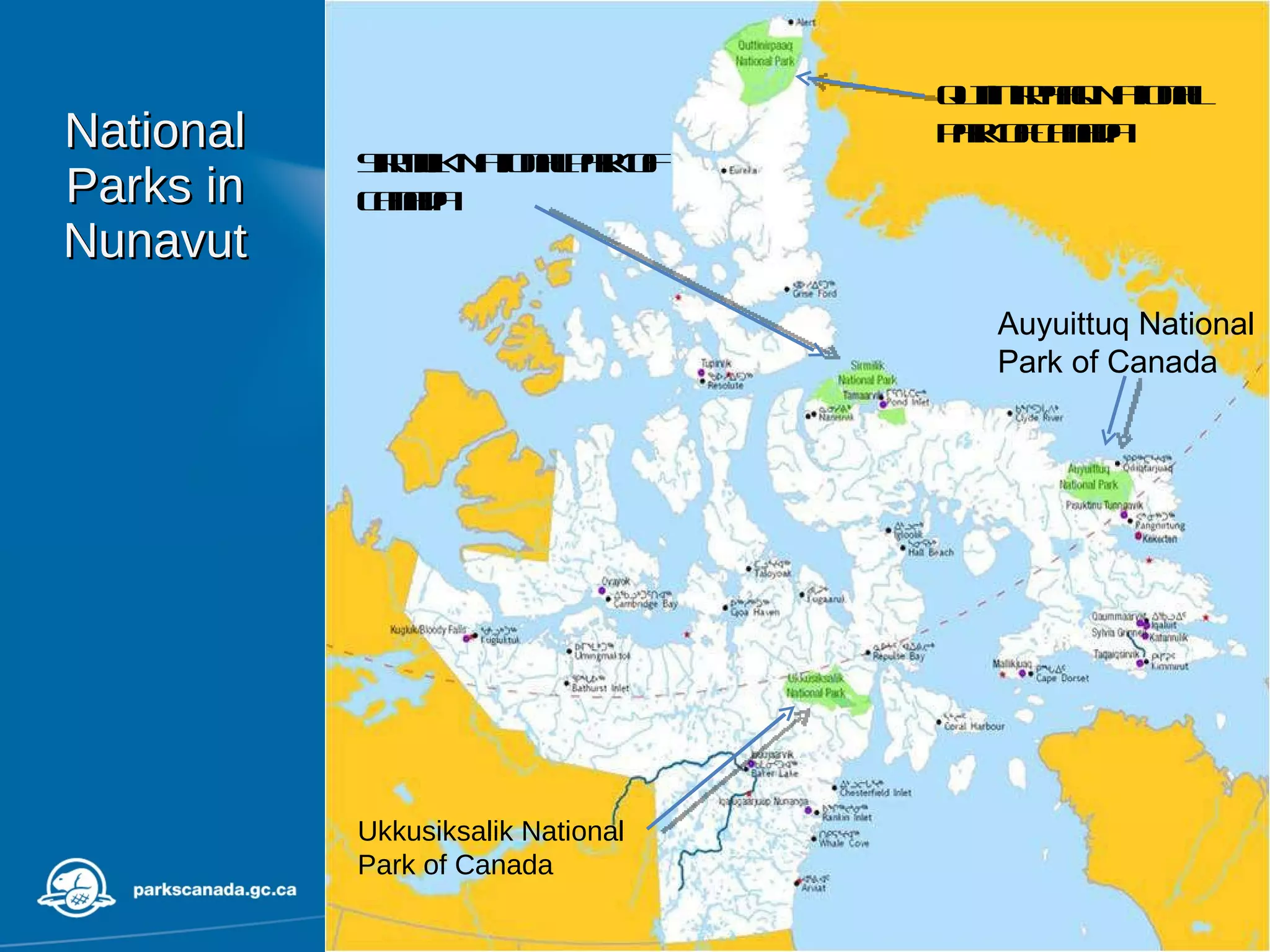
National Parks in Nunavut Quttinirpaaq National Park of Canada Sirmilik National Park of Canada Auyuittuq National Park of Canada Ukkusiksalik National  Park of Canada
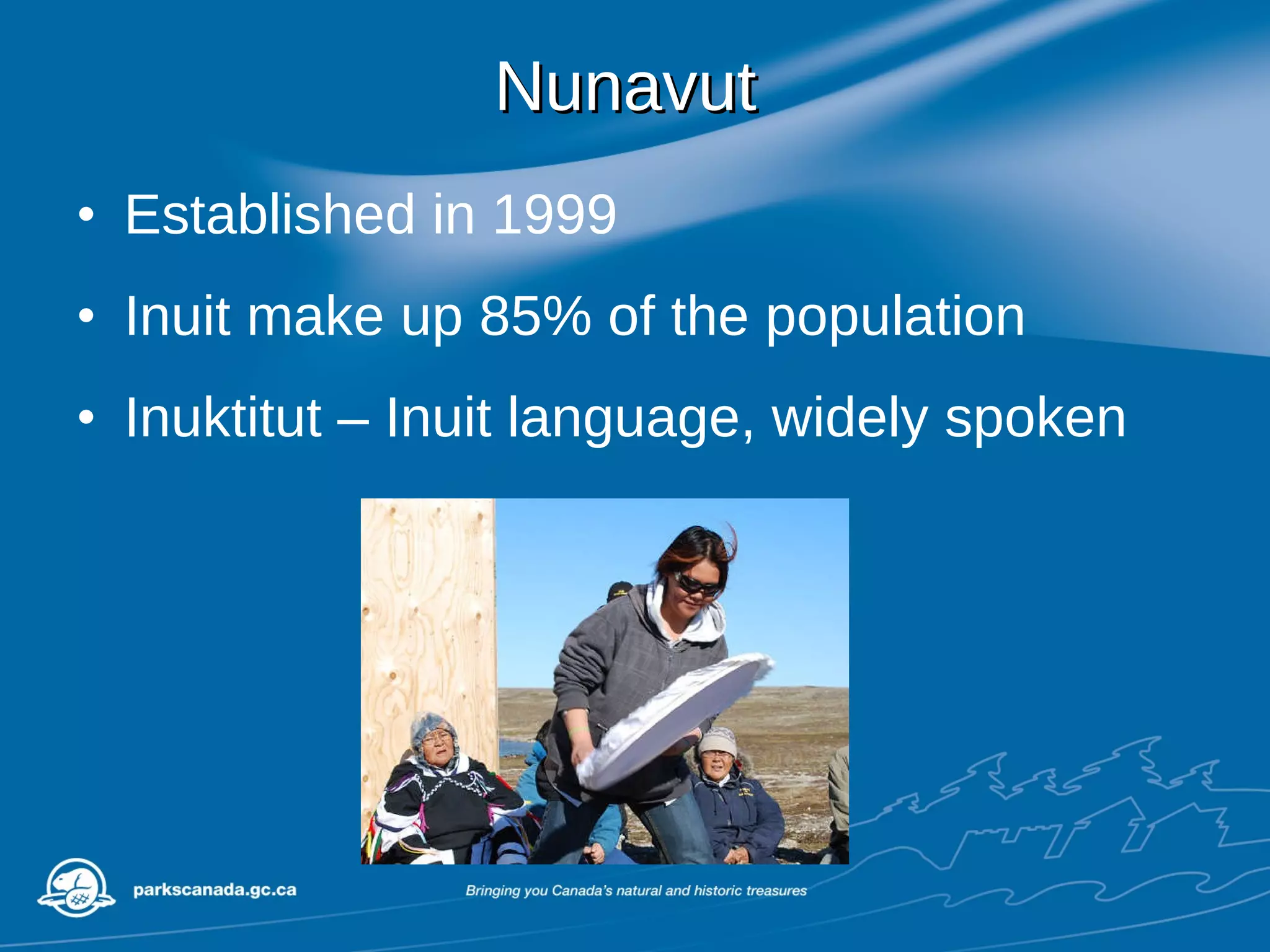
Nunavut  Established in 1999 Inuit make up 85% of the population Inuktitut – Inuit language, widely spoken
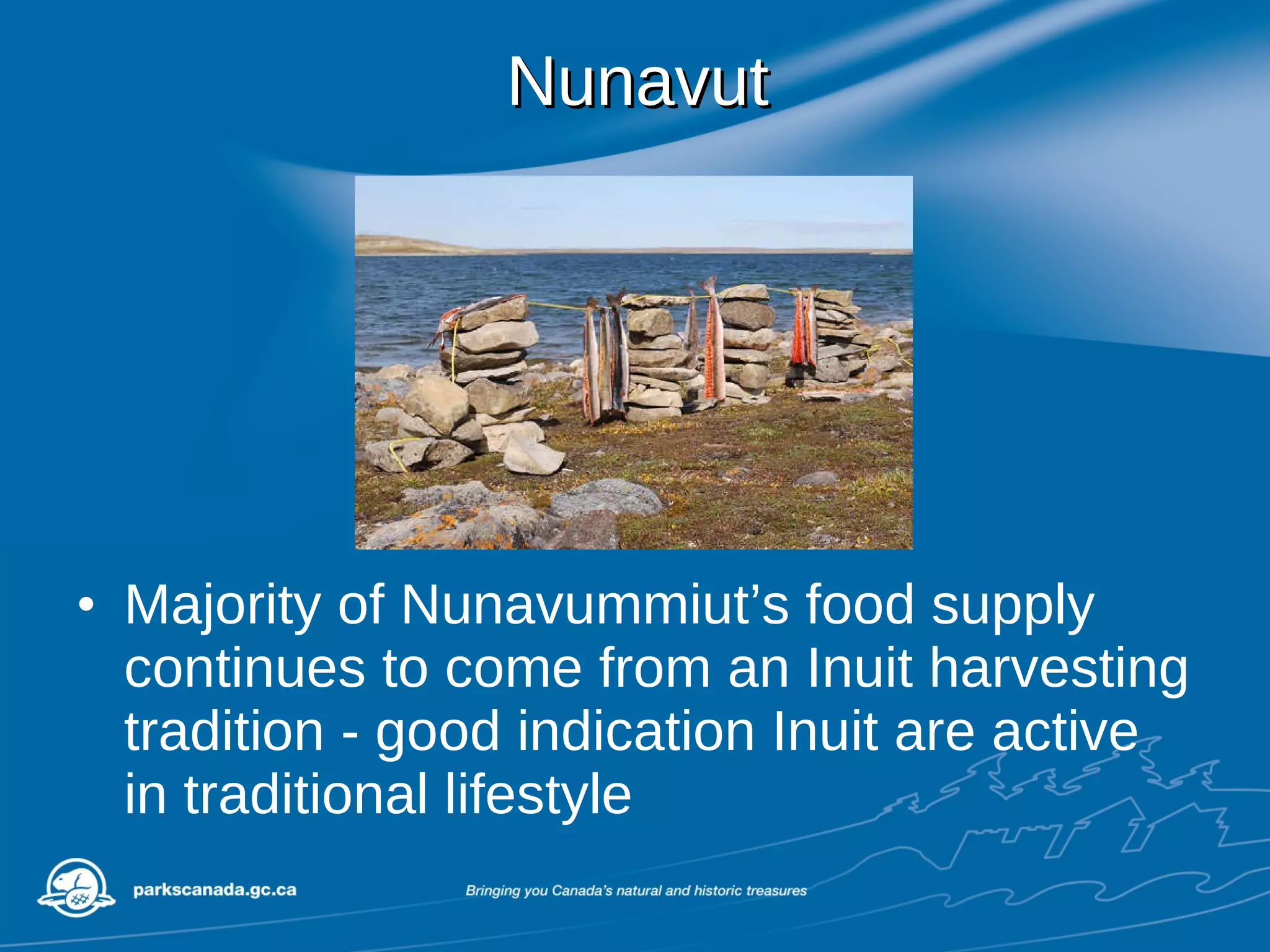
Nunavut Majority of Nunavummiut’s food supply continues to come from an Inuit harvesting tradition - good indication Inuit are active in traditional lifestyle
THREE Official Languages at Nunavut Parks Canada Inuktitut –two different Inuktitut languages English –second language for most Nunavummiut French
Nunavut Nunavut Land Claims Agreement (NLCA) Creation of Nunavut Nunavummiut rights are protected Inuit Impact Benefit Agreement  Created for organizations in Nunavut Ensures Nunavummiut receive social and economic gains from organizations
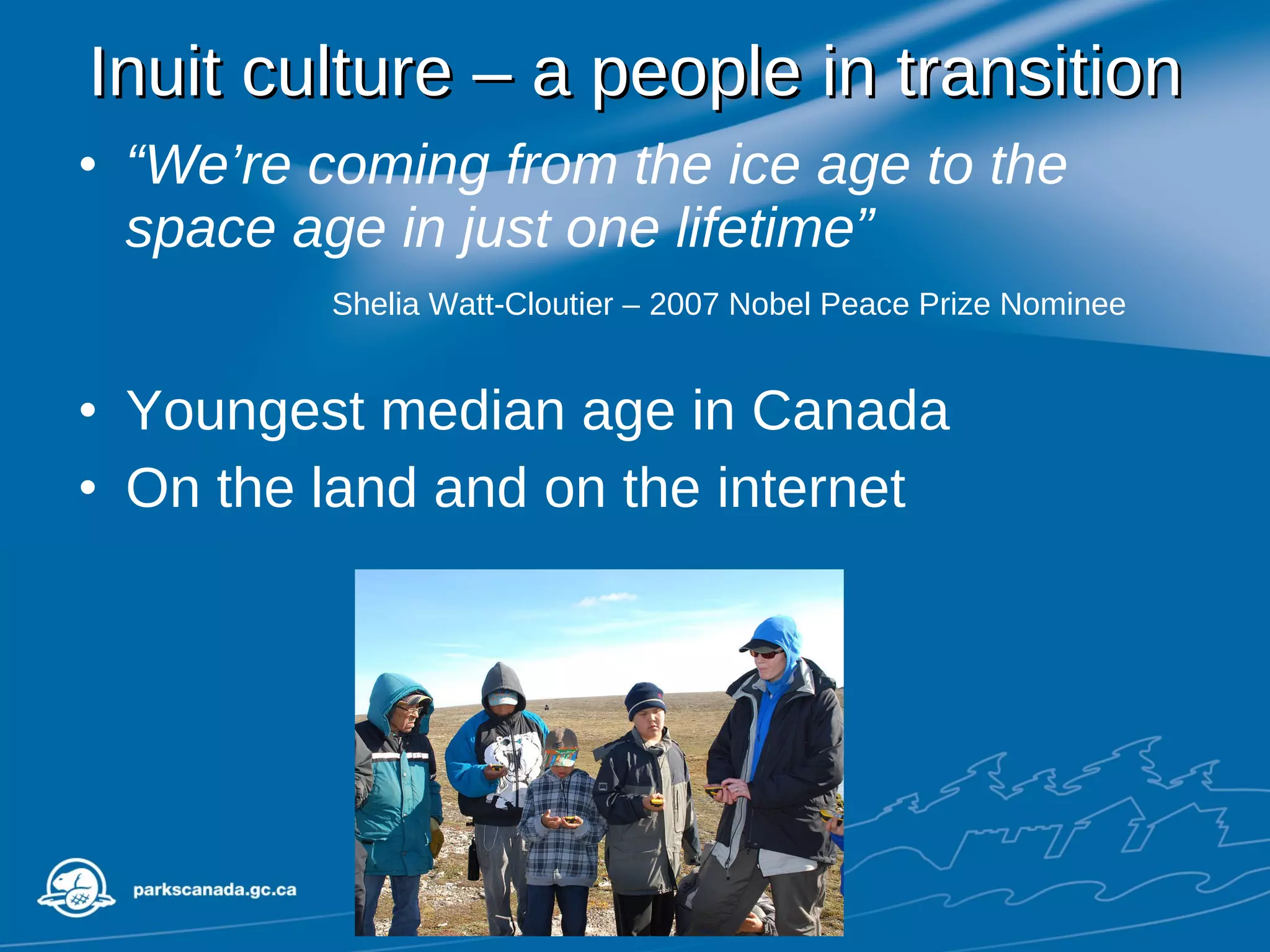
Inuit culture – a people in transition “ We’re coming from the ice age to the space age in just one lifetime”  Shelia Watt-Cloutier –  2007 Nobel Peace Prize Nominee  Youngest median age in Canada On the land and on the internet
First Activity: values and ethics Make a list of values, ethics, and guiding principles Compare and discuss Their Origins  Their  impact Their application
Our Values – and our Land Language defines much of “who we are” Nunavut – means “Our Land” Iqaluit – a place of Many Fish Auyuittuq – land that never melts  Sirmilk – a place of glaciers
 
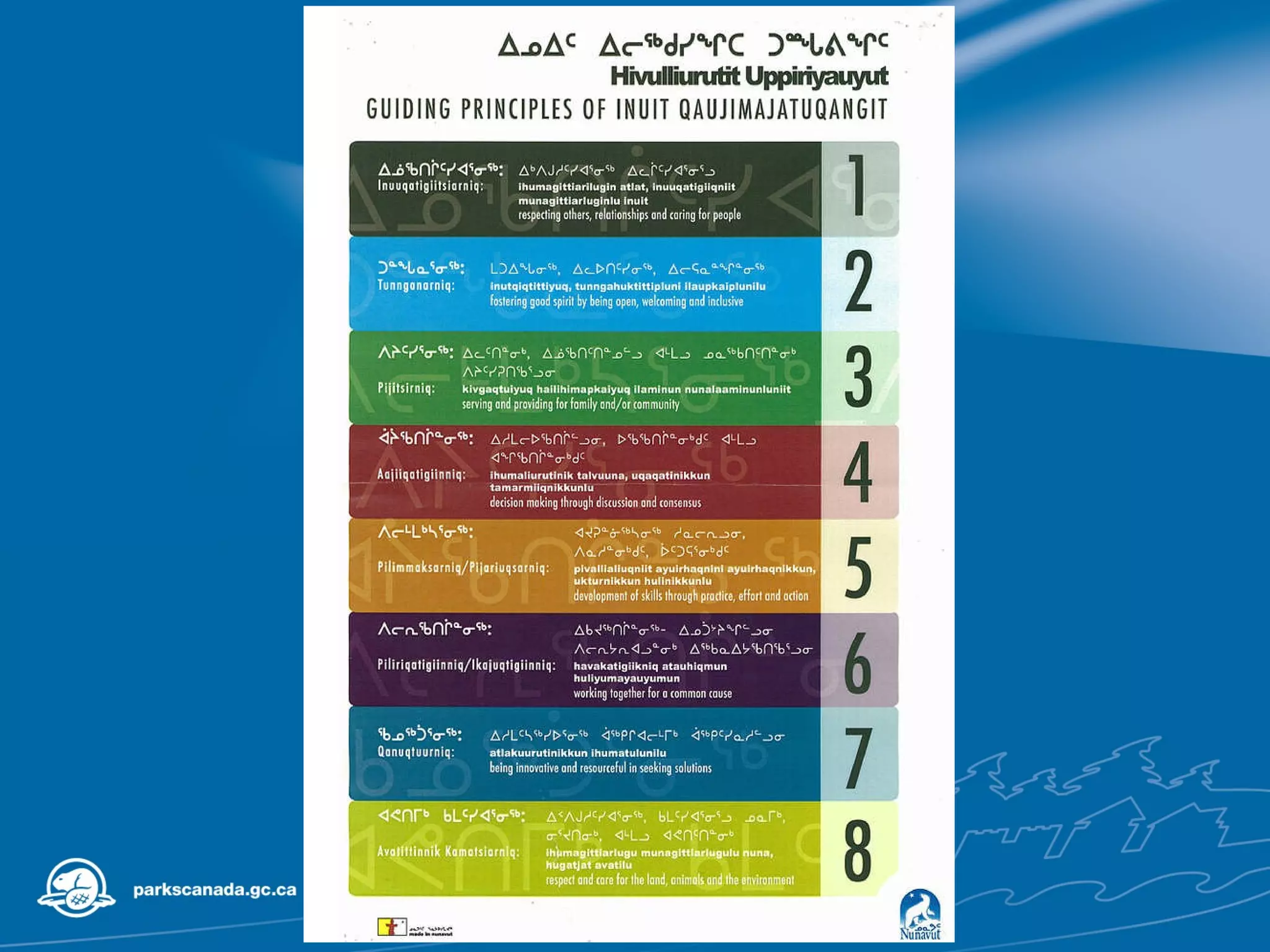
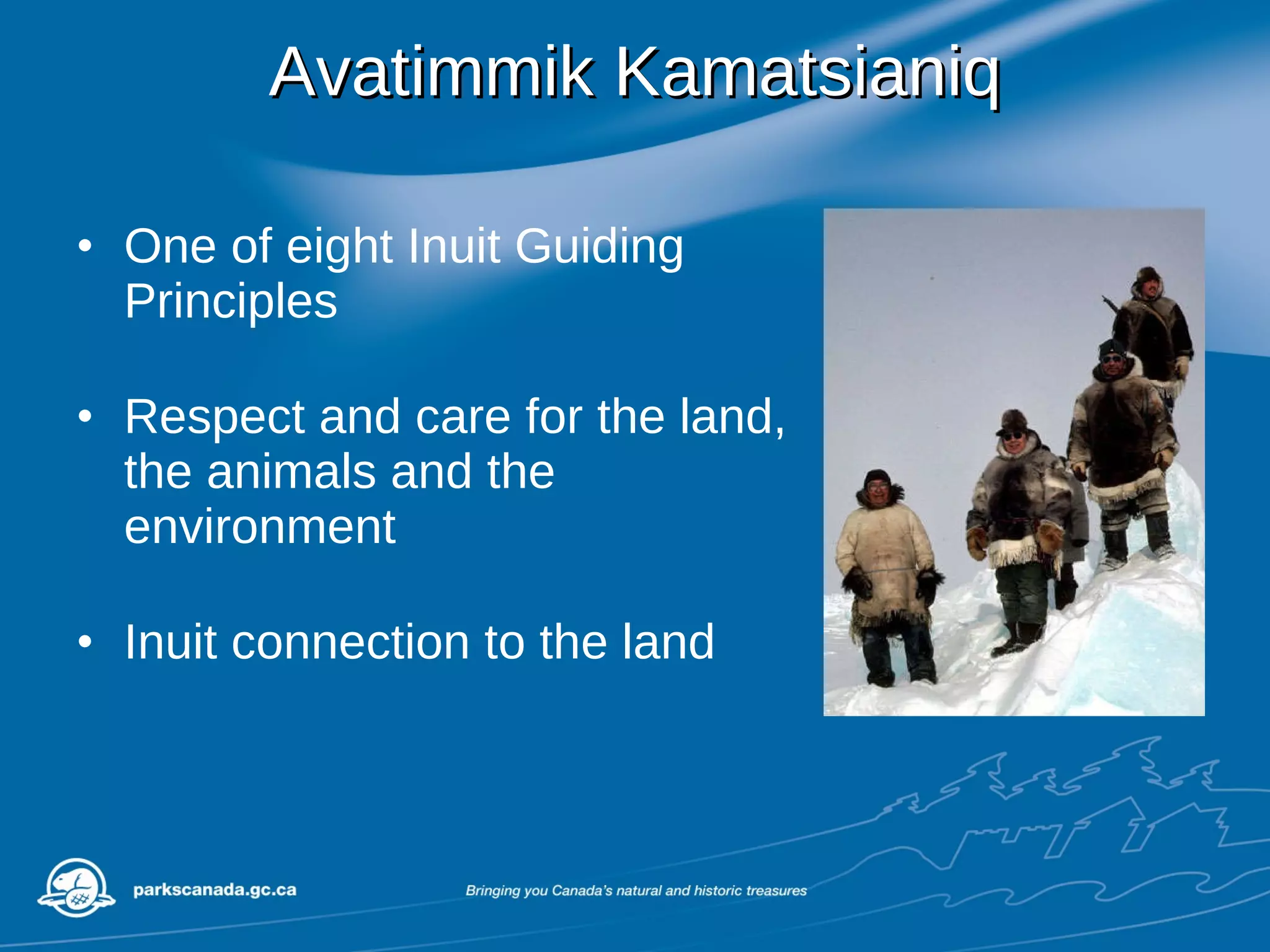
Avatimmik Kamatsianiq One of eight Inuit Guiding Principles Respect and care for the land, the animals and the environment Inuit connection to the land
Working Together Four National Parks have been created  within context of the Nunavut Land Claims Agreement A new park and a new marine protected area are under negotiation
Managing Parks within NLCA Every National Park in Nunavut is co-managed by board members and Parks Canada in Joint Park Management Committees Board members are appointed by federal government and by Inuit Organizations in Nunavut Nunavut Field Unit needs their approval and input in new and existing projects
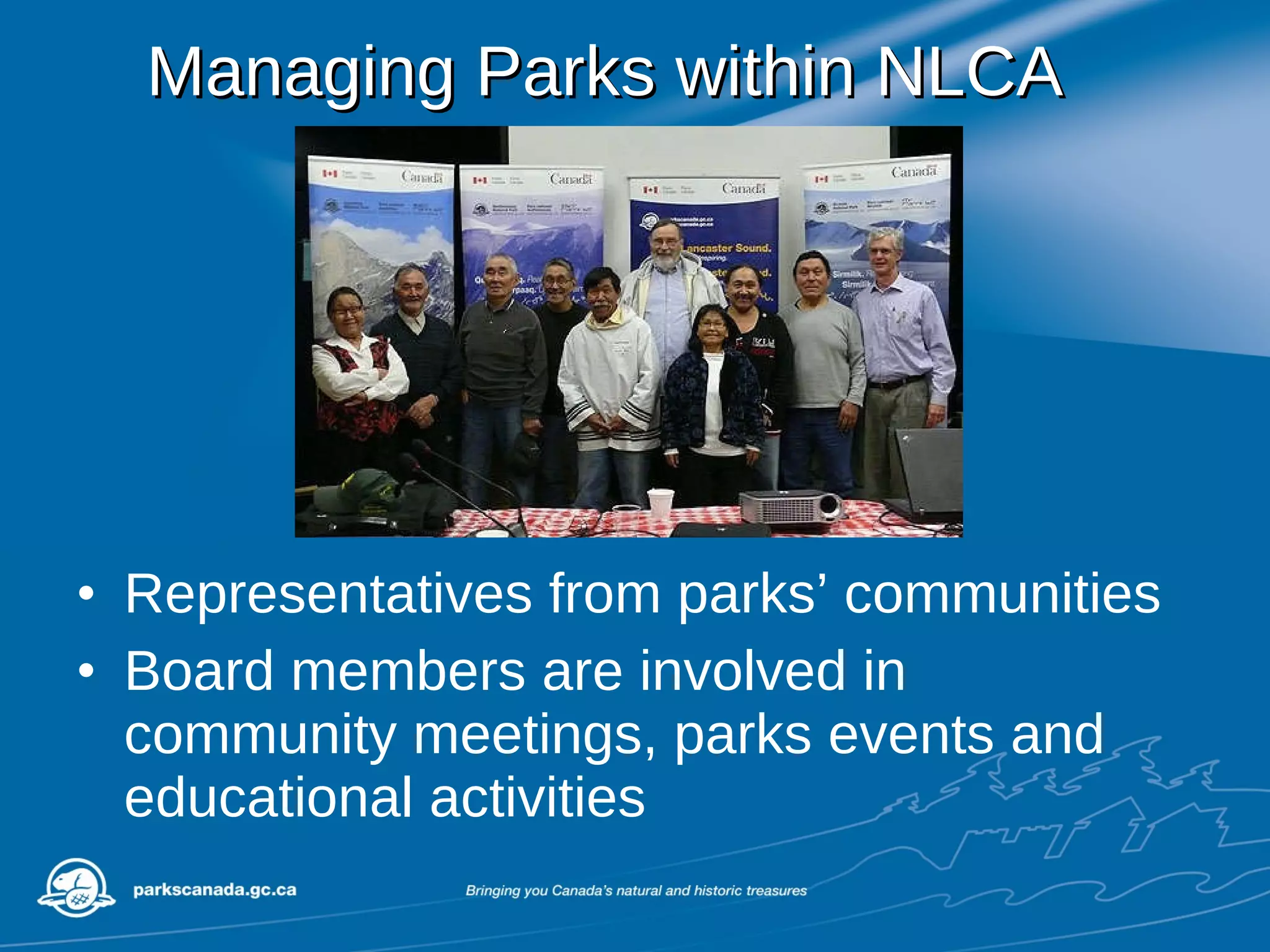
Managing Parks within NLCA Representatives from parks’ communities Board members are involved in community meetings, parks events and educational activities
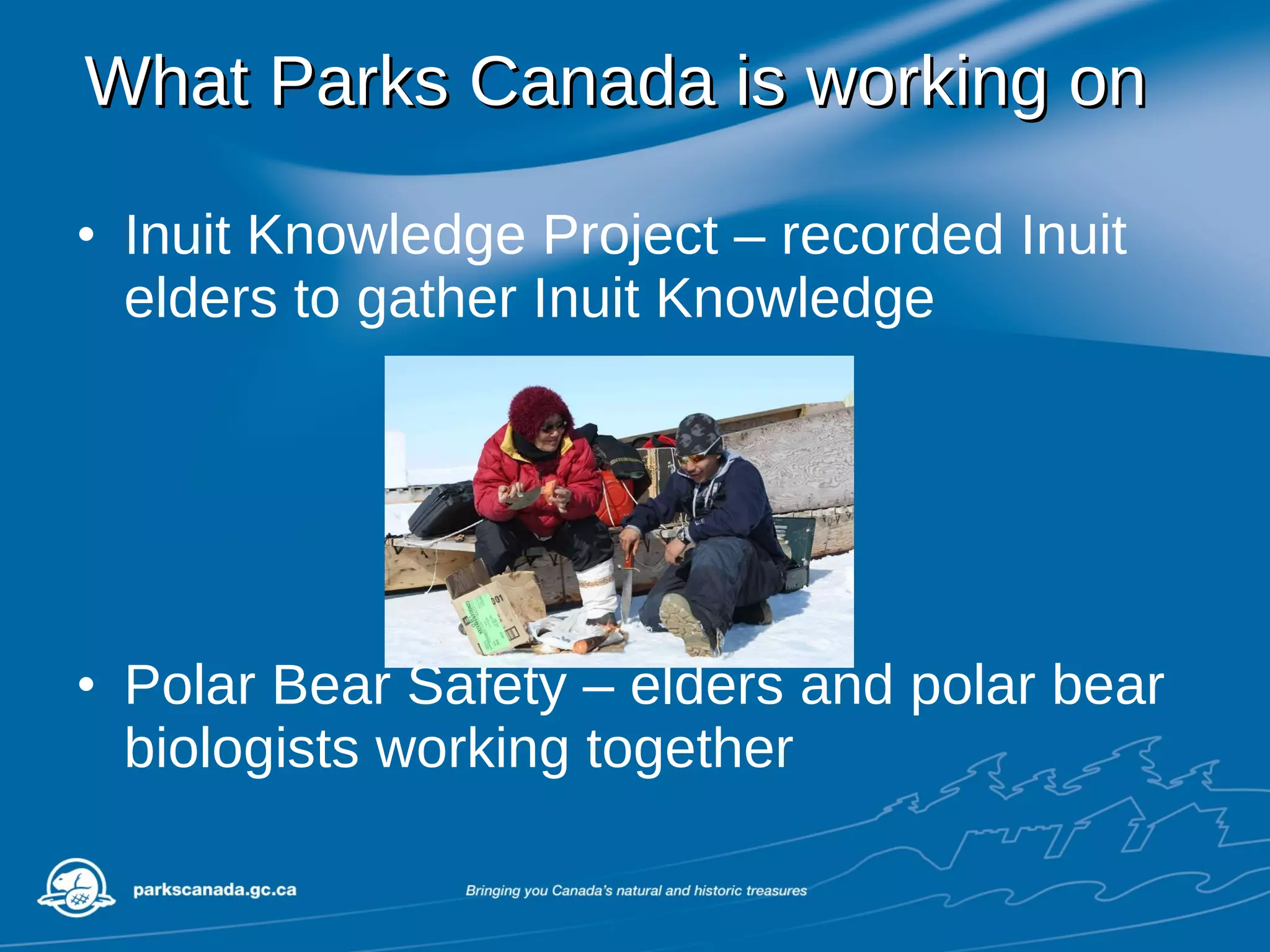
What Parks Canada is working on  Inuit Knowledge Project – recorded Inuit elders to gather Inuit Knowledge Polar Bear Safety – elders and polar bear biologists working together
Species at Risk Workshops To inform Inuit about Species at Risk legislation and process Nunavummiut lacked a clear understanding of the SAR process  This project was created to work with Inuit values and understanding
Species at Risk Workshops Environment Canada, Fisheries and Oceans Canada and Parks Canada coordinated and created a Species at Risk presentation 2) Inuktitut terminology committee was formed - this committee main objective was to revise and create words in Inuktitut that did not exist in the Species at Risk language
Species at Risk Workshops 3) This project was piloted with Nunavut federal government staff 4) Pilot workshop was done in Iqaluit with the Hunters and Trappers Organizations and some wildlife organizations 5) Delivered to some communities and Nunavut wildlife organizations
Nunavut Education Curriculum Nunavut high school educational curriculum is being revised Parks Canada staff sit on 2 different committees with curriculum advisors Most high school curriculum will have IQ incorporated
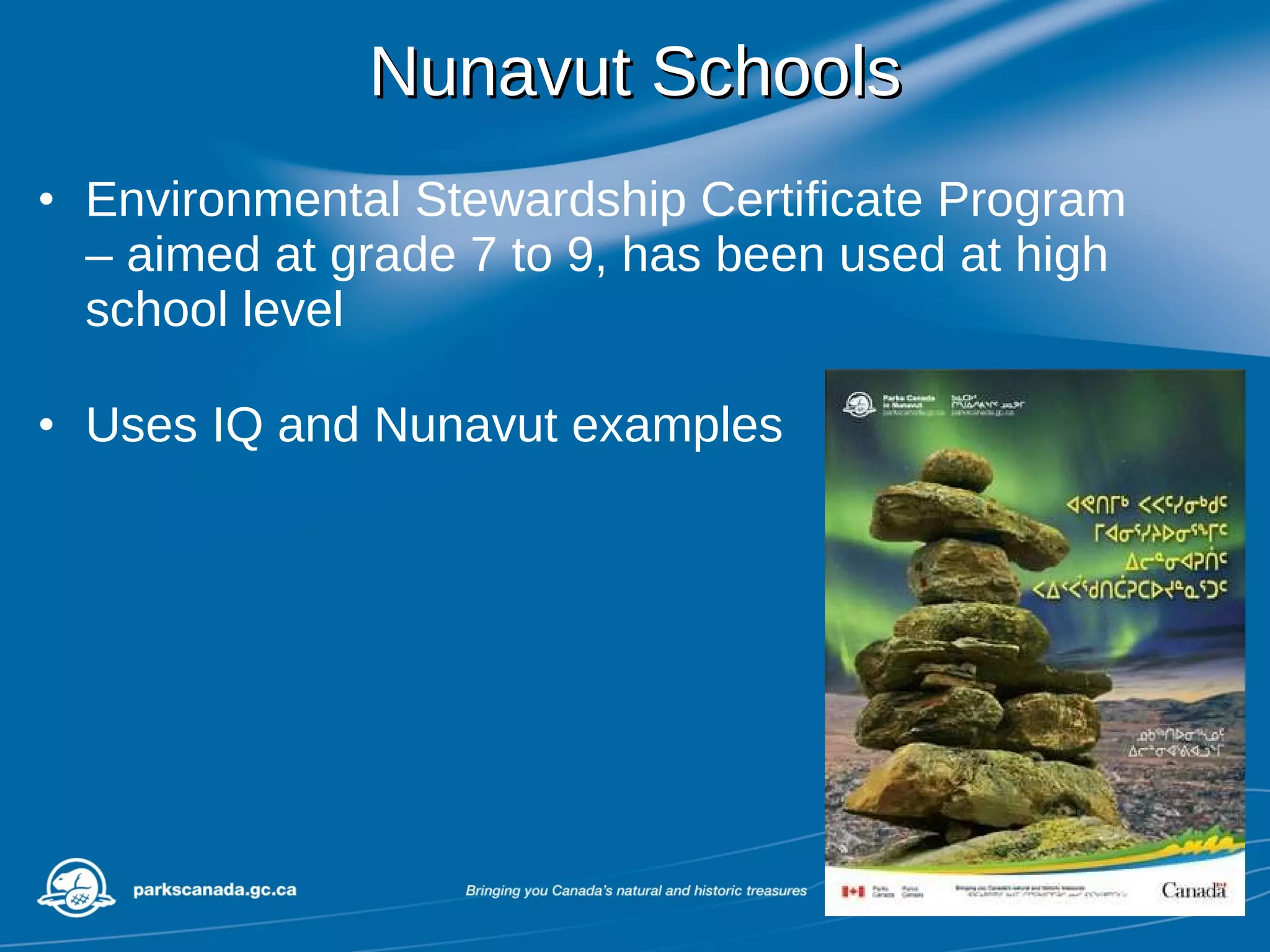
Nunavut Schools Environmental Stewardship Certificate Program – aimed at grade 7 to 9, has been used at high school level Uses IQ and Nunavut examples
Some websites to check out Parks Canada Agency -  www.parkscanada.gc.ca Qikiqtani Inuit Association –  www.qia.ca Inuit Tapiriit Kanatami –  www.itk.ca Inuit Heritage Trust –  www.ihti.ca Government of Nunavut –  www.gov.nu.ca Inuit Knowledge Project –  www.lecol-ck.ca Inuit Knowledge Centre –  www.naasautit.ca The Inuit Way [A Guide to Inuit Culture]  www.pauktuutit.ca/pdf/publications/pauktuutit/InuitWay_e.pdf Inuktitut Living Dictionary –  www.livingdictionary.com Learn the Inuit Language –  www.tusaalanga.ca Nunatsiaq News –  www.nunatsiaq.com
Questions??? Garry Enns External Relations Manager, Parks Canada (867) 975 4660 [email_address]

Inuit Values and Worldview: Their Importance in Protecting the Arctic

  • 1.
    Inuit Values andWorldview Our Importance in Protecting the Arctic EECOM 2011
  • 2.
    Goals for thisworkshop Identify Inuit traditional values and ethics and their role in the work of Parks Canada in Nunavut Provide workshop participants with ideas and tools to use when including northern content in environmental programs
  • 3.
    The Parks CanadaMandate On behalf of the people of Canada, we protect and present nationally significant examples of Canada's natural and cultural heritage, and foster public understanding, appreciation and enjoyment in ways that ensure their ecological and commemorative integrity for present and future generations .
  • 4.
    National Parks inNunavut Quttinirpaaq National Park of Canada Sirmilik National Park of Canada Auyuittuq National Park of Canada Ukkusiksalik National Park of Canada
  • 5.
    Nunavut Establishedin 1999 Inuit make up 85% of the population Inuktitut – Inuit language, widely spoken
  • 6.
    Nunavut Majority ofNunavummiut’s food supply continues to come from an Inuit harvesting tradition - good indication Inuit are active in traditional lifestyle
  • 7.
    THREE Official Languagesat Nunavut Parks Canada Inuktitut –two different Inuktitut languages English –second language for most Nunavummiut French
  • 8.
    Nunavut Nunavut LandClaims Agreement (NLCA) Creation of Nunavut Nunavummiut rights are protected Inuit Impact Benefit Agreement Created for organizations in Nunavut Ensures Nunavummiut receive social and economic gains from organizations
  • 9.
    Inuit culture –a people in transition “ We’re coming from the ice age to the space age in just one lifetime” Shelia Watt-Cloutier – 2007 Nobel Peace Prize Nominee Youngest median age in Canada On the land and on the internet
  • 10.
    First Activity: valuesand ethics Make a list of values, ethics, and guiding principles Compare and discuss Their Origins Their impact Their application
  • 11.
    Our Values –and our Land Language defines much of “who we are” Nunavut – means “Our Land” Iqaluit – a place of Many Fish Auyuittuq – land that never melts Sirmilk – a place of glaciers
  • 12.
  • 13.
    Avatimmik Kamatsianiq Oneof eight Inuit Guiding Principles Respect and care for the land, the animals and the environment Inuit connection to the land
  • 14.
    Working Together FourNational Parks have been created within context of the Nunavut Land Claims Agreement A new park and a new marine protected area are under negotiation
  • 15.
    Managing Parks withinNLCA Every National Park in Nunavut is co-managed by board members and Parks Canada in Joint Park Management Committees Board members are appointed by federal government and by Inuit Organizations in Nunavut Nunavut Field Unit needs their approval and input in new and existing projects
  • 16.
    Managing Parks withinNLCA Representatives from parks’ communities Board members are involved in community meetings, parks events and educational activities
  • 17.
    What Parks Canadais working on Inuit Knowledge Project – recorded Inuit elders to gather Inuit Knowledge Polar Bear Safety – elders and polar bear biologists working together
  • 18.
    Species at RiskWorkshops To inform Inuit about Species at Risk legislation and process Nunavummiut lacked a clear understanding of the SAR process This project was created to work with Inuit values and understanding
  • 19.
    Species at RiskWorkshops Environment Canada, Fisheries and Oceans Canada and Parks Canada coordinated and created a Species at Risk presentation 2) Inuktitut terminology committee was formed - this committee main objective was to revise and create words in Inuktitut that did not exist in the Species at Risk language
  • 20.
    Species at RiskWorkshops 3) This project was piloted with Nunavut federal government staff 4) Pilot workshop was done in Iqaluit with the Hunters and Trappers Organizations and some wildlife organizations 5) Delivered to some communities and Nunavut wildlife organizations
  • 21.
    Nunavut Education CurriculumNunavut high school educational curriculum is being revised Parks Canada staff sit on 2 different committees with curriculum advisors Most high school curriculum will have IQ incorporated
  • 22.
    Nunavut Schools EnvironmentalStewardship Certificate Program – aimed at grade 7 to 9, has been used at high school level Uses IQ and Nunavut examples
  • 23.
    Some websites tocheck out Parks Canada Agency - www.parkscanada.gc.ca Qikiqtani Inuit Association – www.qia.ca Inuit Tapiriit Kanatami – www.itk.ca Inuit Heritage Trust – www.ihti.ca Government of Nunavut – www.gov.nu.ca Inuit Knowledge Project – www.lecol-ck.ca Inuit Knowledge Centre – www.naasautit.ca The Inuit Way [A Guide to Inuit Culture] www.pauktuutit.ca/pdf/publications/pauktuutit/InuitWay_e.pdf Inuktitut Living Dictionary – www.livingdictionary.com Learn the Inuit Language – www.tusaalanga.ca Nunatsiaq News – www.nunatsiaq.com
  • 24.
    Questions??? Garry EnnsExternal Relations Manager, Parks Canada (867) 975 4660 [email_address]

Editor's Notes

  • #4 The words – protect and present, public understanding, appreciation and enjoyment and present and future generation are bolded because these are like integrating into one another.
  • #8 Inuktitut –two different Inuktitut languages to consider throughout the territory The 2 different Inuktitut Languages are Inuktitut and Inuinnaqtun (mainly in Kitikmeot region). Inuktitut is common across Nunavut, with many different dialects.
  • #9 The Nunavut Land Claims Agreement – and the impact of the NLCA on the work of Parks Canada’s Nunavut Field Unit The Inuit Impact Benefit Agreement – and the impact of the IIBA’s on the work of Parks Canada’s Nunavut Filed Unit
  • #11 Make a list of values, ethics, and guiding principles - you were taught and that you grew up with Compare and discuss Their Origins Their impact on personal and professional decision Their application in your work as an environmental educator
  • #13 The 8 guiding principles
  • #14 Application of these principles Through the NLCA Through IIBA’s In community and family decision making Example: There is no one word in Inuktitut for conservation – this is one of the areas where the Inuit belief is wordless but it is practiced
  • #15 Four National Parks have been created from the Nunavut Land Claims Agreement – seen as vital to the protection and preservation of the Inuit way of life Organization within Parks Canada’s NFU To preserve and protect – responsibility of the Resource Conservation Division as well as of each park’s operational unit Natural as well as cultural and historic resources involves protecting ecological integrity To present and promote – this to encourage visitation but also to develop an understanding and awareness Organization within the NFU To prevent and protect – this is a safety role we take very seriously in NFU Eg Polar bear safety Avalanche awareness To present and promote – to encourage visitation but also to develop a public awareness and understanding of Canada’s special places – natural and cultural
  • #16 Nunavut Field Unit needs their approval and input in new and existing projects
  • #17 Comprise of community members who usually report back to the local community
  • #18 Inuit Knowledge Project –recording from Inuit elders about Inuit Knowledge including sea ice conditions, place names, using seal oil lamp and others
  • #19 This workshop was created to inform Inuit about Species at Risk legislation and process There was a lot of negativity with this legislation due to improper understanding of the process This project was created to work with Inuit values and understanding, to get more input from the north if a species were to be listed
  • #20 1) Environment Canada, Fisheries and Oceans Canada and Parks Canada coordinated and created a Species at Risk presentation for Nunavut residents and to follow Nunavut guidelines. Nunavut has specific guidelines and process compared to the other Territories and provinces. 2) Inuktitut terminology committee was formed - this included the federal departments, translators and an elder - this committee main objective was to revise and create words in Inuktitut that did not exist in the Species at Risk language Inuktitut terminology committee was formed - this included the federal departments, translators and an elder
  • #21 3) This project was piloted with Nunavut federal organizations staff- to see what works and what will not work for the Inuit culture 4) Pilot workshop was done in Iqaluit with the Hunters and Trappers Organizations and some wildlife organizations – again to see what works and what doesn’t 5) Delivered in some communities and Nunavut wildlife organizations
  • #22 It will be 3 Committees in the fall.
  • #24 QIA – The Qikiqtani Inuit Association (QIA) is aimed at representing the interests of the Inuit of the Baffin Region, High Arctic and Belcher Islands in a fair and democratic way. ITK – Inuit Tapiriit Kanatami (ITK) is the national Inuit organization in Canada, representing four Inuit regions – Nunatsiavut (Labrador), Nunavik (northern Quebec), Nunavut, and the Inuvialuit Settlement Region in the Northwest Territories. Inuit Heritage Trust - The Inuit Heritage Trust is dedicated to the preservation, enrichment and protection of Inuit cultural heritage and identity embodied in Nunavut's archaeology sites, ethnographic resources and traditional place names. The Trust's activities are based on the principle of respect for the traditional knowledge and wisdom of our Elders. Inuktitut Living Dictionary – English-French-Inuktitut online dictionary