Musical Theatre
A Quick introduction to musicals
What is musical theatre?
• A genre of drama in which singing and dancing play an
essential part.
Where did musical theatre originate?
• Musical theatre has its roots in Greek theatre, Operettas, and Vaudeville.
While the use of music and dancing in a performance were not a new
concept, the musical used music and dance to advance story and build
characters.
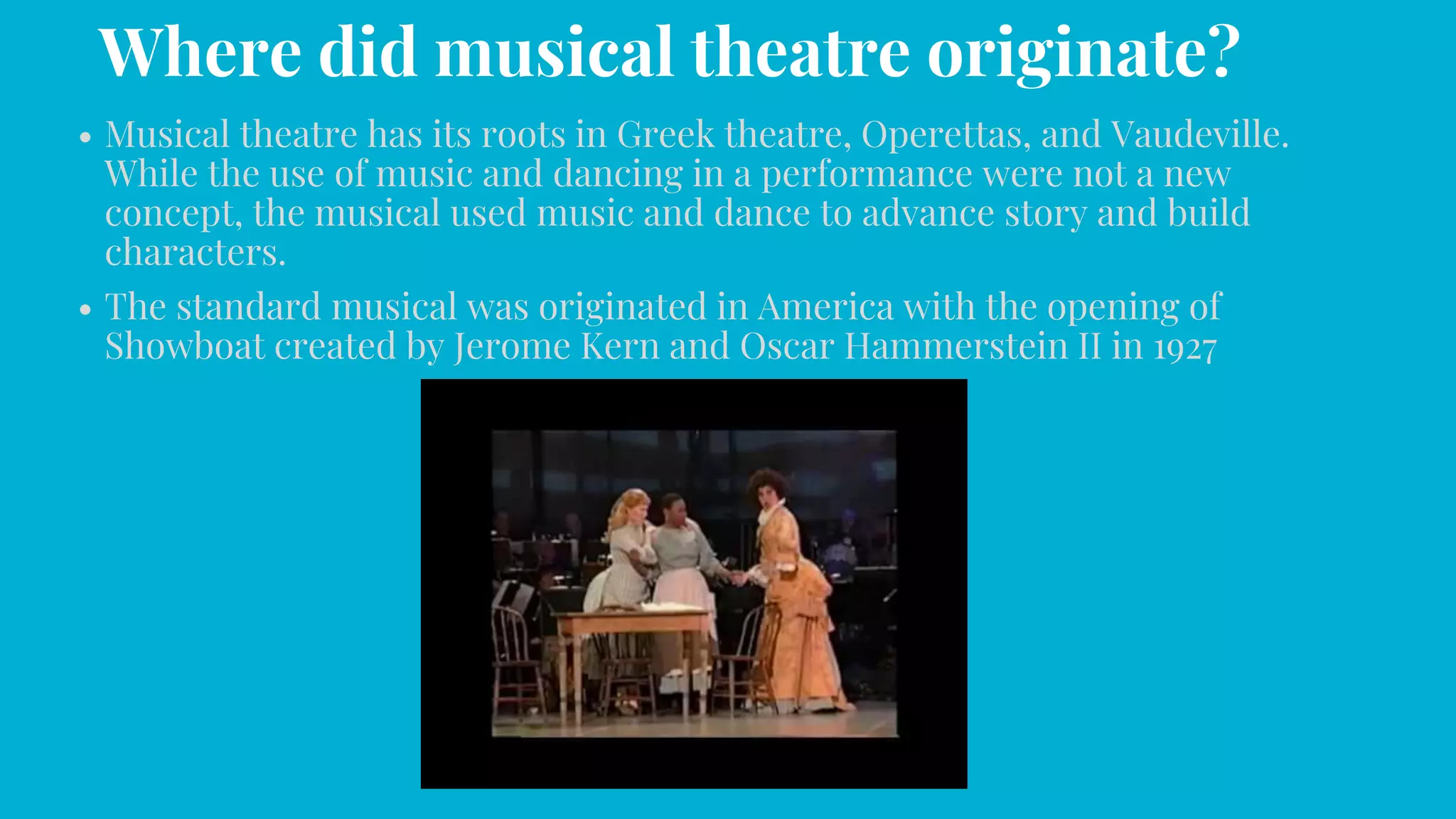
• The standard musical was originated in America with the opening of
Showboat created by Jerome Kern and Oscar Hammerstein II in 1927
What makes musical theatre different
from other forms of theatre?
Differences from opera
• Focus on spoken dialogue
• Dance is much more important
• Generally amplifies the singer
• Uses popular styles
• Almost always in the same language as the audience
• Differences from “straight” plays that have music
• Music drives the plot and characters
• Songs are usually outside the normal action
What about the Script?
Every musical has three components: music, lyrics, and book
• The book is the story of the show- generally refers to the spoken
dialogue
• The book and the lyrics combined are sometimes called the libretto
• The lyrics and the music combined are called the score
Whos in charge?
Every musical production generally has five “major” positions
• Director
• Musical Director
• Choreographer
Whos on stage?
• Principals
• Featured role
• Ensemble
• Swing
• Pit
• Understudy
What are the types of musicals?
• Book Musical
• Rock/Pop/Rap Musical
• Concept Musical
• Jukebox Musical
• Movie Musical
• Mega Musical
Book Musical
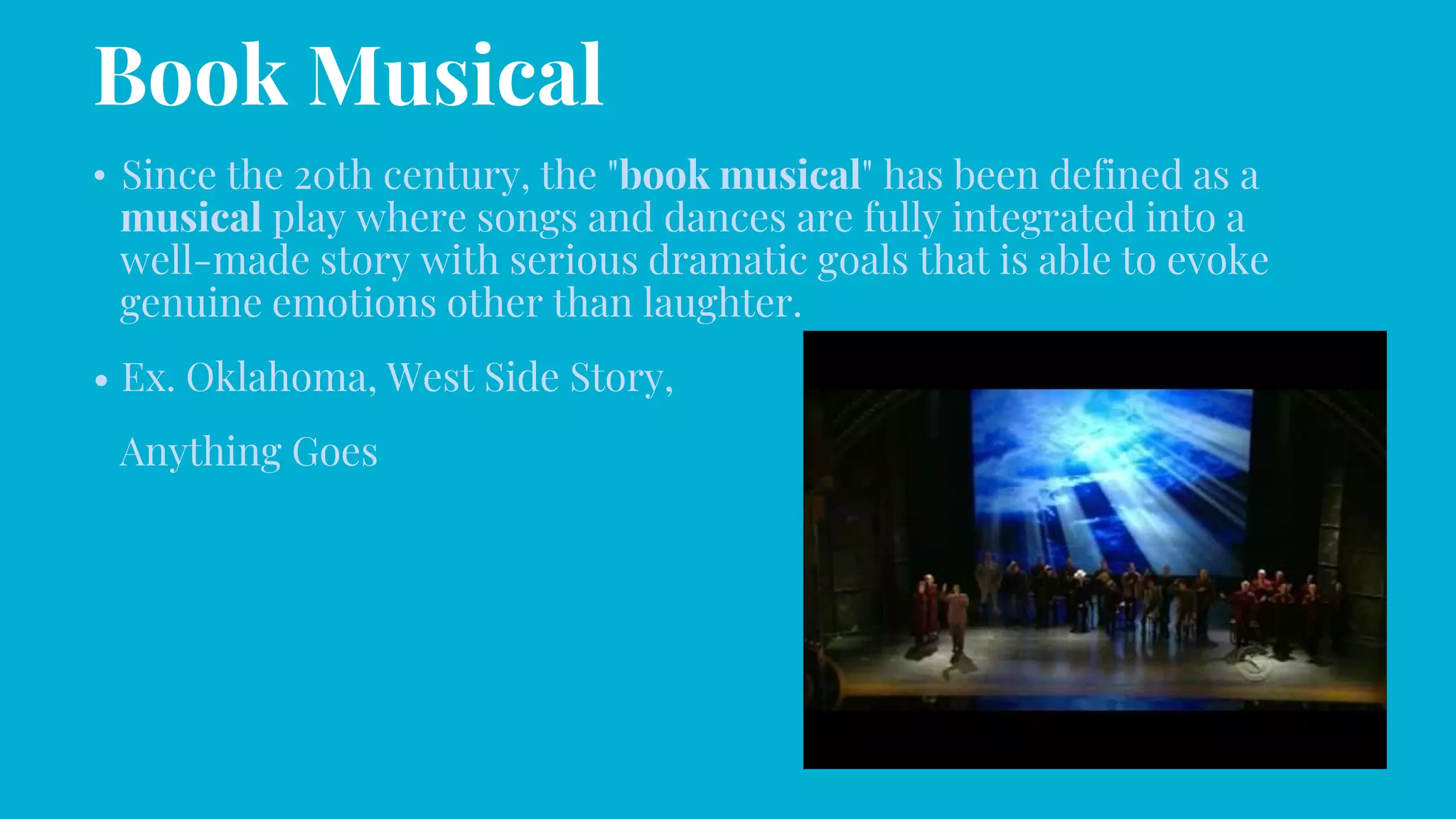
• Since the 20th century, the "book musical" has been defined as a
musical play where songs and dances are fully integrated into a
well-made story with serious dramatic goals that is able to evoke
genuine emotions other than laughter.
• Ex. Oklahoma, West Side Story,
Anything Goes
Rock Musical
• A rock musical is a musical theatre work with rock music. The genre
of rock musical may overlap somewhat with album musicals, concept
albums and song cycles, as they sometimes tell a story through
the rock music, and some album musicals and concept albums
become rock musicals.
• Ex. Spring Awakening, Tommy by the
Who, Hair
Concept Musical
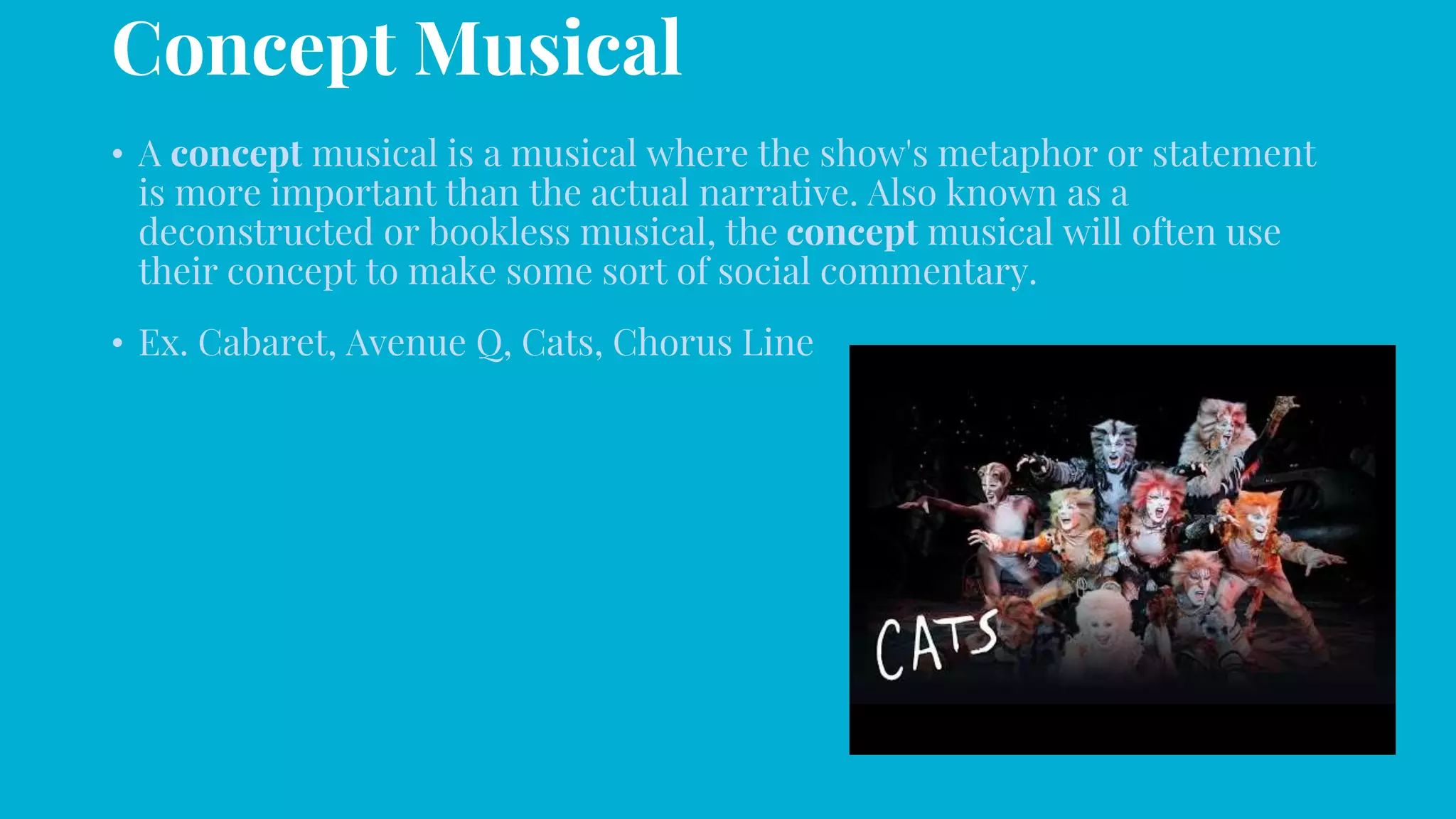
• A concept musical is a musical where the show's metaphor or statement
is more important than the actual narrative. Also known as a
deconstructed or bookless musical, the concept musical will often use
their concept to make some sort of social commentary.
• Ex. Cabaret, Avenue Q, Cats, Chorus Line
Jukebox Musical
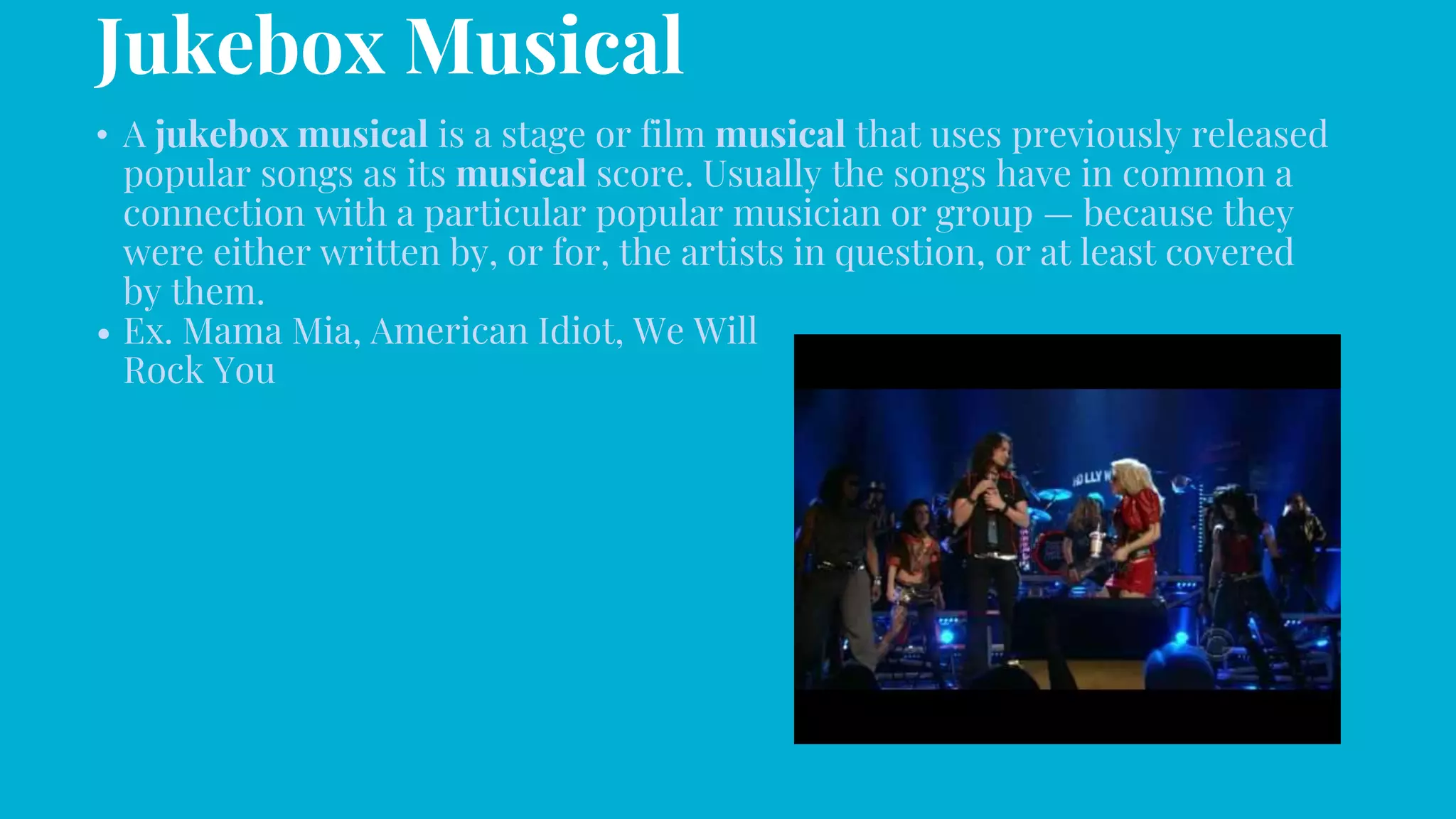
• A jukebox musical is a stage or film musical that uses previously released
popular songs as its musical score. Usually the songs have in common a
connection with a particular popular musician or group — because they
were either written by, or for, the artists in question, or at least covered
by them.
• Ex. Mama Mia, American Idiot, We Will
Rock You
Movie Musical
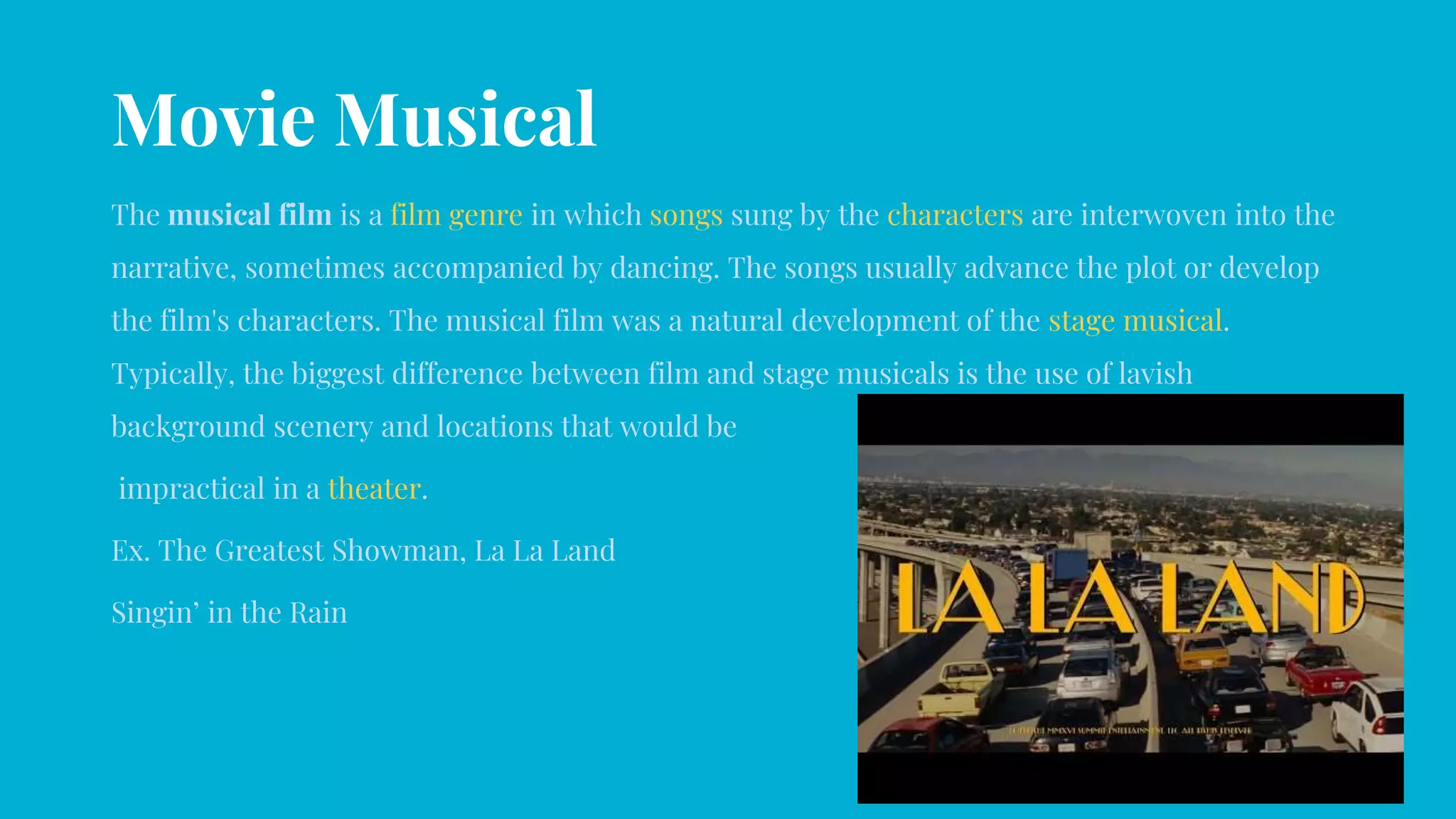
The musical film is a film genre in which songs sung by the characters are interwoven into the
narrative, sometimes accompanied by dancing. The songs usually advance the plot or develop
the film's characters. The musical film was a natural development of the stage musical.
Typically, the biggest difference between film and stage musicals is the use of lavish
background scenery and locations that would be
impractical in a theater.
Ex. The Greatest Showman, La La Land
Singin’ in the Rain
Mega Musical
Relying on pop rhythms, stage hydraulics and high-tech special effects, these shows came to be known as
mega-musicals. In these behemoths, substance took a backseat to spectacle, and occasional hints of humor
were buried in oceans of soap opera sentiment. Although these tech-heavy presentations came with a high
price tag, the best mega-musicals ran for decades, selling tickets to millions of people -- particularly tourists
who had long since fallen out of the habit of going to the theatre.
Musical Theatre Song
Structure
Key Songs
● Overture
● Opening Number
● The “I want” number
● The act I closer
● The 11 o’clock number
● Finale
Overture
● The swell of music heard after theater lights
dim, but before the start of onstage action, is
called the overture. The piece usually contains
"many of the musical motifs and themes of the
score.
● Often used as a way to excite or prepare the
audience.
The Opening Number
● According to author Mark Steyn, the first song of
a successful Broadway musical "defines the (main
character's) motivation, kick-starts the plot and
communicates the spirit of the score and the
staging." The opening number sets the tone for
the whole show and starts the "storytelling
process" by grabbing the audience's attention.
Hamilton
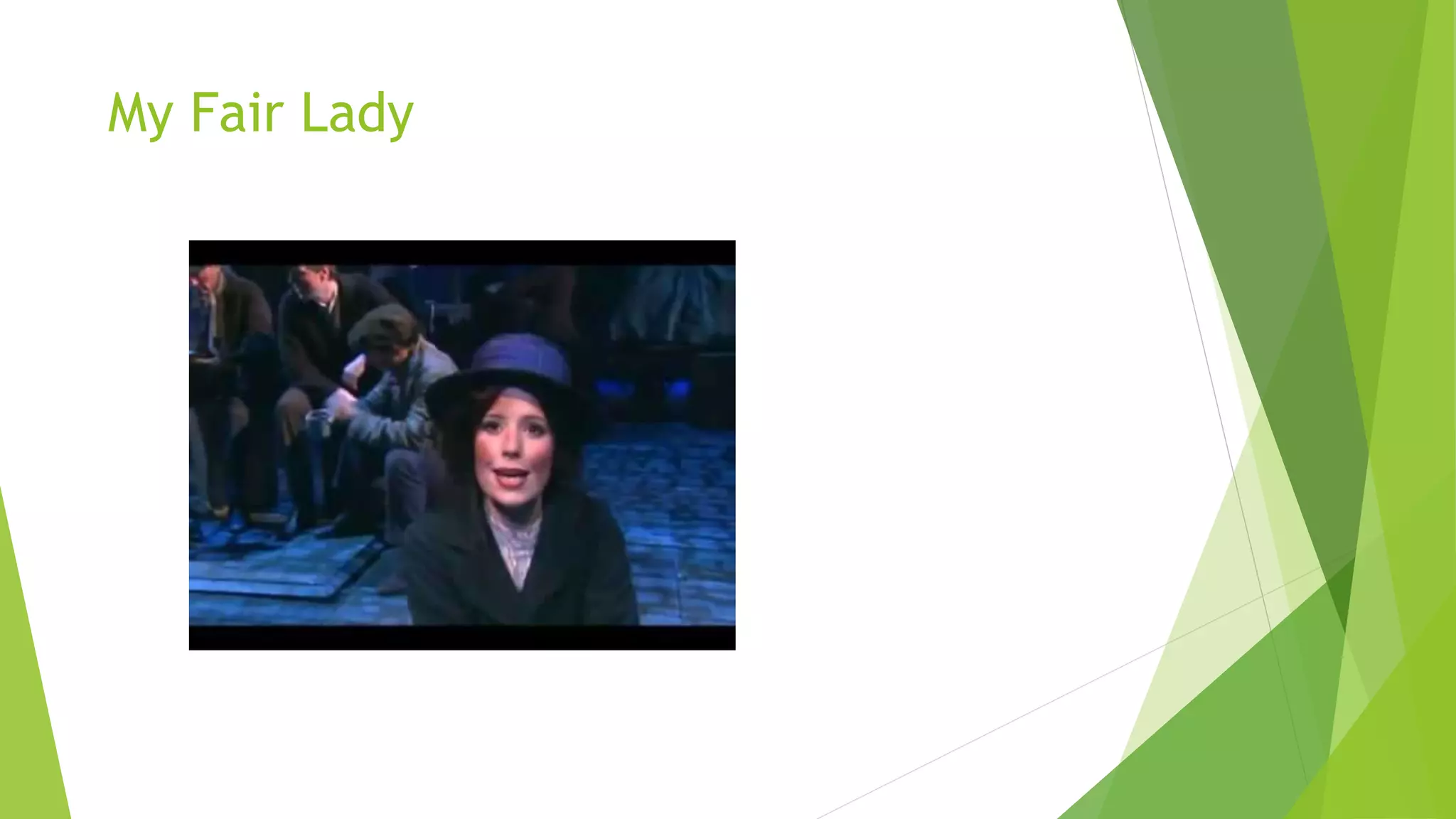
The “I want” song
● An "I Want" song reveals character
motivations and desires. The song typically
appears early in the musical's first act with
one or more characters singing about "the
key motivating desire that will propel
everyone through the remainder of the
show.”
My Fair Lady
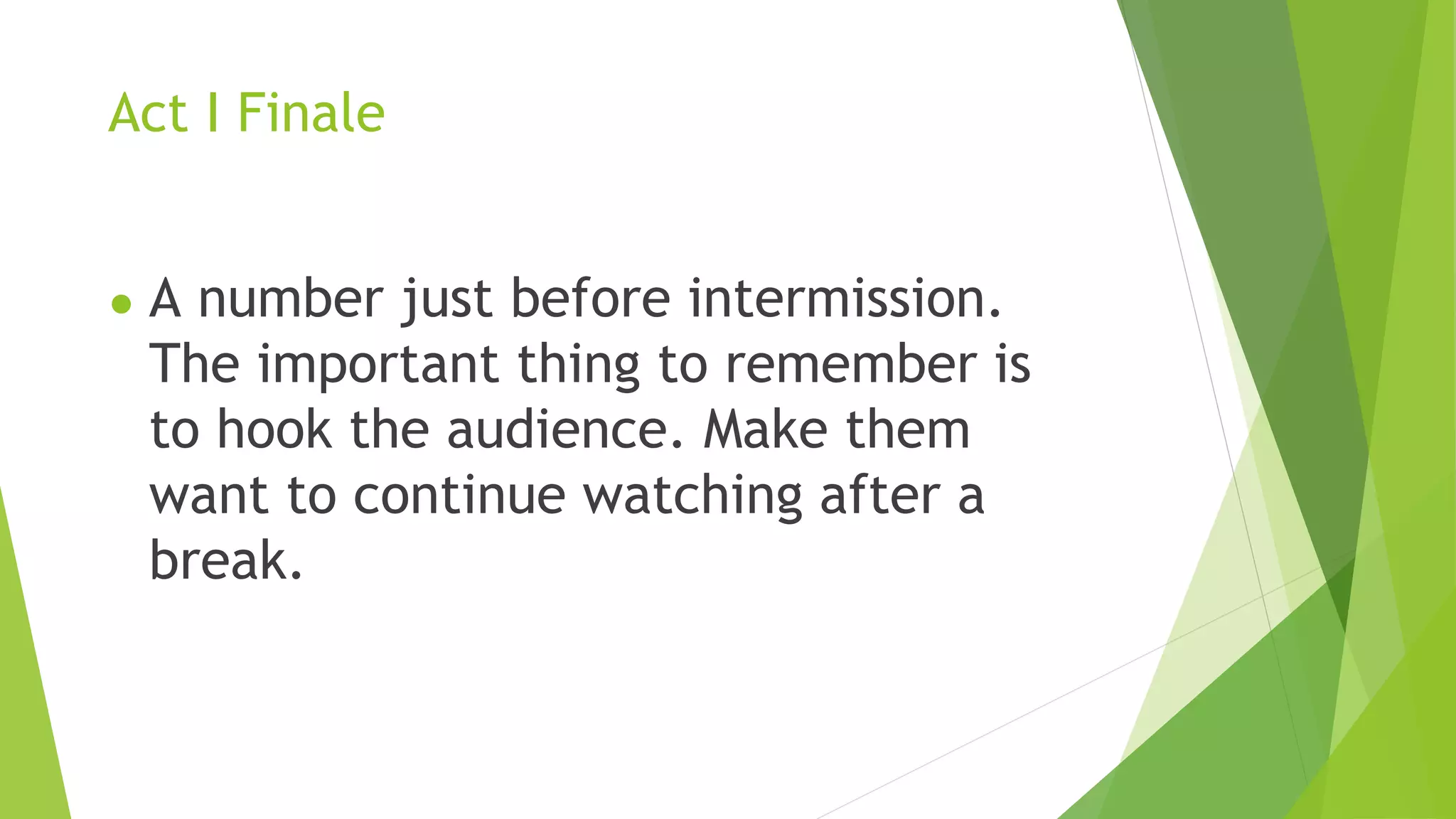
Act I Finale
● A number just before intermission.
The important thing to remember is
to hook the audience. Make them
want to continue watching after a
break.
Into the Woods
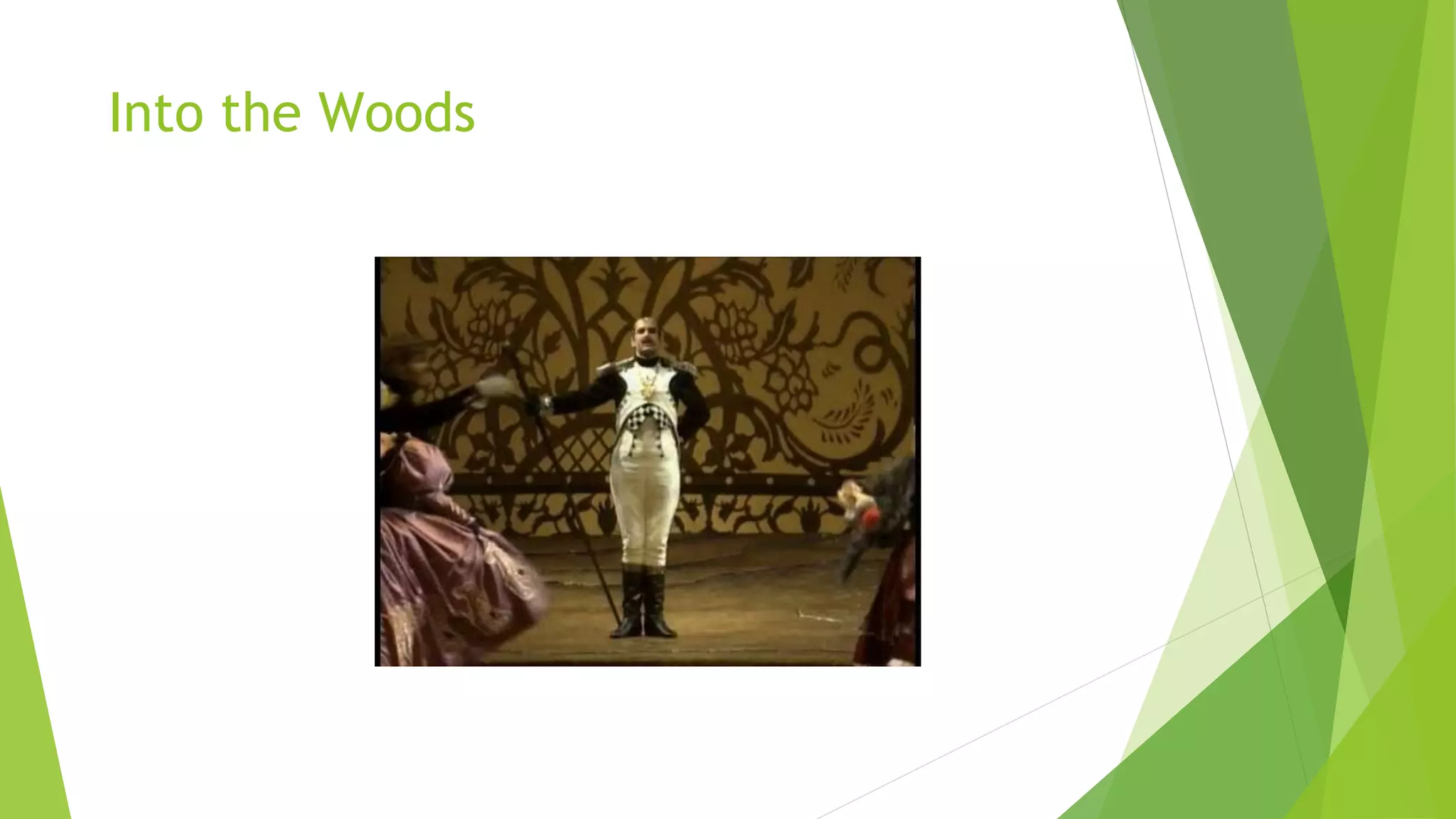
11 O’Clock Number
● An "Eleven O'clock Number" takes place
during the middle of the second act. It
may be a ballad, a lighthearted number
or comedy song that "energizes the
audience for the final scenes.”
Gypsy
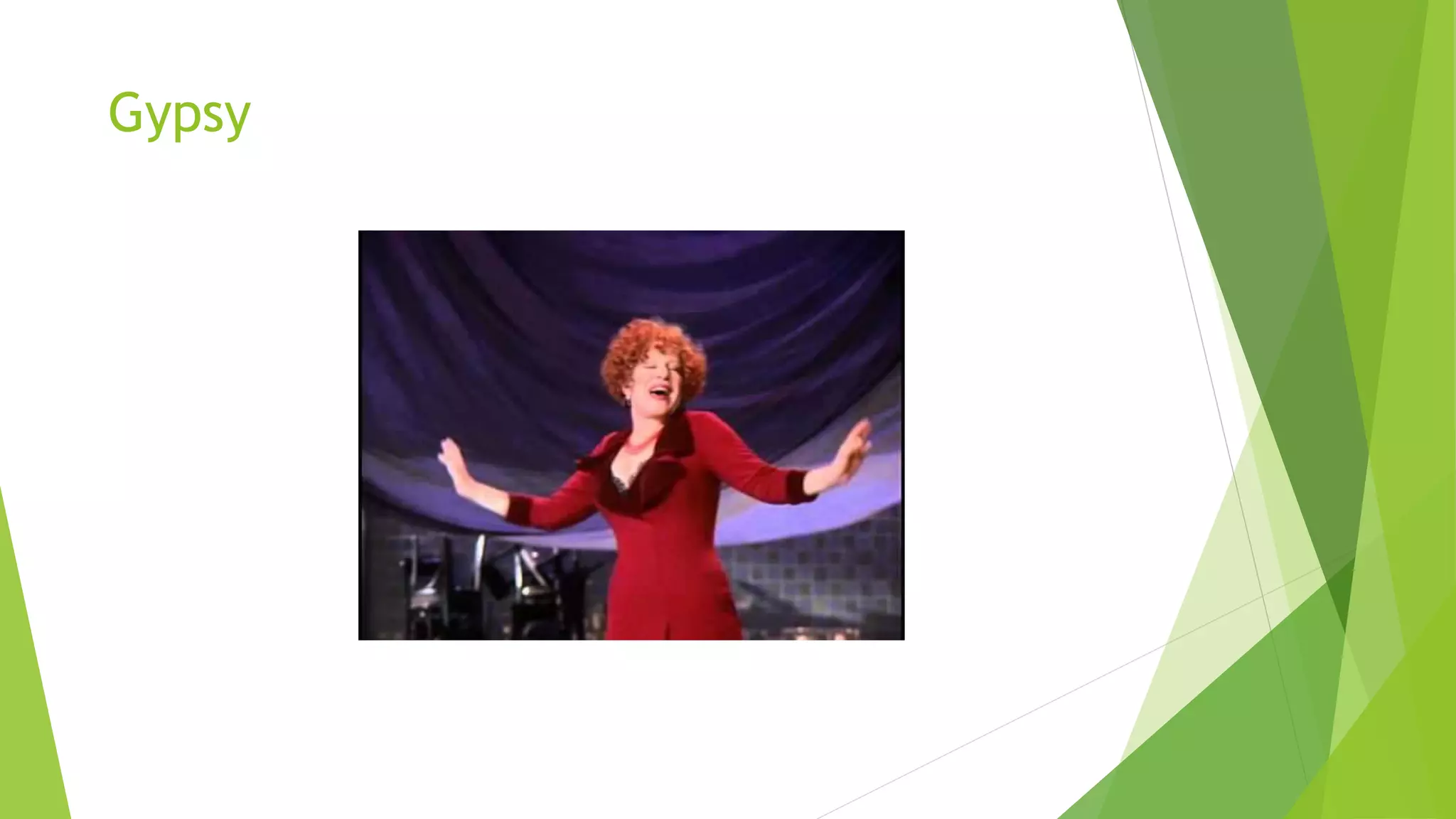
Finale
● A powerful closing number wraps up
the show's plot and leaves a strong
impression on the audience.
Frequently, the finale includes a
reprise of the one of the show's
"emotion-packed" numbers.
Hairspray

Intro_to_Musical_Theatre.pptx

  • 1.
    Musical Theatre A Quickintroduction to musicals
  • 2.
    What is musicaltheatre? • A genre of drama in which singing and dancing play an essential part.
  • 3.
    Where did musicaltheatre originate? • Musical theatre has its roots in Greek theatre, Operettas, and Vaudeville. While the use of music and dancing in a performance were not a new concept, the musical used music and dance to advance story and build characters. • The standard musical was originated in America with the opening of Showboat created by Jerome Kern and Oscar Hammerstein II in 1927
  • 4.
    What makes musicaltheatre different from other forms of theatre? Differences from opera • Focus on spoken dialogue • Dance is much more important • Generally amplifies the singer • Uses popular styles • Almost always in the same language as the audience • Differences from “straight” plays that have music • Music drives the plot and characters • Songs are usually outside the normal action
  • 5.
    What about theScript? Every musical has three components: music, lyrics, and book • The book is the story of the show- generally refers to the spoken dialogue • The book and the lyrics combined are sometimes called the libretto • The lyrics and the music combined are called the score
  • 6.
    Whos in charge? Everymusical production generally has five “major” positions • Director • Musical Director • Choreographer
  • 7.
    Whos on stage? •Principals • Featured role • Ensemble • Swing • Pit • Understudy
  • 8.
    What are thetypes of musicals? • Book Musical • Rock/Pop/Rap Musical • Concept Musical • Jukebox Musical • Movie Musical • Mega Musical
  • 9.
    Book Musical • Sincethe 20th century, the "book musical" has been defined as a musical play where songs and dances are fully integrated into a well-made story with serious dramatic goals that is able to evoke genuine emotions other than laughter. • Ex. Oklahoma, West Side Story, Anything Goes
  • 10.
    Rock Musical • Arock musical is a musical theatre work with rock music. The genre of rock musical may overlap somewhat with album musicals, concept albums and song cycles, as they sometimes tell a story through the rock music, and some album musicals and concept albums become rock musicals. • Ex. Spring Awakening, Tommy by the Who, Hair
  • 11.
    Concept Musical • Aconcept musical is a musical where the show's metaphor or statement is more important than the actual narrative. Also known as a deconstructed or bookless musical, the concept musical will often use their concept to make some sort of social commentary. • Ex. Cabaret, Avenue Q, Cats, Chorus Line
  • 12.
    Jukebox Musical • Ajukebox musical is a stage or film musical that uses previously released popular songs as its musical score. Usually the songs have in common a connection with a particular popular musician or group — because they were either written by, or for, the artists in question, or at least covered by them. • Ex. Mama Mia, American Idiot, We Will Rock You
  • 13.
    Movie Musical The musicalfilm is a film genre in which songs sung by the characters are interwoven into the narrative, sometimes accompanied by dancing. The songs usually advance the plot or develop the film's characters. The musical film was a natural development of the stage musical. Typically, the biggest difference between film and stage musicals is the use of lavish background scenery and locations that would be impractical in a theater. Ex. The Greatest Showman, La La Land Singin’ in the Rain
  • 14.
    Mega Musical Relying onpop rhythms, stage hydraulics and high-tech special effects, these shows came to be known as mega-musicals. In these behemoths, substance took a backseat to spectacle, and occasional hints of humor were buried in oceans of soap opera sentiment. Although these tech-heavy presentations came with a high price tag, the best mega-musicals ran for decades, selling tickets to millions of people -- particularly tourists who had long since fallen out of the habit of going to the theatre.
  • 15.
  • 16.
    Key Songs ● Overture ●Opening Number ● The “I want” number ● The act I closer ● The 11 o’clock number ● Finale
  • 17.
    Overture ● The swellof music heard after theater lights dim, but before the start of onstage action, is called the overture. The piece usually contains "many of the musical motifs and themes of the score. ● Often used as a way to excite or prepare the audience.
  • 18.
    The Opening Number ●According to author Mark Steyn, the first song of a successful Broadway musical "defines the (main character's) motivation, kick-starts the plot and communicates the spirit of the score and the staging." The opening number sets the tone for the whole show and starts the "storytelling process" by grabbing the audience's attention.
  • 19.
  • 20.
    The “I want”song ● An "I Want" song reveals character motivations and desires. The song typically appears early in the musical's first act with one or more characters singing about "the key motivating desire that will propel everyone through the remainder of the show.”
  • 21.
  • 22.
    Act I Finale ●A number just before intermission. The important thing to remember is to hook the audience. Make them want to continue watching after a break.
  • 23.
  • 24.
    11 O’Clock Number ●An "Eleven O'clock Number" takes place during the middle of the second act. It may be a ballad, a lighthearted number or comedy song that "energizes the audience for the final scenes.”
  • 25.
  • 26.
    Finale ● A powerfulclosing number wraps up the show's plot and leaves a strong impression on the audience. Frequently, the finale includes a reprise of the one of the show's "emotion-packed" numbers.
  • 27.