DREAM INSTITUTE OF TECHNOLOGY
TOPIC NAME: EIA on Airport
NAME: Surojit Hazra
SUBJECT: Life Science
ROLL NO: 20901323032
SESSION: 2023-2026
Introduction to the
Environmental Impact
Assessment (EIA)
An environmental impact assessment (EIA) is a critical process that evaluates the
potential environmental impacts of a proposed project or development. It aims to
ensure that decision-makers consider the environmental effects when deciding whether
to proceed with the project. The EIA process involves identifying, predicting, and
mitigating the biophysical, social, and other relevant effects of a project's
implementation, operation, and abandonment. The assessment also includes public
participation to gather valuable input and identify potential issues overlooked in initial
project planning.
Purpose and Scope of EIA for Airports
Purpose
The purpose of conducting an EIA for airports is to
identify and evaluate potential environmental impacts
resulting from the airport's operations, expansion, or
construction. This includes assessing impacts on local
air quality, noise levels, ecological habitats, and the
surrounding socio-economic environment.
Scope
The scope of an EIA for airports encompasses a
comprehensive study of the direct and indirect
environmental effects of airport development and
operations. It includes identifying potential impacts
on local communities, ecosystems, and natural
resources, along with proposing effective mitigation
measures.
Methodology Used in Conducting the EIA
1 Surveys and Data
Collection
The EIA process includes
detailed surveys and data
collection to assess the
existing environmental
conditions and potential
impacts of the project. This
phase involves gathering
information on air quality,
noise levels, ecological
diversity, and socio-
economic aspects.
2 Impact Analysis and
Prediction
EIA methodology
encompasses sophisticated
impact analysis techniques
to predict the short-term
and long-term
environmental effects of
airport activities. This
involves the use of models,
simulations, and historical
data to forecast impacts
accurately.
3 Public Participation
Meaningful public
participation and
stakeholder engagement
are integral components of
the EIA methodology. It
involves consulting the
local community,
environmental
organizations, and other
stakeholders to gather
valuable insights and
ensure project
transparency.
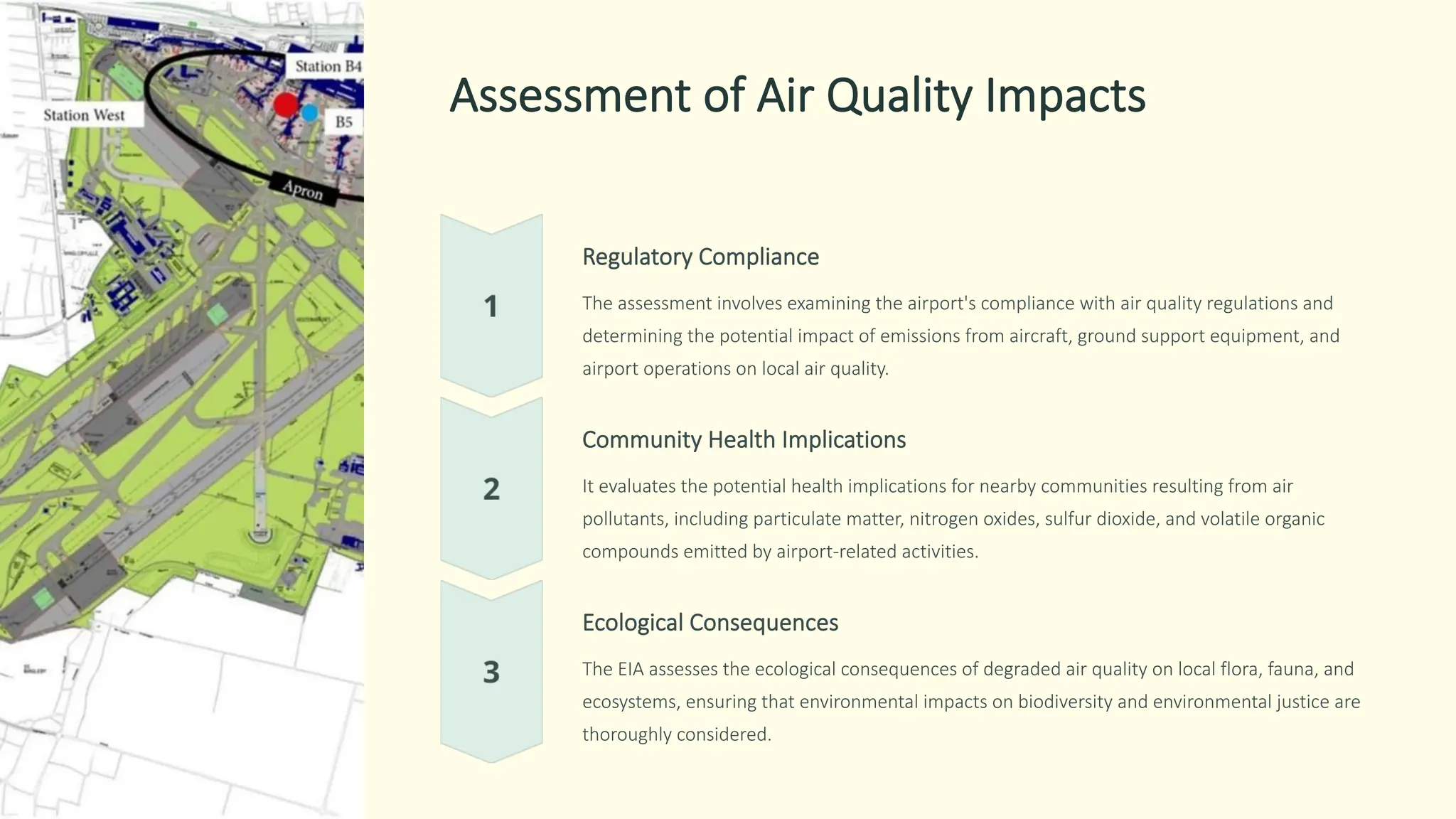
Assessment of Air Quality Impacts
Regulatory Compliance
The assessment involves examining the airport's compliance with air quality regulations and
determining the potential impact of emissions from aircraft, ground support equipment, and
airport operations on local air quality.
Community Health Implications
It evaluates the potential health implications for nearby communities resulting from air
pollutants, including particulate matter, nitrogen oxides, sulfur dioxide, and volatile organic
compounds emitted by airport-related activities.
Ecological Consequences
The EIA assesses the ecological consequences of degraded air quality on local flora, fauna, and
ecosystems, ensuring that environmental impacts on biodiversity and environmental justice are
thoroughly considered.
Evaluation of Noise and Vibration Impacts
1 Noise Modeling
Evaluating the noise impacts encompasses the use of advanced modeling techniques to predict
and analyze noise levels at different locations around the airport and in the surrounding
communities.
2 Vibration Monitoring
Assessment of vibration impacts involves monitoring and analyzing the potential effects of aircraft
operations and ground-based activities on the structural integrity of nearby buildings and
infrastructure.
3 Community Survey
Engaging with the local community to understand their experiences and concerns related to
airport-related noise and vibration, ensuring that their perspectives are incorporated into the
assessment process.
Analysis of Ecological Impacts
Habitat Disruption
Assessing the potential disruption of local
wildlife habitats due to airport construction,
expansion, and ongoing operations,
ensuring the protection of wildlife species
in the area.
Biodiversity Preservation
Evaluating the impact of airport activities
on local biodiversity hotspots and sensitive
ecosystems, with a focus on preserving the
delicate ecological balance in the region.
Flora and Fauna Protection
Examining the measures required to protect and enhance the flora and fauna in the airport
vicinity, thereby mitigating potential negative impacts on the local ecosystem.
Assessment of Socio-Economic Impacts
5M
Job Generation
A comprehensive evaluation of the airport's role in job
creation and economic prosperity, incorporating new
employment opportunities and contributions to the
local economy.
500K
Community Investments
Analysis of financial investments and social
contributions by the airport toward improving
community infrastructure, education, and public
services.
Mitigation Measures Proposed to Minimize
Impacts
1. Vegetative noise barriers
2. Flight path optimization
3. Green infrastructure implementation
Public Consultation and Stakeholder
Engagement
Consultation Process
Detailing the structured approach to engaging with
the public, community groups, and stakeholders in
discussions, ensuring that concerns and feedback are
adequately incorporated into project decisions.
Transparency and Outreach
Highlighting the transparency in information
dissemination and the extensive outreach activities
undertaken to involve a wide range of stakeholders in
the decision-making process.
Conclusion and Recommendations
1 Comprehensive
Reporting
The completion of a
comprehensive EIA report
outlining the findings and
proposed
recommendations for
addressing environmental,
social, and economic
concerns identified during
the assessment process.
2 Continuous
Monitoring
Suggestions for the
implementation of
continuous environmental
monitoring and periodic
review processes to ensure
the effectiveness of
mitigation measures and
the ongoing sustainability
of the airport's activities.
3 Stakeholder
Involvement
Encouraging continuous
stakeholder involvement
and public participation in
the development and
execution of future airport
projects, promoting
transparency and
accountability.

Introduction-to-the-Environmental-Impact-Assessment-EIA 2.pdf

  • 1.
    DREAM INSTITUTE OFTECHNOLOGY TOPIC NAME: EIA on Airport NAME: Surojit Hazra SUBJECT: Life Science ROLL NO: 20901323032 SESSION: 2023-2026
  • 2.
    Introduction to the EnvironmentalImpact Assessment (EIA) An environmental impact assessment (EIA) is a critical process that evaluates the potential environmental impacts of a proposed project or development. It aims to ensure that decision-makers consider the environmental effects when deciding whether to proceed with the project. The EIA process involves identifying, predicting, and mitigating the biophysical, social, and other relevant effects of a project's implementation, operation, and abandonment. The assessment also includes public participation to gather valuable input and identify potential issues overlooked in initial project planning.
  • 3.
    Purpose and Scopeof EIA for Airports Purpose The purpose of conducting an EIA for airports is to identify and evaluate potential environmental impacts resulting from the airport's operations, expansion, or construction. This includes assessing impacts on local air quality, noise levels, ecological habitats, and the surrounding socio-economic environment. Scope The scope of an EIA for airports encompasses a comprehensive study of the direct and indirect environmental effects of airport development and operations. It includes identifying potential impacts on local communities, ecosystems, and natural resources, along with proposing effective mitigation measures.
  • 4.
    Methodology Used inConducting the EIA 1 Surveys and Data Collection The EIA process includes detailed surveys and data collection to assess the existing environmental conditions and potential impacts of the project. This phase involves gathering information on air quality, noise levels, ecological diversity, and socio- economic aspects. 2 Impact Analysis and Prediction EIA methodology encompasses sophisticated impact analysis techniques to predict the short-term and long-term environmental effects of airport activities. This involves the use of models, simulations, and historical data to forecast impacts accurately. 3 Public Participation Meaningful public participation and stakeholder engagement are integral components of the EIA methodology. It involves consulting the local community, environmental organizations, and other stakeholders to gather valuable insights and ensure project transparency.
  • 5.
    Assessment of AirQuality Impacts Regulatory Compliance The assessment involves examining the airport's compliance with air quality regulations and determining the potential impact of emissions from aircraft, ground support equipment, and airport operations on local air quality. Community Health Implications It evaluates the potential health implications for nearby communities resulting from air pollutants, including particulate matter, nitrogen oxides, sulfur dioxide, and volatile organic compounds emitted by airport-related activities. Ecological Consequences The EIA assesses the ecological consequences of degraded air quality on local flora, fauna, and ecosystems, ensuring that environmental impacts on biodiversity and environmental justice are thoroughly considered.
  • 6.
    Evaluation of Noiseand Vibration Impacts 1 Noise Modeling Evaluating the noise impacts encompasses the use of advanced modeling techniques to predict and analyze noise levels at different locations around the airport and in the surrounding communities. 2 Vibration Monitoring Assessment of vibration impacts involves monitoring and analyzing the potential effects of aircraft operations and ground-based activities on the structural integrity of nearby buildings and infrastructure. 3 Community Survey Engaging with the local community to understand their experiences and concerns related to airport-related noise and vibration, ensuring that their perspectives are incorporated into the assessment process.
  • 7.
    Analysis of EcologicalImpacts Habitat Disruption Assessing the potential disruption of local wildlife habitats due to airport construction, expansion, and ongoing operations, ensuring the protection of wildlife species in the area. Biodiversity Preservation Evaluating the impact of airport activities on local biodiversity hotspots and sensitive ecosystems, with a focus on preserving the delicate ecological balance in the region. Flora and Fauna Protection Examining the measures required to protect and enhance the flora and fauna in the airport vicinity, thereby mitigating potential negative impacts on the local ecosystem.
  • 8.
    Assessment of Socio-EconomicImpacts 5M Job Generation A comprehensive evaluation of the airport's role in job creation and economic prosperity, incorporating new employment opportunities and contributions to the local economy. 500K Community Investments Analysis of financial investments and social contributions by the airport toward improving community infrastructure, education, and public services.
  • 9.
    Mitigation Measures Proposedto Minimize Impacts 1. Vegetative noise barriers 2. Flight path optimization 3. Green infrastructure implementation
  • 10.
    Public Consultation andStakeholder Engagement Consultation Process Detailing the structured approach to engaging with the public, community groups, and stakeholders in discussions, ensuring that concerns and feedback are adequately incorporated into project decisions. Transparency and Outreach Highlighting the transparency in information dissemination and the extensive outreach activities undertaken to involve a wide range of stakeholders in the decision-making process.
  • 11.
    Conclusion and Recommendations 1Comprehensive Reporting The completion of a comprehensive EIA report outlining the findings and proposed recommendations for addressing environmental, social, and economic concerns identified during the assessment process. 2 Continuous Monitoring Suggestions for the implementation of continuous environmental monitoring and periodic review processes to ensure the effectiveness of mitigation measures and the ongoing sustainability of the airport's activities. 3 Stakeholder Involvement Encouraging continuous stakeholder involvement and public participation in the development and execution of future airport projects, promoting transparency and accountability.