Introduction to Earth Science
Chapter 1
Essential Questions
1. What does an Earth Scientist
study?
2. What information do various
maps give to an Earth Scientist?
3. How do Earth Scientists (and all
scientists) seek knowledge?
Overview of Earth Science
• Earth science is the name
of the group of sciences
that deals with Earth and
its neighbors in space.
• Earth science is divided
into four broad categories:
The Earth Sciences
• Geology—the study of the solid
Earth
• Oceanography—the study of the
Earth’s oceans
• Meteorology—the study of the
Earth’s atmosphere
• Astronomy—the study of the
Earth’s place in the universe
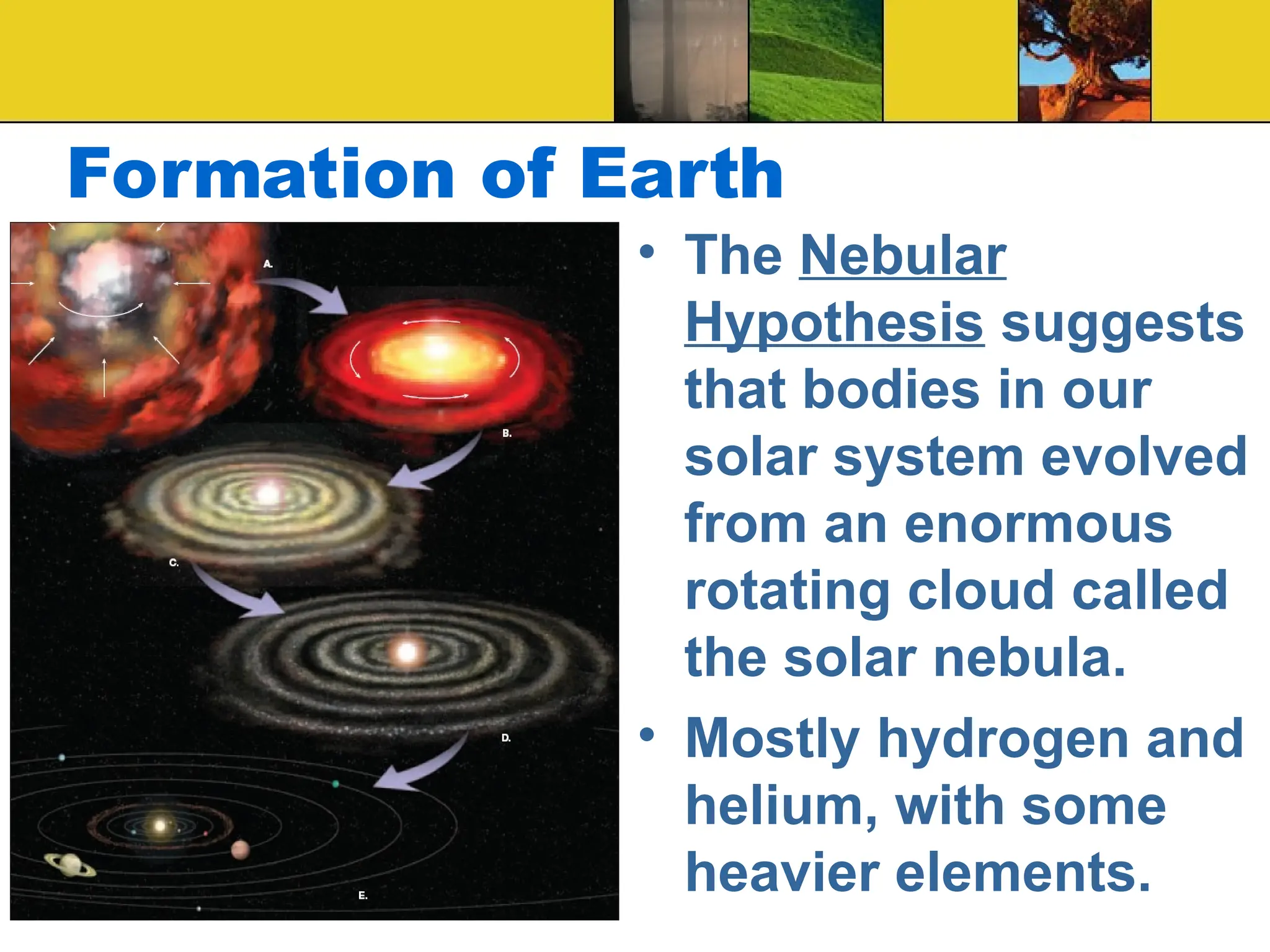
Formation of Earth
• The Nebular
Hypothesis suggests
that bodies in our
solar system evolved
from an enormous
rotating cloud called
the solar nebula.
• Mostly hydrogen and
helium, with some
heavier elements.
Differentiation
• As the newly formed Earth cooled
layers formed through a process
called differentiation.
• Denser elements (iron and nickel)
sink to the Earth’s core.
• Lighter rocks and materials migrate
outward forming the mantle and
crust.
A View of the Earth
• Earth can be thought of as
consisting of four major
spheres:
• Hydrosphere
• Atmosphere
• Geosphere
• Biosphere
Earth’s Major Spheres
• The hydrosphere includes all liquid
water on Earth—both saltwater and
fresh water.
• The atmosphere consists of the
gaseous envelope surrounding the
Earth.
• Although the atmosphere extends more
than 100km up, 90% is within 16km of
the surface.
Earth’s Major Spheres
• The biosphere includes all life on Earth.
• The biosphere is concentrated in a zone
that extends from the ocean floor upward
several kilometers in the atmosphere.
• The geosphere consists of the solid parts
of the planet and is not uniform.
• Based on differences in composition it is
divided into three main regions, the core,
the mantle, and the crust.
Geosphere Divisions
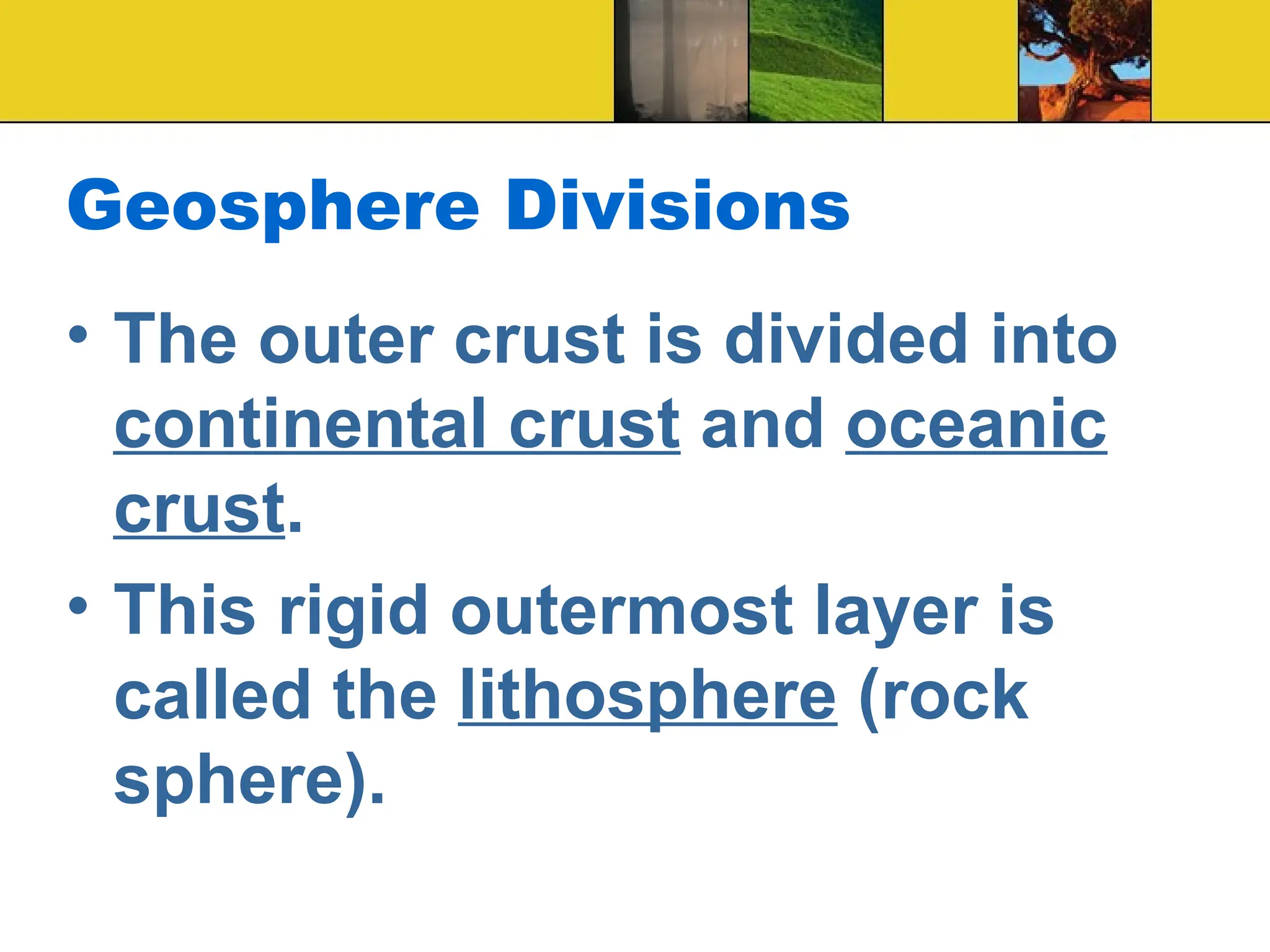
• The dense core has two parts; a solid
inner core and a liquid outer core.
• The rocky mantle is divided into an
lower mantle and upper mantle.
• The rock in the upper part of the
upper mantle is somewhat flexible and
pliable—it’s called the asthenosphere
(weak sphere).
Geosphere Divisions
• The outer crust is divided into
continental crust and oceanic
crust.
• This rigid outermost layer is
called the lithosphere (rock
sphere).
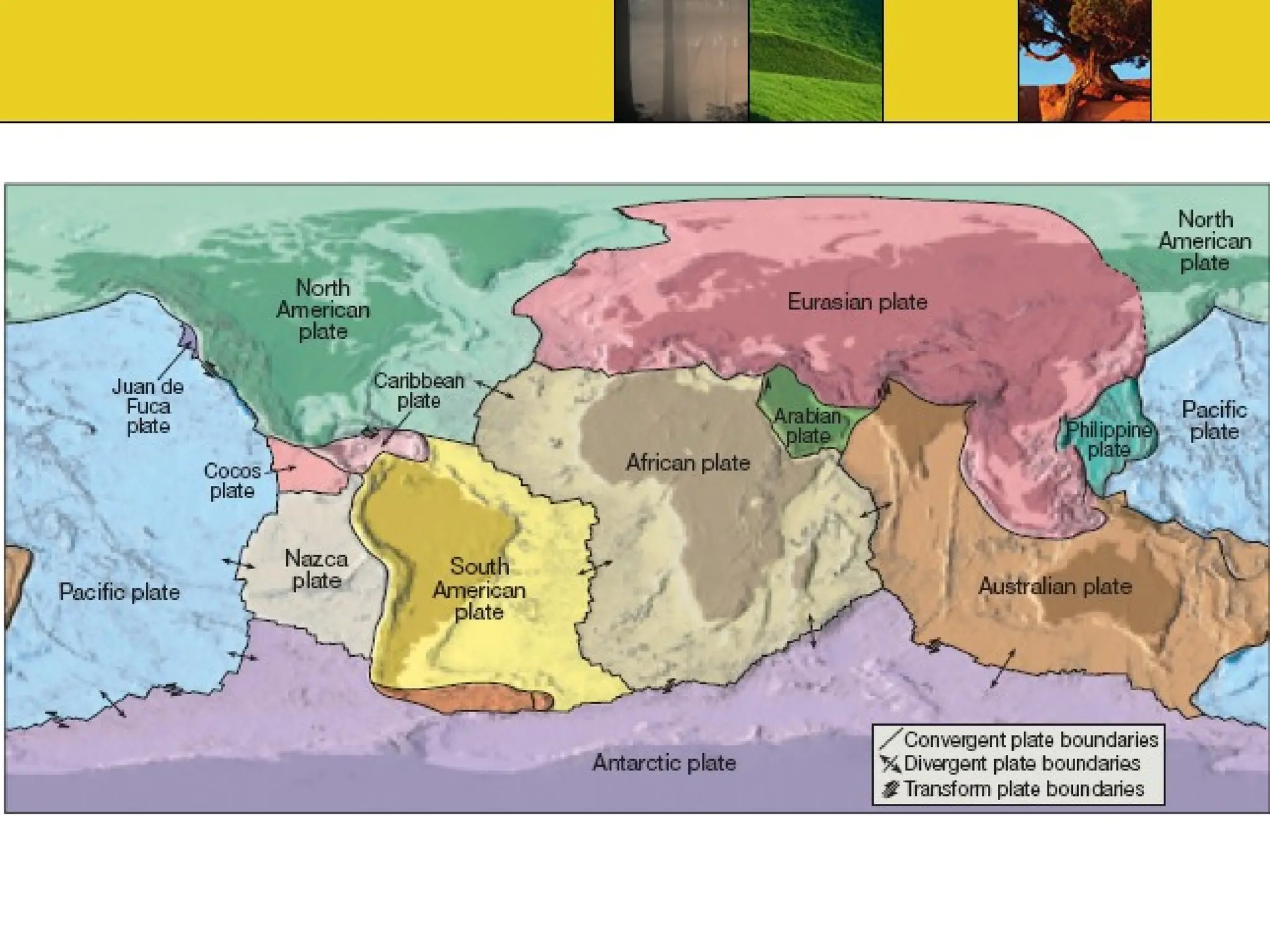
Plate Tectonics
• The lithoshpere is broken into several
sections called plates.
• The Theory of Plate Tectonics states
that earthquakes, volcanoes,
mountain building, and the movement
of continents are the result of the
movement of lithospheric plates.
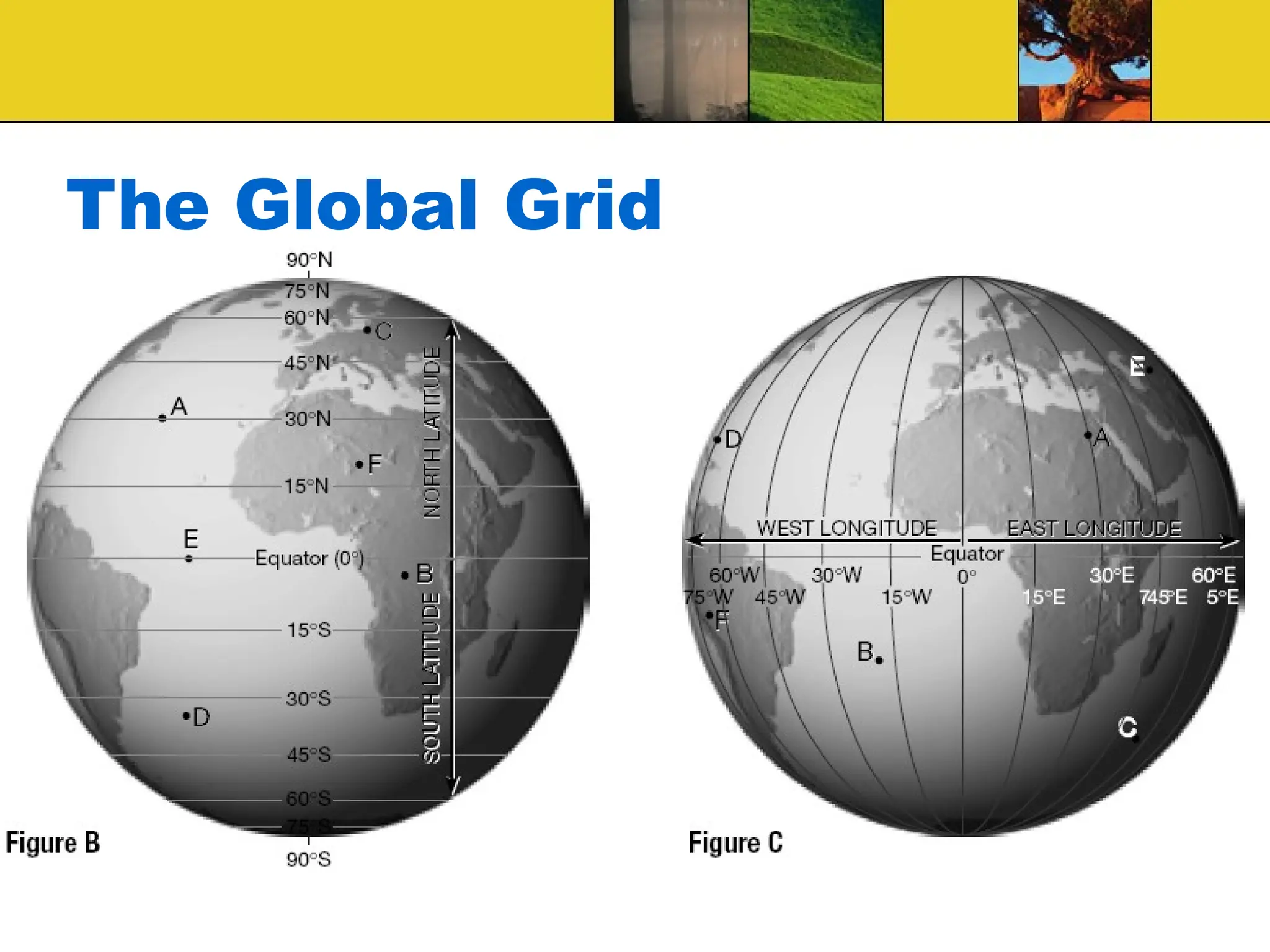
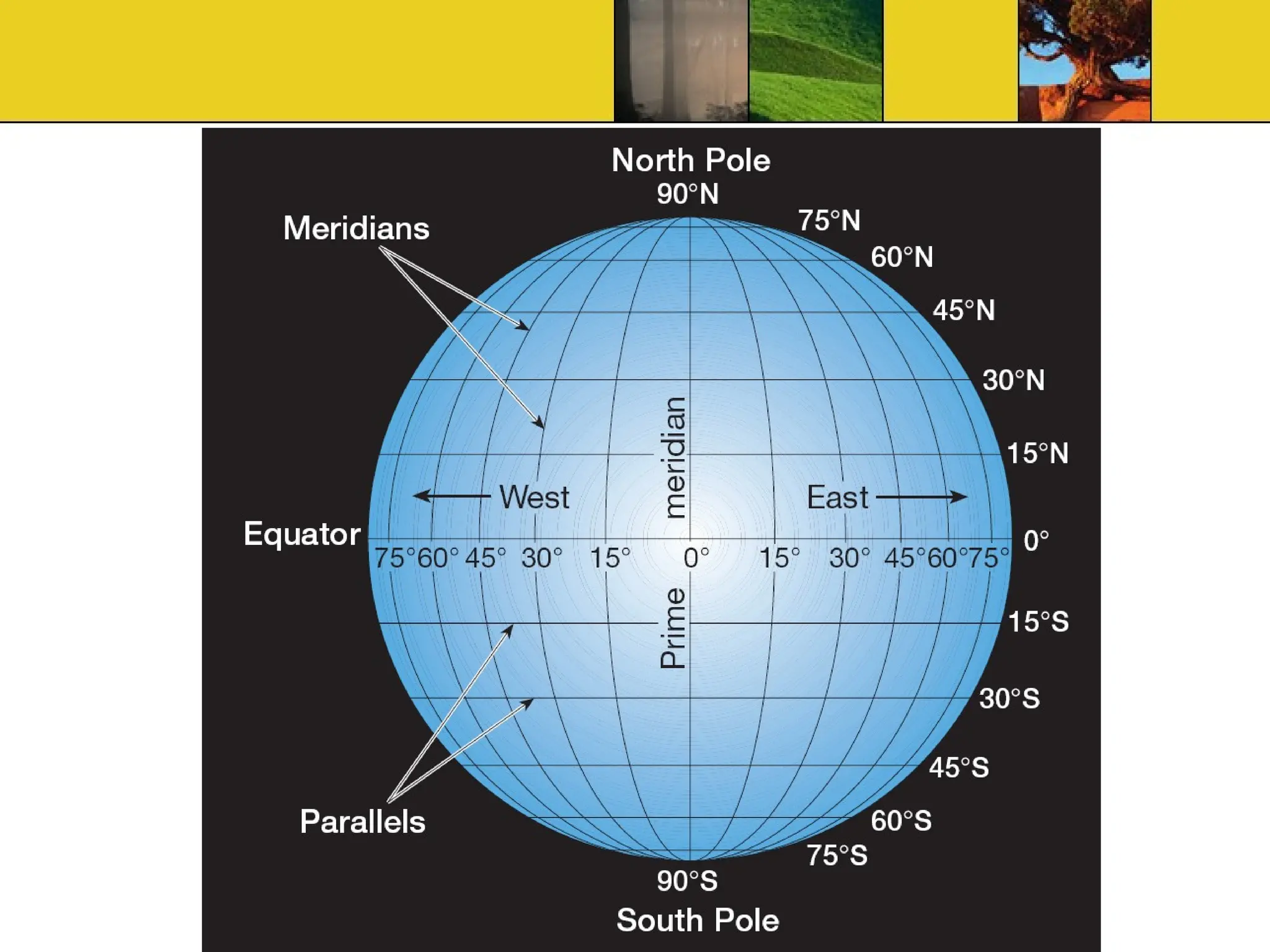
Representing Earth’s Surface
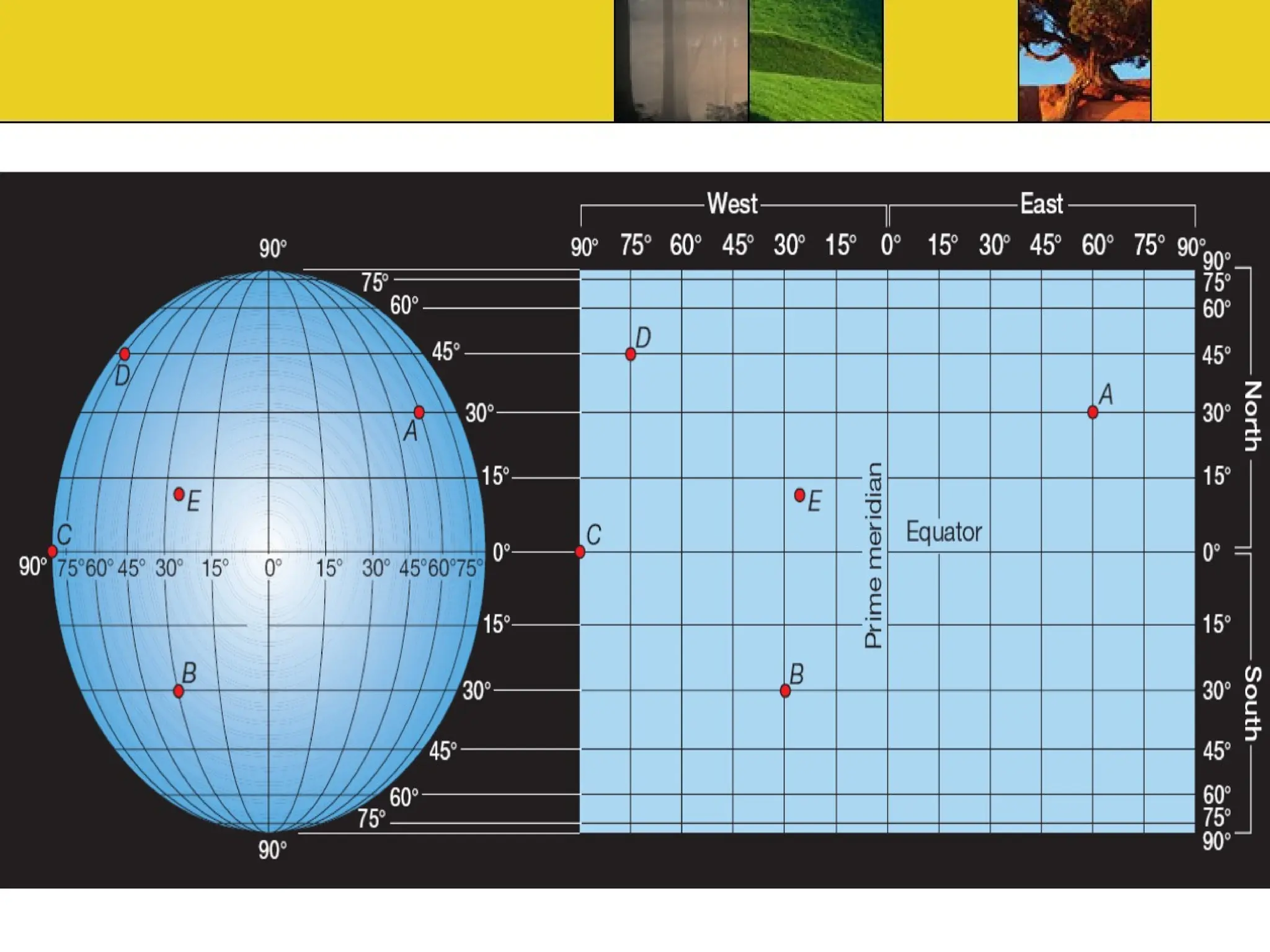
• Specifying a location on Earth’s
surface is done using a grid system of
latitude and longitude.
• Latitude is the distance north or south
of the equator (measured in degrees).
• Longitude is the distance east or west
of the prime meridian (also in degrees).
The Global Grid
Maps and Mapping
• No matter what type of map is
made, some portion of the surface
will always appear too small, big, or
out of place.
• Cartographers (mapmakers) have
found ways to limit the distortion of
shape, size, distance, and direction.
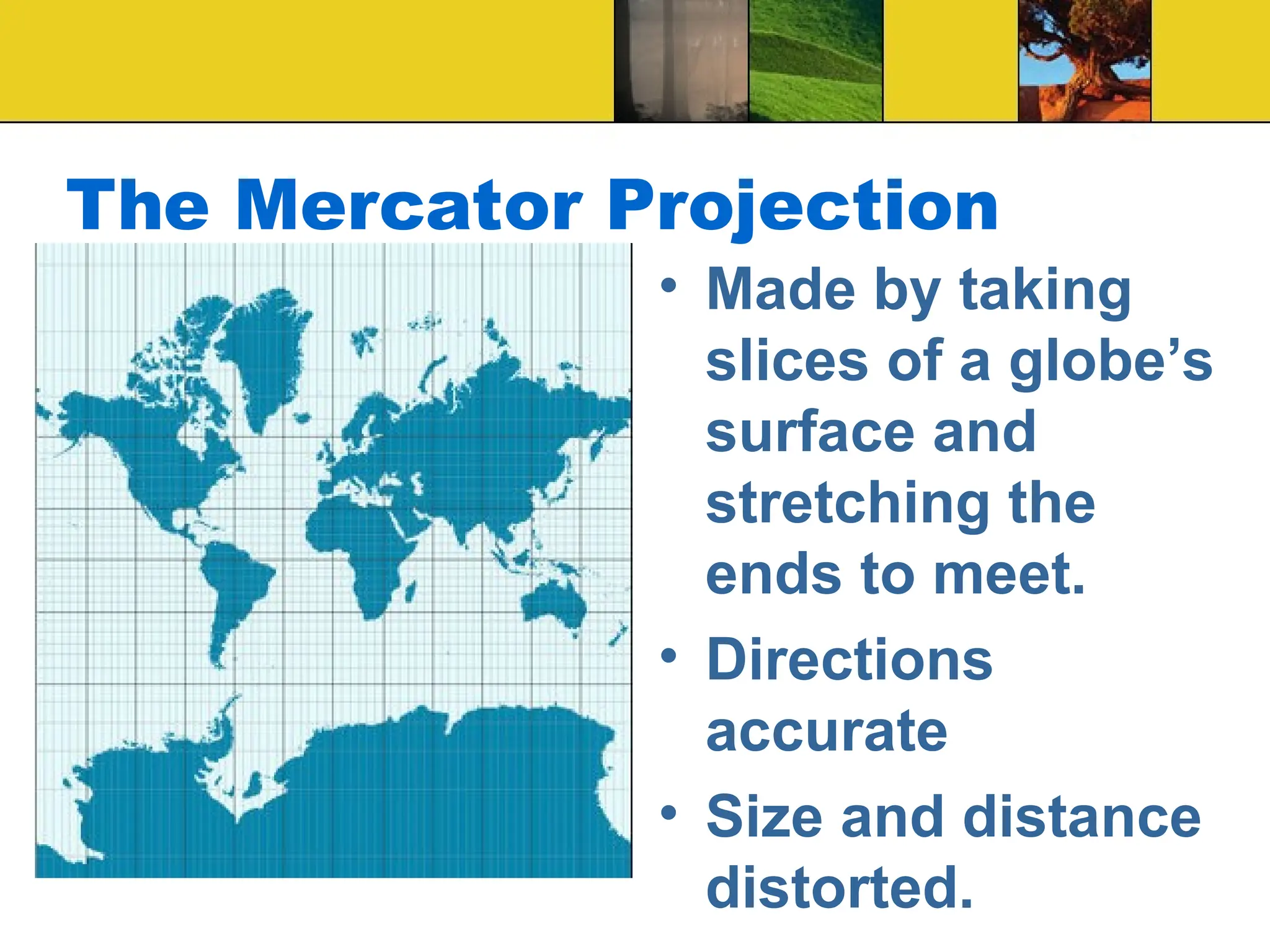
The Mercator Projection
• Made by taking
slices of a globe’s
surface and
stretching the
ends to meet.
• Directions
accurate
• Size and distance
distorted.
Robinson Projection
• Shows most
distances, sizes,
and shapes
accurately.
• Distortions
present along
edges.
Other map projections:
• A conic projection is made by
wrapping a cone around the Earth at a
particular line of latitude. (almost no
distortion at that line)
• A gnomonic projection is made by
placing a sheet of paper on a globe so
that it is touching only one spot.
• See page 13 in text.
Topographic Maps
• Topographic maps
show Earth’s
elevation using
contour lines.
• All spots along a
particular contour
line have the same
elevation.
Topographic Maps
• The contour interval on a topo map
gives the user the difference in
elevation between each contour line.
• Geologic Maps are those that also
contain information about the type and
age of rock formations in the area.
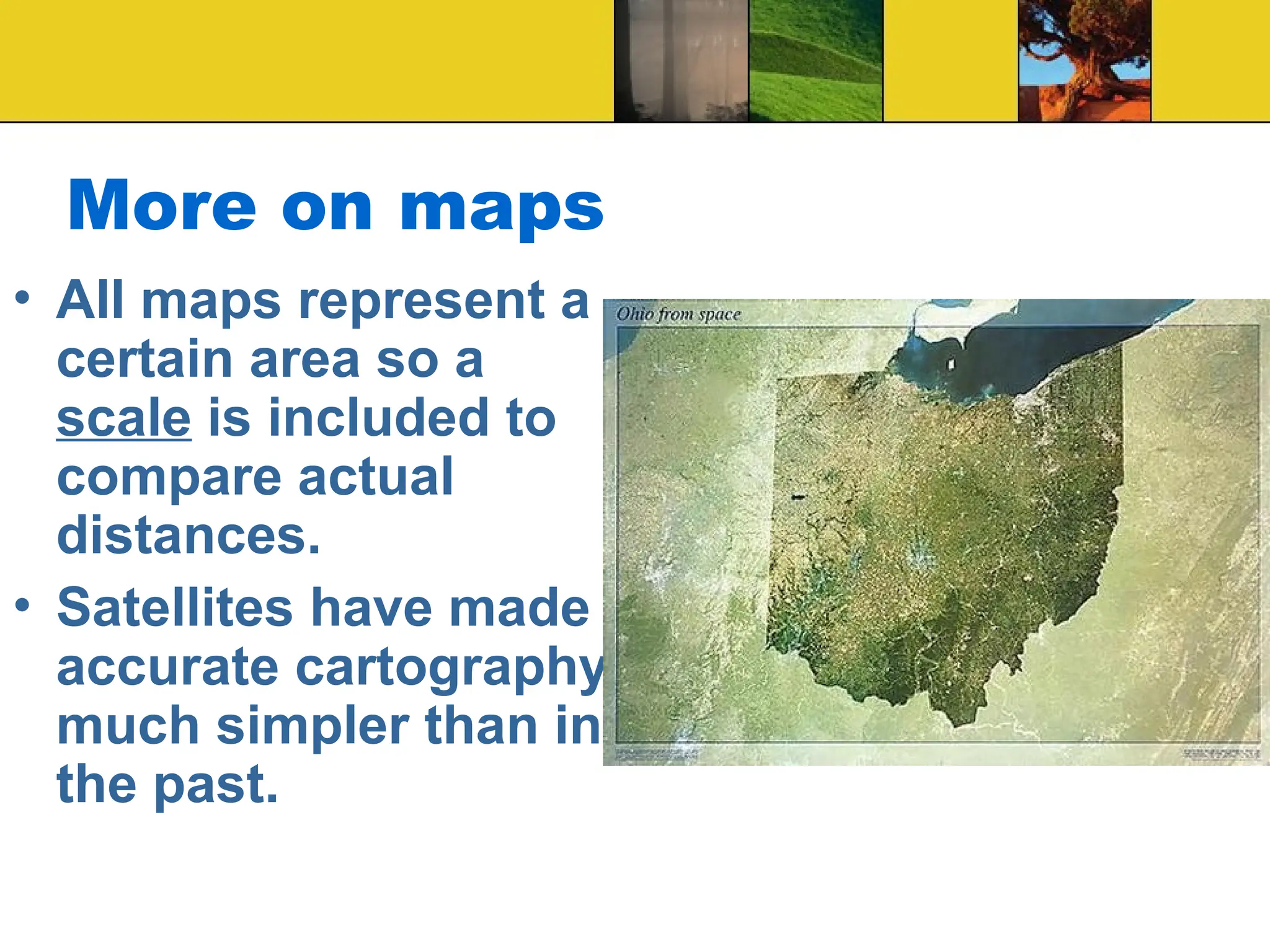
More on maps
• All maps represent a
certain area so a
scale is included to
compare actual
distances.
• Satellites have made
accurate cartography
much simpler than in
the past.
Earth System Science
• Earth system science aims to study
the Earth as a system made up of
numerous interacting parts, or
subsystems.
• A system can be any size group of
interacting parts that form a
complex whole.
Earth as a System
• The Earth system is powered by two
sources of energy:
• The Sun– which drives external
processes in the atmosphere,
hydrosphere, and at the surface.
• The Earth’s interior heat—which
drives plate tectonics.
Each system affects the other.
• The actions of nature and people
produce changes in all of the other
parts of the Earth system.
• Resources (some renewable, some
not), population, pollution, global
warming, species extinction, etc.
are some examples.
Scientific Inquiry
• All science is based on two big
assumptions:
1. The universe behaves in a
consistent and predictable manner.
2. Through study, we can understand
this behavior.
Hypothesis
• Once observations have been
made and data gathered, scientists
try to explain how or why things
happen in the manner observed.
• They state a possible explanation
called a scientific hypothesis.
Theory
• Once further observations have been
made and/or tests performed, scientists
either accept, modify, or reject their
hypothesis.
• The hypothesis is elevated to a Scientific
Theory once it has been well tested and
accepted by the scientific community as
the best explanation of observable facts.
Introduction_to_Earth_Science_basics.ppt

Introduction_to_Earth_Science_basics.ppt

  • 1.
    Introduction to EarthScience Chapter 1
  • 2.
    Essential Questions 1. Whatdoes an Earth Scientist study? 2. What information do various maps give to an Earth Scientist? 3. How do Earth Scientists (and all scientists) seek knowledge?
  • 3.
    Overview of EarthScience • Earth science is the name of the group of sciences that deals with Earth and its neighbors in space. • Earth science is divided into four broad categories:
  • 4.
    The Earth Sciences •Geology—the study of the solid Earth • Oceanography—the study of the Earth’s oceans • Meteorology—the study of the Earth’s atmosphere • Astronomy—the study of the Earth’s place in the universe
  • 5.
    Formation of Earth •The Nebular Hypothesis suggests that bodies in our solar system evolved from an enormous rotating cloud called the solar nebula. • Mostly hydrogen and helium, with some heavier elements.
  • 6.
    Differentiation • As thenewly formed Earth cooled layers formed through a process called differentiation. • Denser elements (iron and nickel) sink to the Earth’s core. • Lighter rocks and materials migrate outward forming the mantle and crust.
  • 7.
    A View ofthe Earth • Earth can be thought of as consisting of four major spheres: • Hydrosphere • Atmosphere • Geosphere • Biosphere
  • 8.
    Earth’s Major Spheres •The hydrosphere includes all liquid water on Earth—both saltwater and fresh water. • The atmosphere consists of the gaseous envelope surrounding the Earth. • Although the atmosphere extends more than 100km up, 90% is within 16km of the surface.
  • 9.
    Earth’s Major Spheres •The biosphere includes all life on Earth. • The biosphere is concentrated in a zone that extends from the ocean floor upward several kilometers in the atmosphere. • The geosphere consists of the solid parts of the planet and is not uniform. • Based on differences in composition it is divided into three main regions, the core, the mantle, and the crust.
  • 11.
    Geosphere Divisions • Thedense core has two parts; a solid inner core and a liquid outer core. • The rocky mantle is divided into an lower mantle and upper mantle. • The rock in the upper part of the upper mantle is somewhat flexible and pliable—it’s called the asthenosphere (weak sphere).
  • 12.
    Geosphere Divisions • Theouter crust is divided into continental crust and oceanic crust. • This rigid outermost layer is called the lithosphere (rock sphere).
  • 14.
    Plate Tectonics • Thelithoshpere is broken into several sections called plates. • The Theory of Plate Tectonics states that earthquakes, volcanoes, mountain building, and the movement of continents are the result of the movement of lithospheric plates.
  • 15.
    Representing Earth’s Surface •Specifying a location on Earth’s surface is done using a grid system of latitude and longitude. • Latitude is the distance north or south of the equator (measured in degrees). • Longitude is the distance east or west of the prime meridian (also in degrees).
  • 16.
  • 19.
    Maps and Mapping •No matter what type of map is made, some portion of the surface will always appear too small, big, or out of place. • Cartographers (mapmakers) have found ways to limit the distortion of shape, size, distance, and direction.
  • 20.
    The Mercator Projection •Made by taking slices of a globe’s surface and stretching the ends to meet. • Directions accurate • Size and distance distorted.
  • 21.
    Robinson Projection • Showsmost distances, sizes, and shapes accurately. • Distortions present along edges.
  • 22.
    Other map projections: •A conic projection is made by wrapping a cone around the Earth at a particular line of latitude. (almost no distortion at that line) • A gnomonic projection is made by placing a sheet of paper on a globe so that it is touching only one spot. • See page 13 in text.
  • 23.
    Topographic Maps • Topographicmaps show Earth’s elevation using contour lines. • All spots along a particular contour line have the same elevation.
  • 24.
    Topographic Maps • Thecontour interval on a topo map gives the user the difference in elevation between each contour line. • Geologic Maps are those that also contain information about the type and age of rock formations in the area.
  • 25.
    More on maps •All maps represent a certain area so a scale is included to compare actual distances. • Satellites have made accurate cartography much simpler than in the past.
  • 26.
    Earth System Science •Earth system science aims to study the Earth as a system made up of numerous interacting parts, or subsystems. • A system can be any size group of interacting parts that form a complex whole.
  • 27.
    Earth as aSystem • The Earth system is powered by two sources of energy: • The Sun– which drives external processes in the atmosphere, hydrosphere, and at the surface. • The Earth’s interior heat—which drives plate tectonics.
  • 28.
    Each system affectsthe other. • The actions of nature and people produce changes in all of the other parts of the Earth system. • Resources (some renewable, some not), population, pollution, global warming, species extinction, etc. are some examples.
  • 29.
    Scientific Inquiry • Allscience is based on two big assumptions: 1. The universe behaves in a consistent and predictable manner. 2. Through study, we can understand this behavior.
  • 30.
    Hypothesis • Once observationshave been made and data gathered, scientists try to explain how or why things happen in the manner observed. • They state a possible explanation called a scientific hypothesis.
  • 31.
    Theory • Once furtherobservations have been made and/or tests performed, scientists either accept, modify, or reject their hypothesis. • The hypothesis is elevated to a Scientific Theory once it has been well tested and accepted by the scientific community as the best explanation of observable facts.