Introduction to
Multimedia
Multimedia refers to the integration of different forms of media, including
text, graphics, audio, video, and animation. It has revolutionized how we
communicate, learn, and entertain ourselves.
by Kinjal H. Shah
Definition of Multimedia
Multimedia encompasses the use of multiple media types to create a cohesive and
engaging experience. It combines different forms of content to deliver information,
enhance understanding, and captivate audiences.
Interactive
Multimedia allows for user
interaction, enabling users to
control the content and
experience. This creates a more
engaging and personalized
experience.
Digital
Multimedia is primarily digital,
meaning it can be created, stored,
and accessed electronically. This
enables easy distribution and
accessibility.
Multisensory
Multimedia appeals to multiple senses, including sight, sound, and touch,
creating a richer and more immersive experience.
Components of Multimedia
Multimedia is comprised of various essential components that work together to create a complete experience. Each component plays a crucial role
in delivering the intended message and engaging the audience.
1 Text
Provides written information and instructions, making the
content accessible and informative.
2 Graphics
Visual elements like images, drawings, and charts enhance
understanding and add visual appeal.
3 Audio
Sound effects, music, and narration enhance the emotional
impact and provide auditory cues.
4 Video
Moving images combined with sound offer a dynamic and
immersive experience, conveying information in a captivating
way.
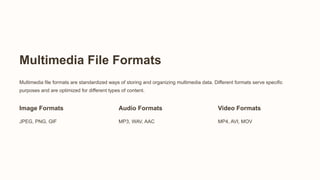
Multimedia File Formats
Multimedia file formats are standardized ways of storing and organizing multimedia data. Different formats serve specific
purposes and are optimized for different types of content.
Image Formats
JPEG, PNG, GIF
Audio Formats
MP3, WAV, AAC
Video Formats
MP4, AVI, MOV
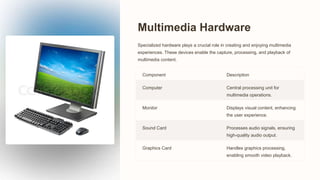
Multimedia Hardware
Specialized hardware plays a crucial role in creating and enjoying multimedia
experiences. These devices enable the capture, processing, and playback of
multimedia content.
Component Description
Computer Central processing unit for
multimedia operations.
Monitor Displays visual content, enhancing
the user experience.
Sound Card Processes audio signals, ensuring
high-quality audio output.
Graphics Card Handles graphics processing,
enabling smooth video playback.
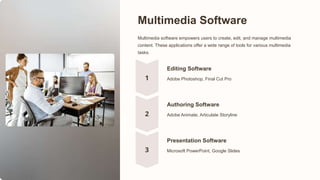
Multimedia Software
Multimedia software empowers users to create, edit, and manage multimedia
content. These applications offer a wide range of tools for various multimedia
tasks.
Editing Software
Adobe Photoshop, Final Cut Pro
Authoring Software
Adobe Animate, Articulate Storyline
Presentation Software
Microsoft PowerPoint, Google Slides
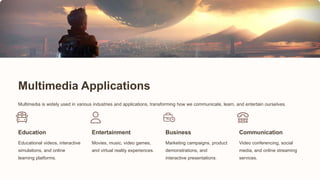
Multimedia Applications
Multimedia is widely used in various industries and applications, transforming how we communicate, learn, and entertain ourselves.
Education
Educational videos, interactive
simulations, and online
learning platforms.
Entertainment
Movies, music, video games,
and virtual reality experiences.
Business
Marketing campaigns, product
demonstrations, and
interactive presentations.
Communication
Video conferencing, social
media, and online streaming
services.
Advantages of Multimedia
Multimedia offers numerous benefits, making it a powerful tool for communication,
education, and entertainment.
1 Increased Engagement
Multimedia's interactive and multisensory nature captivates audiences,
making it more engaging than traditional forms of media.
2 Enhanced Learning
Multimedia aids learning by presenting information in various formats,
making it easier for people to understand and retain information.
3 Global Reach
Multimedia content can be easily shared and accessed worldwide,
enabling global communication and collaboration.
Challenges of Multimedia
Despite its advantages, multimedia also poses certain challenges that need to be addressed for its effective implementation.
Large File Sizes
Multimedia files can be very large,
requiring significant storage space and
bandwidth for distribution.
Technical Complexity
Creating and managing multimedia
content often requires technical
expertise and specialized software.
Copyright and Intellectual Property
Multimedia content is subject to
copyright laws, making it crucial to
obtain permissions and ensure legal
compliance.
Future Trends in Multimedia
Multimedia is constantly evolving, driven by technological advancements and
changing user preferences. Emerging trends are shaping the future of
multimedia.
1 Virtual Reality
Immersive VR experiences are
revolutionizing entertainment,
education, and training.
2 Augmented Reality
AR overlays digital content
onto the real world, enhancing
user experiences and
providing valuable information.
3 Artificial Intelligence
AI powers personalized
multimedia experiences,
recommending content based
on user preferences and
behaviors.
4 Internet of Things
The IoT connects devices,
enabling seamless integration
of multimedia content into
everyday life.

Introduction to the Multimedia for Teaching

  • 1.
    Introduction to Multimedia Multimedia refersto the integration of different forms of media, including text, graphics, audio, video, and animation. It has revolutionized how we communicate, learn, and entertain ourselves. by Kinjal H. Shah
  • 2.
    Definition of Multimedia Multimediaencompasses the use of multiple media types to create a cohesive and engaging experience. It combines different forms of content to deliver information, enhance understanding, and captivate audiences. Interactive Multimedia allows for user interaction, enabling users to control the content and experience. This creates a more engaging and personalized experience. Digital Multimedia is primarily digital, meaning it can be created, stored, and accessed electronically. This enables easy distribution and accessibility. Multisensory Multimedia appeals to multiple senses, including sight, sound, and touch, creating a richer and more immersive experience.
  • 3.
    Components of Multimedia Multimediais comprised of various essential components that work together to create a complete experience. Each component plays a crucial role in delivering the intended message and engaging the audience. 1 Text Provides written information and instructions, making the content accessible and informative. 2 Graphics Visual elements like images, drawings, and charts enhance understanding and add visual appeal. 3 Audio Sound effects, music, and narration enhance the emotional impact and provide auditory cues. 4 Video Moving images combined with sound offer a dynamic and immersive experience, conveying information in a captivating way.
  • 4.
    Multimedia File Formats Multimediafile formats are standardized ways of storing and organizing multimedia data. Different formats serve specific purposes and are optimized for different types of content. Image Formats JPEG, PNG, GIF Audio Formats MP3, WAV, AAC Video Formats MP4, AVI, MOV
  • 5.
    Multimedia Hardware Specialized hardwareplays a crucial role in creating and enjoying multimedia experiences. These devices enable the capture, processing, and playback of multimedia content. Component Description Computer Central processing unit for multimedia operations. Monitor Displays visual content, enhancing the user experience. Sound Card Processes audio signals, ensuring high-quality audio output. Graphics Card Handles graphics processing, enabling smooth video playback.
  • 6.
    Multimedia Software Multimedia softwareempowers users to create, edit, and manage multimedia content. These applications offer a wide range of tools for various multimedia tasks. Editing Software Adobe Photoshop, Final Cut Pro Authoring Software Adobe Animate, Articulate Storyline Presentation Software Microsoft PowerPoint, Google Slides
  • 7.
    Multimedia Applications Multimedia iswidely used in various industries and applications, transforming how we communicate, learn, and entertain ourselves. Education Educational videos, interactive simulations, and online learning platforms. Entertainment Movies, music, video games, and virtual reality experiences. Business Marketing campaigns, product demonstrations, and interactive presentations. Communication Video conferencing, social media, and online streaming services.
  • 8.
    Advantages of Multimedia Multimediaoffers numerous benefits, making it a powerful tool for communication, education, and entertainment. 1 Increased Engagement Multimedia's interactive and multisensory nature captivates audiences, making it more engaging than traditional forms of media. 2 Enhanced Learning Multimedia aids learning by presenting information in various formats, making it easier for people to understand and retain information. 3 Global Reach Multimedia content can be easily shared and accessed worldwide, enabling global communication and collaboration.
  • 9.
    Challenges of Multimedia Despiteits advantages, multimedia also poses certain challenges that need to be addressed for its effective implementation. Large File Sizes Multimedia files can be very large, requiring significant storage space and bandwidth for distribution. Technical Complexity Creating and managing multimedia content often requires technical expertise and specialized software. Copyright and Intellectual Property Multimedia content is subject to copyright laws, making it crucial to obtain permissions and ensure legal compliance.
  • 10.
    Future Trends inMultimedia Multimedia is constantly evolving, driven by technological advancements and changing user preferences. Emerging trends are shaping the future of multimedia. 1 Virtual Reality Immersive VR experiences are revolutionizing entertainment, education, and training. 2 Augmented Reality AR overlays digital content onto the real world, enhancing user experiences and providing valuable information. 3 Artificial Intelligence AI powers personalized multimedia experiences, recommending content based on user preferences and behaviors. 4 Internet of Things The IoT connects devices, enabling seamless integration of multimedia content into everyday life.