Meaning and Sources of revenue
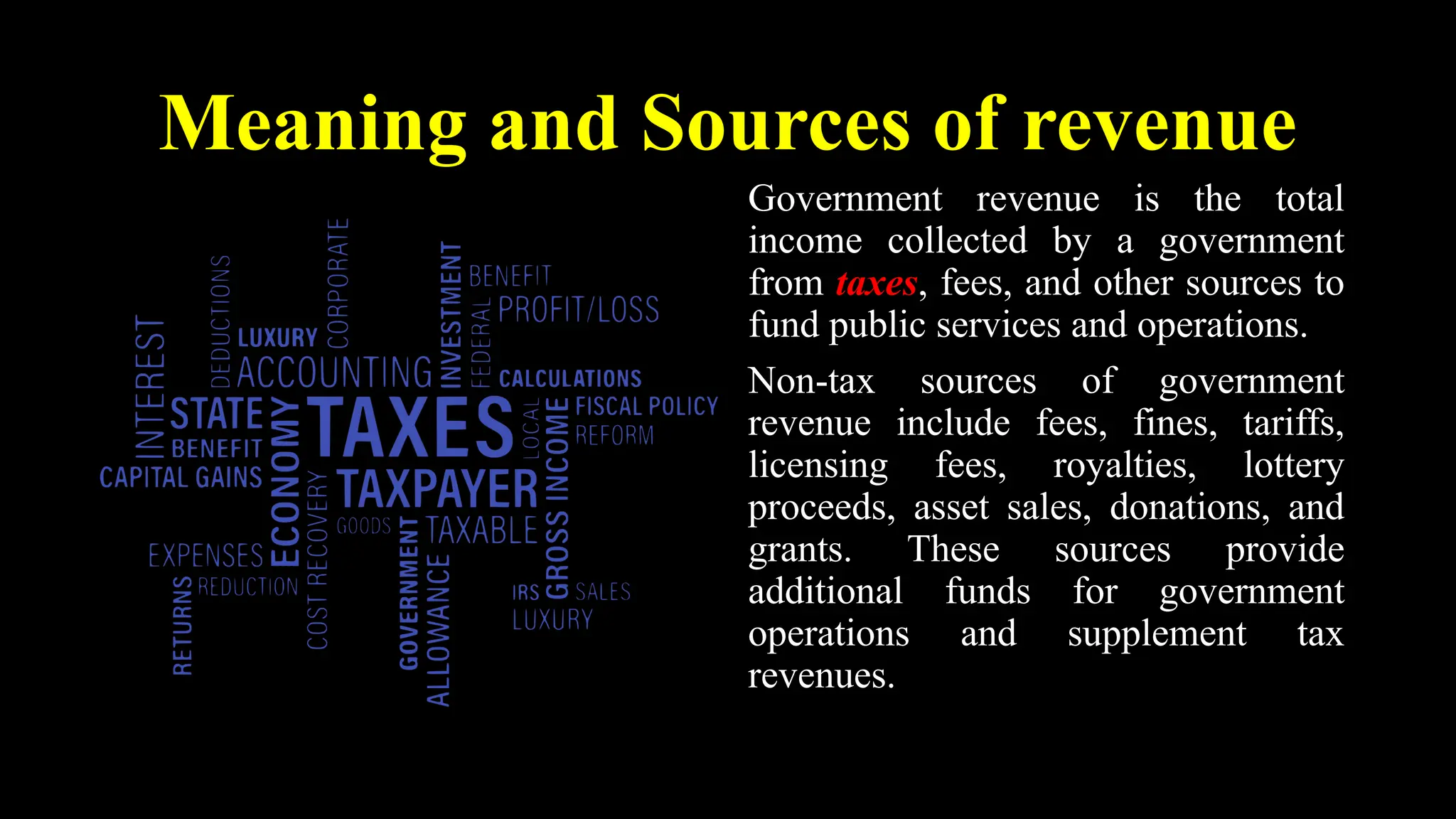
Government revenue is the total
income collected by a government
from taxes, fees, and other sources to
fund public services and operations.
Non-tax sources of government
revenue include fees, fines, tariffs,
licensing fees, royalties, lottery
proceeds, asset sales, donations, and
grants. These sources provide
additional funds for government
operations and supplement tax
revenues.
Introduction to tax
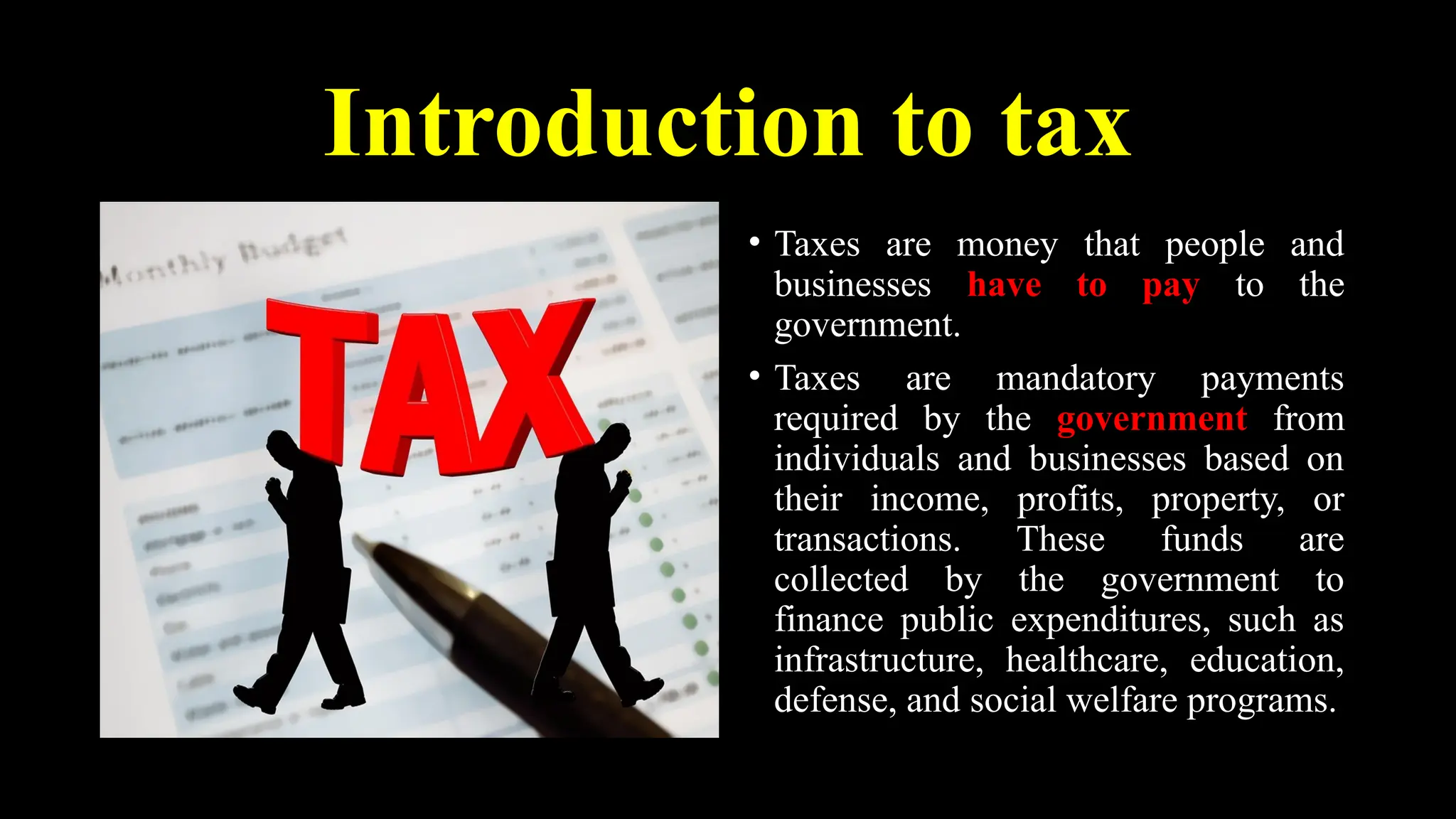
• Taxes are money that people and
businesses have to pay to the
government.
• Taxes are mandatory payments
required by the government from
individuals and businesses based on
their income, profits, property, or
transactions. These funds are
collected by the government to
finance public expenditures, such as
infrastructure, healthcare, education,
defense, and social welfare programs.
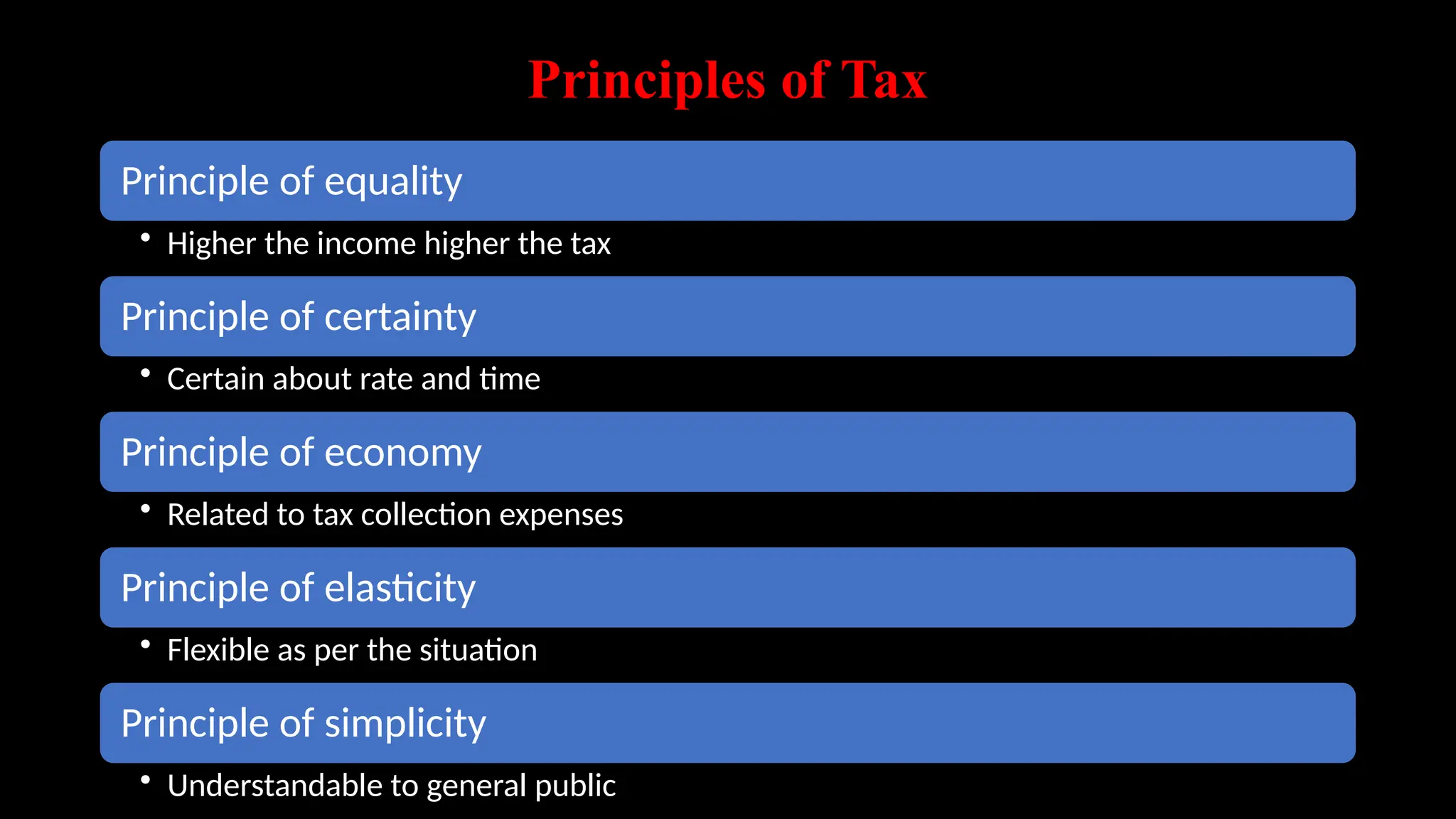
Principles of Tax
Principle of equality
• Higher the income higher the tax
Principle of certainty
• Certain about rate and time
Principle of economy
• Related to tax collection expenses
Principle of elasticity
• Flexible as per the situation
Principle of simplicity
• Understandable to general public
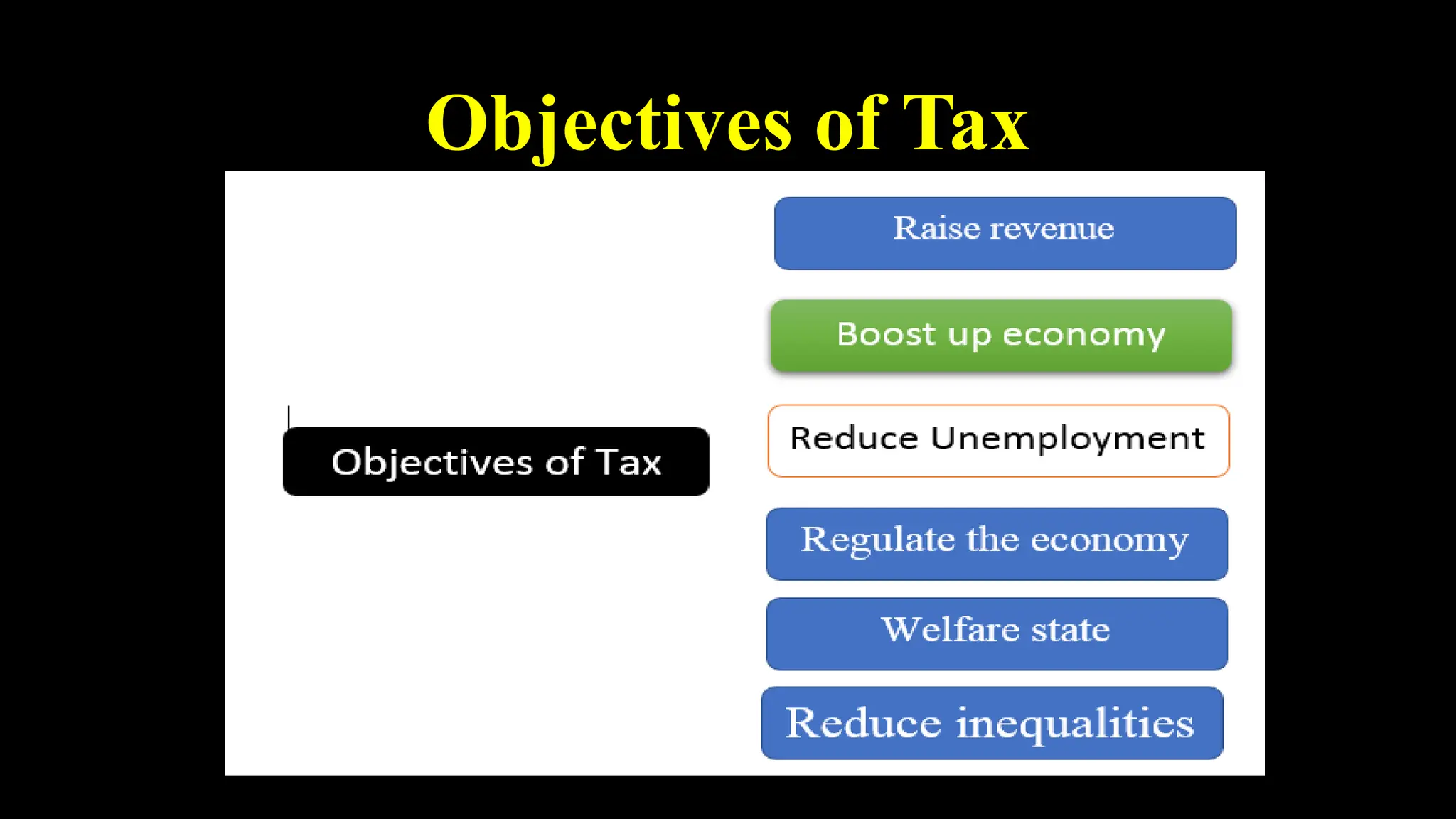
Objectives of Tax
A Fine is a tax for doing
wrong. A tax is a fine for doing
well.
Taxes are not fines for doing well. Not in theory
anyway. They feel like fines because most state
governments are either corrupt or incompetent so we
feel cheated with poor quality of service relative to
taxes paid. I'd say we should just be more vocal
about demanding better quality of service from state
entities and not accept rubbish attitudes and lack of
transparency. At the end of the day, all state
employees are our employees. They are there to
serve us, those who pay the taxes.
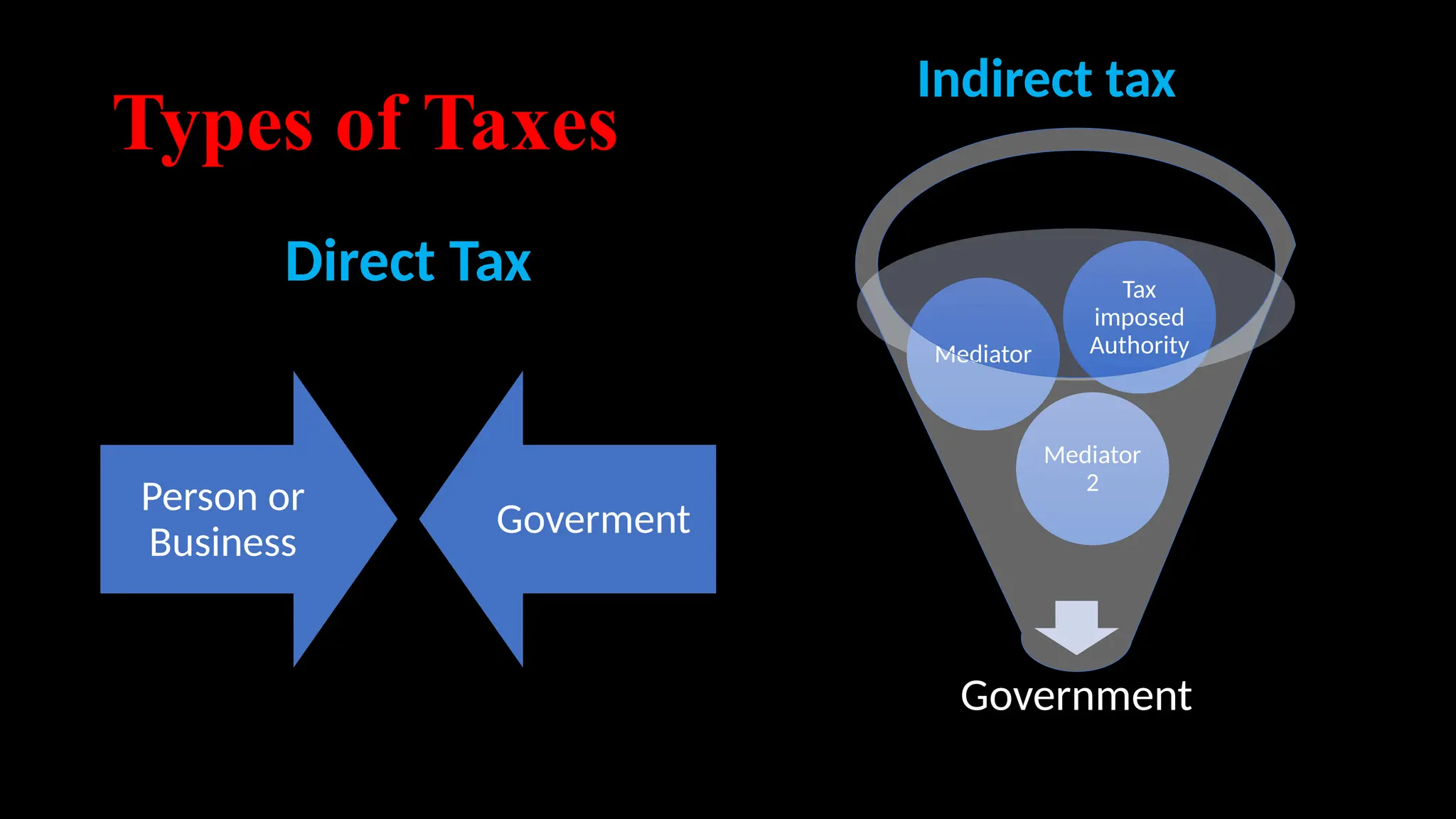
Types of Taxes
Direct Tax
Person or
Business
Goverment
Indirect tax
Government
Mediator
2
Mediator
Tax
imposed
Authority
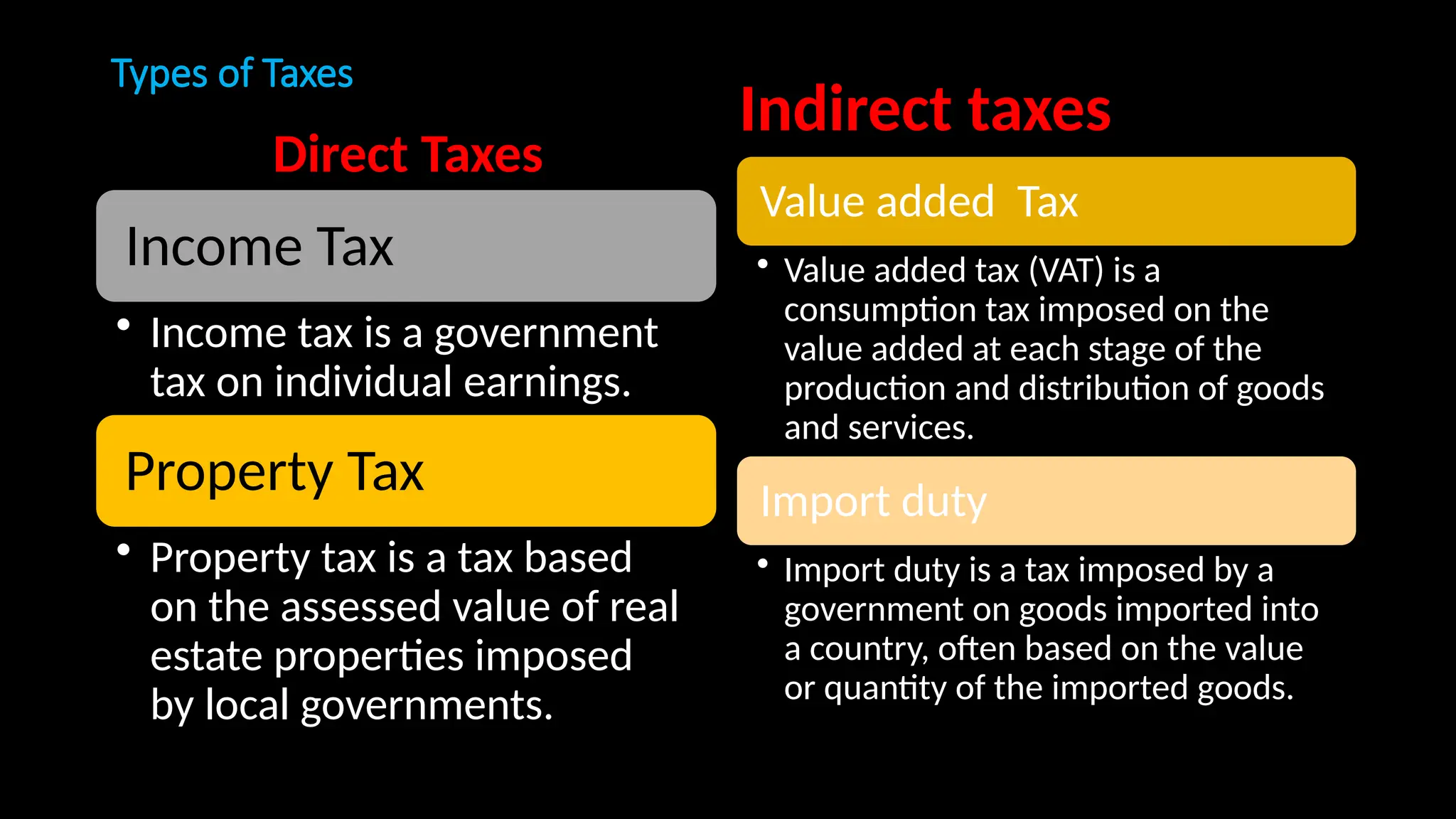
Types of Taxes
Direct Taxes
Income Tax
• Income tax is a government
tax on individual earnings.
Property Tax
• Property tax is a tax based
on the assessed value of real
estate properties imposed
by local governments.
Indirect taxes
Value added Tax
• Value added tax (VAT) is a
consumption tax imposed on the
value added at each stage of the
production and distribution of goods
and services.
Import duty
• Import duty is a tax imposed by a
government on goods imported into
a country, often based on the value
or quantity of the imported goods.
Differences between Direct and indirect tax
Direct Tax
• Imposed directly on individuals
based on their income.
• Taxpayers bears ultimate burden
• Increases as per the income
• Personalized
• Evasion is possible
Indirect Tax
• Levied on the purchase or
consumption of goods and
services
• Burden is shifted to the
consumer
• Constant
• not personalized
• Evasion is difficult
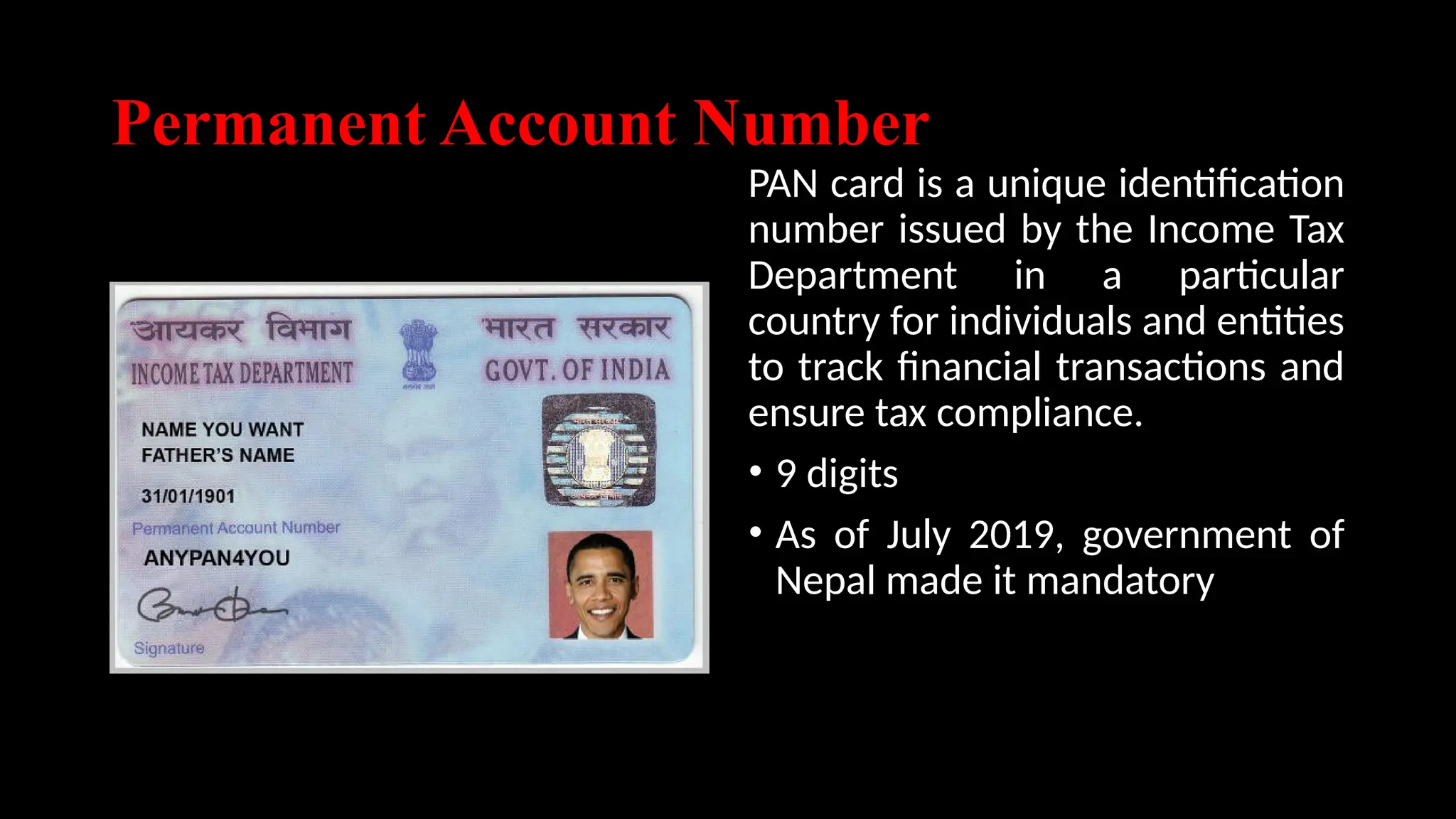
Permanent Account Number
PAN card is a unique identification
number issued by the Income Tax
Department in a particular
country for individuals and entities
to track financial transactions and
ensure tax compliance.
• 9 digits
• As of July 2019, government of
Nepal made it mandatory
Value Added tax
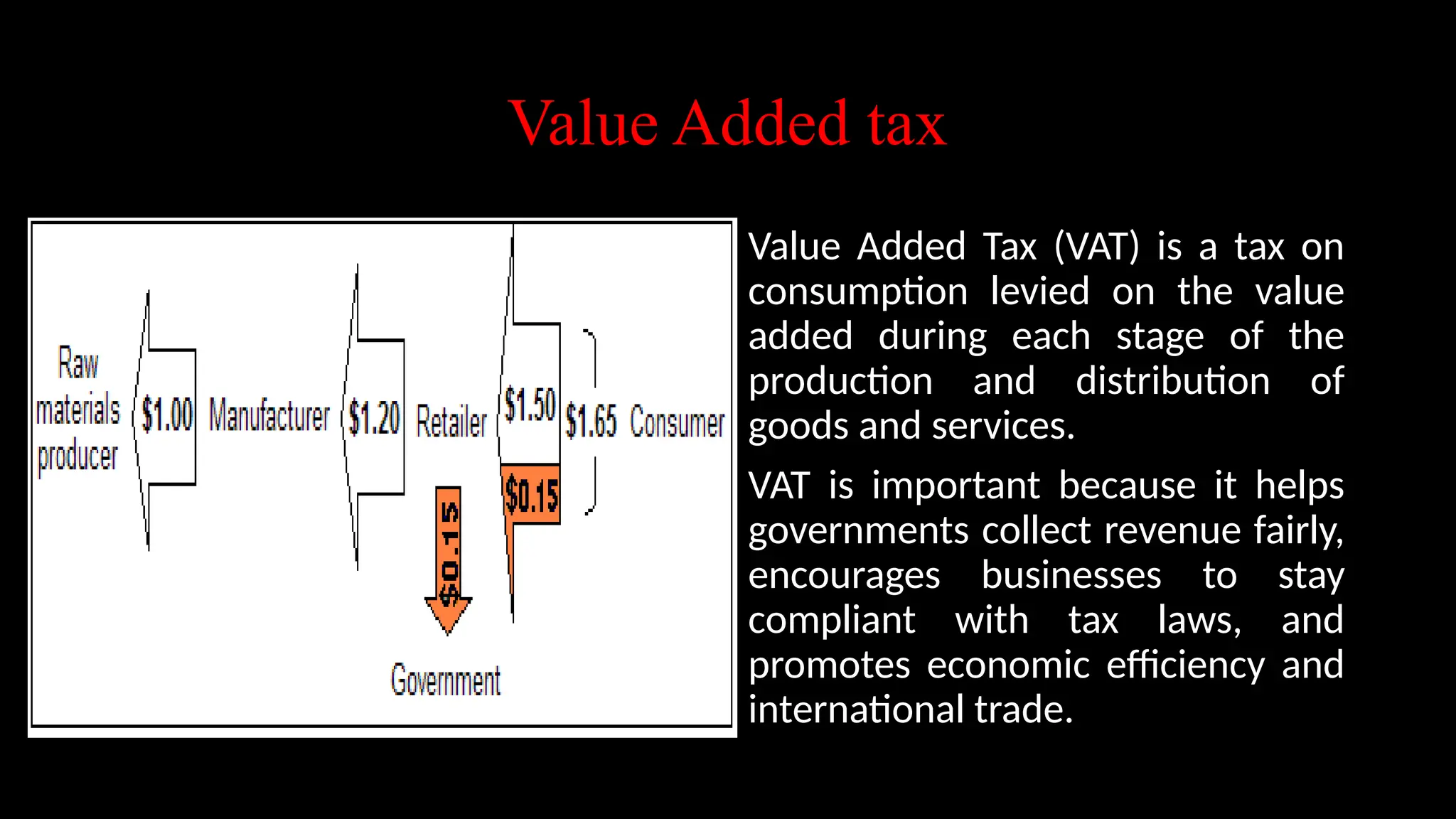
Value Added Tax (VAT) is a tax on
consumption levied on the value
added during each stage of the
production and distribution of
goods and services.
VAT is important because it helps
governments collect revenue fairly,
encourages businesses to stay
compliant with tax laws, and
promotes economic efficiency and
international trade.
Introduction to Tax , types and princples of tax.pptx

Introduction to Tax , types and princples of tax.pptx

  • 1.
    Meaning and Sourcesof revenue Government revenue is the total income collected by a government from taxes, fees, and other sources to fund public services and operations. Non-tax sources of government revenue include fees, fines, tariffs, licensing fees, royalties, lottery proceeds, asset sales, donations, and grants. These sources provide additional funds for government operations and supplement tax revenues.
  • 2.
    Introduction to tax •Taxes are money that people and businesses have to pay to the government. • Taxes are mandatory payments required by the government from individuals and businesses based on their income, profits, property, or transactions. These funds are collected by the government to finance public expenditures, such as infrastructure, healthcare, education, defense, and social welfare programs.
  • 3.
    Principles of Tax Principleof equality • Higher the income higher the tax Principle of certainty • Certain about rate and time Principle of economy • Related to tax collection expenses Principle of elasticity • Flexible as per the situation Principle of simplicity • Understandable to general public
  • 4.
  • 5.
    A Fine isa tax for doing wrong. A tax is a fine for doing well.
  • 6.
    Taxes are notfines for doing well. Not in theory anyway. They feel like fines because most state governments are either corrupt or incompetent so we feel cheated with poor quality of service relative to taxes paid. I'd say we should just be more vocal about demanding better quality of service from state entities and not accept rubbish attitudes and lack of transparency. At the end of the day, all state employees are our employees. They are there to serve us, those who pay the taxes.
  • 7.
    Types of Taxes DirectTax Person or Business Goverment Indirect tax Government Mediator 2 Mediator Tax imposed Authority
  • 8.
    Types of Taxes DirectTaxes Income Tax • Income tax is a government tax on individual earnings. Property Tax • Property tax is a tax based on the assessed value of real estate properties imposed by local governments. Indirect taxes Value added Tax • Value added tax (VAT) is a consumption tax imposed on the value added at each stage of the production and distribution of goods and services. Import duty • Import duty is a tax imposed by a government on goods imported into a country, often based on the value or quantity of the imported goods.
  • 9.
    Differences between Directand indirect tax Direct Tax • Imposed directly on individuals based on their income. • Taxpayers bears ultimate burden • Increases as per the income • Personalized • Evasion is possible Indirect Tax • Levied on the purchase or consumption of goods and services • Burden is shifted to the consumer • Constant • not personalized • Evasion is difficult
  • 10.
    Permanent Account Number PANcard is a unique identification number issued by the Income Tax Department in a particular country for individuals and entities to track financial transactions and ensure tax compliance. • 9 digits • As of July 2019, government of Nepal made it mandatory
  • 11.
    Value Added tax ValueAdded Tax (VAT) is a tax on consumption levied on the value added during each stage of the production and distribution of goods and services. VAT is important because it helps governments collect revenue fairly, encourages businesses to stay compliant with tax laws, and promotes economic efficiency and international trade.