Introduction
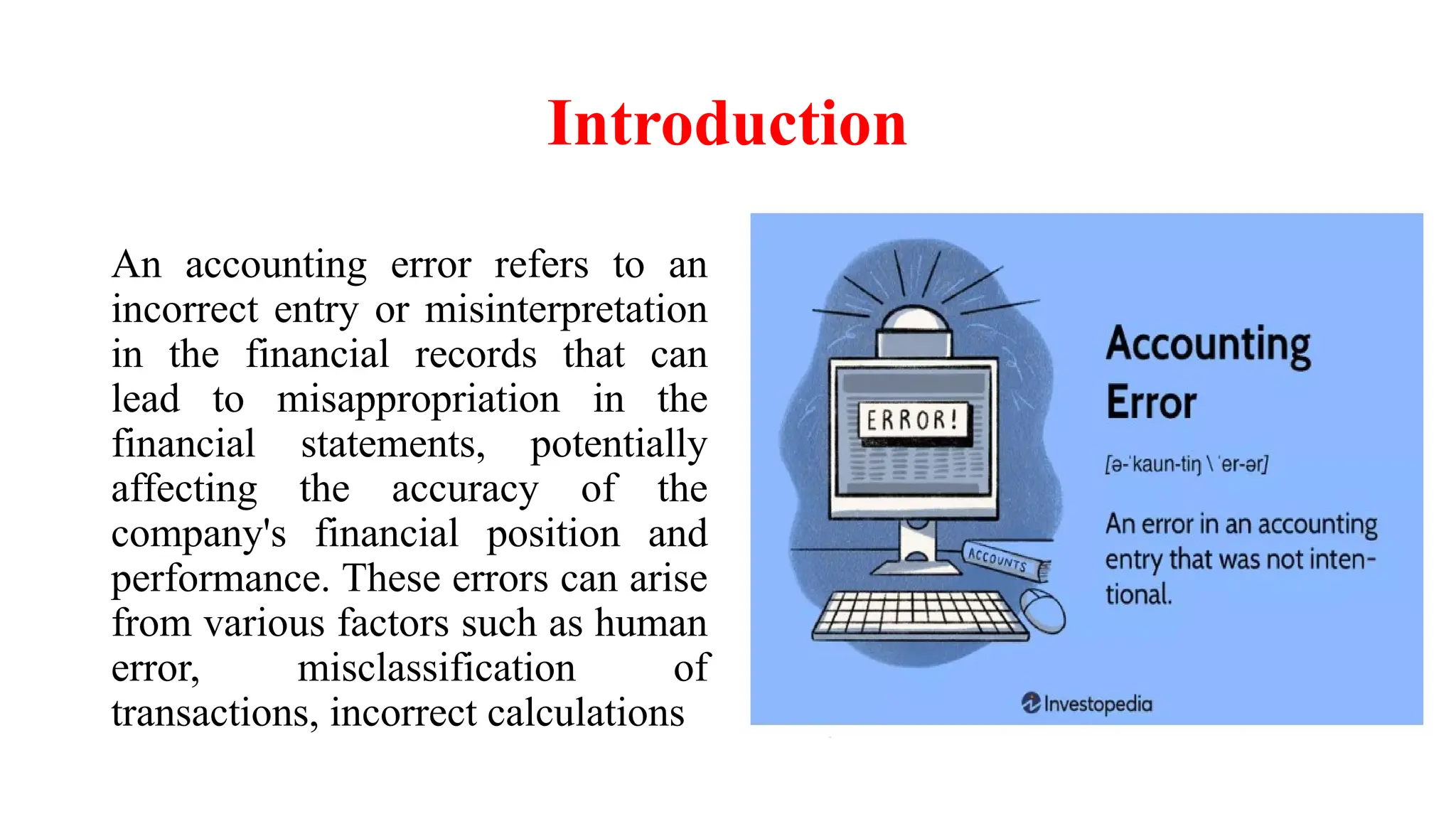
An accounting error refers to an
incorrect entry or misinterpretation
in the financial records that can
lead to misappropriation in the
financial statements, potentially
affecting the accuracy of the
company's financial position and
performance. These errors can arise
from various factors such as human
error, misclassification of
transactions, incorrect calculations
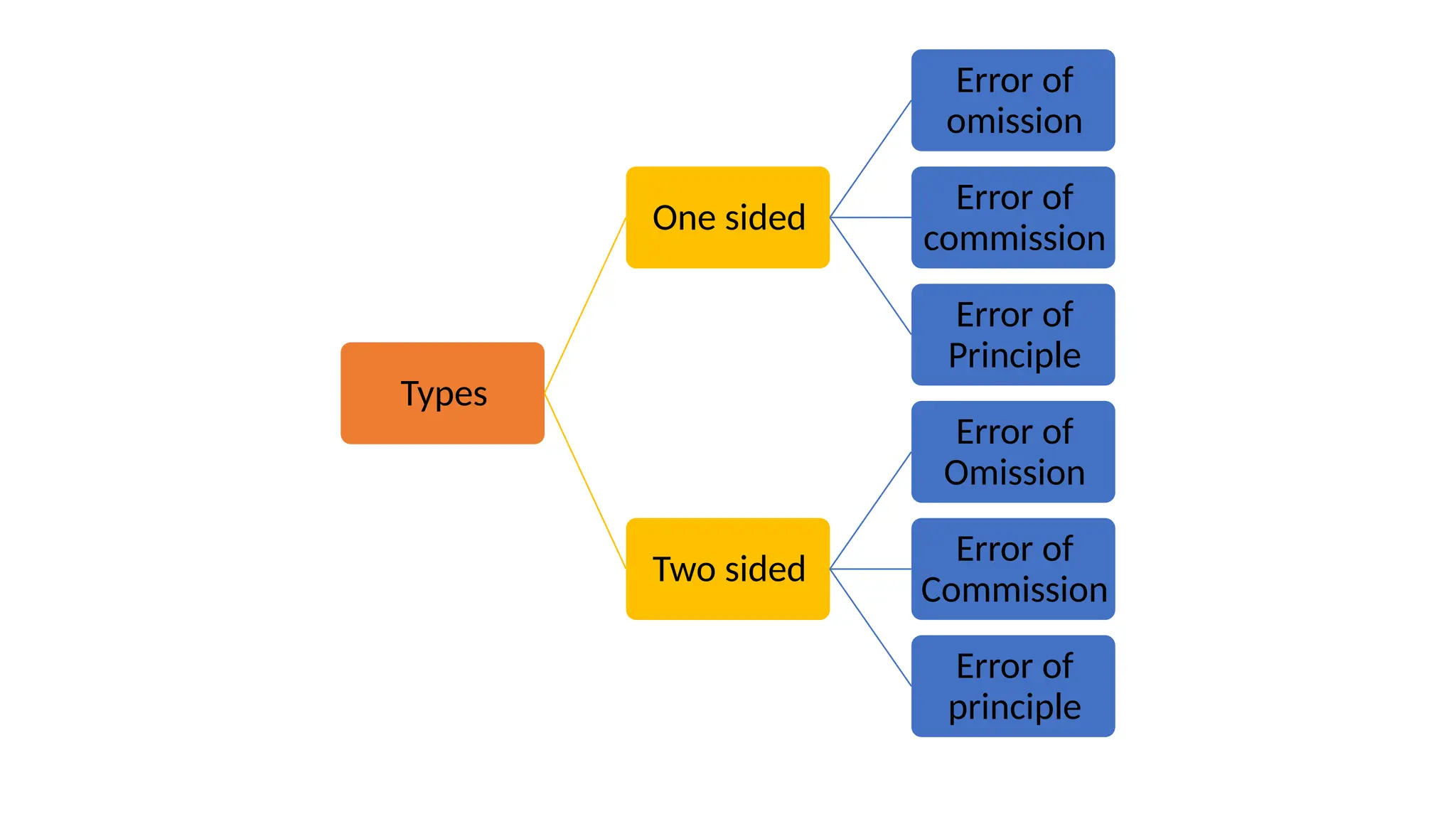
Types
One sided
Error of
omission
Error of
commission
Error of
Principle
Two sided
Error of
Omission
Error of
Commission
Error of
principle
One sided and two sided error
In accounting, a one-sided error affects only one account, leading to an
imbalance in the accounting records. This means that the debit amount
does not equal the credit amount in that particular account.
On the other hand, a two-sided error affects two or more accounts,
which causes an imbalance in the total trial balance. This means that
the total debits do not equal the total credits across all accounts in the
trial balance, indicating an error in recording transactions in multiple
accounts.
Error of Omission
An error of omission occurs when
a transaction or data is completely
left out or not recorded in the
financial records. This omission
can lead to inaccuracies in the
financial statements, as important
information may be missing,
affecting the true financial position
and performance of a business.
Identifying and rectifying errors of
omission is essential for
maintaining accurate financial
records and ensuring the reliability
of financial information for
decision-making purposes.
Error of commission
An error of commission happens
when a transaction is recorded
incorrectly in the company's
financial records, leading to
inaccuracies in the financial
statements. This type of error
involves making mistakes in the
process of recording or classifying
transactions, which can result in
misstated financial information.
Identifying and correcting errors of
commission is essential to
maintain accurate financial records
and ensure the integrity of the
financial statements.
Error of Principle
An error of principle occurs when
a transaction is recorded using an
incorrect accounting principle or
method. This mistake leads to
inaccuracies in the financial
statements and affects the overall
financial position and performance
of a business. Identifying and
rectifying errors of principle is
important to ensure that financial
records are consistent with the
appropriate accounting standards
and principles.
• Goods purchased from ram of Rs. 5,000 is not recorded.
• Goods sold to Sita of Rs. 3000 is not recorded.
• Goods purchased of cash Rs. 5000 is recorded as Rs. 500.
• Goods sold to Hari of Rs.6,000 is recorded as 6000.
• Machinery purchased of Rs. 5,000 recorded as 5,500.
• Purchase furniture of 10,000 but recorded as Salary.
Accounting Error in Accounting......pptx

Accounting Error in Accounting......pptx

  • 1.
    Introduction An accounting errorrefers to an incorrect entry or misinterpretation in the financial records that can lead to misappropriation in the financial statements, potentially affecting the accuracy of the company's financial position and performance. These errors can arise from various factors such as human error, misclassification of transactions, incorrect calculations
  • 2.
    Types One sided Error of omission Errorof commission Error of Principle Two sided Error of Omission Error of Commission Error of principle
  • 3.
    One sided andtwo sided error In accounting, a one-sided error affects only one account, leading to an imbalance in the accounting records. This means that the debit amount does not equal the credit amount in that particular account. On the other hand, a two-sided error affects two or more accounts, which causes an imbalance in the total trial balance. This means that the total debits do not equal the total credits across all accounts in the trial balance, indicating an error in recording transactions in multiple accounts.
  • 4.
    Error of Omission Anerror of omission occurs when a transaction or data is completely left out or not recorded in the financial records. This omission can lead to inaccuracies in the financial statements, as important information may be missing, affecting the true financial position and performance of a business. Identifying and rectifying errors of omission is essential for maintaining accurate financial records and ensuring the reliability of financial information for decision-making purposes.
  • 5.
    Error of commission Anerror of commission happens when a transaction is recorded incorrectly in the company's financial records, leading to inaccuracies in the financial statements. This type of error involves making mistakes in the process of recording or classifying transactions, which can result in misstated financial information. Identifying and correcting errors of commission is essential to maintain accurate financial records and ensure the integrity of the financial statements.
  • 6.
    Error of Principle Anerror of principle occurs when a transaction is recorded using an incorrect accounting principle or method. This mistake leads to inaccuracies in the financial statements and affects the overall financial position and performance of a business. Identifying and rectifying errors of principle is important to ensure that financial records are consistent with the appropriate accounting standards and principles.
  • 7.
    • Goods purchasedfrom ram of Rs. 5,000 is not recorded. • Goods sold to Sita of Rs. 3000 is not recorded. • Goods purchased of cash Rs. 5000 is recorded as Rs. 500. • Goods sold to Hari of Rs.6,000 is recorded as 6000. • Machinery purchased of Rs. 5,000 recorded as 5,500. • Purchase furniture of 10,000 but recorded as Salary.