Introduction to
Sequencing and
Scheduling
Sequencing and scheduling are fundamental concepts in project
management. They involve arranging tasks in a logical order and assigning
deadlines for each task.
Importance of Effective
Sequencing and
Scheduling
1 Efficiency
Optimizing resource allocation and minimizing delays.
2 Predictability
Knowing when to expect deliverables and milestones.
3 Accountability
Clearly defining responsibilities and deadlines.
4 Success
Ensuring project completion within budget and time constraints.
Identifying Dependencies and Constraints
Dependencies
Tasks that must be completed
before others can start.
Constraints
Limitations like resource availability
or external factors.
Critical Path
The longest sequence of tasks,
determining the project's overall
duration.
Techniques for
Sequencing Activities
1 Critical Path Method (CPM)
Identifying the most critical tasks that impact project
duration.
2 Program Evaluation and Review Technique
(PERT)
Estimating task durations with uncertainty, allowing for
flexibility.
3 Precedence Diagramming Method (PDM)
Representing task dependencies and relationships visually.
Scheduling Methods and
Tools
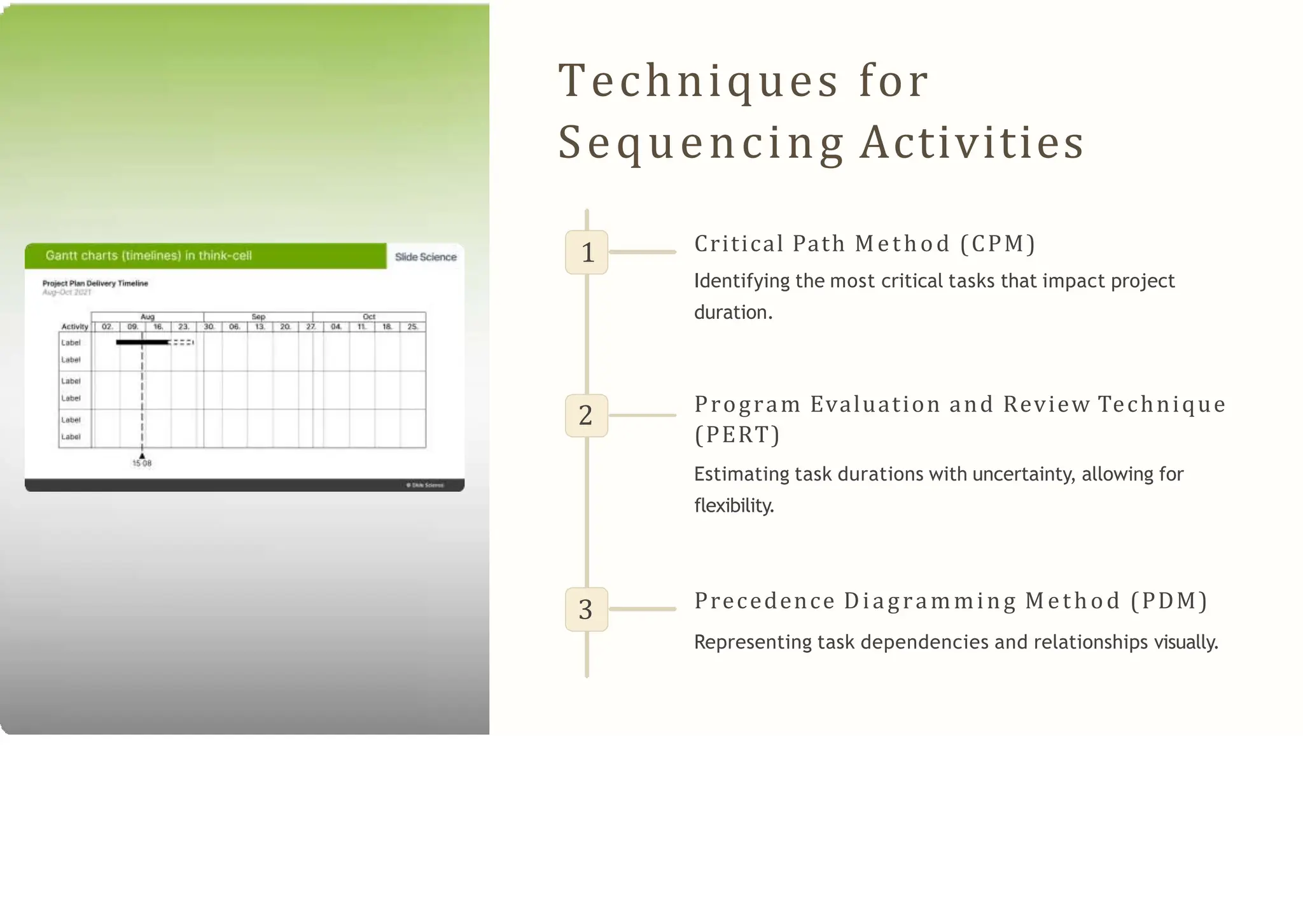
Gantt Chart
Visual representation of tasks and their durations over time.
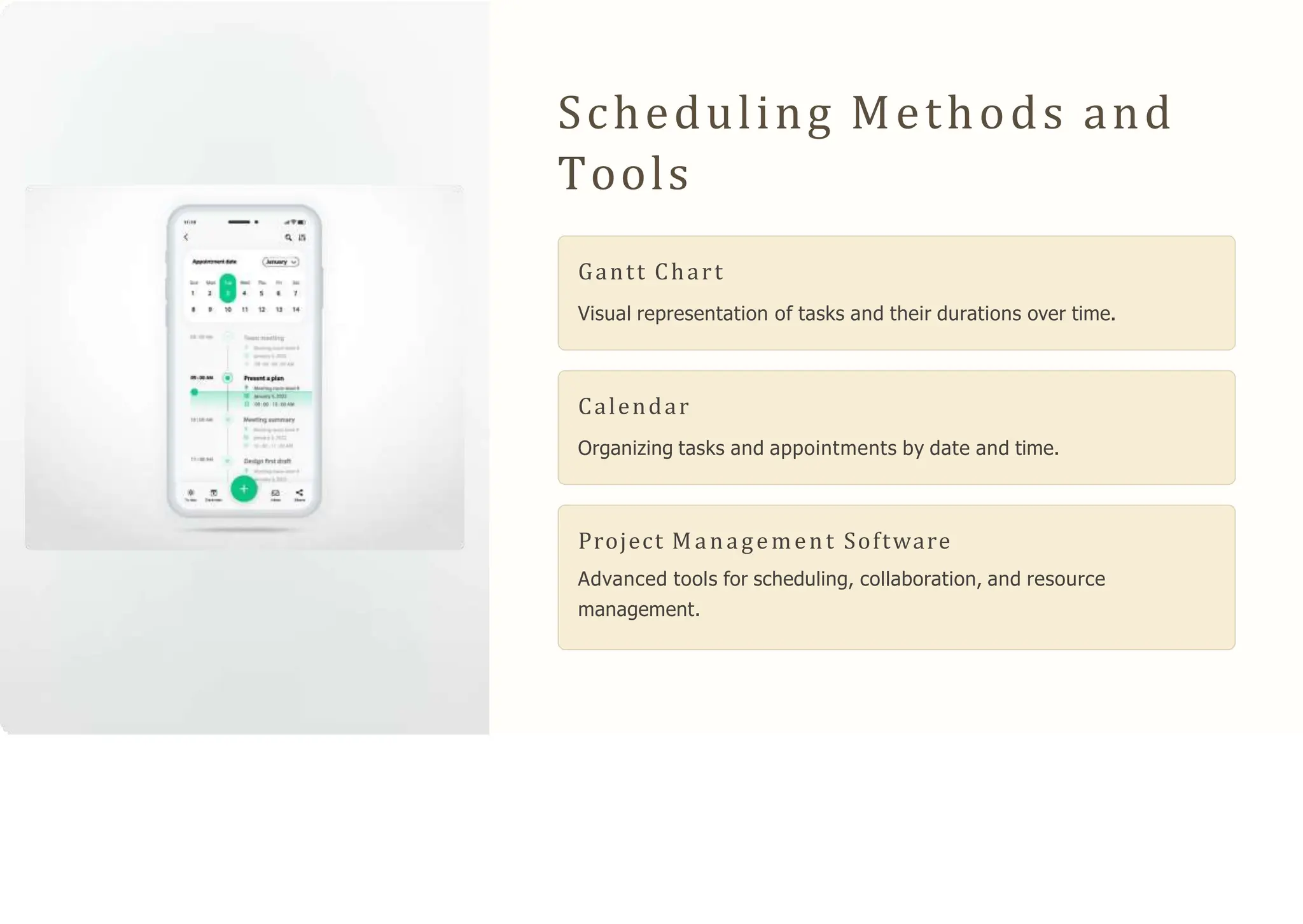
Calendar
Organizing tasks and appointments by date and time.
Project Management Software
Advanced tools for scheduling, collaboration, and resource
management.
Optimizing Resource
Utilization
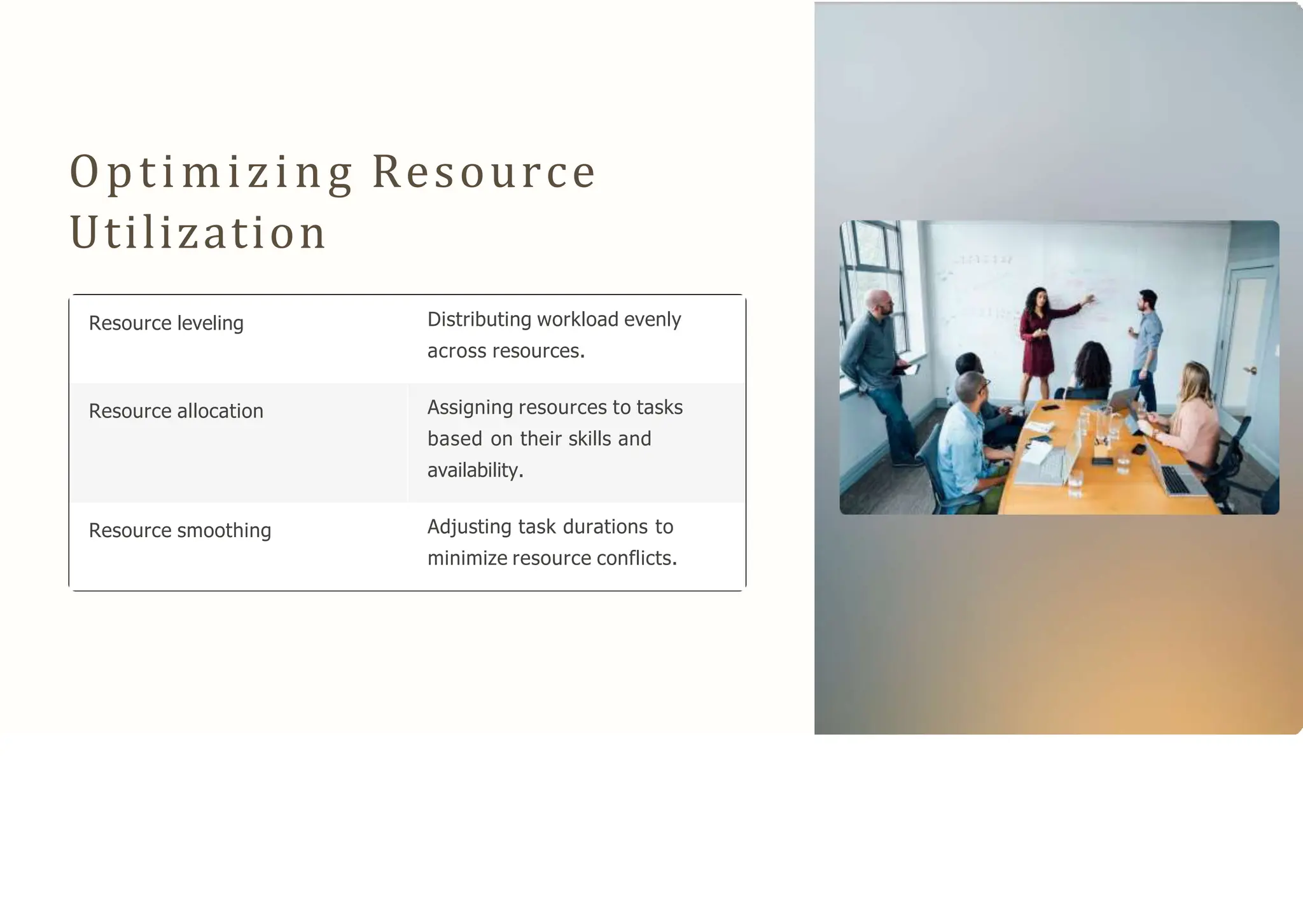
Resource leveling Distributing workload evenly
across resources.
Resource allocation Assigning resources to tasks
based on their skills and
availability.
Resource smoothing Adjusting task durations to
minimize resource conflicts.
Handling Uncertainties
and Risks
1
Risk Identification
Identifying potential risks that could impact the schedule.
2
Risk Assessment
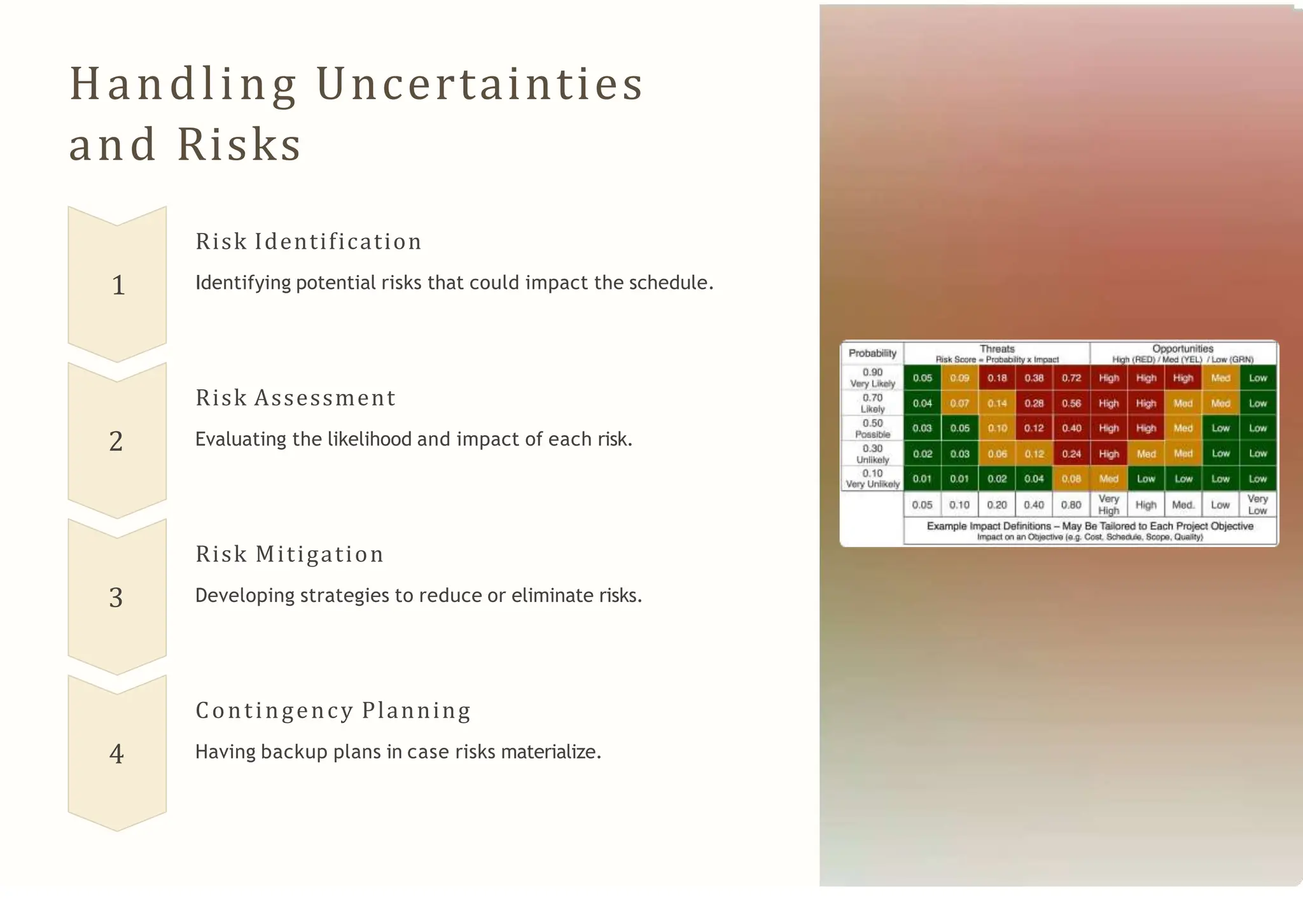
Evaluating the likelihood and impact of each risk.
3
Risk Mitigation
Developing strategies to reduce or eliminate risks.
4
Contingency Planning
Having backup plans in case risks materialize.
Monitoring and Adjusting
Schedules
Progress Tracking
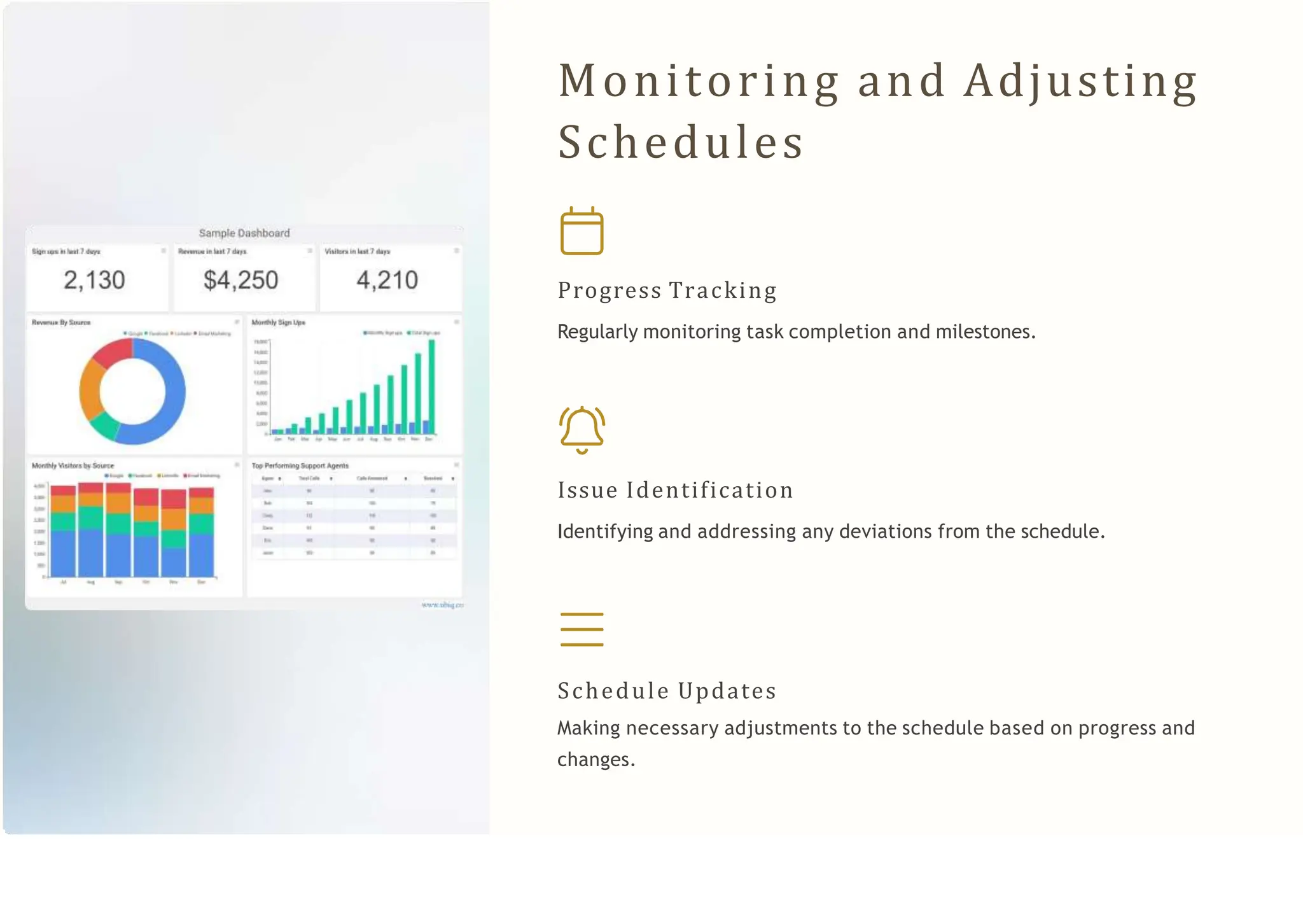
Regularly monitoring task completion and milestones.
Issue Identification
Identifying and addressing any deviations from the schedule.
Schedule Updates
Making necessary adjustments to the schedule based on progress and
changes.
Collaboration and
Communication in
Scheduling
1 Team Meetings
Regularly discussing progress, challenges, and decisions.
2 Project Management Tools
Sharing information, updates, and task assignments electronically.
3 Clear Communication
Ensuring everyone understands the schedule, deadlines, and
responsibilities.
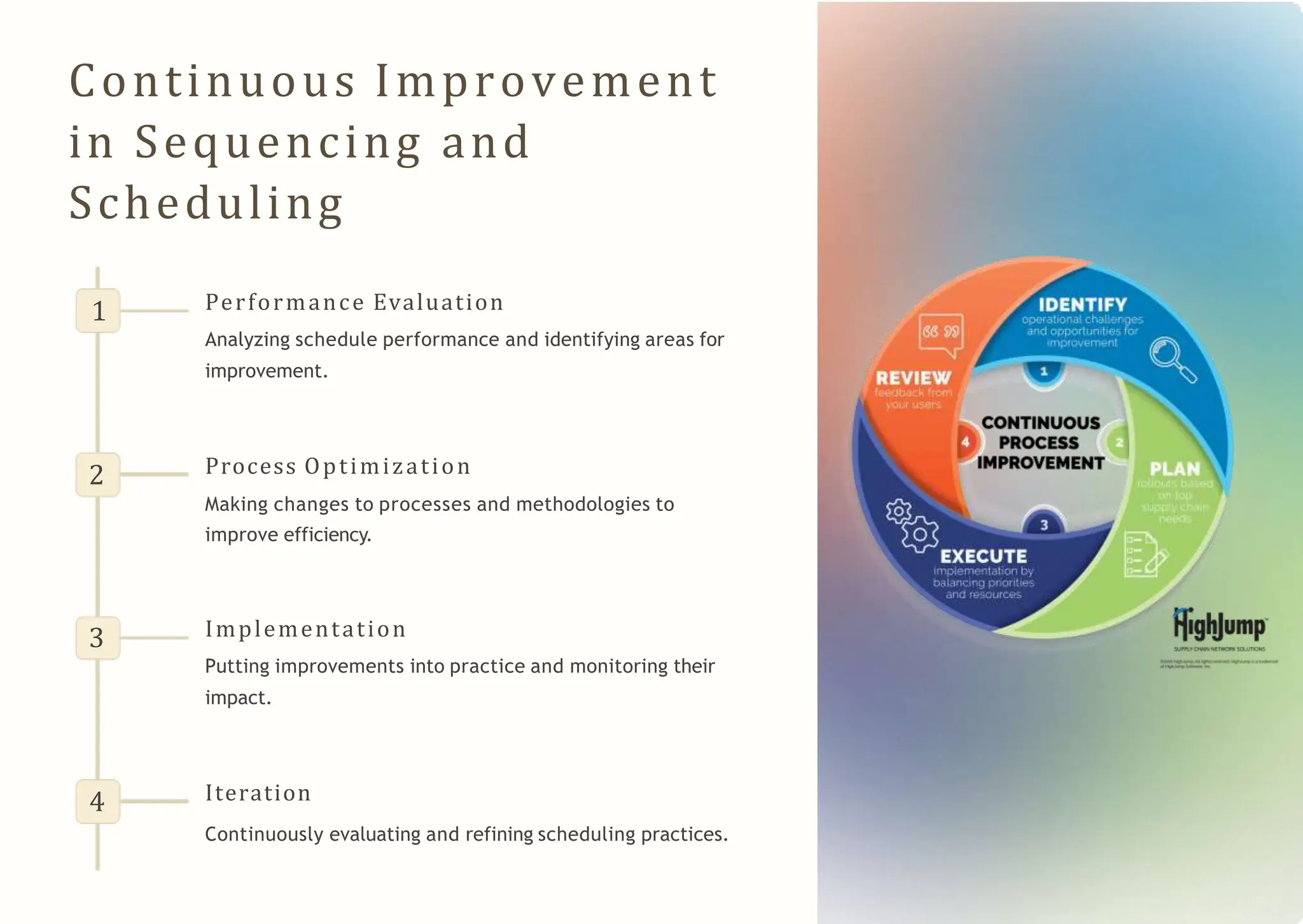
Continuous Improvement
in Sequencing and
Scheduling
1 Performance Evaluation
Analyzing schedule performance and identifying areas for
improvement.
2 Process Optimization
Making changes to processes and methodologies to
improve efficiency.
3 Implementation
Putting improvements into practice and monitoring their
impact.
4 Iteration
Continuously evaluating and refining scheduling practices.
Introduction-to-Sequencing-and-Scheduling (1).pptx

  • 1.
    Introduction to Sequencing and Scheduling Sequencingand scheduling are fundamental concepts in project management. They involve arranging tasks in a logical order and assigning deadlines for each task.
  • 2.
    Importance of Effective Sequencingand Scheduling 1 Efficiency Optimizing resource allocation and minimizing delays. 2 Predictability Knowing when to expect deliverables and milestones. 3 Accountability Clearly defining responsibilities and deadlines. 4 Success Ensuring project completion within budget and time constraints.
  • 3.
    Identifying Dependencies andConstraints Dependencies Tasks that must be completed before others can start. Constraints Limitations like resource availability or external factors. Critical Path The longest sequence of tasks, determining the project's overall duration.
  • 4.
    Techniques for Sequencing Activities 1Critical Path Method (CPM) Identifying the most critical tasks that impact project duration. 2 Program Evaluation and Review Technique (PERT) Estimating task durations with uncertainty, allowing for flexibility. 3 Precedence Diagramming Method (PDM) Representing task dependencies and relationships visually.
  • 5.
    Scheduling Methods and Tools GanttChart Visual representation of tasks and their durations over time. Calendar Organizing tasks and appointments by date and time. Project Management Software Advanced tools for scheduling, collaboration, and resource management.
  • 6.
    Optimizing Resource Utilization Resource levelingDistributing workload evenly across resources. Resource allocation Assigning resources to tasks based on their skills and availability. Resource smoothing Adjusting task durations to minimize resource conflicts.
  • 7.
    Handling Uncertainties and Risks 1 RiskIdentification Identifying potential risks that could impact the schedule. 2 Risk Assessment Evaluating the likelihood and impact of each risk. 3 Risk Mitigation Developing strategies to reduce or eliminate risks. 4 Contingency Planning Having backup plans in case risks materialize.
  • 8.
    Monitoring and Adjusting Schedules ProgressTracking Regularly monitoring task completion and milestones. Issue Identification Identifying and addressing any deviations from the schedule. Schedule Updates Making necessary adjustments to the schedule based on progress and changes.
  • 9.
    Collaboration and Communication in Scheduling 1Team Meetings Regularly discussing progress, challenges, and decisions. 2 Project Management Tools Sharing information, updates, and task assignments electronically. 3 Clear Communication Ensuring everyone understands the schedule, deadlines, and responsibilities.
  • 10.
    Continuous Improvement in Sequencingand Scheduling 1 Performance Evaluation Analyzing schedule performance and identifying areas for improvement. 2 Process Optimization Making changes to processes and methodologies to improve efficiency. 3 Implementation Putting improvements into practice and monitoring their impact. 4 Iteration Continuously evaluating and refining scheduling practices.