

Select Committees: an
introduction
Kate Anderson
Parliament’s Outreach Service
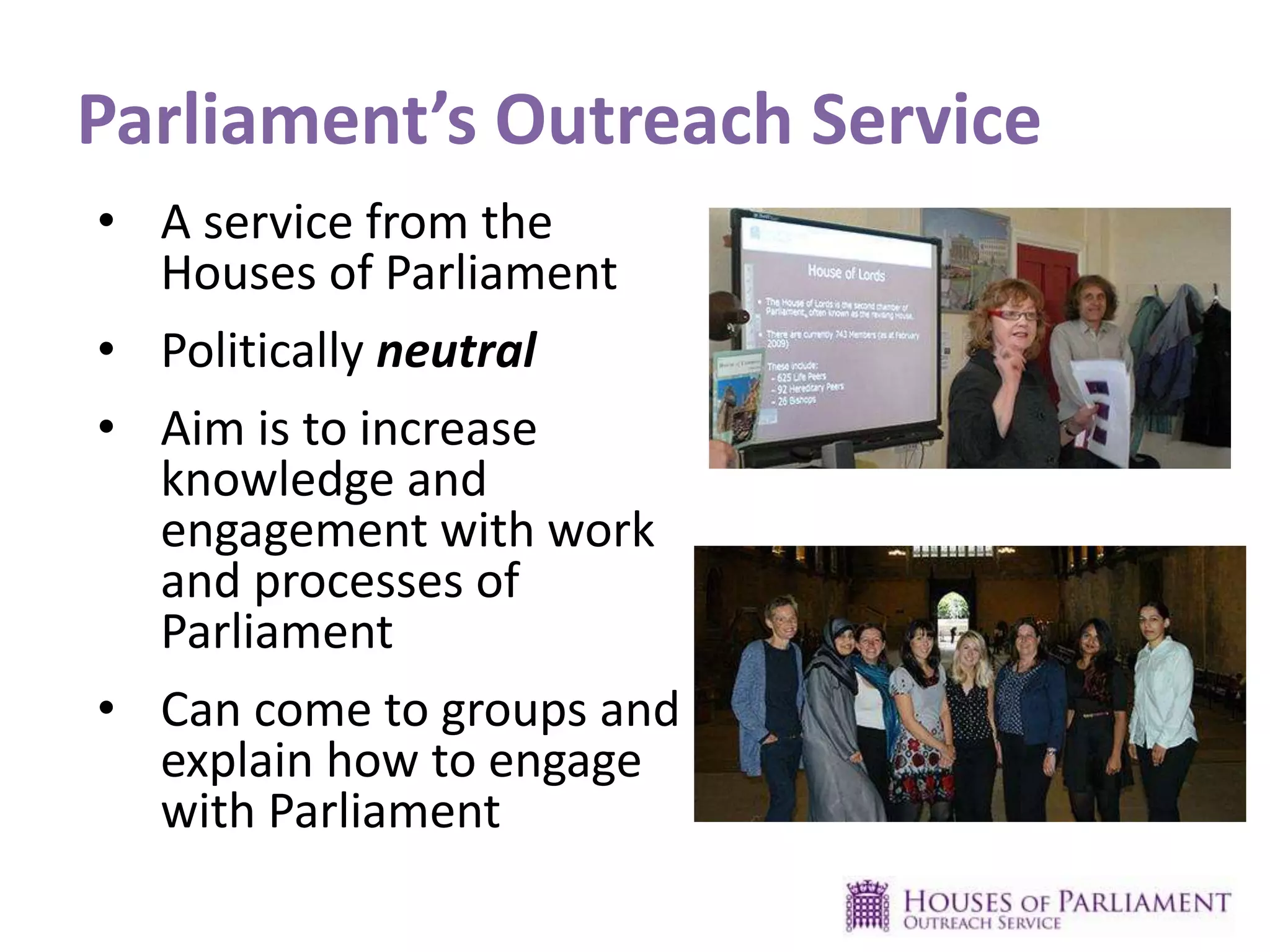
• A service from the
Houses of Parliament
• Politically neutral
• Aim is to increase
knowledge and
engagement with work
and processes of
Parliament
• Can come to groups and
explain how to engage
with Parliament
Select Committees
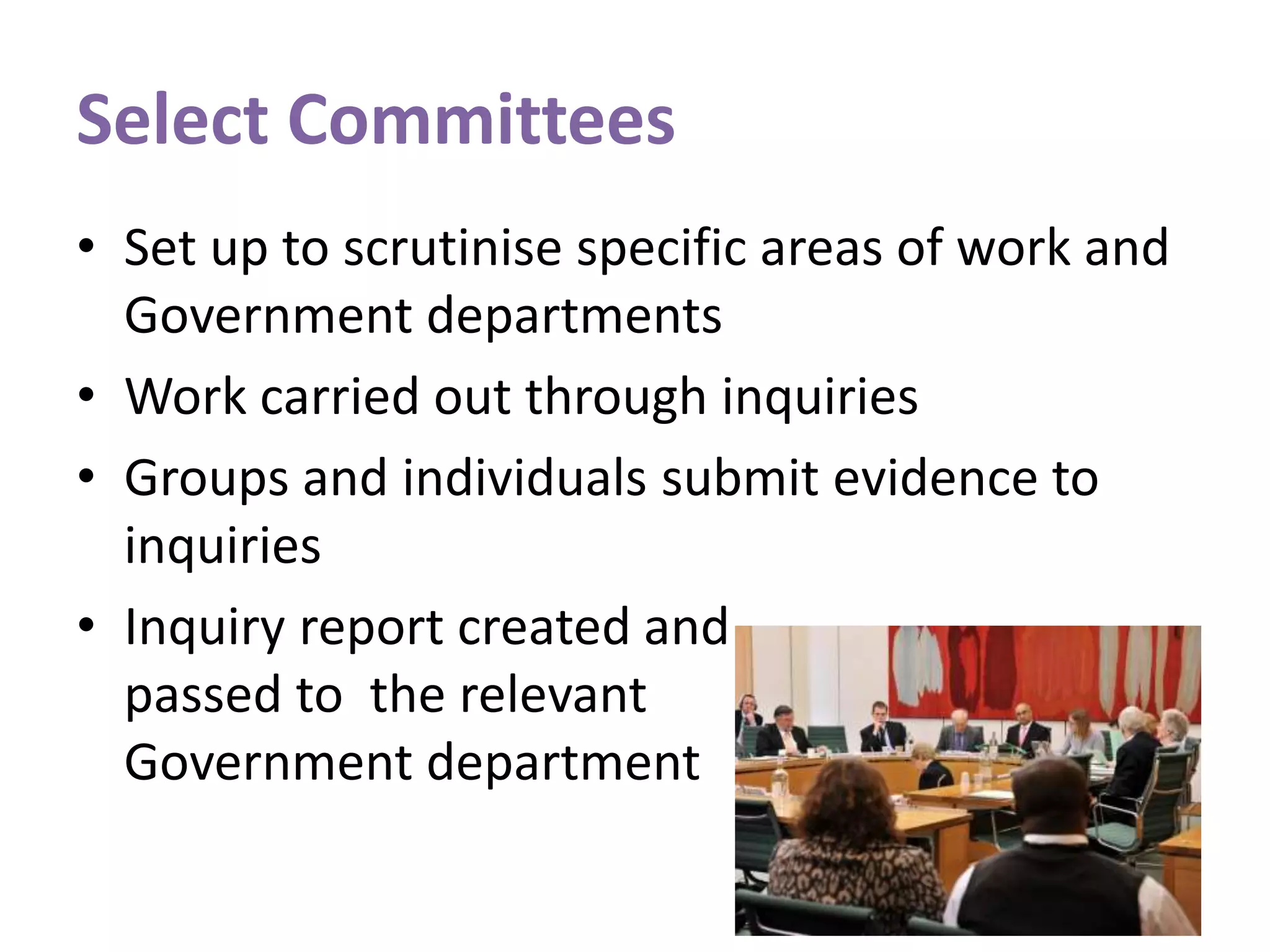
• Set up to scrutinise specific areas of work and
Government departments
• Work carried out through inquiries
• Groups and individuals submit evidence to
inquiries
• Inquiry report created and
passed to the relevant
Government department
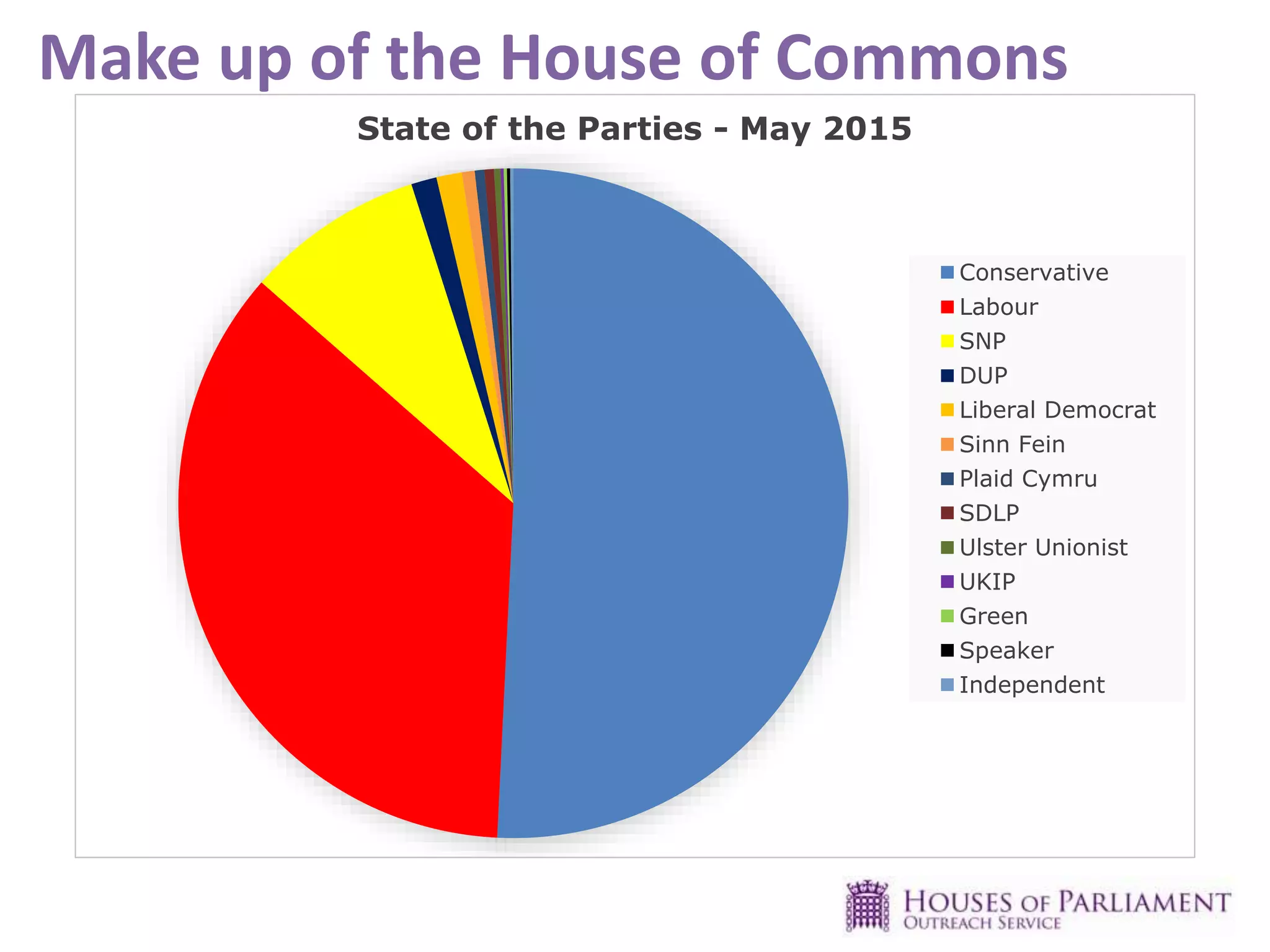
Make up of the House of Commons
State of the Parties - May 2015
Conservative
Labour
SNP
DUP
Liberal Democrat
Sinn Fein
Plaid Cymru
SDLP
Ulster Unionist
UKIP
Green
Speaker
Independent
House of Commons select
committees
• One committee for each Government
department
• Examine three aspects of the department:
spending, policies and administration
• Have 11 members to reflect the political
composition of the House of Commons
• Some committees cross department
boundaries, such as the Public Accounts or the
Environmental Audit Committee
House of Lords select committees
• Examine issues rather than the work of
specific departments
• Investigate specialist subjects which take
advantage of the experience of members of
the Lords
• There is no set political composition
House of Lords select committees
• Five main Lords select committees
• European Union Select Committee
• Science and Technology Select Committee
• Communications Select Committee
• Constitution Select Committee
• Economic Affairs Select Committees
• Ad hoc committees set up for a specific subject
• Equality Act 2010 and Disability Committee
• Sexual Violence in Conflict Committee
Joint committees
• Committees which have members from both
Houses
– Joint Committee on Human Rights
– Joint Committee on Statutory Instruments
– ad hoc committees
Benefits of select committees
• A key way in which Parliament holds
Government to account
• Enables Parliament to examine key issues in
great detail – more than debates or questions
• Allows huge range of expertise to be applied
to scrutiny
• Independent minded
• Can call for people, papers, records.
https://www.youtube.com/watch?v=On6OJLRvm5g
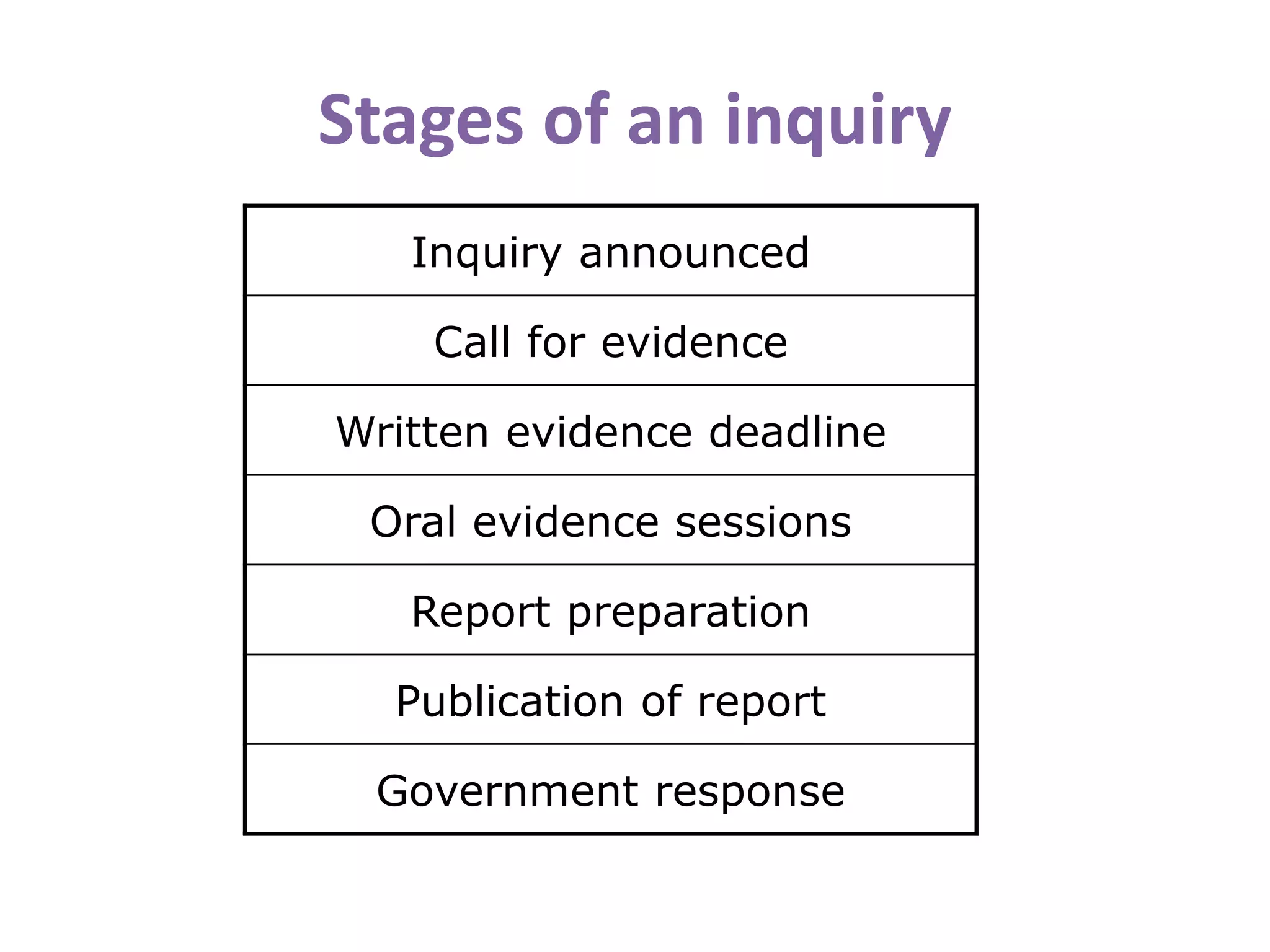
Stages of an inquiry
Inquiry announced
Call for evidence
Written evidence deadline
Oral evidence sessions
Report preparation
Publication of report
Government response
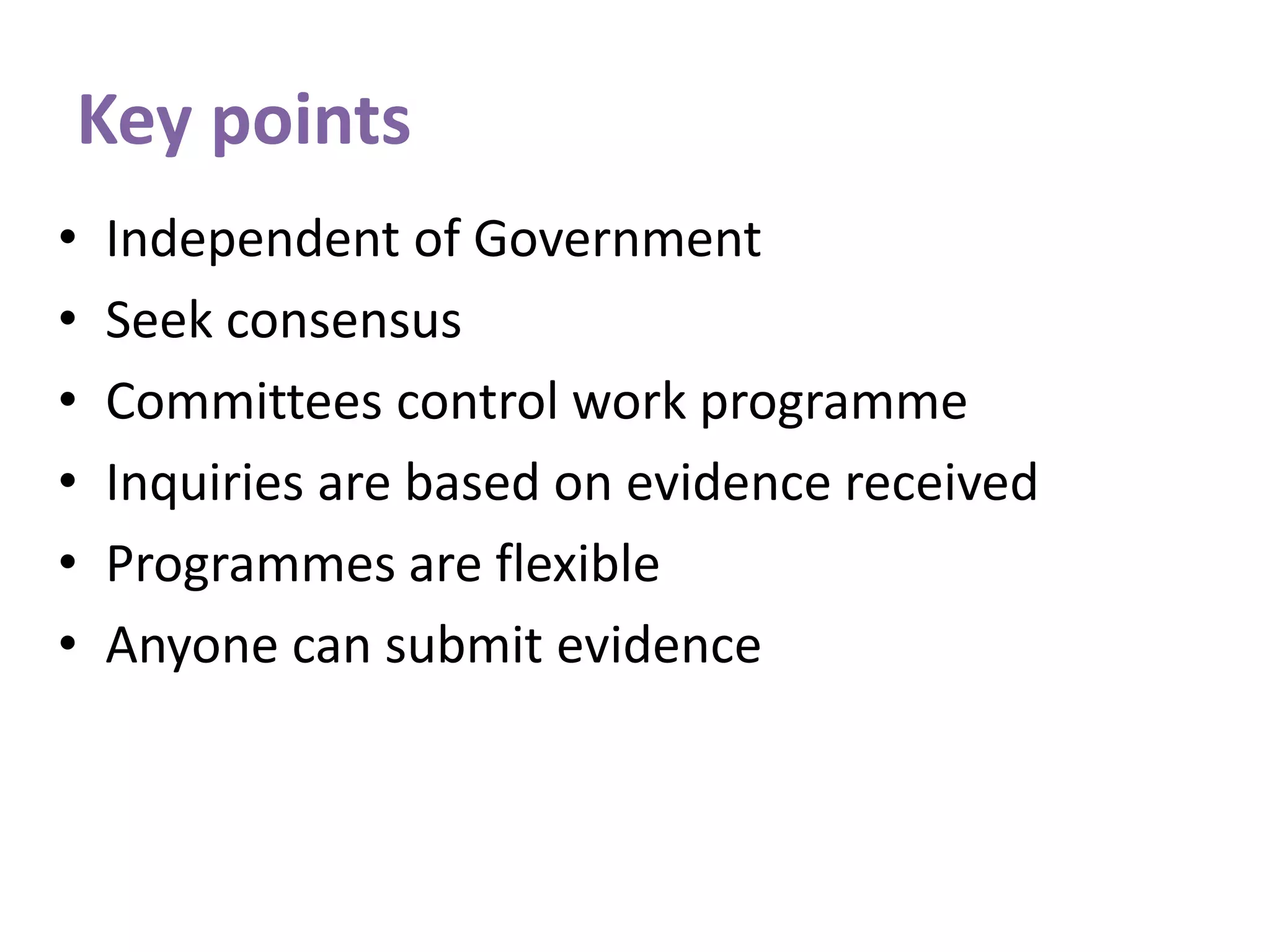
Key points
• Independent of Government
• Seek consensus
• Committees control work programme
• Inquiries are based on evidence received
• Programmes are flexible
• Anyone can submit evidence
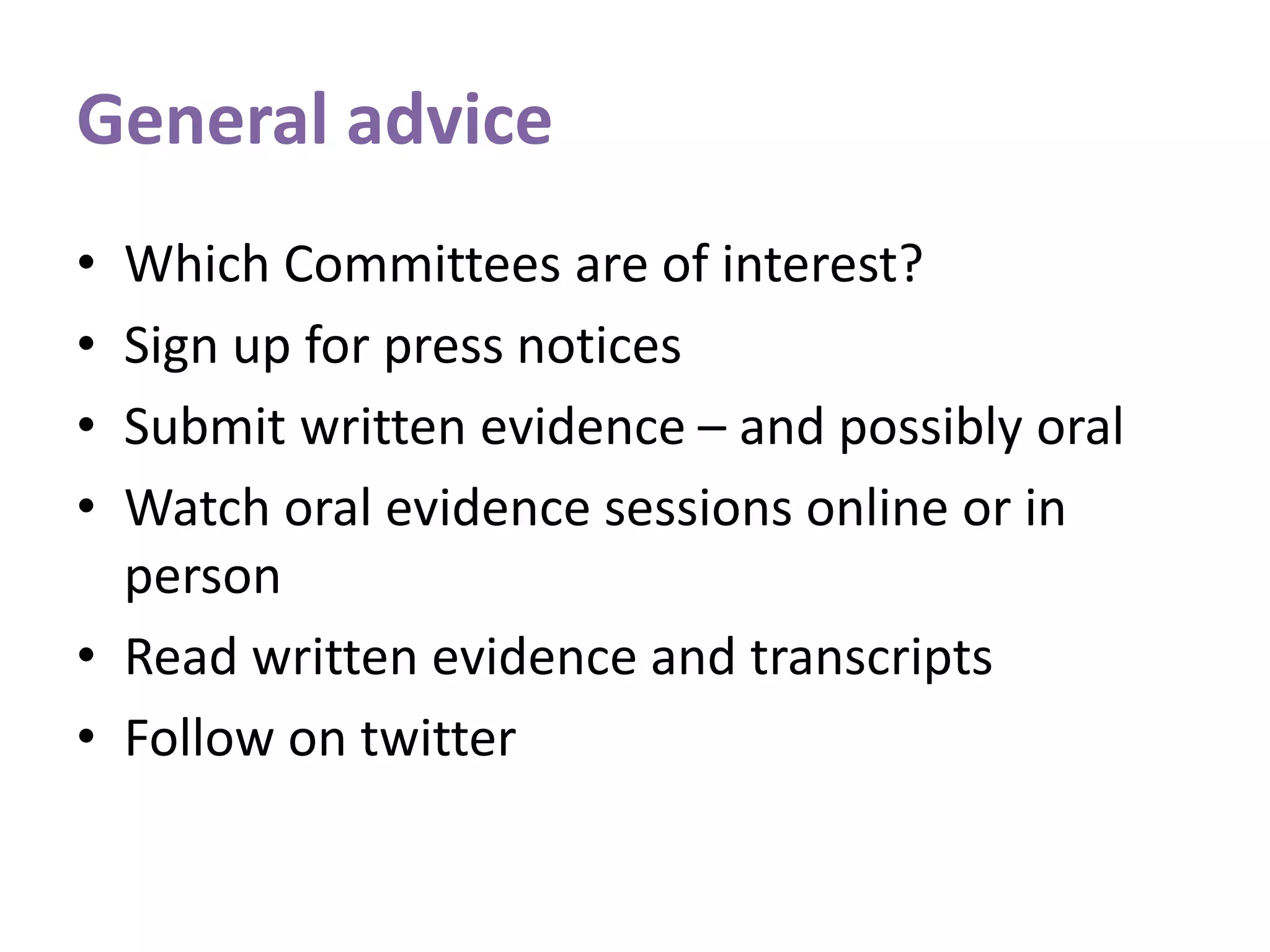
General advice
• Which Committees are of interest?
• Sign up for press notices
• Submit written evidence – and possibly oral
• Watch oral evidence sessions online or in
person
• Read written evidence and transcripts
• Follow on twitter
House of Commons Library
• The House of Commons Library
briefings cover all major pieces of
legislation, other major policy areas,
topical issues, statistics and FAQs
• Legislation briefings are also on the
Bills pages
• Our blog includes regular analysis
from our specialists
http://commonslibraryblog.com/
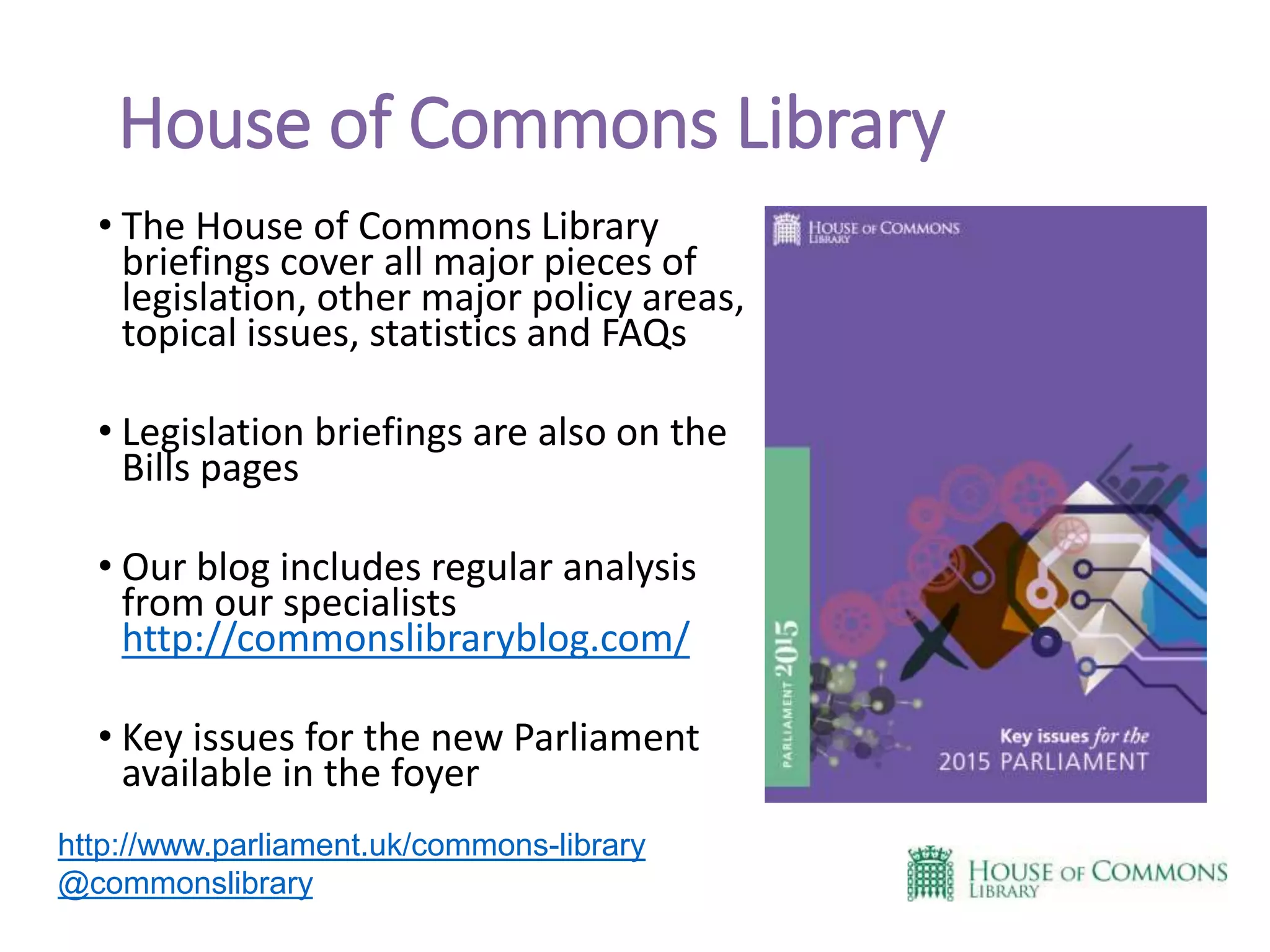
• Key issues for the new Parliament
available in the foyer
http://www.parliament.uk/commons-library
@commonslibrary
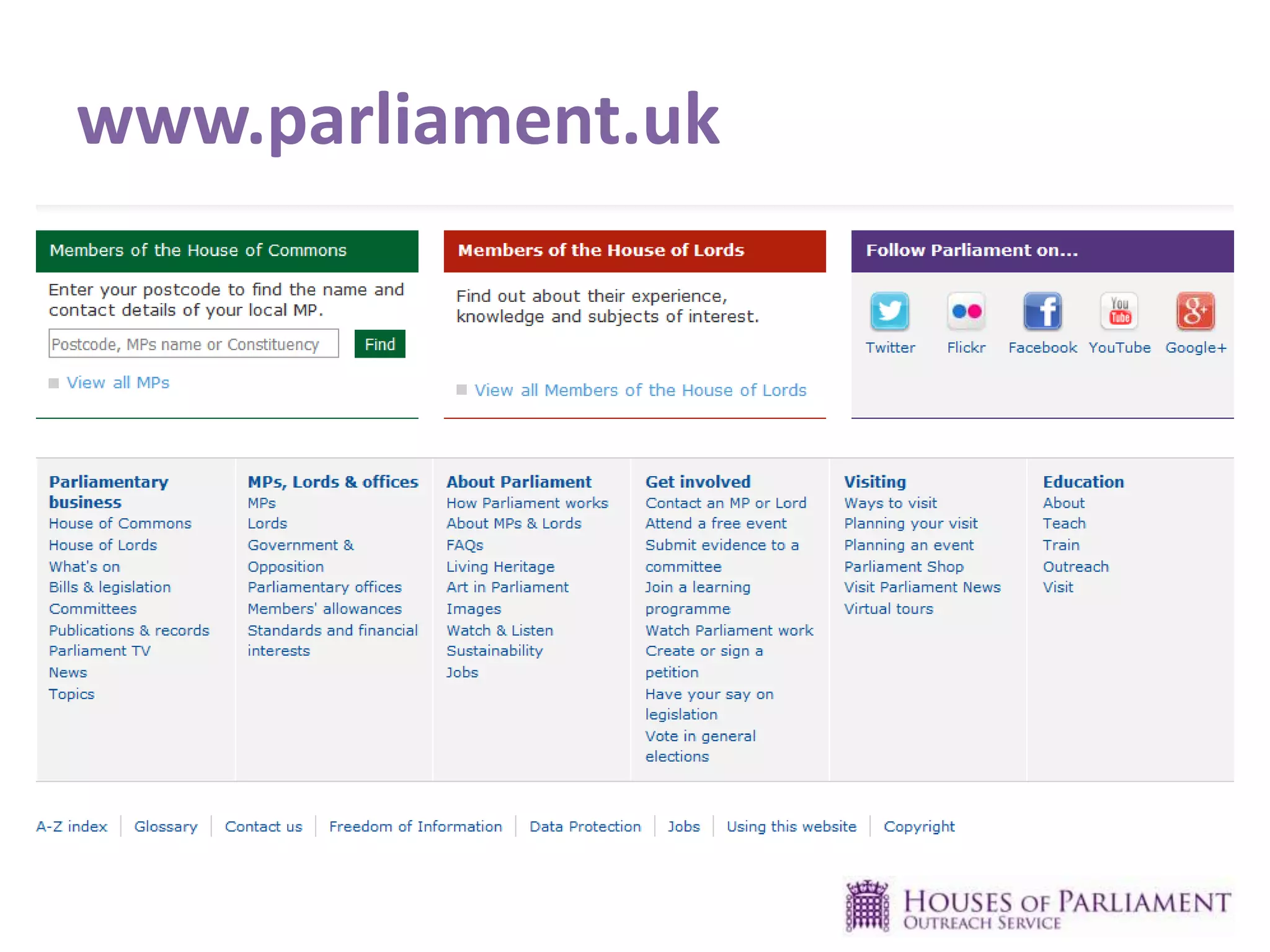
www.parliament.uk
www.parliament.uk
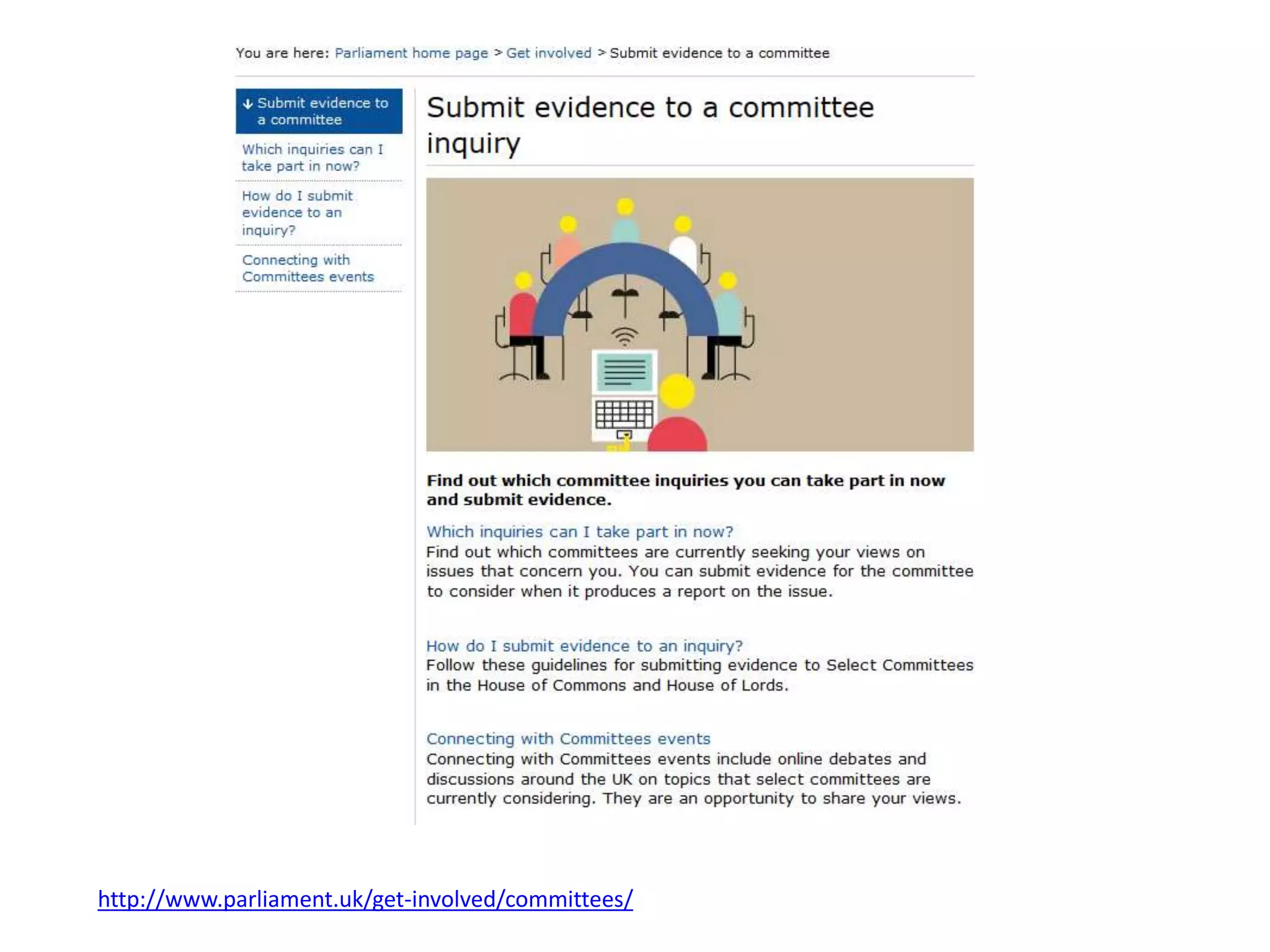
http://www.parliament.uk/get-involved/committees/
Your next steps...
• Watch, read or attend a debate on a bill
• Use http://services.parliament.uk/bills/ to find information
on specific bills (e.g. Library briefing papers or amendment
papers)
• Use www.parliament.uk to research MPs and Peers with an
interest in your issue
• Write to an interested MP or Peer about your issue
• Read the advice on submitting evidence to Public Bill
Committees
• Submit evidence to a Public Bill Committee
Where can I get information?
• www.parliament.uk @UKParliament
• Commons Information Office
020 7219 4272
@HouseofCommons hcinfo@parliament.uk
• Lords Information Office
020 7219 3107
@UKHouseofLords hlinfo@parliament.uk
• Parliament’s Outreach Service
020 7219 1650
@UKParlOutreach outreach@parliament.uk

Introduction to Select Committees

  • 1.
    Select Committees: an introduction KateAnderson Parliament’s Outreach Service
  • 2.
    Parliament’s Outreach Service •A service from the Houses of Parliament • Politically neutral • Aim is to increase knowledge and engagement with work and processes of Parliament • Can come to groups and explain how to engage with Parliament
  • 3.
    Select Committees • Setup to scrutinise specific areas of work and Government departments • Work carried out through inquiries • Groups and individuals submit evidence to inquiries • Inquiry report created and passed to the relevant Government department
  • 4.
    Make up ofthe House of Commons State of the Parties - May 2015 Conservative Labour SNP DUP Liberal Democrat Sinn Fein Plaid Cymru SDLP Ulster Unionist UKIP Green Speaker Independent
  • 5.
    House of Commonsselect committees • One committee for each Government department • Examine three aspects of the department: spending, policies and administration • Have 11 members to reflect the political composition of the House of Commons • Some committees cross department boundaries, such as the Public Accounts or the Environmental Audit Committee
  • 6.
    House of Lordsselect committees • Examine issues rather than the work of specific departments • Investigate specialist subjects which take advantage of the experience of members of the Lords • There is no set political composition
  • 7.
    House of Lordsselect committees • Five main Lords select committees • European Union Select Committee • Science and Technology Select Committee • Communications Select Committee • Constitution Select Committee • Economic Affairs Select Committees • Ad hoc committees set up for a specific subject • Equality Act 2010 and Disability Committee • Sexual Violence in Conflict Committee
  • 8.
    Joint committees • Committeeswhich have members from both Houses – Joint Committee on Human Rights – Joint Committee on Statutory Instruments – ad hoc committees
  • 9.
    Benefits of selectcommittees • A key way in which Parliament holds Government to account • Enables Parliament to examine key issues in great detail – more than debates or questions • Allows huge range of expertise to be applied to scrutiny • Independent minded • Can call for people, papers, records.
  • 10.
  • 11.
    Stages of aninquiry Inquiry announced Call for evidence Written evidence deadline Oral evidence sessions Report preparation Publication of report Government response
  • 12.
    Key points • Independentof Government • Seek consensus • Committees control work programme • Inquiries are based on evidence received • Programmes are flexible • Anyone can submit evidence
  • 13.
    General advice • WhichCommittees are of interest? • Sign up for press notices • Submit written evidence – and possibly oral • Watch oral evidence sessions online or in person • Read written evidence and transcripts • Follow on twitter
  • 14.
    House of CommonsLibrary • The House of Commons Library briefings cover all major pieces of legislation, other major policy areas, topical issues, statistics and FAQs • Legislation briefings are also on the Bills pages • Our blog includes regular analysis from our specialists http://commonslibraryblog.com/ • Key issues for the new Parliament available in the foyer http://www.parliament.uk/commons-library @commonslibrary
  • 15.
  • 16.
  • 17.
  • 18.
    Your next steps... •Watch, read or attend a debate on a bill • Use http://services.parliament.uk/bills/ to find information on specific bills (e.g. Library briefing papers or amendment papers) • Use www.parliament.uk to research MPs and Peers with an interest in your issue • Write to an interested MP or Peer about your issue • Read the advice on submitting evidence to Public Bill Committees • Submit evidence to a Public Bill Committee
  • 19.
    Where can Iget information? • www.parliament.uk @UKParliament • Commons Information Office 020 7219 4272 @HouseofCommons hcinfo@parliament.uk • Lords Information Office 020 7219 3107 @UKHouseofLords hlinfo@parliament.uk • Parliament’s Outreach Service 020 7219 1650 @UKParlOutreach outreach@parliament.uk