PUBLIC BILL SEMINAR
An introduction to the
House of Commons Select
Committees
Marion Ferrat
Committee Specialist
19 June 2014
The role of Parliament
2
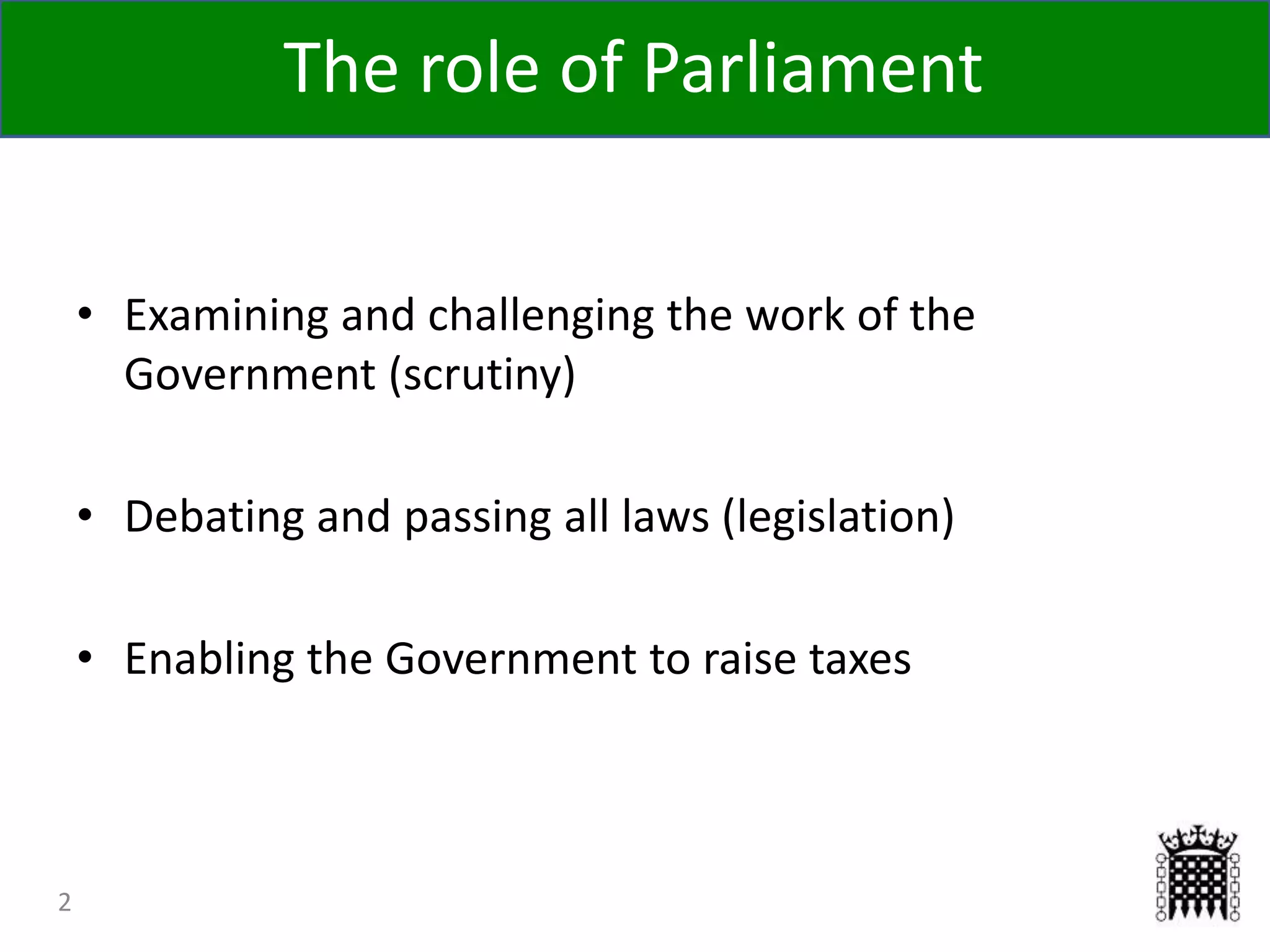
• Examining and challenging the work of the
Government (scrutiny)
• Debating and passing all laws (legislation)
• Enabling the Government to raise taxes
Committees
3
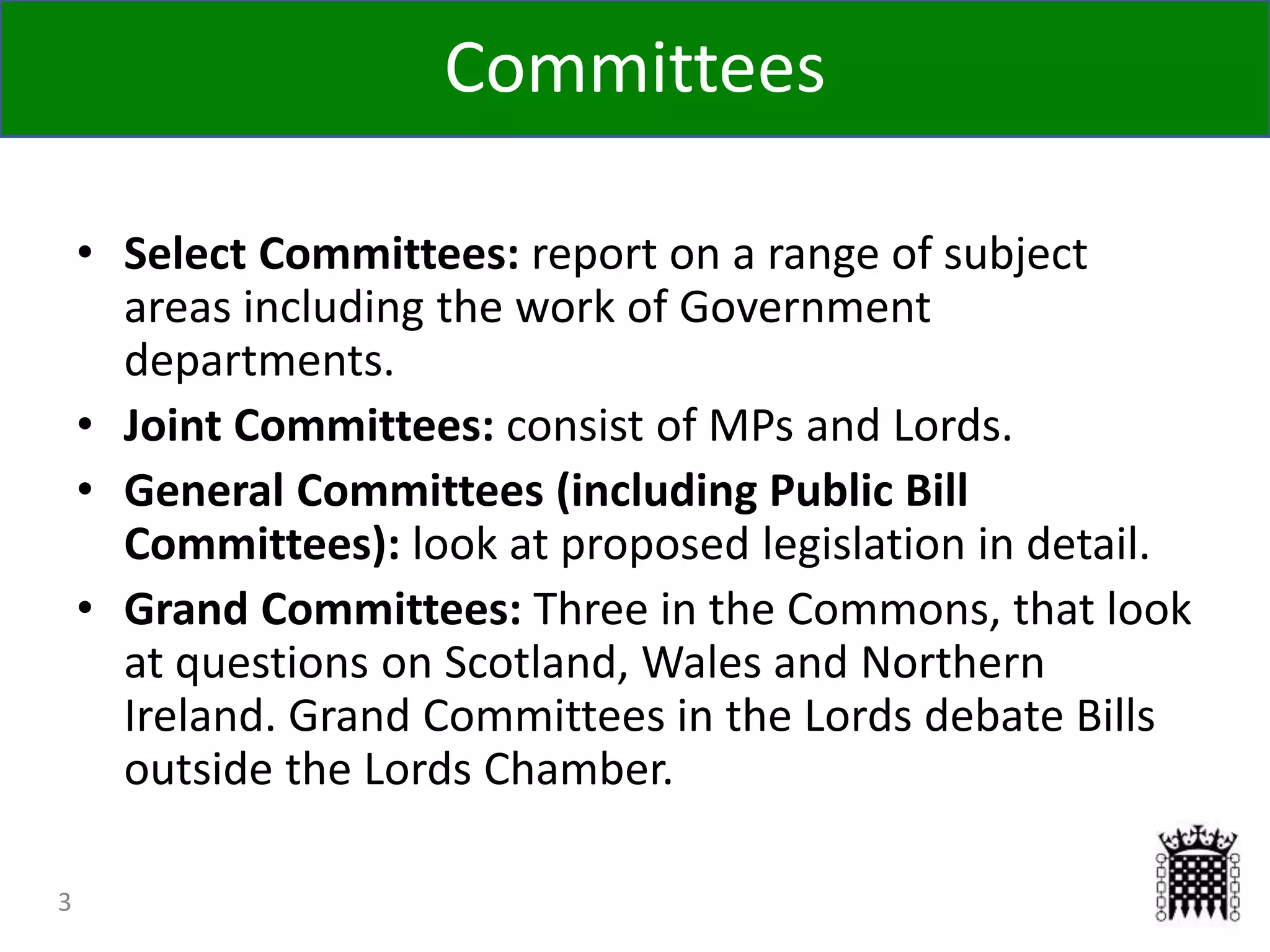
• Select Committees: report on a range of subject
areas including the work of Government
departments.
• Joint Committees: consist of MPs and Lords.
• General Committees (including Public Bill
Committees): look at proposed legislation in detail.
• Grand Committees: Three in the Commons, that look
at questions on Scotland, Wales and Northern
Ireland. Grand Committees in the Lords debate Bills
outside the Lords Chamber.
4
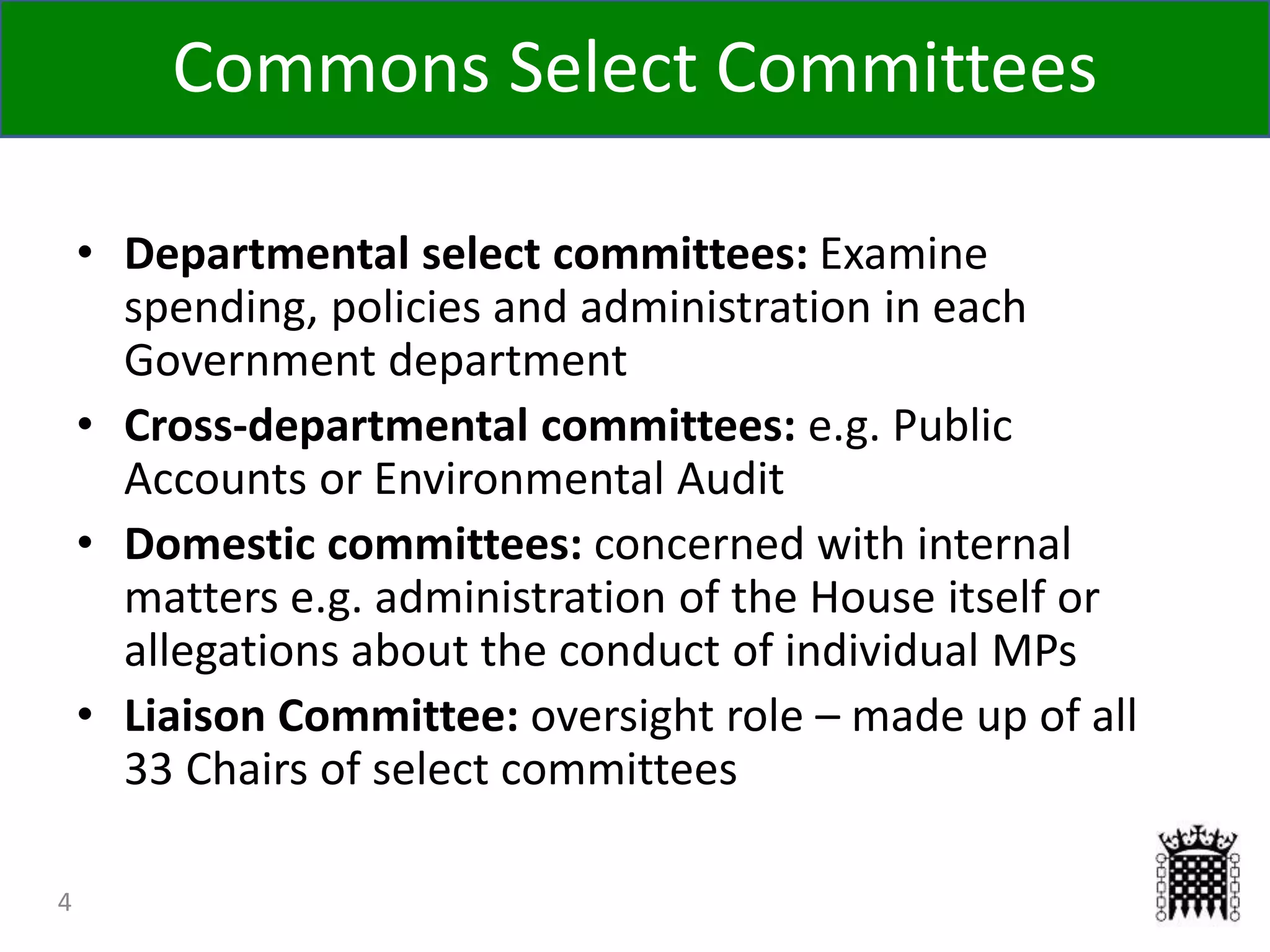
• Departmental select committees: Examine
spending, policies and administration in each
Government department
• Cross-departmental committees: e.g. Public
Accounts or Environmental Audit
• Domestic committees: concerned with internal
matters e.g. administration of the House itself or
allegations about the conduct of individual MPs
• Liaison Committee: oversight role – made up of all
33 Chairs of select committees
Commons Select Committees
5
• Examine spending, policies and administration in
each Government department
• Consist of at least 11 Members (MPs) from different
political parties (according to the proportion of MPs
each Party has in the House)
• Aim to work consensually across party lines
• Since 2010, Chair elected by whole House, other
members appointed by their parties
Departmental Select Committees
Role and Task of Committees
• Examine Government policy proposals and deficiencies
• Examine department’s actions and administration
• Monitor associated bodies
• Scrutinise major appointments
• Scrutinise draft bills
• Examine implementation of legislation
To hold Ministers and Departments to account for their
policy and decision-making and to support the House in its
control of the supply of public money and scrutiny of
legislation
7
• Meet once or twice a week
• Majority of work is based on subject-specific
“inquiries”: written and oral evidence from experts
• Other work includes pre-/post-legislative scrutiny,
pre-appointment hearings, seminars, commissioning
research, and sending substantive correspondence
Committee work
• Choose inquiry topic
• Internal scoping exercise
• Announce inquiry, terms of reference and call for
evidence (2-12 weeks)
• Sometimes appoint special advisors
• Hold oral evidence sessions and go on visits
• Draft, amend and agree report
• Publish report (sometimes press launch)
• Government response, usually within 60 days
8
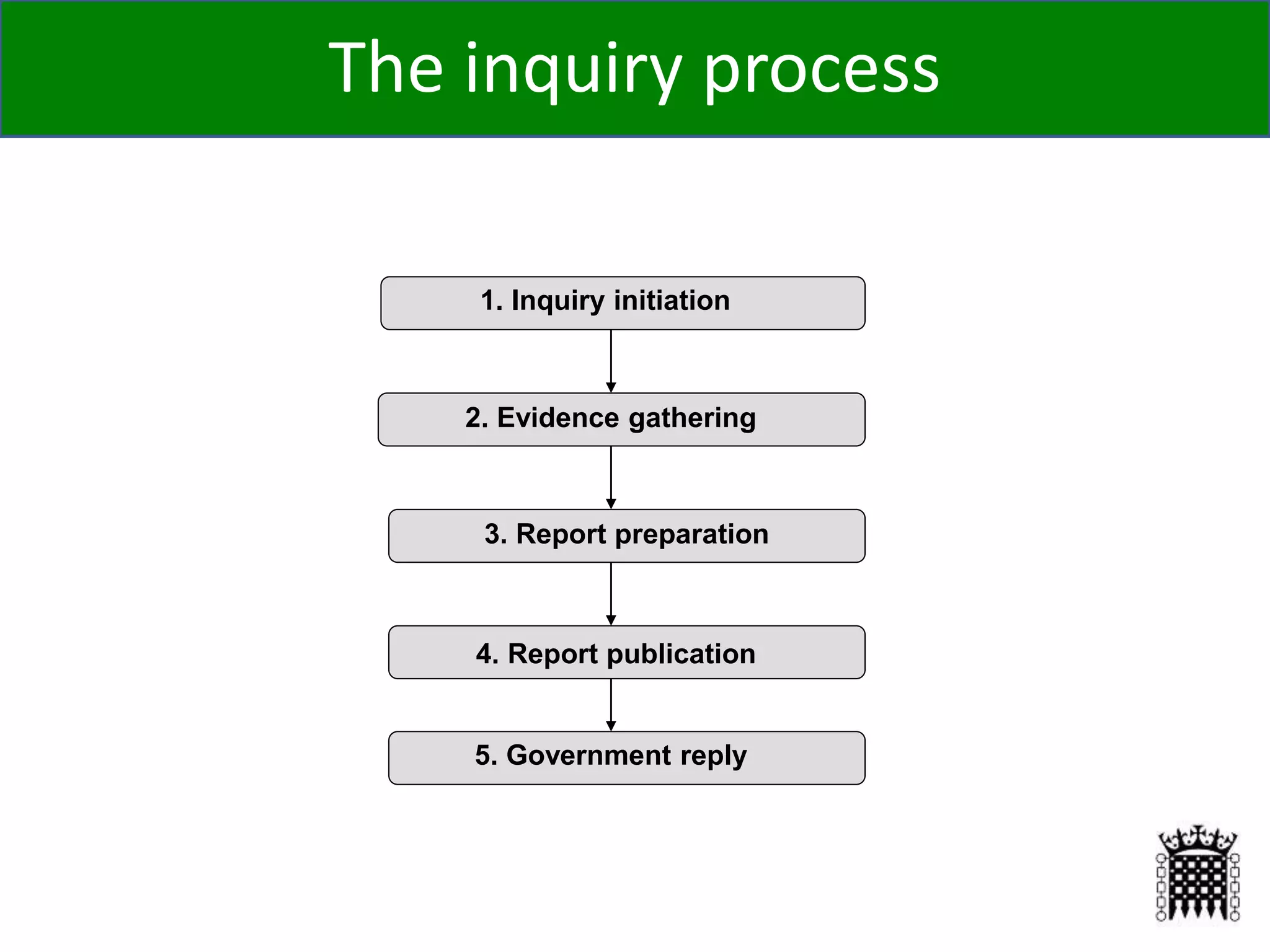
The inquiry process
5. Government reply
3. Report preparation
1. Inquiry initiation
2. Evidence gathering
The inquiry process
4. Report publication
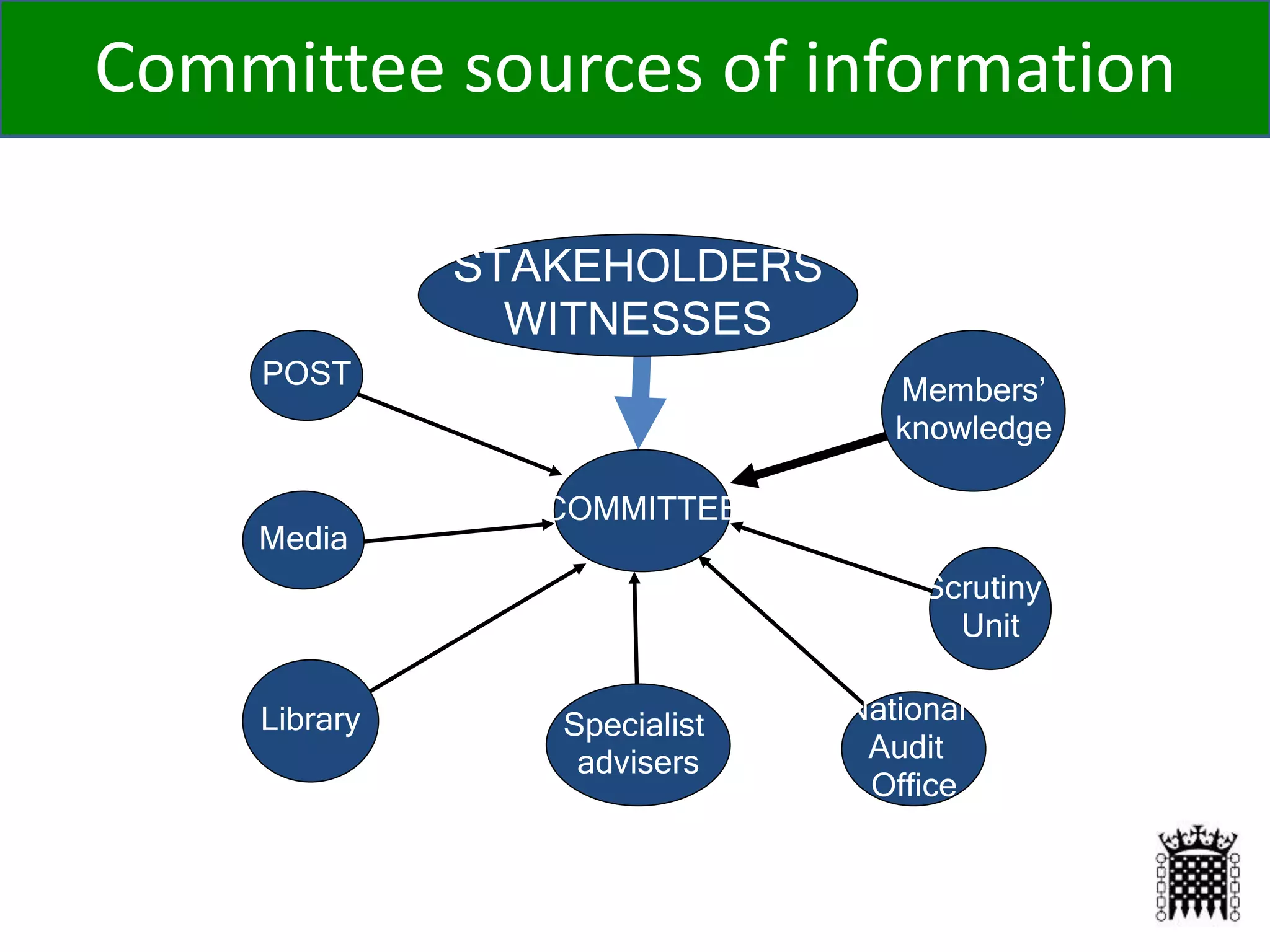
POST
Media
Library Specialist
advisers
National
Audit
Office
Scrutiny
Unit
Members’
knowledge
STAKEHOLDERS
WITNESSES
COMMITTEE
Committee sources of information
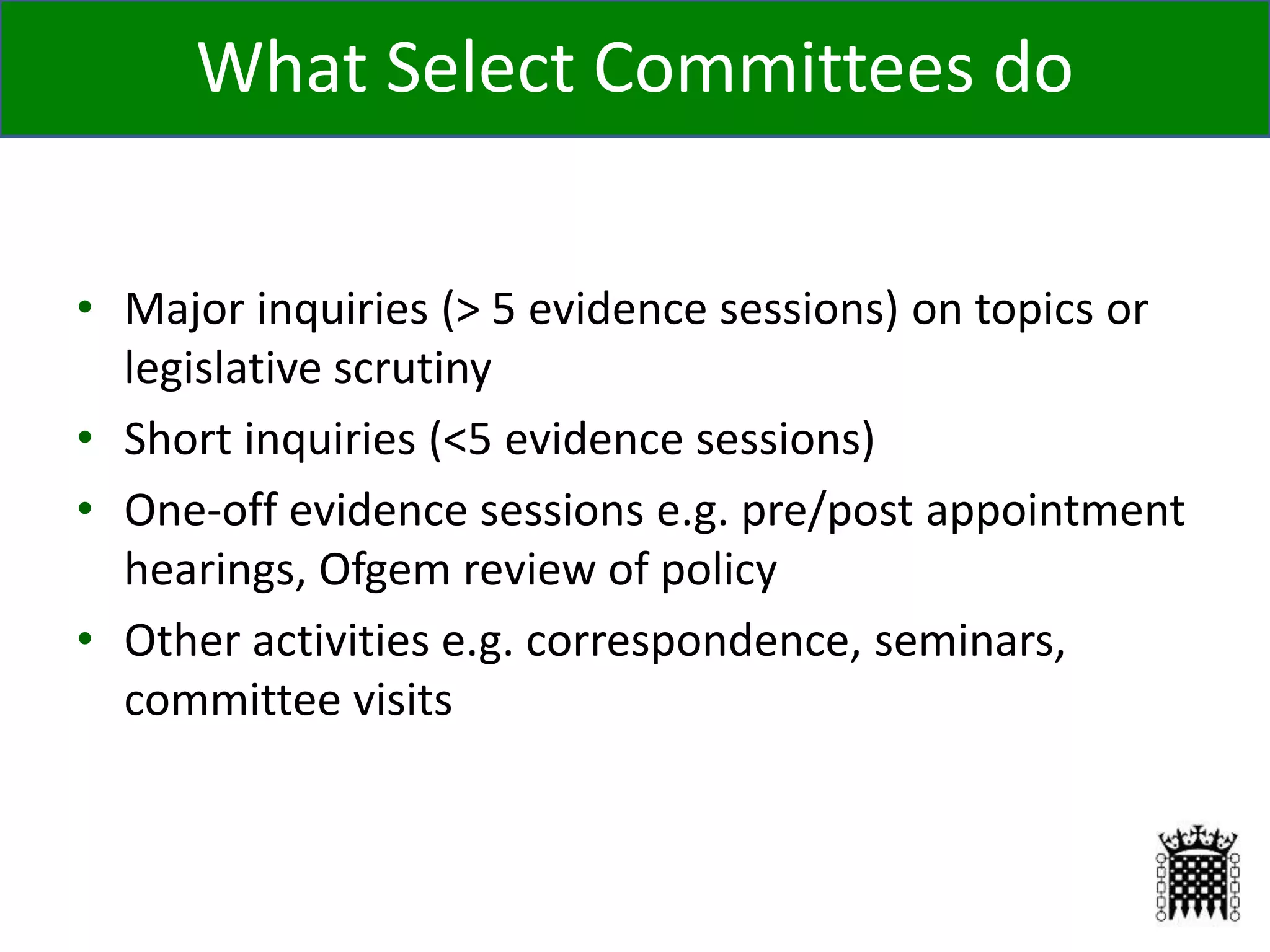
• Major inquiries (> 5 evidence sessions) on topics or
legislative scrutiny
• Short inquiries (<5 evidence sessions)
• One-off evidence sessions e.g. pre/post appointment
hearings, Ofgem review of policy
• Other activities e.g. correspondence, seminars,
committee visits
11
What Select Committees do
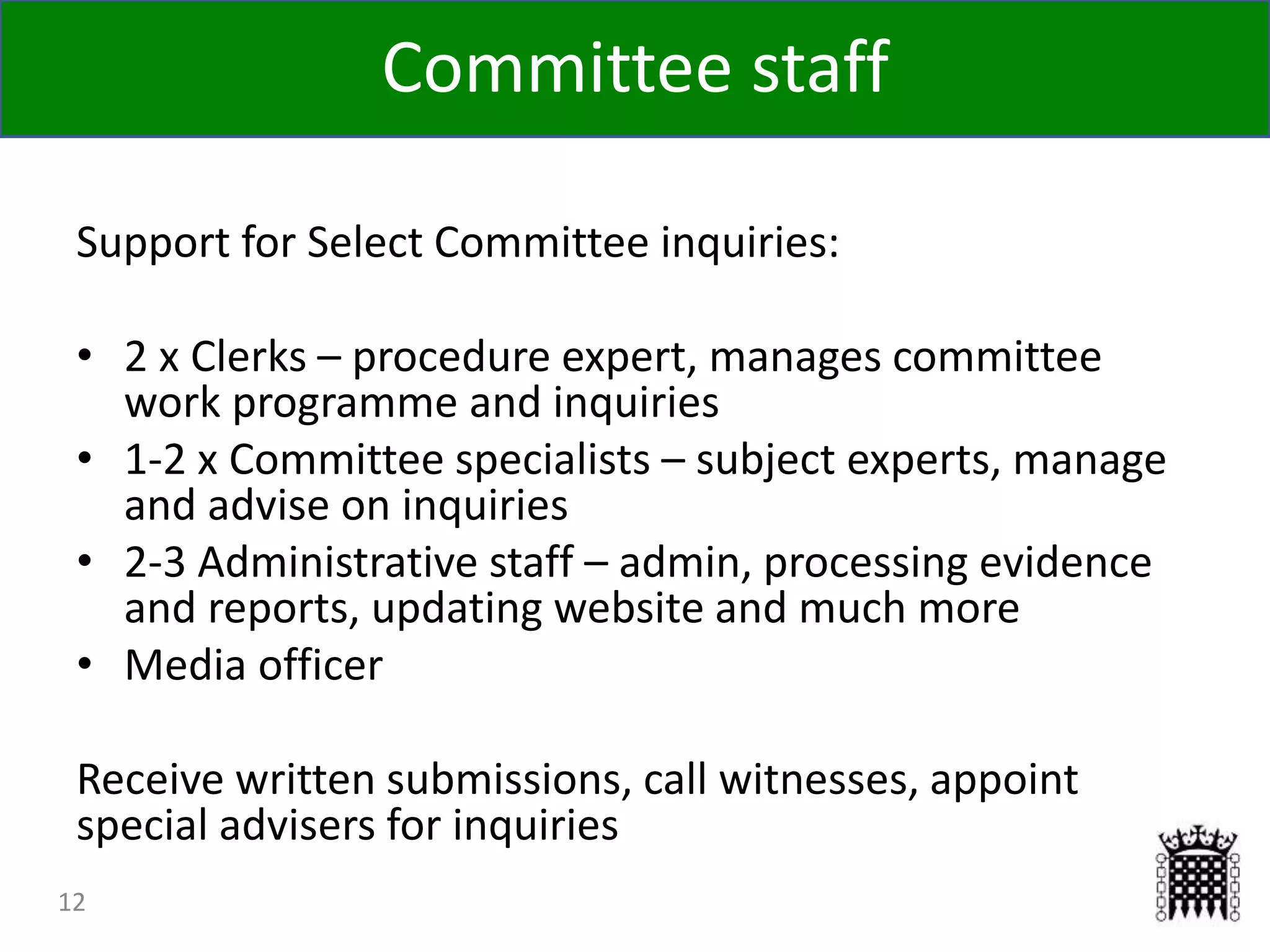
12
Support for Select Committee inquiries:
• 2 x Clerks – procedure expert, manages committee
work programme and inquiries
• 1-2 x Committee specialists – subject experts, manage
and advise on inquiries
• 2-3 Administrative staff – admin, processing evidence
and reports, updating website and much more
• Media officer
Receive written submissions, call witnesses, appoint
special advisers for inquiries
Committee staff
13
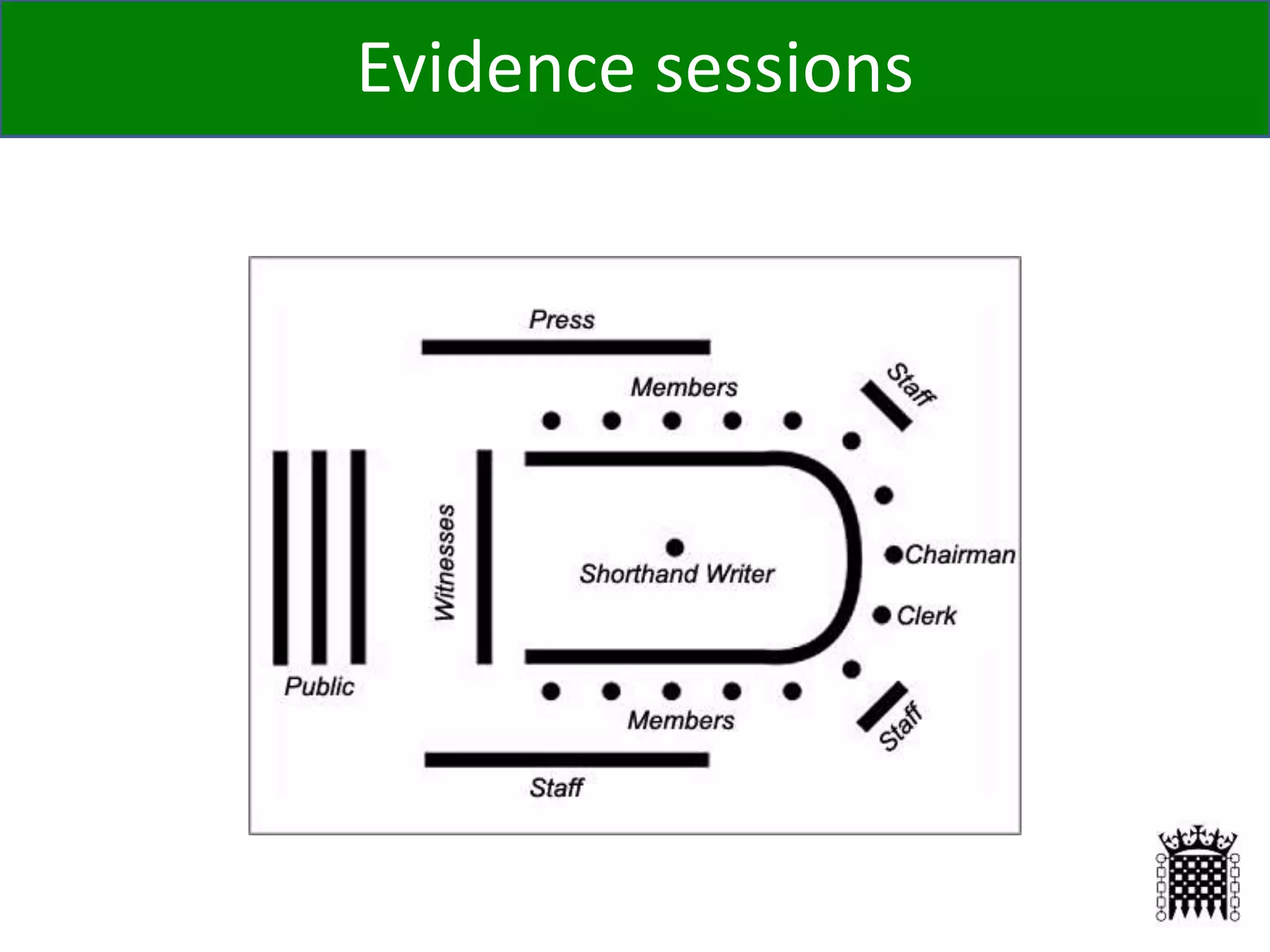
Evidence sessions
14
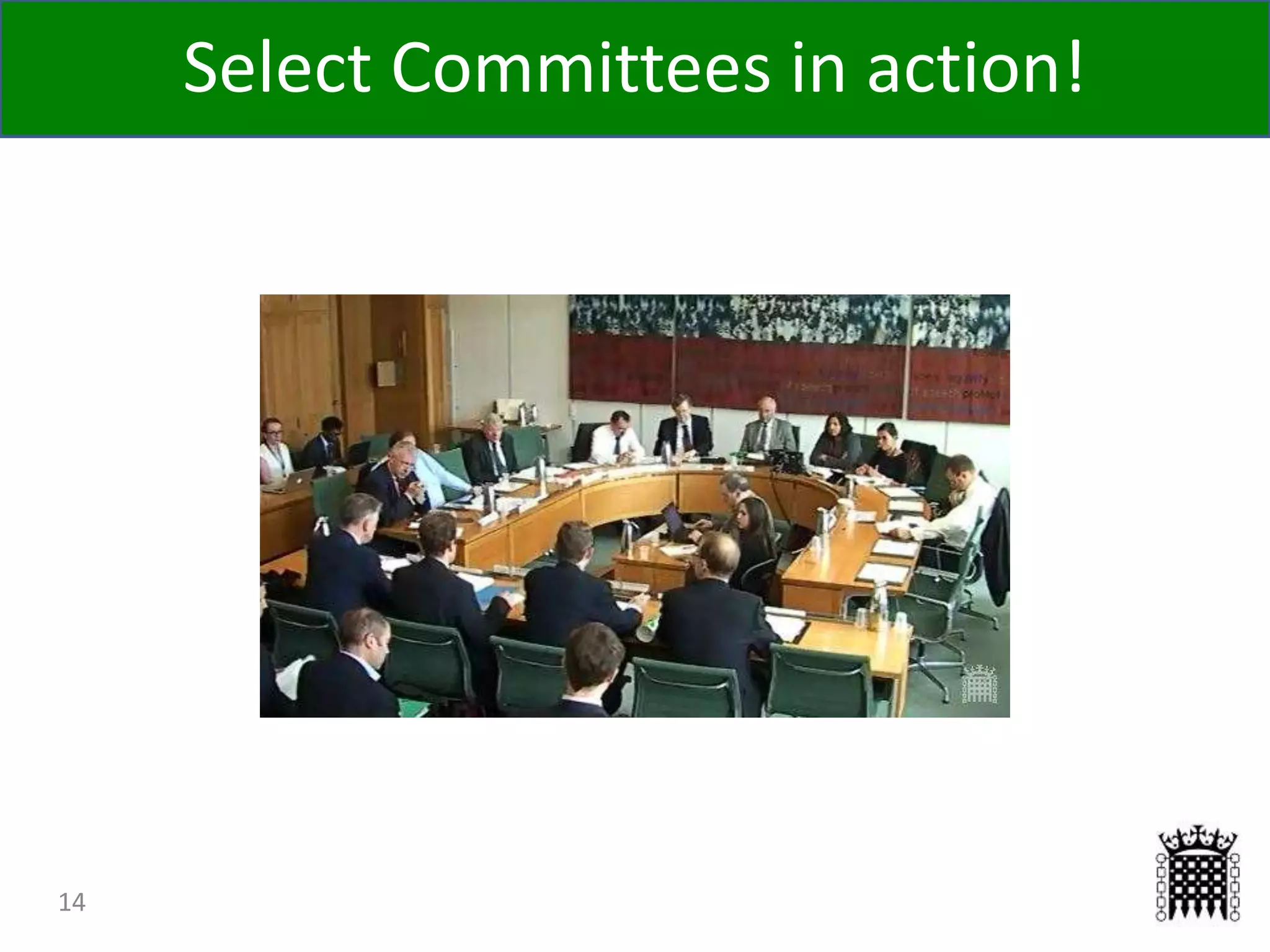
Select Committees in action!
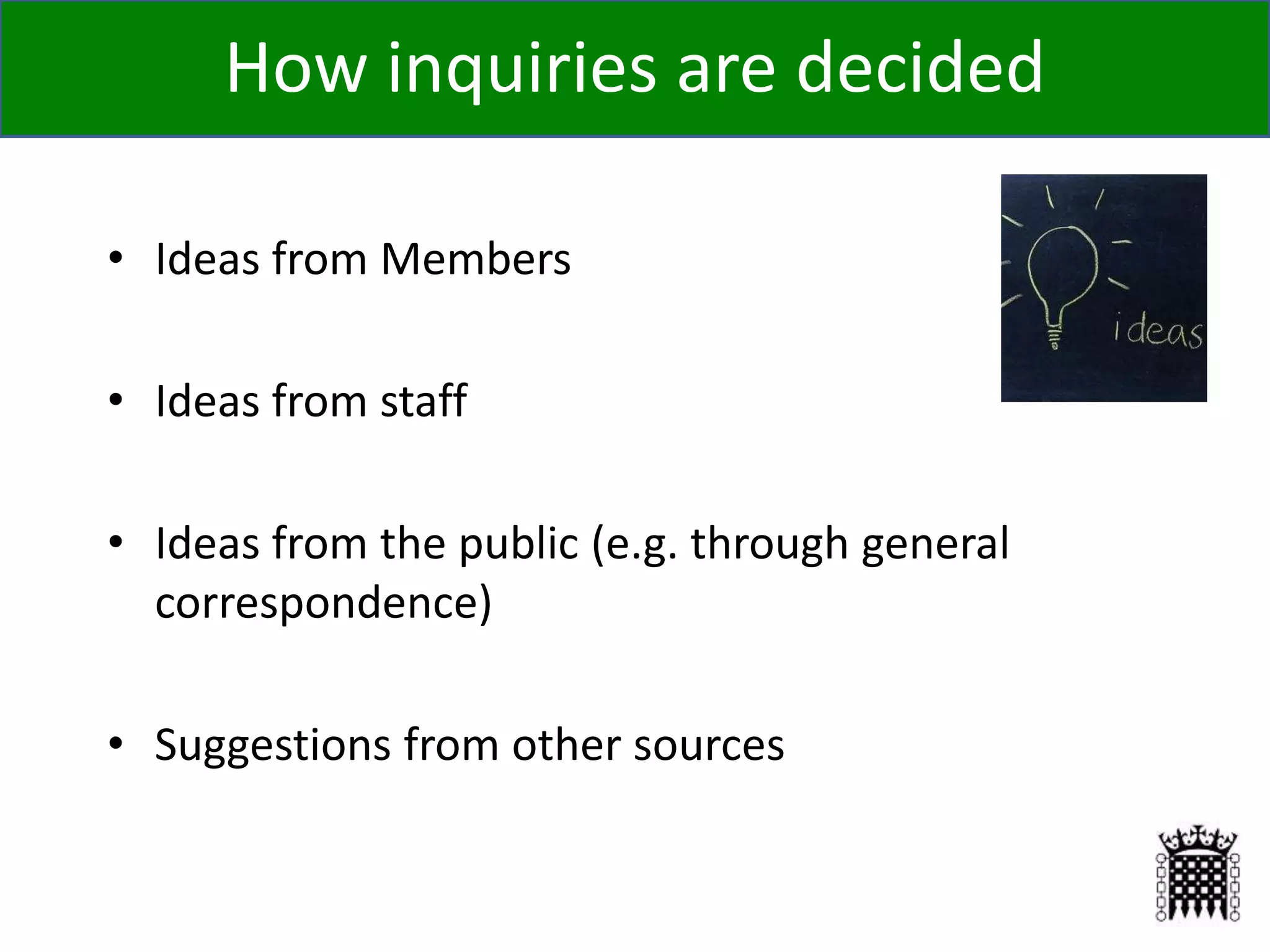
• Ideas from Members
• Ideas from staff
• Ideas from the public (e.g. through general
correspondence)
• Suggestions from other sources
15
How inquiries are decided
Many ways!
• Submitting evidence
– Written
– Oral
• Contact with staff (informal)
• Specialist Adviser (formal)
• Work placement?
Engaging with Select Committees
17
• Engage with Committee staff (contact details on the
websites)
• Watch out for announcements after Committee
meetings
• Provide written evidence (deadlines can sometimes
be negotiated)
• Briefings on likely line of questioning for oral
evidence
• Use our reports and evidence as a resource
Engaging with Select Committees
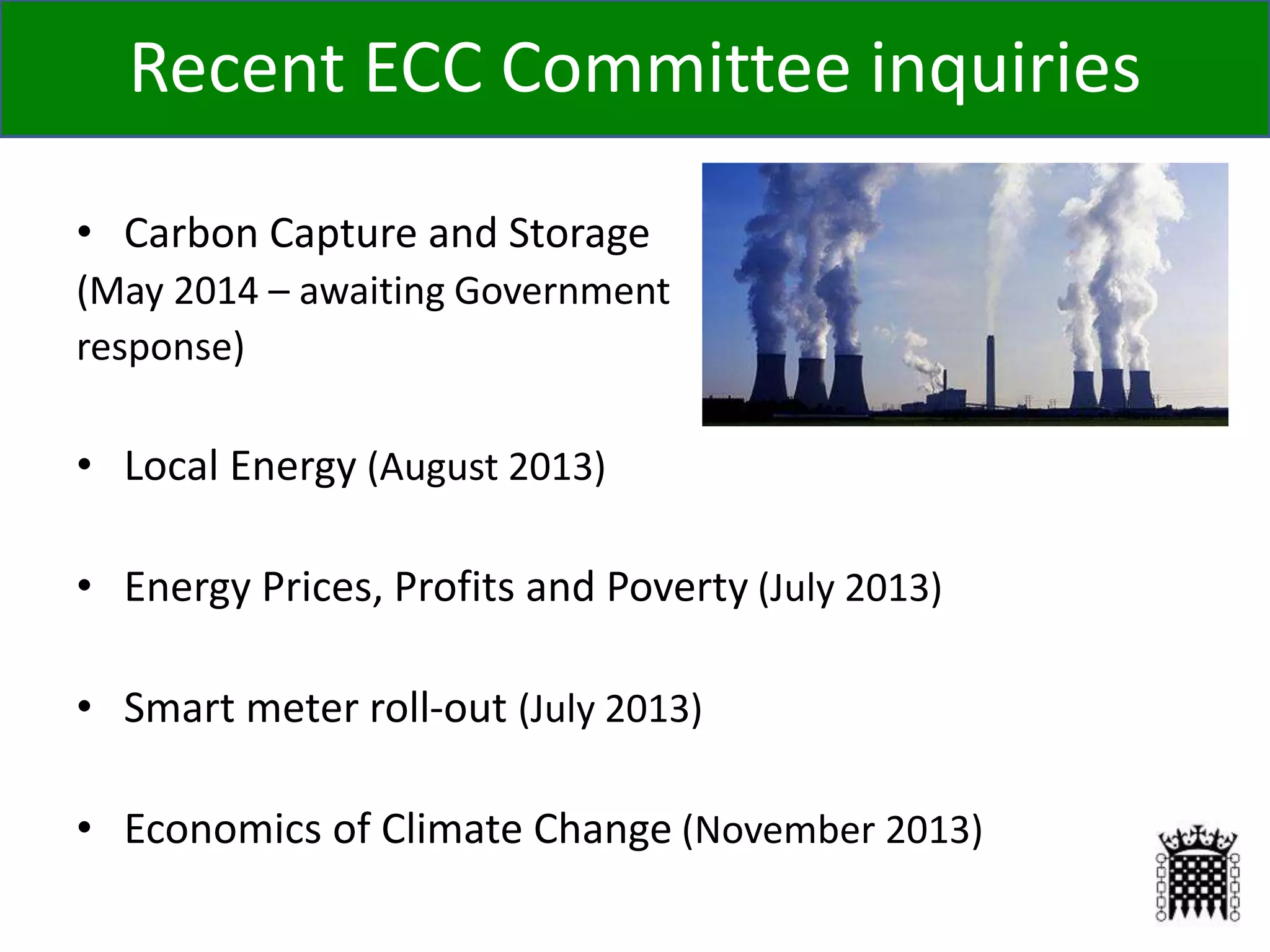
Recent ECC Committee inquiries
• Carbon Capture and Storage
(May 2014 – awaiting Government
response)
• Local Energy (August 2013)
• Energy Prices, Profits and Poverty (July 2013)
• Smart meter roll-out (July 2013)
• Economics of Climate Change (November 2013)
Current ECC Committee inquiries
• IPCC 5th Assessment Review
• Low Carbon Innovation
• The Green Deal
• Small Nuclear Power
• Network Costs
... Any Questions?
Marion Ferrat
Committee Specialist
Energy and Climate Change Committee
ferratm@parliament.uk
020 7219 3092

House of Commons Select Committees

  • 1.
    PUBLIC BILL SEMINAR Anintroduction to the House of Commons Select Committees Marion Ferrat Committee Specialist 19 June 2014
  • 2.
    The role ofParliament 2 • Examining and challenging the work of the Government (scrutiny) • Debating and passing all laws (legislation) • Enabling the Government to raise taxes
  • 3.
    Committees 3 • Select Committees:report on a range of subject areas including the work of Government departments. • Joint Committees: consist of MPs and Lords. • General Committees (including Public Bill Committees): look at proposed legislation in detail. • Grand Committees: Three in the Commons, that look at questions on Scotland, Wales and Northern Ireland. Grand Committees in the Lords debate Bills outside the Lords Chamber.
  • 4.
    4 • Departmental selectcommittees: Examine spending, policies and administration in each Government department • Cross-departmental committees: e.g. Public Accounts or Environmental Audit • Domestic committees: concerned with internal matters e.g. administration of the House itself or allegations about the conduct of individual MPs • Liaison Committee: oversight role – made up of all 33 Chairs of select committees Commons Select Committees
  • 5.
    5 • Examine spending,policies and administration in each Government department • Consist of at least 11 Members (MPs) from different political parties (according to the proportion of MPs each Party has in the House) • Aim to work consensually across party lines • Since 2010, Chair elected by whole House, other members appointed by their parties Departmental Select Committees
  • 6.
    Role and Taskof Committees • Examine Government policy proposals and deficiencies • Examine department’s actions and administration • Monitor associated bodies • Scrutinise major appointments • Scrutinise draft bills • Examine implementation of legislation To hold Ministers and Departments to account for their policy and decision-making and to support the House in its control of the supply of public money and scrutiny of legislation
  • 7.
    7 • Meet onceor twice a week • Majority of work is based on subject-specific “inquiries”: written and oral evidence from experts • Other work includes pre-/post-legislative scrutiny, pre-appointment hearings, seminars, commissioning research, and sending substantive correspondence Committee work
  • 8.
    • Choose inquirytopic • Internal scoping exercise • Announce inquiry, terms of reference and call for evidence (2-12 weeks) • Sometimes appoint special advisors • Hold oral evidence sessions and go on visits • Draft, amend and agree report • Publish report (sometimes press launch) • Government response, usually within 60 days 8 The inquiry process
  • 9.
    5. Government reply 3.Report preparation 1. Inquiry initiation 2. Evidence gathering The inquiry process 4. Report publication
  • 10.
  • 11.
    • Major inquiries(> 5 evidence sessions) on topics or legislative scrutiny • Short inquiries (<5 evidence sessions) • One-off evidence sessions e.g. pre/post appointment hearings, Ofgem review of policy • Other activities e.g. correspondence, seminars, committee visits 11 What Select Committees do
  • 12.
    12 Support for SelectCommittee inquiries: • 2 x Clerks – procedure expert, manages committee work programme and inquiries • 1-2 x Committee specialists – subject experts, manage and advise on inquiries • 2-3 Administrative staff – admin, processing evidence and reports, updating website and much more • Media officer Receive written submissions, call witnesses, appoint special advisers for inquiries Committee staff
  • 13.
  • 14.
  • 15.
    • Ideas fromMembers • Ideas from staff • Ideas from the public (e.g. through general correspondence) • Suggestions from other sources 15 How inquiries are decided
  • 16.
    Many ways! • Submittingevidence – Written – Oral • Contact with staff (informal) • Specialist Adviser (formal) • Work placement? Engaging with Select Committees
  • 17.
    17 • Engage withCommittee staff (contact details on the websites) • Watch out for announcements after Committee meetings • Provide written evidence (deadlines can sometimes be negotiated) • Briefings on likely line of questioning for oral evidence • Use our reports and evidence as a resource Engaging with Select Committees
  • 18.
    Recent ECC Committeeinquiries • Carbon Capture and Storage (May 2014 – awaiting Government response) • Local Energy (August 2013) • Energy Prices, Profits and Poverty (July 2013) • Smart meter roll-out (July 2013) • Economics of Climate Change (November 2013)
  • 19.
    Current ECC Committeeinquiries • IPCC 5th Assessment Review • Low Carbon Innovation • The Green Deal • Small Nuclear Power • Network Costs
  • 20.
    ... Any Questions? MarionFerrat Committee Specialist Energy and Climate Change Committee ferratm@parliament.uk 020 7219 3092