Introduction to
Refraction
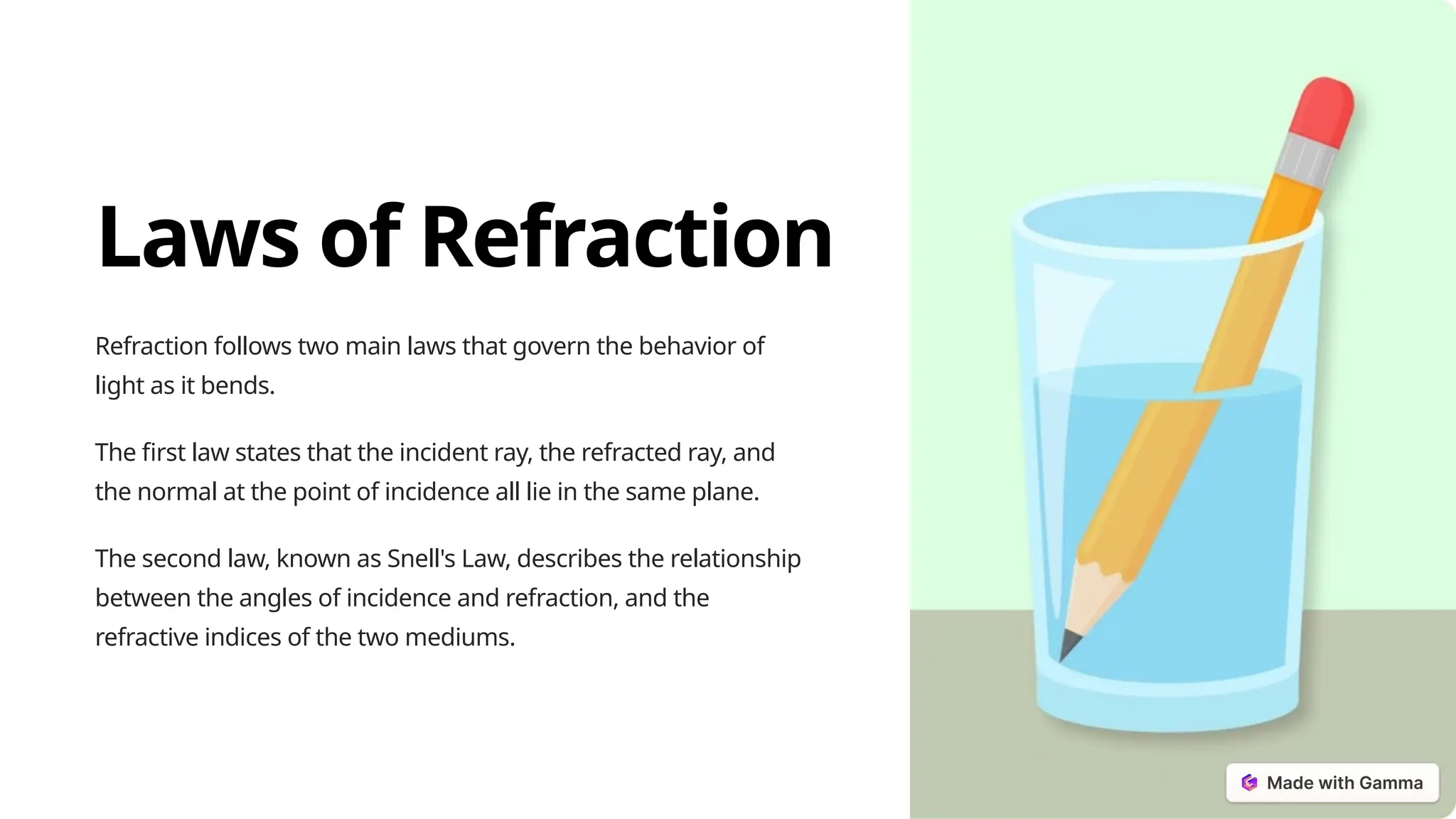
Refraction is the bending of light as it passes from one medium
to another. This bending occurs because light travels at different
speeds in different mediums. For example, light travels slower in
water than it does in air. When light enters a new medium, it
changes direction.
Laws of Refraction
Refraction follows two main laws that govern the behavior of
light as it bends.
The first law states that the incident ray, the refracted ray, and
the normal at the point of incidence all lie in the same plane.
The second law, known as Snell's Law, describes the relationship
between the angles of incidence and refraction, and the
refractive indices of the two mediums.
Refractive Index
The refractive index is a crucial concept in understanding the
behavior of light as it travels through different materials.
It measures how much light bends as it passes from one
medium to another, indicating the relative speed of light in that
medium. A higher refractive index means the light bends more
sharply.
Refraction
through a
Rectangular Glass
Slab
When light enters a rectangular glass slab, it bends as it passes
from air to glass. This bending is caused by the change in the
speed of light as it travels through different mediums.
The light then travels through the glass slab in a straight line.
Upon exiting the slab and entering the air again, it bends once
more, returning to its original direction. This phenomenon is
called refraction. The light emerges parallel to the incident ray,
but slightly displaced.
Partial Reflection
and Refraction
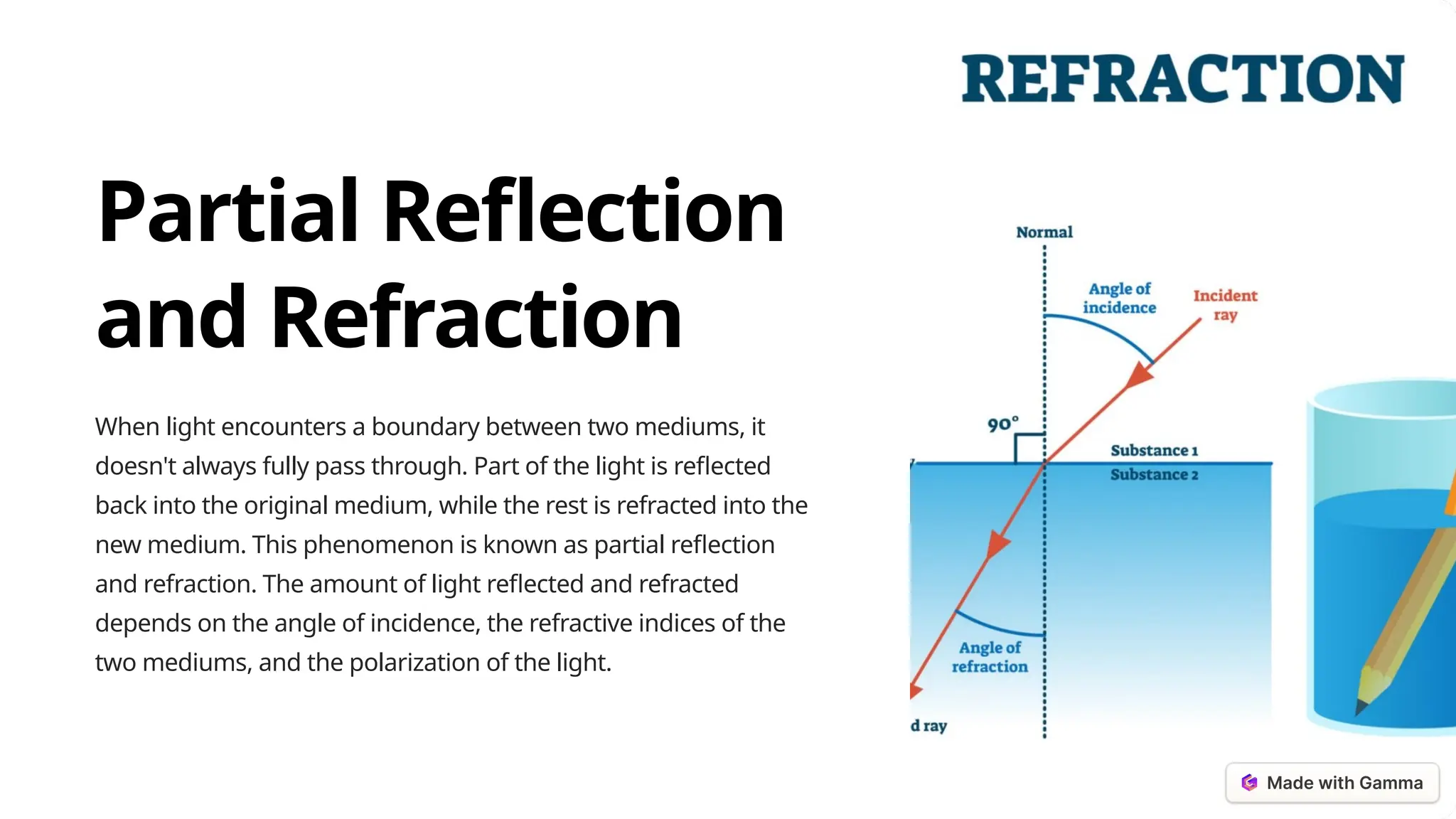
When light encounters a boundary between two mediums, it
doesn't always fully pass through. Part of the light is reflected
back into the original medium, while the rest is refracted into the
new medium. This phenomenon is known as partial reflection
and refraction. The amount of light reflected and refracted
depends on the angle of incidence, the refractive indices of the
two mediums, and the polarization of the light.
Real and
Apparent Depth
The real depth of an object is its actual distance from the surface
of the water. However, when viewed from above the water's
surface, the object appears to be at a shallower depth than its
real depth. This perceived depth is called the apparent depth.
The difference between real and apparent depth is a
consequence of the refraction of light as it passes from water to
air.
Refraction
through a Glass
Prism
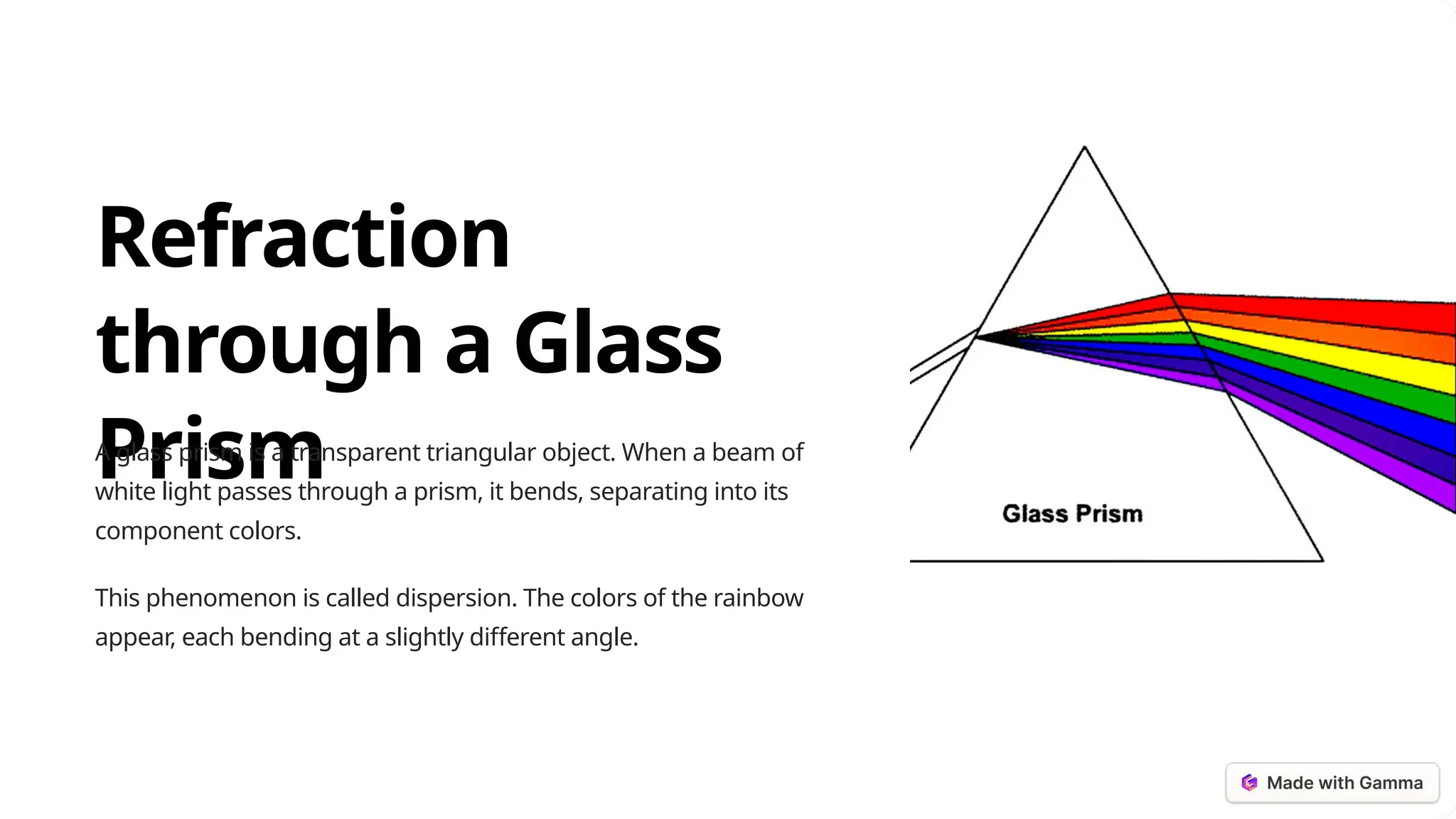
A glass prism is a transparent triangular object. When a beam of
white light passes through a prism, it bends, separating into its
component colors.
This phenomenon is called dispersion. The colors of the rainbow
appear, each bending at a slightly different angle.
Dispersion of Light
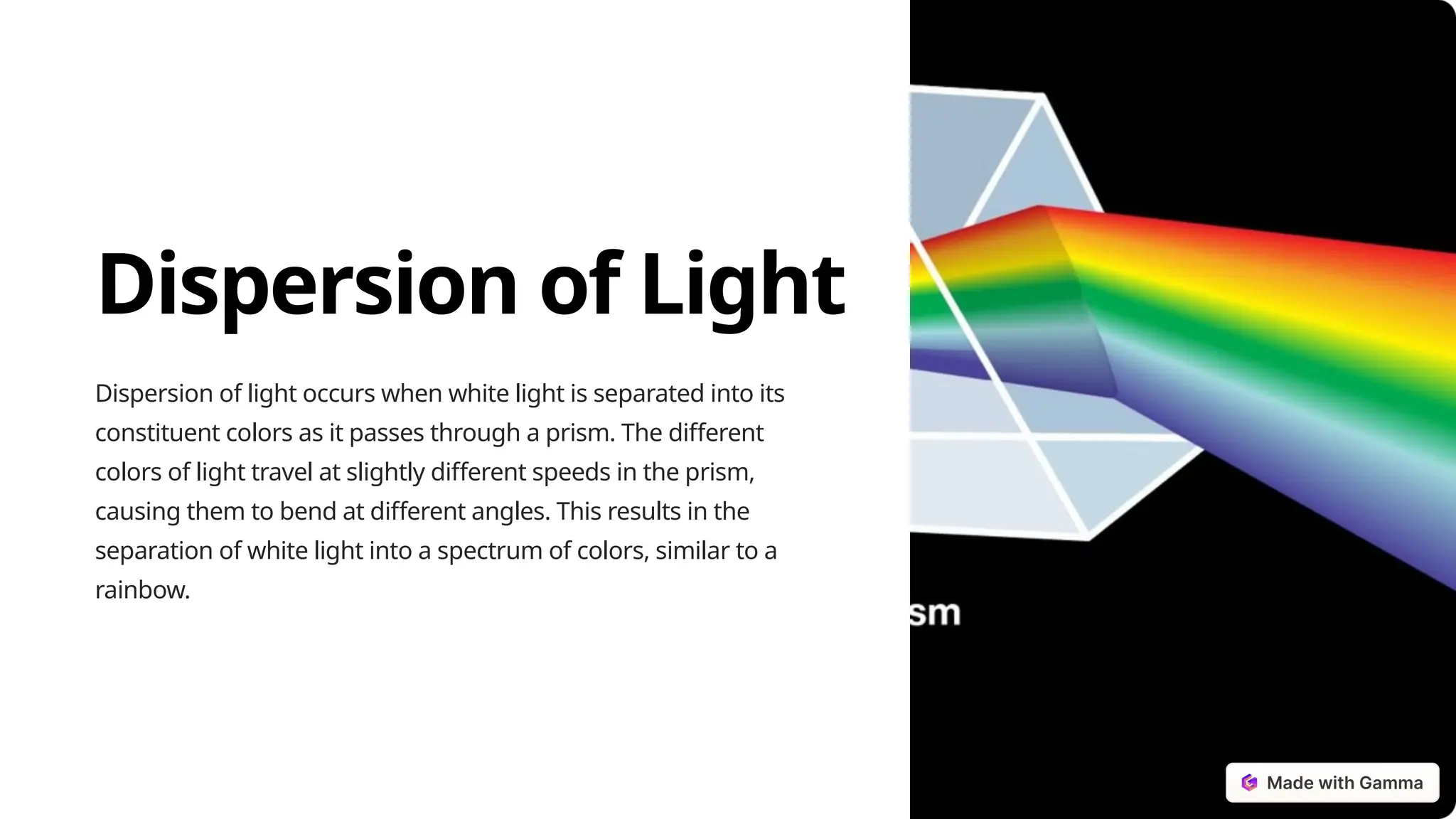
Dispersion of light occurs when white light is separated into its
constituent colors as it passes through a prism. The different
colors of light travel at slightly different speeds in the prism,
causing them to bend at different angles. This results in the
separation of white light into a spectrum of colors, similar to a
rainbow.
Applications of
Refraction
Refraction plays a crucial role in various technological
advancements and natural phenomena.
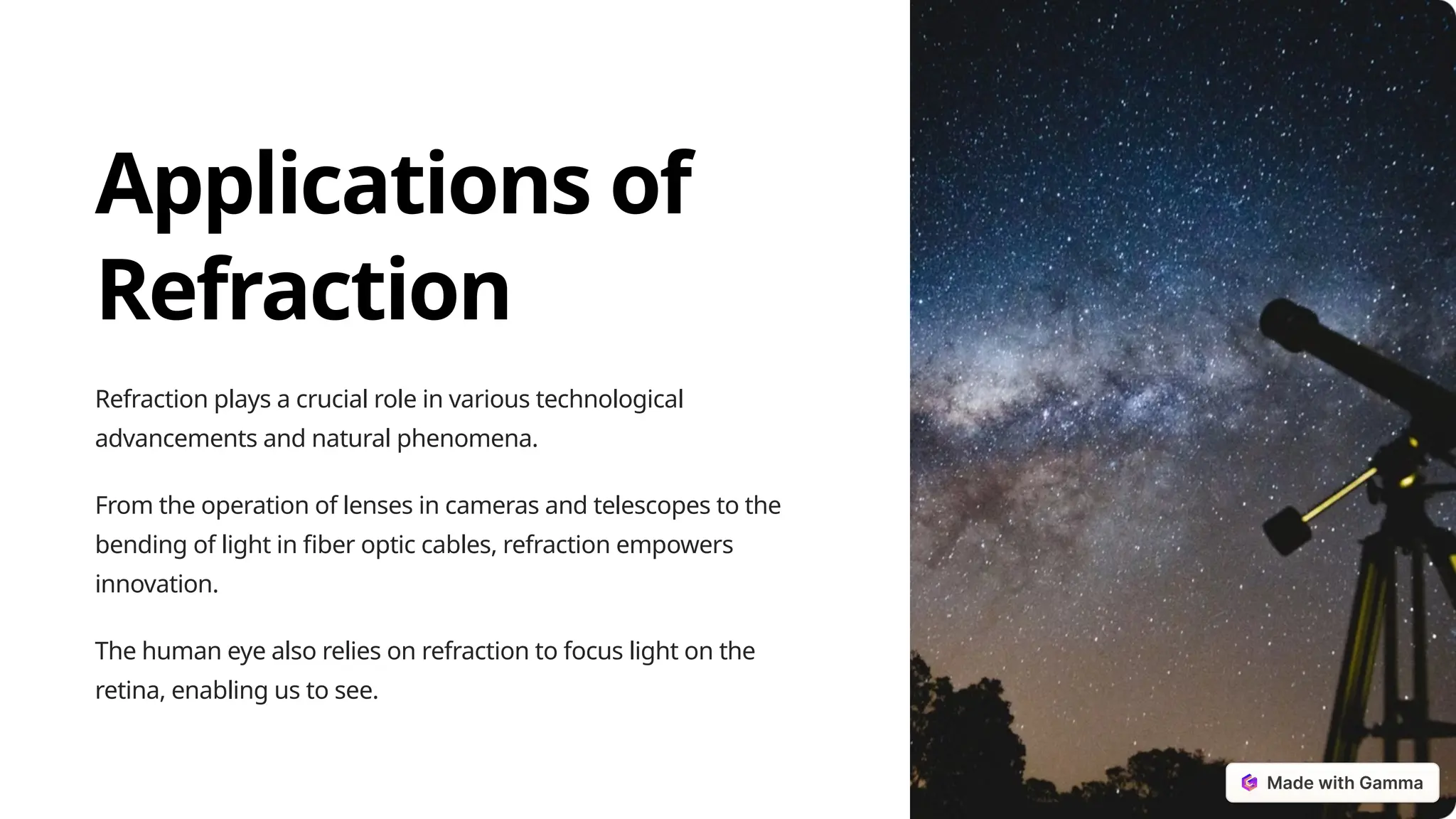
From the operation of lenses in cameras and telescopes to the
bending of light in fiber optic cables, refraction empowers
innovation.
The human eye also relies on refraction to focus light on the
retina, enabling us to see.
Conclusion
Refraction is a fundamental phenomenon in optics, affecting
how light travels through different mediums.
Understanding refraction is crucial for various technologies and
natural phenomena, from lenses in cameras to the human eye's
ability to see.

Introduction-to-Refraction ICSE /CBSE class 10.pptx

  • 1.
    Introduction to Refraction Refraction isthe bending of light as it passes from one medium to another. This bending occurs because light travels at different speeds in different mediums. For example, light travels slower in water than it does in air. When light enters a new medium, it changes direction.
  • 2.
    Laws of Refraction Refractionfollows two main laws that govern the behavior of light as it bends. The first law states that the incident ray, the refracted ray, and the normal at the point of incidence all lie in the same plane. The second law, known as Snell's Law, describes the relationship between the angles of incidence and refraction, and the refractive indices of the two mediums.
  • 3.
    Refractive Index The refractiveindex is a crucial concept in understanding the behavior of light as it travels through different materials. It measures how much light bends as it passes from one medium to another, indicating the relative speed of light in that medium. A higher refractive index means the light bends more sharply.
  • 4.
    Refraction through a Rectangular Glass Slab Whenlight enters a rectangular glass slab, it bends as it passes from air to glass. This bending is caused by the change in the speed of light as it travels through different mediums. The light then travels through the glass slab in a straight line. Upon exiting the slab and entering the air again, it bends once more, returning to its original direction. This phenomenon is called refraction. The light emerges parallel to the incident ray, but slightly displaced.
  • 5.
    Partial Reflection and Refraction Whenlight encounters a boundary between two mediums, it doesn't always fully pass through. Part of the light is reflected back into the original medium, while the rest is refracted into the new medium. This phenomenon is known as partial reflection and refraction. The amount of light reflected and refracted depends on the angle of incidence, the refractive indices of the two mediums, and the polarization of the light.
  • 6.
    Real and Apparent Depth Thereal depth of an object is its actual distance from the surface of the water. However, when viewed from above the water's surface, the object appears to be at a shallower depth than its real depth. This perceived depth is called the apparent depth. The difference between real and apparent depth is a consequence of the refraction of light as it passes from water to air.
  • 7.
    Refraction through a Glass Prism Aglass prism is a transparent triangular object. When a beam of white light passes through a prism, it bends, separating into its component colors. This phenomenon is called dispersion. The colors of the rainbow appear, each bending at a slightly different angle.
  • 8.
    Dispersion of Light Dispersionof light occurs when white light is separated into its constituent colors as it passes through a prism. The different colors of light travel at slightly different speeds in the prism, causing them to bend at different angles. This results in the separation of white light into a spectrum of colors, similar to a rainbow.
  • 9.
    Applications of Refraction Refraction playsa crucial role in various technological advancements and natural phenomena. From the operation of lenses in cameras and telescopes to the bending of light in fiber optic cables, refraction empowers innovation. The human eye also relies on refraction to focus light on the retina, enabling us to see.
  • 10.
    Conclusion Refraction is afundamental phenomenon in optics, affecting how light travels through different mediums. Understanding refraction is crucial for various technologies and natural phenomena, from lenses in cameras to the human eye's ability to see.