Introduction to Project Management and Methodology
1.
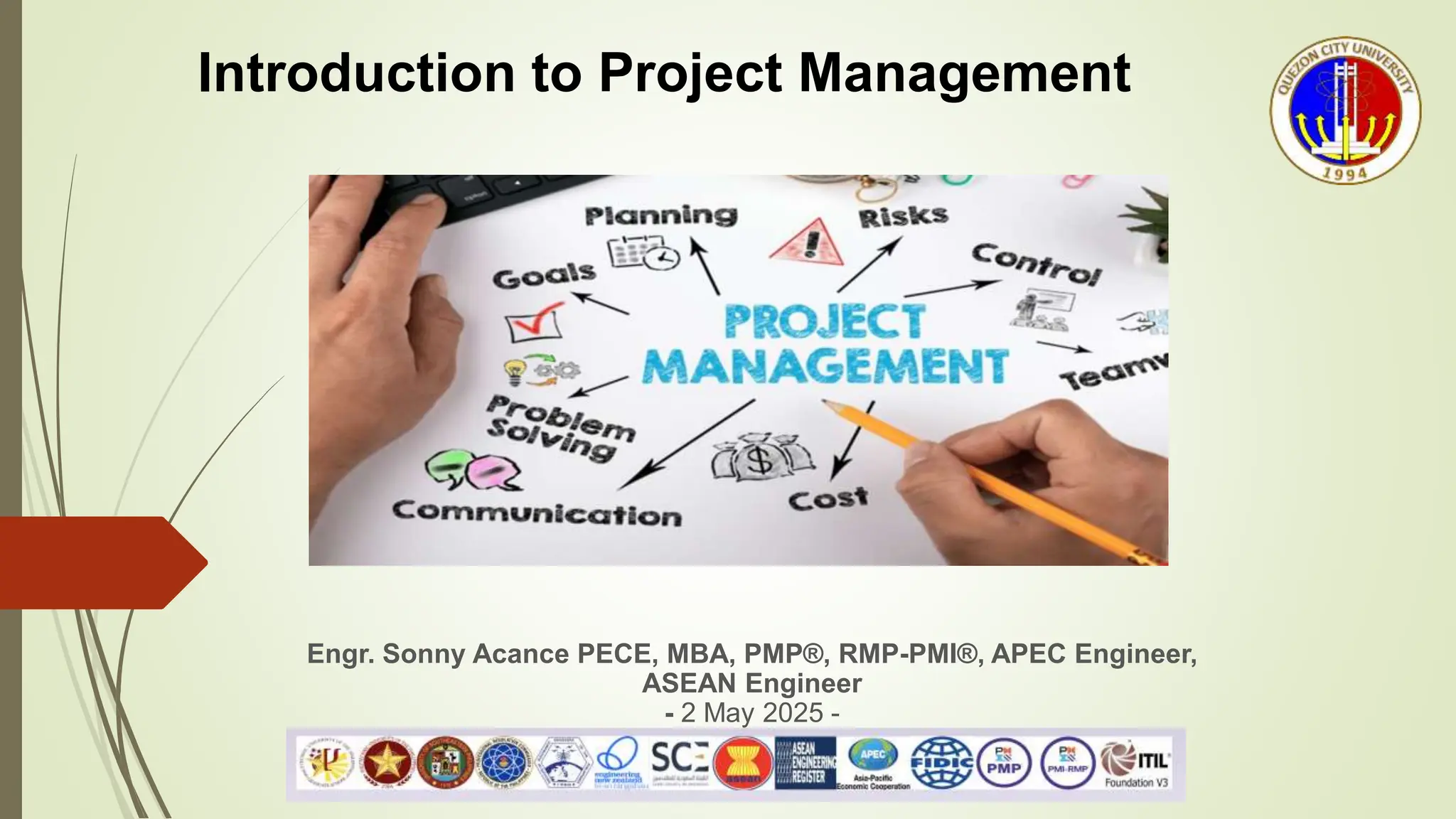
Introduction to ProjectManagement
Engr. Sonny Acance PECE, MBA, PMP®, RMP-PMI®, APEC Engineer,
ASEAN Engineer
- 2 May 2025 -
2.
What is ProjectManagement?
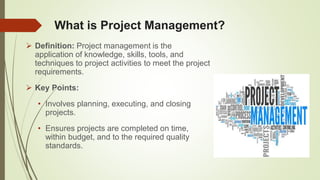
Definition: Project management is the
application of knowledge, skills, tools, and
techniques to project activities to meet the project
requirements.
Key Points:
• Involves planning, executing, and closing
projects.
• Ensures projects are completed on time,
within budget, and to the required quality
standards.
3.
Importance of
Project
Management
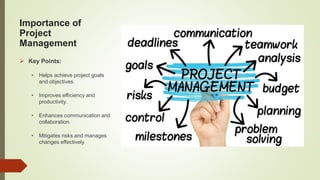
KeyPoints:
• Helps achieve project goals
and objectives.
• Improves efficiency and
productivity.
• Enhances communication and
collaboration.
• Mitigates risks and manages
changes effectively.
4.
Project Management Phases
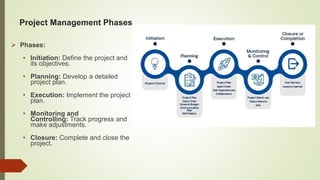
Phases:
• Initiation: Define the project and
its objectives.
• Planning: Develop a detailed
project plan.
• Execution: Implement the project
plan.
• Monitoring and
Controlling: Track progress and
make adjustments.
• Closure: Complete and close the
project.
5.
Key Project
Management
Concepts
Concepts:
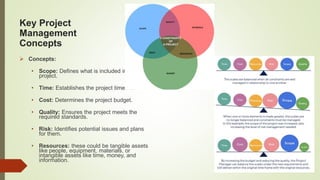
•Scope: Defines what is included in the
project.
• Time: Establishes the project timeline.
• Cost: Determines the project budget.
• Quality: Ensures the project meets the
required standards.
• Risk: Identifies potential issues and plans
for them.
• Resources: these could be tangible assets
like people, equipment, materials, or
intangible assets like time, money, and
information.
6.
Project Management Tools
•Tools:
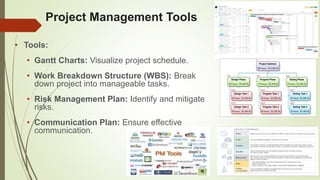
• Gantt Charts: Visualize project schedule.
• Work Breakdown Structure (WBS): Break
down project into manageable tasks.
• Risk Management Plan: Identify and mitigate
risks.
• Communication Plan: Ensure effective
communication.
7.
Team Roles inProject
Management
Roles:
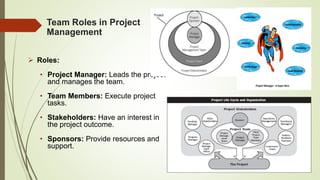
• Project Manager: Leads the project
and manages the team.
• Team Members: Execute project
tasks.
• Stakeholders: Have an interest in
the project outcome.
• Sponsors: Provide resources and
support.
8.
Capstone Example -Building a Telecom
Tower
• Title: Construction of a Telecom
Tower in [Province Name]
Project Overview
• Objective: Construct a telecom
tower to enhance network coverage
and connectivity in the province.
• Scope: The project includes site
selection, obtaining necessary
permits, construction of the tower,
and installation of telecom
equipment.
9.
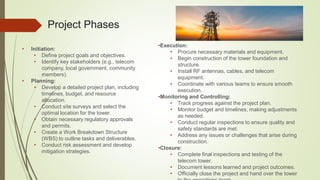
Project Phases
• Initiation:
•Define project goals and objectives.
• Identify key stakeholders (e.g., telecom
company, local government, community
members).
• Planning:
• Develop a detailed project plan, including
timelines, budget, and resource
allocation.
• Conduct site surveys and select the
optimal location for the tower.
• Obtain necessary regulatory approvals
and permits.
• Create a Work Breakdown Structure
(WBS) to outline tasks and deliverables.
• Conduct risk assessment and develop
mitigation strategies.
•Execution:
• Procure necessary materials and equipment.
• Begin construction of the tower foundation and
structure.
• Install RF antennas, cables, and telecom
equipment.
• Coordinate with various teams to ensure smooth
execution.
•Monitoring and Controlling:
• Track progress against the project plan.
• Monitor budget and timelines, making adjustments
as needed.
• Conduct regular inspections to ensure quality and
safety standards are met.
• Address any issues or challenges that arise during
construction.
•Closure:
• Complete final inspections and testing of the
telecom tower.
• Document lessons learned and project outcomes.
• Officially close the project and hand over the tower
10.
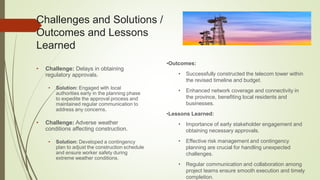
Challenges and Solutions/
Outcomes and Lessons
Learned
• Challenge: Delays in obtaining
regulatory approvals.
• Solution: Engaged with local
authorities early in the planning phase
to expedite the approval process and
maintained regular communication to
address any concerns.
• Challenge: Adverse weather
conditions affecting construction.
• Solution: Developed a contingency
plan to adjust the construction schedule
and ensure worker safety during
extreme weather conditions.
•Outcomes:
• Successfully constructed the telecom tower within
the revised timeline and budget.
• Enhanced network coverage and connectivity in
the province, benefiting local residents and
businesses.
•Lessons Learned:
• Importance of early stakeholder engagement and
obtaining necessary approvals.
• Effective risk management and contingency
planning are crucial for handling unexpected
challenges.
• Regular communication and collaboration among
project teams ensure smooth execution and timely
completion.
11.
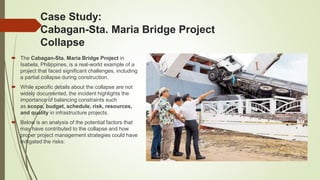
Case Study:
Cabagan-Sta. MariaBridge Project
Collapse
The Cabagan-Sta. Maria Bridge Project in
Isabela, Philippines, is a real-world example of a
project that faced significant challenges, including
a partial collapse during construction.
While specific details about the collapse are not
widely documented, the incident highlights the
importance of balancing constraints such
as scope, budget, schedule, risk, resources,
and quality in infrastructure projects.
Below is an analysis of the potential factors that
may have contributed to the collapse and how
proper project management strategies could have
mitigated the risks:
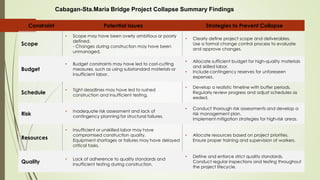
12.
Constraint Potential IssuesStrategies to Prevent Collapse
Scope
• Scope may have been overly ambitious or poorly
defined.
- Changes during construction may have been
unmanaged.
• Clearly define project scope and deliverables.
Use a formal change control process to evaluate
and approve changes.
Budget
• Budget constraints may have led to cost-cutting
measures, such as using substandard materials or
insufficient labor.
• Allocate sufficient budget for high-quality materials
and skilled labor.
• Include contingency reserves for unforeseen
expenses.
Schedule
• Tight deadlines may have led to rushed
construction and insufficient testing.
• Develop a realistic timeline with buffer periods.
Regularly review progress and adjust schedules as
eeded.
Risk
• Inadequate risk assessment and lack of
contingency planning for structural failures.
• Conduct thorough risk assessments and develop a
risk management plan.
Implement mitigation strategies for high-risk areas.
Resources
• Insufficient or unskilled labor may have
compromised construction quality.
Equipment shortages or failures may have delayed
critical tasks.
• Allocate resources based on project priorities.
Ensure proper training and supervision of workers.
Quality
• Lack of adherence to quality standards and
insufficient testing during construction.
• Define and enforce strict quality standards.
Conduct regular inspections and testing throughout
the project lifecycle.
Cabagan-Sta.Maria Bridge Project Collapse Summary Findings
13.
Key Lessons fromCabagan-Sta. Maria Bridge Project
Collapse
Key Lessons from the Collapse
• Importance of Quality Control: Ensuring adherence to
engineering standards and conducting regular inspections
could have prevented structural failures.
• Risk Management: A thorough risk assessment and
contingency plan would have identified potential weaknesses
in the design or construction process.
• Balancing Constraints: Properly balancing scope, budget,
and schedule would have ensured that the project was not
rushed or underfunded.
• Stakeholder Communication: Transparent communication
with stakeholders, including government agencies and
contractors, could have addressed issues early.
How Proper Project Management Could Have
Helped
•Earned Value Management (EVM): Tracking project
performance against scope, budget, and schedule could
have provided early warning signs of deviations.
•Change Control Processes: Managing scope
changes effectively would have prevented unapproved
modifications that compromised structural integrity.
•Resource Allocation: Ensuring adequate resources
(skilled labor, materials, and equipment) would have
maintained construction quality.
•Quality Assurance: Regular testing and inspections
would have identified and addressed defects before
they led to a collapse.
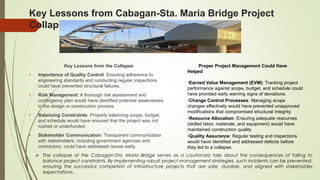
The collapse of the Cabagan-Sta. Maria Bridge serves as a cautionary tale about the consequences of failing to
balance project constraints. By implementing robust project management strategies, such incidents can be prevented,
ensuring the successful completion of infrastructure projects that are safe, durable, and aligned with stakeholder
expectations.
14.
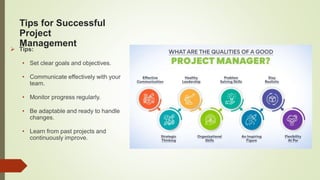
Tips for Successful
Project
Management
Tips:
• Set clear goals and objectives.
• Communicate effectively with your
team.
• Monitor progress regularly.
• Be adaptable and ready to handle
changes.
• Learn from past projects and
continuously improve.
15.
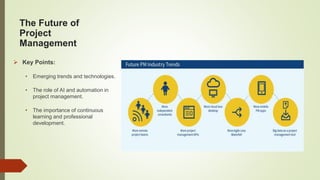
The Future of
Project
Management
Key Points:
• Emerging trends and technologies.
• The role of AI and automation in
project management.
• The importance of continuous
learning and professional
development.
16.
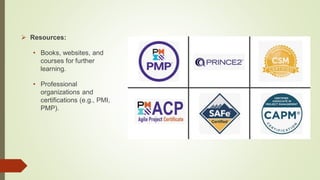
Resources:
• Books,websites, and
courses for further
learning.
• Professional
organizations and
certifications (e.g., PMI,
PMP).

![Capstone Example - Building a Telecom
Tower
• Title: Construction of a Telecom
Tower in [Province Name]
Project Overview
• Objective: Construct a telecom
tower to enhance network coverage
and connectivity in the province.
• Scope: The project includes site
selection, obtaining necessary
permits, construction of the tower,
and installation of telecom
equipment.](https://image.slidesharecdn.com/qcuiepresentation-251118084823-400f0d3b/85/Introduction-to-Project-Management-and-Methodology-8-320.jpg)