Operations Research Techniques
Introduction
• Operations Research is an Art and Science
• It had its early roots in World War II and is flourishing in
business and industry with the aid of computer
• Primary applications areas of Operations Research include
forecasting, production scheduling, inventory control,
capital budgeting, and transportation.
Operations Research
• “Operational Research is the scientific study of
operations for the purpose of making better
decisions.”
Terminology
• The British/Europeans refer to “Operational Research",
the Americans to “Operations Research" - but both are
often shortened to just "OR".
• Another term used for this field is “Management Science"
("MS"). In U.S. OR and MS are combined together to form
"OR/MS" or "ORMS".
• Yet other terms sometimes used are “Industrial
Engineering" ("IE") and “Decision Science" ("DS").
History of OR
 Operational Research has been existed as a science since
1930‘s.
 But as a formal discipline Operational Research originated
by the efforts of military planner during World War II .
In the decade after World War-II the techniques began to
be applied more widely in problems of business, industries
and societies.
Objectives
 Decision making and improve its quality.
• Identify optimum solution.
• Integrating the systems.
• Improve the objectivity of analysis.
• Minimize the cost and maximize the profit.
• Improve the productivity.
• Success in competition and market leadership.
Applications of OR
1. Finance and Accounting:
a. Dividend policies, investment and portfolio
management, auditing, balance sheet
b. Claim and Complaint procedure and public accounting
c. Break-even analysis, capital budgeting, cost allocation
and control, and financial planning
2. Marketing
• Selection of product mix
• Marketing and export planning
• Sales force allocations
• Assignment allocations
• Media planning
• Advertising
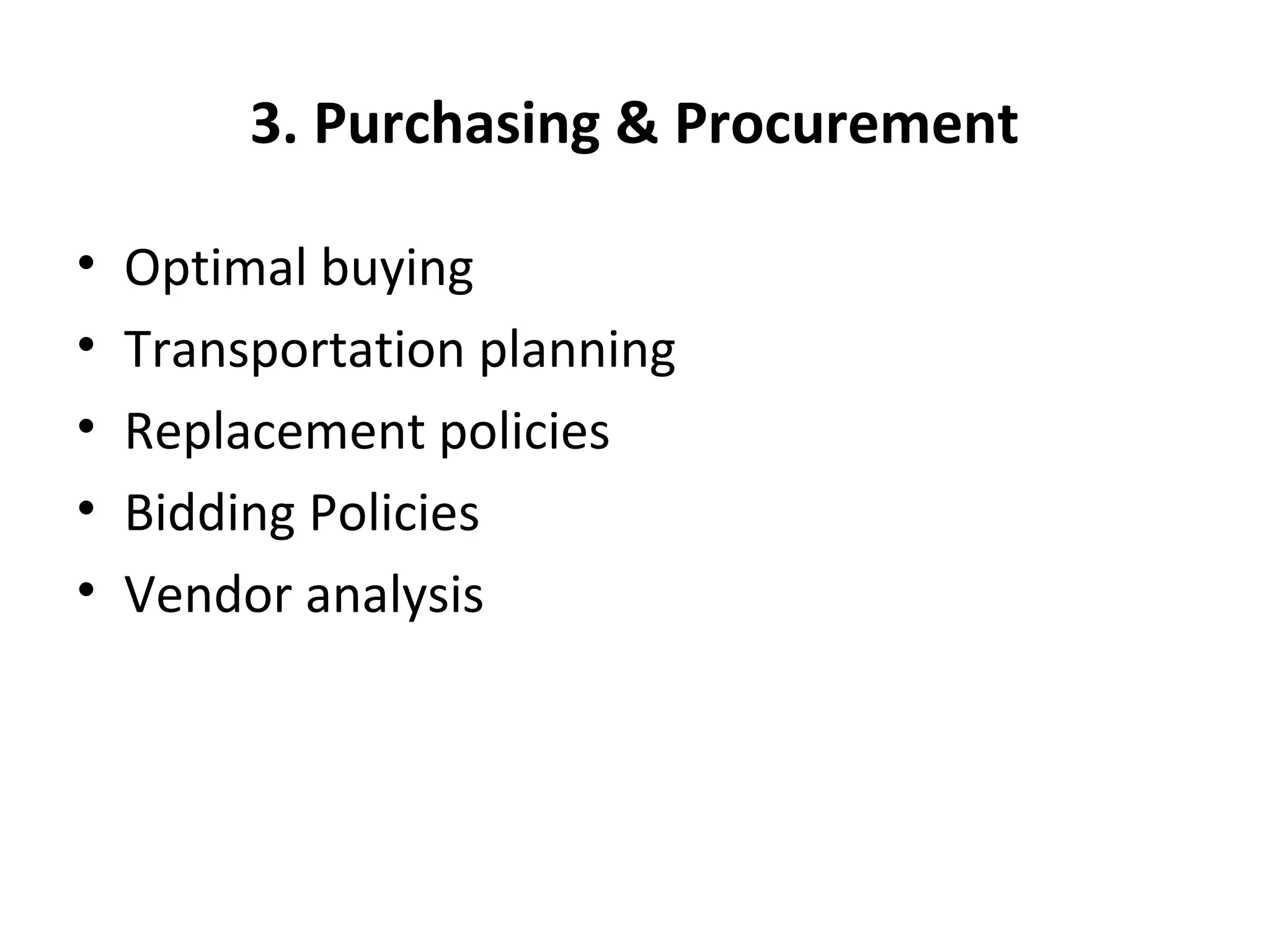
3. Purchasing & Procurement
• Optimal buying
• Transportation planning
• Replacement policies
• Bidding Policies
• Vendor analysis
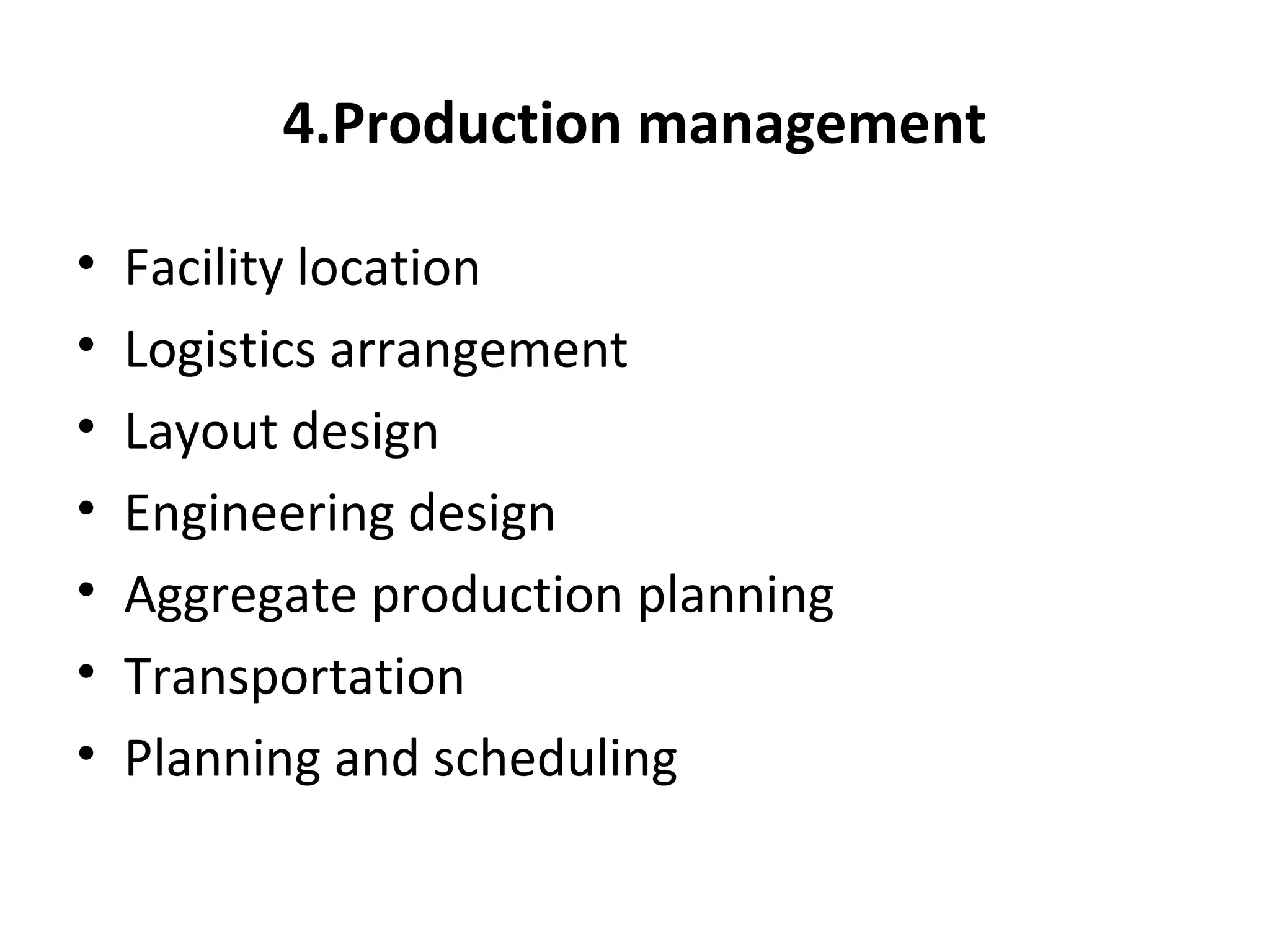
4.Production management
• Facility location
• Logistics arrangement
• Layout design
• Engineering design
• Aggregate production planning
• Transportation
• Planning and scheduling
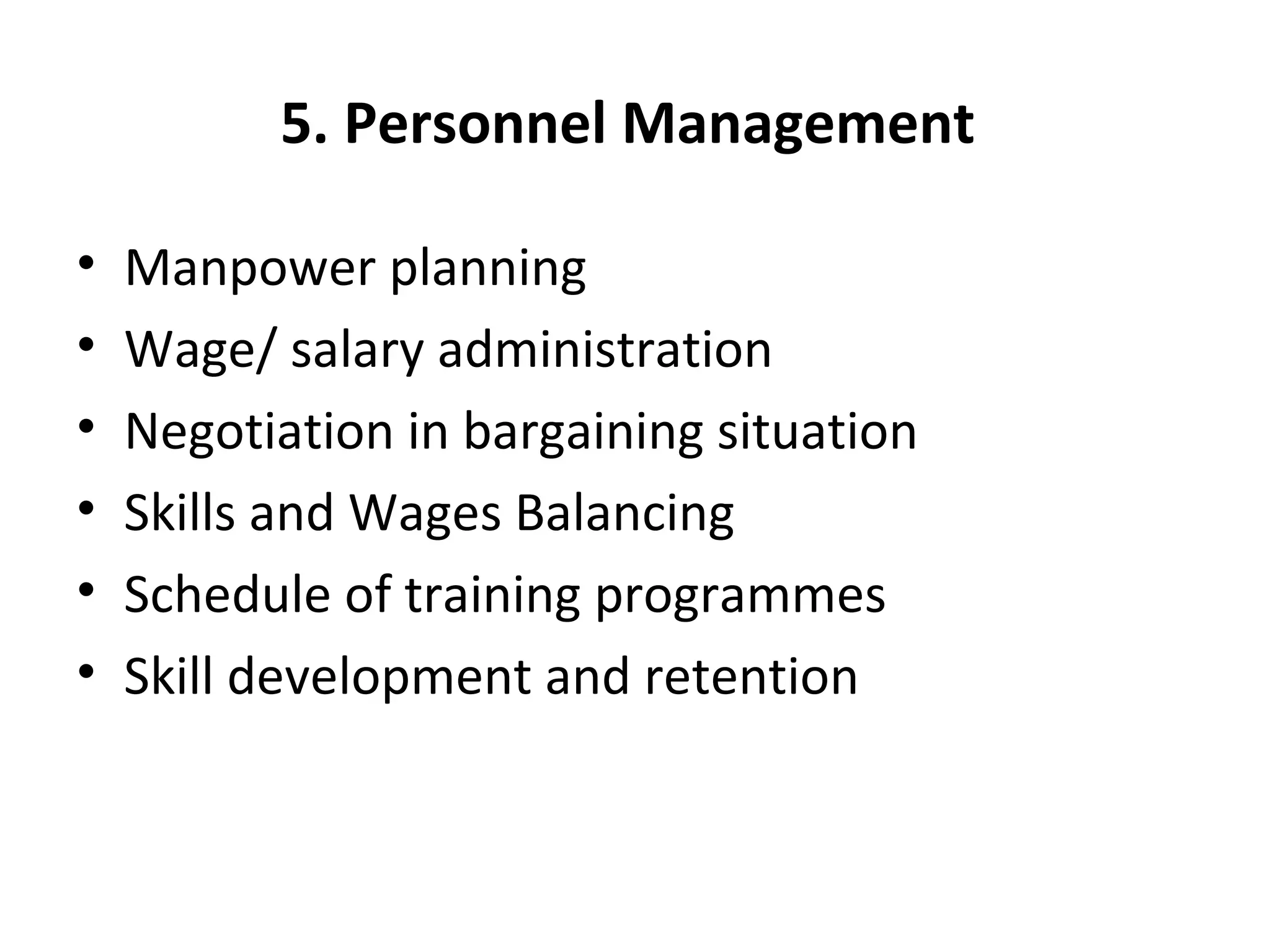
5. Personnel Management
• Manpower planning
• Wage/ salary administration
• Negotiation in bargaining situation
• Skills and Wages Balancing
• Schedule of training programmes
• Skill development and retention
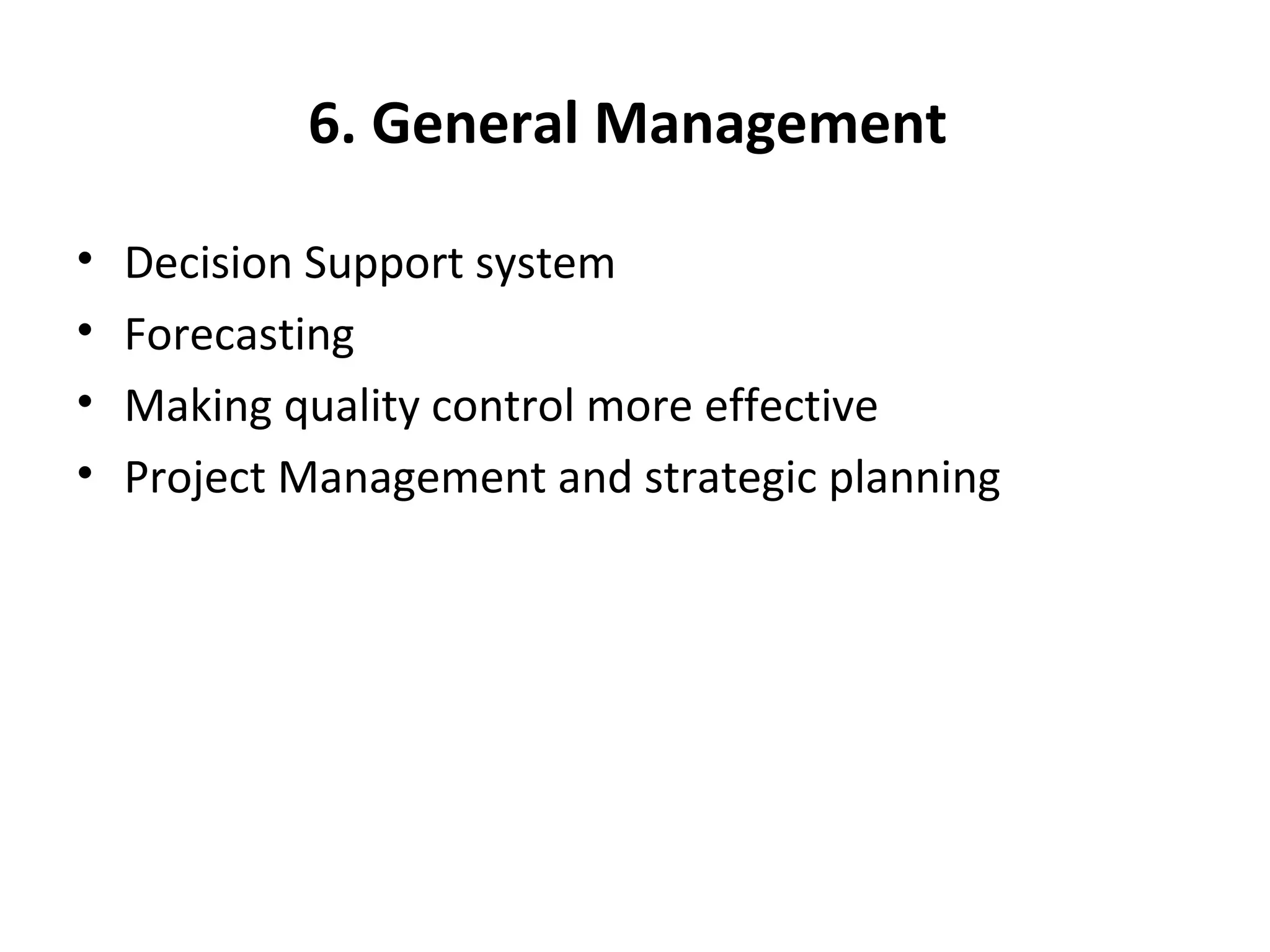
6. General Management
• Decision Support system
• Forecasting
• Making quality control more effective
• Project Management and strategic planning
methods
Most projects of Operational Research apply
one of three broad groups of methods :-
1.Simulation methods.
2.Optimization methods.
3.Data-analysis methods.
1.Simulation methods
It gives ability to conduct sensitive study to -
(a). search for improvements and
(b). test the improvement ideas that are being made.
2.Optimization methods.
 Here goal is to enable the decision makers to identify and locate the
very best choice, where innumerable feasible choices are available
and comparing them is difficult.
3.Data-analysis methods
 The goal is to aid the decision-maker in detecting actual patterns and
inter-connections in the data set and
 Use of this analysis for making solutions.
 This method is very useful in Public Health.
Deterministic vs. Stochastic Models
Deterministic models (Non-Probabilistic)
assume all data are known with certainty
Stochastic models (Probabilistic Models)
explicitly represent uncertain data via
random variables or stochastic processes.
Deterministic models involve optimization
Stochastic models
characterize / estimate system performance.
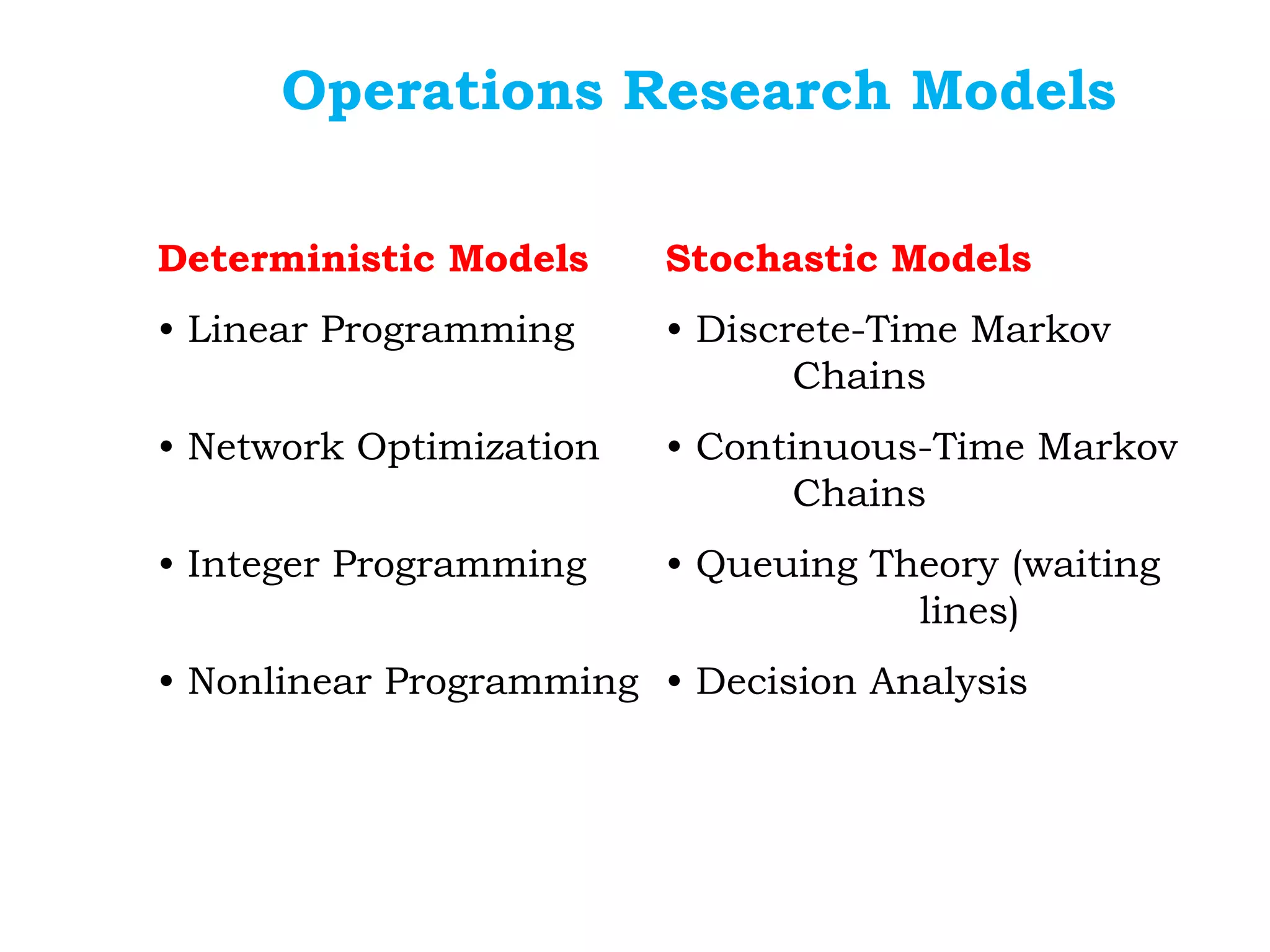
Operations Research Models
Deterministic Models Stochastic Models
• Linear Programming • Discrete-Time Markov
Chains
• Network Optimization • Continuous-Time Markov
Chains
• Integer Programming • Queuing Theory (waiting
lines)
• Nonlinear Programming • Decision Analysis
Process
1. Identification of program problem.
 Most critical step in the process.
 Unless problem is clearly defined it is impossible
to develop good solutions.
2: Identification of possible reasons and solutions .
 Once the problem has been identified , it is the
job of the program implementer and researcher
to determine the reasons for the problem and
generate possible solutions.
3.Testing of potential solution
 A good solution must be measurable, easy to implement and sustainable.
 To determine effectiveness of proposed solution two designs are used-
(a) quasi-experimental design.
- comparison of situations before and after the solution.
(b) true experiment.
- comparison of outcome between experimental and control groups.
4.Result utilization
 It is necessary to decide how its results are meant to be used.
 This determine to some extent that what information should be collected.
5.Results dissemination
Results dissemination are done in the form of seminars or by meeting with decision makers.
Examples of OR Applications
• Rescheduling aircraft in response to groundings and
delays
• Planning production for printed circuit board assembly
• Scheduling equipment operators in mail processing &
distribution centers
• Developing routes for propane delivery
• Adjusting nurse schedules in light of daily fluctuations in
demand

Introduction to ORoperationresearch UTC.pdf

  • 1.
  • 2.
    Introduction • Operations Researchis an Art and Science • It had its early roots in World War II and is flourishing in business and industry with the aid of computer • Primary applications areas of Operations Research include forecasting, production scheduling, inventory control, capital budgeting, and transportation.
  • 3.
    Operations Research • “OperationalResearch is the scientific study of operations for the purpose of making better decisions.”
  • 4.
    Terminology • The British/Europeansrefer to “Operational Research", the Americans to “Operations Research" - but both are often shortened to just "OR". • Another term used for this field is “Management Science" ("MS"). In U.S. OR and MS are combined together to form "OR/MS" or "ORMS". • Yet other terms sometimes used are “Industrial Engineering" ("IE") and “Decision Science" ("DS").
  • 5.
    History of OR Operational Research has been existed as a science since 1930‘s.  But as a formal discipline Operational Research originated by the efforts of military planner during World War II . In the decade after World War-II the techniques began to be applied more widely in problems of business, industries and societies.
  • 6.
    Objectives  Decision makingand improve its quality. • Identify optimum solution. • Integrating the systems. • Improve the objectivity of analysis. • Minimize the cost and maximize the profit. • Improve the productivity. • Success in competition and market leadership.
  • 7.
    Applications of OR 1.Finance and Accounting: a. Dividend policies, investment and portfolio management, auditing, balance sheet b. Claim and Complaint procedure and public accounting c. Break-even analysis, capital budgeting, cost allocation and control, and financial planning
  • 8.
    2. Marketing • Selectionof product mix • Marketing and export planning • Sales force allocations • Assignment allocations • Media planning • Advertising
  • 9.
    3. Purchasing &Procurement • Optimal buying • Transportation planning • Replacement policies • Bidding Policies • Vendor analysis
  • 10.
    4.Production management • Facilitylocation • Logistics arrangement • Layout design • Engineering design • Aggregate production planning • Transportation • Planning and scheduling
  • 11.
    5. Personnel Management •Manpower planning • Wage/ salary administration • Negotiation in bargaining situation • Skills and Wages Balancing • Schedule of training programmes • Skill development and retention
  • 12.
    6. General Management •Decision Support system • Forecasting • Making quality control more effective • Project Management and strategic planning
  • 13.
    methods Most projects ofOperational Research apply one of three broad groups of methods :- 1.Simulation methods. 2.Optimization methods. 3.Data-analysis methods.
  • 14.
    1.Simulation methods It givesability to conduct sensitive study to - (a). search for improvements and (b). test the improvement ideas that are being made. 2.Optimization methods.  Here goal is to enable the decision makers to identify and locate the very best choice, where innumerable feasible choices are available and comparing them is difficult. 3.Data-analysis methods  The goal is to aid the decision-maker in detecting actual patterns and inter-connections in the data set and  Use of this analysis for making solutions.  This method is very useful in Public Health.
  • 15.
    Deterministic vs. StochasticModels Deterministic models (Non-Probabilistic) assume all data are known with certainty Stochastic models (Probabilistic Models) explicitly represent uncertain data via random variables or stochastic processes. Deterministic models involve optimization Stochastic models characterize / estimate system performance.
  • 16.
    Operations Research Models DeterministicModels Stochastic Models • Linear Programming • Discrete-Time Markov Chains • Network Optimization • Continuous-Time Markov Chains • Integer Programming • Queuing Theory (waiting lines) • Nonlinear Programming • Decision Analysis
  • 17.
    Process 1. Identification ofprogram problem.  Most critical step in the process.  Unless problem is clearly defined it is impossible to develop good solutions. 2: Identification of possible reasons and solutions .  Once the problem has been identified , it is the job of the program implementer and researcher to determine the reasons for the problem and generate possible solutions.
  • 18.
    3.Testing of potentialsolution  A good solution must be measurable, easy to implement and sustainable.  To determine effectiveness of proposed solution two designs are used- (a) quasi-experimental design. - comparison of situations before and after the solution. (b) true experiment. - comparison of outcome between experimental and control groups. 4.Result utilization  It is necessary to decide how its results are meant to be used.  This determine to some extent that what information should be collected. 5.Results dissemination Results dissemination are done in the form of seminars or by meeting with decision makers.
  • 19.
    Examples of ORApplications • Rescheduling aircraft in response to groundings and delays • Planning production for printed circuit board assembly • Scheduling equipment operators in mail processing & distribution centers • Developing routes for propane delivery • Adjusting nurse schedules in light of daily fluctuations in demand