CSCI 5922
Neural Networks and Deep Learning:
Introduction 2
Mike Mozer
Department of Computer Science and
Institute of Cognitive Science
University of Colorado at Boulder
Hinton’s Brief History of Machine Learning

What was hot in 1987?
 back propagation, neural networks

What happened the past 30 years?
 Computers got faster
 Data sets got larger
 Software tools improved (TensorFlow, Theano, Keras)

What is hot in 2017?
 back propagation, neural networks
Neural Network History

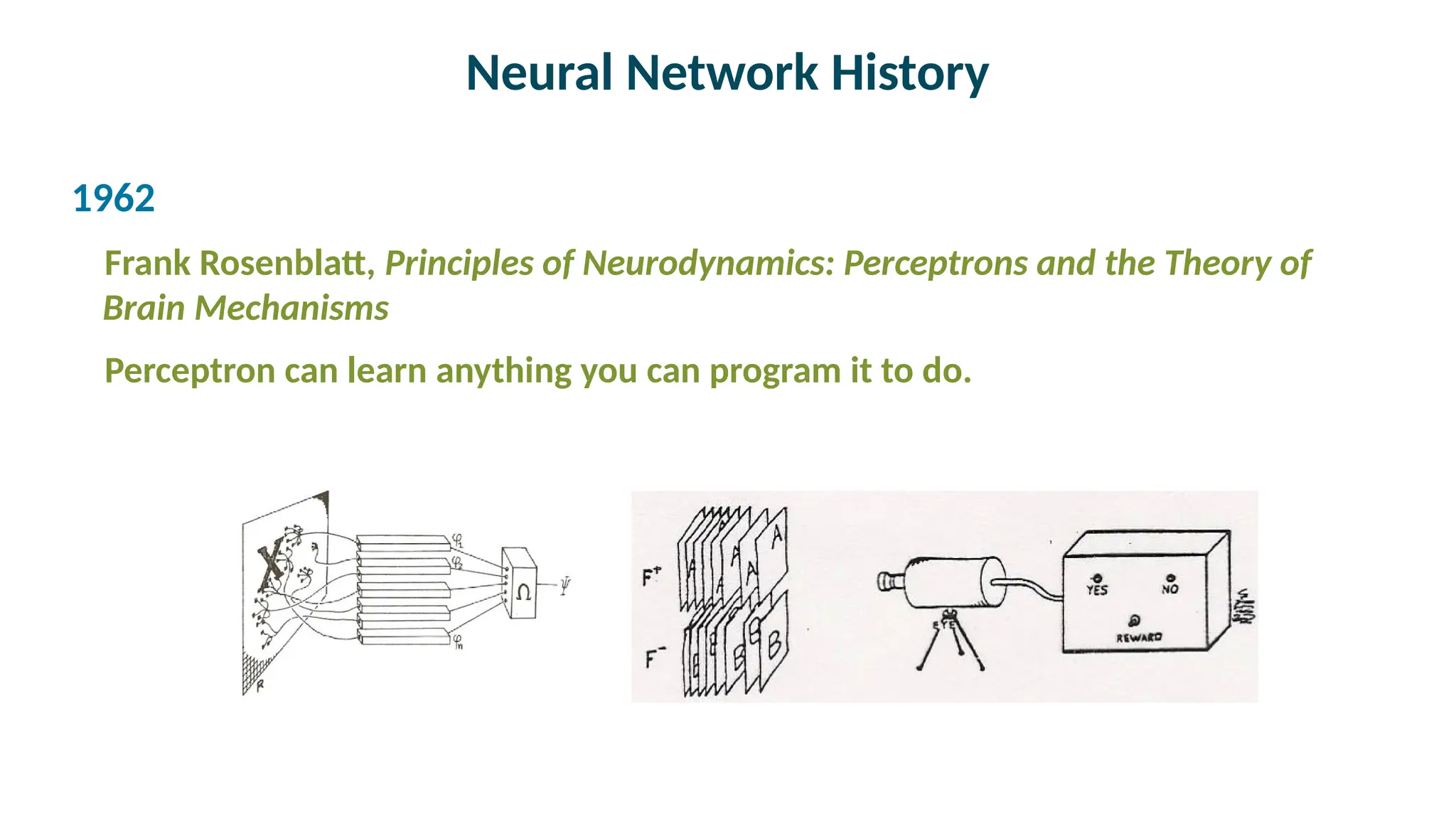
1962
Frank Rosenblatt, Principles of Neurodynamics: Perceptrons and the Theory of
Brain Mechanisms
Perceptron can learn anything you can program it to do.
Neural Network History

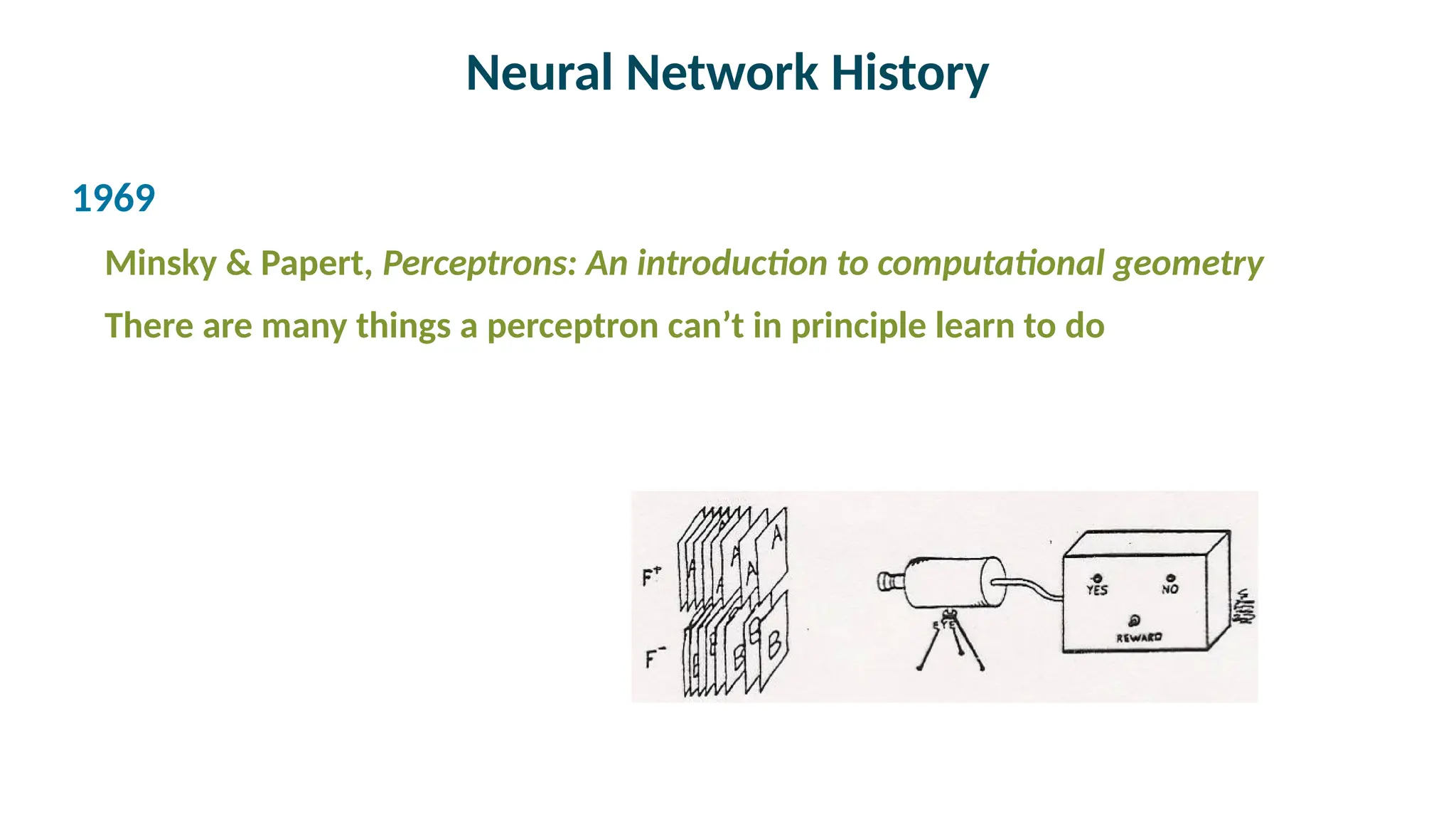
1969
Minsky & Papert, Perceptrons: An introduction to computational geometry
There are many things a perceptron can’t in principle learn to do
Neural Network History

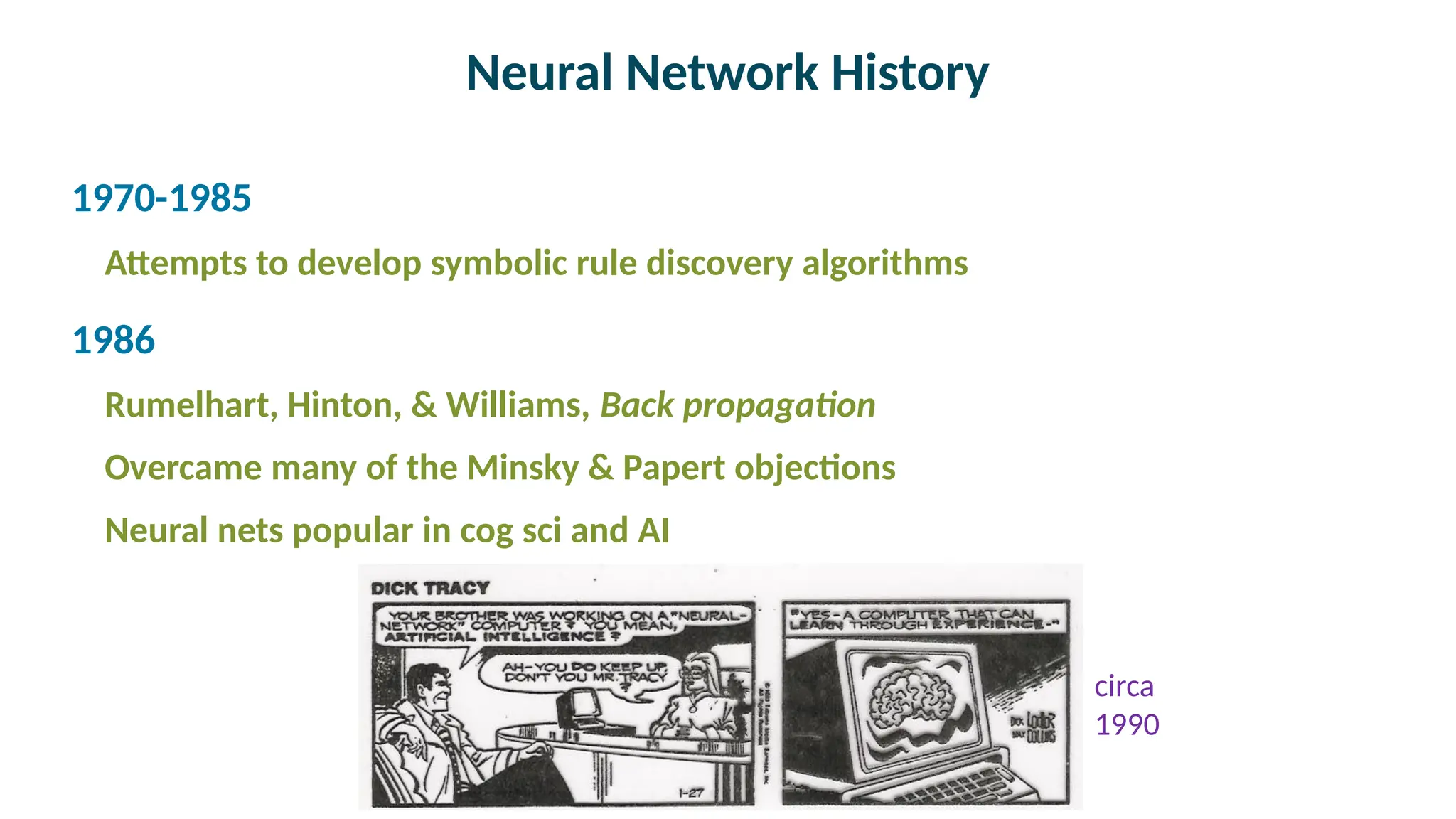
1970-1985
Attempts to develop symbolic rule discovery algorithms

1986
Rumelhart, Hinton, & Williams, Back propagation
Overcame many of the Minsky & Papert objections
Neural nets popular in cog sci and AI
circa
1990
Neural Network History

1990-2005
Bayesian approaches
•take the best ideas from neural networks – statistical computing, statistical learning
Support-Vector Machines
•convergence proofs (unlike neural nets)
A few old timers keep playing with neural nets
•Hinton, LeCun, Bengio, O’Reilly
Neural nets banished from NIPS!
Neural Network History

2005-2012
Attempts to resurrect neural nets with
•unsupervised pretraining
•probabilistic neural nets
•alternative learning rules
Neural Network History

2012-present
Most of the alternative techniques discarded in favor of 1980’s style neural nets
with
•lots more training data
•lots more computing cycles
•a few important tricks that improve training and generalization (mostly from Hinton)
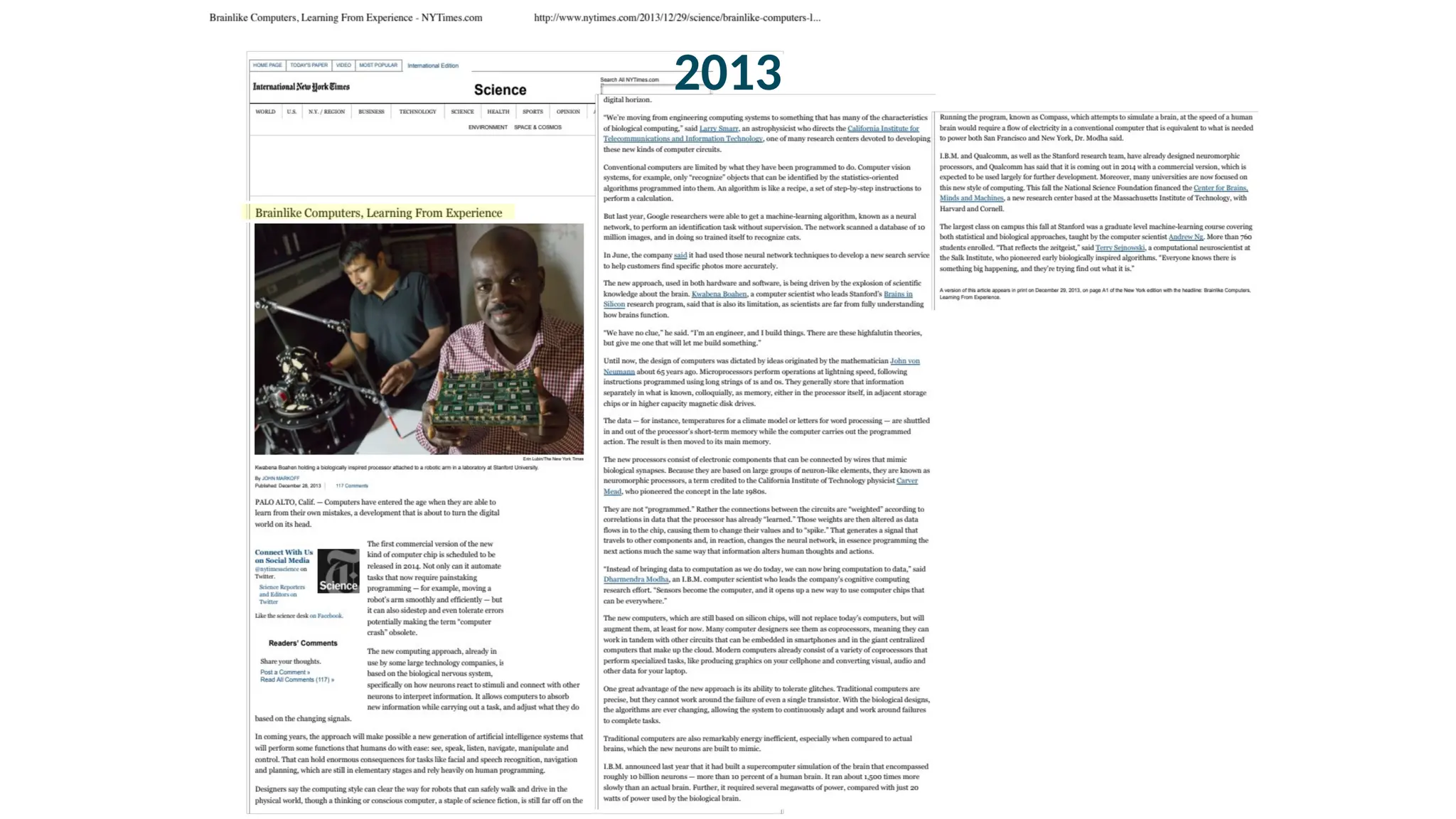
2013
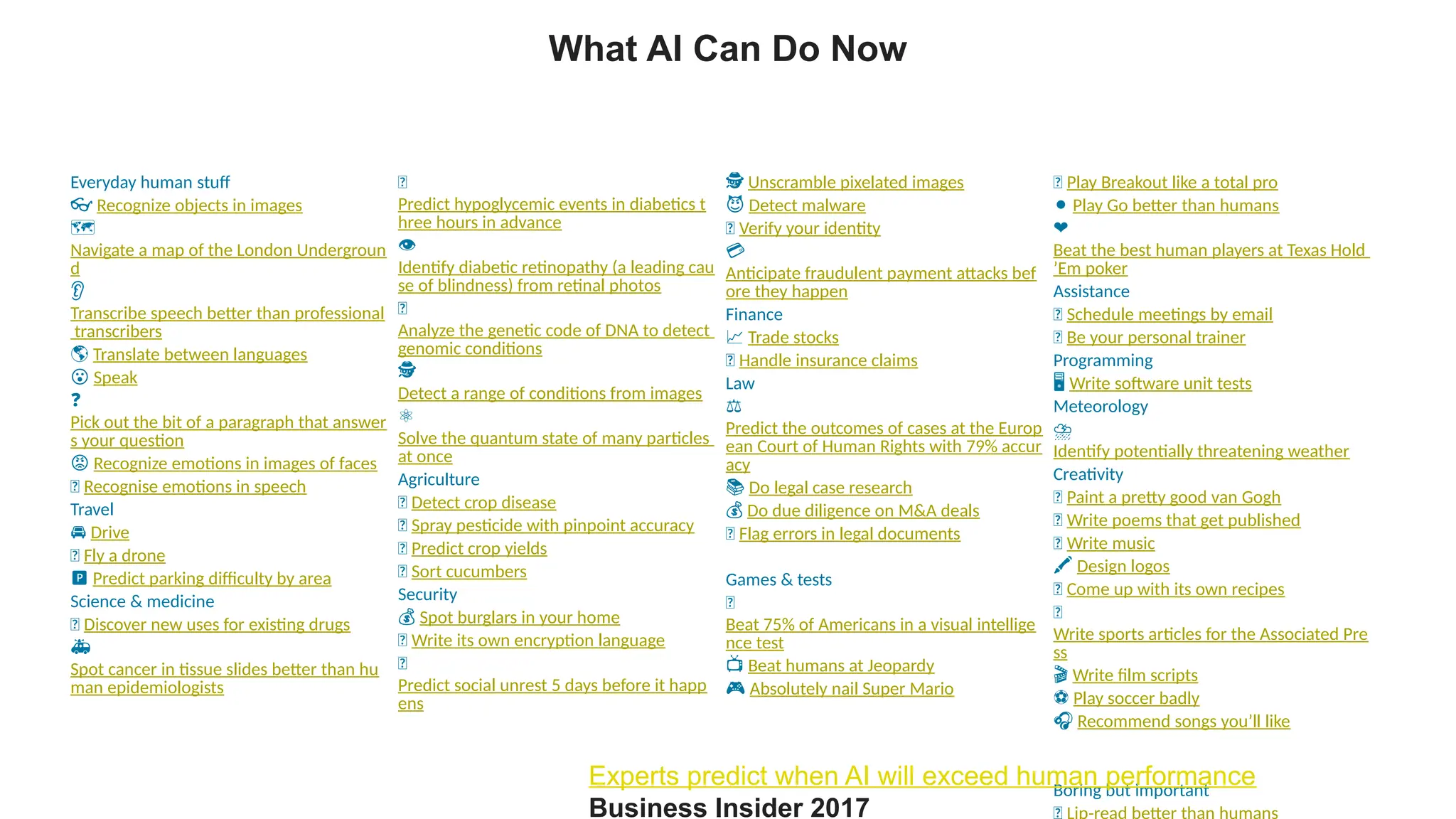
What AI Can Do Now

Everyday human stuff

👓 Recognize objects in images

🗺
Navigate a map of the London Undergroun
d

👂
Transcribe speech better than professional
transcribers

🌎 Translate between languages

😮 Speak

❓
Pick out the bit of a paragraph that answer
s your question

😡 Recognize emotions in images of faces

🙊 Recognise emotions in speech

Travel

🚘 Drive

🚁 Fly a drone

️
🅿️Predict parking difficulty by area

Science & medicine

💊 Discover new uses for existing drugs

🚑
Spot cancer in tissue slides better than hu
man epidemiologists

💉
Predict hypoglycemic events in diabetics t
hree hours in advance

👁
Identify diabetic retinopathy (a leading cau
se of blindness) from retinal photos

🔬
Analyze the genetic code of DNA to detect
genomic conditions

🕵
Detect a range of conditions from images

⚛️
Solve the quantum state of many particles
at once

Agriculture

🌱 Detect crop disease

🚜 Spray pesticide with pinpoint accuracy

🌽 Predict crop yields

🥒 Sort cucumbers

Security

💰 Spot burglars in your home

🙊 ️
Write its own encryption language

🚓
Predict social unrest 5 days before it happ
ens

🕵️Unscramble pixelated images

😈 Detect malware

✅ Verify your identity

💳
Anticipate fraudulent payment attacks bef
ore they happen

Finance

📈 Trade stocks

🏡 Handle insurance claims

Law

⚖
Predict the outcomes of cases at the Europ
ean Court of Human Rights with 79% accur
acy

📚 Do legal case research

💰 Do due diligence on M&A deals

🚩 Flag errors in legal documents

Games & tests

🤓
Beat 75% of Americans in a visual intellige
nce test

📺 Beat humans at Jeopardy

🎮 Absolutely nail Super Mario

👾 Play Breakout like a total pro

⚫️Play Go better than humans

️
❤️
Beat the best human players at Texas Hold
’Em poker

Assistance

📅 Schedule meetings by email

🏃 Be your personal trainer

Programming

🖥 Write software unit tests

Meteorology

⛈
Identify potentially threatening weather

Creativity

🎨 Paint a pretty good van Gogh

📝 Write poems that get published

🎼 Write music

🖍 Design logos

🍳 Come up with its own recipes

🏈 ️
Write sports articles for the Associated Pre
ss

🎬 Write film scripts

⚽ Play soccer badly

🎧 Recommend songs you’ll like

Boring but important

💋 Lip-read better than humans
Experts predict when AI will exceed human performance
Business Insider 2017
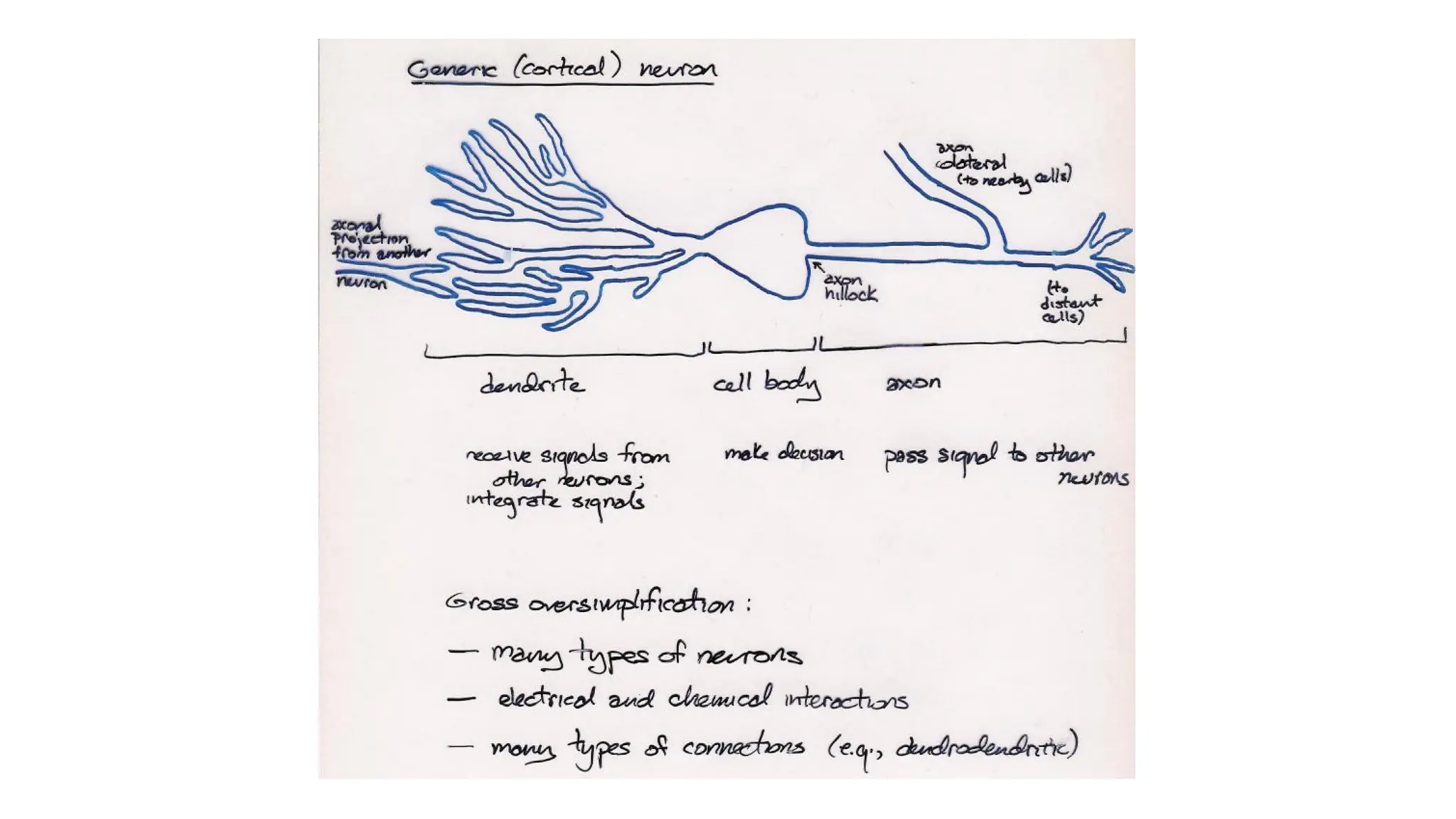
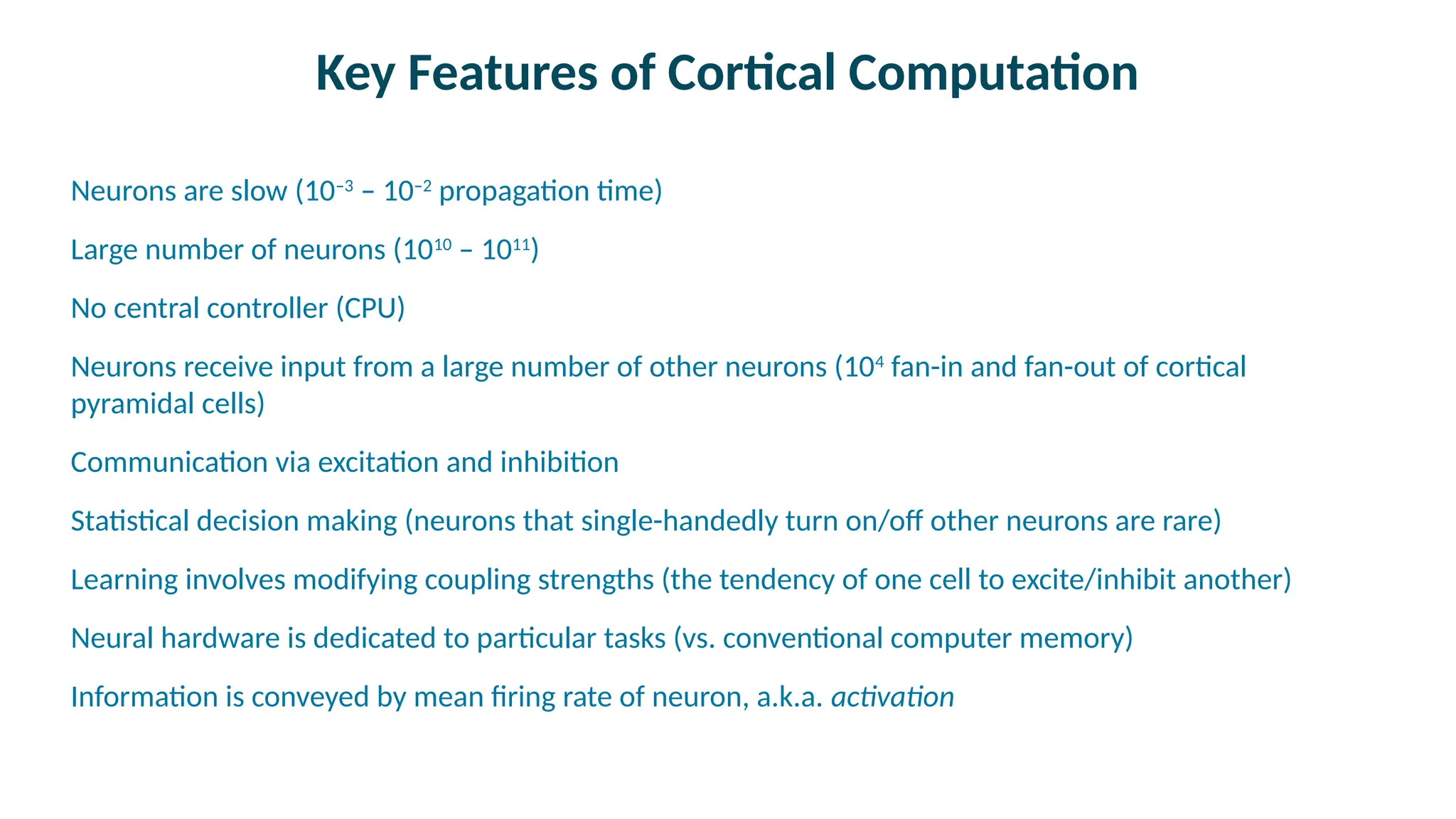
Key Features of Cortical Computation

Neurons are slow (10–3
– 10–2
propagation time)

Large number of neurons (1010
– 1011
)

No central controller (CPU)

Neurons receive input from a large number of other neurons (104
fan-in and fan-out of cortical
pyramidal cells)

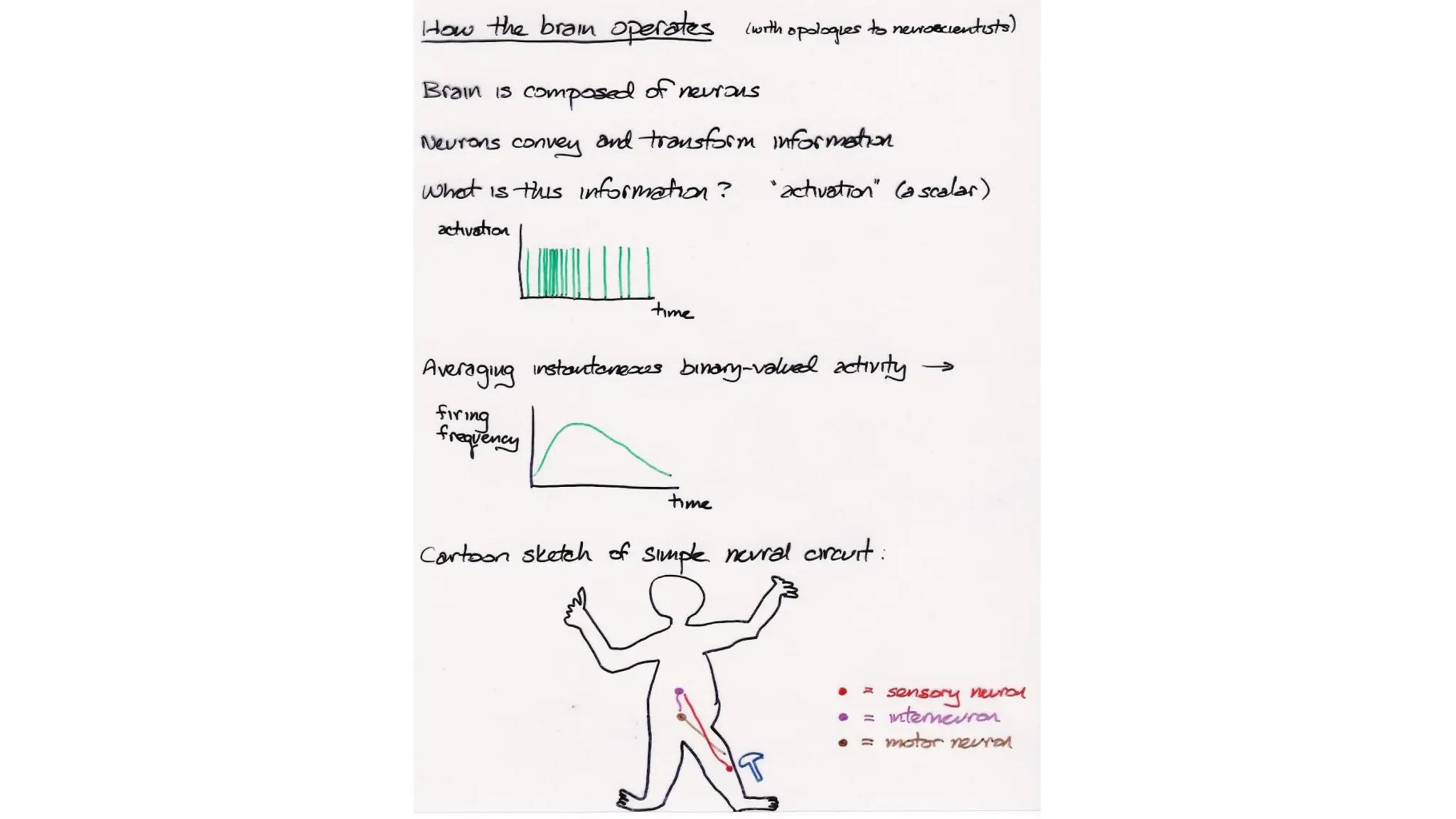
Communication via excitation and inhibition

Statistical decision making (neurons that single-handedly turn on/off other neurons are rare)

Learning involves modifying coupling strengths (the tendency of one cell to excite/inhibit another)

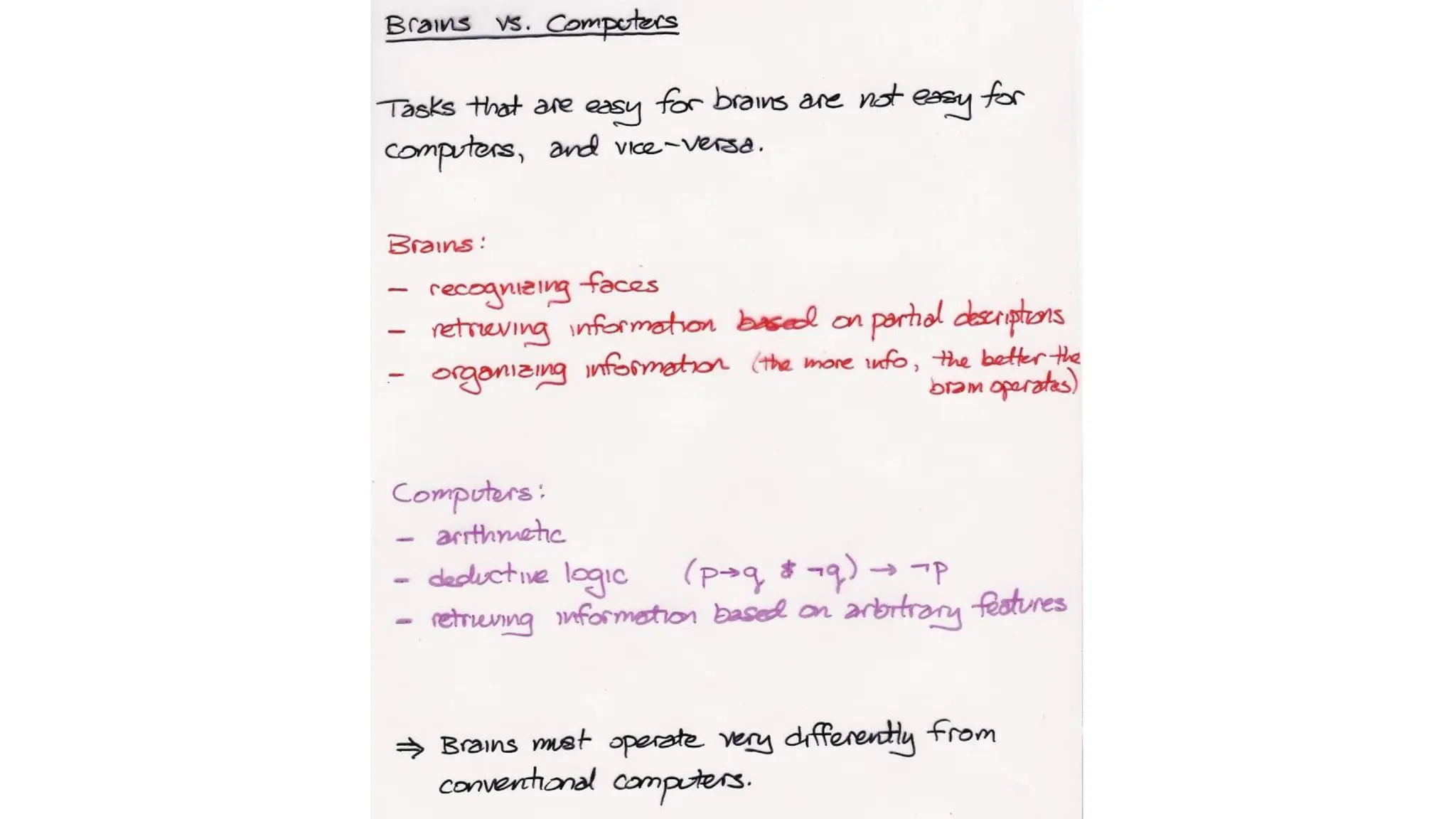
Neural hardware is dedicated to particular tasks (vs. conventional computer memory)

Information is conveyed by mean firing rate of neuron, a.k.a. activation

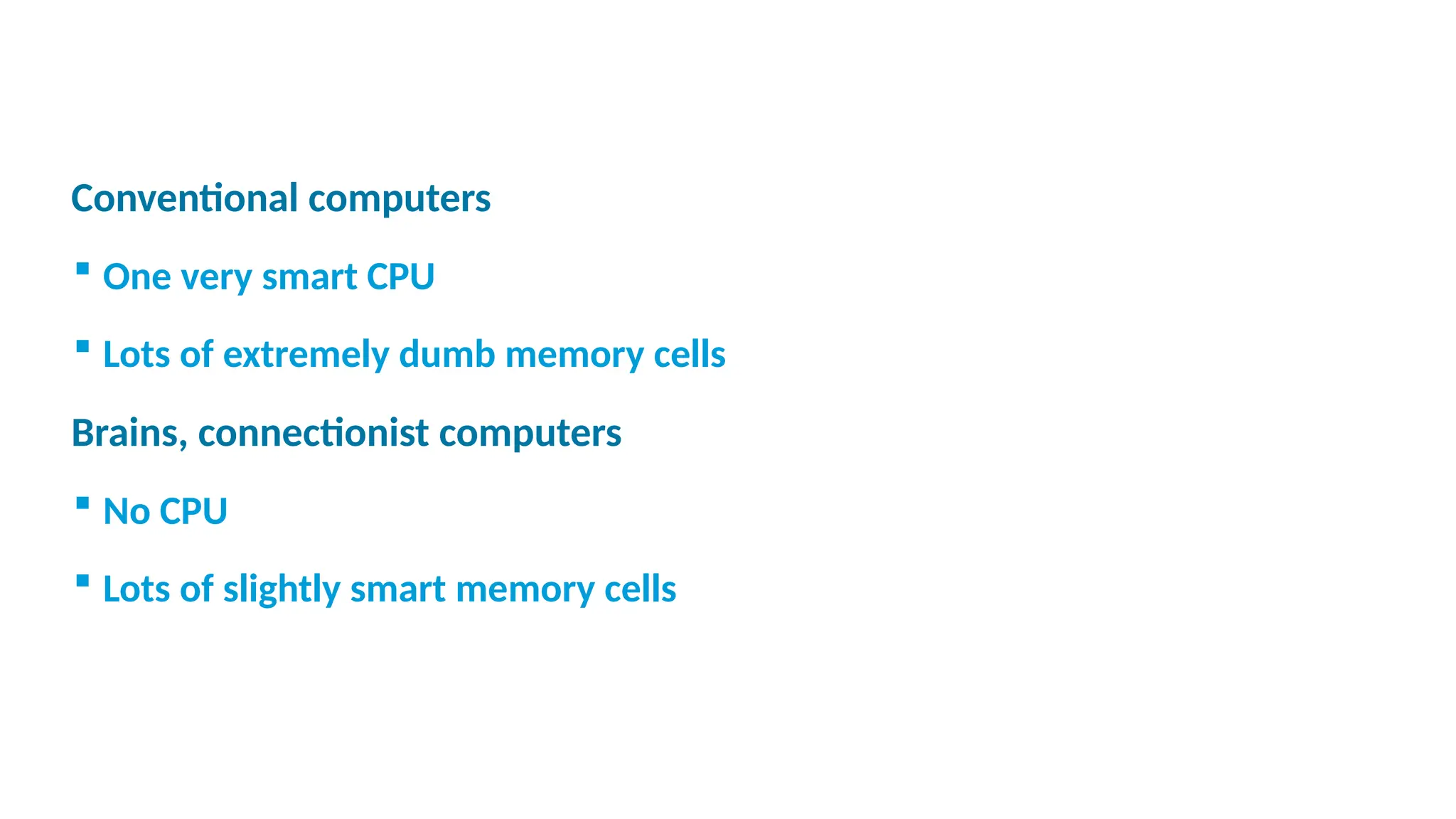
Conventional computers
 One very smart CPU
 Lots of extremely dumb memory cells

Brains, connectionist computers
 No CPU
 Lots of slightly smart memory cells
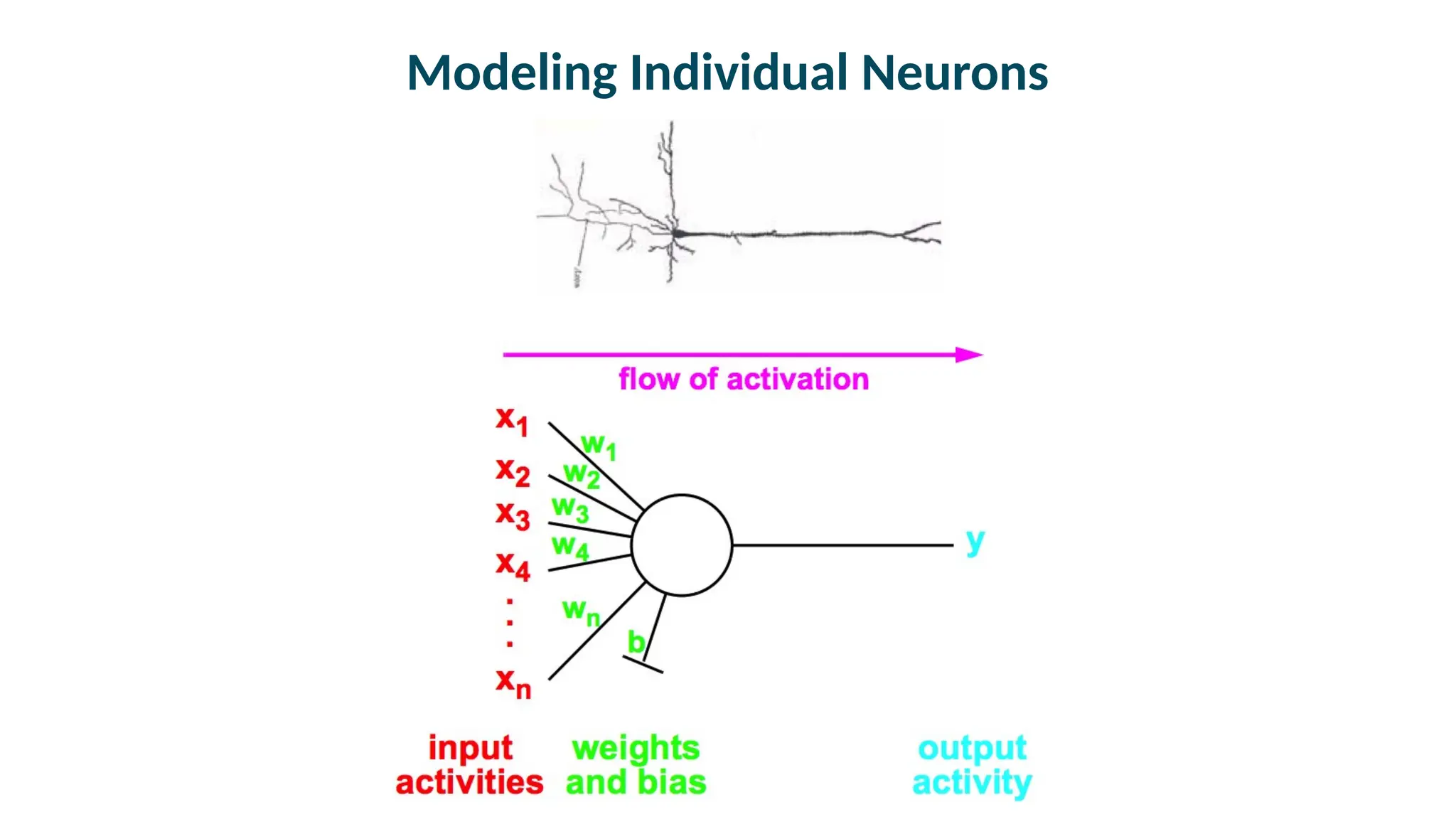
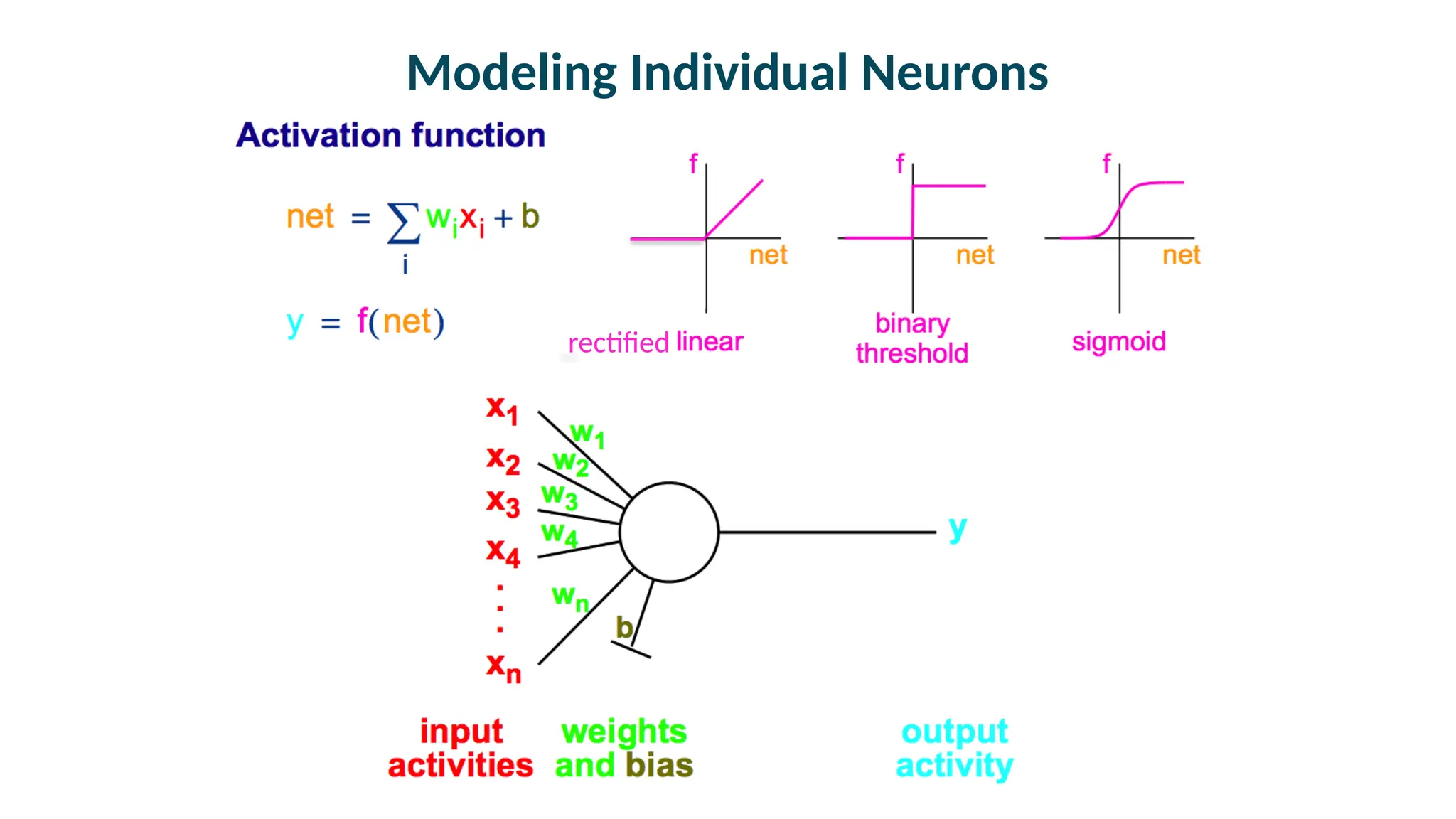
Modeling Individual Neurons
rectified
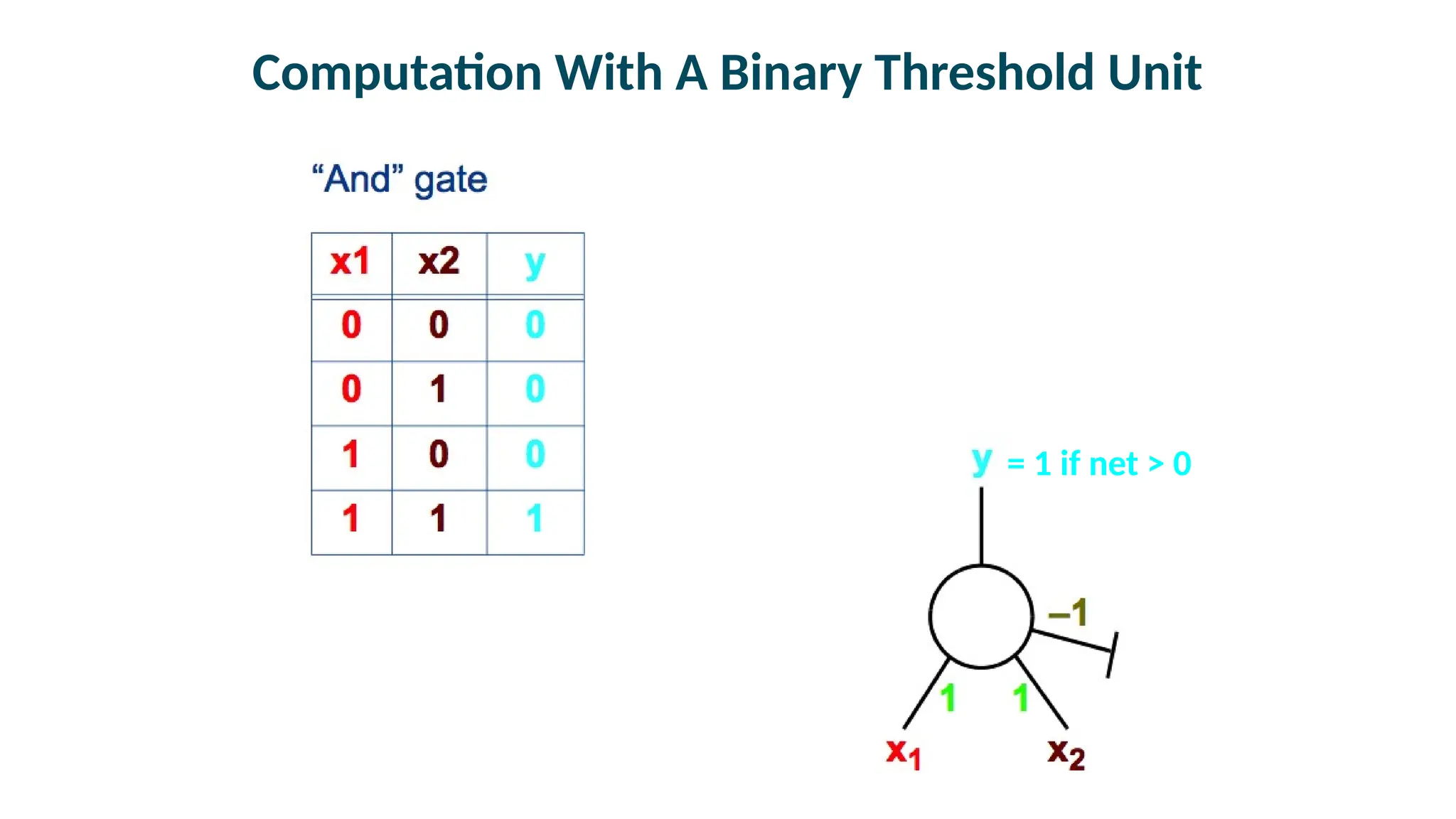
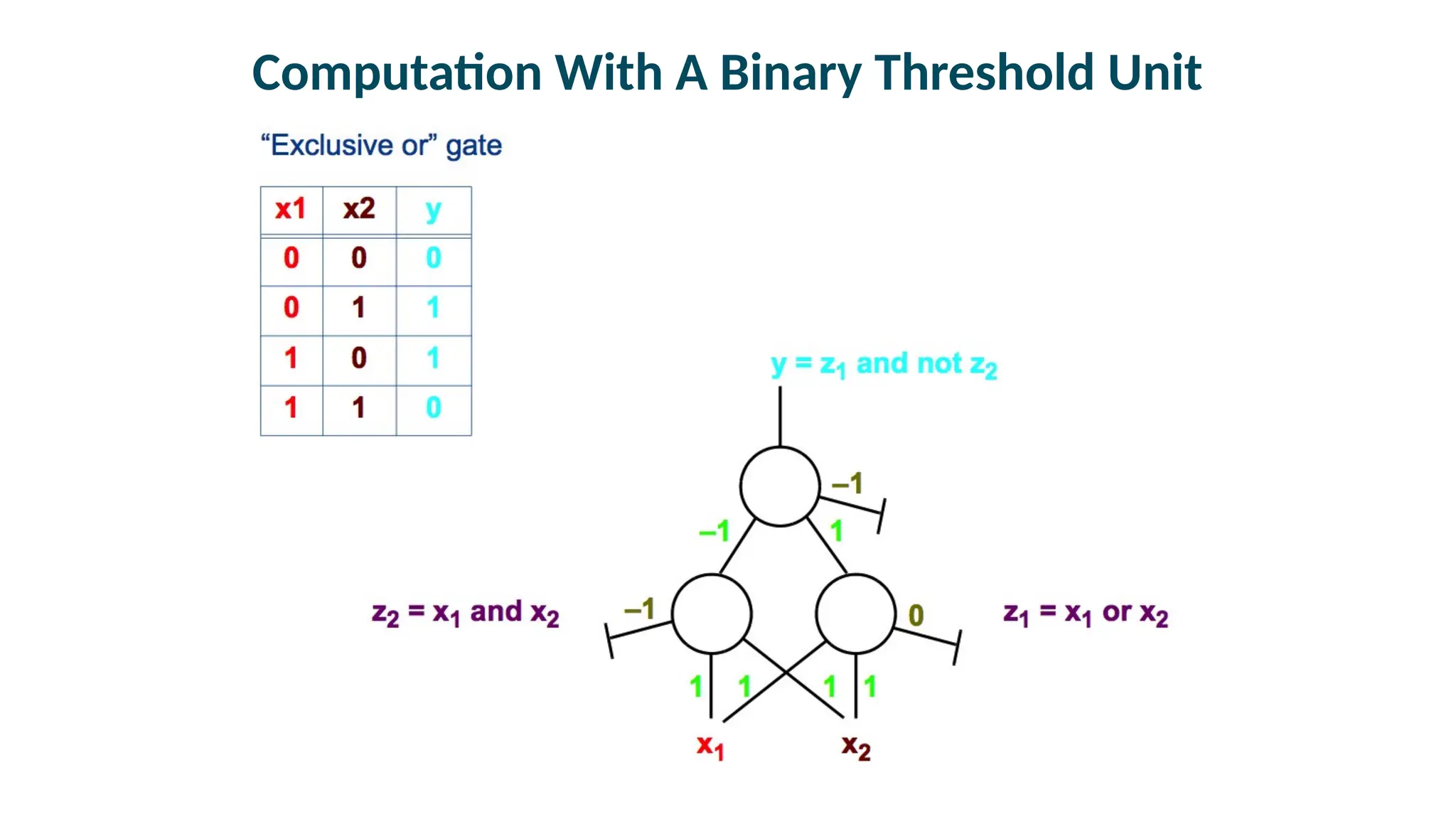
Computation With A Binary Threshold Unit
= 1 if net > 0
Computation With A Binary Threshold Unit
0
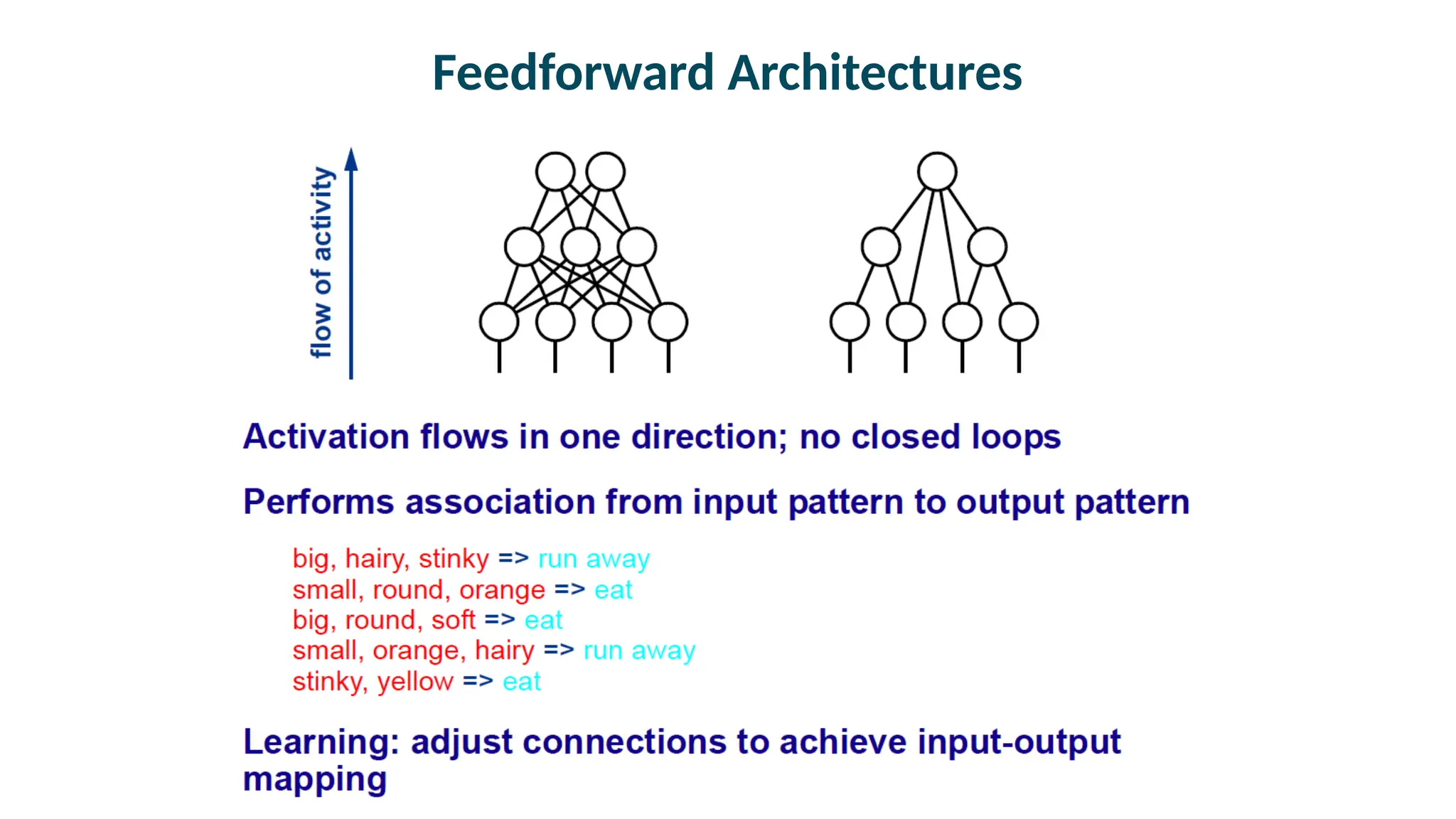
Feedforward Architectures
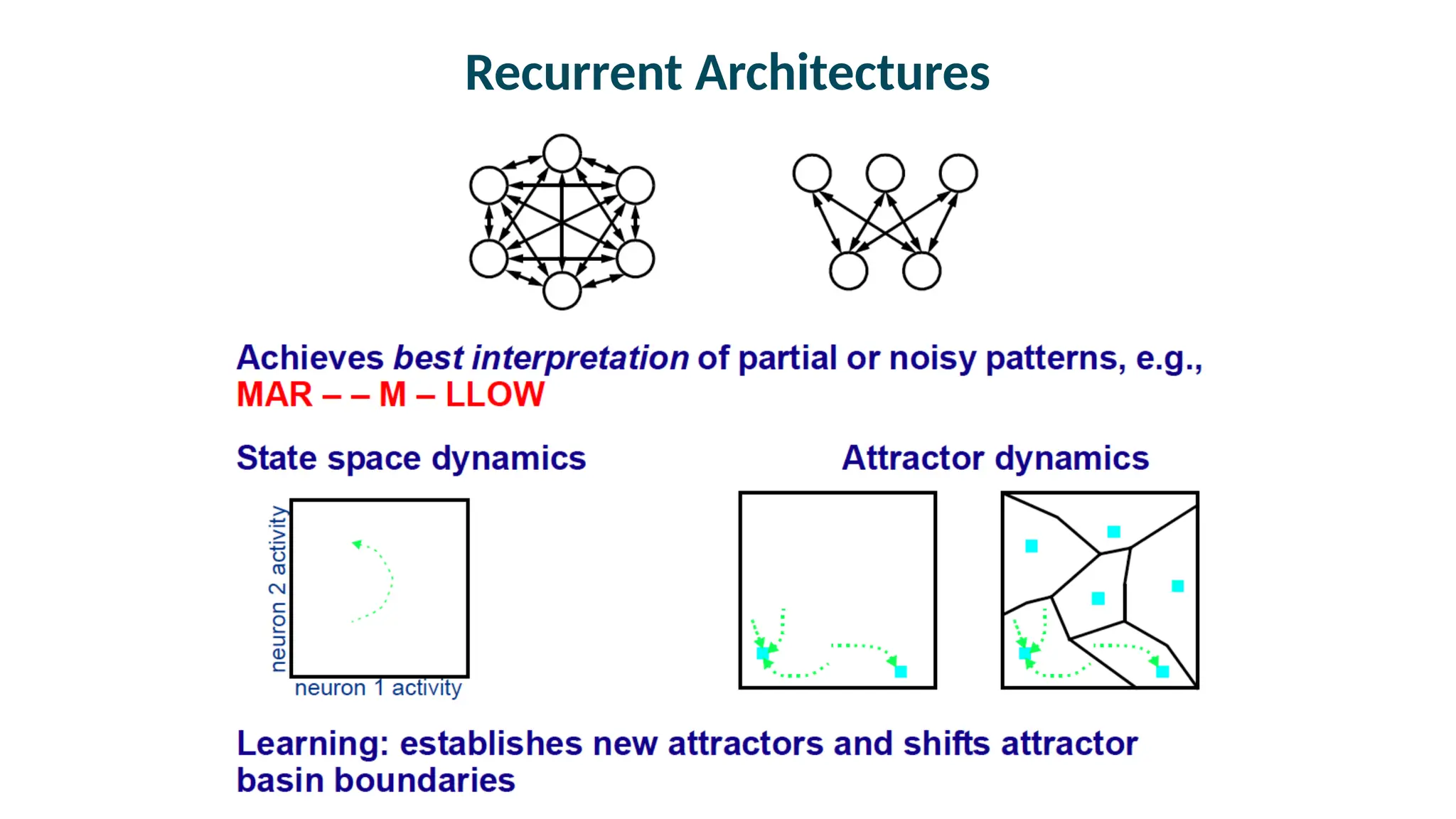
Recurrent Architectures
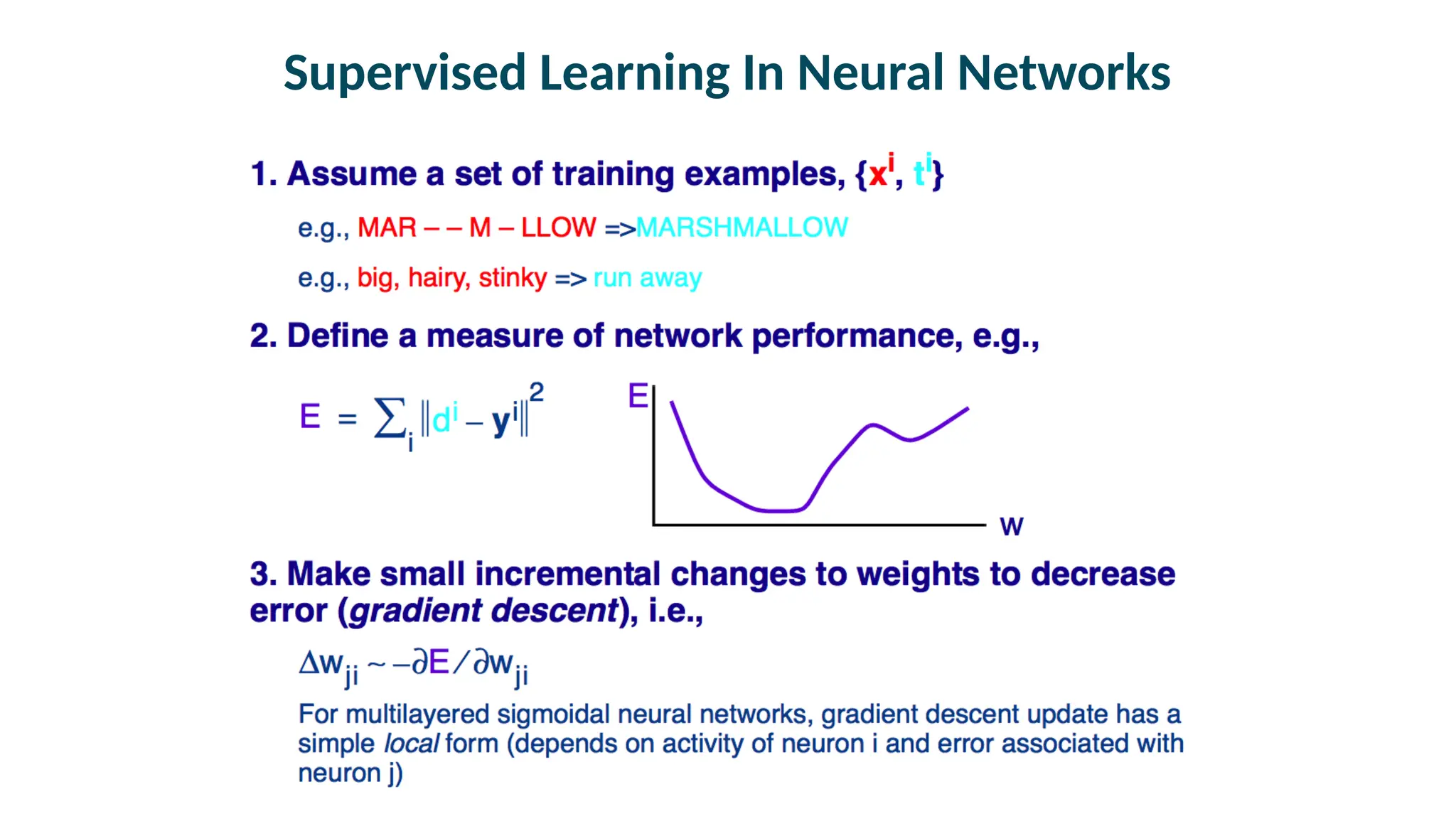
Supervised Learning In Neural Networks

introduction to neural networksintro2.pptx

  • 1.
    CSCI 5922 Neural Networksand Deep Learning: Introduction 2 Mike Mozer Department of Computer Science and Institute of Cognitive Science University of Colorado at Boulder
  • 2.
    Hinton’s Brief Historyof Machine Learning  What was hot in 1987?  back propagation, neural networks  What happened the past 30 years?  Computers got faster  Data sets got larger  Software tools improved (TensorFlow, Theano, Keras)  What is hot in 2017?  back propagation, neural networks
  • 3.
    Neural Network History  1962 FrankRosenblatt, Principles of Neurodynamics: Perceptrons and the Theory of Brain Mechanisms Perceptron can learn anything you can program it to do.
  • 4.
    Neural Network History  1969 Minsky& Papert, Perceptrons: An introduction to computational geometry There are many things a perceptron can’t in principle learn to do
  • 5.
    Neural Network History  1970-1985 Attemptsto develop symbolic rule discovery algorithms  1986 Rumelhart, Hinton, & Williams, Back propagation Overcame many of the Minsky & Papert objections Neural nets popular in cog sci and AI circa 1990
  • 6.
    Neural Network History  1990-2005 Bayesianapproaches •take the best ideas from neural networks – statistical computing, statistical learning Support-Vector Machines •convergence proofs (unlike neural nets) A few old timers keep playing with neural nets •Hinton, LeCun, Bengio, O’Reilly Neural nets banished from NIPS!
  • 7.
    Neural Network History  2005-2012 Attemptsto resurrect neural nets with •unsupervised pretraining •probabilistic neural nets •alternative learning rules
  • 8.
    Neural Network History  2012-present Mostof the alternative techniques discarded in favor of 1980’s style neural nets with •lots more training data •lots more computing cycles •a few important tricks that improve training and generalization (mostly from Hinton)
  • 9.
  • 10.
    What AI CanDo Now  Everyday human stuff  👓 Recognize objects in images  🗺 Navigate a map of the London Undergroun d  👂 Transcribe speech better than professional transcribers  🌎 Translate between languages  😮 Speak  ❓ Pick out the bit of a paragraph that answer s your question  😡 Recognize emotions in images of faces  🙊 Recognise emotions in speech  Travel  🚘 Drive  🚁 Fly a drone  ️ 🅿️Predict parking difficulty by area  Science & medicine  💊 Discover new uses for existing drugs  🚑 Spot cancer in tissue slides better than hu man epidemiologists  💉 Predict hypoglycemic events in diabetics t hree hours in advance  👁 Identify diabetic retinopathy (a leading cau se of blindness) from retinal photos  🔬 Analyze the genetic code of DNA to detect genomic conditions  🕵 Detect a range of conditions from images  ⚛️ Solve the quantum state of many particles at once  Agriculture  🌱 Detect crop disease  🚜 Spray pesticide with pinpoint accuracy  🌽 Predict crop yields  🥒 Sort cucumbers  Security  💰 Spot burglars in your home  🙊 ️ Write its own encryption language  🚓 Predict social unrest 5 days before it happ ens  🕵️Unscramble pixelated images  😈 Detect malware  ✅ Verify your identity  💳 Anticipate fraudulent payment attacks bef ore they happen  Finance  📈 Trade stocks  🏡 Handle insurance claims  Law  ⚖ Predict the outcomes of cases at the Europ ean Court of Human Rights with 79% accur acy  📚 Do legal case research  💰 Do due diligence on M&A deals  🚩 Flag errors in legal documents  Games & tests  🤓 Beat 75% of Americans in a visual intellige nce test  📺 Beat humans at Jeopardy  🎮 Absolutely nail Super Mario  👾 Play Breakout like a total pro  ⚫️Play Go better than humans  ️ ❤️ Beat the best human players at Texas Hold ’Em poker  Assistance  📅 Schedule meetings by email  🏃 Be your personal trainer  Programming  🖥 Write software unit tests  Meteorology  ⛈ Identify potentially threatening weather  Creativity  🎨 Paint a pretty good van Gogh  📝 Write poems that get published  🎼 Write music  🖍 Design logos  🍳 Come up with its own recipes  🏈 ️ Write sports articles for the Associated Pre ss  🎬 Write film scripts  ⚽ Play soccer badly  🎧 Recommend songs you’ll like  Boring but important  💋 Lip-read better than humans Experts predict when AI will exceed human performance Business Insider 2017
  • 14.
    Key Features ofCortical Computation  Neurons are slow (10–3 – 10–2 propagation time)  Large number of neurons (1010 – 1011 )  No central controller (CPU)  Neurons receive input from a large number of other neurons (104 fan-in and fan-out of cortical pyramidal cells)  Communication via excitation and inhibition  Statistical decision making (neurons that single-handedly turn on/off other neurons are rare)  Learning involves modifying coupling strengths (the tendency of one cell to excite/inhibit another)  Neural hardware is dedicated to particular tasks (vs. conventional computer memory)  Information is conveyed by mean firing rate of neuron, a.k.a. activation
  • 15.
     Conventional computers  Onevery smart CPU  Lots of extremely dumb memory cells  Brains, connectionist computers  No CPU  Lots of slightly smart memory cells
  • 18.
  • 19.
  • 20.
    Computation With ABinary Threshold Unit = 1 if net > 0
  • 21.
    Computation With ABinary Threshold Unit 0
  • 22.
  • 23.
  • 24.
    Supervised Learning InNeural Networks

Editor's Notes

  • #1 position audience
  • #2 old people love to talk about history i know it's really annoying to young people but now that i'm old i understand. and history is particularly relevant for the topics i'll be presenting. it’ll help you appreciate how all this new exciting stuff is really old and not so new.
  • #4 Early computational complexity analysis: how does learning time scale with size of problem? how does network size scale with problem? How much information does each weight need to represent? Are there classes of functions that can or cannot be computed by perceptrons of a certain architecture? e.g., translation invariant pattern recognition