Introduction to
Management
Functions
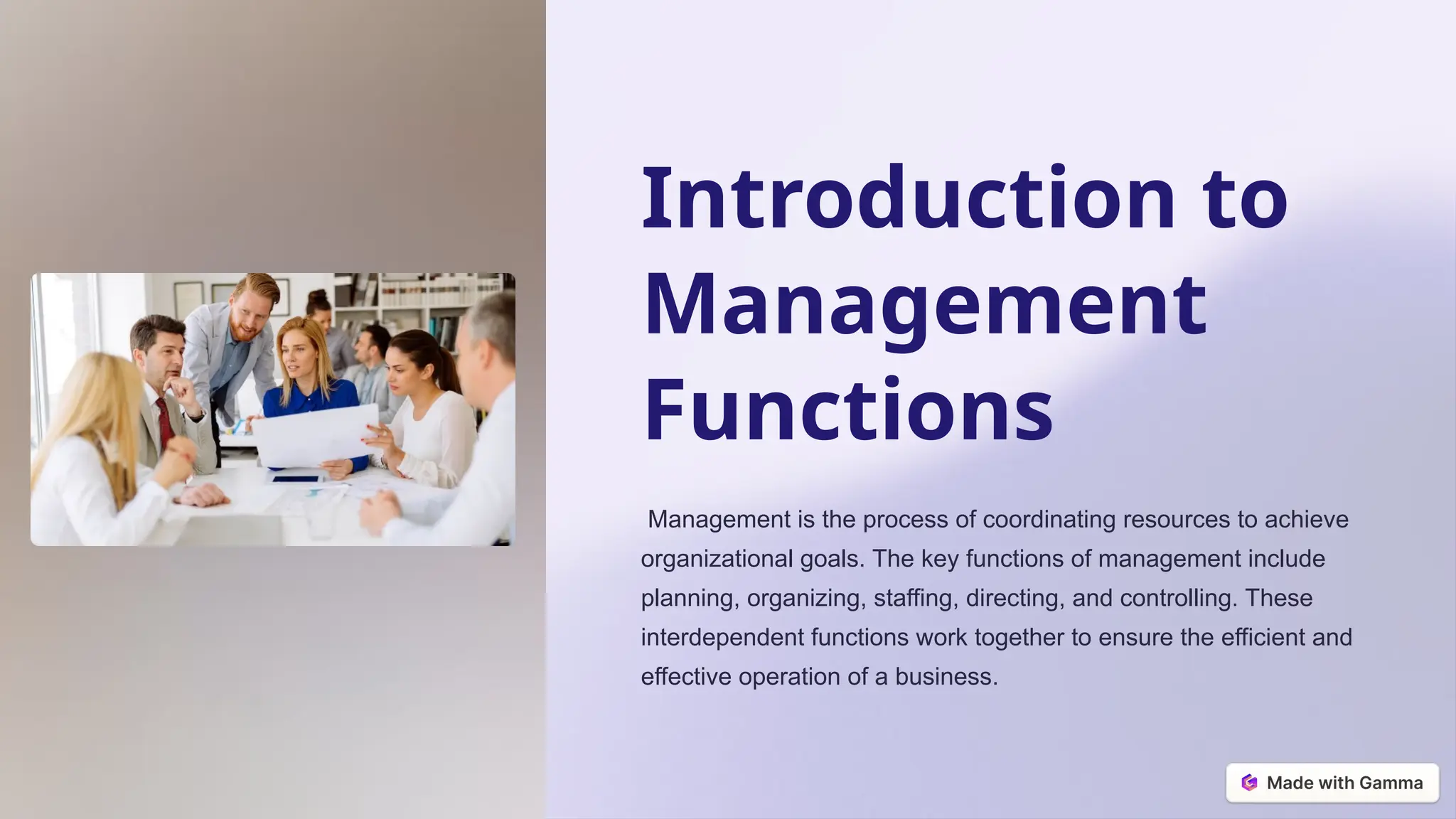
Management is the process of coordinating resources to achieve
organizational goals. The key functions of management include
planning, organizing, staffing, directing, and controlling. These
interdependent functions work together to ensure the efficient and
effective operation of a business.
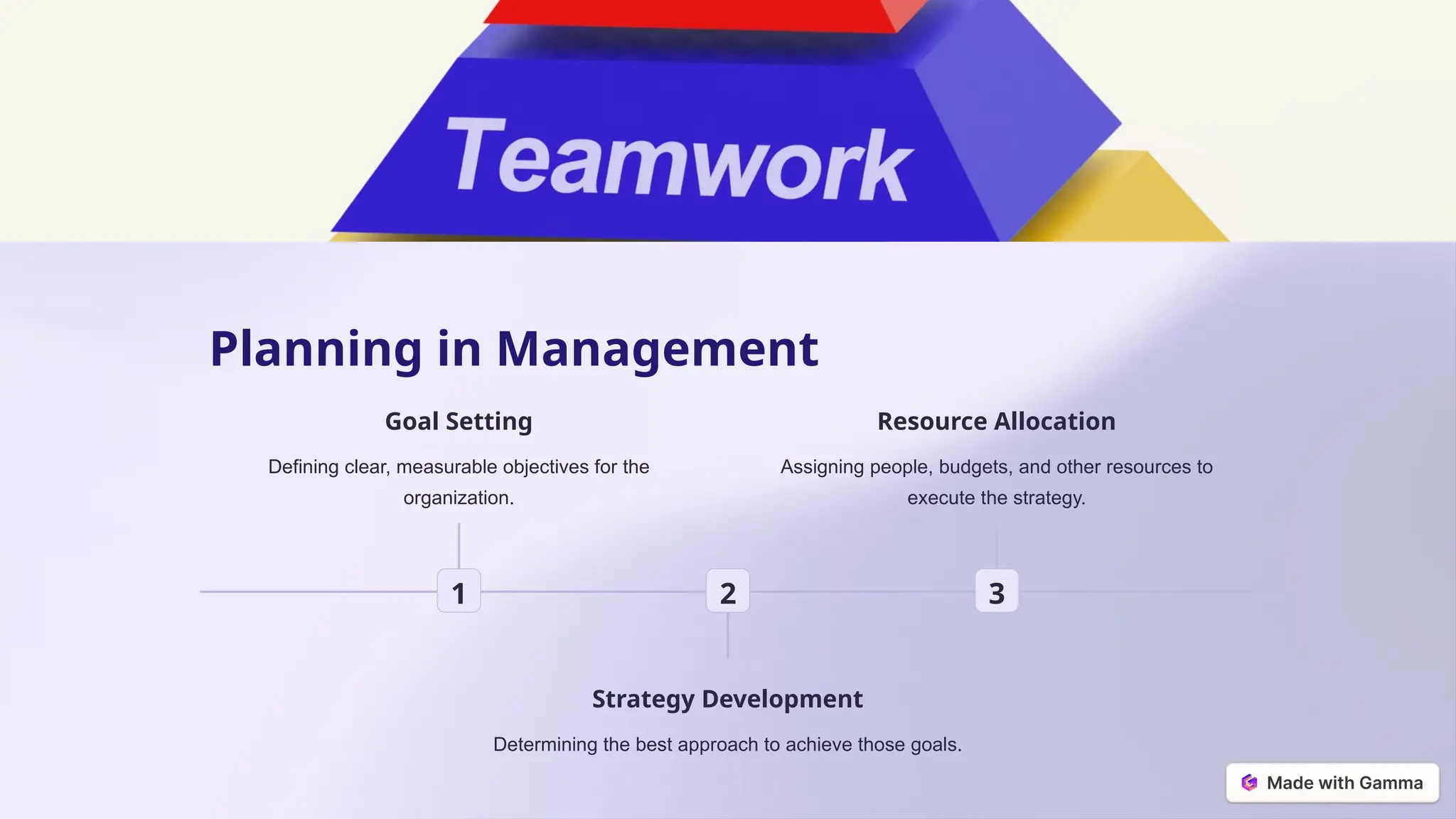
Planning in Management
1
Goal Setting
Defining clear, measurable objectives for the
organization.
2
Strategy Development
Determining the best approach to achieve those goals.
3
Resource Allocation
Assigning people, budgets, and other resources to
execute the strategy.
Organizing in Management
Structuring the
Organization
Determining the reporting
relationships, departments, and
lines of authority.
Delegating
Responsibilities
Assigning tasks and decision-
making power to the appropriate
personnel.
Coordinating Workflows
Ensuring seamless collaboration
and information sharing across
the organization.
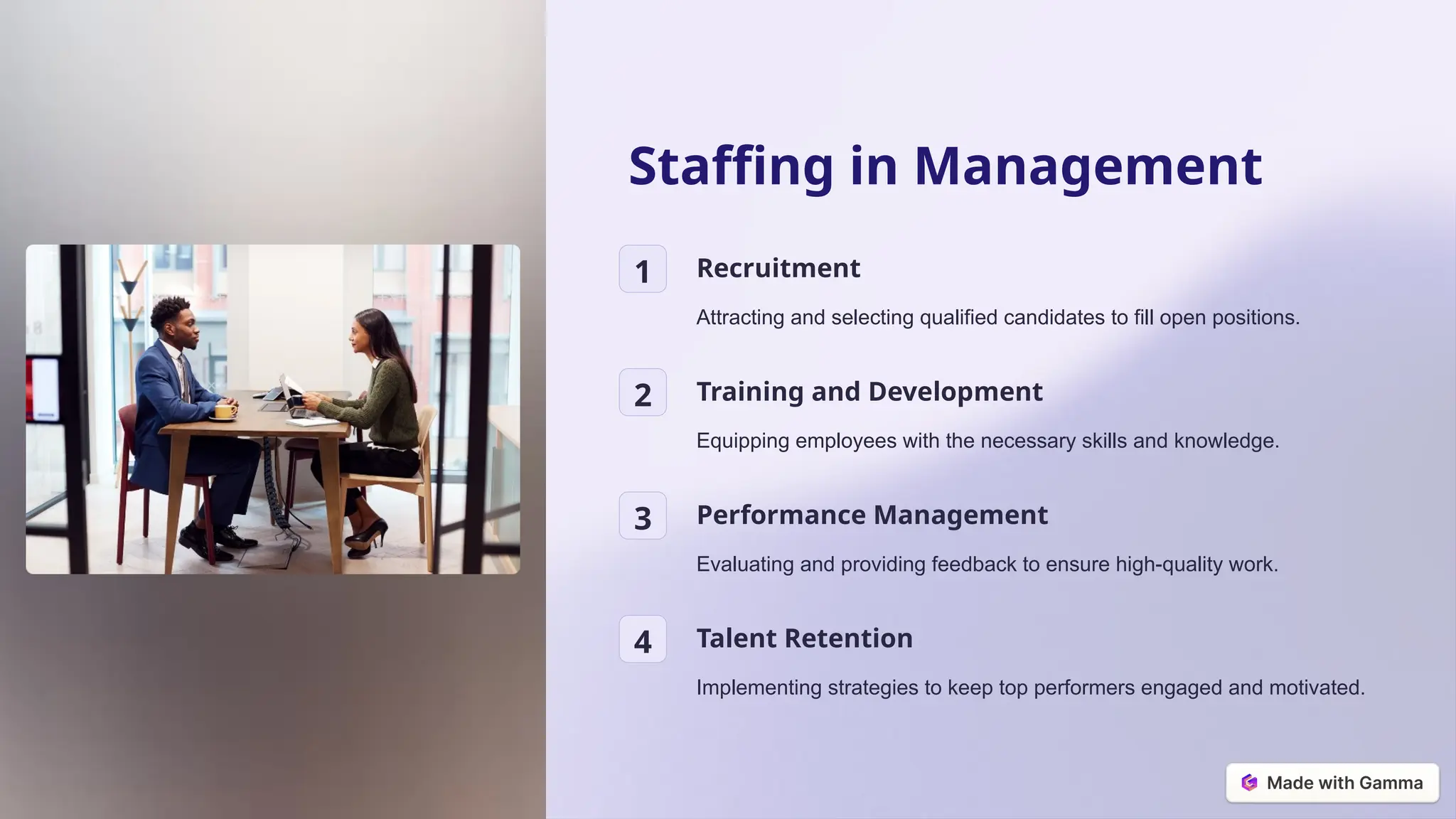
Staffing in Management
1 Recruitment
Attracting and selecting qualified candidates to fill open positions.
2 Training and Development
Equipping employees with the necessary skills and knowledge.
3 Performance Management
Evaluating and providing feedback to ensure high-quality work.
4 Talent Retention
Implementing strategies to keep top performers engaged and motivated.
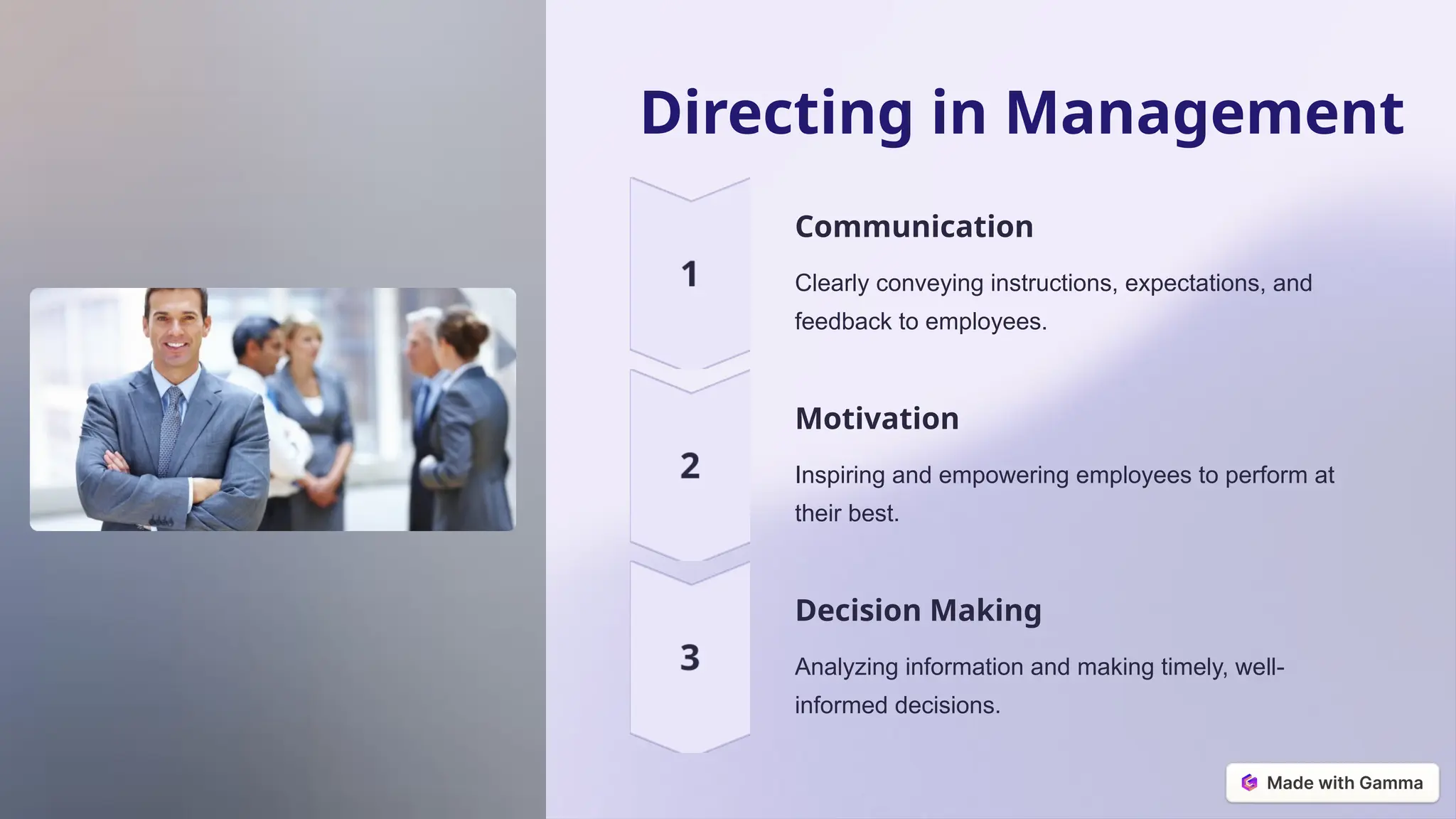
Directing in Management
Communication
Clearly conveying instructions, expectations, and
feedback to employees.
Motivation
Inspiring and empowering employees to perform at
their best.
Decision Making
Analyzing information and making timely, well-
informed decisions.
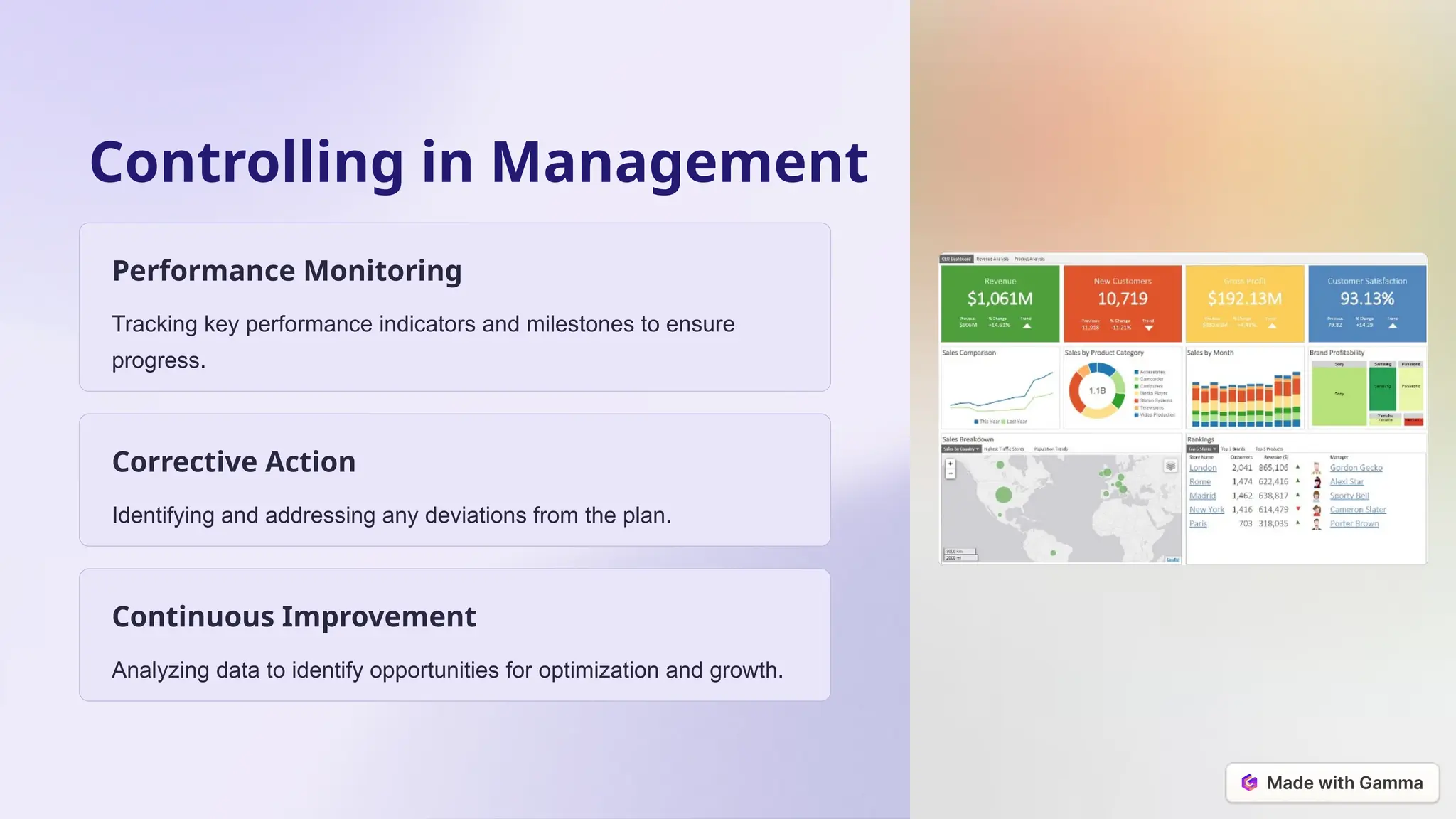
Controlling in Management
Performance Monitoring
Tracking key performance indicators and milestones to ensure
progress.
Corrective Action
Identifying and addressing any deviations from the plan.
Continuous Improvement
Analyzing data to identify opportunities for optimization and growth.
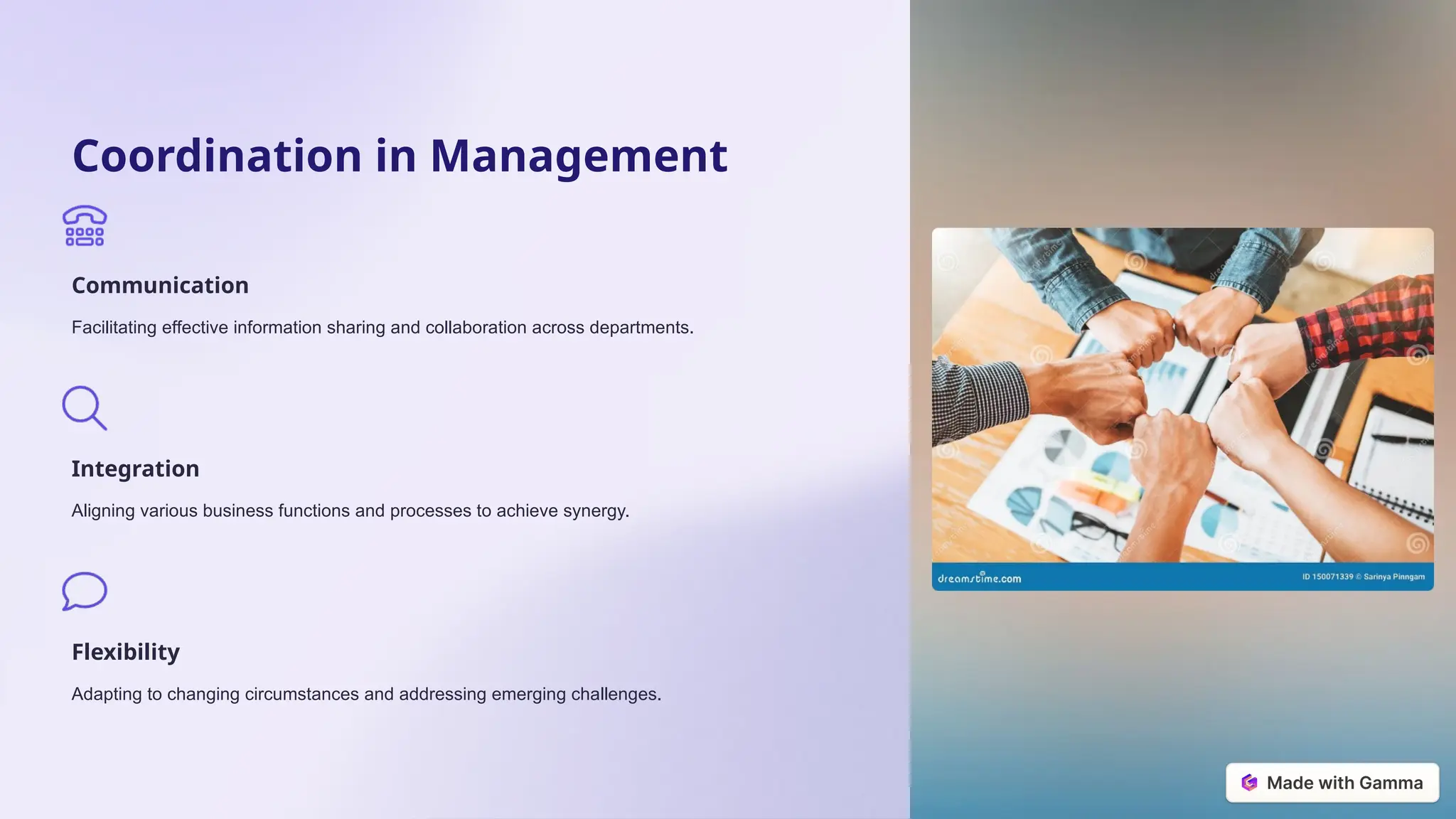
Coordination in Management
Communication
Facilitating effective information sharing and collaboration across departments.
Integration
Aligning various business functions and processes to achieve synergy.
Flexibility
Adapting to changing circumstances and addressing emerging challenges.
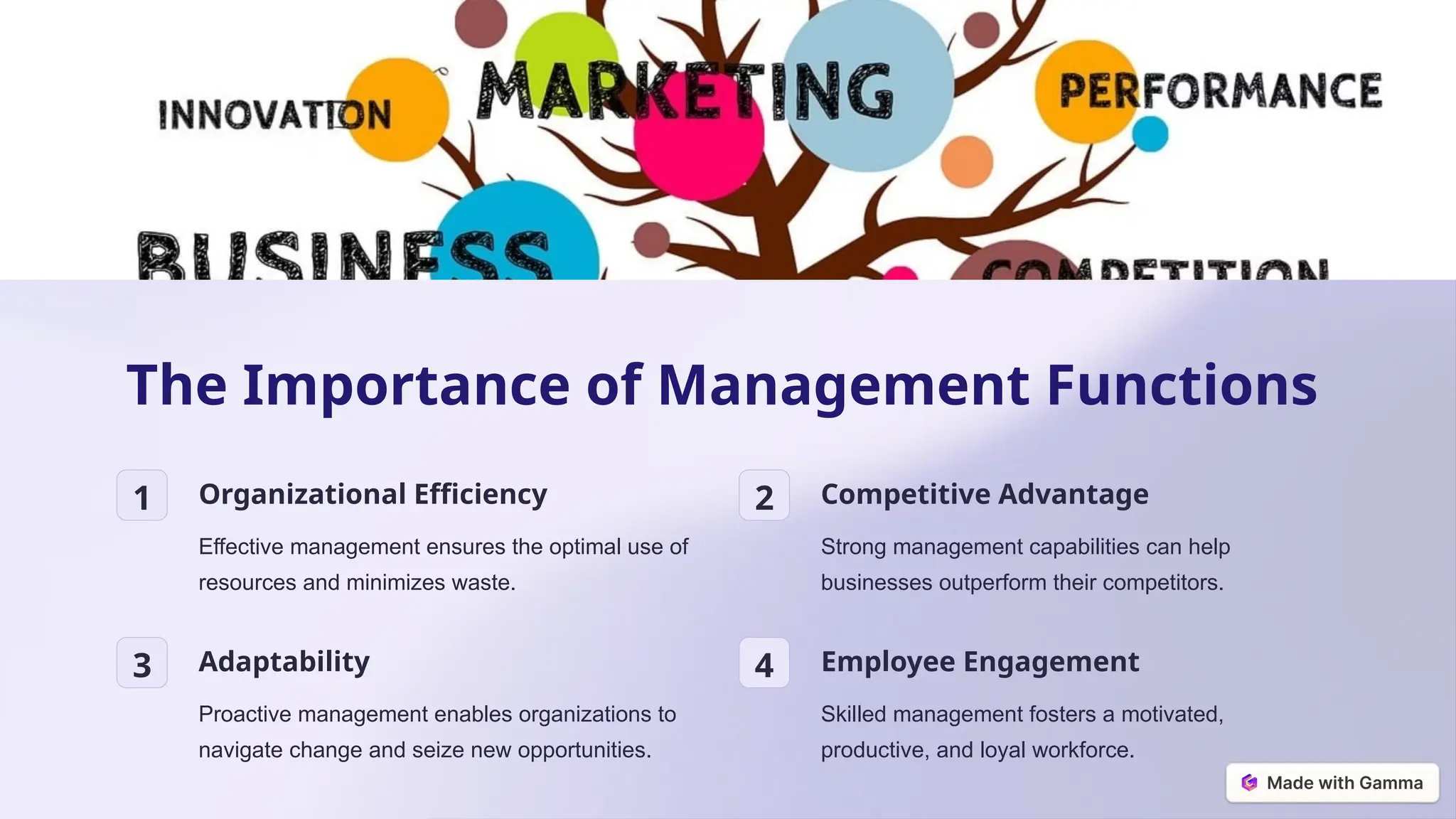
The Importance of Management Functions
1 Organizational Efficiency
Effective management ensures the optimal use of
resources and minimizes waste.
2 Competitive Advantage
Strong management capabilities can help
businesses outperform their competitors.
3 Adaptability
Proactive management enables organizations to
navigate change and seize new opportunities.
4 Employee Engagement
Skilled management fosters a motivated,
productive, and loyal workforce.

Introduction-to-Management-Functions.pptx

  • 1.
    Introduction to Management Functions Management isthe process of coordinating resources to achieve organizational goals. The key functions of management include planning, organizing, staffing, directing, and controlling. These interdependent functions work together to ensure the efficient and effective operation of a business.
  • 2.
    Planning in Management 1 GoalSetting Defining clear, measurable objectives for the organization. 2 Strategy Development Determining the best approach to achieve those goals. 3 Resource Allocation Assigning people, budgets, and other resources to execute the strategy.
  • 3.
    Organizing in Management Structuringthe Organization Determining the reporting relationships, departments, and lines of authority. Delegating Responsibilities Assigning tasks and decision- making power to the appropriate personnel. Coordinating Workflows Ensuring seamless collaboration and information sharing across the organization.
  • 4.
    Staffing in Management 1Recruitment Attracting and selecting qualified candidates to fill open positions. 2 Training and Development Equipping employees with the necessary skills and knowledge. 3 Performance Management Evaluating and providing feedback to ensure high-quality work. 4 Talent Retention Implementing strategies to keep top performers engaged and motivated.
  • 5.
    Directing in Management Communication Clearlyconveying instructions, expectations, and feedback to employees. Motivation Inspiring and empowering employees to perform at their best. Decision Making Analyzing information and making timely, well- informed decisions.
  • 6.
    Controlling in Management PerformanceMonitoring Tracking key performance indicators and milestones to ensure progress. Corrective Action Identifying and addressing any deviations from the plan. Continuous Improvement Analyzing data to identify opportunities for optimization and growth.
  • 7.
    Coordination in Management Communication Facilitatingeffective information sharing and collaboration across departments. Integration Aligning various business functions and processes to achieve synergy. Flexibility Adapting to changing circumstances and addressing emerging challenges.
  • 8.
    The Importance ofManagement Functions 1 Organizational Efficiency Effective management ensures the optimal use of resources and minimizes waste. 2 Competitive Advantage Strong management capabilities can help businesses outperform their competitors. 3 Adaptability Proactive management enables organizations to navigate change and seize new opportunities. 4 Employee Engagement Skilled management fosters a motivated, productive, and loyal workforce.