NATURE OF APPROACHES AND
METHODS IN LANGUAGE TEACHING
MAICO DEMI B. APEROCHO, PH.D.
AS A TEACHER, HOW WILL YOU
TEACH THE FOLLOWING STUDENTS?
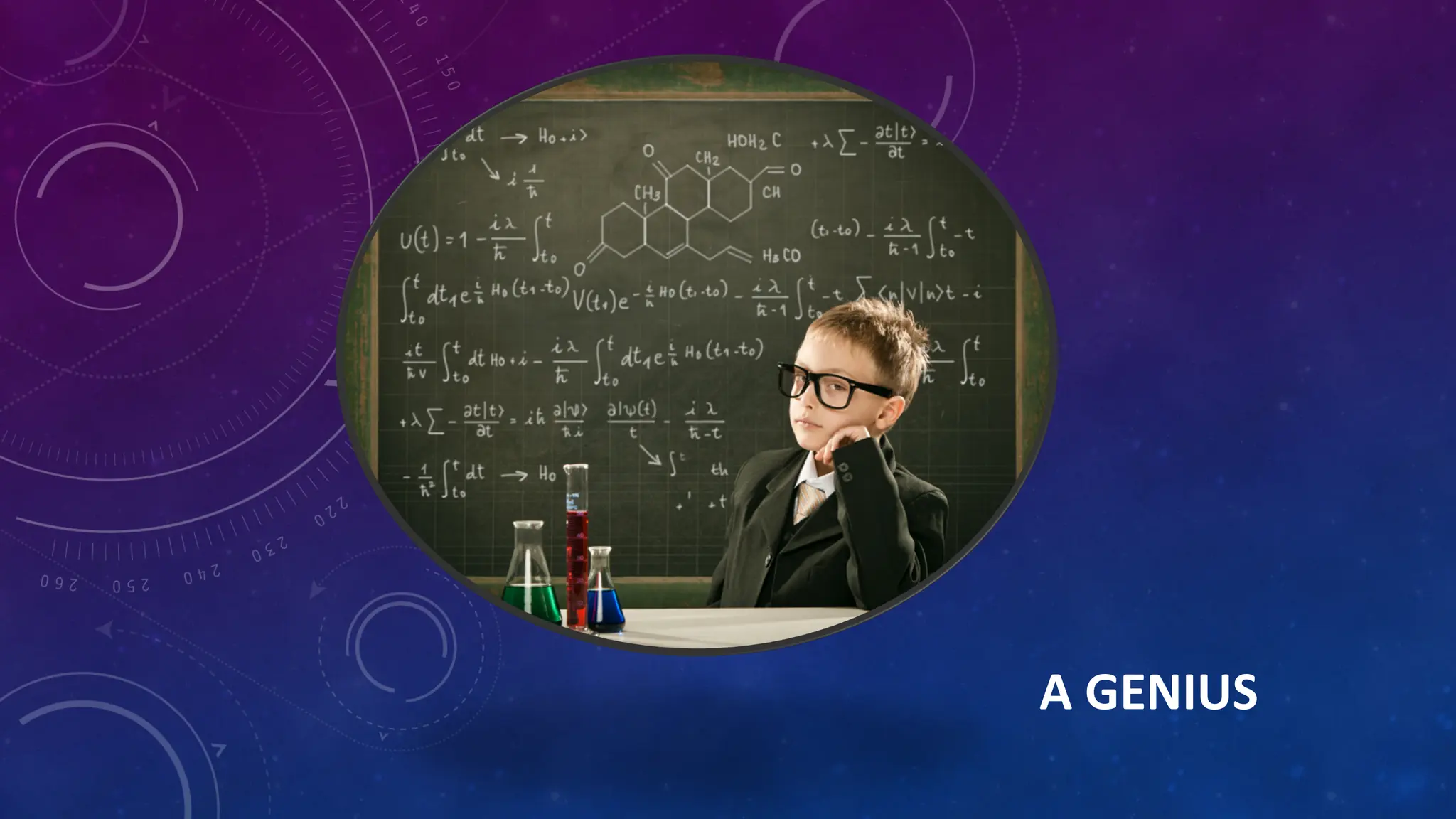
A GENIUS
A SLOW LEARNER
A DYSLEXIC
A CHILD WITH SPECIAL NEEDS
INTRODUCTION
• When linguists and language specialists sought to improve
the quality of language teaching in the late 19th century,
they often did so by referring to general principles and
theories concerning how languages are learned, how
knowledge of language is represented and organized in
memory, or how language itself is structured.
INTRODUCTION
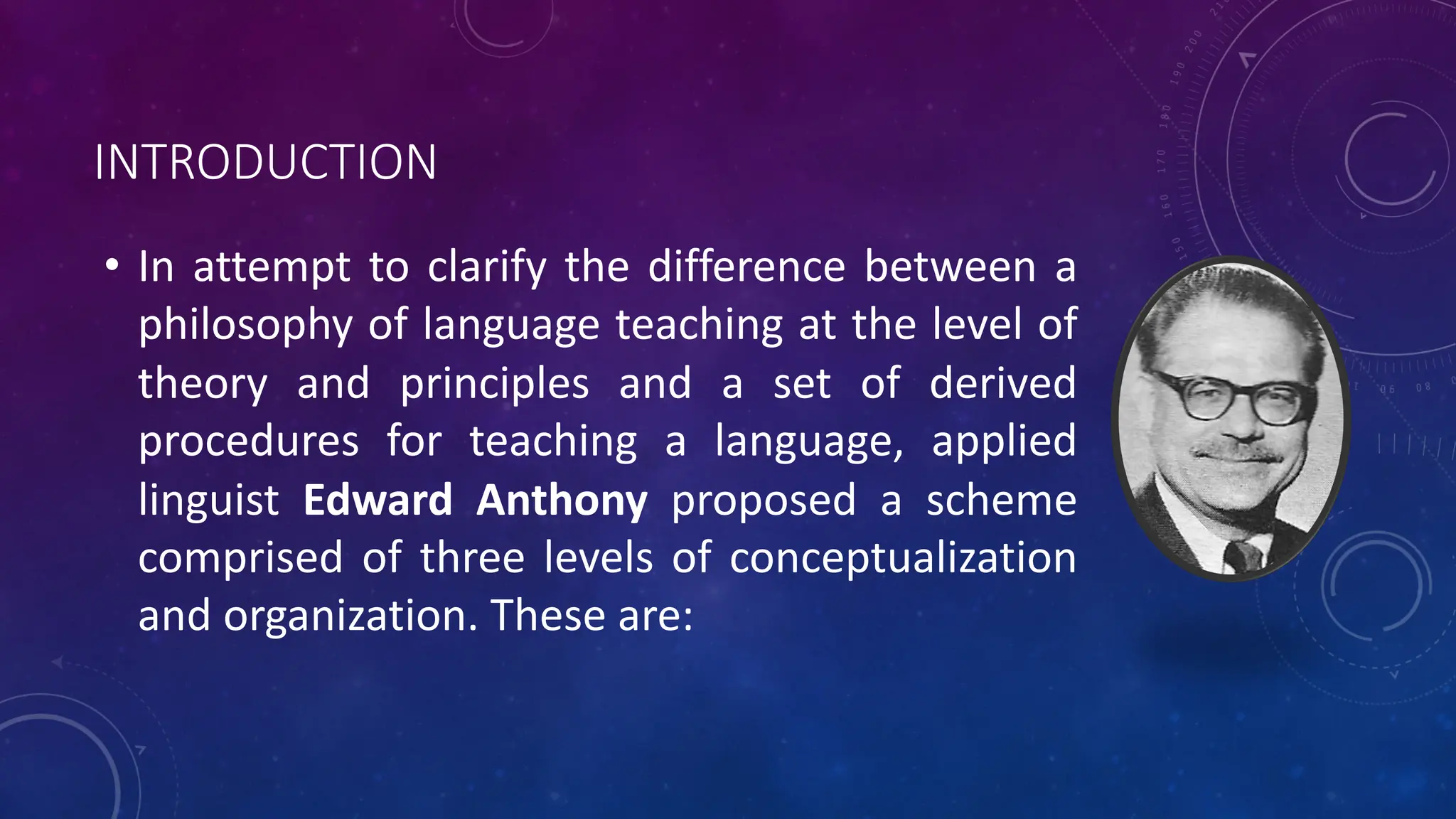
• In attempt to clarify the difference between a
philosophy of language teaching at the level of
theory and principles and a set of derived
procedures for teaching a language, applied
linguist Edward Anthony proposed a scheme
comprised of three levels of conceptualization
and organization. These are:
INTRODUCTION
• Approach- a set of correlative assumptions dealing with
the nature of language teaching and learning. It is
axiomatic, and it describes the nature of the subject
matter to be taught.
INTRODUCTION
• Method- an overall plan for the orderly presentation of
language material, no part of which contradicts, and all
of which is based upon the selected approach. Unlike
an approach, method is procedural.
INTRODUCTION
• Technique- is implementational- that which actually
takes place in a classroom. It is a particular trick,
stratagem, or contrivance used to accomplish an
immediate objective. It must be consistent with a
method, and therefore, in harmony with approach as
well.
APPROACH
• This refers to theories about the nature of language
and language learning that serve as the source of
practices and principles in language teaching.
APPROACH: THEORIES OF LANGUAGE
• There are three different theoretical views of language:
• Structural
• Functional
• Interactional
APPROACH: THEORIES OF LANGUAGE
• Structural View- the view that language is a
system of structurally related elements for the
coding of meaning.
• Target: mastery of phonological units (phonemes),
grammatical units, grammatical operations, and lexical
items
• Methods/Application: Audiolingual Method and Total
Physical Response
APPROACH: THEORIES OF LANGUAGE
• Functional View- the view that language is a
vehicle for the expressions of functional
meaning.
• Target: mastery of the communicative and
semantic dimensions of language
• Methods/Application: Notional Syllabi and English
for Specific Purposes (ESP)
APPROACH: THEORIES OF LANGUAGE
• Interactional View- the view that language is a
vehicle for the realization of interpersonal relations
and for the performance of social transactions
between individuals.
• Target: patterns of moves, acts, negotiation, and
interaction in the conversational exchanges
• Methods/Application: Interaction Analysis, Conversation
Analysis, Ethnomethodology, Task-based Language
Teaching, Whole Language, Neurolinguistic
Programming, Cooperative Language Learning, Content-
Based Instruction
APPROACH: THEORIES OF LANGUAGE LEARNING
• Language learning theory underlying an approach or
method responds to two questions:
• What are the psycholinguistic and cognitive processes involved
in language learning?
• What are the conditions that need to be met in order for these
learning processes be activated?
APPROACH: THEORIES OF LANGUAGE LEARNING
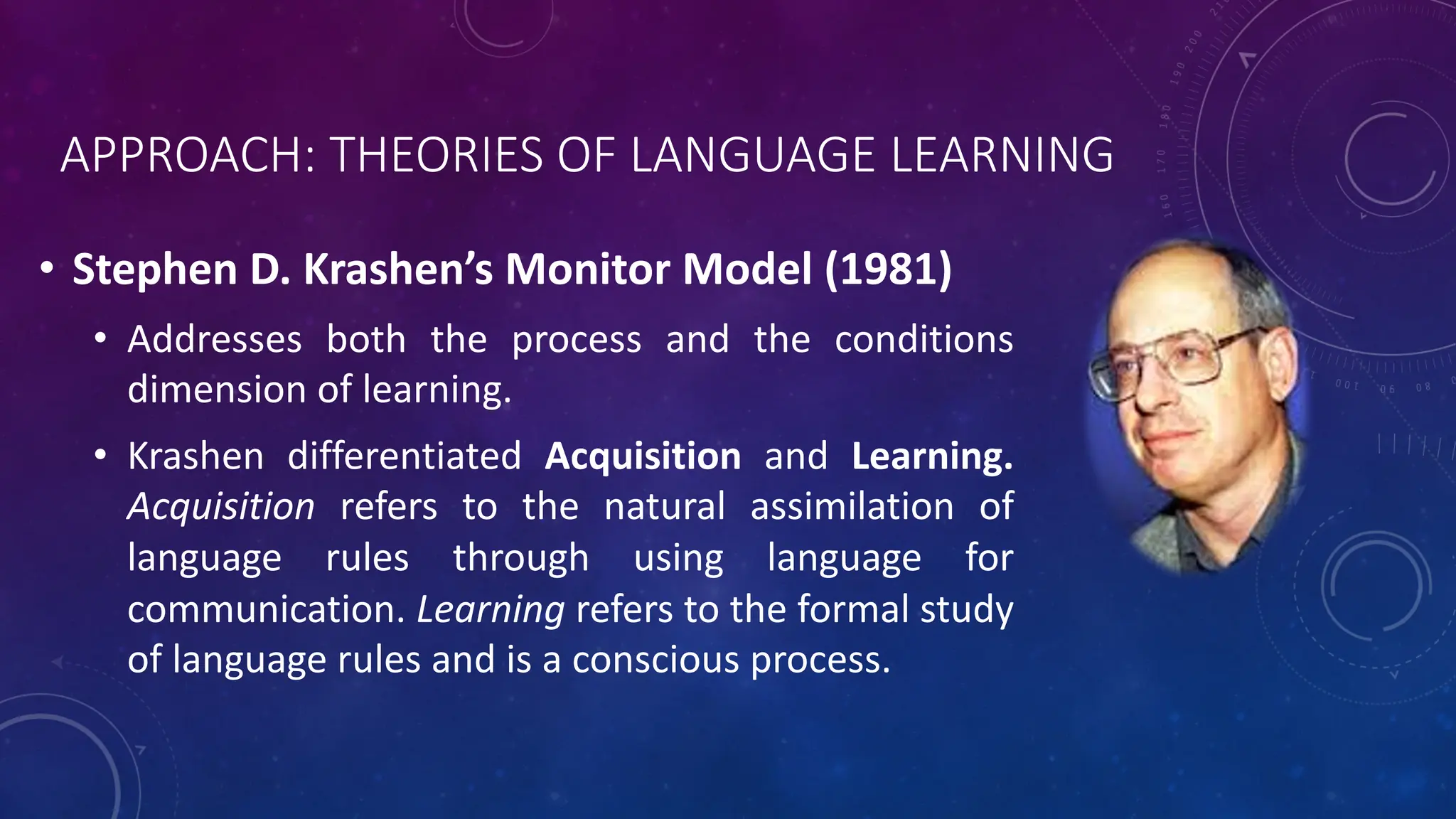
• Stephen D. Krashen’s Monitor Model (1981)
• Addresses both the process and the conditions
dimension of learning.
• Krashen differentiated Acquisition and Learning.
Acquisition refers to the natural assimilation of
language rules through using language for
communication. Learning refers to the formal study
of language rules and is a conscious process.
APPROACH: THEORIES OF LANGUAGE LEARNING
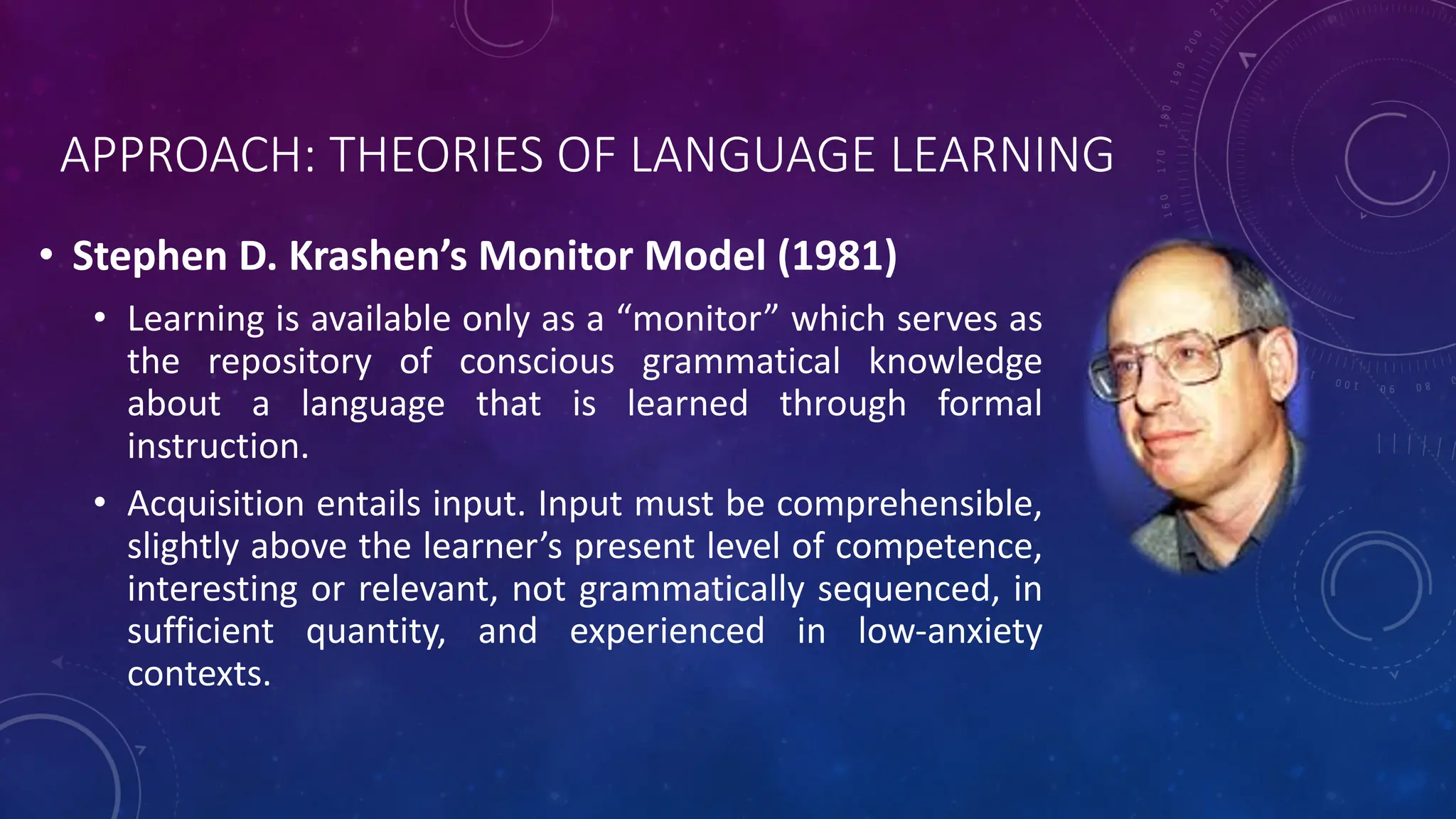
• Stephen D. Krashen’s Monitor Model (1981)
• Learning is available only as a “monitor” which serves as
the repository of conscious grammatical knowledge
about a language that is learned through formal
instruction.
• Acquisition entails input. Input must be comprehensible,
slightly above the learner’s present level of competence,
interesting or relevant, not grammatically sequenced, in
sufficient quantity, and experienced in low-anxiety
contexts.
APPROACH: THEORIES OF LANGUAGE LEARNING
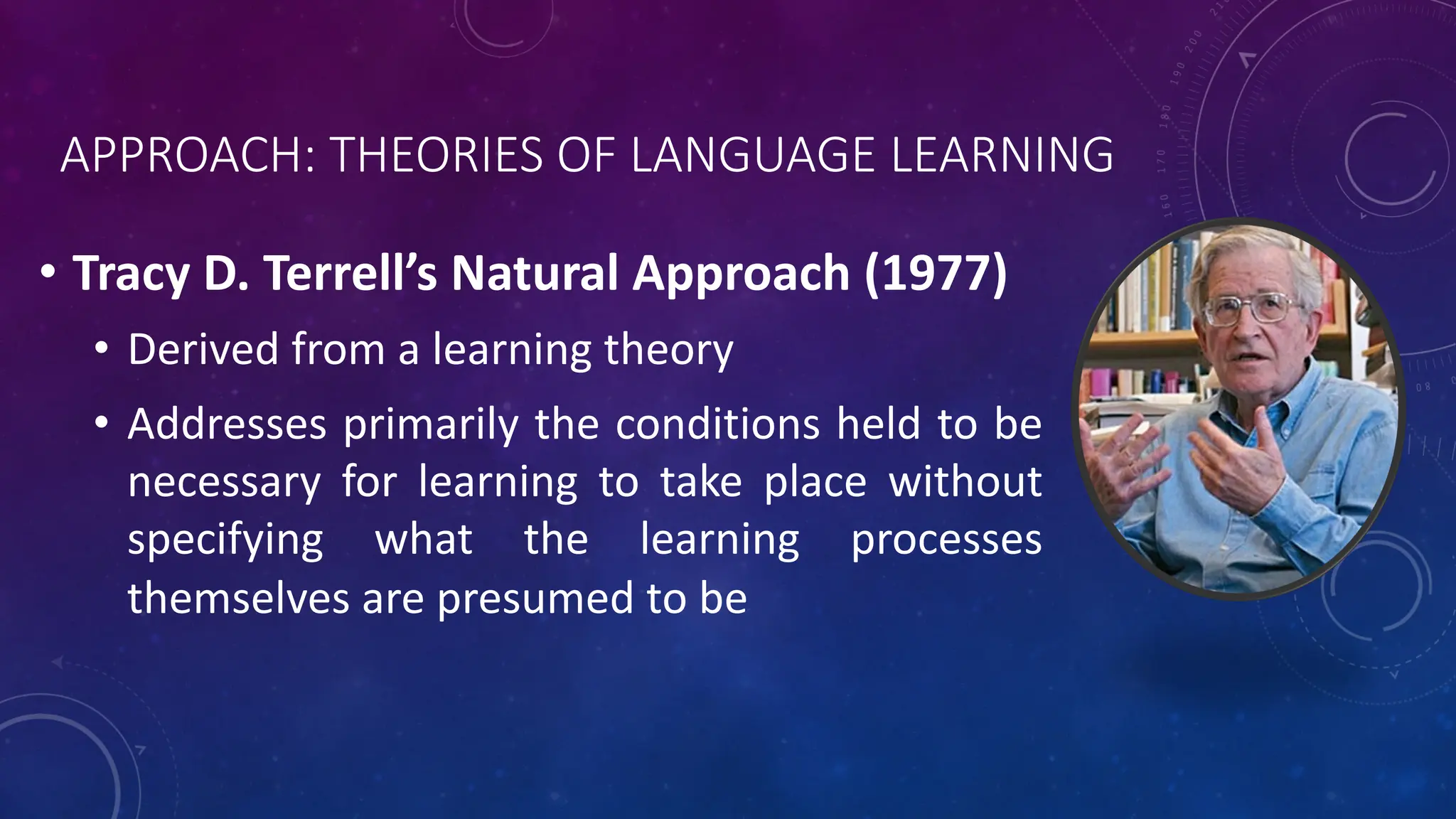
• Tracy D. Terrell’s Natural Approach (1977)
• Derived from a learning theory
• Addresses primarily the conditions held to be
necessary for learning to take place without
specifying what the learning processes
themselves are presumed to be
APPROACH: THEORIES OF LANGUAGE LEARNING
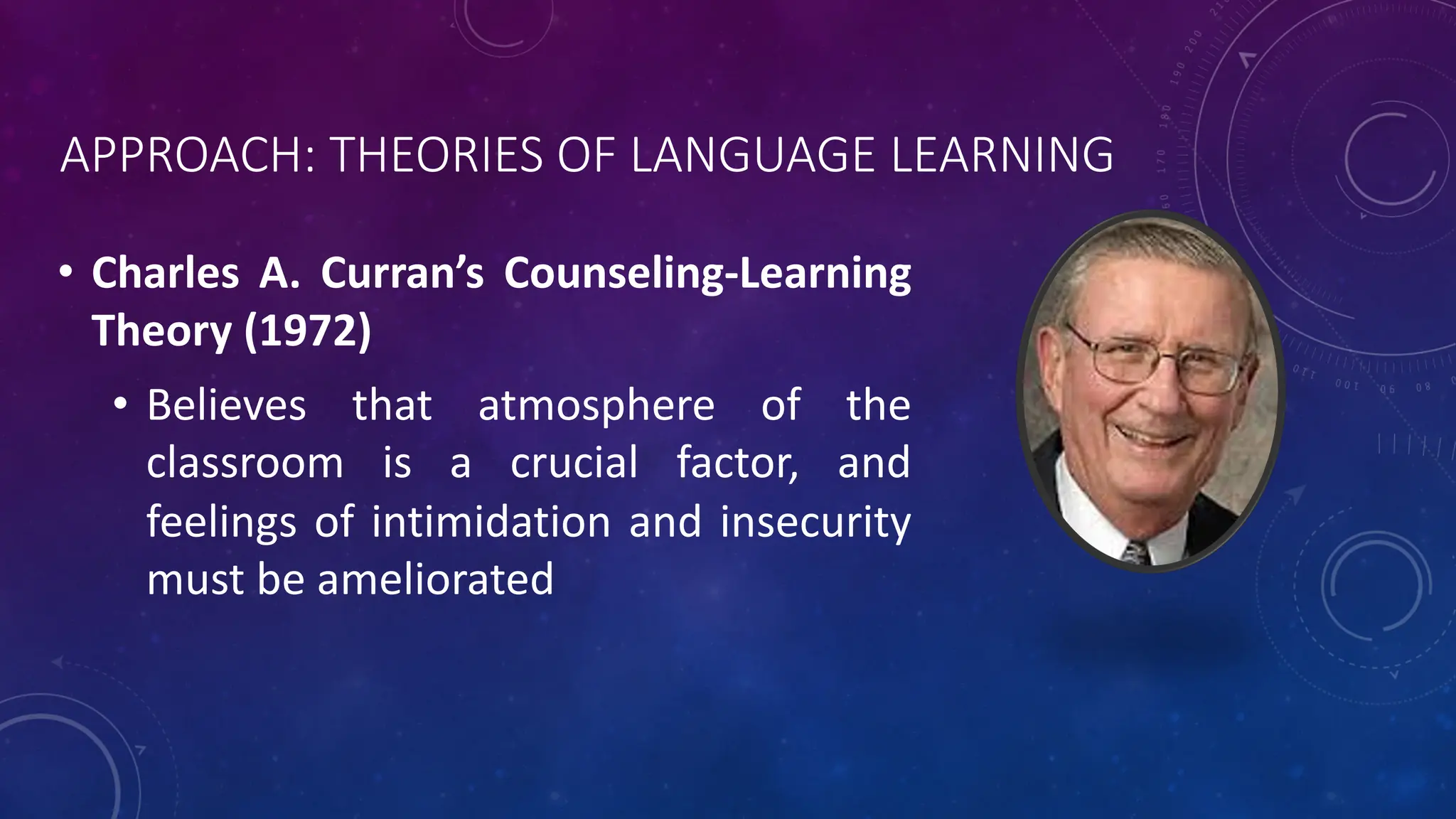
• Charles A. Curran’s Counseling-Learning
Theory (1972)
• Believes that atmosphere of the
classroom is a crucial factor, and
feelings of intimidation and insecurity
must be ameliorated
APPROACH: THEORIES OF LANGUAGE LEARNING
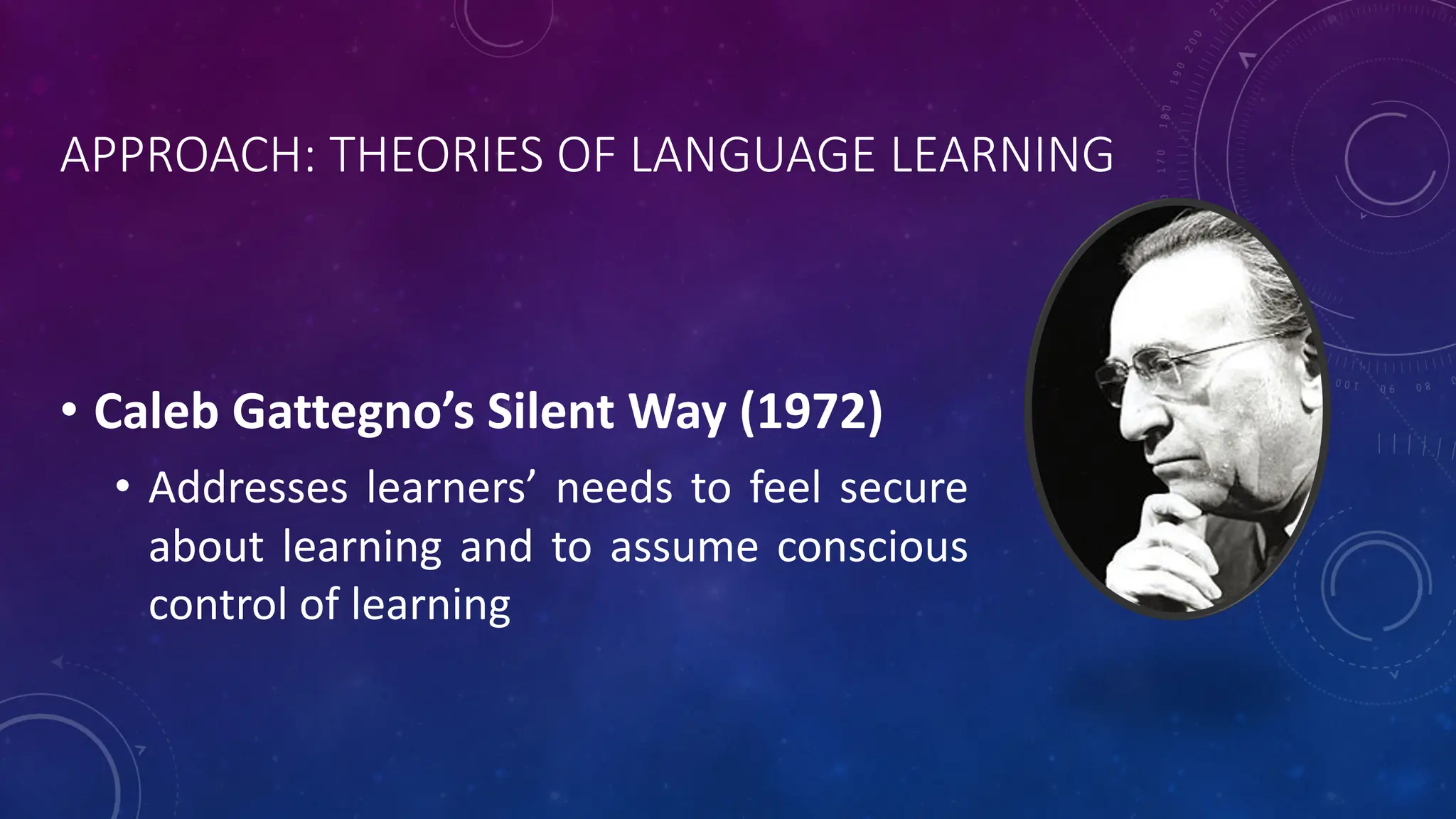
• Caleb Gattegno’s Silent Way (1972)
• Addresses learners’ needs to feel secure
about learning and to assume conscious
control of learning
DESIGN
• A design for an instructional system is necessary
to lead an approach to a method.
DESIGN: ELEMENTS
• Objectives
• Content Choice and Organization (Syllabus)
• Learning and Teaching Activities
• Learner Roles
• Teacher Roles
• Instructional Materials
PROCEDURE
• Encompasses the actual moment-to-moment techniques,
practices, and behaviors that operate in teaching a
language according to a particular method.
• It is the level at which we describe how a method realizes
its approach and design in classroom behavior.
PROCEDURE: THREE DIMENSIONS
• The use of teaching activities (drills, dialogues, activities)
• The ways in which particular teaching activities are used
for practicing language
• The procedures and techniques used in giving feedback
to learners concerning the form or content of their
utterances or sentences

Introduction to Language Teaching: Exploring Principles, Approaches, and Strategies for Developing Communication, Cultural Understanding, and Lifelong Learning

  • 1.
    NATURE OF APPROACHESAND METHODS IN LANGUAGE TEACHING MAICO DEMI B. APEROCHO, PH.D.
  • 2.
    AS A TEACHER,HOW WILL YOU TEACH THE FOLLOWING STUDENTS?
  • 3.
  • 4.
  • 5.
  • 6.
    A CHILD WITHSPECIAL NEEDS
  • 7.
    INTRODUCTION • When linguistsand language specialists sought to improve the quality of language teaching in the late 19th century, they often did so by referring to general principles and theories concerning how languages are learned, how knowledge of language is represented and organized in memory, or how language itself is structured.
  • 8.
    INTRODUCTION • In attemptto clarify the difference between a philosophy of language teaching at the level of theory and principles and a set of derived procedures for teaching a language, applied linguist Edward Anthony proposed a scheme comprised of three levels of conceptualization and organization. These are:
  • 9.
    INTRODUCTION • Approach- aset of correlative assumptions dealing with the nature of language teaching and learning. It is axiomatic, and it describes the nature of the subject matter to be taught.
  • 10.
    INTRODUCTION • Method- anoverall plan for the orderly presentation of language material, no part of which contradicts, and all of which is based upon the selected approach. Unlike an approach, method is procedural.
  • 11.
    INTRODUCTION • Technique- isimplementational- that which actually takes place in a classroom. It is a particular trick, stratagem, or contrivance used to accomplish an immediate objective. It must be consistent with a method, and therefore, in harmony with approach as well.
  • 12.
    APPROACH • This refersto theories about the nature of language and language learning that serve as the source of practices and principles in language teaching.
  • 13.
    APPROACH: THEORIES OFLANGUAGE • There are three different theoretical views of language: • Structural • Functional • Interactional
  • 14.
    APPROACH: THEORIES OFLANGUAGE • Structural View- the view that language is a system of structurally related elements for the coding of meaning. • Target: mastery of phonological units (phonemes), grammatical units, grammatical operations, and lexical items • Methods/Application: Audiolingual Method and Total Physical Response
  • 15.
    APPROACH: THEORIES OFLANGUAGE • Functional View- the view that language is a vehicle for the expressions of functional meaning. • Target: mastery of the communicative and semantic dimensions of language • Methods/Application: Notional Syllabi and English for Specific Purposes (ESP)
  • 16.
    APPROACH: THEORIES OFLANGUAGE • Interactional View- the view that language is a vehicle for the realization of interpersonal relations and for the performance of social transactions between individuals. • Target: patterns of moves, acts, negotiation, and interaction in the conversational exchanges • Methods/Application: Interaction Analysis, Conversation Analysis, Ethnomethodology, Task-based Language Teaching, Whole Language, Neurolinguistic Programming, Cooperative Language Learning, Content- Based Instruction
  • 17.
    APPROACH: THEORIES OFLANGUAGE LEARNING • Language learning theory underlying an approach or method responds to two questions: • What are the psycholinguistic and cognitive processes involved in language learning? • What are the conditions that need to be met in order for these learning processes be activated?
  • 18.
    APPROACH: THEORIES OFLANGUAGE LEARNING • Stephen D. Krashen’s Monitor Model (1981) • Addresses both the process and the conditions dimension of learning. • Krashen differentiated Acquisition and Learning. Acquisition refers to the natural assimilation of language rules through using language for communication. Learning refers to the formal study of language rules and is a conscious process.
  • 19.
    APPROACH: THEORIES OFLANGUAGE LEARNING • Stephen D. Krashen’s Monitor Model (1981) • Learning is available only as a “monitor” which serves as the repository of conscious grammatical knowledge about a language that is learned through formal instruction. • Acquisition entails input. Input must be comprehensible, slightly above the learner’s present level of competence, interesting or relevant, not grammatically sequenced, in sufficient quantity, and experienced in low-anxiety contexts.
  • 20.
    APPROACH: THEORIES OFLANGUAGE LEARNING • Tracy D. Terrell’s Natural Approach (1977) • Derived from a learning theory • Addresses primarily the conditions held to be necessary for learning to take place without specifying what the learning processes themselves are presumed to be
  • 21.
    APPROACH: THEORIES OFLANGUAGE LEARNING • Charles A. Curran’s Counseling-Learning Theory (1972) • Believes that atmosphere of the classroom is a crucial factor, and feelings of intimidation and insecurity must be ameliorated
  • 22.
    APPROACH: THEORIES OFLANGUAGE LEARNING • Caleb Gattegno’s Silent Way (1972) • Addresses learners’ needs to feel secure about learning and to assume conscious control of learning
  • 23.
    DESIGN • A designfor an instructional system is necessary to lead an approach to a method.
  • 24.
    DESIGN: ELEMENTS • Objectives •Content Choice and Organization (Syllabus) • Learning and Teaching Activities • Learner Roles • Teacher Roles • Instructional Materials
  • 25.
    PROCEDURE • Encompasses theactual moment-to-moment techniques, practices, and behaviors that operate in teaching a language according to a particular method. • It is the level at which we describe how a method realizes its approach and design in classroom behavior.
  • 26.
    PROCEDURE: THREE DIMENSIONS •The use of teaching activities (drills, dialogues, activities) • The ways in which particular teaching activities are used for practicing language • The procedures and techniques used in giving feedback to learners concerning the form or content of their utterances or sentences