Introduction to Information
Techonology
- Dr. Anita Rathod
Contents
Course Objectives
01
02
03
04
Definition of IT
Syllabus
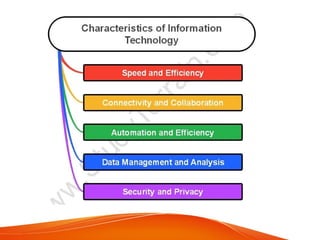
Characteristics of IT
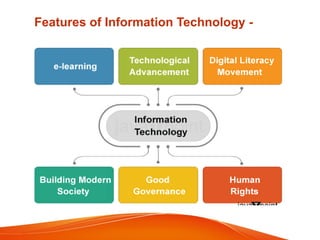
04 Features of IT
04 Role of IT in Business
04 Evolution of IT
04 Impact of IT on Business
Course Objectives:
• To understand the Role of Information
Technology in Business:
• To apply acquired IT skills to solve real-
world business problems.
Chapter 1
• Introduction to Information Technology in
Business
• Overview of information technology and its
role in business
• Evolution of technology and its impact on
business
Chapter 2
• E-Business and E- Commerce
• Introduction to e-business and e-
commerce
• Online business models
• Payment systems and security
• Digital marketing and social media
Chapter 3
• Information Technology Tools
• Meeting/Video conferencing tools (Zoom,
Microsoft Teams)
• Collaborative tools for document sharing
and editing
• Document Management Tools
Definition of Information Technology -
• According to Attaran, “Information technology is defined as
capabilities offered to organizations by computers, software
applications, and telecommunications to deliver data,
information, and knowledge to individuals and processes”.
• According to ND Century Code (Chapter 54.59.01),
“Information Technology means the use of hardware, software,
services, and supporting infrastructure to manage and deliver
information using voice, data, and video.”
• Harold J. Leavitt and Thomas L. Whisler (1958) “IT as the
study, design, development, implementation, support, and
management of computer-based knowledge.”
• Thong and Yap (1995), “IT as computer software
and hardware solutions that support management,
operations, and strategists in organizations.”
• Boar (1997), “IT as those technologies engaged in
the operation, collection, transport, retrieving,
storage, access presentation, and transformation of
information in all its forms.”
• Burgelman (1996)“IT as the resources applied by a
firm in the processing and management of its data”.
Features of Information Technology -
Role of IT in Business -
• Streamlining Operations
• Implementing Cloud-based Solutions
• Facilitating Cyber Security
• Enabling Efficient Communication
• Enhancing Customer Experience
• Reducing Operational Cost
• Improved Efficiency and Productivity
• Innovation and Competitive Advantage
• Supply Chain Management
• Security and Risk Management
• Cost Reduction
• Data Management and Analysis
Application of IT in Business -
• Customer Service
• Workplace efficiency
• Planning & controlling operations
• Marketing
• Finance and accounting
• E-commerce
• Collaboration & Outsourcing
• Banking and payments
• E-Commerce
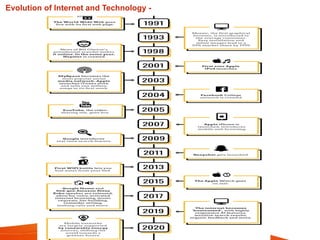
Evolution of Internet and Technology -
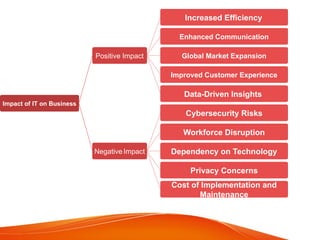
Impact of IT on Business
Positive Impact
Increased Efficiency
Enhanced Communication
Global Market Expansion
Improved Customer Experience
Data-Driven Insights
Negative Impact
Cybersecurity Risks
Workforce Disruption
Dependency on Technology
Privacy Concerns
Cost of Implementation and
Maintenance
Reference Links -
• https://www.mzuonline.in/blog/the-role-of-information-technology-in-
modern-business.html
• https://www.sandipuniversity.edu.in/blog/role-of-information-
technology-in-business-management/
• https://rccmindore.com/wp-content/uploads/2021/02/
Information_Technology.pdf
• https://onlinechartered.com/impact-of-technology-on-business/

Introduction to Information Technology PPT

  • 1.
  • 2.
    Contents Course Objectives 01 02 03 04 Definition ofIT Syllabus Characteristics of IT 04 Features of IT 04 Role of IT in Business 04 Evolution of IT 04 Impact of IT on Business
  • 3.
    Course Objectives: • Tounderstand the Role of Information Technology in Business: • To apply acquired IT skills to solve real- world business problems.
  • 4.
    Chapter 1 • Introductionto Information Technology in Business • Overview of information technology and its role in business • Evolution of technology and its impact on business
  • 5.
    Chapter 2 • E-Businessand E- Commerce • Introduction to e-business and e- commerce • Online business models • Payment systems and security • Digital marketing and social media
  • 6.
    Chapter 3 • InformationTechnology Tools • Meeting/Video conferencing tools (Zoom, Microsoft Teams) • Collaborative tools for document sharing and editing • Document Management Tools
  • 7.
    Definition of InformationTechnology - • According to Attaran, “Information technology is defined as capabilities offered to organizations by computers, software applications, and telecommunications to deliver data, information, and knowledge to individuals and processes”. • According to ND Century Code (Chapter 54.59.01), “Information Technology means the use of hardware, software, services, and supporting infrastructure to manage and deliver information using voice, data, and video.” • Harold J. Leavitt and Thomas L. Whisler (1958) “IT as the study, design, development, implementation, support, and management of computer-based knowledge.”
  • 8.
    • Thong andYap (1995), “IT as computer software and hardware solutions that support management, operations, and strategists in organizations.” • Boar (1997), “IT as those technologies engaged in the operation, collection, transport, retrieving, storage, access presentation, and transformation of information in all its forms.” • Burgelman (1996)“IT as the resources applied by a firm in the processing and management of its data”.
  • 10.
  • 11.
    Role of ITin Business - • Streamlining Operations • Implementing Cloud-based Solutions • Facilitating Cyber Security • Enabling Efficient Communication • Enhancing Customer Experience • Reducing Operational Cost • Improved Efficiency and Productivity • Innovation and Competitive Advantage • Supply Chain Management • Security and Risk Management • Cost Reduction • Data Management and Analysis
  • 12.
    Application of ITin Business - • Customer Service • Workplace efficiency • Planning & controlling operations • Marketing • Finance and accounting • E-commerce • Collaboration & Outsourcing • Banking and payments • E-Commerce
  • 13.
    Evolution of Internetand Technology -
  • 14.
    Impact of ITon Business Positive Impact Increased Efficiency Enhanced Communication Global Market Expansion Improved Customer Experience Data-Driven Insights Negative Impact Cybersecurity Risks Workforce Disruption Dependency on Technology Privacy Concerns Cost of Implementation and Maintenance
  • 15.
    Reference Links - •https://www.mzuonline.in/blog/the-role-of-information-technology-in- modern-business.html • https://www.sandipuniversity.edu.in/blog/role-of-information- technology-in-business-management/ • https://rccmindore.com/wp-content/uploads/2021/02/ Information_Technology.pdf • https://onlinechartered.com/impact-of-technology-on-business/