Introduction to
Globalization
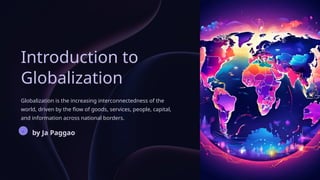
Globalization is the increasing interconnectedness of the
world, driven by the flow of goods, services, people, capital,
and information across national borders.
JP
by Ja Paggao
Defining Globalization
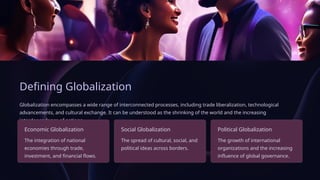
Globalization encompasses a wide range of interconnected processes, including trade liberalization, technological
advancements, and cultural exchange. It can be understood as the shrinking of the world and the increasing
interdependence of nations.
Economic Globalization
The integration of national
economies through trade,
investment, and financial flows.
Social Globalization
The spread of cultural, social, and
political ideas across borders.
Political Globalization
The growth of international
organizations and the increasing
influence of global governance.
Drivers of Globalization
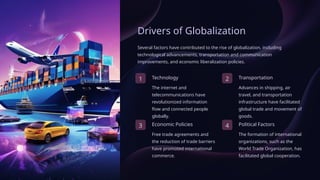
Several factors have contributed to the rise of globalization, including
technological advancements, transportation and communication
improvements, and economic liberalization policies.
1 Technology
The internet and
telecommunications have
revolutionized information
flow and connected people
globally.
2 Transportation
Advances in shipping, air
travel, and transportation
infrastructure have facilitated
global trade and movement of
goods.
3 Economic Policies
Free trade agreements and
the reduction of trade barriers
have promoted international
commerce.
4 Political Factors
The formation of international
organizations, such as the
World Trade Organization, has
facilitated global cooperation.
Economic Impacts of Globalization
Globalization has had a profound impact on the global economy, leading to increased trade, investment, and economic
Benefits
Increased trade and investment opportunities,
lower prices for consumers, access to new markets,
and job creation.
Challenges
Increased competition from emerging economies,
job displacement in developed countries, and
income inequality.
Social and Cultural Impacts of
Globalization
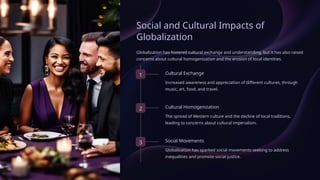
Globalization has fostered cultural exchange and understanding, but it has also raised
concerns about cultural homogenization and the erosion of local identities.
1 Cultural Exchange
Increased awareness and appreciation of different cultures, through
music, art, food, and travel.
2 Cultural Homogenization
The spread of Western culture and the decline of local traditions,
leading to concerns about cultural imperialism.
3 Social Movements
Globalization has sparked social movements seeking to address
inequalities and promote social justice.
Political Impacts of Globalization
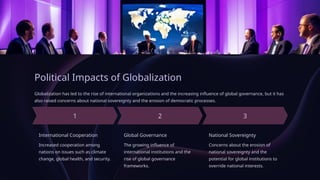
Globalization has led to the rise of international organizations and the increasing influence of global governance, but it has
also raised concerns about national sovereignty and the erosion of democratic processes.
International Cooperation
Increased cooperation among
nations on issues such as climate
change, global health, and security.
Global Governance
The growing influence of
international institutions and the
rise of global governance
frameworks.
National Sovereignty
Concerns about the erosion of
national sovereignty and the
potential for global institutions to
override national interests.
Challenges and Criticisms of
Globalization
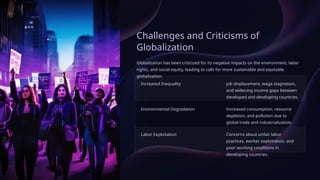
Globalization has been criticized for its negative impacts on the environment, labor
rights, and social equity, leading to calls for more sustainable and equitable
globalization.
Increased Inequality Job displacement, wage stagnation,
and widening income gaps between
developed and developing countries.
Environmental Degradation Increased consumption, resource
depletion, and pollution due to
global trade and industrialization.
Labor Exploitation Concerns about unfair labor
practices, worker exploitation, and
poor working conditions in
developing countries.
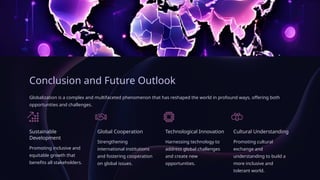
Conclusion and Future Outlook
Globalization is a complex and multifaceted phenomenon that has reshaped the world in profound ways, offering both
opportunities and challenges.
Sustainable
Development
Promoting inclusive and
equitable growth that
benefits all stakeholders.
Global Cooperation
Strengthening
international institutions
and fostering cooperation
on global issues.
Technological Innovation
Harnessing technology to
address global challenges
and create new
opportunities.
Cultural Understanding
Promoting cultural
exchange and
understanding to build a
more inclusive and
tolerant world.

Introduction-to-Globalization Second Edition.pptx

  • 1.
    Introduction to Globalization Globalization isthe increasing interconnectedness of the world, driven by the flow of goods, services, people, capital, and information across national borders. JP by Ja Paggao
  • 2.
    Defining Globalization Globalization encompassesa wide range of interconnected processes, including trade liberalization, technological advancements, and cultural exchange. It can be understood as the shrinking of the world and the increasing interdependence of nations. Economic Globalization The integration of national economies through trade, investment, and financial flows. Social Globalization The spread of cultural, social, and political ideas across borders. Political Globalization The growth of international organizations and the increasing influence of global governance.
  • 3.
    Drivers of Globalization Severalfactors have contributed to the rise of globalization, including technological advancements, transportation and communication improvements, and economic liberalization policies. 1 Technology The internet and telecommunications have revolutionized information flow and connected people globally. 2 Transportation Advances in shipping, air travel, and transportation infrastructure have facilitated global trade and movement of goods. 3 Economic Policies Free trade agreements and the reduction of trade barriers have promoted international commerce. 4 Political Factors The formation of international organizations, such as the World Trade Organization, has facilitated global cooperation.
  • 4.
    Economic Impacts ofGlobalization Globalization has had a profound impact on the global economy, leading to increased trade, investment, and economic Benefits Increased trade and investment opportunities, lower prices for consumers, access to new markets, and job creation. Challenges Increased competition from emerging economies, job displacement in developed countries, and income inequality.
  • 5.
    Social and CulturalImpacts of Globalization Globalization has fostered cultural exchange and understanding, but it has also raised concerns about cultural homogenization and the erosion of local identities. 1 Cultural Exchange Increased awareness and appreciation of different cultures, through music, art, food, and travel. 2 Cultural Homogenization The spread of Western culture and the decline of local traditions, leading to concerns about cultural imperialism. 3 Social Movements Globalization has sparked social movements seeking to address inequalities and promote social justice.
  • 6.
    Political Impacts ofGlobalization Globalization has led to the rise of international organizations and the increasing influence of global governance, but it has also raised concerns about national sovereignty and the erosion of democratic processes. International Cooperation Increased cooperation among nations on issues such as climate change, global health, and security. Global Governance The growing influence of international institutions and the rise of global governance frameworks. National Sovereignty Concerns about the erosion of national sovereignty and the potential for global institutions to override national interests.
  • 7.
    Challenges and Criticismsof Globalization Globalization has been criticized for its negative impacts on the environment, labor rights, and social equity, leading to calls for more sustainable and equitable globalization. Increased Inequality Job displacement, wage stagnation, and widening income gaps between developed and developing countries. Environmental Degradation Increased consumption, resource depletion, and pollution due to global trade and industrialization. Labor Exploitation Concerns about unfair labor practices, worker exploitation, and poor working conditions in developing countries.
  • 8.
    Conclusion and FutureOutlook Globalization is a complex and multifaceted phenomenon that has reshaped the world in profound ways, offering both opportunities and challenges. Sustainable Development Promoting inclusive and equitable growth that benefits all stakeholders. Global Cooperation Strengthening international institutions and fostering cooperation on global issues. Technological Innovation Harnessing technology to address global challenges and create new opportunities. Cultural Understanding Promoting cultural exchange and understanding to build a more inclusive and tolerant world.