College of DentistryCollege of Dentistry
Introduction to DentistryIntroduction to Dentistry
Introduction to Fixed ProsthodonticsIntroduction to Fixed Prosthodontics
Dr. Hazem Al AjramiDr. Hazem Al Ajrami
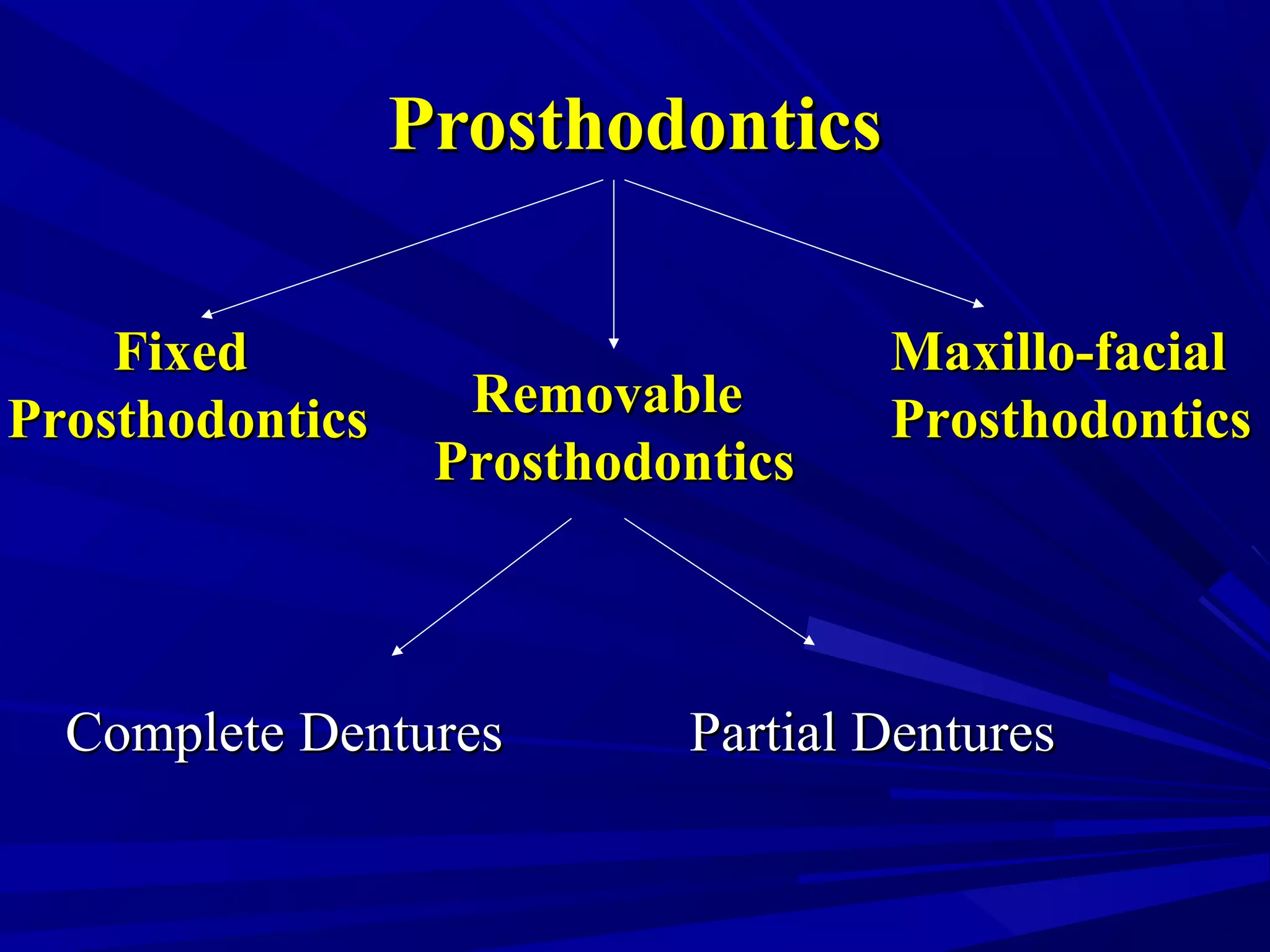
ProsthodonticsProsthodontics
FixedFixed
ProsthodonticsProsthodontics RemovableRemovable
ProsthodonticsProsthodontics
Maxillo-facialMaxillo-facial
ProsthodonticsProsthodontics
Complete DenturesComplete Dentures Partial DenturesPartial Dentures
Indications for fixed prosthodonticsprosthodontics
1. Missing of teeth.
2. Tooth with large unsupported filling (weak
walls).
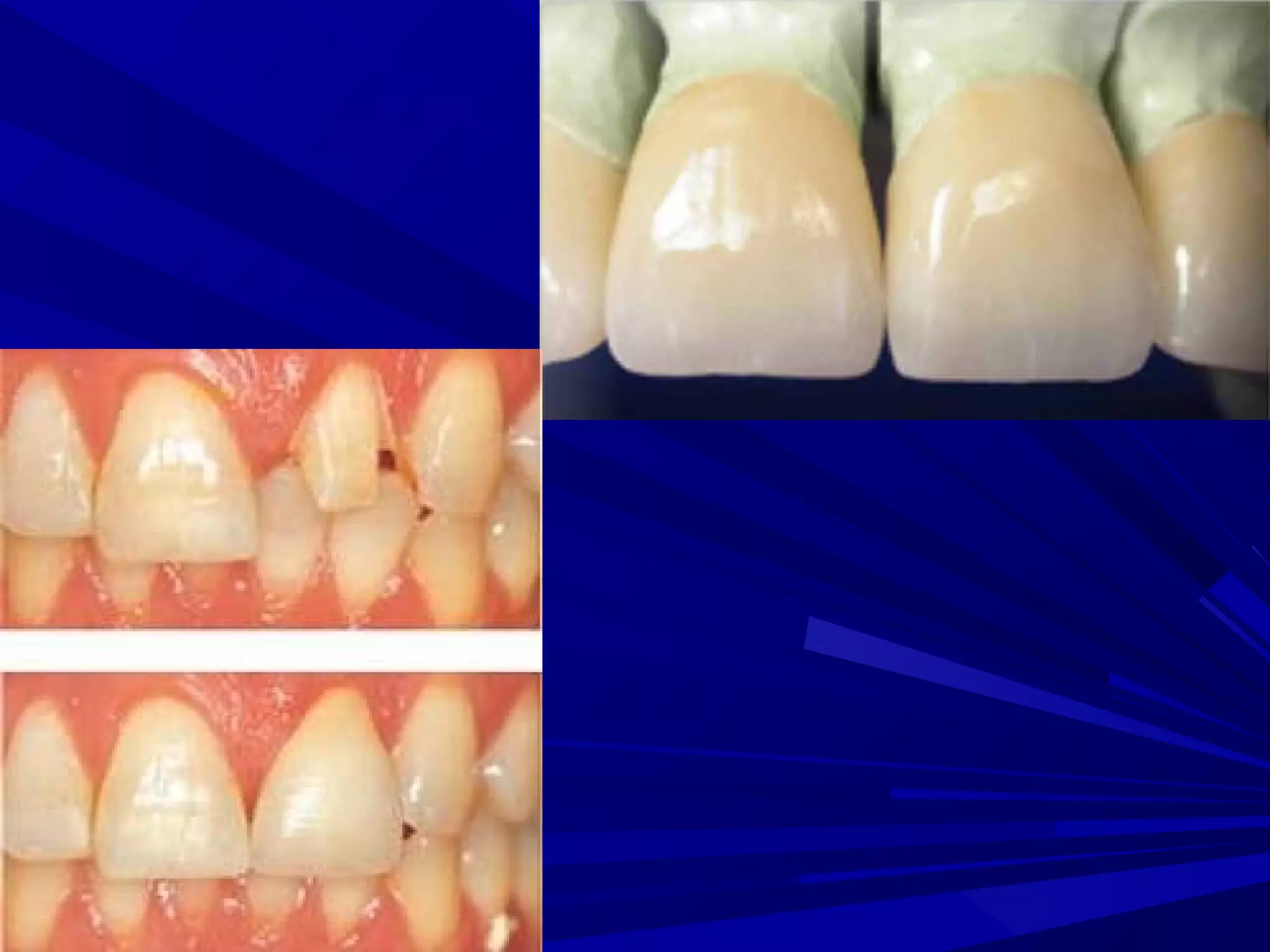
3. Discoloration of teeth (Tetracycline –florsis).
4. Endodontically treated teeth.
5. Post-crown restoration.
 Fixed prosthodontics are permanent prostheticsFixed prosthodontics are permanent prosthetics
used in dental restoration to replace decayed orused in dental restoration to replace decayed or
missing teeth or portions of teeth.missing teeth or portions of teeth.
 Common examples of fixed prosthodonticsCommon examples of fixed prosthodontics
include inlays, porcelain veneers, crowns, andinclude inlays, porcelain veneers, crowns, and
bridges. They can be made of metal, porcelain,bridges. They can be made of metal, porcelain,
or resin.or resin.
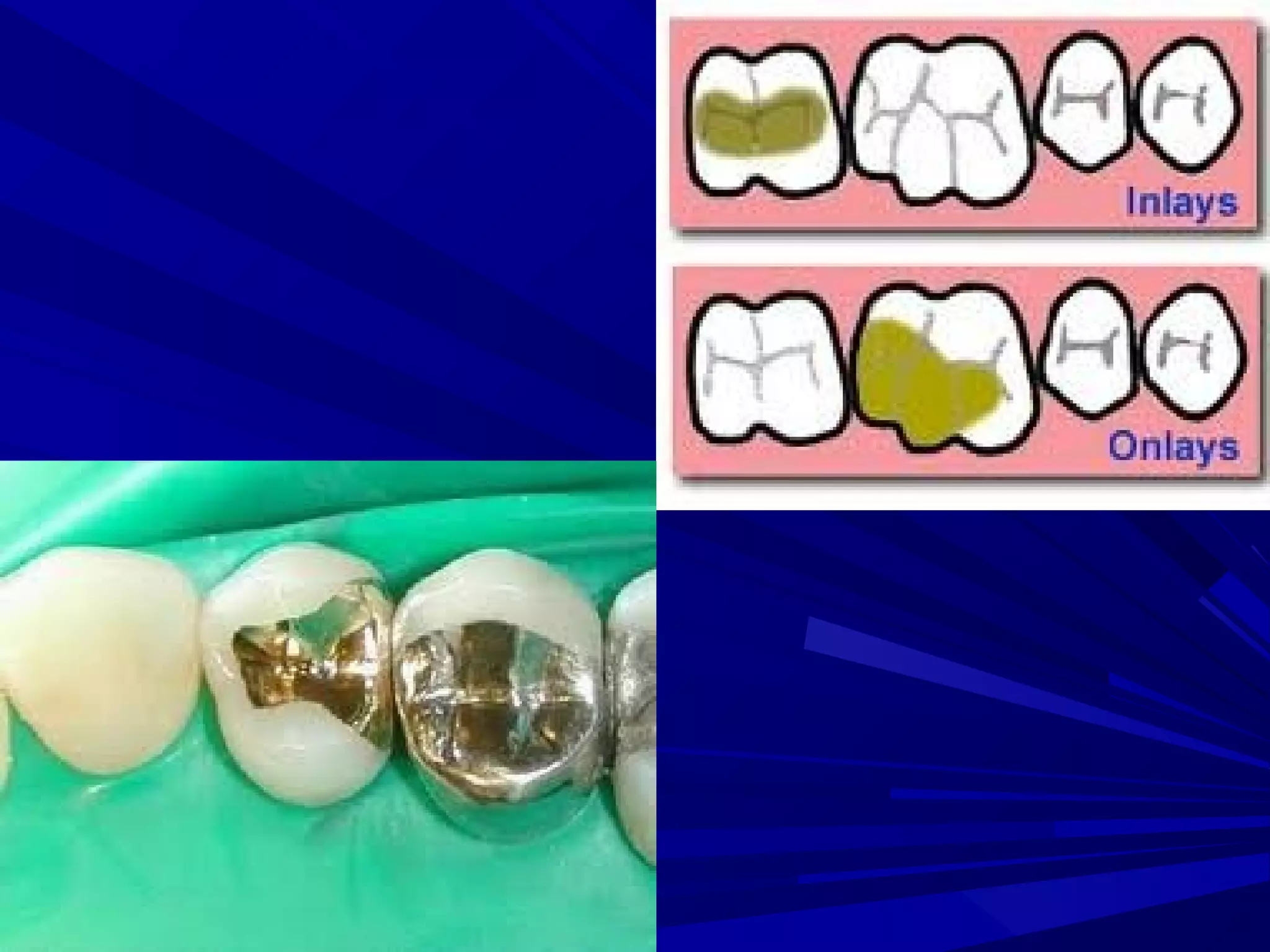
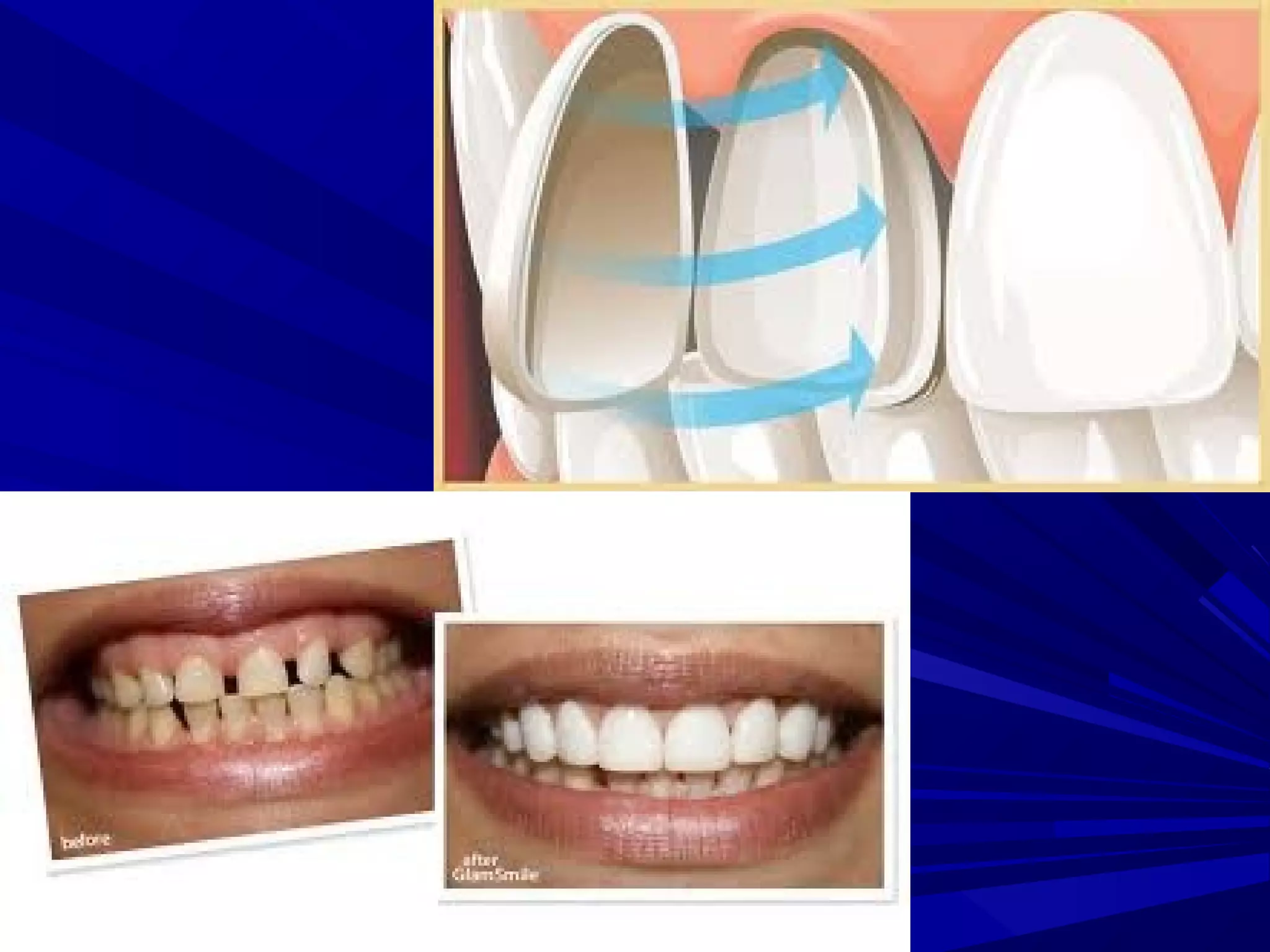
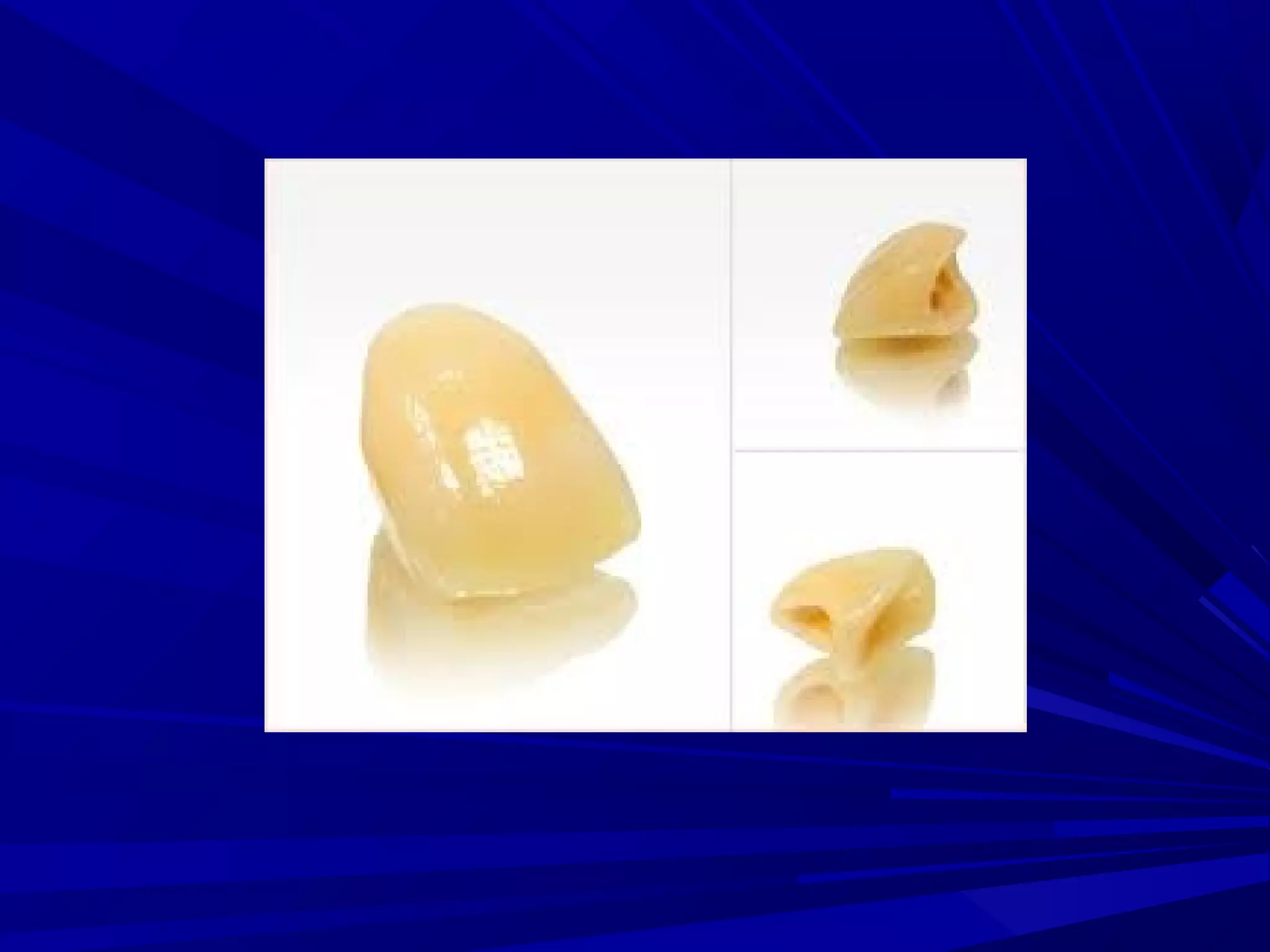
 The smallest types of fixed prosthodontics areThe smallest types of fixed prosthodontics are
inlays, onlays, and porcelain veneers; theseinlays, onlays, and porcelain veneers; these
restorations cover only a portion of a tooth.restorations cover only a portion of a tooth.
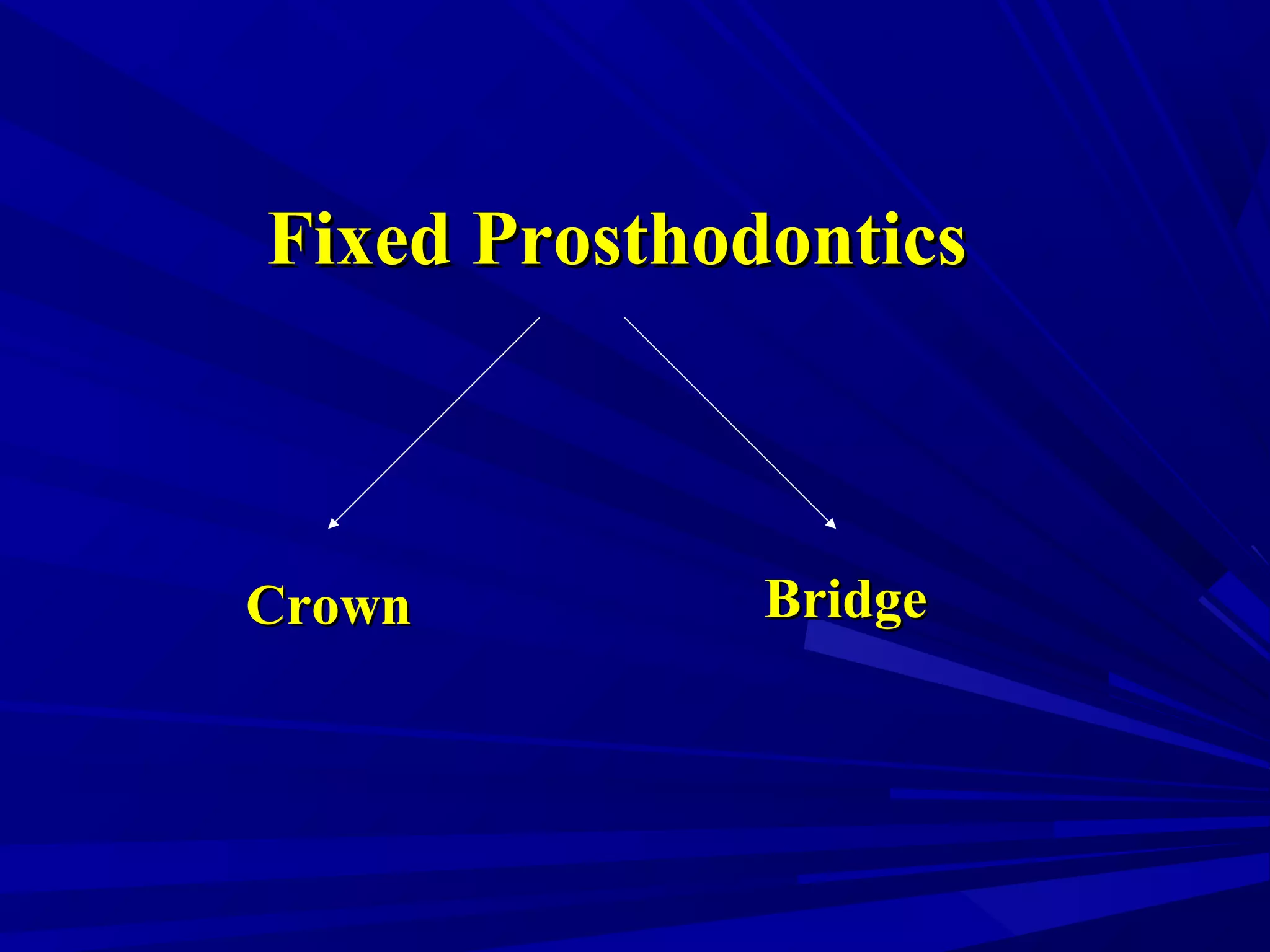
Fixed ProsthodonticsFixed Prosthodontics
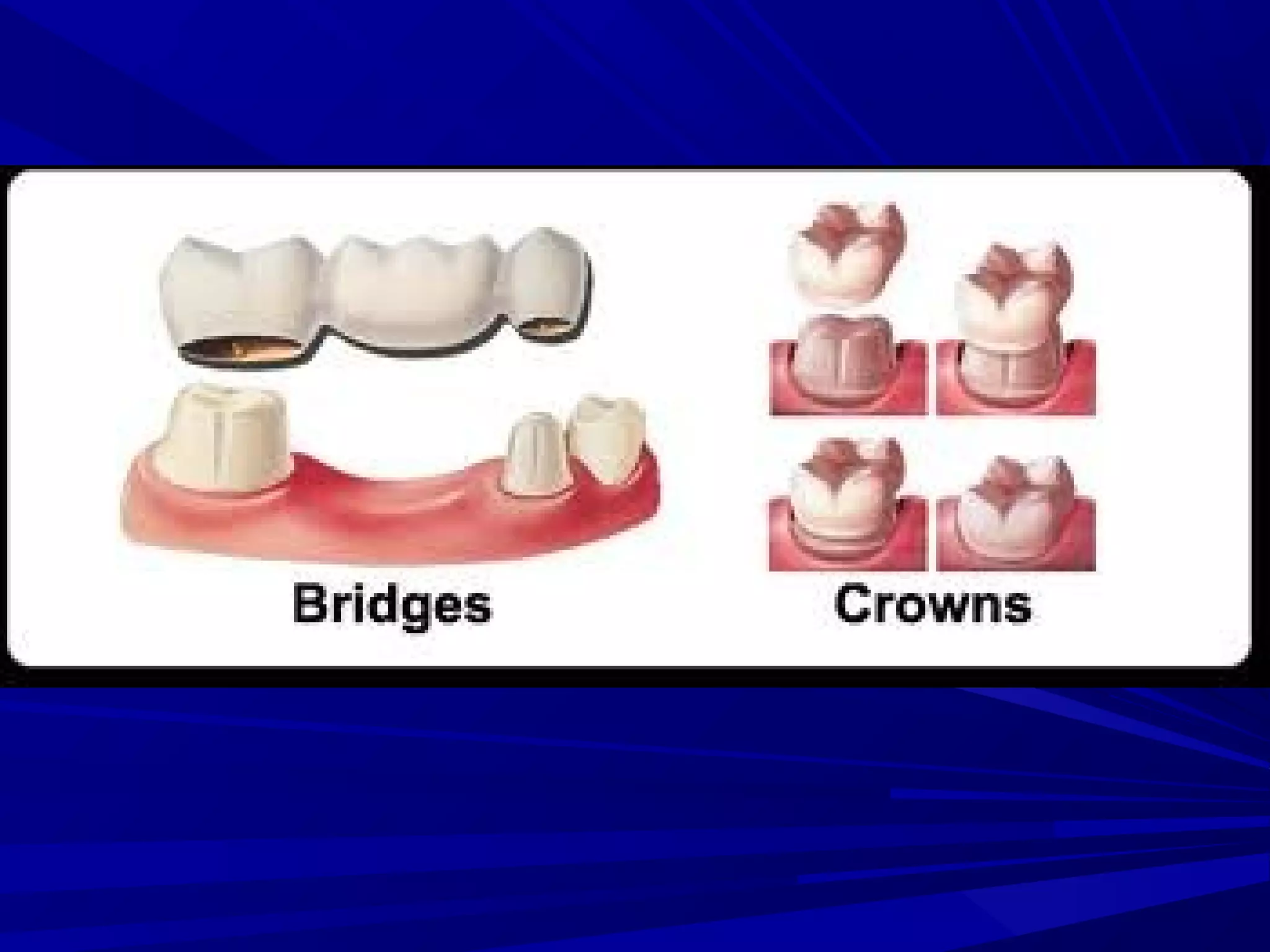
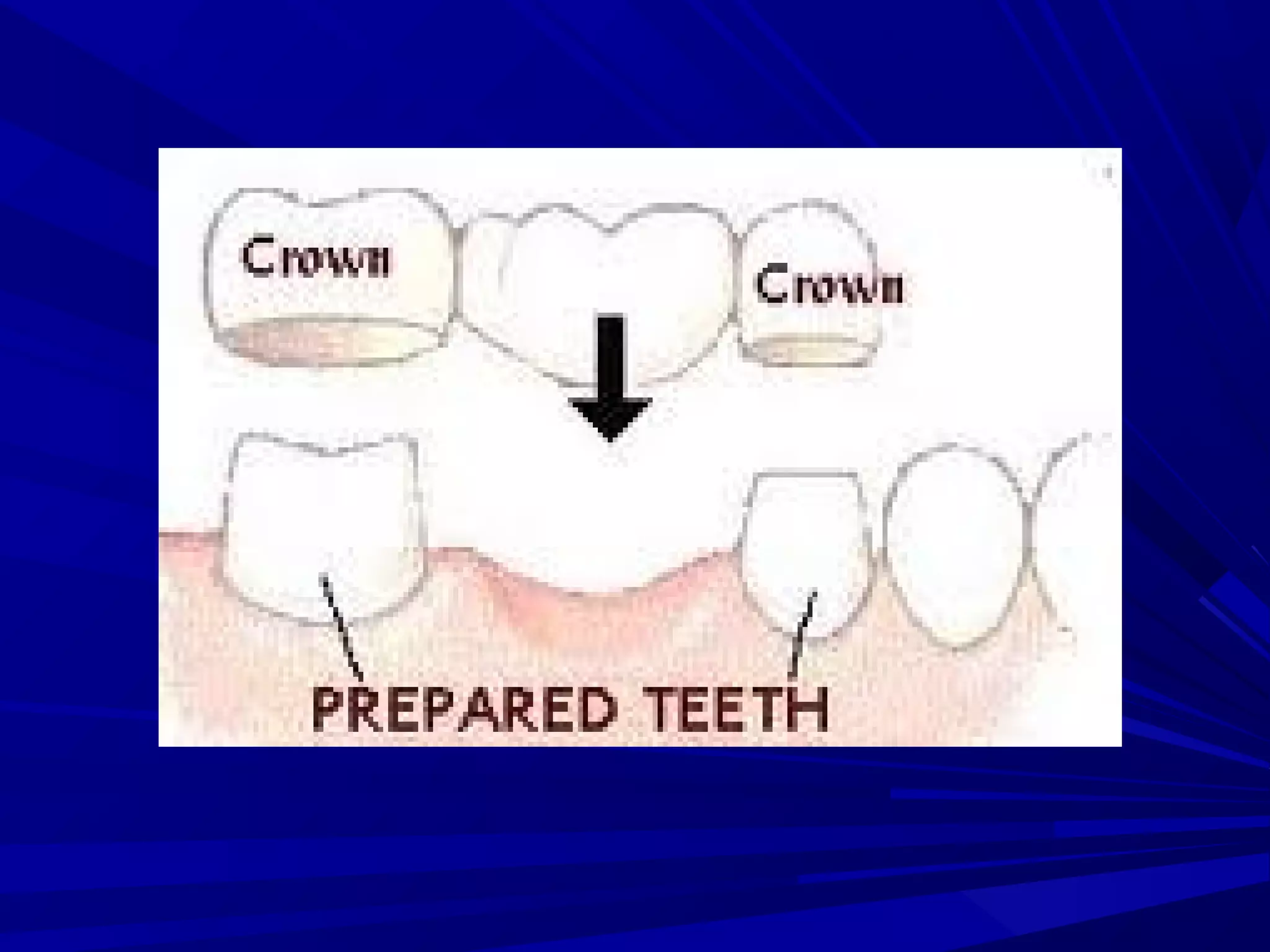
CrownCrown BridgeBridge
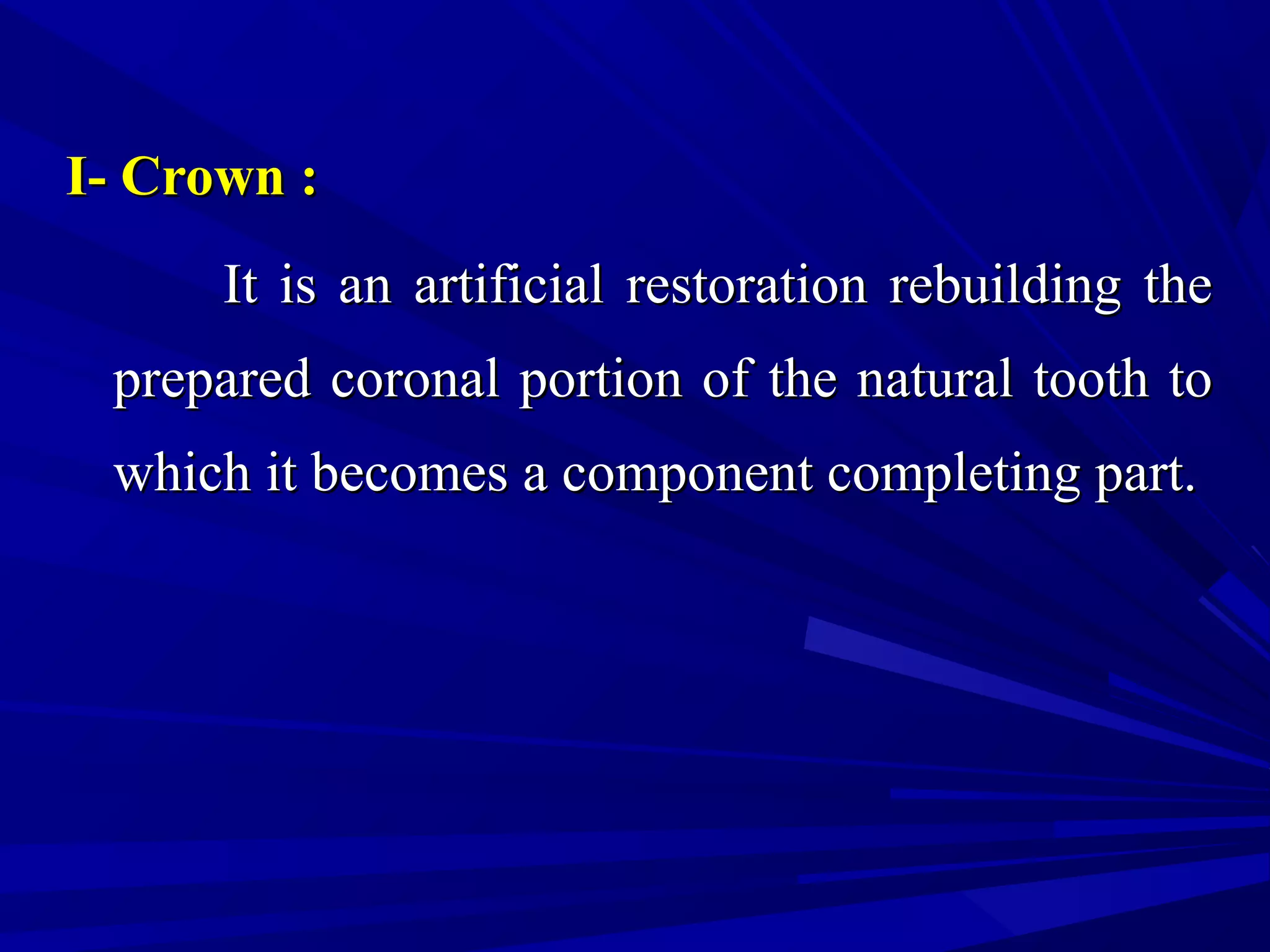
I- Crown :I- Crown :
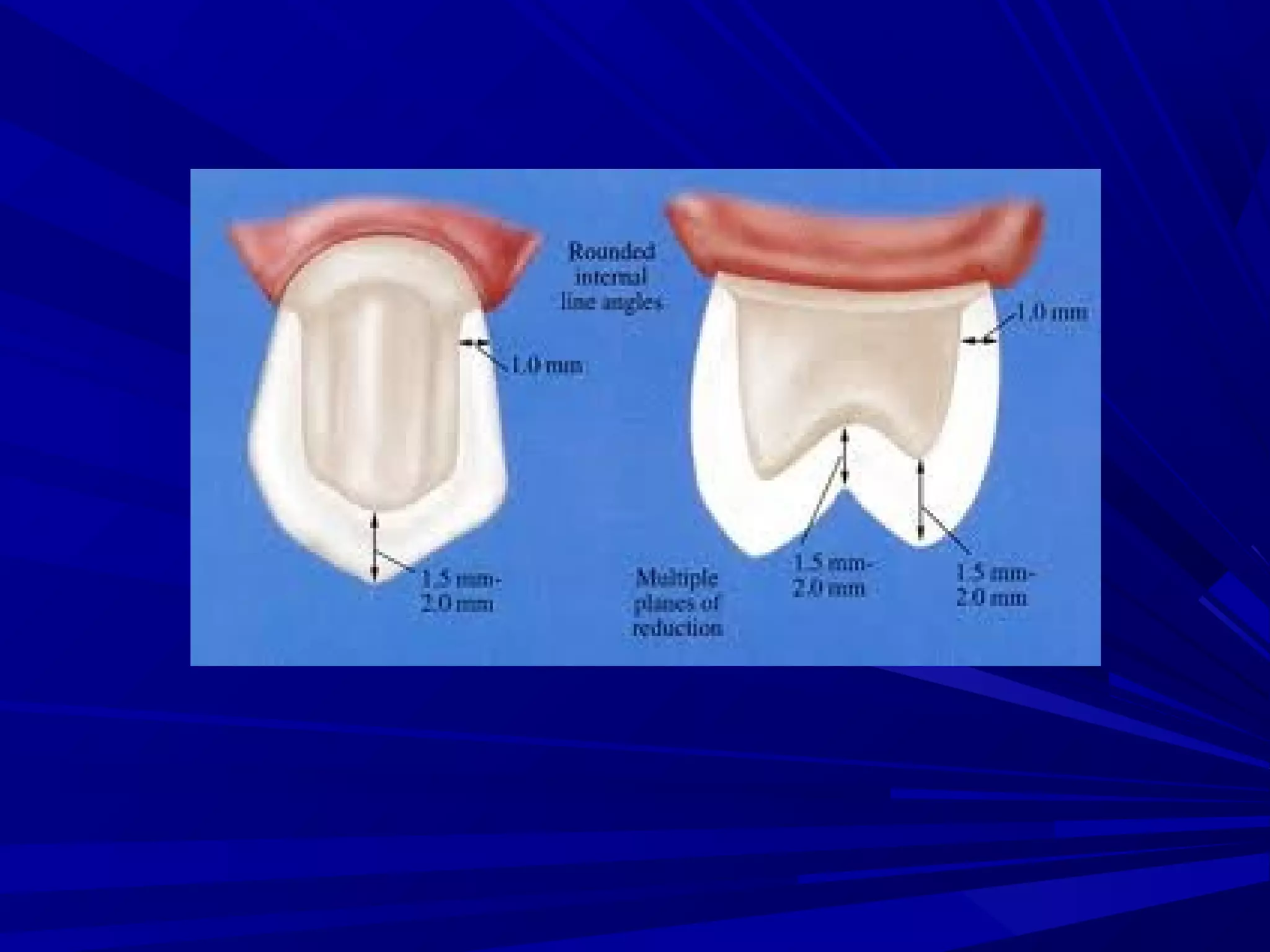
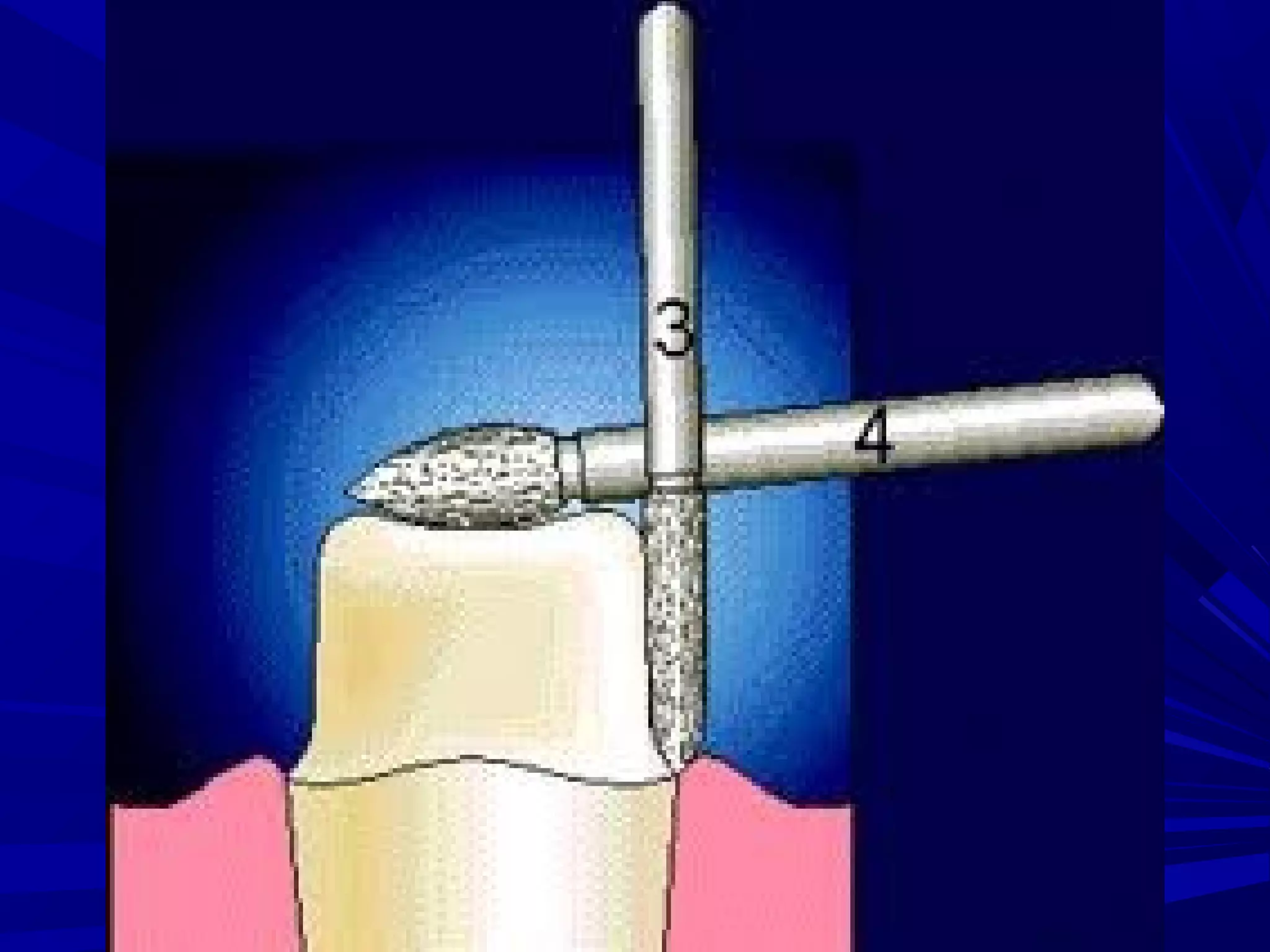
It is an artificial restoration rebuilding theIt is an artificial restoration rebuilding the
prepared coronal portion of the natural tooth toprepared coronal portion of the natural tooth to
which it becomes a component completing part.which it becomes a component completing part.
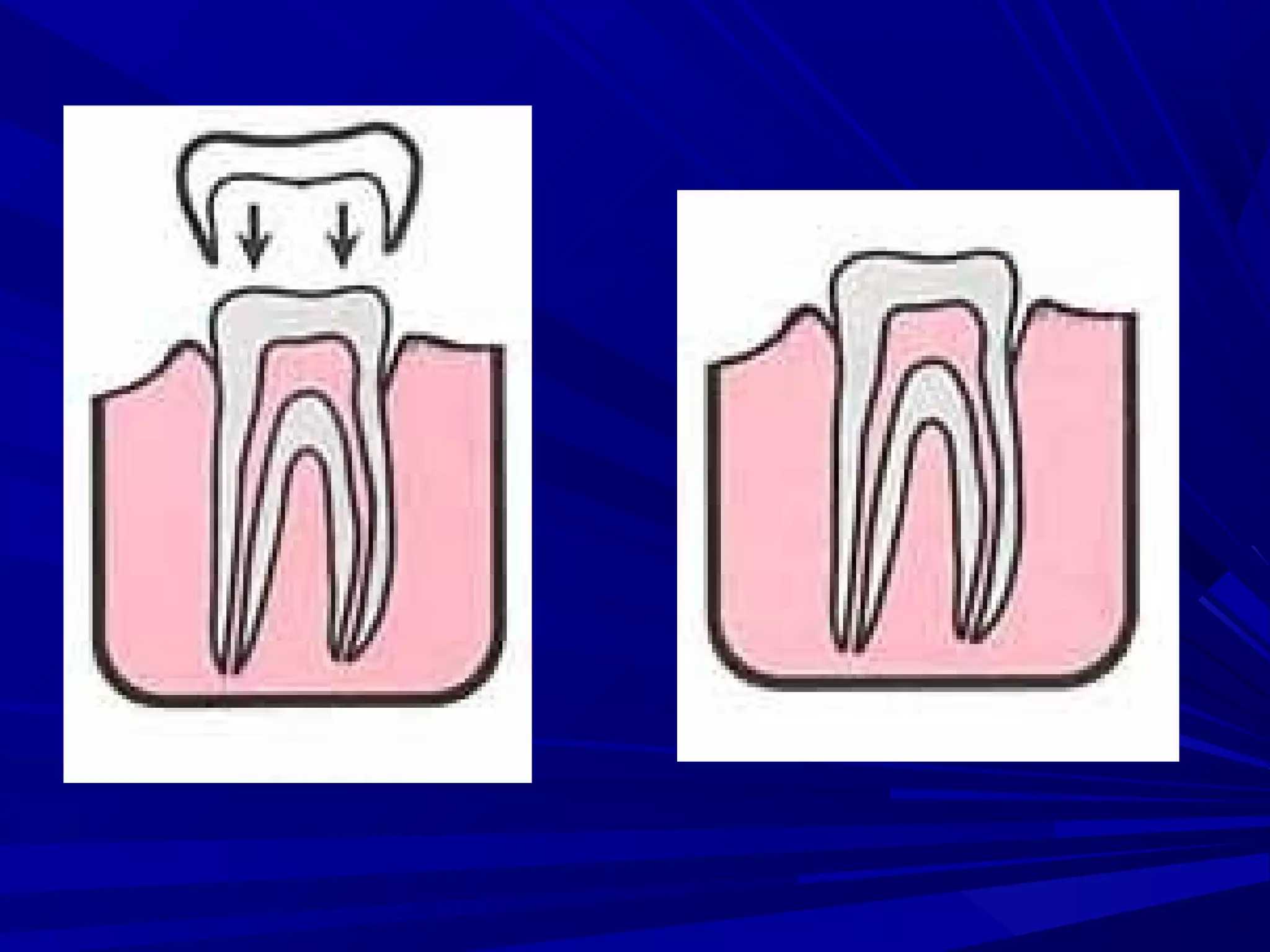
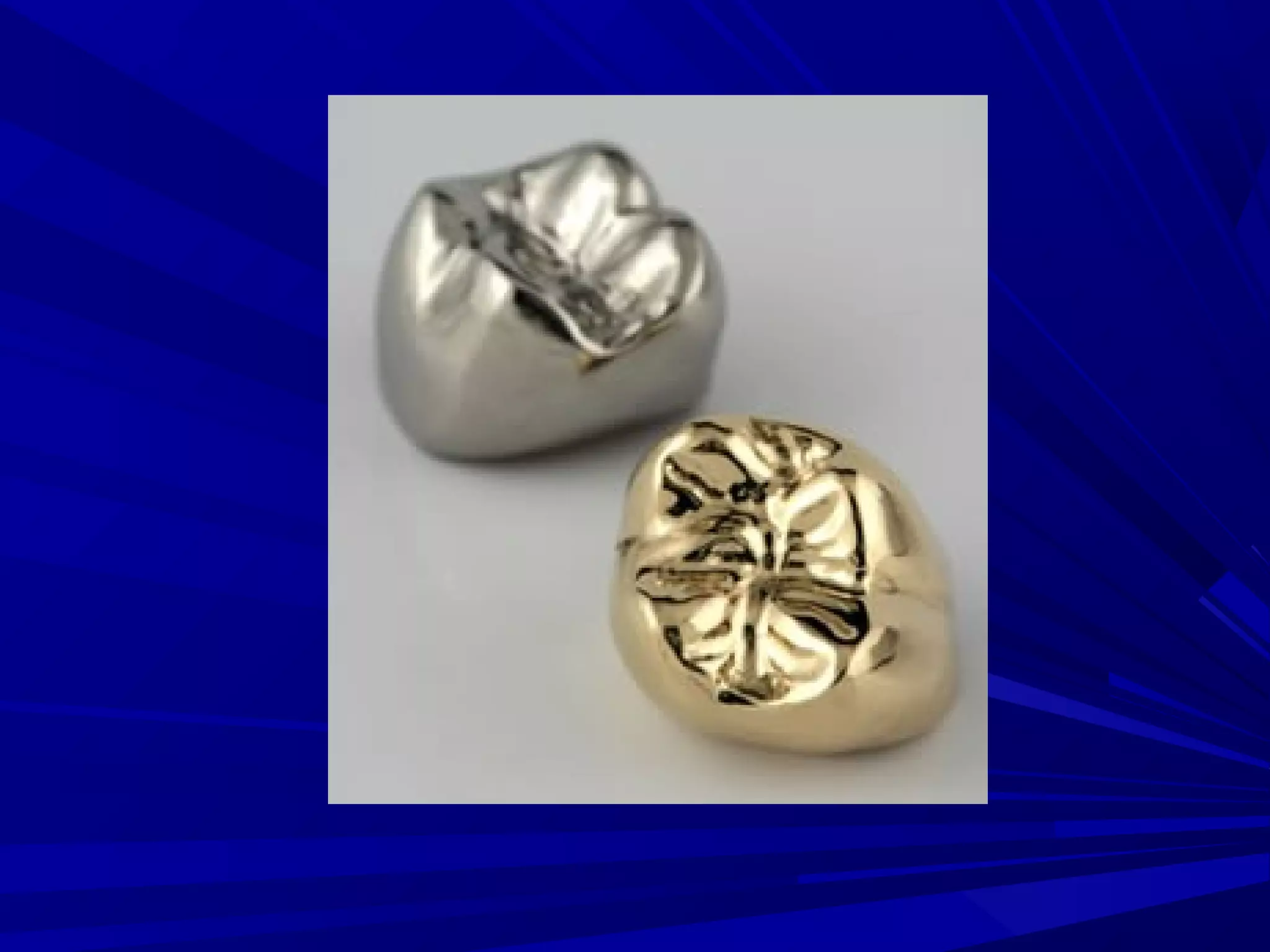
1- Full Metal Crown:1- Full Metal Crown:
It is a full coverage all metallic restorationIt is a full coverage all metallic restoration
rebuilding the prepared clinical crown of therebuilding the prepared clinical crown of the
natural teeth.natural teeth.
N.B. Mainly used in posterior teeth.N.B. Mainly used in posterior teeth.
2- Jacket Crown:2- Jacket Crown:
It is a non metallic restoration “acrylic orIt is a non metallic restoration “acrylic or
porcelain”, rebuilding the prepared anteriorporcelain”, rebuilding the prepared anterior
teeth mainly for esthetic.teeth mainly for esthetic.
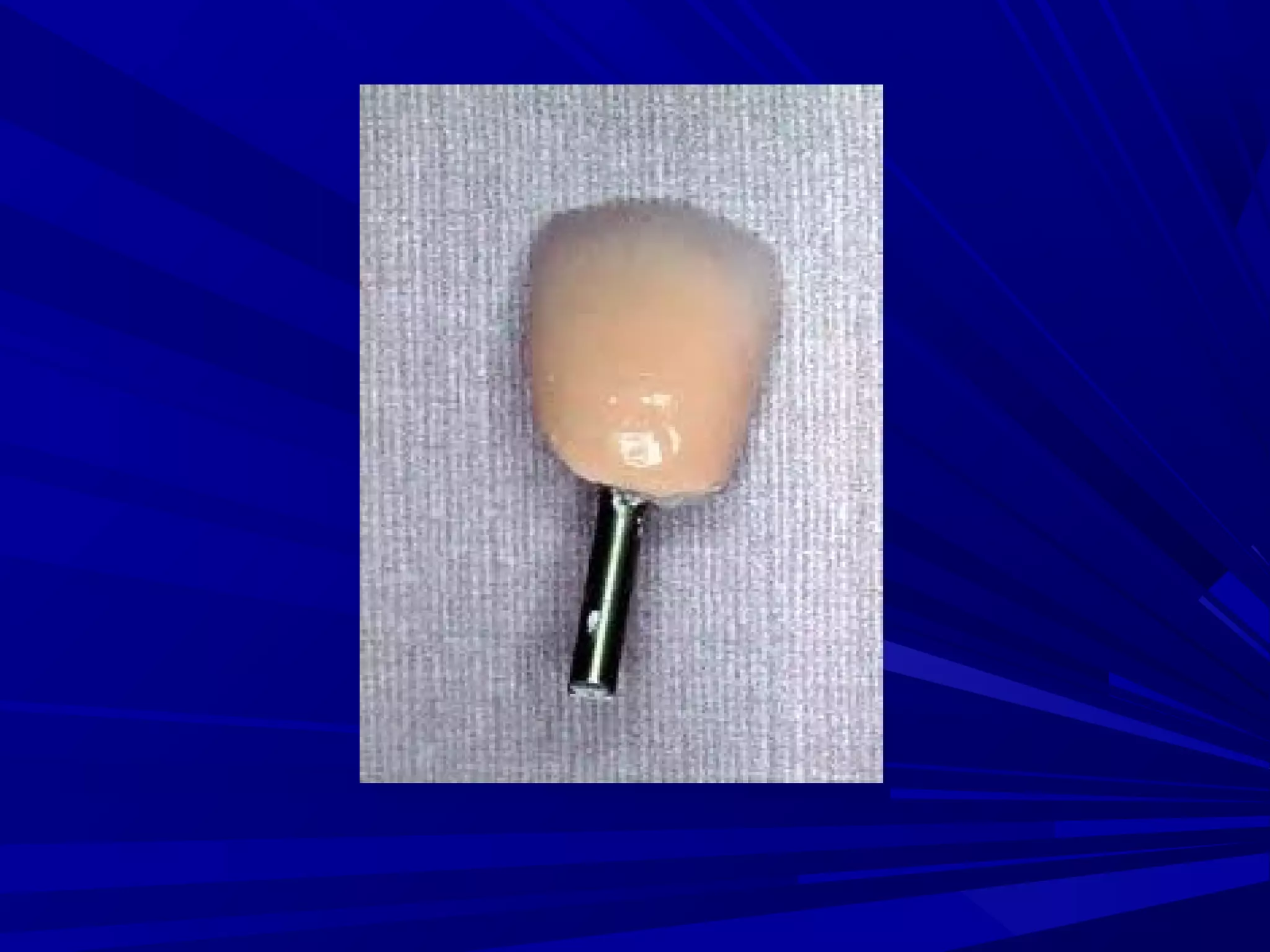
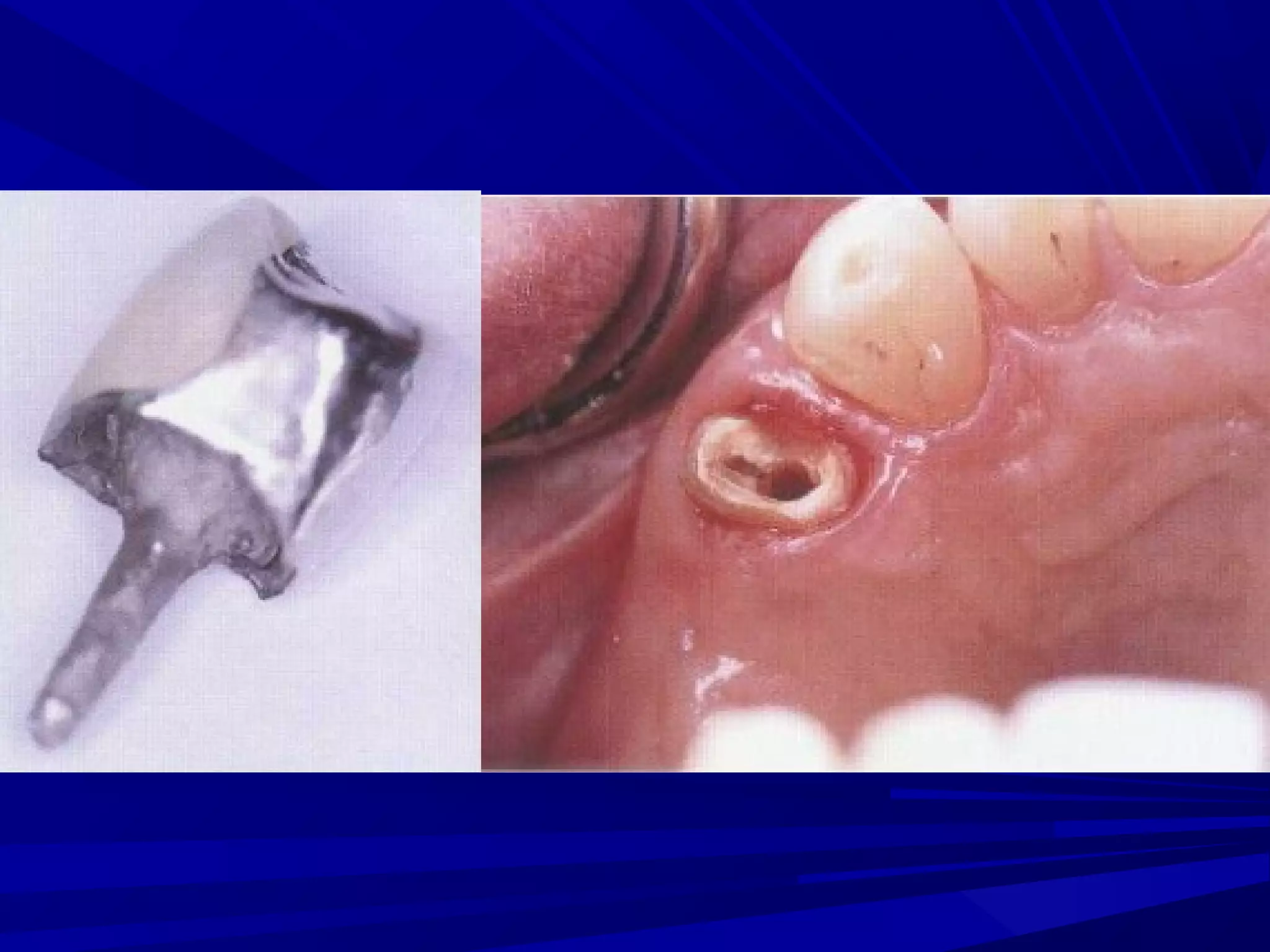
3- Post Crown:3- Post Crown:
It is a crown which is retained in position byIt is a crown which is retained in position by
a post inserted in the previously prepared roota post inserted in the previously prepared root
canal.canal.
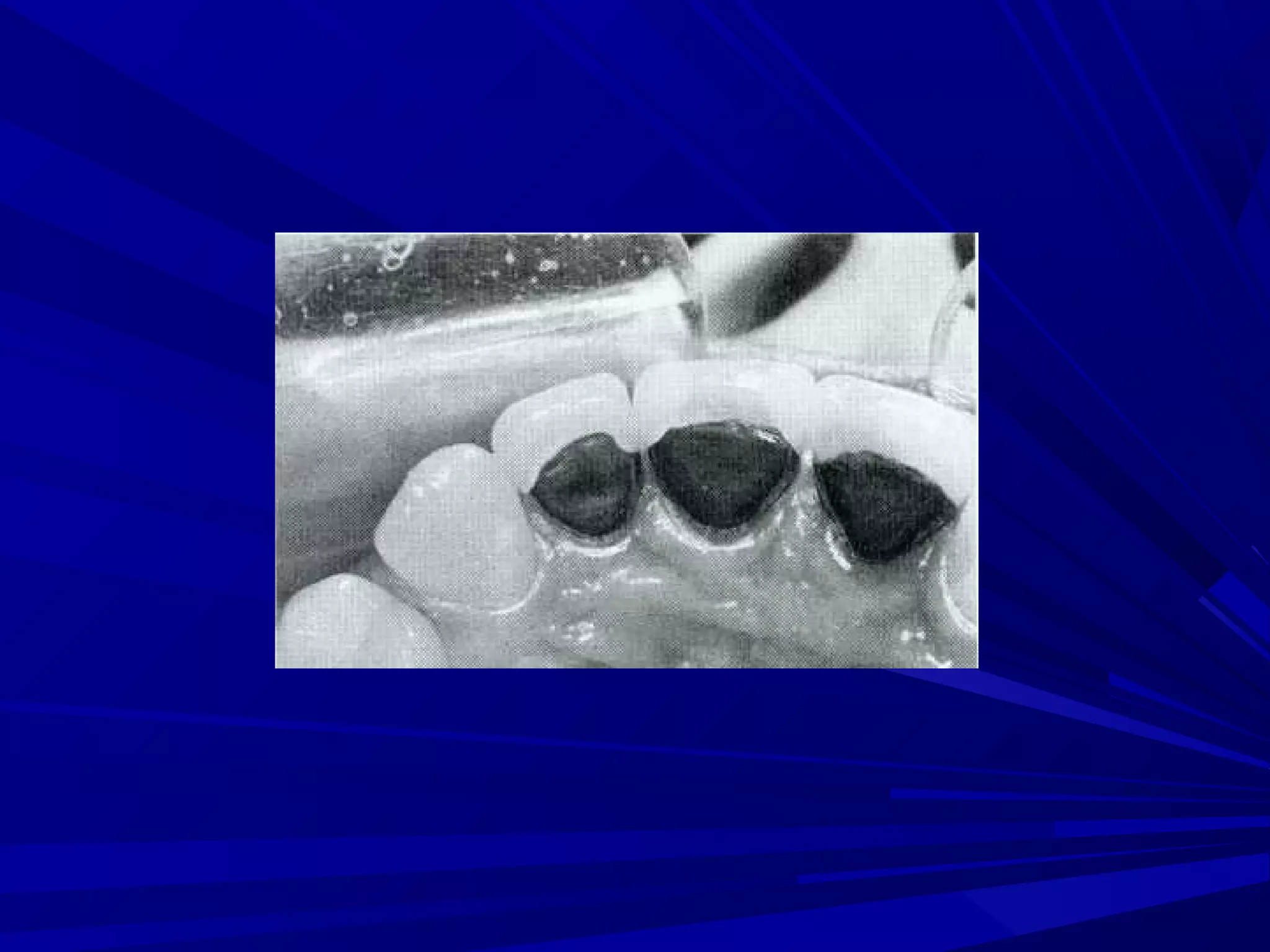
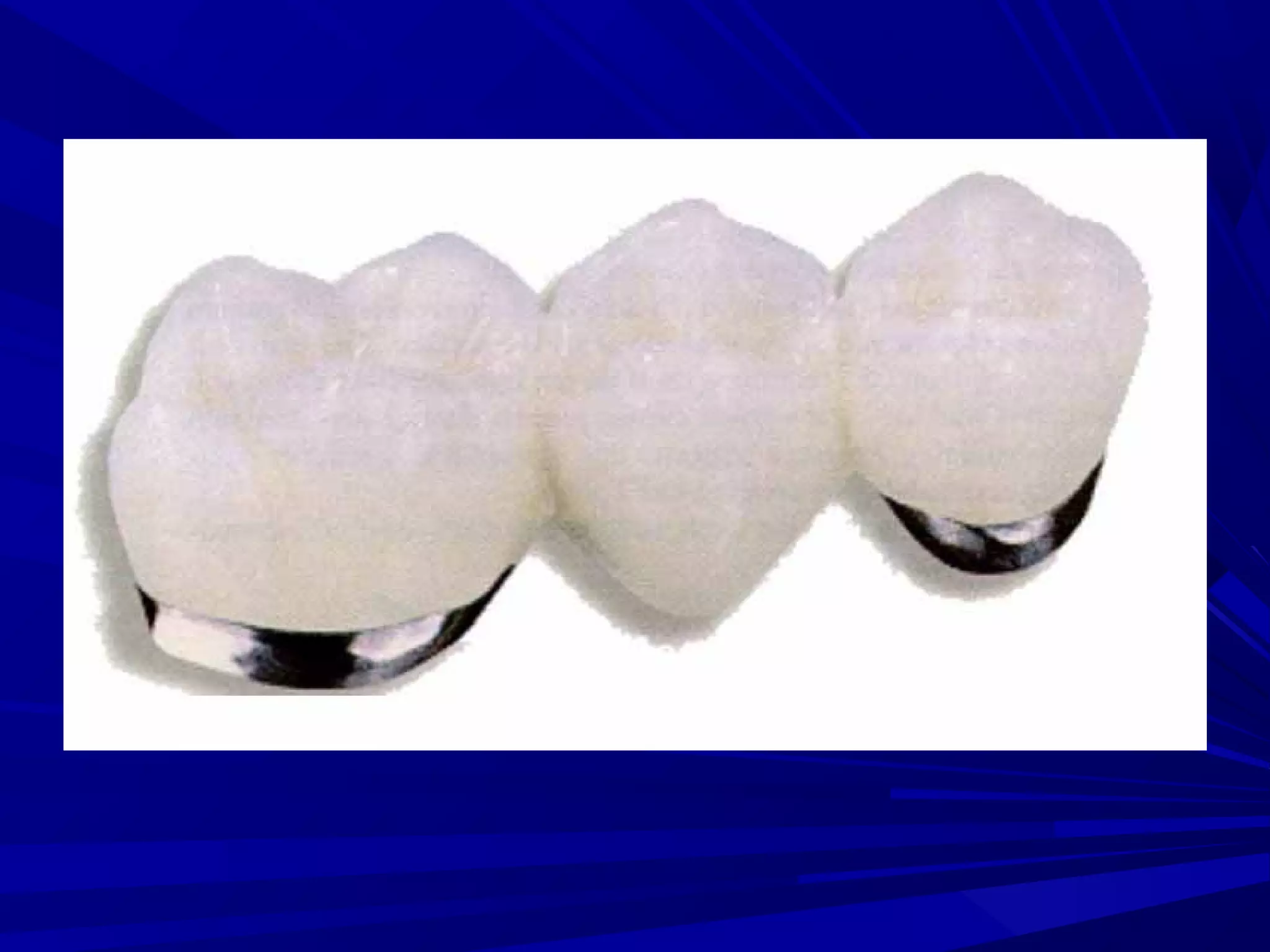
4- Veneered Metal Crown:4- Veneered Metal Crown:
It is a full cast metal crown having an acrylicIt is a full cast metal crown having an acrylic
or porcelain facing on the labial or buccalor porcelain facing on the labial or buccal
surface.surface.
5- Full Veneered Metal Crown:5- Full Veneered Metal Crown:
It is a full cast metal crown having allIt is a full cast metal crown having all
surfaces faced with porcelain.surfaces faced with porcelain.
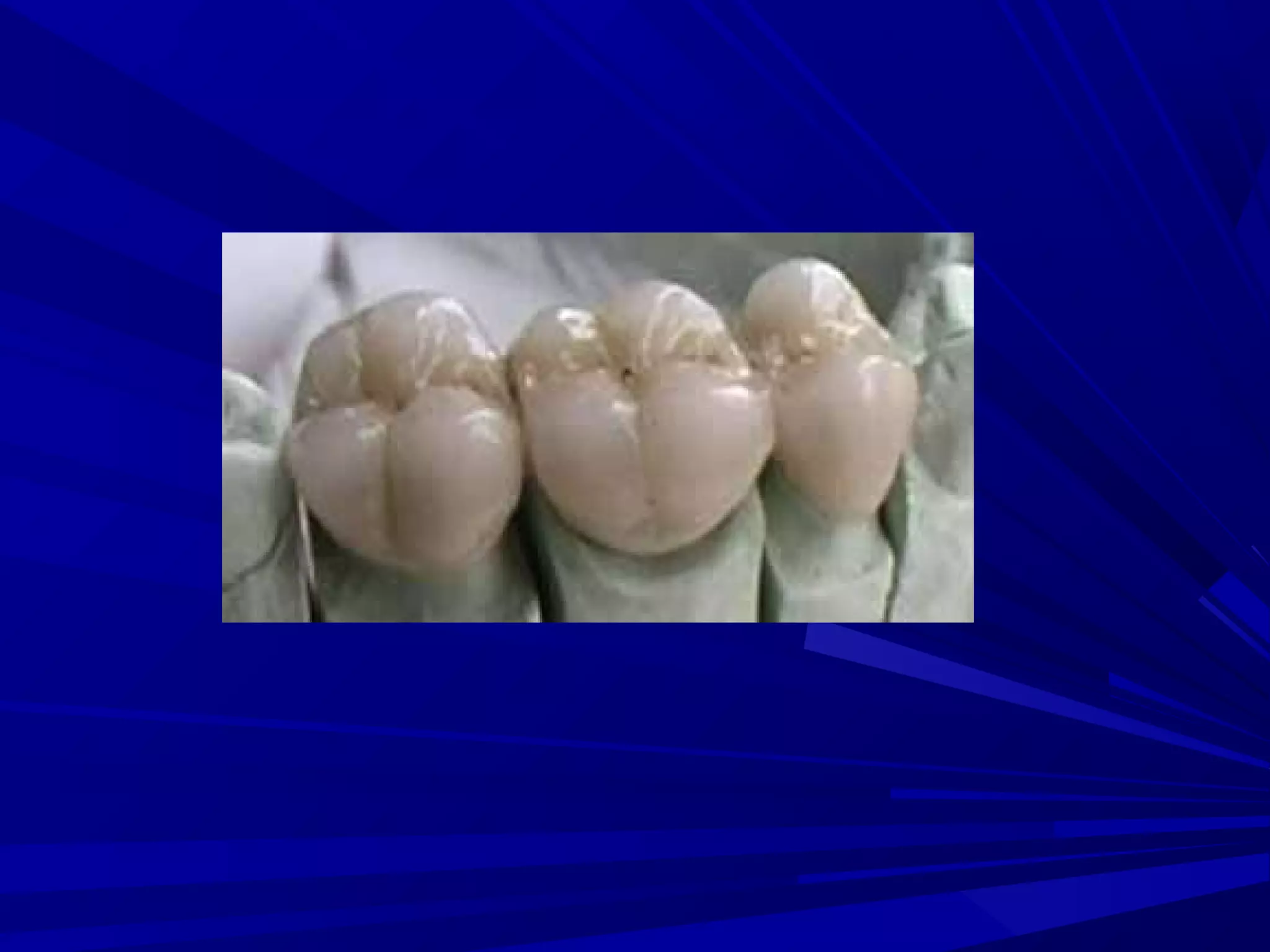
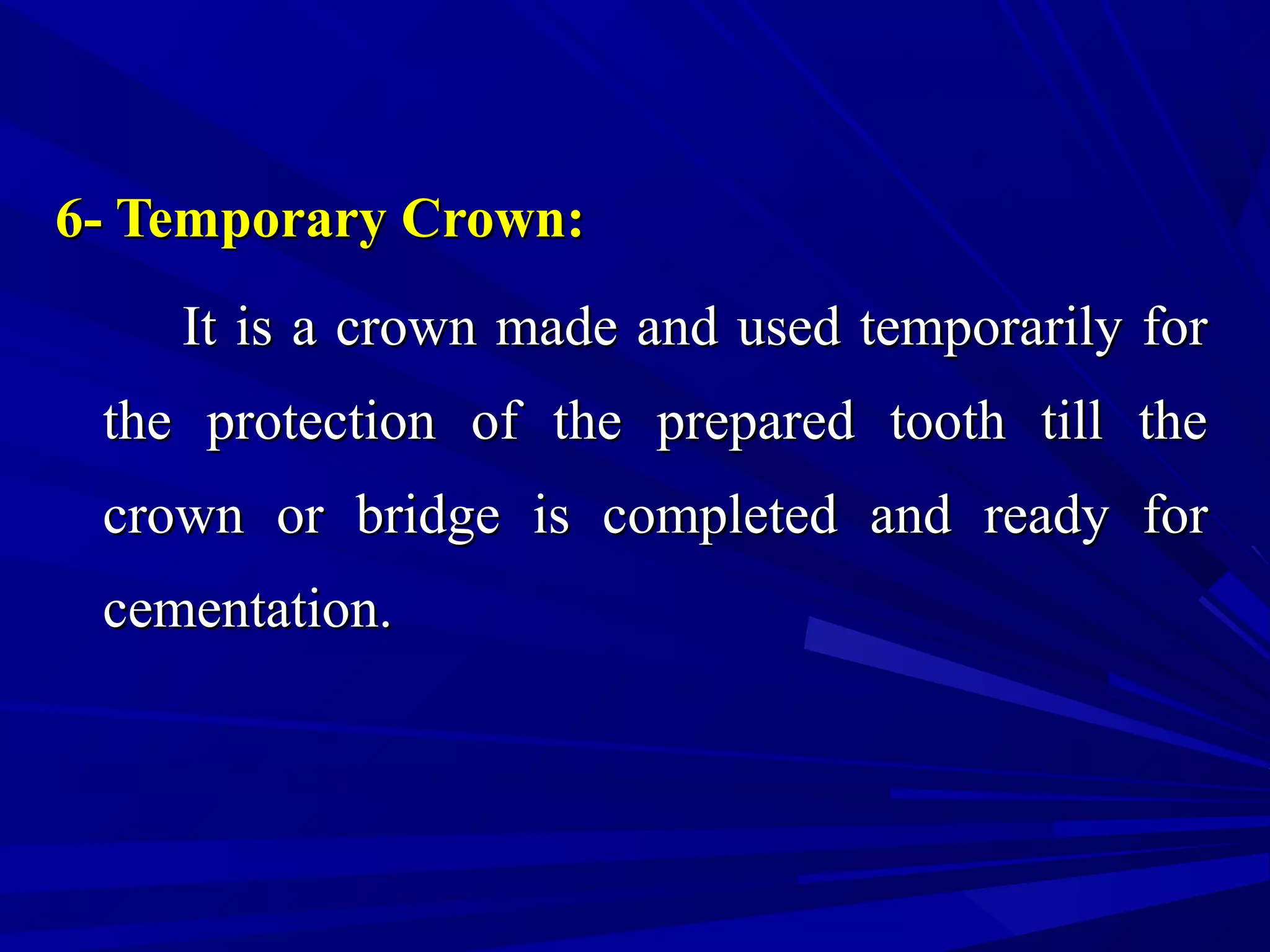
6- Temporary Crown:6- Temporary Crown:
It is a crown made and used temporarily forIt is a crown made and used temporarily for
the protection of the prepared tooth till thethe protection of the prepared tooth till the
crown or bridge is completed and ready forcrown or bridge is completed and ready for
cementation.cementation.
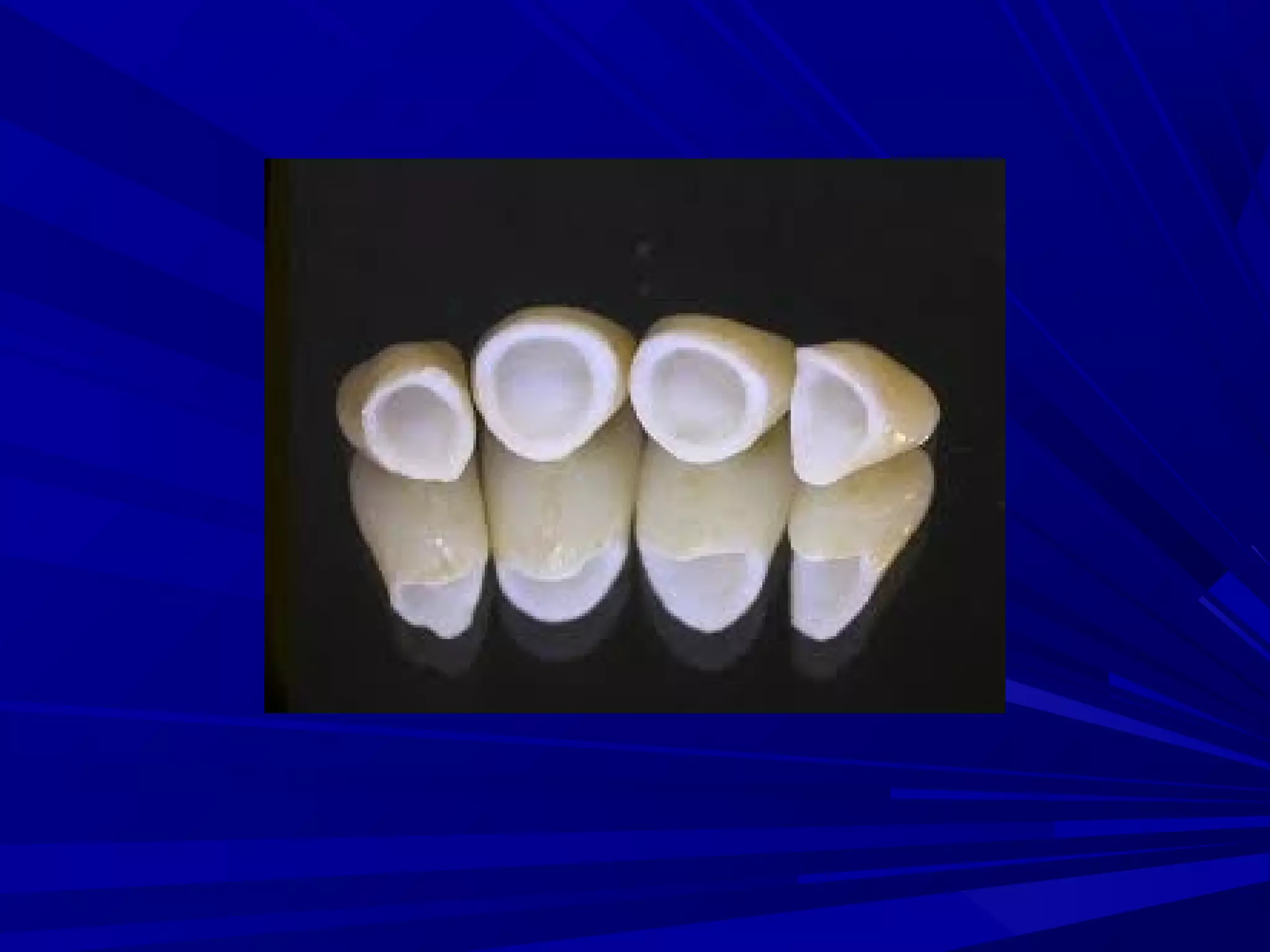
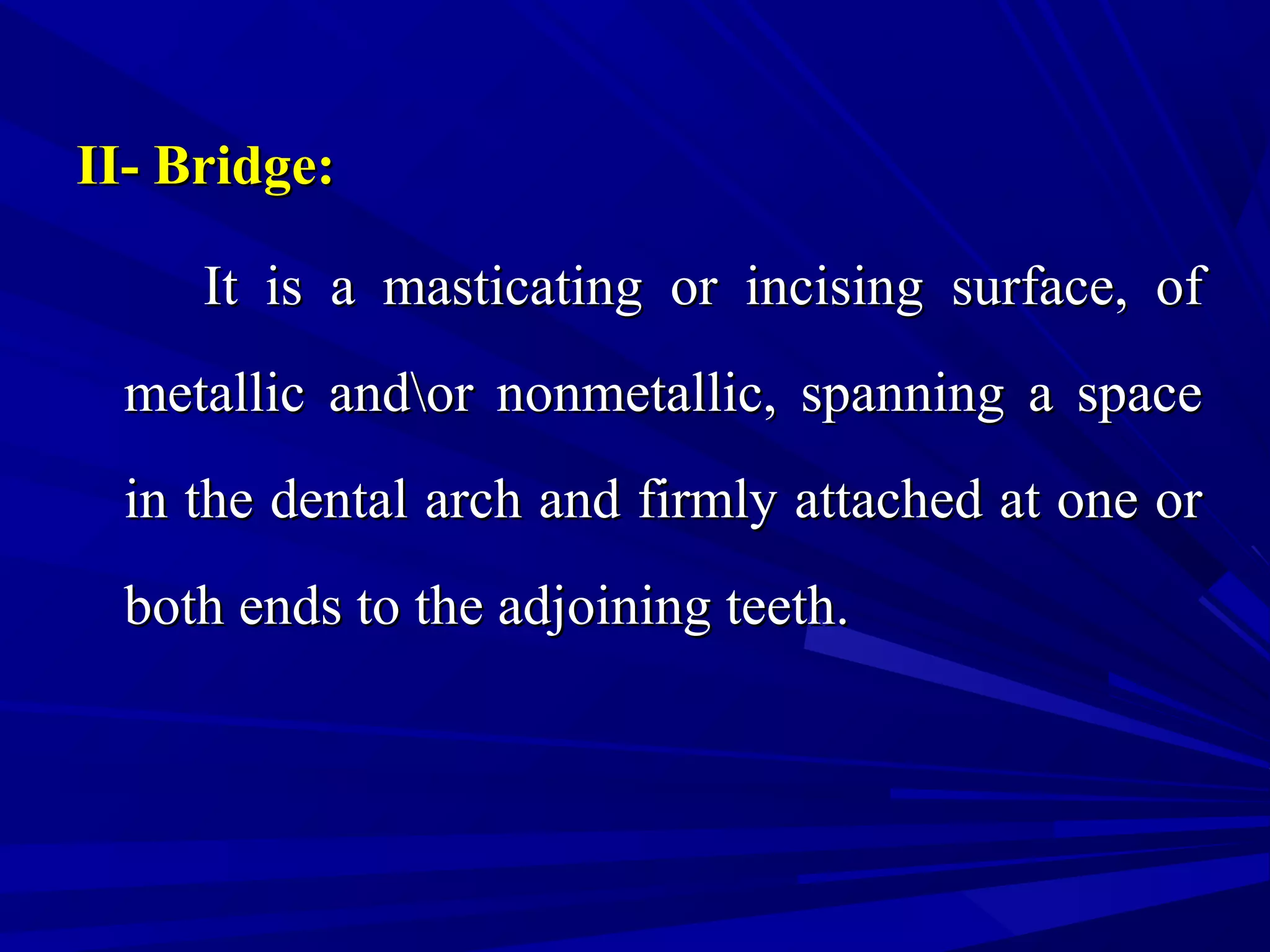
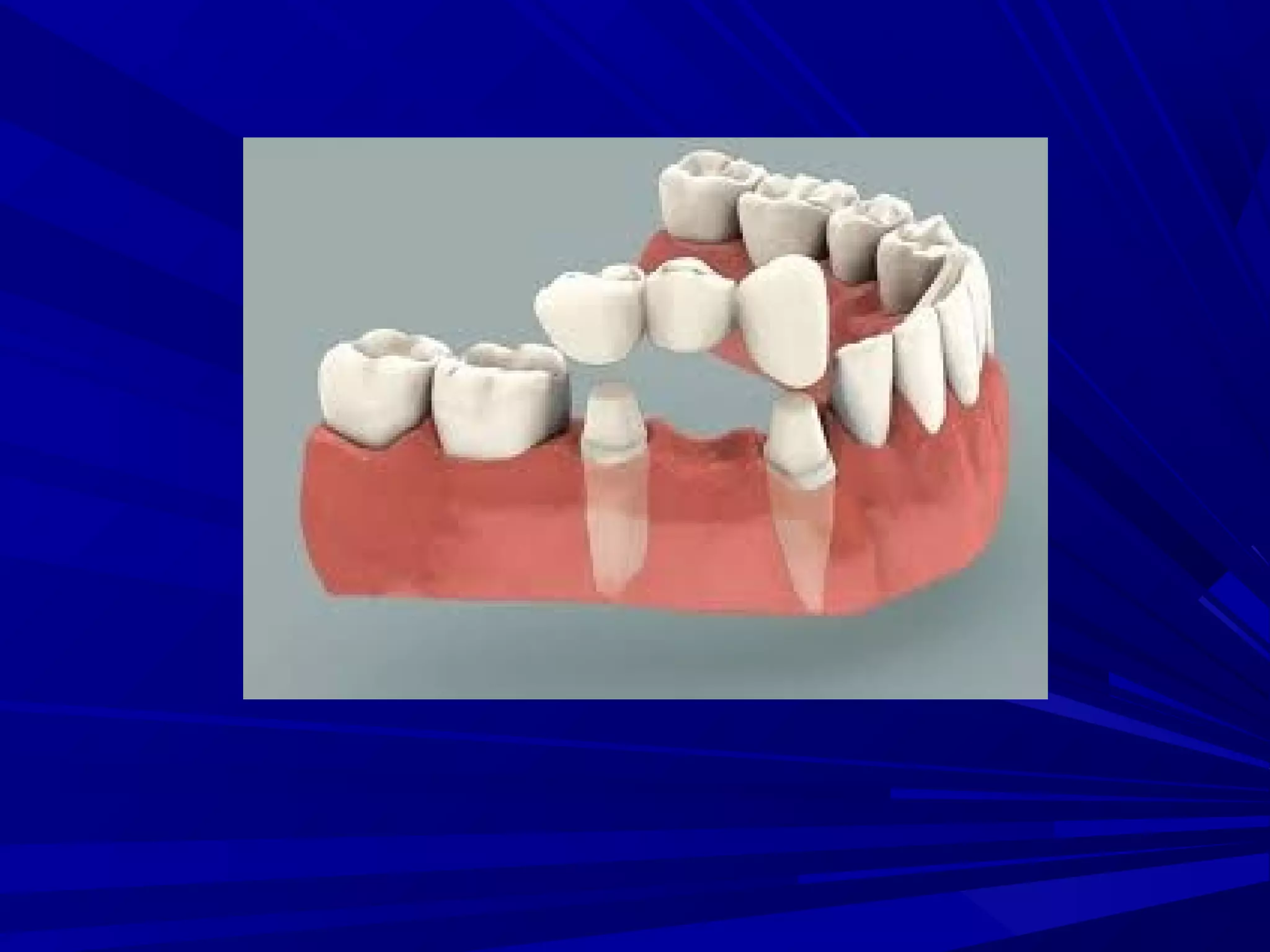
II- Bridge:II- Bridge:
It is a masticating or incising surface, ofIt is a masticating or incising surface, of
metallic andor nonmetallic, spanning a spacemetallic andor nonmetallic, spanning a space
in the dental arch and firmly attached at one orin the dental arch and firmly attached at one or
both ends to the adjoining teeth.both ends to the adjoining teeth.
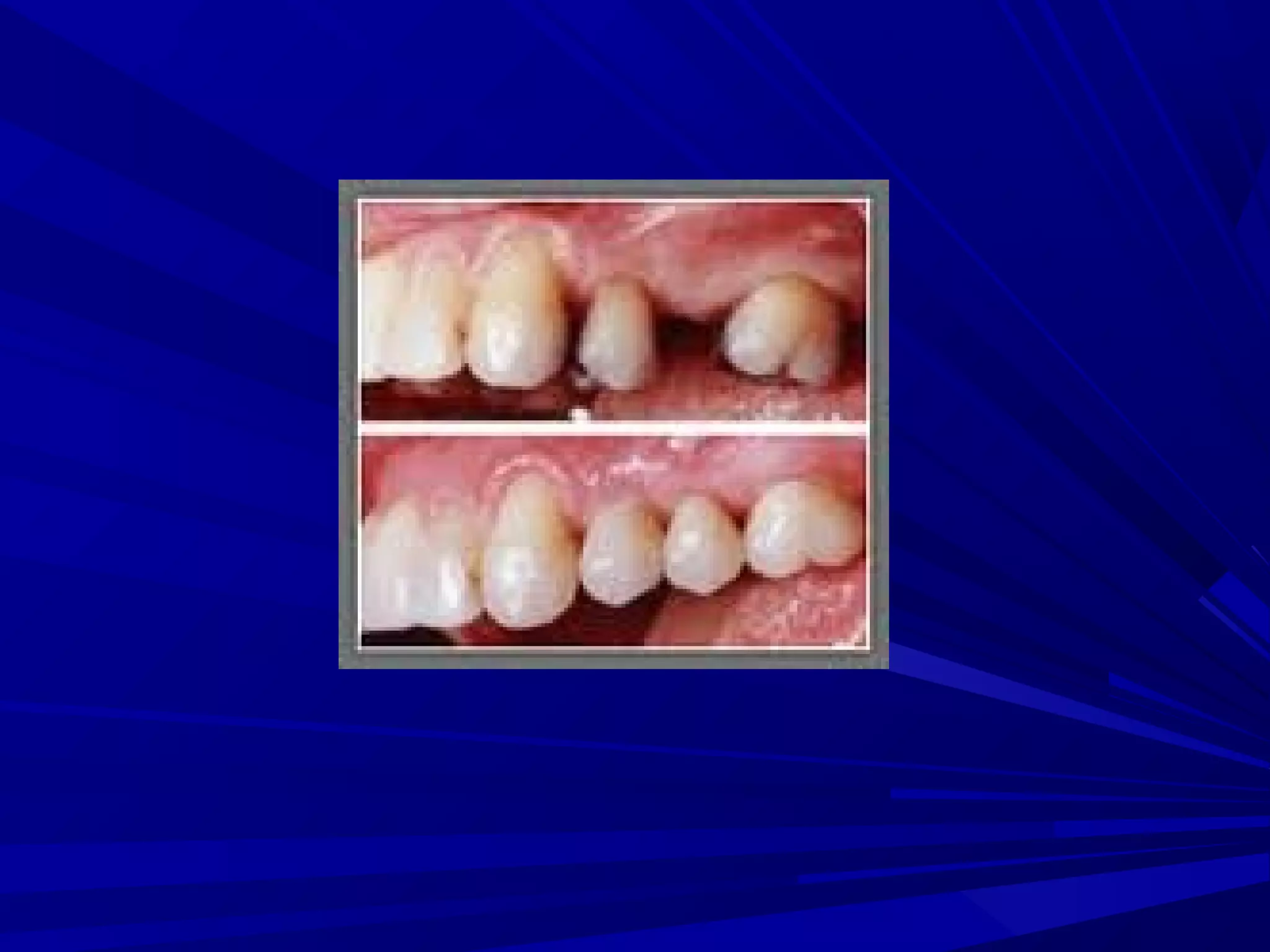
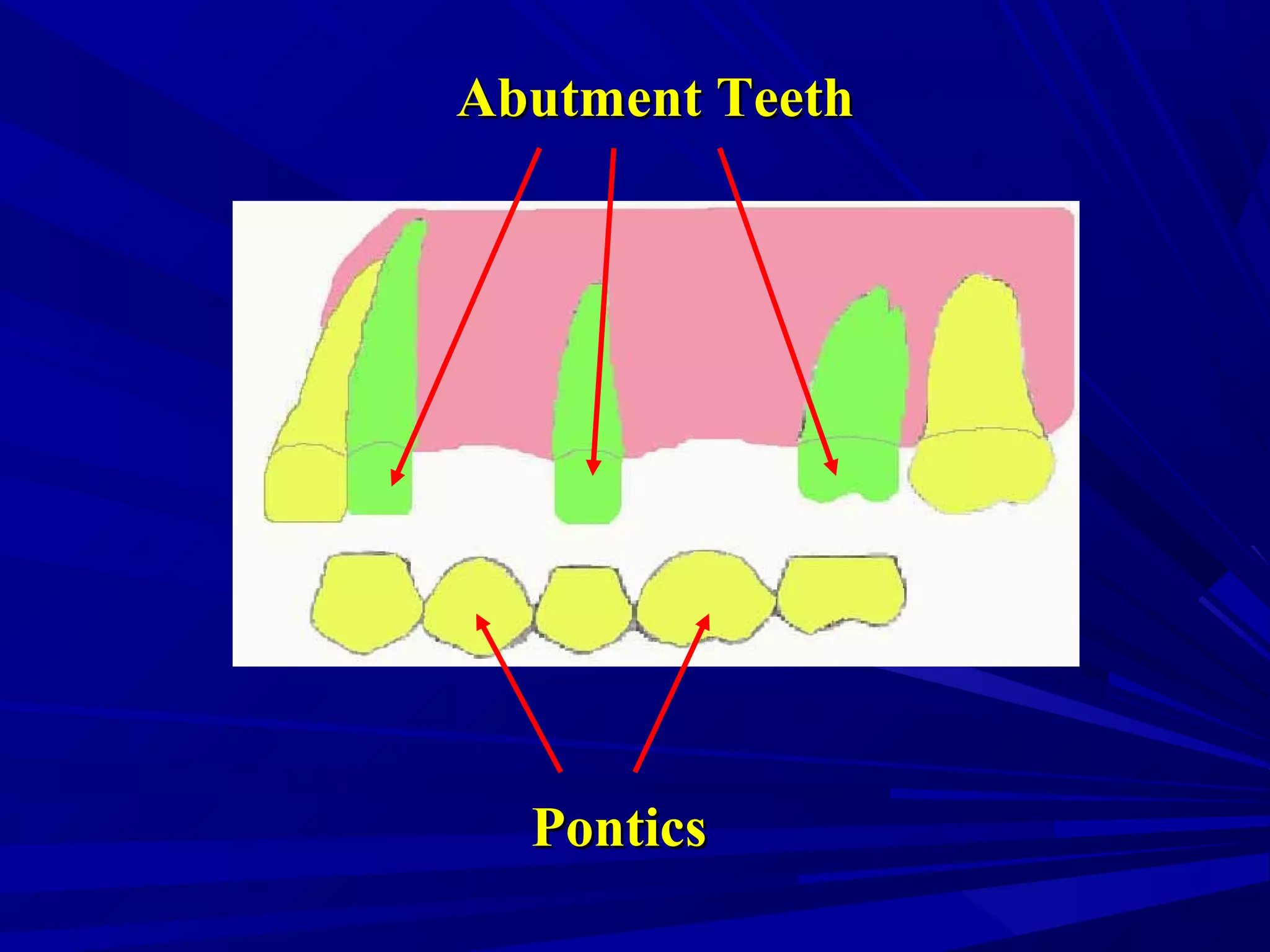
1- Abutment Tooth:1- Abutment Tooth:
It is the prepared natural tooth or root whichIt is the prepared natural tooth or root which
supports and retains the bridge from one or bothsupports and retains the bridge from one or both
ends.ends.
2- Pontic:2- Pontic:
It is suspended part of the bridge whichIt is suspended part of the bridge which
restores the coronal portion of the missing toothrestores the coronal portion of the missing tooth
esthetically and functionally.esthetically and functionally.
Abutment TeethAbutment Teeth
PonticsPontics
Temporary bridge:Temporary bridge:
It is a bridge used temporarily for theIt is a bridge used temporarily for the
protection of the prepared teeth and maintenanceprotection of the prepared teeth and maintenance
of the space till completion and cementation ofof the space till completion and cementation of
the finished bridge.the finished bridge.
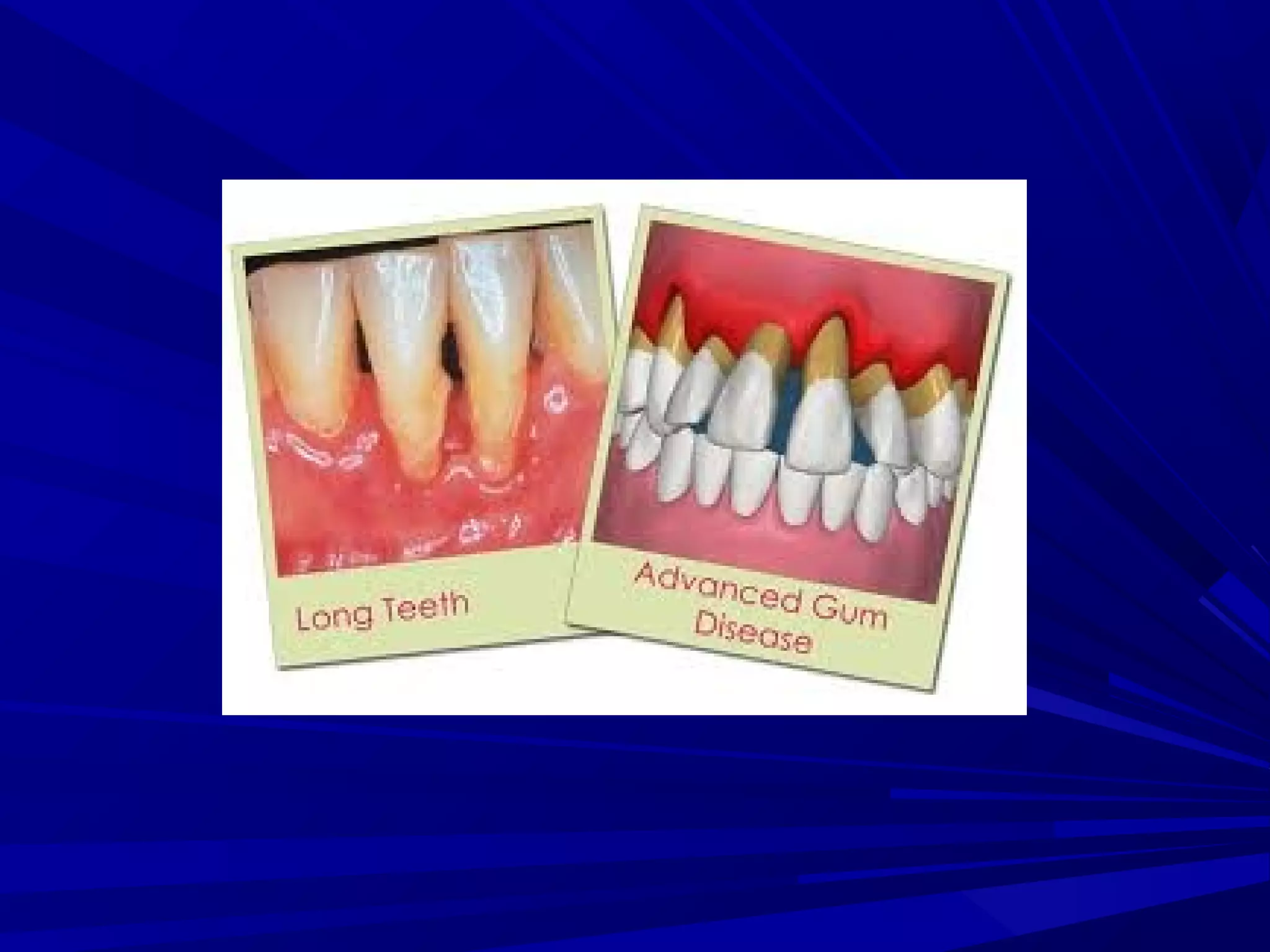
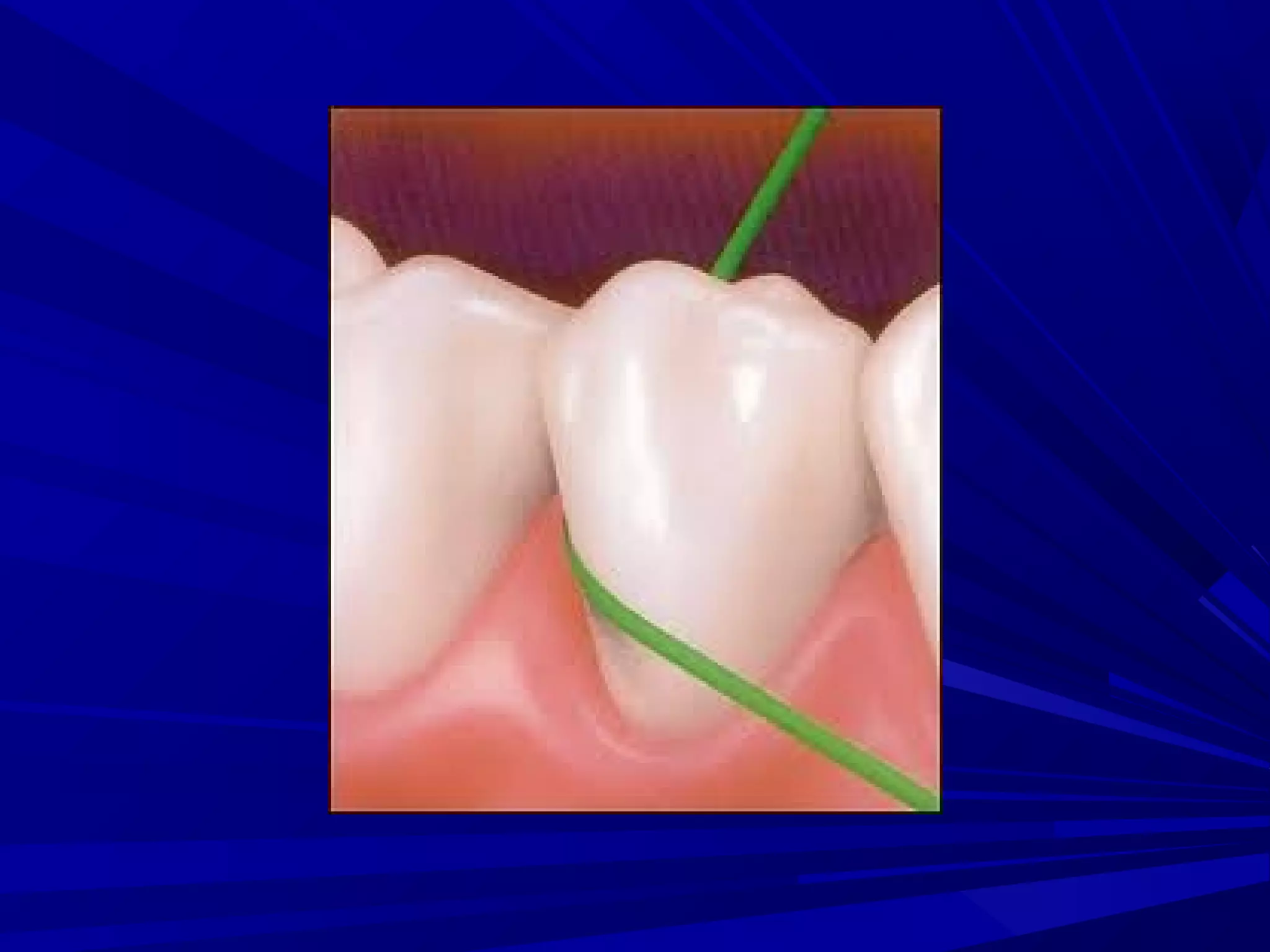
 A good candidate for fixed prosthodontics hasA good candidate for fixed prosthodontics has
healthy supportive tissues and abutment teeth tohealthy supportive tissues and abutment teeth to
support the restoration. In addition, the patientsupport the restoration. In addition, the patient
must be willing and able to practice good oralmust be willing and able to practice good oral
hygiene, including brushing the prosthesis andhygiene, including brushing the prosthesis and
surrounding tissues at least once a day. Somesurrounding tissues at least once a day. Some
types of restoration will require a specialtypes of restoration will require a special
threader to guide dental floss for properthreader to guide dental floss for proper
cleaning.cleaning.
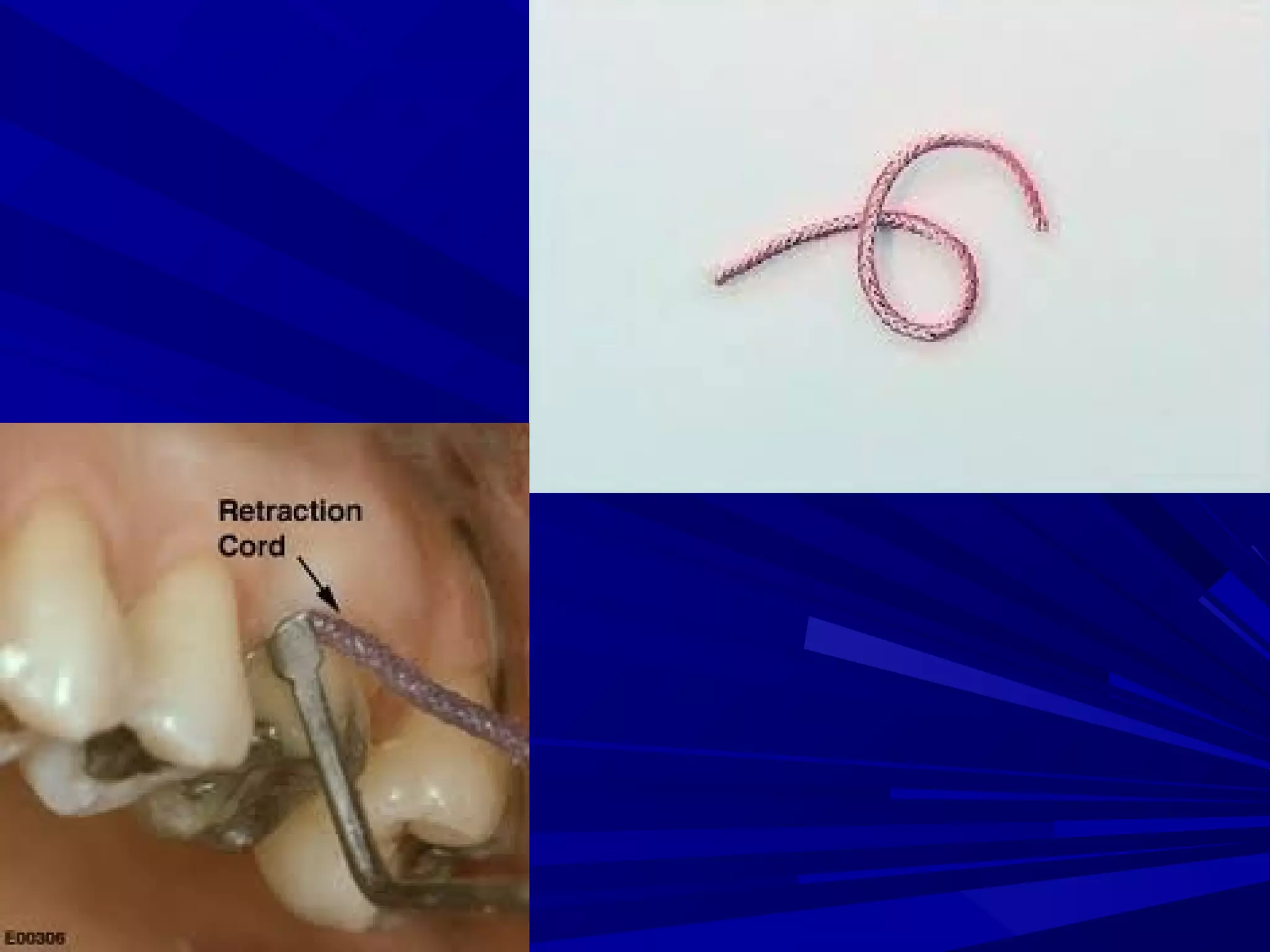
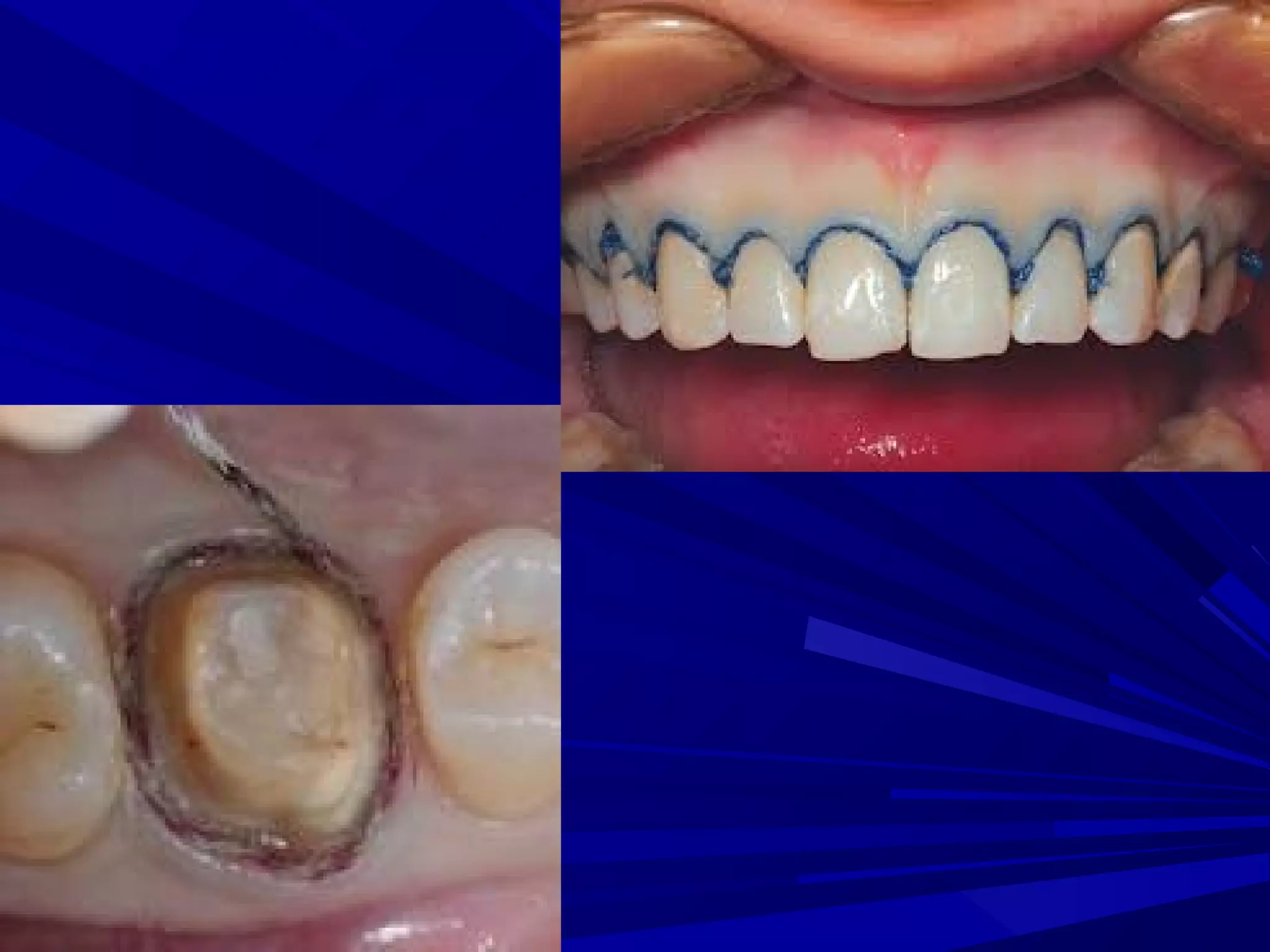
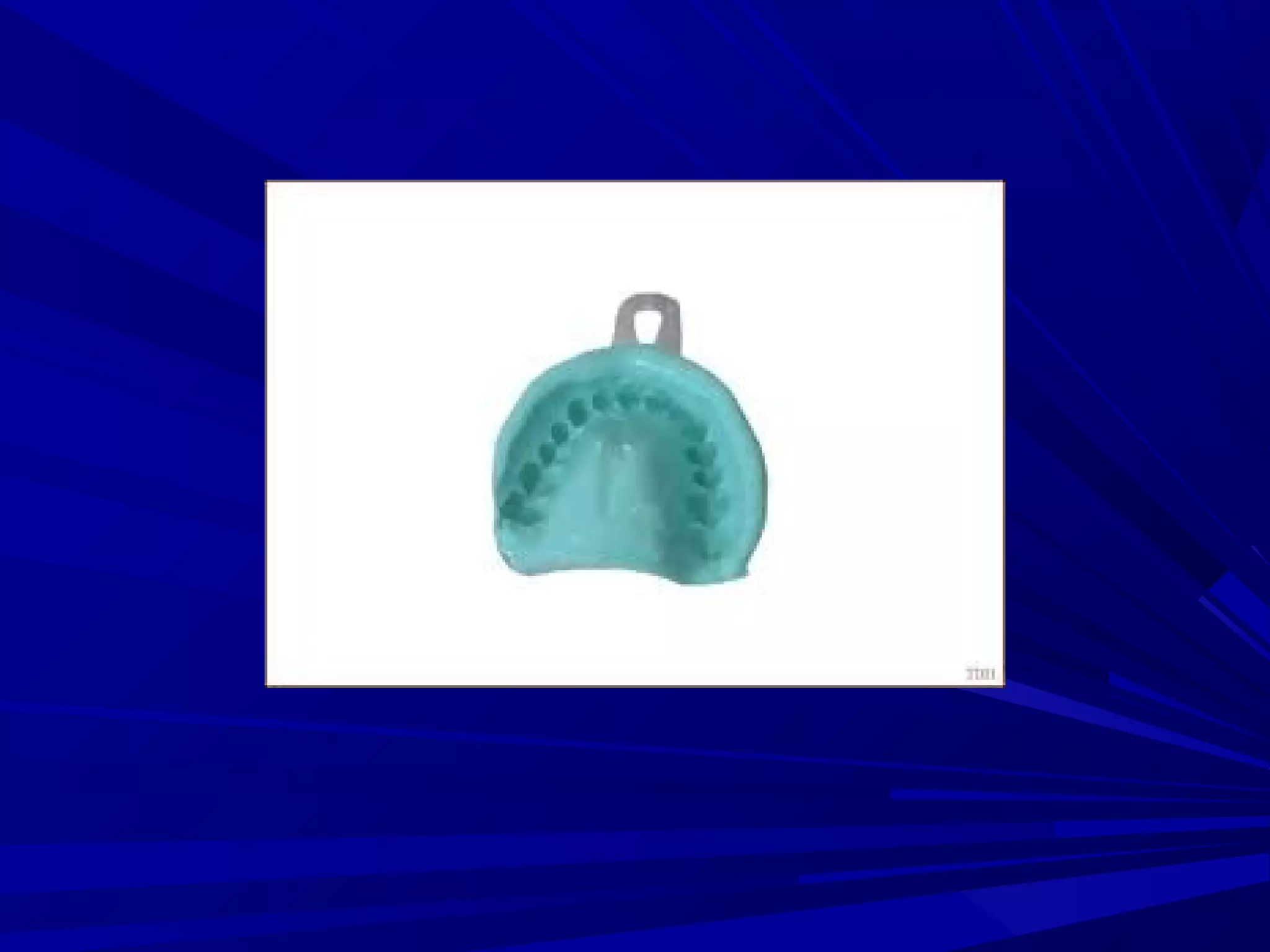
 Most fixed prosthodontics are made at a dentalMost fixed prosthodontics are made at a dental
laboratory and shipped to the dentist’s officelaboratory and shipped to the dentist’s office
within a few days. To build a good fit, the dentistwithin a few days. To build a good fit, the dentist
will take an impression of the teeth; to get thewill take an impression of the teeth; to get the
best impression, the gingival tissue is pushedbest impression, the gingival tissue is pushed
back with a retraction cord or other method.back with a retraction cord or other method.
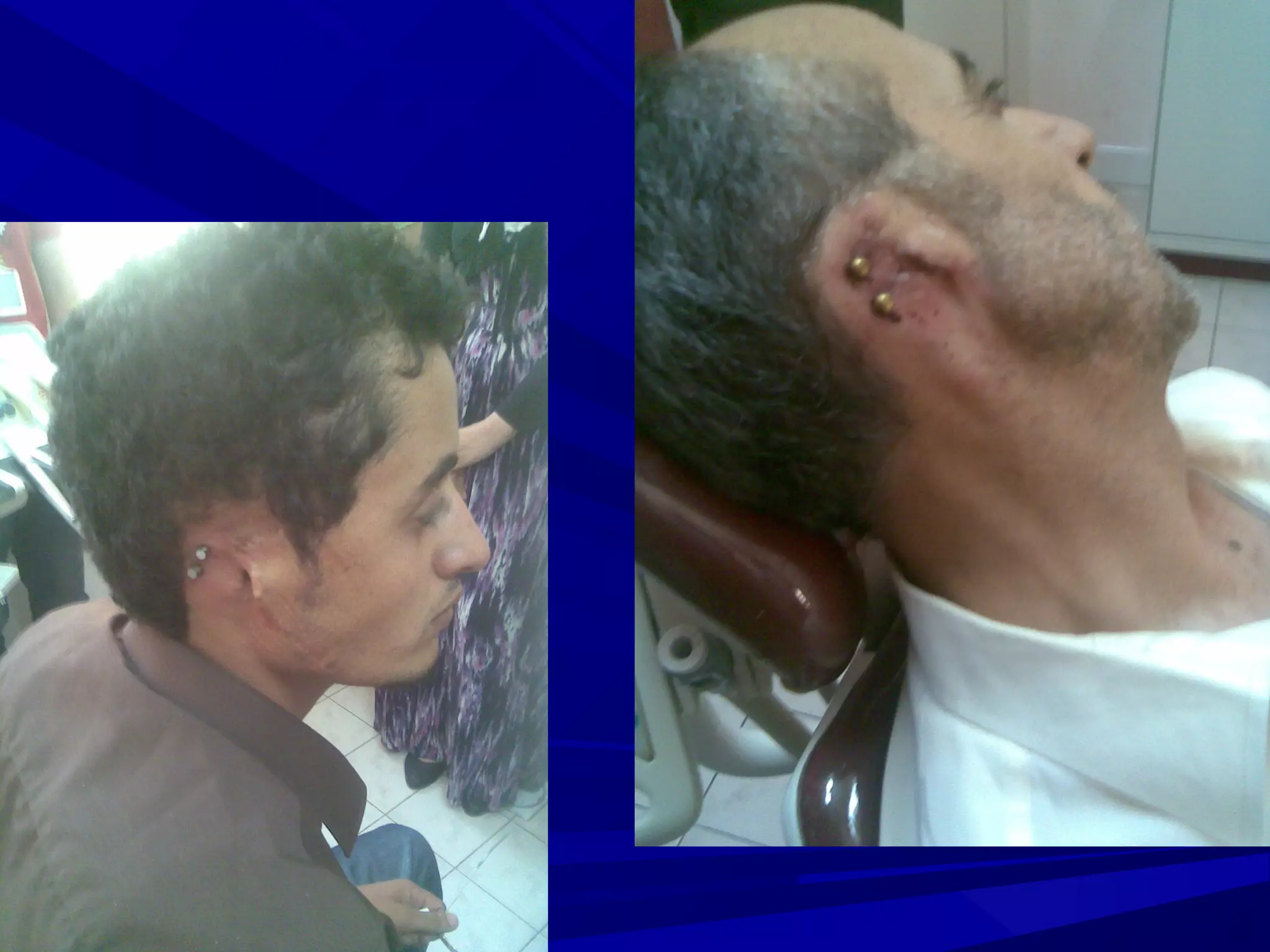
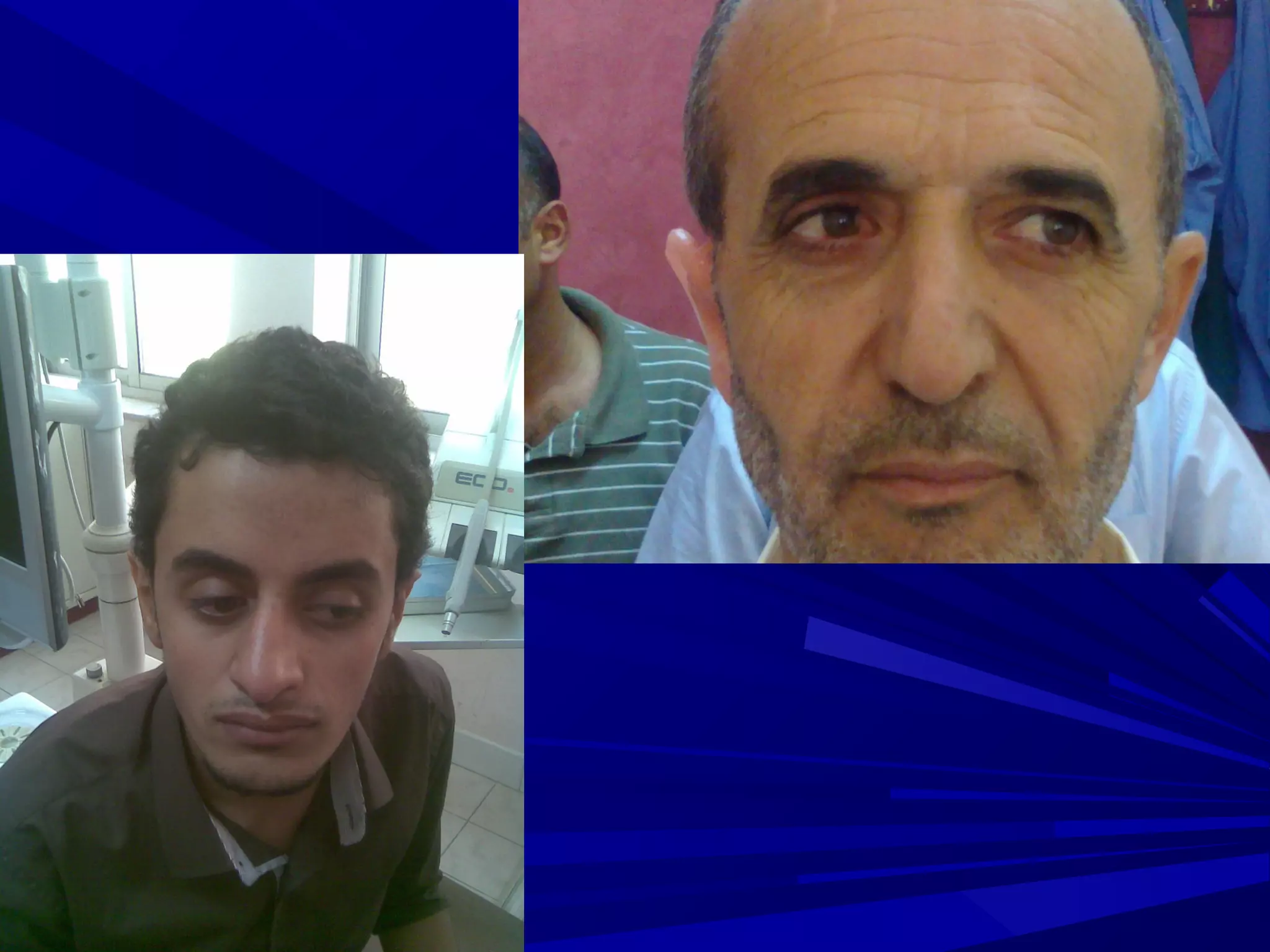
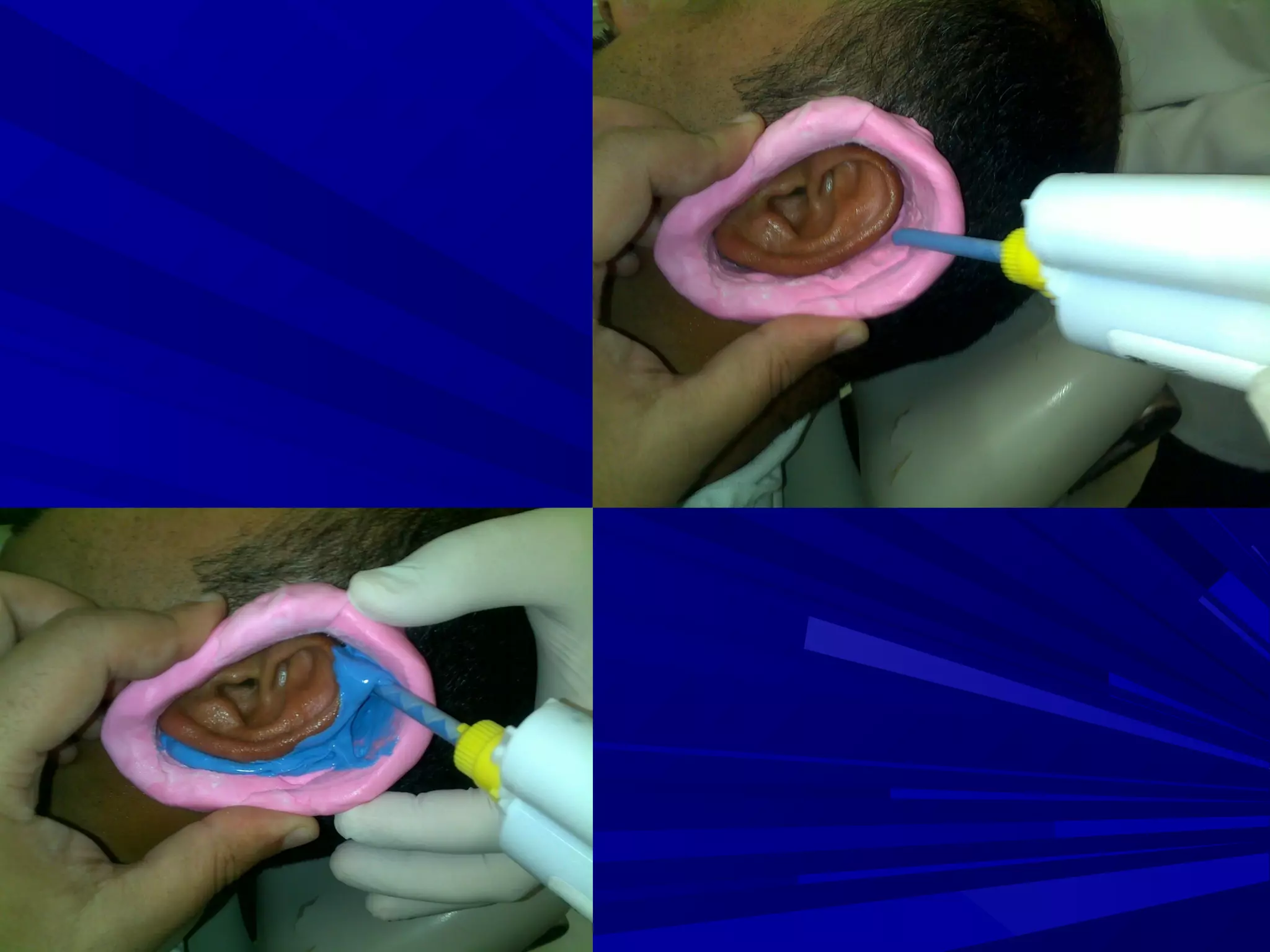
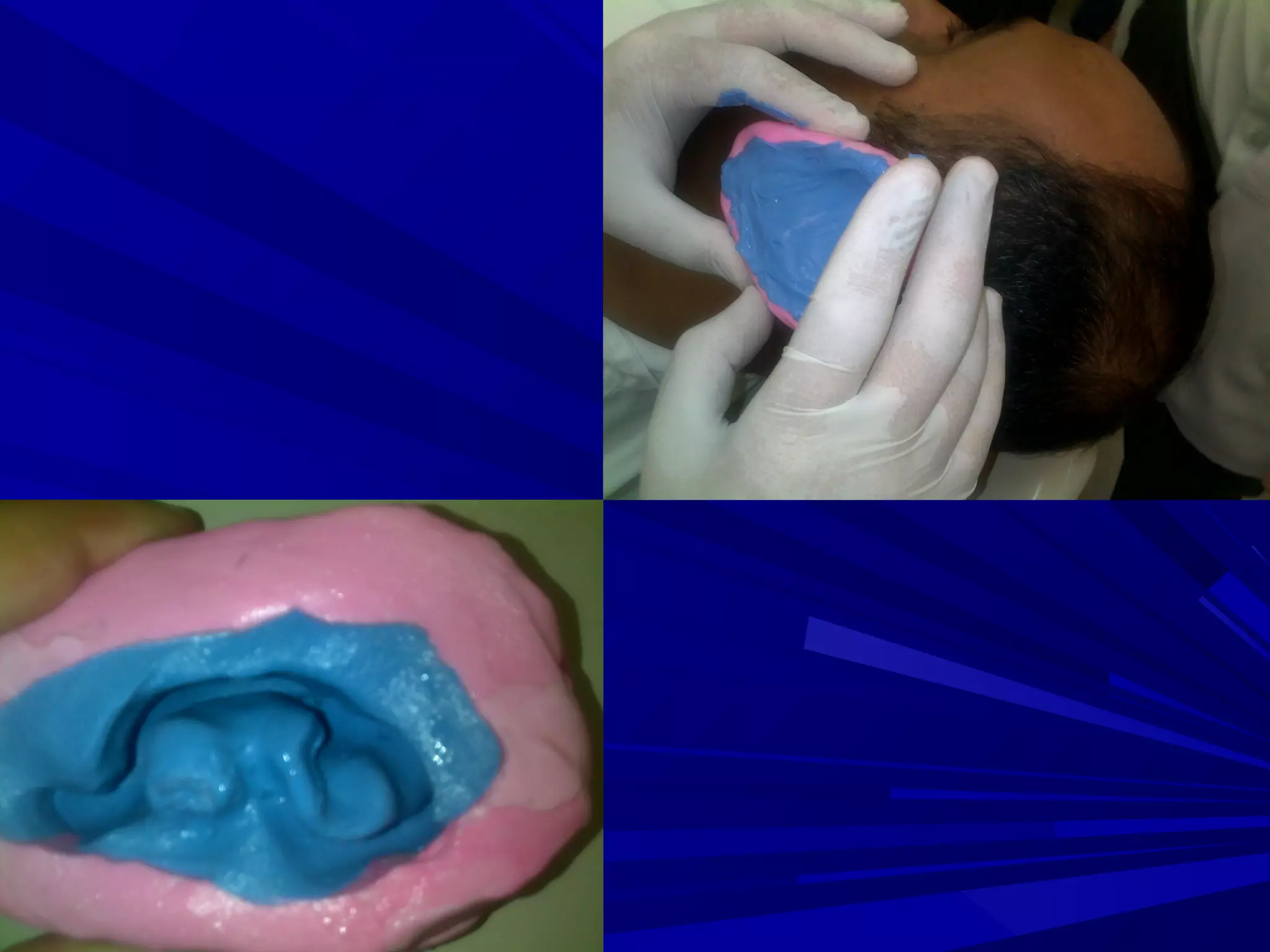
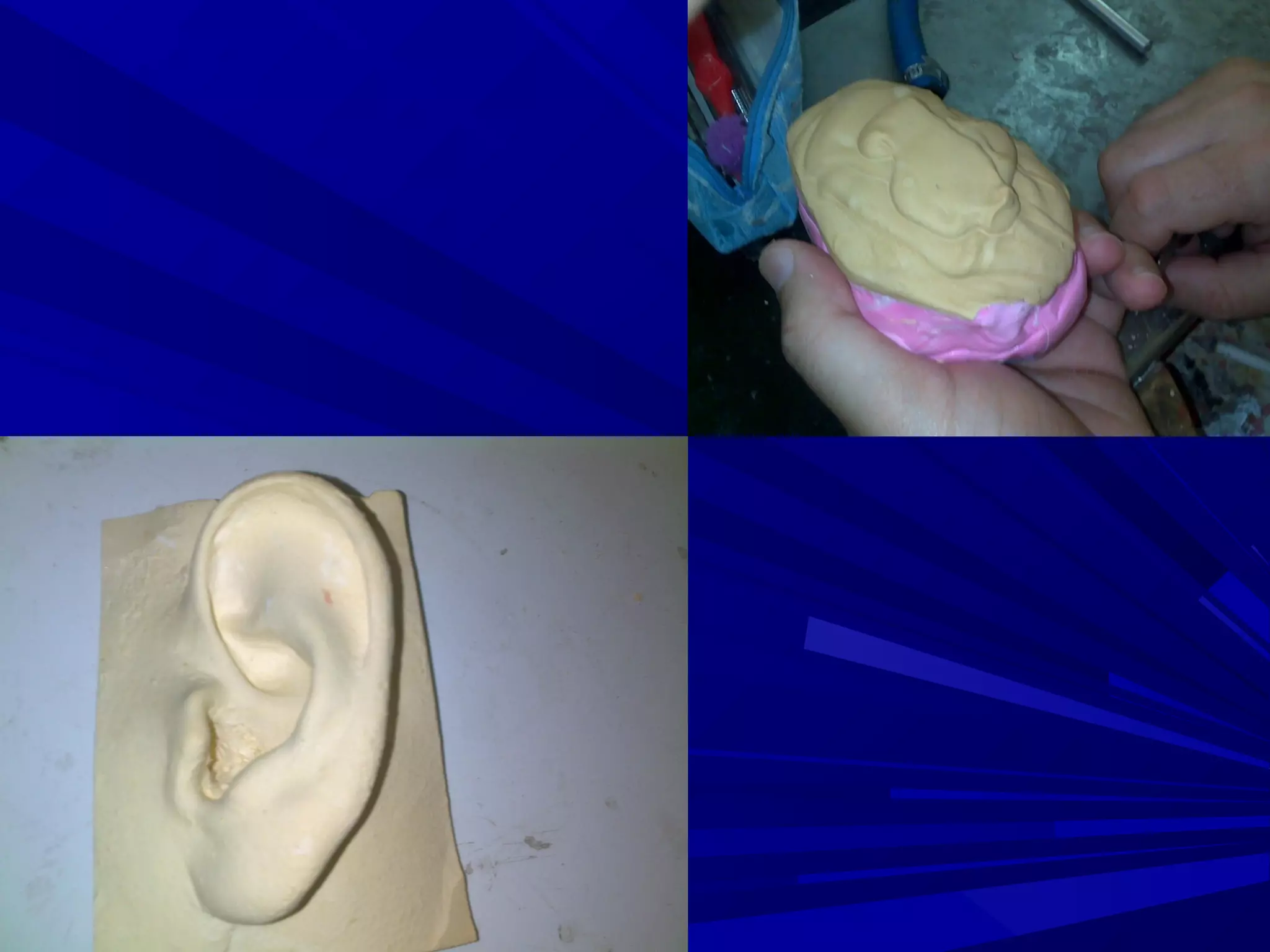
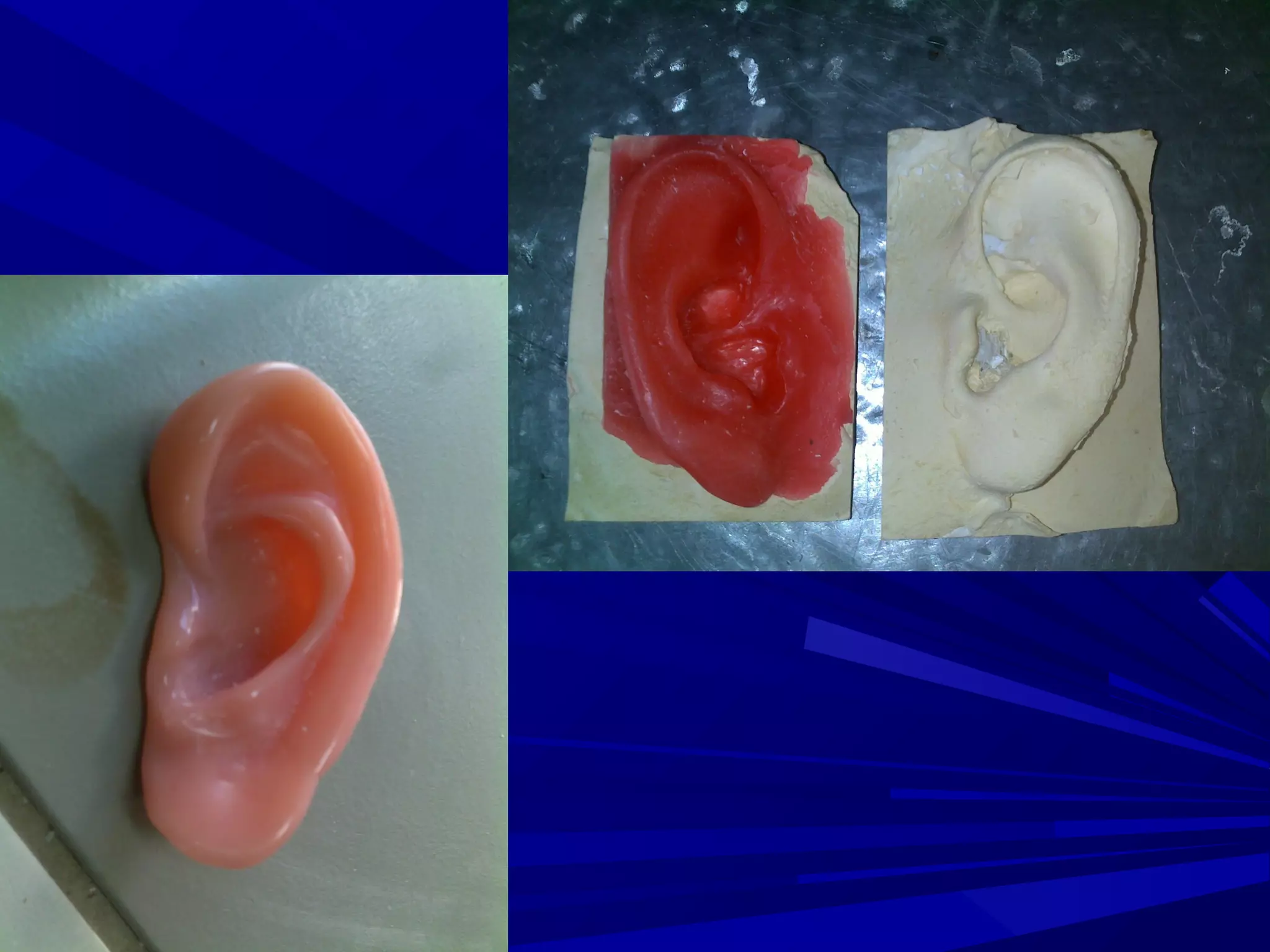
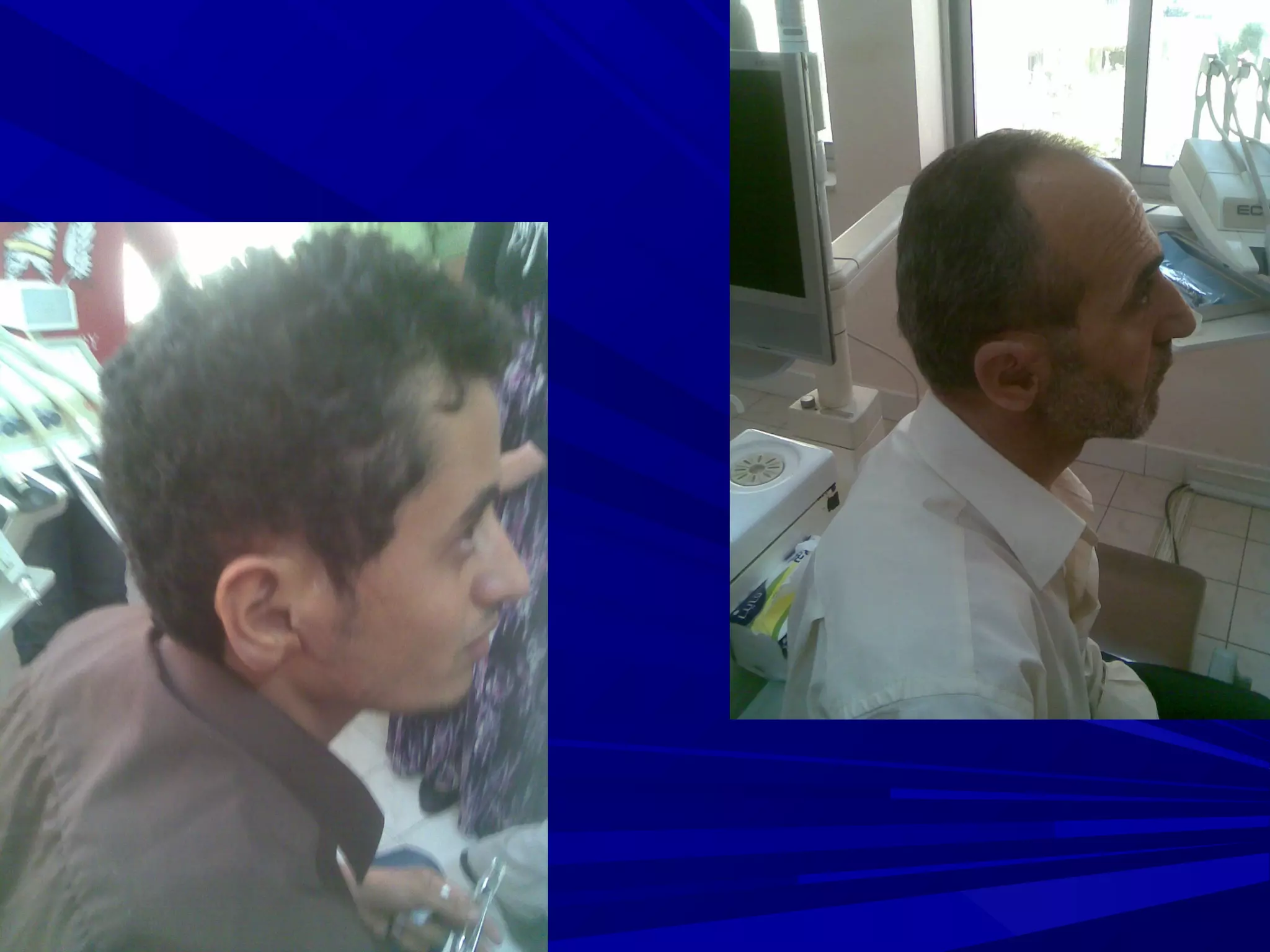
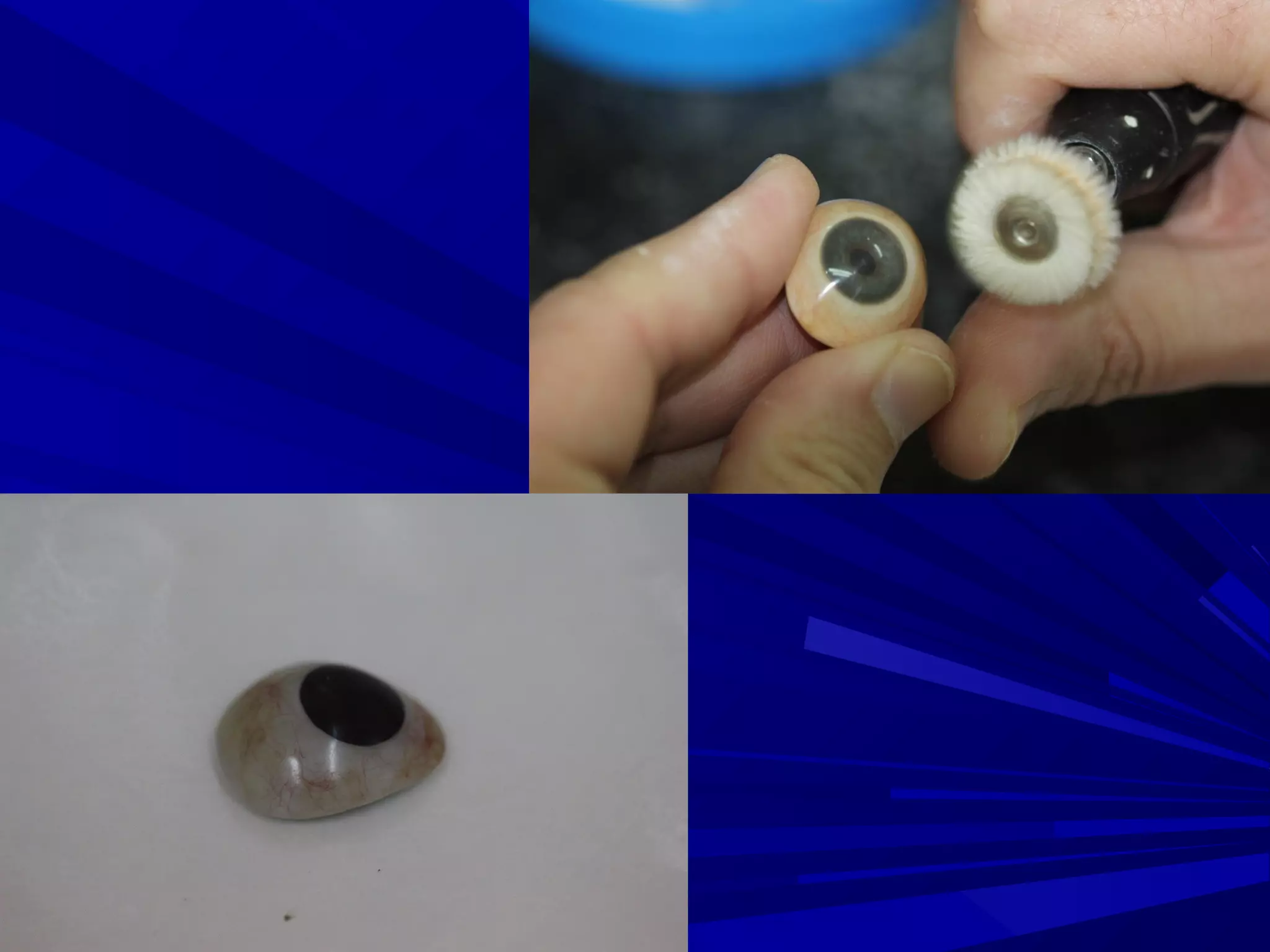
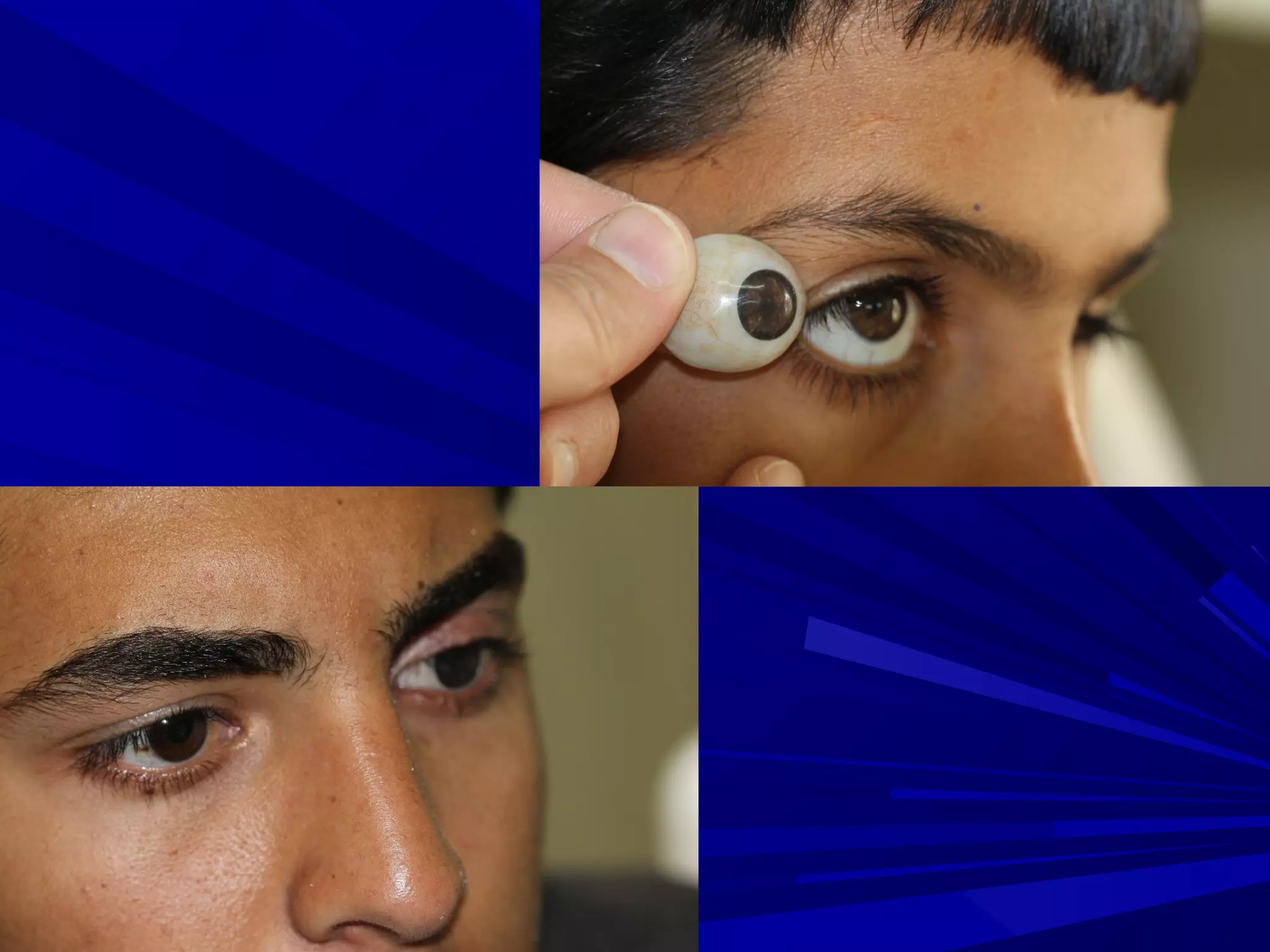
Maxillo-facial ProsthodonticsMaxillo-facial Prosthodontics
Special anatomySpecial anatomy
Oral cavity.Oral cavity.
Skull.Skull.
Muscles of mastication.Muscles of mastication.
Salivary glands.Salivary glands.
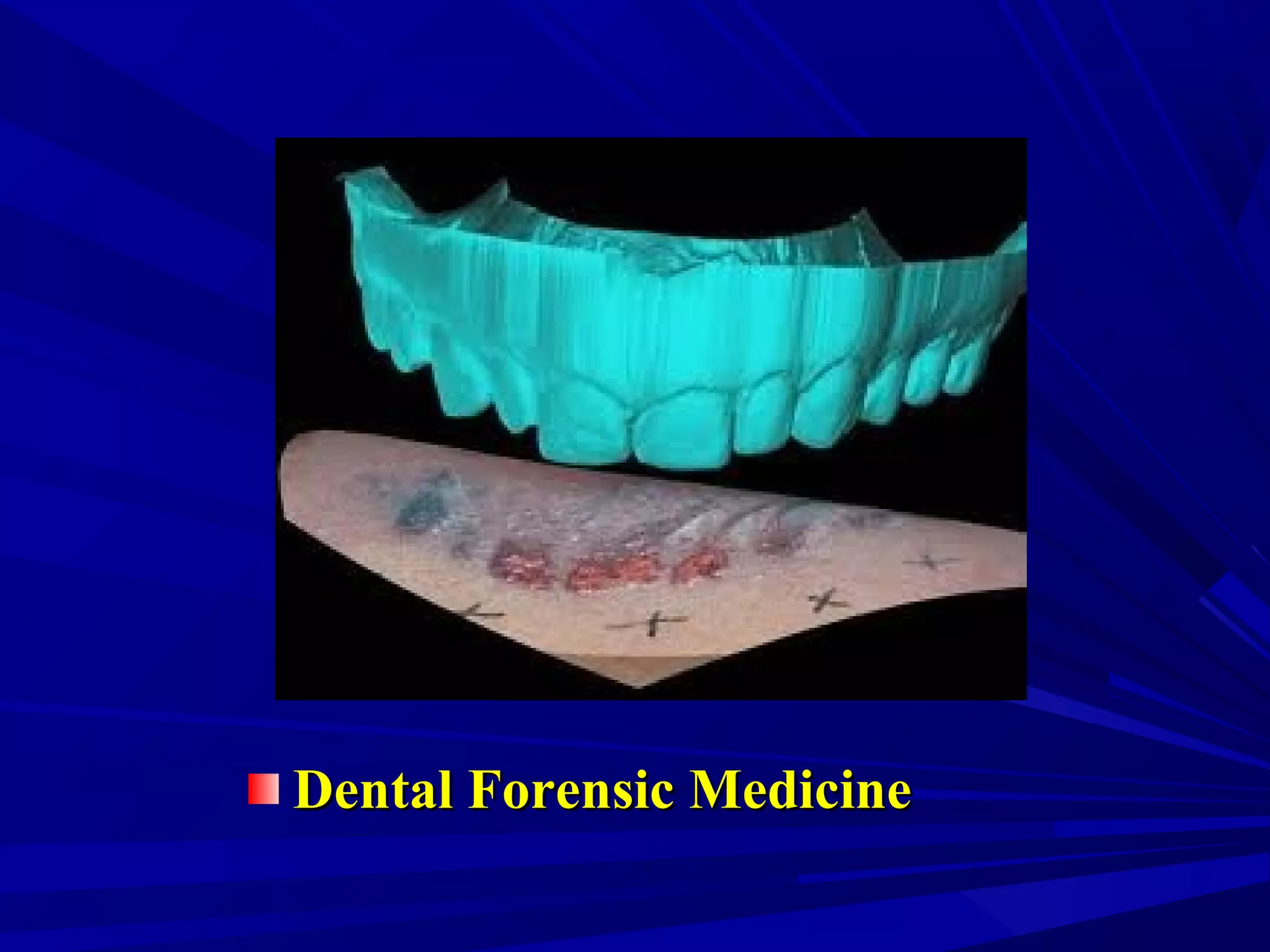
Dental Forensic MedicineDental Forensic Medicine

Introduction to Dentistry 10

  • 1.
    College of DentistryCollegeof Dentistry Introduction to DentistryIntroduction to Dentistry Introduction to Fixed ProsthodonticsIntroduction to Fixed Prosthodontics Dr. Hazem Al AjramiDr. Hazem Al Ajrami
  • 2.
  • 3.
    Indications for fixedprosthodonticsprosthodontics 1. Missing of teeth. 2. Tooth with large unsupported filling (weak walls). 3. Discoloration of teeth (Tetracycline –florsis). 4. Endodontically treated teeth. 5. Post-crown restoration.
  • 4.
     Fixed prosthodonticsare permanent prostheticsFixed prosthodontics are permanent prosthetics used in dental restoration to replace decayed orused in dental restoration to replace decayed or missing teeth or portions of teeth.missing teeth or portions of teeth.  Common examples of fixed prosthodonticsCommon examples of fixed prosthodontics include inlays, porcelain veneers, crowns, andinclude inlays, porcelain veneers, crowns, and bridges. They can be made of metal, porcelain,bridges. They can be made of metal, porcelain, or resin.or resin.
  • 5.
     The smallesttypes of fixed prosthodontics areThe smallest types of fixed prosthodontics are inlays, onlays, and porcelain veneers; theseinlays, onlays, and porcelain veneers; these restorations cover only a portion of a tooth.restorations cover only a portion of a tooth.
  • 8.
  • 10.
    I- Crown :I-Crown : It is an artificial restoration rebuilding theIt is an artificial restoration rebuilding the prepared coronal portion of the natural tooth toprepared coronal portion of the natural tooth to which it becomes a component completing part.which it becomes a component completing part.
  • 14.
    1- Full MetalCrown:1- Full Metal Crown: It is a full coverage all metallic restorationIt is a full coverage all metallic restoration rebuilding the prepared clinical crown of therebuilding the prepared clinical crown of the natural teeth.natural teeth. N.B. Mainly used in posterior teeth.N.B. Mainly used in posterior teeth.
  • 16.
    2- Jacket Crown:2-Jacket Crown: It is a non metallic restoration “acrylic orIt is a non metallic restoration “acrylic or porcelain”, rebuilding the prepared anteriorporcelain”, rebuilding the prepared anterior teeth mainly for esthetic.teeth mainly for esthetic.
  • 19.
    3- Post Crown:3-Post Crown: It is a crown which is retained in position byIt is a crown which is retained in position by a post inserted in the previously prepared roota post inserted in the previously prepared root canal.canal.
  • 22.
    4- Veneered MetalCrown:4- Veneered Metal Crown: It is a full cast metal crown having an acrylicIt is a full cast metal crown having an acrylic or porcelain facing on the labial or buccalor porcelain facing on the labial or buccal surface.surface.
  • 24.
    5- Full VeneeredMetal Crown:5- Full Veneered Metal Crown: It is a full cast metal crown having allIt is a full cast metal crown having all surfaces faced with porcelain.surfaces faced with porcelain.
  • 26.
    6- Temporary Crown:6-Temporary Crown: It is a crown made and used temporarily forIt is a crown made and used temporarily for the protection of the prepared tooth till thethe protection of the prepared tooth till the crown or bridge is completed and ready forcrown or bridge is completed and ready for cementation.cementation.
  • 28.
    II- Bridge:II- Bridge: Itis a masticating or incising surface, ofIt is a masticating or incising surface, of metallic andor nonmetallic, spanning a spacemetallic andor nonmetallic, spanning a space in the dental arch and firmly attached at one orin the dental arch and firmly attached at one or both ends to the adjoining teeth.both ends to the adjoining teeth.
  • 33.
    1- Abutment Tooth:1-Abutment Tooth: It is the prepared natural tooth or root whichIt is the prepared natural tooth or root which supports and retains the bridge from one or bothsupports and retains the bridge from one or both ends.ends.
  • 34.
    2- Pontic:2- Pontic: Itis suspended part of the bridge whichIt is suspended part of the bridge which restores the coronal portion of the missing toothrestores the coronal portion of the missing tooth esthetically and functionally.esthetically and functionally.
  • 35.
  • 36.
    Temporary bridge:Temporary bridge: Itis a bridge used temporarily for theIt is a bridge used temporarily for the protection of the prepared teeth and maintenanceprotection of the prepared teeth and maintenance of the space till completion and cementation ofof the space till completion and cementation of the finished bridge.the finished bridge.
  • 38.
     A goodcandidate for fixed prosthodontics hasA good candidate for fixed prosthodontics has healthy supportive tissues and abutment teeth tohealthy supportive tissues and abutment teeth to support the restoration. In addition, the patientsupport the restoration. In addition, the patient must be willing and able to practice good oralmust be willing and able to practice good oral hygiene, including brushing the prosthesis andhygiene, including brushing the prosthesis and surrounding tissues at least once a day. Somesurrounding tissues at least once a day. Some types of restoration will require a specialtypes of restoration will require a special threader to guide dental floss for properthreader to guide dental floss for proper cleaning.cleaning.
  • 41.
     Most fixedprosthodontics are made at a dentalMost fixed prosthodontics are made at a dental laboratory and shipped to the dentist’s officelaboratory and shipped to the dentist’s office within a few days. To build a good fit, the dentistwithin a few days. To build a good fit, the dentist will take an impression of the teeth; to get thewill take an impression of the teeth; to get the best impression, the gingival tissue is pushedbest impression, the gingival tissue is pushed back with a retraction cord or other method.back with a retraction cord or other method.
  • 45.
  • 55.
    Special anatomySpecial anatomy Oralcavity.Oral cavity. Skull.Skull. Muscles of mastication.Muscles of mastication. Salivary glands.Salivary glands.
  • 56.