Introduction to Computer
Network
BY: BASMA GAMAL
RESEARCHER AT COMPUTER SCIENCE- MINA UNIVERSITY
Outline
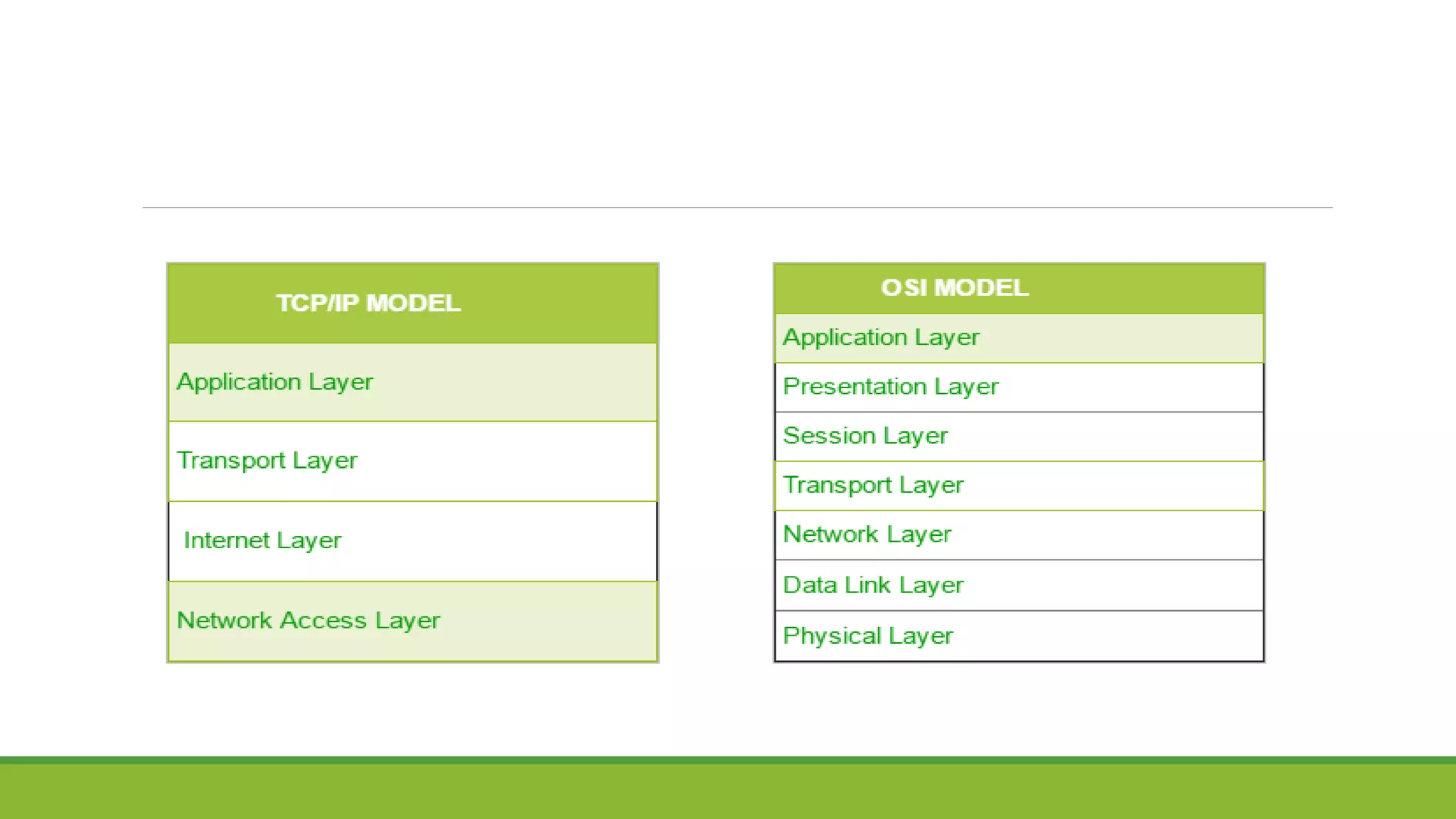
OSI Model
TCP/IP Model
IPv4 - Addressing
OSI
OSI stands for Open Systems Interconnection.
 It is a reference model that specifies standards for communications protocols
and also the functionalities of each layer.
Protocol is the set of rules or algorthims which define the way how two entities
can communicate across the network and there exists different protocol defined
at each layer of OSI model.
Few of such protocols are TCP, IP, UDP, ARP, DHCP, FTP and so on.
TCP/IP Model
A majority of the internet uses a protocol suite called the Internet Protocol
Suite also known as the TCP/IP protocol suite.
This suite is a combination of protocols which encompasses a number of
different protocols for different purpose and need.
 Because the two major protocols in this suites are TCP (Transmission Control
Protocol) and IP (Internet Protocol), this is commonly termed as TCP/IP Protocol
suite.
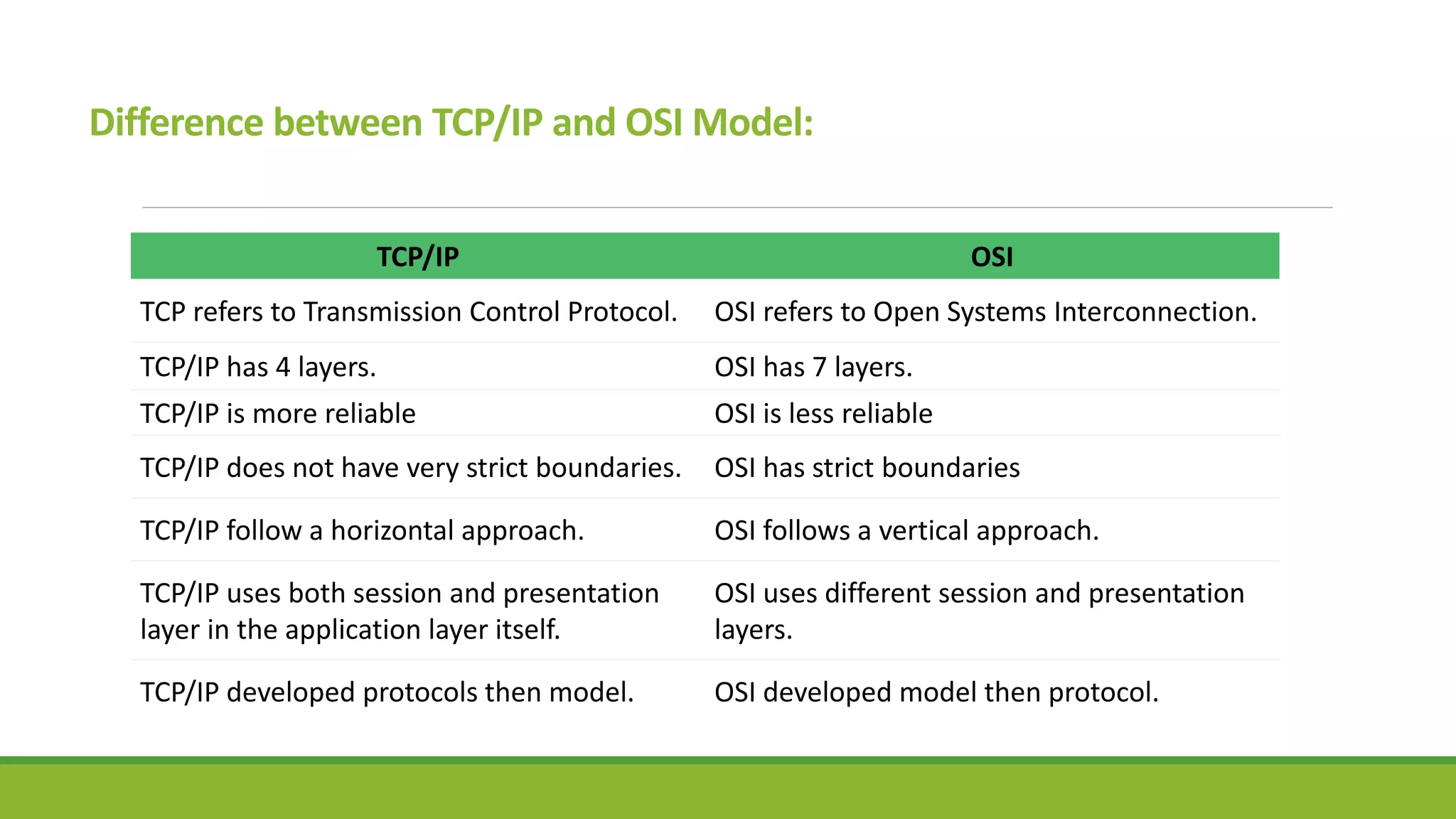
Difference between TCP/IP and OSI Model:
TCP/IP OSI
TCP refers to Transmission Control Protocol. OSI refers to Open Systems Interconnection.
TCP/IP has 4 layers. OSI has 7 layers.
TCP/IP is more reliable OSI is less reliable
TCP/IP does not have very strict boundaries. OSI has strict boundaries
TCP/IP follow a horizontal approach. OSI follows a vertical approach.
TCP/IP uses both session and presentation
layer in the application layer itself.
OSI uses different session and presentation
layers.
TCP/IP developed protocols then model. OSI developed model then protocol.
IPv4 - Addressing
IPv4 supports three different types of addressing modes.
1. Unicast Addressing Mode
2. Broadcast Addressing Mode
3. Multicast Addressing Mode
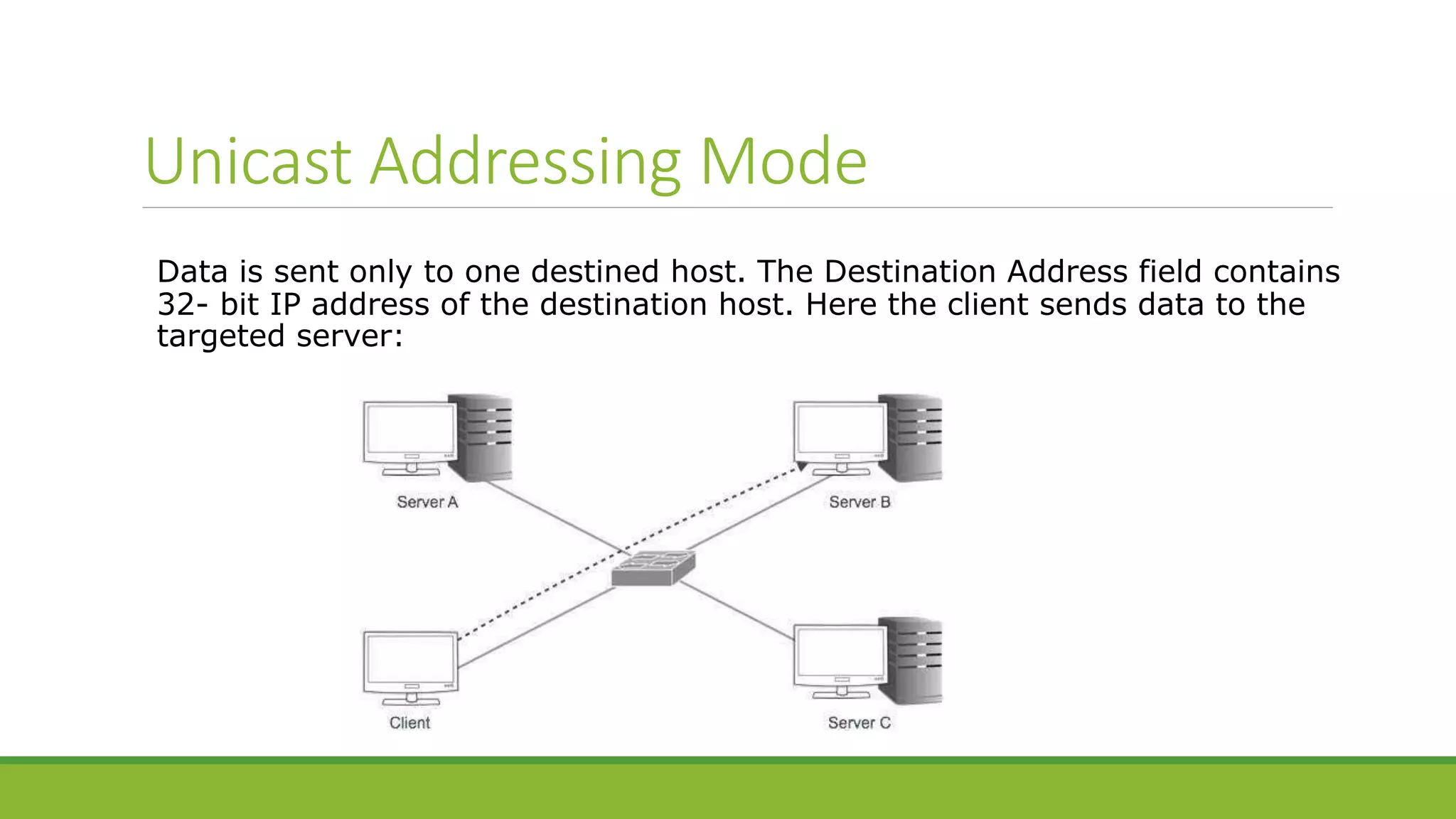
Unicast Addressing Mode
Data is sent only to one destined host. The Destination Address field contains
32- bit IP address of the destination host. Here the client sends data to the
targeted server:
Broadcast Addressing Mode
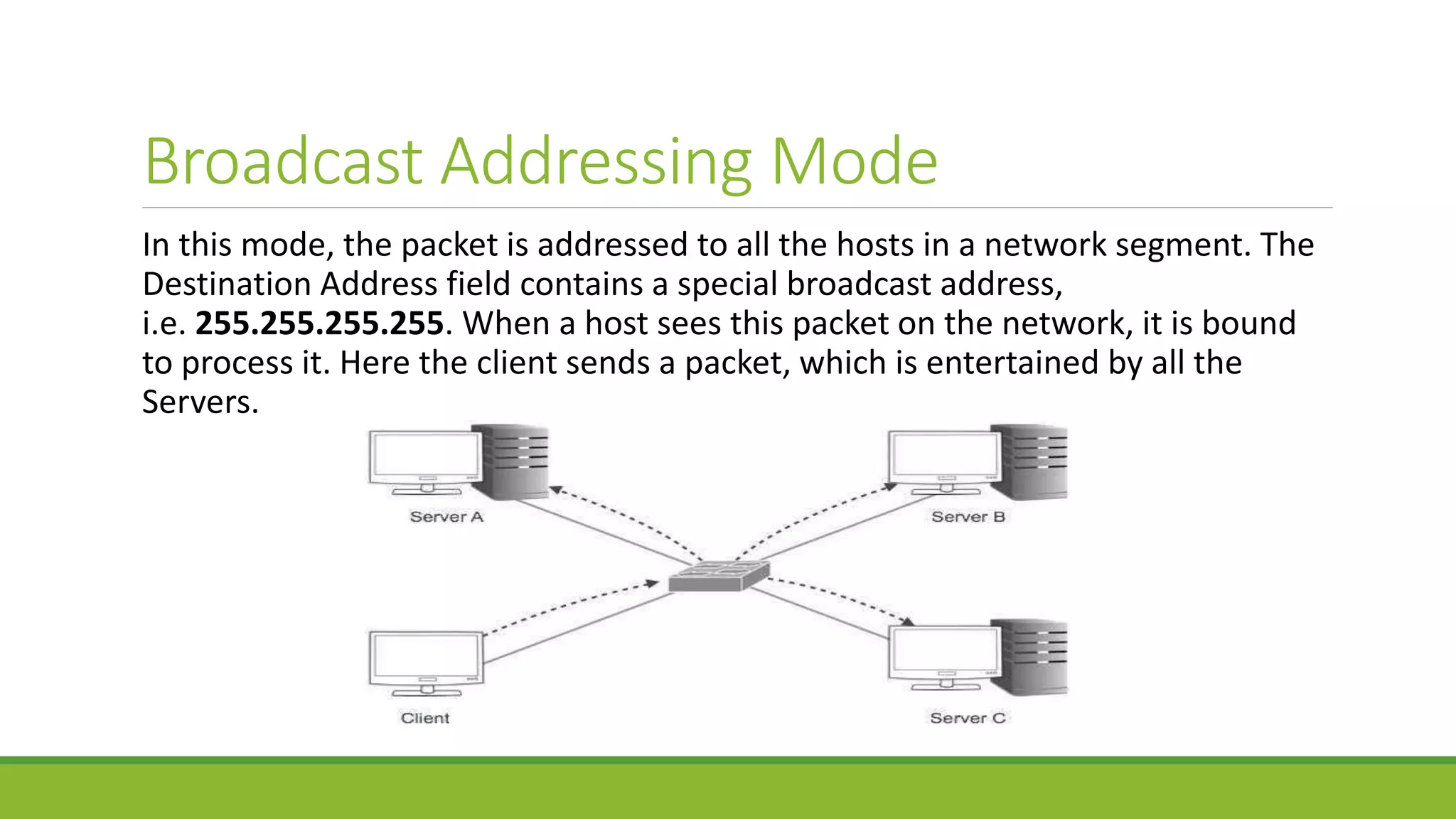
In this mode, the packet is addressed to all the hosts in a network segment. The
Destination Address field contains a special broadcast address,
i.e. 255.255.255.255. When a host sees this packet on the network, it is bound
to process it. Here the client sends a packet, which is entertained by all the
Servers.
Multicast Addressing Mode
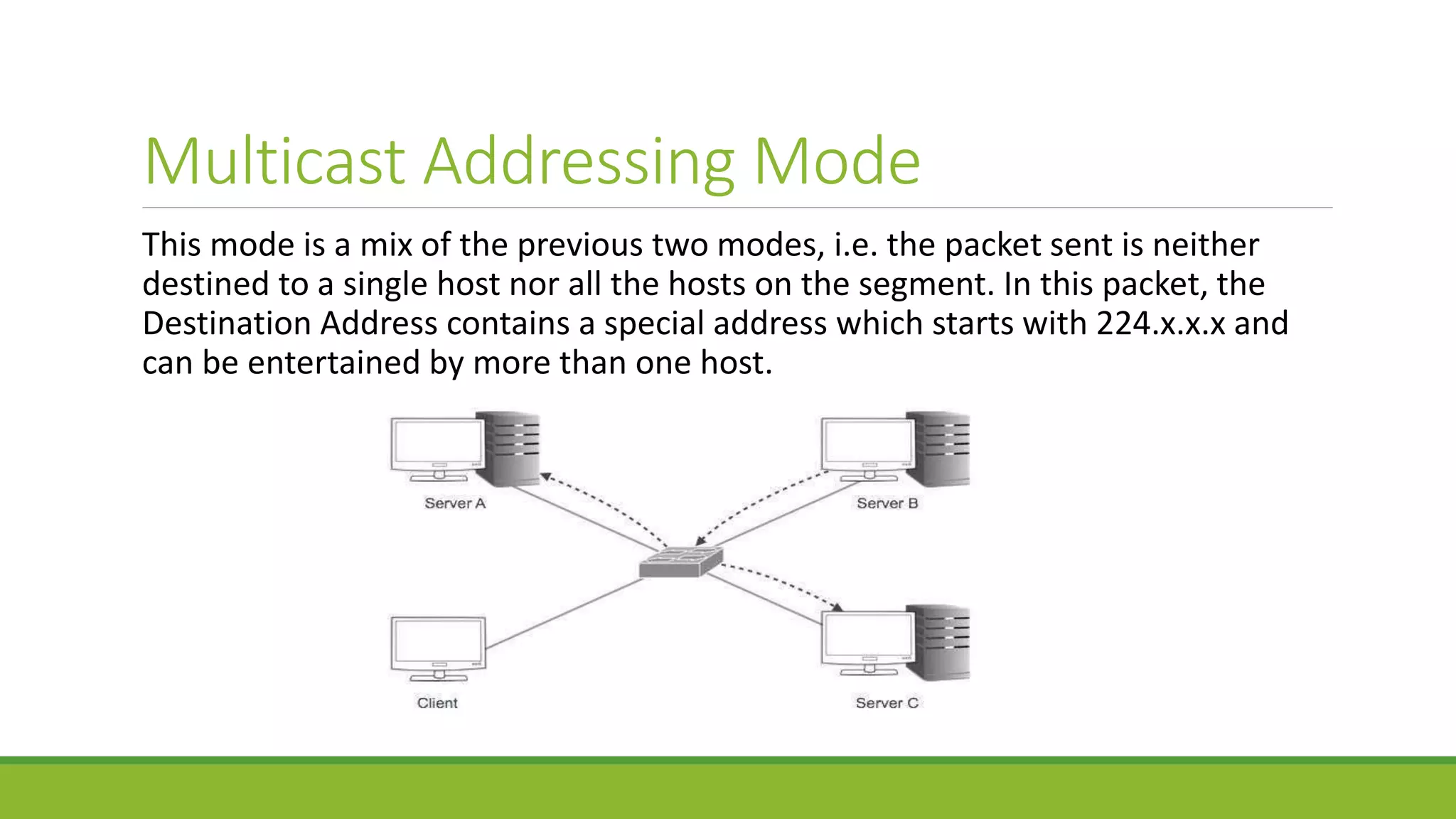
This mode is a mix of the previous two modes, i.e. the packet sent is neither
destined to a single host nor all the hosts on the segment. In this packet, the
Destination Address contains a special address which starts with 224.x.x.x and
can be entertained by more than one host.
Hierarchical Addressing Scheme
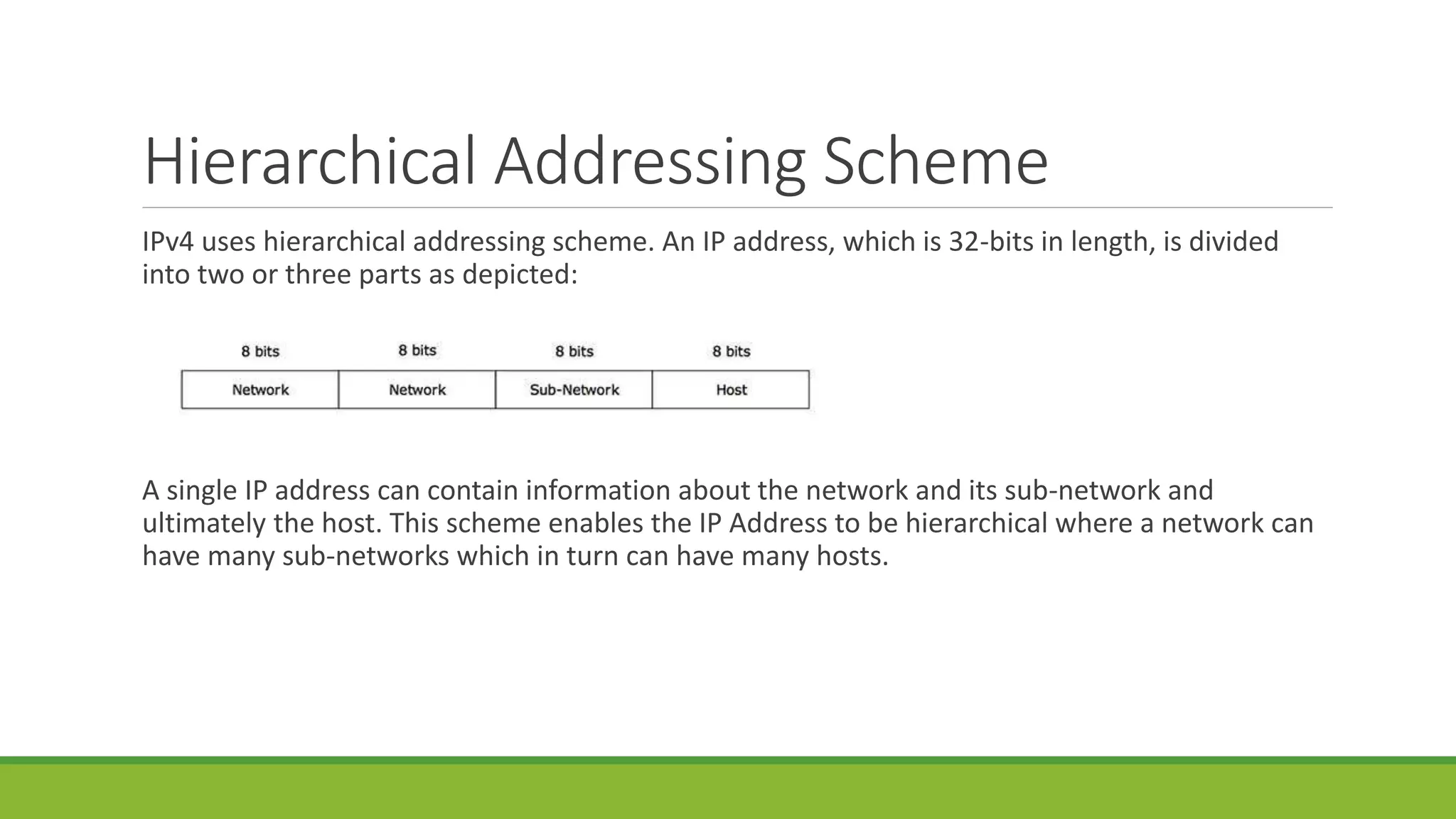
IPv4 uses hierarchical addressing scheme. An IP address, which is 32-bits in length, is divided
into two or three parts as depicted:
A single IP address can contain information about the network and its sub-network and
ultimately the host. This scheme enables the IP Address to be hierarchical where a network can
have many sub-networks which in turn can have many hosts.
Subnet Mask
The 32-bit IP address contains information about the host and its network.
 It is very necessary to distinguish both. For this, routers use Subnet Mask,
which is as long as the size of the network address in the IP address.
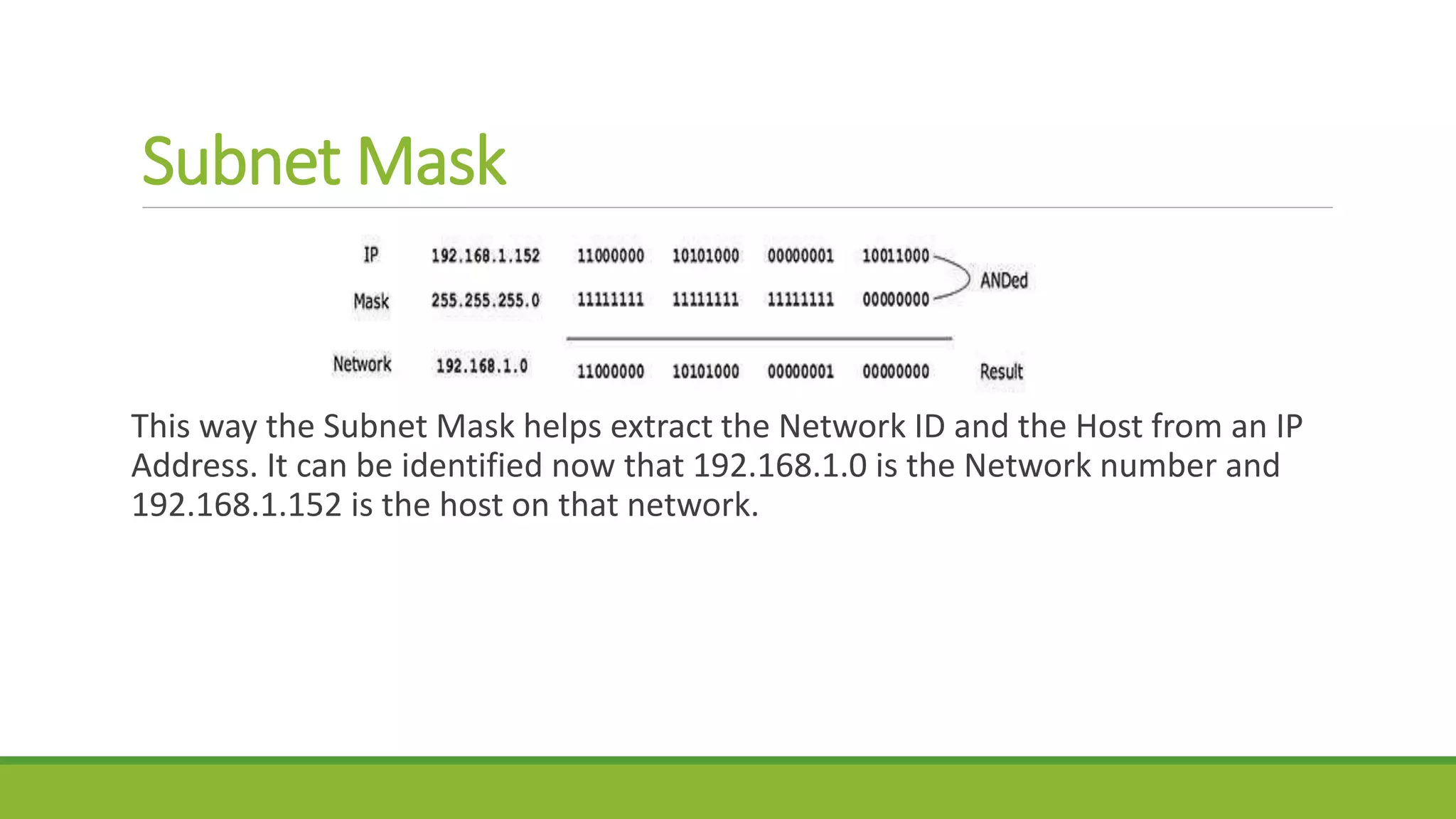
 Subnet Mask is also 32 bits long. If the IP address in binary is ANDed with its
Subnet Mask, the result yields the Network address.
For example, say the IP Address is 192.168.1.152 and the Subnet Mask is
255.255.255.0 then
Subnet Mask
This way the Subnet Mask helps extract the Network ID and the Host from an IP
Address. It can be identified now that 192.168.1.0 is the Network number and
192.168.1.152 is the host on that network.
Reference
https://www.geeksforgeeks.org/computer-network-tutorials/
https://www.tutorialspoint.com/ipv4/ipv4_overview.htm

Introduction to computer networks

  • 1.
    Introduction to Computer Network BY:BASMA GAMAL RESEARCHER AT COMPUTER SCIENCE- MINA UNIVERSITY
  • 2.
  • 3.
    OSI OSI stands forOpen Systems Interconnection.  It is a reference model that specifies standards for communications protocols and also the functionalities of each layer. Protocol is the set of rules or algorthims which define the way how two entities can communicate across the network and there exists different protocol defined at each layer of OSI model. Few of such protocols are TCP, IP, UDP, ARP, DHCP, FTP and so on.
  • 4.
    TCP/IP Model A majorityof the internet uses a protocol suite called the Internet Protocol Suite also known as the TCP/IP protocol suite. This suite is a combination of protocols which encompasses a number of different protocols for different purpose and need.  Because the two major protocols in this suites are TCP (Transmission Control Protocol) and IP (Internet Protocol), this is commonly termed as TCP/IP Protocol suite.
  • 6.
    Difference between TCP/IPand OSI Model: TCP/IP OSI TCP refers to Transmission Control Protocol. OSI refers to Open Systems Interconnection. TCP/IP has 4 layers. OSI has 7 layers. TCP/IP is more reliable OSI is less reliable TCP/IP does not have very strict boundaries. OSI has strict boundaries TCP/IP follow a horizontal approach. OSI follows a vertical approach. TCP/IP uses both session and presentation layer in the application layer itself. OSI uses different session and presentation layers. TCP/IP developed protocols then model. OSI developed model then protocol.
  • 7.
    IPv4 - Addressing IPv4supports three different types of addressing modes. 1. Unicast Addressing Mode 2. Broadcast Addressing Mode 3. Multicast Addressing Mode
  • 8.
    Unicast Addressing Mode Datais sent only to one destined host. The Destination Address field contains 32- bit IP address of the destination host. Here the client sends data to the targeted server:
  • 9.
    Broadcast Addressing Mode Inthis mode, the packet is addressed to all the hosts in a network segment. The Destination Address field contains a special broadcast address, i.e. 255.255.255.255. When a host sees this packet on the network, it is bound to process it. Here the client sends a packet, which is entertained by all the Servers.
  • 10.
    Multicast Addressing Mode Thismode is a mix of the previous two modes, i.e. the packet sent is neither destined to a single host nor all the hosts on the segment. In this packet, the Destination Address contains a special address which starts with 224.x.x.x and can be entertained by more than one host.
  • 11.
    Hierarchical Addressing Scheme IPv4uses hierarchical addressing scheme. An IP address, which is 32-bits in length, is divided into two or three parts as depicted: A single IP address can contain information about the network and its sub-network and ultimately the host. This scheme enables the IP Address to be hierarchical where a network can have many sub-networks which in turn can have many hosts.
  • 12.
    Subnet Mask The 32-bitIP address contains information about the host and its network.  It is very necessary to distinguish both. For this, routers use Subnet Mask, which is as long as the size of the network address in the IP address.  Subnet Mask is also 32 bits long. If the IP address in binary is ANDed with its Subnet Mask, the result yields the Network address. For example, say the IP Address is 192.168.1.152 and the Subnet Mask is 255.255.255.0 then
  • 13.
    Subnet Mask This waythe Subnet Mask helps extract the Network ID and the Host from an IP Address. It can be identified now that 192.168.1.0 is the Network number and 192.168.1.152 is the host on that network.
  • 14.