Ongoing process
Uses symbols
Meaning
Verbal communication

Non- verbal communication
Improve talking skill

Realization of everyday life
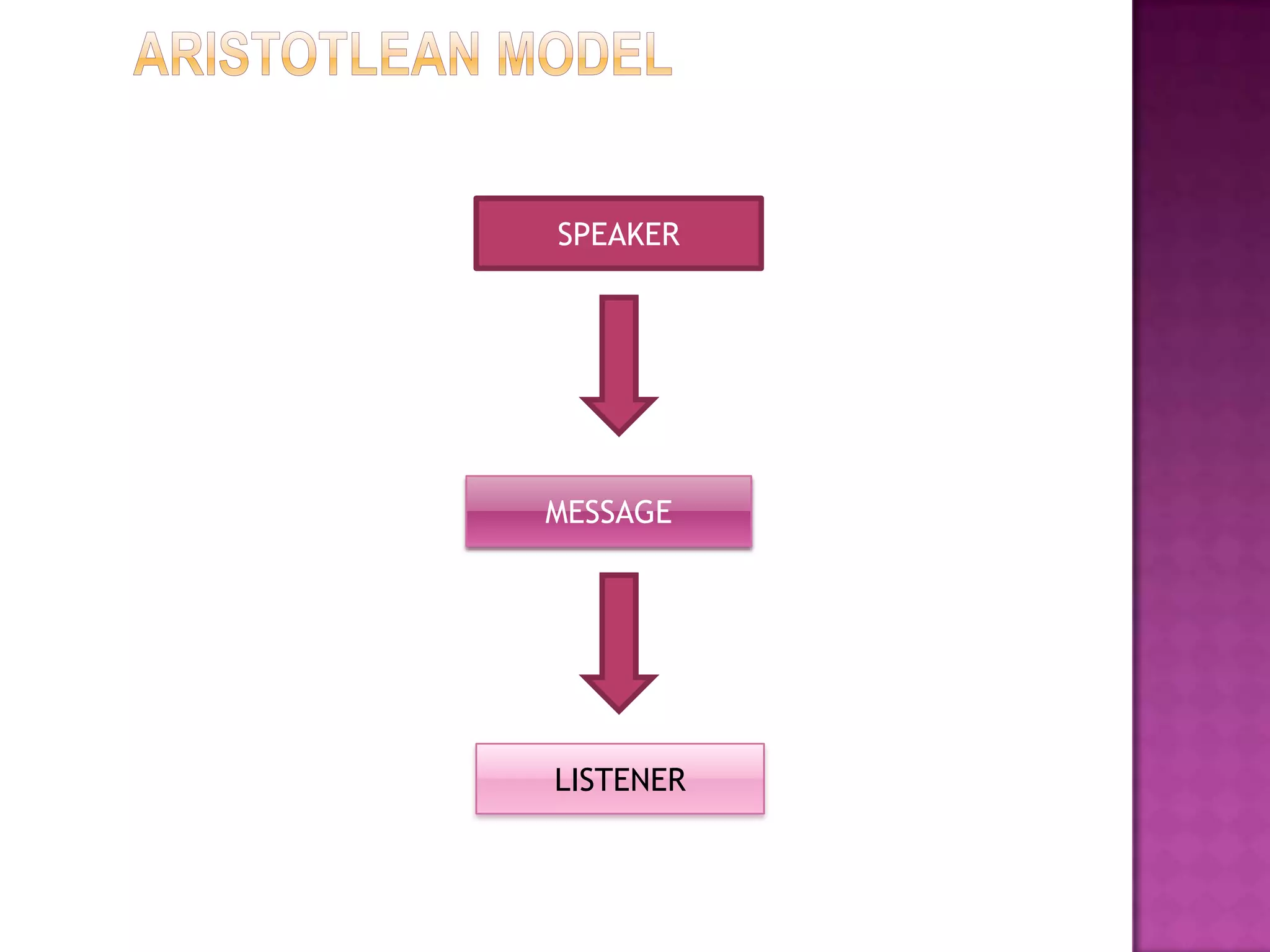
ARISTOTLEAN
MODEL
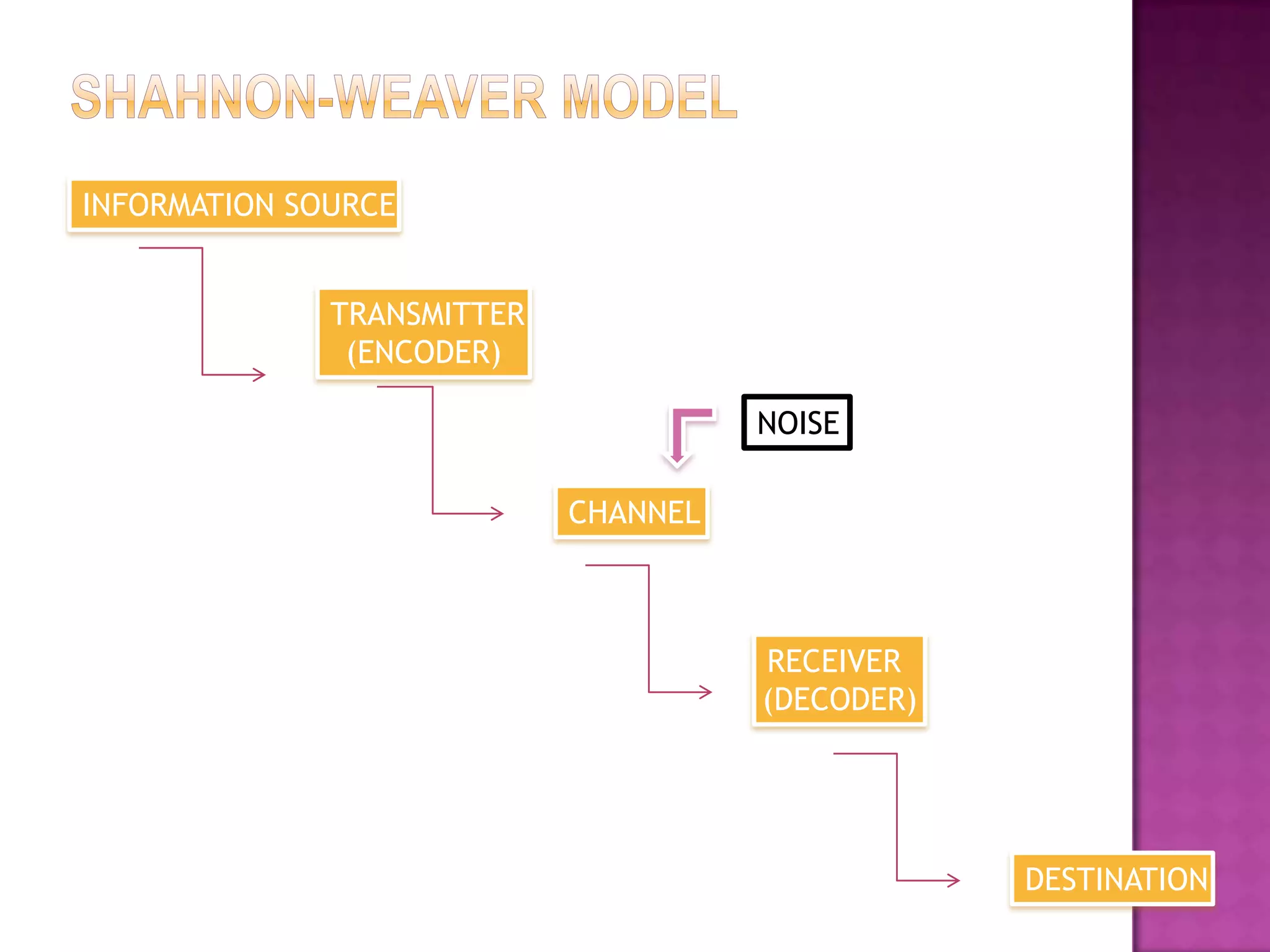
SHAHNON-WEAVER
MODEL
SPEAKER

MESSAGE

LISTENER
INFORMATION SOURCE
TRANSMITTER
(ENCODER)
NOISE
CHANNEL

RECEIVER
(DECODER)

DESTINATION
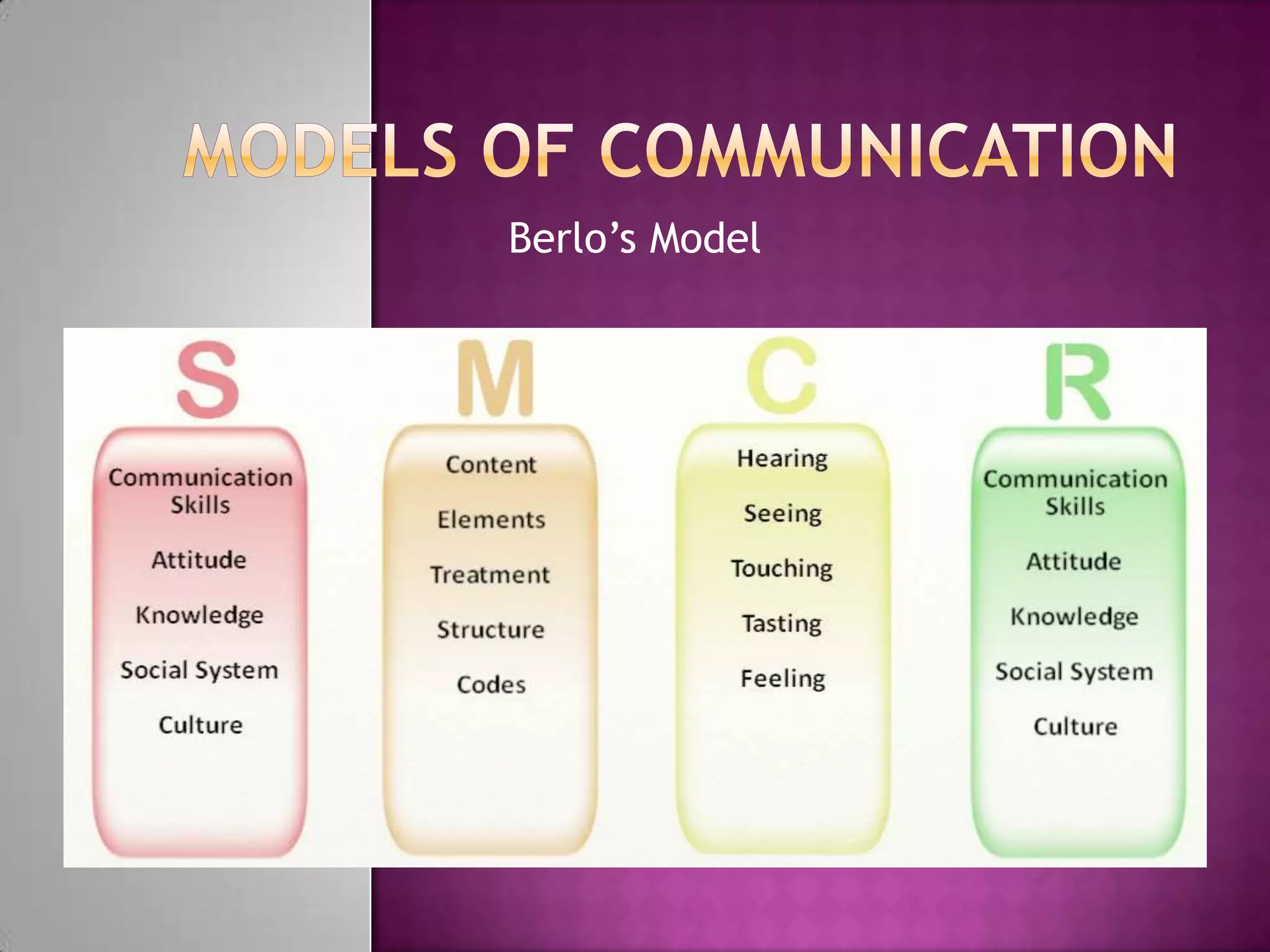
Berlo’s Model
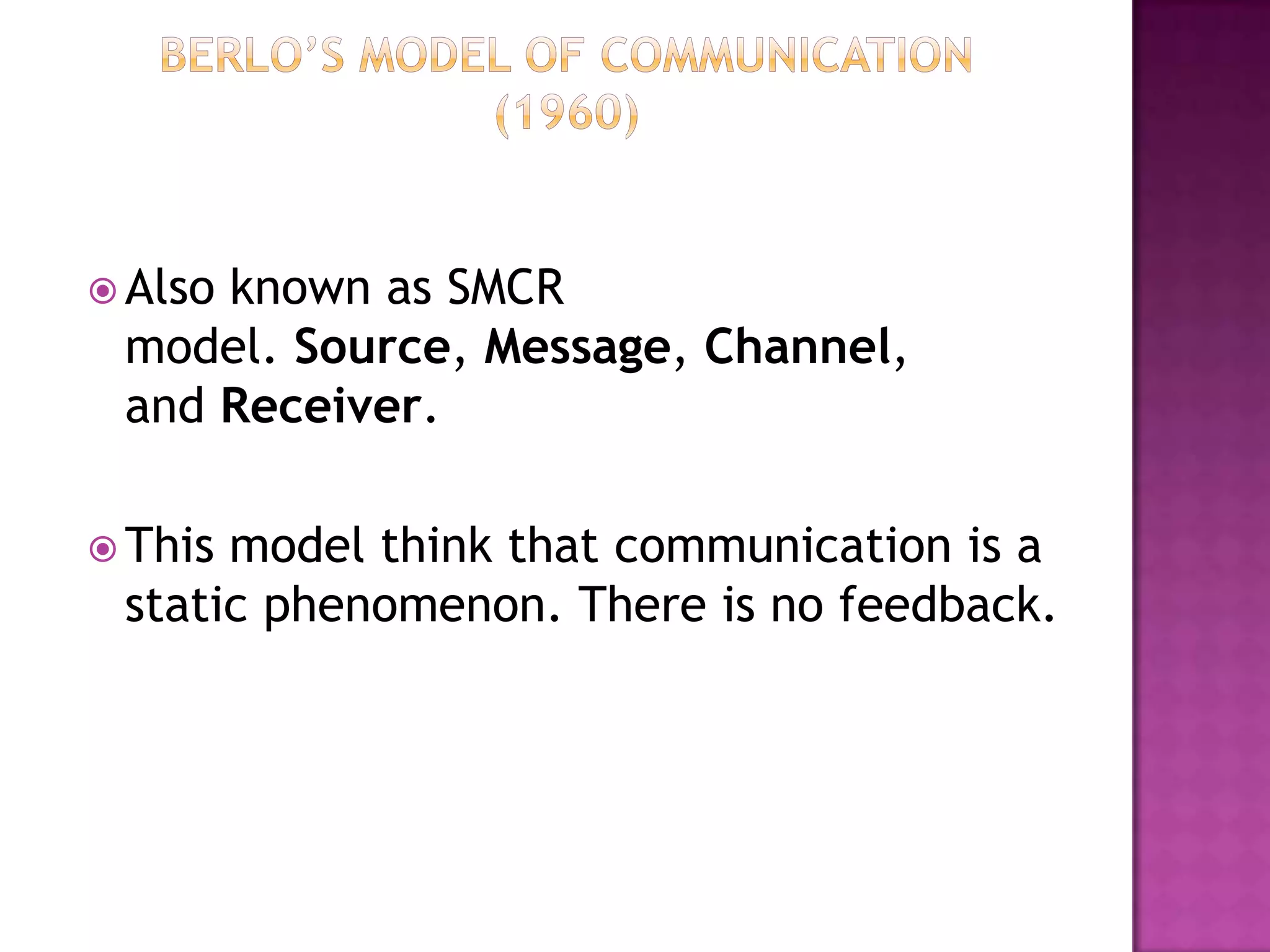
 Also

known as SMCR
model. Source, Message, Channel,
and Receiver.

 This

model think that communication is a
static phenomenon. There is no feedback.
Criticism of Berlo’s Model of Communication:
No feedback / don’t know about the effect
 Does not mention barriers to communication
 No room for noise
 Complex model
 It is a linear model of communication
 Needs people to be on same level for
communication to occur but not true in real life
 Main drawback of the model is that the model
omits the usage of sixth sense as a channel
which is actually a gift to the human beings
(thinking, understanding, analyzing etc).

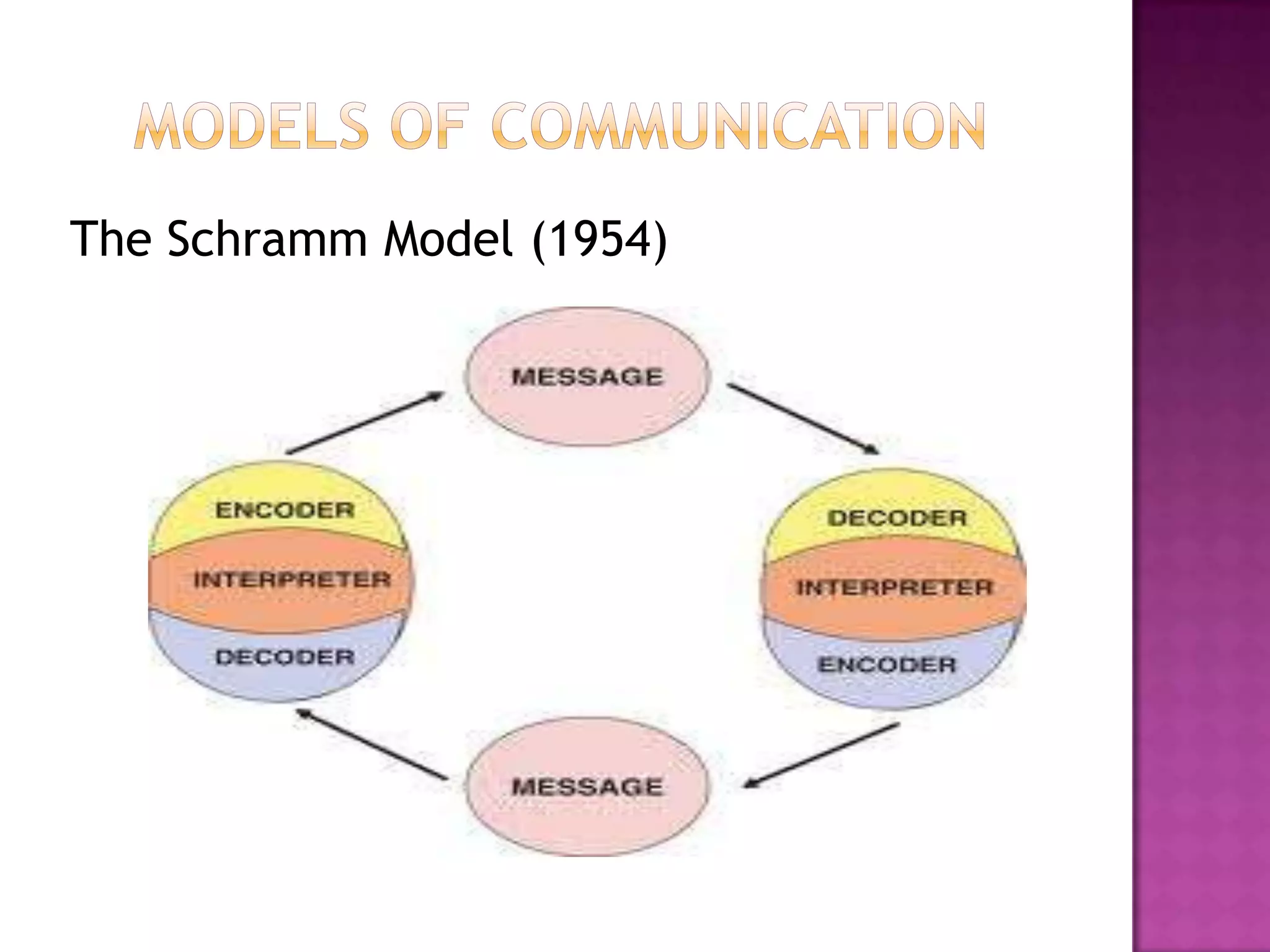
The Schramm Model (1954)
The Schramm Model


Encoder – Who does encoding or Sends the
message (message originates)



Decoder – Who receives the message



Interpreter – Person trying to understand
(analyses, perceive) or interpret











Advantage of Schramm model of communication
Dynamic model- Shows how a situation can change
It shows why redundancy is an essential part
There is no separate sender and receiver, sender and
receiver is the same person
Assume communication to be circular in nature
Feedback – central feature.

Disadvantage of Schramm model of communication
This model does not talk about semantic noise and it
assume the moment of encoding and decoding.
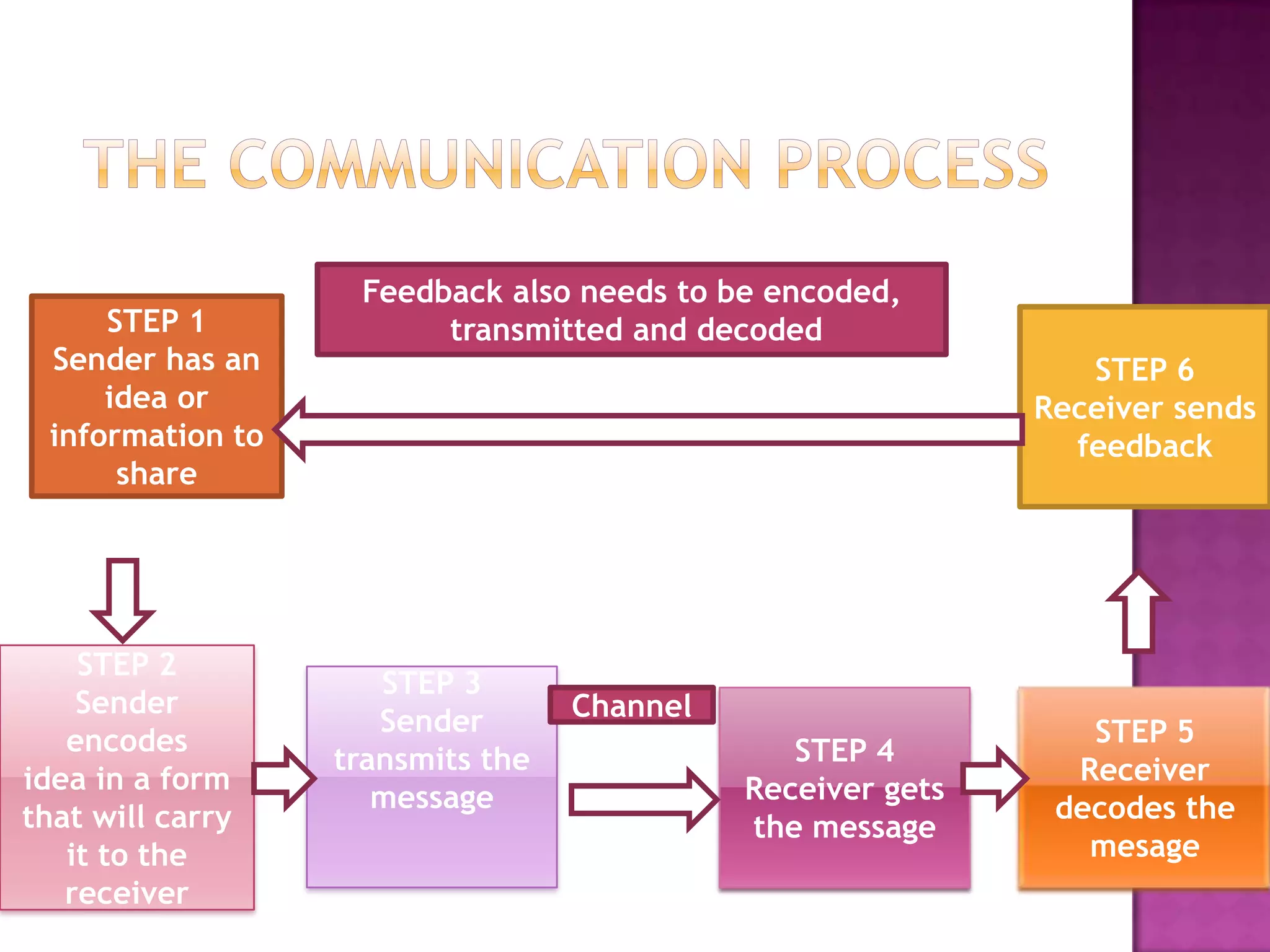
STEP 1
Sender has an
idea or
information to
share

STEP 2
Sender
encodes
idea in a form
that will carry
it to the
receiver

Feedback also needs to be encoded,
transmitted and decoded
STEP 6
Receiver sends
feedback

STEP 3
Sender
transmits the
message

Channel
STEP 4
Receiver gets
the message

STEP 5
Receiver
decodes the
mesage
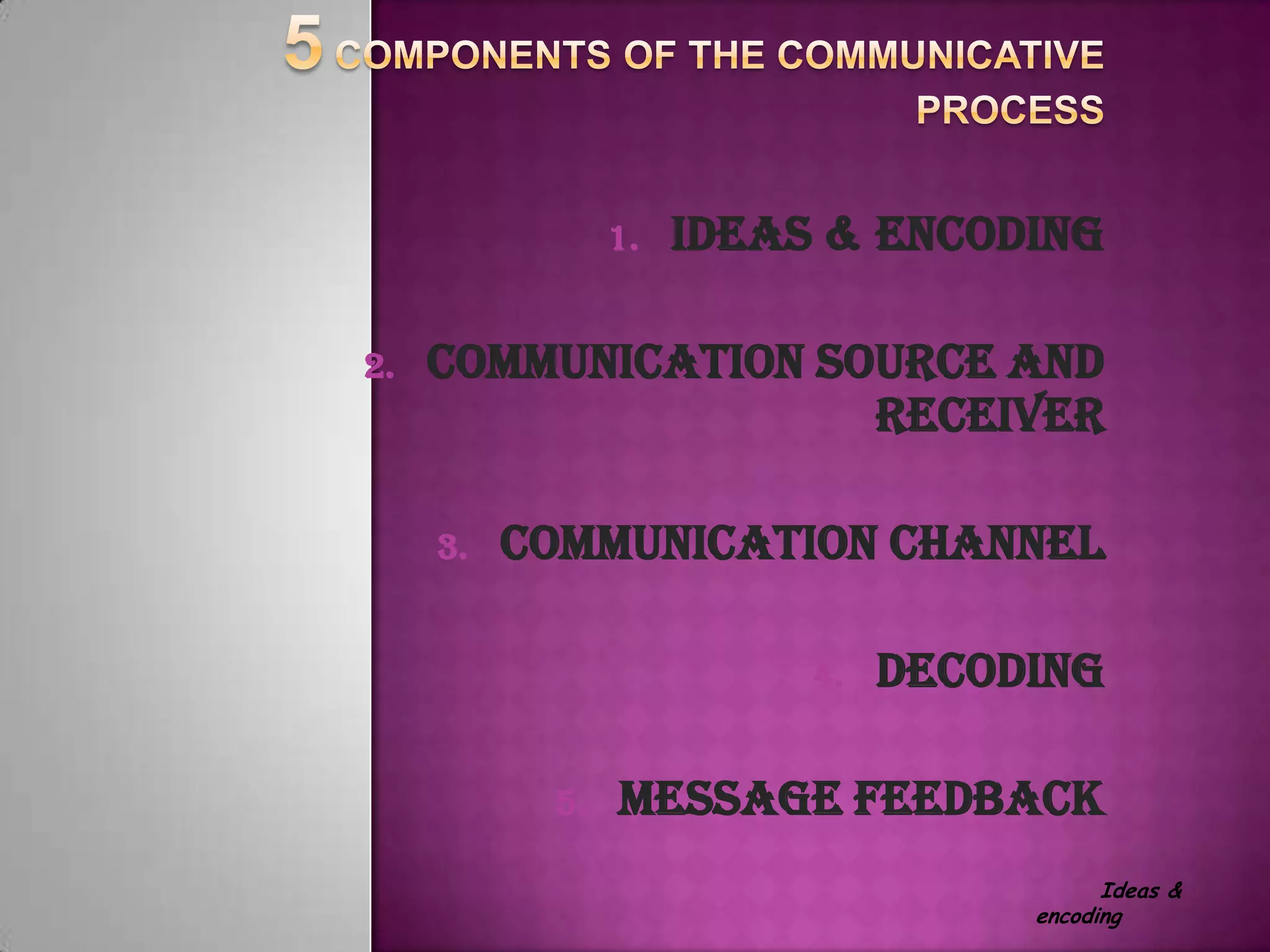
1.
2.

Ideas & encoding

Communication source and
receiver
3.

Communication channel
4.
5.

Decoding

Message feedback
Ideas &
encoding


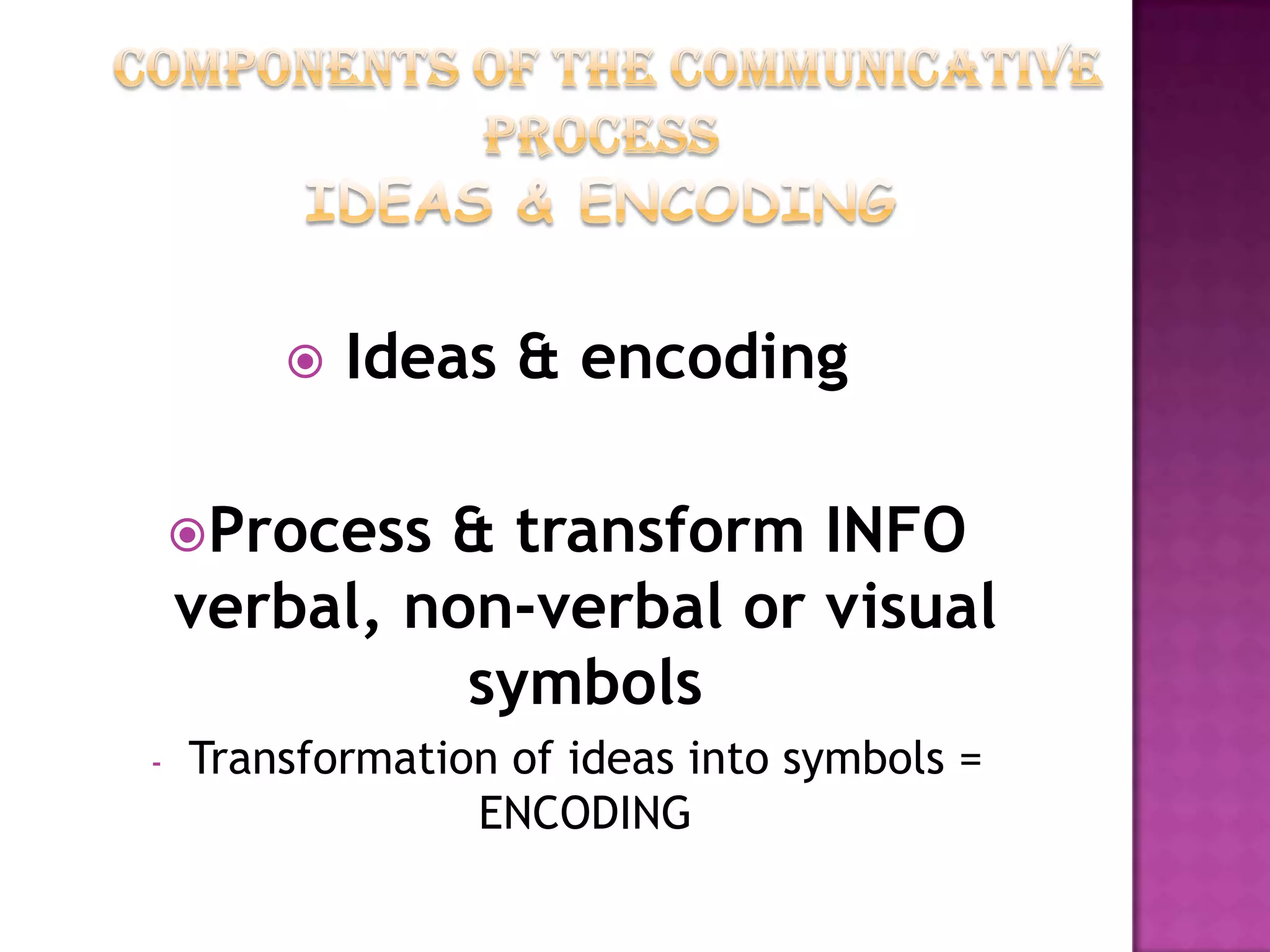
Ideas & encoding

Process

& transform INFO
verbal, non-verbal or visual
symbols

-

Transformation of ideas into symbols =
ENCODING
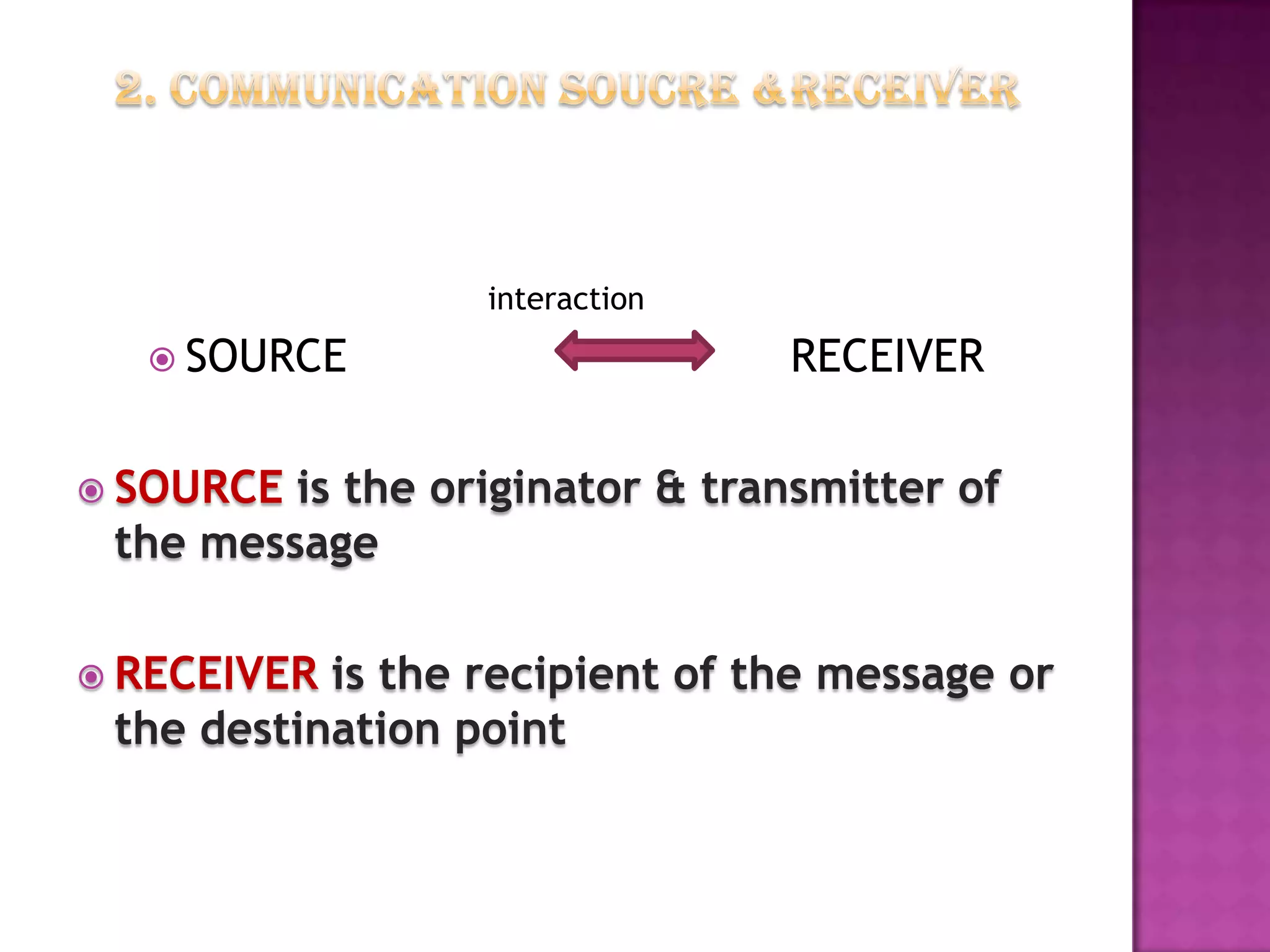
interaction

 SOURCE

RECEIVER

 SOURCE

is the originator & transmitter of
the message

 RECEIVER

is the recipient of the message or
the destination point
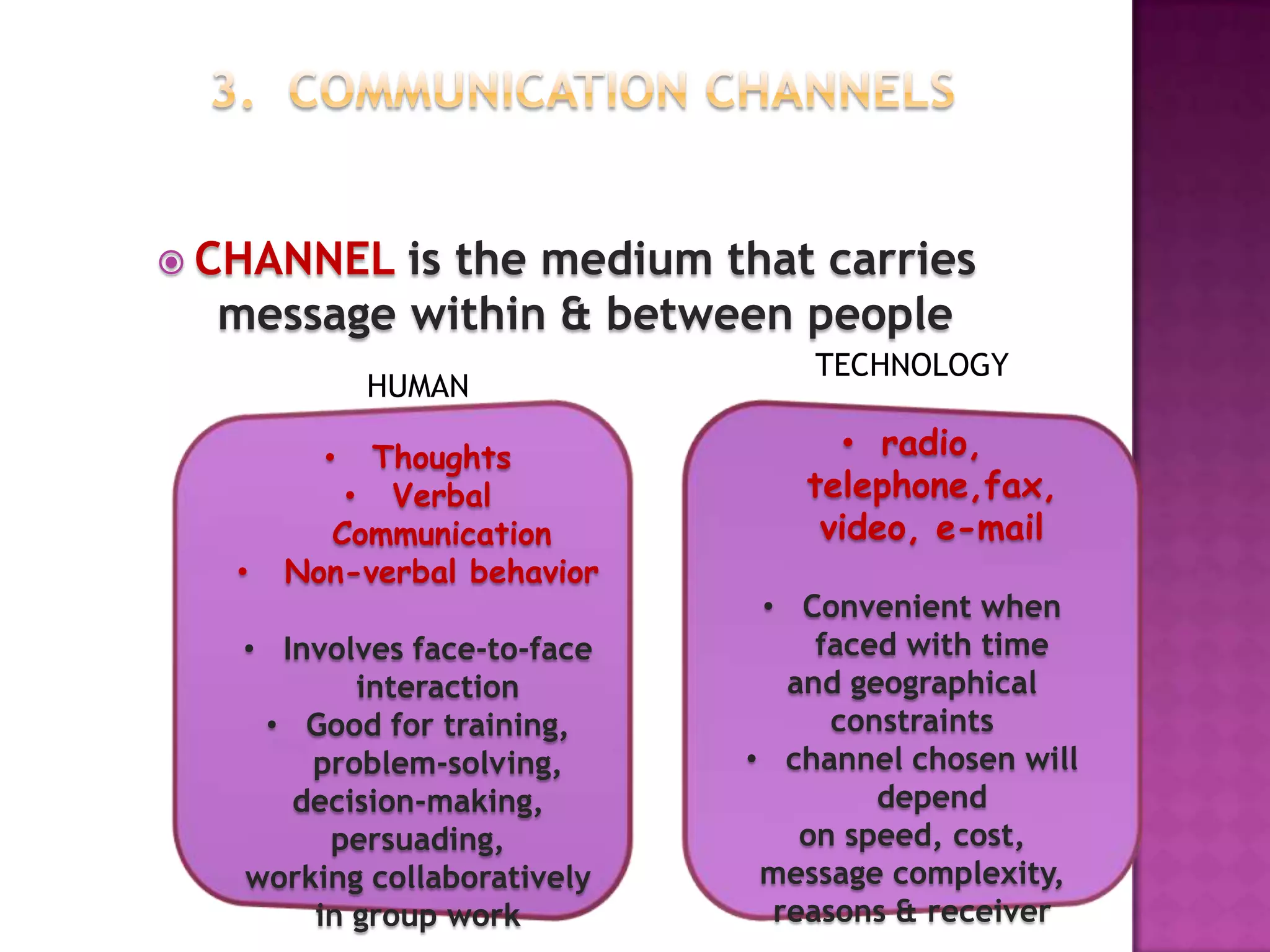
 CHANNEL

is the medium that carries
message within & between people
HUMAN
Thoughts
• Verbal
Communication
Non-verbal behavior
•

•

• Involves face-to-face
interaction
• Good for training,
problem-solving,
decision-making,
persuading,
working collaboratively
in group work

TECHNOLOGY

• radio,
telephone,fax,
video, e-mail
• Convenient when
faced with time
and geographical
constraints
• channel chosen will
depend
on speed, cost,
message complexity,
reasons & receiver
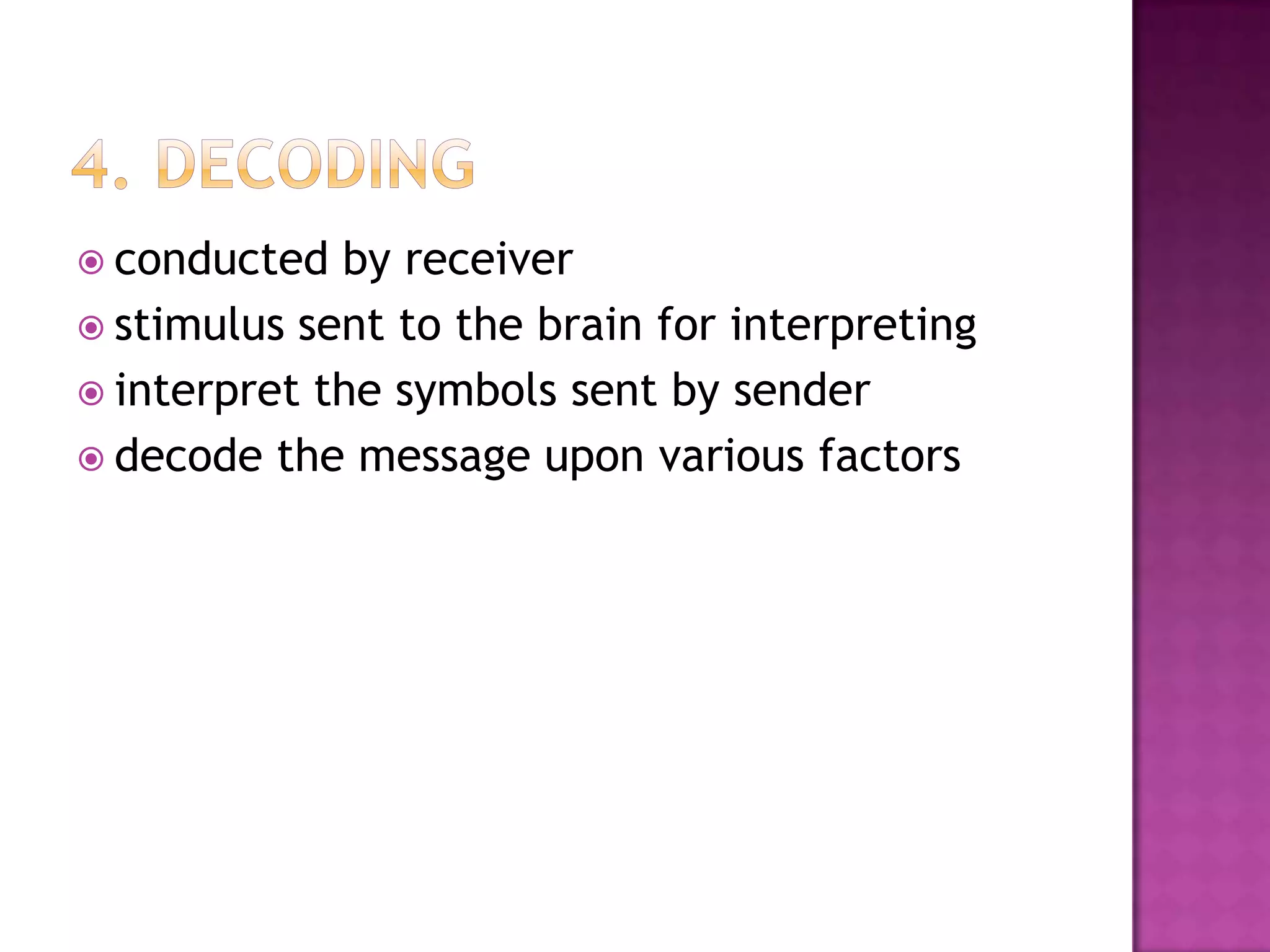
 conducted

by receiver
 stimulus sent to the brain for interpreting
 interpret the symbols sent by sender
 decode the message upon various factors
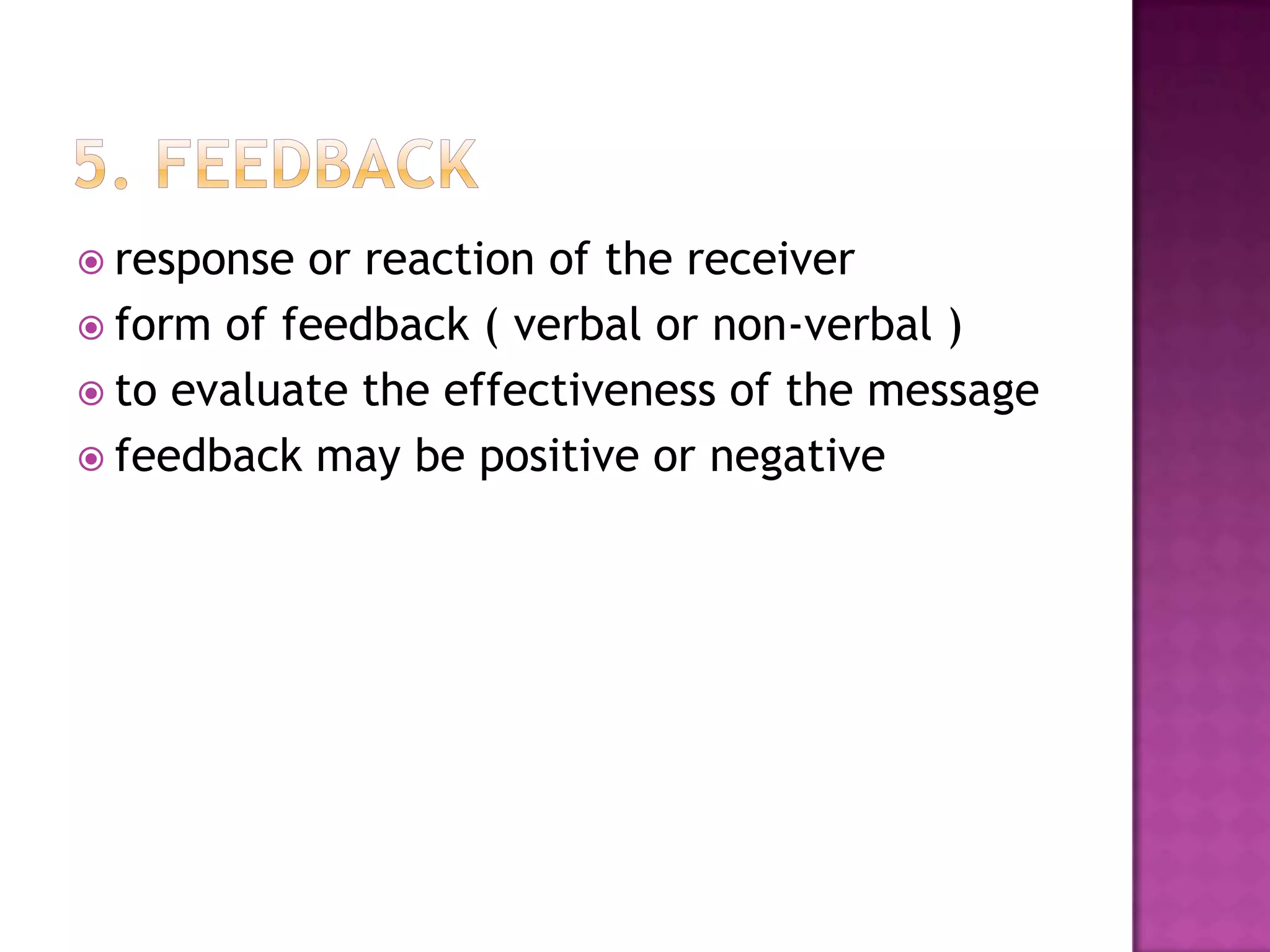
 response

or reaction of the receiver
 form of feedback ( verbal or non-verbal )
 to evaluate the effectiveness of the message
 feedback may be positive or negative

Introduction to communication

  • 1.
  • 2.
  • 3.
  • 4.
  • 5.
  • 6.
  • 7.
  • 8.
     Also known asSMCR model. Source, Message, Channel, and Receiver.  This model think that communication is a static phenomenon. There is no feedback.
  • 9.
    Criticism of Berlo’sModel of Communication: No feedback / don’t know about the effect  Does not mention barriers to communication  No room for noise  Complex model  It is a linear model of communication  Needs people to be on same level for communication to occur but not true in real life  Main drawback of the model is that the model omits the usage of sixth sense as a channel which is actually a gift to the human beings (thinking, understanding, analyzing etc). 
  • 10.
  • 11.
    The Schramm Model  Encoder– Who does encoding or Sends the message (message originates)  Decoder – Who receives the message  Interpreter – Person trying to understand (analyses, perceive) or interpret
  • 12.
            Advantage of Schrammmodel of communication Dynamic model- Shows how a situation can change It shows why redundancy is an essential part There is no separate sender and receiver, sender and receiver is the same person Assume communication to be circular in nature Feedback – central feature. Disadvantage of Schramm model of communication This model does not talk about semantic noise and it assume the moment of encoding and decoding.
  • 13.
    STEP 1 Sender hasan idea or information to share STEP 2 Sender encodes idea in a form that will carry it to the receiver Feedback also needs to be encoded, transmitted and decoded STEP 6 Receiver sends feedback STEP 3 Sender transmits the message Channel STEP 4 Receiver gets the message STEP 5 Receiver decodes the mesage
  • 14.
    1. 2. Ideas & encoding Communicationsource and receiver 3. Communication channel 4. 5. Decoding Message feedback Ideas & encoding
  • 15.
     Ideas & encoding Process &transform INFO verbal, non-verbal or visual symbols - Transformation of ideas into symbols = ENCODING
  • 16.
    interaction  SOURCE RECEIVER  SOURCE isthe originator & transmitter of the message  RECEIVER is the recipient of the message or the destination point
  • 17.
     CHANNEL is themedium that carries message within & between people HUMAN Thoughts • Verbal Communication Non-verbal behavior • • • Involves face-to-face interaction • Good for training, problem-solving, decision-making, persuading, working collaboratively in group work TECHNOLOGY • radio, telephone,fax, video, e-mail • Convenient when faced with time and geographical constraints • channel chosen will depend on speed, cost, message complexity, reasons & receiver
  • 18.
     conducted by receiver stimulus sent to the brain for interpreting  interpret the symbols sent by sender  decode the message upon various factors
  • 19.
     response or reactionof the receiver  form of feedback ( verbal or non-verbal )  to evaluate the effectiveness of the message  feedback may be positive or negative