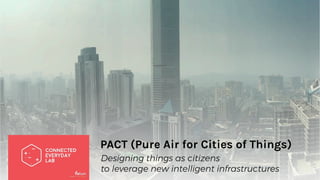
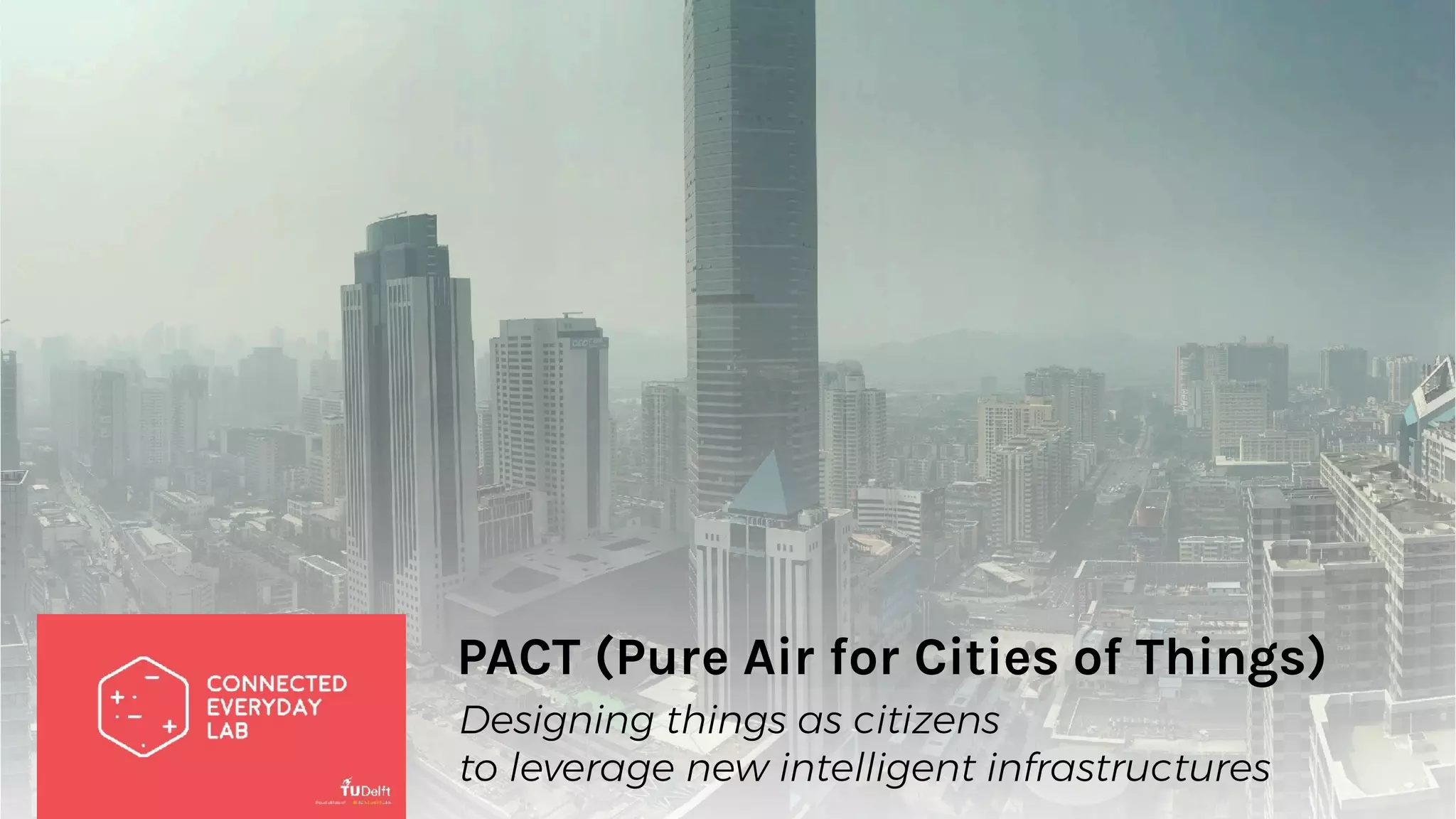
PACT (Pure Air for Cities of Things)
Designing things as citizens
to leverage new intelligent infrastructures
Partners
in research
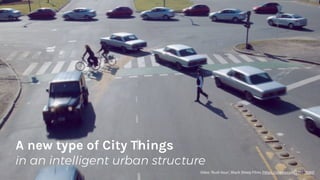
A new type of City Things
in an intelligent urban structure
Video ‘Rush hour’, Black Sheep Films (https://vimeo.com/106226560)
Things will be citizens too
With AI/ML,
things become intelligent nodes in the smart city…
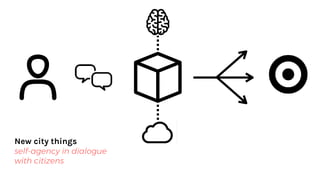
New city things
self-agency in dialogue
with citizens
research
questions
What defines an object with agency in the urban
context?
How independent of humans should things operate
within an intelligent urban infrastructure?
How should citizens and things operate next to each
other in the city?
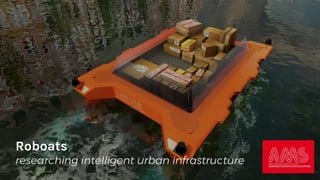
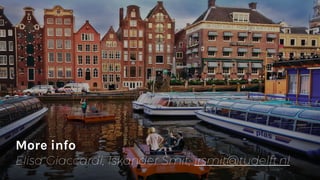
Roboats
researching intelligent urban infrastructure
Roboat
research subject
and demonstrator
A special connection will be made with the Roboat project
of Amsterdam Institute of Advanced Metropolitan
Solutions (AMS).
Roboat can function as an excellent testbed for
researching how and when an autonomous fleet of boats
should take agency as part of an intelligent urban
infrastructure. These experiments could also provide for
excellent demonstrators.
It would be interesting to investigate if we can develop use
cases for the Roboat project based on the outcomes of
PACT, and vice versa if insights on intelligent and adaptive
behaviour can contribute to the PACT research questions
on the role of intelligent things in intelligent urban
infrastructures.
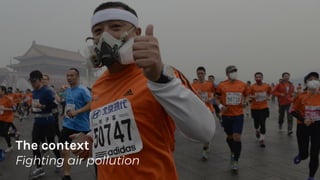
The context
Fighting air pollution
Clean air prevents non-communicable diseases and reduces
disease risks among women and vulnerable groups, including
children and the elderly (WHO Europe).
But it is also becoming a legal requirement (UK Clear Air Act
1993) with growing impact on businesses.
In the case of Amsterdam, estimating air pollution solely on
vehicular traffic only accounts for a maximum of 25% of
airborne pollution (TNO, 2015).
Even if we were to plant a few million of new trees, it will lower
the baseline pollution but will not react to a peak of pollution.
The proposed approach represents a paradigm shift in
catalysis from efficiency to capacity, from concentrated
production to distributed production.
Not only in China
In Amsterdam too…
11
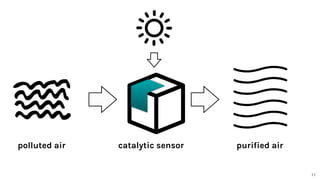
polluted air purified aircatalytic sensor
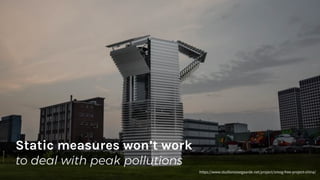
Static measures won’t work
to deal with peak pollutions
https://www.studioroosegaarde.net/project/smog-free-project-china/
We will use catalytic sensors targeting specifically Nitrogen
Oxides (NOx) and Carbon Dioxide (CO2) and low-cost coating
for photocatalytic reaction to both UV- and white light.
The system for communication between the objects will be
open standard, available for citizen improvements.
Open standards
for sustainable
functioning
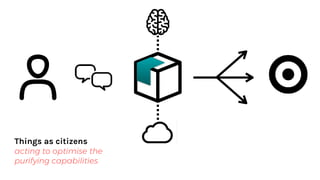
Things as citizens
acting to optimise the
purifying capabilities
Novel models
and tools
for intelligent
actuation
PACT (Pure Air for Cities of Things) aims to develop novel
methods and tools for understanding and demonstrating
how intelligent things can act in concert with people and
connect to existing data and cloud services.
The project will use the context of urban air purification
as a concrete and relevant case but results are expected to
be applicable also to other contexts (energy production,
circular economies, mobility etc.)
More info
Elisa Giaccardi, Iskander Smit; irsmit@tudelft.nl

Introducting PACT at Open IoT event

  • 1.
    PACT (Pure Airfor Cities of Things) Designing things as citizens to leverage new intelligent infrastructures
  • 2.
  • 3.
    A new typeof City Things in an intelligent urban structure Video ‘Rush hour’, Black Sheep Films (https://vimeo.com/106226560)
  • 4.
    Things will becitizens too With AI/ML, things become intelligent nodes in the smart city…
  • 5.
    New city things self-agencyin dialogue with citizens
  • 6.
    research questions What defines anobject with agency in the urban context? How independent of humans should things operate within an intelligent urban infrastructure? How should citizens and things operate next to each other in the city?
  • 7.
  • 8.
    Roboat research subject and demonstrator Aspecial connection will be made with the Roboat project of Amsterdam Institute of Advanced Metropolitan Solutions (AMS). Roboat can function as an excellent testbed for researching how and when an autonomous fleet of boats should take agency as part of an intelligent urban infrastructure. These experiments could also provide for excellent demonstrators. It would be interesting to investigate if we can develop use cases for the Roboat project based on the outcomes of PACT, and vice versa if insights on intelligent and adaptive behaviour can contribute to the PACT research questions on the role of intelligent things in intelligent urban infrastructures.
  • 9.
  • 10.
    Clean air preventsnon-communicable diseases and reduces disease risks among women and vulnerable groups, including children and the elderly (WHO Europe). But it is also becoming a legal requirement (UK Clear Air Act 1993) with growing impact on businesses. In the case of Amsterdam, estimating air pollution solely on vehicular traffic only accounts for a maximum of 25% of airborne pollution (TNO, 2015). Even if we were to plant a few million of new trees, it will lower the baseline pollution but will not react to a peak of pollution. The proposed approach represents a paradigm shift in catalysis from efficiency to capacity, from concentrated production to distributed production. Not only in China In Amsterdam too…
  • 11.
    11 polluted air purifiedaircatalytic sensor
  • 12.
    Static measures won’twork to deal with peak pollutions https://www.studioroosegaarde.net/project/smog-free-project-china/
  • 13.
    We will usecatalytic sensors targeting specifically Nitrogen Oxides (NOx) and Carbon Dioxide (CO2) and low-cost coating for photocatalytic reaction to both UV- and white light. The system for communication between the objects will be open standard, available for citizen improvements. Open standards for sustainable functioning
  • 14.
    Things as citizens actingto optimise the purifying capabilities
  • 15.
    Novel models and tools forintelligent actuation PACT (Pure Air for Cities of Things) aims to develop novel methods and tools for understanding and demonstrating how intelligent things can act in concert with people and connect to existing data and cloud services. The project will use the context of urban air purification as a concrete and relevant case but results are expected to be applicable also to other contexts (energy production, circular economies, mobility etc.)
  • 16.
    More info Elisa Giaccardi,Iskander Smit; irsmit@tudelft.nl