pfSense Hang Out
April 2014
Introduction to Multi-WAN
Project News
● Two new hardware platforms in stock at
store.pfsense.org
○ APU (VK-T40E2) - ALIX successor, AMD T40E
CPU, 2 GB RAM, 8 GB SanDisk SDHC card, 3
gigabit Realtek NICs
○ C2758 - Rangeley Atom 8 core, 8 GB RAM, 80 GB
SATA-3 SSD, 4 gigabit Intel NICs, 1U rack mount
● Support included with these new platforms
Heartbleed vulnerability
● OpenSSL security vulnerability leading to
disclosure of memory contents
● Affects pfSense versions 2.1 and 2.1.1
○ For components in base system - some 2.0.x
packages potentially impacted
○ Doesn’t mean you need not upgrade 2.0x and 1.x
systems
Heartbleed vulnerability
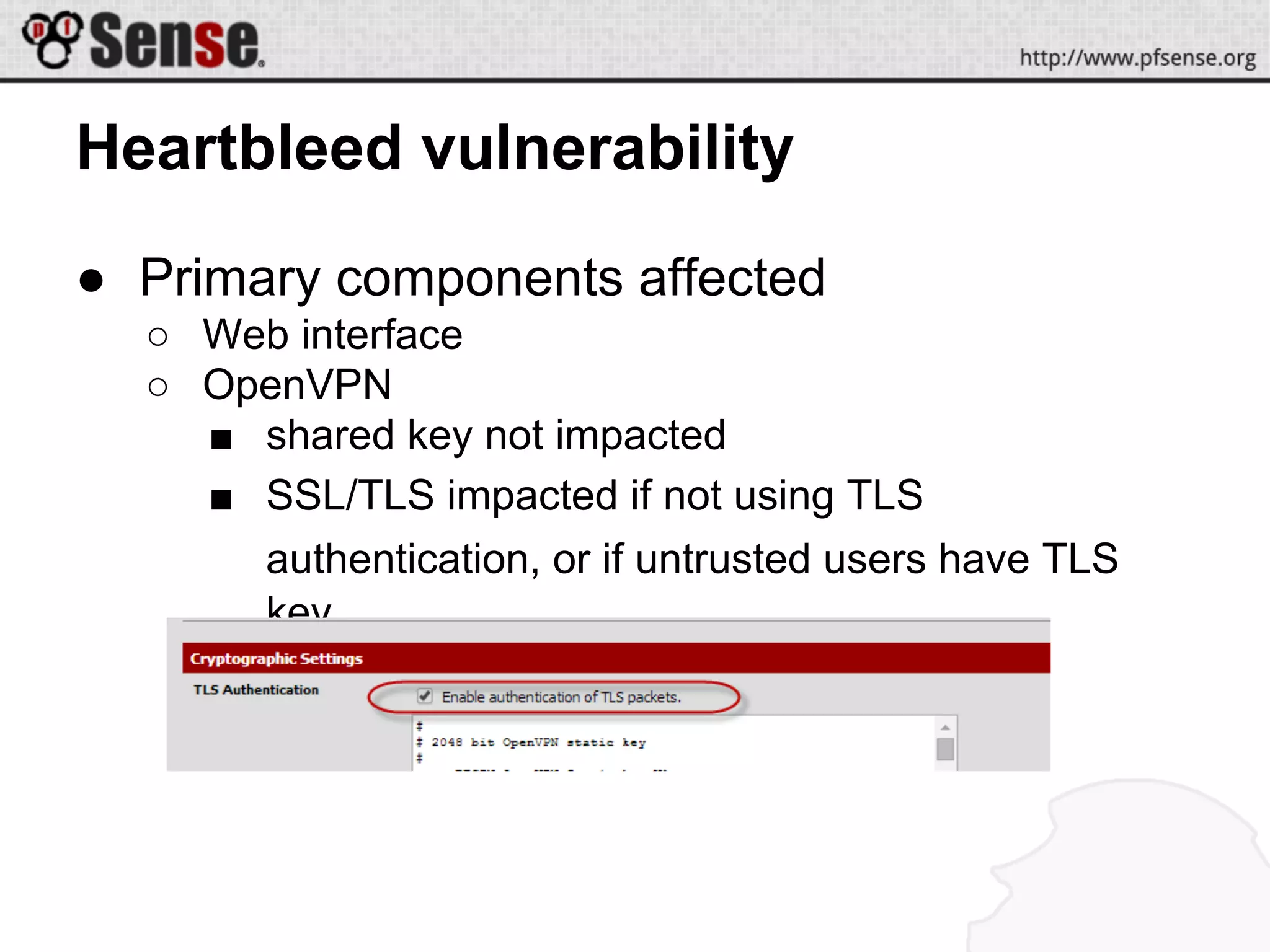
● Primary components affected
○ Web interface
○ OpenVPN
■ shared key not impacted
■ SSL/TLS impacted if not using TLS
authentication, or if untrusted users have TLS
key
Heartbleed vulnerability
● Other impacted components
○ Some packages dependent on OpenSSL
● Recommended remediation
○ Upgrade to 2.1.2
■ WARNING: Upgrade AutoConfigBackup package
first
○ Consider re-issuing keys
Heartbleed vulnerability
● Non-pfSense related things
○ Check all HTTPS servers
■ https://filippo.io/Heartbleed/
○ Revoke and re-issue trusted SSL certificates after
patching
○ Check with vendors of other products on applicability
Multi-WAN Goals and Strategies
● Redundancy
● Bandwidth aggregation
● Segregation of priority services
Choosing Internet connectivity
● Cable paths
● Paths to the Internet
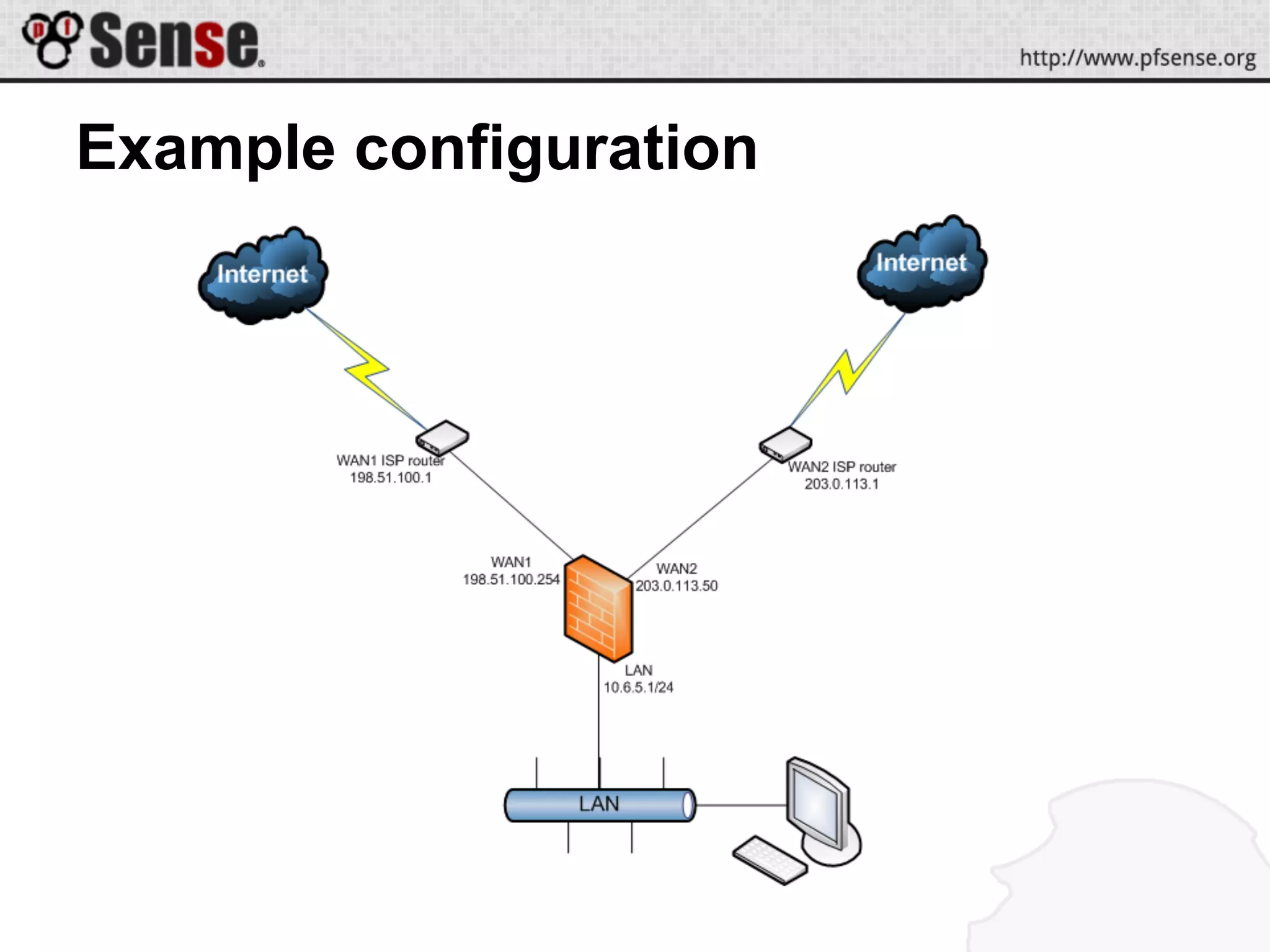
Example configuration
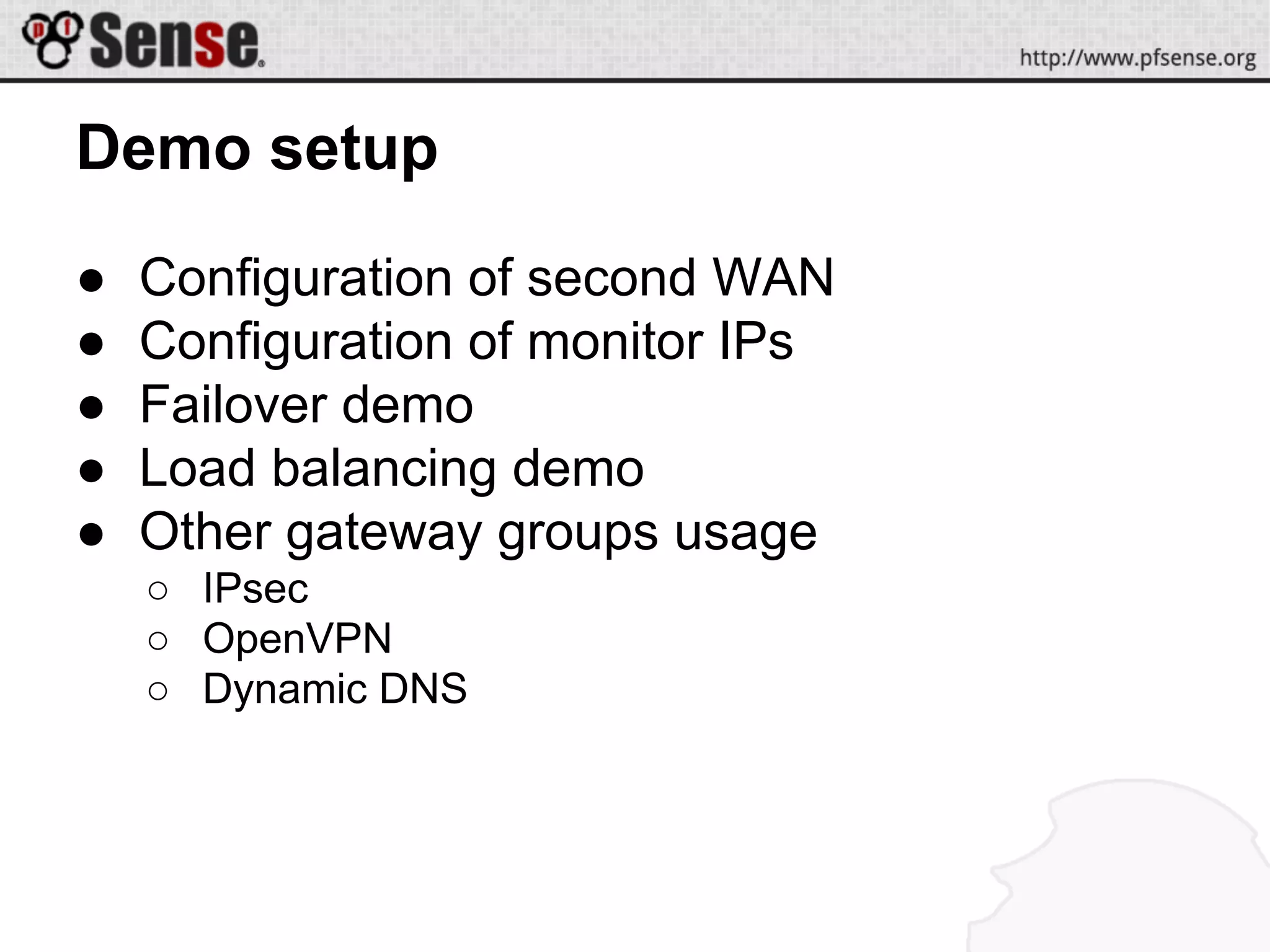
Demo setup
● Configuration of second WAN
● Configuration of monitor IPs
● Failover demo
● Load balancing demo
● Other gateway groups usage
○ IPsec
○ OpenVPN
○ Dynamic DNS
Demo - NAT and Multi-WAN
● Port forward example
● 1:1 NAT example
● Outbound NAT example
Demo - Advanced Options
● Gateway advanced options
● System>Advanced options
○ Allow default gateway switching
○ State Killing on Gateway Failure
○ Skip rules when gateway is down
Troubleshooting
● Verify rule configuration
● Failover not working
○ Check Status>Gateways
○ Verify monitor IPs
● Load balancing not working
○ Validate testing methodology
○ Have appropriate expectations
Questions?
Thanks for attending!
Comments, suggestions, etc. welcome to
gold@pfsense.org

Intro to Multi-WAN - pfSense Hangout April 2014

  • 1.
    pfSense Hang Out April2014 Introduction to Multi-WAN
  • 2.
    Project News ● Twonew hardware platforms in stock at store.pfsense.org ○ APU (VK-T40E2) - ALIX successor, AMD T40E CPU, 2 GB RAM, 8 GB SanDisk SDHC card, 3 gigabit Realtek NICs ○ C2758 - Rangeley Atom 8 core, 8 GB RAM, 80 GB SATA-3 SSD, 4 gigabit Intel NICs, 1U rack mount ● Support included with these new platforms
  • 3.
    Heartbleed vulnerability ● OpenSSLsecurity vulnerability leading to disclosure of memory contents ● Affects pfSense versions 2.1 and 2.1.1 ○ For components in base system - some 2.0.x packages potentially impacted ○ Doesn’t mean you need not upgrade 2.0x and 1.x systems
  • 4.
    Heartbleed vulnerability ● Primarycomponents affected ○ Web interface ○ OpenVPN ■ shared key not impacted ■ SSL/TLS impacted if not using TLS authentication, or if untrusted users have TLS key
  • 5.
    Heartbleed vulnerability ● Otherimpacted components ○ Some packages dependent on OpenSSL ● Recommended remediation ○ Upgrade to 2.1.2 ■ WARNING: Upgrade AutoConfigBackup package first ○ Consider re-issuing keys
  • 6.
    Heartbleed vulnerability ● Non-pfSenserelated things ○ Check all HTTPS servers ■ https://filippo.io/Heartbleed/ ○ Revoke and re-issue trusted SSL certificates after patching ○ Check with vendors of other products on applicability
  • 7.
    Multi-WAN Goals andStrategies ● Redundancy ● Bandwidth aggregation ● Segregation of priority services
  • 8.
    Choosing Internet connectivity ●Cable paths ● Paths to the Internet
  • 9.
  • 10.
    Demo setup ● Configurationof second WAN ● Configuration of monitor IPs ● Failover demo ● Load balancing demo ● Other gateway groups usage ○ IPsec ○ OpenVPN ○ Dynamic DNS
  • 11.
    Demo - NATand Multi-WAN ● Port forward example ● 1:1 NAT example ● Outbound NAT example
  • 12.
    Demo - AdvancedOptions ● Gateway advanced options ● System>Advanced options ○ Allow default gateway switching ○ State Killing on Gateway Failure ○ Skip rules when gateway is down
  • 13.
    Troubleshooting ● Verify ruleconfiguration ● Failover not working ○ Check Status>Gateways ○ Verify monitor IPs ● Load balancing not working ○ Validate testing methodology ○ Have appropriate expectations
  • 14.
    Questions? Thanks for attending! Comments,suggestions, etc. welcome to gold@pfsense.org