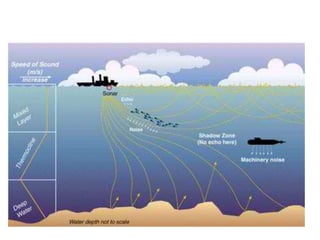
Speed of Sound
• Speed of sound
– Factors affecting speed of sound through water.
– Sound Velocity Profile
• Reflection
• Transmission loss
1
Hydrography Branch
National Mapping and Resource
Information Authority
LTJG KERWIN C FERRER
ENS DIONESIO C GATO JR
Hydrographic Survey Officers
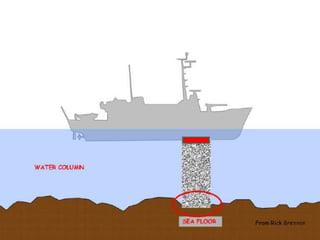
Depth = (T)(c)/2
T is sound wave travel time.
C is the speed of sound.
2
Hydrography Branch
National Mapping and Resource
Information Authority
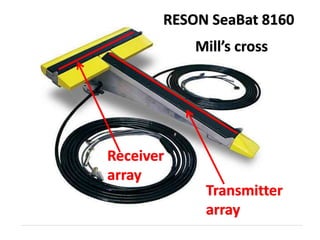
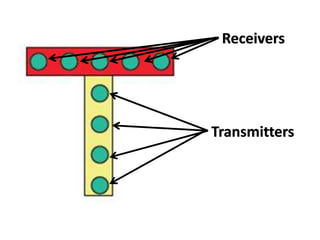
RESON SeaBat 8160
Transmitter
array
Receiver
array
Mill’s cross
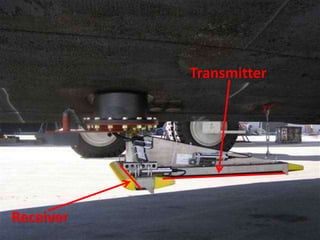
Transmitter
Receiver
Transmitters
Receivers
Speed of Sound
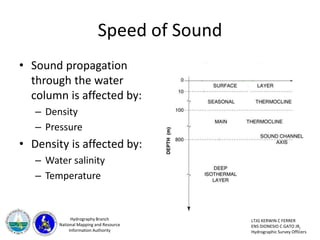
• Sound propagation
through the water
column is affected by:
– Density
– Pressure
• Density is affected by:
– Water salinity
– Temperature
7
Hydrography Branch
National Mapping and Resource
Information Authority
LTJG KERWIN C FERRER
ENS DIONESIO C GATO JR
Hydrographic Survey Officers
Speed of Sound
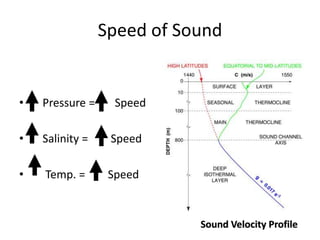
• Pressure = Speed
• Salinity = Speed
• Temp. = Speed
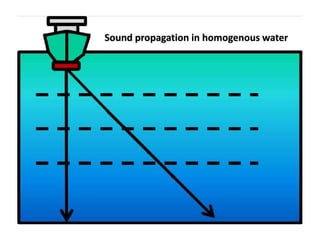
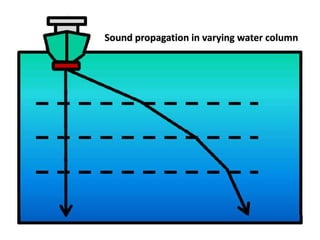
Sound Velocity Profile
Sound propagation in homogenous water
Sound propagation in varying water column
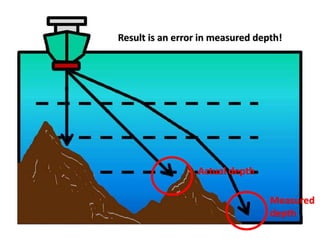
Measured
depth
Actual depth
Result is an error in measured depth!
Solution for Bathymetric Surveys
• To obtain the actual
depth of the seabed,
bathymetric system must
know the speed of sound
propagation for each
water column in the
survey area.
• Actual Sound Velocity
Profile of the survey area
must be determined.
13
Hydrography Branch
National Mapping and Resource
Information Authority
LTJG KERWIN C FERRER
ENS DIONESIO C GATO JR
Hydrographic Survey Officers
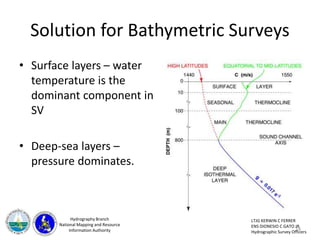
Solution for Bathymetric Surveys
• Surface layers – water
temperature is the
dominant component in
SV
• Deep-sea layers –
pressure dominates.
14
Hydrography Branch
National Mapping and Resource
Information Authority
LTJG KERWIN C FERRER
ENS DIONESIO C GATO JR
Hydrographic Survey Officers
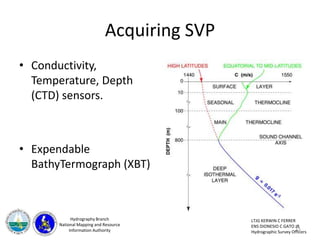
Acquiring SVP
• Conductivity,
Temperature, Depth
(CTD) sensors.
• Expendable
BathyTermograph (XBT)
15
Hydrography Branch
National Mapping and Resource
Information Authority
LTJG KERWIN C FERRER
ENS DIONESIO C GATO JR
Hydrographic Survey Officers
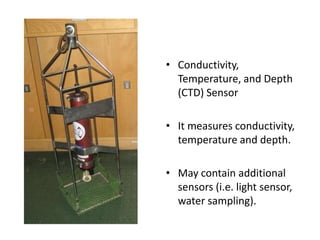
• Conductivity,
Temperature, and Depth
(CTD) Sensor
• It measures conductivity,
temperature and depth.
• May contain additional
sensors (i.e. light sensor,
water sampling).
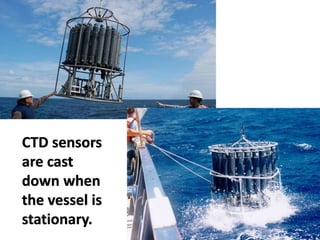
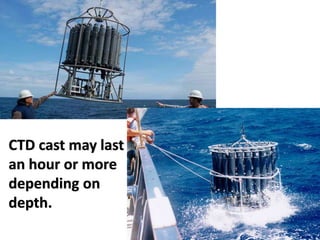
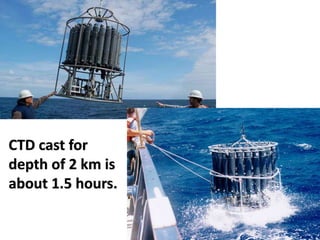
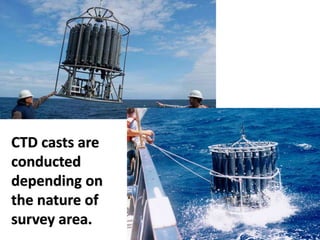
CTD sensors
are cast
down when
the vessel is
stationary.
CTD cast may last
an hour or more
depending on
depth.
CTD cast for
depth of 2 km is
about 1.5 hours.
CTD casts are
conducted
depending on
the nature of
survey area.
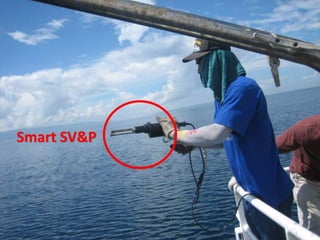
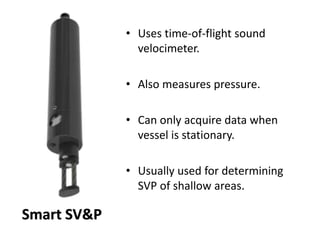
Smart SV&P
• Uses time-of-flight sound
velocimeter.
• Also measures pressure.
• Can only acquire data when
vessel is stationary.
• Usually used for determining
SVP of shallow areas.
Smart SV&P
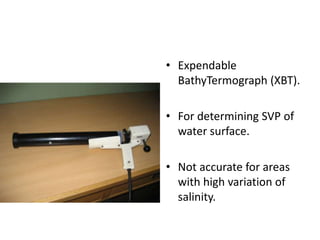
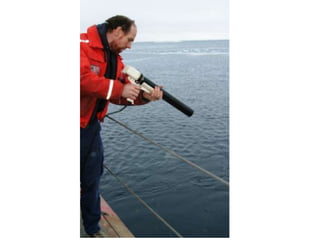
• Expendable
BathyTermograph (XBT).
• For determining SVP of
water surface.
• Not accurate for areas
with high variation of
salinity.
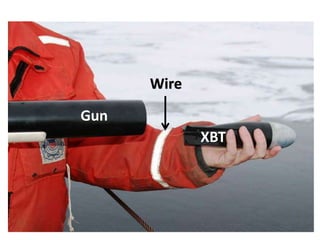
Gun
Wire
XBT
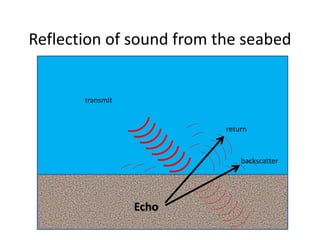
Reflection of sound from the seabed
transmit
return
backscatter
Echo
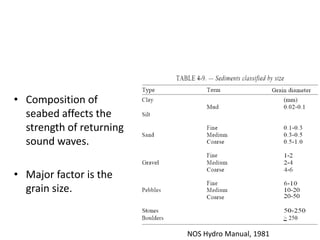
• Composition of
seabed affects the
strength of returning
sound waves.
• Major factor is the
grain size.
NOS Hydro Manual, 1981
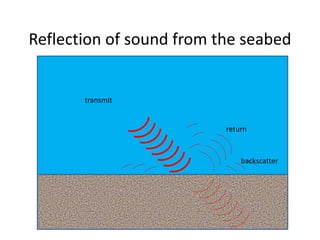
Reflection of sound from the seabed
transmit
return
backscatter
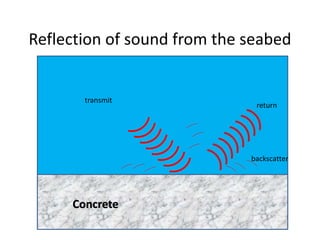
Reflection of sound from the seabed
transmit
Concrete
backscatter
return
Transmission Loss
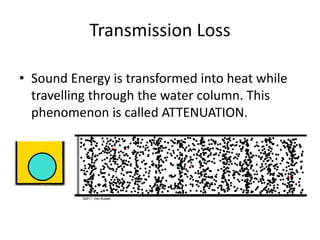
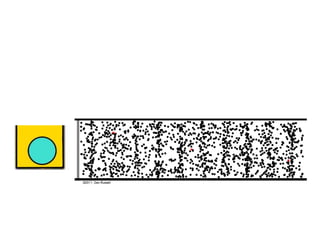
• Sound Energy is transformed into heat while
travelling through the water column. This
phenomenon is called ATTENUATION.
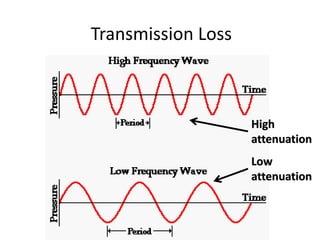
Transmission Loss
High
attenuation
Low
attenuation
2/12/2024
From Dr. Larry Mayer,
CCOM-UNH
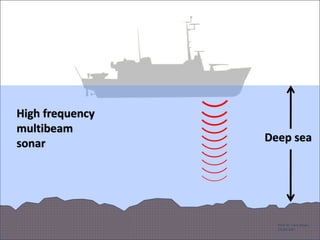
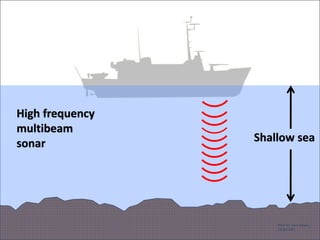
High frequency
multibeam
sonar Deep sea
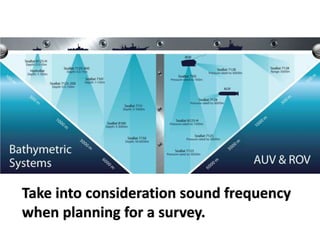
Take into consideration sound frequency
when planning for a survey.
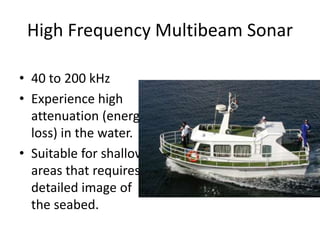
High Frequency Multibeam Sonar
• 40 to 200 kHz
• Experience high
attenuation (energy
loss) in the water.
• Suitable for shallow
areas that requires
detailed image of
the seabed.
2/12/2024
From Dr. Larry Mayer,
CCOM-UNH
High frequency
multibeam
sonar Shallow sea
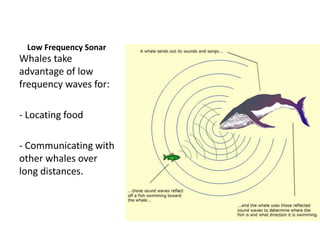
Low Frequency Sonar
Whales take
advantage of low
frequency waves for:
- Locating food
- Communicating with
other whales over
long distances.
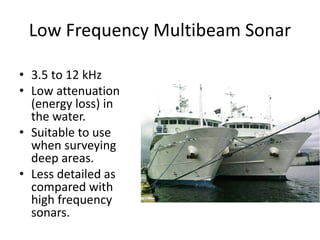
Low Frequency Multibeam Sonar
• 3.5 to 12 kHz
• Low attenuation
(energy loss) in
the water.
• Suitable to use
when surveying
deep areas.
• Less detailed as
compared with
high frequency
sonars.

Intro to Hydro survey part 2.pptx