Intro to HTML
Basic concepts to get you started
What is HTML?
• Stands for Hyper Text Markup Language
• HTML is a markup language that describes
the content of the document
• Comprised of HTML tags with plain text
Markup languages process and define the presentation of text by
using tags to specify code for formatting (layout and style).
Versions of HTML
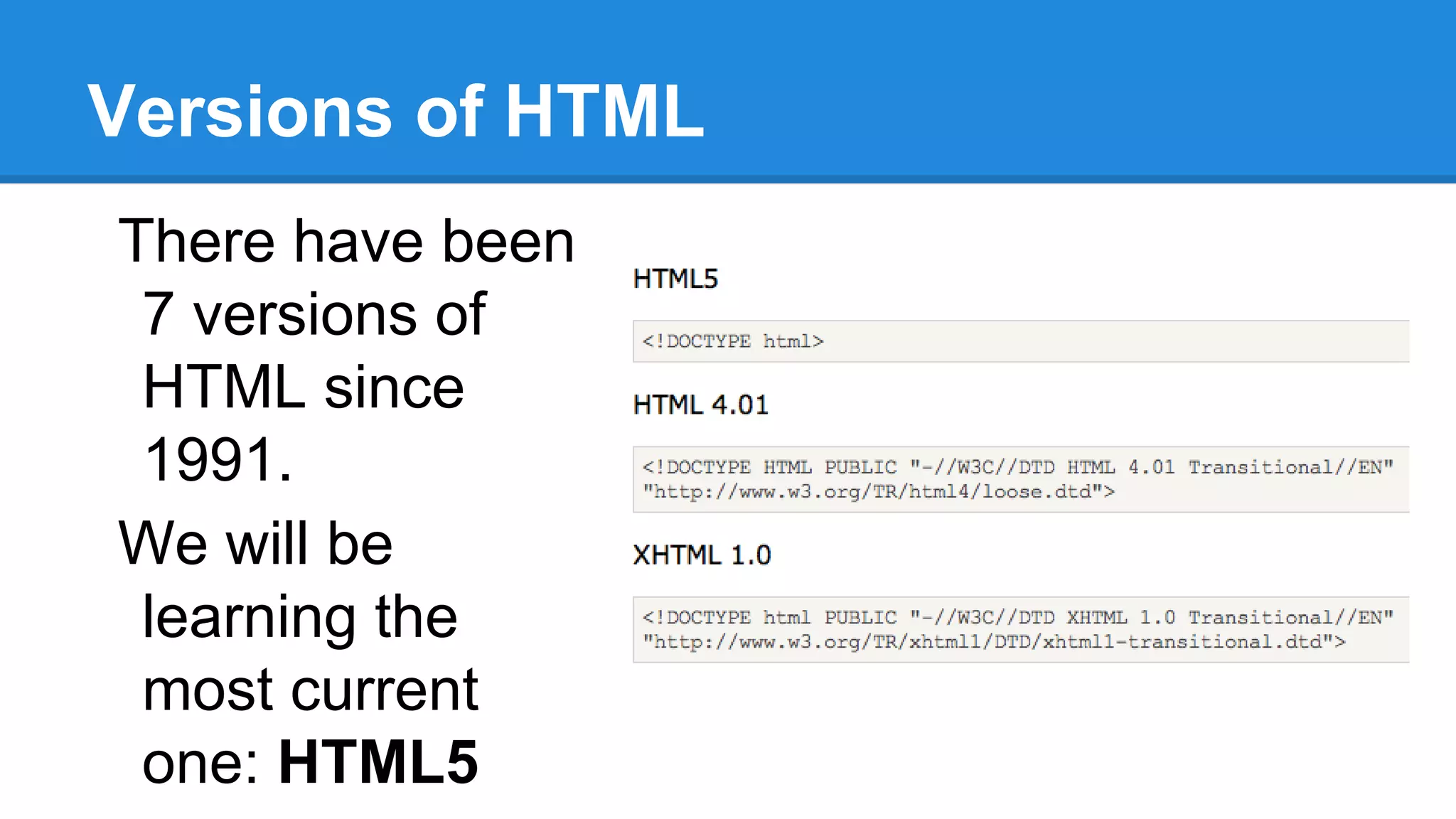
There have been
7 versions of
HTML since
1991.
We will be
learning the
most current
one: HTML5
Why the change? Who does this?
The standards of the web are determined by
The World Wide Web Consortium (W3C),
an international community of developers that
create web standards and help ensure long-
time growth of the web.
Lead by Tim Berners-Lee.
http://www.w3.org
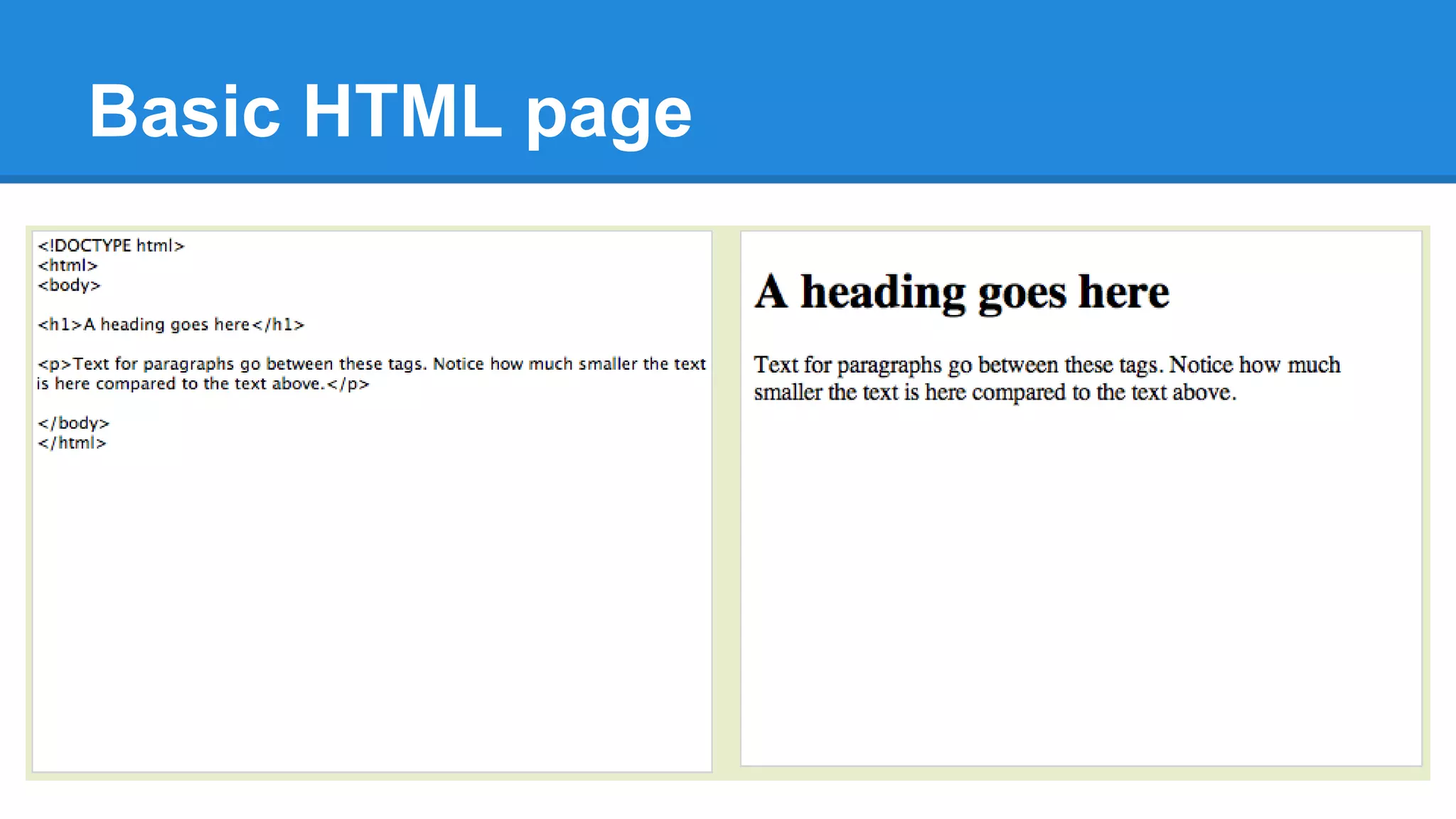
Basic HTML page
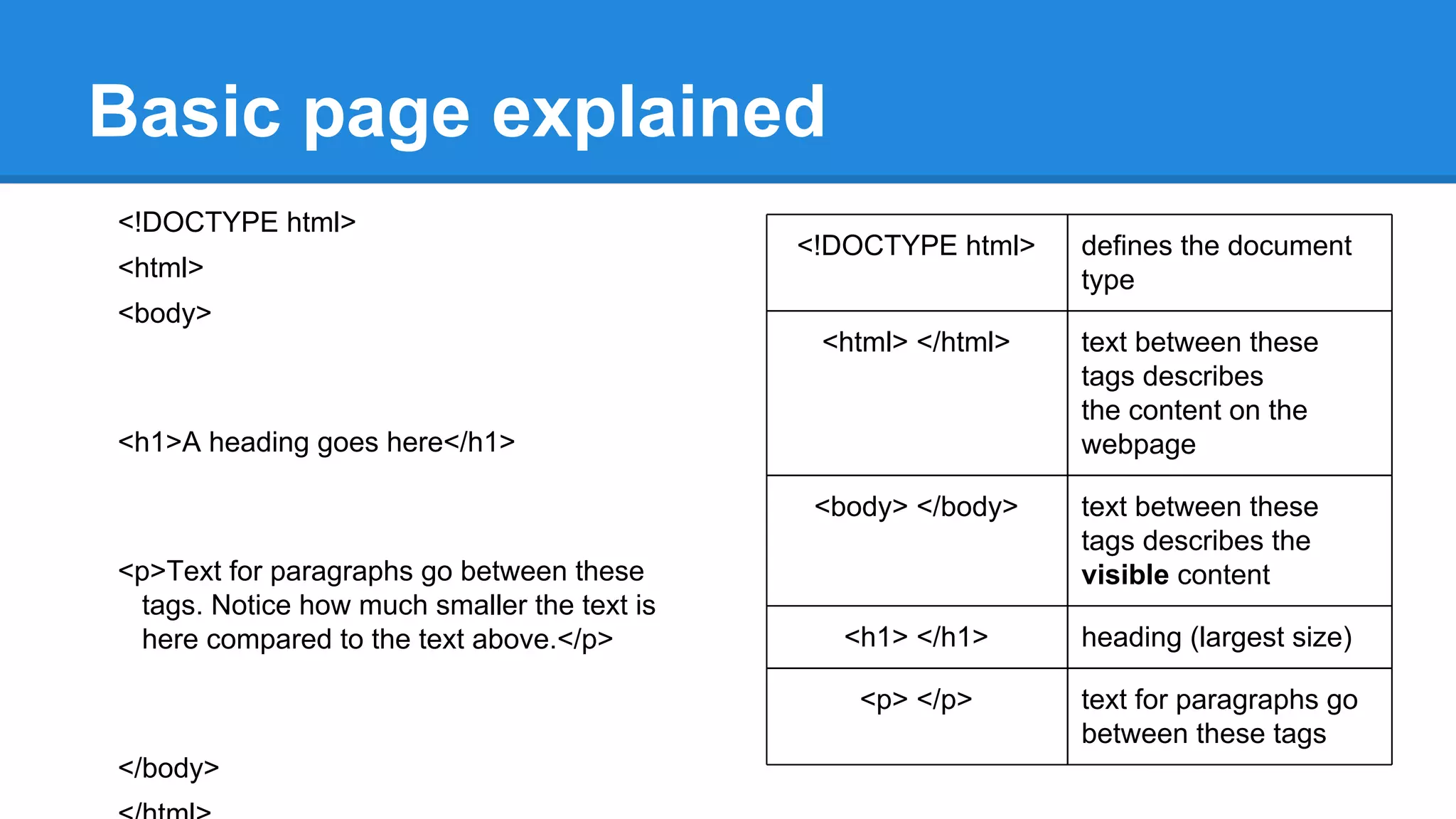
Basic page explained
<!DOCTYPE html>
<html>
<body>
<h1>A heading goes here</h1>
<p>Text for paragraphs go between these
tags. Notice how much smaller the text is
here compared to the text above.</p>
</body>
<!DOCTYPE html> defines the document
type
<html> </html> text between these
tags describes
the content on the
webpage
<body> </body> text between these
tags describes the
visible content
<h1> </h1> heading (largest size)
<p> </p> text for paragraphs go
between these tags
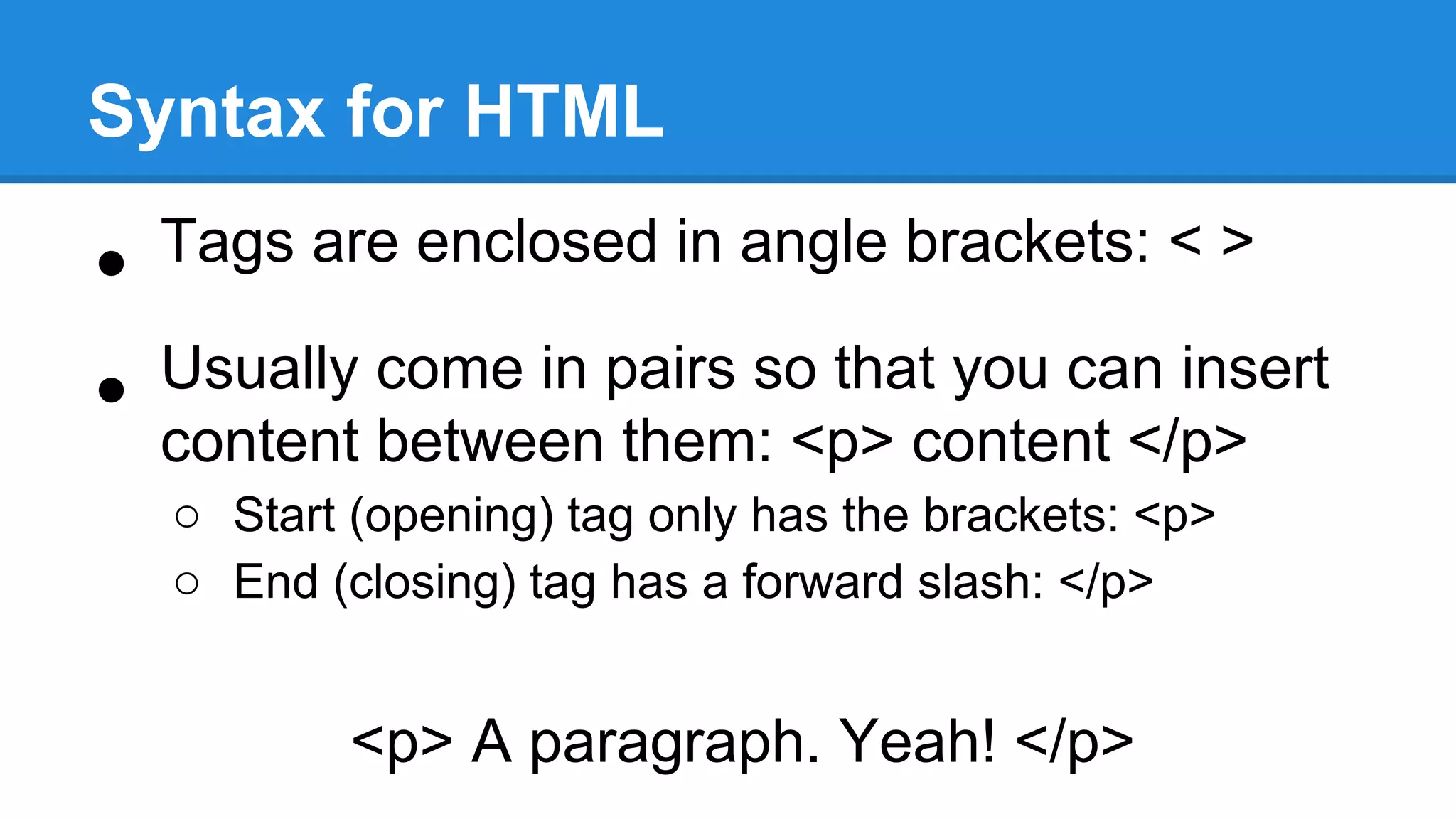
Syntax for HTML
• Tags are enclosed in angle brackets: < >
• Usually come in pairs so that you can insert
content between them: <p> content </p>
o Start (opening) tag only has the brackets: <p>
o End (closing) tag has a forward slash: </p>
<p> A paragraph. Yeah! </p>
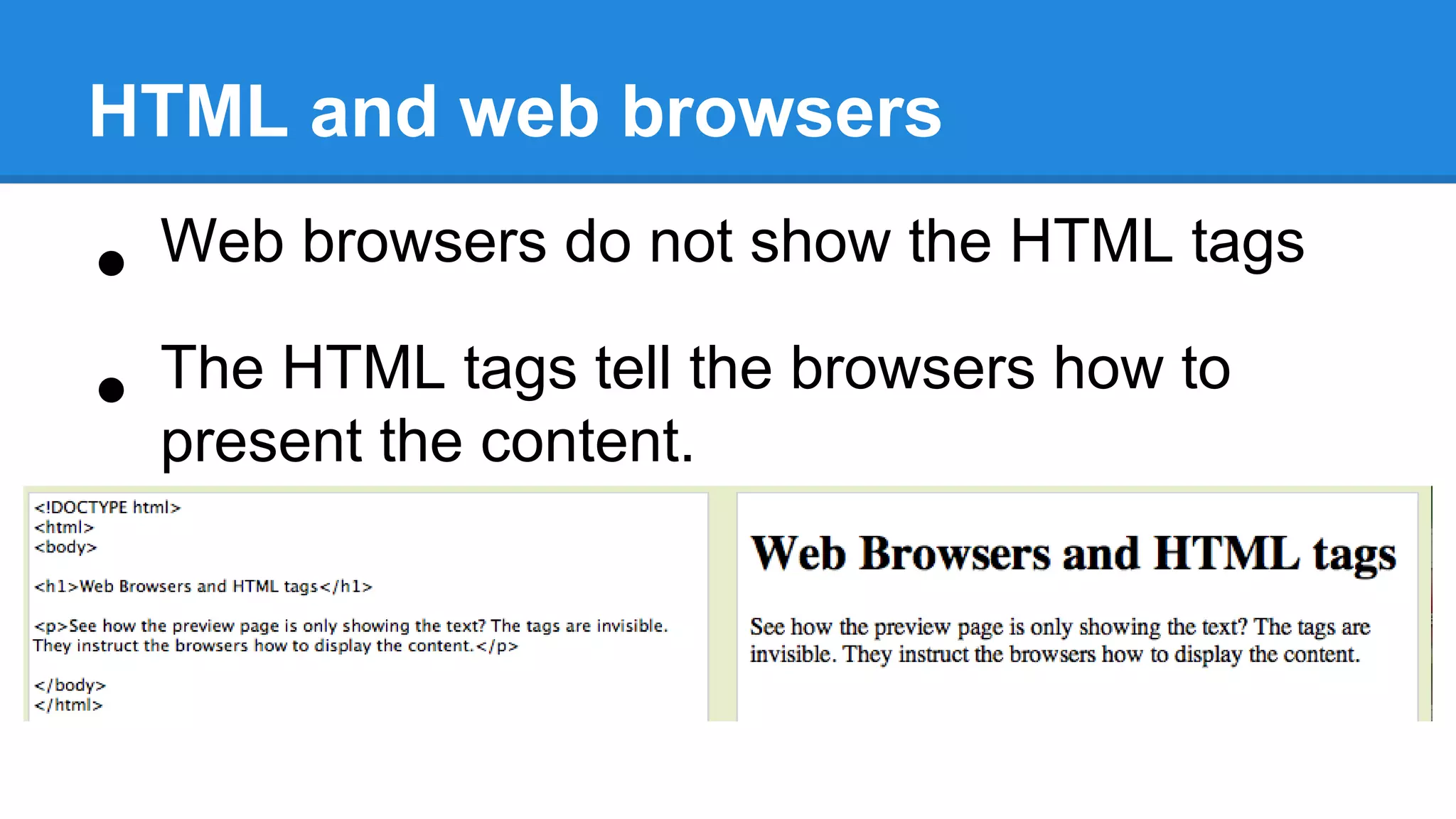
HTML and web browsers
• Web browsers do not show the HTML tags
• The HTML tags tell the browsers how to
present the content.
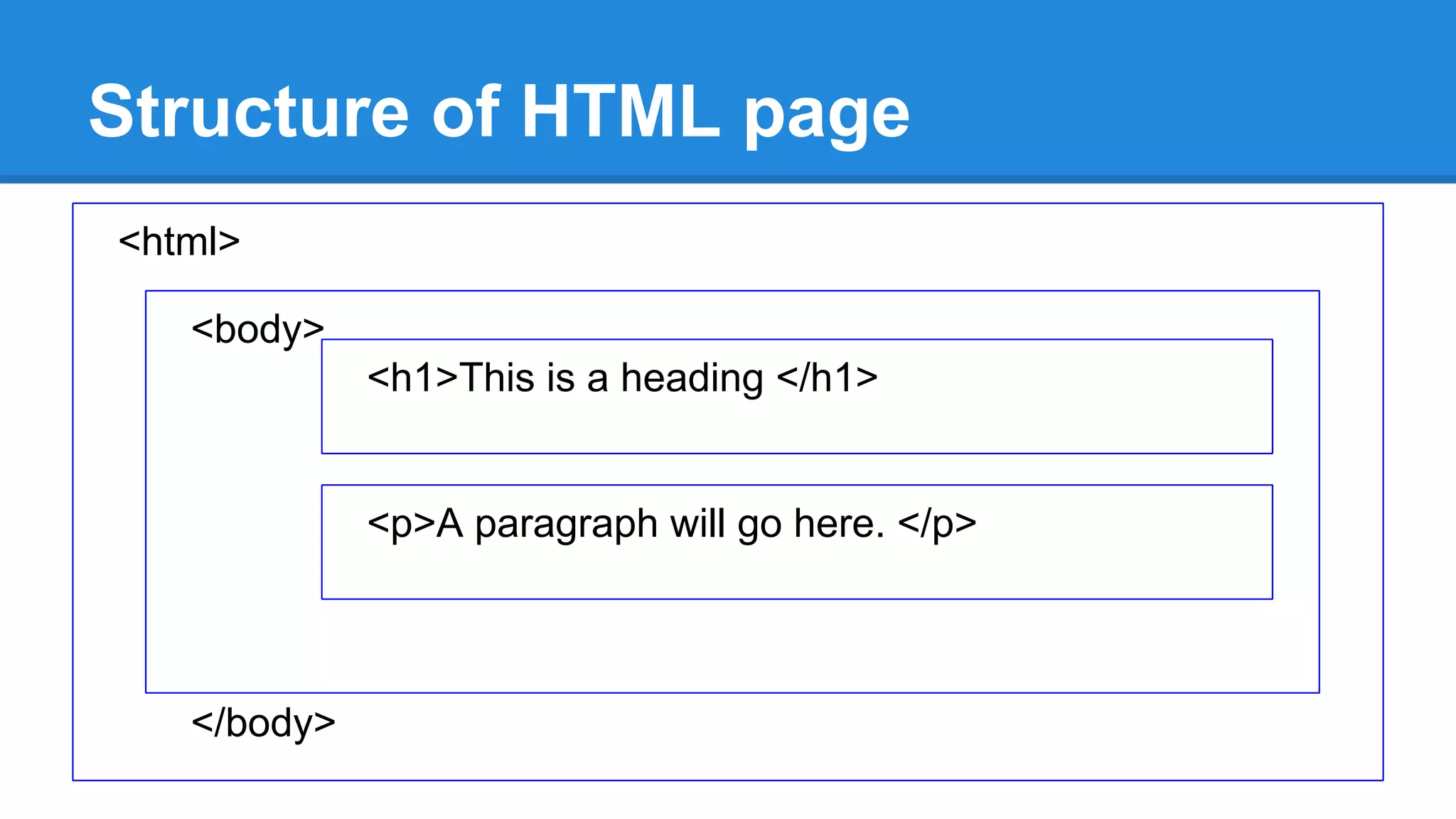
Structure of HTML page
<html>
<body>
</body>
<h1>This is a heading </h1>
<p>A paragraph will go here. </p>
References
W3C Schools.com http://www.w3schools.com/html/
html_intro.asp
Webopedia
http://www.webopedia.com/TERM/M/markup_language.html

Introduction to HTML

  • 1.
    Intro to HTML Basicconcepts to get you started
  • 2.
    What is HTML? •Stands for Hyper Text Markup Language • HTML is a markup language that describes the content of the document • Comprised of HTML tags with plain text Markup languages process and define the presentation of text by using tags to specify code for formatting (layout and style).
  • 3.
    Versions of HTML Therehave been 7 versions of HTML since 1991. We will be learning the most current one: HTML5
  • 4.
    Why the change?Who does this? The standards of the web are determined by The World Wide Web Consortium (W3C), an international community of developers that create web standards and help ensure long- time growth of the web. Lead by Tim Berners-Lee. http://www.w3.org
  • 5.
  • 6.
    Basic page explained <!DOCTYPEhtml> <html> <body> <h1>A heading goes here</h1> <p>Text for paragraphs go between these tags. Notice how much smaller the text is here compared to the text above.</p> </body> <!DOCTYPE html> defines the document type <html> </html> text between these tags describes the content on the webpage <body> </body> text between these tags describes the visible content <h1> </h1> heading (largest size) <p> </p> text for paragraphs go between these tags
  • 7.
    Syntax for HTML •Tags are enclosed in angle brackets: < > • Usually come in pairs so that you can insert content between them: <p> content </p> o Start (opening) tag only has the brackets: <p> o End (closing) tag has a forward slash: </p> <p> A paragraph. Yeah! </p>
  • 8.
    HTML and webbrowsers • Web browsers do not show the HTML tags • The HTML tags tell the browsers how to present the content.
  • 9.
    Structure of HTMLpage <html> <body> </body> <h1>This is a heading </h1> <p>A paragraph will go here. </p>
  • 10.