3G 
Presented by : 
Elyes Arfa 
CIT 
1st semester 
Istitute: 
Tek-up
contents 
• What is 3G? 
• Evolution to 3G 
• Technical specification 
• Different types of 3G 
• Devices that uses 3G 
• Disadvantages of 3G
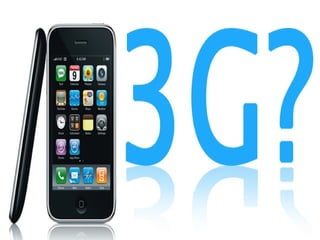
What is 3G ? 
3G stands for third generation, and is a 
wireless industry term for a collection of 
international standards and technologies 
aimed at increasing efficiency and improving 
the performance of mobile wireless 
networks.
Why is it important? 
3G wireless services offer enhancements to 
current applications, including greater data 
speeds, increased capacity for voice and 
data and the advent of packet data networks 
versus today’s switched networks.
evolution to 3G 
• The predecessors of 3G are : 
• 1G 
• 2G
1G 
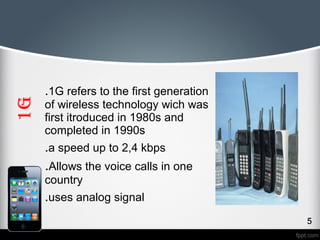
.1G refers to the first generation 
of wireless technology wich was 
first itroduced in 1980s and 
completed in 1990s 
.a speed up to 2,4 kbps 
.Allows the voice calls in one 
country 
.uses analog signal
disadvantages 
• Poor voice quality 
• Poor battery life 
• Large phone size 
• Limited capacity etc…
2g 
• Refers to the 2nd generation wich is based 
on GSM 
• Was launched in 1991 
• Uses Digital signals 
• Data speed up to 64 kbps
disadvantages 
• Requires strong digital signals so the 
phone can work 
• Unable to manage complex data like 
videos etc…
technical terms of 3g 
• The transfer rate for 3G networks is 
between 128 and 144 kbps (kilobits 
per second) for devices that are 
moving fast and 384 kbps for slow 
ones. For fixed wireless the speed 
goes beyond 2 Mbps
technical terms of 3g 
• It is comprised of basically the CDMA 
( Code Division Multiple Access ) 
technology 
• CDMA uses : 
• FDMA ( Frequency Division Multiple 
Access) 
• TDMA (Time Division Multiple 
Access)
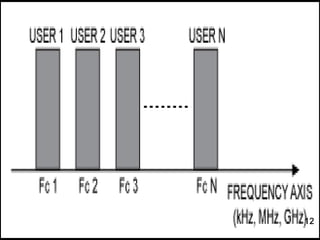
fdma 
• Frequency Division Multiple Access 
• Used by the 1st genration (1G) 
• Divides the frequency band available into 
little segments
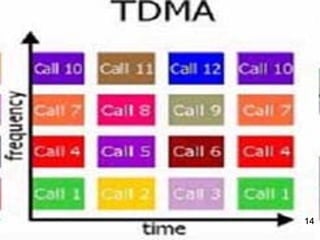
TDMA 
• Time Division Multiple Access 
• Used by the 2nd generation (2G) 
• The mobile phone system splits up 
everyone's calls into little digital parts 
• sends each chunk at a slightly different 
time down the same frequency channel
CDMA 
• Code division multiple access 
• Used by the 3rd generation (3G) 
• Works by splitting calls up into pieces 
• giving each piece a code that identifies 
where it's going
WCDMA 
• Basic CDMA evolved into an even 
higher-capacity system called 
Wideband CDMA (WCDMA), which 
sends data packets over a wide band of 
radio frequencies so they travel with 
less interference, and more quickly and 
efficiently
Types of 3G 
• HSPA ( High speed packet access) : 
Composed of HSDPA (High Speed 
Downlink Packet Access) and HSUPA 
(High Speed Uplink Access) 
• HSPA+
HspA 
• Enables data connection at 3.6 Mbps
HspA+ or 3.5G 
TeCHnoloGy 
• Enables data connection at 7.2 Mbps to 
21Mbps
What is required for using 
3g 
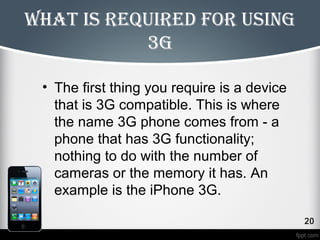
• The first thing you require is a device 
that is 3G compatible. This is where 
the name 3G phone comes from - a 
phone that has 3G functionality; 
nothing to do with the number of 
cameras or the memory it has. An 
example is the iPhone 3G.
What is required for using 
3g 
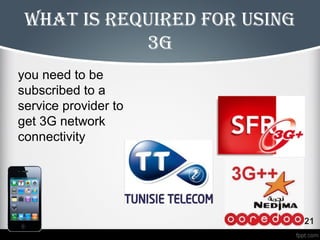
you need to be 
subscribed to a 
service provider to 
get 3G network 
connectivity
What is required for using 
3g 
• Your device is connected to the 3G 
network through its SIM card (in the case 
of a mobile phone) or its 3G data card 
(which can be of different types: 
USB,etc.), which are both generally 
provided by the service provider.
disadvantages of 3g 
• Huge capital to build 3G infrastructure services 
worldwide 
• Health impact because of the electromagnetic 
waves 
• High prices of 3G mobile services 
• Takes time for some countries to catch up with this 
service
thank you!

Introduction sur 3G

  • 1.
    3G Presented by: Elyes Arfa CIT 1st semester Istitute: Tek-up
  • 2.
    contents • Whatis 3G? • Evolution to 3G • Technical specification • Different types of 3G • Devices that uses 3G • Disadvantages of 3G
  • 4.
    What is 3G? 3G stands for third generation, and is a wireless industry term for a collection of international standards and technologies aimed at increasing efficiency and improving the performance of mobile wireless networks.
  • 5.
    Why is itimportant? 3G wireless services offer enhancements to current applications, including greater data speeds, increased capacity for voice and data and the advent of packet data networks versus today’s switched networks.
  • 6.
    evolution to 3G • The predecessors of 3G are : • 1G • 2G
  • 7.
    1G .1G refersto the first generation of wireless technology wich was first itroduced in 1980s and completed in 1990s .a speed up to 2,4 kbps .Allows the voice calls in one country .uses analog signal
  • 8.
    disadvantages • Poorvoice quality • Poor battery life • Large phone size • Limited capacity etc…
  • 9.
    2g • Refersto the 2nd generation wich is based on GSM • Was launched in 1991 • Uses Digital signals • Data speed up to 64 kbps
  • 10.
    disadvantages • Requiresstrong digital signals so the phone can work • Unable to manage complex data like videos etc…
  • 11.
    technical terms of3g • The transfer rate for 3G networks is between 128 and 144 kbps (kilobits per second) for devices that are moving fast and 384 kbps for slow ones. For fixed wireless the speed goes beyond 2 Mbps
  • 12.
    technical terms of3g • It is comprised of basically the CDMA ( Code Division Multiple Access ) technology • CDMA uses : • FDMA ( Frequency Division Multiple Access) • TDMA (Time Division Multiple Access)
  • 13.
    fdma • FrequencyDivision Multiple Access • Used by the 1st genration (1G) • Divides the frequency band available into little segments
  • 15.
    TDMA • TimeDivision Multiple Access • Used by the 2nd generation (2G) • The mobile phone system splits up everyone's calls into little digital parts • sends each chunk at a slightly different time down the same frequency channel
  • 17.
    CDMA • Codedivision multiple access • Used by the 3rd generation (3G) • Works by splitting calls up into pieces • giving each piece a code that identifies where it's going
  • 18.
    WCDMA • BasicCDMA evolved into an even higher-capacity system called Wideband CDMA (WCDMA), which sends data packets over a wide band of radio frequencies so they travel with less interference, and more quickly and efficiently
  • 19.
    Types of 3G • HSPA ( High speed packet access) : Composed of HSDPA (High Speed Downlink Packet Access) and HSUPA (High Speed Uplink Access) • HSPA+
  • 20.
    HspA • Enablesdata connection at 3.6 Mbps
  • 21.
    HspA+ or 3.5G TeCHnoloGy • Enables data connection at 7.2 Mbps to 21Mbps
  • 22.
    What is requiredfor using 3g • The first thing you require is a device that is 3G compatible. This is where the name 3G phone comes from - a phone that has 3G functionality; nothing to do with the number of cameras or the memory it has. An example is the iPhone 3G.
  • 23.
    What is requiredfor using 3g you need to be subscribed to a service provider to get 3G network connectivity
  • 24.
    What is requiredfor using 3g • Your device is connected to the 3G network through its SIM card (in the case of a mobile phone) or its 3G data card (which can be of different types: USB,etc.), which are both generally provided by the service provider.
  • 25.
    disadvantages of 3g • Huge capital to build 3G infrastructure services worldwide • Health impact because of the electromagnetic waves • High prices of 3G mobile services • Takes time for some countries to catch up with this service
  • 26.