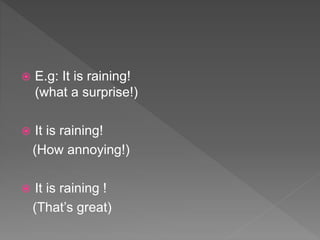
 E.g: It is raining!
(what a surprise!)
 It is raining!
(How annoying!)
 It is raining !
(That’s great)
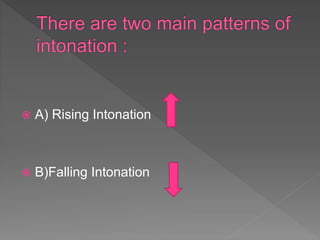
 A) Rising Intonation
 B)Falling Intonation
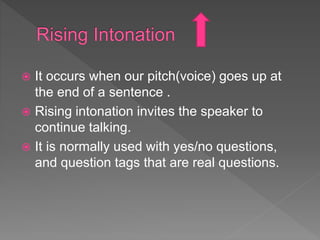
 It occurs when our pitch(voice) goes up at
the end of a sentence .
 Rising intonation invites the speaker to
continue talking.
 It is normally used with yes/no questions,
and question tags that are real questions.
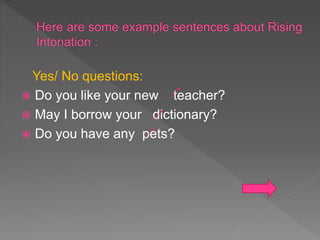
Yes/ No questions:
 Do you like your new teacher?
 May I borrow your dictionary?
 Do you have any pets?
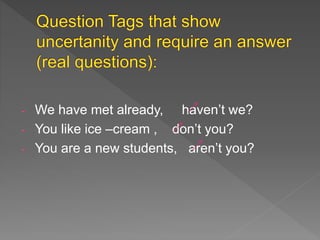
- We have met already, haven’t we?
- You like ice –cream , don’t you?
- You are a new students, aren’t you?
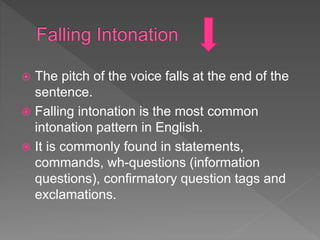
 The pitch of the voice falls at the end of the
sentence.
 Falling intonation is the most common
intonation pattern in English.
 It is commonly found in statements,
commands, wh-questions (information
questions), confirmatory question tags and
exclamations.
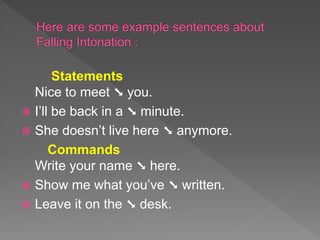
Statements
Nice to meet ➘ you.
 I’ll be back in a ➘ minute.
 She doesn’t live here ➘ anymore.
Commands
Write your name ➘ here.
 Show me what you’ve ➘ written.
 Leave it on the ➘ desk.
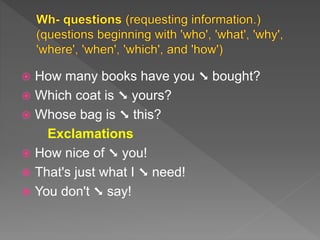
 How many books have you ➘ bought?
 Which coat is ➘ yours?
 Whose bag is ➘ this?
Exclamations
 How nice of ➘ you!
 That's just what I ➘ need!
 You don't ➘ say!
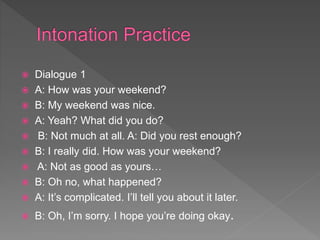
 Dialogue 1
 A: How was your weekend?
 B: My weekend was nice.
 A: Yeah? What did you do?
 B: Not much at all. A: Did you rest enough?
 B: I really did. How was your weekend?
 A: Not as good as yours…
 B: Oh no, what happened?
 A: It’s complicated. I’ll tell you about it later.
 B: Oh, I’m sorry. I hope you’re doing okay.
Intonation for Tesol teaching practice for Pre-intermediate students

Intonation for Tesol teaching practice for Pre-intermediate students

  • 3.
     E.g: Itis raining! (what a surprise!)  It is raining! (How annoying!)  It is raining ! (That’s great)
  • 4.
     A) RisingIntonation  B)Falling Intonation
  • 5.
     It occurswhen our pitch(voice) goes up at the end of a sentence .  Rising intonation invites the speaker to continue talking.  It is normally used with yes/no questions, and question tags that are real questions.
  • 6.
    Yes/ No questions: Do you like your new teacher?  May I borrow your dictionary?  Do you have any pets?
  • 7.
    - We havemet already, haven’t we? - You like ice –cream , don’t you? - You are a new students, aren’t you?
  • 8.
     The pitchof the voice falls at the end of the sentence.  Falling intonation is the most common intonation pattern in English.  It is commonly found in statements, commands, wh-questions (information questions), confirmatory question tags and exclamations.
  • 9.
    Statements Nice to meet➘ you.  I’ll be back in a ➘ minute.  She doesn’t live here ➘ anymore. Commands Write your name ➘ here.  Show me what you’ve ➘ written.  Leave it on the ➘ desk.
  • 10.
     How manybooks have you ➘ bought?  Which coat is ➘ yours?  Whose bag is ➘ this? Exclamations  How nice of ➘ you!  That's just what I ➘ need!  You don't ➘ say!
  • 11.
     Dialogue 1 A: How was your weekend?  B: My weekend was nice.  A: Yeah? What did you do?  B: Not much at all. A: Did you rest enough?  B: I really did. How was your weekend?  A: Not as good as yours…  B: Oh no, what happened?  A: It’s complicated. I’ll tell you about it later.  B: Oh, I’m sorry. I hope you’re doing okay.