Technology in Environmental
Citizen Science projects
Muki Haklay
Extreme Citizen Science (ExCiteS) research group, UCL
@mhaklay
Outline
• Technology role within citizen science
projects
• Sensors, apps, web – front end
technologies
• Databases, volunteer management,
project management – back end
• Platforms for communication – social
media, blogs
• Project management
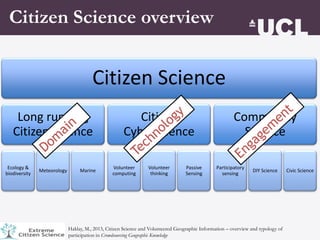
Citizen Science overview
Citizen Science
Long running
Citizen Science
Ecology &
biodiversity
Meteorology Marine
Citizen
Cyberscience
Volunteer
computing
Volunteer
thinking
Passive
Sensing
Community
Science
Participatory
sensing
DIY Science Civic Science
Haklay, M., 2013, Citizen Science and Volunteered Geographic Information – overview and typology of
participation in Crowdsourcing Geographic Knowledge
• Reaching out to potential participants
• Providing a structure to data collection
processes
• Supporting crowdsourcing and micro-
tasking (both data collection & analysis)
• Managing data & ensuring data quality
• Communication and support for
volunteers
• Project management
Technology in citizen science
WHAT THE PARTICIPANTS
SEE & USE
Technologies for citizen science
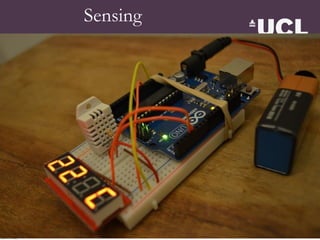
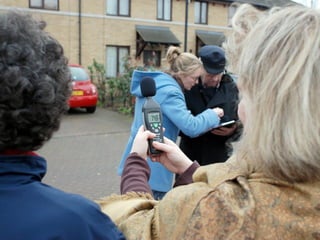
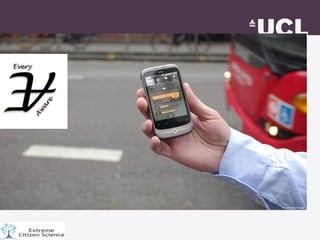
Sensing
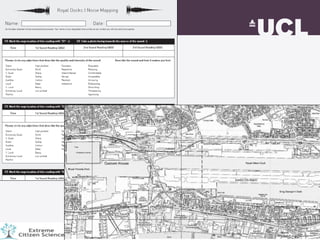
Mapping for Change
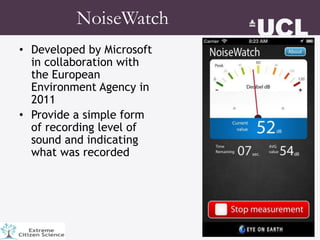
NoiseWatch
• Developed by Microsoft
in collaboration with
the European
Environment Agency in
2011
• Provide a simple form
of recording level of
sound and indicating
what was recorded
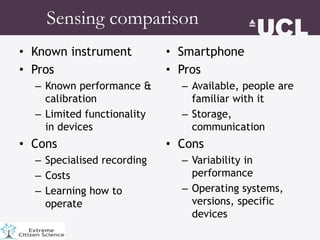
Sensing comparison
• Known instrument
• Pros
– Known performance &
calibration
– Limited functionality
in devices
• Cons
– Specialised recording
– Costs
– Learning how to
operate
• Smartphone
• Pros
– Available, people are
familiar with it
– Storage,
communication
• Cons
– Variability in
performance
– Operating systems,
versions, specific
devices
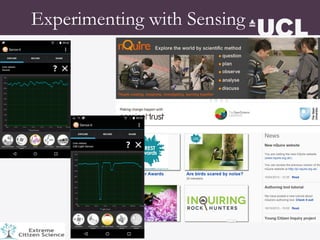
Experimenting with Sensing
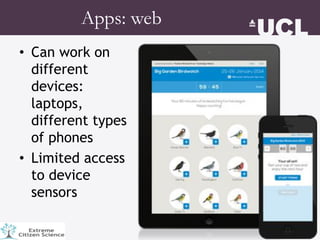
• Can work on
different
devices:
laptops,
different types
of phones
• Limited access
to device
sensors
Apps: web
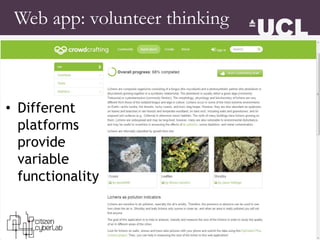
Web app: volunteer thinking
• Different
platforms
provide
variable
functionality
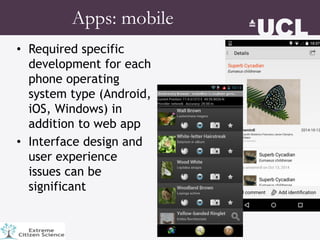
Apps: mobile
• Required specific
development for each
phone operating
system type (Android,
iOS, Windows) in
addition to web app
• Interface design and
user experience
issues can be
significant
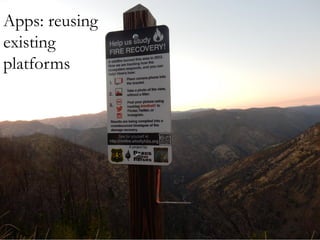
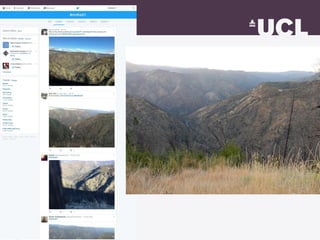
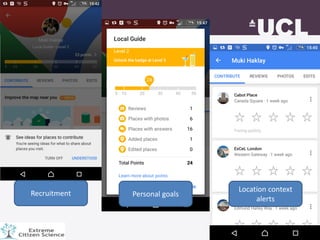
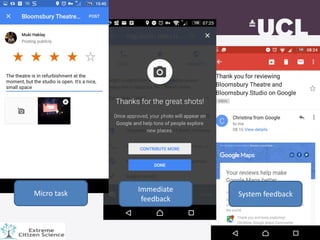
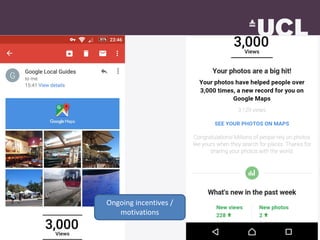
Apps: reusing
existing
platforms
Recruitment Personal goals
Location context
alerts
Micro task
Immediate
feedback
System feedback
Ongoing incentives /
motivations
MANAGING INFORMATION &
PARTICIPATION
Technologies for citizen science
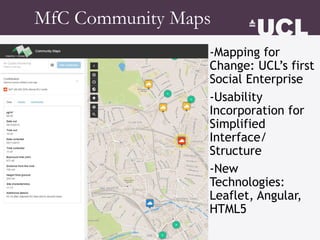
-Mapping for
Change: UCL’s first
Social Enterprise
-Usability
Incorporation for
Simplified
Interface/
Structure
-New
Technologies:
Leaflet, Angular,
HTML5
MfC Community Maps
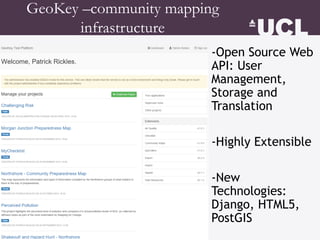
-Open Source Web
API: User
Management,
Storage and
Translation
-Highly Extensible
-New
Technologies:
Django, HTML5,
PostGIS
GeoKey –community mapping
infrastructure
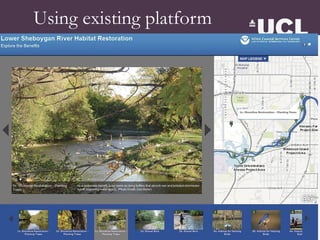
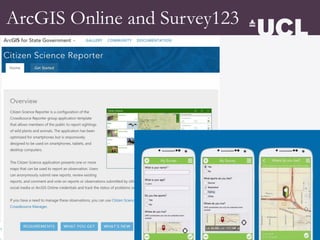
Using existing platform
ArcGIS Online and Survey123
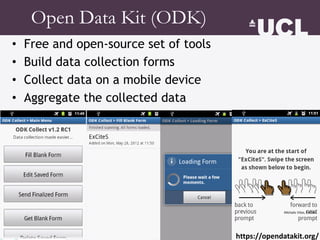
Open Data Kit (ODK)
• Free and open-source set of tools
• Build data collection forms
• Collect data on a mobile device
• Aggregate the collected data
Michalis Vitos, ExCiteS
https://opendatakit.org/
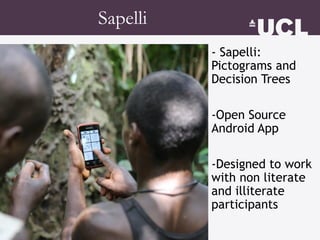
- Sapelli:
Pictograms and
Decision Trees
-Open Source
Android App
-Designed to work
with non literate
and illiterate
participants
Sapelli
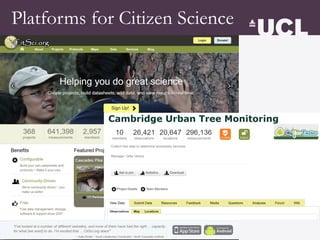
Platforms for Citizen Science
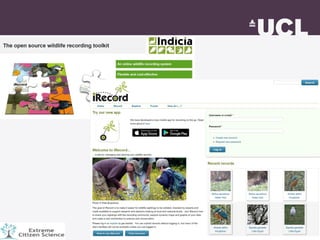
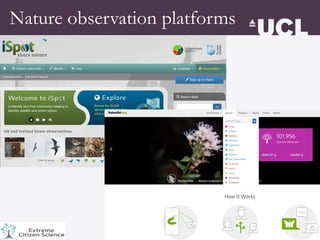
Nature observation platforms
• Technical abilities and development time
– platforms offer different level of
flexibility to change
• Evaluate platforms through pilot studies
(end-to-end)
• Costs – paying for a commercial or
academic platforms, or costs of
development and maintenance
Platforms
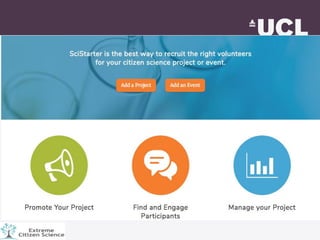
Recruitment & communication
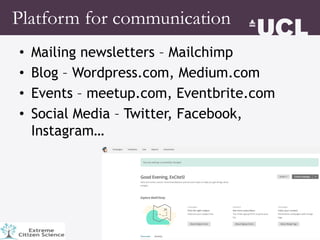
• Mailing newsletters – Mailchimp
• Blog – Wordpress.com, Medium.com
• Events – meetup.com, Eventbrite.com
• Social Media – Twitter, Facebook,
Instagram…
Platform for communication
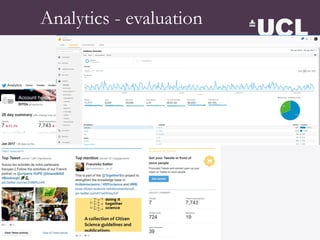
Analytics - evaluation
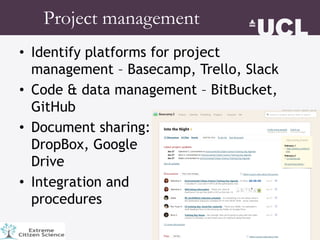
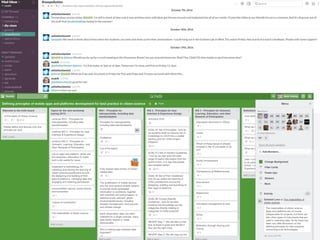
• Identify platforms for project
management – Basecamp, Trello, Slack
• Code & data management – BitBucket,
GitHub
• Document sharing:
DropBox, Google
Drive
• Integration and
procedures
Project management
• Based on the systems and principles that
we’ve covered, sketch the basic
information system and technologies that
can be used for citizen science project on
light pollution
• Discuss the front-end, back-end and
communication aspects
Your turn!

Into the Night - Technology for citizen science

  • 1.
    Technology in Environmental CitizenScience projects Muki Haklay Extreme Citizen Science (ExCiteS) research group, UCL @mhaklay
  • 2.
    Outline • Technology rolewithin citizen science projects • Sensors, apps, web – front end technologies • Databases, volunteer management, project management – back end • Platforms for communication – social media, blogs • Project management
  • 3.
    Citizen Science overview CitizenScience Long running Citizen Science Ecology & biodiversity Meteorology Marine Citizen Cyberscience Volunteer computing Volunteer thinking Passive Sensing Community Science Participatory sensing DIY Science Civic Science Haklay, M., 2013, Citizen Science and Volunteered Geographic Information – overview and typology of participation in Crowdsourcing Geographic Knowledge
  • 4.
    • Reaching outto potential participants • Providing a structure to data collection processes • Supporting crowdsourcing and micro- tasking (both data collection & analysis) • Managing data & ensuring data quality • Communication and support for volunteers • Project management Technology in citizen science
  • 5.
    WHAT THE PARTICIPANTS SEE& USE Technologies for citizen science
  • 6.
  • 9.
  • 10.
    NoiseWatch • Developed byMicrosoft in collaboration with the European Environment Agency in 2011 • Provide a simple form of recording level of sound and indicating what was recorded
  • 11.
    Sensing comparison • Knowninstrument • Pros – Known performance & calibration – Limited functionality in devices • Cons – Specialised recording – Costs – Learning how to operate • Smartphone • Pros – Available, people are familiar with it – Storage, communication • Cons – Variability in performance – Operating systems, versions, specific devices
  • 12.
  • 13.
    • Can workon different devices: laptops, different types of phones • Limited access to device sensors Apps: web
  • 14.
    Web app: volunteerthinking • Different platforms provide variable functionality
  • 15.
    Apps: mobile • Requiredspecific development for each phone operating system type (Android, iOS, Windows) in addition to web app • Interface design and user experience issues can be significant
  • 16.
  • 18.
  • 19.
  • 20.
  • 21.
  • 22.
    -Mapping for Change: UCL’sfirst Social Enterprise -Usability Incorporation for Simplified Interface/ Structure -New Technologies: Leaflet, Angular, HTML5 MfC Community Maps
  • 23.
    -Open Source Web API:User Management, Storage and Translation -Highly Extensible -New Technologies: Django, HTML5, PostGIS GeoKey –community mapping infrastructure
  • 24.
  • 25.
  • 26.
    Open Data Kit(ODK) • Free and open-source set of tools • Build data collection forms • Collect data on a mobile device • Aggregate the collected data Michalis Vitos, ExCiteS https://opendatakit.org/
  • 27.
    - Sapelli: Pictograms and DecisionTrees -Open Source Android App -Designed to work with non literate and illiterate participants Sapelli
  • 28.
  • 30.
  • 31.
    • Technical abilitiesand development time – platforms offer different level of flexibility to change • Evaluate platforms through pilot studies (end-to-end) • Costs – paying for a commercial or academic platforms, or costs of development and maintenance Platforms
  • 32.
  • 34.
    • Mailing newsletters– Mailchimp • Blog – Wordpress.com, Medium.com • Events – meetup.com, Eventbrite.com • Social Media – Twitter, Facebook, Instagram… Platform for communication
  • 35.
  • 36.
    • Identify platformsfor project management – Basecamp, Trello, Slack • Code & data management – BitBucket, GitHub • Document sharing: DropBox, Google Drive • Integration and procedures Project management
  • 38.
    • Based onthe systems and principles that we’ve covered, sketch the basic information system and technologies that can be used for citizen science project on light pollution • Discuss the front-end, back-end and communication aspects Your turn!