RESULTS OF BIOPSY


+ve diagnosis between 70 et 100%.


Least performance in lymphoma
ABDOMINAL COLLECTION ASPIRATION &
DRAINAGE
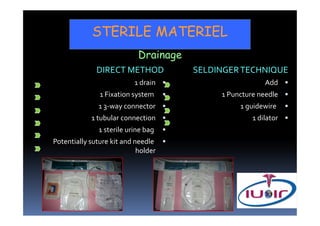
STERILE MATERIEL
                            Drainage
              DIRECT METHOD            SELDINGER TECHNIQUE
                           1 drain                       Add
               1 Fixation system            1 Puncture needle
               1 3-way connector                 1 guidewire
            1 tubular connection                     1 dilator
               1 sterile urine bag
Potentially suture kit and needle
                            holder
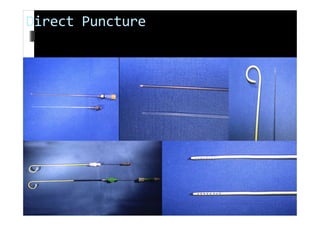
Direct Puncture
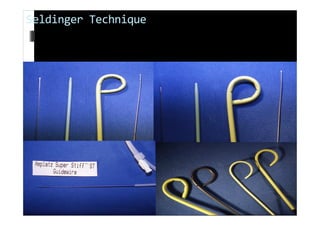
Seldinger Technique
DRAINAGE

            Fine needle allow to
           precise the nature of
              the fluid to drain.
           And to adapt caliber
                         of drain
           Never empty before
                         draining
INTERVENTIONAL PROCEDURE

      Radiologist perform disinfection with antiseptic iodinated
                                           solution (Povidone).
                               Locale anesthesia (Lidocaïne 1%).
                              Large skin incision (caliber of drain)
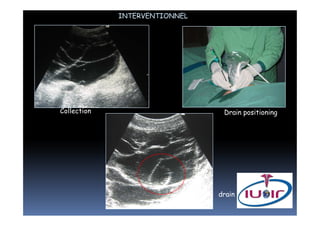
                     US-guided puncture and drain positioning.
  Technician may help for gain and depth adjustment of the US
machine, Doppler activation and good contact between probe
                               and skin by alcohol or betadine
             Fixation of drain by radiologist (2 zones of fixation)
                              Dressing is done by the technician.
         Drainage bag is left dependant (never under aspiration)
INTERVENTIONNEL


Collection                      Drain positioning


                               drain
DRAINAGE


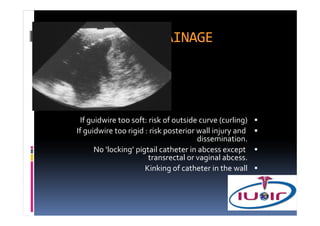
 If guidwire too soft: risk of outside curve (curling)
If guidwire too rigid : risk posterior wall injury and
                                       dissemination.
      No ‘locking’ pigtail catheter in abcess except
                       transrectal or vaginal abcess.
                      Kinking of catheter in the wall
AFTER THE INTERVENTIONAL PROCEDURE


                 Verification of discharge flow in the drain.

              Follow-up form & potential specimens joined.
                       Pt. lying on point of puncture (compression)


                               Patient sent back to his ward.
FOLLOW-UP AFTER INTERVENTIONAL PROCEDURE


                         Verification of discharge flow in the drain.
                                         Clinical state improvement
                    Follow-up when no more discharge comes out.

                                               Clamping Test (2-3j)

                                   If persistance : search for fistula
AFTER INTERVENTIONAL PROCEDURE


            Verification of discharge flow in the drain.

   Follow-up: Emptying – flush with10 cc normal saline
              with re-aspiration - AB IV : no flushing
                                  Decreasing discharge
          Clamping Test after follow-up US and clinical
                                       improvement.
Interventional Ultrasound


 PATIENT
 Skin cleaning in 4 steps
          - detersion with cleaning solution
          - Rince with Sodium Chloride
          - Dry with sterile gauze
          - Disinfection with antiseptic solution


In case of wound:
Cover the probe with sterile protection
Cover the lesion with transparent sterile dressing
INTERVENTIONAL RADIOLOGY
 CT


 Advantages
anatomy•
Content•

 Disadvantages
Long•
Axial only or oblique axial (limited)•
Mobility•
INTERVENTIONAL RADIOLOGY
US/CT


   Position /Gantry Dimension•
   Laser beam•
   Monitor in the room•

   IV (ureter, necrosis)•
   Cooperation (apnea)•
   Needle guide•
INTERVENTIONAL RADIOLOGY
US/CT


  Needle extremity (same apnea)•
  Coaxial System (No of samples)•
INTERVENTIONAL RADIOLOGY
 US/CT
Liver
Anterior abdomen
INTERVENTIONAL RADIOLOGY
 US/CT


 Liver
 US
 Rules: Pass through normal liver
  Biopsy of the lesion’s wall
  Needle retrieval during blocked expiration
  Ambulatory (outpatient)
  Prevent shoulder pain after (20%)
……
        Breast cancer – ovarian masses
     Peritoneal carcinomatosis with -
               ascites (cytology non
                         contributive)
             origin : type de cancer? -
INTERVENTIONAL RADIOLOGY
 US/CT
 Pancreas
 CT or US
 Rules: Use the technique that best shows the lesion
 Avois gastric puncture, otherwise 20G aspiration
 always sufficient
 If suspected multicystic lesion avoid colon puncture

 Risks: Hemorrhage by vascular injury
       Acute pancréatitis if normal pancreas is injured
 Passing through normal liver
US/CT
US/CT

Interventional radiology2

  • 1.
    RESULTS OF BIOPSY +vediagnosis between 70 et 100%. Least performance in lymphoma
  • 2.
  • 3.
    STERILE MATERIEL Drainage DIRECT METHOD SELDINGER TECHNIQUE 1 drain Add 1 Fixation system 1 Puncture needle 1 3-way connector 1 guidewire 1 tubular connection 1 dilator 1 sterile urine bag Potentially suture kit and needle holder
  • 4.
  • 5.
  • 6.
    DRAINAGE Fine needle allow to precise the nature of the fluid to drain. And to adapt caliber of drain Never empty before draining
  • 7.
    INTERVENTIONAL PROCEDURE Radiologist perform disinfection with antiseptic iodinated solution (Povidone). Locale anesthesia (Lidocaïne 1%). Large skin incision (caliber of drain) US-guided puncture and drain positioning. Technician may help for gain and depth adjustment of the US machine, Doppler activation and good contact between probe and skin by alcohol or betadine Fixation of drain by radiologist (2 zones of fixation) Dressing is done by the technician. Drainage bag is left dependant (never under aspiration)
  • 8.
    INTERVENTIONNEL Collection Drain positioning drain
  • 9.
    DRAINAGE If guidwiretoo soft: risk of outside curve (curling) If guidwire too rigid : risk posterior wall injury and dissemination. No ‘locking’ pigtail catheter in abcess except transrectal or vaginal abcess. Kinking of catheter in the wall
  • 10.
    AFTER THE INTERVENTIONALPROCEDURE Verification of discharge flow in the drain. Follow-up form & potential specimens joined. Pt. lying on point of puncture (compression) Patient sent back to his ward.
  • 11.
    FOLLOW-UP AFTER INTERVENTIONALPROCEDURE Verification of discharge flow in the drain. Clinical state improvement Follow-up when no more discharge comes out. Clamping Test (2-3j) If persistance : search for fistula
  • 12.
    AFTER INTERVENTIONAL PROCEDURE Verification of discharge flow in the drain. Follow-up: Emptying – flush with10 cc normal saline with re-aspiration - AB IV : no flushing Decreasing discharge Clamping Test after follow-up US and clinical improvement.
  • 13.
    Interventional Ultrasound PATIENT Skin cleaning in 4 steps - detersion with cleaning solution - Rince with Sodium Chloride - Dry with sterile gauze - Disinfection with antiseptic solution In case of wound: Cover the probe with sterile protection Cover the lesion with transparent sterile dressing
  • 14.
    INTERVENTIONAL RADIOLOGY CT Advantages anatomy• Content• Disadvantages Long• Axial only or oblique axial (limited)• Mobility•
  • 15.
    INTERVENTIONAL RADIOLOGY US/CT Position /Gantry Dimension• Laser beam• Monitor in the room• IV (ureter, necrosis)• Cooperation (apnea)• Needle guide•
  • 16.
    INTERVENTIONAL RADIOLOGY US/CT Needle extremity (same apnea)• Coaxial System (No of samples)•
  • 17.
  • 18.
    INTERVENTIONAL RADIOLOGY US/CT Liver US Rules: Pass through normal liver Biopsy of the lesion’s wall Needle retrieval during blocked expiration Ambulatory (outpatient) Prevent shoulder pain after (20%)
  • 19.
    …… Breast cancer – ovarian masses Peritoneal carcinomatosis with - ascites (cytology non contributive) origin : type de cancer? -
  • 20.
    INTERVENTIONAL RADIOLOGY US/CT Pancreas CT or US Rules: Use the technique that best shows the lesion Avois gastric puncture, otherwise 20G aspiration always sufficient If suspected multicystic lesion avoid colon puncture Risks: Hemorrhage by vascular injury Acute pancréatitis if normal pancreas is injured Passing through normal liver
  • 21.
  • 22.