INTERNET OF THINGS
VOICE CONTROLLED ROBOTIC
VEHICLE(VCRV)
INTRODUCTION
 In the proposed design ,we wish to control the movements of the vehicle using voice
commands from the user .
 These commands will be issued at the android application on the users phone which is
connected to the robot using a wi-fi module.
 The goal of voice controlled robotic vehicle (VCRV) is to listen and act on the commands
received from the user.
 Here, the system will require the training from the user(for the accent)after which the
device will start understanding the commands issued.
 This is done by adding commands to the controller through a code and by middleware
applications.
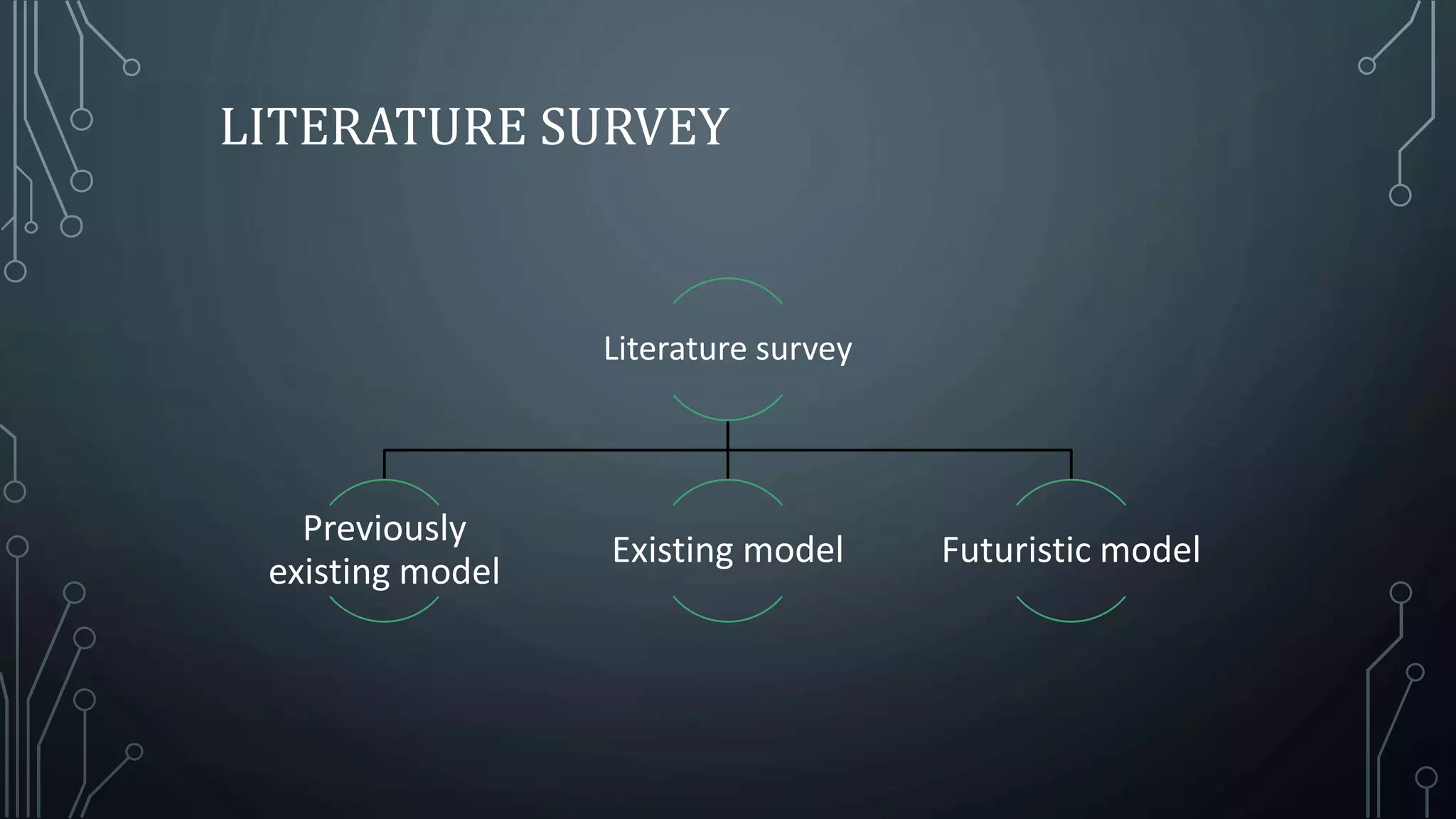
LITERATURE SURVEY
Literature survey
Previously
existing model
Existing model Futuristic model
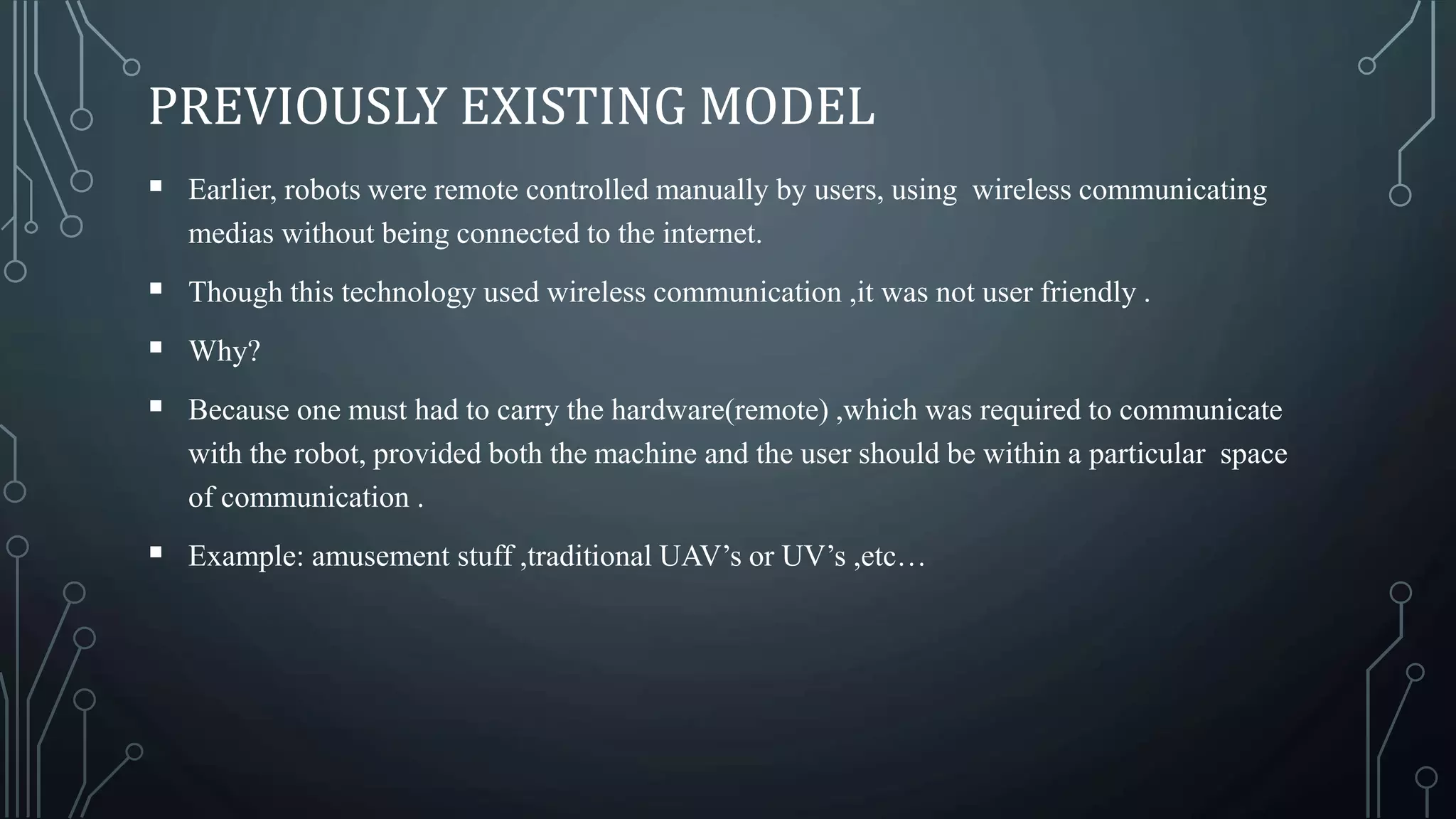
PREVIOUSLY EXISTING MODEL
 Earlier, robots were remote controlled manually by users, using wireless communicating
medias without being connected to the internet.
 Though this technology used wireless communication ,it was not user friendly .
 Why?
 Because one must had to carry the hardware(remote) ,which was required to communicate
with the robot, provided both the machine and the user should be within a particular space
of communication .
 Example: amusement stuff ,traditional UAV’s or UV’s ,etc…
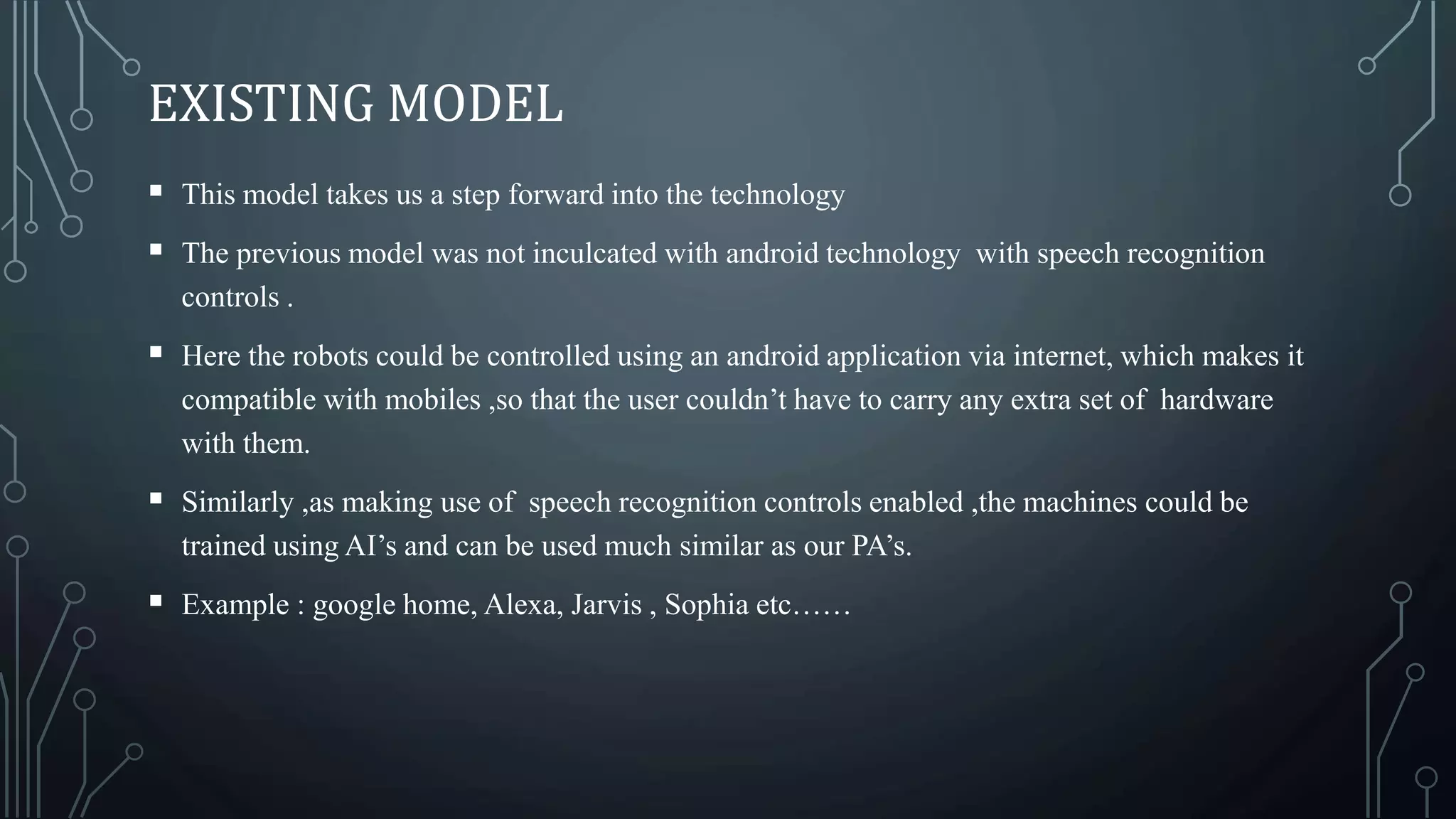
EXISTING MODEL
 This model takes us a step forward into the technology
 The previous model was not inculcated with android technology with speech recognition
controls .
 Here the robots could be controlled using an android application via internet, which makes it
compatible with mobiles ,so that the user couldn’t have to carry any extra set of hardware
with them.
 Similarly ,as making use of speech recognition controls enabled ,the machines could be
trained using AI’s and can be used much similar as our PA’s.
 Example : google home, Alexa, Jarvis , Sophia etc……
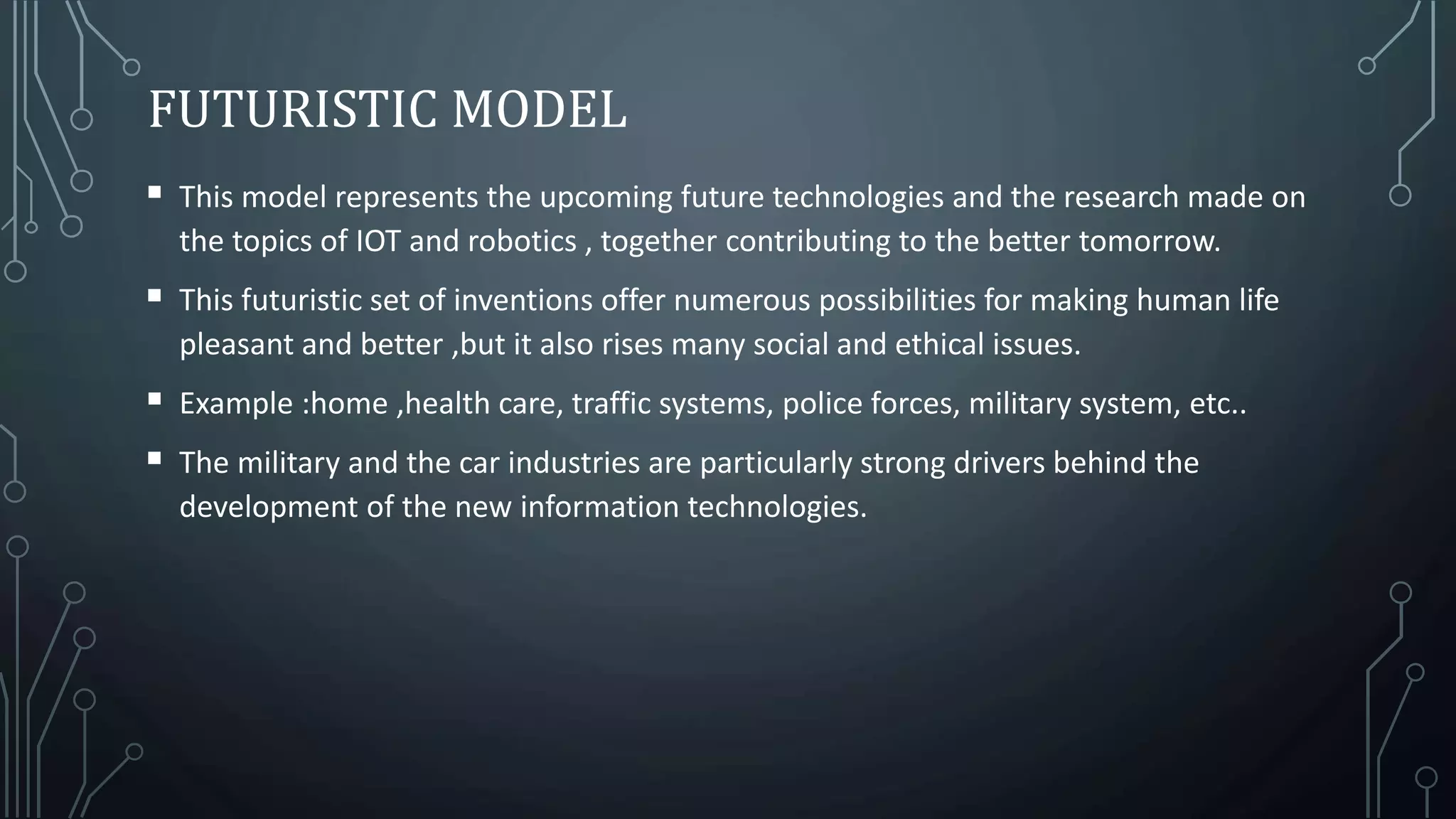
FUTURISTIC MODEL
 This model represents the upcoming future technologies and the research made on
the topics of IOT and robotics , together contributing to the better tomorrow.
 This futuristic set of inventions offer numerous possibilities for making human life
pleasant and better ,but it also rises many social and ethical issues.
 Example :home ,health care, traffic systems, police forces, military system, etc..
 The military and the car industries are particularly strong drivers behind the
development of the new information technologies.
GAP IDENTIFY
 Designing the robotic vehicle, which only responds to the retained voice module using
both voice and speech recognition .
 This is achieved through the artificial intelligence and machine learning.
o Why voice recognition?
voice recognition is the process of capturing spoken and commands using a microphone
and converting them into a digitally stored set of words .Speech recognition typically
disregards the language and meaning to detect the physical person behind the speech.
Factors which decide the accuracy of the proposed voice
recognition system:
 Accuracy in detecting the human words.
 Processing those words at the desired speed so that the commands are
executed with the least delay.
 Spacing in between the conversation , i.e, it should avoid sudden reply
when user is giving command.
 Rate of speech .
OBJECTIVES OF THE PROPOSED WORK
 The main objective of the project is to control the robotic vehicle in a desired position.
 Also, to control the robot by the voice or push buttons.
 Human robotic interaction is achieved.
 The goal of the voice controlled robot is to listen and act on the commands received from
the user.
 The proposed system makes use of IFTTT and ADAFRUIT platform.
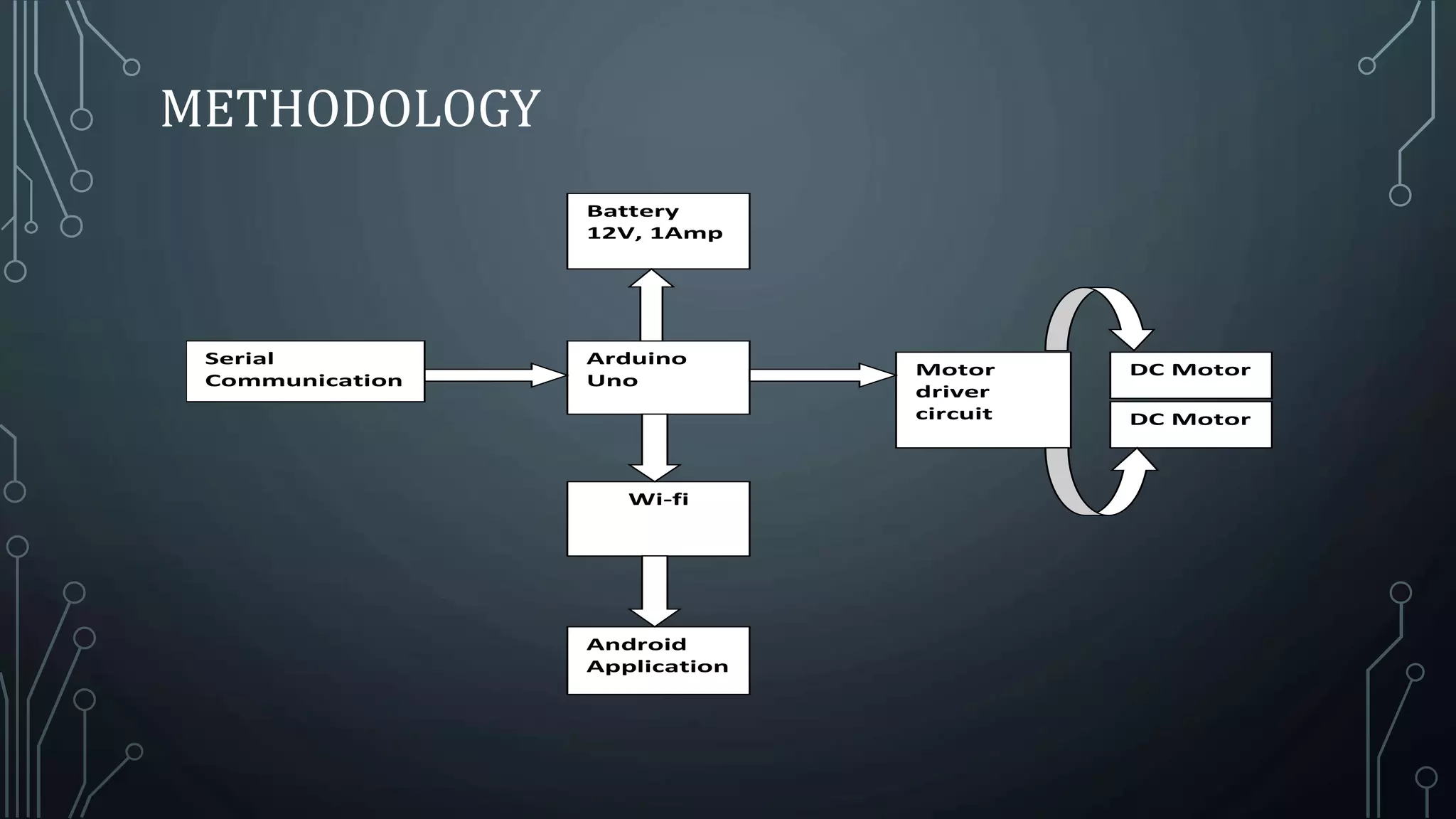
 Node MCU is used along with L293D motor drivers and a battery for power source.
 So while surveying , on which platform or operating system the project has to be
implemented ,we choose android for the following reasons:
1. android is a open source platform.
2.supports multifunction.
3.provides rich tools to make interactive application.
 Using this application we can control the robotic vehicle by using personal computers.
 And also this could be designed to control a robotic vehicle by voice commands and
manual control for remote operations.
METHODOLOGY
Arduino
Uno
Battery
12V, 1Amp
Wi-fi
Android
Application
Motor
driver
circuit
DC Motor
DC Motor
Serial
Communication
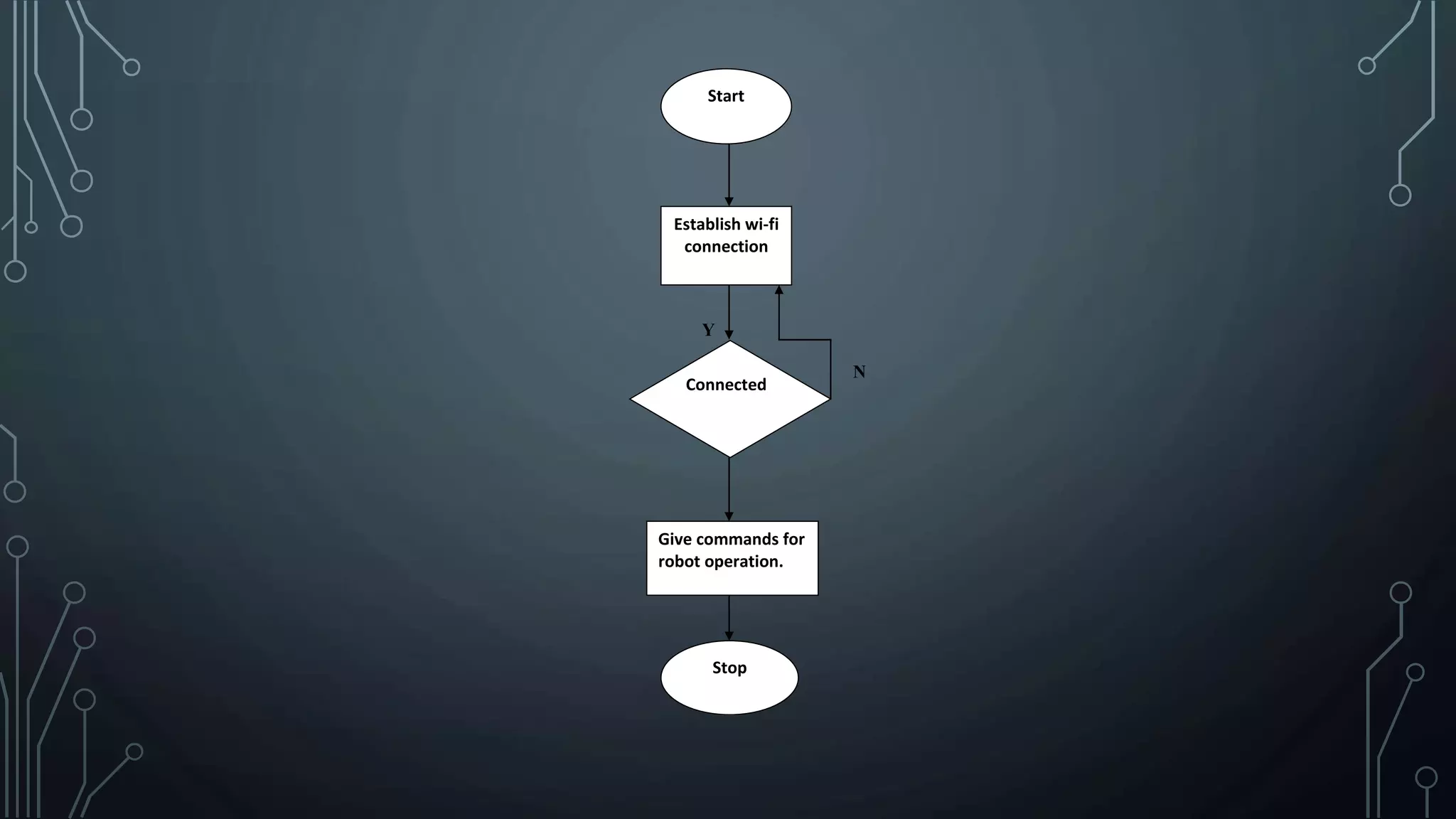
Y
N
Start
Establish wi-fi
connection
Connected
Give commands for
robot operation.
Stop
EXPECTED OUTCOMES AND FURTHER ENHANCEMENT
OF THE PROPOSED STUDY
 The main goal of this project is to bring the functionalities of a robot service in a cheep and
onto a mobile device .
 It should be operated in remote areas by establishing connection with internet.
 The robot should be able to operate in hostile situations where human interfering could be
dangerous.
 In addition we can mount a wide range of available sensors on it ,depending upon the
situational awareness .
 Also a cloud database system could be imparted for the storage and analysis of the read
data from sensors.
 Image processing can be implemented in the robot to detect the minute details of the
object or a person.

INTERNET OF THINGS [Voice Controlled Robotic Vehicle]

  • 1.
  • 3.
  • 4.
    INTRODUCTION  In theproposed design ,we wish to control the movements of the vehicle using voice commands from the user .  These commands will be issued at the android application on the users phone which is connected to the robot using a wi-fi module.  The goal of voice controlled robotic vehicle (VCRV) is to listen and act on the commands received from the user.  Here, the system will require the training from the user(for the accent)after which the device will start understanding the commands issued.  This is done by adding commands to the controller through a code and by middleware applications.
  • 5.
    LITERATURE SURVEY Literature survey Previously existingmodel Existing model Futuristic model
  • 6.
    PREVIOUSLY EXISTING MODEL Earlier, robots were remote controlled manually by users, using wireless communicating medias without being connected to the internet.  Though this technology used wireless communication ,it was not user friendly .  Why?  Because one must had to carry the hardware(remote) ,which was required to communicate with the robot, provided both the machine and the user should be within a particular space of communication .  Example: amusement stuff ,traditional UAV’s or UV’s ,etc…
  • 7.
    EXISTING MODEL  Thismodel takes us a step forward into the technology  The previous model was not inculcated with android technology with speech recognition controls .  Here the robots could be controlled using an android application via internet, which makes it compatible with mobiles ,so that the user couldn’t have to carry any extra set of hardware with them.  Similarly ,as making use of speech recognition controls enabled ,the machines could be trained using AI’s and can be used much similar as our PA’s.  Example : google home, Alexa, Jarvis , Sophia etc……
  • 8.
    FUTURISTIC MODEL  Thismodel represents the upcoming future technologies and the research made on the topics of IOT and robotics , together contributing to the better tomorrow.  This futuristic set of inventions offer numerous possibilities for making human life pleasant and better ,but it also rises many social and ethical issues.  Example :home ,health care, traffic systems, police forces, military system, etc..  The military and the car industries are particularly strong drivers behind the development of the new information technologies.
  • 9.
    GAP IDENTIFY  Designingthe robotic vehicle, which only responds to the retained voice module using both voice and speech recognition .  This is achieved through the artificial intelligence and machine learning. o Why voice recognition? voice recognition is the process of capturing spoken and commands using a microphone and converting them into a digitally stored set of words .Speech recognition typically disregards the language and meaning to detect the physical person behind the speech.
  • 10.
    Factors which decidethe accuracy of the proposed voice recognition system:  Accuracy in detecting the human words.  Processing those words at the desired speed so that the commands are executed with the least delay.  Spacing in between the conversation , i.e, it should avoid sudden reply when user is giving command.  Rate of speech .
  • 11.
    OBJECTIVES OF THEPROPOSED WORK  The main objective of the project is to control the robotic vehicle in a desired position.  Also, to control the robot by the voice or push buttons.  Human robotic interaction is achieved.  The goal of the voice controlled robot is to listen and act on the commands received from the user.  The proposed system makes use of IFTTT and ADAFRUIT platform.  Node MCU is used along with L293D motor drivers and a battery for power source.
  • 12.
     So whilesurveying , on which platform or operating system the project has to be implemented ,we choose android for the following reasons: 1. android is a open source platform. 2.supports multifunction. 3.provides rich tools to make interactive application.  Using this application we can control the robotic vehicle by using personal computers.  And also this could be designed to control a robotic vehicle by voice commands and manual control for remote operations.
  • 13.
  • 14.
  • 15.
    EXPECTED OUTCOMES ANDFURTHER ENHANCEMENT OF THE PROPOSED STUDY  The main goal of this project is to bring the functionalities of a robot service in a cheep and onto a mobile device .  It should be operated in remote areas by establishing connection with internet.  The robot should be able to operate in hostile situations where human interfering could be dangerous.  In addition we can mount a wide range of available sensors on it ,depending upon the situational awareness .  Also a cloud database system could be imparted for the storage and analysis of the read data from sensors.  Image processing can be implemented in the robot to detect the minute details of the object or a person.