INTERNET
BANKING
 History
 Definition
 Types
 Services
 Working
 Advantages
 Disadvantages
 Security tips
 Conclusion
Contents
Online services started in New York in 1981
when four of the city’s major banks :
 Citibank
 Chase Manhattan
 Chemical
 Manufacturers Hanover offered home
banking services using the videotext system.
 In India ICICI bank started internet bank
services in 1996.
History
o Internet Banking allows you to
conduct bank transactions online,
instead of finding a bank and
interacting with a teller.
o In a broad sense, it is the use of
electronic means to transfer funds
directly from one account to
another, rather than by cheque or
cash.
What is Internet Banking
?
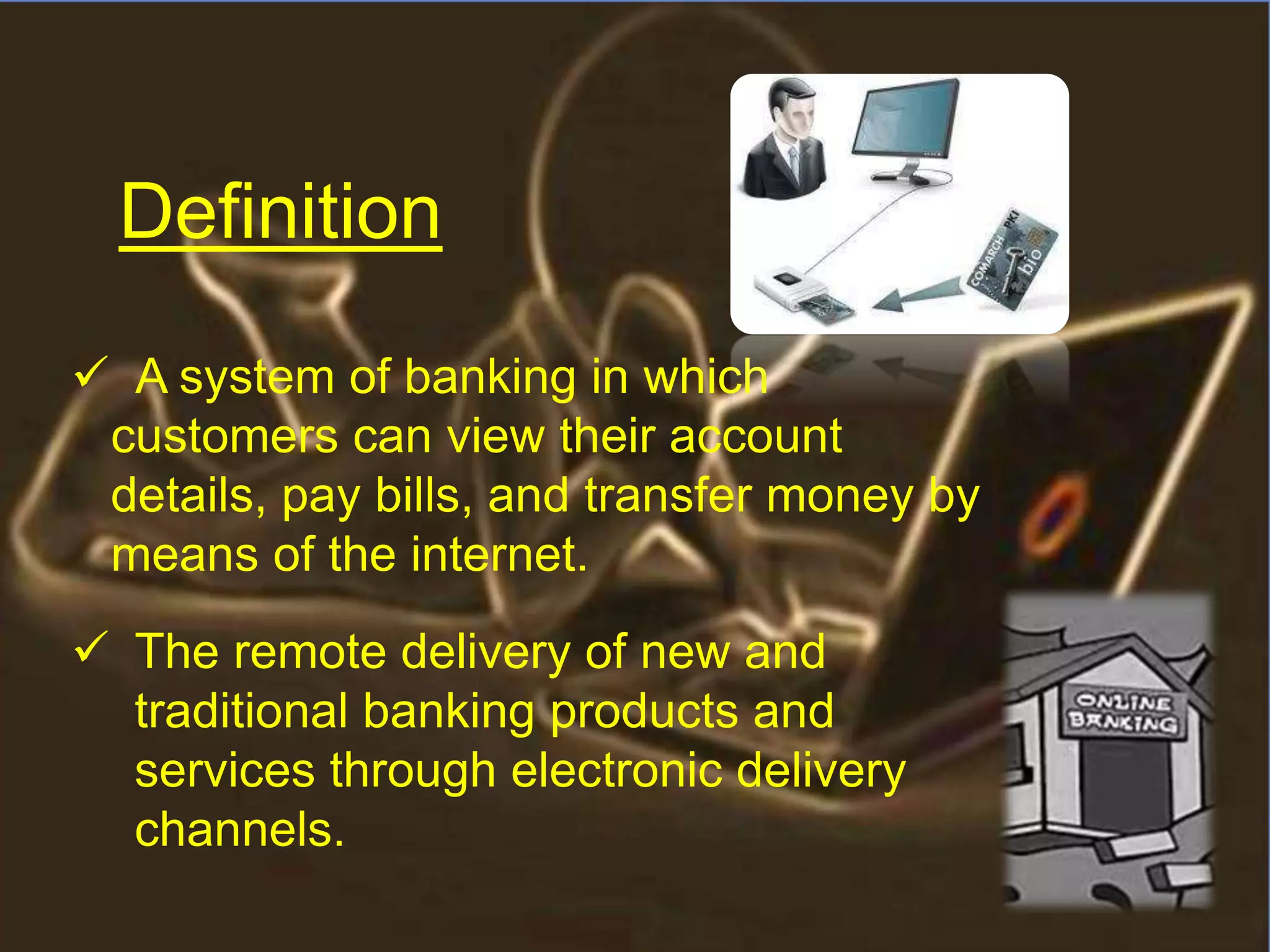
 A system of banking in which
customers can view their account
details, pay bills, and transfer money by
means of the internet.
 The remote delivery of new and
traditional banking products and
services through electronic delivery
channels.
Definition
 PC Banking
 Digital TV Banking
 Text Phone Banking
 Internet Banking
Types
 Bill Payment
 Credit Card
 Insurance
 Customer services
 Recharging your phone/DTH
 Shopping
Services
Step 1: Access Internet Banking - Obtain your User
ID and Passwords.
Step 2: Create your Own Unique User ID.
Step 3: Link the Account Number to your User ID
Who can use internet banking
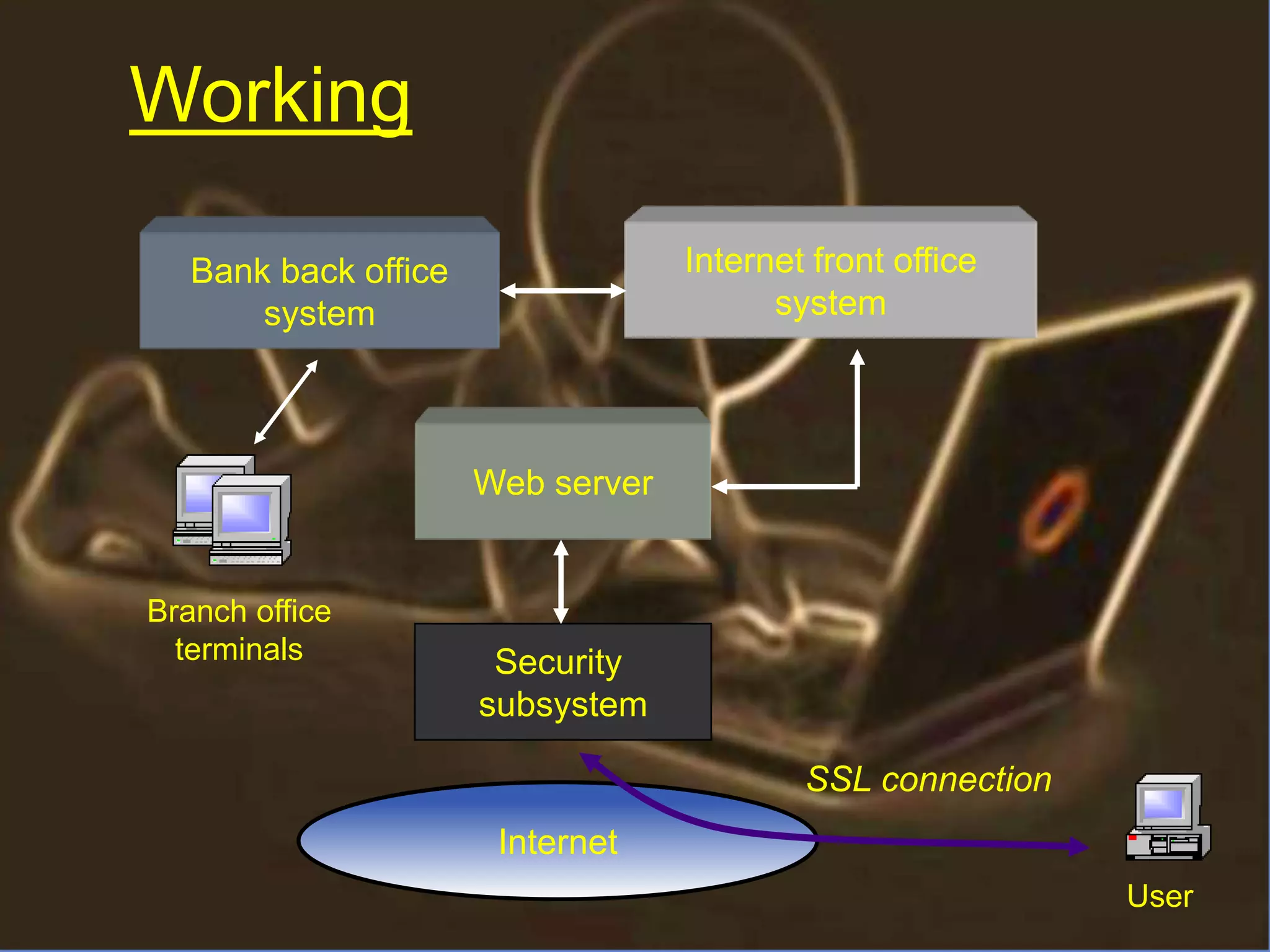
Web server
Internet front office
system
Bank back office
system
Internet
Security
subsystem
Branch office
terminals
User
SSL connection
Working
 Cost less
 Transaction speed
 Efficiency
 Speed banking
 Vast coverage
Advantages
 Security problems
 Learning difficulties
 Lack of skilled personnel
 Technical breakdowns
 Long start up time
 Hacking of Accounts
Disadvantages
 Increasing number of fraudulent websites
 Fake emails purporting to be sent from
banks
 Use of trojan horse programs to capture
user ids and password by Hackers. Hackers
are those individuals with excellent
computer skills with the ability to create and
explore computer’s software
Security Risks
• Ensuring security while banking online, is to keep
your password and pin number a secret.
• Make sure that you are on correct website.
• The security of your personal computer is very
important for safe internet banking. Therefore,
always install antivirus software and software to
remove spyware.
• To defend cyber attacks use IPS, Firewall in Your
device and encrypt your data.
Security Tips
 While banking through the internet, make sure that
the banking session is secure.
Checking your bank statements regularly will help
you detect any transaction that has taken place
without your knowledge.
 In addition, always remember to completely log off,
log off, after completing the banking session.
 Nowadays, the banking institutions have come up
up with a number of safety measures for ensuring
ensuring secure internet banking. Like OTPs, 3D
3D secure pin etc.
Do not download or click on the links sent to
you by strangers, it may contain malicious
software or data which affects your device.
Periodically change your passwords
If you think something is wrong with your
account report immediately to bank.
 The strategy of bank is to provide value
added services and products to the
consumer, utilizing the internet extensively.
 The main aim of E-banking is to making
transactions through online poses and make
customer more beneficial
Conclusion
Any Question?
THANK YOU

Internet Banking by Chethan Raju

  • 1.
  • 2.
     History  Definition Types  Services  Working  Advantages  Disadvantages  Security tips  Conclusion Contents
  • 3.
    Online services startedin New York in 1981 when four of the city’s major banks :  Citibank  Chase Manhattan  Chemical  Manufacturers Hanover offered home banking services using the videotext system.  In India ICICI bank started internet bank services in 1996. History
  • 4.
    o Internet Bankingallows you to conduct bank transactions online, instead of finding a bank and interacting with a teller. o In a broad sense, it is the use of electronic means to transfer funds directly from one account to another, rather than by cheque or cash. What is Internet Banking ?
  • 5.
     A systemof banking in which customers can view their account details, pay bills, and transfer money by means of the internet.  The remote delivery of new and traditional banking products and services through electronic delivery channels. Definition
  • 6.
     PC Banking Digital TV Banking  Text Phone Banking  Internet Banking Types
  • 7.
     Bill Payment Credit Card  Insurance  Customer services  Recharging your phone/DTH  Shopping Services
  • 8.
    Step 1: AccessInternet Banking - Obtain your User ID and Passwords. Step 2: Create your Own Unique User ID. Step 3: Link the Account Number to your User ID Who can use internet banking
  • 9.
    Web server Internet frontoffice system Bank back office system Internet Security subsystem Branch office terminals User SSL connection Working
  • 10.
     Cost less Transaction speed  Efficiency  Speed banking  Vast coverage Advantages
  • 11.
     Security problems Learning difficulties  Lack of skilled personnel  Technical breakdowns  Long start up time  Hacking of Accounts Disadvantages
  • 12.
     Increasing numberof fraudulent websites  Fake emails purporting to be sent from banks  Use of trojan horse programs to capture user ids and password by Hackers. Hackers are those individuals with excellent computer skills with the ability to create and explore computer’s software Security Risks
  • 13.
    • Ensuring securitywhile banking online, is to keep your password and pin number a secret. • Make sure that you are on correct website. • The security of your personal computer is very important for safe internet banking. Therefore, always install antivirus software and software to remove spyware. • To defend cyber attacks use IPS, Firewall in Your device and encrypt your data. Security Tips
  • 14.
     While bankingthrough the internet, make sure that the banking session is secure. Checking your bank statements regularly will help you detect any transaction that has taken place without your knowledge.  In addition, always remember to completely log off, log off, after completing the banking session.  Nowadays, the banking institutions have come up up with a number of safety measures for ensuring ensuring secure internet banking. Like OTPs, 3D 3D secure pin etc.
  • 15.
    Do not downloador click on the links sent to you by strangers, it may contain malicious software or data which affects your device. Periodically change your passwords If you think something is wrong with your account report immediately to bank.
  • 16.
     The strategyof bank is to provide value added services and products to the consumer, utilizing the internet extensively.  The main aim of E-banking is to making transactions through online poses and make customer more beneficial Conclusion
  • 17.
  • 18.