Internationalization for Software Business
Benefits and Investment to Cross Borders
Ernani Ferrari
ernani.ferrari@mondostrategies.com
08/24/2016
Brazilian Association
ofSoftwareCompanies
Summary
Internationalization is a pathway not only for
growth, but also to protect acquired market share
Internationalization should be a strategic,
planned move, and not something casuistic. It
should, therefore, be planned and executed with
care and proper investment
Internationalization is a company-wide
movement, not something of a single department.
It encompasses products, processes, people and
time – just like a local new operation does
Markets in perspective:
IT in Brazil expends only 3% of global IT
expenditures
The entire Chilean market is as big as Santa
Catarina’s market
AGENDA
Why go international?
When go international?
Requirements to enter new markets
Choosing markets
How to put the required resources
in place
Other considerations
Summary: Roadmap for Going
International
Internationalization (I18N)
Adaptation of products and
processes to support
international environments and
to simplify the implementation
of localizations
Internationalization and
Localization
Localization (L10N)
Adaptation of products and
processes for a specific market
(country)
Operational Aspects
Internationalization
Doing business in more than
one country
Business
Why Go International?
Distribution of the global IT market
Internationalization has become mandatory for the
medium and long term
Entering new markets
Sustaining market share in local markets
• Globalization. Where are (were?) the borders?
• Growth and attack of large, international players
• Clients are also going international
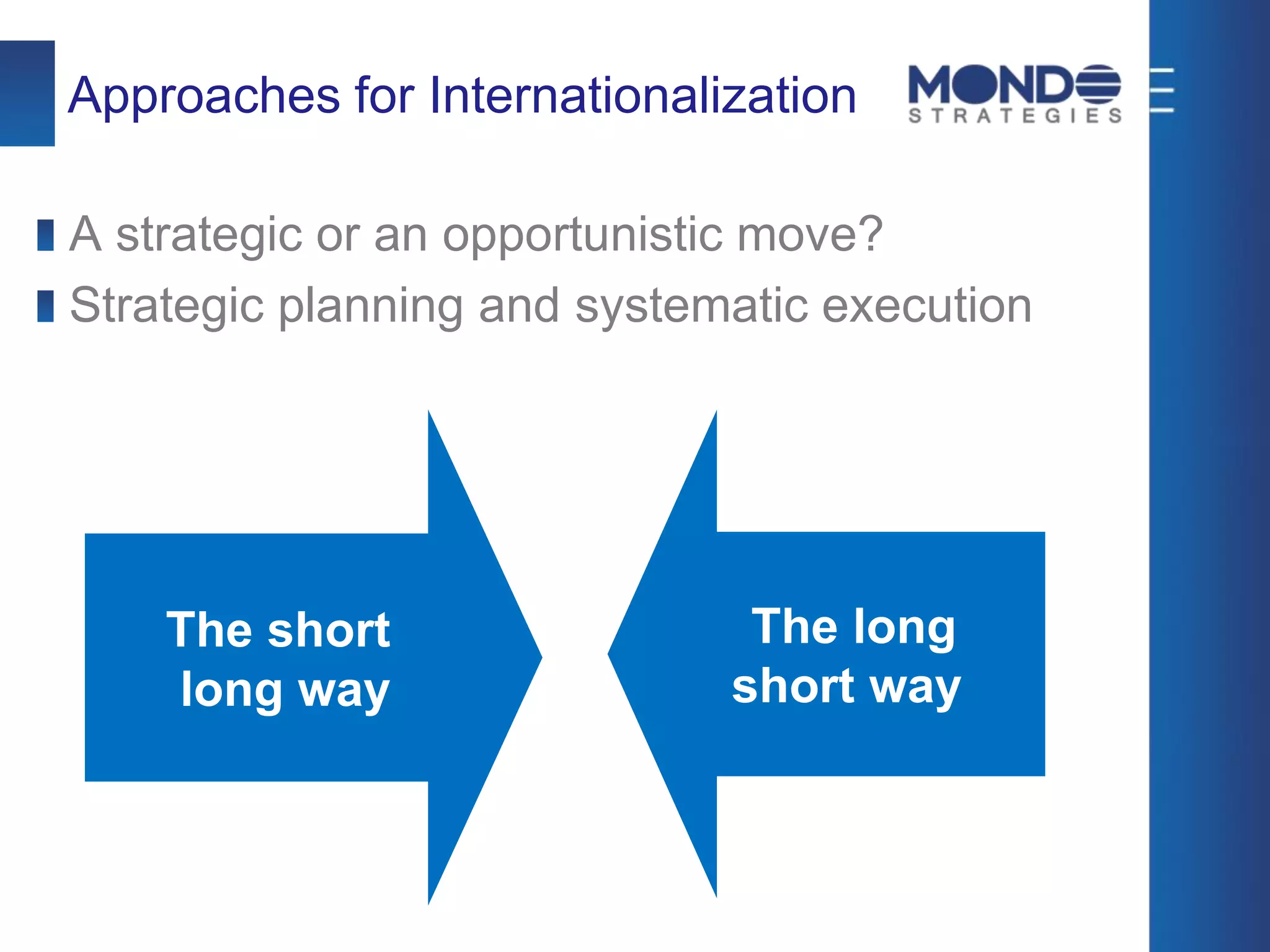
Approaches for Internationalization
A strategic or an opportunistic move?
Strategic planning and systematic execution
The short
long way
The long
short way
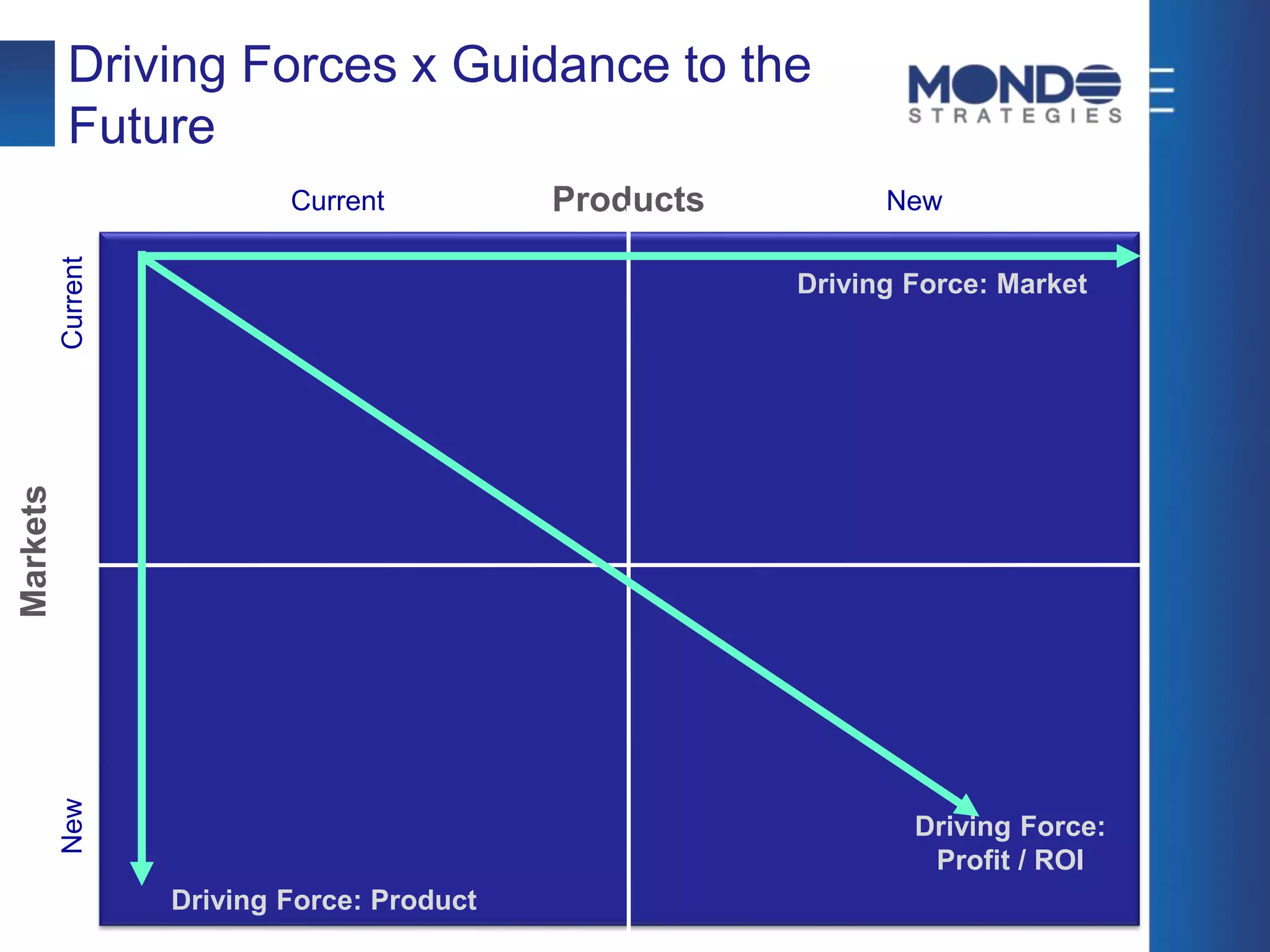
Driving Forces x Guidance to the
Future
Markets
CurrentNew
Current NewProducts
Driving Force: Market
Driving Force: Product
Driving Force:
Profit / ROI
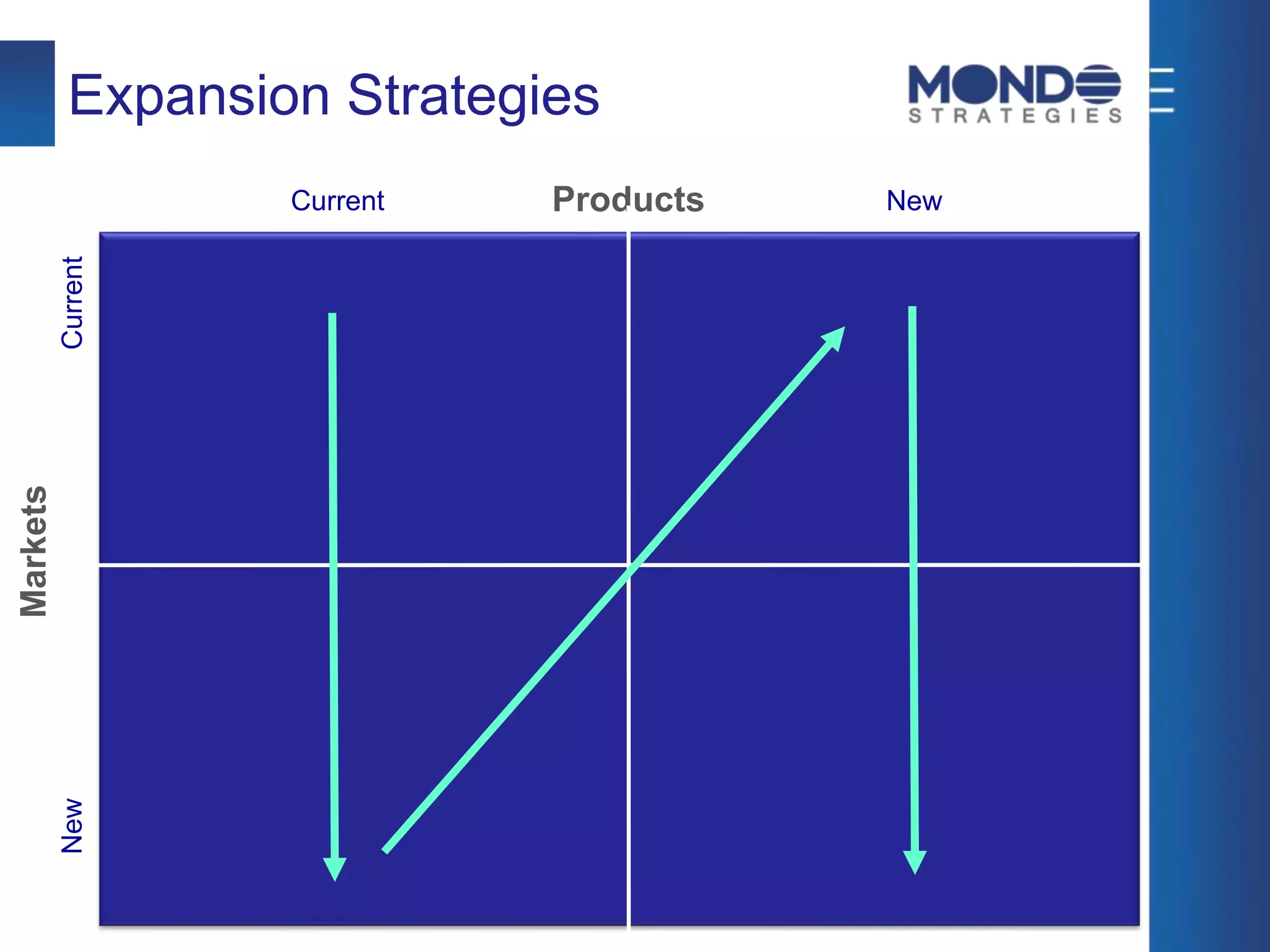
Expansion Strategies
Markets
CurrentNew
Current NewProducts
Planejamento
Business Objectives – Market Expansion
Operational Objectives
Reduction of time-to-market
Reduction of costs from “trial-and-error” approaches
Reduction of costs for product adaptation
Better product adherence to the chosen markets
Reduction of risks and liabilities
Preparation for faster, more adequate responses to
the chosen markets
Investment optimization – directions and anticipation
of requirements
Tax benefits
Planejamento
Business Objectives – Market Expansion
Operational Objectives
Reduction of time-to-market
Reduction of costs from “trial-and-error” approaches
Reduction of costs for product adaptation
Better product adherence to the chosen markets
Reduction of risks and liabilities
Preparation for faster, more adequate responses to
the chosen markets
Investment optimization – directions and anticipation
of requirements
Tax benefits
We reap what we sow...
Internationalizing a Software
Company
ORGANIZATION
INTERNAL
CULTURE
PROCESSES
PRODUCTS
Requirements for Going International
Understanding the methodological, technological,
organizational and marketing aspects that are fundamental
for the productivity and quality required at international levels
Visibility over the local and international competition
Conception of business approaches – strategies and tactics
Education of management and operational staff
Software processes – methodologies, techniques, best
practices and tools
Knowledge management
Contact centers and remote customer support
Services – consulting, software implementation, technical
support
Project management
Applied technologies
Internationalization of software and business processes
From a business perspective:
What is necessary to be succesful in your
current market?
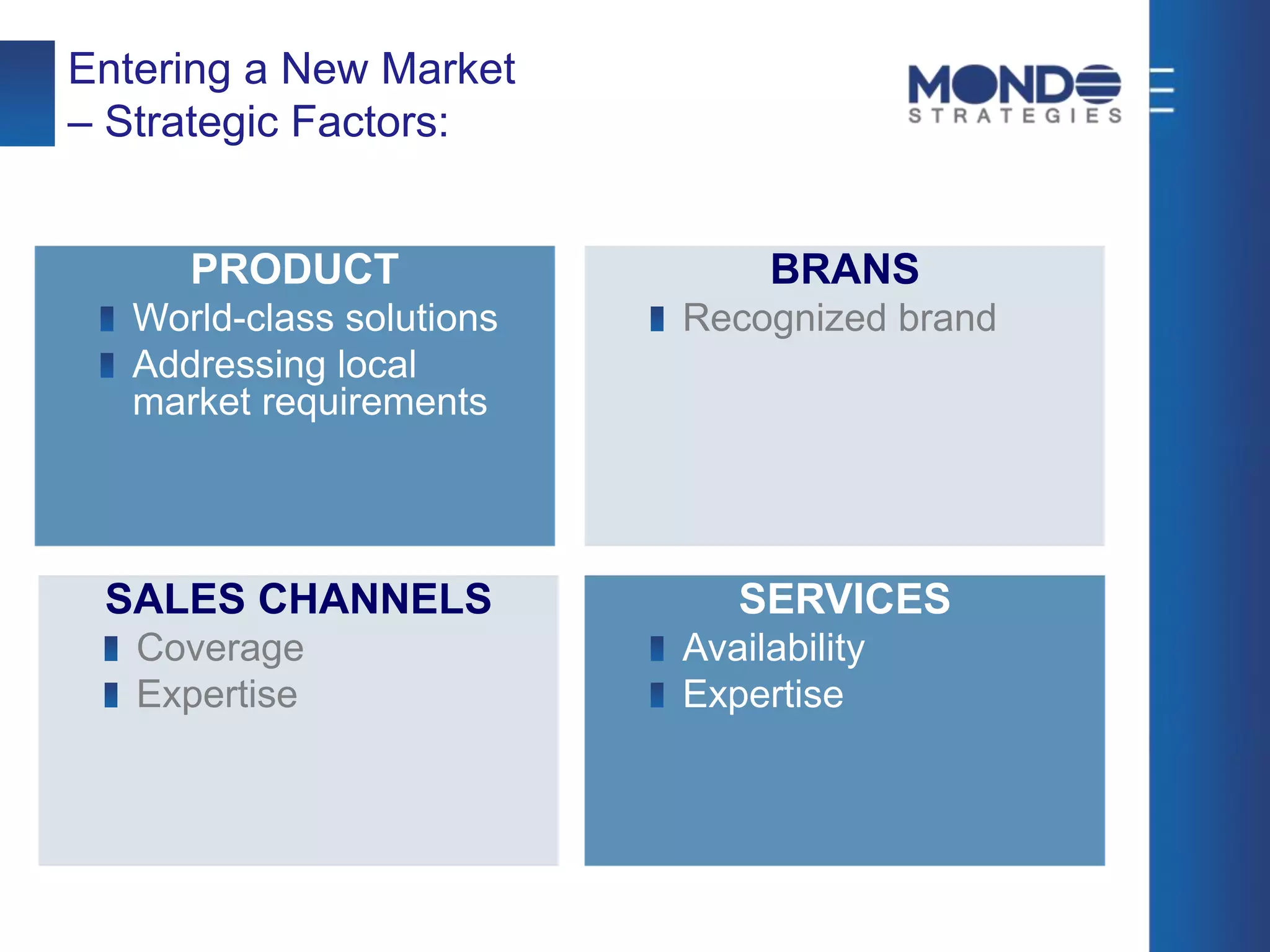
Entering a New Market
– Strategic Factors:
PRODUCT
World-class solutions
Addressing local
market requirements
BRANS
Recognized brand
SALES CHANNELS
Coverage
Expertise
SERVICES
Availability
Expertise
Business Model
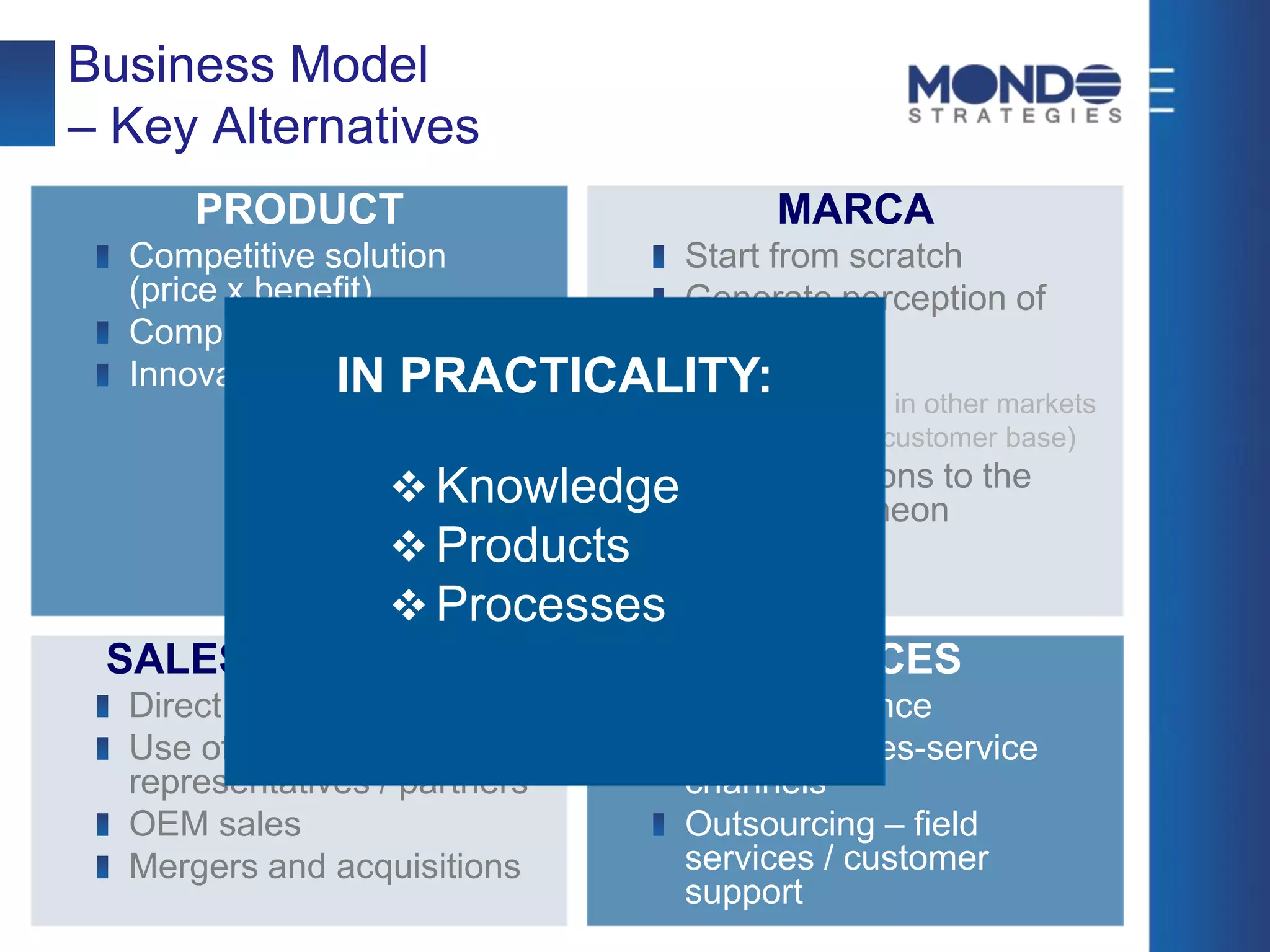
– Key Alternatives
PRODUCT
Competitive solution
(price x benefit)
Complementary solution
Innovative solution
MARCA
Start from scratch
Generate perception of
presence
 Size
 Market-share in other markets
 References (customer base)
Attach solutions to the
brand of someon
established
SALES CHANNELS
Direct sales
Use of distributors /
representatives / partners
OEM sales
Mergers and acquisitions
SERVICES
Direct presence
Service / sales-service
channels
Outsourcing – field
services / customer
support
Business Model
– Key Alternatives
PRODUCT
Competitive solution
(price x benefit)
Complementary solution
Innovative solution
MARCA
Start from scratch
Generate perception of
presence
 Size
 Market-share in other markets
 References (customer base)
Attach solutions to the
brand of someon
established
SALES CHANNELS
Direct sales
Use of distributors /
representatives / partners
OEM sales
Mergers and acquisitions
SERVICES
Direct presence
Service / sales-service
channels
Outsourcing – field
services / customer
support
IN PRACTICALITY:
 Knowledge
 Products
 Processes
Market Segmentation
Current and
potential
segments
Segments
that are(or will
be) attractive
Attractive
segments for
which we are
(or can be)
strong
Assets for
positioning and
results in the
chosen
segments
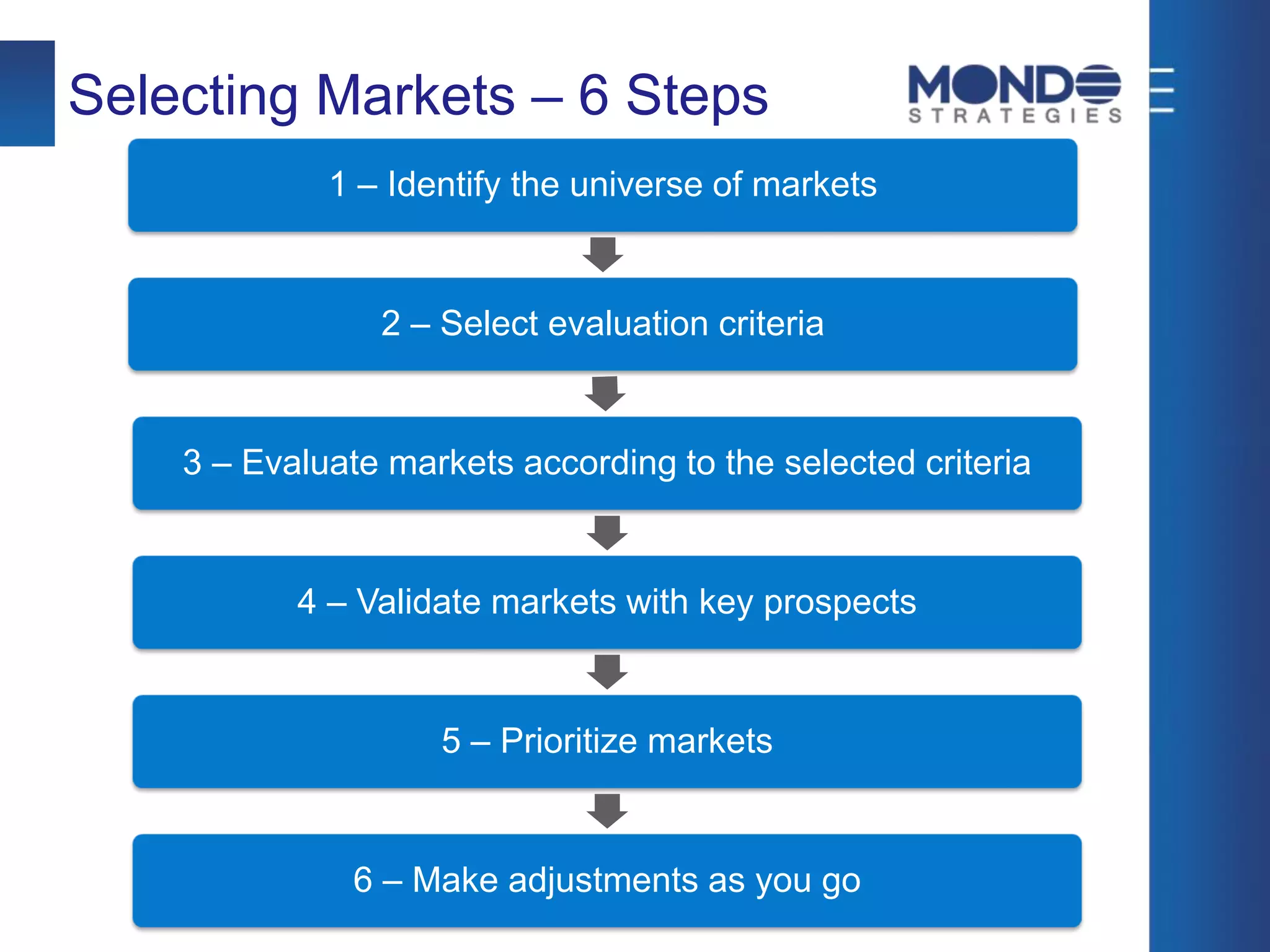
Selecting Markets – 6 Steps
1 – Identify the universe of markets
2 – Select evaluation criteria
3 – Evaluate markets according to the selected criteria
4 – Validate markets with key prospects
5 – Prioritize markets
6 – Make adjustments as you go
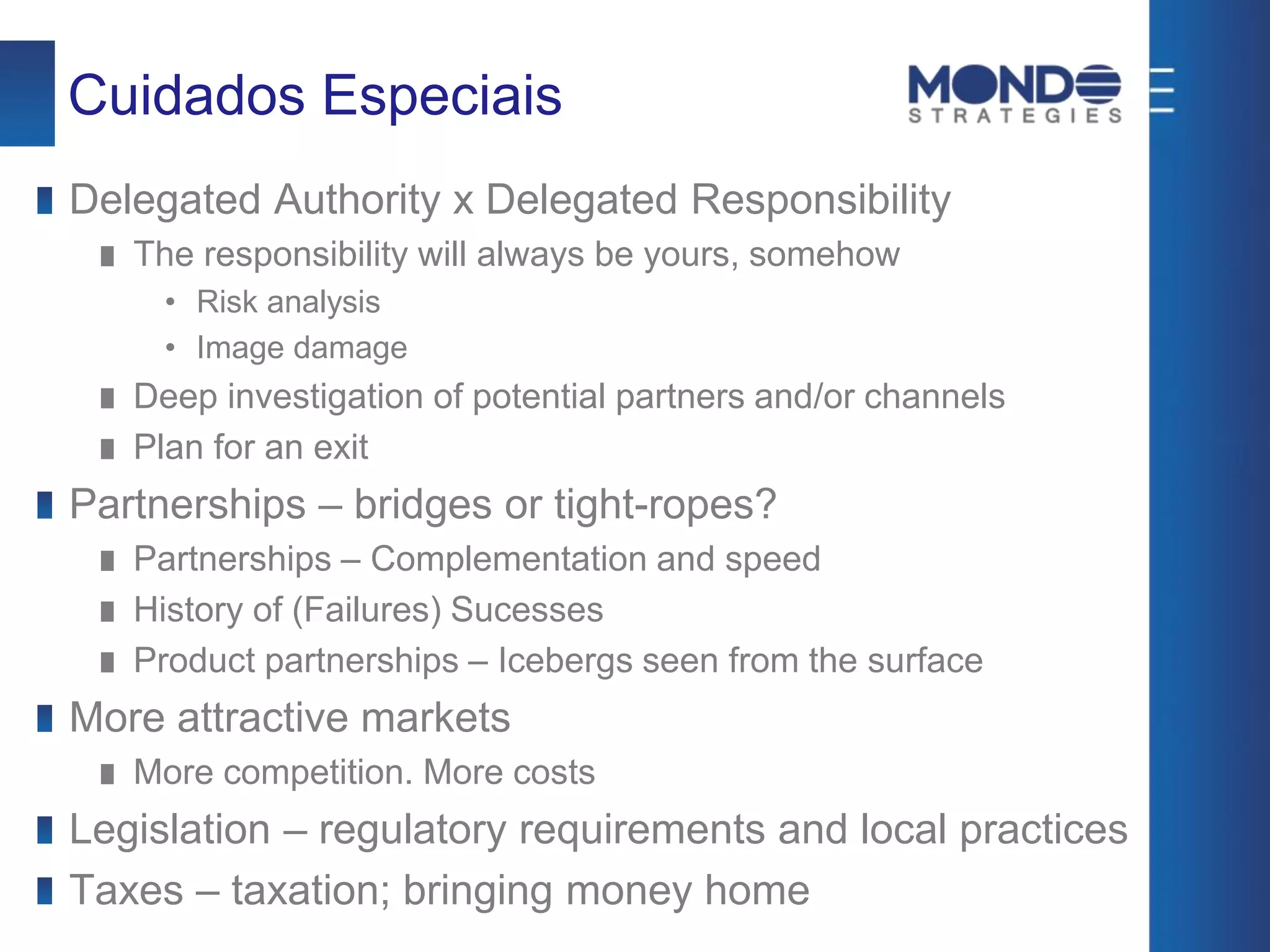
Cuidados Especiais
Delegated Authority x Delegated Responsibility
The responsibility will always be yours, somehow
• Risk analysis
• Image damage
Deep investigation of potential partners and/or channels
Plan for an exit
Partnerships – bridges or tight-ropes?
Partnerships – Complementation and speed
History of (Failures) Sucesses
Product partnerships – Icebergs seen from the surface
More attractive markets
More competition. More costs
Legislation – regulatory requirements and local practices
Taxes – taxation; bringing money home
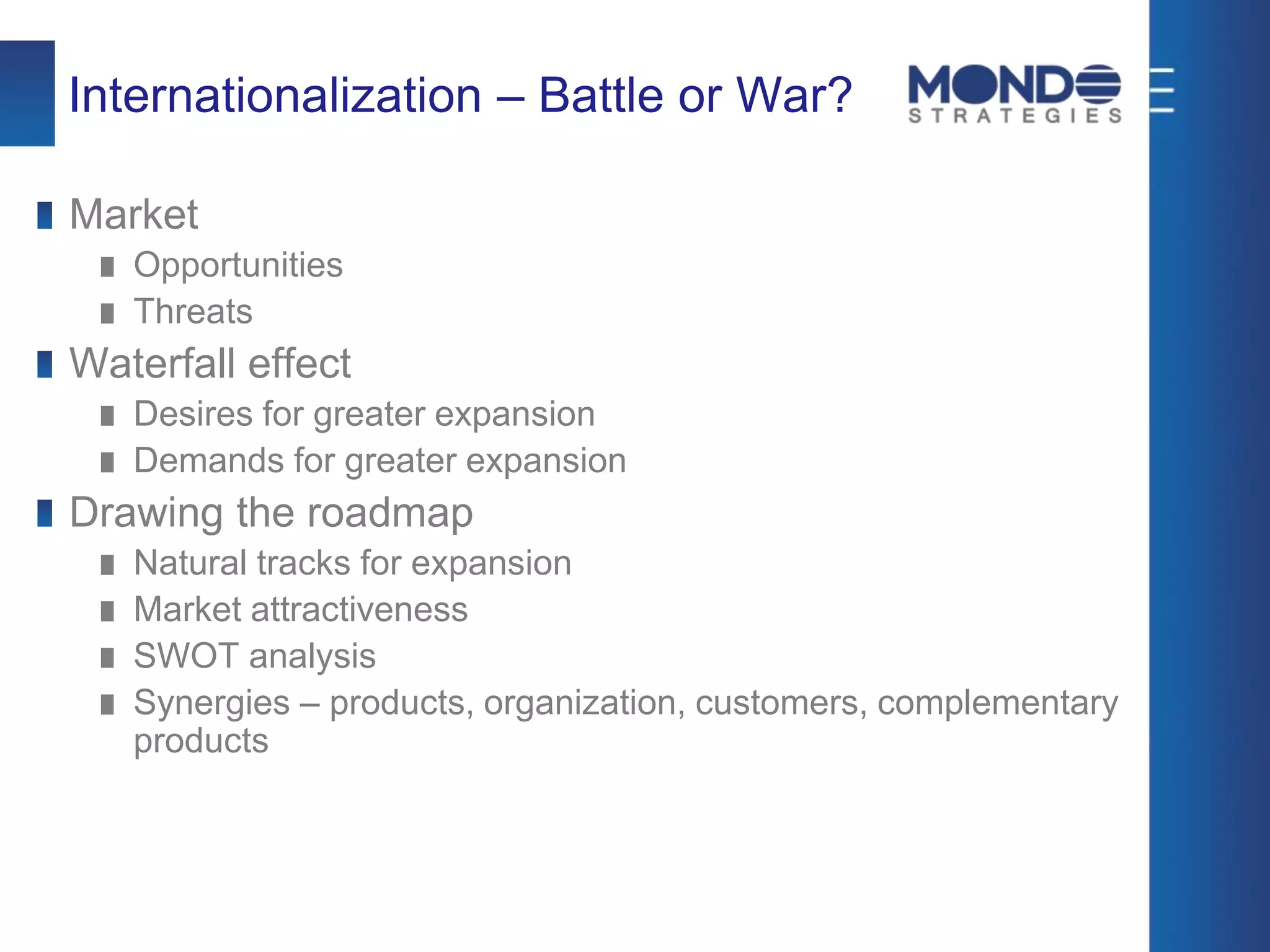
Internationalization – Battle or War?
Market
Opportunities
Threats
Waterfall effect
Desires for greater expansion
Demands for greater expansion
Drawing the roadmap
Natural tracks for expansion
Market attractiveness
SWOT analysis
Synergies – products, organization, customers, complementary
products
Product Internationalization
Key Requirements
Addressing the target markets’ requirements
Assessment of the available solutions – potential competition
Product functionality
Common international features
Flexibility for adaptation and re-configuration
Architecture – Technical and Functional
Ease for localizations (and customizations)
• Functional modularization for component reuse
• Personalization resources; flexible user interfaces
• Internationalized business rules
• Localizations independence
• Handling of data format / display
Languages
• Externalized labels
• UIs of dynamic configuration
• Double byte characters
• Multiple text formats and abbreviations
• Variable text lengths for different languages
Documentation – Functional; Technical
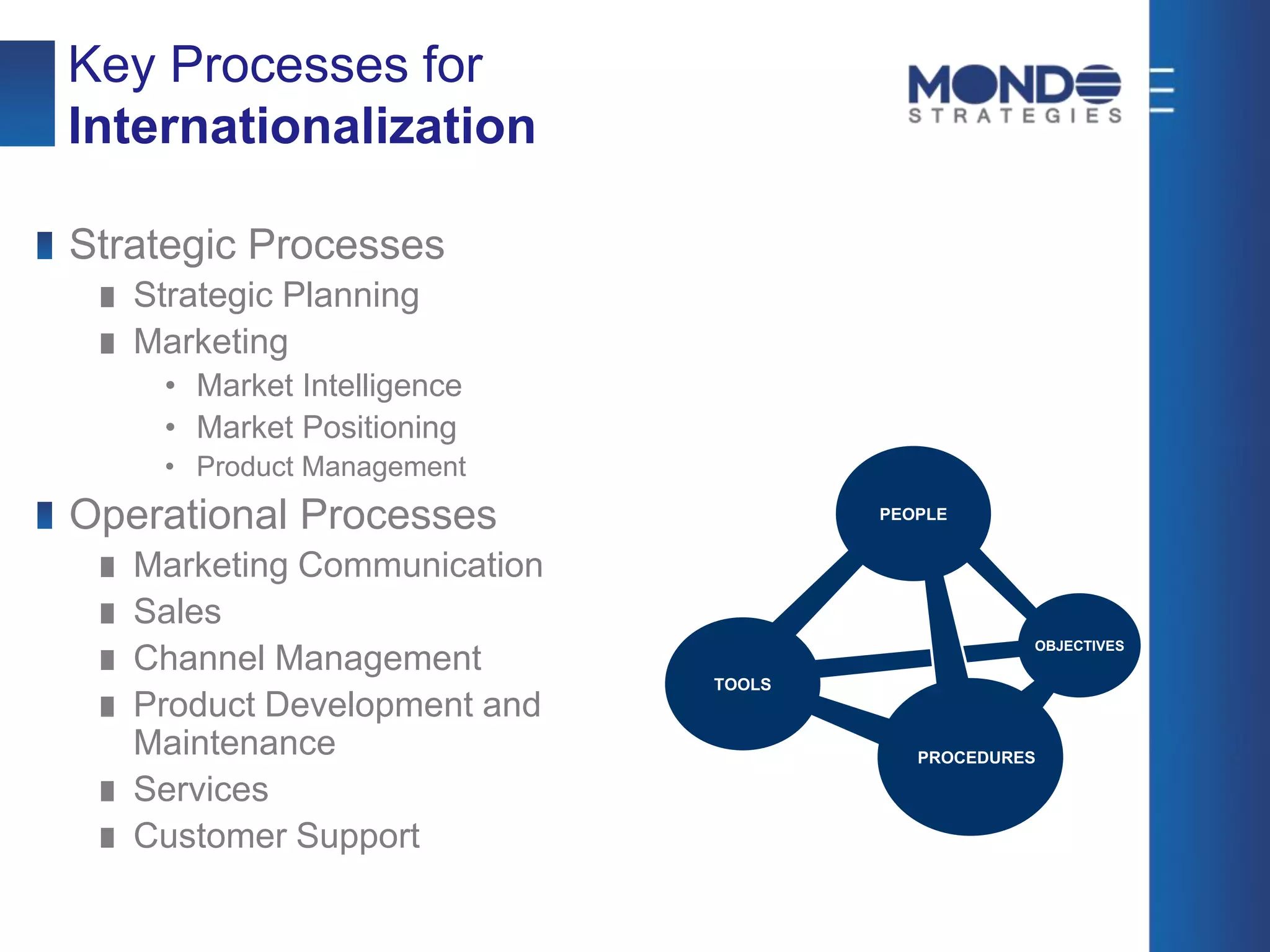
Key Processes for
Internationalization
Strategic Processes
Strategic Planning
Marketing
• Market Intelligence
• Market Positioning
• Product Management
Operational Processes
Marketing Communication
Sales
Channel Management
Product Development and
Maintenance
Services
Customer Support
PEOPLE
PROCEDURES
TOOLS
OBJECTIVES
Product Localization
Aspects to Address
Legal Aspects
Legislation
Mandatory standards
Documentation
Business Practices
Lore and habits
Informal market standards
Economy and market adaptations
Technology context
Cost of resources – human, infrastructrure, financial,
technological
Language
Language and dialets
Slangs and regional expressions
Culture – formality, foreign terms
Process Localization
Aspects to Address
Strategic Processes
Marketing
• Market Intelligence
• Market Positioning
• Product Management
Operational Processes
Marketing Communication
Sales
Channel Management
Product Development and Maintenance
Services
Customer Support
PEOPLE
PROCEDURES
TOOLS
OBJECTIVES
Roadmap to the
World
Roadmap to the World
Evaluate the potential markets. Identify the opportunities
Make thorough SWOT analyses
Map potential markets for the short, medium and long terms
Analyze and learn about target markets
Establish long-term strategies. Prepare short-term action plans
Establish a foundation for internationalization
– adequate products and processes
Adjust the focus – Requirements x Opportunities
Define strategies for your first incursions
Presentation and development of your brand
Establishment of channels for sales and
services
Localization of products and processes
“Operate within your circle of influence”
Ernani Ferrari
ernani.ferrari@mondostrategies.com
www.mondostrategies.com

Internationalization for Software Business

  • 1.
    Internationalization for SoftwareBusiness Benefits and Investment to Cross Borders Ernani Ferrari ernani.ferrari@mondostrategies.com 08/24/2016 Brazilian Association ofSoftwareCompanies
  • 2.
    Summary Internationalization is apathway not only for growth, but also to protect acquired market share Internationalization should be a strategic, planned move, and not something casuistic. It should, therefore, be planned and executed with care and proper investment Internationalization is a company-wide movement, not something of a single department. It encompasses products, processes, people and time – just like a local new operation does Markets in perspective: IT in Brazil expends only 3% of global IT expenditures The entire Chilean market is as big as Santa Catarina’s market
  • 3.
    AGENDA Why go international? Whengo international? Requirements to enter new markets Choosing markets How to put the required resources in place Other considerations Summary: Roadmap for Going International
  • 4.
    Internationalization (I18N) Adaptation ofproducts and processes to support international environments and to simplify the implementation of localizations Internationalization and Localization Localization (L10N) Adaptation of products and processes for a specific market (country) Operational Aspects Internationalization Doing business in more than one country Business
  • 5.
    Why Go International? Distributionof the global IT market Internationalization has become mandatory for the medium and long term Entering new markets Sustaining market share in local markets • Globalization. Where are (were?) the borders? • Growth and attack of large, international players • Clients are also going international
  • 6.
    Approaches for Internationalization Astrategic or an opportunistic move? Strategic planning and systematic execution The short long way The long short way
  • 7.
    Driving Forces xGuidance to the Future Markets CurrentNew Current NewProducts Driving Force: Market Driving Force: Product Driving Force: Profit / ROI
  • 8.
  • 9.
    Planejamento Business Objectives –Market Expansion Operational Objectives Reduction of time-to-market Reduction of costs from “trial-and-error” approaches Reduction of costs for product adaptation Better product adherence to the chosen markets Reduction of risks and liabilities Preparation for faster, more adequate responses to the chosen markets Investment optimization – directions and anticipation of requirements Tax benefits
  • 10.
    Planejamento Business Objectives –Market Expansion Operational Objectives Reduction of time-to-market Reduction of costs from “trial-and-error” approaches Reduction of costs for product adaptation Better product adherence to the chosen markets Reduction of risks and liabilities Preparation for faster, more adequate responses to the chosen markets Investment optimization – directions and anticipation of requirements Tax benefits We reap what we sow...
  • 11.
  • 12.
    Requirements for GoingInternational Understanding the methodological, technological, organizational and marketing aspects that are fundamental for the productivity and quality required at international levels Visibility over the local and international competition Conception of business approaches – strategies and tactics Education of management and operational staff Software processes – methodologies, techniques, best practices and tools Knowledge management Contact centers and remote customer support Services – consulting, software implementation, technical support Project management Applied technologies Internationalization of software and business processes
  • 13.
    From a businessperspective: What is necessary to be succesful in your current market?
  • 14.
    Entering a NewMarket – Strategic Factors: PRODUCT World-class solutions Addressing local market requirements BRANS Recognized brand SALES CHANNELS Coverage Expertise SERVICES Availability Expertise
  • 15.
    Business Model – KeyAlternatives PRODUCT Competitive solution (price x benefit) Complementary solution Innovative solution MARCA Start from scratch Generate perception of presence  Size  Market-share in other markets  References (customer base) Attach solutions to the brand of someon established SALES CHANNELS Direct sales Use of distributors / representatives / partners OEM sales Mergers and acquisitions SERVICES Direct presence Service / sales-service channels Outsourcing – field services / customer support
  • 16.
    Business Model – KeyAlternatives PRODUCT Competitive solution (price x benefit) Complementary solution Innovative solution MARCA Start from scratch Generate perception of presence  Size  Market-share in other markets  References (customer base) Attach solutions to the brand of someon established SALES CHANNELS Direct sales Use of distributors / representatives / partners OEM sales Mergers and acquisitions SERVICES Direct presence Service / sales-service channels Outsourcing – field services / customer support IN PRACTICALITY:  Knowledge  Products  Processes
  • 17.
    Market Segmentation Current and potential segments Segments thatare(or will be) attractive Attractive segments for which we are (or can be) strong Assets for positioning and results in the chosen segments
  • 18.
    Selecting Markets –6 Steps 1 – Identify the universe of markets 2 – Select evaluation criteria 3 – Evaluate markets according to the selected criteria 4 – Validate markets with key prospects 5 – Prioritize markets 6 – Make adjustments as you go
  • 19.
    Cuidados Especiais Delegated Authorityx Delegated Responsibility The responsibility will always be yours, somehow • Risk analysis • Image damage Deep investigation of potential partners and/or channels Plan for an exit Partnerships – bridges or tight-ropes? Partnerships – Complementation and speed History of (Failures) Sucesses Product partnerships – Icebergs seen from the surface More attractive markets More competition. More costs Legislation – regulatory requirements and local practices Taxes – taxation; bringing money home
  • 20.
    Internationalization – Battleor War? Market Opportunities Threats Waterfall effect Desires for greater expansion Demands for greater expansion Drawing the roadmap Natural tracks for expansion Market attractiveness SWOT analysis Synergies – products, organization, customers, complementary products
  • 21.
    Product Internationalization Key Requirements Addressingthe target markets’ requirements Assessment of the available solutions – potential competition Product functionality Common international features Flexibility for adaptation and re-configuration Architecture – Technical and Functional Ease for localizations (and customizations) • Functional modularization for component reuse • Personalization resources; flexible user interfaces • Internationalized business rules • Localizations independence • Handling of data format / display Languages • Externalized labels • UIs of dynamic configuration • Double byte characters • Multiple text formats and abbreviations • Variable text lengths for different languages Documentation – Functional; Technical
  • 22.
    Key Processes for Internationalization StrategicProcesses Strategic Planning Marketing • Market Intelligence • Market Positioning • Product Management Operational Processes Marketing Communication Sales Channel Management Product Development and Maintenance Services Customer Support PEOPLE PROCEDURES TOOLS OBJECTIVES
  • 23.
    Product Localization Aspects toAddress Legal Aspects Legislation Mandatory standards Documentation Business Practices Lore and habits Informal market standards Economy and market adaptations Technology context Cost of resources – human, infrastructrure, financial, technological Language Language and dialets Slangs and regional expressions Culture – formality, foreign terms
  • 24.
    Process Localization Aspects toAddress Strategic Processes Marketing • Market Intelligence • Market Positioning • Product Management Operational Processes Marketing Communication Sales Channel Management Product Development and Maintenance Services Customer Support PEOPLE PROCEDURES TOOLS OBJECTIVES
  • 25.
  • 26.
    Roadmap to theWorld Evaluate the potential markets. Identify the opportunities Make thorough SWOT analyses Map potential markets for the short, medium and long terms Analyze and learn about target markets Establish long-term strategies. Prepare short-term action plans Establish a foundation for internationalization – adequate products and processes Adjust the focus – Requirements x Opportunities Define strategies for your first incursions Presentation and development of your brand Establishment of channels for sales and services Localization of products and processes “Operate within your circle of influence”
  • 27.