INTERNATIONAL OPERATIONS
MANAGEMENT
Dr.S.Oviya
M.Com Department
BMS College For Women
INTERNATIONAL OPERATIONS MANAGEMENT
 Nature of operations management
 International operations management
compared with domestic operations
management
 Operation management and competitive
advantage
 International operations management and
corporate strategy
NATURE OF OPERATION MANAGEMENT
 Production management
 Operation management
INTERNATIONAL OPERATION MANAGEMENT
COMPARED WITH DOMESTIC MANAGEMENT
 International operation management
Advantage of location
Enjoys benefits of experience curve
 Domestic operation management
severe competition
government support
DOMESTIC OPERATION MANAGEMENT
INTERNATIONAL OPERATION
MANAGEMENT
 Homogenous culture
 Local economies & social
factors
 Not much variation in
quality
 Pricing may not be
challenging
 Scope is limited
 Resources within one
location
 Multi culture
 Economical and social
factors across countries
 Different quality standards
requirements.
 Pricing varies country to
country
 Scope is wide
 Resources From high cost
to low cost market
STRATEGIC ISSUES
1) International sourcing and vertical
integration
Sourcing:
means procuring
a firm uses to acquire the different
components it needs to produce its own
goods and services
Vertical integration:
means owing or controlling all the
supply sources or the channels through which
the firms products or services are distributed.
Arguments To Make and To Buy:
Make Or Buy
By self In partnership short long
term
term
supplier
controlled non
Outsourcing:
is the act of moving some of
the firms internal activities and decision
responsibility to external service providers.
2) Facilities location:
 Country factors – resource availability,
infrastructure, culture, country origin
 Technology factors-
 Product factors - universal need, weight
 Government policies
 Organisational issues- strategy, structure,
inventory mgt
3) Standardisation of production facilities:
 Interchange ability of components across
plants and the ability to shift production
b/w countries easily and quickly
 Less need for production planning &
design
 Simplicity in comparison of performances
of production units in various countries
 Less worldwide stockholding and more efficient
inventory mgt across plant
 Easy transfer of technology among plants
 Easy establishment of new plants
4)CONTRACT MANUFACTURING
Advantages :
 Avoidance of FDI
 Easy exploitation of foreign markets with less
investments
 Home-grow image can be attached to the
goods
5) STRATEGIC ROLE OF FOREIGN PLANTS
6) SUPPLY CHAIN MANAGEMENT
 Elements:
Customer service requirements
Plant and distribution center
Inventory management
Outsourcing
Business processes
Information system
Organisational designs and training
program
SUPPLY CHAIN FOR MANUFACTURER


s
s
s
sto mfg sto
di
s
ret con
SUPPLY CHAIN FOR A SERVICE PROVIDER

s
s
storage
Servi
provider Consumer
MATERIAL MANAGEMENT
 Two issues:
 Flow of materials, parts and supplies from
suppliers to the firm
 Flow of materials, parts within and supplies
between units of the firm
1
FACTORS DIFFERENTIATE DOMESTIC AND
INTERNATIONAL MATERIALS MANAGEMENT
 1) Distance
 2)transport modes
 3)regulatory context
 Managing cost :
 purchasing
Currency exchange
Inbound & outbound transportation
Production
Inventory
Communication
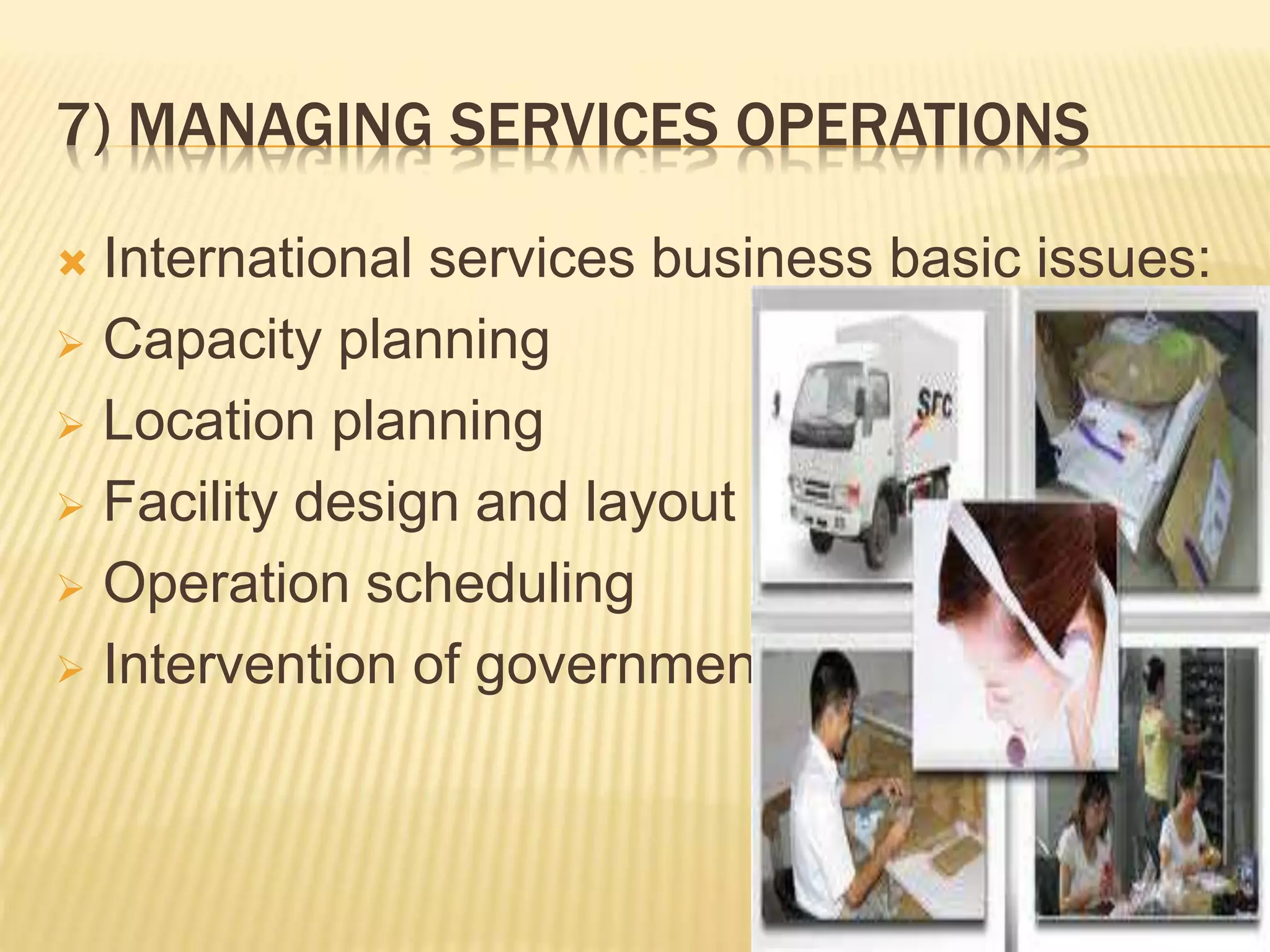
7) MANAGING SERVICES OPERATIONS
 International services business basic issues:
 Capacity planning
 Location planning
 Facility design and layout
 Operation scheduling
 Intervention of government
8) INTERNATIONAL QUALITY STANDARDS
 Total quality management:
 Principles:
• Customer satisfaction
• Employee involvement
• Continuous improvement in
• quality
 Other elements:
 Team approach
 Decisions based on facts than opinion
 Knowledge about quality tools and their
application
 Inclusion of suppliers in quality improvement
programme
Quality certification:
ISO 9000, 9001,9002,9003,9004
9) INTERNATIONALIZATION OF R & D
 Comprises
 Basic research
 Applied research
 R & D
10) MANAGING TECHNOLOGY TRANSFER
International operation mamagement

International operation mamagement

  • 1.
  • 2.
    INTERNATIONAL OPERATIONS MANAGEMENT Nature of operations management  International operations management compared with domestic operations management  Operation management and competitive advantage  International operations management and corporate strategy
  • 3.
    NATURE OF OPERATIONMANAGEMENT  Production management  Operation management
  • 4.
    INTERNATIONAL OPERATION MANAGEMENT COMPAREDWITH DOMESTIC MANAGEMENT  International operation management Advantage of location Enjoys benefits of experience curve  Domestic operation management severe competition government support
  • 5.
    DOMESTIC OPERATION MANAGEMENT INTERNATIONALOPERATION MANAGEMENT  Homogenous culture  Local economies & social factors  Not much variation in quality  Pricing may not be challenging  Scope is limited  Resources within one location  Multi culture  Economical and social factors across countries  Different quality standards requirements.  Pricing varies country to country  Scope is wide  Resources From high cost to low cost market
  • 6.
    STRATEGIC ISSUES 1) Internationalsourcing and vertical integration Sourcing: means procuring a firm uses to acquire the different components it needs to produce its own goods and services
  • 7.
    Vertical integration: means owingor controlling all the supply sources or the channels through which the firms products or services are distributed. Arguments To Make and To Buy: Make Or Buy By self In partnership short long term term supplier controlled non
  • 8.
    Outsourcing: is the actof moving some of the firms internal activities and decision responsibility to external service providers. 2) Facilities location:  Country factors – resource availability, infrastructure, culture, country origin  Technology factors-  Product factors - universal need, weight  Government policies  Organisational issues- strategy, structure, inventory mgt
  • 9.
    3) Standardisation ofproduction facilities:  Interchange ability of components across plants and the ability to shift production b/w countries easily and quickly  Less need for production planning & design  Simplicity in comparison of performances of production units in various countries
  • 10.
     Less worldwidestockholding and more efficient inventory mgt across plant  Easy transfer of technology among plants  Easy establishment of new plants
  • 11.
    4)CONTRACT MANUFACTURING Advantages : Avoidance of FDI  Easy exploitation of foreign markets with less investments  Home-grow image can be attached to the goods 5) STRATEGIC ROLE OF FOREIGN PLANTS
  • 12.
    6) SUPPLY CHAINMANAGEMENT  Elements: Customer service requirements Plant and distribution center Inventory management Outsourcing Business processes Information system Organisational designs and training program
  • 13.
    SUPPLY CHAIN FORMANUFACTURER   s s s sto mfg sto di s ret con
  • 14.
    SUPPLY CHAIN FORA SERVICE PROVIDER  s s storage Servi provider Consumer
  • 15.
    MATERIAL MANAGEMENT  Twoissues:  Flow of materials, parts and supplies from suppliers to the firm  Flow of materials, parts within and supplies between units of the firm 1
  • 16.
    FACTORS DIFFERENTIATE DOMESTICAND INTERNATIONAL MATERIALS MANAGEMENT  1) Distance  2)transport modes  3)regulatory context  Managing cost :  purchasing Currency exchange Inbound & outbound transportation Production Inventory Communication
  • 17.
    7) MANAGING SERVICESOPERATIONS  International services business basic issues:  Capacity planning  Location planning  Facility design and layout  Operation scheduling  Intervention of government
  • 18.
    8) INTERNATIONAL QUALITYSTANDARDS  Total quality management:  Principles: • Customer satisfaction • Employee involvement • Continuous improvement in • quality
  • 19.
     Other elements: Team approach  Decisions based on facts than opinion  Knowledge about quality tools and their application  Inclusion of suppliers in quality improvement programme Quality certification: ISO 9000, 9001,9002,9003,9004
  • 20.
    9) INTERNATIONALIZATION OFR & D  Comprises  Basic research  Applied research  R & D 10) MANAGING TECHNOLOGY TRANSFER