Downloaded 34 times
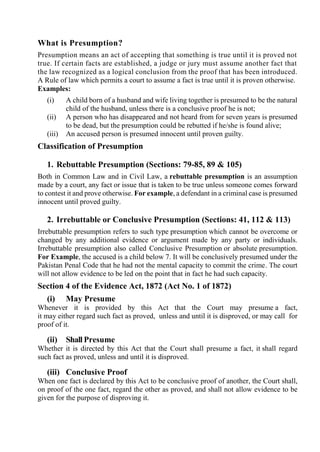


Presumption means accepting something as true until it is proven otherwise. There are two types of presumptions: rebuttable and irrebuttable. Rebuttable presumptions can be challenged with evidence, such as the presumption of innocence in criminal cases. Irrebuttable presumptions, also called conclusive presumptions, cannot be challenged with any additional evidence, such as the presumption that a child under 7 does not have the mental capacity to commit a crime. The Evidence Act of 1872 provides guidance on how courts should treat facts that are presumed, whether the presumption can be challenged or is conclusive.


