International development - challenges
& perspectives from an African NGO.
Deepa Pullanikkatil
d.Pullanikkatil@gmail.com
abundance.future@gmail.com
www.sustainablefuturesinafrica.com
www.abundanceworldwide.org
Presentation to Geography Department, University of Glasgow
5 September 2019
Lake Chilwa Basin Climate Change Adaptation
Programme (2010-2017)
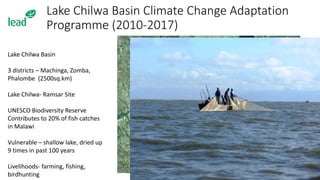
Lake Chilwa Basin
3 districts – Machinga, Zomba,
Phalombe (2500sq.km)
Lake Chilwa- Ramsar Site
UNESCO Biodiversity Reserve
Contributes to 20% of fish catches
in Malawi
Vulnerable – shallow lake, dried up
9 times in past 100 years
Livelihoods- farming, fishing,
birdhunting
Lake Chilwa Basin Climate Change Adaptation
Programme (2010-2017)
To secure the livelihoods of
1.6 million people in the
Lake Chilwa Basin and
enhance resilience of the
natural resource base
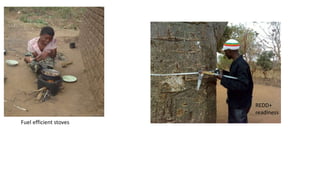
REDD+
readiness
Fuel efficient stoves
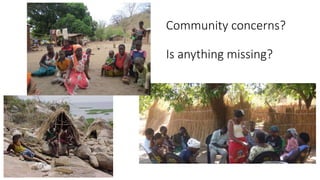
Community concerns?
Is anything missing?
Bilharzia
…..…??
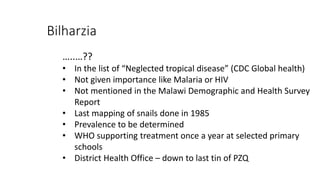
• In the list of “Neglected tropical disease” (CDC Global health)
• Not given importance like Malaria or HIV
• Not mentioned in the Malawi Demographic and Health Survey
Report
• Last mapping of snails done in 1985
• Prevalence to be determined
• WHO supporting treatment once a year at selected primary
schools
• District Health Office – down to last tin of PZQ
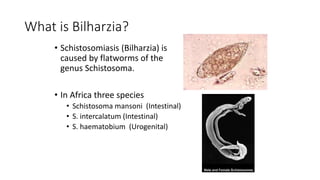
What is Bilharzia?
• Schistosomiasis (Bilharzia) is
caused by flatworms of the
genus Schistosoma.
• In Africa three species
• Schistosoma mansoni (Intestinal)
• S. intercalatum (Intestinal)
• S. haematobium (Urogenital)
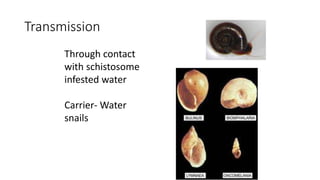
Transmission
Through contact
with schistosome
infested water
Carrier- Water
snails
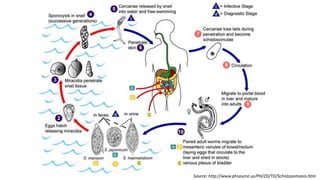
Source: http://www.phsource.us/PH/ZD/TD/Schistosomiasis.htm
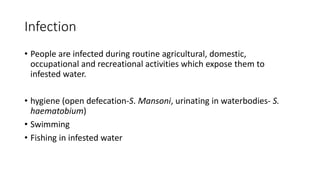
Infection
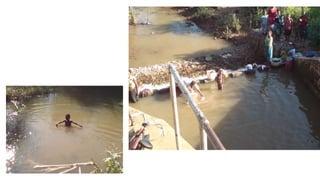
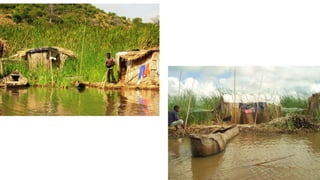
• People are infected during routine agricultural, domestic,
occupational and recreational activities which expose them to
infested water.
• hygiene (open defecation-S. Mansoni, urinating in waterbodies- S.
haematobium)
• Swimming
• Fishing in infested water
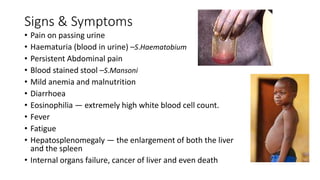
Signs & Symptoms
• Pain on passing urine
• Haematuria (blood in urine) –S.Haematobium
• Persistent Abdominal pain
• Blood stained stool –S.Mansoni
• Mild anemia and malnutrition
• Diarrhoea
• Eosinophilia — extremely high white blood cell count.
• Fever
• Fatigue
• Hepatosplenomegaly — the enlargement of both the liver
and the spleen
• Internal organs failure, cancer of liver and even death
LCBCCAP
Prevalence of Scistosomiasis in 5 villages in Zomba District
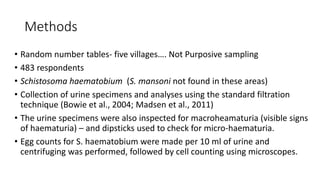
Methods
• Random number tables- five villages…. Not Purposive sampling
• 483 respondents
• Schistosoma haematobium (S. mansoni not found in these areas)
• Collection of urine specimens and analyses using the standard filtration
technique (Bowie et al., 2004; Madsen et al., 2011)
• The urine specimens were also inspected for macroheamaturia (visible signs
of haematuria) – and dipsticks used to check for micro-haematuria.
• Egg counts for S. haematobium were made per 10 ml of urine and
centrifuging was performed, followed by cell counting using microscopes.
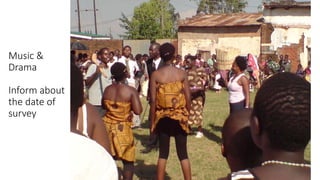
Music &
Drama
Inform about
the date of
survey
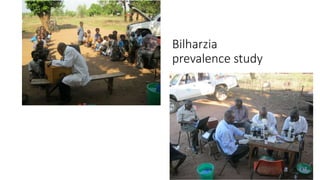
Bilharzia
prevalence study
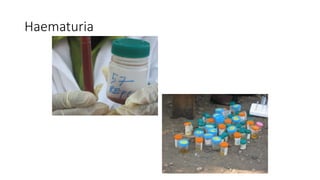
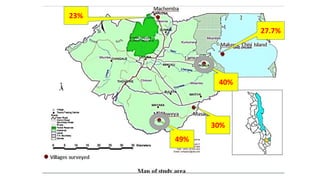
Haematuria
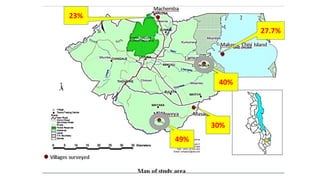
49%
30%
40%
27.7%
23%
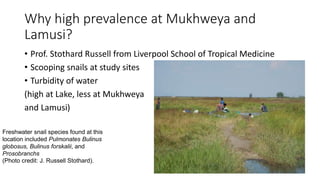
Why high prevalence at Mukhweya and
Lamusi?
• Prof. Stothard Russell from Liverpool School of Tropical Medicine
• Scooping snails at study sites
• Turbidity of water
(high at Lake, less at Mukhweya
and Lamusi)
Freshwater snail species found at this
location included Pulmonates Bulinus
globosus, Bulinus forskalii, and
Prosobranchs
(Photo credit: J. Russell Stothard).
A survey of literature shows a few prominent examples on the African continent.
Increase in the abundance of snail hosts of bilharzia following the construction of
irrigation projects in the Nile Delta (Garfield, 1986), dams in Senegal (Ernould, Ba, &
Sellin, 1999; Talla et al., 1990)
Increase or introduction of new areas of urinary schistosomiasis following the
construction of dams and irrigation projects meant to improve water security in
Cameroon, Cote d’Ivoire, Ghana, Mali, Namibia, and Sudan (see Elias, Daffala,
Lassen, Madsen, & Christensen, 1994; Hunter, Rey, Chu, Adekolu-John, & Mott, 1993;
Southgate, 1997).
Other related examples are highlighted in studies by Wilmott (1987) in Egypt.
Dams and Irrigation projects and Bilharzia
49%
30%
40%
27.7%
23%
Climate change adaptation and
Bilharzia
• Well intentioned adaptation techniques such as Irrigation
near endemic areas cause increase in schistosomiasis
infections due to increased water contact
• Therefore Climate change projects have to include Bilharzia
control aspects in endemic areas- starting with our project!
Lesson learnt:
The most well intentioned development projects can
have unintended consequences if its not “locally
specific”
Impact
• Previously targeted treatment for primary schools
• Currently, Malawi is controlling schistosomiasis as a public health
problem and has modified its program to combining school based and
community based treatments to reach both school age children and
at risk adults.
(Imperial College London, 2016)
Journey of Abundance
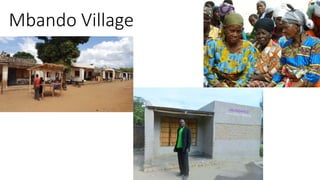
Mbando Village
Our focus is the COMMUNITY
Deep and lasting impact
Committed – long term
Spread “abundance” one village at a time
The Sustainable Futures in Africa (SFA) Network is an
interdisciplinary collective that brings
together researchers, practitioners and communities
of practice that acknowledge the complex nature of
sustainability.
The Network aims to build understanding, research, and
practice in socio-ecological sustainability in Africa.
Acknowledgement:
Clifford Mkanthama
www.sustainablefuturesinafrica.com
www.abundanceworldwide.org
Thank you!

International development challenges & perspectives from an

  • 1.
    International development -challenges & perspectives from an African NGO. Deepa Pullanikkatil d.Pullanikkatil@gmail.com abundance.future@gmail.com www.sustainablefuturesinafrica.com www.abundanceworldwide.org Presentation to Geography Department, University of Glasgow 5 September 2019
  • 15.
    Lake Chilwa BasinClimate Change Adaptation Programme (2010-2017) Lake Chilwa Basin 3 districts – Machinga, Zomba, Phalombe (2500sq.km) Lake Chilwa- Ramsar Site UNESCO Biodiversity Reserve Contributes to 20% of fish catches in Malawi Vulnerable – shallow lake, dried up 9 times in past 100 years Livelihoods- farming, fishing, birdhunting
  • 18.
    Lake Chilwa BasinClimate Change Adaptation Programme (2010-2017) To secure the livelihoods of 1.6 million people in the Lake Chilwa Basin and enhance resilience of the natural resource base
  • 23.
  • 24.
  • 25.
    Bilharzia …..…?? • In thelist of “Neglected tropical disease” (CDC Global health) • Not given importance like Malaria or HIV • Not mentioned in the Malawi Demographic and Health Survey Report • Last mapping of snails done in 1985 • Prevalence to be determined • WHO supporting treatment once a year at selected primary schools • District Health Office – down to last tin of PZQ
  • 26.
    What is Bilharzia? •Schistosomiasis (Bilharzia) is caused by flatworms of the genus Schistosoma. • In Africa three species • Schistosoma mansoni (Intestinal) • S. intercalatum (Intestinal) • S. haematobium (Urogenital)
  • 27.
  • 28.
  • 29.
    Infection • People areinfected during routine agricultural, domestic, occupational and recreational activities which expose them to infested water. • hygiene (open defecation-S. Mansoni, urinating in waterbodies- S. haematobium) • Swimming • Fishing in infested water
  • 30.
    Signs & Symptoms •Pain on passing urine • Haematuria (blood in urine) –S.Haematobium • Persistent Abdominal pain • Blood stained stool –S.Mansoni • Mild anemia and malnutrition • Diarrhoea • Eosinophilia — extremely high white blood cell count. • Fever • Fatigue • Hepatosplenomegaly — the enlargement of both the liver and the spleen • Internal organs failure, cancer of liver and even death
  • 33.
    LCBCCAP Prevalence of Scistosomiasisin 5 villages in Zomba District
  • 34.
    Methods • Random numbertables- five villages…. Not Purposive sampling • 483 respondents • Schistosoma haematobium (S. mansoni not found in these areas) • Collection of urine specimens and analyses using the standard filtration technique (Bowie et al., 2004; Madsen et al., 2011) • The urine specimens were also inspected for macroheamaturia (visible signs of haematuria) – and dipsticks used to check for micro-haematuria. • Egg counts for S. haematobium were made per 10 ml of urine and centrifuging was performed, followed by cell counting using microscopes.
  • 35.
  • 36.
  • 37.
  • 38.
  • 39.
    Why high prevalenceat Mukhweya and Lamusi? • Prof. Stothard Russell from Liverpool School of Tropical Medicine • Scooping snails at study sites • Turbidity of water (high at Lake, less at Mukhweya and Lamusi) Freshwater snail species found at this location included Pulmonates Bulinus globosus, Bulinus forskalii, and Prosobranchs (Photo credit: J. Russell Stothard).
  • 40.
    A survey ofliterature shows a few prominent examples on the African continent. Increase in the abundance of snail hosts of bilharzia following the construction of irrigation projects in the Nile Delta (Garfield, 1986), dams in Senegal (Ernould, Ba, & Sellin, 1999; Talla et al., 1990) Increase or introduction of new areas of urinary schistosomiasis following the construction of dams and irrigation projects meant to improve water security in Cameroon, Cote d’Ivoire, Ghana, Mali, Namibia, and Sudan (see Elias, Daffala, Lassen, Madsen, & Christensen, 1994; Hunter, Rey, Chu, Adekolu-John, & Mott, 1993; Southgate, 1997). Other related examples are highlighted in studies by Wilmott (1987) in Egypt. Dams and Irrigation projects and Bilharzia
  • 41.
  • 42.
    Climate change adaptationand Bilharzia • Well intentioned adaptation techniques such as Irrigation near endemic areas cause increase in schistosomiasis infections due to increased water contact • Therefore Climate change projects have to include Bilharzia control aspects in endemic areas- starting with our project!
  • 43.
    Lesson learnt: The mostwell intentioned development projects can have unintended consequences if its not “locally specific”
  • 45.
    Impact • Previously targetedtreatment for primary schools • Currently, Malawi is controlling schistosomiasis as a public health problem and has modified its program to combining school based and community based treatments to reach both school age children and at risk adults. (Imperial College London, 2016)
  • 47.
  • 48.
  • 55.
    Our focus isthe COMMUNITY Deep and lasting impact Committed – long term Spread “abundance” one village at a time
  • 57.
    The Sustainable Futuresin Africa (SFA) Network is an interdisciplinary collective that brings together researchers, practitioners and communities of practice that acknowledge the complex nature of sustainability. The Network aims to build understanding, research, and practice in socio-ecological sustainability in Africa.
  • 64.
  • 65.

Editor's Notes

  • #2 Thank you Brian for inviting me and thank you all for coming here today. Special mention to Sustainable Futures in Africa Network for bringing me to Glasgow this time. To give you a perspective of where I come from, I am currently coming from Eswatini (or Swaziland) where I have been based since 2015. Prior to that I was in Malawi for 5 years, Lesotho for 8 years and I went to primary school in Tanzania, Secondary school in Lesotho and University in India and South Arica. I was born in India, but I’ve lived 34 years in Africa and call it home.
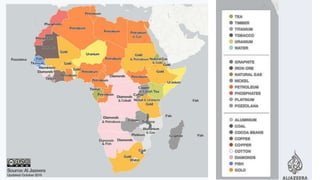
  • #3  Yes, Africa,, the richest continent in the world! Having the richest concentration of natural resources including gold and diamonds. Yet, it is the CONTINENT where majority of countries are still grappling with poverty and lack. Why? Some would blame this on the centuries of colonization, exploitation, others could blame it on civil wars, huge military expenses of African countries or weak democracy and corruption. I’m not here to enter into that debate. The reality is that the richest continent continues to be the recipient of so called “development aid”, which is usually from the west. But with a long list of resources going out of Africa to the west and to the rest of the world…, from flowers, to coffee, to vegetables, to ornamental fish, to minerals to wood …….With this net outflow, one would wonder isn’t it Africa that is aiding the world? But that’s another discussion for another day.
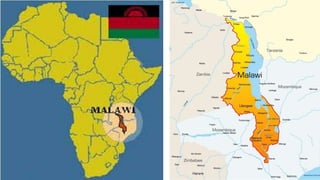
  • #4 Today, let me take you to Malawi, another “aid dependent” country, Malawi. I’ll share some of my experiences working there, with NGOs and what I learnt from that work.
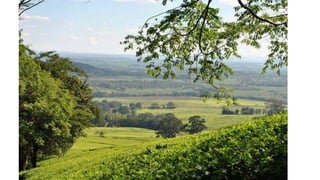
  • #5 Malawi is Blessed with stunning landscapes, - That’s Satemwa tea estates
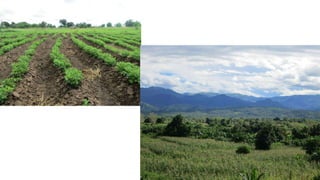
  • #6 Fertile land, lots of agriculture, – This was in Karonga
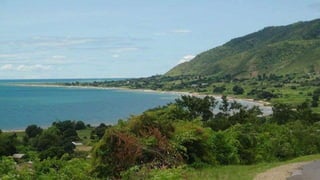
  • #7 a majestic lake – Lake Malawi - that’s from Rumphi
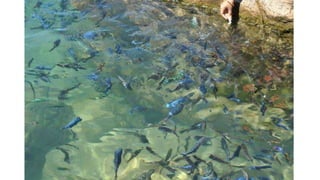
  • #8 Cichlids, which are endemic to Malawi- that’s in Mangochi
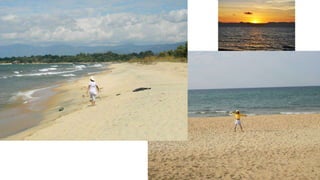
  • #9 beautiful beaches on the lake shore, By the way all these pictures are taken by me or my colleagues. That’s my daughter at Chintechi.
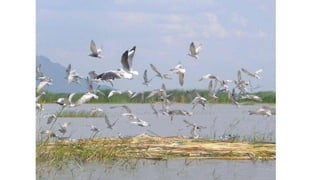
  • #10 birds, - Lake Chilwa is a Ramsar site and UNESCO Biosphere reserve- lots of migratory birds
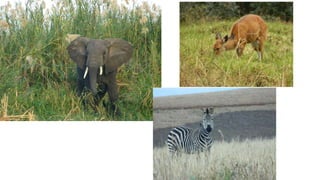
  • #11 By the way all these photos were taken by myself or my colleagues. The elephant was taken in shire river near Liwonde, The Buck and Zebra at Nyika National park.
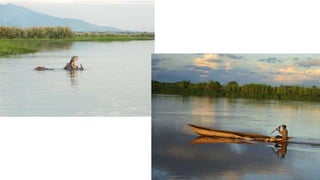
  • #12 Rivers- Shire river- Liwonde and the fisherman in dug out canoe was taken by the Nsanje port
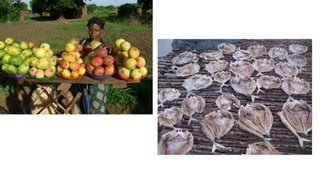
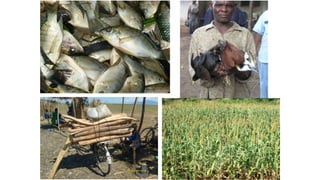
  • #13 Fruits, vegetables, fish
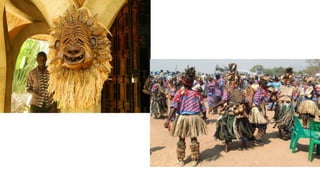
  • #14 rich cultural heritage, -Mua mission and Gule wankulu
  • #15 most of all the warm welcoming people, Malawi is unforgettable. It is truly the warm heart of Africa. I have many stories to share from Malawi, time is limited so I’ll stick to one or two…
  • #16 Let me start with a quick background of the project that I was priviledged to be part of, while working at LEAD- Leadership for Environment and Development, an NGO in Malawi. We worked on the Lake Chilwa Basin Climate Change Adaptation Programme, which was funded by the Norwegian Government initially for 5 years then extended for two more years.
  • #17 Lake Chilwa is a productive ecosystem and so you find population density is quite high in the basin
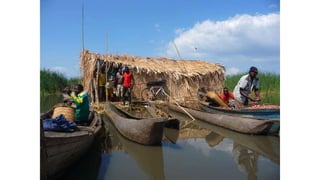
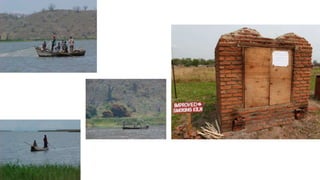
  • #18 Lake Chilwa has migrant fishermen staying on floating huts on the lake, fishing, with challenges of living surrounded by water, they tend to get respiratory problems, also sanitation is a problem. Cholera outbreaks ten to come from these huts.
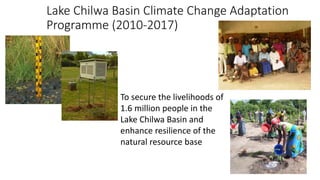
  • #19 The project aimed to secure livelihoods of the people and also enhance resilience of ecosystem. The project set up weather monitoring station, soil erosion measuring pits, trained communities on climate change, planted trees
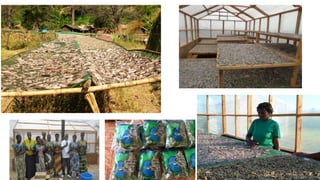
  • #20 Set up solar fish dryers, where previously women who process fish (men go for fishing, and women process and seel fish) , women used to dry fish in the open, prone to contamination by flies and dust. Using solar dryers they can efficienctly and more hygienically dry fish.
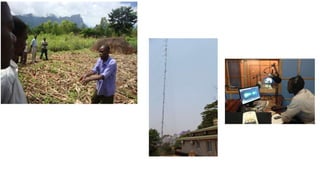
  • #21 Conservation agriculture was promoted. A radio and TV station was set up which aired community programmes and voluntary radio clubs were set up where communities themselves would record issues of their interest and it would be on radio. One of the shows actually prevented a child marriage and another forced leaders to resolve their conflict and work for development of the village.
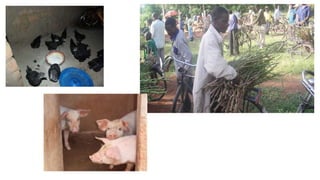
  • #22 Because lake Chilwa periodically dries up and the basin is vulnerable experiencing dry spells and flooding in the past, including the recent cyclone Idai. Farmers solely dependent on maize farming were encouraged to take up poultry, piggery and given cassava cuttings so that they could grow cassava which is a drought tolerant crop.
  • #23 Fish smoking kilns were promoted to reduce firewood use.
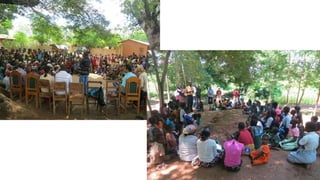
  • #25 As we worked closely with the community, we would ask them if our interventions made sense, whether we missed anything
  • #26 Bilharzia kept coming up as an issue. Yes, our climate change adaptation interventions of improving livelihood using environment friendly technology was fine, but if people are suffering from Bilharzia they can’t effectively participate. At the time, we realized that bilharzia was a neglected disease and snails are the vectors that carry them, the last mapping of snails was done in 1985. When we approached the DHO they did not have enough drugs – praziquantel
  • #27 So we, a group of mostly environmental officers, had to learn about bilharzia. My boss at the time, was a medical parasitologist turned broader environmental scienctist and he mentored us.
  • #28 We learnt about the vectors of the schistosome, how bilharzia is transmitted
  • #29 We learnt about the life cycle of shistosome- how through unbroken skin the schistosome can enter your blood vessels and migrate to your urinary tract and liver and mature into adult there and release eggs, which can come out as your urinate.
  • #30 So if you are exposed to infested water, as a fisherman, as a farmer or a child swimming, you can contract this disease
  • #31 The symptoms- in the extreme case would be blood stained urine. Heamatobium.
  • #32 And our observation showed that there could be many places in the basin where shistosomiasis could be transmitted and spread
  • #33 The basin has canals and rivers and of course the lake…water borne diseases such as bilharzia could indeed be a problem we REALISED that we need to address in our project
  • #34 But we did not have data, not much literature on bilharzia was found at the time which related to the basin. So we wanted to do a quick study to understand the prevalence of this disease in our basin. We approached our donor and initially they were not very interested but we persisted and finally they allocated some funds to study prevalence in five villages, out of over 100 villages in the basin.
  • #35 So we chose 5 villages in Zomba district using random sampling. Decided to have 100 respondents tested per village, which means 500 urine samples- but we managed only 483 (one site was an island where people were suspicious of us that we would use urine for witchcraft). We collected urine samples, worked with technicians of DHO.
  • #36 We used music and drama to attract people to the site where we did the testing
  • #37 Testing was done on the field with equipments from DHO
  • #38 And the community was right, there were many cases with heamaturia, blood in urine which is a symptom of schistosoma heamatobium
  • #39 We assumed villages close to the lake as a water body, snails could be found there. We assumed those villages would have higher prevalence. But we were surpriced. The village Mukhweya, furthest away from the lake had the highest prevalence of 49%, which according to WHO standards indicate that the whole village and its surroundings must be given treatment for bilharzia. The second highest prevalence was in Lamusi, 40%, but low prevalence in Chisi Island which is right inside the lake. Initially we thought, we must have made a mistake. Because snails are found in waterbodies, so highest prevalence should have been in chisi island.
  • #40 So we turned to experts, academics. We shared our findings with Prof. Butterworth at College of Medicine in Malawi. He shared it with Prof. Russell from Liverpool School of Tropical Medicine. They were both curious and came over to Zomba. Together we went to all the sites in the basin and showed them some of the villages where we surveyed. They scopped for snails and found some freshwater snail species. Then we explored the two villages with highest prevalence some more and found one commonality- they both had irrigation schemes. So The finding was that snails preferred freshwater and the Lake Chilwa water was saline as its an endorheic lake, no outlet.
  • #41 We ALSO found similar evidence in literature from Nile delta, Senegal, Cameroon, Egypt, where dams, canals were built, previously there were no cases of Bilharzia, but after the irrigation projects were set up, Bilharzia prevalence increased.
  • #42 Field observations confirmed that Mukhweya and Lamusi had irrigation systems with canals set up. When we asked the community, particularly at Mukhweya, they said that yes, before the irrigation canals came, there was almost no incidences of bilharzia, but after the canals came incidences increased. So we were lucky we used random sampling, otherwise we would have only sampled along the lake shore villages and missed out this important finding.
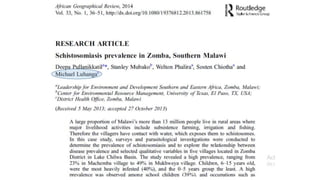
  • #45 We needed to have credibility with our study and so got it published. Which is another story … its very difficult for us as NGO officers to publish, because we don’t have access to journal articles like academics. I wish they were free, but most are not. Anyways, we did publish and one of our co-authors was the District Bilharzia Control officer Mike Luhango who became our local champion and advocate for talking about Bilharzia and influencing change in Government of Malawi. Our paper was accepted for presentation at a health conference in Paris and Mike presented.
  • #46 With Mike’s advocacy, previously praziquantel which was only given at primary schools was opened up to community based treatments and rural adults and out of school youth can also access treatment. We feel this impact was possible due to Mike Luhanga being our advocate. There are many more stories, but I’ll keep those for another day.
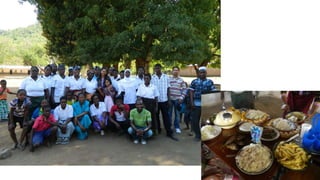
  • #47 After living in Malawi for five years (my husband was a UN Volunteer, I worked at an environmental NGO called LEAD), we were moving to Eswatini. A few communities I worked with gave us a farewell party that touched my heart. They so generously gifted us 25 kg of rice, 5kgs of sugarcane, a traditional fabric. This was the same community that was having one meal a day for over 2 months when they experienced a drought just a year before, the Lake Chilwa partially dried up. I was touched by their generosity and it was one of the triggers for us to start Abundance, the small non-profit organization which we started in 2016 with a few friends.
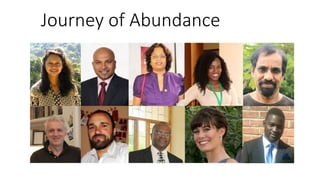
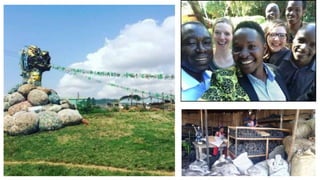
  • #48 I shared this vision with my friends and family. I found overwhelming support and two friends Cyril from Qatar and Thangam from Dubai flew all the way to Malawi (it was their first trip to Africa) and Abundance began. We experienced many delightful coincidences or what one could call “serendipity” and Ruth Mumba a young Geologist whom we met through facebook joined us and is now the Director of Abundance in Malawi. Stewart Paul, Clifford Mkanthama, Meghraj all from Malawi joined Abundance as they also believed in this focused approach. We have strategic advisors in UK, Canada and Spain. We have a community coordinator, whom I’ve known for 7 years, working with us ….all of these people work on a voluntary basis...
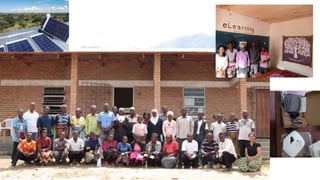
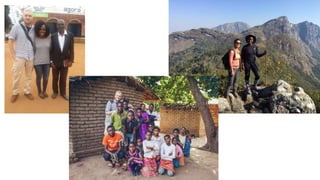
  • #49 And our FOCUS is Mbando village, with 95 households and our interventions are guided by the community. These are some images from Mbando village, where we work. That’s our little office with Moses Phulusa the Community Coordinator from Mbando village. We had little resources, but a lot of heart.
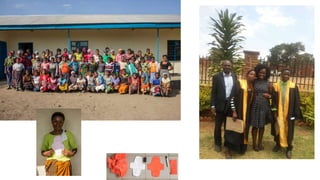
  • #50 We do activities that the community demands and we will have PARTNERSHIPS to help us achieve that. Here we did a training on reusable sanitary pads- the girls said that this reduces absenteeism at school, provides them dignity and they are no longer fearful or ashamed when they go out during menstruation. Most of the youth at the village have NOT completed primary school and are left out of the formal education system- They wanted vocational training… and we found an organization that provided them with a six months practical skill based training and now Maria and Raymond, the first two youth trained through Abundance are on their way to become entrepreneurs…
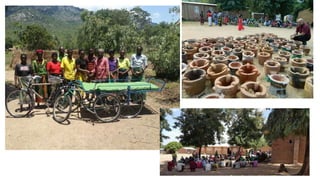
  • #51 The Mothers group did not ask for money but asked for a bicycle, which they use to transport sick children to the clinic which is 3km away…. We are launching a library this weekend at the village and have plans to set up an IT center. We continue with this individual focused approach….
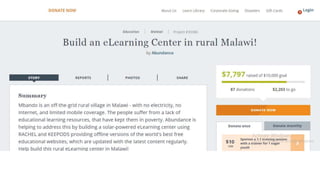
  • #52 Many of you have donated to this cause. We used offline, offgrid technologies to set up an elearning center at the village with advice from ShiftIT our technology partner and with crowdfunding through global giving. Friends and Friends of Friends, COLLEAGUES ….
  • #53 We have set up an elearning center. Solar panels, Offline server with 500gb of learning materials, 150 Keepods for 150 users, 8 laptops. 8 Volunteers translating books from english to chichewa, making learning relevant.
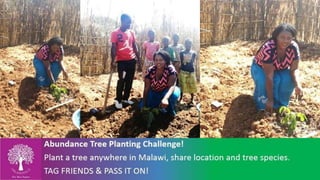
  • #54 Inspired by Cyclone Idai, we have been promoting tree planting through a social media campaign. We hope to plant a million trees. Majority of our work is done voluntarily.
  • #55 Hosted a Masters Student , helped him FGD. we currently have a French volunteer Julie.
  • #56 , from lessons learnt of development work over the years, we have come up with a micro focused organization- our focus is Mbando village, we want to make deep and lasting impact, we are committed and so you will still find us at Mbando village ten years from now. That’s our COMMITMENT. we would like to know the stories and dreams of each individual we are working with. We want to see the village transform in a positive way…and they in turn help other communities around them transform.
  • #57 We were happy to be part of the SFA network, because We found that our values aligned with the network’s thinking. Sustainable Futures in Africa. Initiated by Mia Perry from University of Glasgow.
  • #58 The network believes that we have to work together – in interdisciplinary groups, we need to question research methodologies, make methods appropriate for community work, we want focus on community driven, locally appropriate, using a decolonial lens.
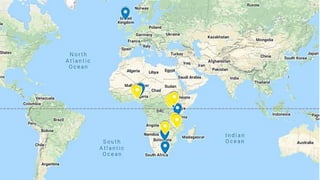
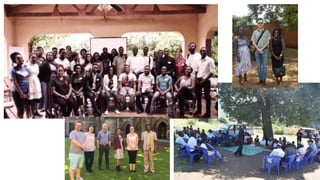
  • #59 So the members and partners of the network come from both UK and Africa and the network has five hubs. The hubs are in Nigeria, Botswana, Uganda , Malawi and of course the Uk, with University of Glasgow. Dr.Mia Perry is the Co-Director and Dr.Brian Barrett is the Hub Director for Glasgow hub, Vanessa Duclos is the Research Administrator for the network. The hubs in various countries have been working with interdisciplinary groups looking at a variety of issues.
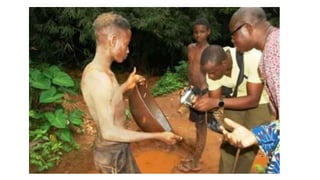
  • #60 Nigeria looked at Artisanal gold mining,
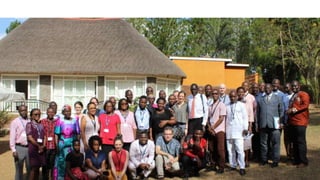
  • #61 Botswana looked at human animal conflict, This is from Botswana, a workshop on community engagement, arising from the Human wildlife conflict study the hub did.
  • #62 Uganda at community water resources management using something called the “no method” research methods- where they don’t go with a preplanned methodology, but let the methodology arise from chatting with the communities, One member of Uganda Hub, ECOaction works on raising awareness of environmental issues, particularly plastic waste. Reagan Kandole, the artist made this sculpture of This is Mother earth throwing up all the plastic waste that we dump inside her belly. that’s THE Hub Director Alex, who is an academic at Makerere University and the picture with briquettes was for an educational tour of hub members.
  • #63 Malawi brought artists and development practitioners together and also participated in creative geovisualization and currently on a project looking at drone usage. So it’s a variety of projects, all of them being multidisciplinary and putting communities at the center.
  • #64 The network has had three international symposia, in Botswana, Nigeria and this year in February in Lira, Uganda.
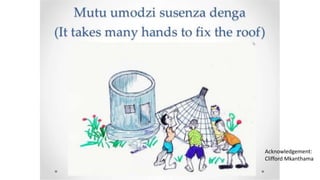
  • #65 So to conclude, We acknowledge that sustainability issues and community development work are complex. Thats why we need to work together. I end with An illustration done by my colleague Clifford Mkanthama for a Malawian proverb: “It takes many hands to fix the roof. So lets all work together TO MAKE A DIFFERENCE TO THIS BEAUTIFUL CONTINENT OF AFRICA!