The Political Environment: A Critical Concern Chapter 6 McGraw-Hill/Irwin © 2005 The McGraw-Hill Companies, Inc. All rights reserved. PowerPoint presentation prepared by: Professor Rajiv Mehta Associate Professor of Marketing New Jersey Institute of Technology Newark, N.J.
Chapter Learning Objectives 1.  What does the sovereignty of nations mean and how can it affect the stability of government policies, political parties and nationalism. 2.  The political risks of global business and the factors that affect stability 3.  The importance of the political system to international marketing and its effect on foreign investments
Chapter Learning Objectives 4.  The impact of political and social activists, violence and terrorism on international business 5.  Assessing and reducing the effect of political vulnerability 6.  How and why governments encourage foreign investment
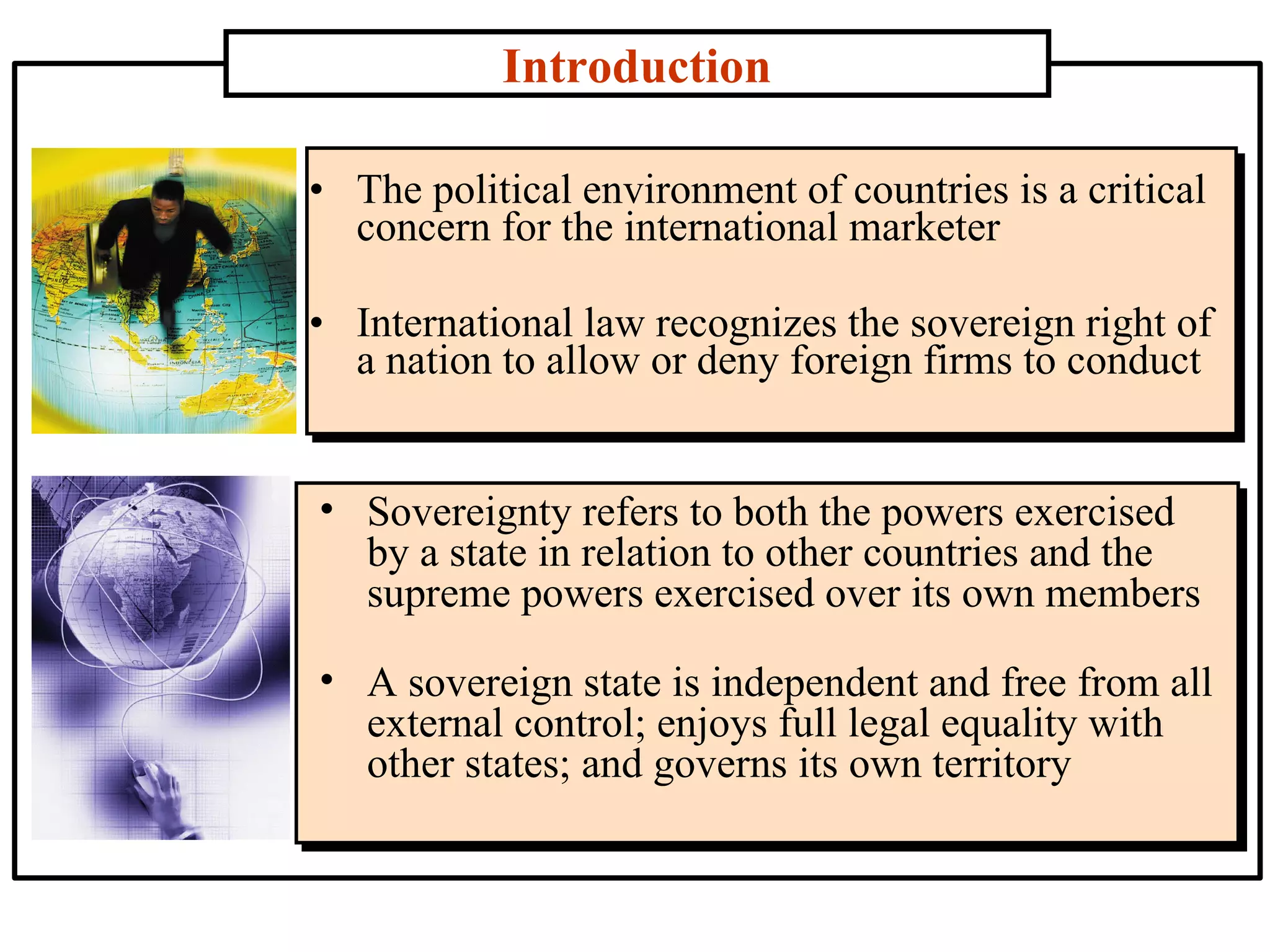
The political environment of countries is a critical concern for the international marketer International law recognizes the sovereign right of a nation to allow or deny foreign firms to conduct Introduction Sovereignty refers to both the powers exercised by a state in relation to other countries and the supreme powers exercised over its own members A sovereign state is independent and free from all external control; enjoys full legal equality with other states; and governs its own territory
Stability of Government Policies Q: Radical shifts in government philosophy can occur when: An opposing political party ascends to power Pressure from nationalist and self-interest groups Weakened economic conditions. Bias against foreign investment or conflicts between governments
Stability of Government Policies The stability or instability of prevailing government policies is a major concern of foreign businesses  A change in government, whether by election or coup, does not always mean a change in the level of political risk  The ideal political climate for a multinational firm to conduct business is a stable, friendly government  Be knowledgeable about the philosophies of all major political parties and their attitudes towards trade  Conversely, radical changes in policies toward foreign business can occur in the most stable governments as well
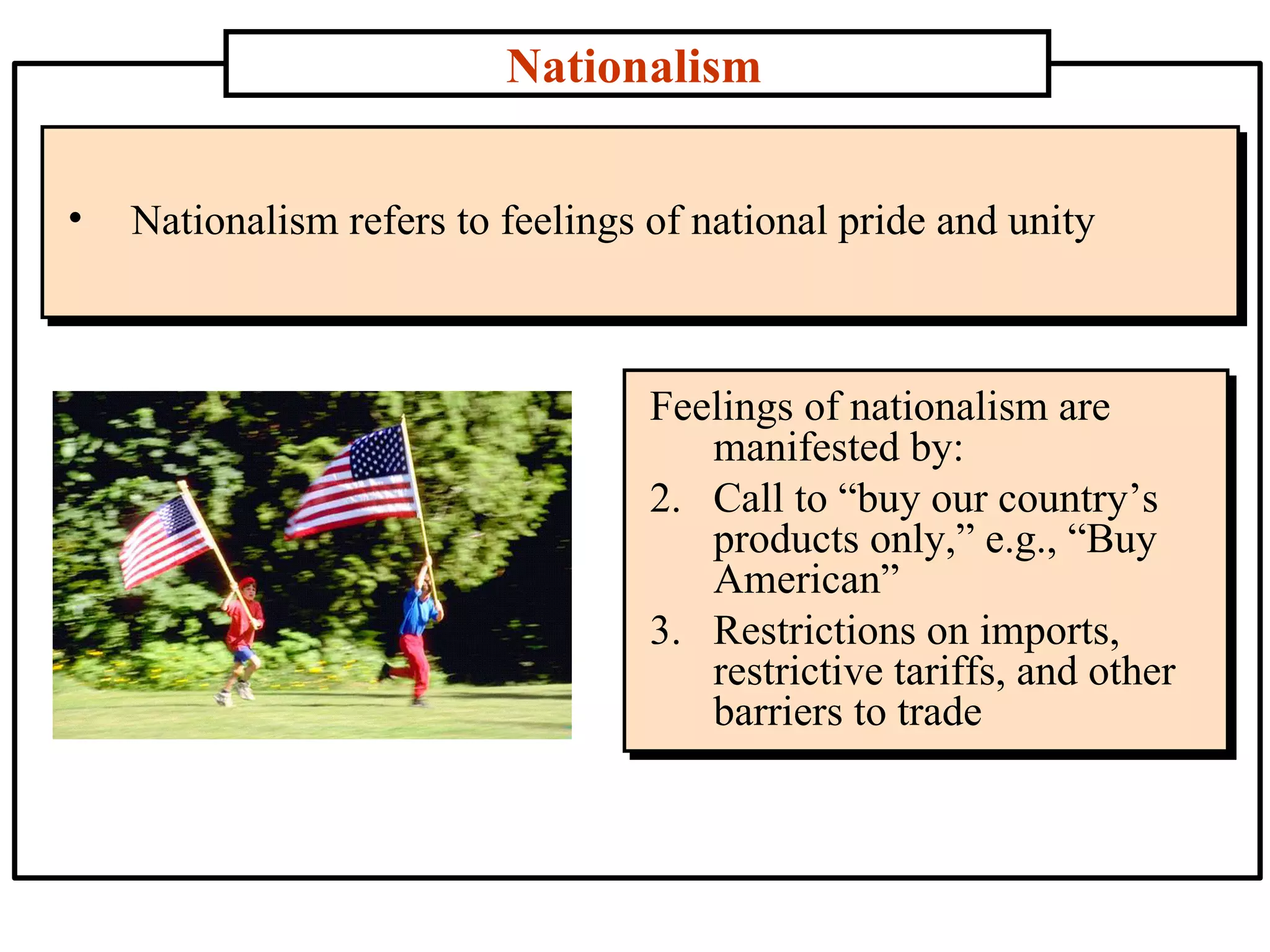
Nationalism Nationalism refers to feelings of national pride and unity  Feelings of nationalism are manifested by:  Call to “buy our country’s products only,” e.g., “Buy American”  Restrictions on imports, restrictive tariffs, and other barriers to trade
Political Risks of Global Business Risks of global business include:  Confiscation, Expropriation, and Domestication Economic Risks, and Price Controls
Confiscation, Expropriation, and Domestication Confiscation, the most severe political risk, is the seizing of a company’s assets without payment Expropriation is where the government seizes an investment, but some reimbursement for the assets is made; often the expropriated investment is nationalized to become a government run entity Domestication occurs when the government mandates local ownership and greater national involvement in a foreign company’s management
Economic Risks International firms face a variety of economic risks Governments can impose restraints on business activity to: Protect national security  Protect an infant industry  To conserve scarce foreign exchange Raise revenue  Retaliate against unfair trade practices
Forecasting Political Risk Decide if risk insurance is necessary Devise an intelligence network and an early warning system Develop contingency plans for unfavorable future political events Build a database of past political events for use in predicting future problems Interpret the data gathered by a company’s intelligence network in order to advise and forewarn corporate decision makers about political and economic situations
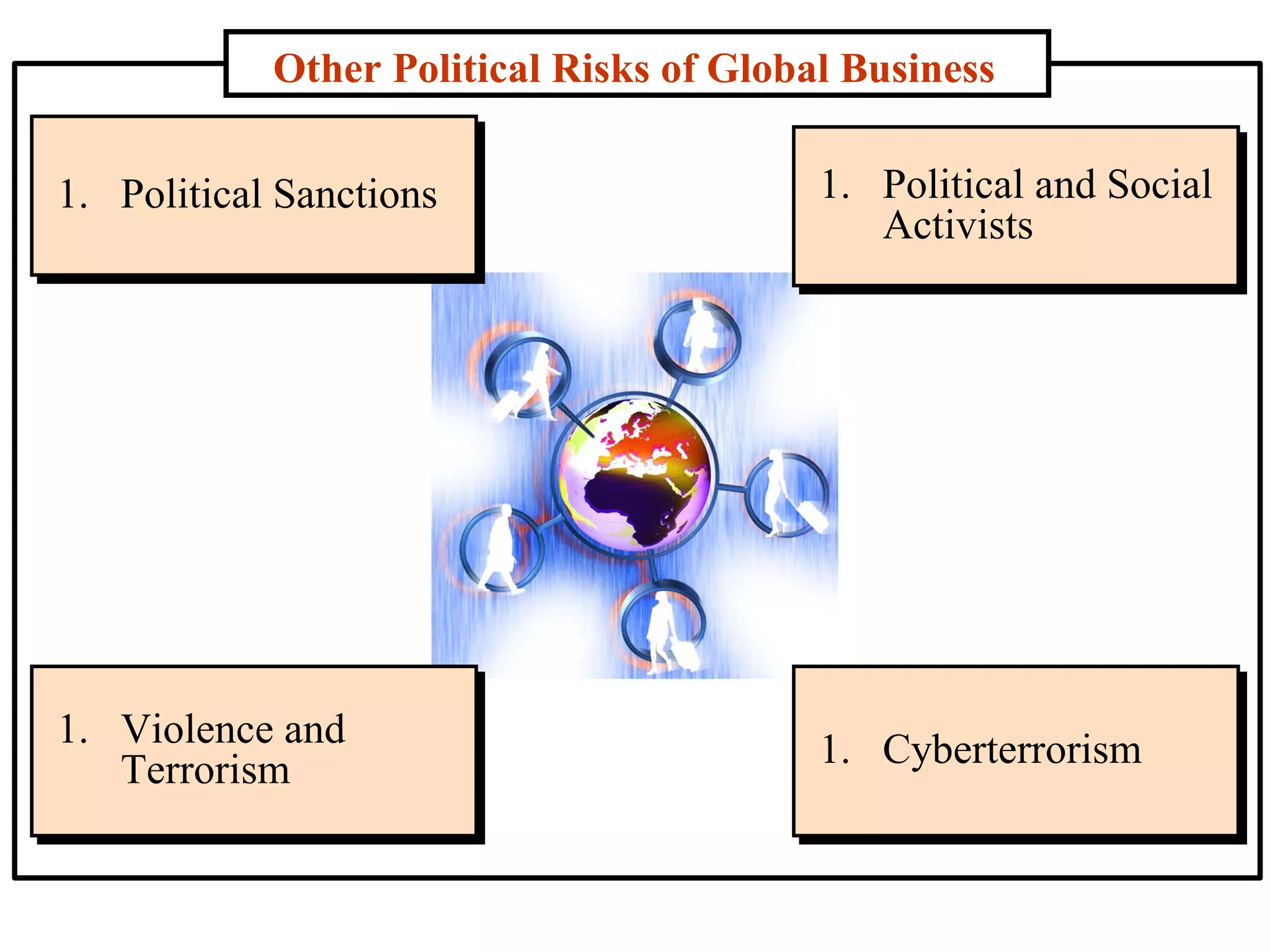
Other Political Risks of Global Business Political and Social Activists Violence and Terrorism Cyberterrorism Political Sanctions
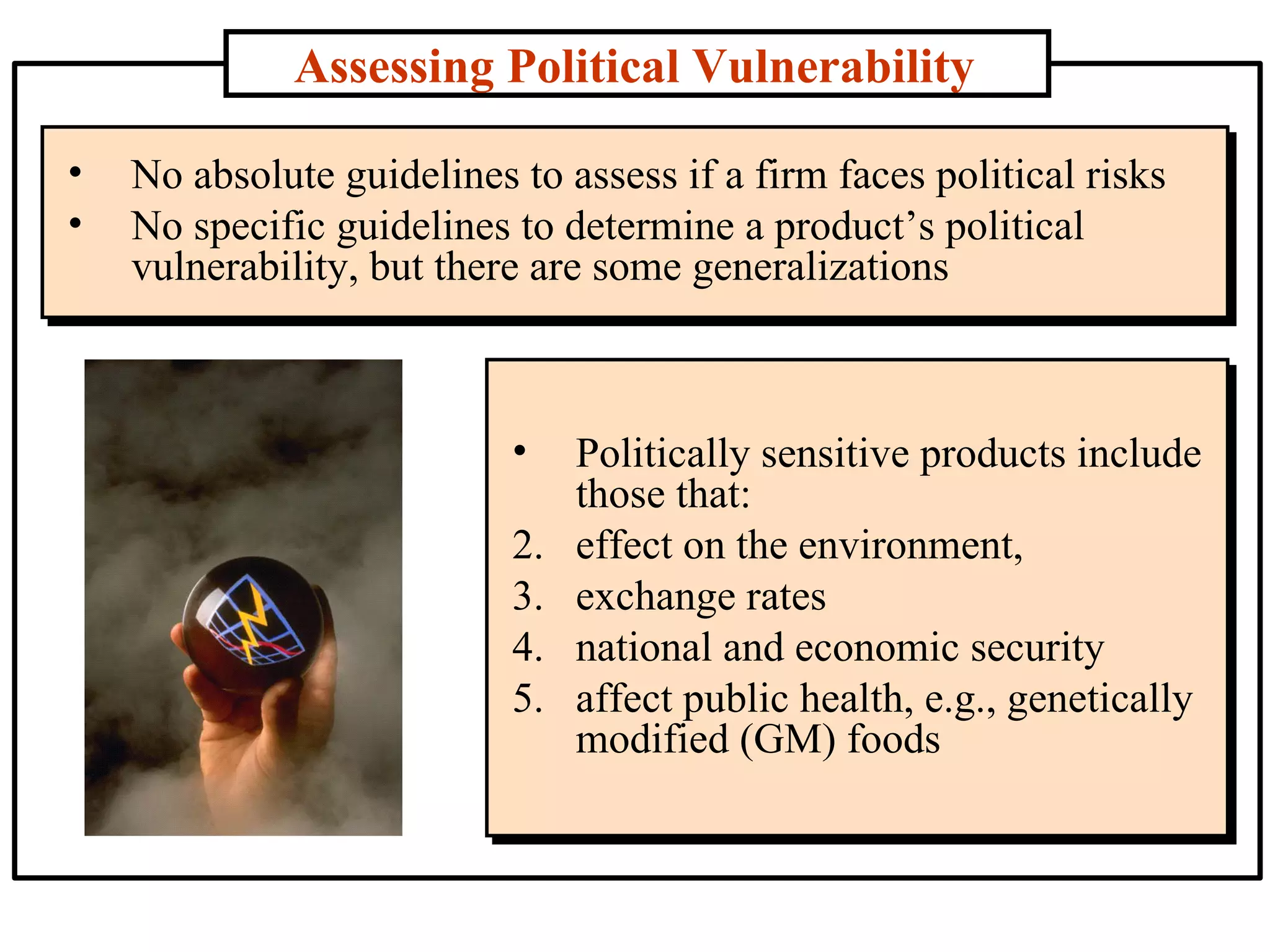
Assessing Political Vulnerability No absolute guidelines to assess if a firm faces political risks  No specific guidelines to determine a product’s political vulnerability, but there are some generalizations Politically sensitive products include those that: effect on the environment,  exchange rates  national and economic security  affect public health, e.g., genetically modified (GM) foods
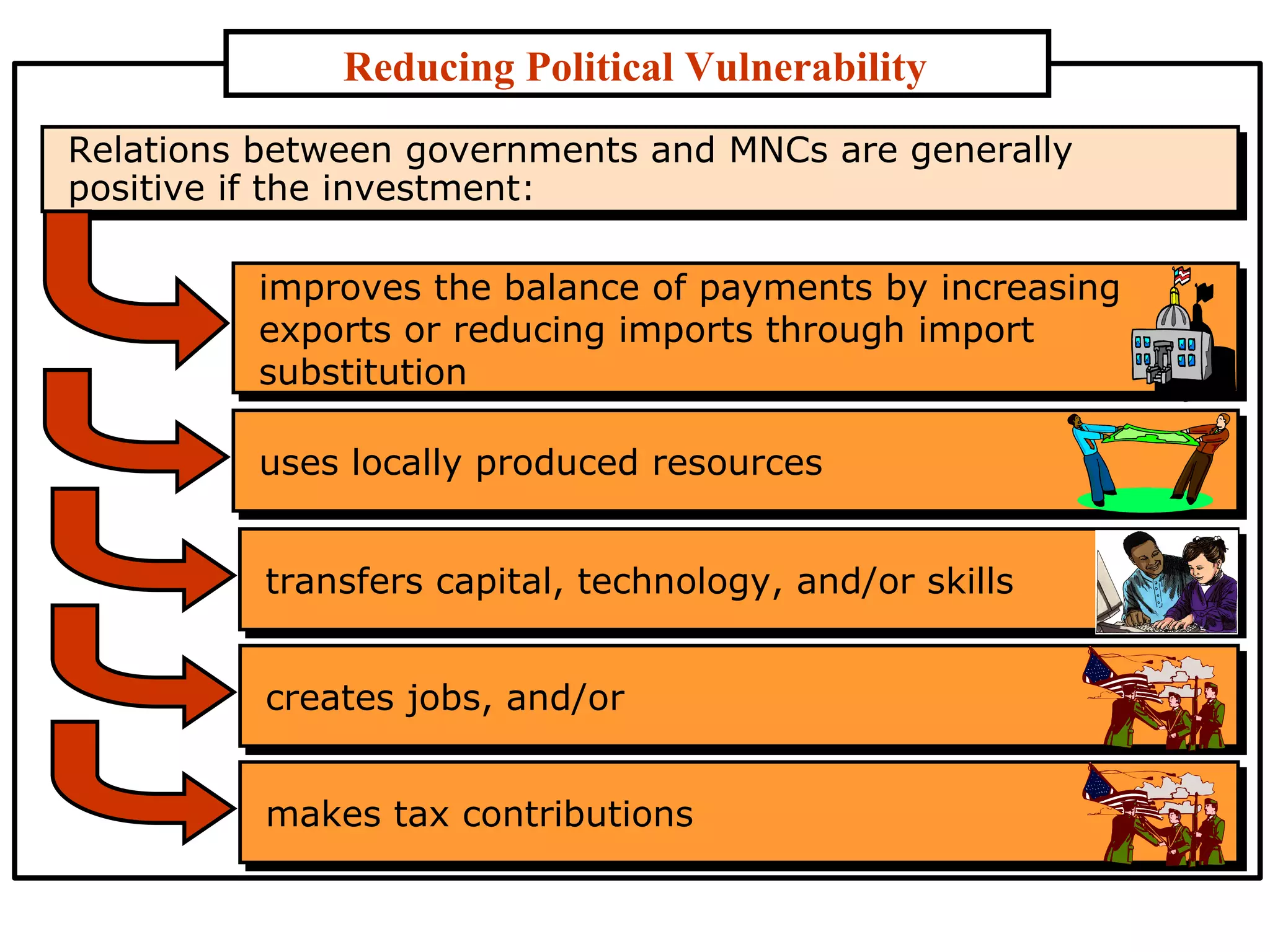
Reducing   Political Vulnerability Relations between governments and MNCs are generally positive if the investment:  improves the balance of payments by increasing exports or reducing imports through import substitution  uses locally produced resources transfers capital, technology, and/or skills creates jobs, and/or  makes tax contributions
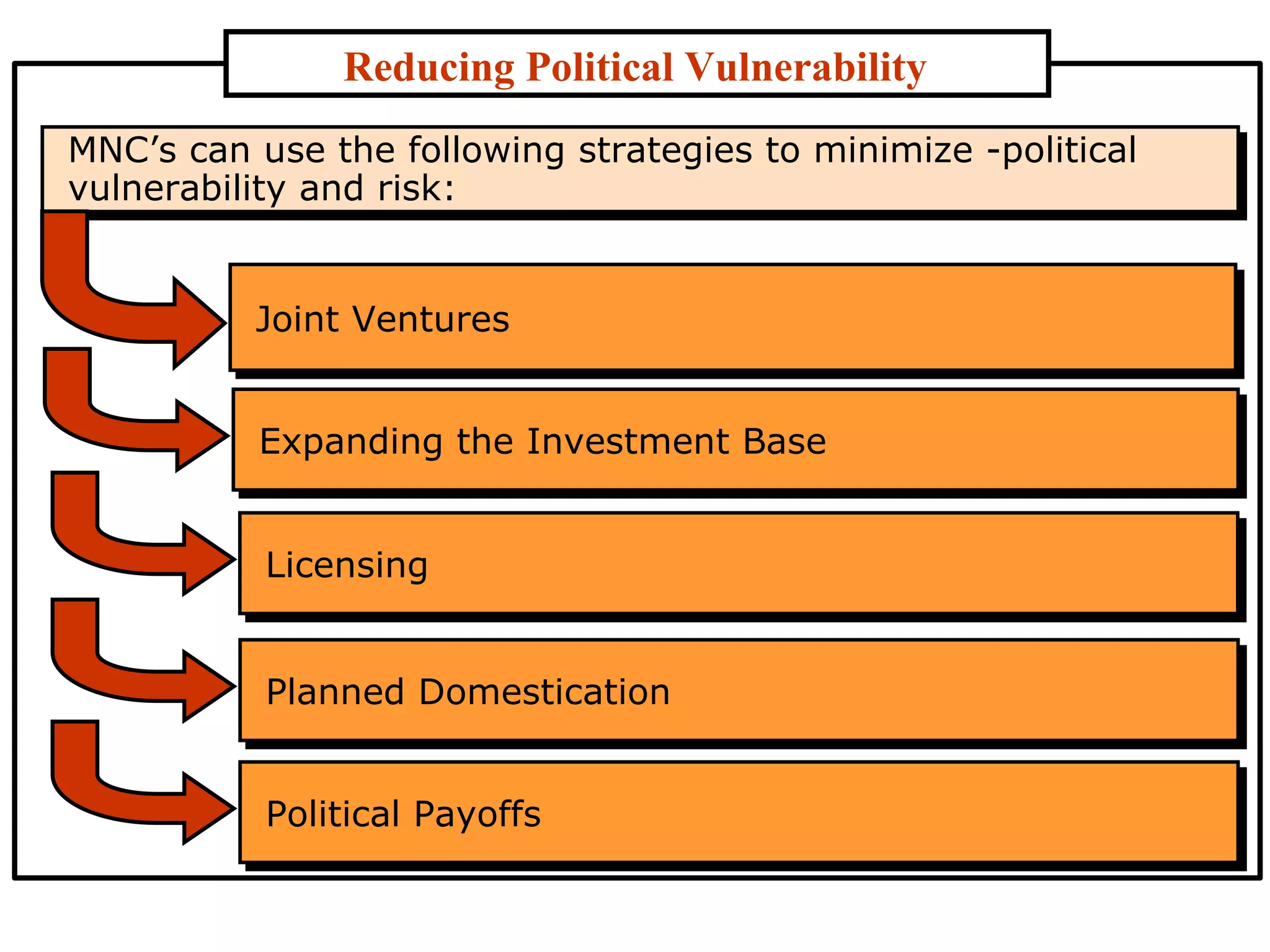
Reducing Political Vulnerability MNC’s can use the following strategies to minimize ­political vulnerability and risk: Joint Ventures  Expanding the Investment Base  Licensing Planned Domestication Political Payoffs

INTERNATIONAL BUSINESS Chapter 6

  • 1.
  • 2.
    The Political Environment:A Critical Concern Chapter 6 McGraw-Hill/Irwin © 2005 The McGraw-Hill Companies, Inc. All rights reserved. PowerPoint presentation prepared by: Professor Rajiv Mehta Associate Professor of Marketing New Jersey Institute of Technology Newark, N.J.
  • 3.
    Chapter Learning Objectives1. What does the sovereignty of nations mean and how can it affect the stability of government policies, political parties and nationalism. 2. The political risks of global business and the factors that affect stability 3. The importance of the political system to international marketing and its effect on foreign investments
  • 4.
    Chapter Learning Objectives4. The impact of political and social activists, violence and terrorism on international business 5. Assessing and reducing the effect of political vulnerability 6. How and why governments encourage foreign investment
  • 5.
    The political environmentof countries is a critical concern for the international marketer International law recognizes the sovereign right of a nation to allow or deny foreign firms to conduct Introduction Sovereignty refers to both the powers exercised by a state in relation to other countries and the supreme powers exercised over its own members A sovereign state is independent and free from all external control; enjoys full legal equality with other states; and governs its own territory
  • 6.
    Stability of GovernmentPolicies Q: Radical shifts in government philosophy can occur when: An opposing political party ascends to power Pressure from nationalist and self-interest groups Weakened economic conditions. Bias against foreign investment or conflicts between governments
  • 7.
    Stability of GovernmentPolicies The stability or instability of prevailing government policies is a major concern of foreign businesses A change in government, whether by election or coup, does not always mean a change in the level of political risk The ideal political climate for a multinational firm to conduct business is a stable, friendly government Be knowledgeable about the philosophies of all major political parties and their attitudes towards trade Conversely, radical changes in policies toward foreign business can occur in the most stable governments as well
  • 8.
    Nationalism Nationalism refersto feelings of national pride and unity Feelings of nationalism are manifested by: Call to “buy our country’s products only,” e.g., “Buy American” Restrictions on imports, restrictive tariffs, and other barriers to trade
  • 9.
    Political Risks ofGlobal Business Risks of global business include: Confiscation, Expropriation, and Domestication Economic Risks, and Price Controls
  • 10.
    Confiscation, Expropriation, andDomestication Confiscation, the most severe political risk, is the seizing of a company’s assets without payment Expropriation is where the government seizes an investment, but some reimbursement for the assets is made; often the expropriated investment is nationalized to become a government run entity Domestication occurs when the government mandates local ownership and greater national involvement in a foreign company’s management
  • 11.
    Economic Risks Internationalfirms face a variety of economic risks Governments can impose restraints on business activity to: Protect national security Protect an infant industry To conserve scarce foreign exchange Raise revenue Retaliate against unfair trade practices
  • 12.
    Forecasting Political RiskDecide if risk insurance is necessary Devise an intelligence network and an early warning system Develop contingency plans for unfavorable future political events Build a database of past political events for use in predicting future problems Interpret the data gathered by a company’s intelligence network in order to advise and forewarn corporate decision makers about political and economic situations
  • 13.
    Other Political Risksof Global Business Political and Social Activists Violence and Terrorism Cyberterrorism Political Sanctions
  • 14.
    Assessing Political VulnerabilityNo absolute guidelines to assess if a firm faces political risks No specific guidelines to determine a product’s political vulnerability, but there are some generalizations Politically sensitive products include those that: effect on the environment, exchange rates national and economic security affect public health, e.g., genetically modified (GM) foods
  • 15.
    Reducing Political Vulnerability Relations between governments and MNCs are generally positive if the investment: improves the balance of payments by increasing exports or reducing imports through import substitution uses locally produced resources transfers capital, technology, and/or skills creates jobs, and/or makes tax contributions
  • 16.
    Reducing Political VulnerabilityMNC’s can use the following strategies to minimize ­political vulnerability and risk: Joint Ventures Expanding the Investment Base Licensing Planned Domestication Political Payoffs