APIs of the Future:
Are You Ready?
Mike Amundsen
@mamund
http://linkedin.com/mamund
youtube.com/mamund
2
APIs of the Future: Overview
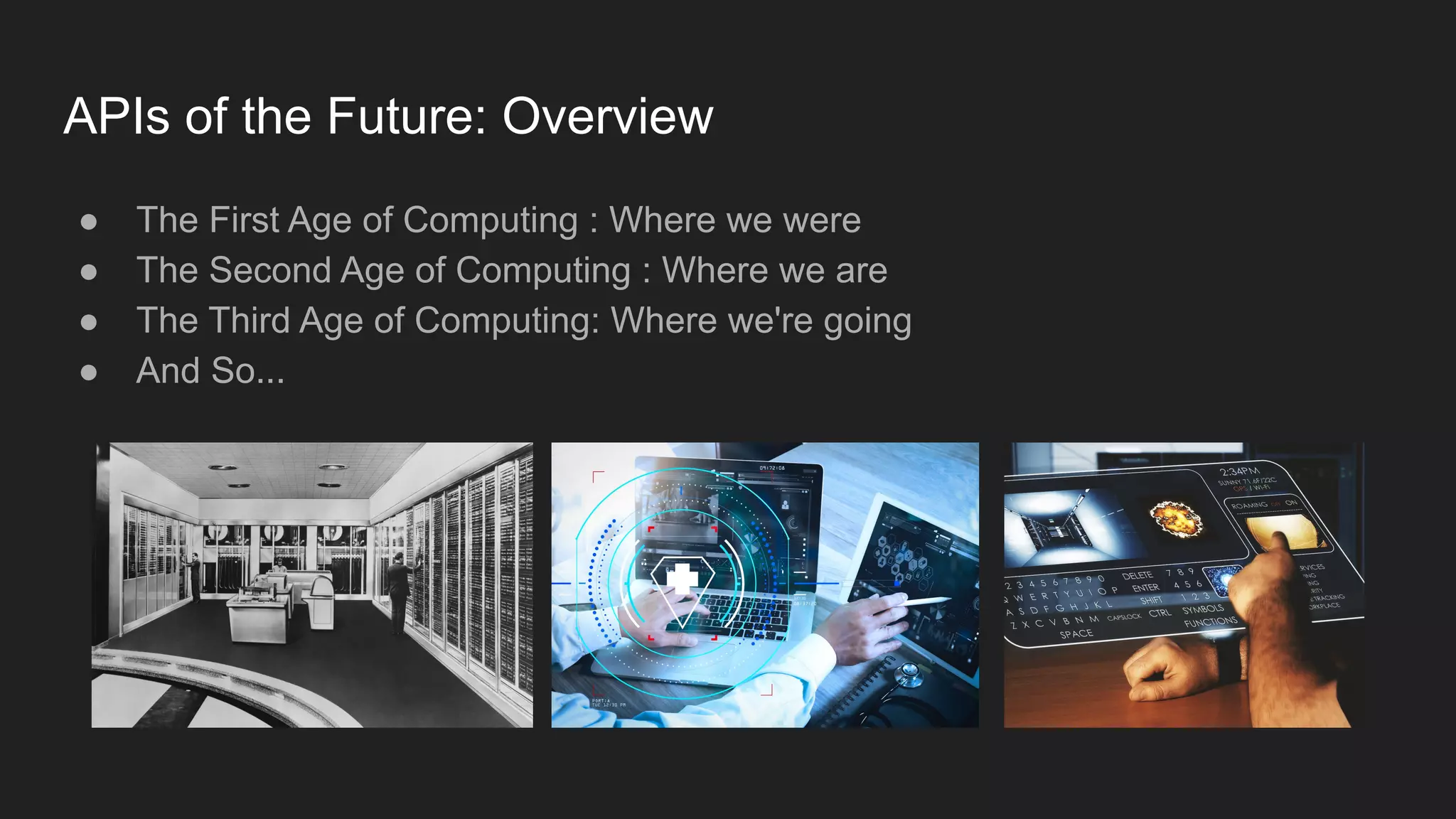
● The First Age of Computing : Where we were
● The Second Age of Computing : Where we are
● The Third Age of Computing: Where we're going
● And So...
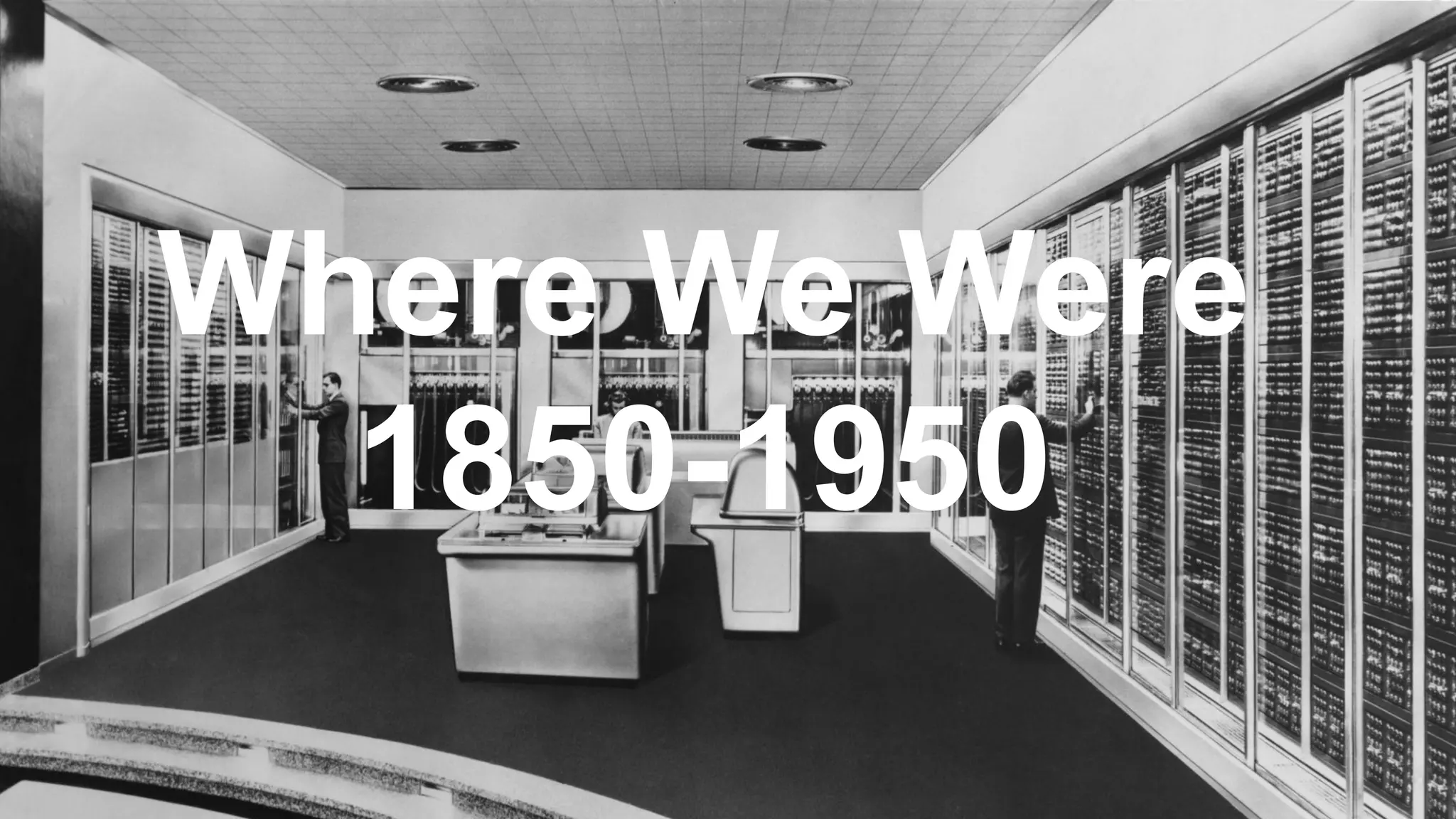
Where We Were
1850-1950
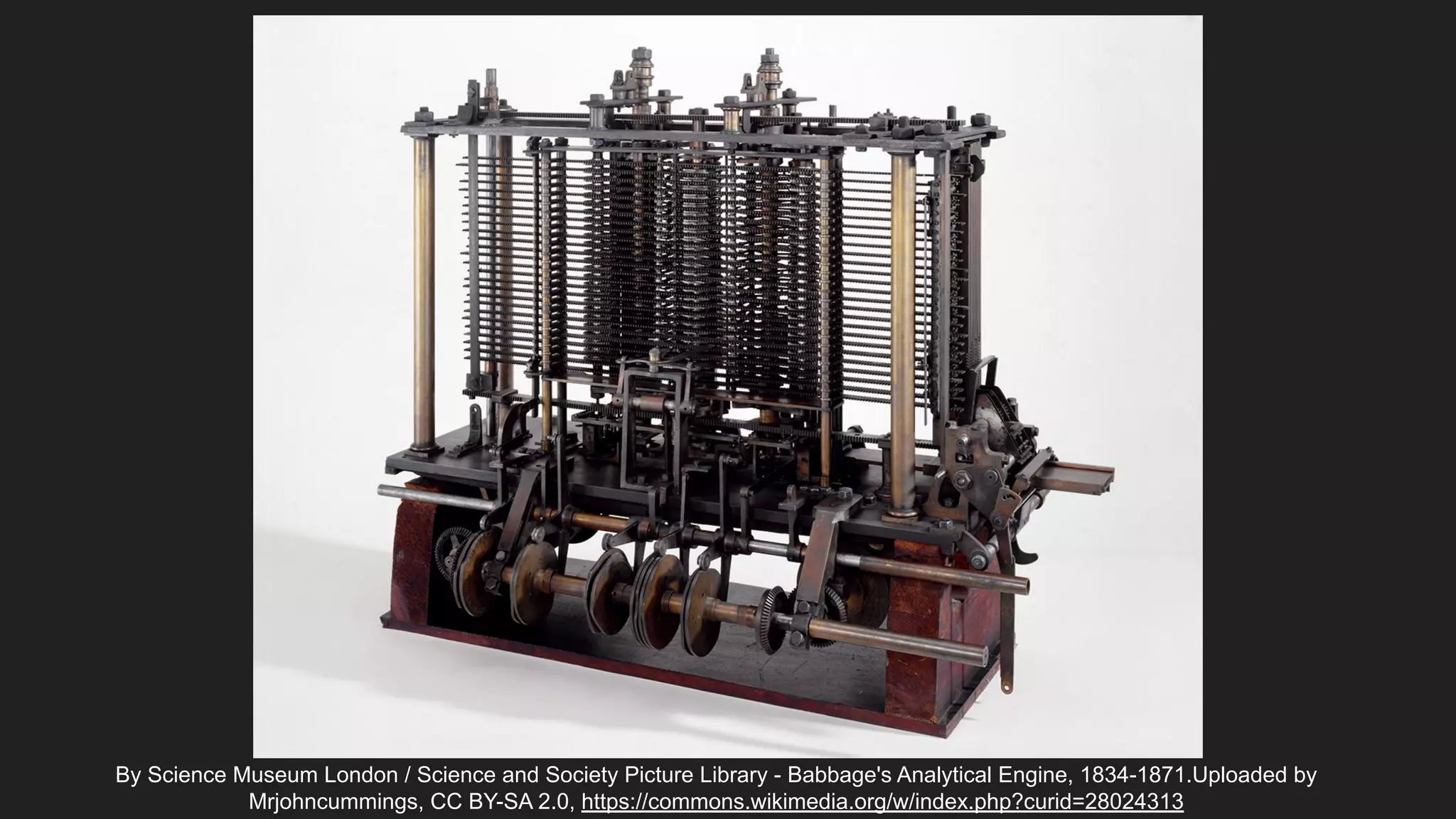
By Science Museum London / Science and Society Picture Library - Babbage's Analytical Engine, 1834-1871.Uploaded by
Mrjohncummings, CC BY-SA 2.0, https://commons.wikimedia.org/w/index.php?curid=28024313
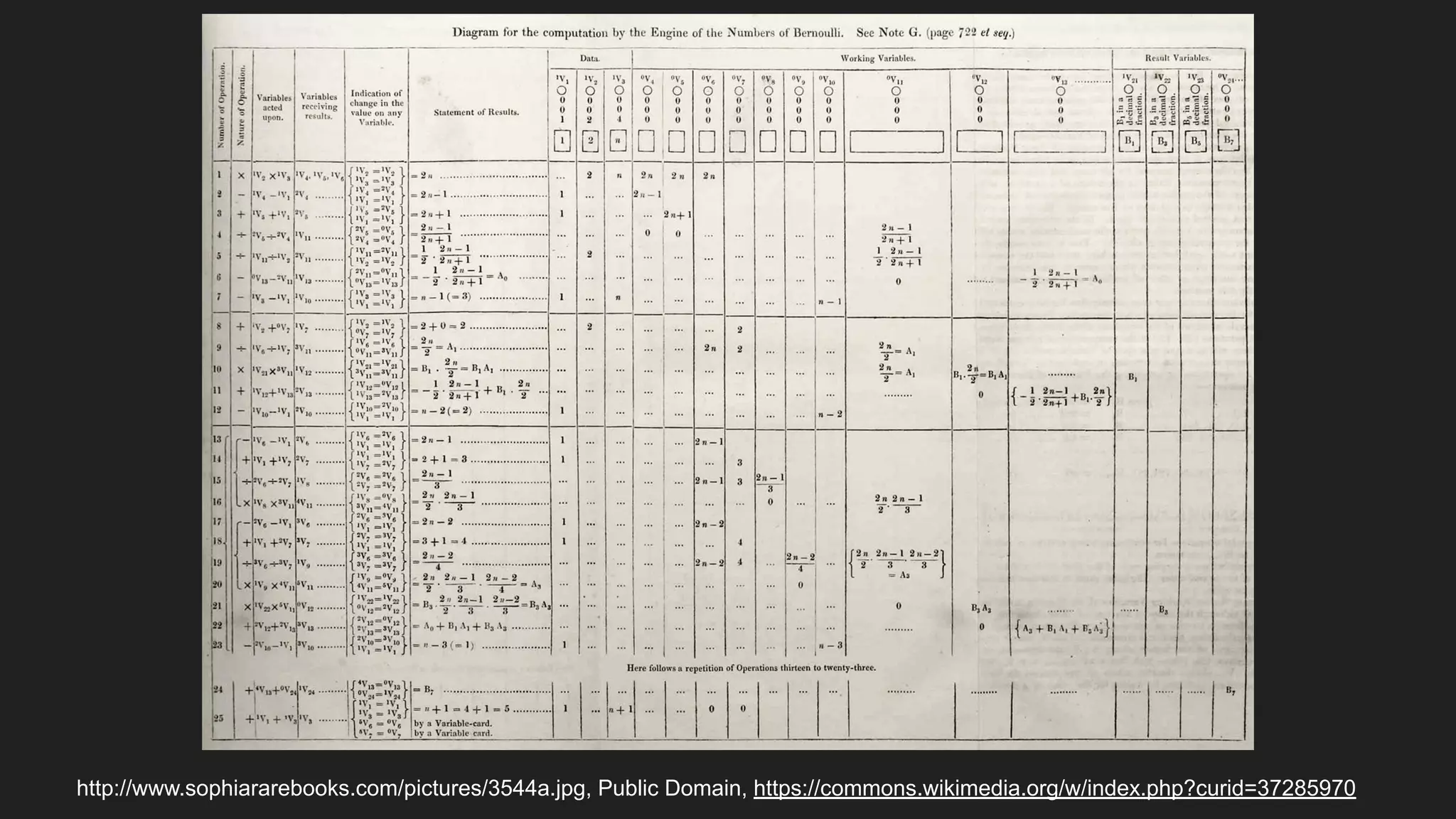
http://www.sophiararebooks.com/pictures/3544a.jpg, Public Domain, https://commons.wikimedia.org/w/index.php?curid=37285970
By Margaret Sarah Carpenter - [1], Public Domain, https://commons.wikimedia.org/w/index.php?curid=28993870
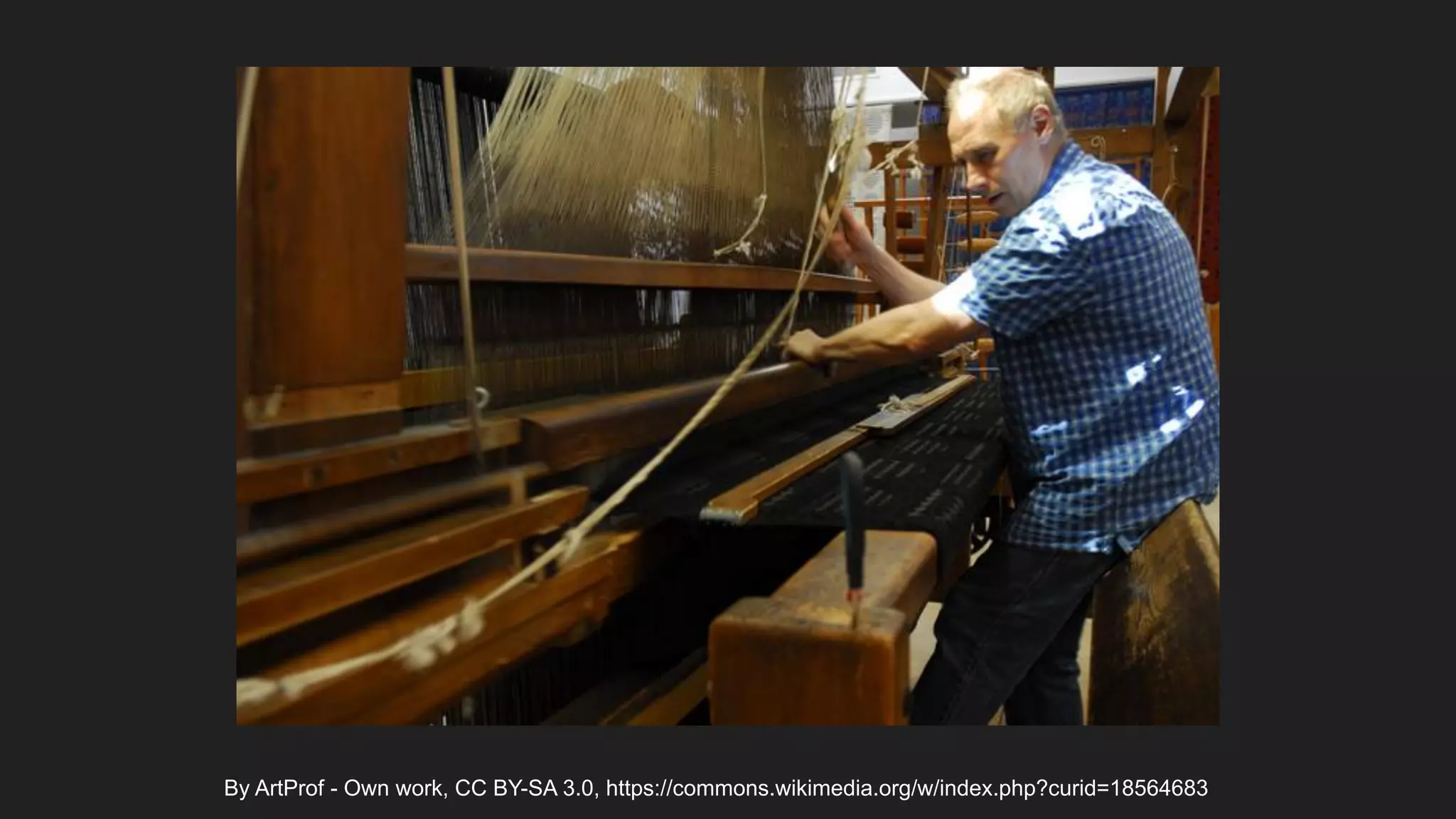
"We may say most aptly that
the Analytical Engine weaves
algebraic patterns just as the
Jacquard-loom weaves
flowers and leaves."
Ada Lovelace (1815 - 1852)
By ArtProf - Own work, CC BY-SA 3.0, https://commons.wikimedia.org/w/index.php?curid=18564683
By Margaret Sarah Carpenter - [1], Public Domain, https://commons.wikimedia.org/w/index.php?curid=28993870
"[Debugging] is damnably
troublesome work, and
plagues me."
Ada Lovelace (1815 - 1852)
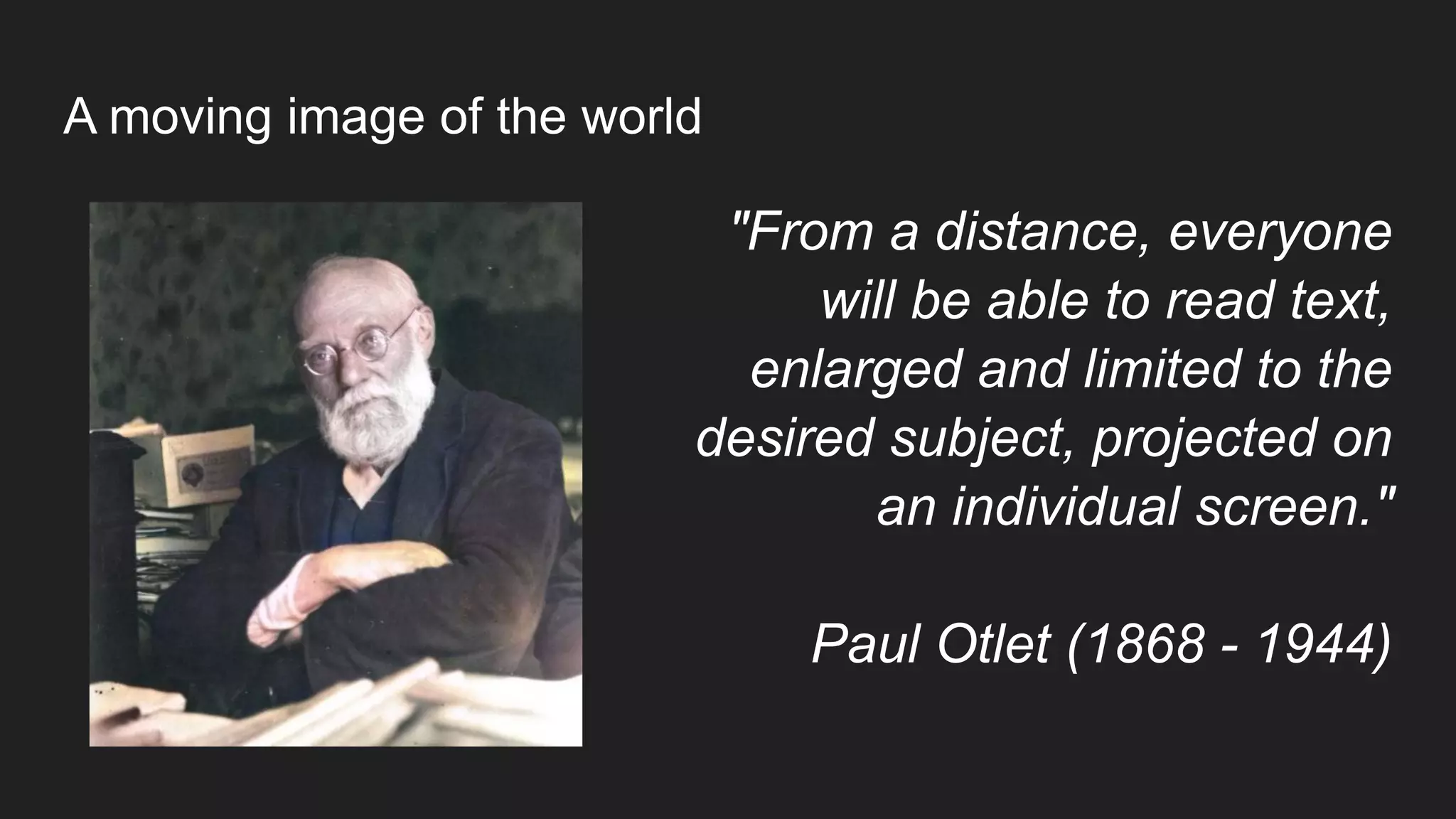
A moving image of the world
"From a distance, everyone
will be able to read text,
enlarged and limited to the
desired subject, projected on
an individual screen."
Paul Otlet (1868 - 1944)
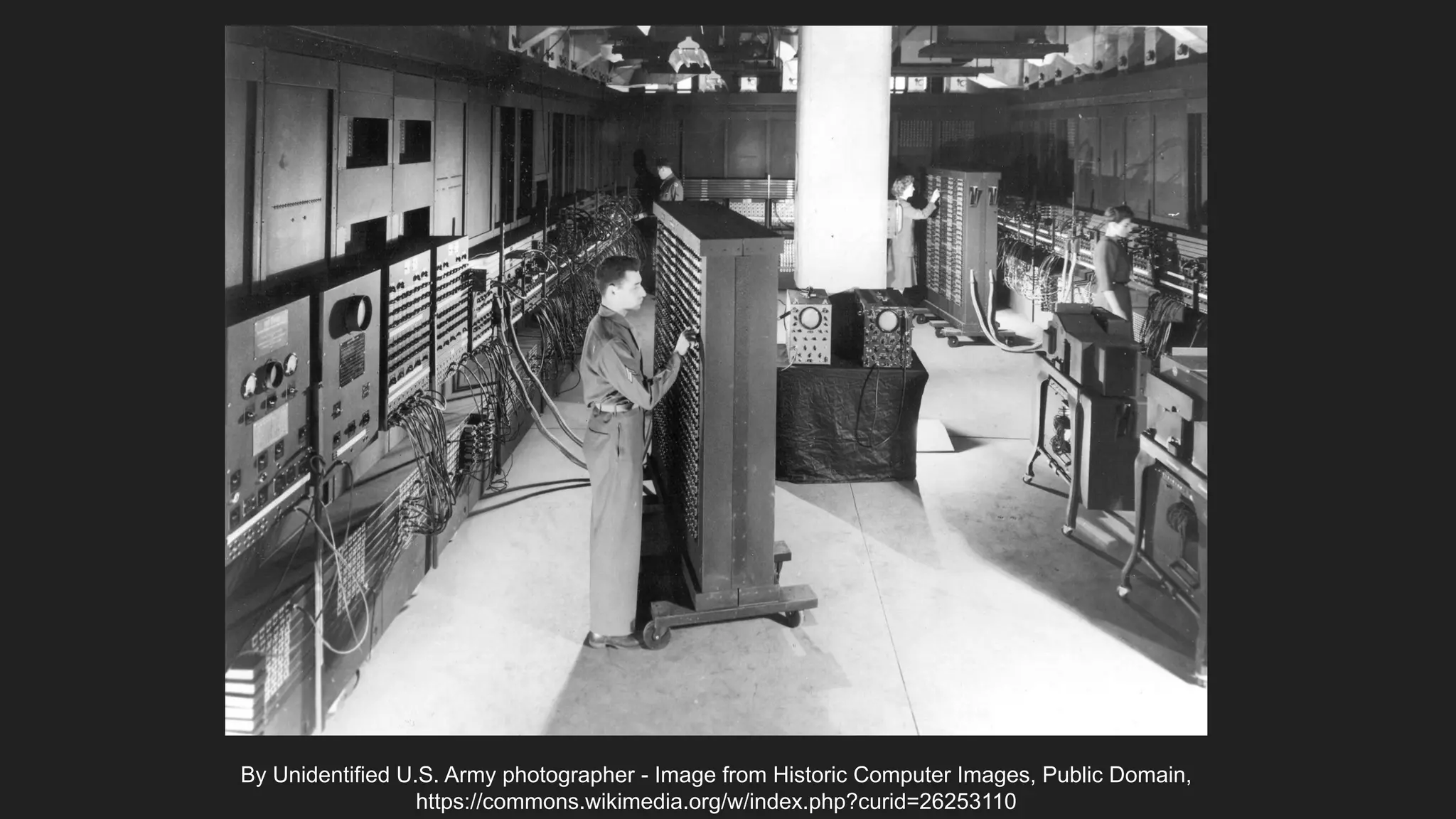
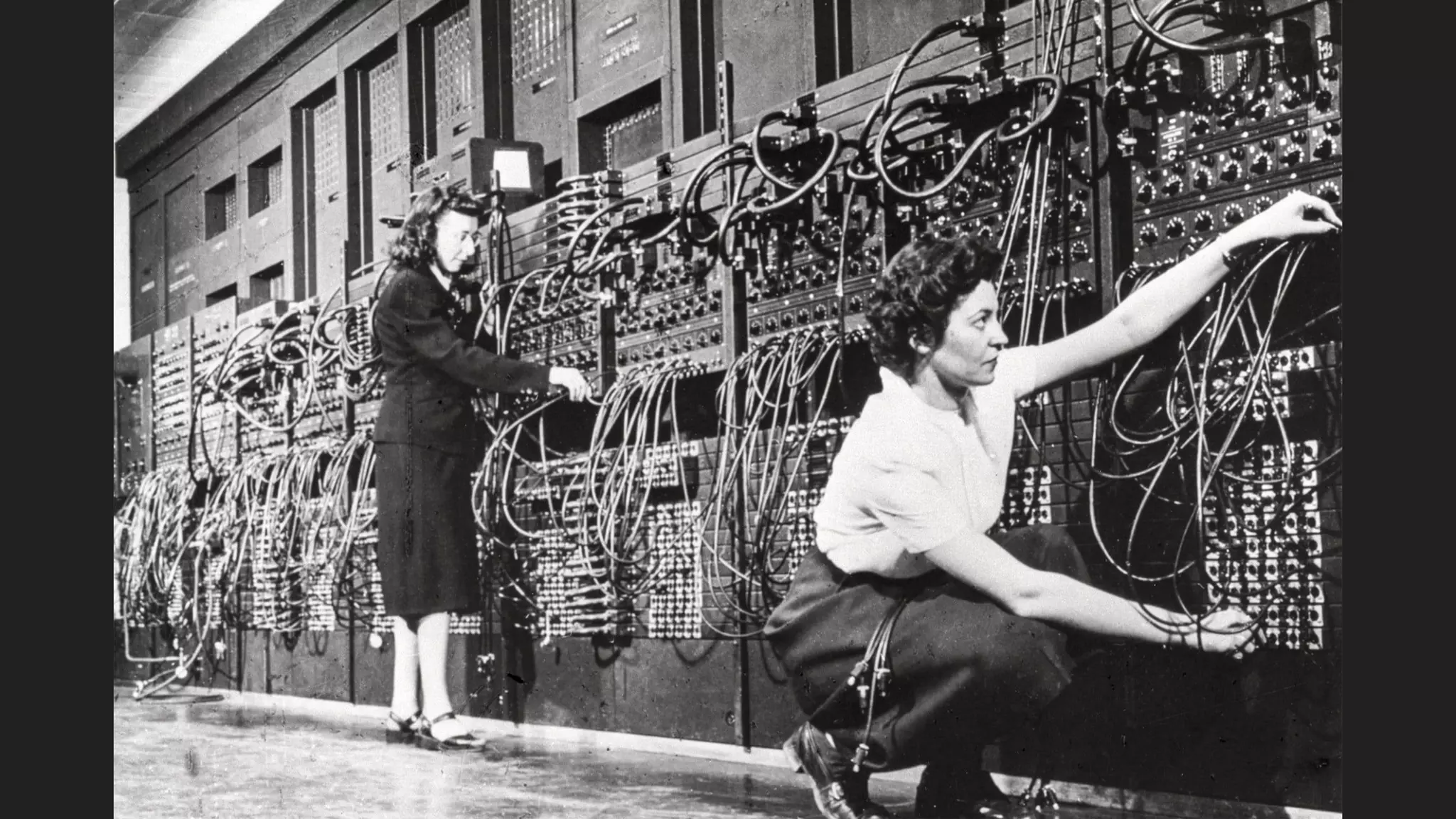
By Unidentified U.S. Army photographer - Image from Historic Computer Images, Public Domain,
https://commons.wikimedia.org/w/index.php?curid=26253110
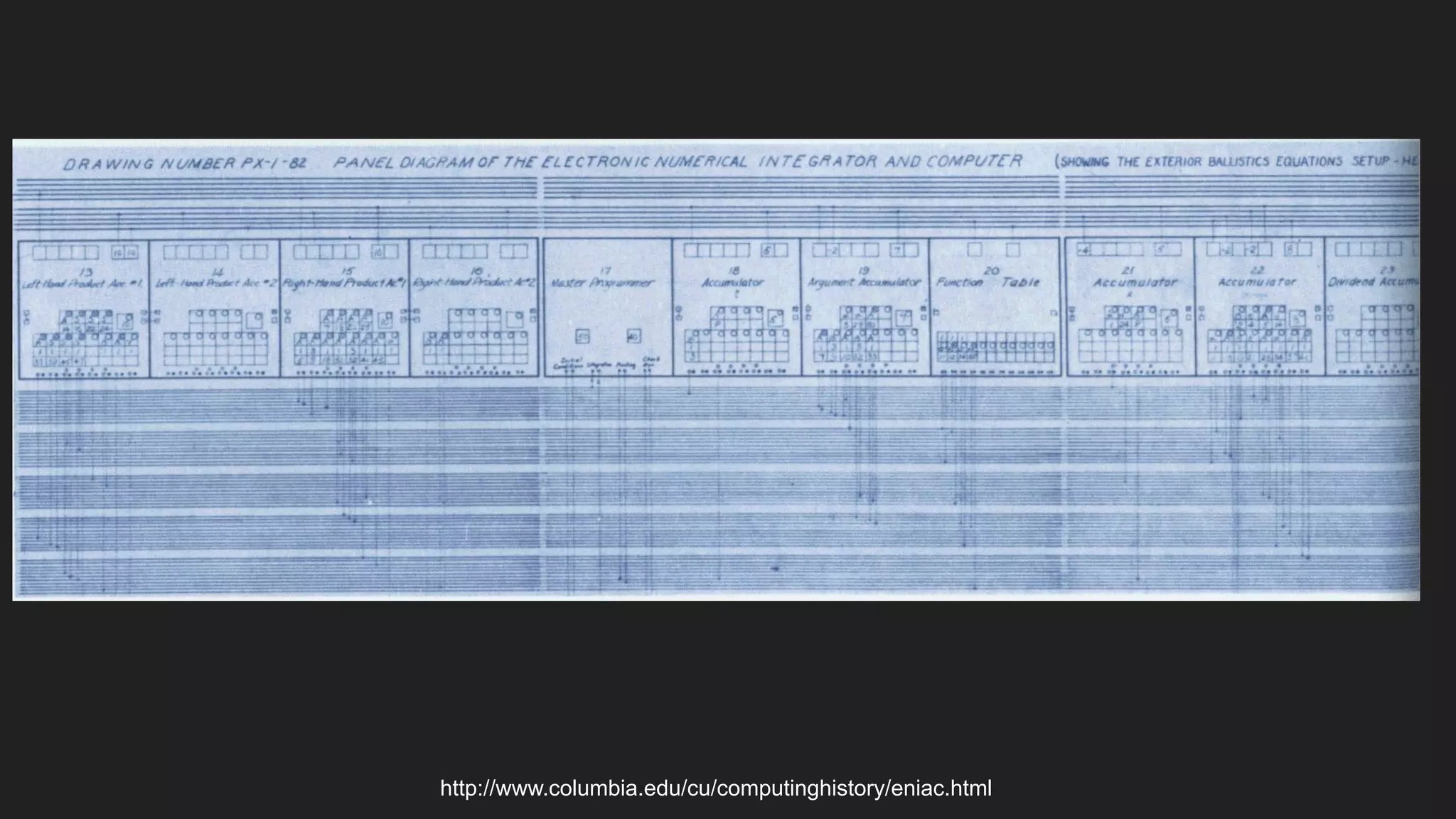
http://www.columbia.edu/cu/computinghistory/eniac.html
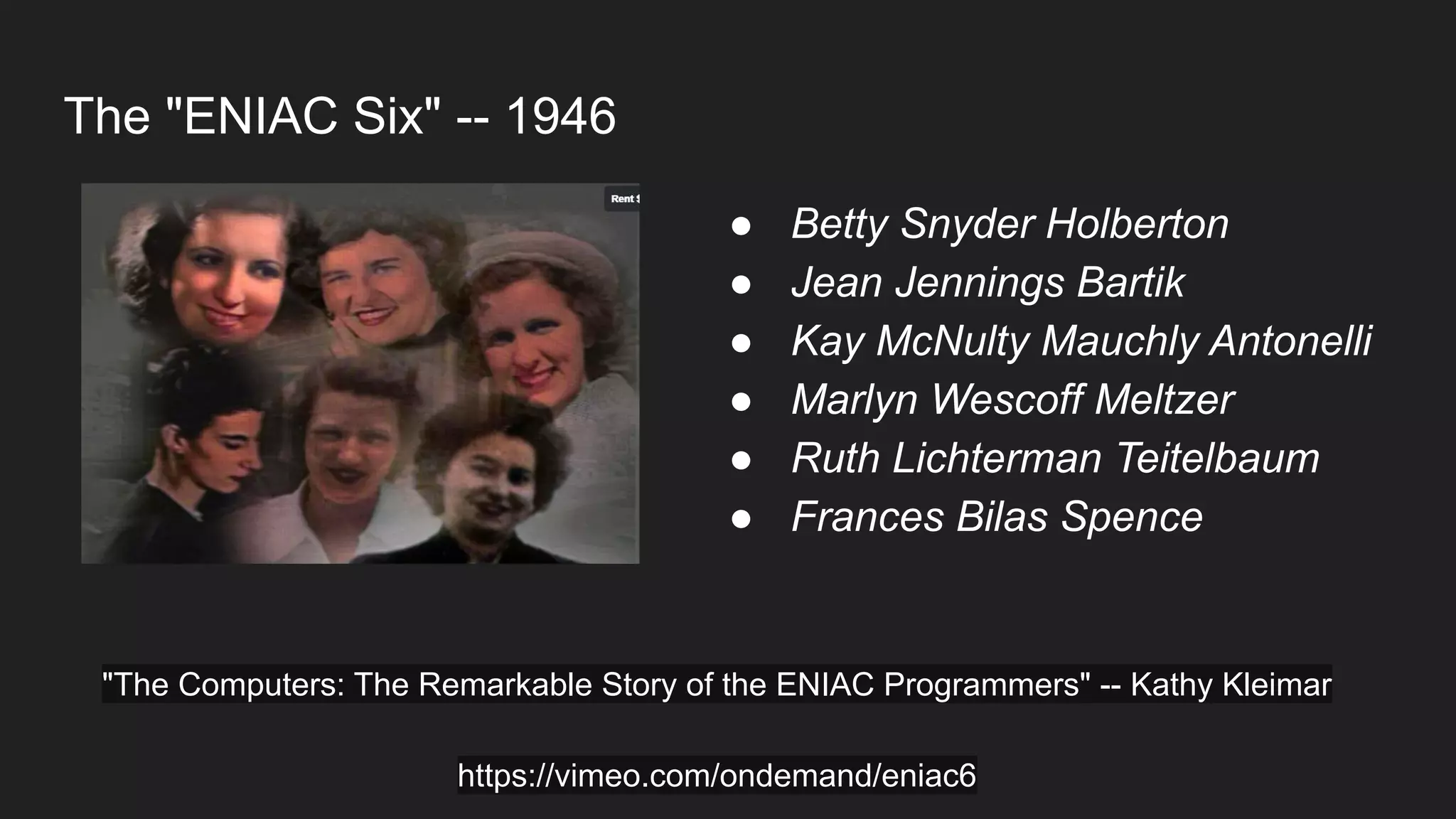
The "ENIAC Six" -- 1946
● Betty Snyder Holberton
● Jean Jennings Bartik
● Kay McNulty Mauchly Antonelli
● Marlyn Wescoff Meltzer
● Ruth Lichterman Teitelbaum
● Frances Bilas Spence
"The Computers: The Remarkable Story of the ENIAC Programmers" -- Kathy Kleimar
https://vimeo.com/ondemand/eniac6
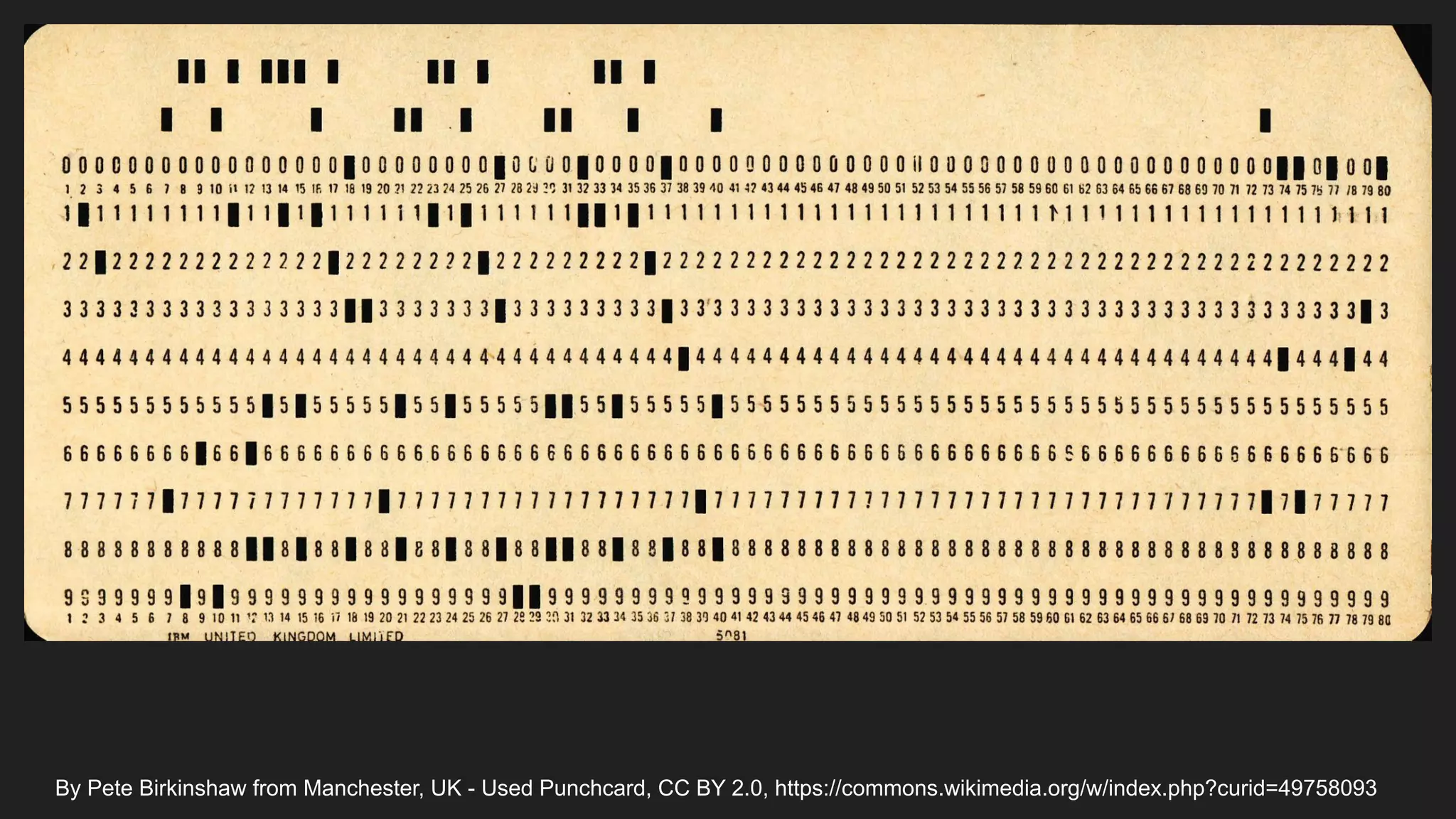
By Pete Birkinshaw from Manchester, UK - Used Punchcard, CC BY 2.0, https://commons.wikimedia.org/w/index.php?curid=49758093
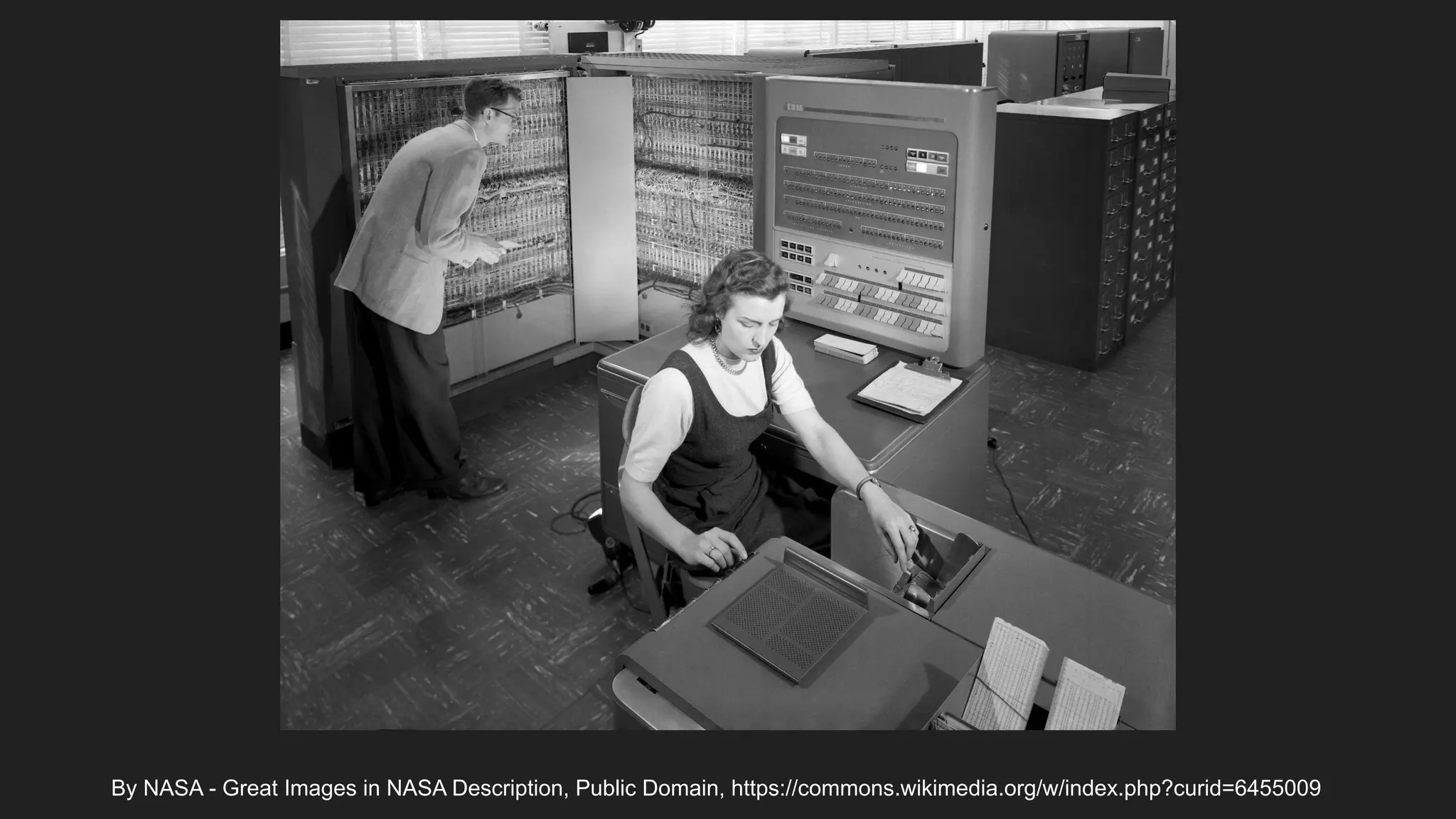
By NASA - Great Images in NASA Description, Public Domain, https://commons.wikimedia.org/w/index.php?curid=6455009
By NASA on The Commons - Flickr, Public Domain, https://commons.wikimedia.org/w/index.php?curid=59509121
"We're going to need a lot of
manpower to program that
beast [the IBM 7090]."
-- Dorothy Vaughan
Mathematician
FORTRAN expert
Dorothy Vaughan (1910 - 2008)
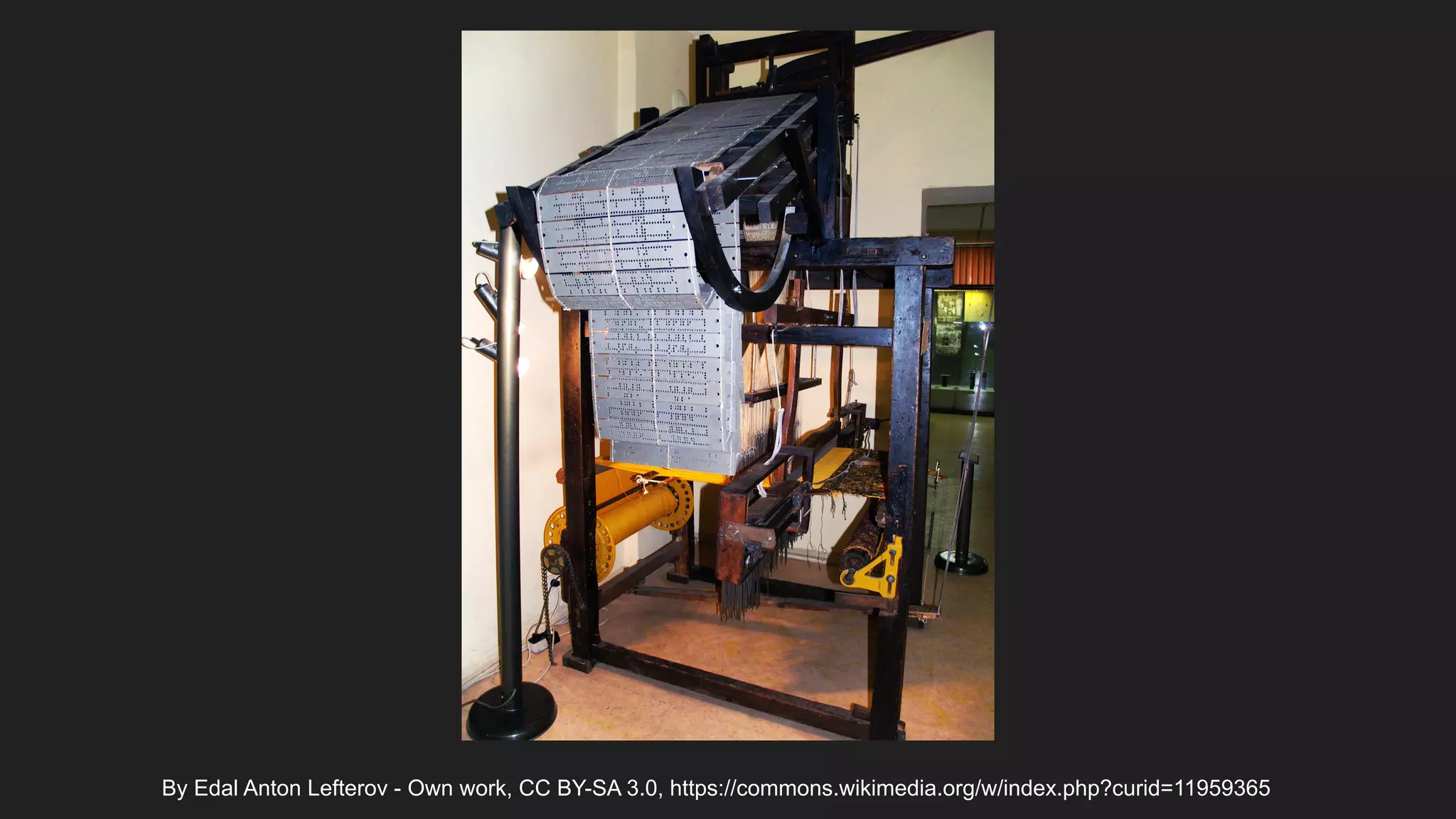
By Edal Anton Lefterov - Own work, CC BY-SA 3.0, https://commons.wikimedia.org/w/index.php?curid=11959365
Where We Are
1950-2050
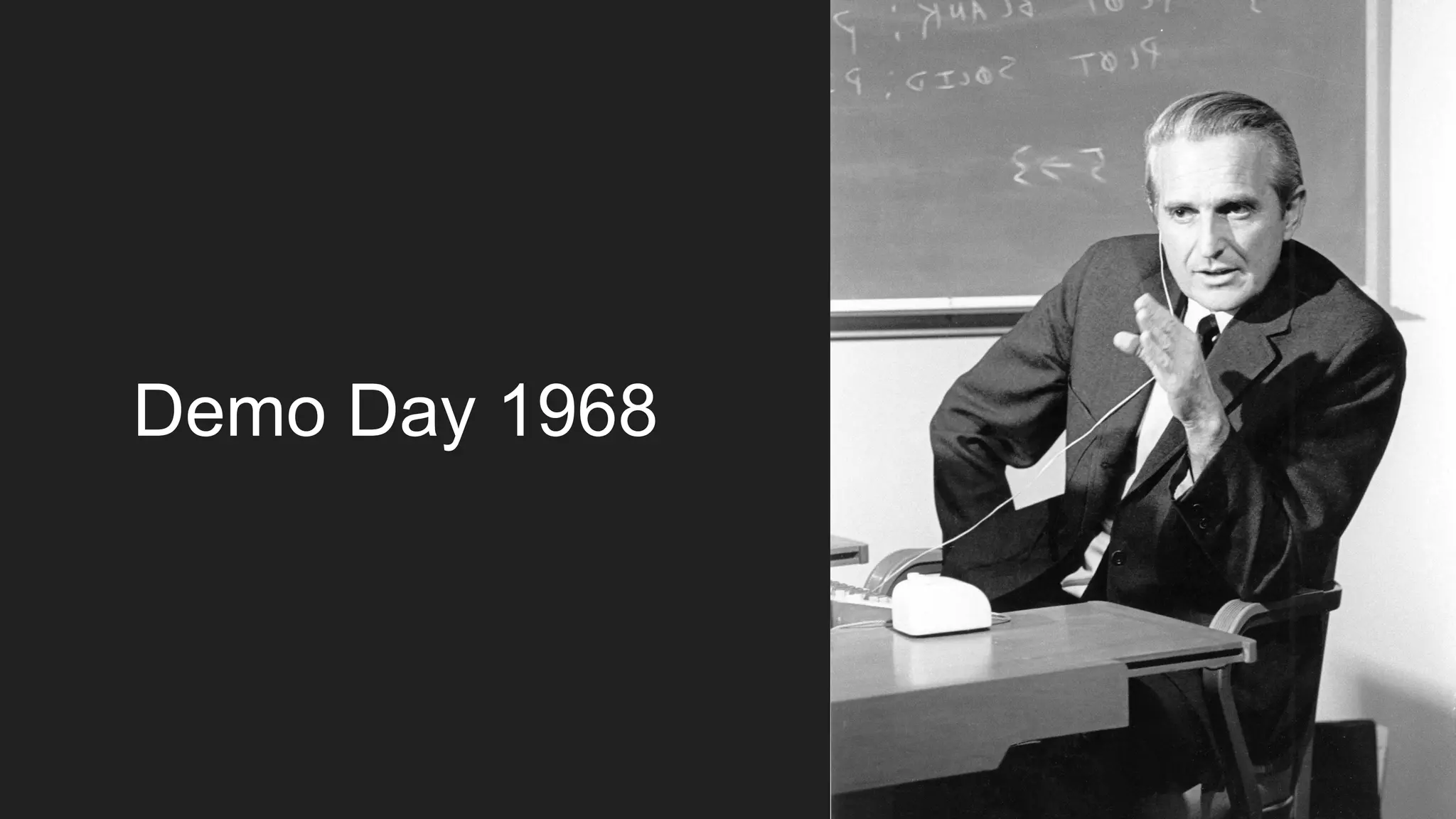
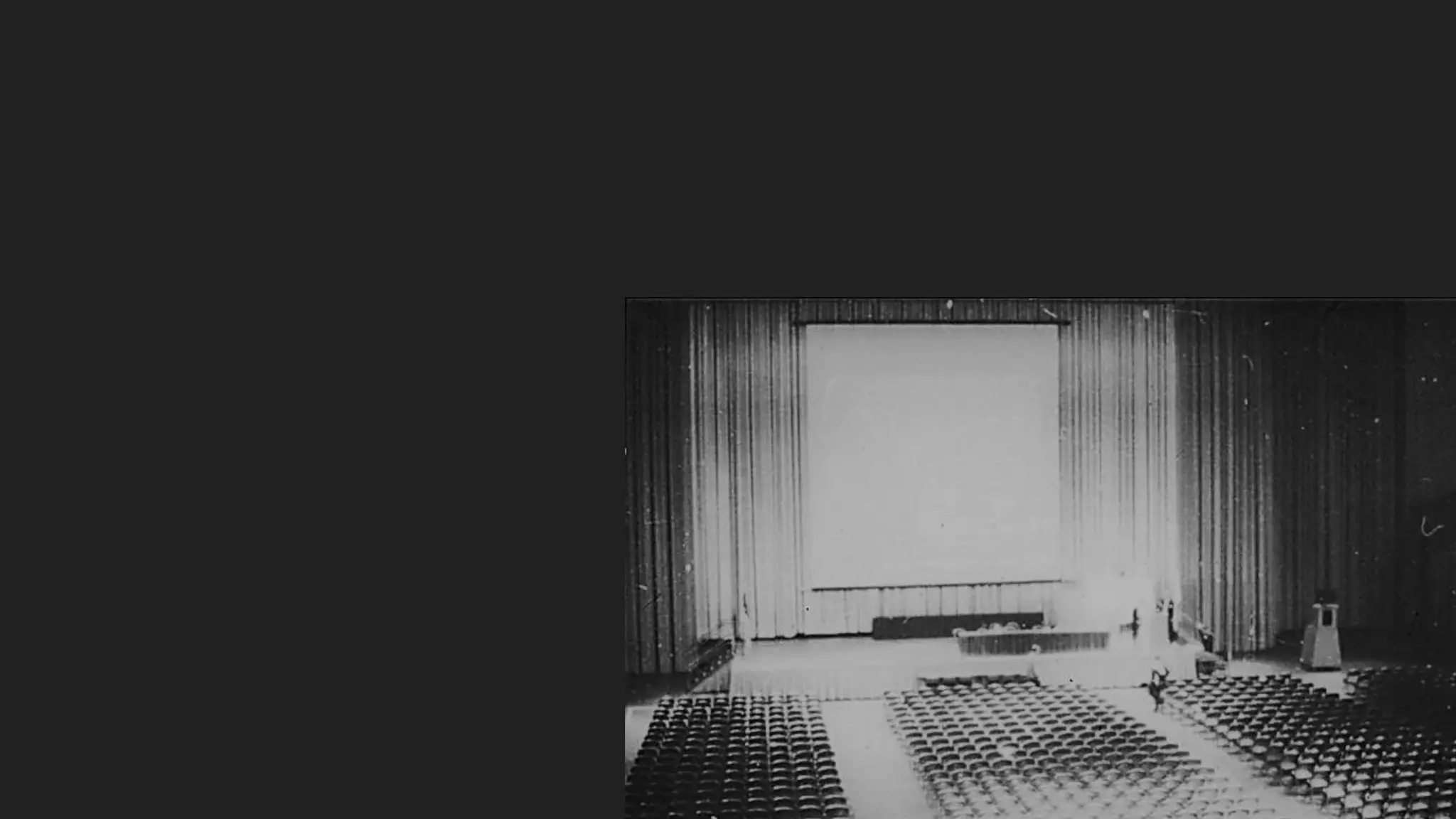
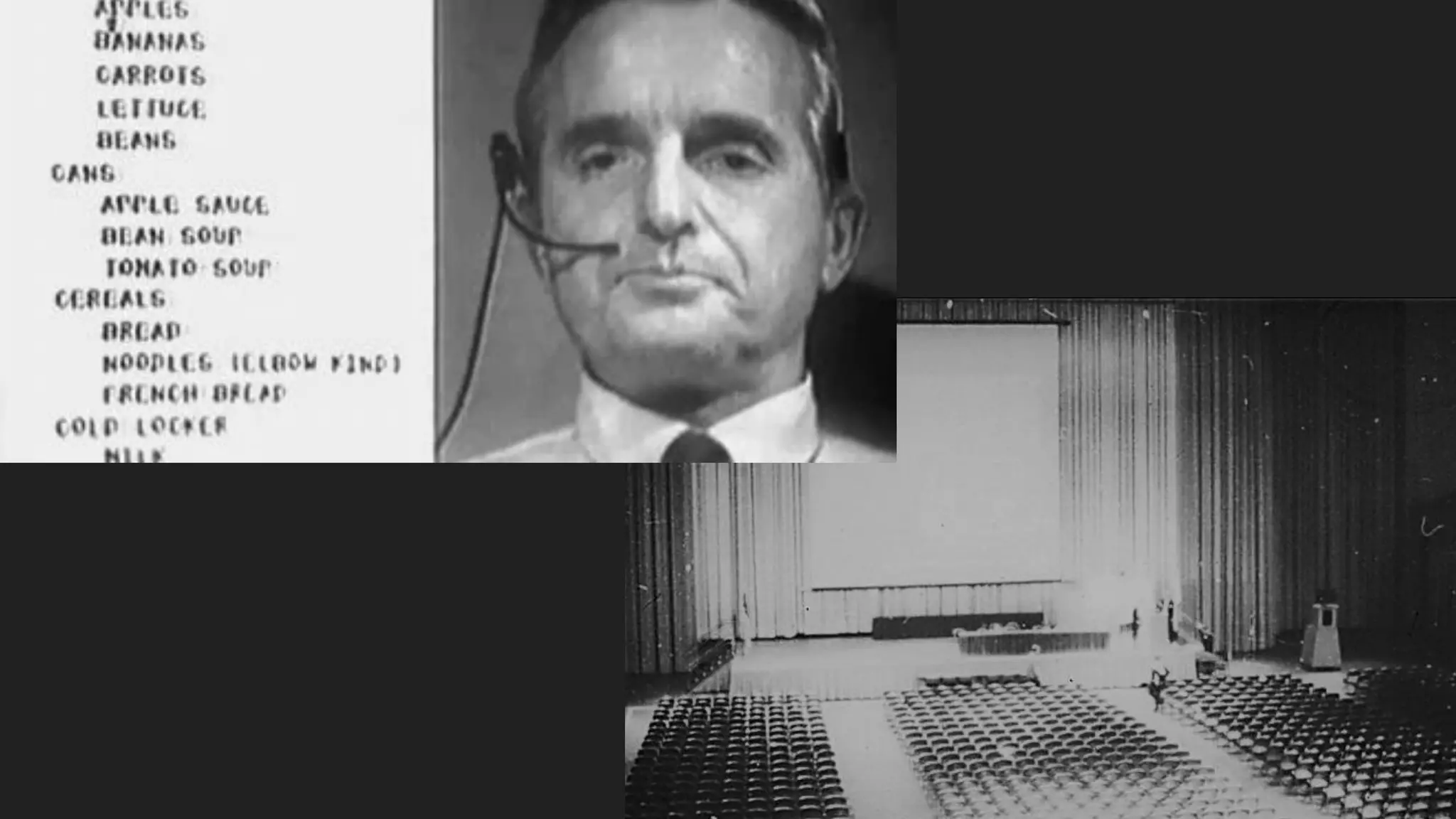
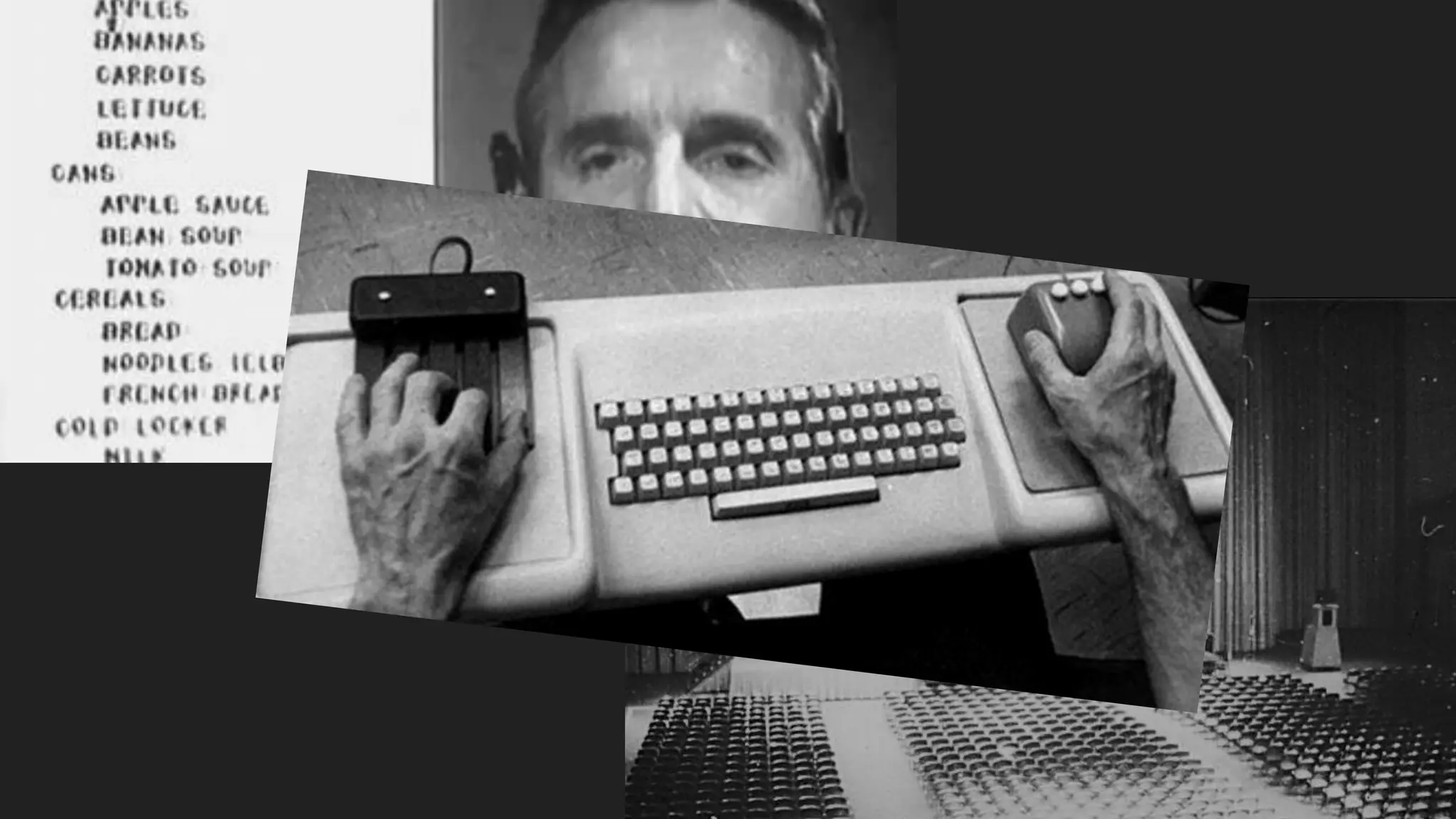
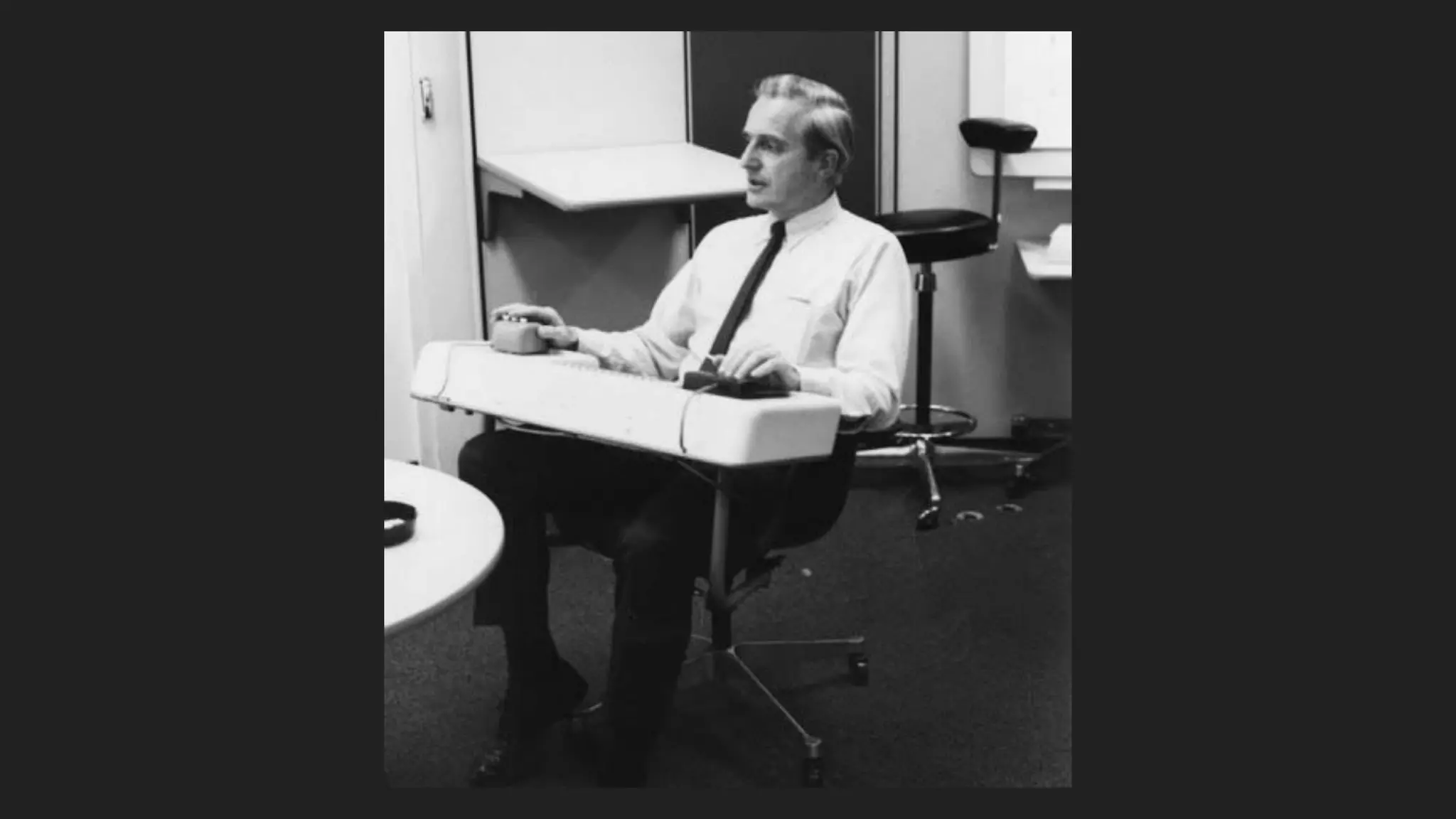
Demo Day 1968
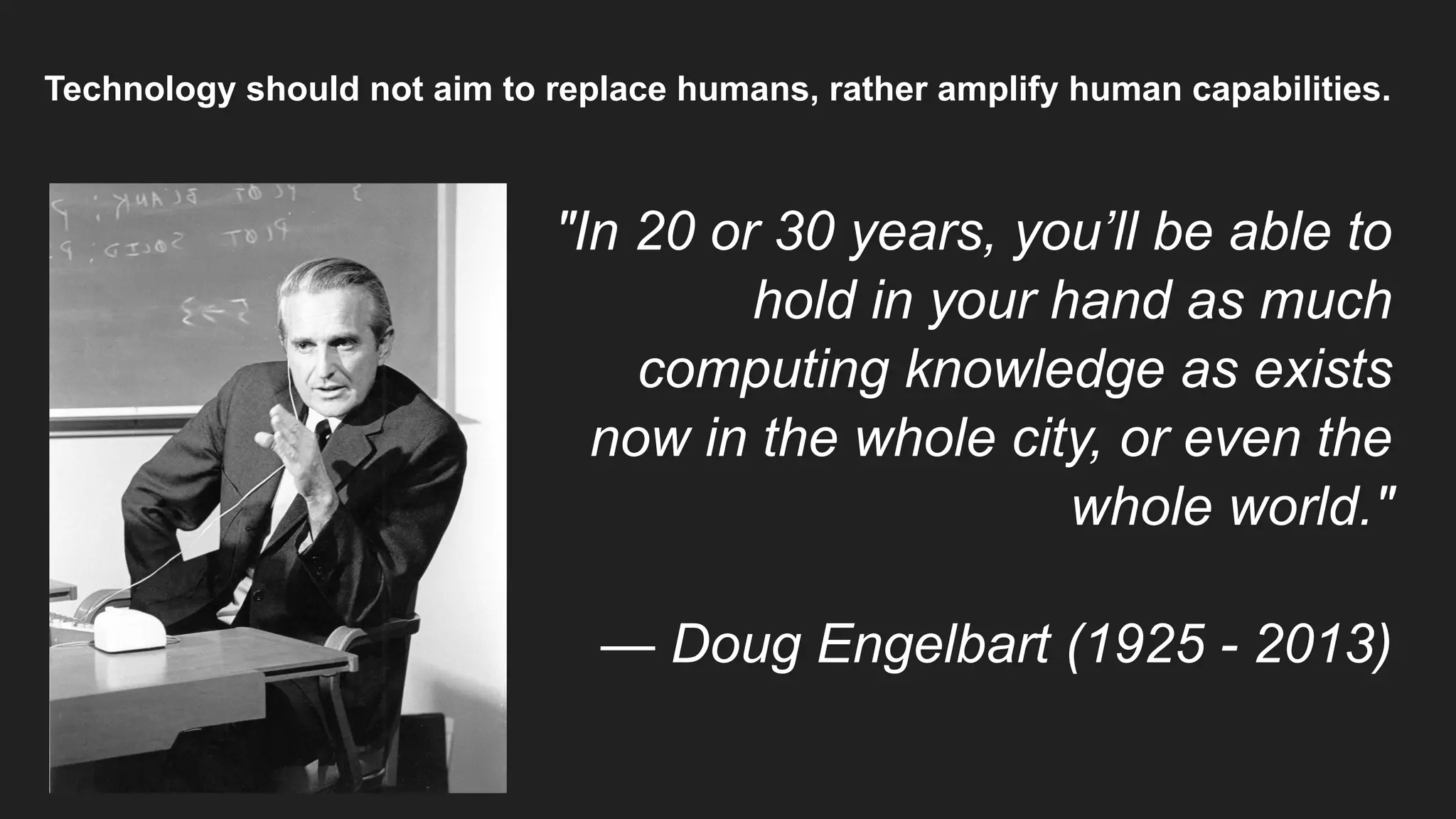
Technology should not aim to replace humans, rather amplify human capabilities.
"In 20 or 30 years, you’ll be able to
hold in your hand as much
computing knowledge as exists
now in the whole city, or even the
whole world."
— Doug Engelbart (1925 - 2013)
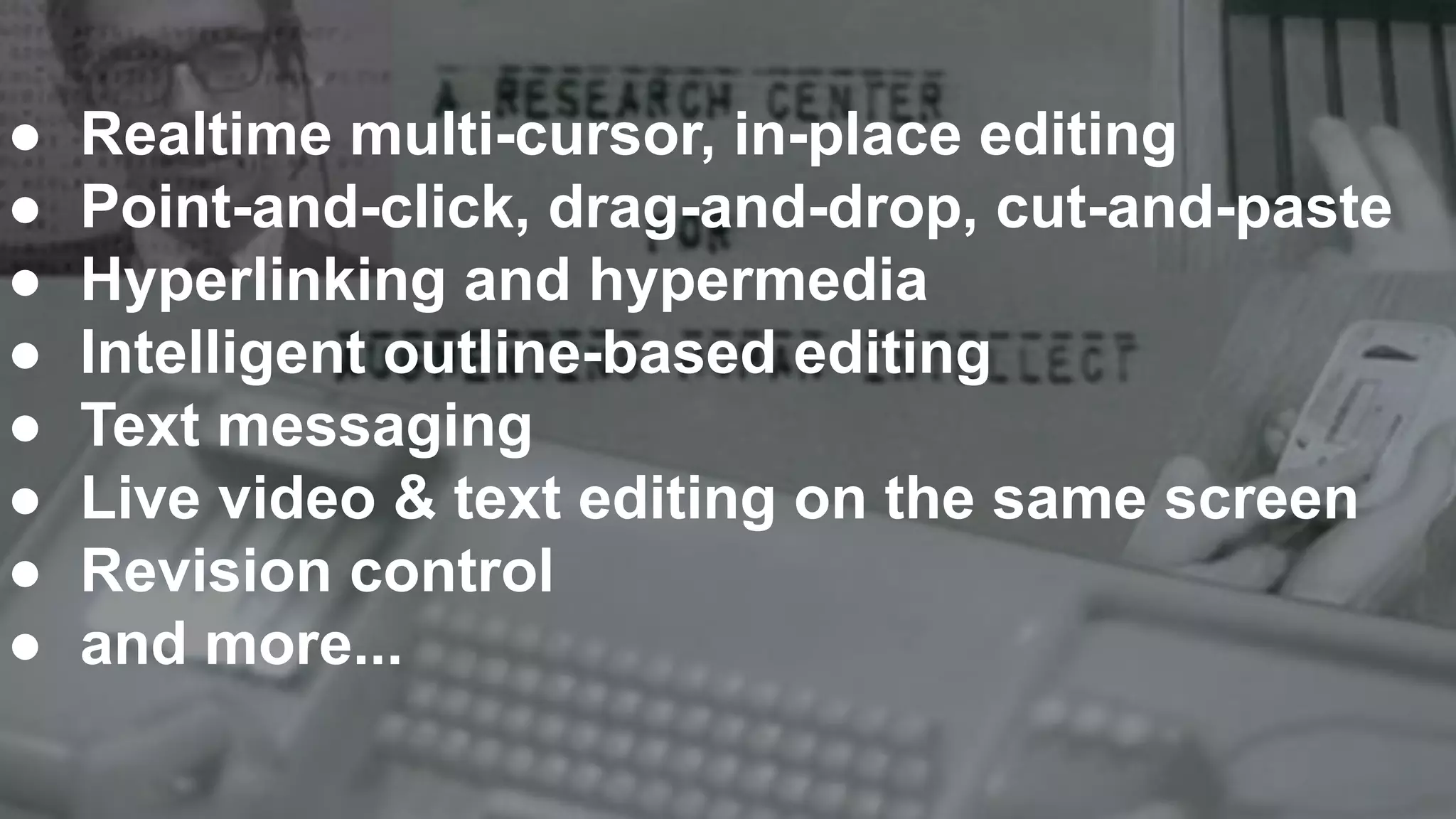
● Realtime multi-cursor, in-place editing
● Point-and-click, drag-and-drop, cut-and-paste
● Hyperlinking and hypermedia
● Intelligent outline-based editing
● Text messaging
● Live video & text editing on the same screen
● Revision control
● and more...
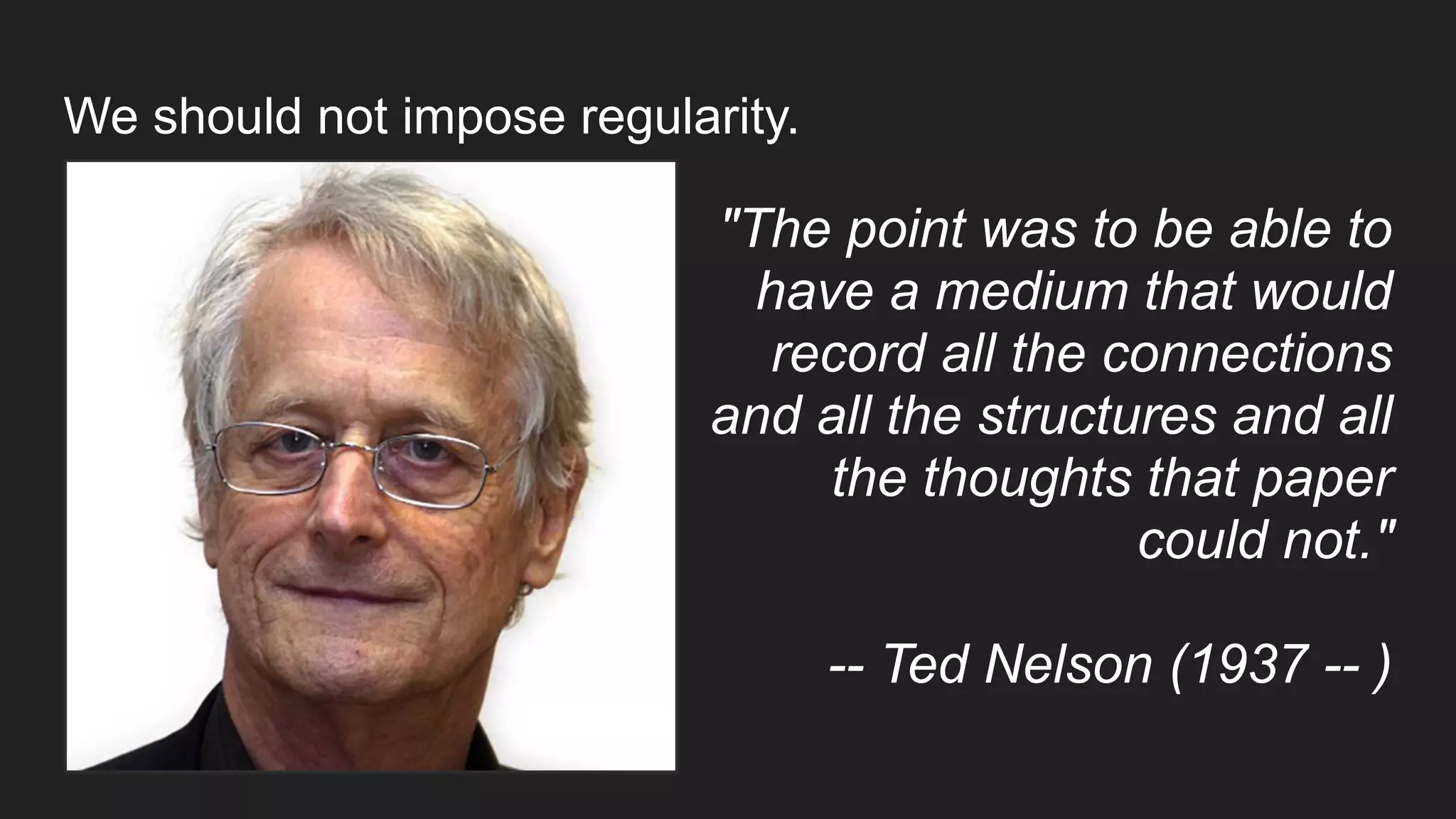
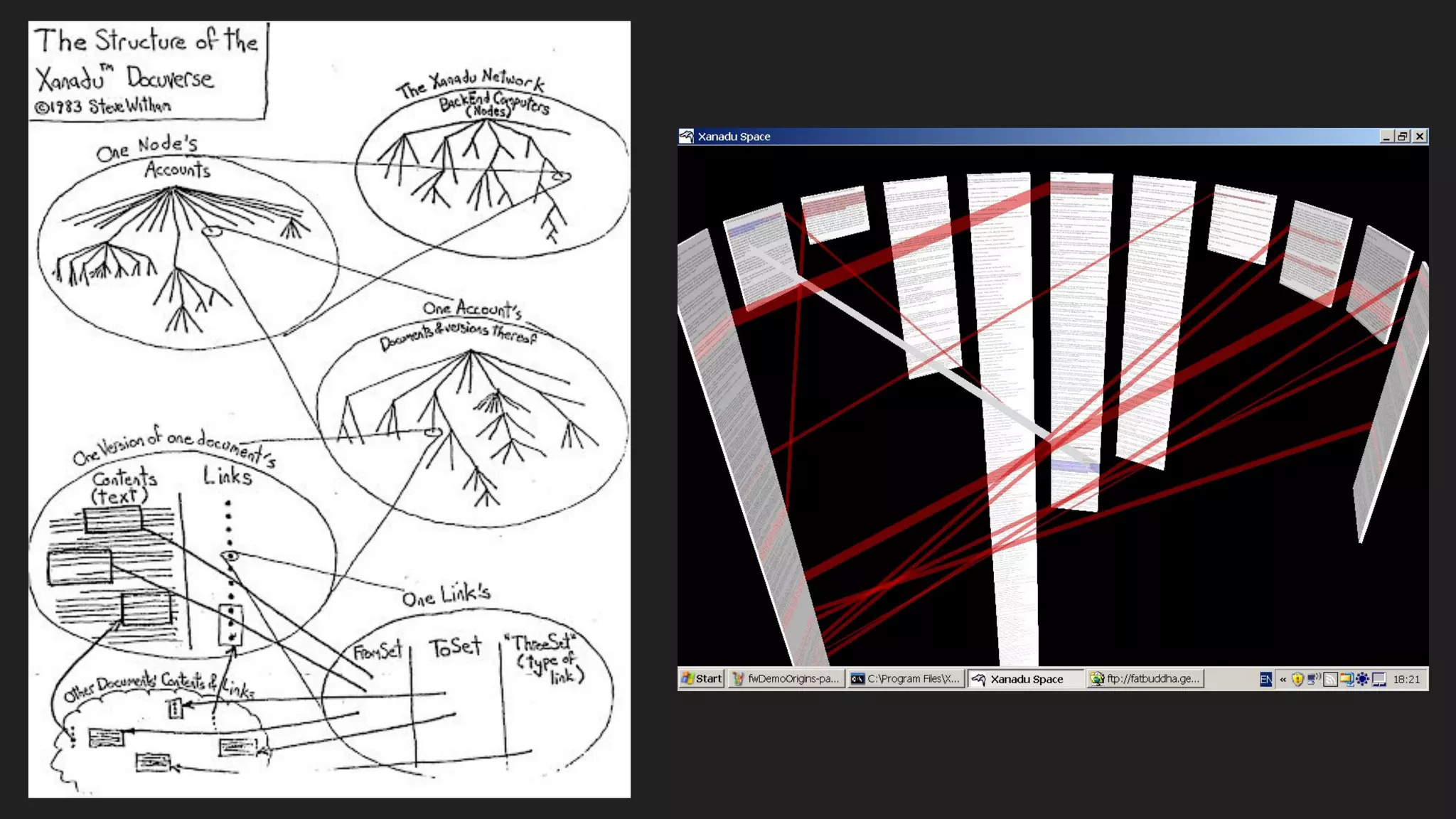
We should not impose regularity.
"The point was to be able to
have a medium that would
record all the connections
and all the structures and all
the thoughts that paper
could not."
-- Ted Nelson (1937 -- )
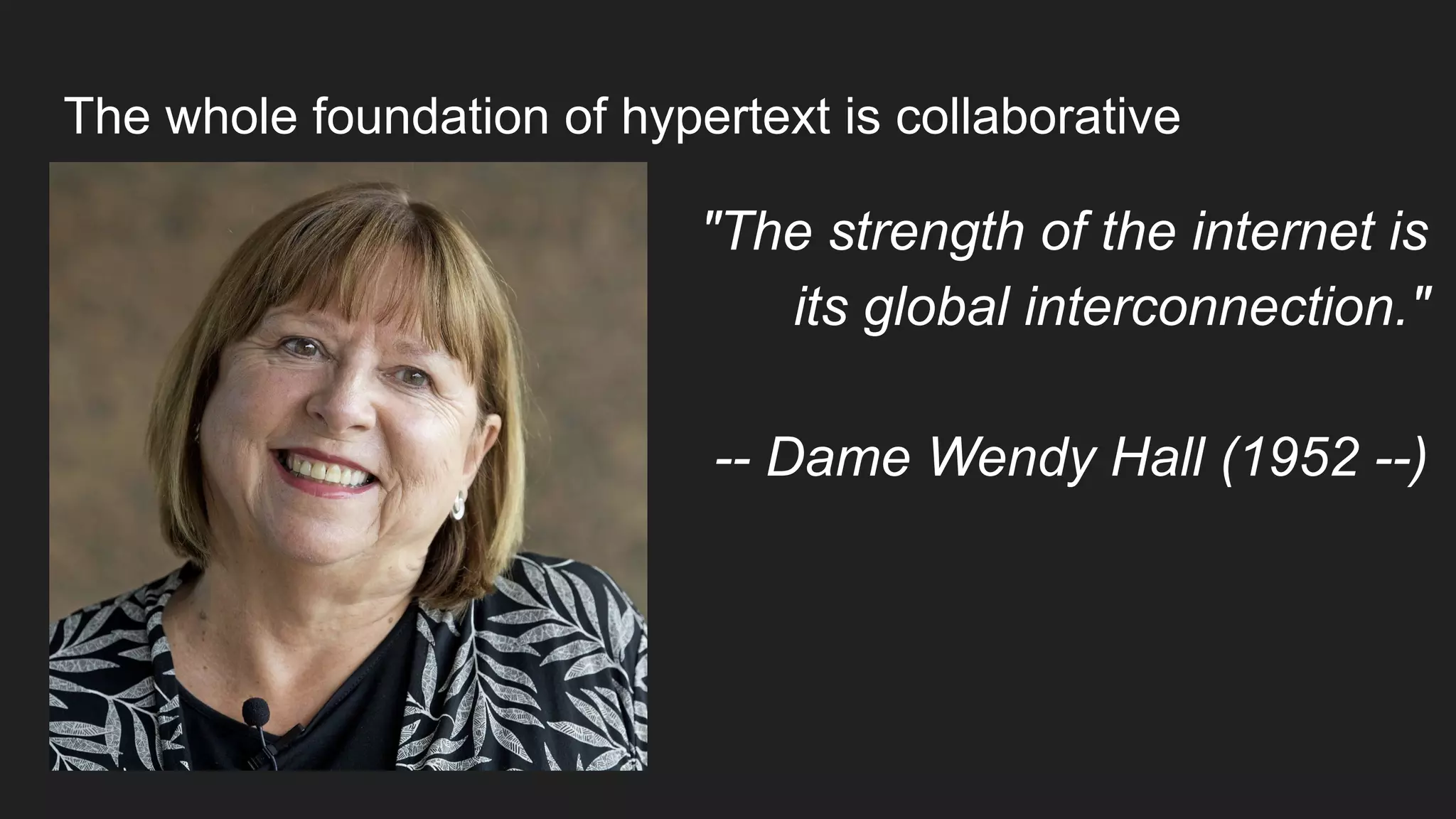
The whole foundation of hypertext is collaborative
"The strength of the internet is
its global interconnection."
-- Dame Wendy Hall (1952 --)
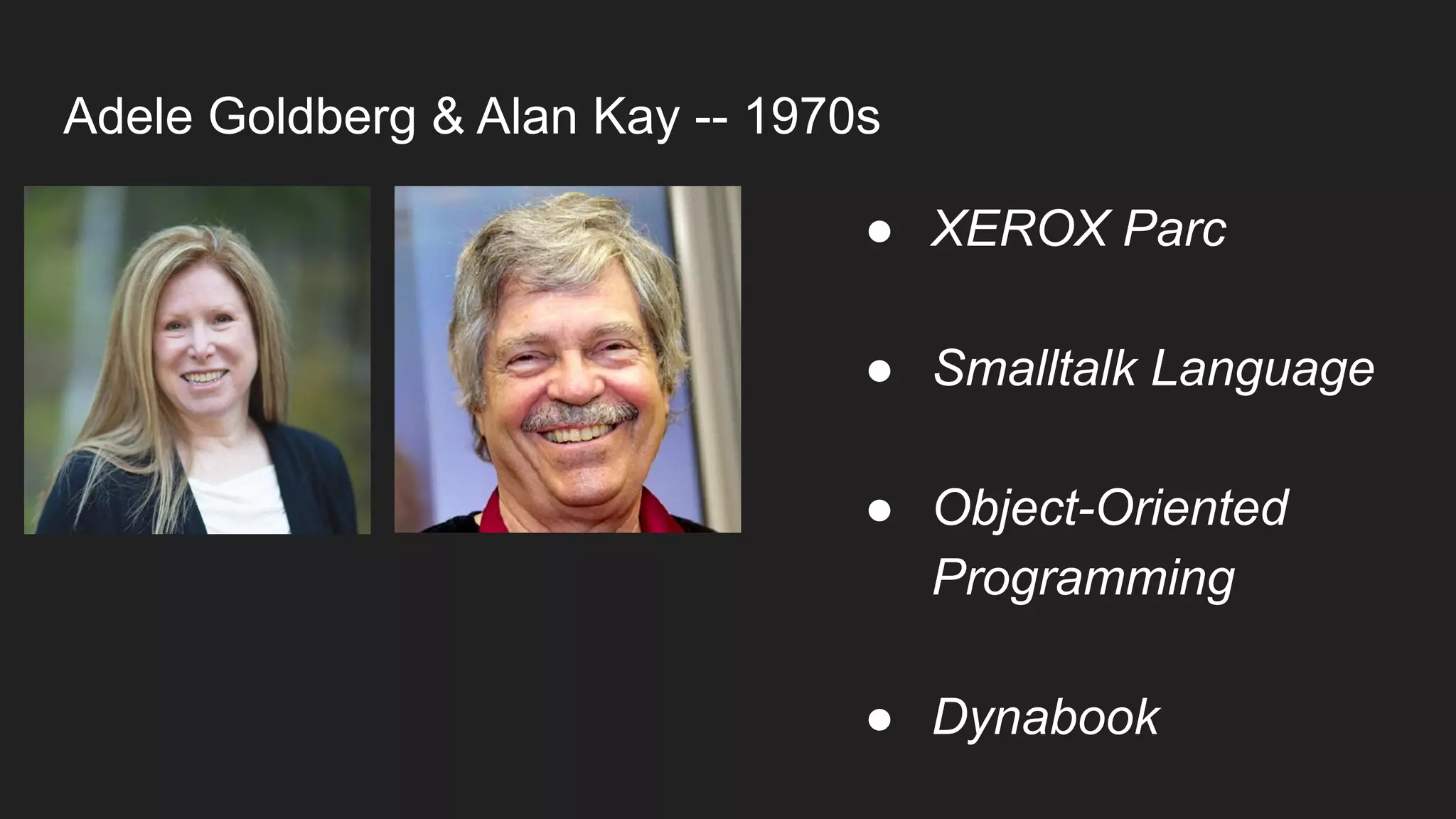
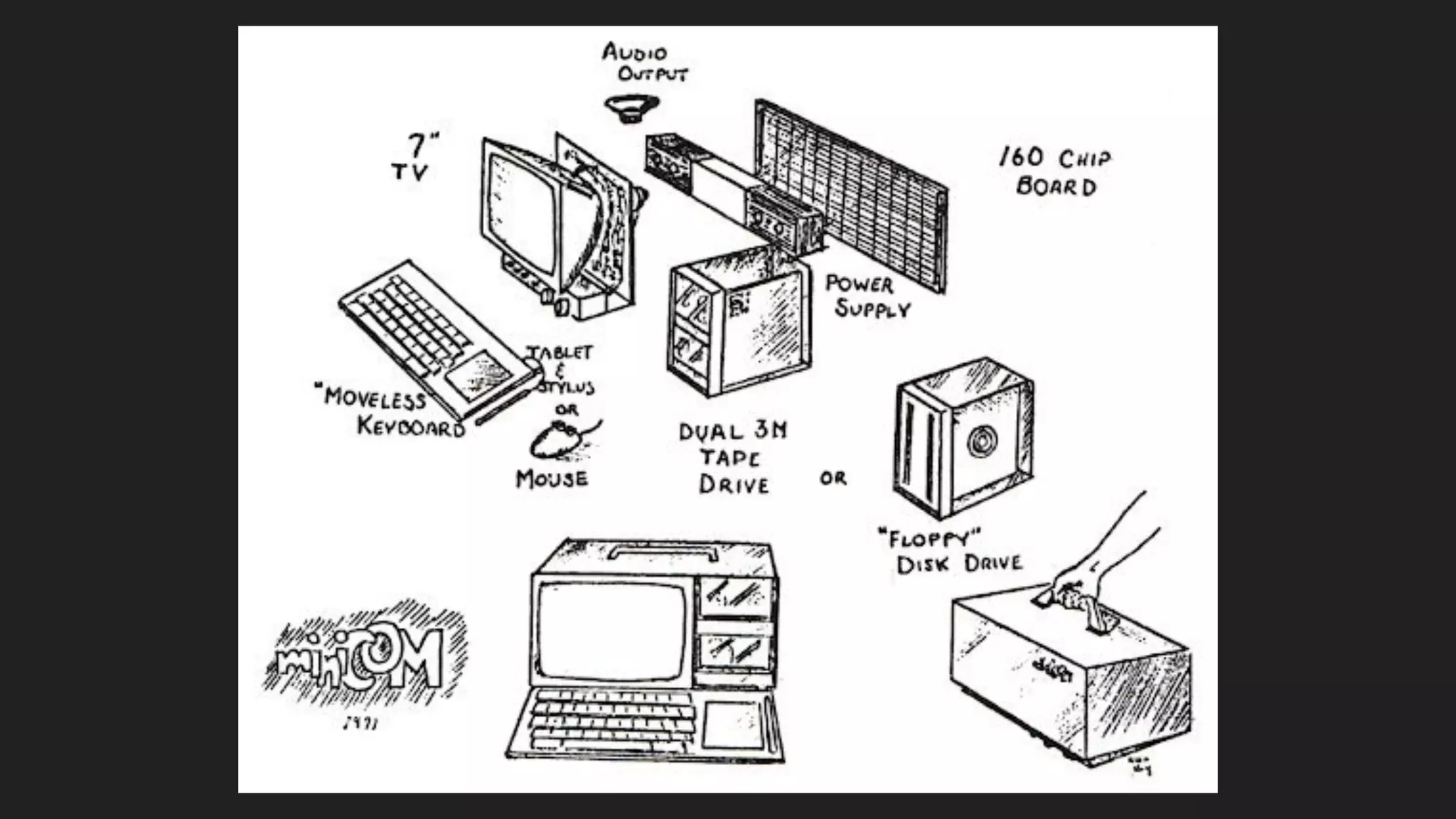
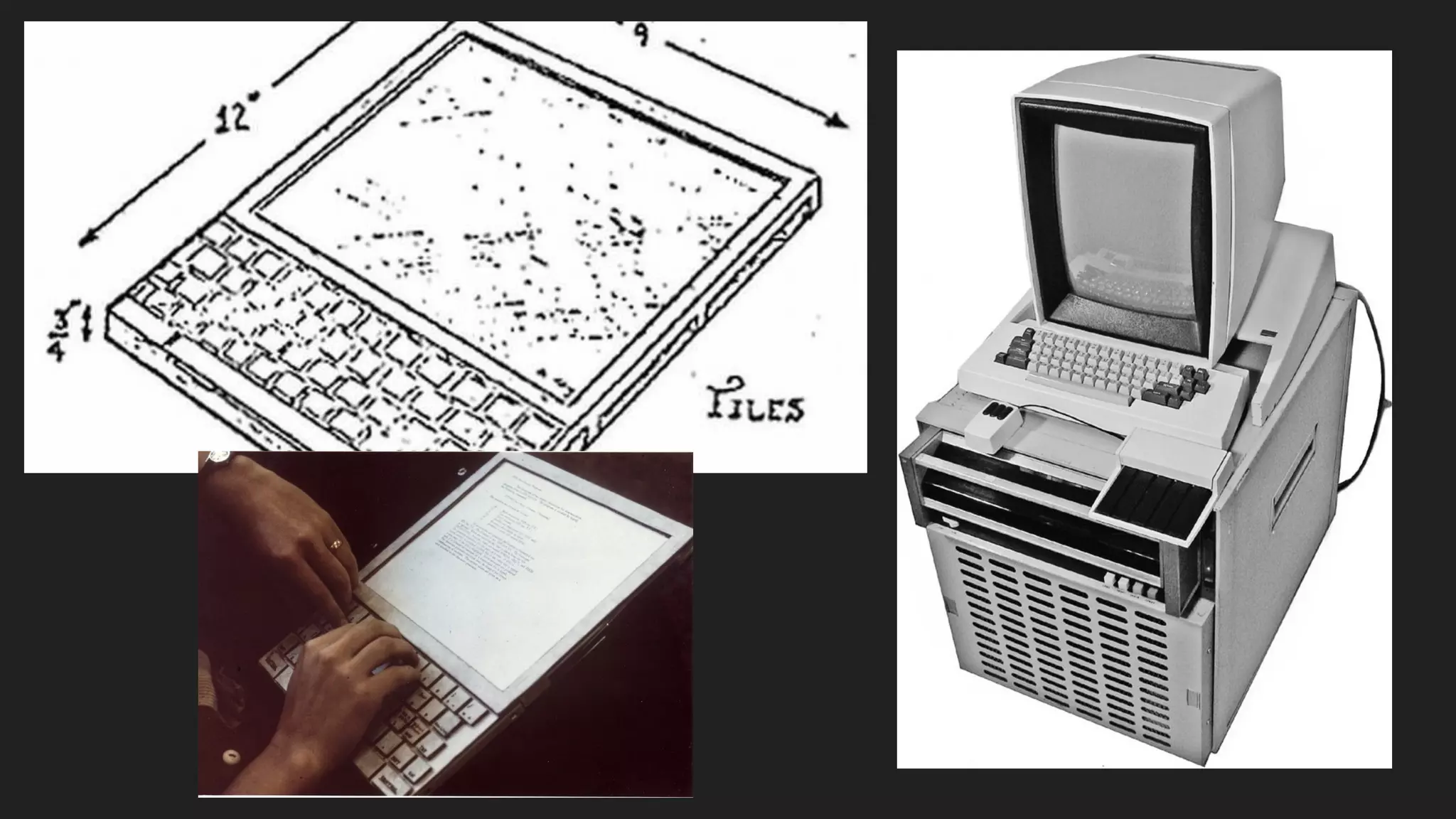
Adele Goldberg & Alan Kay -- 1970s
● XEROX Parc
● Smalltalk Language
● Object-Oriented
Programming
● Dynabook
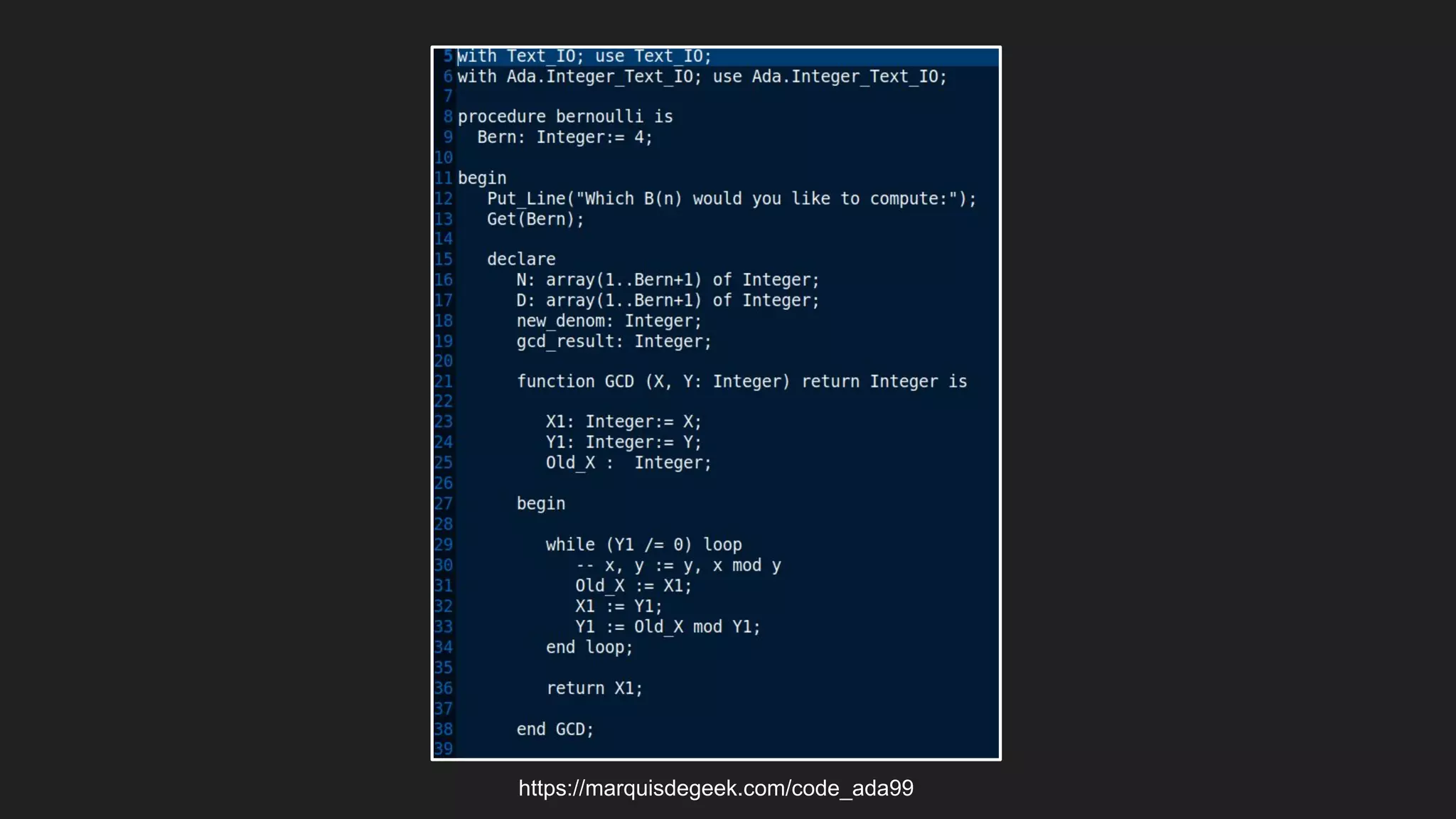
https://marquisdegeek.com/code_ada99
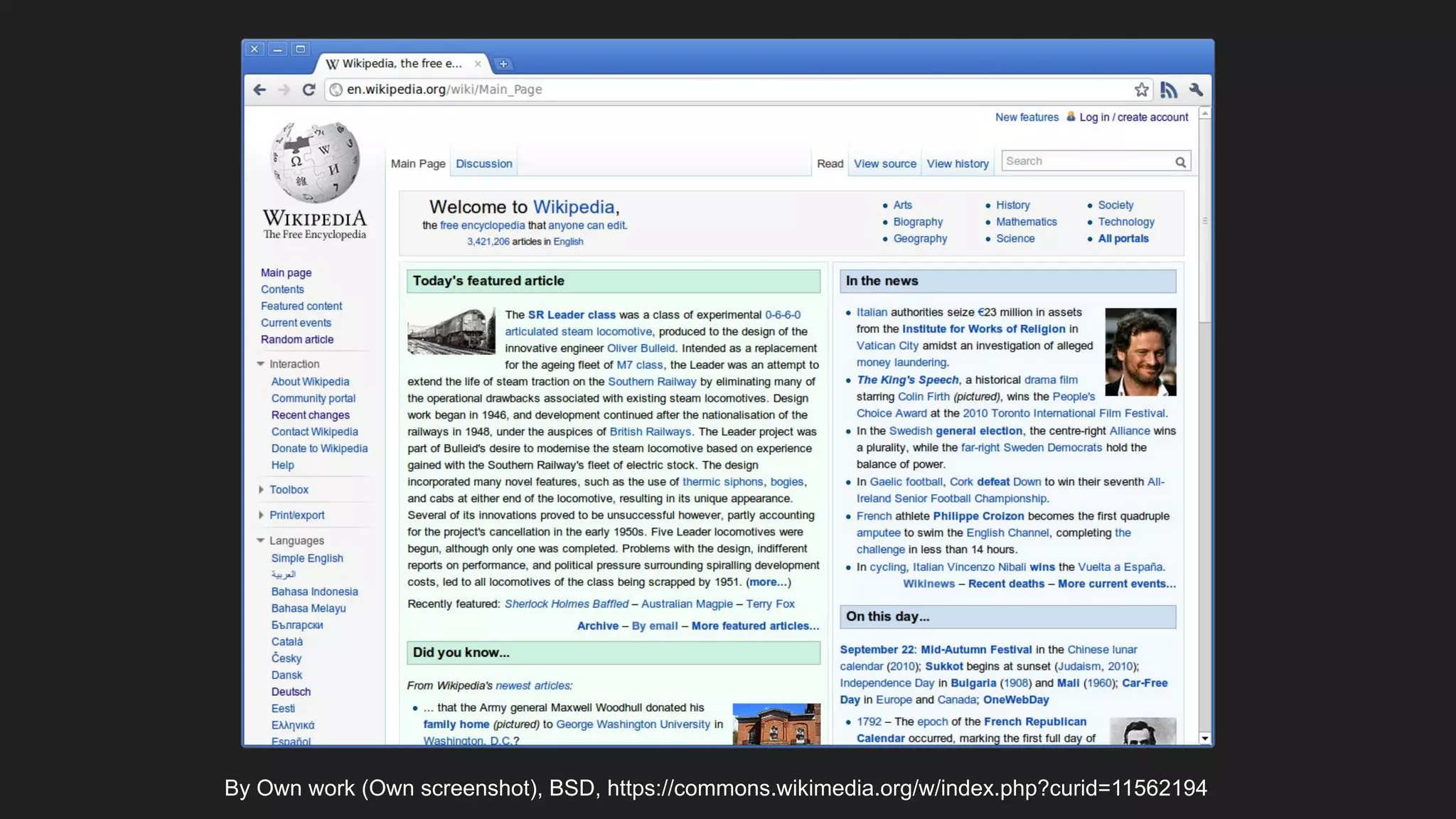
By Own work (Own screenshot), BSD, https://commons.wikimedia.org/w/index.php?curid=11562194
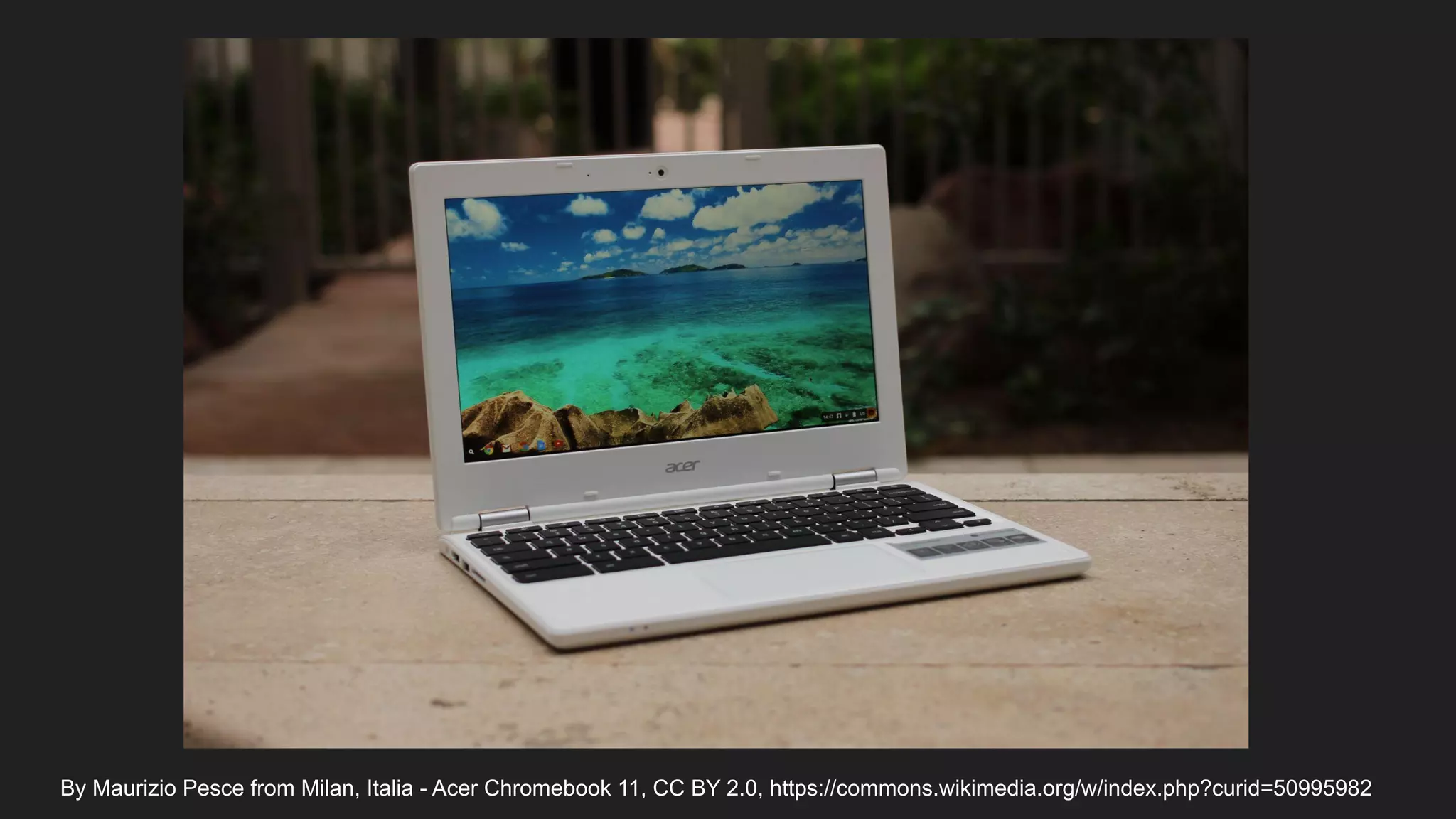
By Maurizio Pesce from Milan, Italia - Acer Chromebook 11, CC BY 2.0, https://commons.wikimedia.org/w/index.php?curid=50995982
Where We Will Be
2050 - ??
Let's Review...
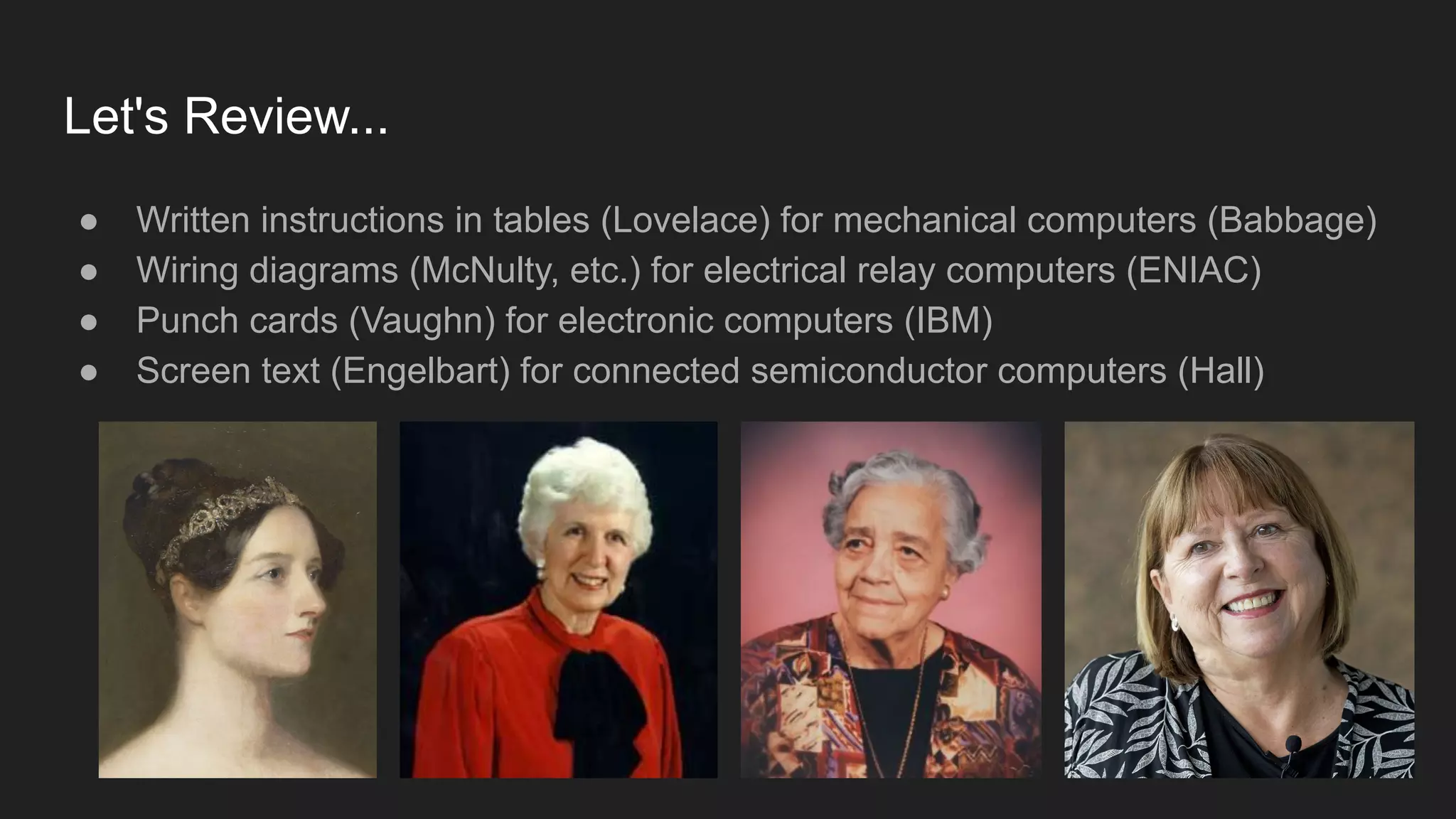
● Written instructions in tables (Lovelace) for mechanical computers (Babbage)
● Wiring diagrams (McNulty, etc.) for electrical relay computers (ENIAC)
● Punch cards (Vaughn) for electronic computers (IBM)
● Screen text (Engelbart) for connected semiconductor computers (Hall)
What's Next?
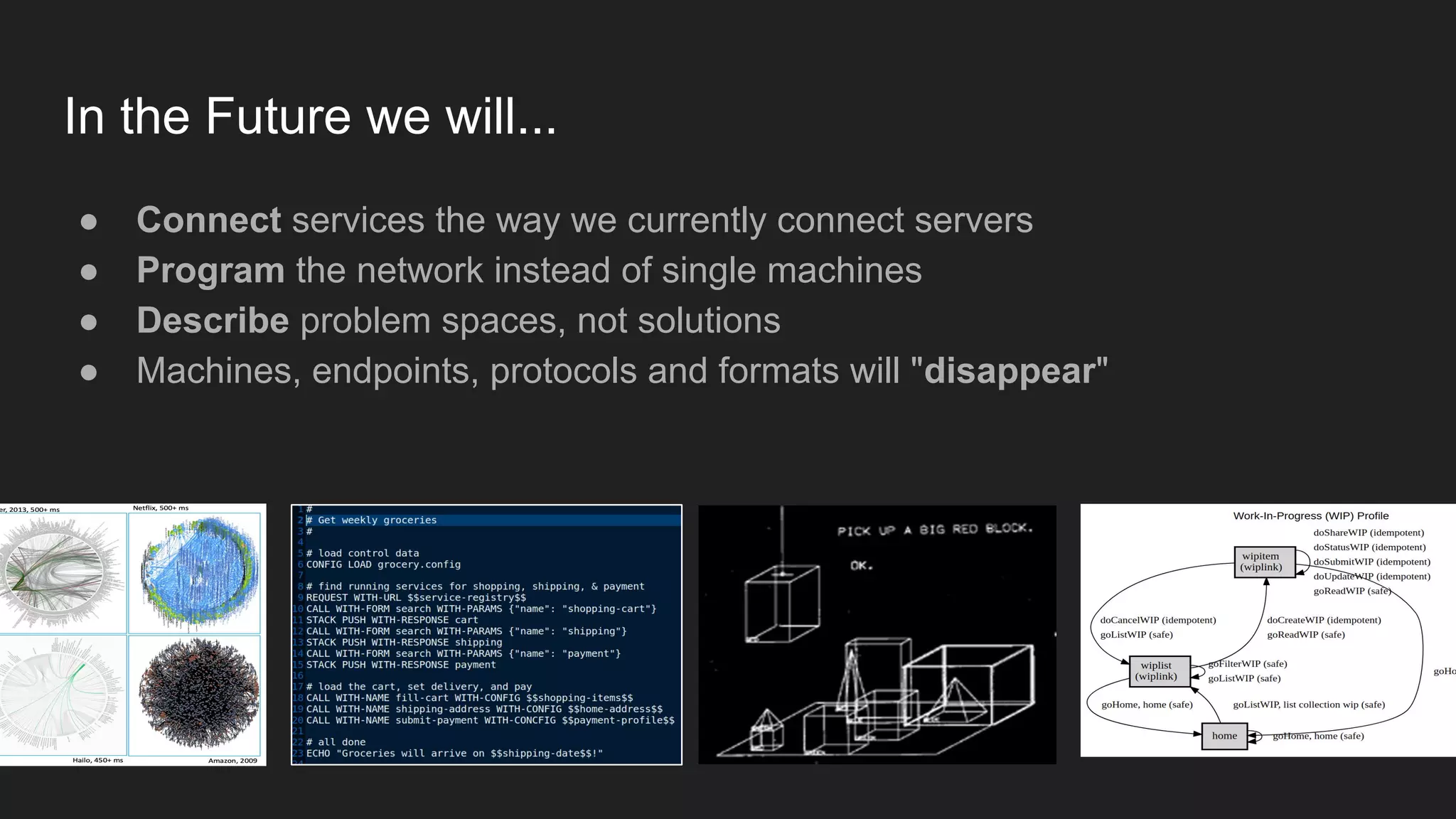
In the Future we will...
● Connect services the way we currently connect servers
● Program the network instead of single machines
● Describe problem spaces, not solutions
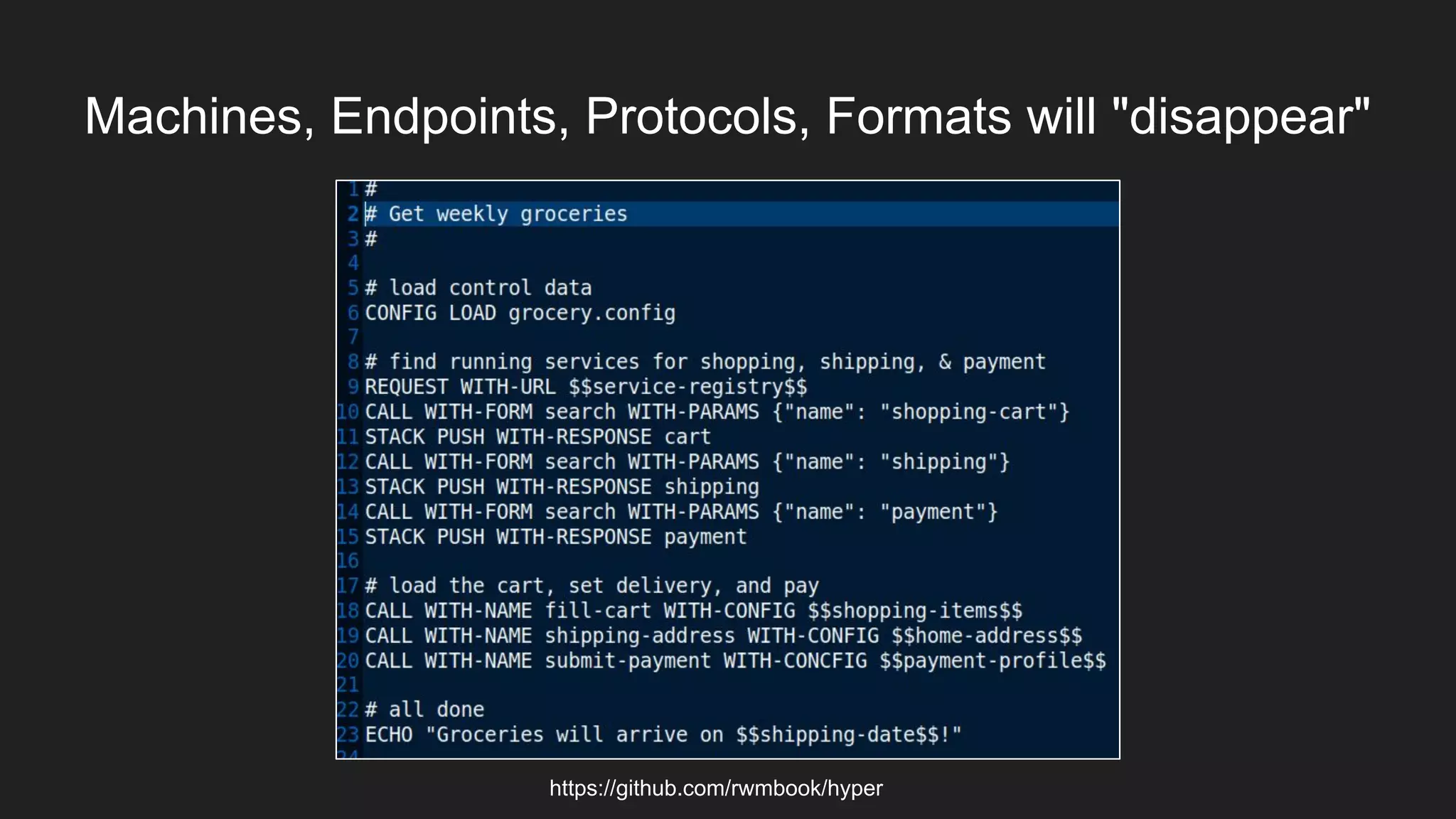
● Machines, endpoints, protocols and formats will "disappear"
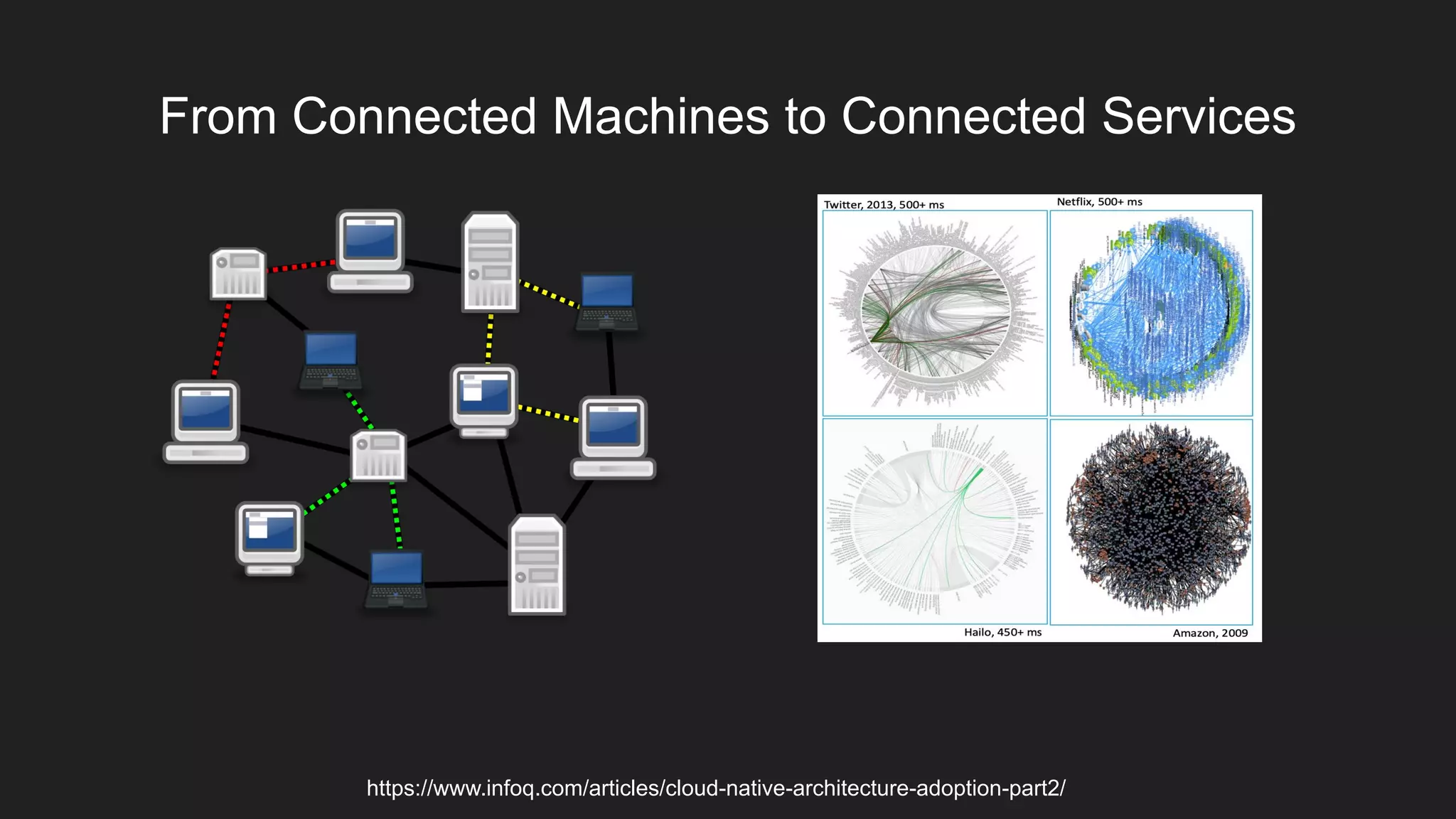
From Connected Machines to Connected Services
https://www.infoq.com/articles/cloud-native-architecture-adoption-part2/
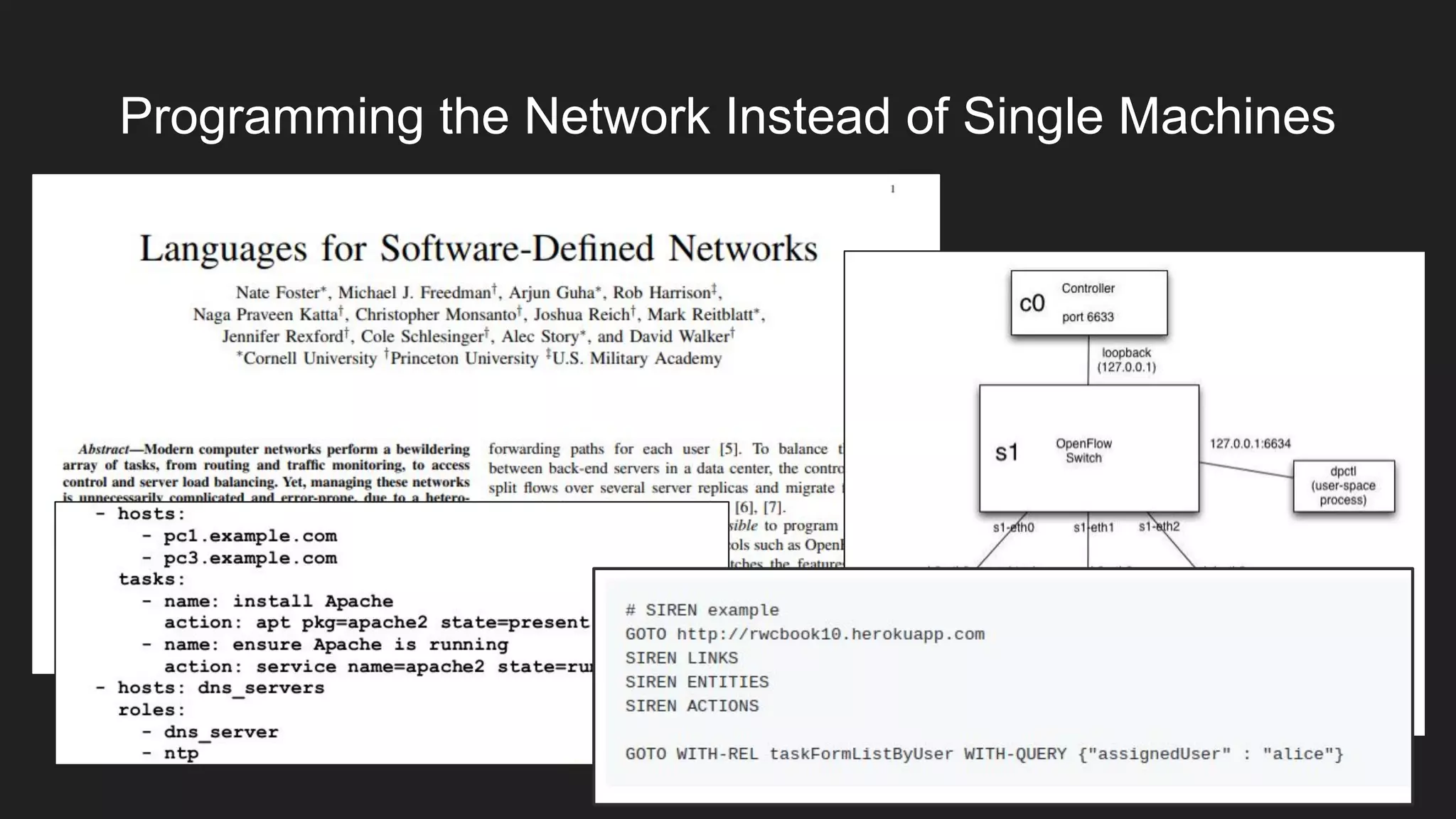
Programming the Network Instead of Single Machines
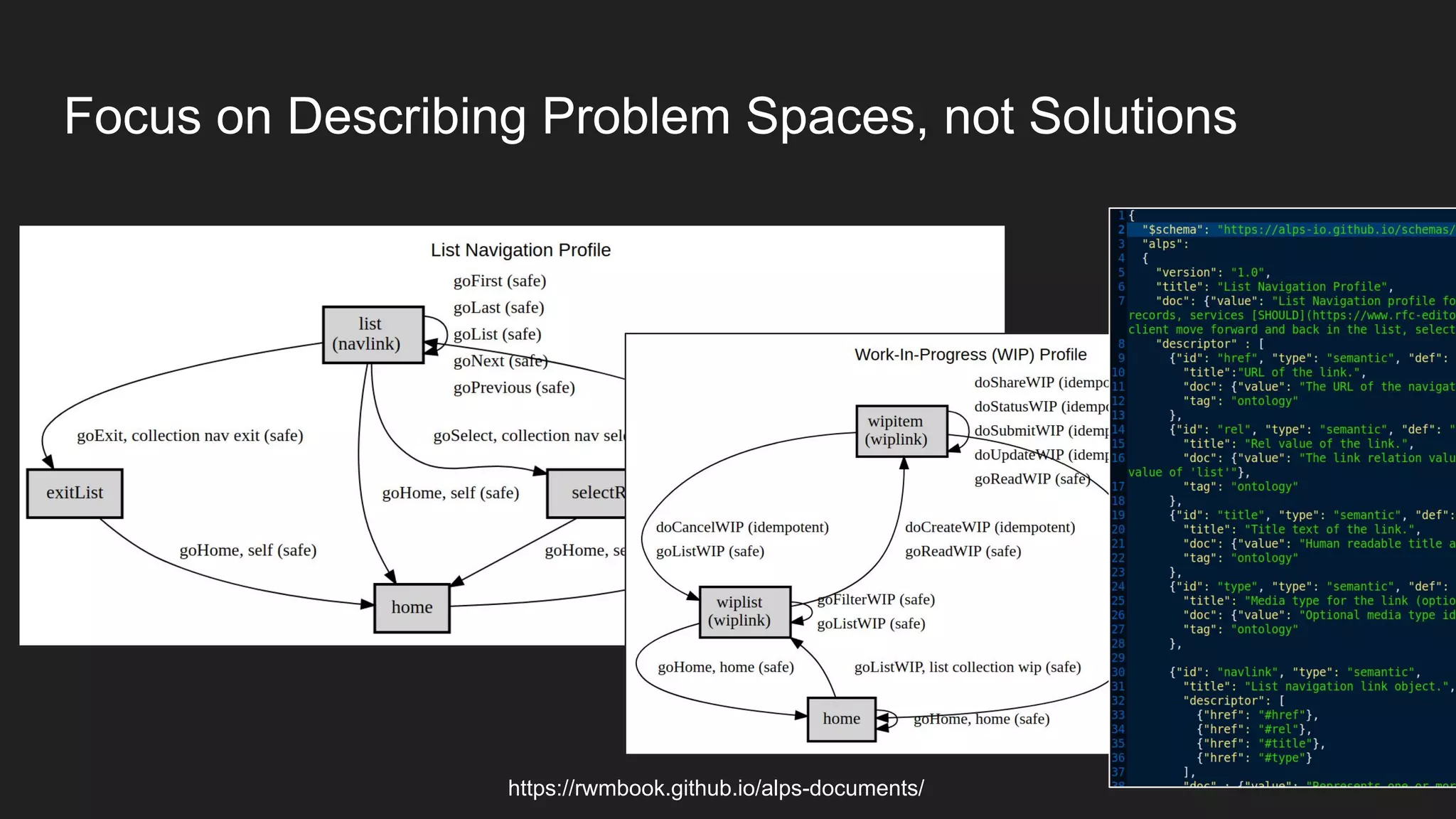
Focus on Describing Problem Spaces, not Solutions
https://rwmbook.github.io/alps-documents/
Machines, Endpoints, Protocols, Formats will "disappear"
https://github.com/rwmbook/hyper
And So...
What can you do right now?
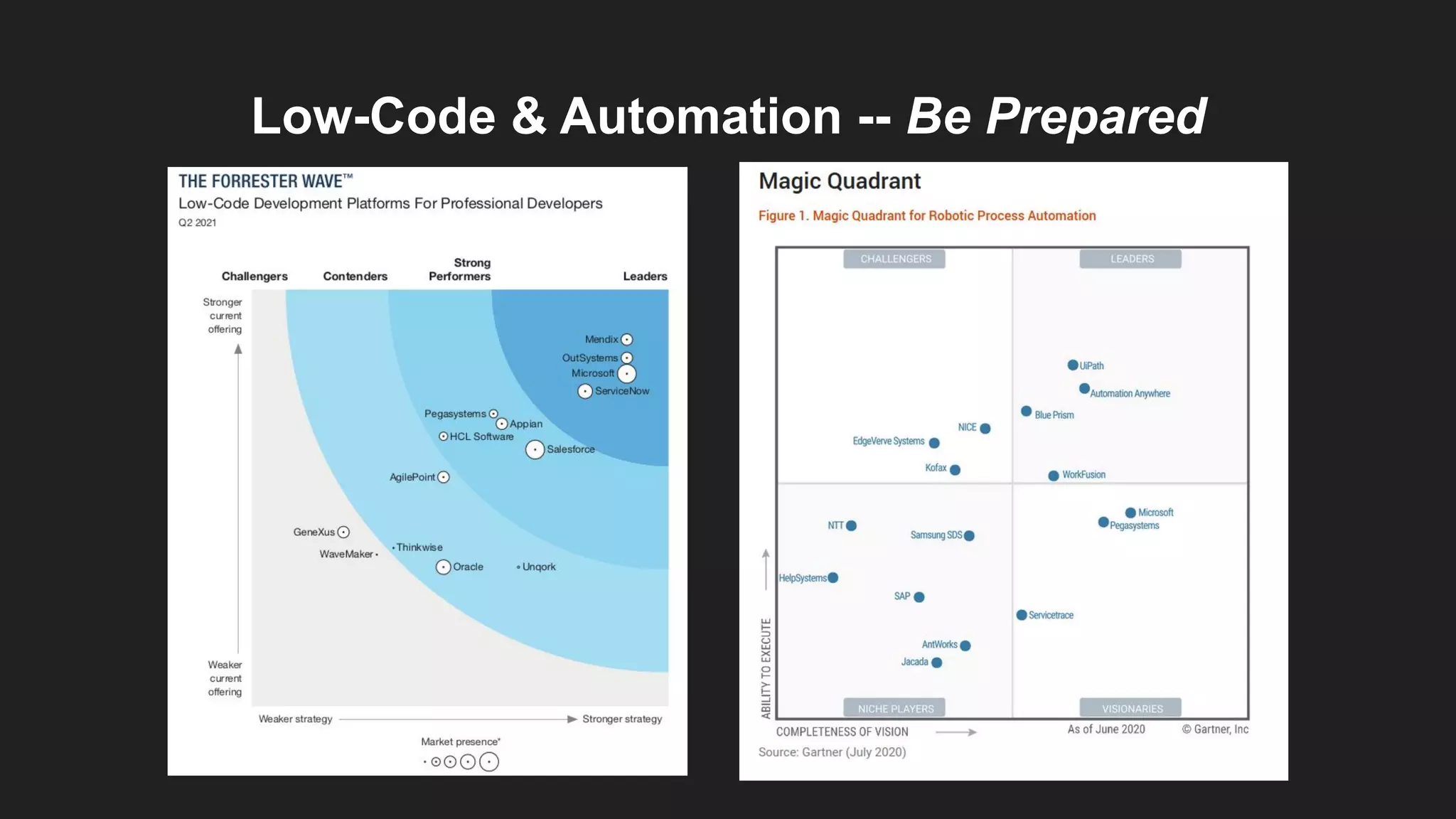
Low-Code & Automation -- Be Prepared
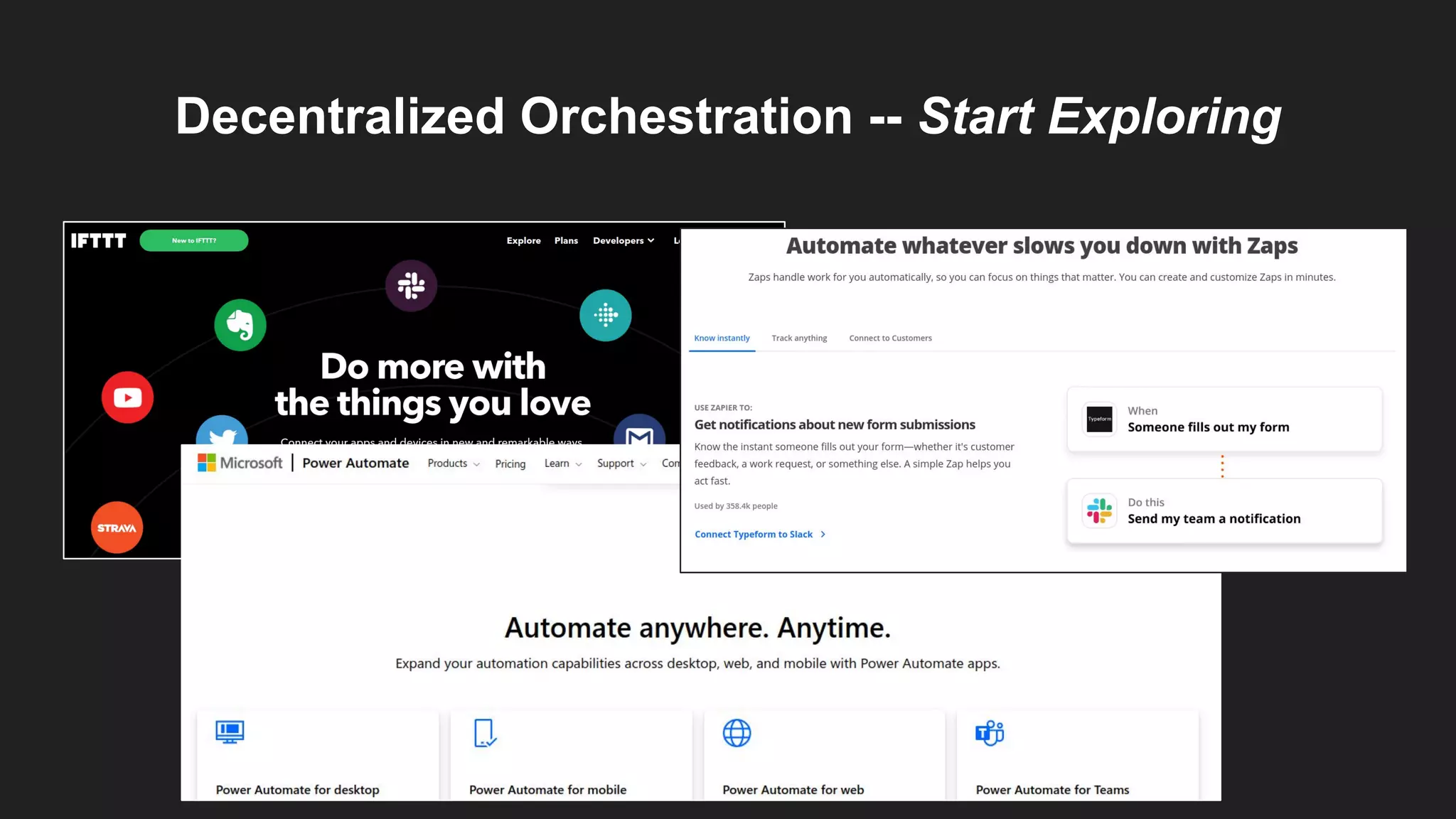
Decentralized Orchestration -- Start Exploring
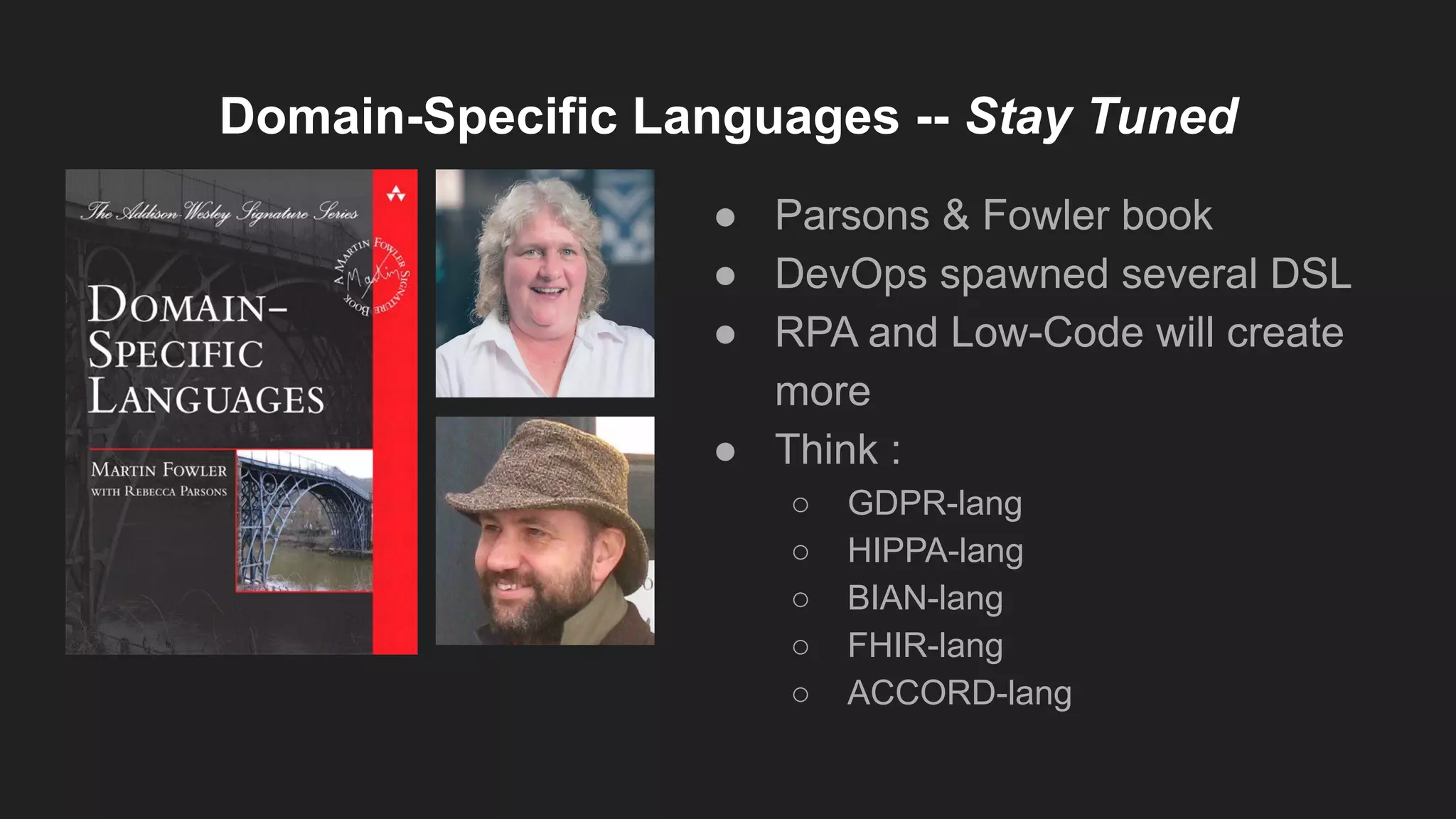
Domain-Specific Languages -- Stay Tuned
● Parsons & Fowler book
● DevOps spawned several DSL
● RPA and Low-Code will create
more
● Think :
○ GDPR-lang
○ HIPPA-lang
○ BIAN-lang
○ FHIR-lang
○ ACCORD-lang
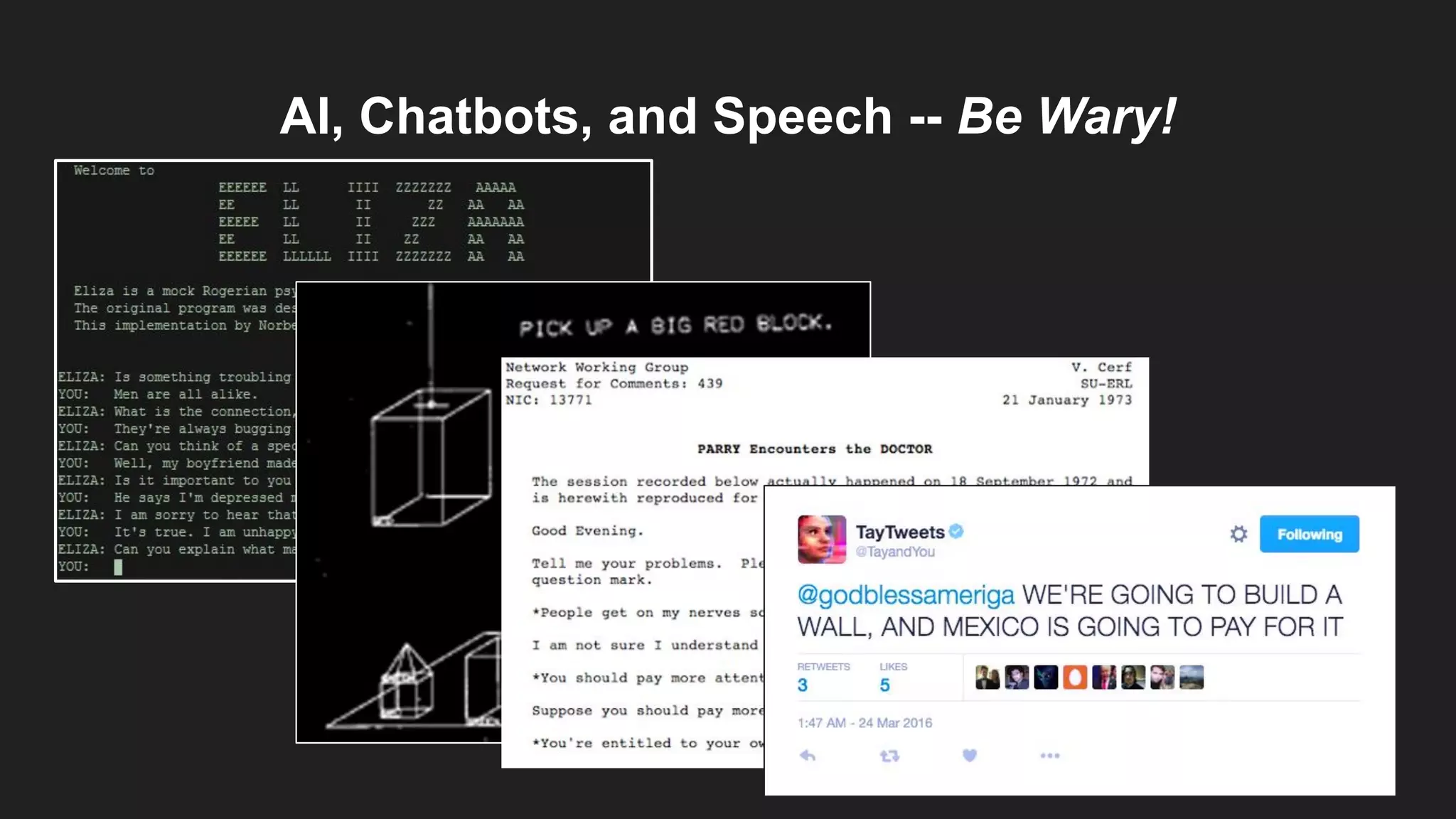
AI, Chatbots, and Speech -- Be Wary!
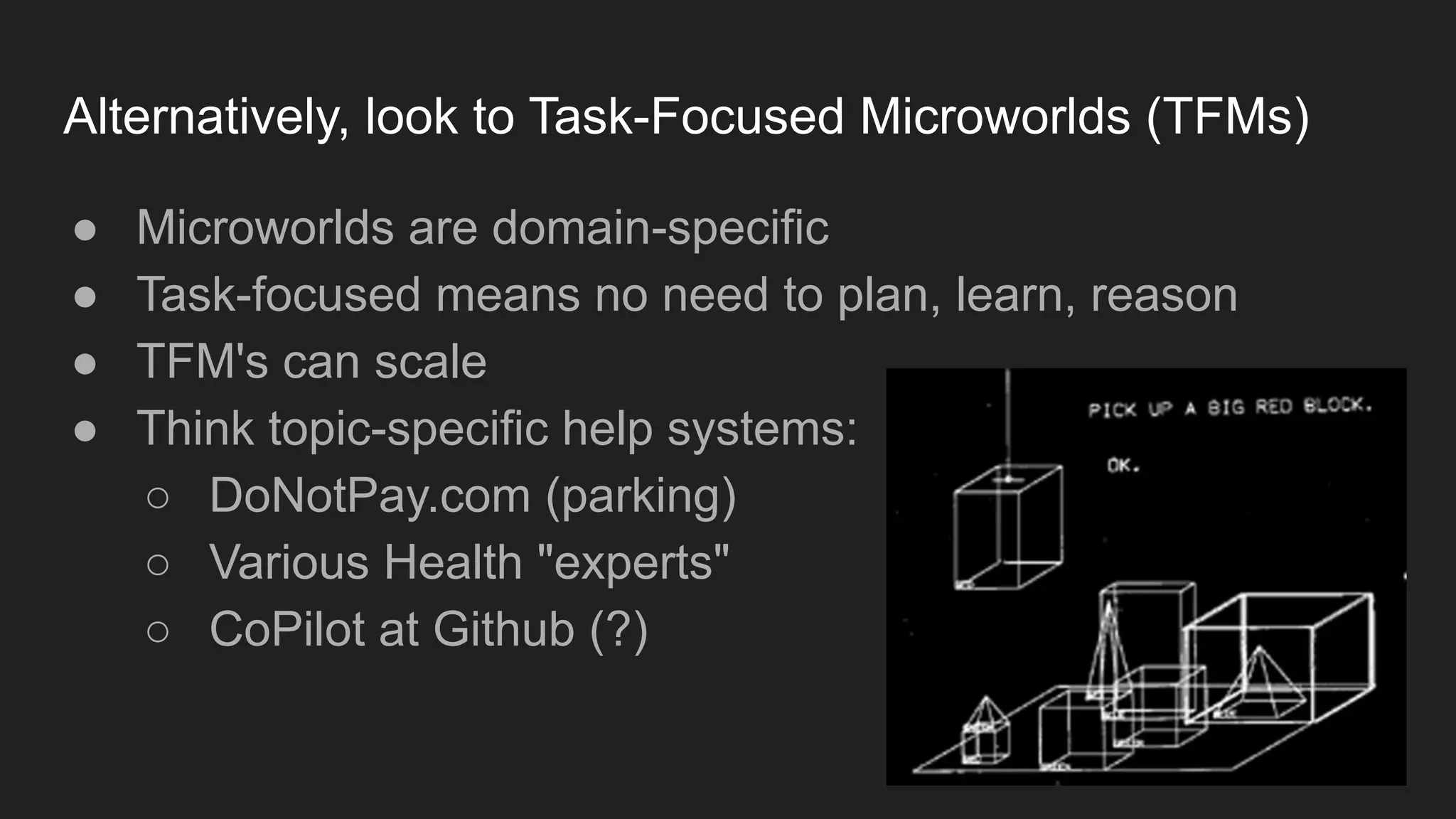
Alternatively, look to Task-Focused Microworlds (TFMs)
● Microworlds are domain-specific
● Task-focused means no need to plan, learn, reason
● TFM's can scale
● Think topic-specific help systems:
○ DoNotPay.com (parking)
○ Various Health "experts"
○ CoPilot at Github (?)
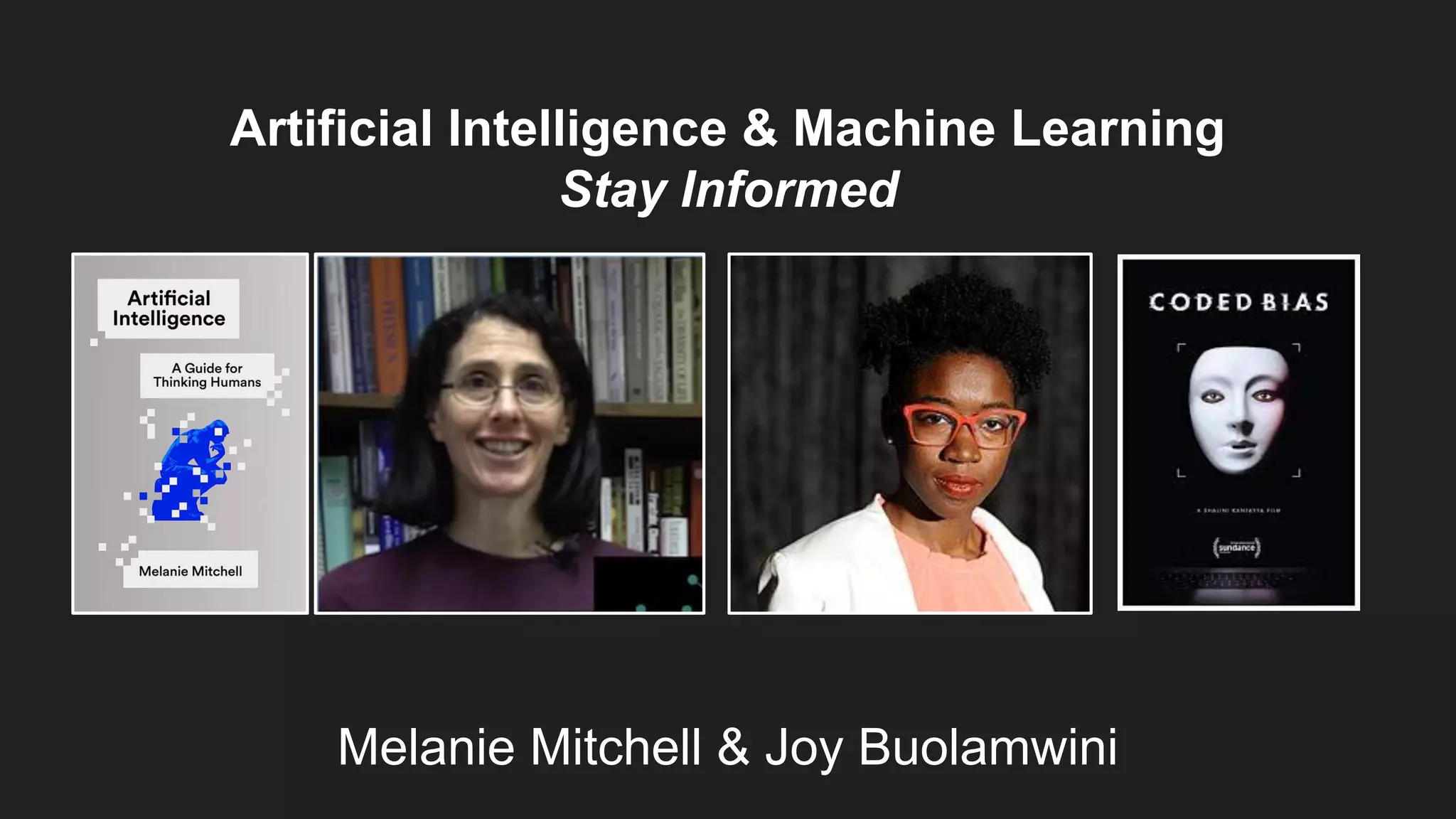
Artificial Intelligence & Machine Learning
Stay Informed
Melanie Mitchell & Joy Buolamwini
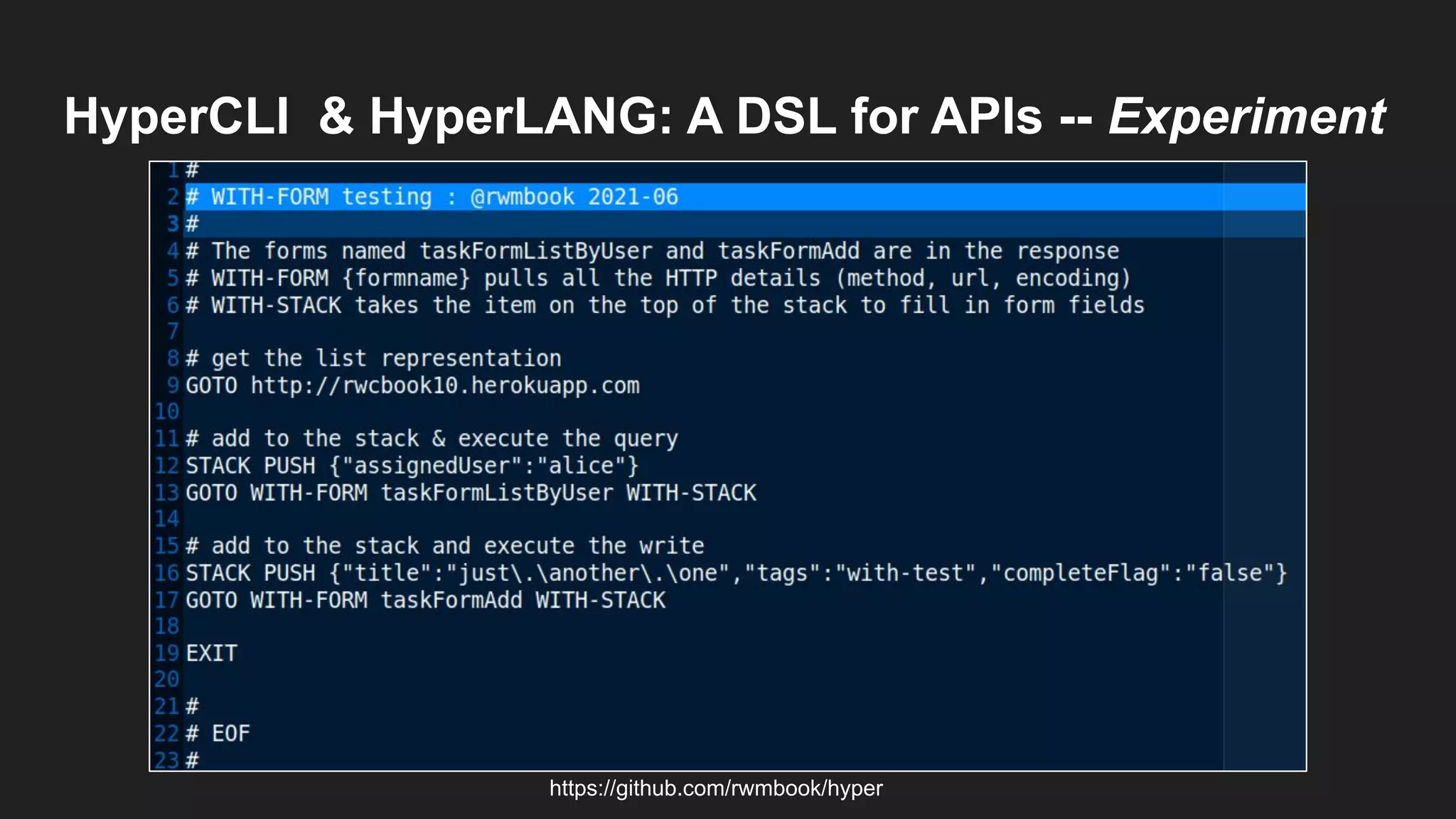
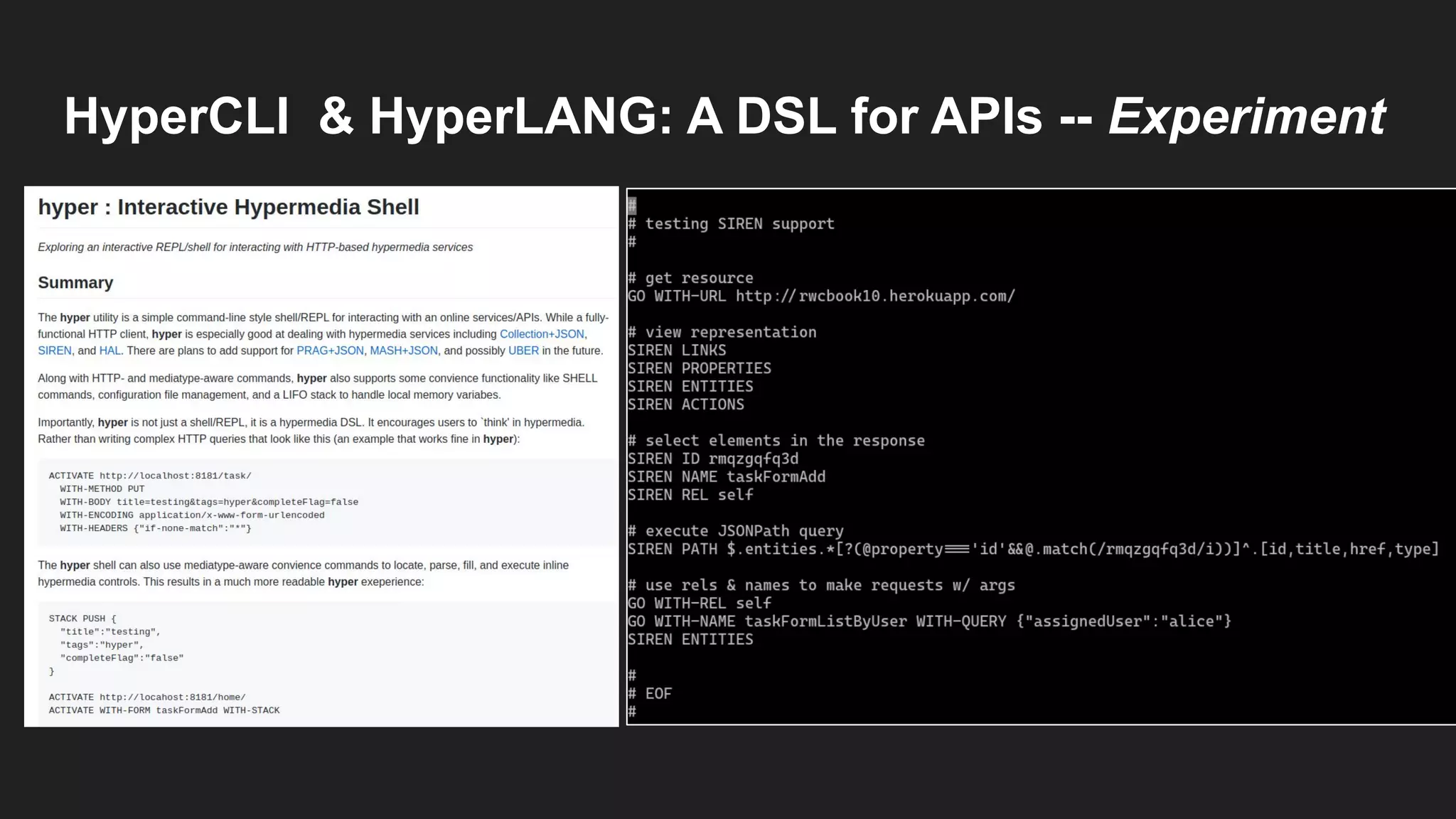
HyperCLI & HyperLANG: A DSL for APIs -- Experiment
https://github.com/rwmbook/hyper
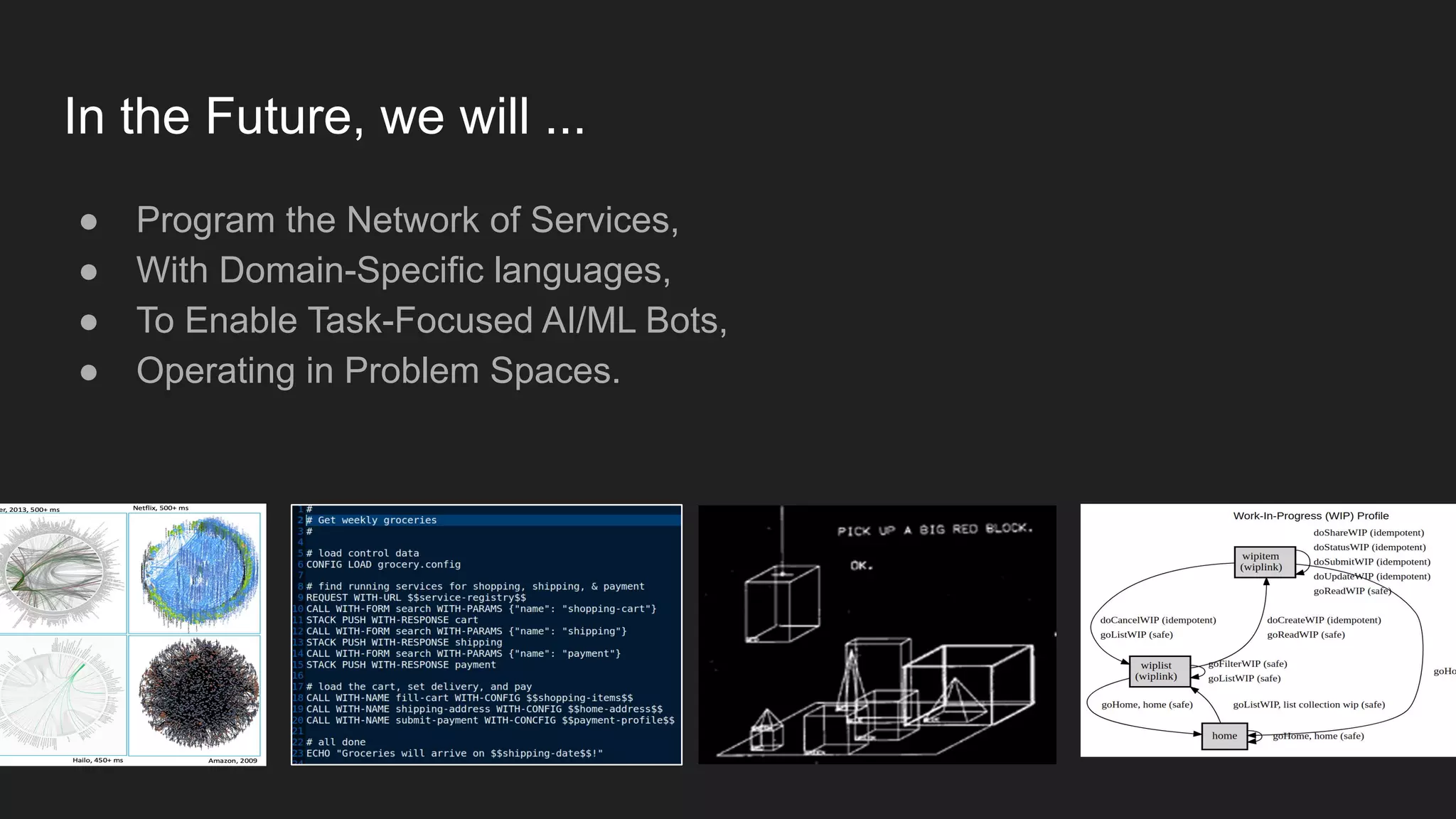
In the Future, we will ...
● Program the Network of Services,
● With Domain-Specific languages,
● To Enable Task-Focused AI/ML Bots,
● Operating in Problem Spaces.
One more thing...
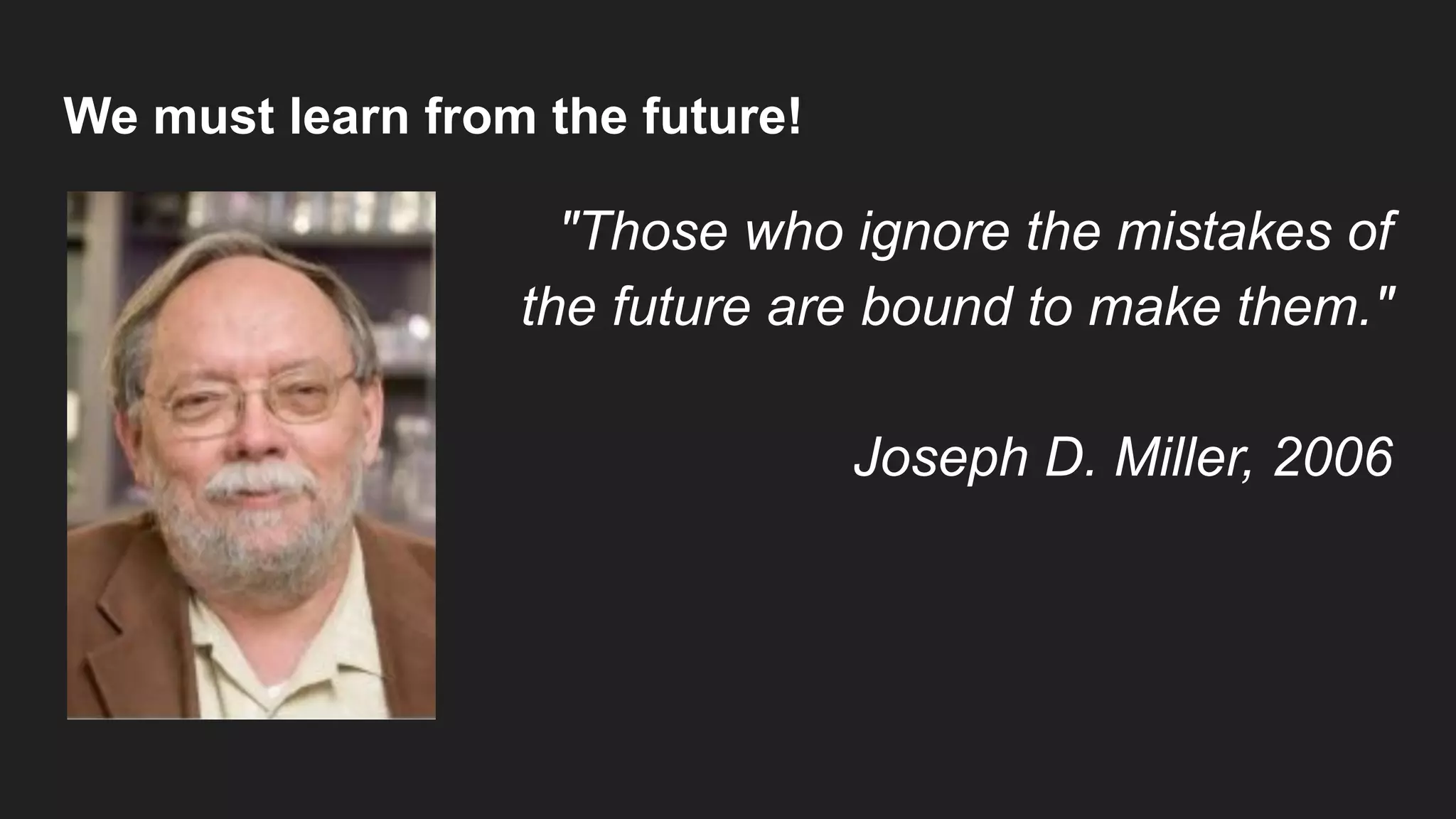
We must learn from the future!
"Those who ignore the mistakes of
the future are bound to make them."
Joseph D. Miller, 2006
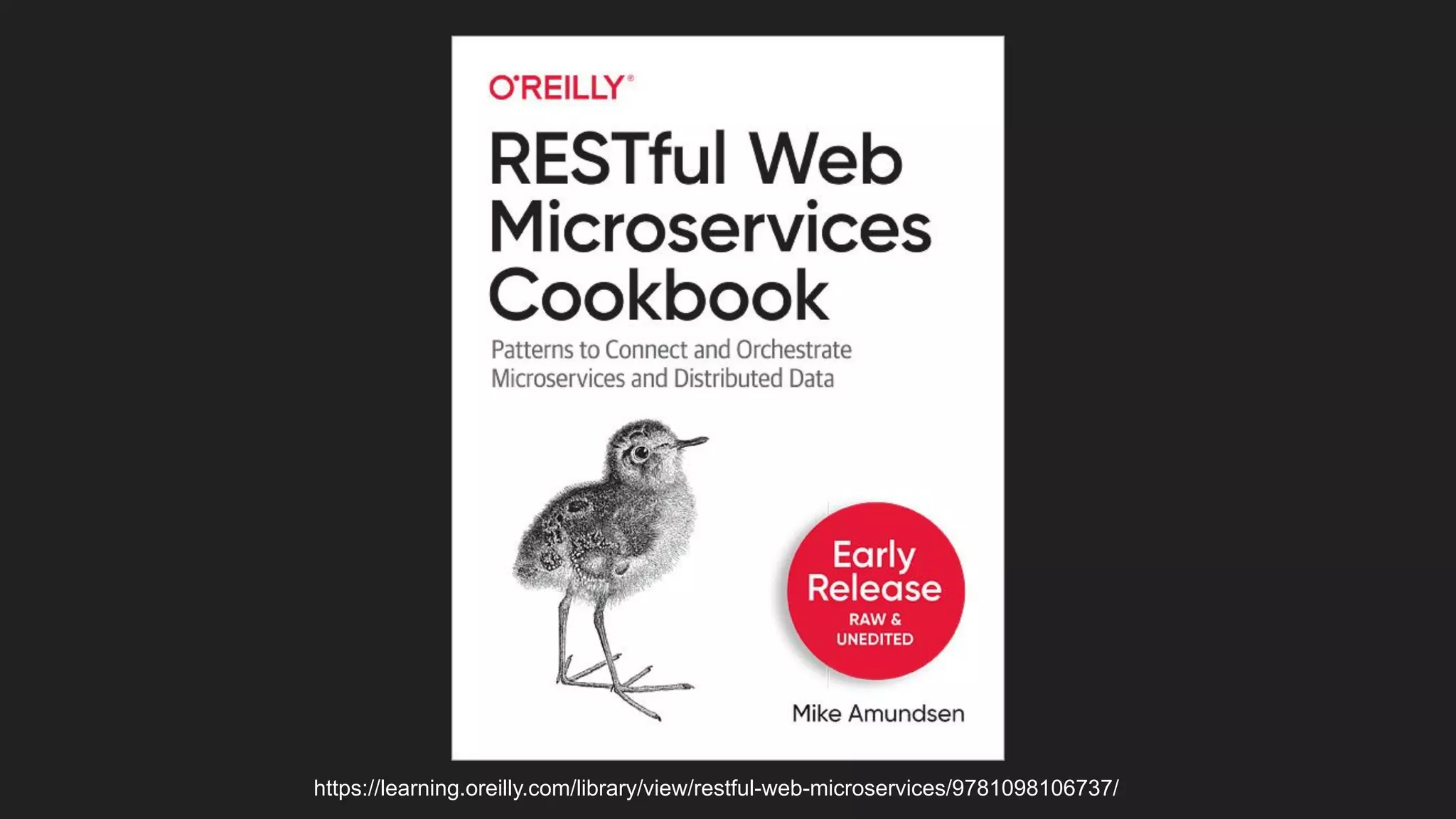
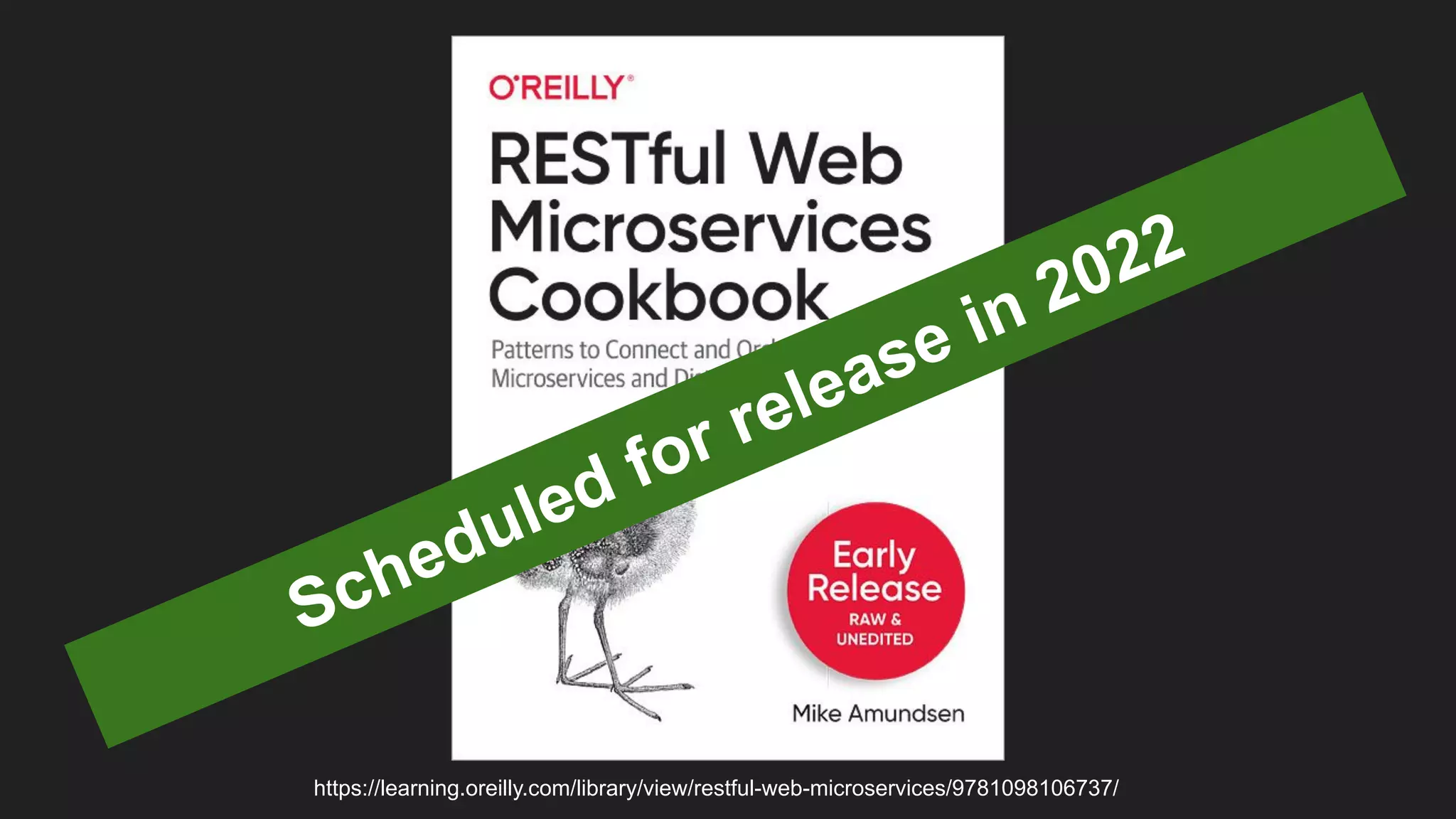
https://learning.oreilly.com/library/view/restful-web-microservices/9781098106737/
Scheduled for release in 2022
APIs of the Future:
Are You Ready?
Mike Amundsen
@mamund
http://linkedin.com/mamund
youtube.com/mamund

INTERFACE, by apidays - APIs of the Future: Are you Ready? by Mike Amundsen

  • 1.
    APIs of theFuture: Are You Ready? Mike Amundsen @mamund http://linkedin.com/mamund youtube.com/mamund
  • 2.
  • 4.
    APIs of theFuture: Overview ● The First Age of Computing : Where we were ● The Second Age of Computing : Where we are ● The Third Age of Computing: Where we're going ● And So...
  • 5.
  • 6.
    By Science MuseumLondon / Science and Society Picture Library - Babbage's Analytical Engine, 1834-1871.Uploaded by Mrjohncummings, CC BY-SA 2.0, https://commons.wikimedia.org/w/index.php?curid=28024313
  • 7.
    http://www.sophiararebooks.com/pictures/3544a.jpg, Public Domain,https://commons.wikimedia.org/w/index.php?curid=37285970
  • 8.
    By Margaret SarahCarpenter - [1], Public Domain, https://commons.wikimedia.org/w/index.php?curid=28993870 "We may say most aptly that the Analytical Engine weaves algebraic patterns just as the Jacquard-loom weaves flowers and leaves." Ada Lovelace (1815 - 1852)
  • 9.
    By ArtProf -Own work, CC BY-SA 3.0, https://commons.wikimedia.org/w/index.php?curid=18564683
  • 10.
    By Margaret SarahCarpenter - [1], Public Domain, https://commons.wikimedia.org/w/index.php?curid=28993870 "[Debugging] is damnably troublesome work, and plagues me." Ada Lovelace (1815 - 1852)
  • 11.
    A moving imageof the world "From a distance, everyone will be able to read text, enlarged and limited to the desired subject, projected on an individual screen." Paul Otlet (1868 - 1944)
  • 13.
    By Unidentified U.S.Army photographer - Image from Historic Computer Images, Public Domain, https://commons.wikimedia.org/w/index.php?curid=26253110
  • 14.
  • 15.
    The "ENIAC Six"-- 1946 ● Betty Snyder Holberton ● Jean Jennings Bartik ● Kay McNulty Mauchly Antonelli ● Marlyn Wescoff Meltzer ● Ruth Lichterman Teitelbaum ● Frances Bilas Spence "The Computers: The Remarkable Story of the ENIAC Programmers" -- Kathy Kleimar https://vimeo.com/ondemand/eniac6
  • 17.
    By Pete Birkinshawfrom Manchester, UK - Used Punchcard, CC BY 2.0, https://commons.wikimedia.org/w/index.php?curid=49758093
  • 18.
    By NASA -Great Images in NASA Description, Public Domain, https://commons.wikimedia.org/w/index.php?curid=6455009
  • 19.
    By NASA onThe Commons - Flickr, Public Domain, https://commons.wikimedia.org/w/index.php?curid=59509121 "We're going to need a lot of manpower to program that beast [the IBM 7090]." -- Dorothy Vaughan Mathematician FORTRAN expert Dorothy Vaughan (1910 - 2008)
  • 20.
    By Edal AntonLefterov - Own work, CC BY-SA 3.0, https://commons.wikimedia.org/w/index.php?curid=11959365
  • 21.
  • 22.
  • 23.
    Technology should notaim to replace humans, rather amplify human capabilities. "In 20 or 30 years, you’ll be able to hold in your hand as much computing knowledge as exists now in the whole city, or even the whole world." — Doug Engelbart (1925 - 2013)
  • 27.
    ● Realtime multi-cursor,in-place editing ● Point-and-click, drag-and-drop, cut-and-paste ● Hyperlinking and hypermedia ● Intelligent outline-based editing ● Text messaging ● Live video & text editing on the same screen ● Revision control ● and more...
  • 29.
    We should notimpose regularity. "The point was to be able to have a medium that would record all the connections and all the structures and all the thoughts that paper could not." -- Ted Nelson (1937 -- )
  • 32.
    The whole foundationof hypertext is collaborative "The strength of the internet is its global interconnection." -- Dame Wendy Hall (1952 --)
  • 36.
    Adele Goldberg &Alan Kay -- 1970s ● XEROX Parc ● Smalltalk Language ● Object-Oriented Programming ● Dynabook
  • 39.
  • 40.
    By Own work(Own screenshot), BSD, https://commons.wikimedia.org/w/index.php?curid=11562194
  • 41.
    By Maurizio Pescefrom Milan, Italia - Acer Chromebook 11, CC BY 2.0, https://commons.wikimedia.org/w/index.php?curid=50995982
  • 42.
    Where We WillBe 2050 - ??
  • 43.
    Let's Review... ● Writteninstructions in tables (Lovelace) for mechanical computers (Babbage) ● Wiring diagrams (McNulty, etc.) for electrical relay computers (ENIAC) ● Punch cards (Vaughn) for electronic computers (IBM) ● Screen text (Engelbart) for connected semiconductor computers (Hall)
  • 44.
  • 45.
    In the Futurewe will... ● Connect services the way we currently connect servers ● Program the network instead of single machines ● Describe problem spaces, not solutions ● Machines, endpoints, protocols and formats will "disappear"
  • 46.
    From Connected Machinesto Connected Services https://www.infoq.com/articles/cloud-native-architecture-adoption-part2/
  • 47.
    Programming the NetworkInstead of Single Machines
  • 48.
    Focus on DescribingProblem Spaces, not Solutions https://rwmbook.github.io/alps-documents/
  • 49.
    Machines, Endpoints, Protocols,Formats will "disappear" https://github.com/rwmbook/hyper
  • 50.
  • 51.
    What can youdo right now?
  • 52.
    Low-Code & Automation-- Be Prepared
  • 53.
  • 54.
    Domain-Specific Languages --Stay Tuned ● Parsons & Fowler book ● DevOps spawned several DSL ● RPA and Low-Code will create more ● Think : ○ GDPR-lang ○ HIPPA-lang ○ BIAN-lang ○ FHIR-lang ○ ACCORD-lang
  • 55.
    AI, Chatbots, andSpeech -- Be Wary!
  • 56.
    Alternatively, look toTask-Focused Microworlds (TFMs) ● Microworlds are domain-specific ● Task-focused means no need to plan, learn, reason ● TFM's can scale ● Think topic-specific help systems: ○ DoNotPay.com (parking) ○ Various Health "experts" ○ CoPilot at Github (?)
  • 57.
    Artificial Intelligence &Machine Learning Stay Informed Melanie Mitchell & Joy Buolamwini
  • 58.
    HyperCLI & HyperLANG:A DSL for APIs -- Experiment
  • 59.
    HyperCLI & HyperLANG:A DSL for APIs -- Experiment https://github.com/rwmbook/hyper
  • 60.
    In the Future,we will ... ● Program the Network of Services, ● With Domain-Specific languages, ● To Enable Task-Focused AI/ML Bots, ● Operating in Problem Spaces.
  • 61.
  • 62.
    We must learnfrom the future! "Those who ignore the mistakes of the future are bound to make them." Joseph D. Miller, 2006
  • 63.
  • 64.
  • 65.
    APIs of theFuture: Are You Ready? Mike Amundsen @mamund http://linkedin.com/mamund youtube.com/mamund