







Middle East Diamond Edition
McGraw Hill Original, 2012
© Gorakhnath Gangane, English Language Instructor,
PYP, University of Jazan, 2015.(Cambridge, CELTA)
For further clarifications, please contact
vishwarup17@gmail.com
Part 2: A Dream Narrative
Reading A Narrative (story)
Comprehension Exercise.
Reading skills and strategies: Prereading:
Thinking about the topic, Previewing
vocabulary, Identifying details, Finding the
meaning of new words in context
Critical thinking skills: Understanding mood
Vocabulary building: Understanding
pronouns
Language skills: Discussing ideas from the
reading.
Page 112 to 116
Thinking about the topic
The students read some general questions on
sleep and dreams. The answers will and should
vary but the discussion will help them speak.
Verbs: realize, travel
Adjectives: anxious, complicated, familiar, unfamiliar
Adverb: outside
Idiom*: Make sense
*An idiom is a word or phrase that is not taken
literally.
The meanings of the yellow colour-coded words are
what the students find out in the next exercise.
3.1.B.go places
3.2.C. nervous
3.3.B. something that I knew
3.4.C. difficult
3.5.A.understand
3.6.C.without logic
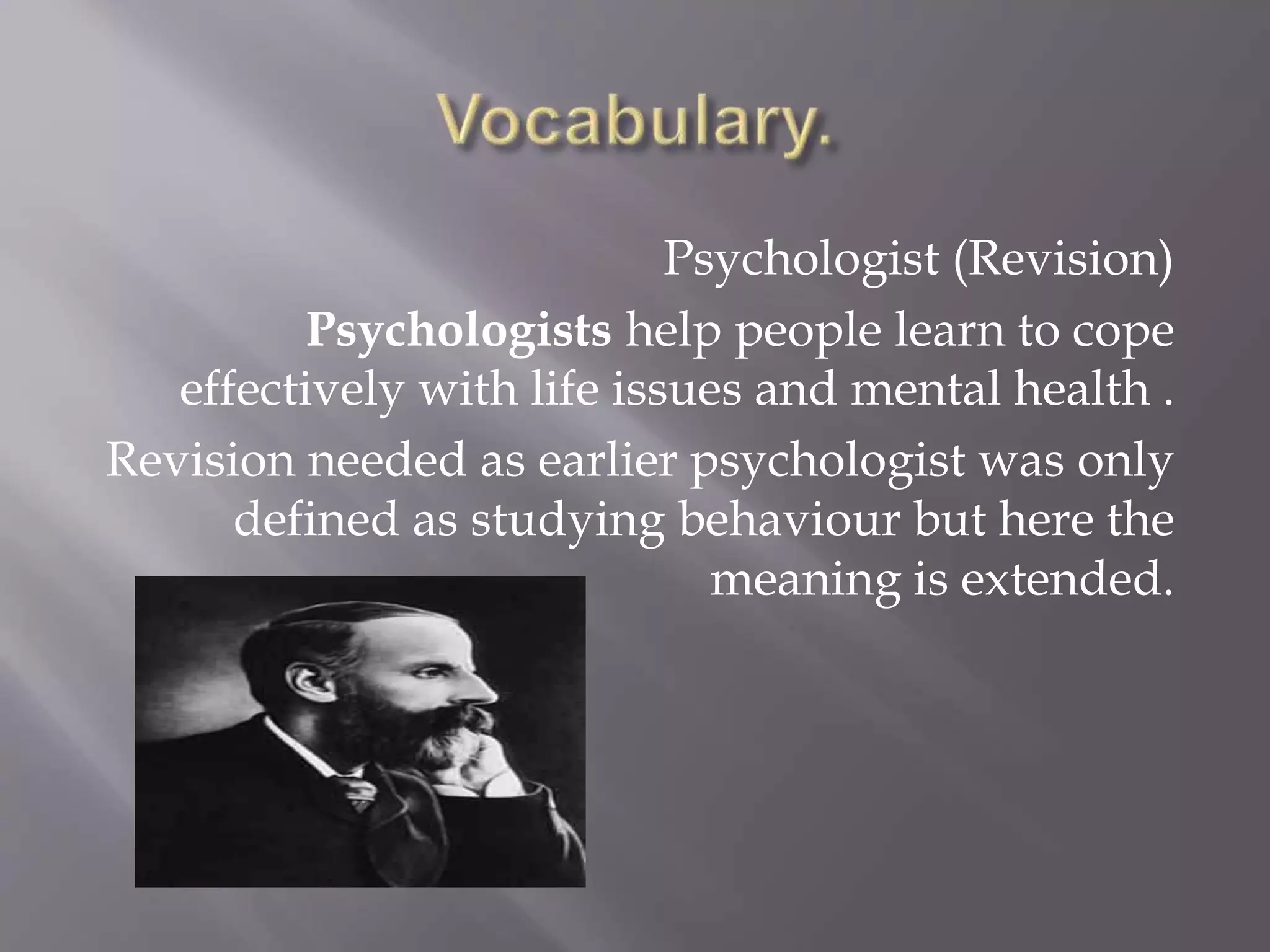
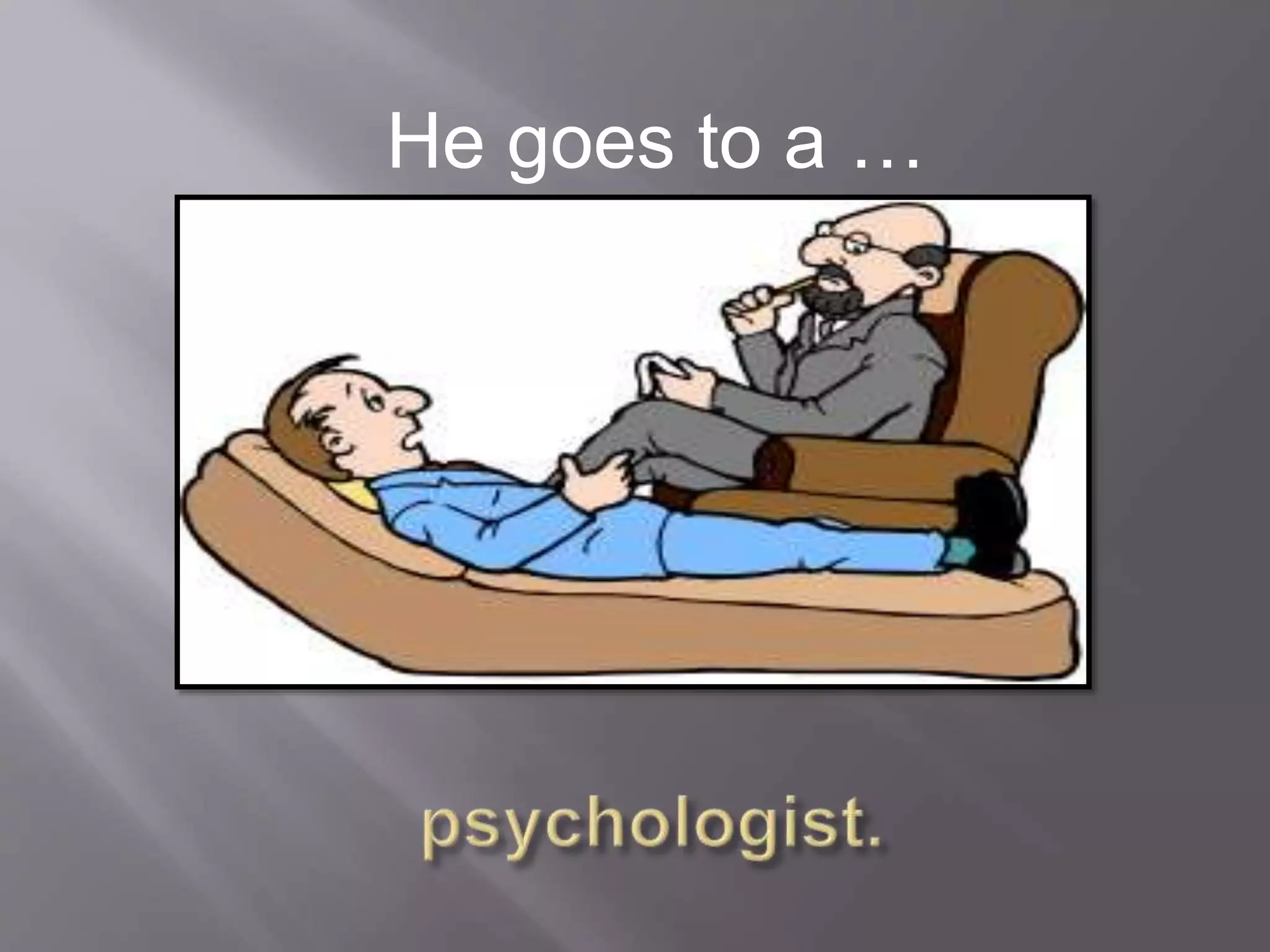
Psychologist (Revision)
Psychologists help people learn to cope
effectively with life issues and mental health .
Revision needed as earlier psychologist was only
defined as studying behaviour but here the
meaning is extended.
Comfortable = at ease
Uncomfortable = ill at ease, uneasy
Completely different = not the same at all
Dirty = not clean
River = A large natural stream of water flowing
in a channel to the sea
Garbage= waste (dry & wet)
Afraid = full of fear
Street = road
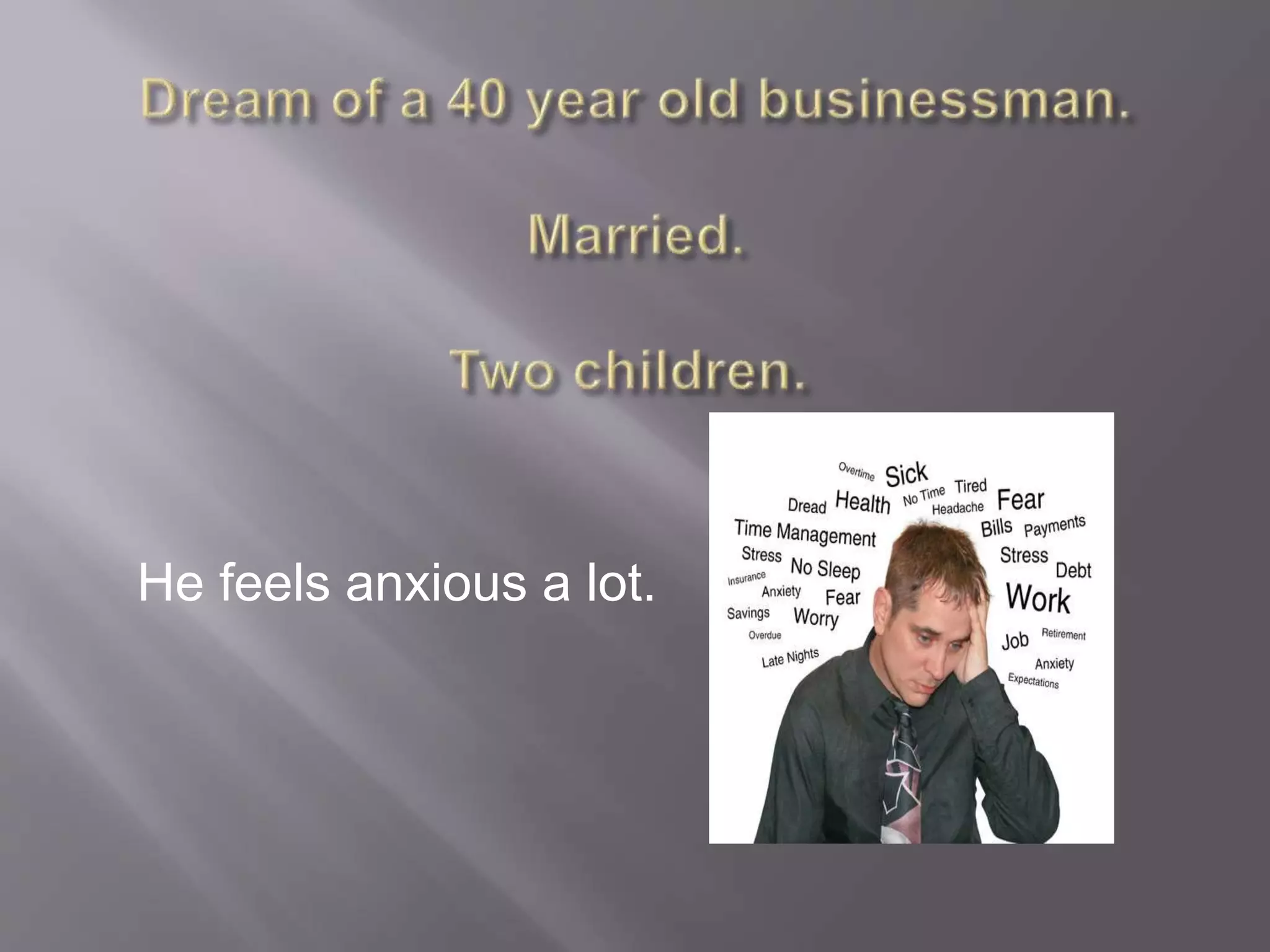
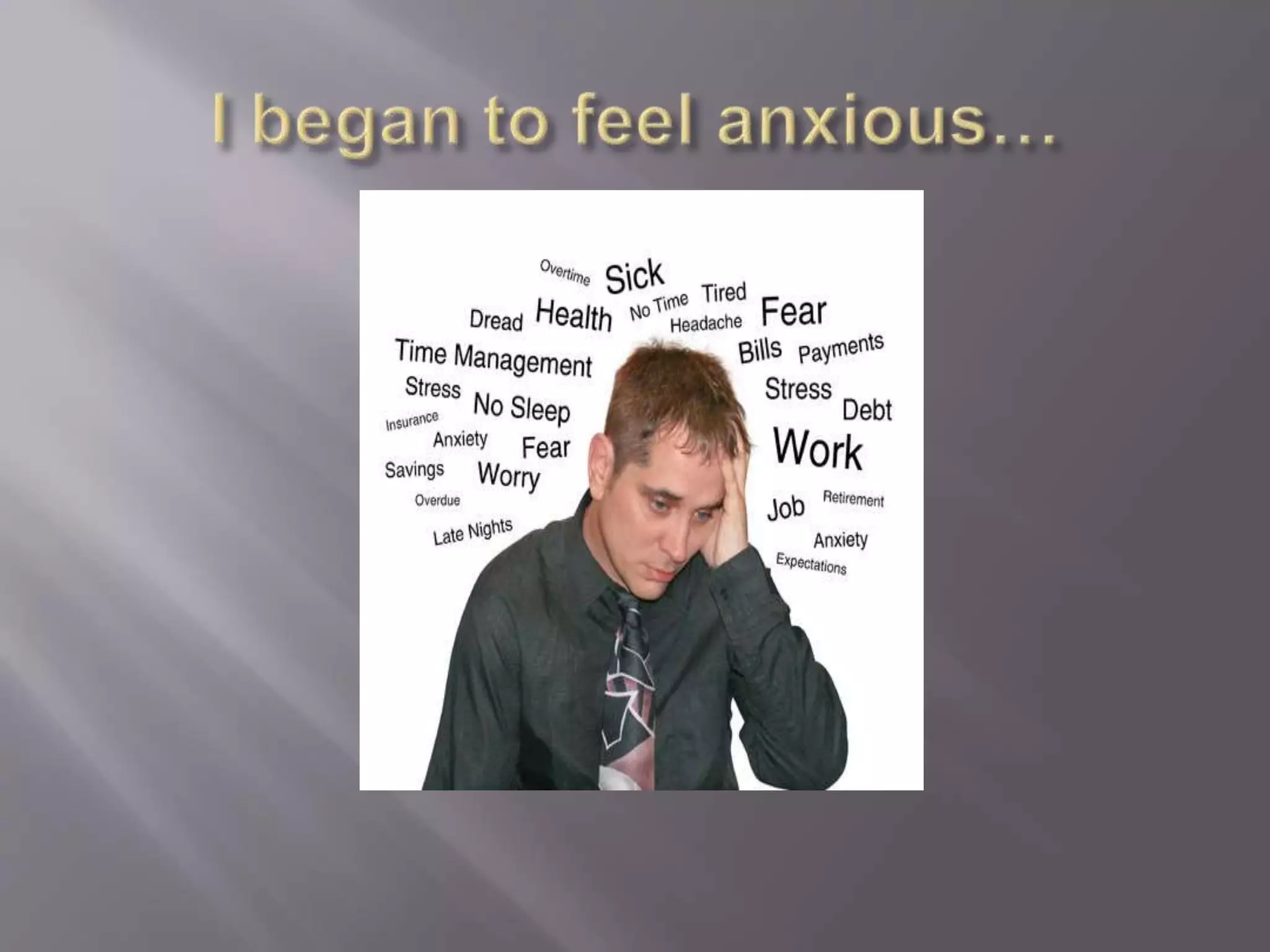
He feels anxious a lot.
He goes to a …
This is the dream from June 7.
It was very big and very dark.
But didn’t look like the real New
York.
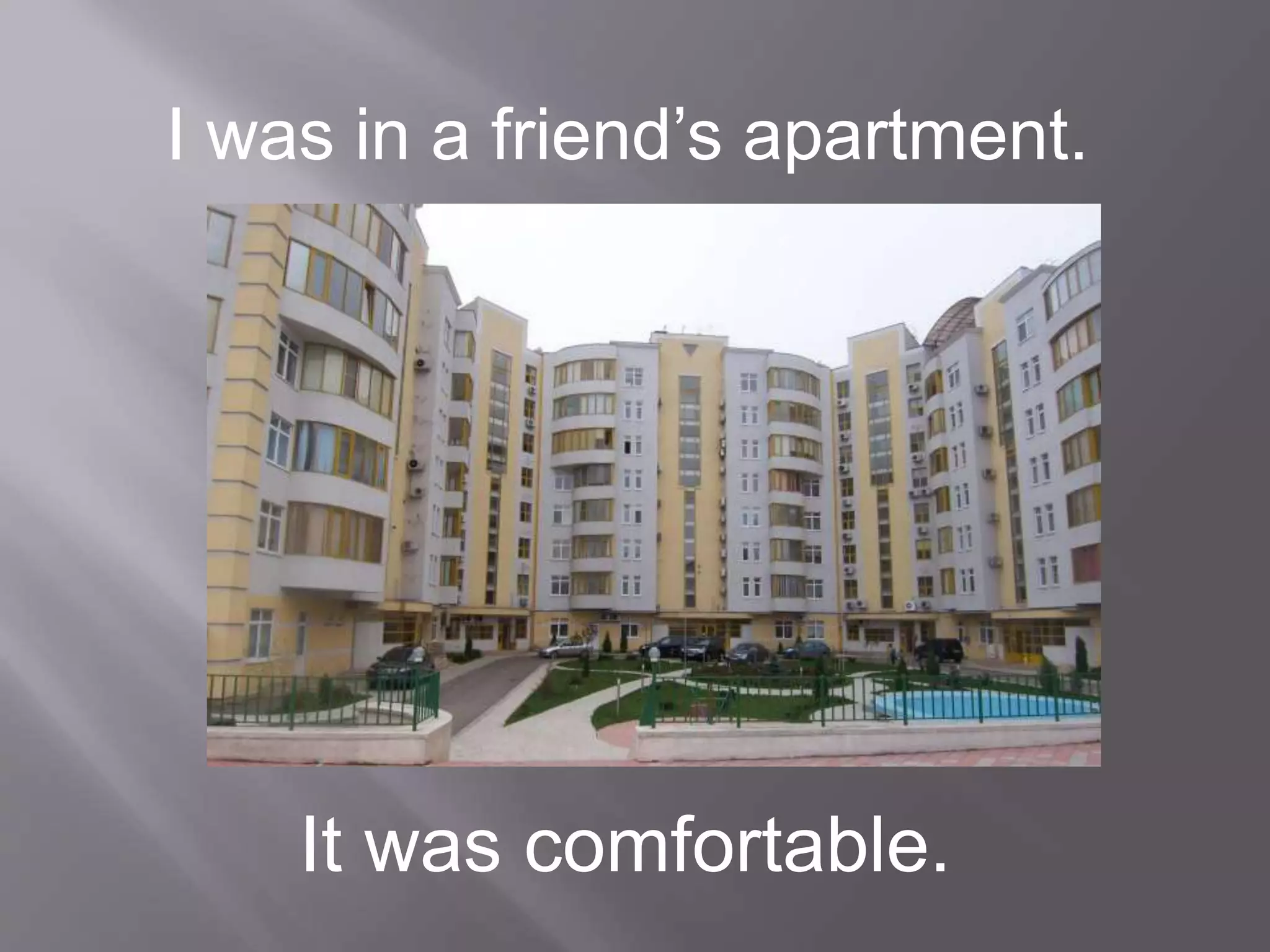
I was in a friend’s apartment.
It was comfortable.
I was in the street, alone.
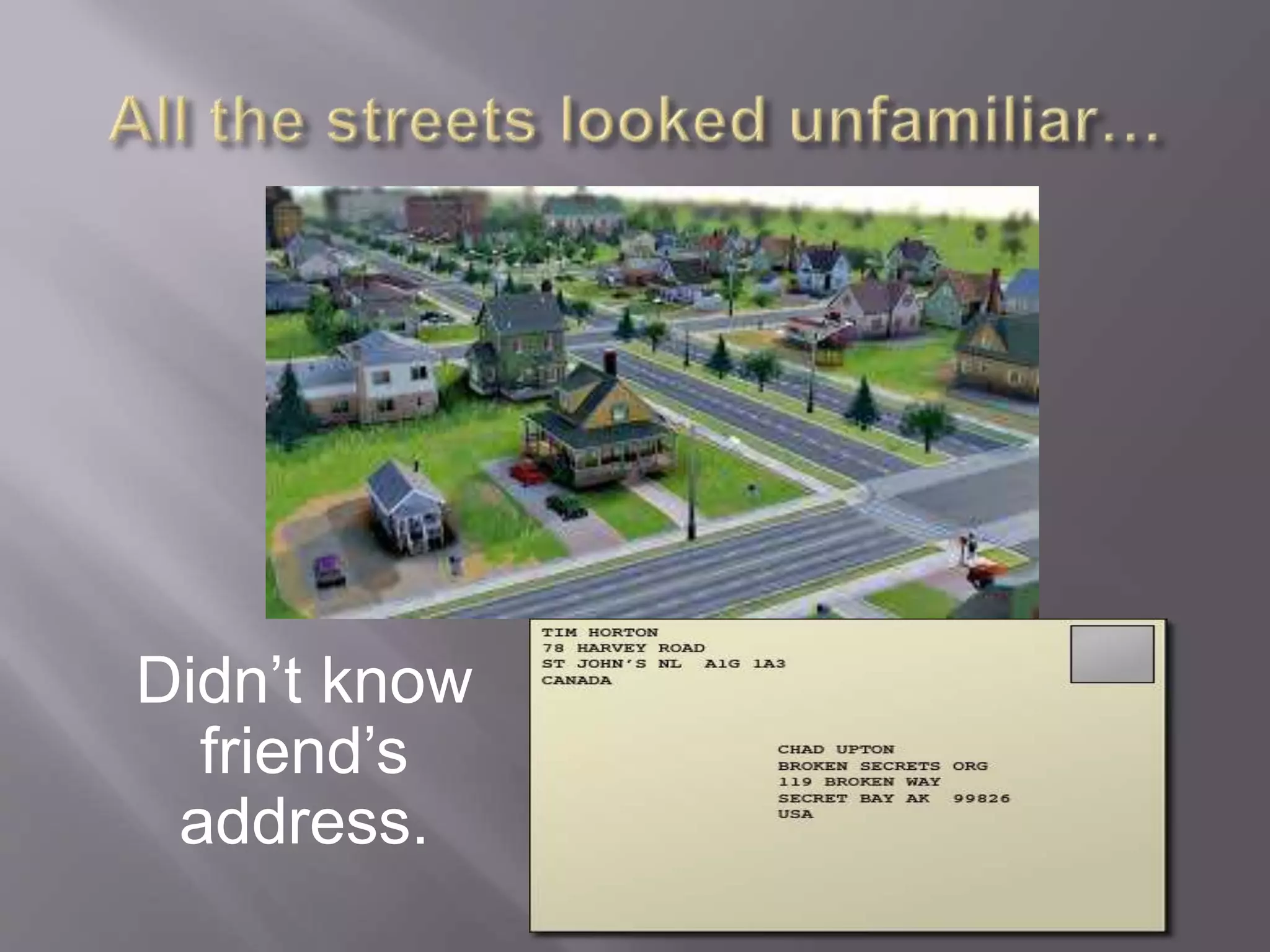
Didn’t know
friend’s
address.
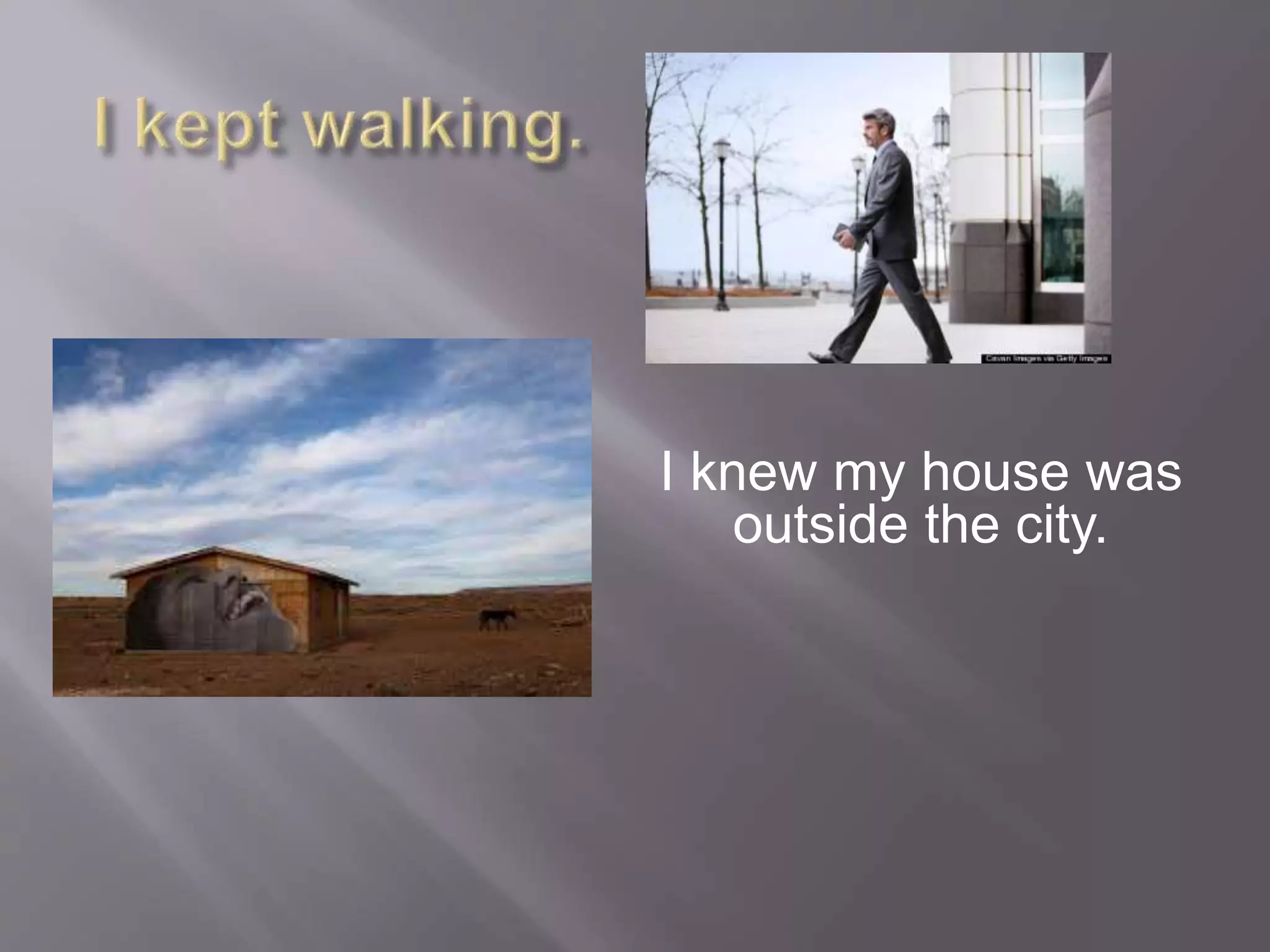
I knew my house was
outside the city.
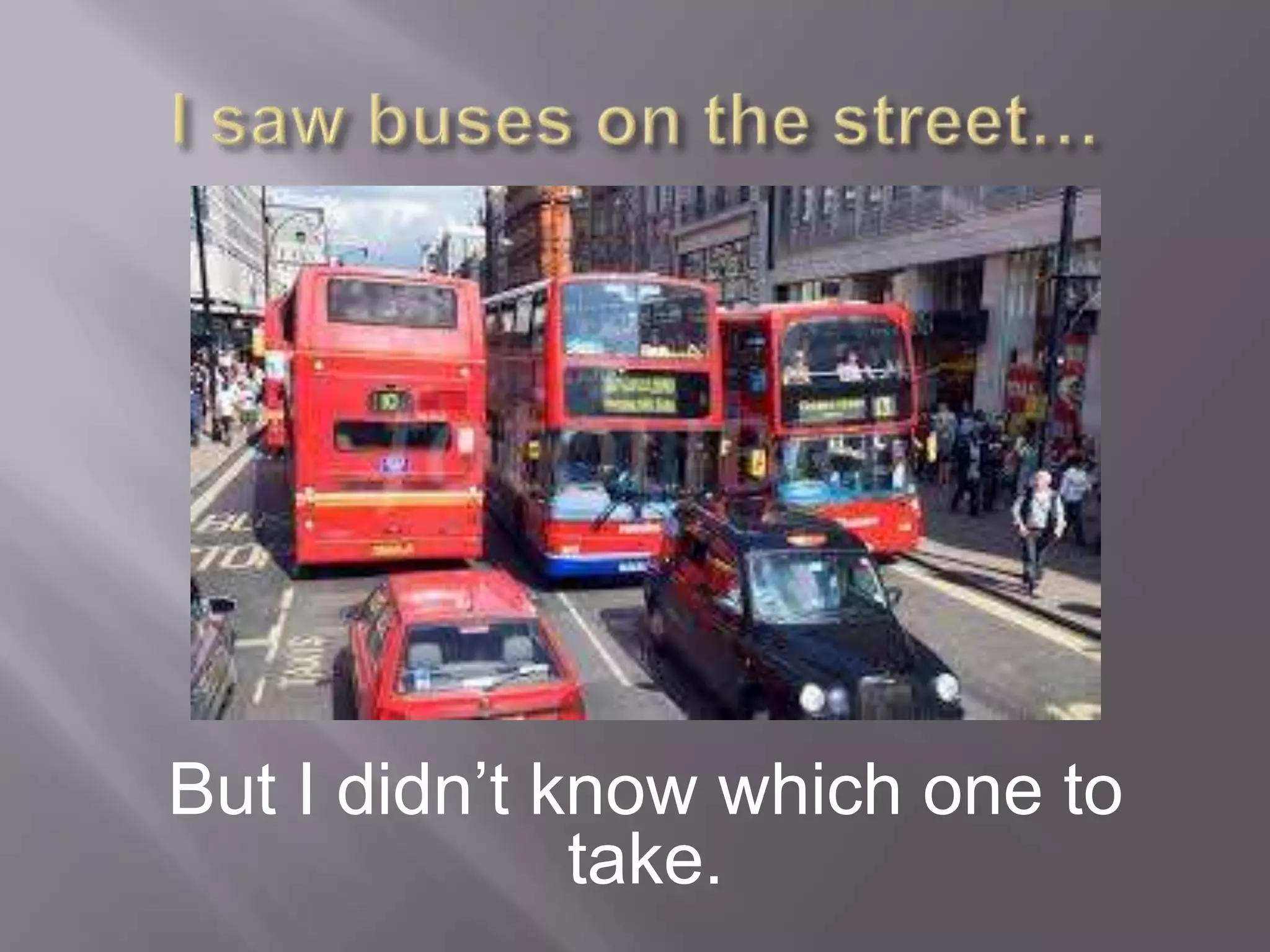
But I didn’t know which one to
take.
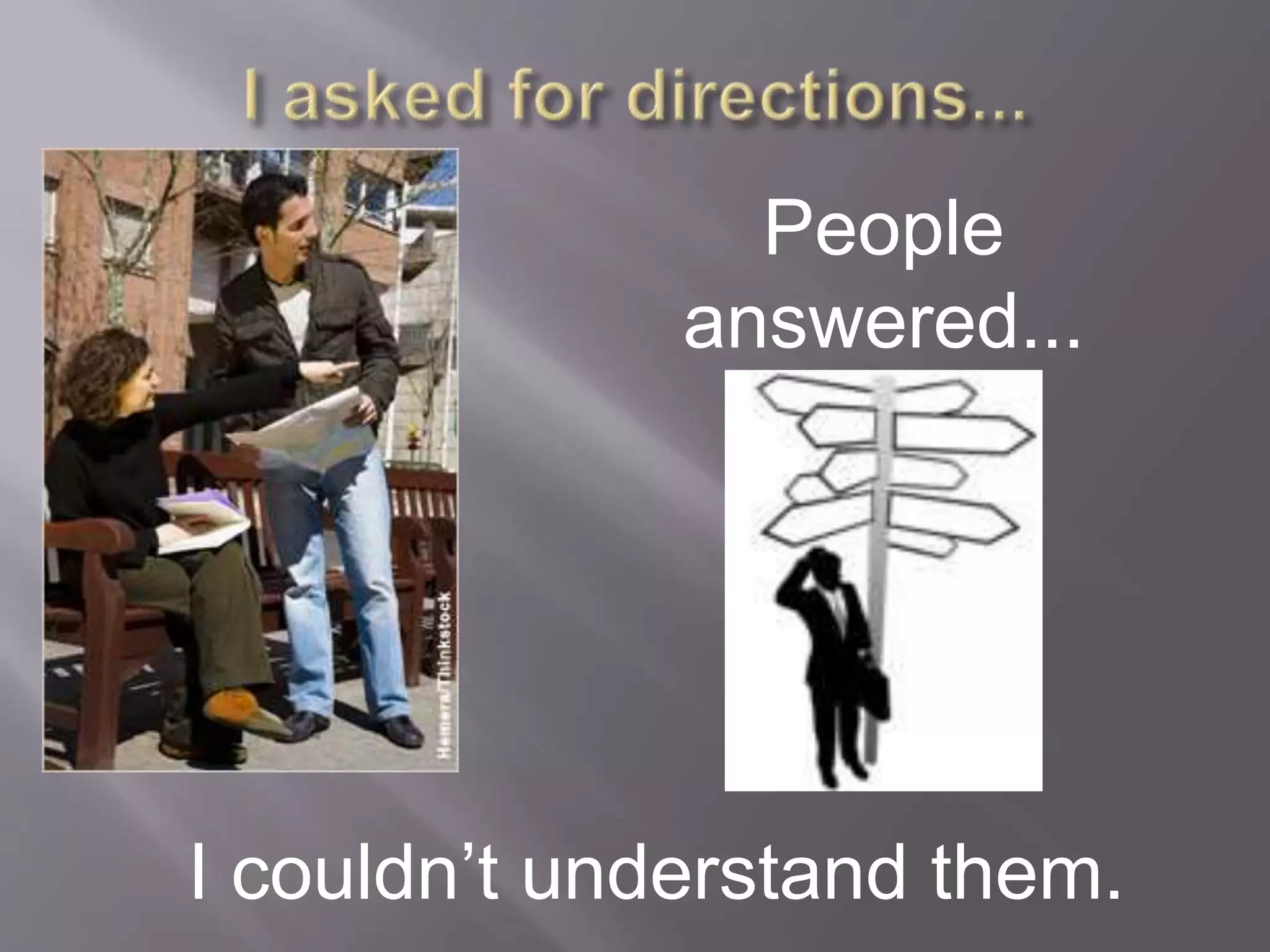
People
answered...
I couldn’t understand them.
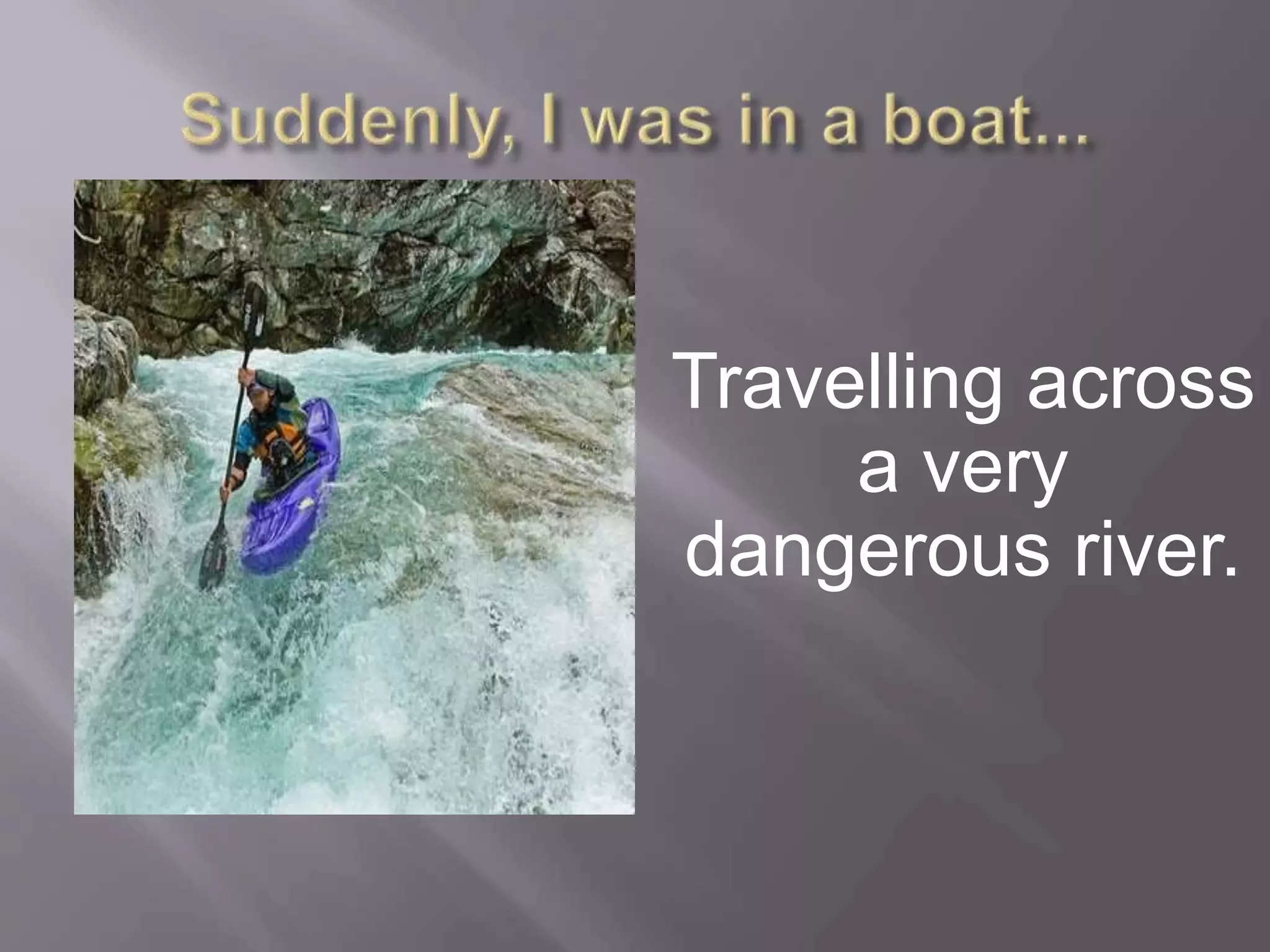
Travelling across
a very
dangerous river.
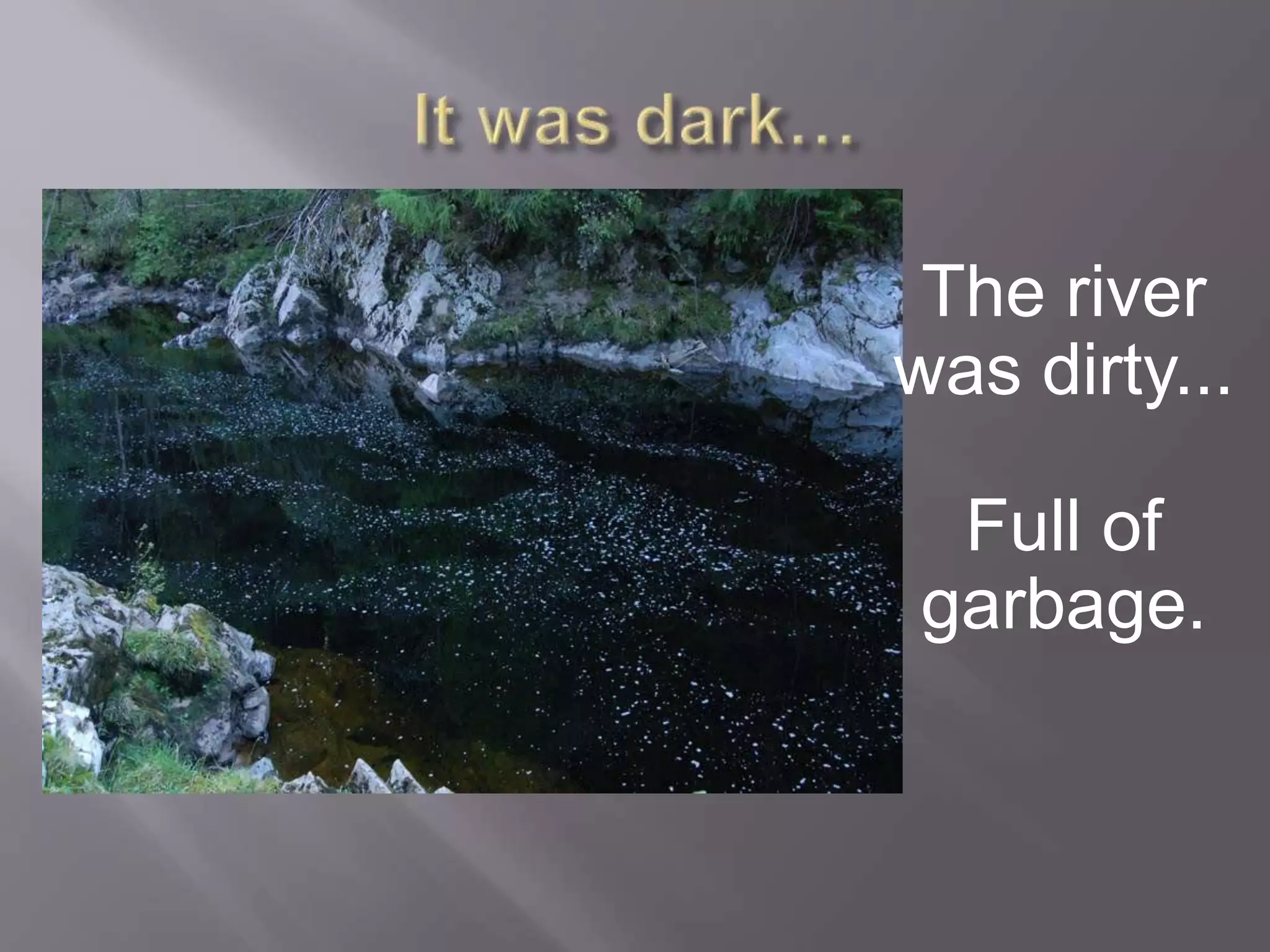
The river
was dirty...
Full of
garbage.
I thought, “I’ll never get home.”
No one listened.
Then I woke up.
5.C.A man was trying to go home but it was
difficult.
6.2.True. A psychologist tried to help him.
6.3.False. He just went for a walk in the city.
6.4.True. In his dream he was in a big city.
6.5.False. It was dark.
6.6.True. In the dream he wanted to go home.
6.7.True. In the dream he had problems on his
way home.
7.2.It - Apartment
7.3.One - Buses
7.4.It - Way
7.5.Them - Directions
Adjectives used: Large, big, dark, real,
comfortable, lost,
uncomfortable, familiar, unfamiliar, anxious,
complicated, dangerous, afraid.
The mood is negative as the majority of
adjectives are negative.
What might the psychologist tell the man he
has?1.Anxiety
What are his emotions? Fear, stress, worry.
What might be some symbols in his dream? 2.
City, apartment, street(s), buses, river, boat,
people, garbage.
What might be their meanings?: Workplace
maybe, help, world, hope, way, neutrality,
obstacles, things to be cleaned out or dealt with
in his life or workplace or society perhaps
 To wrap up the students have to write in their
journal for 5 minutes from one of the three
topics given at the end of Part 2. a. Something
learned about sleep or dreams. b. A dream that
you have had. c. Opinion of/on dreams
 Ideally, the writing should be reviewed and
students encouraged to make a final draft.
Interactions Access Reading and Writing MIddle East Diamond Edition

Interactions Access Reading and Writing MIddle East Diamond Edition

  • 1.
    Middle East DiamondEdition McGraw Hill Original, 2012 © Gorakhnath Gangane, English Language Instructor, PYP, University of Jazan, 2015.(Cambridge, CELTA) For further clarifications, please contact vishwarup17@gmail.com
  • 2.
    Part 2: ADream Narrative Reading A Narrative (story) Comprehension Exercise.
  • 3.
    Reading skills andstrategies: Prereading: Thinking about the topic, Previewing vocabulary, Identifying details, Finding the meaning of new words in context Critical thinking skills: Understanding mood Vocabulary building: Understanding pronouns Language skills: Discussing ideas from the reading.
  • 4.
  • 5.
    Thinking about thetopic The students read some general questions on sleep and dreams. The answers will and should vary but the discussion will help them speak.
  • 6.
    Verbs: realize, travel Adjectives:anxious, complicated, familiar, unfamiliar Adverb: outside Idiom*: Make sense *An idiom is a word or phrase that is not taken literally. The meanings of the yellow colour-coded words are what the students find out in the next exercise.
  • 7.
    3.1.B.go places 3.2.C. nervous 3.3.B.something that I knew 3.4.C. difficult 3.5.A.understand 3.6.C.without logic
  • 8.
    Psychologist (Revision) Psychologists helppeople learn to cope effectively with life issues and mental health . Revision needed as earlier psychologist was only defined as studying behaviour but here the meaning is extended.
  • 9.
    Comfortable = atease Uncomfortable = ill at ease, uneasy Completely different = not the same at all Dirty = not clean River = A large natural stream of water flowing in a channel to the sea Garbage= waste (dry & wet) Afraid = full of fear Street = road
  • 10.
  • 11.
  • 12.
    This is thedream from June 7.
  • 13.
    It was verybig and very dark.
  • 15.
    But didn’t looklike the real New York.
  • 16.
    I was ina friend’s apartment. It was comfortable.
  • 17.
    I was inthe street, alone.
  • 20.
  • 22.
    I knew myhouse was outside the city.
  • 23.
    But I didn’tknow which one to take.
  • 24.
  • 25.
  • 26.
  • 27.
    I thought, “I’llnever get home.”
  • 28.
  • 30.
    5.C.A man wastrying to go home but it was difficult.
  • 31.
    6.2.True. A psychologisttried to help him. 6.3.False. He just went for a walk in the city. 6.4.True. In his dream he was in a big city. 6.5.False. It was dark. 6.6.True. In the dream he wanted to go home. 6.7.True. In the dream he had problems on his way home.
  • 32.
    7.2.It - Apartment 7.3.One- Buses 7.4.It - Way 7.5.Them - Directions
  • 33.
    Adjectives used: Large,big, dark, real, comfortable, lost, uncomfortable, familiar, unfamiliar, anxious, complicated, dangerous, afraid.
  • 34.
    The mood isnegative as the majority of adjectives are negative.
  • 35.
    What might thepsychologist tell the man he has?1.Anxiety What are his emotions? Fear, stress, worry. What might be some symbols in his dream? 2. City, apartment, street(s), buses, river, boat, people, garbage. What might be their meanings?: Workplace maybe, help, world, hope, way, neutrality, obstacles, things to be cleaned out or dealt with in his life or workplace or society perhaps
  • 36.
     To wrapup the students have to write in their journal for 5 minutes from one of the three topics given at the end of Part 2. a. Something learned about sleep or dreams. b. A dream that you have had. c. Opinion of/on dreams  Ideally, the writing should be reviewed and students encouraged to make a final draft.