InterAgency Cooperation


    Daniel W. Sutherland
Why?


• Cross-cutting

• “InterAgency” is the future
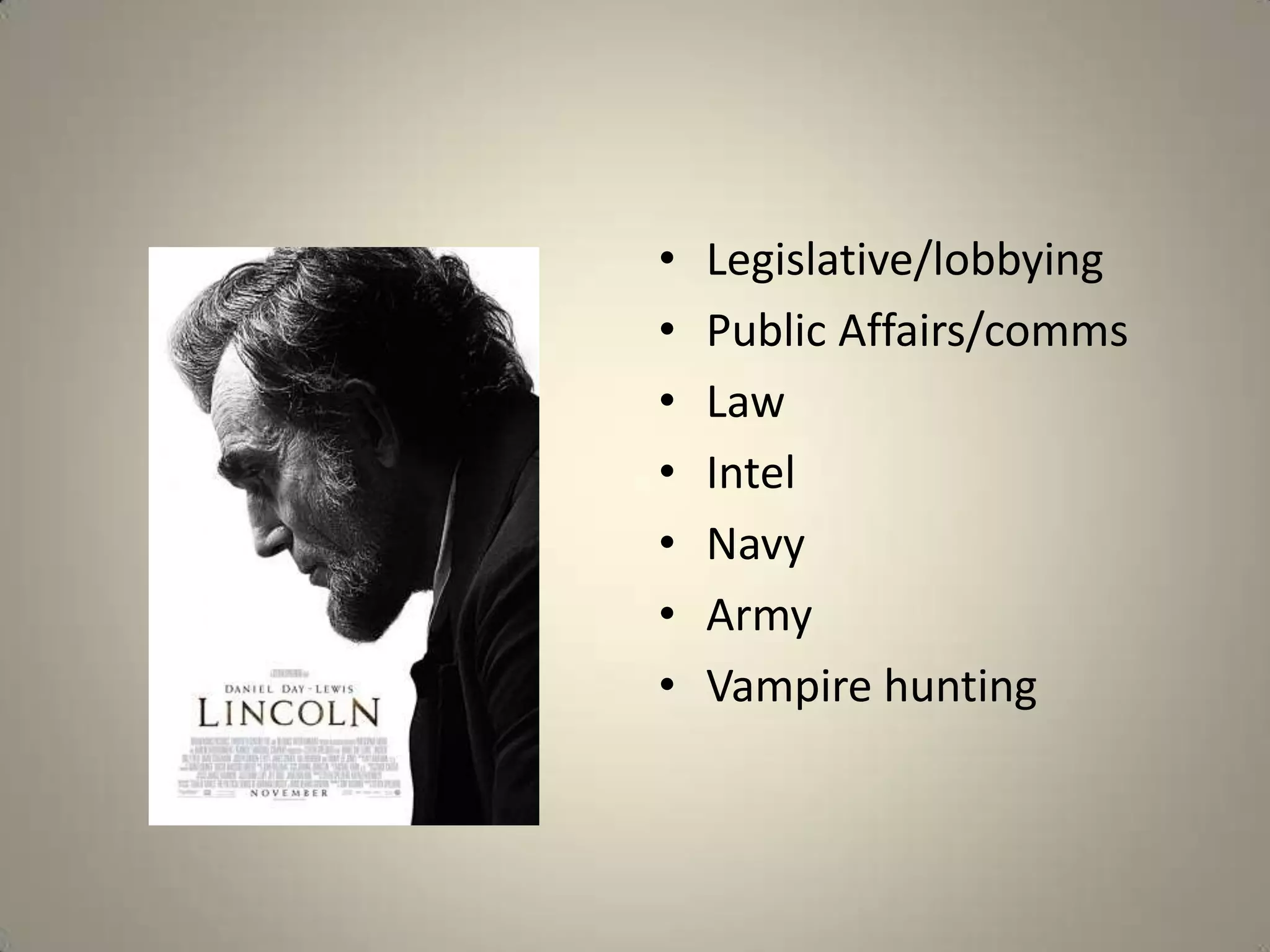
•   Legislative/lobbying
•   Public Affairs/comms
•   Law
•   Intel
•   Navy
•   Army
•   Vampire hunting
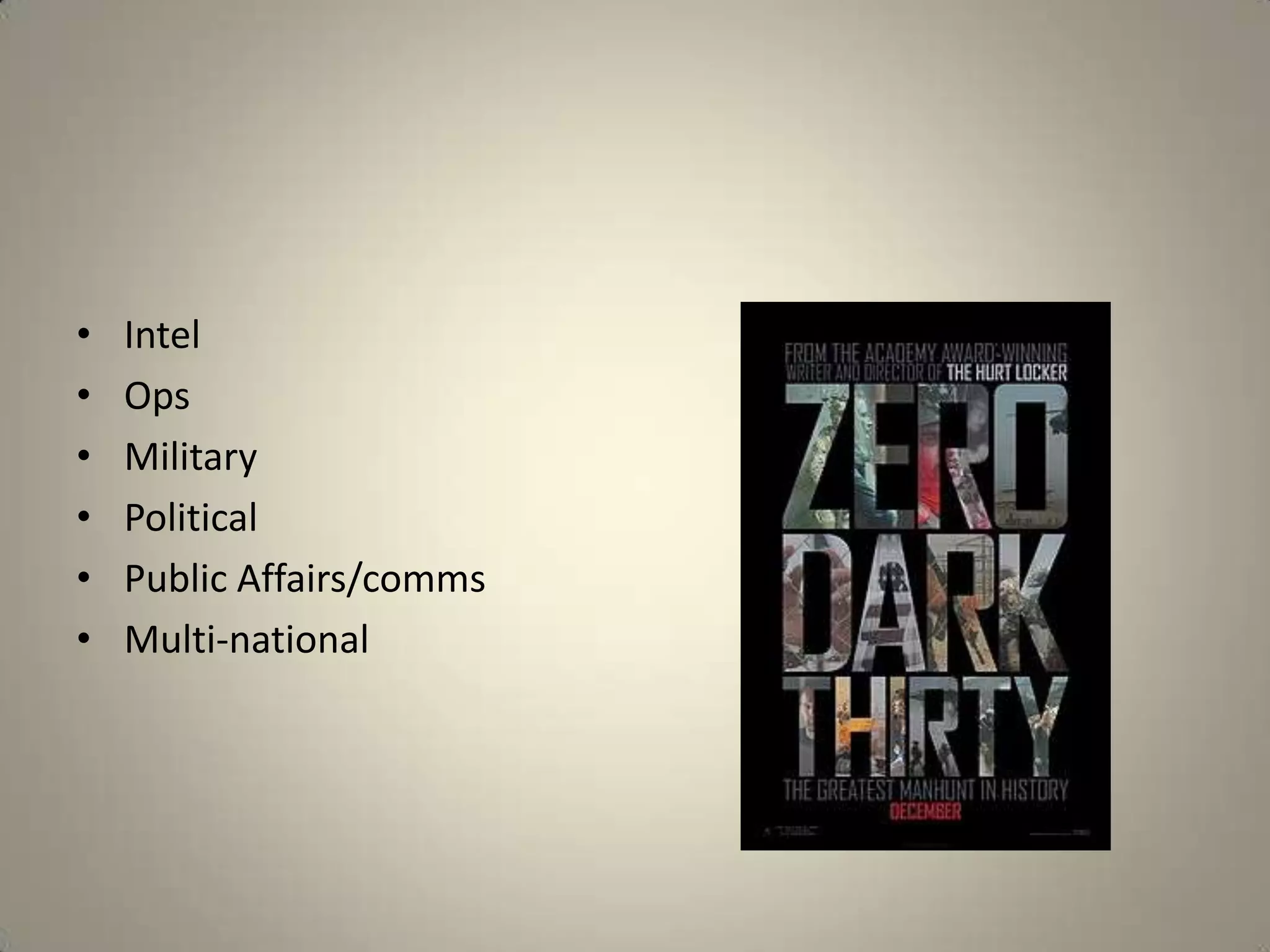
•   Intel
•   Ops
•   Military
•   Political
•   Public Affairs/comms
•   Multi-national
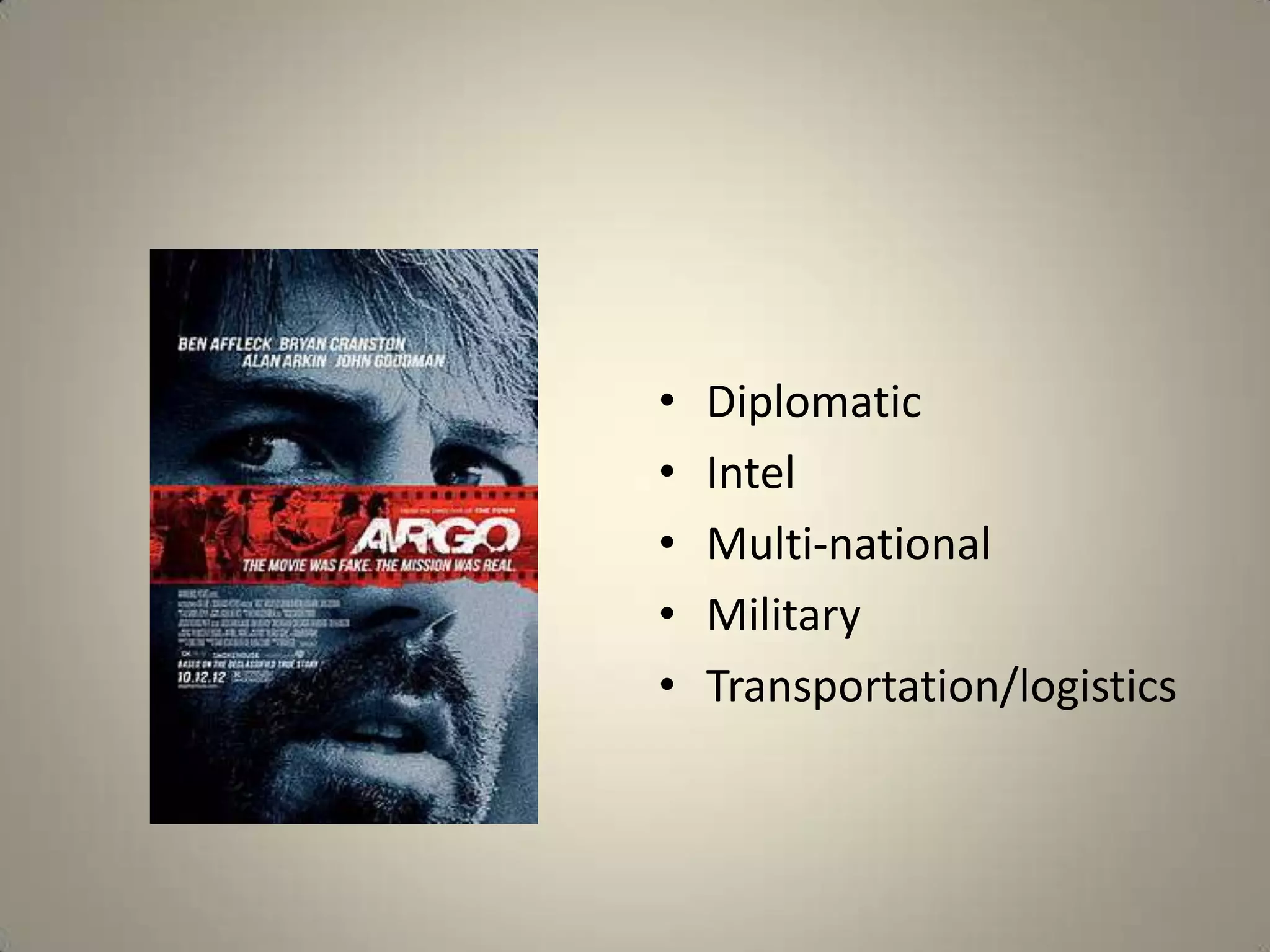
•   Diplomatic
•   Intel
•   Multi-national
•   Military
•   Transportation/logistics
• Gun Violence

• Immigration

• Economic Issues
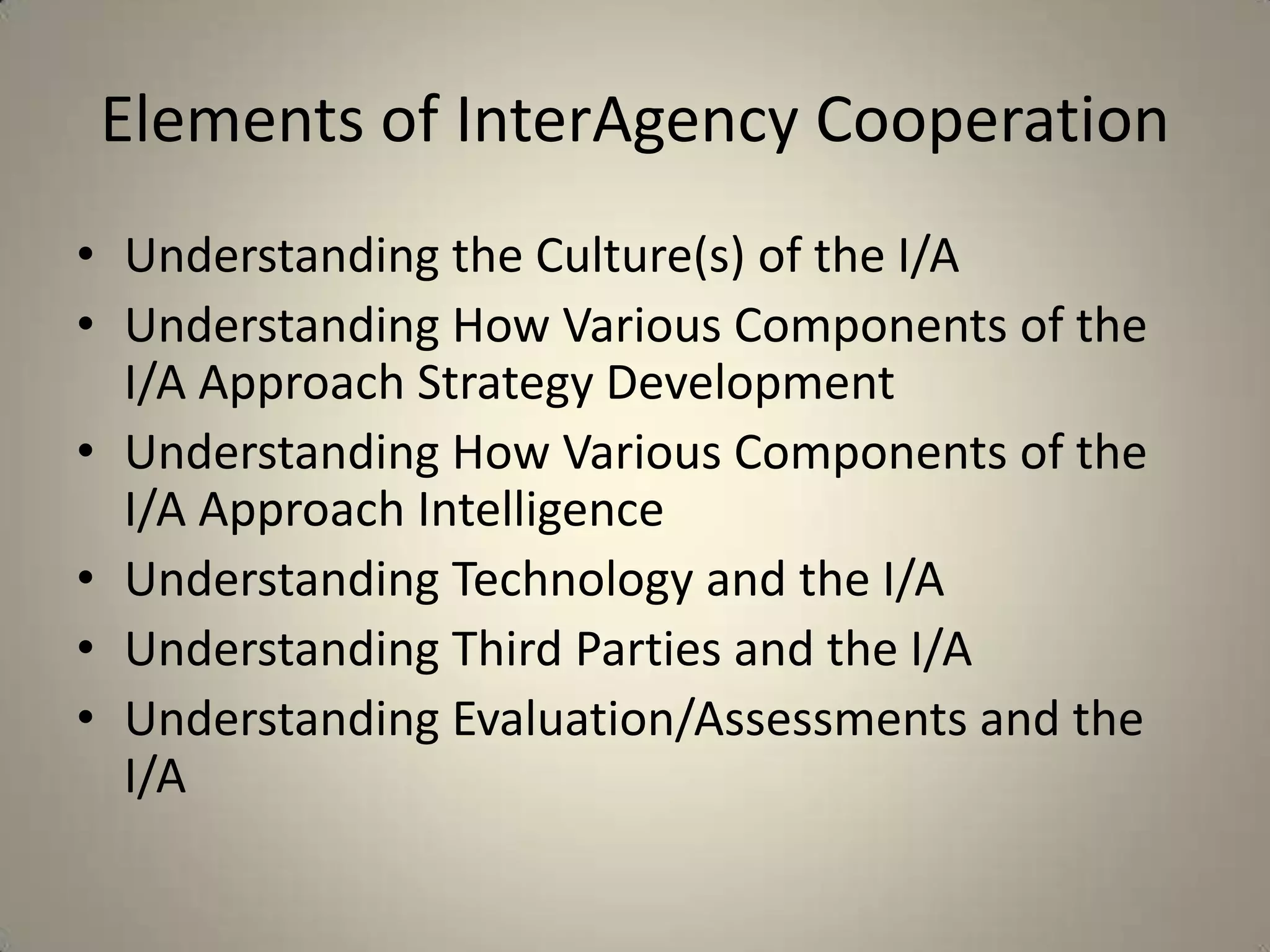
Elements of InterAgency Cooperation
• Understanding the Culture(s) of the I/A
• Understanding How Various Components of the
  I/A Approach Strategy Development
• Understanding How Various Components of the
  I/A Approach Intelligence
• Understanding Technology and the I/A
• Understanding Third Parties and the I/A
• Understanding Evaluation/Assessments and the
  I/A
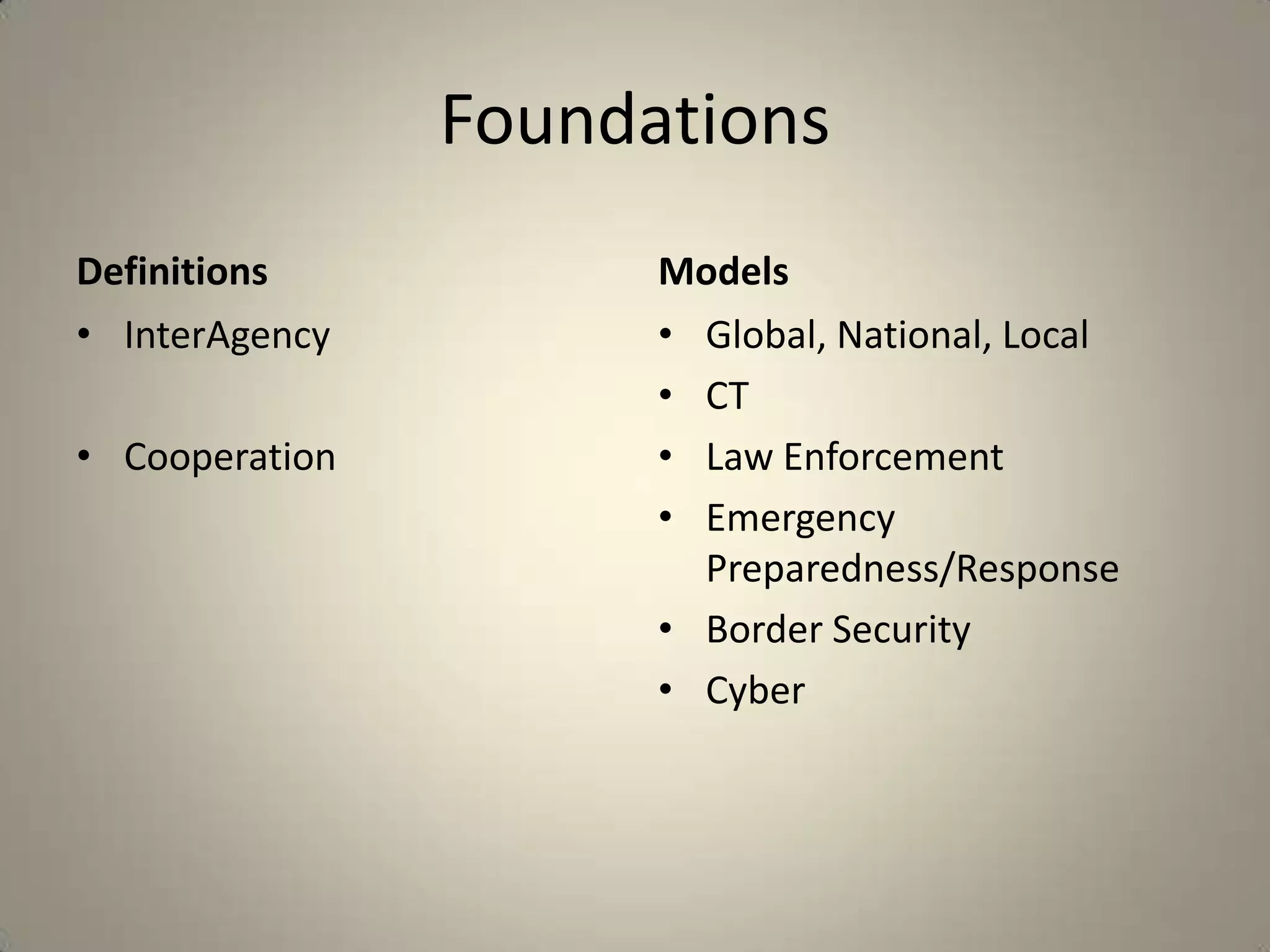
Foundations
Definitions           Models
• InterAgency         • Global, National, Local
                      • CT
• Cooperation         • Law Enforcement
                      • Emergency
                        Preparedness/Response
                      • Border Security
                      • Cyber
“One issue that demands particular attention in the
contemporary security environment is how best to
apply whole-of-government approaches to complex
national missions, ranging from combating terrorism
and trafficking in persons to securing cyberspace. These
and many other twenty-first-century security
challenges require an agile and integrated response[.]”


  Daniel Langberg, “Organizational Innovations in Counterterrorism,”
  Homeland Security Affairs, Vol. VI, No. 3 (Sept. 2010)

Inter agency introduction

  • 1.
    InterAgency Cooperation Daniel W. Sutherland
  • 2.
  • 3.
    Legislative/lobbying • Public Affairs/comms • Law • Intel • Navy • Army • Vampire hunting
  • 4.
    Intel • Ops • Military • Political • Public Affairs/comms • Multi-national
  • 5.
    Diplomatic • Intel • Multi-national • Military • Transportation/logistics
  • 6.
    • Gun Violence •Immigration • Economic Issues
  • 7.
    Elements of InterAgencyCooperation • Understanding the Culture(s) of the I/A • Understanding How Various Components of the I/A Approach Strategy Development • Understanding How Various Components of the I/A Approach Intelligence • Understanding Technology and the I/A • Understanding Third Parties and the I/A • Understanding Evaluation/Assessments and the I/A
  • 8.
    Foundations Definitions Models • InterAgency • Global, National, Local • CT • Cooperation • Law Enforcement • Emergency Preparedness/Response • Border Security • Cyber
  • 9.
    “One issue thatdemands particular attention in the contemporary security environment is how best to apply whole-of-government approaches to complex national missions, ranging from combating terrorism and trafficking in persons to securing cyberspace. These and many other twenty-first-century security challenges require an agile and integrated response[.]” Daniel Langberg, “Organizational Innovations in Counterterrorism,” Homeland Security Affairs, Vol. VI, No. 3 (Sept. 2010)

Editor's Notes

  • #3 You probably have 2 questions: Why is GW teaching this subject? Why is GW requiring this of all of the students in this master’s program?By the way, this sounds really interesting – this is a real page-turner?There are two answers: (1) The students take this course because the material cuts across all of the other courses that they take. Helps them tie things together. It cuts across all of the disciplines – budget, cyber, homeland security, border security, planning, foreign policy, domestic policy, etc.Second, Interagency is the future. (a) “Joint Duty” is something that is increasingly required of federal employees if they want to get promotions, particularly to the senior ranks. (b) Moreover, the solution sets to the problems facing us require multi-disciplinary, cross-jurisdictional, cross-cultural actions.You need look no further than the recent Oscars …
  • #7 Gun ViolencePolitical Law enforcement/security Legal Educational (both K-12 and university) International (US and Brevik)Immigration; law enforcement/security; civil rights law; social workers; tech sector; business community more broadly; international relationsEconomic issues: banking, tax policy, business/private sector, international, political/lobbying/Hill
  • #8 We look in depth at 6 elements of the interagency
  • #9 Interagency:Global (includes transnational) National (includes various agencies of the USG) State/Local (mayors, sheriffs, emergency management agencies) Private sector (hospitals, businesses, chambers of commerce) Third parties (Congress, judiciary, media, think tanks)