INTERPRETATION OF COMMON LABORATORY
TESTS FOR PHARMACISTS
By:
Salahadin M.Ali, B.Pharm
Haramaya University
School of Pharmacy
1
WHY LAB TESTING?
1. To detect diseases
2. Guide treatment
3. Monitor response to treatment
4. Monitor disease progression
DIAGNOSTIC METHODS
CLASSIFICATION
A. Biochemical Methods
Blood tests, Enzyme tests, Mineral content tests, Test for
evaluation of concentration - Na, K, Ca..., Glucose, Urea,
in blood plasma
B. Physical Methods
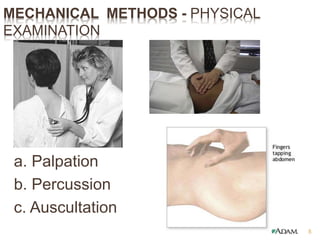
1. Mechanical : e.g. Auscultation, Percussion, Palpation, Blood
pressure (non-direct) method, Body temperature
measurement..
2. Electrical: ECG, EEG, Audiometry ...
3. Electromechanical: Spirometry
3
DIAGNOSTIC METHODS
4. Optic and Optoelectric methods:
Light microscopy, Electron microscopy,Ophtalmoscopy, Otoscopy,
Bronchoscopy, Fiber optics...
5. Ultrasound (Dopplers) methods:
Blood flow test, Echocardiography...
6. X- ray Imaging methods:
Classic Tomography, Computer tomo-graphy (CT)...
7. Methods of Nuclear Medicine:
Radioi-sotopes , Gammagraphy, Positron Emmision Tomography
(PET)....
8. Magnetic scanning methods- 4
MECHANICAL METHODS - PHYSICAL
EXAMINATION
a. Palpation
b. Percussion
c. Auscultation
5
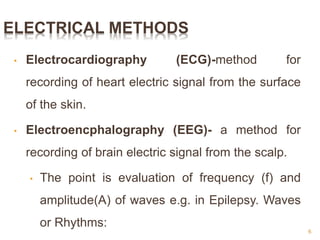
ELECTRICAL METHODS
• Electrocardiography (ECG)-method for
recording of heart electric signal from the surface
of the skin.
• Electroencphalography (EEG)- a method for
recording of brain electric signal from the scalp.
• The point is evaluation of frequency (f) and
amplitude(A) of waves e.g. in Epilepsy. Waves
or Rhythms:
6
BASIC CLINICAL CHEMISTRY -
PURPOSE
1. Detect or measure
substances that indicate
cell damage or disease.
2. Measure levels of
substances found normally
in human blood that have
biological functions.
3. Detect or measure non-
functional metabolites or
waste products.
4. Detect or measure drugs
or toxic substances.
Examples:
a. Creatinine, Blood Urea
Nitrogen (BUN)
b. Glucose, Calcium
c. Liver enzymes, such as
ALT, Cardiac enzymes,
such as CK-MB
d. Dilantin, Drugs of abuse
screen
7
BASIC CLINICAL CHEMISTRY
COMMON TERMS
 Normal or Reference Values – range of
values for a particular chemistry test from
healthy individuals
 Chemistry Panel grouping – some tests
are “bundled” according to the system or
organ targeted.
 Examples: thyroid panel, liver panel, cardiac
panel, kidney panel, basic metabolic panel,
etc.
8
NORMAL VALUES
 Various upon many factors
 Age, gender, weight, height, race, comorbidity
 Each lab adapts its own methods and
publishes its own normal value ranges
 Change in equipment or reagent
9
LABORATORY ERROR
 Specimen
 Wrong handling, Wrong timing
 Reagents
 Technical Error
 Procedural error, Sample mix up
 Diet – protein rich food
 Medications
 Spironolactone in digoxin assay
 Thiazide in uric acid
10
DRUGS LAB INTERACTION
 In Vivo (Biological)
 Pharmacological
 Toxicological
 In Vitro (Analytical or methodological)
 Diuretics
 Corticosteroids
 INH/Rifampin
 Aminoglycosides
 Quinidine
11
IN-VIVO LAB INTERFERENCE - EXAMPLES
 Cephalosporins and aminoglycosides
 Carbenecillin (the most potent activator)
 Tobramycin (the most susceptible agent)
 Heparin - Aminoglycosides Assay
 Fluoride - BUN
 Phenazopyridine – urine
 Caffeine - Theophylline & Digoxin assay
 Radiographic contrast media – with thyroid tests
12
SERUM ELECTROLYTES
TESTS
13
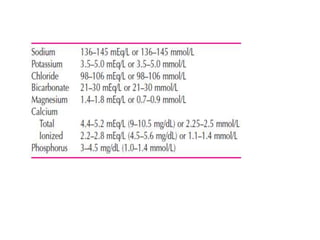
SODIUM (NA)
(135 - 145 MEQ/L)
 The principle role: Maintain
 (1) serum osmolality and (2) fluid balance
 Between 60-70% of the filtered load is reabsorbed in the
proximal tubules together with bicarbonate and water.
 A further 25-30% is reabsorbed in the ascending loop of
Henle.
 In distal tubules, sodium is coupled to the exchange of
potassium and/or hydrogen ions that ultimately determines
the amount of sodium excreted in the urine.
17
HYPONATREMIA
Does a low serum sodium concentration mean a
low total serum sodium ??
 Two causes:
 (1) Na Depletion and (2) Dilutional
 Most cases of hyponatremia are caused by
impaired water excretion in the presence of
continued water intake.
 Most remain asymptomatic until serum Na < 120
mEq/L
18
ANTIDIURETIC HORMONE (ADH)
Factors such as hypovolumeia, thirst, and high
serum osmolality (a) increase (b) decrease
ADH production.
 Produced by hypothalamus (CNS)
 Also called vasopression
 Leads to concentrated urine by increasing
permeablity of colleting tubules for reabsorption
of water
19
DISORDER OF ADH PRODUCTION
 Syndrome of Inappropriate ADH secretion
(SIADH)
 Inappropriately high quantity of ADH
 Excessive reabsorption of water – hyponatremia
Treatment: (1) water restriction
 Demeclocycline 600-1200 mg qd
 Diabetes Insipidius (DI)
 DI (Center) vs. DI (Nephrogenic) - The difference ???
 Drugs known to cause SIADH:
20
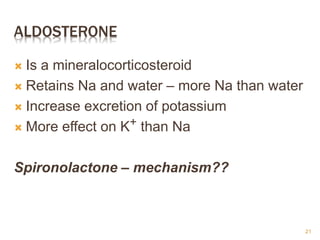
ALDOSTERONE
 Is a mineralocorticosteroid
 Retains Na and water – more Na than water
 Increase excretion of potassium
 More effect on K+ than Na
Spironolactone – mechanism??
21
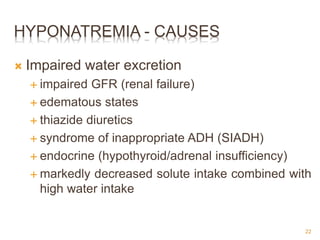
HYPONATREMIA - CAUSES
 Impaired water excretion
 impaired GFR (renal failure)
 edematous states
 thiazide diuretics
 syndrome of inappropriate ADH (SIADH)
 endocrine (hypothyroid/adrenal insufficiency)
 markedly decreased solute intake combined with
high water intake
22
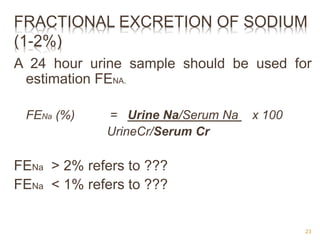
FRACTIONAL EXCRETION OF SODIUM
(1-2%)
A 24 hour urine sample should be used for
estimation FENA.
FENa (%) = Urine Na/Serum Na x 100
UrineCr/Serum Cr
FENa > 2% refers to ???
FENa < 1% refers to ???
23
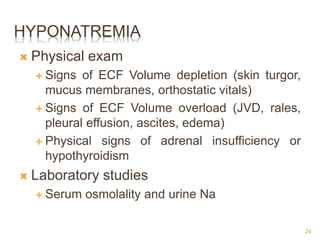
HYPONATREMIA
 Physical exam
 Signs of ECF Volume depletion (skin turgor,
mucus membranes, orthostatic vitals)
 Signs of ECF Volume overload (JVD, rales,
pleural effusion, ascites, edema)
 Physical signs of adrenal insufficiency or
hypothyroidism
 Laboratory studies
 Serum osmolality and urine Na
24
SIGNS AND SYMPTOMS
 Anorexia
 Nausea and vomiting
 Difficulty concentrating
 Confusion
 Lethargy
 Agitation
 Headache
 Seizures
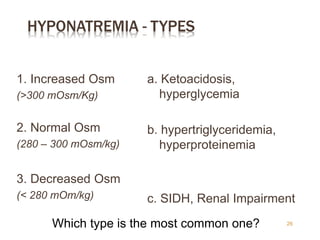
HYPONATREMIA - TYPES
1. Increased Osm
(>300 mOsm/Kg)
2. Normal Osm
(280 – 300 mOsm/kg)
3. Decreased Osm
(< 280 mOm/kg)
a. Ketoacidosis,
hyperglycemia
b. hypertriglyceridemia,
hyperproteinemia
c. SIDH, Renal Impairment
Which type is the most common one? 26
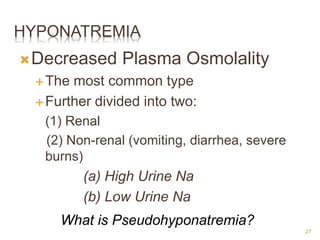
HYPONATREMIA
Decreased Plasma Osmolality
The most common type
Further divided into two:
(1) Renal
(2) Non-renal (vomiting, diarrhea, severe
burns)
(a) High Urine Na
(b) Low Urine Na
What is Pseudohyponatremia?
27
HYPONATREMIA
ACUTE, SYMPTOMATIC HYPONATREMIA
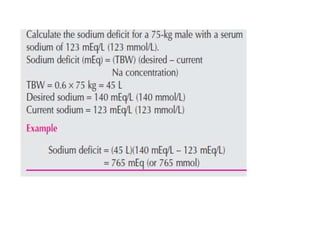
 Calculate the Na deficit
Na mEq = ([Na desired] - [Na measured]) X TBW
TBW = 0.5 or 0.6 X weight in KG
 Correct no faster than 1 mEq/L per hour for the first 6-8
mEq/L – No more than 10-12 mEq/L in first 24 hours
 5% saline is almost never needed
How about in patients with
hypervolemic hyponatremia ???
28
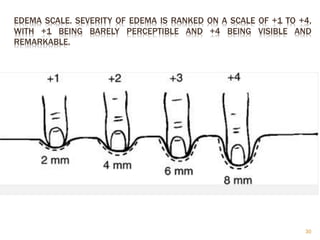
EDEMA SCALE. SEVERITY OF EDEMA IS RANKED ON A SCALE OF +1 TO +4,
WITH +1 BEING BARELY PERCEPTIBLE AND +4 BEING VISIBLE AND
REMARKABLE.
30
HYPERNATREMIA
NA > 145 MEQ/L
 Less common – occurs in patients with impaired
thirst mechanism (stroke patients)
 Serum Na > 160 mEq/L – 75% mortality
 Results from a deficit of water (usually not due to
excess Na intake)
 Loss of water (diarrhea, vomiting)
 Failure to adequately replace the water loss
 Look thoroughly for alterations in neurological status that
are causing inadequate water intake
 Water loss is extra-renal or renal
 Rarely iatrogenic
31
HYPERNATREMIA
 Extra-renal water loss
 fever, profuse sweating, hyperventilation,
diarrhea
 Renal water loss (key is to look for polyuria)
 Key to evaluating renal water loss is to
measure urine osmolality
 Increase urine specific gravity
 Concentrated urine
32
HYPERNATREMIA
 Osmotic diuresis (urine Osm > 300)
 the excretion of the osmotic load obligates a
certain water loss
 poorly controlled diabetes, mannitol
administration, protein catabolism with urea
 Diabetes Insipidus (urine Osm < 150)
 inability of the kidney to concentrate urine due to
absence of ADH (central) or unresponsiveness
to ADH (nephrogenic)
33
HYPERNATREMIA
 Diagnosis
 Reason for water loss or sodium gain?
 Reason for inadequate water intake?
 Is polyuria present? (urine volume > 3L/24hrs)
 What is the spot urine Osm?
 Response to vasopressin?
34
Signs and symptoms of hypernatremia
• Irritability
• Thirst
• Altered sensorium
• Seizures
• hyperreflexia
• Increased muscle tone
• Fever
• Oligoanuria
• Excessive diuresis
HYPERNATREMIA
 Treatment
 Calculate water deficit
 Severe ECFV depletion is the priority and should
be corrected with NS first. Subsequent fluid
replacement can be hypotonic
 Major complication of overly rapid correction is
cerebral edema
 Safe rate is no more than 0.5- 1 mEq/L per hour
 Should take 36-72 hours to completely correct
36
HYPERNATREMIA
 Treatment
 Calculate the water deficit
H2O deficit = TBW X ([Na measured]- [Na desired])
[Na desired]
 Important to take into account ongoing losses
 insensible losses 0.5 - 1 liter/24 hours
 with fever, these losses increase by 60-80ml/24 hrs for
each degree Fahrenheit
37
POTASSIUM (K)
(3.5 – 5.0 MEQ/L)
• Potassium is filtered at the glomerulus;
• Approximately 90% is reabsorbed in the
proximal tubule & the ascending loop of
Henle
• 10% reaches the distal tubule where the
regulation of body potassium occurs
through secretion in exchange for sodium
under the influence of aldosterone.
• K is excreted into urine in exchange to Na
reabsorption at distal tubules
38
POTASSIUM (K+)
 Major role:
 regulate muscle and nerve excitability
 Cardiac muscle depends on K for normal
contraction
 Total body K – 4000 mEq .
Is there a relationship between insulin and
serum potassium?
39
HYPOKALEMIA
In what way the following
substances or conditions influence
serum potassium??
a. Acid-base balance
b. Amphotericin B
c. Diuretics
d. DKA
e. Magnesium
Insulin, beta agonists, and glucose cause
shifting to Intracellular space. 40
HYPOKALEMIA - COMPLICATIONS
 Neuromuscular manifestations
 weakness, fatigue, paralysis, respiratory
dysfunction
 Gastrointestinal
 constipation, ileus
 Nephrogenic DI
 ECG changes
 U waves, flattened T waves, arrhythmias
41
HYPOKALEMIA
 Spurious hypokalemia
 Marked leukocytosis
 A dose of insulin right before the blood draw
 Redistribution hypokalemia
 Alkalosis
 (K decreases 0.3 mEq/L for every 0.1 increase in pH)
 Increased Beta2 adrenergic activity
 Theophylline toxicity
42
HYPOKALEMIA
 Treatment
 Mild: KCl supplementation (KCl), food
(bannana, orange, etc.)
 Severe: 0.9% NaCl with 20-40 mEq/L over 3-4
hrs
43
HYPERKALEMIA
 Incidence: 8% of hospitalized patients
 Severe hyperkalemia is a medical emergency
 Neuromuscular signs
 weakness, ascending paralysis, respiratory failure
 Progressive ECG changes
 PRIMARY CAUSE OF DEATH
 Peaked T waves, flattened P waves, prolonged PR
interval, idioventricular rhythm and widened QRS
complex, “sine wave” pattern, V fib
 MORTALITY COULD BE AS AS HIGH 67%
44
HYPERKALEMIA
• Etiology – renal failure, transcellular shifts,
cell death, drugs, pseudohyperkalemia
• Manifestations –
cardiac, neuromuscular
45
HYPERKALEMIA
 Impaired potassium secretion
 Aldosterone deficiency
 adrenal failure
 Syndrome of hyporeninemic hypoaldosteronism
(SHH)
 tubular unresponsiveness
 Renal failure
 GFR < 10 -20% of normal
 Metabolic Acidosis
 Decrease in pH by 0.1 from 7.4, it falsely elevate
K+ concentration by 0.6 mEq/L. 46
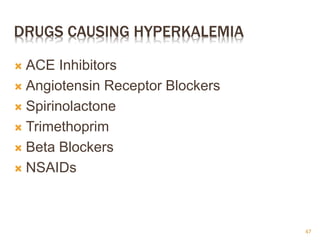
DRUGS CAUSING HYPERKALEMIA
 ACE Inhibitors
 Angiotensin Receptor Blockers
 Spirinolactone
 Trimethoprim
 Beta Blockers
 NSAIDs
47
HYPERKALEMIA
 Treatment
 Stop potassium!
 Get ECG
 Hyperkalemia with ECG changes is a medical
emergency
48
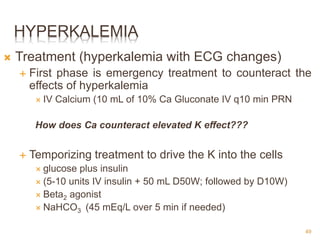
HYPERKALEMIA
 Treatment (hyperkalemia with ECG changes)
 First phase is emergency treatment to counteract the
effects of hyperkalemia
 IV Calcium (10 mL of 10% Ca Gluconate IV q10 min PRN
How does Ca counteract elevated K effect???
 Temporizing treatment to drive the K into the cells
 glucose plus insulin
 (5-10 units IV insulin + 50 mL D50W; followed by D10W)
 Beta2 agonist
 NaHCO3 (45 mEq/L over 5 min if needed)
49
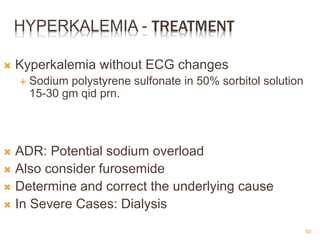
HYPERKALEMIA - TREATMENT
 Kyperkalemia without ECG changes
 Sodium polystyrene sulfonate in 50% sorbitol solution
15-30 gm qid prn.
 ADR: Potential sodium overload
 Also consider furosemide
 Determine and correct the underlying cause
 In Severe Cases: Dialysis
50
CALCIUM
(8.5 – 10.8 MG/DL)
 99% present in skeleton (reservoir)
 Functions of calcium
 Intracellular signalling
 Plasma membrane potential (including cardiac
cells)
 Coagulation
 Bone mineralization
51
CALCIUM
What is the role of the following mediators
on Ca and PO4 Balance?
a. Parathyroid Hormone (PTH)
b. Calcitriol (Active form of vitamin D3)
52
ROLE OF PTH
 Stimulates renal reabsorption of calcium
 Inhibits renal reabsorption of phosphate
 Stimulates bone resorption
 Inhibits bone formation and mineralization
 Stimulates synthesis of calcitriol
Net effect of PTH 
a. Increase
b. Decrease
c. No Effect
1. serum calcium
2. serum phosphate
53
REGULATION OF PTH
Which one stimulates PTH secretion?
a. Low serum [Ca+2]
b. High serum [Ca+2]
54
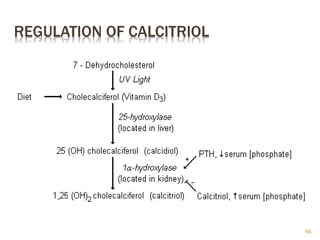
ROLE OF CALCITRIOL
 Stimulates GI absorption of both calcium
and phosphate
 Stimulates renal reabsorption of both
calcium and phosphate
 Stimulates bone resorption
Net effect of calcitriol 
a. Increase
b. Decrease
c. No Effect
1. serum calcium
2. serum phosphate
55
REGULATION OF CALCITRIOL
56
HYPOALBUMINEMIA
To estimate the physiologic levels of
ionized calcium in states of
hypoalbuminemia:
[Ca+2]Corrected = [Ca+2]Measured + [ 0.8 (4 – Albumin) ]
Serum Ca (8 mEq/L) and Albumin is 2.5 g/dL.
What is the corrected Ca concentration?
57
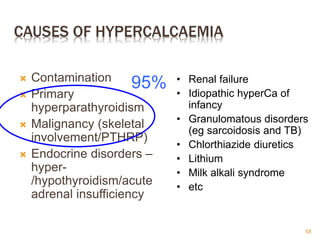
CAUSES OF HYPERCALCAEMIA
 Contamination
 Primary
hyperparathyroidism
 Malignancy (skeletal
involvement/PTHRP)
 Endocrine disorders –
hyper-
/hypothyroidism/acute
adrenal insufficiency
• Renal failure
• Idiopathic hyperCa of
infancy
• Granulomatous disorders
(eg sarcoidosis and TB)
• Chlorthiazide diuretics
• Lithium
• Milk alkali syndrome
• etc
95%
58
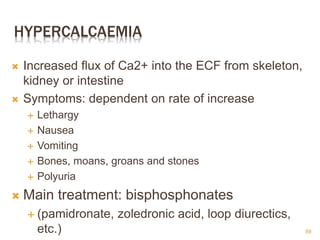
HYPERCALCAEMIA
 Increased flux of Ca2+ into the ECF from skeleton,
kidney or intestine
 Symptoms: dependent on rate of increase
 Lethargy
 Nausea
 Vomiting
 Bones, moans, groans and stones
 Polyuria
 Main treatment: bisphosphonates
 (pamidronate, zoledronic acid, loop diurectics,
etc.) 59
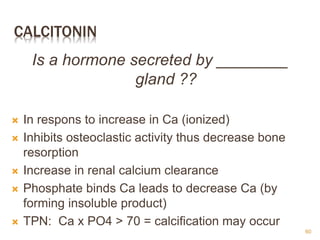
CALCITONIN
Is a hormone secreted by ________
gland ??
 In respons to increase in Ca (ionized)
 Inhibits osteoclastic activity thus decrease bone
resorption
 Increase in renal calcium clearance
 Phosphate binds Ca leads to decrease Ca (by
forming insoluble product)
 TPN: Ca x PO4 > 70 = calcification may occur
60
DRUGS THAT INTERFERE WITH SERUM CA
 Loop Diuretics
 Thiazides
 Calcitonin
 Etidronate/Aledronate
 Glococorticosteroids
 Aluminum containing antacids
 Phenytoin
 Theophylline
 Cisplatin
61
HYPOCALCAEMIA
 Symptoms
 Neuromuscular excitability
 Tetany
 Paresthesia
 Seizures
62
CAUSES OF HYPOCALCAEMIA
 Hypoalbuminaemia
 Chronic renal failure
 Magnesium deficiency
 Hypoparathyroidism (/pseudo)
 Vitamin D deficiency (or resistance)
 Drugs: Phenytoin, Phenobarbital, and Rifampin
63
PHOSPHATE METABOLISM
(2.6 – 4.5 MG/DL)
 85% present in skeleton
 10% protein bound, 35% complexed, rest free
 Integrity of bone
 Muscle contraction - Role in ATP (energy),
nucleotides, NADP, cell membranes, gene
transcription, cell growth
 Balance maintained primarily by kidneys
 All factors that affect Ca also affect PO4
What effect does increase in Ca or
Aluminium have on serum PO4? 64
ETIOLOGIES OF HYPERPHOSPHATEMIA
 Increased GI Intake
 Soda
 Decreased Urinary Excretion
 Renal Failure
 Low PTH (hypoparathyroidism)
 s/p thyroidectomy
 s/p I131 treatment for Graves disease of thyroid cancer
 Autoimmune hypoparathyroidism
 Cell Lysis
 Rhabdomyolysis
 Tumor lysis syndrome
65
EFFECT OF CHRONIC RENAL FAILURE
 Phosphate
 Protein
 1, 25 Vit D
 Skeletal resistance to Vitamin D
66
HYPOPHOSPHATAEMIA
 Common than hypophosphataemia
 Muscle weakness
 Respiratory failure
 Decreased myocardial output
 Rhabdomyolysis < 0.15mmol/L
 Severe hypophosphatemia  haemolysis
 Rickets/osteomalacia (chronic defy)
 Wernicke’s encephalopathy
67
MAGNESIUM METABOLISM
 55% present in skeleton
 1% of total body Mg extracellular
 Serum Mg 0.7-1.0 mmol/L
 Cofactor enzymes
 Required for ATP (MgATP)
 Glycolysis
 Cell replication
 Protein biosynthesis
 PTH increases renal tubular reabsorption of
Mg
 Homeostasis maintained - control of excretion
68
HYPERMAGNESAEMIA
Symptoms
 Depressed neuromuscular system
 Depressed respiration
 Cardiac arrest
Causes
 Excessive intake
 Antacids -Moxal
 Enemas
 Mg administration (in patients with RF)
69
HYPOMAGNESAEMIA
 Usually associated with hypokalemia and
hypophosphatemia
 Increased neuromuscular excitability
 Causes impaired PTH secretion
 Oral potassium not retained if patient also
magnesium deficiency is not corrected
 Associated with calcium deficiency with overlapping
symptoms
70
HYPOMAGENESAEMIA
 The three most common causes:
 Diabetes
 Alcoholism
 Use of diuretics
 Other Drugs
 aminoglycosides, ampotericin B, Cyclosporine,
Osmotic diuresis (DM/mannitol) and pentamidine
 Renal loss
• Chronic TPN, Hypercalcaemia, Renal disease
 Gastrointestinal
• Prolonged nasogastric suction, malabsorption, Bowel
resection, Diarrhea, Acute pancreatitis, Chronic
vomiting 71
MANAGMENT
• Hypomagnesemia
– Replacement iv for level < 1 mg/dL (0.32
mmol/L)
– Emergent administration over 5–10 mins
– Less urgent administration over 10–60
mins
72
CARBON DIXOIDE (CO2)
 Normally 23-29 mEq/L
Serum CO2 is measured as __________ ??
 Increased:
 COPD, severe vomiting
 Decreased:
 Starvation, diabetic ketoacidosis, diarrhea, dehydration
73
BICARBONATE
 Bicarbonate concentration of the serum
increases in metabolic alkalosis and in
compensated respiratory acidosis.
 Serum bicarbonate decreases in
metabolic acidosis, compensated
respiratory alkalosis.
74
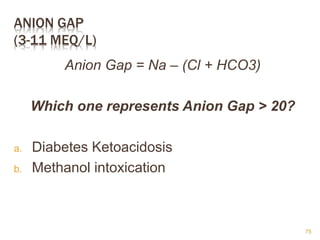
ANION GAP
(3-11 MEQ/L)
Anion Gap = Na – (Cl + HCO3)
Which one represents Anion Gap > 20?
a. Diabetes Ketoacidosis
b. Methanol intoxication
75
KIDNEY FUNCTION TESTS
76
BLOOD UREA NITROGEN (BUN)
 Urea is the major end product of protein and amino
acid catabolism and generated in the liver through
the urea cycle. Most of the urea is ultimately
excreted by the kidneys.
 Urea is freely filtered by the glomeruli. Depending
on the state of hydration and therefore the rate of
urine flow, 40% to 80% of the filtered urea is
passively reabsorbed with water, mostly in the
proximal tubules.
77
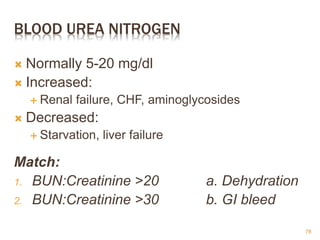
BLOOD UREA NITROGEN
 Normally 5-20 mg/dl
 Increased:
 Renal failure, CHF, aminoglycosides
 Decreased:
 Starvation, liver failure
Match:
1. BUN:Creatinine >20 a. Dehydration
2. BUN:Creatinine >30 b. GI bleed
78
BUN (BLOOD UREA NITROGEN)
 BUN comes from surplus amino acids that are
converted to urea and excreted by kidneys as a waste
product
 BUN influenced by diet and hormones, so it is NOT as
good an indicator of renal function as serum creatinine
levels
 BUN increased in kidney disease, high protein diet, and
after administration of steroids
 BUN decreased in starvation, pregnancy and in persons
on a low protein diet 79
BUN/CREATININE (B/C) RATIO
• Ordinary the B/C ratio is about 10 to 20.
• A high B/C ratio is typically associated with prerenal azotemia
because of augmented tubular reabsorption of urea in the
presence of diminished glomerular filtration.
• Postrenal azotemia also results in a high B/C ratio because urea
is reabsorbed to a much greater extent than creatinine.
• Decreased B/C: low protein diet, muscular individuals, renal
dialysis causes a decreased ratio because urea is more readily
dialyzed than creatinine.
80
BUN
 The serum concentration of urea varies
rather widely in health and is influenced
by such diverse factors as dietary intake
of protein and the state of hydration.
 BUN will ordinarily not be significantly
increased until the glomerular filtration is
decreased by at least 50%. 81
CREATININE (CR)
 Waste product of muscle metablism
 Creatinine is formed as a result of nonenzymatic
dehydration of muscle creatine. Creatinine formation has
a direct relationship to muscle mass.
 Creatinine is also freely filtered by the glomeruli but is not
reabsorbed to any appreciable extent under normal
circumstances. A substantial fraction of creatinine excretion
by the kidney is the result of proximal tubular secretion.
 Serum creatinine concentration is often interpreted as a
measure of glomeurlar filtration rate and is used as an
index of renal function in clinical practice. 82
CREATININE
 Normally <1.1 mg/dl
 Measures blood flow through kidneys
 Increased:
 Renal failure, false positive seen in diabetic
ketoacidosis
 Decreased:
 Muscle wasting, liver disease
83
CREATININE CLEARANCE
Creatine Clearance (CrCl)
[140 – age (yr)] x Wt (kg) x 0.85 (for women)
72 x SCr (mg/dl)
84
CR
 By virtue of its relative independence from
such factors as diet (protein intake), degree of
hydration, and protein metabolism, the
plasma creatinine is a significantly more
reliable screening test or index of renal
function than is the BUN.
 The plasma creatinine tends to increase
somewhat more slowly than the BUN in renal
disease but also decreases more slowly with
hemodialysis.
85
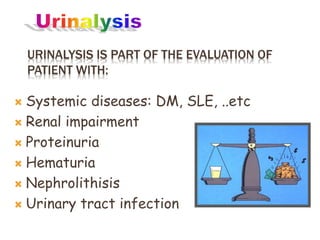
URINALYSIS IS PART OF THE EVALUATION OF
PATIENT WITH:
 Systemic diseases: DM, SLE, ..etc
 Renal impairment
 Proteinuria
 Hematuria
 Nephrolithisis
 Urinary tract infection
URINALYSIS
 Appearance
 Chemical tests (dipstick)
 Microscopic examination (formed
elements)
APPEARANCE
 Color
 Turbidity
 Odor
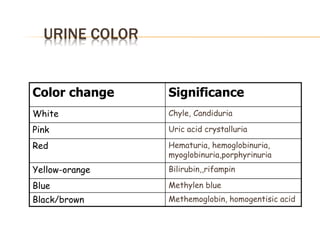
URINE COLOR
Color change Significance
White Chyle, Candiduria
Pink Uric acid crystalluria
Red Hematuria, hemoglobinuria,
myoglobinuria,porphyrinuria
Yellow-orange Bilirubin,,rifampin
Blue Methylen blue
Black/brown Methemoglobin, homogentisic acid
TURBIDITY
 Normal urine usually is transparent
 Urine can be turbid because of an
increased concentration of any urine
particle, but especially erythrocytes,
leukocytes, bacteria, squamous epithelial
cells or crystals
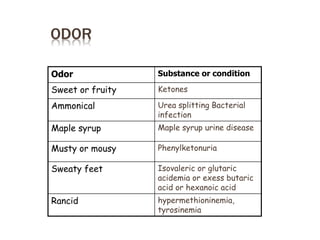
ODOR
Odor Substance or condition
Sweet or fruity Ketones
Ammonical Urea splitting Bacterial
infection
Maple syrup Maple syrup urine disease
Musty or mousy Phenylketonuria
Sweaty feet Isovaleric or glutaric
acidemia or exess butaric
acid or hexanoic acid
Rancid hypermethioninemia,
tyrosinemia
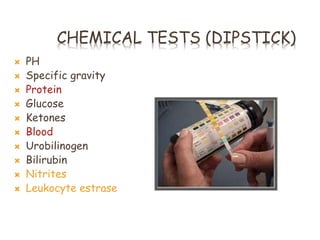
CHEMICAL TESTS (DIPSTICK)
 PH
 Specific gravity
 Protein
 Glucose
 Ketones
 Blood
 Urobilinogen
 Bilirubin
 Nitrites
 Leukocyte estrase
PROTEIN
 Under physiological conditions, urinary protein excretion does not
exceed 150 mg/day for adults.
The daily physiological proteinuria contains :
 mucoprotein (e.g. Tamm–Horsfall glycoprotein; 70 mg)
 blood group-related substances (35 mg)
 albumin (16 mg)
 immunoglobulins (6 mg)
 mucopolysaccharides (16 mg)
 very small amounts of other proteins such as hormones and enzymes
 Glomerular proteinuria usually associated
with presence of RBC in dipstick,
Dysmorhic RBC and RBC casts in
microscopic examination
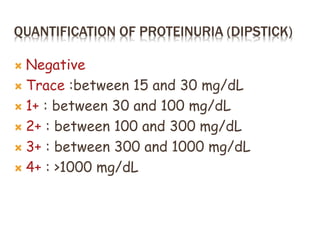
QUANTIFICATION OF PROTEINURIA (DIPSTICK)
 Negative
 Trace :between 15 and 30 mg/dL
 1+ : between 30 and 100 mg/dL
 2+ : between 100 and 300 mg/dL
 3+ : between 300 and 1000 mg/dL
 4+ : >1000 mg/dL
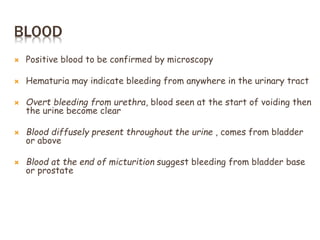
BLOOD
 Positive blood to be confirmed by microscopy
 Hematuria may indicate bleeding from anywhere in the urinary tract
 Overt bleeding from urethra, blood seen at the start of voiding then
the urine become clear
 Blood diffusely present throughout the urine , comes from bladder
or above
 Blood at the end of micturition suggest bleeding from bladder base
or prostate
REMEMBER
 Positive glucose in dipstick with normal
blood sugar suggestive of proximal tubule
dysfunction e.g Fanconi syndrome
 Positive RBC in dipstick and negative by
microscpic examination suggestive of
myoglbinuria e.g (Rhabdomyolysis)
MICROSCOPIC EXAMINATION
 Cells
 Casts
 Crystal
 Miscellaneous e.g bacteria, parasite,
spermatozoa etc..
CELLS
 RBC
 WBC
 Tubular epithelial cells
 Sequamous cells
 Fat droplet and oval fat body
ERYTHROCYTES (RBCS)
 RBCs are biconcave disc , 7μm in diameter
 More than 3 per HPF is pathological
 You have to differentiate between
isomorphic vs. dysmorphic RBC (RBC
morphology)
 Isomorphic RBC may result from bleeding
occurring at any point of the urinary tract
 Dysmorphic RBC is suggestive of
glomerular disease
LEUKOCYTES (WBC)
 WBC are 12μm in diameter
 Has cytoplasmic granules and lobulated nuclei
 More than 10 WBC in urine is abnormal
 Indicate : UTI
STERILE PYURIA
 WBC in urine with no bacteria (negative
culture)
 Seen in :Patient on ABX ,Stone,
Tubulointerstitial nephritis,Tumour and
TB.
EOSINOPHILS
 It has bilobar nucleus and well defined granules
which is purple in color
 Need special staining (Hansel stain)
 Can be seen in case of acute interstitial
nephritis and cholestrol embolism of the kidney
RENAL TUBULAR CELLS
 Larger than PMN
 Proximal tubular cells are oval or egg
shape while distal cells are cuboidal
 Small number can be seen in normal urine
but larger number may indicate ATN or
interstitial nephritis
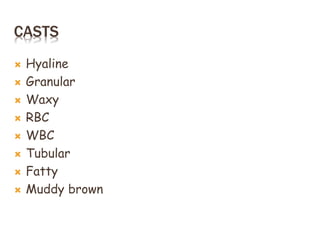
CASTS
 Hyaline
 Granular
 Waxy
 RBC
 WBC
 Tubular
 Fatty
 Muddy brown
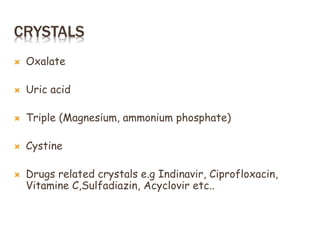
CRYSTALS
 Oxalate
 Uric acid
 Triple (Magnesium, ammonium phosphate)
 Cystine
 Drugs related crystals e.g Indinavir, Ciprofloxacin,
Vitamine C,Sulfadiazin, Acyclovir etc..
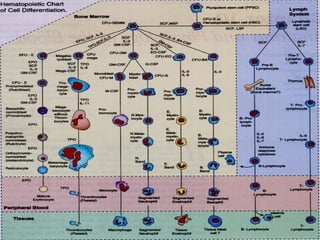
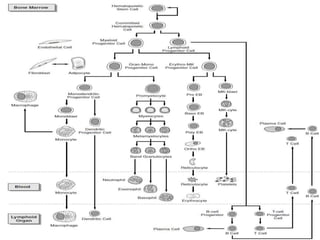
CELL MORPHOLOGY
109
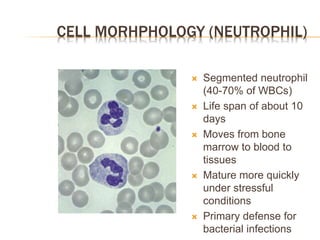
CELL MORHPHOLOGY (NEUTROPHIL)
 Segmented neutrophil
(40-70% of WBCs)
 Life span of about 10
days
 Moves from bone
marrow to blood to
tissues
 Mature more quickly
under stressful
conditions
 Primary defense for
bacterial infections
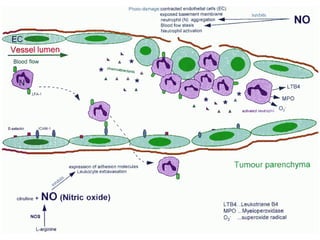
THE NEUTROPHIL
 Once in the peripheral blood, it can be in the
circulating pool (CP) or the marginated pool
(MP) (approx. 50%)
 cells in MP not counted in CBC
 Shift from the MP to the CP can occur with
stress, trauma, catecholamines, etc.
 This results in a transient leukocytosis
 Such leukocytosis can last 4 to 6 hours
THE NEUTROPHIL
 Present in band and segmented forms
 Bands make up < 5 % of circulating
neutrophils normally
 “Left shift” is seen as an increase in the
number of bands and is common with acute
infection
 Main function is to locate, ingest, and kill
bacteria and other foreign invaders
CAUSE OF NEUTROPHILIA
 Pathologic
 Bacterial infection
 Certain viruses and fungi
 Inflammatory responses to tissue death
 Burns
 Snake bites
 Drugs
 steroids
 lithium
CAUSES OF NEUTROPHILIA (CONT.)
 Physiologic
 Pseudoneutrophilia (shift of cells from the MP to
CP)
 Catecholamines
 Acute stress
 Other inflammatory responses
 Neoplastic growth
 Metabolic disorders
POOLS OF NEUTROPHILS
1. Bone marrow: many banded forms are
present; neutrophilia with lots of bands
suggest bone marrow was source
2. Circulating Pool: used to deal with day to
day invasion of the body by organisms
3. Marginated Pool: no bands; respond to
physiologic stimulation
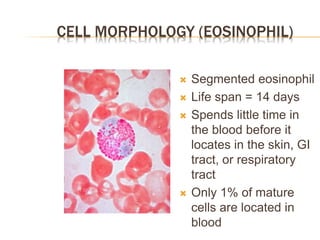
CELL MORPHOLOGY (EOSINOPHIL)
 Segmented eosinophil
 Life span = 14 days
 Spends little time in
the blood before it
locates in the skin, GI
tract, or respiratory
tract
 Only 1% of mature
cells are located in
blood
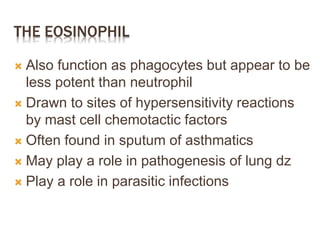
THE EOSINOPHIL
 Also function as phagocytes but appear to be
less potent than neutrophil
 Drawn to sites of hypersensitivity reactions
by mast cell chemotactic factors
 Often found in sputum of asthmatics
 May play a role in pathogenesis of lung dz
 Play a role in parasitic infections
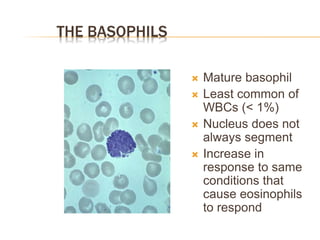
THE BASOPHILS
 Mature basophil
 Least common of
WBCs (< 1%)
 Nucleus does not
always segment
 Increase in
response to same
conditions that
cause eosinophils
to respond
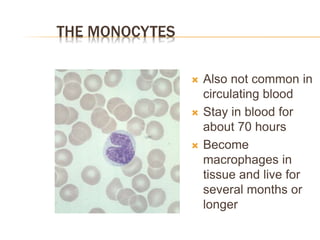
THE MONOCYTES
 Also not common in
circulating blood
 Stay in blood for
about 70 hours
 Become
macrophages in
tissue and live for
several months or
longer
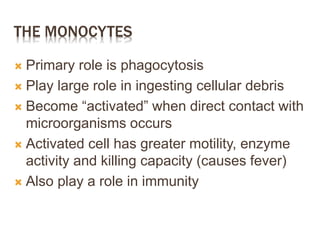
THE MONOCYTES
 Primary role is phagocytosis
 Play large role in ingesting cellular debris
 Become “activated” when direct contact with
microorganisms occurs
 Activated cell has greater motility, enzyme
activity and killing capacity (causes fever)
 Also play a role in immunity
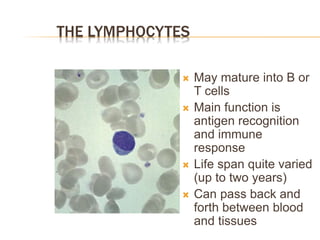
THE LYMPHOCYTES
 May mature into B or
T cells
 Main function is
antigen recognition
and immune
response
 Life span quite varied
(up to two years)
 Can pass back and
forth between blood
and tissues
LYMPHOCYTES: B & T TYPES
 B cells are not only produced in the bone
marrow but also mature there.
 However, the precursors of T cells leave the
bone marrow and mature in the thymus
(which accounts for their designation)
TYPES OF LYMPHOCYTES
 B lymphocytes (or B cells) are most effective
against bacteria & their toxins plus a few viruses
 T lymphocytes (or T cells) recognize & destroy
body cells gone awry, including virus-infected cells
& cancer cells.
 T cells come in two types: helper cells and
suppressor cells; normally the helper cells
predominate.
LYMPHOCYTE COUNT: DECREASED
Decreased
AIDS
Bone Marrow suppression
Aplastic Anemia
Steroids
Neurologic Disorders
Multiple Sclerosis
Myasthenia Gravis
LYMPHOCYTE COUNT: INCREASED
a. Influenza
b. Pertussis
c. Tuberculosis
d. Mumps
e. Cytomegalovirus Infection
f. Infectious Mononucleosis
g. Infectious Hepatitis
h. Viral pneumonia
INTERPRETING THE CBC
 What is total white cell count?
 If elevated (>11,000), what type of WBC is
the culprit?
 Is it the neutrophils, eosinophils,
lymphocytes, basophils, or monocytes?
 Marked leukocytosis is usually due to
neutrophils or lymphocytes.
INTERPRETING THE CBC
Normal Values % Absolute
Neutrophils 40 – 70 1800 – 7500
Eosinophils 0 – 5 0 – 600
Basophils 0 – 1 0 – 100
Lymphocytes 20 – 45 900 – 4500
Monocytes 3 – 7 90 - 1000
INTERPRETING THE CBC
 If the neutrophils are causing the
leukocytosis, compare the neutrophil % to
total WBC.
 The % neutrophils indicates the severity of
the infection; the total WBC reflects the
quality of the immune system
INTERPRETING THE CBC (CASE # 1)
85 yr old female with pneumonia:
Total WBC is: 11,500
Neutrophil % = 80% (9200) bands = 5%
This indicates that a severe infection is present
but the immune system is unable to respond
appropriately.
Prognosis poor.
INTERPRETING THE CBC (CASE # 2)
5 yr old male with pneumonia
WBC = 18,000
Neutrophils = 60% (10,800)
Marked leukocytosis and normal range for
neutrophils indicates moderate infection but
excellent immune system response
Excellent prognosis
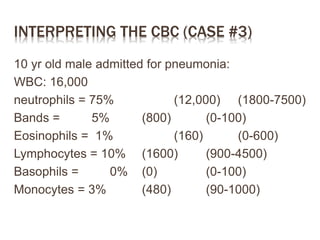
INTERPRETING THE CBC (CASE #3)
10 yr old male admitted for pneumonia:
WBC: 16,000
neutrophils = 75% (12,000) (1800-7500)
Bands = 5% (800) (0-100)
Eosinophils = 1% (160) (0-600)
Lymphocytes = 10% (1600) (900-4500)
Basophils = 0% (0) (0-100)
Monocytes = 3% (480) (90-1000)
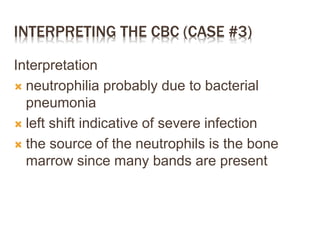
INTERPRETING THE CBC (CASE #3)
Interpretation
 neutrophilia probably due to bacterial
pneumonia
 left shift indicative of severe infection
 the source of the neutrophils is the bone
marrow since many bands are present
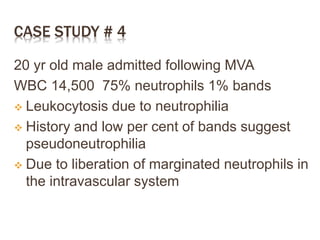
CASE STUDY # 4
20 yr old male admitted following MVA
WBC 14,500 75% neutrophils 1% bands
 Leukocytosis due to neutrophilia
 History and low per cent of bands suggest
pseudoneutrophilia
 Due to liberation of marginated neutrophils in
the intravascular system
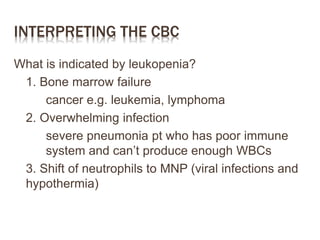
INTERPRETING THE CBC
What is indicated by leukopenia?
1. Bone marrow failure
cancer e.g. leukemia, lymphoma
2. Overwhelming infection
severe pneumonia pt who has poor immune
system and can’t produce enough WBCs
3. Shift of neutrophils to MNP (viral infections and
hypothermia)
PLATELET COUNT
 Normal count is 140,000 to 440,000/mm3
 Life span of about 10 days
 Low platelet counts (thrombocytopenia)
cause excessive bleeding
 Thrombycytopenia is common with the use of
heparin, DIC, bone marrow disease, liver
failure and sepsis
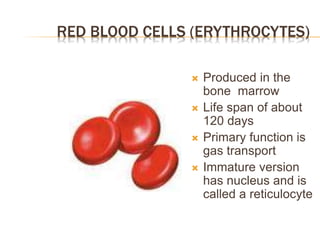
RED BLOOD CELLS (ERYTHROCYTES)
 Produced in the
bone marrow
 Life span of about
120 days
 Primary function is
gas transport
 Immature version
has nucleus and is
called a reticulocyte
INTERPRETING THE RBC COUNT
1. Normal values:
Men: 4.5 – 5.9 million/mm3
Women: 4.2 – 5.9 million/mm3
2. Anemia –
abnormal Decrease in RBC count
- decreased production
- increased destruction (hemolysis)
- blood loss
INTERPRETING THE RBC COUNT
3. Increased RBC count = Polycythemia
A. Primary
B. Secondary
living at altitude
chronic lung/heart disease
tobacco use/carbon monoxide
C. Relative Polycythemia
dehydration
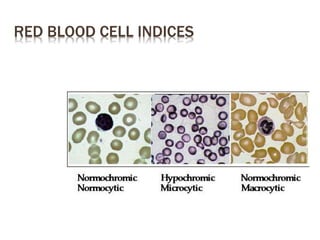
RED BLOOD CELL INDICES
 Mean Corpuscular Volume (MCV)
 Volume occupied by a single RBC
 Increase in MCV is known as Macrocytic anemia.
 Decrease in MCV is known as Microcytic anemia.
 Mean Corpuscular Hemoglobin Concentration
 (MCHC)
 Measure of the concentration of hemoglobin in an
average RBC
 Decrease in MCHC is known as Hypochromic anemia
 Normal is known as Normochromic anemia.
RED BLOOD CELL INDICES
 Normocytic anemias
 Blood loss
 Hemolytic anemia
 Microcytic anemias (<80 fL*)
 Iron deficiency
 Macrocytic anemias (>100 fL)
 Folic acid deficiency
 Vitamin B12 deficiency
 Some COPD patients
*femtoliters
RED BLOOD CELL INDICES
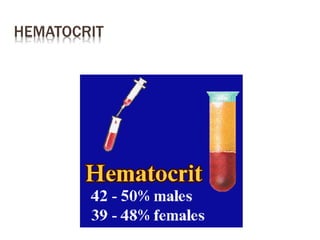
HEMATOCRIT
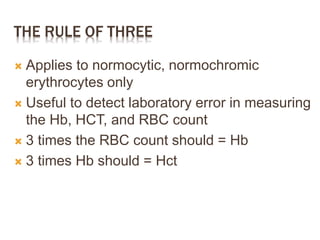
THE RULE OF THREE
 Applies to normocytic, normochromic
erythrocytes only
 Useful to detect laboratory error in measuring
the Hb, HCT, and RBC count
 3 times the RBC count should = Hb
 3 times Hb should = Hct
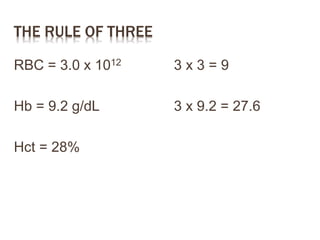
RBC = 3.0 x 10¹² 3 x 3 = 9
Hb = 9.2 g/dL 3 x 9.2 = 27.6
Hct = 28%
THE RULE OF THREE
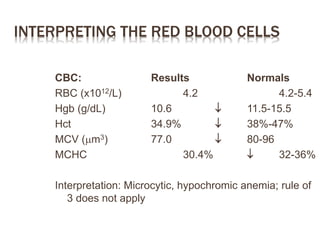
INTERPRETING THE RED BLOOD CELLS
CBC: Results Normals
RBC (x1012/L) 4.2 4.2-5.4
Hgb (g/dL) 10.6  11.5-15.5
Hct 34.9%  38%-47%
MCV (m3) 77.0  80-96
MCHC 30.4%  32-36%
Interpretation: Microcytic, hypochromic anemia; rule of
3 does not apply
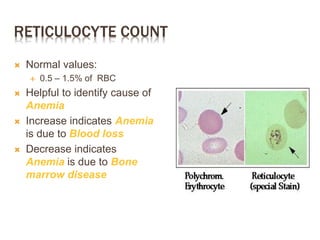
RETICULOCYTE COUNT
 Normal values:
 0.5 – 1.5% of RBC
 Helpful to identify cause of
Anemia
 Increase indicates Anemia
is due to Blood loss
 Decrease indicates
Anemia is due to Bone
marrow disease
COAGULATION TESTS: PROTHROMBIN TIME
 Normal Range
- 10-13 seconds (varies with thromboplastin and
test method used).
 he prothrombin test is sensitive to changes in
the levels of clotting factors prothrombin (factor
II), factor VII, and factor X.
 It is performed by adding thromboplastin and
calcium to a plasma sample. After addition of
these reagents, the time it takes for the blood to
clot is measured.
148
CON’D…
 Because the PT may vary according to the
thromboplastin used to test the sample, the
international normalized ratio (INR) is a
better monitoring tool
 An increased PT may be seen with
anticoagulation therapy, liver disease, vitamin
K deficiency, and clotting factor deficiencies
149
CONT’D…
 INR = [(Patient PT)/(Mean Normal PT)]ISI
INR 2.0-3.0
 Atrial fibrillation
 DVT treatment
 PE treatment
 Prophylaxis of venous thrombosis
 Tissue heart valves
 Valvular heart disease
 Mechanical heart valves (certain types only) 150
CONT’D…
INR 2.5-3.5
 Mechanical heart valves (valves not meeting
criteria for INR 2-3)
151
ACTIVATED PARTIAL THROMBOPLASTIN TIME
Normal Range
 The time varies between 20 and 35 seconds
 The activated partial thromboplastin time
(aPTT) is sensitive to changes in the intrinsic
and common coagulation pathways
 It is used to monitor heparin therapy.
Monitoring of the aPTT is usually not
required for patients receiving low molecular
weight heparin (LMWH).
152
Cardiac Function Tests
153
Cardiac Function Tests
 Creatine Kinase (CK) - Widely used to
diagnosis and monitor heart attacks
 Troponins
 Only present in heart muscle, making it a more
accurate indicator of heart attack than CK
 Cardiac Troponin I (cTnI)
154
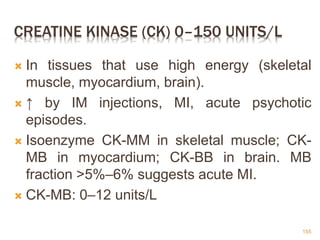
CREATINE KINASE (CK) 0–150 UNITS/L
 In tissues that use high energy (skeletal
muscle, myocardium, brain).
 ↑ by IM injections, MI, acute psychotic
episodes.
 Isoenzyme CK-MM in skeletal muscle; CK-
MB in myocardium; CK-BB in brain. MB
fraction >5%–6% suggests acute MI.
 CK-MB: 0–12 units/L
155
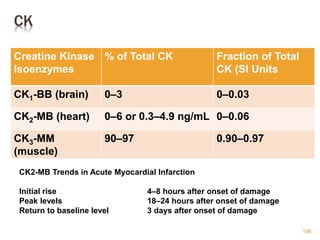
CK
Creatine Kinase
Isoenzymes
% of Total CK Fraction of Total
CK (SI Units
CK1-BB (brain) 0–3 0–0.03
CK2-MB (heart) 0–6 or 0.3–4.9 ng/mL 0–0.06
CK3-MM
(muscle)
90–97 0.90–0.97
156
CK2-MB Trends in Acute Myocardial Infarction
Initial rise 4–8 hours after onset of damage
Peak levels 18–24 hours after onset of damage
Return to baseline level 3 days after onset of damage
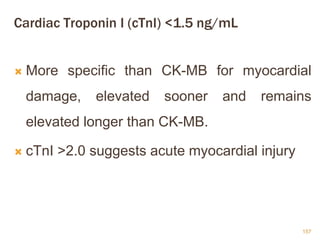
Cardiac Troponin I (cTnI) <1.5 ng/mL
 More specific than CK-MB for myocardial
damage, elevated sooner and remains
elevated longer than CK-MB.
 cTnI >2.0 suggests acute myocardial injury
157
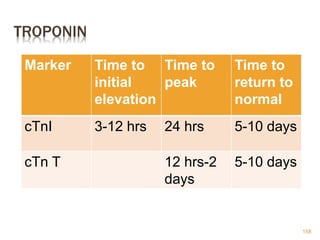
TROPONIN
Marker Time to
initial
elevation
Time to
peak
Time to
return to
normal
cTnI 3-12 hrs 24 hrs 5-10 days
cTn T 12 hrs-2
days
5-10 days
158
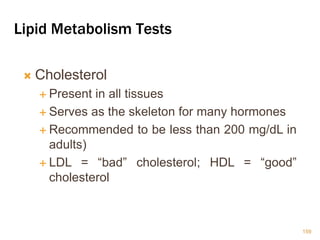
Lipid Metabolism Tests
 Cholesterol
 Present in all tissues
 Serves as the skeleton for many hormones
 Recommended to be less than 200 mg/dL in
adults)
 LDL = “bad” cholesterol; HDL = “good”
cholesterol
159
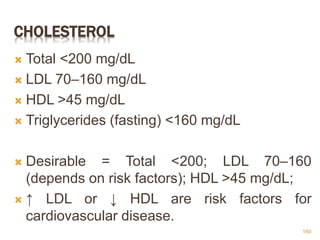
CHOLESTEROL
 Total <200 mg/dL
 LDL 70–160 mg/dL
 HDL >45 mg/dL
 Triglycerides (fasting) <160 mg/dL
 Desirable = Total <200; LDL 70–160
(depends on risk factors); HDL >45 mg/dL;
 ↑ LDL or ↓ HDL are risk factors for
cardiovascular disease.
160
REFRENCES
 Pharacotherapy principles and practice
 Pharmaceutical care practice. The clinician’s
guide, 2nd ed.
 Applied Therapeutics: The Clinical Use of
Drugs,9th ed.
161

Integrated Therapeutics I.pptx

  • 1.
    INTERPRETATION OF COMMONLABORATORY TESTS FOR PHARMACISTS By: Salahadin M.Ali, B.Pharm Haramaya University School of Pharmacy 1
  • 2.
    WHY LAB TESTING? 1.To detect diseases 2. Guide treatment 3. Monitor response to treatment 4. Monitor disease progression
  • 3.
    DIAGNOSTIC METHODS CLASSIFICATION A. BiochemicalMethods Blood tests, Enzyme tests, Mineral content tests, Test for evaluation of concentration - Na, K, Ca..., Glucose, Urea, in blood plasma B. Physical Methods 1. Mechanical : e.g. Auscultation, Percussion, Palpation, Blood pressure (non-direct) method, Body temperature measurement.. 2. Electrical: ECG, EEG, Audiometry ... 3. Electromechanical: Spirometry 3
  • 4.
    DIAGNOSTIC METHODS 4. Opticand Optoelectric methods: Light microscopy, Electron microscopy,Ophtalmoscopy, Otoscopy, Bronchoscopy, Fiber optics... 5. Ultrasound (Dopplers) methods: Blood flow test, Echocardiography... 6. X- ray Imaging methods: Classic Tomography, Computer tomo-graphy (CT)... 7. Methods of Nuclear Medicine: Radioi-sotopes , Gammagraphy, Positron Emmision Tomography (PET).... 8. Magnetic scanning methods- 4
  • 5.
    MECHANICAL METHODS -PHYSICAL EXAMINATION a. Palpation b. Percussion c. Auscultation 5
  • 6.
    ELECTRICAL METHODS • Electrocardiography(ECG)-method for recording of heart electric signal from the surface of the skin. • Electroencphalography (EEG)- a method for recording of brain electric signal from the scalp. • The point is evaluation of frequency (f) and amplitude(A) of waves e.g. in Epilepsy. Waves or Rhythms: 6
  • 7.
    BASIC CLINICAL CHEMISTRY- PURPOSE 1. Detect or measure substances that indicate cell damage or disease. 2. Measure levels of substances found normally in human blood that have biological functions. 3. Detect or measure non- functional metabolites or waste products. 4. Detect or measure drugs or toxic substances. Examples: a. Creatinine, Blood Urea Nitrogen (BUN) b. Glucose, Calcium c. Liver enzymes, such as ALT, Cardiac enzymes, such as CK-MB d. Dilantin, Drugs of abuse screen 7
  • 8.
    BASIC CLINICAL CHEMISTRY COMMONTERMS  Normal or Reference Values – range of values for a particular chemistry test from healthy individuals  Chemistry Panel grouping – some tests are “bundled” according to the system or organ targeted.  Examples: thyroid panel, liver panel, cardiac panel, kidney panel, basic metabolic panel, etc. 8
  • 9.
    NORMAL VALUES  Variousupon many factors  Age, gender, weight, height, race, comorbidity  Each lab adapts its own methods and publishes its own normal value ranges  Change in equipment or reagent 9
  • 10.
    LABORATORY ERROR  Specimen Wrong handling, Wrong timing  Reagents  Technical Error  Procedural error, Sample mix up  Diet – protein rich food  Medications  Spironolactone in digoxin assay  Thiazide in uric acid 10
  • 11.
    DRUGS LAB INTERACTION In Vivo (Biological)  Pharmacological  Toxicological  In Vitro (Analytical or methodological)  Diuretics  Corticosteroids  INH/Rifampin  Aminoglycosides  Quinidine 11
  • 12.
    IN-VIVO LAB INTERFERENCE- EXAMPLES  Cephalosporins and aminoglycosides  Carbenecillin (the most potent activator)  Tobramycin (the most susceptible agent)  Heparin - Aminoglycosides Assay  Fluoride - BUN  Phenazopyridine – urine  Caffeine - Theophylline & Digoxin assay  Radiographic contrast media – with thyroid tests 12
  • 13.
  • 17.
    SODIUM (NA) (135 -145 MEQ/L)  The principle role: Maintain  (1) serum osmolality and (2) fluid balance  Between 60-70% of the filtered load is reabsorbed in the proximal tubules together with bicarbonate and water.  A further 25-30% is reabsorbed in the ascending loop of Henle.  In distal tubules, sodium is coupled to the exchange of potassium and/or hydrogen ions that ultimately determines the amount of sodium excreted in the urine. 17
  • 18.
    HYPONATREMIA Does a lowserum sodium concentration mean a low total serum sodium ??  Two causes:  (1) Na Depletion and (2) Dilutional  Most cases of hyponatremia are caused by impaired water excretion in the presence of continued water intake.  Most remain asymptomatic until serum Na < 120 mEq/L 18
  • 19.
    ANTIDIURETIC HORMONE (ADH) Factorssuch as hypovolumeia, thirst, and high serum osmolality (a) increase (b) decrease ADH production.  Produced by hypothalamus (CNS)  Also called vasopression  Leads to concentrated urine by increasing permeablity of colleting tubules for reabsorption of water 19
  • 20.
    DISORDER OF ADHPRODUCTION  Syndrome of Inappropriate ADH secretion (SIADH)  Inappropriately high quantity of ADH  Excessive reabsorption of water – hyponatremia Treatment: (1) water restriction  Demeclocycline 600-1200 mg qd  Diabetes Insipidius (DI)  DI (Center) vs. DI (Nephrogenic) - The difference ???  Drugs known to cause SIADH: 20
  • 21.
    ALDOSTERONE  Is amineralocorticosteroid  Retains Na and water – more Na than water  Increase excretion of potassium  More effect on K+ than Na Spironolactone – mechanism?? 21
  • 22.
    HYPONATREMIA - CAUSES Impaired water excretion  impaired GFR (renal failure)  edematous states  thiazide diuretics  syndrome of inappropriate ADH (SIADH)  endocrine (hypothyroid/adrenal insufficiency)  markedly decreased solute intake combined with high water intake 22
  • 23.
    FRACTIONAL EXCRETION OFSODIUM (1-2%) A 24 hour urine sample should be used for estimation FENA. FENa (%) = Urine Na/Serum Na x 100 UrineCr/Serum Cr FENa > 2% refers to ??? FENa < 1% refers to ??? 23
  • 24.
    HYPONATREMIA  Physical exam Signs of ECF Volume depletion (skin turgor, mucus membranes, orthostatic vitals)  Signs of ECF Volume overload (JVD, rales, pleural effusion, ascites, edema)  Physical signs of adrenal insufficiency or hypothyroidism  Laboratory studies  Serum osmolality and urine Na 24
  • 25.
    SIGNS AND SYMPTOMS Anorexia  Nausea and vomiting  Difficulty concentrating  Confusion  Lethargy  Agitation  Headache  Seizures
  • 26.
    HYPONATREMIA - TYPES 1.Increased Osm (>300 mOsm/Kg) 2. Normal Osm (280 – 300 mOsm/kg) 3. Decreased Osm (< 280 mOm/kg) a. Ketoacidosis, hyperglycemia b. hypertriglyceridemia, hyperproteinemia c. SIDH, Renal Impairment Which type is the most common one? 26
  • 27.
    HYPONATREMIA Decreased Plasma Osmolality Themost common type Further divided into two: (1) Renal (2) Non-renal (vomiting, diarrhea, severe burns) (a) High Urine Na (b) Low Urine Na What is Pseudohyponatremia? 27
  • 28.
    HYPONATREMIA ACUTE, SYMPTOMATIC HYPONATREMIA Calculate the Na deficit Na mEq = ([Na desired] - [Na measured]) X TBW TBW = 0.5 or 0.6 X weight in KG  Correct no faster than 1 mEq/L per hour for the first 6-8 mEq/L – No more than 10-12 mEq/L in first 24 hours  5% saline is almost never needed How about in patients with hypervolemic hyponatremia ??? 28
  • 30.
    EDEMA SCALE. SEVERITYOF EDEMA IS RANKED ON A SCALE OF +1 TO +4, WITH +1 BEING BARELY PERCEPTIBLE AND +4 BEING VISIBLE AND REMARKABLE. 30
  • 31.
    HYPERNATREMIA NA > 145MEQ/L  Less common – occurs in patients with impaired thirst mechanism (stroke patients)  Serum Na > 160 mEq/L – 75% mortality  Results from a deficit of water (usually not due to excess Na intake)  Loss of water (diarrhea, vomiting)  Failure to adequately replace the water loss  Look thoroughly for alterations in neurological status that are causing inadequate water intake  Water loss is extra-renal or renal  Rarely iatrogenic 31
  • 32.
    HYPERNATREMIA  Extra-renal waterloss  fever, profuse sweating, hyperventilation, diarrhea  Renal water loss (key is to look for polyuria)  Key to evaluating renal water loss is to measure urine osmolality  Increase urine specific gravity  Concentrated urine 32
  • 33.
    HYPERNATREMIA  Osmotic diuresis(urine Osm > 300)  the excretion of the osmotic load obligates a certain water loss  poorly controlled diabetes, mannitol administration, protein catabolism with urea  Diabetes Insipidus (urine Osm < 150)  inability of the kidney to concentrate urine due to absence of ADH (central) or unresponsiveness to ADH (nephrogenic) 33
  • 34.
    HYPERNATREMIA  Diagnosis  Reasonfor water loss or sodium gain?  Reason for inadequate water intake?  Is polyuria present? (urine volume > 3L/24hrs)  What is the spot urine Osm?  Response to vasopressin? 34
  • 35.
    Signs and symptomsof hypernatremia • Irritability • Thirst • Altered sensorium • Seizures • hyperreflexia • Increased muscle tone • Fever • Oligoanuria • Excessive diuresis
  • 36.
    HYPERNATREMIA  Treatment  Calculatewater deficit  Severe ECFV depletion is the priority and should be corrected with NS first. Subsequent fluid replacement can be hypotonic  Major complication of overly rapid correction is cerebral edema  Safe rate is no more than 0.5- 1 mEq/L per hour  Should take 36-72 hours to completely correct 36
  • 37.
    HYPERNATREMIA  Treatment  Calculatethe water deficit H2O deficit = TBW X ([Na measured]- [Na desired]) [Na desired]  Important to take into account ongoing losses  insensible losses 0.5 - 1 liter/24 hours  with fever, these losses increase by 60-80ml/24 hrs for each degree Fahrenheit 37
  • 38.
    POTASSIUM (K) (3.5 –5.0 MEQ/L) • Potassium is filtered at the glomerulus; • Approximately 90% is reabsorbed in the proximal tubule & the ascending loop of Henle • 10% reaches the distal tubule where the regulation of body potassium occurs through secretion in exchange for sodium under the influence of aldosterone. • K is excreted into urine in exchange to Na reabsorption at distal tubules 38
  • 39.
    POTASSIUM (K+)  Majorrole:  regulate muscle and nerve excitability  Cardiac muscle depends on K for normal contraction  Total body K – 4000 mEq . Is there a relationship between insulin and serum potassium? 39
  • 40.
    HYPOKALEMIA In what waythe following substances or conditions influence serum potassium?? a. Acid-base balance b. Amphotericin B c. Diuretics d. DKA e. Magnesium Insulin, beta agonists, and glucose cause shifting to Intracellular space. 40
  • 41.
    HYPOKALEMIA - COMPLICATIONS Neuromuscular manifestations  weakness, fatigue, paralysis, respiratory dysfunction  Gastrointestinal  constipation, ileus  Nephrogenic DI  ECG changes  U waves, flattened T waves, arrhythmias 41
  • 42.
    HYPOKALEMIA  Spurious hypokalemia Marked leukocytosis  A dose of insulin right before the blood draw  Redistribution hypokalemia  Alkalosis  (K decreases 0.3 mEq/L for every 0.1 increase in pH)  Increased Beta2 adrenergic activity  Theophylline toxicity 42
  • 43.
    HYPOKALEMIA  Treatment  Mild:KCl supplementation (KCl), food (bannana, orange, etc.)  Severe: 0.9% NaCl with 20-40 mEq/L over 3-4 hrs 43
  • 44.
    HYPERKALEMIA  Incidence: 8%of hospitalized patients  Severe hyperkalemia is a medical emergency  Neuromuscular signs  weakness, ascending paralysis, respiratory failure  Progressive ECG changes  PRIMARY CAUSE OF DEATH  Peaked T waves, flattened P waves, prolonged PR interval, idioventricular rhythm and widened QRS complex, “sine wave” pattern, V fib  MORTALITY COULD BE AS AS HIGH 67% 44
  • 45.
    HYPERKALEMIA • Etiology –renal failure, transcellular shifts, cell death, drugs, pseudohyperkalemia • Manifestations – cardiac, neuromuscular 45
  • 46.
    HYPERKALEMIA  Impaired potassiumsecretion  Aldosterone deficiency  adrenal failure  Syndrome of hyporeninemic hypoaldosteronism (SHH)  tubular unresponsiveness  Renal failure  GFR < 10 -20% of normal  Metabolic Acidosis  Decrease in pH by 0.1 from 7.4, it falsely elevate K+ concentration by 0.6 mEq/L. 46
  • 47.
    DRUGS CAUSING HYPERKALEMIA ACE Inhibitors  Angiotensin Receptor Blockers  Spirinolactone  Trimethoprim  Beta Blockers  NSAIDs 47
  • 48.
    HYPERKALEMIA  Treatment  Stoppotassium!  Get ECG  Hyperkalemia with ECG changes is a medical emergency 48
  • 49.
    HYPERKALEMIA  Treatment (hyperkalemiawith ECG changes)  First phase is emergency treatment to counteract the effects of hyperkalemia  IV Calcium (10 mL of 10% Ca Gluconate IV q10 min PRN How does Ca counteract elevated K effect???  Temporizing treatment to drive the K into the cells  glucose plus insulin  (5-10 units IV insulin + 50 mL D50W; followed by D10W)  Beta2 agonist  NaHCO3 (45 mEq/L over 5 min if needed) 49
  • 50.
    HYPERKALEMIA - TREATMENT Kyperkalemia without ECG changes  Sodium polystyrene sulfonate in 50% sorbitol solution 15-30 gm qid prn.  ADR: Potential sodium overload  Also consider furosemide  Determine and correct the underlying cause  In Severe Cases: Dialysis 50
  • 51.
    CALCIUM (8.5 – 10.8MG/DL)  99% present in skeleton (reservoir)  Functions of calcium  Intracellular signalling  Plasma membrane potential (including cardiac cells)  Coagulation  Bone mineralization 51
  • 52.
    CALCIUM What is therole of the following mediators on Ca and PO4 Balance? a. Parathyroid Hormone (PTH) b. Calcitriol (Active form of vitamin D3) 52
  • 53.
    ROLE OF PTH Stimulates renal reabsorption of calcium  Inhibits renal reabsorption of phosphate  Stimulates bone resorption  Inhibits bone formation and mineralization  Stimulates synthesis of calcitriol Net effect of PTH  a. Increase b. Decrease c. No Effect 1. serum calcium 2. serum phosphate 53
  • 54.
    REGULATION OF PTH Whichone stimulates PTH secretion? a. Low serum [Ca+2] b. High serum [Ca+2] 54
  • 55.
    ROLE OF CALCITRIOL Stimulates GI absorption of both calcium and phosphate  Stimulates renal reabsorption of both calcium and phosphate  Stimulates bone resorption Net effect of calcitriol  a. Increase b. Decrease c. No Effect 1. serum calcium 2. serum phosphate 55
  • 56.
  • 57.
    HYPOALBUMINEMIA To estimate thephysiologic levels of ionized calcium in states of hypoalbuminemia: [Ca+2]Corrected = [Ca+2]Measured + [ 0.8 (4 – Albumin) ] Serum Ca (8 mEq/L) and Albumin is 2.5 g/dL. What is the corrected Ca concentration? 57
  • 58.
    CAUSES OF HYPERCALCAEMIA Contamination  Primary hyperparathyroidism  Malignancy (skeletal involvement/PTHRP)  Endocrine disorders – hyper- /hypothyroidism/acute adrenal insufficiency • Renal failure • Idiopathic hyperCa of infancy • Granulomatous disorders (eg sarcoidosis and TB) • Chlorthiazide diuretics • Lithium • Milk alkali syndrome • etc 95% 58
  • 59.
    HYPERCALCAEMIA  Increased fluxof Ca2+ into the ECF from skeleton, kidney or intestine  Symptoms: dependent on rate of increase  Lethargy  Nausea  Vomiting  Bones, moans, groans and stones  Polyuria  Main treatment: bisphosphonates  (pamidronate, zoledronic acid, loop diurectics, etc.) 59
  • 60.
    CALCITONIN Is a hormonesecreted by ________ gland ??  In respons to increase in Ca (ionized)  Inhibits osteoclastic activity thus decrease bone resorption  Increase in renal calcium clearance  Phosphate binds Ca leads to decrease Ca (by forming insoluble product)  TPN: Ca x PO4 > 70 = calcification may occur 60
  • 61.
    DRUGS THAT INTERFEREWITH SERUM CA  Loop Diuretics  Thiazides  Calcitonin  Etidronate/Aledronate  Glococorticosteroids  Aluminum containing antacids  Phenytoin  Theophylline  Cisplatin 61
  • 62.
    HYPOCALCAEMIA  Symptoms  Neuromuscularexcitability  Tetany  Paresthesia  Seizures 62
  • 63.
    CAUSES OF HYPOCALCAEMIA Hypoalbuminaemia  Chronic renal failure  Magnesium deficiency  Hypoparathyroidism (/pseudo)  Vitamin D deficiency (or resistance)  Drugs: Phenytoin, Phenobarbital, and Rifampin 63
  • 64.
    PHOSPHATE METABOLISM (2.6 –4.5 MG/DL)  85% present in skeleton  10% protein bound, 35% complexed, rest free  Integrity of bone  Muscle contraction - Role in ATP (energy), nucleotides, NADP, cell membranes, gene transcription, cell growth  Balance maintained primarily by kidneys  All factors that affect Ca also affect PO4 What effect does increase in Ca or Aluminium have on serum PO4? 64
  • 65.
    ETIOLOGIES OF HYPERPHOSPHATEMIA Increased GI Intake  Soda  Decreased Urinary Excretion  Renal Failure  Low PTH (hypoparathyroidism)  s/p thyroidectomy  s/p I131 treatment for Graves disease of thyroid cancer  Autoimmune hypoparathyroidism  Cell Lysis  Rhabdomyolysis  Tumor lysis syndrome 65
  • 66.
    EFFECT OF CHRONICRENAL FAILURE  Phosphate  Protein  1, 25 Vit D  Skeletal resistance to Vitamin D 66
  • 67.
    HYPOPHOSPHATAEMIA  Common thanhypophosphataemia  Muscle weakness  Respiratory failure  Decreased myocardial output  Rhabdomyolysis < 0.15mmol/L  Severe hypophosphatemia  haemolysis  Rickets/osteomalacia (chronic defy)  Wernicke’s encephalopathy 67
  • 68.
    MAGNESIUM METABOLISM  55%present in skeleton  1% of total body Mg extracellular  Serum Mg 0.7-1.0 mmol/L  Cofactor enzymes  Required for ATP (MgATP)  Glycolysis  Cell replication  Protein biosynthesis  PTH increases renal tubular reabsorption of Mg  Homeostasis maintained - control of excretion 68
  • 69.
    HYPERMAGNESAEMIA Symptoms  Depressed neuromuscularsystem  Depressed respiration  Cardiac arrest Causes  Excessive intake  Antacids -Moxal  Enemas  Mg administration (in patients with RF) 69
  • 70.
    HYPOMAGNESAEMIA  Usually associatedwith hypokalemia and hypophosphatemia  Increased neuromuscular excitability  Causes impaired PTH secretion  Oral potassium not retained if patient also magnesium deficiency is not corrected  Associated with calcium deficiency with overlapping symptoms 70
  • 71.
    HYPOMAGENESAEMIA  The threemost common causes:  Diabetes  Alcoholism  Use of diuretics  Other Drugs  aminoglycosides, ampotericin B, Cyclosporine, Osmotic diuresis (DM/mannitol) and pentamidine  Renal loss • Chronic TPN, Hypercalcaemia, Renal disease  Gastrointestinal • Prolonged nasogastric suction, malabsorption, Bowel resection, Diarrhea, Acute pancreatitis, Chronic vomiting 71
  • 72.
    MANAGMENT • Hypomagnesemia – Replacementiv for level < 1 mg/dL (0.32 mmol/L) – Emergent administration over 5–10 mins – Less urgent administration over 10–60 mins 72
  • 73.
    CARBON DIXOIDE (CO2) Normally 23-29 mEq/L Serum CO2 is measured as __________ ??  Increased:  COPD, severe vomiting  Decreased:  Starvation, diabetic ketoacidosis, diarrhea, dehydration 73
  • 74.
    BICARBONATE  Bicarbonate concentrationof the serum increases in metabolic alkalosis and in compensated respiratory acidosis.  Serum bicarbonate decreases in metabolic acidosis, compensated respiratory alkalosis. 74
  • 75.
    ANION GAP (3-11 MEQ/L) AnionGap = Na – (Cl + HCO3) Which one represents Anion Gap > 20? a. Diabetes Ketoacidosis b. Methanol intoxication 75
  • 76.
  • 77.
    BLOOD UREA NITROGEN(BUN)  Urea is the major end product of protein and amino acid catabolism and generated in the liver through the urea cycle. Most of the urea is ultimately excreted by the kidneys.  Urea is freely filtered by the glomeruli. Depending on the state of hydration and therefore the rate of urine flow, 40% to 80% of the filtered urea is passively reabsorbed with water, mostly in the proximal tubules. 77
  • 78.
    BLOOD UREA NITROGEN Normally 5-20 mg/dl  Increased:  Renal failure, CHF, aminoglycosides  Decreased:  Starvation, liver failure Match: 1. BUN:Creatinine >20 a. Dehydration 2. BUN:Creatinine >30 b. GI bleed 78
  • 79.
    BUN (BLOOD UREANITROGEN)  BUN comes from surplus amino acids that are converted to urea and excreted by kidneys as a waste product  BUN influenced by diet and hormones, so it is NOT as good an indicator of renal function as serum creatinine levels  BUN increased in kidney disease, high protein diet, and after administration of steroids  BUN decreased in starvation, pregnancy and in persons on a low protein diet 79
  • 80.
    BUN/CREATININE (B/C) RATIO •Ordinary the B/C ratio is about 10 to 20. • A high B/C ratio is typically associated with prerenal azotemia because of augmented tubular reabsorption of urea in the presence of diminished glomerular filtration. • Postrenal azotemia also results in a high B/C ratio because urea is reabsorbed to a much greater extent than creatinine. • Decreased B/C: low protein diet, muscular individuals, renal dialysis causes a decreased ratio because urea is more readily dialyzed than creatinine. 80
  • 81.
    BUN  The serumconcentration of urea varies rather widely in health and is influenced by such diverse factors as dietary intake of protein and the state of hydration.  BUN will ordinarily not be significantly increased until the glomerular filtration is decreased by at least 50%. 81
  • 82.
    CREATININE (CR)  Wasteproduct of muscle metablism  Creatinine is formed as a result of nonenzymatic dehydration of muscle creatine. Creatinine formation has a direct relationship to muscle mass.  Creatinine is also freely filtered by the glomeruli but is not reabsorbed to any appreciable extent under normal circumstances. A substantial fraction of creatinine excretion by the kidney is the result of proximal tubular secretion.  Serum creatinine concentration is often interpreted as a measure of glomeurlar filtration rate and is used as an index of renal function in clinical practice. 82
  • 83.
    CREATININE  Normally <1.1mg/dl  Measures blood flow through kidneys  Increased:  Renal failure, false positive seen in diabetic ketoacidosis  Decreased:  Muscle wasting, liver disease 83
  • 84.
    CREATININE CLEARANCE Creatine Clearance(CrCl) [140 – age (yr)] x Wt (kg) x 0.85 (for women) 72 x SCr (mg/dl) 84
  • 85.
    CR  By virtueof its relative independence from such factors as diet (protein intake), degree of hydration, and protein metabolism, the plasma creatinine is a significantly more reliable screening test or index of renal function than is the BUN.  The plasma creatinine tends to increase somewhat more slowly than the BUN in renal disease but also decreases more slowly with hemodialysis. 85
  • 86.
    URINALYSIS IS PARTOF THE EVALUATION OF PATIENT WITH:  Systemic diseases: DM, SLE, ..etc  Renal impairment  Proteinuria  Hematuria  Nephrolithisis  Urinary tract infection
  • 87.
    URINALYSIS  Appearance  Chemicaltests (dipstick)  Microscopic examination (formed elements)
  • 88.
  • 89.
    URINE COLOR Color changeSignificance White Chyle, Candiduria Pink Uric acid crystalluria Red Hematuria, hemoglobinuria, myoglobinuria,porphyrinuria Yellow-orange Bilirubin,,rifampin Blue Methylen blue Black/brown Methemoglobin, homogentisic acid
  • 90.
    TURBIDITY  Normal urineusually is transparent  Urine can be turbid because of an increased concentration of any urine particle, but especially erythrocytes, leukocytes, bacteria, squamous epithelial cells or crystals
  • 91.
    ODOR Odor Substance orcondition Sweet or fruity Ketones Ammonical Urea splitting Bacterial infection Maple syrup Maple syrup urine disease Musty or mousy Phenylketonuria Sweaty feet Isovaleric or glutaric acidemia or exess butaric acid or hexanoic acid Rancid hypermethioninemia, tyrosinemia
  • 92.
    CHEMICAL TESTS (DIPSTICK) PH  Specific gravity  Protein  Glucose  Ketones  Blood  Urobilinogen  Bilirubin  Nitrites  Leukocyte estrase
  • 93.
    PROTEIN  Under physiologicalconditions, urinary protein excretion does not exceed 150 mg/day for adults. The daily physiological proteinuria contains :  mucoprotein (e.g. Tamm–Horsfall glycoprotein; 70 mg)  blood group-related substances (35 mg)  albumin (16 mg)  immunoglobulins (6 mg)  mucopolysaccharides (16 mg)  very small amounts of other proteins such as hormones and enzymes
  • 94.
     Glomerular proteinuriausually associated with presence of RBC in dipstick, Dysmorhic RBC and RBC casts in microscopic examination
  • 95.
    QUANTIFICATION OF PROTEINURIA(DIPSTICK)  Negative  Trace :between 15 and 30 mg/dL  1+ : between 30 and 100 mg/dL  2+ : between 100 and 300 mg/dL  3+ : between 300 and 1000 mg/dL  4+ : >1000 mg/dL
  • 96.
    BLOOD  Positive bloodto be confirmed by microscopy  Hematuria may indicate bleeding from anywhere in the urinary tract  Overt bleeding from urethra, blood seen at the start of voiding then the urine become clear  Blood diffusely present throughout the urine , comes from bladder or above  Blood at the end of micturition suggest bleeding from bladder base or prostate
  • 97.
    REMEMBER  Positive glucosein dipstick with normal blood sugar suggestive of proximal tubule dysfunction e.g Fanconi syndrome  Positive RBC in dipstick and negative by microscpic examination suggestive of myoglbinuria e.g (Rhabdomyolysis)
  • 98.
    MICROSCOPIC EXAMINATION  Cells Casts  Crystal  Miscellaneous e.g bacteria, parasite, spermatozoa etc..
  • 99.
    CELLS  RBC  WBC Tubular epithelial cells  Sequamous cells  Fat droplet and oval fat body
  • 100.
    ERYTHROCYTES (RBCS)  RBCsare biconcave disc , 7μm in diameter  More than 3 per HPF is pathological  You have to differentiate between isomorphic vs. dysmorphic RBC (RBC morphology)
  • 101.
     Isomorphic RBCmay result from bleeding occurring at any point of the urinary tract  Dysmorphic RBC is suggestive of glomerular disease
  • 102.
    LEUKOCYTES (WBC)  WBCare 12μm in diameter  Has cytoplasmic granules and lobulated nuclei  More than 10 WBC in urine is abnormal  Indicate : UTI
  • 103.
    STERILE PYURIA  WBCin urine with no bacteria (negative culture)  Seen in :Patient on ABX ,Stone, Tubulointerstitial nephritis,Tumour and TB.
  • 104.
    EOSINOPHILS  It hasbilobar nucleus and well defined granules which is purple in color  Need special staining (Hansel stain)  Can be seen in case of acute interstitial nephritis and cholestrol embolism of the kidney
  • 105.
    RENAL TUBULAR CELLS Larger than PMN  Proximal tubular cells are oval or egg shape while distal cells are cuboidal  Small number can be seen in normal urine but larger number may indicate ATN or interstitial nephritis
  • 106.
    CASTS  Hyaline  Granular Waxy  RBC  WBC  Tubular  Fatty  Muddy brown
  • 107.
    CRYSTALS  Oxalate  Uricacid  Triple (Magnesium, ammonium phosphate)  Cystine  Drugs related crystals e.g Indinavir, Ciprofloxacin, Vitamine C,Sulfadiazin, Acyclovir etc..
  • 108.
  • 109.
  • 110.
    CELL MORHPHOLOGY (NEUTROPHIL) Segmented neutrophil (40-70% of WBCs)  Life span of about 10 days  Moves from bone marrow to blood to tissues  Mature more quickly under stressful conditions  Primary defense for bacterial infections
  • 111.
    THE NEUTROPHIL  Oncein the peripheral blood, it can be in the circulating pool (CP) or the marginated pool (MP) (approx. 50%)  cells in MP not counted in CBC  Shift from the MP to the CP can occur with stress, trauma, catecholamines, etc.  This results in a transient leukocytosis  Such leukocytosis can last 4 to 6 hours
  • 113.
    THE NEUTROPHIL  Presentin band and segmented forms  Bands make up < 5 % of circulating neutrophils normally  “Left shift” is seen as an increase in the number of bands and is common with acute infection  Main function is to locate, ingest, and kill bacteria and other foreign invaders
  • 114.
    CAUSE OF NEUTROPHILIA Pathologic  Bacterial infection  Certain viruses and fungi  Inflammatory responses to tissue death  Burns  Snake bites  Drugs  steroids  lithium
  • 115.
    CAUSES OF NEUTROPHILIA(CONT.)  Physiologic  Pseudoneutrophilia (shift of cells from the MP to CP)  Catecholamines  Acute stress  Other inflammatory responses  Neoplastic growth  Metabolic disorders
  • 116.
    POOLS OF NEUTROPHILS 1.Bone marrow: many banded forms are present; neutrophilia with lots of bands suggest bone marrow was source 2. Circulating Pool: used to deal with day to day invasion of the body by organisms 3. Marginated Pool: no bands; respond to physiologic stimulation
  • 117.
    CELL MORPHOLOGY (EOSINOPHIL) Segmented eosinophil  Life span = 14 days  Spends little time in the blood before it locates in the skin, GI tract, or respiratory tract  Only 1% of mature cells are located in blood
  • 118.
    THE EOSINOPHIL  Alsofunction as phagocytes but appear to be less potent than neutrophil  Drawn to sites of hypersensitivity reactions by mast cell chemotactic factors  Often found in sputum of asthmatics  May play a role in pathogenesis of lung dz  Play a role in parasitic infections
  • 119.
    THE BASOPHILS  Maturebasophil  Least common of WBCs (< 1%)  Nucleus does not always segment  Increase in response to same conditions that cause eosinophils to respond
  • 120.
    THE MONOCYTES  Alsonot common in circulating blood  Stay in blood for about 70 hours  Become macrophages in tissue and live for several months or longer
  • 121.
    THE MONOCYTES  Primaryrole is phagocytosis  Play large role in ingesting cellular debris  Become “activated” when direct contact with microorganisms occurs  Activated cell has greater motility, enzyme activity and killing capacity (causes fever)  Also play a role in immunity
  • 122.
    THE LYMPHOCYTES  Maymature into B or T cells  Main function is antigen recognition and immune response  Life span quite varied (up to two years)  Can pass back and forth between blood and tissues
  • 123.
    LYMPHOCYTES: B &T TYPES  B cells are not only produced in the bone marrow but also mature there.  However, the precursors of T cells leave the bone marrow and mature in the thymus (which accounts for their designation)
  • 124.
    TYPES OF LYMPHOCYTES B lymphocytes (or B cells) are most effective against bacteria & their toxins plus a few viruses  T lymphocytes (or T cells) recognize & destroy body cells gone awry, including virus-infected cells & cancer cells.  T cells come in two types: helper cells and suppressor cells; normally the helper cells predominate.
  • 125.
    LYMPHOCYTE COUNT: DECREASED Decreased AIDS BoneMarrow suppression Aplastic Anemia Steroids Neurologic Disorders Multiple Sclerosis Myasthenia Gravis
  • 126.
    LYMPHOCYTE COUNT: INCREASED a.Influenza b. Pertussis c. Tuberculosis d. Mumps e. Cytomegalovirus Infection f. Infectious Mononucleosis g. Infectious Hepatitis h. Viral pneumonia
  • 127.
    INTERPRETING THE CBC What is total white cell count?  If elevated (>11,000), what type of WBC is the culprit?  Is it the neutrophils, eosinophils, lymphocytes, basophils, or monocytes?  Marked leukocytosis is usually due to neutrophils or lymphocytes.
  • 128.
    INTERPRETING THE CBC NormalValues % Absolute Neutrophils 40 – 70 1800 – 7500 Eosinophils 0 – 5 0 – 600 Basophils 0 – 1 0 – 100 Lymphocytes 20 – 45 900 – 4500 Monocytes 3 – 7 90 - 1000
  • 129.
    INTERPRETING THE CBC If the neutrophils are causing the leukocytosis, compare the neutrophil % to total WBC.  The % neutrophils indicates the severity of the infection; the total WBC reflects the quality of the immune system
  • 130.
    INTERPRETING THE CBC(CASE # 1) 85 yr old female with pneumonia: Total WBC is: 11,500 Neutrophil % = 80% (9200) bands = 5% This indicates that a severe infection is present but the immune system is unable to respond appropriately. Prognosis poor.
  • 131.
    INTERPRETING THE CBC(CASE # 2) 5 yr old male with pneumonia WBC = 18,000 Neutrophils = 60% (10,800) Marked leukocytosis and normal range for neutrophils indicates moderate infection but excellent immune system response Excellent prognosis
  • 132.
    INTERPRETING THE CBC(CASE #3) 10 yr old male admitted for pneumonia: WBC: 16,000 neutrophils = 75% (12,000) (1800-7500) Bands = 5% (800) (0-100) Eosinophils = 1% (160) (0-600) Lymphocytes = 10% (1600) (900-4500) Basophils = 0% (0) (0-100) Monocytes = 3% (480) (90-1000)
  • 133.
    INTERPRETING THE CBC(CASE #3) Interpretation  neutrophilia probably due to bacterial pneumonia  left shift indicative of severe infection  the source of the neutrophils is the bone marrow since many bands are present
  • 134.
    CASE STUDY #4 20 yr old male admitted following MVA WBC 14,500 75% neutrophils 1% bands  Leukocytosis due to neutrophilia  History and low per cent of bands suggest pseudoneutrophilia  Due to liberation of marginated neutrophils in the intravascular system
  • 135.
    INTERPRETING THE CBC Whatis indicated by leukopenia? 1. Bone marrow failure cancer e.g. leukemia, lymphoma 2. Overwhelming infection severe pneumonia pt who has poor immune system and can’t produce enough WBCs 3. Shift of neutrophils to MNP (viral infections and hypothermia)
  • 136.
    PLATELET COUNT  Normalcount is 140,000 to 440,000/mm3  Life span of about 10 days  Low platelet counts (thrombocytopenia) cause excessive bleeding  Thrombycytopenia is common with the use of heparin, DIC, bone marrow disease, liver failure and sepsis
  • 137.
    RED BLOOD CELLS(ERYTHROCYTES)  Produced in the bone marrow  Life span of about 120 days  Primary function is gas transport  Immature version has nucleus and is called a reticulocyte
  • 138.
    INTERPRETING THE RBCCOUNT 1. Normal values: Men: 4.5 – 5.9 million/mm3 Women: 4.2 – 5.9 million/mm3 2. Anemia – abnormal Decrease in RBC count - decreased production - increased destruction (hemolysis) - blood loss
  • 139.
    INTERPRETING THE RBCCOUNT 3. Increased RBC count = Polycythemia A. Primary B. Secondary living at altitude chronic lung/heart disease tobacco use/carbon monoxide C. Relative Polycythemia dehydration
  • 140.
    RED BLOOD CELLINDICES  Mean Corpuscular Volume (MCV)  Volume occupied by a single RBC  Increase in MCV is known as Macrocytic anemia.  Decrease in MCV is known as Microcytic anemia.  Mean Corpuscular Hemoglobin Concentration  (MCHC)  Measure of the concentration of hemoglobin in an average RBC  Decrease in MCHC is known as Hypochromic anemia  Normal is known as Normochromic anemia.
  • 141.
    RED BLOOD CELLINDICES  Normocytic anemias  Blood loss  Hemolytic anemia  Microcytic anemias (<80 fL*)  Iron deficiency  Macrocytic anemias (>100 fL)  Folic acid deficiency  Vitamin B12 deficiency  Some COPD patients *femtoliters
  • 142.
  • 143.
  • 144.
    THE RULE OFTHREE  Applies to normocytic, normochromic erythrocytes only  Useful to detect laboratory error in measuring the Hb, HCT, and RBC count  3 times the RBC count should = Hb  3 times Hb should = Hct
  • 145.
    RBC = 3.0x 10¹² 3 x 3 = 9 Hb = 9.2 g/dL 3 x 9.2 = 27.6 Hct = 28% THE RULE OF THREE
  • 146.
    INTERPRETING THE REDBLOOD CELLS CBC: Results Normals RBC (x1012/L) 4.2 4.2-5.4 Hgb (g/dL) 10.6  11.5-15.5 Hct 34.9%  38%-47% MCV (m3) 77.0  80-96 MCHC 30.4%  32-36% Interpretation: Microcytic, hypochromic anemia; rule of 3 does not apply
  • 147.
    RETICULOCYTE COUNT  Normalvalues:  0.5 – 1.5% of RBC  Helpful to identify cause of Anemia  Increase indicates Anemia is due to Blood loss  Decrease indicates Anemia is due to Bone marrow disease
  • 148.
    COAGULATION TESTS: PROTHROMBINTIME  Normal Range - 10-13 seconds (varies with thromboplastin and test method used).  he prothrombin test is sensitive to changes in the levels of clotting factors prothrombin (factor II), factor VII, and factor X.  It is performed by adding thromboplastin and calcium to a plasma sample. After addition of these reagents, the time it takes for the blood to clot is measured. 148
  • 149.
    CON’D…  Because thePT may vary according to the thromboplastin used to test the sample, the international normalized ratio (INR) is a better monitoring tool  An increased PT may be seen with anticoagulation therapy, liver disease, vitamin K deficiency, and clotting factor deficiencies 149
  • 150.
    CONT’D…  INR =[(Patient PT)/(Mean Normal PT)]ISI INR 2.0-3.0  Atrial fibrillation  DVT treatment  PE treatment  Prophylaxis of venous thrombosis  Tissue heart valves  Valvular heart disease  Mechanical heart valves (certain types only) 150
  • 151.
    CONT’D… INR 2.5-3.5  Mechanicalheart valves (valves not meeting criteria for INR 2-3) 151
  • 152.
    ACTIVATED PARTIAL THROMBOPLASTINTIME Normal Range  The time varies between 20 and 35 seconds  The activated partial thromboplastin time (aPTT) is sensitive to changes in the intrinsic and common coagulation pathways  It is used to monitor heparin therapy. Monitoring of the aPTT is usually not required for patients receiving low molecular weight heparin (LMWH). 152
  • 153.
  • 154.
    Cardiac Function Tests Creatine Kinase (CK) - Widely used to diagnosis and monitor heart attacks  Troponins  Only present in heart muscle, making it a more accurate indicator of heart attack than CK  Cardiac Troponin I (cTnI) 154
  • 155.
    CREATINE KINASE (CK)0–150 UNITS/L  In tissues that use high energy (skeletal muscle, myocardium, brain).  ↑ by IM injections, MI, acute psychotic episodes.  Isoenzyme CK-MM in skeletal muscle; CK- MB in myocardium; CK-BB in brain. MB fraction >5%–6% suggests acute MI.  CK-MB: 0–12 units/L 155
  • 156.
    CK Creatine Kinase Isoenzymes % ofTotal CK Fraction of Total CK (SI Units CK1-BB (brain) 0–3 0–0.03 CK2-MB (heart) 0–6 or 0.3–4.9 ng/mL 0–0.06 CK3-MM (muscle) 90–97 0.90–0.97 156 CK2-MB Trends in Acute Myocardial Infarction Initial rise 4–8 hours after onset of damage Peak levels 18–24 hours after onset of damage Return to baseline level 3 days after onset of damage
  • 157.
    Cardiac Troponin I(cTnI) <1.5 ng/mL  More specific than CK-MB for myocardial damage, elevated sooner and remains elevated longer than CK-MB.  cTnI >2.0 suggests acute myocardial injury 157
  • 158.
    TROPONIN Marker Time to initial elevation Timeto peak Time to return to normal cTnI 3-12 hrs 24 hrs 5-10 days cTn T 12 hrs-2 days 5-10 days 158
  • 159.
    Lipid Metabolism Tests Cholesterol  Present in all tissues  Serves as the skeleton for many hormones  Recommended to be less than 200 mg/dL in adults)  LDL = “bad” cholesterol; HDL = “good” cholesterol 159
  • 160.
    CHOLESTEROL  Total <200mg/dL  LDL 70–160 mg/dL  HDL >45 mg/dL  Triglycerides (fasting) <160 mg/dL  Desirable = Total <200; LDL 70–160 (depends on risk factors); HDL >45 mg/dL;  ↑ LDL or ↓ HDL are risk factors for cardiovascular disease. 160
  • 161.
    REFRENCES  Pharacotherapy principlesand practice  Pharmaceutical care practice. The clinician’s guide, 2nd ed.  Applied Therapeutics: The Clinical Use of Drugs,9th ed. 161