Instructional Design: Transforming
Learning with AI Innovation
Introduction to Instructional design:
Instructional design involves the systematic development of educational experiences
to make learning engaging, effective, and learner-centric. By integrating cognitive
psychology principles and data-driven strategies, instructional design ensures content
meets specific learning needs and objectives. In modern education and corporate
training, instructional design is essential for delivering structured and impactful content
that enhances knowledge retention and skill development.
Evolution of Instructional Design Models
Instructional design has evolved significantly over the decades, moving from traditional
rote learning techniques to dynamic, technology-driven approaches. Key models
include:
1. ADDIE Model:
●​ Analysis: Identify learner needs and objectives.
●​ Design: Develop a structured learning strategy.
●​ Development: Create content and materials.
●​ Implementation: Deliver content through appropriate channels.
●​ Evaluation: Assess learner progress and content effectiveness.
2. Gagné’s Nine Events of Instruction: Proposed by Robert Gagné, this model
emphasizes:
●​ Gaining attention
●​ Stating learning objectives
●​ Stimulating prior knowledge
●​ Presenting content
●​ Providing guidance
●​ Eliciting performance
●​ Offering feedback
●​ Assessing performance
●​ Enhancing retention and transfer
3. Merrill’s Principles of Instruction: David Merrill's model emphasizes
problem-solving and task-based learning with gradually increasing complexity.
Impact of Technology on Instructional Design
Technological advancements have transformed instructional design into a digital-first
approach. Key innovations include:
1. eLearning and Digital Transformation: The shift from traditional paper-based
learning to digital platforms allows for:
●​ Interactive content delivery using multimedia
●​ Flexible learning formats (videos, quizzes, simulations)
●​ Real-time updates to educational materials
2. Microlearning: Breaking content into bite-sized modules enhances retention and
suits modern learners' fast-paced lifestyles.
3. Personalized Learning Paths: AI-driven adaptive learning platforms personalize
content based on individual learner progress, preferences, and performance.
4. Collaborative Learning Tools: Technologies like virtual classrooms, forums, and
shared workspaces promote global collaboration and knowledge sharing.
Artificial Intelligence in Instructional Design
AI is revolutionizing instructional design by offering:
1. AI-powered Content Creation:
●​ Automates content generation for various learning levels.
●​ Reduces manual content development effort for instructional designers.
2. Adaptive Learning Systems:
●​ AI personalizes content delivery based on learner data.
●​ Adjusts content complexity according to learner progress.
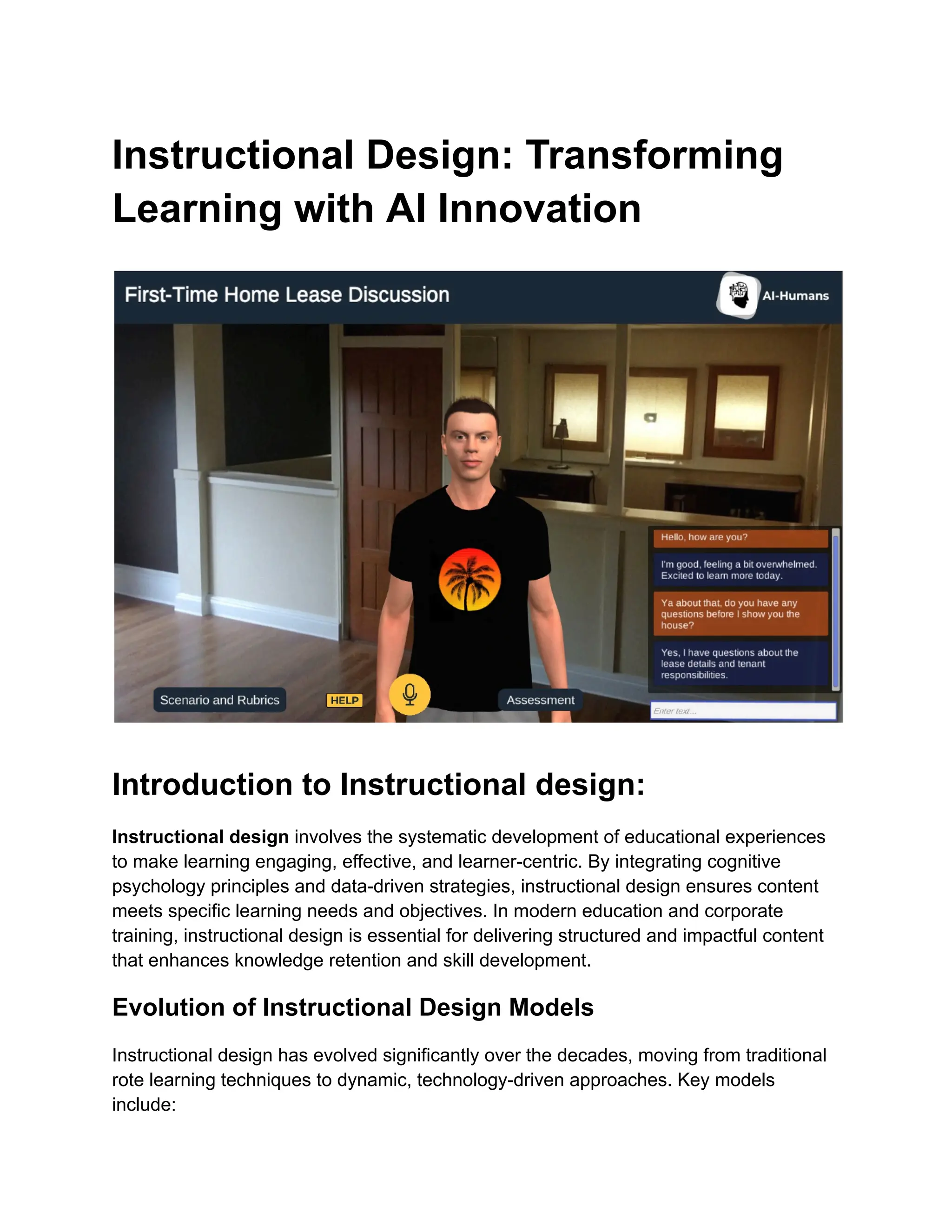
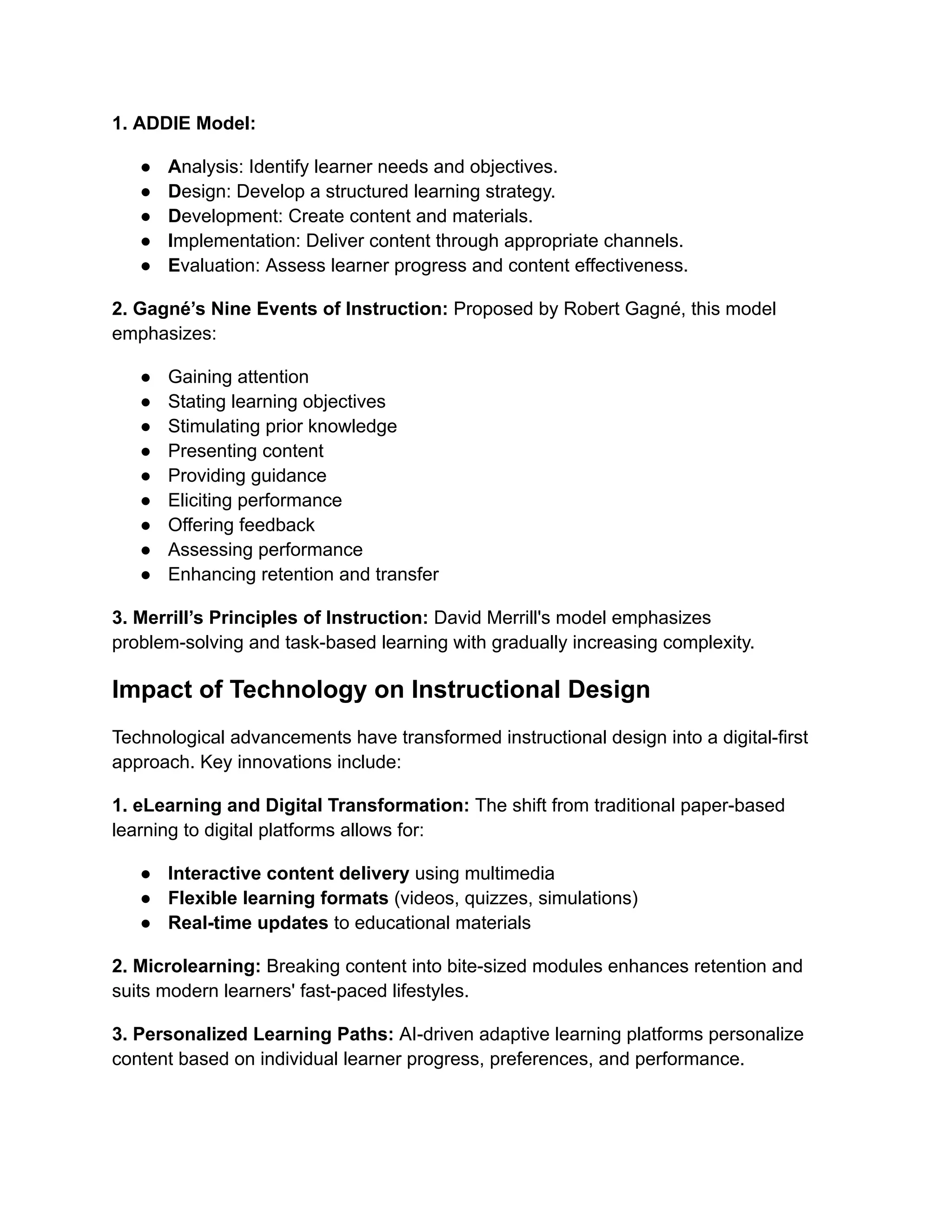
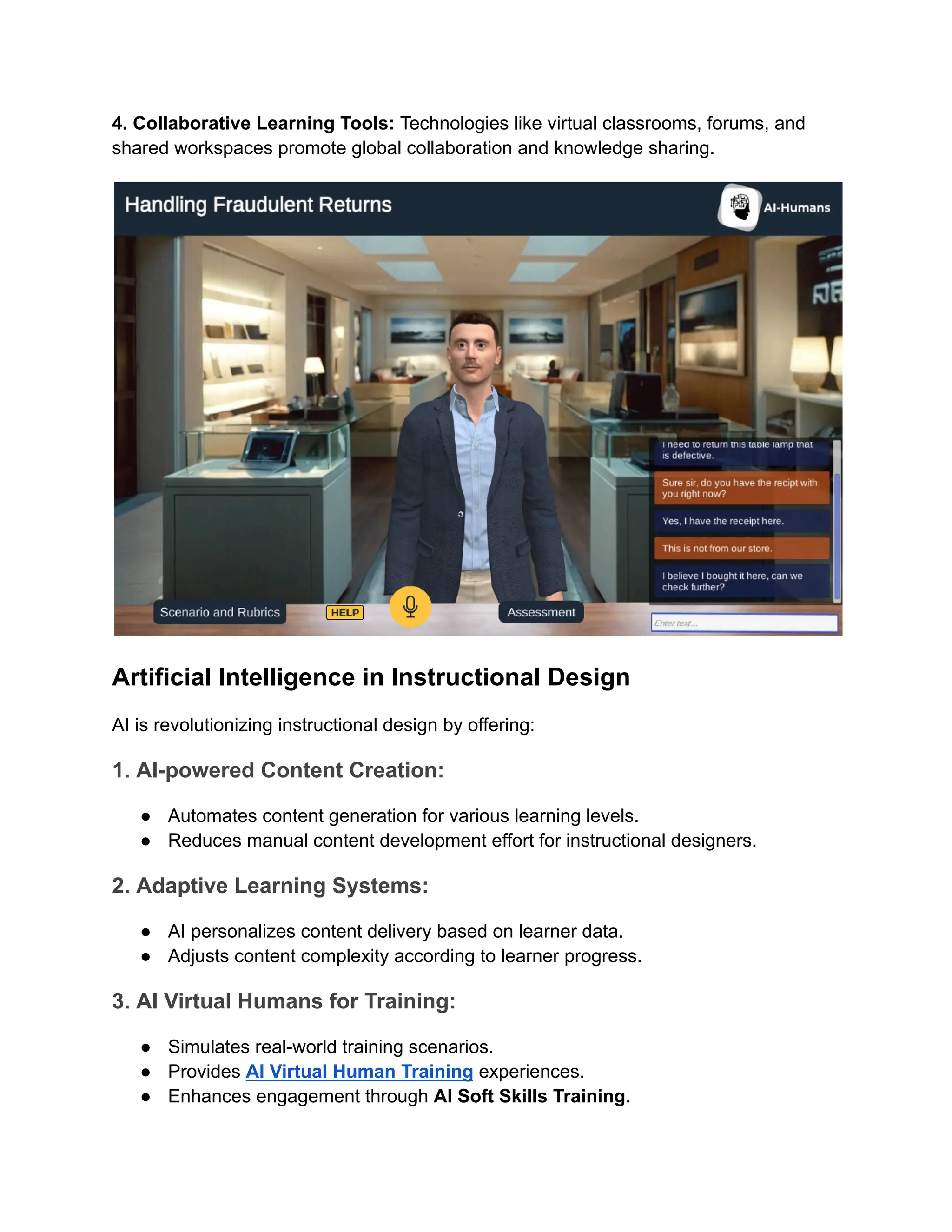
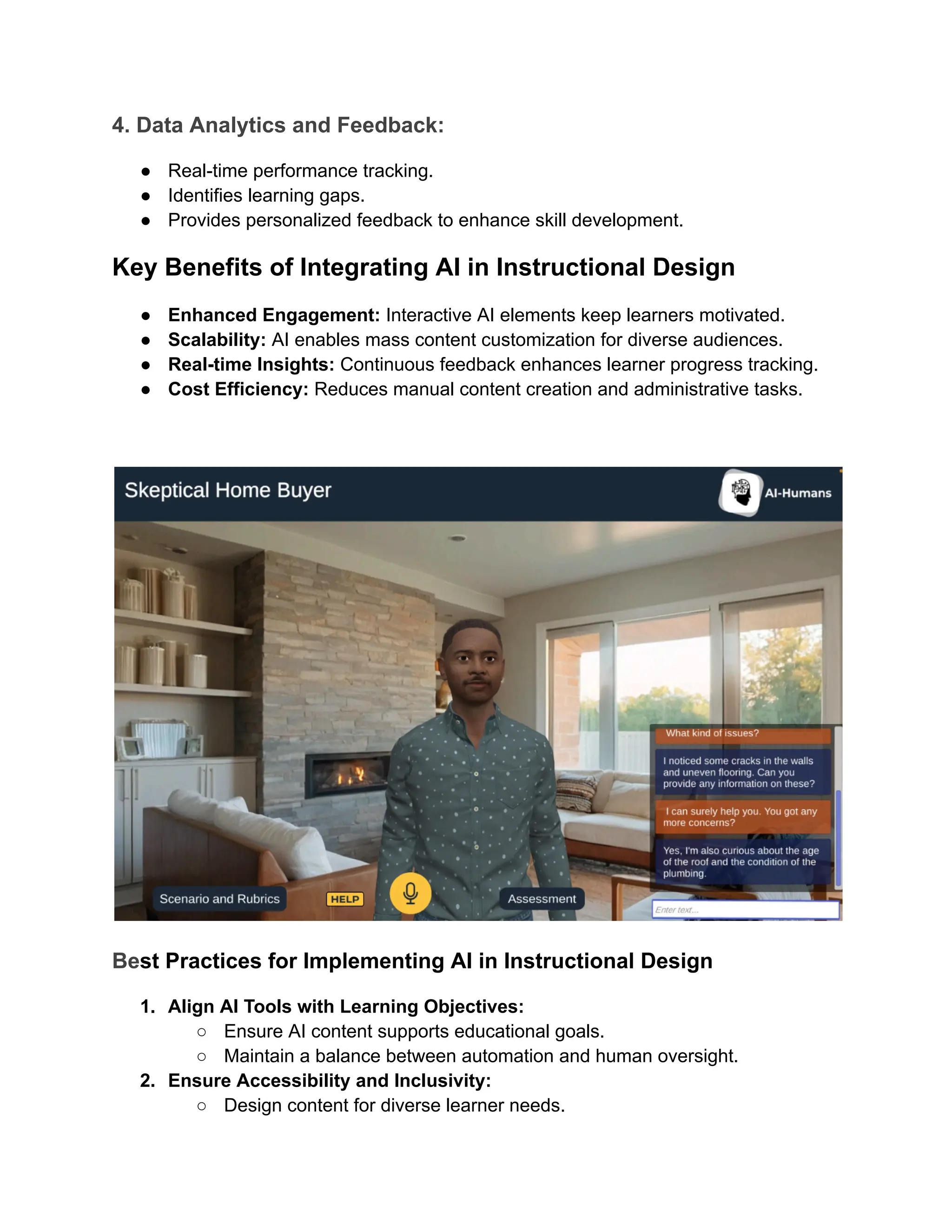
3. AI Virtual Humans for Training:
●​ Simulates real-world training scenarios.
●​ Provides AI Virtual Human Training experiences.
●​ Enhances engagement through AI Soft Skills Training.
4. Data Analytics and Feedback:
●​ Real-time performance tracking.
●​ Identifies learning gaps.
●​ Provides personalized feedback to enhance skill development.
Key Benefits of Integrating AI in Instructional Design
●​ Enhanced Engagement: Interactive AI elements keep learners motivated.
●​ Scalability: AI enables mass content customization for diverse audiences.
●​ Real-time Insights: Continuous feedback enhances learner progress tracking.
●​ Cost Efficiency: Reduces manual content creation and administrative tasks.
Best Practices for Implementing AI in Instructional Design
1.​ Align AI Tools with Learning Objectives:
○​ Ensure AI content supports educational goals.
○​ Maintain a balance between automation and human oversight.
2.​ Ensure Accessibility and Inclusivity:
○​ Design content for diverse learner needs.
○​ Implement multiple content formats for varied learning styles.
3.​ Use AI to Enhance, Not Replace Human Interaction:
○​ Leverage AI-powered Virtual Humans for simulations but retain human
mentorship.
4.​ Monitor and Optimize Performance:
○​ Continuously evaluate content effectiveness.
○​ Update instructional strategies based on learner analytics.
Conclusion: The Future of Instructional Design with AI
The integration of AI into instructional design has redefined learning experiences,
making them more dynamic, personalized, and efficient. AI Virtual Humans,
AI-powered Authoring Tools, and AI Soft Skills Training are reshaping how learners
engage with content. By embracing these innovations, instructional designers can
deliver transformative learning experiences that empower the workforce of tomorrow.

Instructional Design_ Transforming Learning with AI Innovation.pdf

  • 1.
    Instructional Design: Transforming Learningwith AI Innovation Introduction to Instructional design: Instructional design involves the systematic development of educational experiences to make learning engaging, effective, and learner-centric. By integrating cognitive psychology principles and data-driven strategies, instructional design ensures content meets specific learning needs and objectives. In modern education and corporate training, instructional design is essential for delivering structured and impactful content that enhances knowledge retention and skill development. Evolution of Instructional Design Models Instructional design has evolved significantly over the decades, moving from traditional rote learning techniques to dynamic, technology-driven approaches. Key models include:
  • 2.
    1. ADDIE Model: ●​Analysis: Identify learner needs and objectives. ●​ Design: Develop a structured learning strategy. ●​ Development: Create content and materials. ●​ Implementation: Deliver content through appropriate channels. ●​ Evaluation: Assess learner progress and content effectiveness. 2. Gagné’s Nine Events of Instruction: Proposed by Robert Gagné, this model emphasizes: ●​ Gaining attention ●​ Stating learning objectives ●​ Stimulating prior knowledge ●​ Presenting content ●​ Providing guidance ●​ Eliciting performance ●​ Offering feedback ●​ Assessing performance ●​ Enhancing retention and transfer 3. Merrill’s Principles of Instruction: David Merrill's model emphasizes problem-solving and task-based learning with gradually increasing complexity. Impact of Technology on Instructional Design Technological advancements have transformed instructional design into a digital-first approach. Key innovations include: 1. eLearning and Digital Transformation: The shift from traditional paper-based learning to digital platforms allows for: ●​ Interactive content delivery using multimedia ●​ Flexible learning formats (videos, quizzes, simulations) ●​ Real-time updates to educational materials 2. Microlearning: Breaking content into bite-sized modules enhances retention and suits modern learners' fast-paced lifestyles. 3. Personalized Learning Paths: AI-driven adaptive learning platforms personalize content based on individual learner progress, preferences, and performance.
  • 3.
    4. Collaborative LearningTools: Technologies like virtual classrooms, forums, and shared workspaces promote global collaboration and knowledge sharing. Artificial Intelligence in Instructional Design AI is revolutionizing instructional design by offering: 1. AI-powered Content Creation: ●​ Automates content generation for various learning levels. ●​ Reduces manual content development effort for instructional designers. 2. Adaptive Learning Systems: ●​ AI personalizes content delivery based on learner data. ●​ Adjusts content complexity according to learner progress. 3. AI Virtual Humans for Training: ●​ Simulates real-world training scenarios. ●​ Provides AI Virtual Human Training experiences. ●​ Enhances engagement through AI Soft Skills Training.
  • 4.
    4. Data Analyticsand Feedback: ●​ Real-time performance tracking. ●​ Identifies learning gaps. ●​ Provides personalized feedback to enhance skill development. Key Benefits of Integrating AI in Instructional Design ●​ Enhanced Engagement: Interactive AI elements keep learners motivated. ●​ Scalability: AI enables mass content customization for diverse audiences. ●​ Real-time Insights: Continuous feedback enhances learner progress tracking. ●​ Cost Efficiency: Reduces manual content creation and administrative tasks. Best Practices for Implementing AI in Instructional Design 1.​ Align AI Tools with Learning Objectives: ○​ Ensure AI content supports educational goals. ○​ Maintain a balance between automation and human oversight. 2.​ Ensure Accessibility and Inclusivity: ○​ Design content for diverse learner needs.
  • 5.
    ○​ Implement multiplecontent formats for varied learning styles. 3.​ Use AI to Enhance, Not Replace Human Interaction: ○​ Leverage AI-powered Virtual Humans for simulations but retain human mentorship. 4.​ Monitor and Optimize Performance: ○​ Continuously evaluate content effectiveness. ○​ Update instructional strategies based on learner analytics. Conclusion: The Future of Instructional Design with AI The integration of AI into instructional design has redefined learning experiences, making them more dynamic, personalized, and efficient. AI Virtual Humans, AI-powered Authoring Tools, and AI Soft Skills Training are reshaping how learners engage with content. By embracing these innovations, instructional designers can deliver transformative learning experiences that empower the workforce of tomorrow.